Category Archives: Trauma

5 Friday Faves – Life Without Forgiveness, the Power of Words, the CALM Superpower, COVID Close to Home, and the 20th Anniversary of 9/11

Here we go!

1) Life Without Forgiveness – An article on  life without forgiveness by Dave Burchett got me thinking even more about forgiveness. I’m in a study on Forgiving What You Can’t Forget by Lysa Terkeurst. Writing about it, too.

Life without forgiveness sounds truly awful. We imprison ourselves to the past and drag it into our present day and future with treasured grudges. Grudges we feel we can’t afford to lay down. They become part of our identity and how people relate to us – either protecting, justifying, or, at times, “returning evil for evil”.

Photo Credit: Quote Fancy, William Arthur Ward

We have the power to release ourselves and all these entrapped with us…through forgiveness. We need God to help us, for sure. We however must make the decision to forgive. Pretending to do so while hatred gains strength in our hearts is a delusion. God help us.

Here’s a bit of what Dave Burchett says in his article (read the whole here):

“There is no way I have found to release grudges without the healing power of forgiveness. Author Will Davis wrote this powerful insight.

‘Once you decide to forgive, you initiate the healing process. Forgiveness gives your soul permission to move on to the higher and healthier ground of emotional recovery. Forgiveness is to your soul what antibiotics are to infection. It is the curative agent that will help to fully restore your soul. It doesn’t immediately remove the pain of offense but it does start you on the road to recovery.’

I really like that perspective. The decision to forgive initiates but does not complete our healing. You will, in time, heal. I am asking you to pray that you can begin the healing process of forgiveness knowing that only time and God’s mercy can fully heal. That will start you down that road to forgiveness and empowerment to let go of the grudges that are weighing you down. You won’t get there today or tomorrow. But you will never get there without taking the first step of faith.” – Dave Burchett

Photo Credit: Spark People

Burchett refers to the song “Without Forgiveness” by Jerry Salley. Here’s a sweet cover by Jason Davidson:

2) The Power of Words – Words mean things. In fact, they are more powerful than we can imagine. Author, speaker Jackie Hill Perry has referred to a poem which says “Words make worlds”. Now I haven’t been able to find that poem, BUT I have read Genesis 1-3 with the account of God speaking the world into existence.

Photo Credit: Lidia Yuknavitch, @Seek5, Pinterest

Perry spoke on the power of words at a women’s conference. She used the text of the Apostle James’ epistle. James 3. This passage focuses on the influence of the tongue. She elaborated on three points:

  • The tongue is accountable. [We are responsible for our use of words. When we have torn down instead of building up, we will experience consequences. It does not go unheeded.]
  • The tongue is powerful. [We must control our tongues…what we say. Self-control has a wide reach, especially starting with “restraining our speech”. Words can hurt, but they can also heal.]
  • The tongue is inconsistent. [We say one thing to one person and turn around and say another thing to someone else. We may bless God and then curse a neighbor, made in the image of God. Perry talks about the huge disconnect when we speak with reverence of God but with contempt or disdain toward another human being. Words can be a “restless evil”. Pay attention. Are others’ names and personhoods safe on our lips?]

Listen to this fascinating and charged talk by Jackie Hill Perry.

Words Create Worlds – The Language We Use Shapes the Culture We Lead – Eric Geiger

3) The CALM Superpower – Author, leadership trainer Carey Nieuwhof recently interviewed psychologist Jennifer Kolari on his podcast. She spoke on dealing with irrational people, and, in fact, any situation of conflict. I learned so much.

[I’ve written about the brain, decision-making, and dealing with crisis many times. Such fascinating issues!]

Dr. Kolari introduced her CALM technique of dealing with conflict (including helping children in conflict with you or others). In brief, “the CALM method is a way of deep listening using language, compassion and empathy literally as medicine. It will soothe and calm AND bring both participants in the conversation into brain-heart coherence.”

Here’s a brief outline of the framework:
C – CONNECT – connect before correcting; deeply listen; give the sense that you are “for them”.
A – AFFECT – match the affect of the person in front of you; don’t say how the other person SHOULD feel; show understanding.
L – LISTEN – deeply; take that affect above into what you’re hearing; wonder at it; choose your responses based on what is being said to you, including the emotion. Respond not react.
M – MIRROR – allow what’s going on with the person to “hit you right in the heart”. Be in the moment with them/him/her. We do this with babies intuitively. Communicate with your face and body even more than with words.

Listen to the podcast. Check out the resources below. We too often go to correction, with other adults and definitely with children, when they need connection first…and maybe only.

Connect With Your Kids Using the CALM Technique

YouTube Video – Jennifer Kolari – The CALM Technique and Child Brain Development – really fascinating and informative

YouTube Video – The CALM Technique for Babies and Toddlers

4) COVID Close to Home – I’m not saying much here, but COVID has hit very close to home this week. I have friends and family with COVID. Check your thoughts if you’re going straight to “oh…not vaccinated”. Not so in every situation. People who did everything “right” – vaccination, mitigation, all the preventions – can still get COVID. The graphic below is updated often and is super helpful.

Photo Credit: Wesleyan College

The most important points in this conversation are these:

  • COVID is real and we will have to deal with it for some time (not at a pandemic level forever but definitely as endemic).
  • Everyone has to make personal decisions on how to prevent and treat it. To not make a decision is to make a dangerous decision. I’m not saying what to do (enough people are telling us what to do), BUT I am saying to think through our risks and that of those around us, and make informed decisions.
  • Be prepared. You don’t want to start searching out what to do to lessen the impact of COVID when you are already sick.
  • Test early. Even if it might be something else. Testing early helps you and all those who may come in contact with you (if it turns out you test positive.

The pieces below are actually not in support of one methodology or another. In fact, they expose the hard decision-making needed in determining how to act with the threat of COVID. We can depend on (or react against) mandates from government, or we can make the best possible decision we can, given the information we receive.

By the way, my friends and family members are all on the mend… except for one. On a ventilator, with family called in. We are praying still. This is why we can’t be cavalier with our decisions.

Let’s Stop Pretending About the COVID-19 Vaccines – Buzz Hollander, MD

Impact of Masking – Twitter thread – Buzz Hollander MD

FDA Vaccine Regulators Argue Against COVID-19 Vaccine Boosters in New International Review – Andrew Joseph

5) 20th Anniversary of 9/11 – Part of why Friday Faves is coming out on Monday is because I’ve spent an enormous amount of time this week watching, reading, and listening to stories about 9/11. It’s the 20th anniversary of the bombings.

In the twenty years that have passed since 2001, our country has changed so much. We are divided in really unhealthy ways. On that day…for awhile, we came together. We may have had very conflicted views on what happened after (Iraqi War, immigration issues, and the long engagement in Afghanistan). Whatever our opinions are on these, the stories of that day are so worthy of our time and attention.

Photo Credit: Beth Wayland

One of the most beautiful pieces I read this past week was by writer Jennifer Senior for the Atlantic. It was really long, but she did justice to the loss and grief of just this one family. 27 y/o Bobby McIlvaine died that day at the bottom of the World Trade Center. Son, brother, friend, fiancé. His was just one of thousands of stories that day…it matters and it also reflects the many other stories that we don’t know.

The two videos below speak to the day after September 11, 2001 and to the day 20 years later. Take the time…

“Before you know kindness as the deepest thing inside,
you must know sorrow as the other deepest thing.
You must wake up with sorrow.
You must speak to it till your voice
catches the thread of all sorrows
and you see the size of the cloth.
Then it is only kindness that makes sense anymore,
only kindness that ties your shoes
and sends you out into the day to gaze at bread,
only kindness that raises its head
from the crowd of the world to say
It is I you have been looking for,
and then goes with you everywhere
like a shadow or a friend.” – Naomi Shihab Nye

___________________________________________________________________________

Bonuses:

Community – “Every arrow needs a bow: William Wilberforce” — the power of community. If Wilberforce was the arrow that pierced the heart of the slave trade, the Clapham Fellowship was the bow that propelled him. As Pollock writes, “Wilberforce proves that one man can change his times, but he cannot do it alone.” The Clapham fellowship lived by Wesley’s maxim: “In essentials, unity; in non-essentials, liberty; in all things, charity.” And this was no mere slogan: tensions developed in their relationship that would have splintered most associations, even Christian associations, had they not been so radically centered on Christ.” — “Every Arrow Needs a Bow,” by John Hart, CHRISTIANITY TODAY, July 1998 [This was a quote in my folder of quotes; I can’t find the source online today, but it rings even more true now.]

Photo Credit: Vala Afshar, Twitter

This Is What Happens to Your Brain When You Declutter Your Home – Kelsey Clark

“If we major in criticism, we become polemicists, rather than agents of redemption. Often polemicists excuse their loveless rough edges by the demands of truth. But they lose more than they realize. In fact, when love and the growth of positive truth are lost, truth is also lost. Biblical truth loses its scope, balance, depth, applicability, savor, and growing edge [in this disordered priority]. … Words that are not constructive, timely, and grace-giving are rotten and non-nutritive, whatever their formal likeness to Christian content (Eph 4:29). To lose charity, tenderheartedness, sympathy, and generosity is always to simultaneously pervert the redemptive nature of biblical revelation. Narrowed “truth” may bristle enough to defend one city wall, but it is not good enough to conquer the world.” – David Powlison’s “Cure of Souls” (2007)
Recipe for a Quick and Easy Cherry Cobbler – my husband’s favorite
Photo Credit: Lena Vo, Facebook


8 Ways to Build a Strong Foundation for Your Kids – Frank Sonnenberg

Worship Wednesday – His Eye Is On the Sparrow, and I Know He’s Watching Me – Civilla Martin

Photo Credit: Heartlight

My heart is suffering, withered like grass; I even forget to eat my food. Because of the sound of my groaning, my flesh sticks to my bones. I am like an eagle owl, like a little owl among the ruins.
I stay awake; I am like a solitary bird on a roof.Psalm 102:4-7

“Aren’t two sparrows sold for a penny? Yet not one of them falls to the ground without your Father’s consent. But even the hairs of your head have all been counted.  So don’t be afraid; you are worth more than many sparrows.”Matthew 10:29-31

I have a friend who is sad.

She has reason. A series of losses and almost-wins have knocked the breath out of her. She loves God and trusts His goodness, but she still struggles with why life has gone the way it has…at this moment.

In praying for her and searching the Scripture to encourage her, it didn’t surprise me that even in my down time, the Lord spoke through an ordinary passing moment. A scene in a little-known TV movie. Settled on the couch, during a rain shower, I watched a film where one of the characters quoted part of Civilla Martin‘s poem “His Eye Is On the Sparrow”.

Wonder shot through me (once more) at the beauty of this truth and the song inspired by it. I searched out “His Eye Is On the Sparrow” online. So many lovely renditions of the old hymn on YouTube (see a few of the links below).

In my search, I came across author Gail Johnson‘s blog (written during the COVID summer of 2020) on the same song. Ironically, she had just seen a film which inspired her post as well (I’m pretty sure it is the same one). It was another gift from the Lord as I prayed and sought His face on behalf of my sweet grieving friend.

Johnson’s blog is wonderful, and you can read hers…or just stay here briefly, to worship with me, on this page. The quote below is from her blog, and it’s so to the point on today’s dilemma…how to deal with loss and our sadness over it.

The person who has the habit of hope also has the habit of remembering. Hope needs memories the way a writer needs notes. This is partly because hope depends so much on imagination. Our images of the future are sweepings from our remembrances of things past. If we expect to keep hope alive, we need to keep memory alive. Happy memories of good things we hoped for that were fulfilled, and grateful memories of bad things survived.Lewis Smedes

Photo Credit: Tonkin’s Growing Around Grief Model

I really have no doubt that my sad young friend will find her way through this dark tunnel to the glorious light at the end. Watching her persevere through this time of suffering is to see the radiance of the crucified AND risen Savior in the life of His child. Grief is an unwanted gift which can grow us up in Him…and with each other.

Worship with me.

Why should I feel discouraged, why should the shadows come,
Why should my heart be lonely, and long for heav’n and home,
When Jesus is my portion? My constant Friend is He:
His eye is on the sparrow, and I know He watches me;
His eye is on the sparrow, and I know He watches me.

Refrain:
I sing because I’m happy, I sing because I’m free,
For His eye is on the sparrow, and I know He watches me.

“Let not your heart be troubled,” His tender word I hear,
And resting on His goodness, I lose my doubts and fears;
Though by the path He leadeth, but one step I may see;
His eye is on the sparrow, and I know He watches me;
His eye is on the sparrow, and I know He watches me.

Whenever I am tempted, whenever clouds arise,
When songs give place to sighing, when hope within me dies,
I draw the closer to Him, from care He sets me free;
His eye is on the sparrow, and I know He watches me;
His eye is on the sparrow, and I know He watches me.*

Photo Credit: YouTube

Postscript: A member of my family told me recently that she wasn’t going to have a funeral. She didn’t want her family to suffer through one and she didn’t want all that sad music. I’ve thought about that a lot since. First, funeral gatherings can be amazing times of healing. They are a strange mix of sadness AND joy. We’ve lost some dear family members, colleagues, and friends in recent years. The times of the visitation, “wakes”, and even the funeral service have brought both tears of joy and sadness. With actual laughter in the halls as old friends and distant family reunited, honoring and celebrating a life too soon passed. So…a funeral can be a very good thing. Then the sad music. Sure some of the old hymns are sad…heartbreakingly so. I’ve played through this particular song several times this week. Turns out it is a favorite funeral song (in fact, it’s in this top 100 list of Southern Gospel funeral songs). The words are not at all sad to me. They are triumphant, glorious, even defiant, in the face of loss, suffering, and grief.

“When songs give place to sighing, when hope within me dies,
I draw the closer to Him, from care He sets me free;
His eye is on the sparrow, and I know He watches me;
His eye is on the sparrow, and I know He watches me.

I sing because I’m [defiantly] happy, I sing because I’m [gloriously] free,
For His eye is on the sparrow, and I know He watches me.”

*Lyrics to His Eye Is On the Sparrow – Civilla D. Martin, 1905

History of Hymns – His Eye Is On the Sparrow – Dr. Hawn

Story Behind the Song: ‘His Eye Is on the Sparrow’ – Lindsay Taylor

Lyrics to God Will Take Care of You – Civilla D. Martin, 1904

YouTube Video – Ethel Waters – His Eye Is On the Sparrow

YouTube Video – His Eye On the Sparrow – Lauryn Hill and Tanya Blount

YouTube Video – Larnelle Harris – His Eye Is On the Sparrow

YouTube Video – Whitney Houston – His Eye Is On the Sparrow

YouTube Video – Why We Sing (w/ lyrics) – Kirk Franklin & Family

Monday Morning Moment – Isolation and Community

Photo Credit: Jackie Hill Perry, Art of It

After one-and-a-half years in COVID, we all have grappled with a need for social distancing and isolation. What happens then when the diligent pursuit of physical safety causes a loss of community?

None of us want to get COVID or its latest variant. However, we also desperately need community. It is on each of us to make creative and persistent decisions toward going after community. Especially the most vulnerable of us, or we will suffer more than the health impact of COVID [see links below].

The dilemma with isolation is somehow it has brought a social lethargy with it. We are becoming more solitary and our community has shrunk to the lowest and tightest we can manage.

Not necessarily out of fear of COVID, but out of a growing incapacity for community. Real community. “Iron sharpening iron” relationships.

I know I am not alone in the need for such community. We have probably all thought of how altered our relationships have become over the last several months. Not the closest maybe, but especially those that spurred us toward a higher accountability, responsibility or integrity. Those relationships where we are helped to make better decisions or extend kindnesses (especially toward those outside our inner circles).

[Whether introvert or extrovert, we can easily sink down into a solitary life of less. And less is not always more. This less can breed a sort of self-serving life where we gauge our relationships by our own gains and extend ourselves by our own comfort levels. Been there, done that. Ugh! ]

COVID or not, we still need other people, and they need us. Whether on a work project better served with team problem-solving or a family crisis that could use “all hands on deck”. Death and divorce are still happening, but life celebrations are also still with us – all calling for the touch of our community.

In the Wiki fandom Mary Shelley article, we read a fascinating take on the impact or lack of community on the characters of Shelley‘s novel Frankenstein.

In the novel, Victor Frankenstein is a brilliant scientist. He is overwhelmed by a series of losses and the grief, as well as his increasingly unhinged genius, drive him into isolation. He decides to make a human-like creature who would be like a son to him.

It did not turn out well. The creature, because of the rejection and isolation he himself felt, was determined to be a monster.

Both Victor and the creature Frankenstein, throughout the story, are plagued with isolation and a terrible lack of caring community.Photo Credit: Pixabay

The theme of isolation in Frankenstein raises many questions about the role of community and its importance. Many characters in the novel find themselves in isolated positions, and a few suffer grave consequences because of it. Characters suffer from both physical and emotional isolation, although, as in the case of the monster, the isolation is not always self-inflicted. Victor Frankenstein, on the other hand, chooses to isolate himself from his family, his peers, and even the monster he created.

In Frankenstein, horrible things happen when a character is isolated from the others. When Victor’s knowledge and ambition are unchecked by his peers, a monster is created…the destructive power lies not in the monster or his creator, but in solitude. Shelley uses this theme and its manifestation in her characters to pose questions about community, knowledge, and its role in society. Is unbridled knowledge always dangerous, or is there a middle ground? Should one abandon his or her pursuits if they are driving him or her away from a community? 

Shelley makes it clear that there are two different types of isolation: self-inflicted and societal. We see self-inflicted isolation manifested in Victor; he detaches from his world and the people he loves and as a result, everyone suffers tremendously. Rejection from society is demonstrated in the monster’s life. Again and again, he is turned away from love and companionship, which what he has longed for since he was first brought to life.” – Wiki-Fandom Analysis of Frankenstein – Mary Shelley, an Academic Wiki

Of course, this is a novel, but incredibly insightful as a tale of human nature. We need community…we are made for community.

Somehow we must rally during this protracted social experience of COVID. What is your mindset on this and what are your intentional actions toward community and away from isolation? The kind of isolation that eventually diminishes us and our relationships. Please comment below.

In closing, I do want to affirm an Isolation in Community. We may have to deal with social distancing for sometime still. Especially those most vulnerable to severe illness from COVID. For some isolation can’t be avoided, but there is an isolation in community. Where we take steps toward and lean in to deeper community. Even if it isn’t always in person. This takes a different sort of effort, but we know it is possible. Fortunately. For me, it’s actually using the phone for conversations (including Facetime). It’s not stepping out of responsibilities (work or community service) because of a need for social distancing, but figuring out alternate ways to serve, or get a job done. I have also experienced the fruit of it, thanks to your efforts. Our mail is less junk mail and more actual real connections through cards/letters. Thanks for that. Again, please comment below what your experience has been here.

Photo Credit: Heartlight

Isolation – Good Therapy

Isolation and Community – Helen Thorne – Biblical Counseling UK

Loneliness and Social Isolation Linked to Serious Health Conditions – CDC

Creative Communities Are Addressing Social Isolation – Maryjoan Ladden

Monday Morning Moment – We pray…and We Don’t Give Up.

Photo Credit: David Sanabria, Flickr

I really don’t have words this morning.

Scott Sauls gave me the words below.

The blaming takes us nowhere. The hating definitely diminishes all.

Some think of prayer as a soft and impotent action. Not so! The God who hears our prayers is mighty to save. His purposes are not thwarted. He calls us to prayer and we, and those of the this broken world, are best served when we obey.

Do we do other things? Like sending our resources and opening our communities to those no longer with a home. Absolutely. However… if we don’t pray, we neglect the greatest salvation…and the greatest Savior in these seemingly hopeless situations.

The blaming and hating change nothing and care for no one. It is a dreadful waste and dishonors both God and humankind.

So…we pray.

…and we don’t give up.

Photo Credit: The Fellowship Site

5 Friday Faves – A City Tour, Best Organizing Tips, Rise and Fall of Mars Hill, On Being Heard, and Summer Delights

Here we go!

1) A City Tour – Have you ever taken a tour of your city or town? It’s a transformative experience. We toured our city (Richmond, Virginia) this week. No pictures of the James River this time around or any of the actual “tourist sites”…[I did write about our gorgeous Capitol building visit here]. Just neighborhoods this time. What about you? Comment below about your city/town.

2) Best Organizing Tips – OK, full disclosure: I’m not a fan of Marie Kondo (link to my blog on decluttering and relationships). I think what she helps people downsize gets repurchased. So it is a constant cycle. However, I get the stress that clutter can bring to moms of small children. Our children understand that I will downsize until it starts getting painful, and then they can just hire an estate clearing company, for the rest one day.

When I come across an article that shows wisdom in dealing with the strain of stuff, it encourages and empowers. The Pioneer Woman has a list of 76 tips for organizing our households. Some of the tips have affiliate marketing attached which means buying stuff to store your stuff. Still, among the 76 tips, there are great helps for anyone. I love the ideas on beautifying and functionalizing the foyer/entryway of a home. Also, her tips on managing toys and their cleanup were great!

Best Organizing Tips – The Pioneer Woman

Photo Credit: The Pioneer Woman, Tidbits

3) Rise and Fall of Mars Hill – I don’t usually recommend sad things unless it causes such a stir in me, it seems necessary to share. The church doesn’t belong to people. The church belongs to God. He established it, and He will care for it. If judgment is required, He will judge. However, some situations may need to be examined, not to judge, but to avoid going there. We are all vulnerable. It can happen to any of us as collections of people. Power and ego can soil anyone. None of us are immune.

The Rise and Fall of Mars Hill Podcasts | Christianity TodayPhoto Credit: Christianity Today

If you don’t know the story of Mars Hill, you can listen to the cataclysmic fall of a mega-church and its pastor, starting here.

The Rise and Fall of Mars Hill

Our small but growing church in Richmond, Virginia, loves God, loves His Word, and loves the world. Hopefully we love each other and our neighbors as well. We will want to do our part in keeping our church on track with God’s mission.

Mission drift can occur to any organization. Watch out for it. Put guardrails around what matters.

4) On Being Heard – Just before doing the city tour above, a documentary focused on our city was recommended to me. The local film company responsible for this Emmy-award-winning gem is Belltower Pictures.

“Heard” – PBS Documentary – “HEARD captures the inspiring stories of five people who grew up in ‘the projects’ (Richmond, Va.), surviving and thriving in spite of, and often because of, the challenges they’ve had to overcome. Now they’re giving back to their home communities, trying to make a better life for those who come behind.”

I watched this documentary after the city tour.

It was an amazing opportunity to listen to residents of Richmond’s subsidized housing who talk about what they loved and hated about their neighborhoods and how they were able to take those foundations to launch into positive futures. So glad I listened. You will be, too.

Heard Discussion Guide

5) Summer Delights – Summer…it sprawls lazily…and yet seemingly overnight, back-to-school ads and products spring up all over!

We will savor summer. And all its goodness. What are some of your summer delights?

Sleeping under the stars upgraded by cool retro campers and sweet technology capturing it.https://scontent.fric1-1.fna.fbcdn.net/v/t39.30808-6/fr/cp0/e15/q65/224199211_10222604686818054_2935923857622714896_n.jpg?_nc_cat=100&_nc_rgb565=1&ccb=1-3&_nc_sid=8024bb&efg=eyJpIjoidCJ9&_nc_ohc=Na2pVp6USPsAX_3XgP7&_nc_ht=scontent.fric1-1.fna&oh=a4fed52179684ef263f8fc5153deef8b&oe=61003131Photo Credit: Todd Carey, Facebook

Rainbow hues in all the beautiful flowers:

Fishing with Papa:

Yard Sales back in style:

The yummy “reds” of summer:

___________________________________________________________________________

That’s it for this week! Thanks for stopping by. It means a lot!

Bonuses:

Support your small businesses – great post on the challenges of having a sustainable business right now (this being a local restaurant)

Watch Luke Bryan Bring a 7-year-old Girl Onstage for adorable “Down to One” Duet – here’s the quick story. Below is the video.

No photo description available.Photo Credit: Tim Keller, Gospel in Life, Neighborhood Church Facebook page

Worship Wednesday – Standing Firm, Side by Side, in Community, Not Afraid

Photo Credit: Philipp M., Pexels

[From the Archives]

Only let your manner of life be worthy of the gospel of Christ, so that whether I come and see you or am absent, I may hear of you that you are standing firm in one spirit, with one mind striving side by side for the faith of the gospel, and not frightened in anything by your opponents. This is a clear sign to them of their destruction, but of your salvation, and that from God. – the Apostle Paul to the Philippian Church Philippians 1:27-28

God’s Word is powerful and freeing. We are emboldened and sustained by it – for life, for love, for forgiveness, for endurance.

Reading this passage recently, a charge from these words sizzled through me like electricity. Goosebumps and all.

Another translation of Paul’s writing introduced the above Scripture passage with the phrase “Just one thing”. We are living in confusing and shaky times, but God is unchanged. His truth is as riveting and reliable as when first written for us.

For months now, we have been kept apart by the social distancing of COVID-19. A year ago, we were brought together by the terrible loss of George Floyd. Brought together and at the same time torn apart. Protests and a pandemic. Racial unrest and a radical disease.

This time last year, a group of friends and I went through a Bible study together which turned out to be incredibly timely. We couldn’t be together so we met over a video call, working through Jennie Allen‘s Get Out of Your Head. In this book, Allen talks through our struggle with the kinds of thoughts that spiral downward taking us with them. The text she takes her readers through is Paul’s letter to the Philippians. He was in prison and yet wrote this short life-transforming letter to encourage the church experiencing its own hardship.

In confusing and chaotic times, our thoughts can be our worst enemy. We juggle the “what if’s” until they become more than we can manage. We question what’s right, what’s true, what’s our place in all of it…what’s God’s place. We become suspicious of others’ motives, and even sometimes our own. We grow weary of sorting it all out. We can withdraw…making six feet apart way too easy.

Jennie Allen reminds us that we have a choice; we can flip the downward spiral. We can make our aim, in all things,God’s glory and His headship. Keeping our focus on God, we then seek peace, do justice, love even our enemies, and trust God with our lives (whether the threat is COVID and or violence in the streets).

“As theologian and emeritus professor D. A. Carson has observed, People do not drift toward holiness. Apart from grace-driven effort, people do not gravitate toward godliness, prayer, obedience to Scripture, faith, and delight in the Lord. We drift toward compromise and call it tolerance; we drift toward disobedience and call it freedom; we drift toward superstition and call it faith. We cherish the indiscipline of lost self-control and call it relaxation; we slouch toward prayerlessness and delude ourselves into thinking we have escaped legalism; we slide toward godlessness and convince ourselves we have been liberated.”Jennie Allen
So how do we avoid that drift Dr. Carson talked about above?
In community. Standing firm, side by side, not afraid – in God’s strength and His salvation – Philippians 1:27-28.
However, even if community is shaky, God never is. We remind ourselves and each other that He is our refuge and we never have to be shaken...no matter the situation.

Psalm 62 – Trust in God Alone

For the choir director; according to Jeduthan. A psalm of David

I am at rest in God alone;
my salvation comes from Him.
He alone is my rock and my salvation,
my stronghold; I will never be shaken.

How long will you threaten a man?
Will all of you attack
as if he were a leaning wall
or a tottering fence?
They only plan to bring him down
from his high position.
They take pleasure in lying;
they bless with their mouths,
but they curse inwardly. Selah

Rest in God alone, my soul,
for my hope comes from Him.
He alone is my rock and my salvation,
my stronghold; I will not be shaken.
My salvation and glory depend on God, my strong rock.
My refuge is in God.
Trust in him at all times, you people;
pour out your hearts before Him.
God is our refuge.Selah

Common people are only a vapor;
important people, an illusion.
Together on a scale,
they weigh less than a vapor.
Place no trust in oppression
or false hope in robbery.
If wealth increases,
don’t set your heart on it.

God has spoken once;
I have heard this twice:
Strength belongs to God,
and faithful love belongs to You, Lord.
For You repay each according to his works.Psalm 62

Monday Morning Moment – 5 R’s of Handling and Healing Our Past

Photo Credit: Rick Warren, Heartlight

The past. We are never rid of it, nor would we wish to be. Our roots are there. The foundation of our lives. Our first and formative relationships are there.  Both life and death, pain and promise.

Memories are born in the past. Experiences and emotions attached to them that feel exquisitely personal…yet are shared. Others close to us may have our exact same experiences, but have very different feelings and memories attached to them.

Family is complicated and always has been (remember Cain and Abel?). Throughout the history of humankind, family was meant to be a nurturing and stabilizing influence in our lives. It doesn’t always work out that way, but wisdom is to lean in whenever possible and learn both from the brokenness and the beauty available to us.

So how do we deal with the past? Do we ruminate on the wrongs of our past? Do they loom larger than the good? Do we see ourselves in the right in each point of conflict? Or the victim? Is our memory of family colored in ways that make us pull away?

There is a way forward, and I believe it is revisiting the past with the aim of healing…not just for ourselves but for the family as a whole.

[I love alliteration – words with the same beginning letters used in phrases or headings. So it was a personal thrill for me that this came together with alliteration.]

5 R’s of Handling and Healing Our Past

1) Remember – We trust our memories, don’t we? Well, until age shakes that up a bit. Still, our memories can be altered by the power of our emotions and by further experiences that call the past to mind. Then our emotions, deepened by memory, can “resolve” to see things more our way, whatever is happening in the moment. Memories can be reinforced, and not always in helpful ways. We need to take into account that we, family members or friends, can remember something very differently, based on what was going on emotionally for each person at the time. That’s why we must handle memories gently with each other. Love the person her/himself more than what they might remember. Determine not to be put off by memories where we don’t come off in a positive light. Remembering is done best in community. It’s richer and more reliable that way. Of course, this requires tons of trust, transparency, and humility. It may not feel safe in some situations to remember in community. It’s also never helpful to insist our memories are the only ones that are true. Right? Again, it is experience plus emotion. Love covers. Love helps heal when we remember, with care for the other.

2) Reminisce – As we remember, we reminisce. This calls to mind the sweet memories of the past. Even as painful memories rush in, what happy times come to mind? How might these memories weave together? Was it all bad? All good? Reminiscing taps into the positives, and even opens the mind to what the memories of the other might be in the same experience. Are we projecting motive or intent into our experience? As we reminisce, might we look at how an experience was different for the other. Reminiscing done in community is, again, eye-opening. It can be threatening if our side of the memory is on the line, but when we enlarge on what was going on in our past, we gain deeper understanding. A softening of our attitudes can come.

3) Reflect – When we reflect on a particular situation or relationship in the past, we treat it with as much grace as we can muster. We take the past and turn it over and examine it from different angles, considering what we can learn from it. How is it affecting our present – both life experience and relationships? What can we do to glean something positive from a painful past? What is to be gained by holding onto the past? If we choose healing, what is then possible for us and the others involved? What kind of faith would be required? What kind of work? Are we willing?

“Walk a Mile in His Moccasins” – Mary T. Lathrap, 1895

4) Repent and Reconcile when possible (instead of forever Regret ) – Here’s the big leap! Owning our part and doing something about it. This is huge!

Let’s say, our past includes painful memories from our early childhood. What can a child own from situations out of their control? We can own our attitudes today as adults. For instance, it took me a long time to tender my memories of a neglectful biological father. I only have a few memories of him, none great. One memory stands out. Mom had left him, and we were living in a tiny house, supported by her income alone. One night we were awakened by shouting. I don’t remember a lot, but my estranged father, Mom, and an uncle of ours were in some sort of argument. We four children were huddled together on a bottom bunk. I remember blood and our father’s hand wrapped in a handkerchief. Was there a knife? I don’t remember. We were terrified. After that…he was pretty much absent from our lives. I don’t remember asking Mom what all happened. It just took me a long time to feel anything for that dad. Yet, I know he had to have known pain, isolation, and maybe even some regret at the dregs of his relationship with Mom and us. As an adult, I have chosen some compassion for him. Not much but some.

Why did I share that story? It is how as children, when we have trauma (or what we perceive as trauma when maybe it had little to do with us), we process it differently than we might as adults. Revisiting, with humble hearts, can make a difference in how we think about the past as adults.

When our past pushes into our present, and conflicts are revisited, we are tempted to try the offending party in the court of our emotions (re-try them, actually). We resurrect the past and all its emotions, and bring all that trauma to bear on whatever the present misunderstanding is. We are then not able to just deal with the present. All that past comes down on us, that past that may have been once forgiven, and unloads. Making it virtually impossible to deal with whatever is happening at the moment.

This is where we repent. We refuse to nurse old wounds. We deal with the current conflict as it is, without all the past. The current conflict is enough. We deal with it as adults. We repent of our part. I can tell you, if we don’t, there is collateral damage to those who love us. “Friendly fire” is not friendly, and these struggles, heightened by our past, become the past of those around us. Our children. Our grandchildren.

Repentance may take more the form of forgiveness. We refuse to remember (one place where we refuse to remember) the offense of another. We choose to forgive in the most expansive way we can.

I know we sometimes say we forgive that one who offends us, who offended in the past, and continues to do so. We forgive but commit and feel justified to have nothing to do with them ever again. I get that. I get the pain behind such a decision. It’s heart-breaking. Just to reflect: Who does that punish? As wide a circle as our relationship together makes. We are all punished…that is most probably not meant to be the intent.

Repent and reconcile whenever possible. There will be cheering by everyone who loves us both. I know; I’ve experienced it from both sides. The repenting side and the relieved and thankful other side.

[This is often excruciating and not always satisfying. Even if the outcomes are not what we hope. We benefit from trying…as do the generations that follow. Who knows? The situation – and relationship – can still change in that possible future.]

5) Rejoice – Put your hand on your chest. Can you feel your heart beating? Can you feel the rise and fall of your breath? Be grateful. Rejoice in the present. We didn’t die from our past. We still have a chance to put things right. Maybe imperfectly…but it’s possible.

A wonderful scene of this possibility is found in the 1970 film “Scrooge”. “I’ll Begin Again”.

The past doesn’t have to be forever. You have a present. There may be a future…one not framed by the hurting past but built on a healed past. We have that possibility…in our present. We can do our part… it’s the only thing we have in our control. Is it complicated? Of course, but it will always be worth the effort.

*Special thanks to my writer friend, Angela at Living Well Journal, who talked and prayed through this with me…on a neighborhood walk, in the cool of a Spring morning.

A note I found just this week flipping through an old Bible. Mom would leave love notes around whenever she came to visit, and we did the same after her pattern…and taught our children to do the same.

Worship Wednesday – With Every Breath: Praise – Great Are You, Lord – All Sons and Daughters

Photo Credit: MVFC1

[It’s been four years – From the Archives]

In a few days, it will be 5 years since this non-smoker received a lung cancer diagnosis (Stage One, fortunately). When the blog below came around on my Facebook memories this week, it reminded me of the profound condition of good health and how easily it is to take it as an entitlement. My lung cancer diagnosis was an incidental finding. It will be forever grateful to God for the blessing of that early find. The event reported below happened months after the unremarkable surgery and recovery from the lung cancer. I adapted this piece and repost it today as a reminder of the great grace we have for each day we live.

Over these last several months, breath and breathing have become something very precious to me. You can tell when you search my blog archives for either topic. We take breathing so for granted, even when we acknowledge that every breath’s a gift. That rhythmic rise and fall in our chest that strengthens and refreshes us. Breathing just happens.

Until it doesn’t.

There have only been two times as an adult that I couldn’t get my breath. The first was eight months ago (now 4 years & 8 months ago – you can read about it here.) The second time was less than 48 hours ago [now 4 years ago as I repost].

For the second time in my life, I was surprised, just before bedtime, by a rapid and terrifying development of shortness of breath and quickly got to the place that Dave had to call 911. He was still talking to the dispatcher when we heard the sirens.

So thankful for our local fire department and rescue squad.

We live in a quiet neighborhood, and most of the residents are older. The rescue squad shows up often here, and, of course, no one really wants to be the one on the receiving end of their excellent care. Every time it happens, a neighbor or two stand sentinel in the road watching and hoping for a good report. While the rescue squad was getting me stabilized and Dave was waiting in his car to follow to the hospital, he would tell me later of neighbors standing in the shadows. Not wanting to intrude but standing watch. It’s a comforting thing.

From the first hours in the emergency room through the next two days in the top floor ICU, I received excellent and thoughtful care at St. Mary’s Hospital. The crisis was averted, and the testing began again to determine the cause. The same testing that was done previously. The findings were not so much different as they were the first time it happened. Maybe they were taken more seriously with it happening twice. Anyway, I am now in the care of a cardiologist with some meds on board that will hopefully help me NOT to go through this experience again.

[Praising God, four years this month, that it hasn’t happened again.]

To go from thinking you’re going to die to feeling pretty much as well as ever, within hours, is a strange and wondrous experience. We will all die one day, so it doesn’t always end as it did for me these two times of not being able to get my breath. For this, today, I am so grateful to God for breath…and I am reminded it is His to give.

The song Great Are You Lord beautifully presents this truth. The band All Sons & Daughters introduces the song in this way:

“Worship is when we give God His breath back.”

This morning, I give God His breath back in praise. So thankful for a husband who acted quickly for me when I couldn’t, for trained professionals and volunteers, for watchful neighbors, for kids who show up (physically and in prayer), for praying friends and family, for all the many employees at St. Mary’s (including my own youngest son) who were kind in their care …for all of this I’m grateful.

Most of all I am so very thankful for the God who gives us breath.

I love the LORD because he hears my voice and my prayer for mercy. Because he bends down to listen, I will pray as long as I have breath! Death wrapped its ropes around me; the terrors of the grave overtook me. I saw only trouble and sorrow. Then I called on the name of the LORD: “Please, LORD, save me!” How kind the LORD is! How good he is! So merciful, this God of ours! The LORD protects those of childlike faith; I was facing death, and he saved me. Let my soul be at rest again, for the LORD has been good to me. Psalm 116:1-7, NLT

Would you worship with me praising God for His healing and for His helpers?

You give life, You are love
You bring light to the darkness
You give hope, You restore
Every heart that is broken
Great are You, Lord

It’s Your breath in our lungs
So we pour out our praise
We pour out our praise
It’s Your breath in our lungs
So we pour out our praise to You only

You give life, You are love
You bring light to the darkness
You give hope, You restore
Every heart that is broken
Great are You, Lord

All the earth will shout Your praise
Our hearts will cry, these bones will sing
Great are You, Lord*

*YouTube Video – Great Are You Lord – from All Sons and Daughters (Live) – written by: Jason Ingram, Leslie Jordan, David Leonard

Story Behind the Song – Great Are You Lord – from All Sons and Daughters

Worship Wednesday – Beneath the Waters (I Will Rise) – Hillsong – Deb Mills Writer

Worship Wednesday – Breathing Songs: Just Breathe & It’s You I Breathe (Christ in Me – Deb Mills Writer

5 Friday Faves – Beyond the Guitar – Beauty to the Ears & Mind, Mental Health Awareness, Antidote for Self-deceit, Showing Up…Or Not, and Unmasking

1) Beyond the Guitar – Beauty to the Ears & Mind – We think of beauty more in what we experience visually, but there is a powerful connection between music and the mind. Beautiful music soothes the soul and lifts our hearts. Moves us. Often it is because of nostalgia attached to the music, but even without that emotional connection, music can bring our minds to a better place.

Your Brain on Music – Pegasus, UCF

Nathan Mills, of Beyond the Guitar, has that way about his craft. Moving our hearts with the beauty of his arrangements and performance. I don’t know any of the pieces in his medley of 4 Underrated (but Beautiful) Video Game Themes, but something happens when I listen. Shoulders drop; breathing slows; wonder sets in. Beauty has its way with our ears and our minds.

Photo Credit: YouTube, Beyond the Guitar

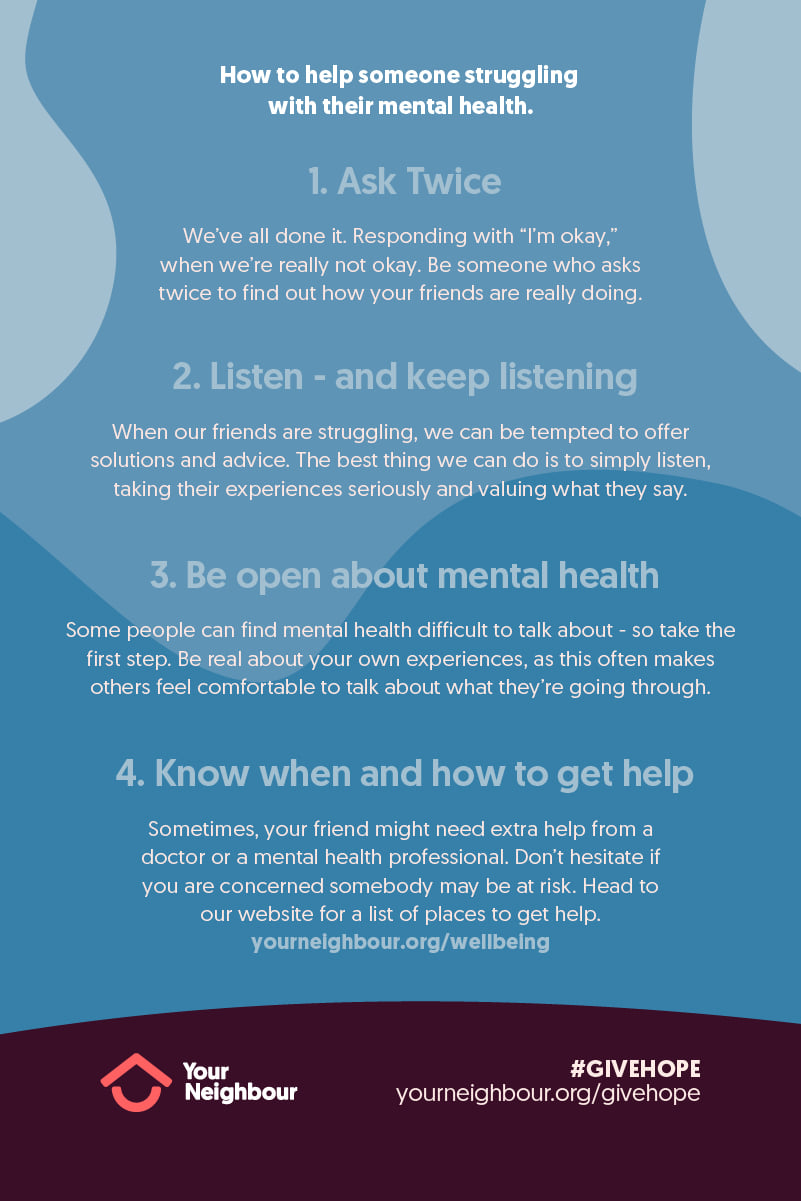
2) Mental Health Awareness –  May is Mental Health Awareness Month. The theme message for 2021 is “You Are Not Alone”. Our need for connection is bigger than ever, having gone through so much COVID isolation. Whether mental health issues are our own personal struggle or we are family, friends, caregivers of those who struggle, helps abound. We just must be aware and utilize them.

Tools 2 Thrive – Mental Health America

Mental Health Awareness Month 2021: What to Know – Karen Veazey

Photo Credit: Twitter, Nicolino Frate

Suicide and death by drug overdose have increased during COVID. They are shocking for us and real losses, either for us or for friends. We can’t keep isolating ourselves from each other. Finding ways to help is imperative.

Photo Credit: Facebook, Key Ministry, Your Neighbour #GiveHope

YouTube Video: Unseen: Exposing the Mental Health Crisis Among Special Needs Caregivers | Documentary Trailer

3) Antidote for Self-Deceit –  Self-deceit (or self-deception) is “a process of denying or rationalizing away the relevance, significance, or importance of opposing evidence and logical argument. Self-deception involves convincing oneself of a truth (or lack of truth) so that one does not reveal any self-knowledge of the deception”.

The Most Dangerous Form of Deception: Self-Deception

I’ve allowed myself to be deceived (either with the help of outside influences or from sheer will and desire, wanting something to be so, or not be so). It’s not pretty. One of my strongest memories was sitting in a circle of friends who essentially did an loving intervention with me. I was in a self-destructive (but non-abusive) relationship, and they had the courage to point me to the changes in my life and thinking. I will never forget it. The life I have now is much impacted by their willingness to go to that place with me. Forever grateful.

Regarding deceit, it is way too easy to get into our own heads and assess life with a self-tuned receiver. I wrote about this before (the practice of noticing). A somewhat dated video (with a still fresh message) speaks to this so well.

During the particular season of self-deception (described above), I got to the place that lying in my bed at night, when I would usually pray, it got impossible to pray. That was terrifying. It’s like all the desires and my rationalizations for them had crowded out any space for God. Especially for a holy God. Like I said, terrifying. No matter how loving God is, I couldn’t justify praying when my own desires trumped His for me.

The Antidote to Self Deception – J. D. Walt

As the video illuminates, as we get out of our own heads, and start seeing other people around us, we find the antidote. Caring more for others than ourselves, we can actually clear our heads some. Self-deception causes us to “circle the wagons” and keep others at a distance. As we determine to get close to people again, especially to genuinely listen and serve, our own deceit can be more readily understood/recognized. Of course, our neglected relationship with God will take its own time and action on our part. He is ready, when we are.

Photo Credit: Chip Scholz

4) Showing Up…or Not – Showing up is a good thing. For all of us. Keeping commitments. Being present. Choosing to lean in. Listening.

So much is said about listening and its positive impact. To listen requires proximity.

On the East Coast, this week, we had a gas shortage (or a perceived gas shortage…not sure which is more accurate). Everyone was making decisions about filling their tanks and sorting out needful car trips vs. those that can be jettisoned for another time.

I was a part of a couple of meetings where some folks didn’t show up. Without a phone call, text, or email message. Was it the gas shortage? Or did it display something else? Honestly, I also wondered how often I’ve done this same thing myself.

We are in a culture right now when a RSVP yes can turn to no without a word. I’m showing my age…but does this matter?

Below you’ll find quotes from three different authors on this and what it can mean. The showing up…or not. After you read their observations, I’d love to hear what you have to say in the Comments.

“Standing someone up is a personal attack. You are saying that you have no respect at all for this person’s time, energy or feelings. This person set aside time from his or her day to hang out with YOU.

And maybe he or she didn’t feel like showing up. But no, this person had enough respect for you to feel as though he or she couldn’t bail on you. Then how did you repay the favor? You didn’t show up. With no warning.

And don’t even get me started on the fact that if this person cared about you enough to make and honor plans with you, odds are that he or she would probably be WORRIED about you when you don’t send a message. Because falling off the face of the Earth is a little alarming….You get the picture here.” – Candice Jalili

Why It Is Literally Never, Ever OK to Just Not Show Up For Your Plans – Candice Jalili

“There are commitments you are not going to keep no matter how hard you try, but even if you fail to keep them, you can still honor them. How do you do this?

“The difference between “keeping” and “honoring” is key: keeping a promise is about the letter of the promise, while honoring a promise is about the spirit. It is even possible to keep a promise while not honoring it. People will forgive an honored but un-kept promise, but it takes a real saint to let go of an un-honored promise—kept or not.

So what are the practical aspects of honoring a commitment? They are:

  • respect
  • communication
  • productive effort

It’s uncomfortable to take responsibility (for a failed commitment), but discomfort is a lot easier to shoulder than disrespect or disappointment. Even if you failed to honor a commitment up until now, it is not too late: disrespect and disappointment can be rolled back or even erased in the face of genuine honor.” –  Kenneth Vogt

How to Cope When You Fail to Honor a Commitment – Kenneth Vogt

[The two writers above have very different tones to their pieces. Both worthy of note. I especially appreciated Vogt’s distinction of honoring a commitment (whether you’re able to keep it or not). Honoring the person by communicating your inability to keep the commitment…as well as the honoring that goes on by making the effort to keep the commitment whether  easy or not. We don’t really know what goes on for another who does the work of keeping a commitment or the one who just can’t. What we do know is what it is like for us to keep or not keep a commitment; to honor or dishonor a person in the commitment. So much more understanding and care come out of the smallest communications. Something to think about.]

Below Rachel Macy Stafford posted an image and (in the link) a Facebook story about sitting in a line for gas this week, and an elderly man, just ahead of her, deliberately nodding her way (as he chose not to completely fill his tank, doing what he could to “leave” some for her). No RSVP’ed commitment. No relationship. But a deeply kind gesture to her that she was seen. We all need that…that being seen.

Photo Credit: Rachel Macy Stafford, Facebook, The Hands Free Revolution

It’s…“a deliberate decision to look out for the person behind (you)…It’s not about us. Even though it’s hard not to think only of our own needs, there is someone behind us…and someone behind that person…with their own set of struggles. If you can…will you look out for them? A wave will do, just so they know they are seen…it’s the kind of gesture that takes people farther than a full tank of gas.”Rachel Macy Stafford

5) Unmasking – Get ready for another new culture shock thanks to the Coronavirus: unmasking!!! I am so excited myself.Photo Credit: Pexels, Gustavo Fring

Based on this week’s CDC recommendations, fully vaccinated people don’t have to wear masks or physically distance anymore (except in rare defined situations). This, of course, is still only a recommendation and each state must give direction at a local level. Our governor just announced that we will align with the CDC recommendations.

Now, no one is going to know who is vaccinated and who isn’t. If we have learned anything from COVID-19, it is to be wise in dealing with the viral world. Those not vaccinated will probably forego masks as well. The freedom feels intoxicating, honestly, but possibly fearful to some, even some who are fully vaccinated.

I hope we can leave fear behind us. COVID is still rampant in some parts of the world and that is tragic. As we in the US and other countries get past our own experiences with this virus, hopefully we can be a help to those still battling the disease.

The culture shock part is real. I will have my mask with me, and see what the signs say on the doors of each business, store, school, or community space.

Still….so worth celebrating!!!

___________________________________________________________________________

That’s a wrap. Would love your comments below on your own favorites of the week. Thanks for stopping by. It means a lot to me.

Bonuses:

Photo Credit: C. S. Lewis, Twitter

Angry with God: Living in the Tension of Partial Understanding – Brad Hambrick

YouTube – Podcast – An Honest and Raw Conversation with Francis Chan – Preston Sprinkle

My next read:

Monday Morning Moment – Gentle and Empowering Wisdom on American Racial Struggle – Bryan Stevenson

Photo Credit: The Richmond Forum, Bryan Stevenson

My children didn’t grow up in the South. They are TCK’s (third culture kids) spending most of their childhood in other countries. They/we were minorities in those countries, so they understand some of what that means. A big difference is that we were still privileged minorities. We had the blue American passport. We could be forbidden entrance to those countries in the future but, once in, we would most probably always be allowed to peacefully live in and peacefully leave from those countries.

These children of ours have all now spent their college years and early adult years back in the US. Their understanding of racial differences has been impacted, having lived as “different” in other places.

Their parents, that would be Dave and me, taught them from a color-blind Biblical ideology. That’s how our parents taught us and I’m thankful for that kind of worldview. God loves everyone; we are to love everyone. Never based on what they look like, including skin color, an immutable characteristic. This is always a bent that moves people toward each other. We had been sheltered in life from the hardships and challenges of what it was for some to grow up black in the US. We didn’t know. We should have. Now we know more. What we may not know is what it is to love and experience love across differences (be it race or social status).

Our kids, since returning to the US, have found themselves in a culture of outrage, blaming, and unforgiveness. The push for academics and work environments to include Critical Race Theory and anti-racism is much more divisive than healing. Do not hear in anything I say below in support of such teaching.

What is the answer? What can we do? When a hardship or marginalization falls along racial lines? The Richmond Forum took us many steps forward by hosting Bryan Stevenson as speaker this weekend.

Stevenson is an American attorney who founded and directs the Equal Justice Initiative in Montgomery, Alabama. Stevenson works with some of the hardest cases in the court system. He advocates for those who did not receive fair and right judgments and find themselves in long prison terms, some even on Death Row. He also fights the situation where children are tried and imprisoned as adults…when it is not necessary for the sake of society, at the detriment of the child.

He talked and we listened. Stevenson, without judgment or contempt, talked about what it would take to move forward. He listed four actions we could all, no matter our race or privilege, do.

  1. Find ways to get proximate to people who are suffering. – Stevenson focuses intently on proximity. We can’t presume to know what it is like to be poor, marginalized, abused, or excluded. We have to come near. Find meaningful ways to do so. True innovation is only possible when we develop real understanding of those who feel the burn of racial, societal, or socioeconomic difference. Stevenson encourages us to “wrap your arms around the excluded and affirm their humanity and dignity”.  We know we live in a culture where “if you’re rich and guilty, you’re treated better than if you’re poor and innocent”. This isn’t a victimizing statement. It is simply true. Do you disagree?
  2. Assess and change our narratives if they keep us indifferent to people. What is our belief, our story, about race in our country? Is there bias in that story? Does our story disbelieve racial injustice? Is our narrative meant to protect us from feeling any sense of responsibility, or even compassion, for today’s racial tensions? “A narrative of racial difference made us indifferent and comfortable with slavery. We had to create a false narrative to justify slavery. That narrative gave rise to white supremacy.” White supremacy is such an emotionally charged phrase in these days. Stevenson gives a space for us all to consider how that had impact in the past, and what lingers today in people’s narratives. What do we fear? What makes us angry? He asked the question, do any of us have “a presumption of dangerousness and guilt regarding blacks”? This may be what law enforcement officers wrestle with in their work in parts of our cities. Have we taken it on as part of our beliefs? To get to truth and justice, and that narrative, we must create space for truth-telling. Stevenson spoke of how other countries have very publicly dealt with their own unjust treatment of fellow countrymen. South Africa, Germany, Rwanda. In recent years, he and others established the Legacy Museum and the National Memorial for Peace and Justice. In hopes that America one day can heal in this painful part of our past.
  3. Stay hopeful. Stevenson talked about hope being our super-power. If we become calloused and cynical, we help no one. Least of all our children. For they will have someone’s narrative thrust on them – either through education systems or news media. Better for us to confront what is true about racial bias by listening and learning from those most affected. Listening and learning from each other, then incorporating that into our own narrative, life, and work. [I have a writer friend, an intelligent articulate young man, wise beyond his years, who happens to be black and who strongly insists the listening and learning must be in both directions. He actually gives me the most hope for what is possible in this American situation.]
  4. Be willing to do what is uncomfortable and inconvenient. There are no shortcuts…Truth-telling is the first priority. Healing is a possibility.” We can move forward with the smallest of steps that will grow larger as we persevere. One option is to get involved with the Equal Justice Initiative, from wherever we are. We can find out what agencies in our towns are working toward healthy communities and learn from them. Plugging in where we can. Embrace Communities is one of those agencies in our state. Also, as my parents taught me, we can be kind, lean in, vote for what’s right, and serve others…all others, for we all need each other.

Stevenson said so much more than I covered here. To hear this brilliant, thoughtful, hopeful black man speak on this painful and divisive issue was thrilling and captivating for us. If you’ve ever had one of those awakening experiences [not “woke” – that word has darkened the conversation politically for many of us] – like a black friend telling how he has been pulled over by the police on multiple occasions, having done nothing wrong; or reading Stevenson’s book Just Mercy (or seeing the film of the same name), or visiting someone desperately poor, or watching the documentary 13th, or what? You say…what are we allowing to gentle and mature our own narratives, reckoning with “the implicit and unconscious biases” of our lives?

I’d like to close with some of Bryan Stevenson’s remarks from an interview almost a decade ago. His honoring wisdom was not an outcome of the terrible summer of 2020. He’s been beating this drum for all his adult life. We are wise to listen and learn.

What is justice? I think justice is a constant struggle. That’s as good a definition as I can come up with. I think that injustice is evident when people are not struggling to protect the norms, the values, the goals, the aspirations of the entire community — for fairness, equality and balance.Bryan Stevenson

When I talk about race and poverty, I’m not talking about doing things for African-Americans. I’m talking about doing things for the entire community.Bryan Stevenson

An Interview with Bryan Stevenson: What Is Justice? – Kyle Whitmire

Worship Wednesday – Proximity to God and the Marginalized – Nearness – Nearer to God – Deb Mills

Just Mercy Quotes – Good Reads

“Do Some Uncomfortable and Inconvenient Things”: A Civil Rights Champion’s Call to Action for CEOs – Matthew Heimer (watch the video at start of the article)

YouTube Video – True Justice: Bryan Stevenson’s Fight for Equality (HBO/Kunhardt Films, 2019) – Documentary

TED Talk – We Need to Talk About Injustice – Bryan Stevenson

YouTube Video – 13th – full-length documentary – Netflix [“The Thirteenth Amendment to the United States Constitution abolished slavery and involuntary servitude, except as punishment for a crime”. – Wikipedia

Lynching in America: Confronting the Legacy of Racial Terror – EJI Report

Interfaith Day of Prayer – Prayer by Bryan Stevenson

Photo Credit: Bryan Stevenson, Just Mercy, Pinterest