Category Archives: Anxiety

Worship Wednesday – Centering Prayer – The Potter’s Gate

“I want to be where my feet are.”

This curious little lyric comes from the album Sanctuary Songs. The song is Centering Prayer featuring Andrew Peterson & Leslie Jordan, a collaboration of The Potter’s Gate.

Centering Prayer calls us away from all our distractions, our plans, our worries, our over-thinking, our busyness…and calls us into a time of rest and focus on God whose presence we are never without.

Last week, I was checking out of our local free clinic with my Afghan grandmother friend. It’s always a stretching experience with trying to understand (even with an interpreter) what her health complaints are. Finally, we were finished with the doctor. As I stepped up to the counter to receive the forms for her bloodwork, specialist referral, and next appointment, I saw the sign (in the image above).

God is always with us. Period. Full-stop. That verse is one that brings to rest everything whirring around in our minds, remembering that God’s got this. Being present with a ever-present God transforms everything.

Another passage that reminds us to be still and stop fighting battles He means to fight Himself…for us…is Psalm 46. Below is the entire psalm. It is so worthy your stopping and reading along (or hear it read for you).

46 God is our refuge and strength,
A very present help in trouble.
Therefore we will not fear
,
Even though the earth be removed,
And though the mountains be carried into the midst of the sea;
Though its waters roar and be troubled,
Though the mountains shake with its swelling. Selah

There is a river whose streams shall make glad the city of God,
The holy place of the tabernacle of the Most High.
God is in the midst of her, she shall not be moved;
God shall help her, just at the break of dawn.
The nations raged, the kingdoms were moved;
He uttered His voice, the earth melted.

7 The Lord of hosts is with us;
The God of Jacob is our refuge.
Selah

Come, behold the works of the Lord,
Who has made desolations in the earth.
He makes wars cease to the end of the earth;
He breaks the bow and cuts the spear in two;
He burns the chariot in the fire.

10 Be still, and know that I am God;
I will be exalted among the nations,
I will be exalted in the earth!

11 The Lord of hosts is with us;
The God of Jacob is our refuge. Selah

“Be still and know that I AM God.”Psalm 46

Psalm 46 is a glorious and victorious psalm to encourage and embolden a people beleaguered by hardship (we don’t have details but given the context it was war, or some sort of calamity or terror). The psalmist was reminding the people that God is with them (with us) and will pierce through the noise of battle, with His powerful and persevering presence. He is here today just as much as He was with His people in the psalmist’s day.

Our part, like theirs, is to turn our ears, and our hearts, our bodies to Him.

Psalm 46 begins, not with a lament or cry for help, but an anthem of praise. “God is our refuge and strength, a very present help in trouble. Therefore we will not fear”. Then he goes on to talk about super fearful things…yet from a place of awe and certainty. Even as the psalmist speaks with great confidence about God’s presence and provision in times of catastrophe, the Lord Himself enters the psalm with the command “Be still!”

Not just “Be quiet” but “Be still”. Stop!

Stop. Come away (from the battle). Quieten yourself. Cease striving.

God calls both His people and our enemies to essentially “put down your weapons!”

Especially to His own people, He urges them (and us today) to ‘snap out of it,’ ‘wake up,’ ‘stop fearing’—acknowledge who God is—be in awe! For us to take His “Be still” and treat it as “be quiet” is not incorrect, it’s just not enough to describe what God is truly saying.

God is about His business in fighting for us and those we love. Fighting also those who would see to do us harm. We don’t know how it will go in the moments ahead of us (whether this battle will “seem” lost or won to us) but we do know His promises that hold us fast, even in battle, for now and forever.

It’s for us to “be where our feet are”. To quieten our hearts and slow our steps. To put down the phone. To find His beauty to focus our eyes on. To “breathe the life around me” and “listen as my heart beats. Right. On. Time.”

What Does “Be Still and Know That I Am God” Really Mean? – Liz Auld

Psalm 46 – Enduring Word Bible Commentary

Centering prayer prompts us to lay down our burden and determine to stop worrying. Not just as a mindfulness exercise but with the God who loves us in full view. To see the anxiety for what it is – a tool used against us to take our peace away. To recognize that the depression we experience can be lightened if we open ourselves to Him and to His people praying with and for us. To remember that all the things that distract us dull our senses to the most real relationship we have in this life and the next.

Breaking the Stigma of Mental Illness – One Song at a Time – Kathy Powell

“Centering Prayer,” written by Brian Eichelberger, Nicholas Chambers and Kate Bluett — and featuring Andrew Peterson and Leslie Jordan — invites the listener to a sense of groundedness with its calm melody. The lyrics give language to a clinically recommended practice of grounding that invites practitioners to reconnect with themselves in the present. The song, with lyrics asking for God’s help to “be where my feet are,” is itself a tool for calming anxieties and opening a more accessible prayer experience.Kathy Powell

Photo Credit: Corrie Ten Boom Quotes – Facebook

Worship with me…by just listening to this song, preparing to pray, or singing it with lyrics below:

I wanna be where my feet are

I wanna breathe the life around me

I wanna listen as my heart beats, right on time

I wanna be where my feet are

I chase my worries

I flee my sorrows

But what You give me

Is now

So take my burdens

And my tomorrows

I wanna be where my feet are, mmm, mmm

Mmm, mmm, mmm, mmm, mmm, mmm

I wanna be where my feet are

I wanna breathe the life around me

I wanna listen as my heart beats, right on time

I wanna be where my feet are

I run to capture

The next horizon

But what You give me

Is here

I get no farther

And still I find You

I wanna be where my feet are

I wanna be where my feet are (on repeat)

The ground below me

Is how you Hold me

I wanna be where my feet are

The ground below me

Is how You hold me

I wanna be where my feet are

The ground below me

Is how You hold me

I wanna be where my feet are (on repeat)*

*Lyrics to Centering Prayer – Songwriters: Brian Eichelberger, Nicholas Chambers and Kate Bluett

The Porter’s Gate Hopes to Bridge Gap Between Mental Health and Faith With New Album – Kathryn Post

A Saturday Too Quiet…Then Clarity: Room For God…Be Still My Soul – Deb Mills

Photo Credit: Corrie Ten Boom Quotes, Facebook

Worship Wednesday – Broken Things [Beautifully Restored]- Matthew West

Photo Credit: Heartlight

But God, being rich in mercy, because of the great love with which he loved us, even when we were dead in our trespasses, made us alive together with Christ—by grace you have been saved— and raised us up with him and seated us with him in the heavenly places in Christ Jesus, so that in the coming ages he might show the immeasurable riches of his grace in kindness toward us in Christ Jesus. For by grace you have been saved through faith. And this is not your own doing; it is the gift of God, not a result of works, so that no one may boast. For we are his workmanship, created in Christ Jesus for good works, which God prepared beforehand, that we should walk in them.Ephesians 2:4-10

“But God chose the foolish things of the world to shame the wise; God chose the weak things of the world to shame the strong. God chose the lowly things of this world and the despised things—and the things that are not—to nullify the things that are, so that no one may boast before him.”1 Corinthians 1:27-29

“Let us fix our eyes on Jesus, the author and perfecter of our faith, who for the joy set before him endured the cross, scorning its shame, and sat down at the right hand of the throne of God. Consider him who endured such opposition from sinful men, so that you will not grow weary and lose heart.”Hebrews 12:2-3

We hear the word broken almost daily – in descriptions of our world, a government, a system. Also on a more personal note: a marriage, a family, a friend. Maybe we’ve even used the word to describe some part of our own selves. Broken doesn’t have to be forever. My parents grew up in the Great Depression’s years of deep poverty. You didn’t throw anything away. Broken could always be fixed. In fact, even when not restored, sometimes broken things could still be used…well enough.

I heard this song, for the first time, today. Broken Things by Matthew West. It got me thinking about my own brokenness. Some things are obvious – weaknesses, timidities, and flaws of all sorts. Other things in my life I’ve probably done a good job of concealing, or deceiving myself that I have.

It doesn’t really matter in the end. What matters is what we do with our brokenness. Those things in our lives we consider broken are not a problem for God. He is a master re-shaper of broken. He turns those parts of us into some beautiful and good and even glorifying to Himself.

Matthew West describes the message behind the song Broken Things:

“We all have brokenness in our lives. Whether it’s a broken dream, a broken relationship, or just a broken piece of ourselves that we carry around. But God uses broken things. That’s what this song is about. It’s a reminder that God doesn’t look for perfection, He looks for a heart that’s willing to be used.

Photo Credit: Quote Addicts

Worship Wednesday – From Bitterness to Brokenness – Create in Me a Clean Heart, O God – Deb Mills

Photo Credit: Heartlight, Thomas Watson

Reflecting on brokenness takes me back to the account of Job’s life and losses. God allowed His faithful servant Job to experience such awful pain and sorrow that few (if any) of us will ever know. So devastated was Job, he was left only with a grief-weary wife and a few friends who taunted more than comforted him. Yet, Job did not turn from God. He cried out to God in his deep confusion, angry at times, grieving, complaining, trying to sort out the reasoning that brought him to the darkness of his life. God did not remove Himself from Job, nor did Job remove himself from God. In fact, God rebuked Job’s friends and told them to seek Job’s prayers for themselves to prevent God’s judgment on them. He also blessed and restored Job. [Job 42]

Some of our brokenness we can understand – consequences of our sin or that of others on us. Brokenness can also seemingly be without reason or justice. Job landed well in God alone. God was always his resting place, his sanctuary. Job knew the answers lay with a loving Father. He did not allow pride, pain, or shame keep him from the Lord. May we follow his example.

May we surrender the broken things of our lives into the hands of a God who won’t shame us for them but will restore us to be used of Him mightily here and to be kept for His kingdom forever.

Where else would we go?

Worship with me in the healing truth of Matthew’s West’s Broken Things:

If grace was a kingdom, I stopped at the gate
Thinking I don’t deserve to pass through after all the mistakes that I’ve made
Oh, but I heard a whisper as Heaven bent down
Said, “Child, don’t you know that the first will be last and the last get a crown”

[Chrous]
Now I’m just a beggar in the presence of a King
I wish I could bring so much more
But if it’s true You use broken things
Then here I am Lord, I’m all Yours

[Verse 2]
The pages of history they tell me it’s true
That it’s never the perfect; it’s always the ones with the scars that You use
Oh, it’s the rebels and the prodigals; it’s the humble and the weak
All the misfit heroes You chose, tell me there’s hope for sinners like me

[Chrous]
Now I’m just a beggar in the presence of a King
I wish I could bring so much more
But if it’s true You use broken things
Then here I am Lord, I’m all Yours
I’m all Yours

[Outro]
Grace is a kingdom with gates open wide
There’s a seat at the table just waiting for you
So, come on inside
*

*Lyrics to Broken Things – Songwriters: Matthew West, A.J. Pruis, Jason Houser

What Does the Bible Say About Brokenness? – Got Questions

God Uses Broken People – 4 Reasons God Uses the Weak to Do Amazing Things – Diane Shirlaw-Ferreira

Scorning Its Shame – Adam Moran

Scorning the Shame – The Disciple-Making Parent

Photo Credit: Heartlight, Lanny Henninger

Worship Wednesday – These Days – Jeremy Camp

Photo Credit: Faith Chapel

“Who knows whether you have come to the kingdom for such a time as this?”Esther 4:14

For I know the plans I have for you,” declares the LORD, “plans to prosper you and not to harm you, to give you a future and a hope. Then you will call upon Me and come and pray to Me, and I will listen to you. You will seek Me and find Me when you search for Me with all your heart.”Jeremiah 29:11-13

For it is God who works in you to will and to act on behalf of His good purpose. Do all things without grumbling or disputing, so that you may be blameless and pure, children of God without fault in a crooked and perverse generation, in which you shine as lights in the world.Philippians 2:13-15

Singer/songwriter Jeremy Camp‘s song These Days first came to my awareness last week when it was playing on our Christian radio station (WPER). I searched for it on YouTube after stopping the car, and it wasn’t even posted yet. Nor could you find the lyrics anywhere. It was that new. Finally, it’s now posted. For such a time as this. The lyrics, simple but profound, stopped me in my tracks. He sings of us being born “in just the right place, at just the right time”. He encourages the listener not to be afraid because “maybe we were made for these days”.

When you think about it, of course, we were made for these days!

It’s how God does things. In the US, 2024 is an election year. No matter what side people politically align, everyone is squaring their shoulders in some sort of aggressive or protective maneuver. We measure the events of our world and the people attached to those events and we make the judgment: “You’re either for us or against us.” We as Christians may enlarge that to “for God, or against God”.

There is much more at work here…but much of it lies under the surface, or maybe even in the heavenlies.

Photo Credit: Heartlight

What is going on in our world today changes absolutely nothing about God’s promises, His claims, and His calling in our lives. He means for us to trust Him and to walk by faith in Him.

I’m often drawn to Paul’s passage to the persecuted church in Rome (Romans 5:1-5):

Therefore, since we have been justified by faith, we have peace with God through our Lord Jesus Christ. Through him we have also obtained access by faith into this grace in which we stand, and we rejoice in hope of the glory of God. Not only that, but we rejoice in our sufferings, knowing that suffering produces endurance, and endurance produces character, and character produces hope, and hope does not put us to shame, because God’s love has been poured into our hearts through the Holy Spirit who has been given to us.

Whatever news reports come to our attention, whatever doomsday commentary seems true, whatever terror feels too close by, we as followers of Christ are to respond in faith. Not in ourselves, or our country, but in Christ alone. We reach out in compassion to those in need, we pray for our country and others, we encourage one another with what is true, and we walk in faith, daily obedient to His Word, through the power of the Holy Spirit. To God be the glory!

Jeremy Camp gives the story behind his song: “I remember writing this and just thinking about what’s going on in our society — a lot of the chaos that’s going on and a lot of the fear. A lot of people are feeling like, ‘Why am I here? What’s my purpose? Why was I born at this time?’ [Like] Esther, back in the Old Testament, where it says she was born at ‘such a time as this’ to stand up for her people, God has given us a purpose and a reason for being here. I really do want to encourage you God has you here for a reason. He doesn’t make mistakes. He has a plan and a purpose for you. You were born for such a time as this to truly be a light in a dark world.”for K-Love Radio with Lindsay Williams

Worship with me.

These days my heart’s always on the run

These days the world’s spinning out of control

Ooh-ohh

These days are fast and they’re furious

Feels like the worst is ahead of us

Ooh-ohh

Ooh-ohh

Sometimes it’s hard to feel at home, but

I believe that you and I

Are in the right place, at the right time

God called us by name

And He doesn’t make mistakes

I know we were born to shine bright

In a dark world that needed some light

Don’t have to be afraid

Maybe we were made for these days

Maybe we were made for these days

What if the beauty isn’t crushed?

It just needs the hope that’s inside of us

Ooh-ohh

Ooh-ohh

What if it’s more than a destiny?

What if we’re part of a masterpiece?

Ooh-ohh

Ooh-ohh

Until our father brings us home

I believe that you and I

Are in the right place, at the right time

God called us by name

And He doesn’t make mistakes

I know we were born to shine bright

In a dark world that needed some light

Don’t have to be afraid

Maybe we were made for these days

Maybe we were made for these days

To stand when it gets hard

To love with open arms

It’s something to embrace

Maybe we were made for these days

I believe that you and I

Are in the right place, at the right time

God called us by name

And He doesn’t make mistakes

I know we were born to shine bright

In a dark world that needed some light

Don’t have to be afraid

Maybe we were made for these days

Maybe we were made for these days.*

Postscript: Even in the hard, God gives us reason to rejoice and live in a deep peace and steady hope. In YouTube’s recommendation column (beside Camp’s song above), I discovered Lauren Daigle‘s song “These Are the Days”. Very different to Jeremy Camp’s song, but…still thought-provoking and riveting. In Lauren’s story about the song, she wrote the lyric in the excitement post-COVID of returning to the stage, but greater still, Christ’s return being on the horizon. In her song of jubilation, this lyric stands out: “If it’s not good, then it’s not over!”. It reminded me of Hastings’ lyric in last week’s Worship Wednesday: “Then if You’re not done workin’, God, I’m not done waiting.”

We, as believers, have more reason than ever, in hard and confusing times, to wait on the Lord. To look, in readiness, to our Deliverer and our Conqueror…to the exquisite Lover of our souls. Hallelujah!

Bless the Lord, O my soul, and all that is within me, bless his holy name!
Bless the Lord, O my soul, and forget not all his benefits,
who forgives all your iniquity, who heals all your diseases,
who redeems your life from the pit, who crowns you with steadfast love and mercy,
who satisfies you with good so that your youth is renewed like the eagle’s.

The Lord works righteousness and justice for all who are oppressed.
He made known his ways to Moses, his acts to the people of Israel.
The Lord is merciful and gracious, slow to anger and abounding in steadfast love.
He will not always chide, nor will he keep his anger forever.
10 He does not deal with us according to our sins, nor repay us according to our iniquities.
11 As high as the heavens are above the earth, so great is his steadfast love toward those who fear him;
12 as far as the east is from the west, so far does he remove our transgressions from us.
13 As a father shows compassion to his children, so the Lord shows compassion to those who fear him.
14 For he knows our frame; he remembers that we are dust.

15 As for man, his days are like grass; he flourishes like a flower of the field;
16 for the wind passes over it, and it is gone, and its place knows it no more.
17 But the steadfast love of the Lord is from everlasting to everlasting on those who fear him,
    and his righteousness to children’s children,
18 to those who keep his covenant and remember to do his commandments.

19 The Lord has established his throne in the heavens,
    and his kingdom rules over all. – from David’s Psalm 103

*Lyrics to “These Days” – Songwriter: Jeremy Camp

Photo Credit: Heartlight

Monday Morning Moment – Healing from Sorrow and Grief – with Adam Young, Francis Weller, Curt Thompson, & Jesus

Photo Credit: C. S. Lewis, Allume

So much sorrow and grief in the world…if you clicked on this blog at all, with such a sober title, then you are facing what is true for you, and for all of us.

Take a moment more and let’s sit together over this. Or if you have 2-3 friends or family members you deeply trust, gather them for a talk that will begin the healing of both a current grief or a distant sorrow. Losses, whatever they are, endure in our minds and bodies. If we leave them unshared, we still attend to them, either by the work of keeping them buried or by numbing them with the aid of our idols or addictions.

“When I stopped trying to block my sadness and let it move me instead, it led me to a bridge with people on the other side.” … I learned that sadness does not sink a person; it is the energy a person spends trying to avoid sadness that does that.”Barbara Brown Taylor

When you think about a sorrow, grief, or loss in your own life (current or past), what comes to mind? Something always comes. We are all experiencing a global sorrow in the war brewing in the Middle East. Here in my town, a young widow and an older one are daily finding their way forward through grief. For you, maybe it is a past loss of great import…or even one you think is only important to you. If it’s important to you, it matters to those who care about you. We self-edit and compare our sorrows, but they stay strong and real in our own life experience.

What can we do to heal the ache of these sadnesses? To refuse to isolate ourselves and our losses from community? To experience hope again?

Just today I came across the incredibly helpful series of podcasts on sorrow and grief by the therapist Adam Young.

How to Heal from Sorrow and Grief – Part 1 of 5 – Adam Young Counseling – Podcasts 132-124, 137, & 138

Adam Young describes the four conditions needed to allow us to work with sorrow and grief:

  1. We own that our sorrows and griefs matter and should be taken seriously.
  2. We need to gradually move from a posture of contempt toward our sorrow and grief to a posture of compassion and kindness and welcome.
  3. We need to find a few people who can be the village for us… allowing us to risk sharing our sorrow and grief with other people.
  4. We need to move our bodies in a way that allows for the integration and release of our sorrow and grief. Adam Young

We can be very hard on ourselves regarding our sorrow and grief, because somehow we think we should get over it or not care so much or ___________________________ (fill in the blank). Even when we push our grief into the deep interior of our minds, or we try to forget through our “drugs” of choice, it is present. Closer to the surface than we imagine.

Photo Credit: Francis Weller, Pilates Embodied, Pinterest

In the above podcasts, Adam Young quotes psychotherapist Francis Weller extensively, which is a huge help for those of us who have yet to read Weller’s book The Wild Edge of Sorrow. Weller emphasizes the impact of grief over time, on our minds and bodies and relationships. He encourages community as the place, or people with whom, to release our sorrow.

Francis Weller Quotes from his book The Wild Edge of Sorrow: Rituals of Renewal and the Sacred Work of Grief

I’ve been reading The Deepest Place by Dr. Curt Thompson (the fourth book he has written and the fourth book of his I have devoured!). Thompson talks about the common nature of suffering in all our lives. Once we embrace that fact, then we can be more open and honest with “villages” of people who are there for us…and we for them. This has been so healing for me as I’ve opened up about my own sadness regarding the rupture of my extended family and the pain we have all suffered from it.

A group of us just today were hearing an update from a friend who has endured through a chronic illness for which her doctors have found no solution…yet. She is tired and struggling. Reading Thompson’s chapter on perseverance reminded me of her ordeal. Her faith in God and her determination to keep open and close to her community have given us all hope that the future will be brighter for her…and we will be there with her for it.

Healing from Trauma: the Power of “Being With” – Parts 1 & 2 (Podcasts episodes 141-142) – With Curt Thompson MD and Adam Young

That new landscape that C. S. Lewis talks about (in first image above)? It’s one we have the privilege of seeing together when we show up for one another…especially in sorrow and grief.

Photo Credit: Heartlight

Being Known Podcast – Season 7 – Confessional Communities – Curt Thompson MD

Worship Wednesday – A Lament on War – Brooklyn Tabernacle Choir

Photo Credit: Public Domain Pictures

Many say of me, “God will not deliver him.” Selah But you, LORD, are a shield around me, my glory, and the One who lifts up my head.Psalm 3:2-3

Blessed be the LORD, for He has heard my cry for mercy. The LORD is my strength and my shield; my heart trusts in Him, and I am helped. Therefore my heart rejoices, and I give thanks to Him with my song.Psalm 28:6-7

Casting all your care upon Him, for He cares for you. Be sober, be vigilant; because your adversary the devil walks about like a roaring lion, seeking whom he may devour. Resist him, steadfast in the faith, knowing that the same sufferings are experienced by your brotherhood in the world.1 Peter 5:7-9

Last night, in the car leaving his taekwondo lesson, our 7 y/o grandson wanted to talk about the most recent conflict between Israel and Palestine. I was shocked that he knew about it given such an adult situation. Maybe he heard his parents talk. Maybe they were praying as a family for the conflict…now war.

He had amazingly mature thoughts and questions about it. You can imagine that it led to a discussion that went all the way back to Adam and Eve and all the way forward to Heaven and Hell. He wondered if America would ever have war and what that would look like. We talked about both the sadness of the situation for Israel and Palestine, and we talked about what our response as Christ-followers must be.

I grew up in the 60s and 70s. During the Vietnam War era. I also grew up with a mom who taught us not to hate. It was never acceptable. If we loved Jesus then we did not have the privilege or luxury or burden (however you see it) of hating another individual or group of people. It went against everything we understood of Jesus, including His very own teaching to love even our enemies (Matthew 5:44).

During the Vietnam war, the culture was mixed (as it is today) with opinions on what was right and what was wrong. In high school, I wrote letters of encouragement to soldiers (brothers, friends, and sometimes strangers who became penpals). Writing to boys only a few years older than me…gone to war.

In college, I, like so many others, participated in protests of a too-long and too-costly war. Protests and prayer vigils.

The music and film of that day reflected our struggle. Some of the songs that have stayed with me for all these years have been “Teach Your Children Well”, “Children Will Listen”, and “You’ve Got to Be Carefully Taught”. Do you know them?

You’ve got to be taught
To hate and fear,
You’ve got to be taught
From year to year,
It’s got to be drummed
In your dear little ear
You’ve got to be carefully taught.

You’ve got to be taught before it’s too late,
Before you are six or seven or eight,
To hate all the people your relatives hate,
You’ve got to be carefully taught.

YouTube Video – Mandy Patinkin Sings You’ve Got to be Carefully taught; Children Will Listen Medley

In these days, we cry out to God for the sake of Israel and Palestine…and the rest of the world, not knowing what will happen in the days, weeks, months, and years ahead.

It feels very weighty.

A lament to God…many laments…are appropriate.

Photo Credit: YouTube

In the book study When You Pray, author/speaker Jennifer Rothschild gives 5 elements of lament:

  1. Address God. (Focus your prayer on the One who hears and answers.)
  2. Pour out your heart. (Bring Him your complaints and concerns.)
  3. Request help. (Ask God for what you need.)
  4. Express trust. (Affirm your faith in His character and His Word.)
  5. Praise Him. (Worship Him because He is worthy.)

“Confessing trust in God is the hinge that turns our grieving into grace, tears into trust, and worries into worship.” Jennifer Rothschild

If you’re like me, you’ve lost confidence in much of what we see in the news. Or at least, we sift through several accounts of events to determine what might be true.

This I know: something catastrophic is happening in the Middle East right now which will most probably have a wide ripple effect into coming generations. There is much to lament here. God’s face is the only one to which we can look with complete trust and confidence.

So here we are…

Worship with me to the Brooklyn Tabernacle Choir‘s rendition of the lament in Psalm 3.

Many are they increased that troubled me
Many are they that rise up against me
Many there be which say of my soul
There is no help for him in God

But Thou, oh Lord are a shield for me
My glory and the lifter of my head
Thou, oh Lord are a shield for me
My glory and the lifter of my head

[Repeat]

I cried unto the Lord with my voice
And he heard me out of His holy hill
I laid me down and slept and awaked
For the Lord sustained, for he sustained me

Thou, oh Lord are a shield for me
My glory and the lifter of my head
Thou, oh Lord are shield for me
My glory and the lifter of my head

[Repeat Twice]
For Thou oh Lord are a shield for me
My glory and the lifter of my head
Of my head
My head*

*Lyrics to Thou O Lord as sung by the Brooklyn Tabernacle Choir

Monday Morning Moment – Generational Trauma and an Early Morning Exercise Toward Flourishing

Photo Credit: Medical News Today

Early riser here. In fact, I rarely need an alarm.

In other seasons of life, the morning came with joy. For some time now, I have struggled with negative thoughts…not so much anxiety or depression as much as a certain sense of feeling undone.

Since reading Tyler Staton’s Praying Like Monks, Living Like Fools, my morning routine has changed some. No more mindless scrolling through various social media on my phone. It is no longer within reach. Once up, I make my bed. That lifelong routine continues. However, while still in bed, just barely awake, I now do two things to clear my head and set my heart for the day.

1) I recite the Lord’s Prayer (Matthew 6:9-13). This is actually the prayer that Jesus taught his disciples when they asked him to teach them how to pray. Whether you have a relationship with Jesus or not, if you believe in God, this prayer is one you can embrace. A friend, younger than me, said to a small group of women recently in a study on prayer, “We should memorize the Lord’s Prayer”. It struck me as odd because, in my generation, we learned the Lord’s Prayer in school. Led by our teacher, we recited it as a whole class every day along with the Pledge of Allegiance. Whatever our religion or lack thereof. Until 1962, when the U.S. Supreme Court ruled school prayer (led by teachers) unconstitutional.

This prayer helps me to turn my thoughts to God and the creeping uneasiness changes more to hopefulness.

Photo Credit: Lutheran Homeschool

2) I recite Psalm 23. This psalm, often referred to by its first line “The Lord is my Shepherd”, was written by David, a shepherd himself before he became king. In meditating on this psalm, I’m reminded of God’s care of his sheep. No matter what happens, he keeps his eye on us. He provides for us, anticipating our every need, and welcomes us Home to be with Him at the end of our lives.

Photo Credit: ChristArt

These two passages are easy to memorize and even easier to make part of a morning routine They have done wonders for my waking to a new day.

So what does this have to do with generational trauma? I’ve written often about this previously (and strongly recommend reading these pieces if you haven’t already).

Monday Morning Moment – Generational Sin and Trauma – Don’t Trip Over What’s Behind You – Deb Mills

Monday Morning Moment – Sins of the Fathers – Neglect and Abandonment – It Stops Here. – Deb Mills

Monday Morning Moment – Abuse – Where Does It Begin and How Do We Respond? – Deb Mills

Photo Credit: Jennifer Nurick

We have all experienced some sort of trauma through our families, across generations. Some (including in my own family) would rather not “go there”, and I understand. However, it is in recognizing our trauma and taking steps toward healing that helps us to avoid continuing the trauma in our children and grandchildren.

As adults, we want the same things our children need – to be safe (no “bracing for impact” in relationships), to be seen (truly known by those most significant in our lives), to be soothed (our emotions understood and acknowledged, without judgment, even when they are big and out of proportion), and secure (that no matter what, we are loved. Our persons are NOT leaving the room).

Whatever we may have experienced as children, we can alter our present. Whatever we did as young and overwhelmed parents, we can move, with love and insight, to a better situation with our kids. The past is just that…the past. We can be truly with each other, in the here and now…if we are brave and willing to be humble.” – Deb Mills

The major component of trauma in my own life was abandonment. I don’t know about my grandparents’ childhood, but from my grandparents’ adulthood through the present, my family has felt the sting of abandonment. It is generational and can not only affect us but our children as well. Abandonment is a very real source of trauma and can actually find its way back up the family tree, if we don’t do the work of rooting it out. [The longer stories are in my blogs above.]

What better way to start each day praying to and meditating on a Father who will NEVER abandon his children!

[Below you will find further resources on generational trauma and a helpful graphic on the power of showing up.]

Photo Credit: Dr. Dan Siegel & Dr. Tina Payne Bryson

Breaking the Chains of Generational Trauma: We Don’t Have to Pass Down Everything We Inherit – Elizabeth Dixon

Monday Morning Moment – Righting Ourselves After Betrayal – Deb Mills

How does trauma spill from one generation to the next? – Rachel Zimmerman

Generational Trauma: Breaking the Cycle of Adverse Childhood Experiences

Jakob’s Family: The Psychology of Generational Trauma

5 Friday Faves – Beyond the Guitar & Oppenheimer, Solitude, “Til You’re Home”, Two Phenomenal Reads, and International Food Festivals

Friday Faves – Go!

1) Beyond the Guitar & Oppenheimer – When Nathan Mills of Beyond the Guitar takes a brilliant orchestral work and arranges it for a single guitar, magic happens all over again. He accomplished this most recently in his arrangement of Ludwig Göransson‘s Can You Hear the Music? from the film Oppenheimer.

Heartbreakingly beautiful!

Sidebar: One exchange between Robert Oppenheimer and Niels Bohr has stood out and intrigued the audience. It was an encounter between two of the most brilliant minds the world has ever known. But one of the most puzzling aspects of their meeting is Bohr’s cryptic comment to Oppenheimer. What exactly did Bohr mean by:

“Algebra is more than just reading. You have to hear the music.”

“Can you hear the music?”

Niels Bohr’s words, in essence, capture the very spirit of scientific inquiry. His comparison of algebra to music wasn’t merely a poetic expression but a profound insight into the nature of mathematics and, by extension, the nature of scientific discovery. Bohr was trying to convey that, much like how music is not just about reading notes but about feeling and understanding the melody, algebra, too, is not just about reading equations but about comprehending the underlying patterns and principles.Pooja Mishra

2) Solitude – [Adapted from an earlier blog of mine] – During my angsty teenage years, I would sometimes slip away from my house full of brothers and sit by the lake nearby. It was there that I wrestled with the “what if’s” of life, along with the “what was’s”. Alone, but not truly. Within my thoughts, quietened in those moments, was also the presence of God. In that solitude, anxieties would get reigned in and perspective returned. The walk home was always so much better than the walk down.

Photo Credit: Succedict

Writer, philosopher Zat Rana caught my eye with his article The Most Important Skill Nobody Taught You. Turns out his view of that most important untaught skill is solitude. That ability to just enjoy being alone. Sitting or walking alone. Lost in your own thoughts. Except for a self-portrait for a photography class, you won’t see many signs in my life that solitude comes easy.

Life is peopled. As an extrovert and helper by nature, I have long thrived in the company of others. However, getting older, alone time has become more my experience than in previous years. Is that its own springboard to flourishing?

“All of humanity’s problems stem from man’s inability to sit quietly in a room alone.” Blaise Pascal

The Most Important Skill Nobody Taught YouZat Rana

According to Pascal, we fear the silence of existence, we dread boredom and instead choose aimless distraction, and we can’t help but run from the problems of our emotions into the false comforts of the mind.

The issue at the root, essentially, is that we never learn the art of solitude. – Zat Rana

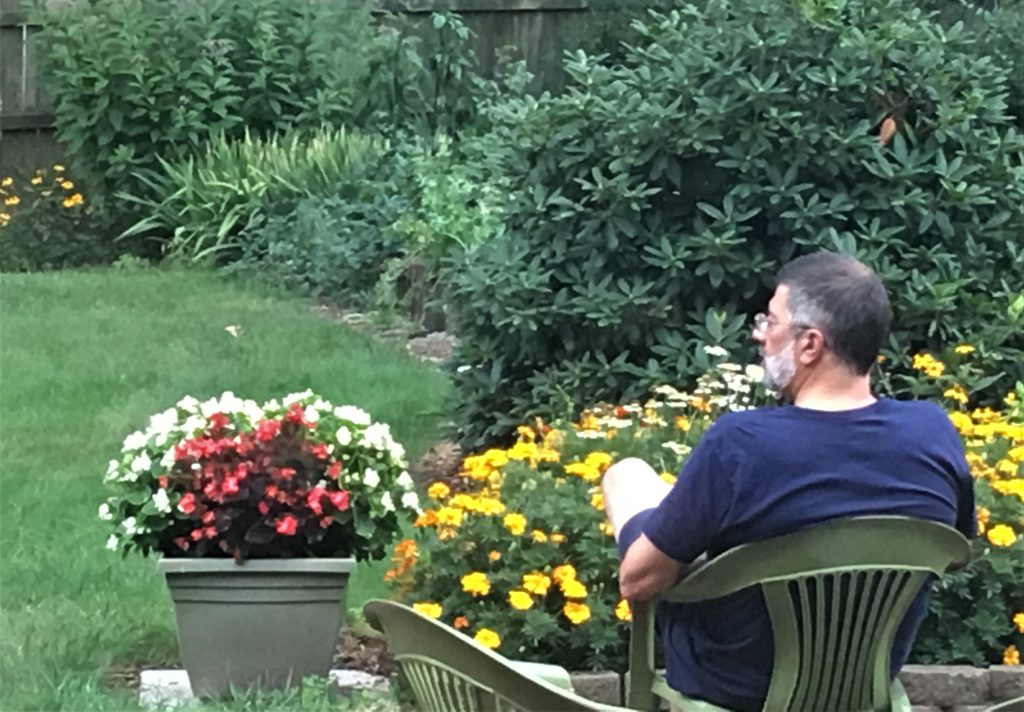
My husband, the consummate introvert thinker, often sits by himself at dawn and dusk to recharge. For him, solitude is something that has come naturally. He has been a model for me in practicing solitude.

Rana also talks about how technology has connected us in a myriad of ways but the connectedness is more virtual than real. – We now live in a world where we’re connected to everything except ourselves.”

“Our aversion to solitude is really an aversion to boredom…we dread the nothingness of nothing. We can’t imagine just being rather than doing. And therefore, we look for entertainment, we seek company, and if those fail, we chase even higher highs. We ignore the fact that never facing this nothingness is the same as never facing ourselves. And never facing ourselves is why we feel lonely and anxious in spite of being so intimately connected to everything else around us.”Zat Rana

Everything I Have Learned in 500 Words – Zat Rana

8 Ways to Embrace Solitude – Virginia Thomas – practical helps in embracing solitude

The Joy of Solitude: Loneliness as a Subjective State of Mind – Neel Burton – excellent resource on solitude as a prevention against loneliness

5 Must-See Monasteries in Virginia, USA

3) “Til You’re Home” – If you’ve ever lost someone dear to you, the song “Til You’re Home” will resonate to your core. Actress, producer, singer/songwriter Rita Wilson brings this song to the screen in the beautiful film “A Man Called Otto”. Wilson wrote the lyrics with David Hodges and performed it with singer Sebastián Yatra.

In the articles below, Wilson is interviewed about the inspiration for this song. My main takeaway was how she was comforted by a friend, after her father’s death. He told her, “The conversation continues.” I so experience that. After the death of my mom, in particular, but also many others, including my older brother with whom I had a prickly relationship but one that sweetened before he died and continues to do so…in ways this song communicates.

I watched the film above while on a flight. Crying doesn’t come easy for me, and the tears flowed.

Watch the movie and enjoy the song and think about the richness of our relationships both in the present and in the between times (from past to forever).

Rita Wilson Talks Singing and Writing Original Song for Tom Hanks’ ‘A Man Called Otto’: Listen (EXCLUSIVE) – Clayton Davis

Rita Wilson Found Her Voice (Literally) Through Songwriting – Hilton Dresden

Worship Wednesday – Go Rest High on That Mountain – Vince Gill – Deb Mills

4) Two Phenomenal Reads – Phenomenal? Well, I’m counting on it. These are my next two reads. Just got them both and honestly may have to read them together. The authors are two of my absolute favorites: Karen Swallow Prior and Curt Thompson MD.

To get started – while I was waiting for launch day on both of these books, I’ve been listening to podcasts and reading reviews. Until your books come, you can also have a read or listen below.

“I hope readers are better able to participate in the necessary, ongoing process of distinguishing the principles of the Christian faith that are eternal and unchanging from the cultural stories, metaphors, and images that embody these principles in varying degrees of fidelity. Don’t misunderstand me: this entanglement with cultural narratives and ideas isn’t unique to evangelicals, nor is being creatures of culture necessarily a bad thing. In fact, living within the cultures of this world is God’s plan. It is part of being human. I think, however, that because evangelicalism from its beginnings in the western world has been so tied to political power, it has been easier for us to overlook the entanglement that is inherent to being part of any human culture. Yet, our task is no different from Christians within any Christian movement, sect, time, place, or culture.”Karen Swallow Prior, an interview with Andrea L. Turpin

Repairing the Evangelical House Means Renewing the Evangelical Imagination – Carolyn Weber

Holy Unhappiness Podcast with Amanda Held Opelt – Sanctification with Karen Swallow Prior

Norsworthy Podcast – Curt Thompson: The Deepest Place

5) International Food FestivalsEthnic foods are a favorite in our family…maybe every family. I’m talking from Afghan boulani (flatbread) to Southern biscuits and gravy.

It’s a joy to be invited to the home of friends who bring their gracious hospitality and yummy food to our part of the world. Just recently, I had the pleasure of sitting down to lunch with an Afghan family.

I’ve learned so much from our Afghan friends who came here in the Fall of 2021. Not the least of which has been how to set a bountiful table without great resources.

Our town has a host of ethnic restaurants with a few exceptions. Armenian and Egyptian are two types of food for which I’ve not found a restaurant locally. Once a year, we have the treat of international food festivals featuring these cuisines. So good!!

Next weekend, it’s the Fourth Annual Egyptian Festival. How about you? Any foodies out there? Comment below what some of your international favorites are and if you cook them at home or have the joy of a local restaurant or festival.

______________________________________________________________________________________________________________

That’s the latest 5 Faves. Hope you have a restful weekend and energetic start to the coming week!

Bonuses:

My Son, Superhero in Training – Rachel Friedman

Secularization Begins at Home – Lyman Stone

Monday Morning Moment – A Place for You

Photo Credit: Quotes Gram

I know I’m not the only one. The experience of feeling alone (or invisible) in a crowded room. OK, for introverts this may be a welcome experience. I say, however, that maybe we have different experiences of social anxiety – introverts and extroverts.

It happens to me in the church lobby of all places after the Sunday morning service. If I didn’t walk out into the lobby with someone, it is like I could walk straight through without being seen. Skirting around various little circles – backs to me. Sometimes, I engage with a set of eyes, not wanting to break in or interfere with a conversation, but too often, it’s eyes forward with the exit door in view.

You might be thinking “How weird”. I agree with you. My aim on Sunday gatherings is to watch for loners, new people, those outside of the small group conversations. Dr. Curt Thompson puts it this way: when we come into the world, we are looking for someone looking for us. We have that need for attachment throughout our lives. I want to be that person looking for the someone looking for someone looking for them (was that understandable?).

However…there are days, not just on Sundays but at work and definitely in any large group setting, that my default is awkwardness which is even odd for me. This has not always been my modus operandi. It seems to have crept up on me later in life…but I fight against it!

Just a few days ago, I read a piece and heard a song that have both encouraged and fortified me.

Have you ever read something or heard a piece of music that went right to your core? This:

Story Behind the Song: Faithful’s “A Place for You” – Savannah Locke

and this:

Singer/songwriter Savannah Locke authored the article and co-wrote the song. She talks about how we can feel orphaned in life for various reasons. Those orphaned especially need to know they have a place – a real belonging somewhere (Psalm 68:4-8). We can take comfort in close friends and family, but the confidence of knowing we always have a place, Locke writes, comes from experiencing the love and care of God.

Abiding in God slowly heals the part of me that is convinced I am on the outside; slowly thaws the part of me that has iced over in hyper-vigilance. Savannah Locke

It’s been decades since my college years, but there is one book I kept from those days. Through all the moves and all the pain of downsizing our book collections, Paul Tournier‘s A Place for You has remained.

Tournier writes “What we are looking for is not someone who will cut through our dilemmas for us, but someone who will try to understand them. Not someone who will impose his will upon us, but someone who will help us to use our own will. Someone who, instead of dictating to us what we must do, will listen to us with respect. Not someone who will reduce everything to an academic argument, but someone who will understand our personal motives, our feelings, and even our weakness and our mistakes. Someone who will give us confidence in ourselves because he has unshakeable confidence in us…The ideal support, then, is a presence, a vigilant, unshakeable, indefectible presence, but one that is discreet, gentle, silent, and respectful…All [people] are looking, in fact, for God’s support. It is an absolute support that men and women are looking for, a support without limit – and it obviously can come only from God.”

This is the place we need…this place that bolsters us in times of stress, fear, betrayal. This place, this Person, where our own struggle can point us to those with similar struggles and we can make room for them as well…see them as we are seen.

As I was sharing all the above with a friend, she pointed to a similar point of connection from a podcast she watched. Lysa Terkeurst was speaking about her own social anxiety, entering a room full of people alone. During a quiet moment after such an experience, she sensed a word from God in the following:

“You were walking in that room desperate for acceptance and approval. Instead of walking into that room bringing My acceptance, bringing My love into that room, bringing My peace into that room. Every single person in there is desperate for that same kind of acceptance, approval, and love. I don’t want you walking into any more of those rooms begging others for scraps of all that. Live from the place that I have accepted you; I love you. You are a conduit of My peace, My acceptance, and My love to other people. You walk into that room bringing that with you and the atmosphere will change for you…Doing that practice of walking into rooms eager to give that [peace, acceptance, love] to other people (will) change something in you. Live from a place of love, acceptance, not desperate for it from other people.”Lysa TerKeurst, YouTube podcast with Louie Giglio, Minute 33:30+

Such a great word for me, too.

So…if you see me in a crowd of people, not engaging, and you also are trying to make a quick get-away, I’m looking for you. You have a place. We can all hold space for each other, especially when we trust in the One who is doing the same for us, and making a place for us…forever.

Photo Credit: Heartlight
Photo Credit: RainbowToken

Monday Morning Moment – Ignoring in the Workplace and the Powerful Practice of Noticing – Deb Mills

Quotes from Uninvited: Living Loved When You Feel Less That, Left Out, and Lonely – Lysa TerKeurst Feel

The Brains of Lonely People Reveal Why You Can Feel Alone in a Crowded Room – Emma Betuel

Photo Credit: Eternally Minded Mamas, Facebook

Saturday Short – Raising Adults – Part 1 – Responsibility Is Two Words

[Adapted from my presentation at a home-school conference. Part 2 – Raising Adults – Creating a Culture of Serving can be found here.]

Being a parent is a humbling work…one way or other, it takes us to our knees at some point. In thinking about how we shape our little ones and raise them into adulthood, I was driven to prayer…a lot.

“Oh God, You have given us such crucial work in raising our children to adulthood. Help us to be faithful to live in the tension of remembering they are still small/young and yet pointing them to their place in this world and Your Kingdom. In Jesus’ name. Amen.”

In the book of Genesis, we have a beautiful picture of God’s work – His eye for detail, His gift of order – He provided everything that was needful…including work for us.

God has given us all work to do. It was His plan from the beginning… In training up our children, we will always push against the counter-pressure of entitlement in our kids’ lives (and in our own)… but we are not alone. He’s already promised that “His yoke is easy, and His burden’s light”.

The Scripture is full of wisdom pointing us toward teaching our children to become responsible adults…understanding the importance of showing up, working in whatever capacity they can.

So we built the wall and the whole wall was joined together to half its height, for the people had a mind to work.Nehemiah 4:6

Anyone who can be trusted in little matters can also be trusted in important matters. But anyone who is dishonest in little matters will be dishonest in important matters.Luke 16:10

Train up a child in the way he should go; even when he is old he will not depart from it. Proverbs 22:6

Whatever you do, do it enthusiastically, as something done for the Lord and not for men, knowing that you will receive the reward of an inheritance from the Lord – you serve the Lord Christ.”Colossians 3:23-24

What goes into raising adults? Teaching our children and giving opportunity to see the value of work, to treat people and possessions appropriately, and to see themselves as a responsible part of a larger community. When does it start? Very early.

Author and parenting coach Reggie Joiner talks about the key to raising responsible adults is to give them responsibilities…now.

We are called, by God, to work…from the beginning…to have dominion…and to essentially clean up our own messes. As we learn to do that at home – caring for ourselves and contributing to our family – we can quite naturally expend the effort, and extend that, toward our larger community.

Joiner defines responsibility and counsels parents how to train it:

“Responsibility is an interesting word.
It’s actually two words.
Response and ability.

Do you see the link between the two concepts? If you want to raise kids to become responsible, then lead them toward a life where they develop the right attitude toward work and tasks. Give them chores at every stage.

  • Lead so their response reveals their ability.
  • Lead so their response matches their ability.
  • Lead so their response grows their ability.

Think about it this way:
Home should be the first job every kid ever has. What kind of experiences are you giving your children to prepare them to be responsible adults?”
Reggie Joiner

Raising Adults – Reggie Joiner

Sometime ago, I was listening to a podcast from Liberty University (would have linked it but it is no longer at the original link). The guest was writer, thought leader, and world-shaker-upper Karen Swallow Prior:

Prior talks about this being the anxiety generation. Some of that anxiety revolves around the pressures coming out of social media. “There is an existential anxiety that goes with having so many choices in front of you and being afraid you’re going to make the wrong choice and miss out and go down the wrong path.” – “Everything you do in life [marriage, work, weekends] is supposed to be this huge self-fulfillment…such that you can post it on social media.” Too often, our experiences aren’t fulfilling and then the anxiety comes, “did I make the wrong choice?” – Notes from the podcast with Karen Swallow Prior

Dr. Prior supports education as a help in correcting the “tunnel vision and distorted vision” that can evolve in young people’s thinking. Work throughout our children’s growing up years can also impact thinking as well…restoring perspective.

One of my favorite books on this topic is Escaping the Endless Adolescence by Joseph Allen and Claudia Worrell Allen. The Allen’s write about the “failure to launch” generation. Teens who are exhausted at what seems required of them to be adults and therefore resist doing more than the minimum, coasting through life.

Instead of asking: “What will keep our teens out of trouble?” “What will make them happy?” or “What will get them into college?”, we need to switch our focus to a different set of queries: “How can we introduce realistic elements of adulthood into their worlds?” What activities best provide real feedback about their effort and skill?” and “Which other adults can we recruit to help pass our values on to them?” In short, we need to switch our focus from activities that reflect living happily as a teenager to activities that let our young people actually use their energy, connect with adults, and make choices that matter in order to begin moving successfully into adulthood.Allen & Allen

In their helps for parents of teens (and younger children), the Allen’s coach how to guide kids to become contributing members of the family, how to give genuine, real-world feedback toward maturity, how to connect their kids with role model adults (including the parents themselves), and how to positively stretch their kids toward skill- and confidence-building.

Writer and stylist Jo-lynne Shane shares a ‘raising adults” system she used with her three children.

[Her] system based on the following principles:

  1. logical consequences vs discipline and anger
  2. choices vs commands
  3. questions vs lectures
  4. no nagging
  5. no idle threats
  6. no yelling

You see, when you allow them to experience the natural consequences of their choices rather than resorting to nagging, yelling, idle threats, and unrelated punishments, you put the responsibility for their actions on their shoulders.  Too often parents make their kids’ problems their problems.  Then the parents get angry and the kids learn nothing. 

By giving them choices rather than commands, they don’t have the option to disobey.  The key is to give only choices that you can live with, and then to be willing to follow through. 

Asking questions instead of lecturing encourages kids to think for themselves and be discerning. – Jo-lynne Shane

Raising Responsible Kids – a Series – Jo-lynne Shane

Finally, writer and parent Cara Sue Achterberg offers this exercise:

List the abilities and qualities you hope your children will have by the time they are eighteen.

Back track from that point and begin thinking of chores and responsibilities you can give your children now which will help them attain those abilities and qualities before they leave home.

Instead of thinking in terms of what they can’t do, begin to see them as the capable human beings they are and discover what they can do.Cara Sue Achterberg

Are You Teaching Kids Responsibility? 50 Simple Challenges to Get You Started – Cara Sue Achterberg

…and then they were grown.

All our children are, bit by bit, becoming adults. [Like we are often told, it comes faster than we can imagine.] We as parents recognize the adult inside each one and build scaffolding, just enough support, to help each child grow into that adult. At every age, they can see it matters that they show up. It matters.

15 Tips to Raise a Responsible Child Dr. Laura Markham

Are You Teaching Your Kids Responsibility? 50 Simple Challenges To Get You Started – Cara Sue Achterberg

Practicing What You Preach – Raising Responsible vs. Entitled Children – Marsha B. Sauls

The Goal Is Not to Raise Good Kids, but Great Adults – Dave Ramsey

I Took ‘Adulting Classes” for Millennials – Andrew Zaleski

Monday Morning Moment – When You’re Expecting to Have a Bad Day

Photo Credit: Strategy Lab

Early this morning, the idea gathered like a storm cloud – the idea of “having a bad day” today. Here’s how it started and then here’s how it went.

As a postscript to Holy Week and Resurrection Sunday, I read today’s post-Lent reading: The Lent Project: I Have Seen the Lord – by Carmen Joy Imes. Biola University posts beautiful Lent devotionals every year (incorporating music, art, poetry, and short reading). Today’s topic was on Mary Magdalene’s lingering at the empty tomb after Jesus arose from the dead.

Mary stood outside the tomb, crying…she turned around and saw Jesus standing there, but she did not know it was Jesus. “Woman,” Jesus said to her, “why are you crying? Who is it that you’re seeking?”

Supposing he was the gardener, she replied, “Sir, if you’ve carried him away, tell me where you’ve put him, and I will take him away.”

Jesus said to her, “Mary.”

Turning around, she said to him in Aramaic, “Rabboni!”—which means “Teacher.”John 20:11-18

Exhausted from grief and bleary-eyed from crying, she was expecting to have a bad day. When she found the tomb empty, and not remembering what Jesus had said before (about his own resurrection that would come)…she grew even more inconsolable.

At first, still consumed by her “bad day”, she hadn’t recognized him. This One who had restored her mind and redeemed her life. This One who knew her perfectly and loved her completely. She thought him a gardener.

He spoke to her but she turned away, in grief, thoughts clouded, blinding her awareness.

Until…He called her by name.

Then, she knew! She came back to her senses. The expectation of a bad day vanished as she refocused on the living Lord rather than the dead one.

We all struggle when a day looms full of dark possibilities, dread, or even deepening disappointment. Some of us have a bent toward being pessimistic, contrarian, or a diminisher. These bring a realism that has its own usefulness at times (well, not the diminisher…no, not ever useful in any positive way), but we don’t have to set up camp there.

Is There Such a Thing as a Bad Day? – Jen Kim

Monday Morning Moment – Negativism – Its Cost and Cure – Deb Mills

Having a Bad Day? Here are 21 Things You Can Do to Turn It Around – Henrik Edberg

A dear friend reminded me of Fred Rogers having said, in dealing with hard situations, to “look for the helpers”. Here’s a brief video of him describing this.

If a day is beginning with a downward spiral (even if it’s only in our minds), we can (as my husband sometimes reminds me) “pull up”. Our perspective, our focus, is totally within our control. The same friend above also told a story about recently taking back her Saturday, so to speak. A bad storm had passed through and left trees leaning and branches littering her woodland yard. As she sat on her deck, looking at all the devastation, she was troubled at what it would take to restore order. It wasn’t going to happen that morning and no amount of thinking about it was going to make it better. So what did she do? She turned her chair…such that a different, more lovely view was in front of her.

[Thanks, Kathy, for that good word.]

Sometimes, we have to turn our chair…or as Mary Magdalene did, turn back around to the one speaking to her. What we think should be but may not be could just be in our perspective…how we’re looking at things. It also could be remembering that we are never truly alone in the prospect of a bad day. Look for helpers…it’s good advice.

That bad day we were anticipating may just turn out to be a bad few minutes in an otherwise good day. We can make it happen…by tuning into a familiar voice or turning our chair…for a clearing the head moment.

Photo Credit: Pinterest, TobyMac, SpeakLife