Category Archives: Decision-making

5 Friday Faves – Beyond the Guitar’s Spider-Man Theme Mashup, Engaging a Person Who’s Harmed You, True Community, Going Through Closets, and Spring Flowers

Friday Faves – super fast!

1) Beyond the Guitar’s Spider-man Theme Mashup on Classical GuitarNathan Mills of Beyond the Guitar arranged and performed the three big themes of the three Spider-Man franchises of the last 20 years. So much to love in these movies, in particular the ones starring Tom Holland, Andrew Garfield, and Tobey Maguire. You’ll welcome the nostalgia and the heart-filling beauty of what Nathan does with the classical guitar.

Which did you love the most? Share in Comments.

2) Engaging a Person Who Has Harmed You – Who is this person? A parent…a spouse…a child…an employer…a supposed friend? We have a way forward toward healing.

Engaging With Someone Who Has Harmed You – Part 1

I discovered Adam Young Counseling a few weeks back and have dived in to many of his podcasts. His 5-part series above on engaging with someone who’s harmed you was like sitting in a therapist’s office…a GREAT therapist’s office. We have all been harmed by someone, and we ourselves have harmed others, often without knowing or without intending. Still, to have counsel on how to take positive steps toward healing in such a scary situation is amazing. Adam Young has experienced trauma himself, and he has redeemed that trauma in so many ways, in particular his love and help for others.

In these podcasts, Adam Young distinguishes between the garden variety sinner, a wicked person*, and an evil person. I appreciated that he said we do well not to judge people as permanently in those states because God can move to transform any of us. He did however encourage those of us who have been harmed to determine if we are dealing with a wicked or evil person…and act accordingly. His helps are empowering and transformative if we have the courage to walk through them.Photo Credit: Alistair Begg, Truth For Life

*Dr. Young spends much counsel on engaging a wicked person who has harmed us. It helped me to be reminded that a person who is behaving wickedly can, on the whole, be a decent person. What causes a person to act despicably toward us could be generational sin – not to discount that person’s responsibility in harming us, but to strive for understanding and grace (which multiplies toward us, not just to the one who harmed us). Thoughts?

When we have been harmed by someone, we need safe people to counsel with in order to be wise in our engaging others with whom we don’t feel safe. Walling ourselves off from them, trying to just put the harm behind us, or claiming forgiveness when we haven’t – none of these things get us to healing. If you have been harmed by someone, spend some time in these podcasts. Seriously. It will make a difference.

Photo Credit: Adam Young Counseling, Instagram

3) True Community – We desperately need real or true community. Whatever the problem loneliness and isolation were for us before COVID has been severely compounded. We need one anther…not in a surfacy, thin-veneered way, but in a deep well of fellowship with each other. Jennie Allen has written a hopeful and provocative book about this in Find Your People.

The need for true community is neither new nor specific to our culture. It’s been written about, researched, and explored for decades. Two great thinkers and authors Jerry Bridges and M. Scott Peck (both now deceased) are quoted below.

Photo Credit: Jerry Bridges, Quote Fancy

“If we are to master the scriptural principles of true biblical community, we must master this one: True greatness in the kingdom of heaven involves serving one another. Jesus said, “Whoever wants to become great among you must be your servant” (Matthew 20:26)…Fellowship is much, much more than food and fun and even more than reading and studying the Scriptures with another believer. Fellowship at times may involve blood, sweat, and tears as we stand side by side with our persecuted brothers and sisters…It implies a responsibility to fulfill our function in the body. We usually don’t think of fellowship in terms of fulfilling a responsibility, but that is because we have lost sight of the biblical meaning of fellowship. Fellowship is not just a social privilege to enjoy; it is more basically a responsibility to assume...But this is what servant-hood within the fellowship of believers is all about: being alert to the little things that need to be done and then doing them.” – Jerry Bridges

True Community: the Biblical Practice of Koinonia – Jerry Bridges

“In genuine community there are no sides. It is not always easy, but by the time they reach community the members have learned how to give up cliques and factions. They have learned how to listen to each other and how not to reject each other. Sometimes consensus in community is reached with miraculous rapidity. But at other times it is arrived at only after lengthy struggle. Just because it is a safe place does not mean community is a place without conflict. It is, however, a place where conflict can be resolved without physical or emotional bloodshed and with wisdom as well as grace. A community is a group that can fight gracefully.”~ M. Scott Peck

Photo Credit: One Community Global

The Four Stages to Building True Community

Do you experienced true community – where you are willing to serve sacrificially and receive that kind of care as well? We need to go after it for ourselves and one another.

4) Cleaning Closets- I’m not a spring cleaning kind of person, although, these days, we are so often called on to declutter, let go, and be free in the area of stuff management. Still we have two closets (among others) where things just get randomly tossed up onto the shelf. I decided to clear them out to know exactly what is stored there. One closet now contains my journals of the last 30 years!! Whew!

Haven’t re-read any of them but lined them up by date and found this little note from my sweet mama in the front of one of them (from many years ago). A treasure…

5) Spring Flowers – The month of March is bringing Spring along here in the US. With temperatures warming, trips to the park are becoming more regular. The glory of Spring is not lost on the kiddos.

I just want to share a few flower pics of recent days. Hope Spring is coming your way (of course, I get that’s only for the Northern Hemisphere…for you Southern Hem. folks, Happy Fall! 

___________________________________________________________________________

Thanks for a quick stop-by. It means a lot to me. Hope you’re surrounded by and creating beauty wherever you are…we sure need it in this world today…really every day.

5 Friday Faves – Beyond the Guitar’s Latest, Parenting Pearls, Aging Well, Words, and War

Quick take on favorites of mine over the last couple of weeks:

1) Beyond the Guitar’s Latest – Enjoy!

2) Parenting Pearls – So thankful for wisdom of others…especially in parenting and raising children to be mentally healthy and resilient. How other cultures parent is also intriguing. Below are some of both.

Mom blogger Becky Mansfield wrote a great piece on things we don’t want our kiddos to forget.  Please share in the Comments what you hope your children don’t forget.

What Really Matters: Things I Never Want Our Kids to Forget – Becky Mansfield

Photo Credit: Facebook, Becky Mansfield, Your Modern Family

First, You Decide that Kids Belong in School – Carrie McKean – a writer friend of mine in Texas; everyone won’t agree with her, but she writes well and with reason for us as parents during our time with COVID.

A Top Researcher Says It’s Time to Rethink Our Entire Approach to Preschool – Anya Kementz

It’s Easy to Judge Until It’s Your Kid; Let’s Try Compassion – MaryBeth Bock

The Secret of Arctic ‘Survival Parenting’

3) Aging Well – Start young. Start young to age well. If you have to catch up (like me), there is still time.

The Seven Habits That Lead to Happiness in Old Age – Arthur C. Brooks

Forgiving People Is Good for Your Health. Here’s How to Do It. – Rachel Feltman

Forgiving People Is Good for Your Health. Here’s How to Do It – Rachel Feltman

Photo Credit: John & Julie Gottman, Yes! Magazine

4) Words – As much as I love words this quote from Jesus’ teaching gives pause: “But I say unto you, that every idle word that men shall speak, they shall give account thereof in the day of judgment. For by your words you shall be justified, and by your words you shall be condemned.”  – Matthew 12:36-37
Words matter. Words mean things. We should be generous with life-giving words and sparing with words that destroy.  Silence and restraint have their place.
What If– A poem by Malcolm Guite
What if every word we say
Never ends or fades away,
Gathers volume gathers weigh,
Drums and dins us with dismay
Surges on some dreadful day
When we cannot get away
Whelms us till we drown?
What if not a word is lost,
What if every word we cast
Cruel, cunning, cold, accurst,
Every word we cut and paste
Echoes to us from the past
Fares and finds us first and last
Haunts and hunts us down?
What if every murmuration,
Every otiose oration
Every oath and imprecation,
Insidious insinuation,
Every blogger’s aberration,
Every facebook fabrication
Every twittered titivation,
Unexamined asservation
Idiotic iteration,
Every facile explanation,
Drags us to the ground?
What if each polite evasion
Every word of defamation,
Insults made by implication,
Querulous prevarication,
Compromise in convocation,
Propaganda for the nation
False or flattering persuasion,
Blackmail and manipulation
Simulated desparation
Grows to such reverberation
That it shakes our own foundation,
Shakes and brings us down?
Better that some words be lost,
Better that they should not last,
Tongues of fire and violence.
O Word through whom the world is blessed,
Word in whom all words are graced,
Do not bring us to the test,
Give our clamant voices rest,
And the rest is silence.
Then, on a lighter note:  there’s this sweet game that is all the rage right now. Wordle created by Josh Wardle (launched in October 2021). I love it because it is not time-consuming. You get one word puzzle a day that is challenging but doable. So fun.

What to Read About Wordle While Everybody’s Still Talking About It – Alex Dalenberg

Twitter, Karen Swallow Prior (Click to read the full thread)

Wordle App (different game, different creator)

5) War – We have all read and watched about the current invasion of Ukraine by Russia. How to respond? Who to respond? I won’t pose an opinion here because we have so many, and they don’t help really. Praying is the most important thing we can do. Below are some links I found interesting this week (well, links that weren’t behind a paywall). Praying…

Photo Credit: Facebook

War in Ukraine: Essential Reading

Ukraine’s Volodymyr Zelensky: the Comedian President Who Is Rising to the Moment – Stephen Mulvey

Wendell Berry’s Advice for a Cataclysmic Age – Dorothy Wickenden [Lengthy biographical piece on Berry’s advice – also includes an audio file which you can listen to instead of reading the story.]

Here are a few quotes from the piece above:

“Think Little. Nearly every one of us, nearly every day of his life, is contributing directly to the ruin of this planet.” Berry went on to say that he was “ashamed and deeply distressed that American government should have become the chief cause of disillusionment with American principles.”

In a Jefferson Lecture in 2012, he quoted Stegner’s description of Americans as one of two basic types, “boomers” and “stickers.” Boomers are “those who pillage and run,” who “make a killing and end up on Easy Street.” Stickers are “those who settle, and love the life they have made and the place they have made it in.” They are “placed people,” in Berry’s term—forever attached to the look of the sky, the smell of native plants, and the vernacular of home.

He told the crowd that, as a member of the human race, he was “in the worst possible company: communists, fascists and totalitarians of all sorts, militarists and tyrants, exploiters, vandals, gluttons, ignoramuses, murderers.” But, he insisted, he was given hope by people “who through all the sad destructive centuries of our history have kept alive the vision of peace and kindness and generosity and humility and freedom.”

“A properly educated conservative, who has neither approved of abortion nor supported a tax or a regulation, can destroy a mountain or poison a river and sleep like a baby,” he writes. “A well-instructed liberal, who has behaved with the prescribed delicacy toward women and people of color, can consent to the plunder of the land and people of rural America and sleep like a conservative.”

“If two neighbors know that they may seriously disagree, but that either of them, given even a small change of circumstances, may desperately need the other, should they not keep between them a sort of pre-paid forgiveness? They ought to keep it ready to hand, like a fire extinguisher.”

“Jesus said, ‘Take no thought for the morrow,’ which I take to mean that if we do the right things today, we’ll have done all we really can for tomorrow. OK. So I hope to do the right things today.”

Wendell Berry – Americans Who Tell the Truth Website

___________________________________________________________________________

Any favorite finds you’d be willing to share? Post them in the Comments and thanks so much for stopping by.

Bonuses:

Setting a Valentine’s lunch for our grandchildren:

The Real-Life Diet of Kenny G, Who Learned to Cook to Set an Example for His Son – Mick Rouse

YouTube Video – Jesus’ Heart – Eric Gilmour and Dane Ortlund

Three Encouraging Quotes

Monday Morning Moment – Moral Suasion – the Pathway of Truly Changing Minds – in Remembrance of MLK Day

Photo Credit: Alpha Coders

Don’t be put off by an unusual phrase. Moral suasion.

Photo Credit: YouTube, What Does That Mean?

We find ourselves in a cultural climate of power dictating more than it should. “Should”…well…who am I to judge, but I’m still saying it. For sustained change to happen, we are meant to wrestle together in the arena of conversations within community. This is where real and lasting influence lies.

We can take hope in that.

The phrase “moral suasion” is new to me. I discovered it in a piece by George Yancey entitled Breaking Up Fights and Race Relations. He defines it as:

“Moral suasion is when we convince people to do what we see as a moral good because they see that moral good as good…Moral suasion is best done working with someone to do the right thing instead of forcing that person to do what we want because of our power. Research has shown that the best way to engage in moral suasion is through relationships. In those relationships, we can build rapport, find areas of agreement, and clearly understand the other person’s perspectives. If we want people to change at the intrinsic level and not simply conform to pressure, then we should use the techniques of moral suasion instead of just overpowering that person.” – George Yancey

Breaking up Fights and Race Relations

[Is there a difference between persuasion and suasion? In the simplest terms, they are considered the same, but I do sense a difference. Persuasion is more an action of influencing another party to come to your reasoning or way of thinking. Suasion, especially moral suasion, is more a consideration that two or more parties have a sense of rightness about an issue/subject but differ in their opinion. Moral suasion works through dialog to seek and hopefully find common ground – a way forward together to do a right thing.]

Yancey’s article appears just ahead of his latest book (March 2022) –  Beyond Racial Division: A Unifying Alternative to Colorblindness and Antiracism. The publisher offers a brief summary of Dr. Yancey’s book: “an alternative approach to racial relations where all parties contribute and are mutually accountable to one another for societal well-being. He provides empirical rationale for how collaborative conversations in a mutual accountability model can reduce racial division. History and societal complexity mean that different participants may have different kinds of responsibility, but all are involved in seeking the common good for all to thrive.”

“There are times when power is necessary. But the temptation to use power to consistently solve our racial problems brings with it power struggles and the need to build up our own ability to force conformity. Different groups have contrasting ideas about what we should do. The temptation is to try to force others to accept the solutions we want to promote. But this power-driven approach is short-sighted and will not produce intrinsic changes. Those changes will not happen until we engage in moral suasion consistently rather than seeking power to force compliance.

That effort would be time-consuming. It is easier to just use power. Easier but not lasting…We must sit down with those with whom we disagree and try to understand their perspectives. We must seek out answers that meet their felt needs and show them respect. I find that few in the racial conversation want to do this. Until we are willing to have those conversations, we will continue to foster greater racial polarization in our society.”

It’s easier to just use power…but not so effectual.

Are you as tired as I am of the power plays in motion around us? …Not just regarding race relations, but in so many other areas of human experiences together. Life together.

Laws are laid out. Mandates put forward. Rules and regulations abound.

I miss conversations on the stuff of life. The stuff that matters most. That’s why I’m often one of the ones who raises their hand, offers a space, takes a corner of the table if given opportunity. Not to just say my piece but to hear yours.

Photo Credit: Brainy Quote

Today is the day in 2022 when we commemorate Martin Luther King, Jr.’s life and legacy. Certainly Dr. King was a man who exercised the great power of influence…not elected to a public office but commanding in his pursuit of a passion he believed possible.

We know him most from his speeches and some from his sermons. I wonder what his conversations were like. My hope is they were of moral suasion. In the last couple of years, we have gone through a huge transformation as a nation…to what end? Some change has come (for better and for worse). More positive, enduring change will come if we choose to reason together…across the lines that seemingly divide us but do not have to forever.

Photo Credit: AZ Quotes

Monday Morning Moment – a New Day – It’s Gonna Be OK – Deb Mills

20 Quotes About Faith From Martin Luther King, Jr. – Jennifer Graham

5 Friday Faves – One Small Step, A Father’s Good Gifts, Gossip, Blended Families, and Mission BBQ

Happy New Year! Whew! May 2022 be a reprieve from the struggle of 2020 and 2021. May we see the fruit of new wisdom and sound actions taken toward a healthier future and a closer community across our world. Thank You, God, for this new year and getting us through the last. Here are my favorite finds from this first week of 2022.

1) One Small Step – A couple of years ago, Dave and I had the privilege of listening to Dave Isay, the founder and president of Storycorps. He is a strong advocate of the power of telling our stories (to each other, face-to-face). [See his TED Talk on this here.] Given what we’ve been through the last couple of years (with our country divided over politics and trying to keep our balance with COVID), his One Small Step Initiative has been incredibly timely. Isay has a vision of bringing our country together (and maybe yours as well if you live elsewhere) through the experience of face-to-face dialog. We may have some sharp disagreements and consider ourselves enemies, but we can find common ground and common values…if we keep (or start) talking to each other. StoryCorps has made a platform where strangers can engage. Strangers who would not usually, given their differences, talk together. This One Small Step Initiative is actually being highlighted on this week’s CBS TV show 60 Minutes. Don’t miss it (or catch it later).

Photo Credit: RVA Library, Ben Himmelfarb 

P.S. Two phrases that speak to the above…and positive, healing communication, in general, are contingent communication and contact hypothesis. They are both worth taking note of and considering:

Contingent communication – Face-to-face conversation with a determination of deep listening, strong affirmation, and the mutual sense of “feeling felt”. Dr. Curt Thompson describes it as “communication, in which two individuals, through both their spoken dialogue and non-verbal cues, each affirm the other as they interact”.  (Anatomy of the Soul, p. 139)

Contact hypothesis“suggests that prejudice and conflict between groups can be reduced if members of the groups interact with each other”. In this article, Dr. Elizabeth Hopper goes on to say that “One especially promising possibility is that contact between groups might encourage more powerful majority group members to work as allies”. Instead of talking around each other, we come together. One conversation at a time.

2) A Father’s Good Gifts – This week I discovered an article by Jon Bloom entitled A Father’s Good Pleasure. Bloom talks about the joy we as parents have when we participate in generating joy in our children’s life.

One example of this for me is how my sweet step-dad continued to travel overseas to see us after Mom died. This was not a thing on his bucket list He came because he loved us and he came because he knew the joy it would bring to us.

“Which one of you, if his son asks him for bread, will give him a stone? Or if he asks for a fish, will give him a serpent? If you then, who are evil, know how to give good gifts to your children, how much more will your Father who is in heaven give good things to those who ask him!” – Jesus (Matthew 7:9–11)

“Give them [your children] good things — things they value as good and really want. And really, authentically enjoy doing it. It has God’s endorsement, since he too takes great pleasure in giving good gifts to his children…Become, through your joyful, affectionate generosity, an opportunity for your children to experience [and you with them…what C. S. Lewis calls] transposition  — to see and savor the higher, richer pleasure of God in the natural pleasure of their father giving good gifts to them.

Become a student of what gives them joy.”Jon Bloom

I love that Jon posted this piece the first week of January – when we are reeling with all the “stuff of Christmas”, including the credit card bills coming in this month. It is a joy to give our kids what they want when we can (and that is carved deeply in our western Christmas culture). It is also a joy to give our kids joy in deeper ways.

Our youngest son eats lunch with us on some Sundays. Often it is just him and us; his older siblings and families joining us occasionally. When Dave and I are most attuned to him, we just take the opportunity to affirm him and take joy in him. He feels that joy.

Have you Buried Your Gifts? – Jon Bloom

[Sidebar: The piece above talks about the gifts that we have and how our abilities and capabilities (the strength to operate out of our abilities) go hand in hand. Don’t want to bury my gifts because of a lack of gumption.]

Photo Credit: Nancy Tillman, Facebook

3) Gossip – What we may consider processing (with a friend or spouse) could be just plain old gossip. Pastor, writer Scott Sauls calls it in a recent tweet.

Photo Credit: Scott Sauls, Twitter

Such a wake-up call about gossip helps us think about the damaging impact of it on relationships. Gossip (which we too often call processing or ranting) makes us think we’re doing something about the dysfunctional relationship we have, when really we’re causing it further harm. What we’re doing is something called triangling. When we have a problem with one person but complain about that person to another. It is passive-aggressive and if we aren’t coached to go to the person missing from the conversation, then it just remains complaining. The relationship continues to be dysfunctional.

We aren’t to just bury a struggle, but we can deal with an offense with care and respect…even if it feels undeserved. This is the beginning of a healthy connection in the place of dishonoring and dismissing complaining.Photo Credit: Heartlight

A Gentle Answer: Our ‘Secret Weapon’ in an Age of Us Against Them – Scott Sauls

Beautiful People Don’t Just Happen: How God Redeems Regret, Hurt, and Fear in the Making of Better Humans – Scott Sauls (Publish date June 2022)

4) Blended Families – Step-families, or blended families, can provide safe and loving refuges for children of divorce. As an adult child of divorce, I remember well the shame of being a child whose dad just seemed to forget his children over time. When Mom remarried a man also divorced (with children of his own), we experienced the positive (and negative) of being in a step-family.

Photo Credit: Pixabay, John Hain

As older adults, both children sets have issues of parental neglect mixed in with loving relationships. Every step-family is different, of course. Many are healthy. For those who struggle, there is always help and hope…if we reach for it.

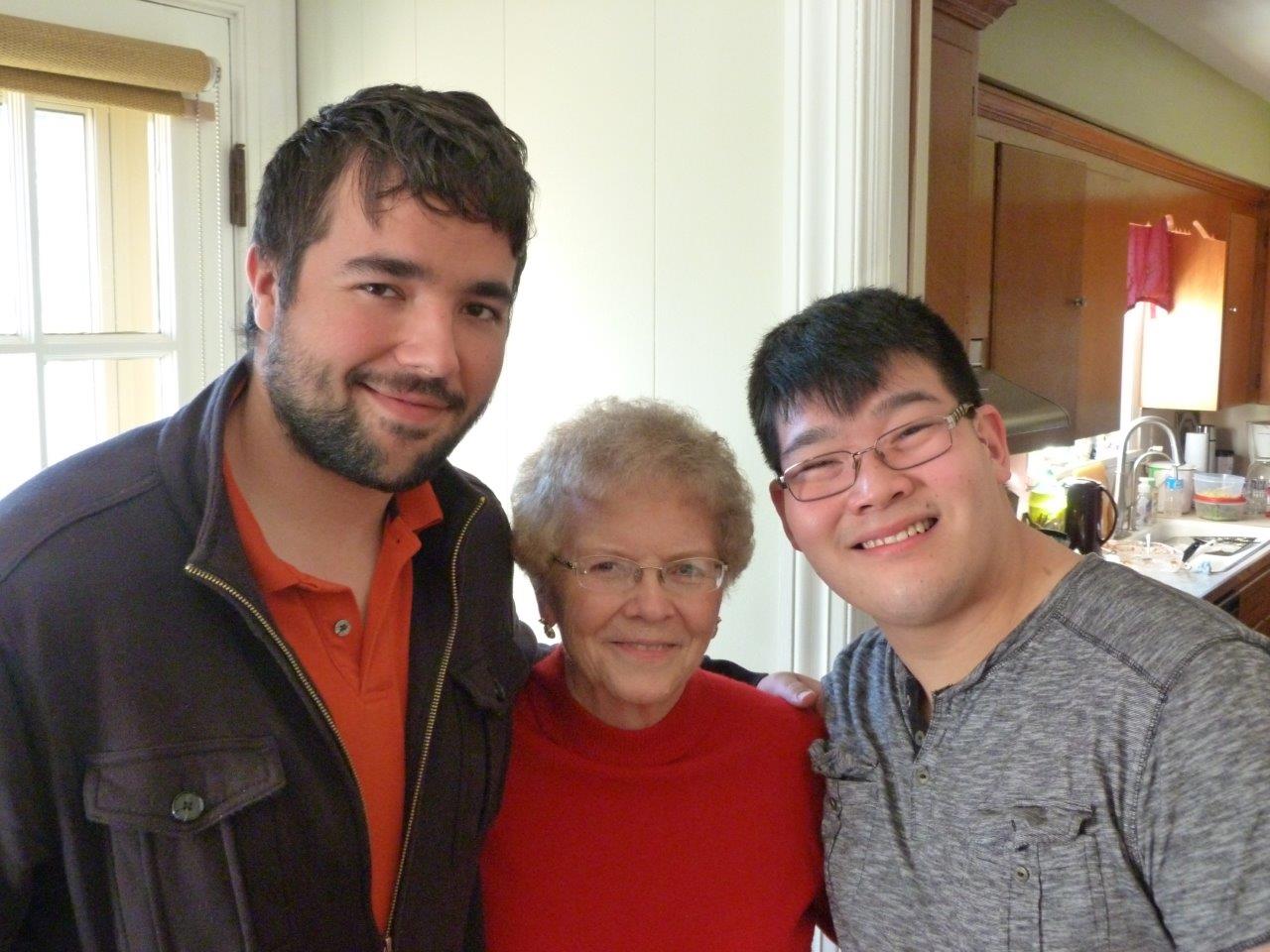
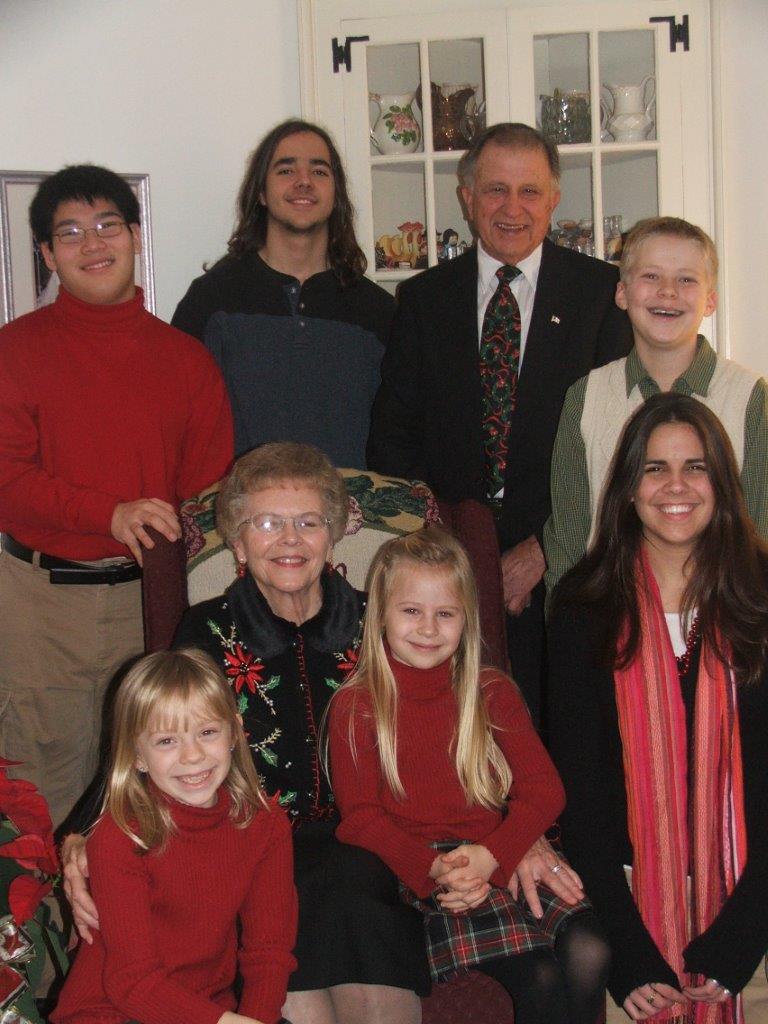
[Just some of my large blended family…including some friends who are family…for which I’m so thankful.]

A podcast I would recommend for step-families who have had broken or painful relationships is therapist Ron Deal‘s Family Life Blended. The podcast (and other resources) is a help for any family but especially for blended families. The link below is an excellent example.

Ridding Your Soul of Shame – Family Life Blended Podcast – Ron Deal with Curt Thompson

Photo Credit: Pixabay, Ben Kerckx

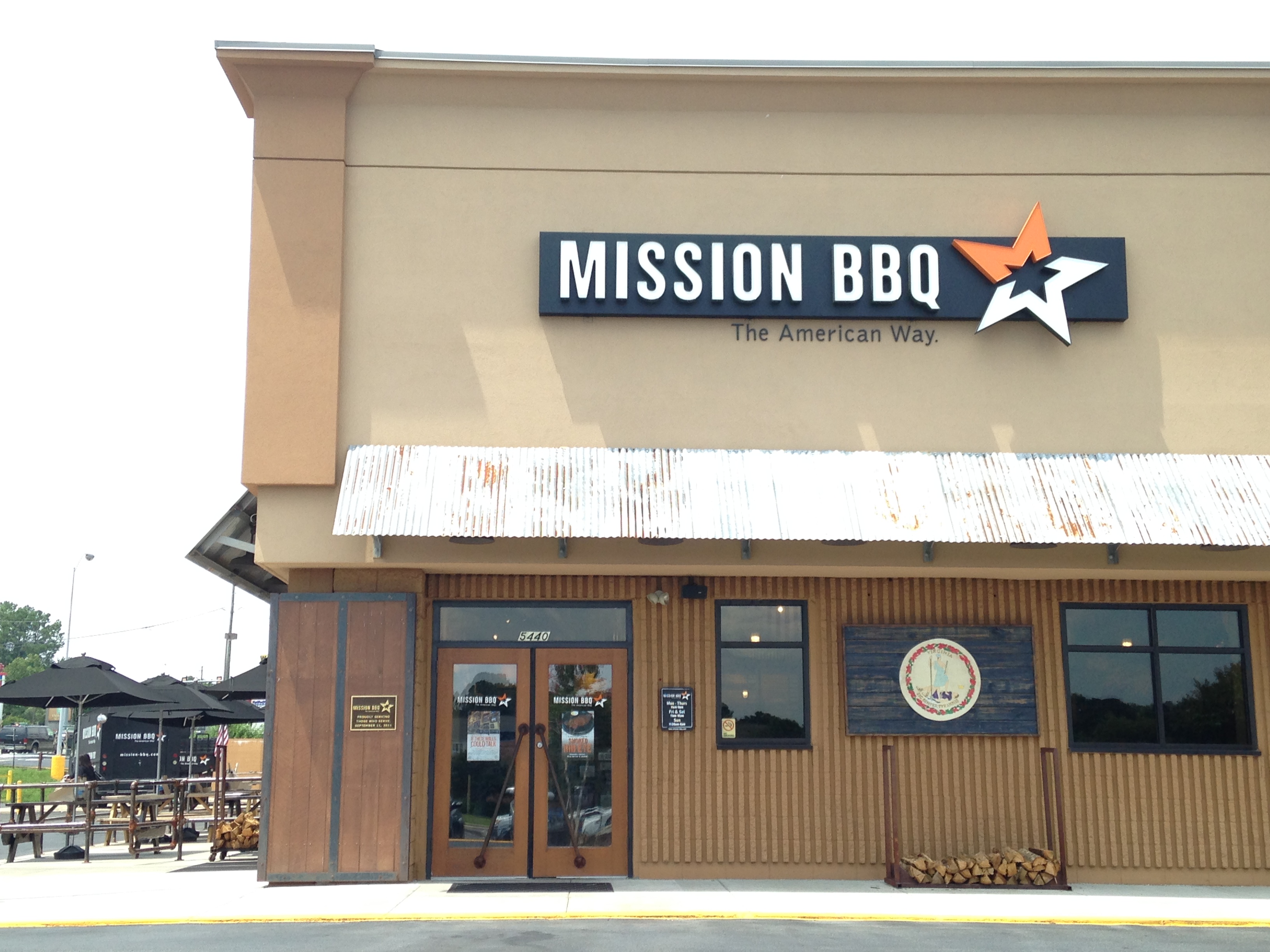
5) Mission BBQ on a MissionMission BBQ is one of our favorite restaurants in Richmond. Their generous customer service (even in this era of COVID) and consistently delicious food are super special. http://debmillswriter.com/wp-content/uploads/2017/07/IMG_6824.jpg

We are members of their birthday club and receive a free barbecue sandwich when our special day rolls around each year. Besides that, we will get an email occasionally inviting us in for another free sandwich. Today we redeemed our “Merry Christmas” freebies.

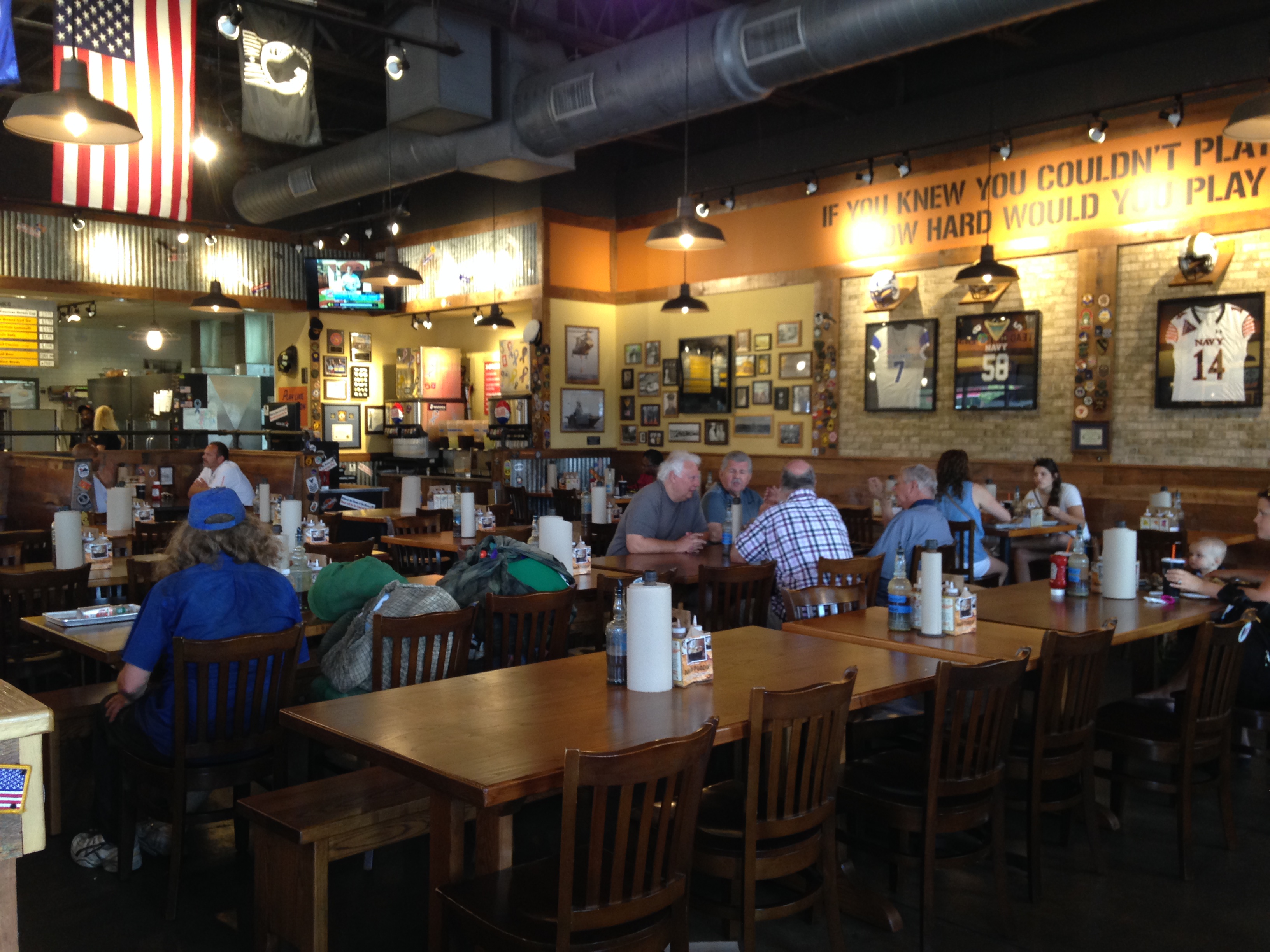
The food is great, but it’s also an uplifting in-restaurant experience. Mission BBQ sets the bar high in honoring first responders and members (and families) of the military. In fact…they make all their customers feel honored. Sweet. And very unique.http://debmillswriter.com/wp-content/uploads/2017/07/IMG_6827.jpg

In fact, if you’re in the Richmond area (or have a Mission BarBQ in your area, and are thinking about heading over on Monday, they will be closed.  It’s their National Day of Service when they feed homeless veterans around the city.

The Restaurant Dishing Up Patriotism with a Side of BarBQ 

If you have one in your town, don’t miss it. If you don’t, can you suggest your own exceptional business (in Comments below)?

________________________________________________________________________

Those are this week’s Faves. How about you? Please also use the Comments to share some of yours. Thanks for stopping by. You are a blessing.

Bonuses:

Endangered Attention: How to Guard a Precious Gift – Scott Hubbard

One big mistake people repeatedly make is focusing on proving themselves right, instead of focusing on achieving the best outcome. This is the wrong side of right. The Wrong Side of Right

Top 10 Surprising Lessons on the Genealogy of Jesus – Joshua Infantado

A Facebook post by a friend of mine in January 2020 – still speaks:

Photo Credit: John Williams, Facebook

“I make my bed every morning because it’s a gift that I get to open at the end of every day. A gift that not everyone has. So while I’m wrapping my bed in the morning and I’m unwrapping it at night I’m reminded of what a great blessing my bed really is in my life. When we stop viewing what we have as little, insignificant or not enough then we get to see what we do have as gifts we get to enjoy, great blessings in our lives and provision for our needs.”Theresa Nicely McCoy, Facebook


5 Friday Faves – New Year’s Resolutions, Habit Planner, Year-End Review, Word for the Year, and the Last Days of 2021

2021 is rapidly winding down. Whew! Here are my Friday Faves to get us ready for the new year…hopefully a joyful one!

1) New Year’s Resolutions – 2021…the end is in sight. What do we do with this new year ahead? Do we revisit those habits we thought about changing up in this tumultuous year? Maybe so. Or maybe we didn’t alter course so much for good reason. Let’s give pause a moment and consider…

Photo Credit: David Lose

Monday Morning Moment  – 2021 Come On! – New Year’s Resolutions

Are We Doing New Year’s Resolutions After a Year as Lousy as 2020? There’s One I think We Need More Than Ever – Heidi Stevens

How to Make Healthy, Attainable New Year’s Resolutions During COVID-19 – Ashley Welch, Healthline

Are You Making a New Year’s Resolution This Year? Readers Weigh In – Sarah Fielding

I take New Year’s resolutions very seriously. They have served me well through the years in shaking up troublesome habits as well as galvanizing better ones. New (or restored) habits that nurture the body, the spirit….and, when possible, family and community.

New Year’s resolutions are not always exercises in futility. They can be excellent pathways to help us get off to a strong start into the next year. Some of my family and friends treat resolutions with disdain…they never work; they never last. Oh, but not always!

They are really very energizing. Whether we meet our goals or not, there is great promise within the resolution for resetting our thinking. A keen sense of self, or self-awareness, aids in our understanding of habits and true habit change.

Without knowing it, I have actually used a practice of habit change that Ken Sande writes about on his blog, Relational Wisdom 360. He first influenced my life years ago with his work on conflict resolution through his Peacemaker Ministries. He is a gentle guide in many of the issues that complicate our lives.

His article on Seven Principles of Habit Change came at a great time. Sande talks quite kindly about how we develop habits and what it takes to change them. His first principle of habit change gives us a look at the cycle of habits – the cue, the routine (or response), and the reward. I actually followed Ken Sande’s principles below (without knowing the wisdom of it).

  1. Every habit has three parts: a cue, a routine, and a reward.
  2. You can change an undesirable habit by keeping the cue and reward but learning a new routine.
  3. The best way to overcome the temptation to revert to old routines is to have a detailed action plan.
  4. Habit change builds momentum if you can change a single “keystone habit” and then continue to build on consecutive “small wins”.
  5. Will power is like a muscle: it can be strengthened and yet needs to be exerted strategically.
  6. Faith is an essential part of changing habits.
  7. Habit change is more likely to occur within a community (even if it’s just two people).Ken Sande

Self-awareness is a huge factor relating to habit change. I can see that more now having come through seasons of looking at my own habits.

“Self-awareness is defined as conscious knowledge of oneself; it’s a stepping stone to reinventing oneself, learning to make wiser decisions, and helps you tune into your thoughts and feelings. So often we place blame on externalities because it’s the easiest excuse, when in fact we should be thinking about our thinking, reflecting, trying on different perspectives, and learning from our mistakes.”Paul Jun

It is possible to affect true habit change if we are willing to take a studied look at ourselves – our awareness and our engagement with making choices/decisions and within relationship. I used to think that self-awareness was morally charged, i.e., it drove us to become more self-centered. That doesn’t have to be the case. When we take time to really examine where our minds go, through the day, we can train our thinking toward what matters most – related to people, resources, and life purpose.

New Year’s Resolutions and Reality Checks – Wally Bock

When we are willing to do that, New Year’s resolutions can become much more transformative than just a few weeks of good intentions. These habit change principles can apply to anger issues, pornography, other addictions, and pretty much any habitual process that negatively affects your work, relationships or general peace of mind.

Consider these questions as you think on resolutions for 2022:

  1. What do I want to keep from the changes I made to cope with the pandemic?
  2. What do I want to reclaim from the pre-pandemic time?
  3. How would I “build back better” if I were in charge of the world or my neighborhood?Katherine Arbuthnott

Four years back, our pastor Cliff at Movement Church challenged us to commit to some resolutions to the Lord…together [podcast of 12/31/2017 here].  I have kept the resolutions made that day in a visible place, to be reminded of the good change in life, and the struggle… I still have them in view…four years out. Still relevant to now. For 2022, on it again…plus prayer for wisdom how to be creative and intentional, given COVID’s continued intrusion. And also added this year: writing my life’s story (capturing the memories and maybe restoring/refining some as I write).

Jonathan Edwards, the great 18th century preacher and theologian, definitely understood the importance of praying through and writing out resolutions that would inform his daily life. Over the course of several months, he composed seventy resolutions for life. You can read them here. The five resolutions I made during church on a New Year’s Eve are weighty enough for me…can’t imagine 70! Edwards just gives an example of a man who, even as deeply devoted as he already was, did not want to miss God in a busy life of ministry. Nor did he want to miss the people God placed in his life.

Resolutions help us to keep the main thing the main thing. Sure, we may struggle to keep our bodies and houses in order. Those are temporary situations. Where we hope most to be successful is in keeping our hearts tuned to what matters most. Going deep with God and others. Even in the face of a continuing pandemic...if we are ruthless and wise, and don’t give in to another year of listlessness and waiting.

We’ve already enough of that…coming up on two years.

I am resolved…

Photo Credit: Reformed Outfitters

Resolved – The Resolutions of Jonathan Edwards

Do You Want to Change Your Habits? – Relational Wisdom – Ken Sande

Habit Change is a Team Project – Ken Sande

Seven Principles of Habit Change – Relational Wisdom – Ken Sande

Make Habits, Not Resolutions – Justin Whitmel Earley

Why Self-Awareness Is the Secret Weapon for Habit Change– Paul Jun

RW Acrostics in Action– Relational Wisdom – Ken Sande

Ten Questions for a New Year – Don Whitney – Desiring God

Need Help With Your New Year’s Resolutions? – David Lose

Understanding True Habit Change and Rocking Your New Year’s Resolutions – Deb Mills Writer

2) Habit Planner –Anyone who knows the writing of Justin Whitmel Earley knows his commitment to a life well-lived. He is determined to live intentionally, not leaving the substance of his life to outside powers or sloppy habits.

Unlike resolutions, we actually become our habits. There are no changed lives outside of changed habits. And if we want to actually change, we need to take a sober look at where our habits are leading us.”Justin Whitmel Earley

Habits are the little things we do over and over without thinking about them. And the tiny and subconscious nature of habits makes them powerful. Why? Because they create our “normal.” Normal life is what stays with you from January through December. Normal life is what shapes your kids, your body, your schedule, and your heart.”Justin Whitmel Earley

His two books – The Common Rule and Habits of the Household – lay out a simple path for examining our current lives and then setting strategy for habit change. So accessible and engaging whatever our preferences for methods are. If spreadsheets help, he has one for you. If you need a more fuzzy-boundaried approach (that would be me), you can glean from his wisdom, and alter course accordingly.

Below are his own examples of the habit planner. I appreciate his heart so much. He helps us all he can (in his books and free resources):

Photo Credit: Justin Whitmel Earley, Screenshots

Habits of the Household – Habit Planner – pdf – Justin Whitmel Earley

Make Habits, Not Resolutions – Justin Whitmel Earley

Unlock the Power of Family Habits in 2022 – Justin Whitmel Earley

3) Year-End Review – Business writer Stephen Jones shares author Tim Ferriss’ practice of doing a quick past year review. Ferriss prefers this over new year’s resolutions, and Jones gives a quick snapshot of his 5 steps.

Below is Tim Ferriss’ guide for a past year review from his own blog (and podcast):

  1. Grab a notepad and create two columns: POSITIVE and NEGATIVE.
  2. Go through your calendar from the last year, looking at every week.
  3. For each week, jot down on the pad any people or activities or commitments that triggered peak positive or negative emotions for that month. Put them in their respective columns.
  4. Once you’ve gone through the past year, look at your notepad list and ask, “What 20% of each column produced the most reliable or powerful peaks?”
  5. Based on the answers, take your “positive” leaders and schedule more of them in the new year. Get them on the calendar now! Book things with friends and prepay for activities/events/commitments that you know work. It’s not real until it’s in the calendar. That’s step one. Step two is to take your “negative” leaders, put “NOT-TO-DO LIST” at the top, and put them somewhere you can see them each morning for the first few weeks of 2022. These are the people and things you *know* make you miserable, so don’t put them on your calendar out of obligation, guilt, FOMO, or other nonsense.

We do a year-end review but not in order to plan out the next year. Mostly to celebrate the year rapidly coming to an end and to reflect on how we might reorder the course of the next year (re the negatives).

A creative friend of ours put his “year-end review” into a cool video:

Photo (Video) Credit: Todd AO, Facebook

4) Word for the Year –A year ago, I read Debbie Macomber‘s book One Perfect Word. She tells fascinating stories of persons’ choosing a word to guide their year. Finishing her book and praying a bit, the word compassion became my focus. 2021 was a good year for that as we dealt with so many divisions over COVID, race, politics, etc. Compassion for all on both sides of each issue.

At first I wasn’t going to do “a word” for 2022, and then a rapid series of “coincidences” drew me to the word: joy. As this year ends, I’ve become negative and even a bit cynical. Still having faith in God but not so much in humans, including myself. Even after a year of compassion!!
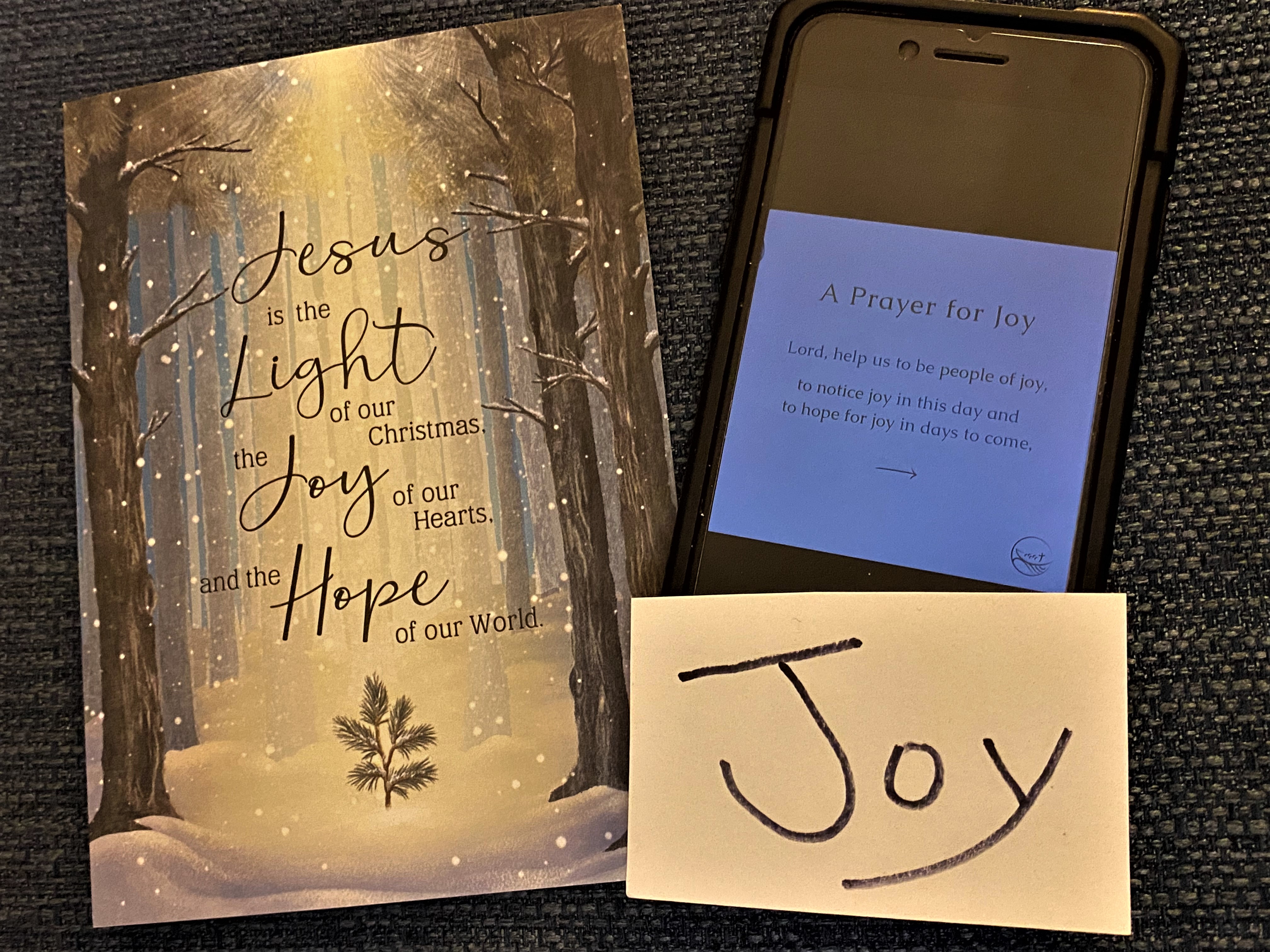
It dawned on me that I haven’t been “counting it all joy”. Or remembering that “the joy of the Lord is my strength”. Now my heart is resolved to be set on joy in 2022…no matter what.

Lord, help us to be people of joy,

to notice joy in this day and to hope for joy in days to come,

to look for light and share it with others this Advent season,

to see beauty in creation and the people we encounter,

to laugh heartily with childlike glee,

to feel true joy in your presence.     Amen.

Photo Credit: Prayer @inthecoracle, Instagram

5) The Last Days of 2021 – As may have been many of your experiences, we had people we know and love dealing with COVID in this last week of 2021. Still managed a sweet end-of-year. Hope yours was as well.


Now on to 2022!! Thanks for stopping by. It means a lot to me.

Bonuses:

Vimeo Video by Rodrigo Souza – Heart – with Nathan Mills, Beyond the Guitar

How to Stop All Procrastination: Dear You Trying to Do that Hard Thing in the New Year – Ann Voskamp (great piece on procrastination and perfectionism – both keeping us from presenting the gifts God’s given us)

Photo Credit: Samantha Reynolds, @Bentlily, Instagram (w/ permission)

52 Week Bible Reading Plan – Michael Coley

What is an Accessory Dwelling Unit (ADU) and Tips for Building One

Photo Credit: Facebook

5 Friday Faves – Epic Spanish Romance Guitar Cover, Languishing, From Sad to Mad, Christmas Events, and I.O.U.S Acronym on a Divided Heart

Christmas week is upon us! This past week’s Friday Faves finally:

1) Epic Spanish Romance Cover– Get ready for one of the most beautiful pieces ever written for classical guitar. The composer is unknown. The arranger for this piece is  Nathan Mills, at Beyond the Guitar. Enjoy.

[One of his subscribers on YouTube asked him to do for Niel Gow’s Lament what he did to the Spanish Romance. Here in his college days, Nathan plays that piece. Hope he does put his own touch to it again…all these years later. A funny sidebar to the piece below: Nathan’s sister wanted him to play this for her wedding. He said something to the effect that the whole title of the piece is “Niel Gow’s Lament For the Death of His Second Wife” so Nathan played other pieces instead. Didn’t seem a good fit for a wedding day. ]

2) Languishing– Who even knows what this is?! Well, author and organizational psychologist  Adam Grant does. He defines it as:

“Languishing is a sense of stagnation and emptiness. It feels as if you’re looking at your life through a foggy windshield. And it may be the dominant emotion of 2021.

As scientists and physicians work to treat and cure the physical symptoms of long-haul COVID-19, many people are struggling with the emotional long haul of the pandemic. It hit some of us unprepared as the intense fear and grief of last year faded.

In psychology, we think about mental health on a spectrum from depression to flourishing. Flourishing is the peak of well-being: You have a strong sense of meaning, mastery and mattering to others. Depression is the valley of ill-being: You feel despondent, drained and worthless.
Languishing is the neglected middle child of mental health. It’s the void between depression and flourishing — the absence of well-being. You don’t have symptoms of mental illness, but you’re not the picture of mental health either. You’re not functioning at full capacity. Languishing dulls your motivation, disrupts your ability to focus and triples the odds that you’ll cut back on work. It appears to be more common than major depression, and in some ways it may be a bigger risk factor for mental illness.

So what can we do about it? A concept called flow may be an antidote. Flow is that elusive state of absorption in a meaningful challenge or a momentary bond, where your sense of time, place and self melts away. During the early days of the pandemic, the best predictor of well-being wasn’t optimism or mindfulness. It was flow. People who became more immersed in their projects managed to avoid languishing and maintained their pre-pandemic happiness.” – Adam Grant

There’s a Name for the Blah You’re Feeling: It’s Called Languishing – Adam Grant

I’m very thankful to come across this article by Dr. Grant. He has much more to say both in the above piece and in his TED talk below. We can learn how to move from languishing back to flourishing.

The links below point to a varied and fascinating reach into languishing. Worth your time.

The Neglected Child of Mental Health – Bruce Isdale

The Neglected Child of Mental Health – Caron Leid

The High Cost of Calm – Why Relaxing Is So Much Work

I’m a Short Afternoon Walk and you’re putting way to much pressure on me – Emily Delany

How to Describe Our Pandemic State(s) of Mind – WNYC Podcast

Why You Need to Address Languishing to Retain Your Talent

3) From Sad to Mad – In the midst of a sweet time of year for some of us folks, I have found my capacity for sadness stretched super far. With a background in cancer nursing where loss was always part of life, and with all the hello-goodbyes in our overseas season as a family, and finally having lost very significant people in the last few years…sad is stretched. What has surprised me of late is how fast my “sad” goes to “mad”. I get angry at the losses – deaths to COVID, marriages broken, families estranged from each other, moral failures…and more. Mad is not where I want to be. “Righteous indignation” never stays righteous. It gets mean way too quickly.

Photo Credit: Pexels, Serkan Goktay

From Sad to Mad: How Suppressing Your Sadness Invites Anger – Joshua Nash

The piece above helped me immensely. Therapist Joshua Nash offers helpful steps (go there if this has become an issue for you as well). The main take-away for me is that I shift from sadness at a loss to anger at the injustice of it. What is better for my emotions, body, and relationships is to stay in the sadness. Feel it, examine its impact, mourn the cause. Sadness will subside. Moving into anger (as natural as it is in grieving a loss) mucks up the sadness. Anger is punishing (to yourself and others). As hard as staying in the sadness is, we (and our relationships) will be better for it.

Christmas Bitter and Christmas Sweet – Tim Challies

4) Christmas Events – December is practically glutted with events to celebrate Christmas. In a month when meditating on the mystery of a virgin birth and the long-anticipated coming of a Savior King, quiet is hard to come by. We make room for it…alongside all the fun of this month. Below is a photo array of just some of this past week for us.

  • Christmas Cookie & Ornament Exchange (us women):
  • Old-fashioned Carol Sing (mostly in our own basement):
  • VCU Holiday Gala with our favorite alum and his little son: 
  • Tacky Lights RVA:
  • Ethnic lunch out (#Mezeh) with our youngest:
  • Quiet times in front of the fire (quiet on the schedule AND with cookies & coffee):
  • Christmas with The Chosen:

[If the recording of Christmas With the Chosen: The Global Live Event becomes inaccessible, you can find it on The Chosen app.]

5) I.O.U.S Acronym on a Divided Heart – This morning I was struck afresh how little undivided attention is exercised in my day. Even my introverted husband will spill out all sorts of wise and wonderful words – when I am wholly there. Fixed. Not leaving the room mentally. These moments are more rare than I’d like to confess…all because of the struggle to focus.

Author theologian John Piper tackles this issue with our heart toward God. We struggle with all sorts of noise and clatter pulling us in directions that leave off the wonder of deeply knowing Him.

Photo Credit: John Piper, Quote Fancy

Piper uses an acronym that is hugely helpful in this (setting us in a positive direction for the New Year):

I.O.U.S. – [From John Piper’s Divided Heart article linked below]

“The embattled heart is typical of the Christian life. None of us has a consistently united heart in longing for God.”

  • “The letter I stands for incline. “Incline my heart to your testimonies,” we pray with Psalm 119:36. We ask God to take away resistance. We ask God to incline us toward God and his Word instead of away from God. And so we admit all our inclination toward God is a work of God. The psalmist would not be praying like this if the inclination was ultimately within our own power. If it were, he wouldn’t be asking God to incline his heart. We plead with God to take our hearts in his hands and to incline them, bend them, toward his Word.
  • Then the letter O stands for open. Psalm 119:18 says, “Open my eyes, that I may behold wondrous things out of your law.” We need God to work a miracle on the eyes of our heart so that we can see the truth, beauty, value of who he is right there in his word. If we are left to ourselves while meditating on God’s word, we will see nothing of his spiritual beauty and worth.
  • Then comes the third letter, U. It stands for unite. Psalm 86:11 says, “Unite my heart to fear Your name.” What an amazing prayer: “Unite my heart.” So what’s the problem that this psalmist is praying to solve? The problem is a divided heart.”

Plead Psalm 86:11 in prayer: ‘O God, unite my heart to fear your name.’Is It Normal to Have a Divided Heart? – John Piper

___________________________________________________________________________

Bonuses:

The Last Word – A one-minute video speaks volumes about our country, the media’s impact on us all, and one decision to step away. 62 y/o news commentator Brian Williams stepped away from a 28-year career with NBC/MSNBC. His last show was December 9, and he announced his resignation in this powerful short statement. We can all take something away from this, whatever our politics or nationality. There comes a time…

How to Engage a Parent Who Has Harmed You with Autumn – Podcast 23 – Adam Young Counseling

Photo Credit: Instagram, Adam Young Counseling

Women & Work Book Club – The Common Rule by Justin Whitmel Earley – Check out previous books reviewed and discussed with the authors.

Did Chevrolet Have to Make America Cry With Its New Christmas Ad? – Joe Cunningham

The Great Challenge of Every Marriage

9 Habits that the World’s Healthiest and Longest Lived People Share – Dan Buettner

Photo Credit: Pinterest

Photo Credit: Contemplative Monk, Facebook

Monday Morning Moment – Walled In, Dismissed, Frazzled, and Discouraged…Nevertheless

Photo Credit: Heartlight

What’s your situation? How’s your heart? What is your body holding onto? Remember when you were so full of the possibilities of life, so fresh with anticipation of what was ahead, what you could accomplish?

Then life happens, and it doesn’t always work out like you thought it would. Running turned into slogging. Your passion got sucker-punched. The opportunities and advancements kept coming in, but at some point, bewilderment set in. You just got tired…just plain weary.

Some call this burnout, and it may be. What if it is more than that? What if it is a bloody battlefield where, if not our very lives, our joy is under full attack. What if those God-given strengths, those life-honed skills, and serendipitous accomplishments seem not to be at play. Maybe you’re overthinking, or maybe…just maybe…the way through is surprisingly simple.

We all have an important place to occupy in this world. Every single one of us. Fight for it. Walls may seem high, bottlenecks too narrow, and, at times, adversaries hammering around us. Nevertheless…We can find a way to bring the walls down (or just go around them), squeeze through the bottlenecks, and shake off the idea that we can’t win…just. too. tired.

Circumstances in life and work can drain us. Especially over time. Oddly we can still be effective in life but the emotional, mental, and physical toll adds up. The body remembers…and keeps score.

Jesus gives us a beautiful and intimate picture of the “nevertheless”. The night before he would die on a Roman cross, he appealed to the Father, as his painful and humiliating death loomed ahead of him.

Photo Credit: Biblepic

Nevertheless…here was the Messiah, the Christ, in all the sinless perfection of his life, coming to the very end of himself. Exhausted, emotionally overwrought, yet clear-minded, understanding exactly what would be required from him. Nevertheless…he stayed the course. He was not giving up. He knew what was at stake. He trusted the Father, and he persisted in what he was called to finish.

Photo Credit: Leonard Ravenhill, QuoteFancy

For us, we have choices. We can resign ourselves to a life and work not what we anticipated…or we can clear our heads and remember our own callings. No walls are too high nor adversaries too strong.

Photo Credit: Biblepic

We each bring something to the table. If we withdraw from the table or accept a perceived exclusion, we can miss the fullness of life we were meant to have. Others will miss us as well. Believe that. It’s true.

When fatigue and discouragement set in, and our bodies are drained of response, we need to take hold of the “nevertheless”. It’s reminiscent of the many “but God’s” in Scripture and in life. We may be up against a Red Sea like Moses, or a Goliath like young David, or a corrupting culture like Jesus. We lament “but God”…we are too inadequate. Too small. Too aware of risk. Nevertheless, our “but God’s” can change to what is truth. The meaning of the protest changes into the “but God” miracles when He shows up and does what only He can do…in us. Through us.

Photo Credit: Biblepic

Hoping you lean into the “nevertheless” today.

Podcast – Why Everyone’s Freaking Out (& Why We Don’t Need To) – David Marvin, Guest on Relatable Podcast with Allie Beth Stuckey

15 Proven Ways to Suck the Life Out of Your Staff – Scott Cochrane – applies to any workplace. Take note of the “Strategies To-Avoid List”.

6 Things That Can Suck the Life Out of You! – Dale Hudson (and Part 2 on his story and how he dealt with those things that sucked the life out of him – to get you started, they are: People, Problems, Pressure, Pace, Pain, and Personal Sin)

The Humble Rejoice – Rick Bee

Nevertheless – Robert Ferguson

Photo Credit: Pinterest

Monday Morning Moment – Living Between Adult Kids and Older Parents

God put us in families. All of us.

God put me in the middle of boys with a mom who loved us completely and a father of whom I have little memory. His relationship with us was not one of outright abuse but neglect and eventual abandonment. When I was five, my exhausted mom divorced this never-working man. She  would later explain that action as simply “just one less mouth to feed”. She soon after came back to faith in Christ and brought us with her (unchurched until then). Our dad had long since disappeared from our lives.

Fast forward to the present: married to a man who deeply loves the Lord and loves us well also. We have three adult children and two added by marriage, and now four precious grandchildren.

All our parents (including a beloved step-dad) are gone except for Dave’s exquisite praying mom.

Sandwiched between adult kids and older parents is where we are, and I’m grateful. In fact, I think about our kids and their littles (and some of you) now in this same season, just a different generation. 

The room is delightfully crowded (not without challenge) with multiple generations – each bringing extended families of their own. So many faces and so many voices.

Every family member (and each of us in that family) has great value to God. His desire for us is to bear  the fruit of His love (Galatians 5:22-23) – making it beautifully tangible to others. He is with us in this.

What if our parents made life hard for us either by trauma or, as adults, by intrusion or neglect? Or what if we find ourselves in awkward places in our adult children’s lives? These “what if’s” make us want to pull ourselves out of obedience to God, as we feel justified by our pain to distance ourselves from some in our family. The ripple effect of pulling away is wide-reaching in a family. Wider than we can imagine.

Even when relationships are healthy, the heavy responsibility of parenting young children puts its strain on our precious adult children. We feel the pull – torn between kiddos and our olders or others (sibling families, too). We also model for next generations what family looks like. How we handle the hard is quite probably how they will handle the hard.

We all choose, consciously or not, from among four ways to engage with or disengage from our families.

  1. Embrace. We can trust God with the families He has given us. We can love them well. We forgive and seek forgiveness. We spend time with each other and attune to how God sees them. We who share adult space try to find the balance of loving each other well without our own preferences getting in the way. The older ones will only be with us for a moment. They have stories and history and lives that matter. Our younger ones also grow up and have their own families and life pressures. We extend ourselves in both directions – up and down.
  2. Debase/Disgrace. Sometimes members of our family wrong us or another beloved family member. We “triangle” talking about them with others, without them being present. Their behavior may warrant our disdain. We are tempted to debase them privately or disgrace them publicly. However, God is not finished with them or they wouldn’t still be here. Wisdom is to take our sorrows to God and appeal for Him to help us love these hard-to-love ones. He is able. It helps to remember we may also be the ones not so easy to love. [I forget that sometimes.]
  3. Replace. We are tempted to completely replace hard family members with friends. Adult friendships are such a gift from God. They fill in empty places in our hearts. They can actually help empower us to love and live like Jesus with these family members. Or they can usurp their place in our lives. Friends, help bolster our resolve, as we choose to “stay in the room” with family members. Let’s be that one who is not going anywhere – that picture of Christ for these.
  4. Give Grace. This is similar to “Embrace” but with God-guided boundaries in place. The Word is full of instruction, like Colossians 3:12-14. Living between olders and youngers, I want to be that one who gives grace both ways. Speaking love often and always. Not judging or applying pressure. We can choose to honor one another, which, in turn, honors God. Giving grace includes giving grace to ourselves.

Photo Credit: Facebook, Gods Armour

 Do I get this wrong? All the time. We are works in progress. God’s door of healing is always open to us.

Photo Credit: Samantha Reynolds, Bent Lily (w/ permission)

[One last pic – my mom, our youngest son, and me sandwiched between them & behind the camera – wishing I could roll back the years to when she was still here. Embrace & give grace. The years rush by.]

5 Friday Faves – “Fly Me to the Moon” Finger-style, Costly Grudges, Building Focus, “Don’t Leave Crumbs”, and Fall & All

Hi All! Friday Faves on a Monday after a busy Friday-Sunday weekend. Go!

1) “Fly Me to the Moon” Finger-style – After Nathan posted his Squid Game medley, he was asked to do a stand-alone “Fly Me to the Moon”. Here it is! The jazzy, up-beat rendition is so fun!

2) Costly Grudges – Is there someone you struggle to like or be in their company? Would you say it’s a grudge, either originating from you or that person? Grudges rupture relationships. They have a negative impact not just on that relationship, but potentially on others as well. Not to mention, their impact on your own health.

Photo Credit: Pinterest UK

Writer Tanner Garrity has written a list of 100 Ways to Live to Be 100. #66 is “Don’t Hold a Grudge”. Here is his take below:

66. Don’t hold a grudge

Happy people live longer. Improve your happiness by practicing “epistemic humility,” an intellectual virtue predicated on the idea that one can’t ever know something for sure. It’s meant to help us admit our imperfections and forgive others. Sounds too good to be true in the 2020s? All the more reason to give it a try.”

When we start to feel a grudge brewing, or we make the first strike and cause the rift with another person, the situation is greatly helped by some measure of humility. We don’t know everything about what just happened. In the midst of a quarrel, assessments are feverishly being made and the tendency is that they favor one over the other. If we treat a disagreement with humility, with the understanding that we can’t fully know what is going on with the other person in the argument, then we stand a better chance of some sort of resolution.

Worth the effort…including the perk of adding to one’s longevity.

What Is Family Estrangement? A Relationship Expert Describes the Problem and Research Agenda – Kristina Scharp

3) Building Focus – Focus is like muscle; it has to be built through exercise. I struggle with attending issues. To come across some simple tasks to add to life and aid focus is a happy occurrence.

Photo Credit: Pexels

Author Eleanor Morgan presents How to Retrain Your Frazzled Brain and Find Your Focus Again. In her piece, she introduces the scholarly work of scientist Amishi Jha, author of Peak Mind: Find Your Focus, Own Your Attention, Invest 12 Minutes a Day.

“We can learn to focus better, but we need to think about attention differently. It is not something we can just choose to do. We have to train the brain like a muscle. Specifically, with short bursts of daily exercises.”Eleanor Morgan

Morgan posts some of the mental exercises that Dr. Jha prescribes, including the 5 tips below:

  1. Pay attention to your breath, and where on your body you feel it most: direct your focus like a beam of light. Do this for three minutes a day, for a week.
  2. Integrate this technique into everyday life – for example, brushing your teeth. If you’re thinking about your to-do list as you’re scrubbing, bring the light back. Focus on the sensations.
  3. A lot of people report that their mind is “too busy.” Your job is not to stop it – your job is to exist with it, and to place your attention back where you want it.
  4. Ignore “mindfulness myths”: you are not “clearing your mind.” This is an active mental workout.
  5. There is no “blissed-out” state you are aiming to experience; in fact, the whole point is to be more present to the moment. – Eleanor Morgan

How to Retrain Your Frazzled Brain and Find Your Focus Again – Eleanor Morgan

I love the idea of being present in the moment…rather than the angst of the past or the unknown of the future. Sure, we have to plan, but the present is a much-neglected experience, and it’s really the only one we truly have. Right this very minute.

I am focusing in on the now.

These Navy Seal Tricks Will Help You Perform Better Under Pressure – Stephanie Vozza

4) “Don’t Leave Crumbs” – So crumbs aren’t anything we want to leave behind (unless you are the fairy tale pair, Hansel and Gretel. The wildly successful actor and author Matthew McConaughey talked about “crumbs” in a university commencement speech he gave in 2015.

“Don’t leave crumbs,” he says. “What are crumbs? The crumbs I’m talking about are the choices we make that make us have to look over our shoulder in the future….They come in the form of regret, guilt, and remorse – you leave ’em today, they will cause you more stress tomorrow, and they disallow you from creating a customized future in which you do not have to look over your shoulder.”Matthew McConaughey

Matthew McConaughey’s 5 Rules for a Good Future – Niklas Göke

Relationally, this reminds me of an adage “Keep your accounts short”. This means that your name is safe on my lips, and that I will make a practice of refusing to think ill of you. Keeping accounts short. Leaving no uncomfortable crumbs behind us in relationships or work/play practices.

In McConaughey’s speech he also gave 5 pieces of wisdom:

  • Don’t fall into the entitlement trap.
  • Never say anything is “unbelievable”.
  • Seek joy, not happiness.
  • Define success for yourself.
  • Make decisions you’ll be happy about tomorrow.

He gives more rationale and commentary in the larger speech (linked above). He also used these same points in another talk, incorporating his faith as well. The messages of both seem blended in an artful (10 minute) video. Below.

5) Fall & All – It is my favorite season – Fall or autumn. I just want to close with some images of this brief and beautiful repose between Summer and Winter. It goes so fast and I am savoring it every way possible (except for adding anything pumpkin-flavored to coffee. I just can’t).


For me, Fall ushers in Christmas (American Thanksgiving sitting right in between), so I’m completely ok with the mix of all this beauty.

.

That’s the Faves for this week. Thanks so much for stopping by. You encourage me…put your own Faves in the Comments below. Until next time.

Bonuses:

Photo Credit: Facebook, Hallmark Channel

6 Steps to Better Communication – Mental Health Mama

The Good Part About “Waning” Immunity – Katherine J. Wu

Interoception: The Hidden Sense that Shapes Wellbeing – David Robson

How to Identify Your Shadow Emotions and Why You Should – Rachel Fairbank

Monday Morning Moment – Parenting “Knots” and Untangling Them

Photo Credit: Pexels, Hipkicks

Do you remember who taught you how to tie your shoes? Or ride a bike? Or drive a car? We all have persons attached to those lessons and memories as well.

A teacher friend of mine recently posted (on Facebook) Joseph Stroud‘s poem “Knots”. I don’t remember ever reading it…but it stirred vague memories and sharp emotions.

OK…that’s a weighty situation. Most of us as children and teens feel proud and accomplished with each skill mastered in life…and our parents the same for us (and themselves as our parents). Mastery is a blessing that goes in an array of directions.

As parents we don’t get it right all the time, for sure. Rarely do we have the opportunity to go back and do it over again. Shame is a dark process we don’t want stirred up in us nor do we want to plant it in the hearts and minds of our children.

We learn and we grow and, sometimes, we ask forgiveness.

Our youngest son was born prematurely. He had a brain bleed in his first week of life that left him with physical challenges. He has overcome so many in his life that we forget sometimes what an incredible person he truly is. How much he has faced and risen above.

He will probably never forget trying to learn to ride a bike. I know I won’t forget it. As we pushed, cajoled, and sometimes scolded his faulty attempts…little did we know that he physically was never going to be able to ride a bike. And so what?! OK…we finally got it.

I just hope he doesn’t have too many memories like that in Joseph Stroud’s poem. To this day, without any memories I can call to mind, having someone standing over me watching me work is anxiety-provoking. Wonder why.

“…That memory stays with you long after you have grown into an adult who keeps trying to find his way in the world — to be strong and brave and independent and competent — without tripping over his shoe laces, without entangling himself in doubts about his father’s love.”                          – V. Galligan, Knots

In the heat of parenting, when our own “reputation” is on the line, or so we think, we don’t always see these precious children…beautiful and brilliant…and vastly more valuable than anything we think we could possibly shape meerly into our own image.

In recent weeks, I’ve been reading the works of psychiatrists Curt Thompson and Dan Siegel and  wrote about it as well…repeating a bit below:

Dr. Thompson has written a trilogy of powerful, ground-breaking books – Anatomy of the Soul, The Soul of Shame, and The Soul of Desire.  He describes these books as exploring “how neuroscience relates to the ways we experience relationships, deep emotions like shame and joy and especially our own stories — and how we can process our longings and desire for spiritual connection with God and each other to live more fully integrated, connected lives.”

[I highly recommend the above books, and not just for parents.]

Thompson refers often to Dr. Siegel’s “4 S’s of Attachment-Based Parenting“. Those S’s relate to what our children need from us, as infants but throughout life. We want them to know they are “safe and seen” and to experience being “soothed and secure”. This is especially poignant when we introduce the word “No” into the great adventure of their lives. No…and discipline as they get bigger.

“Seen, safe, soothed, secure”

Hard lessons in life don’t have to be laced with fear or shaming. We may have not experienced all the 4 s’s as children, or definitely not all the time, but we can aim to make that happen in our own children (and grandchildren). That they may know they are safe with us (no need to “brace for impact”), that they are truly seen (all the big emotions and struggles), that they can count on being soothed, and that they are secure in the love they have from us.

The 4 S’s of a Healthy Relationship – Kirsten Belzer

I am learning so much about parenting as a grandmother. With small children, the first time around, I just didn’t know what I didn’t know.

Photo Credit: R. D. Laing

Today parenting helps abound – in all sorts of media. In fact, it is hard to sort it all out while moms and dads are in the hot lab of real-time parenting.  Almost too much information; too much guidance.

Better a fire hose than needing to lean on “a mother’s intuition” which is what I was told would get me through figuring out how to parent my tiny firstborn.

What are some of your best helps? Please post in Comments below.Photo Credit: Pexels, Keira Burton

Photo Credit: The Motivation Hotel

The Neurobiology of Attachment to Nurturing and Abusive Caregivers – Regina M. Sullivan, PhD

https://connectedparenting.com/podcasts/