Tag Archives: workplace

Monday Morning Moment – You Have Three Choices – in Work and Life

Blog - Monday Morning - Facebook imagePhoto Credit: Nourish the Dream – Facebook.com

Slaves, in all things obey those who are your masters on earth, not with external service, as those who merely please men, but with sincerity of heart, fearing the Lord. Whatever you do, do your work heartily, as for the Lord rather than for men, knowing that from the Lord you will receive the reward of the inheritance. It is the Lord Christ whom you serve.Colossians 3:22-24

Hopefully, you’re not feeling like a slave this Monday morning. You have choices. Even Paul, in writing to the Colossian church, spoke to those believers, enslaved at that time, as persons with choices.

My Monday mornings these days have been filled with thoughts and prayers for friends working in difficult and unusual circumstances – uncertain futures, struggling to stay on course, grappling with coming change. If you’re not in such a challenge, be glad and learn from those who are. How thankful I am for those in my life who shine as “stars in the universe” (Philippians 2:14-16).

Every single day, we have choices of how we deal with our work and our co-workers…especially in the press of uncertainty and change.

1. We could give up. What a temptation this is. When we are faced with what seems like a waning future (dwindling opportunities, more work with less workers, damaged trust), it is easy actually to give up. We clock in and do what’s necessary. Stay below the radar. Spend breaks researching other jobs. Keep doing what we’ve been doing with no vision for the future. This is an easy default…don’t make it yours. You’re better than that.

2. We could give in. – This is the darker choice. This is when we allow bitterness to take root in our hearts and color our attitudes and work. Giving in is when our performance actually deteriorates because we figure who cares anyway. Giving in is when we say the ugly things we’ve been thinking about our situation. Giving in is when we treat colleagues who were once friends as competitors, as threats to our position rather than supporters. Giving in does no one any favors and actually adds to the burden we already feel in what may be a very complicated situation already. Giving in is never where we want to go.Blog - Look Back, Look forward - Nourish the dreamPhoto Credit: Nourish the Dream Facebook.com

3. We could give it all we’ve got. Here’s where huge faith and great character come in. It’s so easy to say, “Keep doing what you’re doing”, “Stay in the game.”, “Trust God”. Don’t get me wrong; these encouragements are wise and true…it’s when we are struggling with the muck and mire of actually putting feet to faith in a situation that seems wrong. The difficulty at work may not even be wrong; it may be completely necessary…It’s when the force of the impact lands squarely on you that these choices become so real. Still, we have choices. It’s not the workplace that forces these choices on us. They are always ours. Every. Single. Workday.

If I can speak into my friends’ struggle, please stay on the course you’ve been on – such a way that you continue to build/leave a legacy of glory – to God and to the work He’s given us to do. One friend of ours in the thick of a stressful, stressful work situation, told another friend of mine, “Don’t lose heart”.  When you hear that kind of encouragement from someone determined to keep his own focus on what matters it resonates with such verity you want to do nothing less. So, let’s never lose heart and let’s do the work of trusting God in our situations. It’s so much better than the consequences of the other choices. So much better.Blog - Unknown future and a Known God - Monday MorningPhoto Credit: Nourish the Dream Facebook.com

After all, it’s only Monday morning. Who knows what the rest of the week will bring? For my friends who are in complicated work situations, having to drag yourselves out of a ditch each day to do a good job, I want to say how thankful I am to know you. How honored to see the fruit of your work. How joyful that our paths have crossed in the workplace. How much more trusting I am of God myself, because of you.

As our friend said, please “don’t lose heart”.

For all things are for your sakes, so that the grace which is spreading to more and more people may cause the giving of thanks to abound to the glory of God. Therefore we do not lose heartFor momentary, light affliction is producing for us an eternal weight of glory far beyond all comparison.2 Corinthians 4:15-17

Let us not lose heart in doing good, for in due time we will reap if we do not grow weary. So then, while we have opportunity, let us do good to all people, and especially to those who are of the household of the faith. – Galatians 6:9-10

Blog - Encouragement, Empowered, every good workPhoto Credit: Nourish the Dream, Facebook.com

Nourish the Dream – Your Headquarters for Biblical Business Success – Facebook page – David G. Johnson

13 Bible Verses to Overcome Disappointment

Givers, Takers, or Matchers in the Workplace – Which One Are You? – with Adam Grant

Blog - Givers, Takers, Matchers - Adam GrantPhoto Credit: Chuck Scoggins.com

A smart and gifted friend of mine is going through a taxing time on her new job. Long hours, piling up responsibilities, with no end in sight. She lamented that maybe the problem is that she’s a people-pleaser. That expression seems to communicate a character weakness, and I don’t see that operating so much with this friend of mine. What seems more her dilemma is that she’s what Adam Grant calls a “giver”…which is a good thing. The dilemma for my friend and her workplace is to establish a culture where she, and other givers, can thrive.

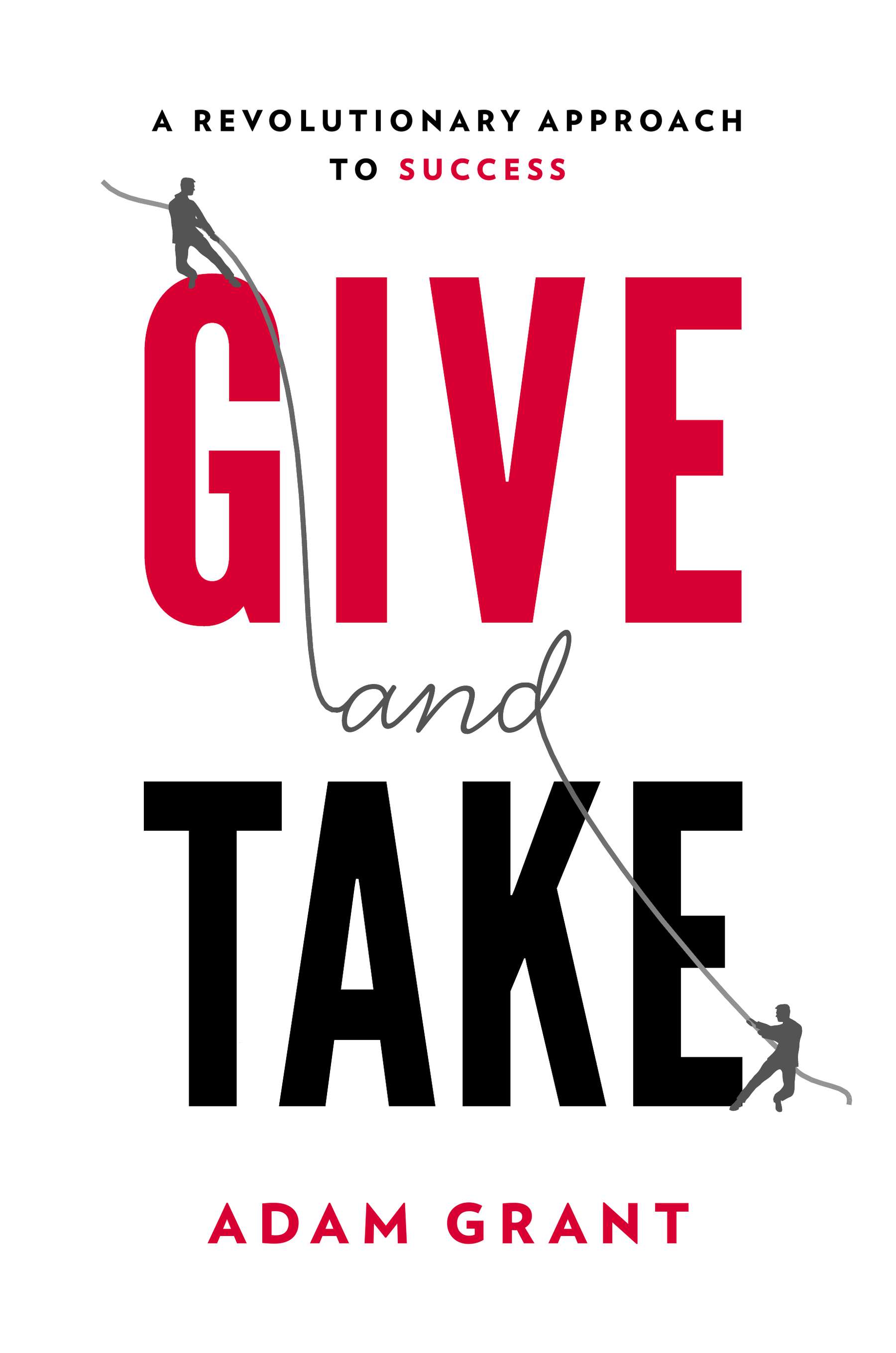
Adam Grant is a professor at the Wharton School of the University of Pennsylvania. He has also written this great book – Give and Take: Why Helping Others Drives Our Success. I heard him speak at the Global Leadership Summit and bought his book. His take on the three tops of people who make up our work culture was both fascinating and practical.Blog - Give and Take by Adam Grant - cminds.netPhoto Credit: Amazon.com

Grant sees us all as either givers, takers, or matchers. “It’s very hard to judge our own style. What values you live each day is in the eye of the beholder.” We may not necessarily see ourselves in these categories, but our colleagues will. Ask them, if you have the courage. Then you might consider taking what you learn and thinking through how you might use that information to become a more effective employee and valued colleague.

Takers are those who often manage to do the least amount of work yet gaining the most notice. They manage to get “the lion’s share of credit for collective achievements”, notes Grant. The Takers are the shirkers in the workplace. They are not at their desks because they are off schmoozing (oops, I meant networking, right?) in another department. They somehow get their jobs done partly by leaning on the strong work ethic of the Givers.

Givers are the people who simply enjoy helping others – “no strings attached”. They get to work early and stay late, if necessary. Their core values resonate in the quantity and quality of their work.

Matchers are most of us, really, doing our part in the workplace. Matchers can be counted on to keep things “fair” at work. “I’ll do something for you if you do something for me” is their mantra. They believe in “an eye for an eye” and “just worlds”.  They are the “fairness” or “Karma” police in the workplace.

Grant readily admits that we may operate out of all three styles from time to time, but we each have a dominant style at work.

How do givers, takers, and matchers fare in the workplace? Which of these sinks to the bottom in terms of performance and impact?

Givers are the worst performers (but keep reading). “The ones who get the least work done are the ones who help the others and never get their own jobs done”, reports Grant.  “I love helping others” is not the one on top of the heap of performers. “The lowest revenue accrues to the most generous salespeople.”

It’s sad news that givers sink to the bottom. If you want to boost your organization, have more givers….unfortunately the givers do it at their own expense – unless the organization builds a culture that helps the givers to thrive.

Who rises to the top?

If givers are the worst performers, who are the best performers? You think it’s takers? Takers rise quickly, and fall quickly. They often fall at the hands of the Matchers who can use gossip (or, said another way, workplace channels of influence) to call out the abuse of the Takers. Beware, Takers, of the Matchers in the shadows. Also, other Takers can also take down those more abusive, or less-well-liked Takers.

Are the Matchers the best performers? Not usually. The best results belong to the Givers. Wait! How can they also be the best performers? It’s a both/and situation.

Grant encourages: “Helping others can sink your career but it can also accelerate your careers. Hang in there.”

It takes a while for Givers to learn and build connections, but when they do, it’s a win-win for the organization.

How can we build cultures to help Givers be successful?

3 Things We Can Do:

  1. Keep the wrong people off the bus. – Get the right people on the bus. If possible, keep Takers off the bus. “One Taker on the team and paranoia starts to spread.” Put one Giver on the team, and you don’t necessarily have an explosion of generosity. It’s not bringing in the Givers; it’s weeding out the Takers. Matchers follow the norm. Matchers will follow the example of the Givers.
  2. Redefine Giving.   Wisdom is to know who is who in the workplace. Or at least not be thrown off by behaviors vs. motives. Then we can shape our work culture to empower Givers, influence Matchers, and avoid enabling Takers. In an interview with Adam Grant, Thinkers50 spelled this process out very well. For instance, consider Agreeableness vs. Disagreeableness – in Takers, Givers, and Matchers. We usually think Takers are disagreeable, but not necessarily so. Givers aren’t always agreeable either. Just because someone is nice to you (an agreeable Taker) doesn’t mean they care about you (Givers, in general, really care). Adam Grant also talks about the importance of kindness in the workplace. This is a strength of Givers, but it can also push them to over-work and exhaustion. Grant prescribes “5-minute favors (a microloan of your time, skills, or connections). Volunteering – 100 hours a year – is the sweet spot. Greater than 100 hours a year is too much. 2 hours a week.”
  3. Encourage Help-Seekers – A work culture of Help-Seekers will take silos down. “People step up when others say ‘I’m stuck; I need some help’. If no one asks for help, you have a lot of frustrated Givers in your organization.” Grant recommends an exercise called the Reciprocity Ring – Gathering teams together and having each person state a request of something they want or need and then everyone else in the room tries to use their expertise and networks to make it happen. “People are often unbelievably generous if you ask for help. Givers step up. The Takers become more generous. All the offers of help are visible. Takers don’t want to get outed. The Matchers realize that matching is useful, but it’s an inefficient way to run an organization. If you have given help to others without getting back, then you can increase your productivity because you don’t have to just ask those you’ve helped.”

Givers ask the question “How can I be the rising tide that lifts all boats?” We can move our organizations in this direction of maximum impact and satisfaction, by nurturing a Giver culture.  Instead of workplace paranoia, imagine a culture distinguished by a “Pro-noia” – the “delusion” that other people are plotting your wellbeing.  May it not be a delusion but a daily reality.

Give and Take – An Interview with Adam Grant by Thinkers50

Give and Take – A Revolutionary Approach to Success by Adam Grant

Outward Focused Lives // Givers, Takers, Matchers

Give and Take – An introduction

YouTube Video – Adam Grant, Professor – Givers, Takers, and Matchers

YouTube Video – Adam Grant’s Give and Take Talk at Google

Global Leadership Summit 2015

The Reciprocity Ring

Live Blog: 2015 Leadership Summit – 30 Leadership Quotes from Adam Grant – Brian Dodd on Leadership

The Global Leadership Summit Session Three – Adam Grant – Notes by Chuck Scoggins

Looking for a Job…or the Next Job? – 4 Ideas to Consider

Blog - Do Over #2

When you need a job, or a new job, you are in a tender place. I will treat that place with honor. You have gifts, experience, and workplace wisdom that are needed somewhere…so please don’t despair. Any bitterness that could be taking root in your heart will only get in your way. You have choices, more than you think. You have probably had more advice than you can even follow, so I don’t want to burden you with another load of it. Just 4 ideas.

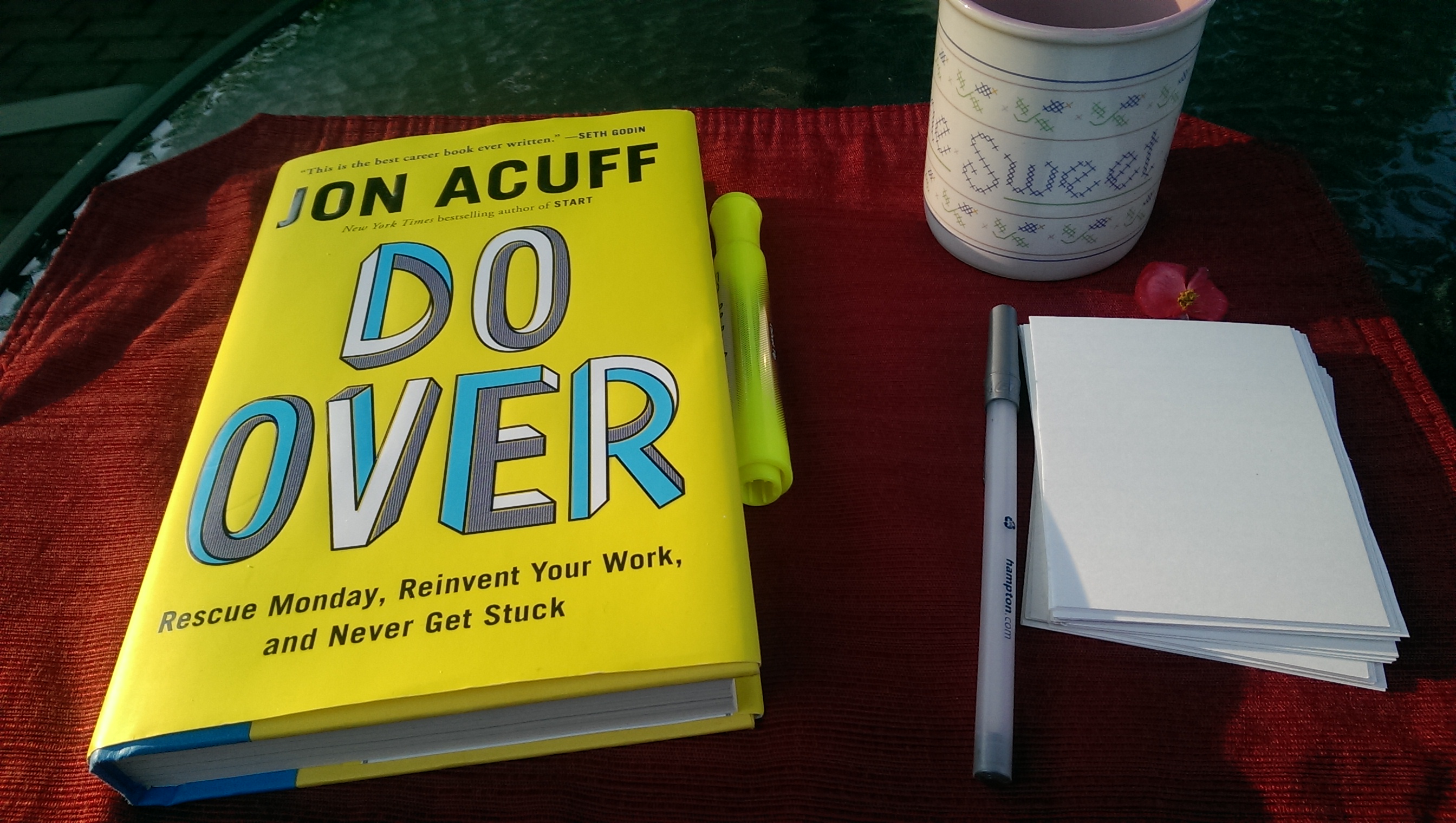
  1. Read an encouraging and practical book.  For me, that book is Jon Acuff’s Do Over. Acuff gives sound counsel, mixed with fun stories, about how to get on with your life in the marketplace. In fact, I wrote 5 blogs on his book (see links below). I leave out the stories, but his “next steps” are extremely helpful and sometimes surprisingly counter-intuitive. He boosts the reader’s confidence in a genuine way and  doing the exercises in his book can make a huge difference in job hunting. So much affirmation…real affirmation.
  2. Network with lots of people. It’s not just about “who you know”. It’s also about “who knows you”. Sometimes we don’t even recognize our own strengths (OR weaknesses). Trusted friends or even respected acquaintances can give you much-needed food for thought and action. Maybe you don’t even know what to do, job-wise – your future is wide open but looks (to you) very dark. Input from others who care about you or who are caring, in general, can help you focus. You may not have even considered what they may be telling you – either about your own hireability or the job market itself. Listen and learn. P.S. Don’t go to them for a job; go to them for wisdom about getting a job.
  3. Try something completely new. The film The Intern with Robert De Niro and Anne Hathaway speaks to this something new. A 70-year-old takes an internship in a cool successful company. Funny and winsome and could be one of us, right? Then I have also been hearing a lot lately about advanced manufacturing and the need for apprentices in this field. You may have a “white collar” education that could be more finely tuned with some “blue collar” experience. Those terms may be antiquated with the blurring of boundaries in our more technology-rich manufacturing companies. You could be that intern or apprentice.

4. Consider working with a head-hunter or job placement agency. In a conference recently, I heard Michael Thompson, founder and CEO of Turas Group, speak to a group of job-seekers. His approach was warm and positive. In that half-hour session, he gave strong individualized counsel to each person, based on what information they had already sent them. Counsel that helped everyone in the room really, but also individualized to each person’s needs. He also asks really good questions which is incredibly helpful for clarification – when you really don’t know what to do next.

One thing Thompson expressed was the importance of doing lots of interviews. His counsel included: a) prepare and do research to know your interviewers; b) arrive early; c) have your 60 second pitch down; d) – smile a lot, have energy, be excited and maintain eye contact; e) answer directly and concisely; and finally f) if you don’t know the answer to a question, share that, but then offer what you would do (especially if you’ve never done that something needed). Thompson also encouraged the participants to join LinkedIn (a global online professional network).Blog - Friday Faves - Turas Group

Whether you’re just out of college or you find yourself in the throes of a company downsizing, you know something of what you offer any employer. Allow these 4 ideas to fill in some of the holes you can’t see that would make job hunting a less painful and more productive endeavor.

As to dealing with the disappointment of not finding a job right out of school, or the loss of satisfying work you loved, please don’t let that define you. You have choices…maybe very different that you first imagined, but you have them. Make those lists of strengths and people of influence in your life as Jon Acuff advises; talk (well, listen more) to friends and advocates; and stay open to a real positive turn in your career. Finally, I personally would add “Pray” to all this. Prayer will help you to not panic or grow bitter when your emotional energy would better serve your pursuit of that job – the one you can’t imagine right now. Remember who you are and Whose you are.

Any comments on what has helped you or what is sustaining you in your job hunt? Please share below.

Do Over – Rescue Monday, Reinvent Your Work, and Never Get Stuck – by Jon Acuff – Notes (Part 1)

Do Over – Jon Acuff on Work Relationships – Notes (Part 2 of Do Over Series)

10 Quotes by Jon Acuff on Developing New Skills & Sharpening Old Ones – Part 3 of Do Over Series

Jon Acuff on Character at Work – 9 Quotes & a Challenge – Part 4 of the Do Over Series

Jon Acuff on the Role of Hustle in Taking Hold of Career Opportunities – Notes & Quotes – Part 5 of Do Over Series

Turas Group – Michael Thompson, CEO – Michael@turasgroup.com – or connect via LinkedIn

Tips for a Successful Job Search – Tulane University

5 Friday Faves – One Podcast on Organizational Culture, 3 Great Reads (Self-Medicating, Hard Decisions, Affliction) & a Sing-along

Blog - Friday Faves

1) A Podcast –  – This is a great conversation between Barnabas Piper, Todd Adkins, and Eric Geiger on organizational culture. They define culture as “shared values beneath the surface that drive behavior”. Aspirational values (what takes place on the wall) are distinguished from actual values (what takes place in the hall). What is your workplace culture? “We don’t treat people like that here”. Like what? What culture do you have or hope to build?Blog - Organizational Culture - slideshare.netPhoto Credit: Slideshare.net

Also see Organizational Culture and Climate – SlideShare.

2) On Self-Medication5 Socially Acceptable Ways Church Leaders Self-Medicate  – Carey Nieuwhof, a Canadian pastor and thinker on leadership, writes about how leaders can get caught up in “socially acceptable” self-medicating as a way to manage their stress. Important read for anyone in leadership.Blog - Self-medicating with Carey NieuwhofPhoto Credit: CareyNieuwhof.com

3) On Hard DecisionsBuilding the Courage to Make Changes  by Dr. Danita Johnson Hughes. Quick read on steps in making difficult workplace decisions. I have dear friends going through a tough downsizing which has to happen for their organization to survive. It took huge courage, faith, and forward-thinking on the part of the leaders to make that hard decision. .A Bible study along these lines can be found in a Slideshare on the Gospel of Mark (chapter 14).Blog - hard Decisions

Photo Credit: GreatLeadersServe.com – also a good resource.

4) On Affliction in the Lives of 3 Men – The Hidden Smile of God: The Fruit of Affliction in the Lives of John Bunyan, William Cowper, and David Brainerd (The Swans Are Not Silent, Book 2) by John Piper. The Swans Are Not Silent series by John Piper is a collection of biographies, grouped in such a way as to point to a particular character, situation, or gift from God. This volume is particularly fascinating to me because of how these men demonstrate the nearness of God in lives torn by trouble.

Blog - The Hidden Smile of God - John Piper on Affliction

Photo Credit: DesiringGod.org

5) A Sing-Along – YouTube videos of classic songs done in a bit different way. Enjoy and have a restful weekend.

YouTube Video – I Will Follow Him with André Rieu

YouTube Video – U.S. Navy Band – Selections from Jersey Boys

Workplace Wisdom – Dave’s Observation on Work (and other) Relationships – What You Think of Others Matters

Blog - What You Think of People Matters - Dave 5

At first, you really liked working with this person. Then, bit by bit, he/she began wearing on you. He is always playing with his phone. Her solution to today’s problem is too labor-intensive. His email responses have become terse. She is late for your meeting. You think, maybe I was wrong about him. He is not the person I thought he was. Maybe, she’s the wrong person on the bus.

When a relationship begins to deteriorate at work (or home), you are wise to take steps to turn this around as quickly as possible. You could be in a work situation that has been difficult from the outset. It is still possible for you to make inroads in turning that relationship toward a more healthy or positive one. If not altogether, at least from your side. Consider an adage that has had a long and useful run in our family and work.

Your opinion of someone approximates their opinion of you.Dave Mills

There are exceptions, but I have found this to be wise counsel (from my husband, no less) in both personal and professional relationships. When what was a warm, congenial relationship takes a turn toward the negative, you can actually work, from your side, to restore the relationship. Even to take it to a deeper level. It can get more uncomfortable at first, because you have to start with your own thoughts toward that person. How have they changed?

We send signals to each other – whether we speak or not.

My Mom raised us out of the era of Walt Disney’s Bambi:

“If you can’t say something nice, don’t say nothing at all.”

Good counsel except for the conversations that still go on in our heads and color our attitudes, our tone of voice, our preferences, and our decisions.

Let’s say I have an amicable relationship with a colleague, and then something happens. I may not even be aware of it – a misunderstanding, a misconstrued action, an insensitivity unaware. Then a chill develops, or a clear outright dislike. I have a window of opportunity to clear that up. Otherwise, if I don’t act, then a process can begin where I decide that person is a jerk and has woefully misjudged me…and off we go.

Remember: This can go both ways. You may have had a few off days with a colleague, and find yourself just not thinking so well of him, then stop it! It’s possible you can keep them from picking up that signal and prevent the relationship from getting more toxic as they decide you’re not so great either.

If I refuse to think ill of another person and discipline myself to be respectful, deferent in my demeanor, and tireless in pursuing understanding, I could restore that relationship. If it doesn’t improve right away, my attitude and actions work for my own benefit and can definitely help build trust with my team members. One day…that relationship may also turn. It’s worth the effort.

Blog - What You Think of People Matters - Dave

Jon Acuff talks about the four ways we invest in our careers – through skills, character, hustle, and relationships. In an interview with LifeReimagined.com, he had this to say about difficult, or neglected, work relationships:

“Even if you have skills, character and hustle, without relationships, it’s the career version of the Emperor’s New Clothes. Why?”

“If you don’t have relationships, you eventually don’t have people in your life who can tell you the truth about the decisions you’re making. You don’t have people who can tell you no or question you honestly. What I’ve learned is that leaders who can’t be questioned end up doing questionable things.”LifeReimagined.com interview with Jon Acuff

He identifies three types of people in our lives (work or otherwise, really): friends, foes, and advocates. Jon writes in Do Over:

“The best thing to give a foe is distance. We should ignore most foes. The problem of course is that we won’t. If your definition of foe is too loose and is essentially “anyone who kind of bothers me ever,” your job is going to be miserable. If you see people as your adversaries, it’s almost impossible to have a good working relationship with them. The first thing is to understand whether these foes are clueless or calculated. A clueless foe is that person whose behavior encourages you to fail. They are not malicious. They are not trying to make you lose, but with the power of their influence you are. “Bad habits are almost always a social disease – if those around us model and encourage them, we’ll almost always fall prey. Turn ‘accomplices’ into ‘friends’ and you can be two-thirds more likely to succeed.”Jon Acuff, Do Over

I think what Jon says is true. Because of my own worldview and value system (and married to Dave all these years), I don’t think we can just acknowledge there are foes out there and distance yourself from them. Sometimes, that is virtually impossible and still be effective at work. Because what can happen, if we don’t act to keep our own thinking clear, is that we take on some of that “foe-dom” ourselves. Maybe you aren’t going to be bosom buddies with this person, but your own work and other relationships can suffer if you develop bad habits around this person. Better to work on the relationship.

Blog - What You Think of People Matters - Dave 6 (2)Blog - What You Think of People Matters - Dave 6

“For no matter what we achieve, if we don’t spend the vast majority of our time with people we love and respect, we cannot possibly have a great life. But if we spend the vast majority of our time with people we love and respect – people we really enjoy being on the bus with and who will never disappoint us – then we will almost certainly have a great life, no matter where the bus goes. The people we interviewed from the good-to-great companies clearly loved what they did, largely because they loved who they did it with. – Jim Collins, Good to Great

Blog - What You Think of People Matters - Dave 3

For as he thinks within himself, so he is. Proverbs 23:7

Finally, brothers, whatever is true, whatever is honorable, whatever is just, whatever is pure, whatever is lovely, whatever is commendable, if there is any excellence, if there is anything worthy of praise, think about these things.Philippians 4:8

Blog - What You Think of People Matters - Dave 2

 Do Over by Jon Acuff

Fourteen Indispensable Leadership Quotes from Jim Collins – Thom Rainer

How to Deal With Difficult Co-workers – Read keeping in mind that some days you might be the one perceived as difficult.

Blog - What You Think of People Matters - Dave 4

Photos: Just a few of the men in Dave’s life who required no special work on his part to love and respect…and there are many more. Grateful.

Collaborative Conversations – Quotes to Stir Your Thinking on Leadership and Language in Workplace Decision-making

Blog - Collaborative ConversationsPhoto Credit: AJCarlisle.files.wordpress.com

Change is normal, and resisting change is normal as well. You may be part of an organization or company where sweeping changes are being implemented, even this week. Or maybe you are not on the inside loop of these decisions, so you are not privy to the change coming. Whether you are part of that process or not, consider how you might have a role in making change work, in your sphere of influence, among your colleagues.

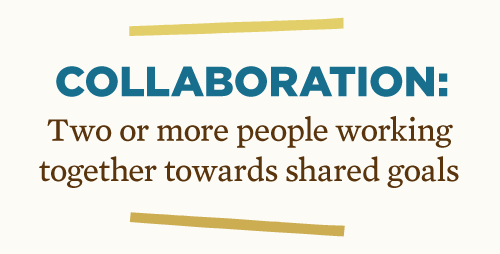
You may already have read and profited from the book Crucial Conversations. Now consider collaborative conversations. Collaboration, simply defined, is “working together towards shared goals”. Collaborative conversations bring a collective intelligence to bear on the problem to be solved, vision to be defined, or direction to be changed.Blog - Collaborative ConversationsPhoto Credit: ThoughtFarmer.com

David Perkins, a Harvard professor, wrote about collaborative conversations in the workplace, using the metaphor of King Arthur’s round table. He described the beneficial nature of bringing several principal players (or stakeholders) to the table and treating each one with an equal or autonomous voice.

“A round table makes it a little easier to pool mental effort. A round table makes a group a little more intelligent…For a group to display intelligence in a sustained way, the members have to value their exchanges and stick together to keep making them. This depends on positive symbolic conduct [side messages sent by our words and behavior]…and collaboration… It’s not ideas, but people with ideas that make things happen.” – David Perkins

“One of the simplest ways to immunize a culture against broken trust, corruption, and animosity is to build a common vision.” – David Perkins

Perkins’ book King Arthur’s Round Table: How Collaborative Conversations Create Smart Organizations is a tremendous resource in developing this kind of decision-making work environment. An Executive Book Summary* can help you get started.

I personally thrive in such a setting and intuitively understand the value-adding nature of collaborative conversations. In researching this workplace topic, and choosing the links below, I came across a fascinating paper** by Heather Davis, a professor of RMIT University Australia.

Davis presented her paper at the 14th International Conference on Thinking (2009, Malaysia). She discussed how workplace leaders often choose “languages of war” in making and communicating decisions and creating change. Her paper is heady stuff but if you read her thoughts below you will want to read the whole paper. It gives huge support to the role of collaborative conversations.

“In [leadership’s] ‘language of zealous allegiance’, there are expectations of allegiance [in the workplace] that lay a path for uncritical acceptance and passivity. This manifests in an expectation that followers be conscripted wholly to the cause. There is little room for questioning. [Davis quotes Hage]: “Conscription means one important thing: there is no questioning of orders, one only executes them; ‘either you’re with us or you’re against us’. “ (Hage, 2004, p. 3).””

“Rhetoric plays out in the workplace too and can be tested by how well leaders:

  • hear and acknowledge the ‘other’ point of view,
  • see the ‘other’ as people rather than pawns or simply abstractions,
  • manage the distance, materially and metaphorically, between themselves and the people and sites affected by their decisions.”

“In the corporate world there are many examples of executives living and working in gated communities or otherwise removed by dint of corporate hierarchy or geography from the people and conditions affected by their decisions. Often, these leaders are also surrounded by people who can only agree, leading to little opportunity for double loop learning or deeply reasoned decision making processes. Whether our leaders live in gated communities is their business, but if they think, work and take refuge within a ‘gated’ mindset then we all need to be concerned. These conditions lead to hubris and have been the undoing of many leaders and corporations.”

“[Leadership’s] language of regrettable necessity translates directly to the “There Is No Alternative”. [This strategy] is used to always move the focus of discussion away from any big picture ‘why’ questions. This is done by shifting the focus to discussions only about the budget pie or, more particularly, the piece of the budget pie that is contestable. People find themselves fighting for a slice of the budget pie and energies focus only on the ‘pie’ and getting the biggest piece of it. This shifts the focus from larger issues such as whether the budget is set correctly, what has been included and what has been excluded. Thinking about alternatives is never an option.”

The role of the organisation is ‘to know its purpose and not be diverted from it’ (Drucker, 1993). This is a timely reminder here – easier said than done in times of flux, complexity and discontinuous change.”

“Language is the visible tip of the cultural iceberg that largely remains hidden.”

“Perkins (2007) used two metaphors in his presentation and so far I have only privileged the five languages of war metaphor in this discussion. The other metaphor used was the “five languages of peace”. The main difference between Perkins’ languages of war and peace are that the war metaphor is founded on exclusivity and a preference for limiting discourse to its [leadership’s] own narrowly defined boundaries. Perkins’s peace metaphor is founded on inclusivity and opening up the space for conversations and conflicting views [i.e., collaborative conversations].”

“Oppositional language and the pitting of one deeply held worldview against another will not lead to resolving the underlying problems of the workplace. Rather, space for conversations to surface underlying assumptions is required. Perkins’ language of peace metaphor confirms that that there are always other lenses to view the world through, not just the one that [leadership] prefers.”

Provocative reading from this Australian educator. Bottom line: Those of us in leadership carry a great burden of responsibility. We at times must make difficult and sometimes painful decisions. Adding voices to that decision-making can generate even more challenging processes to negotiate. Still, we will make more sustainable decisions for “better futures” if we bring those most affected (or most experienced or insightful) to the table. Whenever possible. That’s the gain of collaborative conversations – working together toward shared vision and shared ownership.

Stay engaged in your workplace. You can make a difference.

*King Arthur’s Round TableHow Collaborative Conversations Create Smart Organizations by David Perkins – an Executive Book Summary

Leadership Lessons from King Arthur – a Review of Harvard Professor David Perkins’ book King Arthur’s Round Table

How to Lead When Change is the New Normal

The Art of Collaboration (Collaborative Behaviors) – by Steve Dale (includes a SlideShare)

Collaboration: What Does It Really Mean?

**Troubling Invisible Barriers to Better Futures: Surfacing the “Five Languages of War” in the Workplace – a scholarly paper by Heather Davis, presented at the 14th International Conference on Thinking

The Five Literacies of Global Leadership – What Authentic Leaders Know and You Need to Find Out – by David Hames – Business Book Summary

What Is a Coaching Conversation? from Opening the Door to Coaching Conversations by Linda Gross Cheliotes and Marceta Fleming Reilly 

The Perils of Indifference – a Speech by Elie Wiesel

Cutting Through the Hype – What “Collaboration” Really Means – ThoughtFarmer.com

Making the Workforce Work! The Collaborative Workforce Initiative

4 Elements of Uncommon Loyalty in the Life of Jonathan

2014 BLog Pics 001

If you were hanging off a cliff at the end of a rope, you would want someone like Jonathan on the other end. He’s not going to let you fall. This is the kind of loyalty we hope to have in friends, family members, even colleagues, if we were honest. In fact, someone like Jonathan would have intervened before you went over the edge.

We don’t use the term loyalty so often these days. As a character trait, its meaning has been maligned over the years. Being loyal has been perverted to mean something more weak than strong – something puppyish, short-sighted, or weak-willed. Occasionally, loyalty can bring to mind allegiances that serve our own purposes. It’s who you know, right, in advancing in the work force, for example.

Yet, when we look at Jonathan, in the Bible, loyalty is the character quality that comes to mind immediately. Deep, unwavering, costly loyalty. To his friend, David, yes, but also to his flawed king and father, Saul, and most importantly to the Lord Himself.

Jonathan’s story is found in 1 Samuel (beginning in 1 Samuel 13:2), as his father, King Saul, falters and then eventually falls as king of Israel. It’s a fast read to the end of this book and worth your time, if you want to see this picture of Jonathan’s true and steadfast loyalty.

I’ve read this passage many times, but this time, God opened my eyes to the “so much more” that lies at the heart of Biblical loyalty. Read the full account (1 Samuel 13-31) for the mesmerizing details, but here, in brief, is how Jonathan’s life has affected my own today.

The Loyalty of Jonathan

1) He acted on his loyalty – courageously and without hesitation. Jonathan was Saul’s oldest son and heir to the throne as next King of Israel. He was often in battle and led his troops valiantly, even at great risk to his own life (1 Samuel 14). He was loyal to the purposes of God and the direction of his father, King Saul. When his father did not lead well, or at all, Jonathan stayed true to the purposes of God. He found favor among the people (v. 45).

2) He was inclusive, as much as was possible for him to be. Jonathan met David after David killed the giant Goliath. When they met, their souls were knit together (1 Samuel 18:1). A deep love and loyalty grew between these two friends. Jonathan however still obeyed his father as much as he could. He would not follow the king’s orders if they went against God, but when he could obey, he did. [I love this about Jonathan that he didn’t cast off his relationship with his father with the advent of his relationship with David.] Jonathan’s loyalty extended to his God (and God’s purposes for Israel), his father, and his friend.

3) He was selfless in his loyalty, for the sake of those he loved. In reading, the account of Jonathan’s life in 1 Samuel, it became clear pretty early that he would not be heir of Israel’s kingdom after all. He would never be king. What bitterness that could birth in a lesser man! Jonathan must have had a profound trust in God. It seemed the throne was of little consequence to him in comparison to righting the relationships between his father and David. He did everything he could to reconcile the two, even with the knowledge that he would gain nothing more than he had already. That is the purest, truest kind of loyalty. A God-glorifying, unconditional love and loyalty.

4) He did not waver in his loyalty even at great cost. I hope you read the accounts in 1 Samuel that tell Jonathan’s story. From a human standpoint, it doesn’t lead to a happy ending. He dies in battle at his father’s side. David is elsewhere, fighting his own battles, and staying clear of the king who wanted him dead.

Jonathan dies, fighting the enemies of Israel, in obedience to God and his father…faithful, loyal, courageous to the end.  Earlier in his story (1 Samuel 23:17), Jonathan pledged to David, “Do not fear, for the hand of Saul my father shall not find you. You shall be king over Israel, and I shall be next to you. Even my father Saul knows that.” David did become king, but Jonathan would not be at his side. Still, the king that David became was forever altered by how God used Jonathan in his life.

And Jonathan? What of Jonathan? Generations of us who have read his story have squared our shoulders, fixed our gaze, and resolved, with God’s help, to love like Jonathan did…to be truly loyal as he was. This is a greater legacy than being any king…

How would our churches, workplaces, families and friendships be different today if we determined to be wholly and intentionally loyal in our relationships? How would our relationships be with the Lord?

Do not let loyalty and faithfulness forsake you; bind them around your neck, write them on the tablet of your heart. So you will find favor and good repute in the sight of God and of people. – Proverbs 3:3-4 NRV

Short Bible Study on Loyalty

What Does the Bible Say About Loyalty

The Character of Loyalty

20 Online Resources to Equip Us to Take the Gospel to the Nations – Through our Workplace

Blog - Marketplace Advance

Therefore, my beloved brethren, be steadfast, immovable, always abounding in the work of the Lord, knowing that your labor is not in vain in the Lord. – 1 Corinthians 15:58

We live in a new day of Gospel proclamation and demonstration. Is it possible that the church – that we all together – could fulfill the Great Commission in our lifetime? God has always meant for His children, every one of us, to be invested in His purposes…not just on Sunday, but Monday on…through our studies, our work, our circles of influence.

God is stirring the hearts of men and women in all trades and professions to give witness to the love of Christ and the excellence of God’s Kingdom. From students to retirees, we can be equipped to daily display the Gospel, in our workplace and through our community, wherever we are.

Today you can get started…and the following resources will help you get where God would have you go.

Blog - Skybridge

Skybridge Community – asks the question: “Can You Imagine God Using Your Work for His Purpose in Reaching the Nations?” Skybridge is a global community of Kingdom professionals being intentional in joining excellence in the workplace, cultural sensitivity, and Gospel proclamation. You can become a member and have access to a wide range of resources and mentoring possibilities.

Blog - Marketplace Advance on blog

Marketplace Advance – Integrating Vocation and Mission – focuses on mobilizing and equipping Kingdom professionals and tradespeople to be a part of fulfilling the Great Commission all over the world, through their workplace.

Blog - The Gospel at Work

The Gospel at Work – [Helping Christians live extraordinary, gospel-centered lives in their workplaces] – is a network of churches and Kingdom professionals providing equipping toward Gospel intentionality in the workplace.

Blog - The High Calling

The High Calling – [Everyday Conversations About Work, Life, and God] – is an online community of professionals encouraging us all in the workplace to infuse our work with God – His love, His truth, and His purposes. Each week, The High Calling has a feature. written by people like you and me, focused being believers in the workplace.

Below are 16 other links to great resources to equip us as Gospel-bearers in the marketplace – wherever it is.  You may have a favorite of your own that I didn’t list. Please share that through the Comments.

Let’s be about the mission of God – through teaching, engineering, business, art, athletics, health care, construction, computer science. You fill in the blank of your vocation…He will empower you there…for the sake of your coworkers, your neighbors…and the nations.

A Better Way by Dale Losch – Disciples In Every Marketplace Making Disciples All Over the World

Business as Mission Resources Center for Faith & Work at LeTourneau University – Connecting Sunday Worship & Monday Work  — Also 24 Seven Faith

Center for Faith and Work – Redeemer Church (Pastor Tim Keller), NYC, NY

Christianity 9 to 5

Denver Institute for Faith & Work

Live/Right Blog – Integrating Faith into Everyday Life

Marketplace Leaders with Os Hillman – Today God Is First

Missional Marketplace 2014 Summit Media – Videos of Marketplace/Church Leader Talks

Patheos – Mission:Work

(Re)integrate – the center to reintegrate faith, life, and vocations (online magazine)

Re-Vocation: Working on Purpose – Upstream Collective

The Institute for Faith, Work, and Economics

The Washington Institute for Faith, Vocation, and Culture

Theology of Work Project – A Biblical Perspective on Faith and Work

Third Path Initiative – Accelerate Your Kingdom Impact – Third Path equips young professionals to have a Kingdom impact through profitable business in the global marketplace

Work Matters – Closing the Gap Between Faith and Work

Monday Morning Moment – All of Life is Stewardship

Vancouver OlympicsDo you see a man who excels in his work?
He will stand before kings… – Proverbs 22:29

Then this Daniel was preferred above the presidents and princes, because an excellent spirit was in him; and the king thought to set him over the whole realm. – Daniel 6:3

The snooze-alarm doesn’t hold back the work-week, nor should it. Monday morning comes. Full of possibilities. We, as Kingdom citizens, are logistical agents for God. He will display His glory and draw people to Himself all over the world today – why not in your workplace?

A very wise friend of mine said once, “All of life is stewardship”. Many people have said that, but when I heard it from him, the message resonated with the vibrancy of his life. He currently leads a large Christian organization, his life full of responsibility and time pressures I will never know. Yet, he stops to speak to all along his path in his workday. Encouraging, affirming, inspiring. And outside this Christian company, in his travels, he is “on the job”, taking full advantage of brief encounters with strangers to share the love of Jesus (and His Gospel) with them. Even as I write this, I’m reminded of where that stewardship of his life originates – waking early, plunging into God’s Word, entrusting his prayers to the Lord…every single day. Out of this springs a life God can use to bring glory to Himself and to draw people to Himself.

Marketplace Business in Morocco

So you say, “Well, that’s fine if you work in a Christian company. I can’t really see that sort of stewardship making a difference where I work.” Be encouraged by the example of Daniel in the Bible. He lived for God in a pagan kingdom. We never know what God will do in our workplaces, if we bring our Sunday devotion to Him straight through to Monday. Let Him thrill you with the joy of infusing your work with His faithfulness.

See you there.

Whole-Life Stewardship: The Call to Greatness

Four Principles of Biblical Stewardship

Developing a Vision for Vocational Discipleship at Your Church

If I’m not a Preacher, Can God Use Me?

Leadership is Stewardship (3-part series)

David’s Mighty Men – Stewardship in Action

Photo Credit: Matt Jones

Life Skills – Stewardship of the Essential in the Workplace – 5 Helps

2014 July Blog pics 002

A man’s heart plans his way, but the Lord directs his steps.                      Proverbs 16:9

“He who believes in Me [Jesus], the works that I do he will do also; and greater works than these he will do, because I go to My Father.” John 14:12

5 Helps to Keep Essentials in Focus

1) Pray – do business with God on the issue of stewardship of work.

2) Re-visit your job description/annual goals. Do they match up?

3) Determine when you’re sharpest or freshest & guard that time.

4) Practice intentionality with meeting invites & other distractions.

5) Do what only you can do whenever possible.

Books, blogs, and experts abound in the field of leadership and workplace productivity. A challenge for me at work is the constant press of the urgent, and the seeming necessity of meetings upon meetings. I actually don’t really mind meetings; processing in group is my method of choice for information-sharing and developing strategies. Yet, there are those colleagues of ours whom we depend on for deep thinking and creative planning and who need time in quiet to accomplish that.  Too often their work-day is packed with people (either across a meeting table or through electronic communications). They’re then less able to be proactive in their thinking and more prone to reactive decision-making.

Shane Parrish (@farnamstreet) wrote about this phenomenon several months ago. The title of his article was intriguing: “Most of what you are going to do or say today is not essential”.

I don’t want to spend my life doing things that don’t matter, especially in the huge investment of life at work.

In the above article, Parrish continued: “If you’re a modern knowledge worker, odds are you’re going to go to work, read some emails, reply to some emails, attend some meetings, grab a coffee, have lunch, attend another meeting or two, catch up on emails, and finally head home. You’ll be busy from the moment you get to work until the moment you go home. When you do find a nook of time, you’ll likely be bombarded with beeping, dings, calls, and other people who only need a sliver of our time. After all, they too have something urgent to do. They too have a deadline.

After a long day, you’ll come home mentally and physically drained. Eventually you’ll reach a tipping point and say enough is enough. The very next day you’ll head into the office vowing to change things. You’ll start to think about how to work more productively when, ding, a meeting invite pops up for an urgent meeting to decide the fate of a product.”

Later in the article, he said, “Sure we do more busy work, but we’re doing less real work. To get any real work done we come in early, stay late, or both. That’s the only way we can get some peace and quiet.”

We must take a step back from our hectic workday and refocus our thinking on why exactly do we have our jobs anyway. Why were we given the responsibilities we have or how are we to use the authority/influence we have? Are we being good stewards of what is absolutely imperative or are we just ticking off what is necessary? We have to recapture the essential elements of our work before they’re lost in a muddle of ineffective organizational structure.

There has been lots written on effective leadership, workplace productivity, and time management. For me, these 5 helps encourage me in resetting my priorities when I lose balance or energy or joy in the work:

1) Pray – really do business with God on the issue of your stewardship of your work. Are you being faithful in the essentials?

2) Re-visit your job description and annual goals. Do they match up or have your time and mental energy been outsourced to other activities eroding your creativity and productivity?

3) Determine when you are the sharpest or freshest and guard that time of the day for the most essential thinking and decision-making you need to do. “Silence” the distractions for that block of time.

4) Practice intentionality in dealing with meeting invites, drop-ins, phone calls, or email. Urgent matters will come up and may need only your attention for some part of them. Just beware that you don’t fall into a habit of doing what may come easy – for example, filling up your day with meetings generated by others leaving you with little time for  your own responsibilities.

5) Do what only you can do whenever possible. You’re in the position you’re in, hopefully, because you are just the right person for that job. What is it that you need to be focused on? You don’t just ignore the other needs of the office or organization that vie for your attention, but you help work out how best (either through a process or another person) those needs are met.

What has helped you in stewarding the essentials in your work life? What are your particular challenges?

Shane Parrish – What You Do Today Is Not Essential

Biblical Time Management

Michael Hyatt on Cutting Your To-Do List in Half

Time Management Matrix

5 Tips for Increasing Workplace Productivity

5 Real Tips to Get More Done at Work