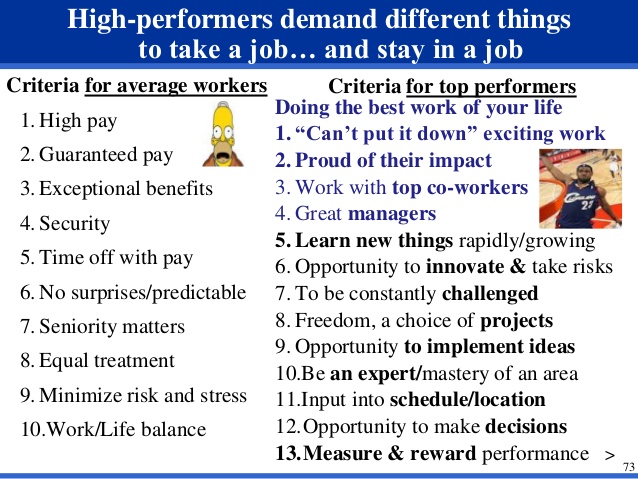
Sometimes really crucial opportunities pass us by…responsibilities, too, fall off our plates. We get busy…distracted. We choose the urgent without thinking. The urgent over the ultimately important.
This time, one year ago, I saw the film War Room. The plot centered on an older praying woman who mentored a younger woman, whose marriage was falling apart. She mentored, not so much about marriage, but about praying for her marriage. It had a huge impact on my heart…and my prayerlife.Photo Credit: War Room Movie
I prayed my heart out for my husband…and our children…some extended family…and close friends. I still pray for them…but in recent months, the urgency had faded. Other lesser things piled in and I allowed myself to become distracted and dull.
Until this past week…. This past week, I started a Bible study with some other friends who meet together regularly. The book study is The Armor of God by Priscilla Shirer. She is also the person, in the film War Room, playing the young woman in the troubled marriage. The study focuses on the Bible passage, Ephesians 6:10-19, and speaks about our role in spiritual warfare.
I had forgotten how important it is not just to pray generally and regularly for those we love, but to pray specifically and persistently. There is a big difference.
For several days, I have been praying for a difficult situation in my husband’s work life. It has been ongoing for some time, and he finally arrived to a point of taking action.
Yipes…I wasn’t at all sure I had prayed well enough for him. In fact, I was sure I hadn’t. There is no going back, but today, fresh in studying how best to pray for those we love, I took God at his word and have prayed differently. Trusting God to intervene as I stood, fortified, in his presence…as the Apostle Paul instructed in Ephesians 6.Photo Credit: True Agape
The details of what happened at work are not necessary for today’s posting, but praying specifically, persistently, and according to God’s Word has made for a very encouraging turn in the situation. Honestly, I don’t think it would have played out as it has, if both my husband and I weren’t really seeking God’s solution for this.
Will it always work out to be a glorious outcome when we pray hard and in faith? I can’t say…not always praying hard nor in faith. However, when we do pray for situations at work instead of just ranting or processing over the dinner table, outcomes will decidedly be better.
Our work is such a huge chunk of our lives. To leave it to chance or charm or even competence…seems a risky business. What a privilege to pray staunchly and strategically for those we love in the workplace – our spouses, our closest friends, our children… Praying for our bosses and colleagues, as well, could improve both their lives and ours as well…not to mention the enormous ripple effect that can spread as God works in a situation.
This afternoon our joy is full. Even though my husband’s workplace may “seem” unchanged…it is wholly different because he has seen God work in a hard place. With complete assurance. I rejoice with him.
Work is a 3-song commute from home. As I was traveling in this morning, thinking about what was ahead of him and praying for the situation en route, these songs were the ones that came back-to-back on the radio as I drove in:
Pretty amazing, huh? What seems extraordinary can be our ordinary when we pray to a Father who wants to show himself mighty on our behalf. What better thing can I do for those I love than to pray hard…pray believing for them?
Just recently I heard a friend quote from the book Playing God – Redeeming the Gift of Power by Andy Crouch. It struck me as odd that he was reading such a book because, although he is a powerful man in his own circle, he doesn’t seem vulnerable to such a phenomenon. Wisdom is to mark such a supposition and guard against it. This friend does that. My husband has also been reading Crouch’s book, so I am persuaded to add it to my list of reads.
Here’s a taste of what you’ll find thanks to Good Reads. It is often where I start with a book given my long list of wanna-reads. Andy Crouch makes a strong case for our need to wrestle with our temptation to “play God” in our relationships, institutions, and culture. See for yourself….
On Power in Creating Good or Evil – in Work and Culture
“It is a source of refreshment, laughter, joy and life—and of more power. Remove power and you cut off life, the possibility of creating something new and better in this rich and recalcitrant world. Life is power. Power is life. And flourishing power leads to flourishing life. Of course, like life itself, power is nothing—worse than nothing—without love.But love without power is less than it was meant to be. Love without the capacity to make something of the world, without the ability to respond to and make room for the beloved’s flourishing, is frustrated love. This is why the love that is the heartbeat of the Christian story—the Father’s love for the Son and, through the Son, for the world—is not simply a sentimental feeling or a distant, ethereal theological truth, but has been signed and sealed by the most audacious act of true power in the history of the world, the resurrection of the Son from the dead. Power at its best is resurrection to full life, to full humanity. Whenever human beings become what they were meant to be, when even death cannot finally hold its prisoners, then we can truly speak of power.”
“Power at its worst is the unmaker of humanity—breeding inhumanity in the hearts of those who wield power, denying and denouncing the humanity of the ones who suffer under power…This power ultimately will put everything around it to death rather than share abundant life with another. It is also the power of feigned or forced ignorance, the power of complacency and self-satisfaction with our small fiefdoms of comfort. Power, the truest servant of love, can also be its most implacable enemy.”
“Over and over in the Gospels, Jesus interrupts his agenda for those who have nothing to offer him but need everything from him.”
On Power and Information
“I am also practicing cello to wean myself from power and accomplishment, to place myself back in the posture of a learner, cultivator, and creator. To become a bit like a child. To detoxify from the too-ready recognition and privilege that accompany even the most modest forms of success, to become available again for something surprising and new. Just as children flourish by growing into adults, so adults flourish by cultivating childlikeness, avoiding the spiritual hardening of the arteries that comes with competence and experience.”
On Poverty and Privilege
“How many times have I been put at the front of the line without even knowing there was a line? How many times have I walked through a door that opened, invisibly and silently, for me, but slammed shut for others? How many lines have I cut in a life of privilege?”
“Poverty is the absence of linkages, the absence of connections with others…”
“Benevolent god playing happens when we use the needs of the poor to make our own move from good to great—to revel in the superior power of our technology and the moral excellence of our willingness to help. Benevolent god playing makes us, not those we are serving, the heroes of the story. It happens whenever technological and financial resources are deployed in such overwhelming force, and with so little real trust building or relationship, that we maintain a safe distance between ourselves and the recipients of our largesse.”
“The poor are poor,” Jayakumar said to me, “because someone else is trying to play God in their lives.”
On Idolatry and Injustice
“All idols begin by offering great things for a very small price. All idols then fail, more and more consistently, to deliver on their original promises, while ratcheting up their demands, which initially seemed so reasonable, for worship and sacrifice. In the end they fail completely, even as they make categorical demands. In the memorable phrase of the psychiatrist Jeffrey Satinover, idols ask for more and more, while giving less and less, until eventually they demand everything and give nothing.”
“God hates injustice and idolatry because they are the same thing.”
Crouch’s book just got moved to the top of my reading list. Have a great Monday! Let’s exercise our power wisely today…
Late nights watching the Olympic Games (#Rio2016), friends visiting from out of town, and new moms in my life…I got nothing on leadership today…
However…
These three leaders, writers and leadership observers never disappoint – Brian Dodd, Carey Nieuwhof, and Vala Afshar.
Brian Dodd is a prolific thinker and writer on leadership themes – mainly to a Christian audience, but much of what he writes is wisdom for anyone who wants to lead well. Photo Credit: Brian Dodd on Leadership
His blog on leadership quotes by Bill Purvis, who spoke recently at the GO Conference, includes the following bits for all of us.
Clarify your vision.
You get a vision by walking around.
You make insiders by giving them inside information.
Betrayal will kill your vision.
Devise a strategy to create a pipeline of leaders. If you want to go a long distance, you have to have a bench.
If you try to do it all you will burn out.
We can only grow to the level that we have leaders in place to train, retain people, and release people into using their gifts.
I’ve never known what it’s like to be jealous. I want people to win.
You equip other people.
If you don’t train leaders, you’re limited in how far you can go.
Our C-Level players become A-Level players wherever they go.
Carey Nieuwhof is my favorite Canadian. He went from law school to the pulpit. His writing and podcasts on leadership are regular feasts for thought. Photo Credit: Carey Nieuwhof
Nieuwhof closes with asking the question, “How do I know jerk leadership so well? Because I have a jerk inside of me I need to suppress every day. My guess is you might too.
Doing well, and doing good, are not mutually exclusive, but mutually reinforcing. If you are not doing well, you don’t have the money to keep doing good. Is your company doing the work for the right reasons – can it create meaning and money, purpose and profit? – Deb Mills-Scofield
Customers want meaning, value and purpose for them. If you don’t have your value proposition done, you don’t need to worry about the business model. This means deliver value in the context and constraints of the customer, not what you would like it to be. This means understanding your customer’s customer needs from their perspective. – Deb Mills-Scofield
Humble confidence is key to success. Humble companies ask for help and they give their employees the freedom to fail and try stuff. Companies that trust their employees will be more innovative. Business leaders must walk the talk and give their employees the freedom to experiment. Good leaders take all of the blame and none of the credit. Good leaders also promote and celebrate cross-collaboration across the lines-of-business. – Deb Mills-Scofield
When you don’t ask, the answer is no. Consider asking for help or well-deserved promotions or pay raises. Also ask for forgiveness, not permission. – Deb Mills-Scofield
We live in a permission economy. So how does a business lead in the permission economy. Permission is the privilege of talking to people who want to talk to you, and not because it’s important to you. It is about being missed if you don’t show up. Are you doing something worth following? If you’re not, then you’re not leading. – Seth Godin
The world is changing. What does it mean to live in a world that is changing? The key element to being a CIO or a CMO is to be a chief learning officer (CLO). To be an artisan – not a craftsman, because a craftsman does the something again and again – is to learn to do it different the next time, to do it better the next time. To be an artisan, you have to be willing to listen and learn. What it means to learn is to fail. – Seth Godin
Hope your Monday is profitable and that you’re encouraged as a leader today. Not a leader? Oh, no….you are. We all are…in some fashion or another. Wisdom is to learn leadership from those closest to us…and those whom we can follow online and at the occasional conference…like Dodd, Nieuwhof, and Afshar.
Leaders of Tomorrow. What age group came to mind? Probably not your own. Maybe that’s one of our dilemmas in life and work. We either think we have already arrived as tomorrow’s leader today (ugh!). Or we stop thinking of how we can develop into that change agent of tomorrow because we’ve fixed our course…or settled into what we know already. It’s served us well so far, right?
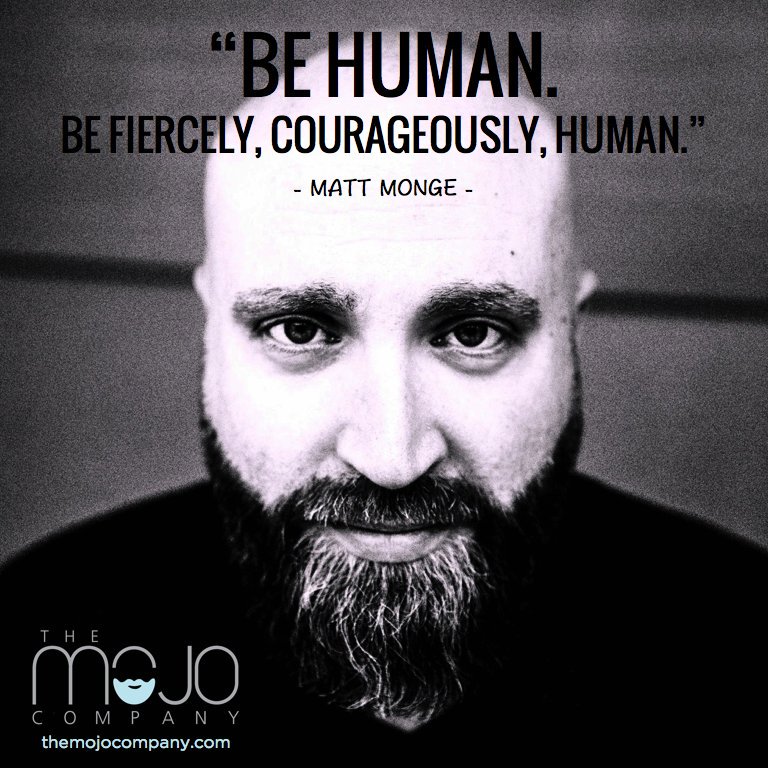
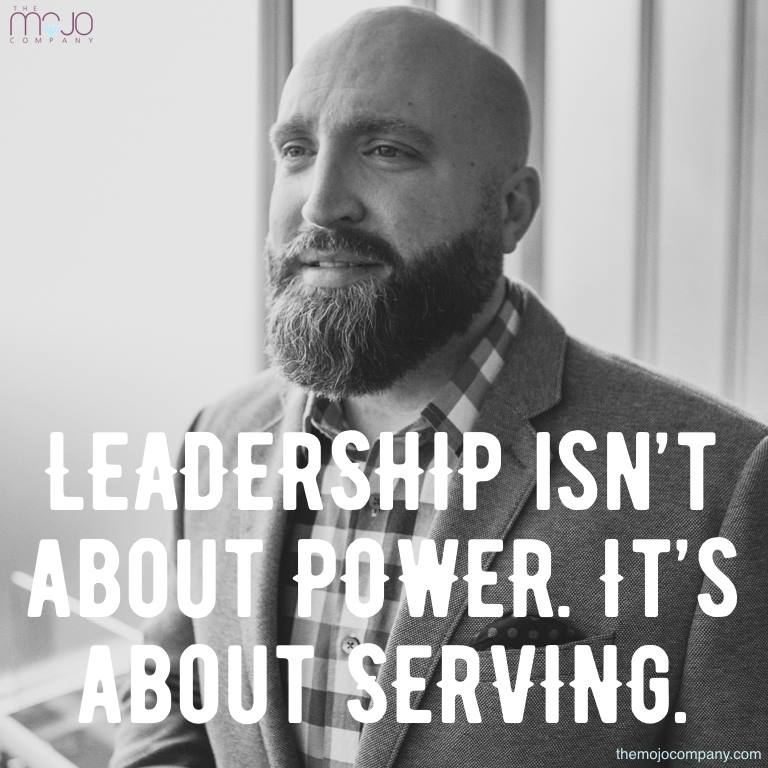
Here’s my Monday morning gift to you: an introduction to the person, writing, and wisdom of Matt Monge. Earlier in his career, he worked in finance (credit unions, in particular), and had fascinating titles like Chief Culture Officer and Vice-President of People and Development. Currently he is is president of The Mojo Company, a leadership development consulting firm. His Facebook page bio reads: “My mission? Make the world a better place by helping people, leaders, & workplaces be more human. Depression fighter. Keynote speaker. Head of The Mojo Co.”
I read everything Matt Monge writes. Even his promotional video taught me more about leadership (you’ll want to take notes).
Monge posted a blog a few weeks back and I’ve been thinking through it since… It’s his 7 Skills Tomorrow’s Top Leaders Are Developing Today. I decided to post his bullet points here and how they stirred my thoughts on skill development today. [Don’t miss reading his thinking on this and other leadership topics in links.]
Being Others-Oriented – While other employee development folks have moved away from “servant leadership” language, Matt Monge continues wisely to be a strong supporter of it. I, too, am delighted by leaders who continue to seek out the greatest good for both employees and customers. The bottom line is best served here. As the years go by, or as tribes are built, our temptation is to coast in this area…making the negative assumption that someone else is serving while we’re the idea leaders. As leaders go, so go the organizations.
Persuasion, Logic, & Negotiation – First, Monge sees top leaders as practicing persuasion and negotiation differently “not with power, position, coercion, or even deception; but rather through logic, reason, and with an eye toward the good of the whole.” It’s funny how unaware leaders can be in thinking that manipulation and coercion go unnoticed by employees under their authority. It’s always better to do the work of taking the high road of negotiating and persuading. When we engage in the give-and-take of healthy debate and problem-solving, it’s a win-win for everyone. It does require time, trust, homework, and humility.
Reframing – This is a discipline of looking at a problem or situation from different perspectives. Monge talks about doing this in such a way that we wrestle with our own biases and blind spots. Reframing can make for a decision or problem solved that have wider success or effectiveness.
Knowing How to Think about and Make Decisions – Monge makes the distinction of being decisive vs. being a good decision-maker. I love this because often we experience leaders who get the job because they are decisive. Period. Full-stop. What does it take though to be a good decision-maker? To become an effective leader is to examine how we make decisions – what are my decision-making processes, who are my guides, what are those factors that always weigh in on my decisions? [Monge names those factors as presuppositions and core values. We need to think about what those are.]
The Ability to Work and Build Community with Others – This is such a core value of mine and yet after years in my career, it bears refreshing. I’m reminded, as Monge writes about this, of the Old Boys’ Network. Today, maybe it’s less-gender-defined and called other things, like C-Suite executives, or even tribe. Still, if it’s a few making decisions for the many, it’s not community. Monge’s constant message is that the strength and health of an organization is in the community. Leaders must do the work of leaning in to their colleagues (outside the executive suite) to draw on the wealth of knowledge there and to affirm the value and varied roles of those coworkers.Photo Credit: Twitter
6. Leadership – The leaders of tomorrow are continuing to develop themselves toward that future. We can be always learning, always growing – not necessarily just like other leaders in our lives, but learning what we need to learn to remain relevant/useful. Resting on the laurels of past successes or doing “what we’ve always done” will eventually pull us to the sidelines. I’m in the painful, personal throes of dealing with this right now myself. Shaking it off and moving forward!
Understanding Humanness & Emotional Intelligence – Monge defines emotional intelligence as having “four basic components: self-awareness, self-management, social awareness, and relationship management”. Foundational to emotional intelligence, in Monge’s thinking, is this whole element of humanness. As the workplaces of the future give way to more and more technology, we will be wise in tuning into the growing need for humanizing our organizations and our human employee experience. Being tech-savvy and not people-savvy misses what could be. Leaders of tomorrow, take note.
So that’s it for today. I love Mondays because it’s an opportunity to hit “the refresh” key of our work lives. We are not only motivated (like we might be on Fridays) but we’re fresh in our view of our work community…and hopeful.
Matt Monge, and others like him, gives me the encouragement I need to cast off from the safe, still shore and re-enter the fast and deep water of today’s work environment, determined to manuver well there…and maybe even coax other quality people back in from the shallows. Whatever our ages or sensibilities, we can work toward being tomorrow’s leaders of excellence.
It just happens over time…the ignoring of people around us. Think about this morning, coming into work. Retrace your steps, and think of the people you passed within speaking range…but you didn’t…speak, that is. In another season of life, I might have slowed down to walk with someone a ways behind me, or even run a bit to catch up with someone ahead. Just to use that time to connect a bit. We race into our work stations, heads down, as if the most common courtesy of greeting and inquiring into another person’s life just take too much time away from the “important”. We sit down in meetings before they start and get lost in our thoughts, or our laptops, or our phones. We just ignore those around us…
Time itself seems to become more important than people. We circle up with our team, or go one-on-one with our boss or a consultant… when including a colleague, intern, or member of another team could have added greater value to that conversation. Are we more in a work culture today of tight circles when larger collaborative ones might prove more profitable? Do we just ignore those working around us who, by our actions, seem of little consequence to our workday? It’s not intentional maybe…but it becomes habit and then part of our character…communicating that people don’t matter.
Throughout my professional life, I have tried to be tuned into those around me, whether they currently are in my work group or not. My nature is to notice and my desire is to acknowledge. In various work situations, it’s been from a place of influence rather than from a position of authority. Any task or responsibility entrusted to me had to be accomplished through winning the confidence and cooperation of those around me. No authority to just delegate or task others with work. , gifted colleagues have always been willing to work on projects with me. People recognize when they are truly valued, and they engage more solidly when they are genuinely respected/regarded. We can build capacity for noticing people.
Ignoring those in our workplace over time has consequences. Just like that adage “Hurt people hurt people”, I think “Ignored people ignore people”. It’s a contagious work culture practice which has been widely researched. Productivity, employee engagement, longevity, and work relationships within teams and across the organization can all be negatively affected by just the casual neglect or lack of regard for colleagues.
Sidebar: As I was reading and thinking about this issue, the chorus of a strange little song kept coming into my head. The Broadway musical, “Chicago“, has a woeful character who laments about his smallness in life, as if people look right through him. The song is “Mr. Cellophane”.
O.K….back to workplace culture. What would happen if we determined to be noticers and acknowledgers at work? This is not a soft practice…it’s brilliant really. Taking little time, we can, each one of us, actually humanize and elevate the workplace experience for everyone we encounter through the course of the day. This is not an exercise of rewarding a job well-done but of noting the person behind the job…as valuable. Period. Full-stop.
I’ve known some great champions in this through my professional life, and I aspire to be like them. Real servant leaders. We may not think of ourselves as leaders, but we can all lead out in serving, noticing, and acknowledging those around us. Skip Prichard writes about servant leadership and lists 9 qualities of these “noticers”.
9 Qualities of the Servant Leader
1: Values diverse opinions
2: Cultivates a culture of trust
3: Develops other leaders
4: Helps people with life issues
5: Encourages
6: Sells instead of tells
7: Thinks you, not me
8: Thinks long-term
9: Acts with humility
Consider this challenge as I make it for myself to genuinely and honestly take note of people, moving through our workday. This is not about being only polite, but being “in the moment” with those around us. It may start with a greeting, and then an inquiry, and before we know it, it’s possible true caring could follow. Translated into workplace language, that is employee engagement where ideas are exchanged toward better solutions for everyone.
I can’t close this topic without a shout-out to any one of you who’s having that experience of being ignored. You know, of course, that it doesn’t change anything of who you are…but it can harden your heart toward colleagues and dull your thinking in your job. I appreciate Jon Acuff’s piece on being ignored, a piece about Heisman Trophy winner and NFL quarterback Marcus Mariota:
“Throw the passes when no one is watching. Write the pages no one sees. Work through the business plans people don’t believe in yet. Hustle long before the spotlight finds you. You don’t need the whole world on your side to create something that changes the world.”
Postscript: I follow Vala Afshar on Twitter. He is the “Chief Digital Evangelist” for Salesforce and author of The Pursuit of Social Business Excellence. He posted the picture below, with the Tweet “This is how people ignored each other before smartphones”.Photo Credit: Twitter
It made me chuckle because we blame technology for so many of our relational woes when focus and attending to each other is an age-old issue. People matter. Our colleagues matter. Take notice.
The Power of Noticing: What the Best Leaders See – Max Bazerman – Bazerman focuses on taking in information in order to make better decisions rather than the simple act of noticing people (which can also empower decision-making and business process, communicating that people matter).
Monday morning emails can be treacherous… This morning when I woke, my husband told me he’d just heard from a valued colleague that he had secured another job. Dave was expecting this because of previous communications they’ve had with each other. Through an organizational re-structuring, there are many whose jobs are changing. This email was good news because this person will be a tremendous addition to any team – good news and sad news. We will miss this man on our team but we celebrate a great job match.
Then another email came in. It was from the person who will be his new supervisor. It was full of respect and regard – a courtesy email that is not necessarily company culture these days but an email that shows understanding and empathy. When change comes, even good change, there is still that adjustment, that grieving of the good that was. Those two emails speak volume about emotional intelligence or relational wisdom…and that’s something we always need in the workplace…and at home.
The holidays and summer vacations have a particular call for wisdom to soften difficult expectations, disarm family conflicts, and personalize interactions to fit the needs of those nearest to us.
One very simple way we can tune into seasonal celebrations is to deal with our own stuff. Keeping our minds on the goodness of the these occasions helps.
Related to both our work and home relationships, Ken Sande, founder of Relational Wisdom 360, has given us a great gift. He has written 33 Ways to Enjoy Highly Relational Holidays. A fast-read blog a day on relational wisdom, written for Advent but which also fits nicely into a block of summer days.
I attended Dr. Sande’s Peacemaker course years ago during a challenging work season, and what I learned then continues to be a tremendous help to me today. If your work or family situation is somewhat intimidating, don’t despair. There are those in our lives (Ken Sande is one) who will come alongside and help/mentor us, if we’re willing to take care of our own hearts and minds.Photo Credit: coldspringcenter.org
As summer hums along and return to school looms ahead, I hope you are savoring happily memorable times together with family. As far as work goes, just like with the emails above, we can do our part to make our workplace a kind and honoring experience – our part (not someone else’s) in making it the way it could be…the way it should be…Photo Credit: GoodWorksBracelet.com
What helps you thrive in stressful situations at work? What has made a difference in bringing peace and joy to your summer vacations and holiday celebrations? Please comment and share with those searching for that wisdom.
Habits. Daily routine. These are things we wrestle with. Fortunately the more we wrestle and stay on them, the more successful we are, and (hurrah!), the more our lives are positively affected. Ben Slater has posted a very doable routine in his piece 5 Simple Daily Habits That Lead to Ultimate Success. They are:
Wake up early. Slater is not talking waking up early enough to just get to work on time. He’s talking 5ish. To wake up that early requires going to bed early…not just napping on the couch (guilty), but habitually, getting to bed early to get up early. This is determined by how much sleep you need…whether you’re a morning person or night person, that amount of time is pretty much set. “Sleeping in” – that weekend luxury – can derive negative gains. Is it worth it? Just asking the question he raises.Photo Credit: The Female Network
Exercise regularly. OK, so nothing new, right? This is not about staying in shape, physique-wise. That could be a benefit of exercise, but the goal is to sweat! We know the great benefits to regular exercise, many of which are mental. Feeling happier is one. It’s making exercise a habit that’s key here – for all its physical, mental, emotional, and even vocational benefits.Photo Credit: Beamery
Focus, don’t multitask. I have actually prided myself for years on the ability to multitask. No more. It’s possible it wreaked havoc on my memory and probably on the quality of my work and relationships. Slater talks about the importance of a daily routine of planning, execution, review and starting a plan for the next day. “Work out the 3-5 things that you need to accomplish over the course of the day and focus on them first.” Focus is key. I’m learning.Photo Credit: Massolutions
Learn from mistakes. When our day doesn’t go quite how we hoped, we too often default to blaming (too many meetings, interruptions, demanding bosses, time-wasters and trust-busters). We make mistakes in our decision-making and assessments; what’s important is that we deal with them humbly and proactively. Refuse to blame others. Learn from the mistake and move on. Sidebar: If it’s someone else’s mistake or poor judgment or questionable character, then learn from their mistakes as well. Don’t get muddled up, fuming about another, when your own life is at stake. You have it in you to control that.Photo Credit: UltrapreneurSayings
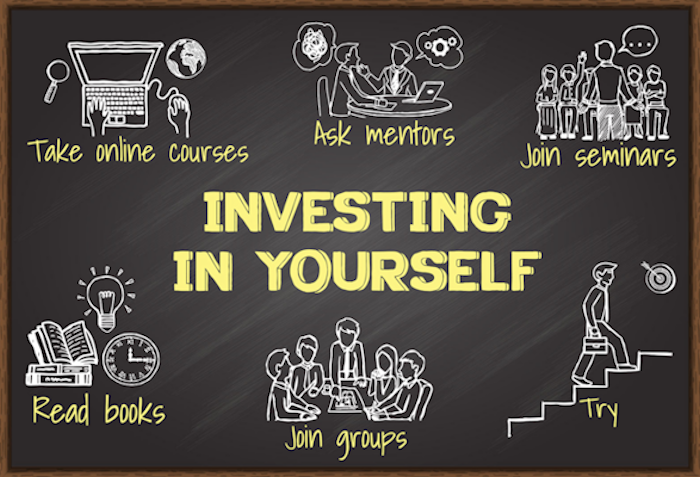
Make personal investments. What habits have you put in place to continue to grow and develop? Habits, not just hopes or goals set somewhere in the distant future. Slater observes: “The world’s most successful people are always prepared to invest time and resources in their own personal development. If you stripped someone like Bill Gates of his assets and dumped him on the street I’d be willing to bet he’d be ok – he’s constantly invested in himself and built up huge reserves of human capital, major companies would be falling over themselves to offer him a job.” This is where weekly goals come in, and maybe a mentor…someone you trust who will help you stay accountable to your goals. Don’t miss this valuable habit…I definitely need more discipline in this area.Photo Credit: SalesTrainingSolutions
I’ve written a lot in Monday Morning Moments about habit formation (see links below). There are so many great resources online about this important professional life skill. Slater’s article on these 5 simple daily habits reminded me again of how possible it is to know success/effectiveness if we do the work of putting these habits into our daily routine. I’m on it…once again. [Like with New Year’s Resolutions, we may not be successful over the long-haul with every one, but we move closer to goal every time we push in that direction.]
What are habits you have seen make a difference in your personal and professional day-to-day life? What habits would you like to make part of your daily routine? Please share in Comments.
Can our work ethic sustain us when our passion wanes?
Eric Chester has been studying and writing about today’s emerging workforce since the 1980’s, when Generation Y was in its infancy. Millennials have been examined and critiqued so much, but Chester has done his homework in how to help them be successful in the workplace. He also challenges employers to equip these young adults with what they may not have upon entering the workforce – that being a strong work ethic.
In his article in The MHEDA Journal, Chester defines work ethic as simply “knowing what to do and doing it“. Through his research, Chester created a list of seven indisputable, non-negotiable core values that he strongly believes every employer should demand: positivity (positive attitude), reliability, professionalism, initiative, honesty, respect, and gratitude (cheerful service).
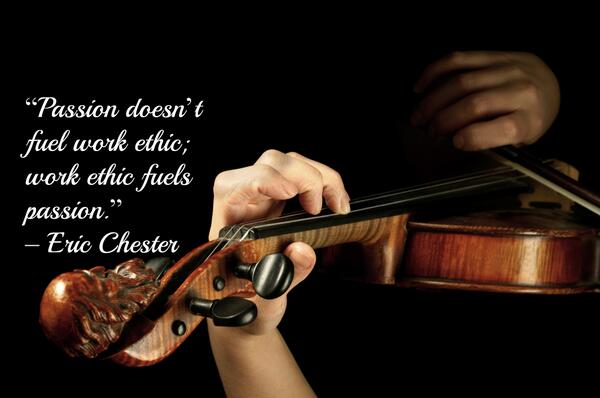
This is not just so for millennials but for all of us in the workforce. What do we need to be successful or effective across a career? Is it passion or work ethic? Passion (strong or powerful emotion, deep desire, intense conviction) is a big buzzword right now in hiring, but what we really need is work ethic. As Chester states, in his book Reviving Work Ethic, “passion doesn’t fuel work ethic; work ethic fuels passion.”
A strong work ethic will carry us through seasons in our career when we’re “just not feeling it”. I appreciate the distinction Chester makes about how our work ethic actually fuels our passion and not the other way around. We may not all have passion in measures that enhance our success, but we can apply ourselves with diligence and intentionality such that we can push through to the finish, whatever it is. When passion wanes, this is a great encouragement to me.
“’Follow Your Passion’ is easily the worst advice you could ever give or get.
1. When you work hard at something you become good at it.
2. When you become good at doing something, you will enjoy it more.
3. When you enjoy doing something, there is a very good chance you will become passionate or more passionate about it.
4. When you are good at something, passionate and work even harder to excel and be the best at it, good things happen.
Don’t follow your passion, follow your effort. It will lead you to your passions and to success, however you define it.”
Chester uses the analogy of building a fire in a fireplace. You have to set the logs in place before you start the fire. Passion will heat up a conversation or spark a vision, but it won’t get the job done, whatever it is. This is where our work ethic when applied will get us to goal, to mastery, to the finish. That in turn gives rise to passion as we see what is possible when we put forth the best effort that is each of ours to bring.
Whether you are newly employed in the workforce or a seasoned veteran, it’s wise to consider the bottom line of what we ought to bring to our jobs. This will vary across organizations and companies, especially as our workforce itself changes in the years to come. Chester’s summation is noteworthy for all of us:
“Employers are searching for positive, enthusiastic people who show up for work on time, who are dressed and prepared properly, who go out of their way to add value and do more than what’s required of them, who are honest, who will play by the rules, and who will give cheerful, friendly service regardless of the situation.”
How’s your work ethic?…
Whatever our passion might be today, our work ethic can be rock solid…something we count on in each other at work in the every day.
“Pick a lane”. That phrase comes to mind literally when dealing with another driver on the highway who weaves back and forth, for whatever reasons. We get agitated at him, don’t trust her movements, and want to get as clear from them as possible.
In our careers, picking a lane is hugely important. There probably won’t be the same negative emotions (as above) about someone who is all over the place, but we are wise to set a straight course. Sometimes, especially across a lifetime, we have to re-set our course. The key is to do the work of that reset – pick a lane again. Being a generalist, a “jack-of-all-trades”, can make us quite useful to our employers, but there is no distinction in that. I’m not talking about significance here. I’m talking about what makes us the “go-to person”, that person whose passion, determination, and honed skill gives her voice in an organization…where she can make a difference. It’s something to consider…
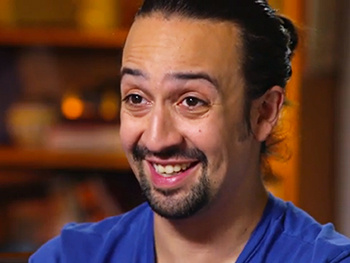
Here’s a quick story of an incredibly successful young man who “picked a lane”. I did not know the person Lin-Manuel Miranda until a funny video crossed my Facebook newsfeed just a few days ago. The video was Broadway Carpool Karaoke and Miranda was one of the performers in it. The video was produced to usher in the 2016 Tony Awards ceremony. Photo Credit: Broadway
Miranda is a playwright, composer, and actor. He already won a Tony for the musical In The Heights, and now has won several Tony awards for his current Broadway show Hamilton. Photo Credit: Joan Marcus, The Tennessean
Hamilton was birthed while Miranda, then in his 20’s, was on vacation in Mexico and picked up Ron Chernow’s Alexander Hamilton. He was enthralled by the story of Hamilton’s life and was amazed the story wasn’t already written as a musical. [Hopefully you non-theater folks are still with me. This is such an incredible story.]
Lin-Manuel Miranda wrote/composed the musical Hamilton, and from what I’ve seen of it, it is mesmerizing. So what goes into such a young man’s pursuit of such all-encompassing excellence in his craft?
Charlie Rose of CBS’ 60 Minutes interviewed Miranda about his life and Hamilton’s. [The full transcript is here.] Lin-Manuel Miranda – this playwright, composer, lyricist, and actor – talked about how he got to where he is today.
At five, Miranda tested into Hunter College Elementary, a school for highly gifted children, where he told us sometimes, he felt like he did not belong.
Lin-Manuel Miranda: You know, I went to a school where everyone was smarter than me. And I’m not blowin’ smoke, I was surrounded by genius, genius kids. What’s interesting about growing up in a culture like that is you go, “All right, I gotta figure out what my thing is. Because I’m not smarter than these kids. I’m not funnier than half of them, so I better figure out what it is I wanna do and work really hard at that because intellectually I’m treading water to, to be here.”
Charlie Rose: So why do you think I’m sitting here talking to you and not sitting here talking to one of your classmates?
Lin-Manuel Miranda: ‘Cause I picked a lane and I started running ahead of everybody else. So I, that’s the honest answer. It was like, I was like, “All right THIS.”
Miranda laid out very simply what framed his life of distinction: “I picked a lane.” We all do that across our careers, to some degree or another. Early in my professional life, I chose to carve out a niche in the care and counsel of cancer patients and their families. That was the focus and direction of my life for almost 20 years. Then, married with children, I would pick a very different lane – focusing on that little circle and those we shared life with in our community.
When we lived overseas for another almost 20 years, my lane was a merging of family, cross-cultural living, teaching English, and serving women (local and expat.) and their families. I loved those days of constant traffic in and out of our home. I miss those days. It’s quite possible, however, that those years marked a season where I was weaving in and out of traffic. You might need to ask my husband and children about that.
Now we’ve been back in the US for sometime. Picking a lane became a huge need for me as clearly my moorings of cherished overseas life were gone and I was a bit adrift. When the opportunity to came to test my skills as a communications strategist for a new and innovative work team, I jumped at it. That was a great time of learning and growing and a thrilling adventure which fueled a deep passion of mine. Alas, short-lived though. It only lasted a couple of years and that work went the way of an organizational down-sizing.
What followed has been a protracted season of being “a warm body” and “filling a hole/need” in whatever came along in life and community. Don’t hear me deny the importance of such serving, because there are times when helping in this way is exactly the right thing to do. Still, it’s not how we are meant to frame our lives over the long-haul.
A few months ago, I wrote a series of blogs on Jon Acuff’s book Do Over. He writes in such a liberating way about, essentially, picking a lane. His book is a “how-to” in getting back your life and getting on with it.
Picking a lane isn’t about just operating out of your strengths, abhorring any task or process that doesn’t show off your abilities. Picking a lane is about honing your craft, building your expertise, showing up in your giftings. It’s not about being a knower but being an insatiable life-long learner.
If the job you loved is gone or forever altered, pick another lane.
Don’t allow your current work/life situation reduce you to something other….to someone you are not and never were. Don’t let age, opportunity, personality squash your passion. We do not have to be side-lined (or defined) by getting older, being an introvert (just for instance), having a hard boss or a confusing work situation. Since this recent cancer diagnosis, I have more clarity, hope, and optimism about finishing strong… Hearing Lin-Manual Miranda’s story has heightened my resolve all the more.
Lin-Manuel Miranda: Here’s the thing about Hamilton. I think Hamilton was ready to die from the time he was 14 years old. I think what he has is what I have, which is that thing of, “Tomorrow’s not promised. I gotta get as much done as I can.”
Charlie Rose: It’s not only good acting. It’s not only good music. People are saying it’s transformative.
Lin-Manuel Miranda: It’s certainly changed my life. But I think it’s because when great people cross our path, and I’m talking about Hamilton here, it forces us to reckon with what we’re doing with our lives, you know? At my age, Hamilton was treasury secretary and creating our financial system from scratch.
Charlie Rose: And building a country?
Lin-Manuel Miranda: Yeah. I wrote two plays.*
Picking a lane…that’s what I’m doing. More to come…down the pike.
Walked away from the computer at 8:00 last night…best night of sleep I’ve had in a long while.
Alex Cavoulacos, productivity expert and founder of The Muse, wrote a Fast Company piece on establishing the habit of turning off screens at 11:00pm each night. A night owl, Cavoulacos discovered, in forming this habit that she: 1) could actually do it, 2) prioritized her work better, 3) finally found time to read, and 4) slept better. “Turns out that I inadvertently stumbled upon a trigger habit: I was reading more, sleeping more, and spending more quality time with my husband. All of this led to me feeling less stressed and better prepared to start each day. All in all, a huge positive change in my life, all thanks to a single new habit.” Check out her whole article and fascinating video here.
Tanya Lewis, a science journalist, went even farther than Cavoulacos in restricting her screen time. She writes, for Business Insider, that, for one week, she avoided screen time from the time she got off work until she went to bed. That means no TV or Netflix, no checking her phone for directions or searches of other kinds, or just out of boredom, and no tablet time for any of the above. What she discovered was how hard it was and how dependent to screen time she had become. She did start reading books again during that week. She also found that when she avoided screens, getting to sleep was easier. The most fascinating thing she noted was how much more social she became without the distraction of screens.
Anybody remember the old days, before wi-fi and smart phones? And the cable went out because of a storm? We would actually light candles and snuggle together on the couch, play games together, be silly, and talk. Special times worth re-creating with a screen fast.
How about our health? Is there any evidence that all this screen time, especially at night, affects our health, over our lifespan? For sure. Read Power Down for Better Sleep by Heather Hatfield on WebMD. She quotes fatigue specialist, Dr. Mark Rosekind, “One of the most simple but important reasons technology affects our sleep is cognitive stimulation.” What we are watching on screens late at night revs up our brains and stirs us up physically. This stress (positive or negative) can create a flight/flight response, resulting in our body’s release of cortisol – bringing on a state of vigilance rather than the restfulness needed for sleep. Add to our body’s “high alert” status the blue light of electronics. Hatfield reports how this light passes “through the retina into a part of the hypothalamus (the area of the brain that controls several sleep activities) and delays the release of the sleep-inducing hormone, melatonin.” To my sleepless, techie friends and family: it makes sense, right? Put it (screen time) to rest.
[Damon Beres in a Huffington Post piece, writes how “reading on a screen before bed might actually be killing you”. He points out the health problems that can result partly from inadequate rest (obesity, diabetes, cardiovascular disease). He also points to blue light filters that can help if we can’t imagine avoiding screen time at night.]
“Visual activities, like staring at a screen or even driving, continually narrow our field of view to a smaller box-like zone right in front of our eyes. Our brains learn to categorize everything outside of this box as a distraction not worthy of attention and get good at filtering out anything not right in front of us. By developing sustained attention in the central view, our peripheral vision suffers, and our view of the world slowly contracts. The field of view in humans decreases as we age. Over time, a person becomes immune to noticing life’s visual surprises, and their eyes move less often. As a result of these self-induced neurological changes, our brains and bodies get conditioned not to pay attention and not to react to the unexpected.”
What does that mean for us? You have probably already seen this in action. Our attention is drawn in, fairly fixed, on our screens. We miss what is happening around us. One day I’m going to write about situational awareness – as a personal safety issue as well as a sharpening discipline to appreciate life around us. This whole addiction to screens that is prevalent today will take the rest of the world out of our view, so to speak, if we’re not careful.
Speaking of the family…our children – I will just post these quick reads about little ones (and teens) and how so much screen time affects them physically, socially, and developmentally. We fall into these habits with our children, but we can also pull ourselves, and them, out of the same.
What’s your takeaway from this? I personally want to strategically narrow the screen use in my life. Writing makes screen time an occupational hazard but I love those screens way too much outside of blogging. Thanks to Chris Bailey’s A Life of Productivity and his book about his productivity project, I have already made some changes. No Facebook on my phone, as one change. Still have a long way to go.
Bottom line: I don’t want to miss the people I love, in the flesh, and I don’t want to miss the real world…and lastly, I don’t want to miss truly experiencing God…because of this surreal, burgeoning habit of screen time. So…I will leave you for now. Well-rested, hopefully. Sweet dreams.

 Photo Credit: The Life
 Photo Credit: War Room Movie
 Photo Credit: True Agape