Category Archives: work

Monday Morning Moment – That Thing That Doesn’t Need to Be Said – and If It Does

Photo Credit: Wikimedia

Being an extrovert is a bit of a curse, isn’t it? Verbally-processing introverts struggle as well. That need…that compulsion…to get words out of our heads and in the open. We who suffer with this understand the wild nature of words. For those who don’t have this same impulse, you may also suffer under the weight of our words.

This is a public confession and redress of this particular conundrum.

[For those of you, like me, who feel sometimes your head might fairly explode if you don’t voice your thoughts so you can find resonance with a hearer, you are free to read the last two paragraphs first.]

I grew up with good teaching from an introverted mom who knew the power of words…and the importance of using them wisely.

This adapted from a past blog posting of mine:

My Mom raised us up with lessons on our speech from Scripture backed up by the cultural message of an old Walt Disney film, Bambi:

“If you can’t say something nice, don’t say nothing at all.”

Good counsel. Only problem is the continuing conversation in our heads that color our attitudes, our tone of voice, our preferences, and our decisions. These we still must wrestle down and be done with.*

First, this is not a guilting of any sort. For myself or anyone else. We who restrain words understand the risk we take in speaking… especially those things we feel almost an obligation to say. Those words we think will somehow right a tilting world. Those words we feel entitled to. The words that state our case or that of another.

Second, we know, often too late, that words not spoken are rarely misunderstood. Of course, silence can be deafening as well, but we have to put our own meaning into someone else’s silence. With spoken words, it’s clear what a person is thinking. So it needs to be worth speaking. The hearer may have a very different take on the matter. Thus the risk and wariness that must accompany speaking boldly.

Third, does what we think need to be said? Will it make a difference in the positive to what’s going on in our heads? Or will what we say only add to a problem, rather than bringing it closer to resolution?

There’s a pithy and true saying floating around the internet about thinking before you speak. Here is a visual of it.

Photo Credit: Flickr, Jo Quinlan

Along with this, these days, is Think Before You Post. How many times have we deleted a Facebook or Twitter post put up in haste, hoping it came down before being read by those significant in our lives who would be hurt or offended by it? Sigh…Photo Credit: Flickr

Is our opinion so valuable as to cause pain to those who matter to us? Not. At. All.

Photo Credit: Hannah W. Potter

All that being said, finally, what do we do with the words building in our heads about massive concerns, witnessed injustices, shifts in worldview or mission drifts? There are words, as I see it, that have to be expressed almost to understand the whole picture of a thing going on. These words, raw and impassioned, we don’t speak randomly or post publicly (except in the rare occasion of stopping harm). These words if expressed may only yield spiritual reprimands, or hurt silences, or long tirades from disagreeing hearers/readers. The words that must be said, words that you know may have disastrous consequence, might need the hearing only of a trusted friend…at least at first. This sort of friend will hopefully help guide you to sort out that which does not need to be said and what does – to whom, in what manner, and on what occasion.

Oh the wisdom in thinking before we speak. How thankful I am for those trusted friends who refuse to think ill of me when words spill over! Friends, and family, who know my heart is not meant to wound, who help me sort out my words and what to do with them. Friends who know I take no joy or satisfaction in anything bordering on gossip or slander. Friends who listen, and may agree and resonate, but counsel with me – about what must be shared and what is best left unsaid. Friends who pray with me and remind me to pray. In my book, that is never spiritualizing…prayer is as real a thing as all those thoughts that can rob me of sleep…but so much better.Photo Credit: Flickr, J. D. Hancock

Anybody out there have the same struggle? Or a different struggle with words? Any helps you want to share? Shoot us some of your words in Comments below.

*Monday Morning Moment – What You Think of Others Matters – Workplace Wisdom – Deb Mills Writer

Speech, Power and Significance of

Monday Morning Moment – Leading When You’re In Over Your Head – Cultivating a Thick Skin and Tender Heart

Photo Credit: Carey Nieuwhof

First, a leader has to recognize he/she is in over their heads. This often doesn’t happen because it’s incredibly threatening to a person’s ego as well as the ability to execute responsibilities. If a leader can wrestle with the actuality that her/his job is beyond her ability today, then there is great hope both for the leader and those under their authority.

Carey Nieuwhof and Eric Geiger are two leaders I follow on Twitter. They write extensively on leadership and have that platform because they are life-long learners and savvy watchers of life. They have “skin in the game” and have learned how to lead and continue to do so. No finished product here which gives them even more credibility to be heard.

I want to briefly summarize a couple of their articles and then point you to read the rest. If you are the leader in over your head, you will find help here. The same goes for those under the lead of a struggling leader.

Some time ago, I bookmarked Carey Nieuwhof’s piece How To Lead When You’re In Over Your Head. He lists out 5 steps to dealing with that reality and I have posted them below. If they seem simplistic to you, they are simple but not easy.

  1. Stay humble.
  2. Get a great team around you who are smarter than you.
  3. Become an avid learner.
  4. Grow comfortable saying “I don’t know”.
  5. Trust God.

There is no shame in finding yourself in over your head if you face it and push through it. No shame.

We often default to focusing on our strengths, and lead out of them instead of dealing with the weaknesses taking us down…to our detriment and that of the organization. You know that adage, “If it ain’t broke, don’t fix it”? Well, the leader in over her head can flip that on its head by breaking what’s not broken.

Read Nieuwhof’s coaching on his 5 steps. What will help any of us to be successful in dealing with a situation where we’re in over our heads is to do heart and skin checks. I say this after reading Eric Geiger’s article Thick Skin, Tender Hearts, and Four Types of Leaders.

Photo Credit: Eric Geiger

Every one of us in leadership can work through Geiger’s diagnostic and check the tenderness of our hearts and the thickness of our skin.

For those dealing with the ripple effect of the leader reeking unchecked havoc in the workplace – either because she seemingly doesn’t really care or cares more about her own ego, identity, or position than she does her employees or customers. This is a sometime reality in the workplace. Don’t be pulled down or disqualified yourself by this. It could change at any time.

You may think there’s nothing you can do about such a situation and you may be right, to a degree. However, you are completely empowered to check your own heart and skin. Has your heart grown calloused in a difficult work situation? Has your skin grown thin where you take things too personally?

Geiger, as with Nieuwhof, gives great counsel on how to cultivate that tender heart and thick skin. You may not agree with all of what both writers say (they speak from a Christian worldview). However, they have wisdom for anyone who wants to grow professionally and lead well in whatever situation you find yourself.

Monday Morning Moment – When You Love Your Job – and Your Power to Make It So

Photo Credit: Maxpixel

I had trouble getting my enthusiasm up for work today. This is highly unusual, because I LOVE Mondays. Even went to bed early last night; only to have bad dreams and restless sleep.

OK…so it happens sometimes. Shake it off and embrace the day, right?

I want to write about what happens when we love our job. Remember when that was? …if it isn’t that way for you today, don’t let this season bring you down, and your work down.

A friend shared with me recently that he has come to figure his worklife into decades. He makes strategic decisions based on where he is today in his job and what he hopes to be doing in the next decade. We all know the years go by quickly…so he got me thinking.

If I don’t love my job today, I really either need to do something to correct course, or, before jumping ship, think where I hope to be over the next several years.

This morning I came across a funny and invigorating video on Facebook. It is When You Really Love Your Job. Watch below.

This little video showed a number of employees doing their jobs well and with speed and finesse. It had a poignant touch for me because I have personally watched servers in North Africa make crepes, cut up fruit, and pour tea like the workers in the video. I miss that.

If you search online for loving what you do, you find lots of helps on how that works and how to make it happen (again).

Jeff Haden posted a helpful piece entitled 15 Revealing Signs You Genuinely Love What You Do. It’s a quick read and it will either encourage you that you really DO love your job, or, if not, maybe there are some simple steps you can make to change it up. Some of the signs are : You enjoy attending meetings. You think about what to say, not how. You help without thinking. Definitely something to consider…as are the other signs.

Photo Credit: The Muse

If you love your job, that is worth celebrating and worth protecting as the job or company changes. If you don’t love your job so much, then you have to ask yourself the question, is it time to look elsewhere or do you have capacity to do what it takes to restore joy to your job, as it is?

Photo Credit: Flickr

Benjamin P. Hardy writes about this in One Behavior Separates the Successful From the Average. What is that behavior? Initiative! We determine for ourselves how we shake out our day. Sure, there are going to be obstacles and difficult people and various struggles over the years. It’s always worth it for our own sake, to take back control of how we love our jobs. Exercising initiative, as Hardy suggests, is the way out…either out of the joyless season you’re in and stay in your job, or out of the job. Just don’t take the joylessness with you.

Here’s to loving our jobs!

Do You Love Your Job? – Deborah Repplier

Discover the Work You Were Born to Do – James Gonyea

17 Inspiring Quotes About Loving Your Job – Michael D. Pollock

This Is Your Life. Do What You Love – The Holstee Manifesto Lifecycle Video

Photo Credit: Vimeo


5 Friday Faves – Music Lessons, Final Fantasy, Grandchildren, Leadership Guy Jon Mertz, and a Smorgasbord on Success

Beautiful day outside…hope the same is the case for you.

Here are my Friday faves this week:

1) Music Lessons – I was the worst student at music lessons. My mom was so determined that I would learn to play the piano. Seriously, I don’t even remember having a piano in our home…we must have, right? Dear old Mrs. Bowles taught me my first lessons. She and her husband owned a tiny general store in our neighborhood. She was ancient…and kind. I loved her but not enough to practice. Some weeks, my only time on the piano was our lesson. Do you think she could tell?

This week, I discovered an enthralling post on music lessons written by Tom Barnes, senior writer for Mic. The title is Music Lessons Were the Best Thing Your Parents Ever Did for You, According to Science.Photo Credit: MaxPixel

In the article he lists 13 scientific benefits of the many more derived from music lessons. Below, I’m posting his list, but don’t miss his brief and fascinating commentary on each one. Here’s his article.

Taking Music Lessons:

  1. It improved your reading and verbal skills.
  2. It improved your mathematical and spatial-temporal reasoning.
  3. It helped your grades.
  4. It raised your IQ.
  5. It helped you learn languages more quickly.
  6. It made you a better listener, which will help a lot when you’re older.
  7. It will slow the effects of aging.
  8. It strengthened your motor cortex.
  9. It improved your working memory.
  10. It improved your long-term memory for visual stimuli.
  11. It made you better at managing anxiety.
  12. It enhanced your self-confidence and self-esteem.
  13. It made you more creative.

All three of our children had piano lessons early in their schooling. They all did music through high school then took different paths afterwards. After her high school girl band and college chorale experience, our oldest plays piano just for her own pleasure now. Our middle, Nathan Mills, moved from piano to classical guitar and is now doing music professionally and giving lessons himself. Our youngest loves opera and is teaching himself the harp. Music lessons are definitely worth their investment…even beyond the music itself.

2) Final Fantasy – No, this isn’t some bucket list or deathbed wish. This is a video game. In fact, it’s a very popular one and has been around since 1987. This past week marked its 15th update. During our boys’ growing up years, I wasn’t enamored of video games, but I also never really sat down and got to know what they were about (my mistake). Final Fantasy is a good-vs.-evil battle game. Its musical themes are beyond beautiful. Our son, Nathan, has arranged many of the themes for classical guitar. Most recently, he has posted the Valse di Fantastica. As I’ve listened to this piece over and over, it makes me wonder at the times I kicked him off gaming to do something else more valuable with his time. Yet, the music stayed in his head and heart. I’m glad he’s kept the music…and here it is for you.

3) Grandchildren – These littles are so worth the wait. I say if you don’t have your own grands, then find some to love. Never enough love for children – tiny ones or those nearly grown. Photo Credit: Pixabay, Pixabay

Reuters posted a news story by Madeline Kennedy that touts the health benefit for seniors of occasionally caring for their grandchildren. Without going into the statistics, this German study reported that those who care for their grandchildren, on an occasional basis, actually live longer.

This and other studies (see article) point to time caring for grandchildren as benefiting cognitive function, as well as physical and mental health of the grandparent. These benefits could be enjoyed by caregivers not related to the children as well. Also a distinction was made that the study related to occasional care-giving (rather than full-time care) and depended on what was considered stressful or non-stressful by the grandparent.

I say, “let the little children come”.

4) Leadership Guy Jon Mertz – One of the many reasons I love Twitter is how much I learn from those I follow…including learning from those the ones I follow follow. Matt Monge, of The Mojo Company, tweeted this week about Jon Mertz‘s article on Four Essential Leadership Ladders. Mertz is the author of Activate Leadership: Aspen Truths to Empower Millennial Leaders. He is an intelligent empowering writer on leadership (as is Matt Monge).

Photo Credit: MaxPixal

In Mertz’s article on leadership ladders, he’s not talking about building or climbing ladders for our own success but for the success of others. What a lovely and timely concept! He prescribes four different leadership ladders – family, personal, organizational, and community. Read his piece here.

Within his article on leadership ladders, he references his 3 articles below. I read them all, and you will want to as well.

Discontentment – a Great Leadership Challenge – Jon Mertz (don’t miss the comments at the end of the article.)

Leadership Fails and Who Cares? – Jon Mertz

Always, Always Entangle Purpose With Life Work – Jon Mertz

5) Smorgasbord on Success – OK, we all define success in many ways. Couldn’t think of another exact word – being effective, making a living, realizing a dream, leading well. I’ve been reading a lot lately about leadership and about business start-ups. This week has made for a bounty of discovery on these topics (including Jon Mertz above). I’m just going to post the links and you can choose what tickles your itch this week.

My biggest take-away is that if we’re willing to learn, apply what we learn, and push out of our comfort zone, we can make extraordinary advances in our work and workplace. I really believe that, no matter what our age or level. Here are some writers who say the same:

7 Habits of Highly Effective FreelancersEric Rosenberg

How to Boost Your (and Others’) Emotional IntelligenceTomas Chamorro-Premuzic  and Michael Sanger

Mark Cuban, Kobe Bryant, and 15 Other People Whose Incredible Work Ethic Paid Off Jacquelyn Smith

Why the Best Idea Doesn’t Always WinScott Berkun

20 Habits for Success I Learned Working for Two Billionaires Paul C. Brunson

Enjoying reading, thinking, talking about it with those who love you…and being outside. Please always share your thoughts with me in the Comments.

Bonuses:

YouTube Video – Andy Andrews – 50 Famous Parental Sayings

Actual True Meanings – Classic Fairy Tales – Tongue-in-cheek – by Francesco Marciuliano

Monday Morning Moment – Elevating Our Work – with John Burke and Benjamin Hardy

Photo Credit: Benjamin P. Hardy (l), John Burke (r)

On the weekend, I was catching up with a bunch of friends who gather occasionally to keep relationships up-to-date. The question around the table was “So what’s new and exciting?” That usually elicits baby news, job changes, latest relationship, and emotional or situational struggles. I was completely engaged in what they were all saying…and then it was my turn.

I had nothing.

After stammering over what I could add, I pretty much just confessed to the mundane nature of my life. Vanilla was the only flavor that came to mind.

On the drive home, clarity prevailed and the largeness of the past year’s events filled my mind’s eye like watching an action film on the big screen. More “new and exciting” than I imagined could happen in a year – a grandson’s birth, a cancer diagnosis, my father’s illness and death were just some of the scenes of the last several months.

Then, right there, in the dark car, I was filled with gratitude that a merciful God filled all of that with His presence. Sometimes I forget to say out loud how incredibly good God is to be in our lives…and to never leave us alone in the hard.

Today’s “new and exciting” is that I am cancer-free right now, that darling baby is the star of his own music video, and acute grief in losing our dad is shifting to savoring memories of all our years together.

There’s more though…
Later in the weekend, I read this enlightening piece written by Benjamin P. Hardy. He interviewed composer and pianist John Burke about how he pushes himself to create.
Burke listed out four strategies that he regularly uses to “elevate” his work.

1. Always Work on Something You’ve Never Done Before

2. Map It All Out From the Beginning

3. Apply More Layers of External Pressure Immediately

4. Put Creation Time On Your Daily Schedule

Read Hardy’s piece for the particulars of Burke’s creative habits.

Photo Credit: AZ Quotes

Burke’s approach to work, in general, and creating music, in specific resonated with me for two big reasons. The first, is that I had seen his system for creating in the habits of our composer/guitarist son, Nathan Mills (Beyond the Guitar). The second reason is that I see what the “new and exciting” had done to my own creative habits.

I had settled into a sameness, a smallness, that had become a prolonged recovery time for me. Healing was imperative, but there comes a time when we gather ourselves up and get back into life. The Hebrew King David’s example came sharply to mind – after praying and fasting for his terribly ill son – 2 Samuel 12:18-20 – at the news the child died, David rose up, washed and dressed, worshiped God, and ate.

The “new and exciting” for this Monday is to take John Burke’s strategies to heart. When a person gets her life back after a cancer diagnosis, and recovery is behind her, the best medicine is to get on with life…with a renewed passion and intentionality.

Thank you, Mr. Burke, and Mr. Hardy.

My husband has described this “elevating our work” with the phrase “Shifting to the next gear”. That’s what I want for this next chapter of my work life. I’ve been driving the service roads, and now it’s time to get back out on the highway. To adjust my life to a greater difficulty and higher speed.

Elevating our work requires adjusting our thinking in that direction as well. [See links below.]

I’m ready to take the next gear.

How about you?

John Burke: 4 Strategies to Continually Elevate Your Work – Benjamin P. Hardy

Persevere – My Interview with Grammy-Nominated Pianist and Composer, John Burke – Podcast – Katy Galli

John Burke – YouTube Channel

10 Steps to Successful Thought Leadership to Elevate Your Career and Your Organization – Glenn Llopis

A Health Blog – 10 Proven Ways to Help Boost Creative Thinking

Elevate Your Leadership – Marlene Chism

To Expand Your Influence, Elevate Your Capacity to Think – John Maxwell

Critical Thinking Exercises: 9 Facts and How They Elevate Your Mind – Katrina Manning

5 Friday Faves – Common Purpose, Safeguarding Your Marriage, Being Different, Hard Seasons, and Small Beginnings

Happy Friday! Here is my gift to you today – so many glorious finds I’ve tried to compress into 5 Friday Faves.

1) Common Purpose – Every year, Glassdoor, a website that assists employers and potential employees to find each other, posts a Top 50 of Best Places to Work.

Photo Credit: SAP

Glassdoors’ 2017 Best Places to Work

In his LinkedIn article, Barry Sanders talks about one of the characteristics of what makes a “best place to work”. This characteristic is “common purpose”.  He writes:

Common purpose is essential to driving organization-wide adaptability, which is key to succeeding in today’s fast-paced business world. A shared set of values and goals across the organization allows leaders and individual contributors to achieve widespread alignment, manage uncertainty, and guide decisions in times of turmoil and change.

Without establishing common purpose, companies risk a lack of motivation, lower levels of commitment, less loyalty, and decreased alignment amongst their employees—not to mention negative Glassdoor reviews.

Photo Credit: Wikipedia

He also quotes from his CEO General Stanley McChrystal’s bestseller Team of Teams which gives this summary of the importance of common purpose:

“Team members tackling complex environments must all grasp the team’s situation and overarching purpose…Individual SEALs have to monitor the entirety of their operation just as soccer players have to keep track of the entire field, not just their own patch of grass. They must be collectively responsible for the team’s success and understand everything that responsibility entails.”

When you can see the entire field, not just your patch of grass, your organization becomes more effective—and a better place to work. – Barry Sanders

I sure hope senior leaders get this message. Just communicating the purpose is not enough. That “patch of grass” must be given to that soccer player. He must own it and own his part of the entire field. Leaders who genuinely believe in and nurture common purpose cultivate a “best place to work” for their personnel.

15 Things I Learned From Truett Cathy [Founder of Chick-Fil-A]– Paul Sohn

2) Safeguarding Your Marriage – Infidelity or unfaithfulness in our marriage relationships is not just about sexual betrayal. Infidelity can happen when we allow our hearts to become more bonded to someone or something else more than to our own spouses.
Dave Willis defines infidelity as “broken trust or broken loyalty”. He has posted a tremendously helpful article entitled The 9 Forms of Infidelity in Marriage (Hint: 8 of Them Don’t Involve Sex). Willis is a pastor,counselor and founder of Stronger Marriages. Single or married, you will benefit from his article because too often we “fall” into infidelity by letting ourselves be deceived in thinking it’s nothing. Safeguard your relationships!

3) Being Different – Matt Damico has written an excellent piece for Christ-followers. It is The World Needs You to Be Different. If you are reading this and you aren’t keen on the teachings of Jesus, you may already think that Christians are a quirky lot of people. What Damico says in this article is to call us to the rhythms, the routines, the practices of the church that work a peculiarity in us that’s a good thing.

Piano scales make a pianist. Hours behind the wheel make a driver. Weightlifting reps make muscles, and lots of miles make a runner. Routine and repetition aid us in so many ways, yet a lot of us seem allergic to similar habits in our weekly church worship gatherings.

But just as these individual habits do something to us, so it is with our congregational habits: they’re making us into something. God willing, they’re making us the right kind of peculiar.

We’ll bear fruit in this life when our roots are firmly planted in the coming new earth. As C.S. Lewis said, history shows that “the Christians who did most for the present world were just those who thought most of the next.” One of the main ways this happens is through the rhythms and repetitions worked into our weekly gatherings.

So, as your church gathers for worship this weekend, appreciate anew what’s happening, how the strange rituals — the “rhythms of grace,” as Mike Cosper calls them — are making you more faithful and more fruitful. – Matt Damico

Photo Credit: Wikipedia; Wikipedia

[Cliff Jordan, teaching elder at Movement Church, in Richmond, Va. preaches on this very thing for several weeks in a series entitled Grace On Display. Seriously transformative stuff!]

4) Hard Seasons – I’m not going to wax on here about hard seasons – we all know what ours are. I just always want to keep Syrian refugees on my radar so here’s a photo piece that dramatically displays their reality…in a way that has stayed in my mind all week.

Click the Black Background and Switch on Their Reality – Politiken

Photo Credit: Flickr

Then I also wanted to share a piece by Aaron Brown. I know his family. He grew up in Chad where his father was a physician. His reflects on a very difficult time and its oddly positive impact on his life…renewing his hope after the very difficult year of 2016.

The Do-Over Year – Ruminate Magazine – Aaron Brown

5) Small Beginnings – In the Bible, the prophet Zechariah encouraged the people, “Do not despise small beginnings.” They had the huge task of rebuilding the Temple, and Scripture tells us, this great work began in the mundane but extraordinary act of Zerubbabel picking up the plumb line. Any beginning may seem small and inadequate for the grand vision that stretches in front of us. However, we never know when the small explodes into wonder.

Chip and Joanna Gaines (HGTV stars of Fixer Upper) have an incredible story of small beginnings which grew into a huge, phenomenally successful business. They started out flipping houses as a young couple and often had just the cash in their pockets. Now they have their own TV show, a real estate business, home goods store, and “The Silos” – a refurbished commercial venue in Waco, Texas.

http://people.com/home/hgtv-chip-joanna-gaines-were-broke-before-fixer-upper/

Photo Credit: Flickr; Flickr

Another example of small beginnings is pastor and author Tim Keller. Just this past week, Keller announced he was stepping down from the senior pastor position of New York City’s Redeemer Presbyterian Church. He pastored there for almost 30 years and it now is a multi-site 5000-member church.  [This is a planned succession and he will be teaching in a seminary.] A friend of mine here in Richmond “knew him when”. Years ago, before his NYC church role he was her pastor, in a small church near here – West Hopewell Presbyterian Church. Small beginnings…

My Tribute to Tim Keller – Scott Sauls

Whether you are examining a small beginning as a Christian or from a different worldview, there is excellent counsel to be had…both in Scripture and in articles (such as those linked below).

Just yesterday I was trying to encourage a young man about what he viewed as a small beginning in his career. Not sure I made sense at all. Then today, my husband emailed me this great article – about the exact same subject.

Don’t you love when you read someone else’s brilliant words that essentially describe the counsel you just gave someone?! Benjamin P. Hardy is way more studied and eloquent than I, so please don’t miss his piece titled The 2 Mental Shifts Every Highly Successful Person Makes.  He talks about:

  • the power of choice (“you stop playing the victim to external circumstances and take responsibility for your life – the private victory“) and
  • the power of context (“In everything you do, there should be collaborative and synergistic elements. Of course, there is work which is your work. However, that work should be embedded within a group of others and toward something much bigger. – the public victory”)

Hardy’s full article is excellent (even includes components of the assist we get from brain plasticity which I wrote about earlier).

6 Personal Branding Rules To Being Popular and Profitable – Patrick Allmond

8 Highly Effective Habits That Helped Make Bill Gates the Richest Man on Earth – Minda Zetlin

50 Ways Happier, Healthier, and More Successful People Live On Their Own Terms – Benjamin P. Hardy

So what are we waiting for? Let’s get up and get on with this amazing life we’ve been given…it’s never too late.

Bonuses (for your listening pleasure)

Elha from the NBC TV show Little Big Shots

How Elha Nympha Got on ‘Little Big Shots’

Monday Morning Moment – Neuroplasticity – Resetting Your Brain for Success at Work and Life

Photo Credit: Pixabay

You know that shocking experience when you are driving to a known destination and then get lost in your thoughts? At some point, you snap back to attention and wonder, “How did I get here, I wasn’t even thinking about it?!” That is neuroplasticity or brain plasticity. It is an amazing capability we all have and can be nurtured and utilized throughout our lives. Yes, “old dogs CAN learn new tricks“.

What is this phenomenon?

Mike Torres, of Refocuser, gives an excellent definition, as well as an explanation of function, in his piece Neuroplasticity: Your Brain’s Amazing Ability to Form New Habits.

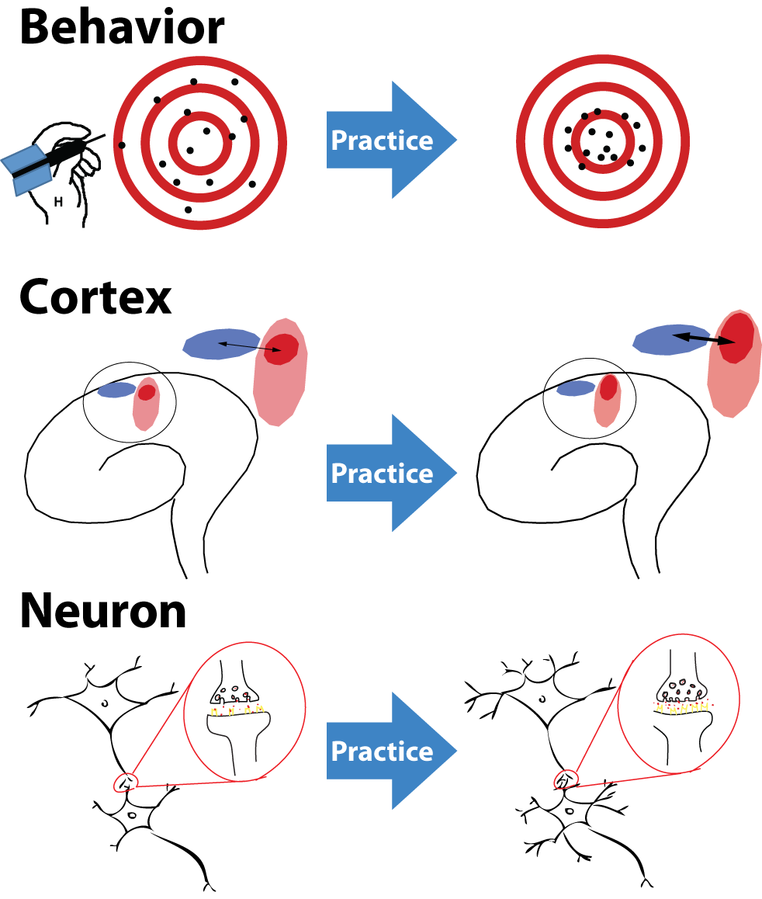
Neuroplasticity refers to the brain’s ability to restructure itself after training or practice. An example of how neuroplasticity works: when you view the brains of people who frequently practice playing the violin under fMRI (functional MRI) they appear to have developed a larger area of their brain devoted to mapping their fingers.  Photo Credit: Wikipedia

This change is directly related to the quantity and the quality of the practice they’re performing – their brains are adapting in very real and tangible ways unbeknownst to them... The more practice you accumulate, the more ingrained or grooved the pathways become.  Of course the inverse happens as well: if those pathways aren’t utilized, the space will be used by other pathways needing room to grow. Use it or lose it! …Your brain can change based on repeated experience…People of any age have the ability to learn new things and form new habits. Mike Torres, Refocuser

Watching Nathan play intricate, complicated runs on his classical guitar boggles my mind. How can he think that fast? It’s lots of practice that causes the brain to connect to the hands, and those difficult pieces get “under his fingers” almost without thinking.

Years ago a friend gave us this book Never Too Late by John Holt. In his “musical life story”, Holt describes how he learned to play the cello in his 40s. We were encouraged by this during a time we moved to Egypt and learned Arabic in mid-life…when language-learning is supposed to be especially difficult.

I love neuroplasticity but it gives me hope, in getting older, of keeping skills and developing new ones, even as an aging person…unless I give in to dumbed-down practices excusing myself for the same reasons of “getting too old”.

When my older brother suffered a stroke, it was neuroplasticity and the repeated efforts of his medical and therapy team that got him back on his feet. He finally “repeatedly practiced” his way back to independence. The personality changes seemed more ingrained, however, they changed, too, as he exchanged his anger and bitterness for a hopefulness and longing for healthy, loving relationships. As he refused to give into anger and chose soft responses, his personality seriously changed over time…with conscious that eventually turned unconscious practice.

How does all this apply to us in the workplace and life, in general? We are confronted at times with a situation that confounds us – a new uncomfortable skillset, an unpredictable relationship, or an unfamiliar decision-making process. Neuroplasticity helps us to not just give up on mastering either a new work process or a complicated interpersonal situation.

Debbie Hampton has written an excellent summary piece on this that will help kick-start any new habit formation necessary for us to continue to do excellently in our work. She was influenced by Dr. Michael Merzenich’s work published in his book Soft-Wired: How the New Science of Brain Plasticity Can Change Your Life. I have listed below Merzenich’s 10 elements of how we can rewire our brain. You will find Hampton’s summary on each very instructive. [I comment briefly on each but don’t miss what she says in her article.]

10 Core Principles for Remodeling Your Brain

1. Change is mostly limited to  those situations in which the brain is in the mood for it. We have to want to learn and change. If we give up, stay resigned to the status quo, or remain fed-up, change will not happen. Want change!

2. The harder you try, the more you’re motivated, the more alert you are, and the better (or worse)  the potential outcome, the bigger the brain change. Focus and persistence or key to mastery.

3. What actually changes in the brain are the strengths of the connections of neurons that are engaged together, moment by moment, in time. Practice strengthens pathways for behavior. Whether it’s learning a new computer system or developing a different way of communicating with a boss…practice hard-wires.

4. Learning-driven changes in connections increase cell-to cell cooperation, which is crucial for increasing reliability. I see this in musicians who live-stream and can read listener chats, respond to them, and continue playing all at the same time. Crazy.

5. The brain also strengthens its connections between teams of neurons representing separate moments of successive things that reliably occur in serial time. This is definitely the mechanism that gets us to our destination when we stop thinking about where we’re going.

6. Initial changes are temporary. Habit formation takes time, and somehow the brain interprets whether the change is vital. Amazing.

7. The brain is changed by internal mental rehearsal in the same ways and involving precisely the same processes that control changes achieved through interactions with the external world. At the simplest level, this is the mechanism of how we “talk ourselves through” a situation. Or when an athlete goes through his routine in his mind before he’s back out on the track or in the pool.

8. Memory guides and controls most learning. Our brain actually helps us to remember what we did well and discards what we didn’t.

9. Every movement of learning provides a moment of opportunity for the brain to stabilize — and reduce the disruptive power of — potentially interfering backgrounds or “noise.” The more we practice, either a physical skill or a way of thinking through a problem, we actually get better at it because somehow the brain reduces the background noise (which can include insecurity, fear of failure or self-doubt).

10. Brain plasticity is a two-way street; it is just as easy to generate negative changes as it is positive ones. Dr. Merzenich warns us, as we get older that we “use it or lose it” by our own decisions to stop learning and mastering new skills and behaviors.

Photo Credit: Commons Wikimedia

How are you using neuroplasticity to help you continue to grow in your work and personal life? Trevor Blake encourages us to set the tone of the day positively and don’t defect from that. Using self-defeating language can blur our focus and mental capacity for mastery. Read more of his excellent counsel here.

As we age, or give in to “what is” at the moment (tracks greased by depression sometimes, or perceived lack of ability or opportunity), we may not realize the great positive effects of neuroplasticity. However, the good news is that we can keep learning and changing and mastering what work and life and relationships bring our way. It’s never too late.

http://www.slideshare.net/smarkbarnes/brain-science-applying-neuroplasticity-principles-to-higher-education-1340661


Neuroplasticity: Your Brain’s Amazing Ability to Form New Habits – Mike Torres

How to Rewire Your Brain for Success – Trevor Blake

Three Simple Steps: A Map to Success in Business and Life – Trevor Blake

Brain HQ Website

How Does Neuroplasticity Work – an Infographic

Never Too Late: My Musical Life Story – John Holt

Deadly: Brain on Multitasking – Bukunmi Adewumi

Toxic Thoughts – Dr. Caroline Leaf

Monday Morning Moment – Are You Ready For Your Workday? – Lessons From Cintas

Photo Credit: Food & Beverage Magazine

Next time you head to the restroom, take a look around. Unless it has just been stormed by a tour group that needed more than the usual service, you can get a sense of readiness. Not the readiness of the restroom, but of the person or agency servicing it…and you as a customer. I wrote about this level of customer service once before  here. Why I wrote about clean restrooms then is why it begins my topic today. Clean restrooms demonstrate a sense of pride and caring. We want restrooms to be ready for the workday. How about our own readiness?

Readiness is defined as being fully prepared and willing to execute.
It is not just about being prepared for one’s workday. It’s also a ready-set-go willingness to be on our toes, stepping up, taking the ball, and scanning both the horizon and the lines drawn on our playing field.

When a Cintas truck rolls into the parking lot, I can almost smell the clean linens and uniforms inside. Their branding includes this mantra: Ready for the Workday: A confident image, clean facility and safe workplace start here. Here’s their commercial that I just saw this weekend, It got me thinking about the broad reach of readiness in the workplace.

My husband walks out of the house ahead of me every morning with his computer bag and a thermos of coffee. He has his schedule on his phone and he keeps a journal. He has thought about the day. He is prepared…the willingness to execute then comes into play as he goes out our door and enters his company’s door…and all the rest of the doors of his day. Both are disciplines – the preparedness of readiness and the willingness to execute.

Readiness keeps momentum going and momentum has huge impact on business and workplace excellence.

After watching the Cintas commercial, I went to their website. What a feast for anyone wanting to learn about leadership and a healthy workplace culture. Check out their Code of Conduct and Business Ethics page. Nothing on their agenda about Business Casual – and everything about dressing and performing aims at positive impact, and helping their customers do the same.

The website’s drop-down menu displays a variety of helps and services. Honestly, it’s hard to believe this company is for-profit based on the generous sharing of information for helping others (their customers and competitors) be “ready for the workday”.

I want to close with some of the quotes from the Cintas website – both from their own founder and from writers who speak for and to their own leadership. Enjoy.

Corporate culture is the single most important distinguishing factor between greatness and mediocrity. It is a major reason Cintas is different from our competitors and other companies. It is our ultimate competitive advantage.” Richard T. Farmer, Cintas Founder & Chairman Emeritus

A key to our success has been a culture that encourages meaningful, respectful relationships between the company and our employee-partners and the commitment to always do what’s right. This spirit of teamwork, camaraderie and trust has become our most important competitive advantage and is a cornerstone of the Cintas culture.” – Richard T. Farmer, Cintas Founder & Chairman Emeritus

“Those who rise to senior leadership levels in almost any organization have one critical attribute in common — they’ve embraced soft leadership skills. This includes having the ability to build relationships with the people you work with. There’s never been a leader in this world without people who wanted to follow them — and the first step to getting people to want to support you is to get them to like you. Take the time to get to know the people you work with, and learn what’s important to them.”Karlyn Borysenko

Be transparent. Insincerity and evasion chip away at trust, so whenever you can, be transparent about what’s happening with the business. Of course, there will be confidential data you can’t disclose. Carolyn O’Hara of the Harvard Business Review notes, ‘regularly distributing other information—like financial results, performance metrics, and notes from board meetings—shows that you trust your employees, which in turns helps them have greater faith in you.’”Lee Polevoi

Don’t micromanage or give step-by-step instructions. Instead, provide guardrails while giving [employees] the freedom to find smart and creative solutions.Chuck Leddy

Photo Credit: LinedIn – Cintas

Hope you enter your workplace ready for the day today! The best part of Monday is its own possibility of a new beginning. Of course, that sort of “Monday” can come any day of the week.

On ready!

6 Essential Leadership Skills That Will Advance Your Career – Karlyn Borysenko

Building Trust in the Workplace – What Business Leaders Can Do – Lee Polevoi

Agile Process Management: An Approach For Business Success – Chuck Leddy

16 Things You Should Do at the Start of Every Workday – Jacquelyn Smith, Forbes

6 Tips For Building Momentum  During Change – Sallie Sherman

Why Preparation Is Better Than Planning – Craig Jarrow

Being Ready For Your Workday Feels Great! – Advance Preparation Is the Key to a Successful Day – Craig Jarrow

What Does Casual Dress Really Mean Today? – 6 Wardrobe Tips For Career Success – Lynn Taylor

Monday Morning Moment – Résumé vs. Eulogy – On Befriending Our Colleagues

Photo Credit: Tangram

Don’t you hate when, out of all the positive exchanges we have at work, there’s that one negative that hangs in our memory? It was a team-building exercise on trust really early in my career. One of the people on my team, with whom I worked at the time, just wouldn’t engage. She finally said, “You are just my co-workers. We are not friends.”

We are not friends.

Slayed.

Throughout my career, I’ve made it a goal to befriend colleagues – those close to me and up and down the ranks. Befriending isn’t becoming best buddies necessarily. By definition, it is “to act as a friend to; to help; to aid”.

When this coworker, in my professionally formative past, expressed openly that we were just a part of her job…I was surprised and schooled. For some, relationships at work are compartmentalized in such a way as to keep them formal and shallow.

There is a measure of safety in keeping work relationships at a distance. I get that. However…

When we spend more waking hours with our colleagues than with even the closest of our loved ones, they bear some significance.

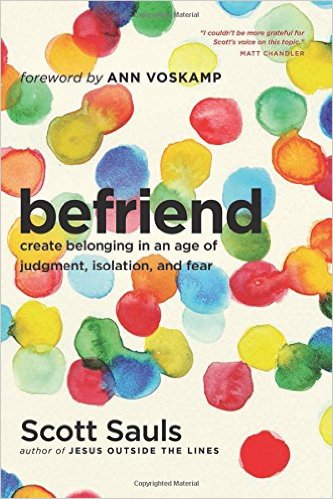
I’ve just begun reading Scott Sauls’ book Befriend: Create Belonging in an Age of Judgment, Isolation, and Fear.   I wrote about it here a few weeks back as the next book on my reading list. The author Scott Sauls is a pastor, but more than that, he is a friend. Not because I know him personally, but because the imprint of Jesus is on his writing and life. He is not preachy or churchy (in the way it was never meant to be). Sauls is wise, loving, and inclusive. Whether you are a person of faith or not, if you want to deepen your friendships and work relationships, sampling the pages of this book will aid you on your way. This book itself, like Sauls, actually befriends you.

Photo Credit: Amazon

My Monday blogs are often reserved for workplace matters – either the culture of our workplace or our very careers. Sauls talks early in the book about how we view success in life. He recalls David Brooks‘s take on our achievement culture.

“We live by two sets of virtues: the résumé virtues – things we bring to the marketplace – and the eulogy virtues – things we want said about us at our funerals. Brooks concludes, ‘In [our] secular achievement culture, we all know the eulogy virtues are more important, but we spend more time on the résumé virtues.'”

What people think of me when I’m gone is less important than truly making a difference in this life. When it comes to our work, I think we all want to add value, not just to the product, but to the people with whom we work and for whom we provide services.

We can get caught in the press of beefing up our résumé and lose sight of the people, real flesh-and-blood people, all around us. Oh, we may not call our focus résumé-building, but when we take a moment to check our motives, it becomes more clear. Ambition, self-promotion, and exclusive control can crush work relationships. We often think it’s someone else but before long it can become us.

I will never forget a colleague who shared about his own pivotal relationship with someone he once considered a difficult boss. They argued over every idea, every decision, every action plan…at least, as this man remembers. His boss was always asking hard questions and pushing him to think more and more outside the box. Yet, in the middle of his heatedly trying to persuade his boss of the rightness of his ideas, the boss would look at his watch and say, “Let’s go get some lunch.” This would infuriate the man re-telling his story.

However, over the years, he began to see something in his boss he didn’t notice at first. This older man genuinely cared for his young protégé. The banter back and forth was to encourage excellence and innovation but never at the expense of valuing the relationship. That’s why lunch together was all part of the exchange. He mattered to his boss.Photo Credit: Free Stock Photos

Later the older man retired and the younger man advanced in his career. Their paths rarely crossed after that. When the older man finally died, his wife called this colleague and asked for him to be a pallbearer at his funeral. The older man had come to consider the younger a friend…and the younger man, as he teared up in remembering, was the better for it.

I’ve written often on complicated work relationships – the us vs. them situations and dealing with contemptuous colleagues among others. We can be tempted NOT to befriend.

Photo Credit: QuotationOf

However, we are the ones who lose the most in not extending a hand of befriending (acting as a friend) to those with whom we work. It changes us, from the inside out, and we live only in the land of résumé-building, rather than eulogy-making.

Sauls writes about expanding our “us”. In the workplace, this can be extraordinarily counter-cultural. To look out for our own status and position is expected. To consider how we might take down silos and create a work community where “the rising tide lifts all boats” (Adam Grant) – something remarkable and memorable.

That is the legacy, years ago, of that coworker/”friend” of mine. She made me more resolved than ever. I want to be a befriender, a boat-raiser, and a person willing to expand the “us”.

Sauls closes this chapter by asking the question, “Where is your greatest opportunity to expand your “us”? It has me thinking. How about you?

“Compelled by the love of Christ, we must not withhold kindness or friendship from any person or people group, and we must not engage in any sort of us-against-them posturing. This in itself is countercultural in modern society. Compelled by the truth of Christ, we must honor and obey the Creator’s design—even when his design is countercultural and, at times, counterintuitive to us. His ways and his thoughts are higher than ours.”

20 Quotes From Scott Sauls’s New Book on Friendship – Matt Smethurst

5 Friday Faves – Civility, Videogame Music MashUp, Unwanted Heirlooms, Film Spare Parts, and Life Calling

Standing outside this morning in the cold, I watched another incredible winter sunrise…and another Friday dawned. Hope you’re finishing your week strong. Either way, we can put this week to rest.

Here’s my list of 5 favorite finds this week (with a few fun bonuses at the end). Enjoy.

1) Civility – More than just polite discourse. In 1997, Burgess and Burgess, of the University of Colorado,  wrote a substantive piece on the meaning of civility. They could have been writing about our current political and social culture. Read their piece for particulars in using fair and honoring processes in attacked difficult problems. Watch Senator Marco Rubio’s brief and inspiring challenge to the US Senate recently.


2) Classical Guitar Mashup of VideoGame Theme MusicNathan Mills of Beyond the Guitar has posted a new video of his arrangements of some of the Best Of Videogame Music Themes of 2016. You don’t have to be a gamer to appreciate the sheer beauty of these pieces interpreted on classical guitar.

I’m surprised myself at how soothing this music is when showcased in such a different setting…arranged by this guy who plays both guitar and videogames with skill…and heart. Have a listen:

3) Unwanted Heirlooms – As far as stuff goes, we are in an unprecedented time. Two generations, the Boomers and their parents, are both downsizing, and their children and grandchildren aren’t interested in their stuff. It poses an odd and interesting puzzle for all involved. This week, I came across a helpful article by Richard Eisenberg entitled Sorry, Nobody Wants Your Parents’ Stuff. He talks about the dilemma for our minimalist children who prefer Ikea and Target over the dark and bulky furnishings of the past. Then Eisenberg gives a quick-read list of to-do’s for dealing with unwanted heirlooms.Photo Credit: Pinterest

I’m pretty sentimental about stuff of my parents that has endured through time, but one day we’ll need one of those estate handlers who just carry off everything. NOVA Liquidation is one such enterprise. Susan’s Selections is my local favorite.

There is definitely an entrepreneurial opportunity here for some. Like you craftsmen who repurpose old pieces. Or those who deal with reclaimed wood and vintage furniture – another local favorite being Wellborn Wright. I would love to see some of these old heavy armoires turned into doors or facades for walls or faux fireplaces.

Photo Credit: Indulgy, Ana White

Tea rooms should abound in our country. There are so many beautiful things from another era…and people who love to sit places, with their tablets or laptops open, and drink coffee/tea – not just in minimalist coffeeshops but in places that surround us with beauty….that’s where all those sets of china cups and saucers should go. Wish I had the revenue to open such a place. Just went to one this weekend….lovely!!!

Blue Willow Tearoom

4) Film Spare Parts –  For those of us who love science and also long for a pathway to citizenship for undocumented young people who were brought to the US by their parents illegally, this is the film for you. Spare Parts is a 2015 film, starring George Lopez, Marisa Tomei, and Jamie Lee Curtis. It’s derived from a true story of four high schoolers, all undocumented from Mexico, who try to change the course of their lives…through a science project. It is funny, poignant, and informing. [See trailer here.]Photo Credit: To the Flixes

Whatever our politics, this film makes us think…and possibly reconsider. [See DREAM Act.]

It reminded me of another film that was a favorite of mine last year – McFarland USA (view trailer here).

Photo Credit: To the Flixs

5) Life Callings – What does this mean…calling? For me, it is the God-given passion and preparation to be the person and do the something for which we were created. Our lives can change course over a lifetime…several times even…but there’s a driving force that we never want to dull by what seems like necessity.

Photo Credit: Pinterest

Paul Sohn posted a piece this week with 10 provocative and resonating quotes on calling. Don’t miss it. In fact, here are three of his quotes to get you started:

If a man is called to be a street sweeper, he should sweep streets even as a Michaelangelo painted, or Beethoven composed music or Shakespeare wrote poetry. He should sweep streets so well that all the hosts of heaven and earth will pause to say, ‘Here lived a great street sweeper who did his job well.” – Frederick Buechner

“Calling means that everyone, everywhere, and in everything fulfills his or her (secondary) callings in response to God’s (primary) calling. For Luther, the peasant and the merchant— for us, the business person, the teacher, the factory worker, and the television anchor—can do God’s work (or fail to do it).” – Os Guinness

“God doesn’t need our good works, but our neighbor does.” – Gustaf Wingren

That’s it for this week. Have a safe and refreshing weekend! Please use the Comments to reflect on these finds or share your own.

BONUSES – These Just Couldn’t Wait Another Week

Who Is A Refugee and What They Go Through to Get to the US – Infrographic

6 Books White Christians Should Read (in Honor of MLK’s Legacy) – Bruce Ashford

Buzzfeed Video – Moments Only Arab People Understand – I really loved the video below – so reminded me of our years in the Arab world. Miss the people – their great hospitality and the cultural nuances. [We still have Arab friends here…but being their guests and neighbors in their culture was an amazing experience. Hopefully theirs is the same here.]