Have you made any errors in judgment lately? Did your judgment lead you to attitudes or actions that you would later regret? I have, maybe not as of yet this morning, but definitely yesterday. Some folks are more accomplished at shrugging them off and moving on. I over-think them, and sometimes beat myself up for them. Not always correcting course, as in taking responsibility, apologizing, and making amends.
Ugh!
Fortunately, I have folks in my life who allow me to process these mistakes and determine the best way forward. Both inside my own head and in relationship with others. Community (i.e. caring accountability) is a wonderful thing.
The graphic above is taken from an article written by Debbie Hampton, this brilliant woman who is also a suicide survivor – talk about a person who took a dark turn in her decision-making and managed to come out the other side in a much better place.
She talks about taking the mistakes we make and dealing with them with forgiveness, kindness, and compassion. We don’t have to be bound by our regret of decisions made. We can reframe our memories and can hopefully extend grace, both to ourselves and others. As we shake off the negative and explore what we can learn, a mental shift and positive action plan are possible. Turning our regrets into lessons.
One discipline in decision-making is to assess how it is we are prone to find ourselves, again and again, in situations that cause hurt to ourselves and others.
Psychologist Carrie Steckl writes about three errors that can affect our decision-making:
Representativeness bias – our tendency to judge a situation based on our predominate experiences and beliefs about the situation.
Availability bias – our tendency to make decisions based on what is most familiar to us, whether it is the best choice for us or not.
Confirmatory bias – our tendency to make an early judgment and listen only to information that validates that judgment.
This was really helpful for me, because I can default to negative thinking, rather than taking charge and turning a situation around. This comes out of habit, and I want to change that habit.
For the moment, still reeling from how my afternoon was derailed yesterday with mistaken decision-making, I want to focus on the importance of moving regrets into life lessons. Habit formation is key, undergirded by three elements: consistency, intensity, and community. Entrepreneur and motivational speaker Sahil Bloom gives a simple yet profound way to approach habit formation:
This is where I am today. How about you? Any regrets? Let’s determine to turn the corner on these by making some simple, thoughtful changes in our mental maps and resultant actions.
It must be a burden being right all the time…or maybe not. That sense of authority on what’s right clears the room of two important qualities – curiosity and humility.
My husband and I have a running joke about being right. He will make a statement about something which I may not agree with in that moment. Then as we talk, I realize he’s right. Then he will say, “I could be wrong, but I’m not very often”.
Now you may take offense at that, but if you know my husband, he is not arrogant and he is a life-long learner. Curiosity and humility are very much a part of his character.
If we’re honest, what he says in jest is what we often believe about our own thinking. Whether we voice it or not, it’s there. We believe we are right…which could mean she/he/they are wrong.
This is a huge political season in the US. The Presidential election is days away. Everyone has an opinion. Everything thinks they are right. Dialog and reasoning together are as rare as truth. Did I just say that?
I wish we could talk. Speak unfiltered from our hearts. Genuinely consider the future of our children and grandchildren. Vote our consciences. It may not always be possible. However…do we just draw away from each other and close ranks with those who agree with us? Or maybe we aren’t sure who they are, who even agrees with us after all…
“You can be right and you can be left” – another family saying to which I’ll add (as Pepper Sweeney said above) “but you can only be together when you meet in the middle”.
I recently met up with a dear friend who had on a political t-shirt. She is one of the loveliest persons you would ever want to know. The t-shirt had some messaging (I’m not going to get it completely right) which communicated about one political party bringing us altogether – uniting us all, no matter who we were. In the design, there were hands holding signs high with all sorts of causes, identities, and alliances. As we talked, I kept studying the t-shirt design and realized I wasn’t represented amongst the “all togethers”.
It got me thinking again about how we all are sure we’re right – About a lot of things. About the candidates, the government, the future, the people who make up America. Politics has gotten to be such a game of deceit – who can make us believe them the most; who can tell the best stories and get us off our couches to vote for them? I would love to have a gathering, at church or with friends or family, to really sort out what are our better choices given what we have to work with. Is it even possible to own our struggle? Or wonder if we’re right or wrong? A better conversation may be to determine what is right thinking post-election, no matter who wins. What is our right response and best path forward?
So much blaming, polarizing, scapegoating, victimizing or playing the victim on the news and in social media right now. I’d love to have an opportunity to dialog in a forum where we agree we may not be right – we may not know everything we need to know – but we want to do right by each other. Would that be possible? Ever? Comment below if you have known that sort of experience in recent years.
Well…just wondering aloud this morning. I’m still hopeful. In fact, even I think I’m right most of the time. Don’t we all?! However, I’m willing to learn and especially to learn to do right, whether I am right all the time or not. We can’t be right if we don’t do right. Am I right? Here’s to more humility and more curiosity! And if you’re thinking it’s your candidate who’s right, is it possible you could be wrong? Or for sure, not right all the time…on this matter, I am in a quandary myself. Peace.
Let’s say you need to have a difficult conversation with someone…a crucial conversation. How do we make it happen and still preserve the relationship, the trust between us? We’ve all heard of (and probably experienced the “feedback sandwich” – start with the positive, then interject the negative, and finish off with a last positive (see here for the many takes on this approach). This approach doesn’t wash anymore, right? It’s just not honest.
I’d like to point to a great piece written by a pastor. Well, he was a pastor until last Fall when he resigned from his position because of what was labeled as “harsh leadership”. Scott Sauls, this pastor, until last year, was a gifted Bible teacher and celebrated author (I’ve read many of his books). He was mentored for years by the late Timothy Keller who was himself a man of great integrity. Keller walked the talk…always.
Scott Sauls was this sort of man also…and in the months after he resigned from the pastorate, he has done the work of restoration…reconciling with those he led (not always well) and returning to a work where he is using what he’s learned to help others not make his same mistakes.
His blog “Speaking Words that Make Souls Stronger” has the clarity of one who hasn’t always spoken the truth in love and yet understands the cost of ill-spoken words. He has corrected course. His counsel is weighty and life-giving:
“In a sincere effort to “speak the truth,” we can lose our way and miss the fact that truth — in order to be true in the truest sense — must be packaged in a love that is patient, kind, does not envy or boast, is not proud or dishonoring, is not self-seeking or easily angered, that keeps no record of wrongs, that does not delight in evil but rejoices in the truth, that always protects, always trusts, always hopes, always perseveres, and that never fails (1 Corinthians 13:4-7).“
“Rather than rushing to find fault, we have every reason proactively seek opportunities to, as Tim Keller called it, ‘catch others doing good’ and to encourage (put courage into) others.”
“Does that mean we just “live and let live” when we see friends and family exhibiting destructive behaviors? Of course not. When someone in our lives is caught in addiction or destructive behavior, the loving thing to do is to help them out of it through intervention.
But intervention is not damning criticism; it’s redemptive critique that is motivated by restoring and building up. Criticism aims to harm and shame. Critique, on the other hand, seeks to leave a person feeling cared for and called to become a better version of themselves. Criticism will leave a person feeling belittled and beaten down. Paul says, ‘If anyone is caught in any transgression, you who are spiritual should restore him in a spirit of gentleness‘ (Galatians 6:1-2).”
“Sometimes love calls us to be courageous because it takes courage to offer the gift of redemptive critique. It also takes courage to receive the same…So, critique redemptively when you must. And at all times, for God’s sake, affirm and encourage.Put courage into a soul — wherever and whenever you can.”
I appreciate Scott Sauls. He may still have days when he is tempted to be critical of others…probably does have those days. Yet, it sounds like he has gained wisdom from those days. And we all benefit from it.
We all have situations that require hard conversations. They can be less hard as we incorporate a gentler, but no less honest approach. “Speaking the truth in love”. Not backing away from conflict, but “using our words” to affirm and encourage when possible. Then when necessary, practicing a redemptive critique rather than a harsh criticism. Genuinely caring for the welfare of the other person communicates more than we may think. The conversation still happens (don’t shy away from it), but it can be restorative.
Bottom line: To have an effective, impactful hard conversation, you have to love the person in front of you. If your care only extends to the mission of your organization, the health of your family, or your own personal interests/concerns, the outcome you want will evade you. You can care about those things, of course. You probably wouldn’t push to have the conversation if you didn’t. The first step to that conversation has to be a heart check on yourself. The key motivation has to be that you genuinely care about the person in front of you. That changes everything, including the tone of your words and your approach. If you love someone, you communicate it (in the workplace, organization, family, friendship). If you don’t love that person, the conversation won’t turn out redemptively for you, the other person, or the situation. Loving that person matters.
Yesterday, a young woman very dear to me gave a tribute to her grandfather at his memorial service. What she said was beautiful and honoring as she said goodbye (for now) to a man who loved her deeply, as she also loved him. She shared her short talk with me, and it reminded me of the precious gift of good fathering. [I’ve written several times on fathering. It’s a hard job, maybe even harder than mothering.]
Reading her talk, she spoke of a grandfather who treasured her. As a grandparent, I understand how easy it is to just love our grandchildren. The raising, training up, civilizing of children is long and arduous, but the joy of grandchildren, both little and grown, usually requires little from us. Still to have a good father as a grandparent is a great blessing. I know this young one will miss him terribly.
Being a good father is a daunting task, especially for men whose own fathers were absent or punishing (maybe from their own sense of inadequacy or pain). As women, we are allowed to cry and vent our struggles to other women. With men, the message is too often to ignore the emotions that are hard to control or to strike out in anguish when facing disappointment or failure. I can’t imagine really.
Today, I heard of Jason O. Wilson for the first time. He is a martial arts instructor but much more. For decades, he has mentored young boys (and their fathers). Scrolling through X (formerly Twitter), I came across this quote on some of his teaching:
It’s impossible to overstate how important it is for a child to hear these words from their dad:
I’m here for you.
I love you.
I’m proud of you.
Speak them as often as you can. [v/c to the incredible @mrjasonowilson. I dare you watch his videos without tearing up.]
Having grown up himself with no father in the home, he founded Cave of Adullam. That’s the name of Jason Wilson’s transformational training academy.
Cave of Adullam is identified in the Bible as a place of refuge for David. In that period of Israel’s history, King Saul was trying to kill David, but David refused to kill the King even when he had several opportunities.
Wilson’s teaching and mentoring is like nothing I’ve seen before. He teaches discipline, but his main focus is for the boys to know they are loved. Their fathers are as much a part of their training as they are.
If you’re a dad or grandfather and you’re reading this, you obviously are invested in fathering. It is never too late to connect with your children and grandchildren. It may be uncomfortable and even unwelcome. We live in an era of family estrangement. However, you will never regret trying or starting over, if given the opportunity. As we reach out to our children, sometimes we find our own healing in the process.
Dig into Jason Wilson’s practices. His website, books, X tweets, YouTube videos, and guest spots on podcasts are extremely helpful. He’s even been a guest on the Joe Rogan Experience where they talk together for 2 hours! Wilson’s own lack of good fathering has not stopped him from fathering and mentoring well. In fact, he was propelled into that better life because of his loss. He was not defeated by the lack of a good father. His faith in a good Heavenly Father has set a solid foundation for him, and now he comforts and empowers others.
Coming back around to the impetus for this post – the grieving granddaughter of a good grandfather – she will be comforted by the love she knew in their relationship. Her children will benefit from that as well. We take note of good fathers and have hope for ourselves to be that kind of parent.
And let the peace of Christ rule in your hearts, to which indeed you were called in one body. And be thankful. Let the word of Christ dwell in you richly, teaching and admonishing one another in all wisdom, singing psalms and hymns and spiritual songs, with thankfulness in your hearts to God. And whatever you do, in word or deed, do everything in the name of the Lord Jesus, giving thanks to God the Father through him. Wives, submit to your husbands, as is fitting in the Lord. Husbands, love your wives, and do not be harsh with them. – Colossians 3:15-20
On August 4, we will be 40 years married! Whew! Thanks be to God!
The flight of years shows in our bodies and minds, but for us, it is most apparent in the launch of adult children into their own lives, work, and marriages. Then…it comes back to just the two of us…and I am grateful for his company.
Our marriage has always been of a quiet steady sort . My husband and I married best friends. We were polar opposites in most ways, except our faith and being raised in Southern families, with Godly, praying mamas. He was “read and follow directions” marrying “fly by the seat of her pants.” It was definitely a match made in Heaven because we would need the God of Heaven to keep us on course as we figured marriage out…both without and, later, with children.
In fact, those of you who know us well know the struggles we have had figuring out parenting (both young children and then adult children). Also the challenges of having very different ideas and giftings on doing life. I’ve written so much about this in my journals over the years, wrestling with God and my own heart in these areas. Should our kids read those journals one day, I trust them to handle the pages of angst about our marriage with gentleness and understanding. Hopefully they have always seen us pull together more than pull apart.
I’ve often quoted Elisabeth Elliot on love and marriage. Two thoughts come to mind. She speaks of love as being “a laid-down life.” She also talks of marriage as being good for Christians to mature in their walk with God, because [in marriage] “there’s so much scope for sinning.” My husband has taught me a lot in both of these areas, and I, him – hopefully more on the lines of laying down our lives for each other, rather than the scope for sinning part…sigh.
Whatever these nearing forty years have produced with us together, the best of it has been 3 great young people (and the 2 beautiful extra children who’ve joined our family through them, so far)…and GRANDCHILDREN! Alongside those treasures is the unalterable way the Lord has knit us together, my husband and me, with each other and with Him.
I have some idea what is ahead, given our ages and the world around us (we’ve already been through a cancer diagnosis, big job changes, losses of dear parents, and sickness in our children and grandchildren). The hard is softened by what is promised (and proven) through God’s Word. Whatever is ahead, I am so grateful for what I’ve learned through this man who married me 40 years ago.
He has given me the face of a man who does not give up, of one who never leaves the room, of one who fights for what is right, of one who is tender toward the weak, of one who loves no matter what. I have been both the recipient of this and the one by his side as he extends himself to others.
Now, we are two again…as in the beginning of our relationship. Yet we are at a very different place. God has shown Himself to be ever-present in all these years of our lives. For many years I didn’t think marriage was to be mine…then Dave came into my life quite providentially. God gave me exactly what I needed in this husband of mine – a man as true as steel in his walk with God and with his family. We count on him; he counts on God. Whatever happens out there in front of us…I have peace, on this 40th anniversary, that God will be there for each of us, to show us how to live…as He has in all these years thus far.
Ah…contempt. It is defined as a strong negative emotion that joins disgust and disrespect. We have all experienced contempt, either for someone else, or a group of someones…or the contempt of another towards us.
Contempt is a harsh response…a cold killer of hearts and relationships.
It became more real than ever when I experienced it myself recently. Not toward me personally maybe but because of an association/affiliation I have that is viewed by some as contemptible. When we express contempt, it is usually in conversation with those who agree with us. Rarely do we have the person(s) toward which we feel contempt in front of us. We don’t engage them as much as we complain about them. We hold some in contempt because of their beliefs or actions, and our temptation is to have nothing to do with them. We may view this as a strength, but (as I’ve heard said), “an unguarded strength is a double weakness.”
“Knowing our weakness, dividing leaders on both the left and right seek power and fame by setting American against American, brother against brother, compatriot against compatriot. These leaders assert that we must choose sides, then argue that the other side is wicked—not worthy of any consideration—rather than challenging them to listen to others with kindness and respect. They foster a culture of contempt.” – Arthur C. Brooks, Love Your Enemies: How Decent People Can Save Our Country From the Culture of Contempt
Contempt is something I’d like to annihilate in my own thinking, and thankfully there are helps. Below you will find two thought leaders who have worked to expose contempt for what it truly is and does to us, and who have given us counsel on how to recognize it and rid ourselves of it. Author and academician Arthur Brooks and clinical psychologist John Gottman.
How do we confront contempt?
Arthur Brooks’5 Rules to Counter Contempt
1. Refuse to be used by the powerful. – “The accurate image of a powerful manipulator is someone on your side of the debate: a media figure who always affirms your views, a politician who always says what you think, or a professor who never challenges your biases. They declare the other side is terrible, irredeemable, unintelligent or anything else that expresses contempt — and they say you should think these things as well.” Brooks encourages us to tune out that person “on our side” who seeks to manipulate us, whatever the reason. Then (this is the harder part), we are to call out contemptuous behavior among those with whom we agree (our friends and maybe family). Contempt tears us down, and we don’t want that for ourselves or those we love.
2. Escape your bubble. – “The culture of contempt is sustained by polarization and separation. It is easy to express contempt for those with whom we disagree when we view them as “them” or never see them at all. Contempt is much harder to express when we see one another as fellow human beings, as “us.”” We do well to make opportunities to share space and conversation with people not like us. Seek to understand and look for ways we are alike.
3. Treat others with love and respect, even when it’s difficult. – “Never treat others with contempt, even if you believe they deserve it. First, your contempt makes persuasion impossible, because no one has ever been insulted into agreement. Second, you may be wrong to assume that certain people are beyond reason. There are many examples of people forming unlikely bonds precisely because they didn’t treat each other with contempt.” Sometimes we are the ones toward which contempt is aimed. If we have offended, then we can apologize. Raising an issue higher than the value of the person doesn’t take us anywhere positive.
4. Be part of a healthy competition of ideas. – “I believe disagreement is good because competition is good. As in politics and economics, competition — bounded by rule of law and morality — brings excellence. In the world of ideas, competition is called “disagreement.” Disagreement helps us innovate, improve, correct and find the truth. Of course, disagreement — like free markets and free elections — requires proper behavior to function.” The goal is not to disagree less but to disagree better, notes Brooks.
5. Disconnect from unproductive debates. – “Get rid of curated social media feeds. Unfollow public figures who foment contempt. Want to get really radical? Stop talking and thinking about politics for a little while. Do a politics cleanse. For two weeks — maybe during your next vacation — resolve not to read, watch or listen to anything about politics. Don’t discuss politics with anyone. This will be hard to do but not impossible.” This exercise will reveal how much of your life and mental energy is wasted, allowing you to refocus on people you truly love and work/play that matter more than those things you probably won’t be able to change. – Arthur Brooks, Sick of the Culture of Contempt? Here are 5 Ways You Can Subvert It
Another exceptional thinker and clinician is Dr. John Gottman, psychologist and professor. His focus is primarily on marriages and individual mental health within relationships. The Four Horsemen is a metaphor pointing toward end-times. Dr. Gottman uses the same metaphor in describing four elements of communication, any one of which can predict the demise of a marriage (or any other relationship). These elements are criticism, contempt, defensiveness, and stonewalling. Each has an antidote.
Contempt is much more mean-spirited than criticism. It communicates a measure of cold superiority over the one being criticized. Gottman isn’t talking about a political stand or a point of contention over culture or morality. He is concentrating on the relationship between two people, usually being a married couple.
“Contempt, simply put, says, “I’m better than you. And you are lesser than me.” [It] is fueled by long-simmering negative thoughts about one’s partner, and it arises in the form of an attack on someone’s sense of self. Inevitably, contempt leads to more conflict—particularly dangerous and destructive forms of conflict—rather than to reconciliation. It’s virtually impossible to resolve a problem when your partner is getting the message that you’re disgusted with them and that you’re condescending and acting as their superior.”
Gottman prescribes two antidotes for contempt in the marriage relationship – one short-term and the other more long-term:
First, the person feeling contempt toward the other would do well to name the emotions that rise to the top during a conflict. Express these emotions to your spouse without blaming, and appeal for help with a solution. “I am sad that we don’t have friends over. Could we talk about a way forward on this?” Or “I get worried when the bills pile up. Can we talk about what we can do to stay within budget?”
Second, Gottman suggests establishing (or re-building) a home culture of fondness and admiration for each other. This is a discipline that may take some strong determination, but it is doable. In fact, I have go-to Bible verses (Revelation 2:4-5) that help me immensely during those dry times in my own marriage. It speaks about what to do when we have lost our first love (for God and each other). Essentially, the instruction is to remember how it was in the beginning, repent/return, and repeat the actions/emotions/intentions that came naturally when the relationship was new. We don’t have to feel the fondness or admiration at first, but as we practice them, they can be restored. Among many tools, Dr. Gottman uses the instrument below to kick-start the process as the spouse chooses three descriptors and then gives examples of those to the other person.
Contempt is deceptive. It feels so good to think we are right, and yet in the practice of contempt, we become more isolated and less engaged in real community. Only preferring people who think like we do. At some point, our competencies will be impacted because our problem-solving shrinks down to just judging others and determining they aren’t worth our time. We miss learning from them, and we miss the possibility of genuinely understanding them, even loving them.
Having faced contempt myself in the last week, It has brought me to a “come to Jesus” moment. I don’t want to hold contempt for anyone, no matter how different they are, no matter what wrongs they have done. I want to figure out how to stay engaged with people…such that “if [I] can’t move mountains, [maybe I can] move a stone”.*
We all have fathers – whether very present, present but distant, or long-time absent. Some of you may be fathers. Some of you may have wanted to be fathers but are not able to be…for whatever reasons.
This day of commemoration usually means a good meal and some sort of gifting or pampering for you dads. For all of you, with or without children, you can be influencers…and we need you. My biological father was absent long before my parents divorced.
Thankfully I have had a rich heritage of good fathers through the rest of my life – my step-dad, brothers, uncles, husband, father-in-law, son/son-in-law, brother-in-law, nephews, and loving, empowering male friends and colleagues. Most of these good fathers in my life were spiritual fathers…but fathers nonetheless.
The father of my own children used to travel with his work. He and I had a parting ritual. He runs through the “in case something happens” list [let me know if you want particulars of that – it is helpful to know]. Then, we did sort of a “Thanks for marrying me” farewell…and finally that wonderful, “If I don’t see you here, I’ll see you THERE.” When this man wasn’t present with us, he still was.
Fathering, like mothering, is not an easy job. So much dying to self. So much responsibility. What a delight for us when the men in our lives take fathering on their shoulders as they might a sleeping child. Surrendering themselves to the serving of those younger than them. I thank God for men who humble themselves in prayer for their children and who go to work every day to support their families. Working, studying, and life-long learning passed on to their children and others.
Photo Credit: Calvin & Hobbs from the blog of Kenneth Reeds
These dads are too-often taken for granted in the shadow of fathering that falls short. The absent, neglectful and downright abusive fathers cut wounds so deep that decent fathers are sometimes judged by the same measure. We watch for “the sins of the fathers to be revisited on their children” (Numbers 14:18).
Today, let’s reflect on the good fathers. Those who were present at our births, or those who came later in life to us, or those who father us out of their own great hearts. Imperfect, sure. All of us are. Yet, there are those men who go many more than second miles for us, and we are grateful. – Deb Mills
…and finally let’s live in hope that those fathers who struggle to be present or loving may one day gather themselves together, awaken to what was left behind, and reach out to the treasures they missed along the way…and may they find us within reach.
“As to my children, you are now to be left fatherless, which I hope will be an inducement to you all to seek a Father who will never fail you.” – Jonathan Edwards, his last words to his children, as he lay dying
What can we learn about leadership from a priest? A priest who spent his potentially most influential years as pastor of L’Arche – a community for mentally handicapped persons? What? Plenty!
Henri J. M. Nouwen was a renowned scholar, writer, professor, and a Dutch Catholic priest. He taught for many years at such prestigious universities as Notre Dame, Yale, and Harvard. His writings were prolific and his personality was winsome.
Whether you are Christian or not, you will profit from the tiny book (81 pages) he wrote on leadership – “In the Name of Jesus: Reflections on Christian Leadership”. I read this book yesterday afternoon and was spellbound by his wisdom. Having read many texts on leadership over the years, both secular and Christian, I was captivated by Nouwen’s take on leadership…and his willingness to confront the pitfalls that can occur along the way. In a clear and succinct way, he exposed the temptations we have in leading others and the way we can extinguish them through applying certain disciplines or habits.
Nouwen points out three temptations leaders are apt to succumb to, and then he offers three disciplines to counter (and gain freedom from) them. Christian readers, you will appreciate his direction. He refers to Scripture for his teaching – two passages in particular: 1) Jesus’ questioning a repentant Peter after he had denied the Lord three times (John 21:15-19), and 2) the temptations of Jesus in the wilderness (Luke 4:1-13). I will list the temptations below and examples from my own life where they crept in:
To Be Relevant – In recent years this has actually been a longing of mine, before the Lord. After retiring from a full and satisfying ministry life, with all our children grown and on their own, my days got very quiet. I didn’t know what to do with them. The calls to join this team or lead that work just didn’t come in. Somehow I had made relevance an idol. Thankfully God was working away at that temptation in my life. He is still at work, because I still struggle…but not like before. Earlier today, I was sitting in the waiting room while an Afghan grandmother in my care was having dental work done. It’s been my least favorite activity on the refugee resettlement team of our church. The appointments are three hours long (for the dental students’ learning), and even with books, phone, and hallways to do steps, I bristled at times at the servitude of this activity. After reading Nouwen’s book, he pointed the way to resist. Contemplative prayer is the answer. Recognizing that I don’t need to be going here or there because it is I who am needed in those situations. To use the time of seeming irrelevance to participate in a grander work than I could have ever imagined. To simply be, humbled and grateful, with God, and to have a quiet many would love to know. To remember that the work, whatever it is, came from Him to begin with. I don’t own work, or ministry, or service of any kind. It is an opportunity to show up for a greater good, in a quieter state, where I am surrendered, making myself available, to love others more than myself – “in the name of Jesus”.
“I’m telling you all this because I am deeply convinced that the Christian leader of the future is called to be completely irrelevant and to stand in this world with nothing to offer but his or her own vulnerable self. That is the way Jesus came to reveal God’s love…God loves us not because of what we do or accomplish, but because God has created and redeemed us in love and has chosen us to proclaim that love as the true source of all human life.” – Henri Nouwen
2. To Be Popular (Spectacular even) – What a temptation this is. It is stealthy. We sometimes aren’t even aware that we experience it. Until we are. Sigh… Leadership lends itself to singular popularity (even in situations where people love to hate you…it’s still a superlative position of a sort). When we rise through the ranks, through experience mixed with education, it can be a very individualistic journey. “Lonely at the top”. However, there is a head trip attached where we become prone to thinking that we are the ones to call, or to consult, or to give opinion, or have the last decision. This temptation to want to be “the one” is fortunately tempered by doing work/life/church in community. By taking someone along. By sharing decision-making. By including those most affected in the conversation. Making room around the table. Nouwen, in regards to this temptation, calls the reader to Confession and Forgiveness. When is the last time you heard a leader confess a weakness or struggle? When did she or he ask forgiveness for a decision that turned out poorly or for a moral failure exposed? Being willing to remove the cape of the hero, and step off the pedestal, takes a humility that allows for, mutual confession and forgiveness within the larger community.
3. To Be Powerful – What a temptation!! To believe that we could actually have power over other people’s lives. To be in a position of making sweeping decisions with little restraint. To be surrounded by those who (dealing with their own temptations) would go along with the decisions out of their own need for popularity and power. It’s messed-up. In fact, what we think is our leading is really being led (by our own preferences, or the pressures of that vaunted position). What’s the solution? Now, each of these temptations so far has had a spiritual response – prayer, confession and forgiveness. What is the way forward when power has taken the driver’s seat? Theological Reflection. Nouwen is NOT talking about the answers that may be debated in the seminary classroom. It goes far deeper…to actually look for the truth in the background…and seeking to act on what is true…not for the sake of relevance or popularity or to hold onto power.
“Christian leaders have the arduous task of responding to personal struggles, family conflicts, national calamities, and international tensions with an articulate faith in God’s real presence. They have to say ‘no’ to every form of fatalism, defeatism, accidentalism or incidentalism which make people believe that statistics are telling us the truth. They have to say ‘no’ to every form of despair in which human life is seen as a pure matter of good or bad luck. They have to say ‘no’ to sentimental attempts to make people develop a spirit of resignation or stoic indifference in the face of the unavoidability of pain, suffering, and death…Theological reflection is reflecting on the painful and joyful realities of every day with the mind of Jesus and thereby raising human consciousness to the knowledge of God’s gentle guidance.” – Henri Nouwen
Henri Nouwen left the lofty academic environment to join in community with those who would not incline to be impressed with his credentials. Yet, in the setting of L’Arche, Nouwen dug deep into how to lead in gentler and more loving ways, with the example of the life of Jesus, and the nearness of God and community.
The beauty of his life laid down has given me pause to look differently at leadership and the possibility of being led…by a God who loves us first, in servant mode, in community with others…in the name of Jesus.
This has been days in the writing. When I saw the quote below just scrolling through Instagram, it stopped me in my tracks. Withholding (as defined here) goes way past “not knowing what to say” or “placing boundaries” or any measure of shyness or introversion. Withholding is actually an act of aggression…a display of power. One in which any of us can find ourselves if we don’t practicing checking our hearts or intentions regarding certain people or situations.
My Mom was the most significant influence in my life growing up. Now, I didn’t have the vocabulary for a lot of what she taught me, in word and deed, until recent years. Much of what she modeled came through her love of Scripture. She wasn’t a practicing Christian in my early childhood, but still she had made some decisions as a young person (while churched or otherwise influenced) that she practiced throughout her life. She became more mature and even more compassionate in these rules of life as she patterned her life more and more like Jesus.
I said all this to say that she was the opposite of a withholding sort of person. Even as an introvert.
Maybe growing up in a home with an alcoholic father and a timid mother influenced her willingness to show up for people – her brothers, her friends, her children, and strangers she met day-to-day. She did not withhold herself from others – all sorts of others – and it made for a beautiful life. This from a woman who worked full-time, raised four kids, and dealt with a cancer that would take her life too soon. Well, it didn’t take her life. Her life was finished at 75 to the glory of God. Even in her last hours and experiencing pain and increasing weakness, she was encouraging all of us around her. She even woke up from a coma that had silenced her to say “I love you” in response to one of her little grandchildren’s goodbyes to her.
This woman. Now you can understand why this issue of withholding feels so wrong to me. I understand people needing boundaries in toxic relationships, however, the practice of withholding can take boundaries up several notches. This probably isn’t a winsome topic because we don’t think what we’re doing is mean-spirited…it’s just because we are busy, or shy, or can’t do one more thing, or (fill in the reason).
Withholding can have different faces depending on what our intent or inclination is. It can be withholding of:
We have all experienced withholding – either as the one holding out on others or the one experiencing that neglect (whether intended personally or just in the wake of not being chosen for any of the above).
What do we do with this issue? If you’re reading this, you are already on the path to solutions. Those who don’t read this sort of piece don’t see this as a problem. Certainly, none of us are necessarily entitled to whatever is sensed as being withheld. However, if we don’t want to be on the giving end of withholding, we can note it and practice the opposite – a humility, intentionality, watchfulness, and graciousness can move us toward an openness and willingness to be there, even when others are not.
Parenting is a long season where withholding can become a habit – when we as parents get exasperated with our children’s choices and when we are shaken in our sense of who we are and how we’re doing. An example is well-communicated below by Youth Dynamics of Montana. If we have struggled with parenting or have been harmed by our own parents’ withholding, our temptation is to extend that same experience back, over time, either with our kids or our parents.
For me, it’s a daily battle to be like my Mom, but one I want to come out winning, or at least fighting. To be that person who works to catch the eye of people, to engage and encourage, to be courteous and deferent, to include, to give where there is opportunity, to serve when I know I can, to share information that would help, to let people in and to show up for others. All of this models good for our children and is a blessing to those around us. Choosing not to withhold myself, my people, and my resources by tightly circling the wagons.
There’s a great call to action by the Prophet Isaiah on what can happen (if I could interject) when we don’t withhold. When we show up, God shows up in exponentially greater ways. Is that your experience?
Strengthen the weak hands, and make firm the feeble knees. Say to those who have an anxious heart, “Be strong; fear not! Behold, your God will come with vengeance, with the recompense of God. He will come and save you.”
Then the eyes of the blind shall be opened, and the ears of the deaf unstopped; then shall the lame man leap like a deer, and the tongue of the mute sing for joy. For waters break forth in the wilderness, and streams in the desert… – Isaiah 35:3-6
10 years writing this blog. I started 10 years ago this very month. The reason, in particular, was because I felt my memory clouding some, and there were memories and counsel I wanted to make sure were left for my children. As writing does, the blog cut its course through many topics – God, life, marriage, parenting, beauty, friendship, work, meaning, purpose, and reflections of all sorts. Now 10 years out, my memory is still hanging in there, and for that I’m thankful. Also for the having of words to share with those I love.
Our friend Clyde Meador started a blog himself 3 years ago this month. He may have had similar hopes – to leave something for his children and for the sake of a greater work.
Leadership was a topic that I studied for years (posting in my Monday Morning Moment). I learned so much from great leaders in my life, as well as some leaders who could have used some mentoring by our friend Clyde. That may not have been kind, but good leaders matter – in our lives and in the futures of organizations.
In the first year of Clyde’s blog, he wrote a series of posts entitled 6 Sacrifices of Leadership. The topics were:
Loss of Constant Firsthand Involvement
Too Much Negative Knowledge
Constant Criticism
Leaving
Sacrifice, Isolation, Ostracism
Impact on Family Ties Due to Travel and Workload
Take the time to study those posts to learn from Clyde. In a recent tribute to him, a friend and colleague, Charles Clark wrote a brief summary of Clyde’s six sacrifices, their dangers and rewards. You find them in the image below:
In April 2024, Clyde Meador, this wise, humble, and insightful leader friend of ours, died, at 70 years of age. Complications of a long battle with cancer. He leaves a big hole, for his family, but also for the many people who have known him and loved him through the years. However, he would say something along the lines of God doesn’t leave holes.
We all have stories with Clyde in them – his lessons on life and leading. His legacy is that he never wavered in his faith walk, his love for his family, or his determination to do excellence in the work God had given him. He and Elaine have been a picture of constancy in our lives. Leading and loving.
In July of 2023, life and cancer treatment got in the way of Clyde continuing his blog. What turned out to be his last blog is so appropriate and beautiful. “To Those Who Come After Us”. Here are the last paragraphs.
“I will sing of the steadfast love of the Lord, forever; with my mouth I will make known your faithfulness to all generations.” (Psalm 89:1, ESV) “We will not hide them from their children, but tell to the coming generation the glorious deeds of the Lord, and His might, and the wonders that He has done.” (Psalm 78:4, ESV) This commitment of faithful followers of the Lord must be our commitment, also.
“So even to old age and gray hairs, O God, do not forsake me, until I proclaim your might to another generation, your power to all those to come.” (Psalm 71:18, ESV) I am grateful that I have reached old age and gray hair, and pray that I will faithfully do all I can to communicate the truth of the Gospel to those who come after me.
Of all those things which we teach our children and those who come after them, nothing is more important, more urgent than the truth of the Gospel. I have a less-than-perfect record of success in this endeavor, yet I seek to faithfully persist in sharing the Truth. I challenge each of us to a major focus on sharing all we know about our Lord and Savior with the next generations! – Clyde Meador, To Those Who Come After Us
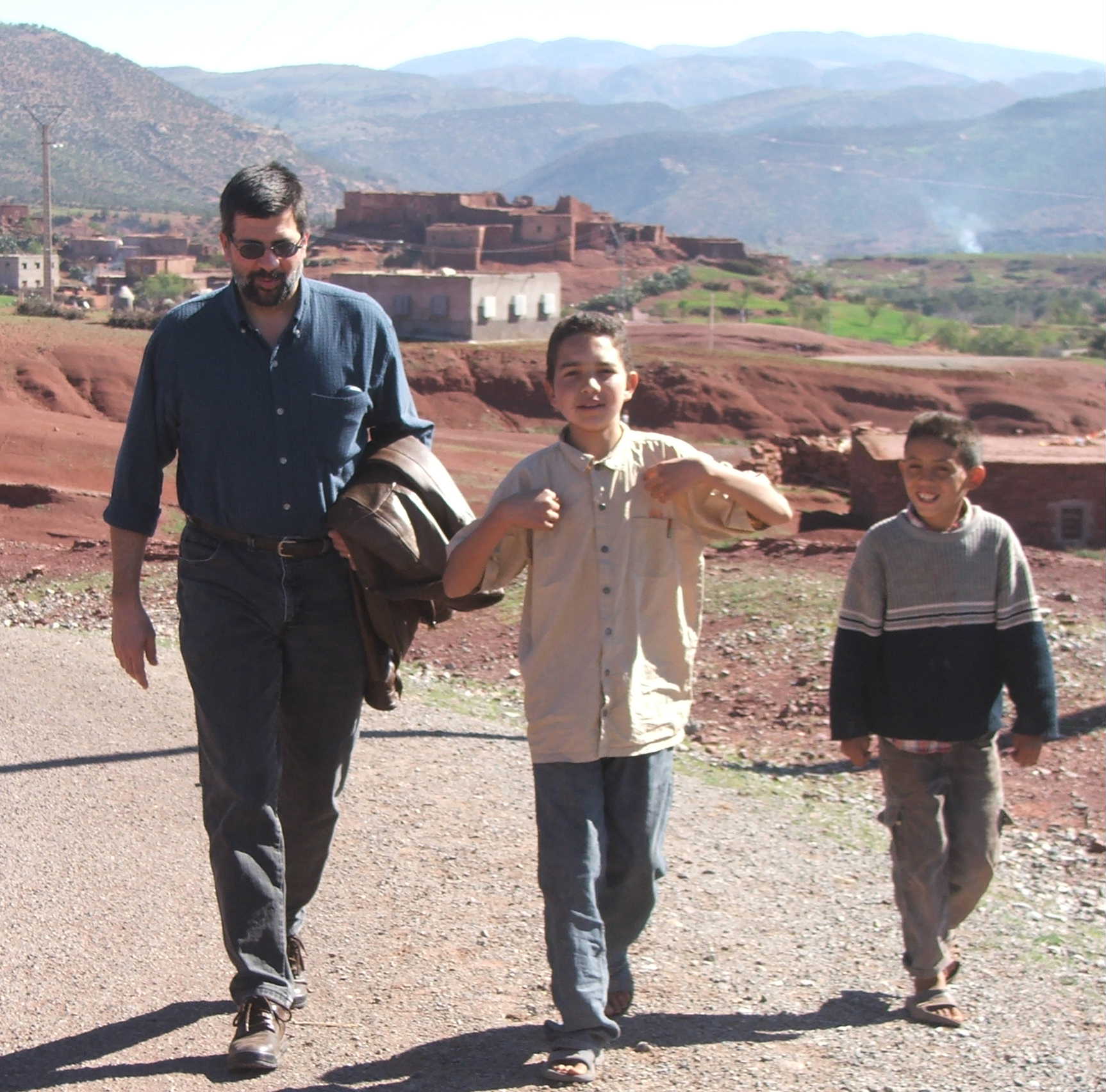
[Dave & Clyde, a few weeks before Clyde went to be with the Lord. So grateful. What a humble and wise mentor he was to so many.]