Category Archives: Leadership

Saturday Short – Raising Adults – Part 1 – Responsibility Is Two Words

[Adapted from my presentation at a home-school conference. Part 2 – Raising Adults – Creating a Culture of Serving can be found here.]

Being a parent is a humbling work…one way or other, it takes us to our knees at some point. In thinking about how we shape our little ones and raise them into adulthood, I was driven to prayer…a lot.

“Oh God, You have given us such crucial work in raising our children to adulthood. Help us to be faithful to live in the tension of remembering they are still small/young and yet pointing them to their place in this world and Your Kingdom. In Jesus’ name. Amen.”

In the book of Genesis, we have a beautiful picture of God’s work – His eye for detail, His gift of order – He provided everything that was needful…including work for us.

God has given us all work to do. It was His plan from the beginning… In training up our children, we will always push against the counter-pressure of entitlement in our kids’ lives (and in our own)… but we are not alone. He’s already promised that “His yoke is easy, and His burden’s light”.

The Scripture is full of wisdom pointing us toward teaching our children to become responsible adults…understanding the importance of showing up, working in whatever capacity they can.

So we built the wall and the whole wall was joined together to half its height, for the people had a mind to work.Nehemiah 4:6

Anyone who can be trusted in little matters can also be trusted in important matters. But anyone who is dishonest in little matters will be dishonest in important matters.Luke 16:10

Train up a child in the way he should go; even when he is old he will not depart from it. Proverbs 22:6

Whatever you do, do it enthusiastically, as something done for the Lord and not for men, knowing that you will receive the reward of an inheritance from the Lord – you serve the Lord Christ.”Colossians 3:23-24

What goes into raising adults? Teaching our children and giving opportunity to see the value of work, to treat people and possessions appropriately, and to see themselves as a responsible part of a larger community. When does it start? Very early.

Author and parenting coach Reggie Joiner talks about the key to raising responsible adults is to give them responsibilities…now.

We are called, by God, to work…from the beginning…to have dominion…and to essentially clean up our own messes. As we learn to do that at home – caring for ourselves and contributing to our family – we can quite naturally expend the effort, and extend that, toward our larger community.

Joiner defines responsibility and counsels parents how to train it:

“Responsibility is an interesting word.
It’s actually two words.
Response and ability.

Do you see the link between the two concepts? If you want to raise kids to become responsible, then lead them toward a life where they develop the right attitude toward work and tasks. Give them chores at every stage.

  • Lead so their response reveals their ability.
  • Lead so their response matches their ability.
  • Lead so their response grows their ability.

Think about it this way:
Home should be the first job every kid ever has. What kind of experiences are you giving your children to prepare them to be responsible adults?”
Reggie Joiner

Raising Adults – Reggie Joiner

Sometime ago, I was listening to a podcast from Liberty University (would have linked it but it is no longer at the original link). The guest was writer, thought leader, and world-shaker-upper Karen Swallow Prior:

Prior talks about this being the anxiety generation. Some of that anxiety revolves around the pressures coming out of social media. “There is an existential anxiety that goes with having so many choices in front of you and being afraid you’re going to make the wrong choice and miss out and go down the wrong path.” – “Everything you do in life [marriage, work, weekends] is supposed to be this huge self-fulfillment…such that you can post it on social media.” Too often, our experiences aren’t fulfilling and then the anxiety comes, “did I make the wrong choice?” – Notes from the podcast with Karen Swallow Prior

Dr. Prior supports education as a help in correcting the “tunnel vision and distorted vision” that can evolve in young people’s thinking. Work throughout our children’s growing up years can also impact thinking as well…restoring perspective.

One of my favorite books on this topic is Escaping the Endless Adolescence by Joseph Allen and Claudia Worrell Allen. The Allen’s write about the “failure to launch” generation. Teens who are exhausted at what seems required of them to be adults and therefore resist doing more than the minimum, coasting through life.

Instead of asking: “What will keep our teens out of trouble?” “What will make them happy?” or “What will get them into college?”, we need to switch our focus to a different set of queries: “How can we introduce realistic elements of adulthood into their worlds?” What activities best provide real feedback about their effort and skill?” and “Which other adults can we recruit to help pass our values on to them?” In short, we need to switch our focus from activities that reflect living happily as a teenager to activities that let our young people actually use their energy, connect with adults, and make choices that matter in order to begin moving successfully into adulthood.Allen & Allen

In their helps for parents of teens (and younger children), the Allen’s coach how to guide kids to become contributing members of the family, how to give genuine, real-world feedback toward maturity, how to connect their kids with role model adults (including the parents themselves), and how to positively stretch their kids toward skill- and confidence-building.

Writer and stylist Jo-lynne Shane shares a ‘raising adults” system she used with her three children.

[Her] system based on the following principles:

  1. logical consequences vs discipline and anger
  2. choices vs commands
  3. questions vs lectures
  4. no nagging
  5. no idle threats
  6. no yelling

You see, when you allow them to experience the natural consequences of their choices rather than resorting to nagging, yelling, idle threats, and unrelated punishments, you put the responsibility for their actions on their shoulders.  Too often parents make their kids’ problems their problems.  Then the parents get angry and the kids learn nothing. 

By giving them choices rather than commands, they don’t have the option to disobey.  The key is to give only choices that you can live with, and then to be willing to follow through. 

Asking questions instead of lecturing encourages kids to think for themselves and be discerning. – Jo-lynne Shane

Raising Responsible Kids – a Series – Jo-lynne Shane

Finally, writer and parent Cara Sue Achterberg offers this exercise:

List the abilities and qualities you hope your children will have by the time they are eighteen.

Back track from that point and begin thinking of chores and responsibilities you can give your children now which will help them attain those abilities and qualities before they leave home.

Instead of thinking in terms of what they can’t do, begin to see them as the capable human beings they are and discover what they can do.Cara Sue Achterberg

Are You Teaching Kids Responsibility? 50 Simple Challenges to Get You Started – Cara Sue Achterberg

…and then they were grown.

All our children are, bit by bit, becoming adults. [Like we are often told, it comes faster than we can imagine.] We as parents recognize the adult inside each one and build scaffolding, just enough support, to help each child grow into that adult. At every age, they can see it matters that they show up. It matters.

15 Tips to Raise a Responsible Child Dr. Laura Markham

Are You Teaching Your Kids Responsibility? 50 Simple Challenges To Get You Started – Cara Sue Achterberg

Practicing What You Preach – Raising Responsible vs. Entitled Children – Marsha B. Sauls

The Goal Is Not to Raise Good Kids, but Great Adults – Dave Ramsey

I Took ‘Adulting Classes” for Millennials – Andrew Zaleski

Jesus and Holy Week – Tuesday…3 Days Until His Death – A Long Day – Teaching & Countering Religious Opposition

Photo Credit – slidesharecdn.com

When He [Jesus] entered the temple, the chief priests and the elders of the people came to Him while He was teaching, and said, “By what authority are You doing these things, and who gave You this authority?”Matthew 21:23

On this long day, Jesus would demonstrate in one situation after another that he spoke and acted with the authority of God Himself. The barren fig tree cursed by Jesus the day before had indeed withered and died. The disciples saw it themselves that morning as they walked again from Bethany to Jerusalem. Jesus spoke to them of faith, which they would need all the more in the days ahead (Matthew 21:21-22).

It’s amazing that he even gained entry to the Temple after overturning the market just the day before. Again, another sign of his authority. He was untouchable, until he gave himself over to his own death on the cross…for us.

In an attempt to test Jesus’ understanding of the law, a legal advisor to the Pharisees asked Jesus what was the greatest commandment in the law. The Pharisees emphasized strict adherence to the laws of the Torah, all 613 of them! They were not prepared for Jesus’ response:

Jesus answered, “The foremost is, ‘Hear, O Israel! The Lord our God is One Lord; and you shall love the Lord your God with all your heart, and with all your soul, and with all your mind, and with all your strength.’ The second is this, ‘You shall love your neighbor as yourself.’ There is no other commandment greater than these.” –   Mark 12:29-31

Two commands: 1) Love God with your whole being; 2) Love your neighbor as yourself.

The Pharisees, Sadducees, and other Jewish leaders grew more angry at Jesus and were vexed as to how to destroy his popularity and influence with the masses of Jews loyal to him. All their trickery failed this time. Jesus was not intimidated by them, and in fact, spoke some of his strongest words against them while teaching that day.

Finally, leaving Jerusalem that day, Jesus stopped on the Mount of Olives (Olivet) to speak about the future. He talked at length, to his disciples and all those who followed, about the end times. He cautioned them about false teachers and the evil that would rise up in those last days. What it must have been to listen to Jesus, the Messiah, on that Tuesday – filled with a mixture of faith in him and fear of what could lie ahead for them, and the generations to come.

So went Tuesday…for Jesus and all of the world.

[Read this post in its entirety, including Jesus’ strong indictments of his religious enemies, here.]

P.S. All the days of Holy Week are described in my posts below.

Photo Credit: Knox United Vancouver

Palm Sunday – Day 1 of Holy Week – Jesus’ Triumphant Entry into Jerusalem on the Way to the Cross

Photo Credit: Fig Tree by Bob Orchard

Jesus and Holy Week – Monday, Day 2 – Jesus Curses a Fig Tree and Cleanses the Temple

Photo Credit – slidesharecdn.com

Jesus and Holy Week – Tuesday, Day 3 – A Long Day Teaching & Countering Religious Opposition

Photo Credit: Baptist Press

Worship Wednesday – Jesus & Holy Week – Day 4 – A Day of Quiet Before the Storm – & We Worship

Photo Credit – Baptist Press – Courtesy of DeMoss News Pond

Jesus and Holy Week – Thursday, Day 5 – Passover Celebration and His Last Supper Before the Cross

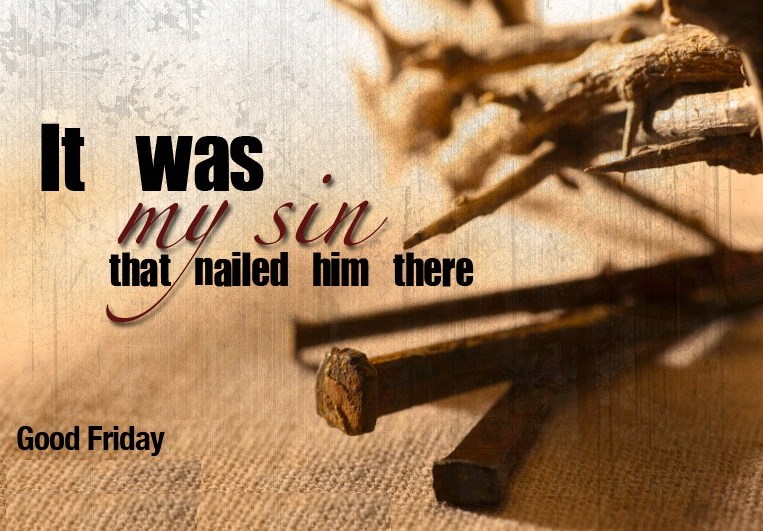
http://debmillswriter.com/wp-content/uploads/2015/04/Blog-Holy-Week-Good-Friday.jpg

Photo Credit: GoodFridayQuotes2015.com

Jesus and Holy Week – Day 6 – Good Friday – His Trial, Crucifixion, & Burial

http://debmillswriter.com/wp-content/uploads/2015/04/Blog-Holy-Week-Black-Saturday.jpg
Photo Credit: Catholiclane.com – Garden Tomb, Jerusalem

Jesus and Holy Week – Day 7 – Black Saturday – the Silent Tomb

Photo Credit: The Gospel Coalition

Resurrection Sunday of Holy Week – Day 8 – Risen, Indeed! Thank You, Jesus!

Photo Credit: Facebook, Mrs. J. Garwood

Monday Morning Moment – How Jesus Spent His Monday – 4 Days Before His Death

Photo Credit: Fig Tree by Bob Orchard

On the next day, when they had left Bethany, He became hungry. Seeing at a distance a fig tree in leaf, He went to see if perhaps He would find anything on it; and when He came to it, He found nothing but leaves, for it was not the season for figs. He said to it, “May no one ever eat fruit from you again!”Mark 11:12-14

When Jesus woke on Monday morning, after that glorious Sunday entering Jerusalem…I wonder what he thought. Did he know that, in just four days, he would be crucified? Whew…

On that Monday morning, Jesus became hungry on the walk in to Jerusalem, from his friends’ home in Bethany. Seeing a leafy fig tree, he looked for fruit. With fig trees, where there are leaves, there should be figs. Green figs are edible/ Though it wasn’t yet harvest time, there should be some fruit on the tree.

When he found no figs, Jesus cursed the tree. This seems out of character for Jesus, until his action is put in the context of his culture and community. Throughout his public ministry, especially as he became more known and revered, the Jewish religious leaders held him in contempt. Jesus’ teaching of our dependence on God’s righteousness and not our own flew in the face of the Pharisaical teaching of the day – that of strict adherence to Jewish law as the only hope of finding favor with God. For Jesus, the leafy barren fig tree must have been a picture of religious Jews of that day, all flash and finery but no fruit of faith.

“Christ’s single miracle of Destruction, the withering of the fig-tree, has proved troublesome to some people, but I think its significance is plain enough. The miracle is an acted parable, a symbol of God’s sentence on all that is ‘fruitless’ and specially, no doubt, on the official Judaism of that age. That is its moral significance.”C. S. Lewis

Finally, arriving back in Jerusalem, Jesus was deeply troubled by what he found inside the Temple. The crowds of Passover pilgrims did not disturb him, but what did was temple grounds turned into a marketplace. In this sanctified place, meant only for worship, there were money-changers and sellers of animals for sacrifice, right in the Court of the Gentiles – in the only place where non-Jewish God-believers could worship.

Photo Credit:Expulsion of the Moneychangers from the Temple” by Luca Giordano

And Jesus entered the temple and drove out all those who were buying and selling in the temple, and overturned the tables of the money changers and the seats of those who were selling doves. And He said to them, “It is written, ‘MY HOUSE SHALL BE CALLED A HOUSE OF PRAYER’; but you are making it a ROBBERS’ DEN.”Matthew 21:12-13

Often in film depictions of Jesus cleansing the temple, he appears a crazed individual, flailing about, throwing tables and flinging pigeons into the air. I can’t even imagine him that way. We can’t know how it happened except that in Jesus’ anger, he did not sin. He would not sin. I know the Jesus Film is just another director’s film rendering, but in this scene, Jesus showed considerable restraint. Disturbed at the buying and selling that actually kept believing Gentiles from worshiping, he moved to correct the situation. He was unafraid of the temple officials, burning with zeal for his Father to be truly worshiped in that place.

Zeal for Your house has consumed me, And the reproaches of those who reproach You have fallen on me.Psalm 69:9

This Holy Monday, we are drawn again to this Messiah who teaches us that the way we live our lives matters but not more than the way we relate to God. He makes space for us…room for all of us to receive Him. He is holy, and in His righteousness, we stand…on solid ground.

[Read this post in its entirety here.]

[All the days of Holy Week are described in my posts below.]

Photo Credit: Knox United Vancouver

Palm Sunday – Day 1 of Holy Week – Jesus’ Triumphant Entry into Jerusalem on the Way to the Cross

Photo Credit: Fig Tree by Bob Orchard

Jesus and Holy Week – Monday, Day 2 – Jesus Curses a Fig Tree and Cleanses the Temple

Photo Credit – slidesharecdn.com

Jesus and Holy Week – Tuesday, Day 3 – A Long Day Teaching & Countering Religious Opposition

Photo Credit: Baptist Press

Worship Wednesday – Jesus & Holy Week – Day 4 – A Day of Quiet Before the Storm – & We Worship

Photo Credit – Baptist Press – Courtesy of DeMoss News Pond

Jesus and Holy Week – Thursday, Day 5 – Passover Celebration and His Last Supper Before the Cross

http://debmillswriter.com/wp-content/uploads/2015/04/Blog-Holy-Week-Good-Friday.jpg

Photo Credit: GoodFridayQuotes2015.com

Jesus and Holy Week – Day 6 – Good Friday – His Trial, Crucifixion, & Burial

http://debmillswriter.com/wp-content/uploads/2015/04/Blog-Holy-Week-Black-Saturday.jpg
Photo Credit: Catholiclane.com – Garden Tomb, Jerusalem

Jesus and Holy Week – Day 7 – Black Saturday – the Silent Tomb

Photo Credit: The Gospel Coalition

Resurrection Sunday of Holy Week – Day 8 – Risen, Indeed! Thank You, Jesus!

Monday Morning Moment – I See You…or Refuse to – a Pet Peeve

Photo Credit: Pexels, Cottonbro Studio

[Pet peeves are not anything we want to cultivate or nurture…I get to a more positive place at the end so hang in there with me.]

US culture has changed – especially related to encounters with strangers or those we consider insignificant or irrelevant – as shown by turned down or away faces, looking beyond people, or not engaging with those we don’t know or don’t care to know.

People passing in hallways as if a living human being isn’t within their visual field. Charting a course from Point A to Point B, maneuvering around people without words. Stepping aside, disengaging, when someone else enters the space and greets one of the two in conversation. Disinterested.

I don’t understand this lack of desire in connection. This avoidance of engagement.

Avoiding Eye Contact in Body Language (10 Reasons) – Hanan Parvez

Where does it start? I occasionally teach elementary school-aged children, and even at this early age, there are kiddos who seem to easily engage across groups and with authority figures, others who are shy to engage or are awkward in social interactions, and, finally, those who only engage with their buddies (unless pressed to engage with others). Is it a personality thing? A social anxiety? Is there an environment (classroom or home) that sets a pattern for the children who see and engage with those around them and the ones who refuse to see beyond their friend group? It’s probably complicated, right?

We have grandchildren that look, gaze, see others…and refuse not to be seen. I hope it never changes as they grow older. How did they get where they are as children? I need to ask this question of their parents.

Eye contact as a behavior of connection can occur on a spectrum. No one wants the gift of creepy, penetrating stare-downs. A more subtle or passing gaze could communicate a desire for engagement but accompanied by a further desire not to intrude. Or at the opposing end of the spectrum, the total lack of eye contact as if there is no one there…or the hope, with social anxiety, that if I don’t look, you don’t see me. However, somewhere in the middle of all this, is the one who makes steady and engaging eye contact. That one that says with their eyes and facial expressions, “I see you”. Conversation may or may not follow…but to be seen and acknowledged is a small and precious gift we can present to another.

Photo Credit: Pexels, Cottonbro Studio

A life habit easily developed is to determine to see those around us. To make meaningful eye contact. To honor those in front of us (whether a store clerk, fellow employee, or guy in the gym). Lock eyes, a head nod, a smile, a greeting – communicating “I see you”.

This comes to play in all sorts of situations. It is a humanizing practice. A situational awareness that goes beyond keeping ourselves and others safe. It communicates that we matter in the spaces we share.

In our city, as one for instance, we see people with signs at many of the intersections. Beggars. Homeless. Not really sure. The very least we can give them is our eyes…acknowledging them whether we give money or not.

Remember, I spoke earlier of a pet peeve not being something I want to indulge, right? So…

A pet peeve is a button pushed. Long ago, I made it an aim to get rid of the buttons in my life. They divide us and there’s enough division out there already.

This is one I’m still wrestling with…and not to my credit. It becomes easy for me to intentionally ignore, or see past those who see past me…or those who “refuse to see” ones who matter to me. Yet…am I not doing the same thing then? By faulting those in my small opinion are “refusing to see”? When we fault people, without understanding them, we don’t really see them either.

May it not continue so in me. How about you?

The Power of Being Known – Holly Korbey (Video above details some of this article – so good!)

How to Overcome Eye Contact Anxiety – Arlin Cuncic

What a Lack of Eye Contact Says About You, According to Science (and How to Fix It) – Wanda Thibodeaux

Monday Morning Moment – Sins of the Fathers – Neglect and Abandonment – It Stops Here.

Photo Credit: William James, Heartlight

My older brother was 10 when he handed off our infant brother into my small arms in the backseat of the car, as Mom drove us away. 4 kids driving away from my biological father. I was five years old.

That father didn’t disappear from our lives just after the divorce. He already had, while still living in the house. Mom was the sole provider, and she hired babysitters for us because, although our father didn’t work, he also didn’t take responsibility for caring for us.

The three smaller of us kids have no memories really of those years. My older brother has since died, but I wish I had asked him about growing up with our dad. He never shared any positive memories in those years following that day of leaving. He actually shared no memories and he, at 10,  was old enough to have some.

The Father I Never Knew – On Father’s Day – Deb Mills

I have written about the topic of generational sin previously, but I wanted to return to this subject, maybe one last time (maybe not). The reality of sin passing through generations is sobering. When we have experienced harm, or at the very least, a lack of care from a parent or parents, we are at risk of repeating that exact same harm in our own children’s lives. As a parent myself, I want any generational sin to stop right here!

Engaging with Someone Who Has Harmed You – Part 1 of a 4-part Series – Adam Young Counseling

We don’t want to linger in the past, nor do we want to disparage a parent, especially one who has since died. “They did the best they could” is often what we say and hear. I’m not at all about blaming parents for ill treatment of their children, but I do think when we refuse to acknowledge the wrong or harm done to us, then we may find ourselves repeating those same patterns with our own children – patterns we learned too well ourselves growing up.

We can change the course of our lives…and that of our children…and it’s not just through distancing ourselves from parents who harmed us. Otherwise all we teach our children is how to disengage. We don’t give them the skillset to recognize harm and disarm the situation. When we feel the victim, we too often teach our children more what that looks like, rather than how to turn it around for our sake and theirs…and maybe even for our parent(s).

Monday Morning Moment – As Adults We Still Need to Feel Safe, Seen, Soothed, and Secure – Deb Mills

Monday Morning Moment – Generational Sin and Trauma – Don’t Trip Over What’s Behind You – Deb Mills

The Sins of the Fathers Visited Upon The Children – S. Conway

When a Father Abandons a Child

In my family’s childhood home, neglect and abandonment happened even with both parents in the home. Mom was working; she had to work. Given that, she had no choice but to place us in the care of others. Somehow I felt a strong attachment to my Mom following those years (maybe even during those years living with our dad). I’m not sure if my brothers had the same experience, since their dad just wasn’t there for them. Was it harder for them because their same-sex parent wasn’t bonded to them?Photo Credit: Gabor Mate, dr_anniephd, Instagram

We are not left without help these days. Even on social media, we can find solid counsel (even when we can’t afford or feel awkward going to a counselor in person). Check out the full thread of Dr. Nicole LePera’s below (she posts helps every day).

Photo Credit: Dr. Nicole Lepera, Twitter (Thread)

Dr. Nicole Lepera Twitter Thread of November 15, 2022

Whether we experienced abuse, neglect, abandonment from our fathers, or our mothers…the impact of their lives continues with us through ours…either steering us along the same course or moving us to take a very different one. We can keep our distance from those sinful patterns as adults without necessarily sacrificing those relationships. That’s a whole other pattern we can guide our children in – that of understanding, humility, and forgiveness.

Photo Credit: James 4:17, Heartlight

Fathering – Celebrating Men Who Did It Well; Forgiving Men Who Didn’t – Deb Mills

My father disappeared from our lives. The neglect and abandonment present in our preschool years became permanent. We would never know him…what his own growing up years were like…why he couldn’t seem to love us. We would never know. What spurs me on is the profound love of a great mom and a steadfast God. I know my siblings and I have experienced some sort of imprint from previous generations, but recognizing it is a huge step forward. We then can steer clear of its negative impact on us and our children.

If you experienced harm from a parent, you may not be able to do anything to change that situation, but you can be an instrument of change in your own life…and for the sake of your children.

Also, even with the gift of a deeply loving and bonded parent, like our Mom, don’t be surprised if she/he hasn’t endured trauma from their own childhood home. Be aware of that generational connection.

Understanding the possibility of intergenerational transfer of trauma is not to make victims of a future generation. Understanding allows us to recognize if we have vulnerability and to set in place healthy barriers against the impact of our parents’ trauma.

I actually don’t know what my father’s childhood was like. My mom grew up with an alcoholic father who vented his frustrations about life on his wife and children. Mom stood against his abuse of her own mother and brothers. Her fighter responses were tempered as an adult when she became a believer (follower of Christ). Still that quickness to take offense and wariness of mean-spiritedness were reactions she had to fight all her life. I see that also in myself. – Deb Mills

In The Lord of the Rings, there is a powerful scene of Gandalf standing between those in his care and a monstrous enemy. He called out to this evil creature: “You shall not pass!” When it looked as if he had victory over the beast, he turned his back away from him. This turned out to be disastrous (minute 1:50 into this scene below). There’s a lesson here that just ignoring trauma, even when it feels like we’ve put it behind us, won’t keep it from rearing up again. We are wise to be alert, aware, and prepared for its circling back around.

The Season of Small Ones – Mothering, God, & Gandalf – Deb Mills

Boundaries are talked about a lot these days. Forgiveness also… True forgiveness is actually its own boundary. It keeps our hearts tender and our minds free to take a better path in parenting and in relationships, in general. Like in Gandalf’s situation, we would be unwise to prematurely think we have conquered the evil of generational sin. That sin that may have been transferred to us, if not genetically then familially.

Not to despair. Being vigilant is wise in two areas: 1) guarding our hearts against bitterness and hatred toward our parents and 2) caring for and leading our children in the same ways. We have vast resources available to us these days, and we have a God who does not turn away from us as we seek to love as we are loved. No matter what kind of love we received (or receive) from our earthly parents.

“He Himself has said, ‘I will never leave you or forsake you.’ Therefore, we may boldly say: The Lord is my helper; I will not be afraid. What can man do to me?” Hebrews 13:5b-6

Photo Credit: Dr. James Lamb, Heartlight

Finally, I want to leave you with this encouragement of steps you can take towards bringing an end to the “sins of the fathers” – at least detoxifying it for the rest of your life and future generations.  What would you add to this list? [Share in Comments.]

  • If you are willing, pray for the person who has harmed you. Not necessarily for them to change but for God to bless them. Weird, right? The winsomeness of this sort of prayer is the impact it has on our own your own care for that person. Our hearts are tendered when we pray.
  • Tell your story. All of it. To someone you can trust. Someone who will not just sympathize or take up an offense against that person but who truly cares for you and your own healing.
  • If abuse is part of your story, sort out boundaries without building walls. The walls not only keep that person out; they imprison us within. They also teach our children that walls are the way to go when harm happens…more prisons.
  • Recognize the sin in “the sins of the fathers”. You may already see a leaning toward it in your own life as an adult. Put safeguards (accountability) in your life to help you choose another path.
  • Seek understanding (you may need a counselor or that trusted friend above). For health and healing, don’t try to figure this out by yourself.
  • Remember the one who harmed you may have also been similarly harmed. The sins of his/her own fathers and grandfathers could be imprinted on his life and actions. Not justifying the behavior here but recognizing it might not have started with his relationship with you.
  • Resist blaming. We want to avoid living as a victim. This is definitely contagious for our children. The person who harmed you did wrong. Calling it sin is a start, then, rather than blaming, forgive. No small thing. When we blame, we carry the brunt of the sin with us into our adult life…with the pain we experienced as a 5 y/o, or 15 y/o. As an adult we can look at that pain with mature eyes. It was wrong, but blaming empowers the sin to continue hurting. We are grown now and don’t have to come under that hurt anymore.
  • Pursue peace, as much as you yourself can (Romans 12:18; Psalm 34:14; Hebrews 12:14-15. Reconciliation is extremely hard work. We resist it. That work of resisting, trying to ignore that person, carving out our lives away from that person, pretending it doesn’t matter – so much more exhausting and debilitating. Reconciliation requires at least two people, but it can start with one and hopefully the door stays open for future possibilities.
  • Don’t be deceived thinking you will not fall into the same hurtful pattern you experienced. We can pass that onto our children without even trying…hard warning here. It may look different but it is not gone without our determination to end it with us.
  • Acknowledge that more people are affected by this sin (for me, neglect and abandonment) than just you and your dad. What is your hope, your goal? If it is just to lessen your own pain (which matters), those who love you will join into the work of that…and its burden. What can you do to lessen that burden on yourself and those around you? [This is a big step forward.]
  • Increase your capacity for tolerating negative emotions. [See link below.] They do not have to disrupt your joy or destroy your peace. They are indicators for what’s going on under the surface. You don’t have to live in them. They are actually helpful in pointing to next steps.

Growing in Negative Emotion Tolerance – Brad Hambrick

  • Do what you can to nurture the relationship. Don’t expect your father (or mother) will have the same skillset nor understanding that you have developed over time. Give grace.
  • When we give grace, we experience the bountiful good of it ourselves, and our children learn a huge life lesson that benefits them as well.
  • In the end, we seek to forgive. We can say we forgive but if we keep putting bricks in the walls between us and the one who harmed us, there is no fruit in that “forgiveness”. The fruit is not just for your father/mother, it’s for you and your children. Forgiving doesn’t let that one off the hook; really, it keeps that hurt from dominating our lives (or that of our children’s). Check out resource below on this.

If I Forgive, Doesn’t That Let Them Off the Hook? – Clare Bruce and David Reay

Photo Credit: Mark Groves, Facebook

Okay, I’ll close out now. Not a counselor but one who’s lived this and done a lot of work towards my own health and healing and hopefully it shows. Much love. Thanks for staying to the end.

Monday Morning Moment – In or Out – Your Choice, but You DO Choose – Deb Mills

Sins of the Father – Bible Verses

Worship Wednesday – Remembering Dad at His Passing – Grateful to God – This celebrates the dad who became my father later in life.

Fathers Who Give Hope – John Piper

Just Like Mother: How We Inherit Our Parents’ Traits and TragediesApril Dembosky

5 Friday Faves – Beyond the Guitar – Magic on a Cheap Guitar, the Most Repeated Command in the Bible, the Evercrisp Apple, (Dis)Comfort Zone, and Old Friends

Friday Faves – coming in hot! Days later. Life races on, doesn’t it?!

1) Beyond the Guitar – Magic on a Cheap Guitar Sweet original composition by classical guitarist Nathan Mills at Beyond the Guitar. Showcasing two very different guitars…or rather what the difference – pretty much, it’s the guitarist, not the guitar. [Not to say the beautiful David J. Pace guitar isn’t his go-to instrument for all his guitar work/performances…but to emphasize it is the one playing it, whatever the guitar is, that makes the music.] Photo Credit: Beyond the Guitar

YouTube Video – Beyond the Guitar – #100 Mini Guitar vs. $10,000 Guitar

Beyond the Guitar – Fingerstyle Journey – 90 Days to Beautiful Playing

2) The Most Repeated Command in the Bible –  Even more than “Love the Lord your God” or “Love your neighbor as yourself. The most repeated command is  “Do not be afraid”.

Something to think about because we are surrounded to fearsome situations…yet, we are not to fear. How do we keep from it?

By practicing remembering. Remembering the provision of God in times past. Remembering the goodness of God in all we have in life right now – people who love us, work and other resources, health and/or helps toward restoring health, time, meaning, forgiveness, and beauty surrounding us.

Photo Credit: Heartlight 

We have circumstances that tempt us to fear, but we also have God’s promises to bring us through those circumstances. Fear itself robs us from sound thinking. Photo Credit: Flickr

The tricky thing about fear is that we can’t necessarily stop it from happening. It comes over us. However, we can keep it from overwhelming us…determining to live in the freedom and light of what is true, instead of what could happen. God is there for that as well.

When fear messes with our relationships or makes us timid to enter new ones, we can take courage in the command “Do not be afraid”. This week in our church, in The Art of Neighboring, we studied about fear in neighboring relationships1 Peter 3:14 (quoting from Isaiah 8:12) Do we allow fear of rejection or fear of our differences keep us from leaning into each other? What if we leave fear out of the equation in caring for one another? That’s the better path.

“Do not be afraid.”

The Art of Neighboring

Photo Credit: Heartlight

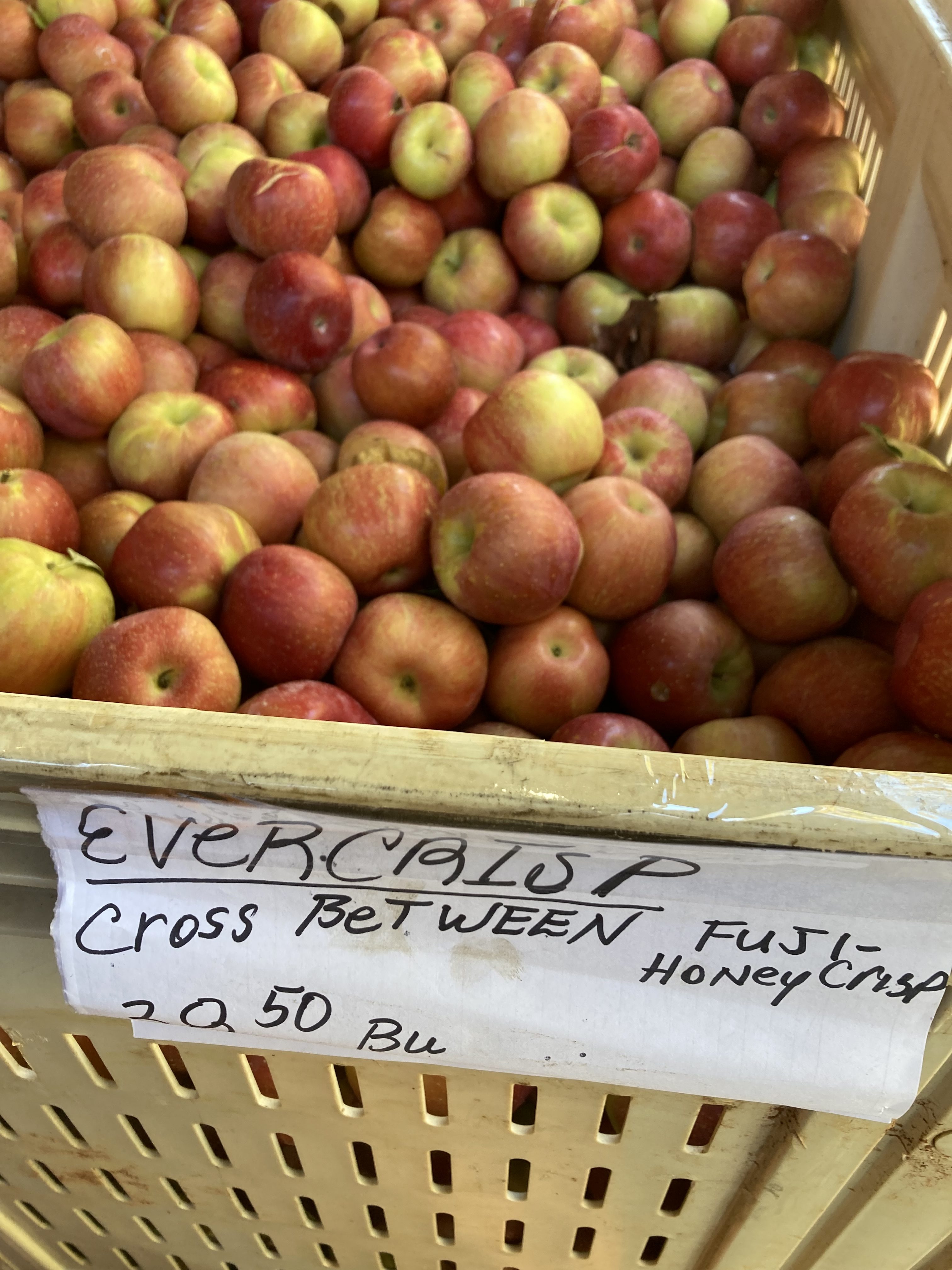
3) The Evercrisp Apple – One of the best parts of this time of year is the Fall apple harvest. Honeycrisp, Pink Lady, and Cosmic Crisp apples have been our favorite in recent years…until this Fall, when we discovered the Evercrisp apple. Wow!

We discovered this apple on a recent trip across Virginia toward the Appalachian Mountains. The Apple Shed delivers on several types of apples and introduced us to this one.

Once back in Richmond, we were thrilled to find it sold locally from the Saunders Brothers Orchards. Woohoo!!

A small delight in life but, for this season, a huge one. What’s your favorite apple?

4) (Dis)Comfort Zone – Is the phrase “comfort zone” a first world experience? I don’t think so. It is a universal idea – a place where we feel safe and soothed. A bad thing? Not necessarily except for how it insulates us from the rest of life. What if developing our capacity for discomfort helps us to live more fully, more in community?

Jason Seib, a health and selfcare coach, has actually built his whole platform on embracing a (dis)comfort zone. He teaches how we can maneuver around our uncomfortable moments in healthy ways.

If you go to his website, his home page currently seems all about his workshop (which I haven’t taken although it is reasonable cost-wise). However, hang in there. He also extends solid content to non-subscribers through his podcasts and social media pages. I think that speaks to his integrity as someone who actually cares about people wherever we are in our comfort zones.

The main message for us in his coaching is that we reach for food, alcohol, or other addictive substances or activities when faced with discomfort. Our temptation is to do whatever we can to restore comfort. Jason Seib points to developing skills in sharpening our awareness of discomfort when it happens and respond in ways that don’t harm us.

Jason Seib Facebook

Jason Seib Podcasts

Jason Seib reminds me of counselor Brad Hambrick whose webinar on “Growing in Negative Emotion Tolerance” was extremely helpful for me. Seib and Hambrick both talk about the importance of us recognizing that negative emotions are not necessarily bad [they are actually informative] but how we respond to them matters.

Photo Credit: SermonLab, Brad Hambrick

Counselor Brad Hambrick

5) Old Friends – This week has been one of celebrating old friends – visits both here and states away with people who have stayed the course with me through years and years.

I don’t know about you, but loneliness is a real time experience for me. So many moves and changes for us. A different season – children grown with their own lives, me now in retirement sorta kinda, and most of my closest friends living far from where we now live.

It gives pause to reflect on friendship and revisiting the kind of friend I am and hope to be. A key to having old friends in our every day life is continuing to reach out and nurture those relationships. I’m working on it…and trying to show up for these friends who have shown up for me. They, and others like them, point the way.

Old friends, even while not on the daily or even the regular, have the rare quality of history. Memory. Understanding. Loving anyway, through seasons of neglect, distraction, and loss. Old friends remain.

So grateful for forever friends – people who know us well and love us anyway. Singer, songwriter Michael W. Smith‘s song says it all:

Bonuses:

I Raised 2 Successful CEOs and a Doctor. Here’s the ‘Unpopular’ Parenting Rule I Always Used on My Kids – Esther Wojcicki

Photo Credit: Facebook

Photo Credit: Mark Allan – Mark’s Musings: God, the Proud Father

The Many Paths to Better Mental Health – a List of Excellent Resources

Shame vs. Guilt Infographic

Photo Credit: nicabm

Photo Credit: TobyMac, Facebook

“Come deeper. The waves won’t knock you down back here!”

Deeper in the Word
Deeper in Prayer
Deeper in Worship
Deeper in love with Jesus

Yes, the waves will still come, regular and strong.
But in the deep…
We will have peace,
We will be comforted,
We will have healing,
We will have restoration,
We will have joy,
Because we will be moving with The One who controls the winds and waves.

Go on, my sweet friends…go deeper.
HE is waiting. – Kristin Crawford Kerley, Facebook

Monday Morning Moment – Reformation Day – A Halloween that Changed the World

blog-martin-luther-reformation-day-prae-huPhoto Credit: Prae.hu

[Adapted from the Archives]

For by grace you have been saved through faith. And this is not your own doing; it is the gift of God, not a result of works, so that no one may boast. – Ephesians 2:8-9

On October 31, 1517, Catholic priest Martin Luther nailed a document known as his 95 theses on the door of the Wittenberg church. In this public stand against the Catholic practices of that day, he would divide Christianity into at least two camps – that of Protestants (the Reformers) and the Catholics.

Today marks the 505th anniversary of the Protestant Reformation. October 31 is known as Reformation Day…and, of course, Halloween.

October 31, for most in the US for sure, is a huge family/community cultural event (very different from the historical Halloween). Parties, dress-up, spooky decorations, and sweet treats.blog-halloween-2016

For those of us who are Christian, identifying more Protestant than Catholic, we wouldn’t want to miss the historic significance of this day as well.

Justin Holcomb‘s piece on the five solas lists the fundamental elements of the Christian faith (as put forth by the Reformers) and the substantiating Scriptures. Below are the five (see article for commentary and Bible verses):

  1. Sola Scriptura (“Scripture alone”): The Bible alone is our highest authority.
  2. Sola Fide (“faith alone”): We are saved through faith alone in Jesus Christ.
  3. Sola Gratia (“grace alone”): We are saved by the grace of God alone.
  4. Solus Christus (“Christ alone”): Jesus Christ alone is our Lord, Savior, and King.
  5. Soli Deo Gloria (“to the glory of God alone”): We live for the glory of God alone.*

[See links below for articles/resources on the full relevance of this day for us personally, for our families, and for culture, in general.]

In all you might savor in this day, this 31st day of October, consider how Martin Luther changed a world, by taking a stand… Some of our children will choose to dress-up in super-hero costumes – taking on larger than life personas for the good of those around them. They are more like Martin Luther, in that, than they may know.

blog-halloween-martin-luther-costumeblog-martin-luther-legos-pinterestPhoto Credit: Pinterest; Pinterest

*5 Points From the Past That Should Matter to You – Justin Holcomb

5 Bible Verses to Read on Reformation Day – Andy Rau

October 31 – Halloween Dress-up and Reformation Day Stand-up – DebMillsWriter

Reformation Day: Resources to Help Us Remember – Desiring God

Man Between God and the Devil: Martin Luther and the Reclamation of Halloween – William E. Flippin, Jr.

Worship Wednesday – Big Love, Small Moments – JJ Heller

Photo Credit: Heartlight

“Love the Lord your God with all your heart, with all your soul, with all your strength, and with all your mind,” and “your neighbor as yourself.”Luke 10:27

“I urge you to walk in a manner worthy of the calling you have received: with all humility and gentleness, with patience, bearing with one another in love, and with diligence to preserve the unity of the Spirit through the bond of peace.”Ephesians 4:1-3

What beauty we know in the love of Jesus – talk about BIG LOVE!

Even from the cross, He appealed to the Father to forgive those who sought to destroy him saying, “Forgive them. They don’t know what they’re doing!” [Luke 23:34] He calls us to that same kind of love.

Often, big love is rolled out in one small moment after another small moment after another. We’ve all experienced that and hopefully we’re all in lives of executing those small moments for others.

I’d like to showcase two sets of folks who demonstrate such love. I don’t know them personally but they loom large in my social media.

1) Tony and Karen Vick were married in 2015. Two years later, Tony was diagnosed with ALS. I came across their story on Instagram @thekaregiver. Karen is her husband’s primary caregiver and also manages her own small business. Every day she posts videos (on their various platforms) – videos that give a glimpse of small moments in their lives. Whew! So much love. Both from Karen to Tony and vice versa. Even a devastating, terminal disease like ALS can’t keep us from communicating love to others. They both do this so beautifully. Pray for them, too, as you get to know their stories.

Photo Credit: Russell Colburn, Twitter

The Karegiver on Facebook

Photo Credit: The Karegiver, Facebook

Tony and Karen Vick – Faith Over Fear – Video

2) Stan MitchellStan Mitchell is a pastor and the son of this beautiful lady in the picture. His mom, Mrs. Shirley, was a church organist for 40 years but now struggles with dementia. Still, with minimal prompting, she sings the beautiful old Gospel songs many of us grew up with. Such a blessing in these waning years of her memory…and life. [Check out Rev. Mitchell’s Facebook page for some of that sweet singing of hers.]Photo Credit: Stan Mitchell & his mom – Facebook

Rev. Mitchell founded GracePointe Church in Nashville, Tennessee, in 2003. Under his leadership, in 2015, GracePointe moved to be completely inclusive of LGBTQ+ persons in the church family. Then a great upheaval followed within the church body. The church has survived and flourished, in a different direction than the beginning.

I’m not really sure what all Stan Mitchell does professionally but he seems to work with churches around our country in consultation to help them love better those in the LGBTQ+ community. Rev. Mitchell describes himself actually as progressive and liberal, cis-gender and heterosexual. He is also the fortunate son of Mrs. Shirley.

How I first came across Rev. Mitchell I couldn’t tell you. Maybe it was through a mention from seminary professor and thought leader Karen Swallow Prior. Ever how he came to my awareness, in our fractured world, I am learning from him on a big love within small moments. He has the wordsmith skills of a writer and preacher. He is quite clear in what he believes and his goal seems to be prompting us, as Christ-followers, to love those in the LGBTQ+ community …bigger.

[Most all of you who read this blog regularly know I’m fairly conservative in my thinking. I take the Scripture quite literally. In some camps of Christian theology, there does seem to be a disconnect, unfortunately, in the truth and grace conversation. We either lean heavily one way (toward truth/knowledge) or the other (toward grace/mercy). I want to learn how to love well (big) without compromising the truth of God’s Word. That gets revealed by our focus and decisions made in the small moments of every day life. There is the challenge.]

Worship Wednesday – Until Unity – Francis Chan – Deb Mills

Stan Mitchell’s Facebook posts pop up often on my Facebook newsfeed…thanks to that unknown social media giant’s algorithm. I read them to see the videos of his visits with his mom. Hearing her sing those old Gospel songs, even with memory darkened by dementia. I read them for what he says about people with whom he has counseled in and about the LGBTQ+ community. He is probably not someone I’d know, but he is giving me food for thought about how to love big…a particular population of people who don’t feel loved by churches who also love the Scripture.

We have these two commandments that Jesus calls the greatest. Just two.

  • Love God.
  • Love people.
How we learn to love big…to love like Jesus…is in moment-by-moment obedience to Him. We refuse to be stalled out by self-loathing or self-righteousness. We do what is needed…by a husband who can’t do everything for himself, as with Karen and Tony. Or by Pastor Stan who is spending these days treasuring his mom in this most vulnerable time of her life and extending the love of at least his church to the LBGTQ+ community. As with the Vick’s, pray for Rev. Mitchell and his mama.
I have been convicted by both the Vick’s and the Mitchell’s – to seek God’s face and His Word in bringing His large love into the lives of those closest to us…and to those who are not drawn so much to people like us. Whoever is on your heart right now, may they know the love of Jesus…it’s the biggest love available to us…and He is not diminished by an ideology, theology, or worldview.
Christian singer, songwriter JJ Heller gave us the captivating piece below – “Big Love, Small Moments”. She doesn’t call the name of Jesus…but He is there. His big love in all the small moments.

Catch this song (lyrics and music here) with the Lord in mind.

Heartbeats only happen one at a time, one at a time
You can’t rush a moment so don’t even try, don’t even try
There’s a symphony you’re missing
If you only listen you’ll find…

Big magic in the mundane
The big picture in a small frame
Everything is sacred when you take time to notice
Big love happens in the small moments

There’s no use in chasing nickels and dimes, nickels and dimes
Riches all around you, open your eyes, open your eyes
You can’t buy the peace you’re after so don’t even try
‘Cause you’ll find…

Big magic in the mundane
The big picture in a small frame
Everything is sacred when you take time to notice
Big love happens in the small moments

Feel the rain on your skin, feel my hand in your hand
You can’t do it all, so just do what you can
Feel the rain on your skin, feel my hand in your hand
You can’t do it all, so just do what you can

Feel the sun on your face (Feel the sun on your face)
Bare feet on the ground (Feet on the ground)
I know you’ll see beautiful things if you look around, yeah
Just look around
And you’ll find

Big magic in the mundane
The big picture in a small frame
Everything is sacred when you take time to notice the…
Big magic in the mundane
The big picture in a small frame
Everything is sacred when you take time to notice
Big love happens in the small moments
Big love happens in the small moments*

[Closing with some small moments that make our hearts swell with big love. God is so good. His love shapes our world. It is His. We are as well. Hallelujah!]

[We have other grands, who are not on social media or the internet, but are loved big as well. Just adding that to be clear. :)]

*Lyrics to Big Love, Small Moments – Songwriters:  Dave Heller, Cason Cooley, Jennifer Heller

Big Love, Small Moments – a blog post by JJ Heller

Big Love, Small Moments – Katrina Kenison

Monday Morning Moment – Loneliness in Isolation – Fighting Against It and Occasionally Successful

Photo Credit: Heartlight

Just last night I was confronted again with one of the tolls of the COVID epidemic. That toll being a physical isolation that has grown into a lingering social isolation. A friend texted me about her sense of feeling disconnected, even unseen, in the midst of her church community, of all places. She is reaching out but has not yet found her people. I tried to encourage her to keep reaching out and she would eventually find those friends, that connection for which she is longing. This isolation, this loneliness, is something I, too, was fighting against and occasionally successful.

She told me this had to be my next blog (title) and so it is…although I don’t have answers…but will share what I’m learning from my own journey and from wise others.

“Here’s what we do: We spend hours alone in our crowded, noisy, screen-lit worlds, we invest only sporadic time with acquaintances, and then we expect close friends to somehow appear in our busy lives.”Jennie Allen, author of Find Your People: Building Deep Community in a Lonely World
Being retired from my usual work has afforded me much discretionary time…time which can be lavished on others or on disciplines like study, prayer, and writing. Too often…this time on my hands has taken me to places too quiet…where I get lost in my thoughts. That is an excellent description of this loneliness that comes from isolation.
We think too much maybe. Get lost in those thoughts and become slow to respond. Instead of going after friends, we wonder where those friends are…is it us? Is it them? We look for reasons for the unsought solitude we find ourselves in yet we can’t seem to fight off the sluggishness of too-long isolation. We text instead of call. We do electronic meetings instead of face-to-face ones. We cling to smaller rhythms instead of restoring larger lives.
OK…is that just my issue? I don’t think so. The phrase “new normal”, no longer in vogue, is a misnomer. It deludes us into a posture of waiting…rather than seizing on what’s right in front of us. Whatever is the present normal…that is what we have. This present normal.
This present that we have is fleeting, temporary…but the people  around us are not. Yet, relationships require some level of intentionality. A wise counselor once told us, during a season of multiple moves for work, to “put down your roots as deeply as you can – wherever you are”. COVID mediation has pushed us toward shallow relationships. We don’t want to miss people in the dullness of this odd season.
My beautiful friend above is already on the way to an answer to her loneliness because she is recognizing the “what’s not right” about her current situation and she’s not holding on to the status quo. That is forward motion right there. I am hopeful for her and for myself.

Writer, speaker, and mom Kari Kampakis wrote a fascinating post on Instagram and Facebook. It was titled: “What Middle School Girls Should Know About Friendship”. She wrote to girls but the lessons are redeeming for all of us, especially in this world that’s become COVID-isolated.

“What Middle School Girls Should Know About Friendship” – Kari Kampakis – Blog

“Friendships change.” Following you will find Kampakis’ 10 thoughts (abbreviated from her blog) on the struggle – written for middle school girls but applicable to any of us. Especially as we face loneliness and isolation and want to either jump-start or strengthen our friendships:

1. It’s normal for friendships to evolve and change.

2. Everything will be okay. – Be patient, pray for good friends, and pray to be a good friend.

3. Rather than focus on finding the right friends, concentrate on being the right friend. – When you treat people well, you’ll attract friends who treat you well too. By holding yourself to high standards, becoming the friend you wish to find, and choosing to be an encourager rather than a critic, you set yourself up for positive and long-lasting relationships.

4. Even when you find your “people”, always leave room at the table to invite someone new in. – Kampakis lamented: “One regret I have from high school and college is not reaching out more beyond my circle and letting God open the door to unexpected blessings.”

5. Love your friends well, but keep a loose grip. Give them space to explore new friendships and explore new friendships yourself.

6.Remember that everyone is learning and gradually maturing. Just because you don’t click with someone now doesn’t mean you won’t click later. 

7. The biggest friendship killers are jealousy, comparison, insecurity, and fear – fear of rejection, fear of being left out, and fear of being alone. Acting on these emotions can turn you into someone you’re not. – By being aware of your negative emotions yet learning the self-control to not act on them.

8. Form your own opinions about people, and don’t believe everything you hear. – Treat everyone like a friend until they give you a good reason not to, and when possible, give people the benefit of the doubt.

9. Know the difference between committed friends and casual friends. – Committed friends are the kind you carry through life. They have your back and will stand in your corner even if they’re your last friends standing. Casual friends are the kind you have for a season of life, maybe a few seasons.

10. Be kind, and keep in mind that kindness is more important than popularity.  

Photo Credit: Kari Kampakis

“What Middle School Girls Should Know About Friendship” – Kari Kampakis – Blog

Those 10 points were written for middle schoolers. It was a great reminder to me of the sweet simplicity of pursuing friendship. Both in rekindling neglected relationships and sparking new ones.

The world won’t all of a sudden become warm and welcoming…but I am ready to stretch again. It feels almost like a hungry bear coming out of a long hibernation.  It’s possible to shake off the sleep of shallow relationships. To be more present with people – not just on my terms but open to enter into their space…both heart and head.

Even if it’s one person at a time.

Photo Credit: Heartlight

Life does not stand still for us. I have friends and family that are dear to me and yet we rarely see each other. Do we think that is going to happen somewhere down the road? Magically? There’s a place for urgency in dealing with the habitual loneliness we have come to know in recent months. My friend above is taking steps as am I. Cautiously, awkwardly…but occasionally successfully.

How about you? What’s your story? [Comment below.]

[Sidebar: If you’ve read this whole piece and wondered what’s the issue because you have great friendships – current and satisfying – maybe see Kampakis’ #4 again.  “Leave room at the table for someone new.” Don’t circle the wagons. If you are basking in the experience of an inner circle, turn around – someone who may need you, or you them, may be just outside. Invite her in.. New friendships can be costly but the benefits are worth the expense and the risk. *]

*Monday Morning Moment – Real Friendship – on Friends Who Wound, Fierce Friends, Friends Who Turn Around, and Friends Who Stay – Deb Mills

Photo Credit: Heartlight

Monday Morning Moment – a Parable of Lost Sons and Their Father

Photo Credit: Rembrandt, Wikipedia

Whatever your faith base is or even if you have none to speak of, the parables of Jesus are magnificent stories that call us to deep thinking about life…and the choices we make.

The parable reflected in Rembrandt’s extraordinary painting above is one such story. In brief, you see a father and his older son (both in red robes) and a younger prodigal son, returning home, repentant.

The Return of the Prodigal Son – Rembrandt – Wikipedia [read the short and powerful article – a beautiful synopsis of the work.]

“The Parable of the Lost Son” is found in only one of the Gospels – Luke 15:11-32 (the whole of his story is found in the link, within the larger context of Luke 15 – read that here). Jesus was responding to the questioning and contempt of the religious leaders of his day. Their problem with Jesus was the two opposing facts that he was a religious authority himself and yet he took company with sinners.

In Jesus’ response to them, he spoke of loss and our reaction. We go after what is lost, and we rejoice when it is found.

His story tells how a younger son wants his freedom and asks his father for his inheritance. He wanted something that would not normally come to him until his father’s death, but he demanded it still. The father then divided his estate between his two sons. The one left home to spend his wealth on folly, and the other, the older son, stayed, out of duty or love (we don’t really know).

The younger son’s foolishness quickly leads to a wasted, impoverished life. He longs for the life he once knew in his father’s house. He finally “came to his senses”, remembering his good father and how well even the hired workers in his household lived. He determined to return home and ask his father’s forgiveness – not to be restored as his son but in hopes of becoming one of those workers.

Jesus’ story goes on to show the father’s deep and loving character – seeing the son approaching from a distance, he ran to him. Receiving him back to himself, in joyous celebration.

This was part 1 of Jesus’ parable of the lost sons. Part 2 begins here with the older brother. He had been working out in the fields as always, and, returning at day’s end, he hears the noise of a party. When he asked a servant what was going on, he was told the younger brother had returned home and their father had ordered a celebration. Here, we find the other lost son’s response…

…he became angry and didn’t want to go in. So his father came out and pleaded with him.
But he replied to his father, ‘Look, I have been slaving many years for you, and I have never disobeyed your orders, yet you never gave me a young goat so I could celebrate with my friends.
But when this son of yours came, who has devoured your assets with prostitutes, you slaughtered the fattened calf for him.’
” ‘Son,’ [the father] said to him, ‘you are always with me, and everything I have is yours. But we had to celebrate and rejoice, because this brother of yours was dead and is alive again; he was lost and is found.’ ” – Luke 15:28-32
Again, we capture the beauty of the father’s character. He loved both sons. He was generous with them both, and he invited both into his merciful love.
Jesus shared this story (as well as the story of the lost coin and lost sheep) with religious leaders who questioned his care for sinners. In a way, these religious ones were much like the older son.
Do you identify with one of these sons? One is reckless and searching – allowing his self-indulgent longings to take him far from home. The other is dutiful and obedient. Accepting the responsibilities of life to shape his character…and his subsequent lack of care for both his father and brother.
[My husband preached a sermon on this story years ago and I am often reminded of his reflection on it – how the elder brother must have thought he was pleasing his father because he stayed at the plow. What if that older brother would have come to the father and said, “Hey, Dad, would it be all right if I go and look for my brother?” If he truly knew the heart of his father, he would have left home, at some point, to search for that lost brother and bring him back to their dad.]
The father in this story is reflective of God. He is home. Whether that is your belief or not, we are place-oriented as humans. What (or who) we regard as home has a huge impact on how we do life.
I take heart in both of these brothers…my life has taken me far from home in both these ways. Wanting popularity and the stuff of this world as well as longing to do what is right and the influence that comes with that. Neither extreme brings us the joy we can have in being known and loved for who we are…and loving others the same.
Henri Nouwen‘s book The Return of the Prodigal Son is a short, winsome engaging of these three men in Jesus’ story.

Here are a few of Nouwen’s observations on Jesus’ story:

“Anger, resentment, jealousy, desire for revenge, lust, greed, antagonisms, and rivalries are the obvious signs that I have left home.”
“I am the prodigal son every time I search for unconditional love where it cannot be found.”
“…the question is not “How am I to love God?” but “How am I to let myself be loved by God?” God is looking into the distance for me, trying to find me, and longing to bring me home.”
“There are many elder sons and elder daughters who are lost while still at home.”
“The more I reflect on the elder son in me, the more I realize how deeply rooted this form of lostness really is and how hard it is to return home from there. Returning home from a lustful escapade seems so much easier than returning home from a cold anger that has rooted itself in the deepest corners of my being. ..Isn’t it good to be obedient, dutiful, law-abiding, hardworking, and self-sacrificing? And still it seems that my resentments and complaints are mysteriously tied to such praiseworthy attitudes… It seems that wherever my virtuous self is, there also is the resentful complainer.”
“In all three of the parables which Jesus tells to explain why he eats with sinners, God rejoices and invites others to rejoice with him. “Rejoice with me,” the shepherd says, “I have found my sheep that was lost.” “Rejoice with me,” the woman says, “I have found the drachma I lost.” “Rejoice with me,” the father says, “this son of mine was lost and is found.” All these voices are the voices of God.”
In closing, I would love to hear your thoughts in the Comment section of this blog. What struggle do you have in coming home? Or thinking of yourself as never having left, do you still feel alienated even at home? The best part of this story is that whether we feel more like the older brother or the younger brother, Jesus communicated that we can come home. A loving father is watching for us.
[Below are two sermons that got me thinking again about this great story – one of many Jesus told to those with “ears to hear”.]

YouTube Video – Parable of the Lost Sons – Part 1 – Sermon by Khiry Cooper – Movement Church RVA – September 18, 2022

YouTube Video – Parable of the Lost Sons – Part 2 – Sermon by Cliff Jordan – Movement Church RVA – September 25, 2022