Category Archives: Workplace Culture

Monday Morning Moment – Résumé vs. Eulogy – On Befriending Our Colleagues

Photo Credit: Tangram

Don’t you hate when, out of all the positive exchanges we have at work, there’s that one negative that hangs in our memory? It was a team-building exercise on trust really early in my career. One of the people on my team, with whom I worked at the time, just wouldn’t engage. She finally said, “You are just my co-workers. We are not friends.”

We are not friends.

Slayed.

Throughout my career, I’ve made it a goal to befriend colleagues – those close to me and up and down the ranks. Befriending isn’t becoming best buddies necessarily. By definition, it is “to act as a friend to; to help; to aid”.

When this coworker, in my professionally formative past, expressed openly that we were just a part of her job…I was surprised and schooled. For some, relationships at work are compartmentalized in such a way as to keep them formal and shallow.

There is a measure of safety in keeping work relationships at a distance. I get that. However…

When we spend more waking hours with our colleagues than with even the closest of our loved ones, they bear some significance.

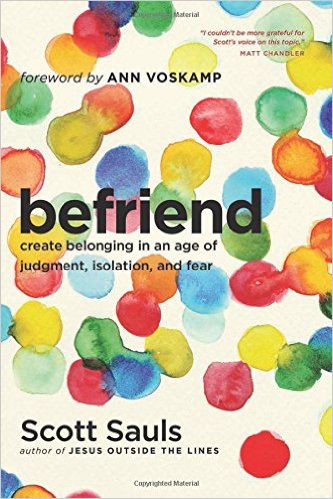
I’ve just begun reading Scott Sauls’ book Befriend: Create Belonging in an Age of Judgment, Isolation, and Fear.   I wrote about it here a few weeks back as the next book on my reading list. The author Scott Sauls is a pastor, but more than that, he is a friend. Not because I know him personally, but because the imprint of Jesus is on his writing and life. He is not preachy or churchy (in the way it was never meant to be). Sauls is wise, loving, and inclusive. Whether you are a person of faith or not, if you want to deepen your friendships and work relationships, sampling the pages of this book will aid you on your way. This book itself, like Sauls, actually befriends you.
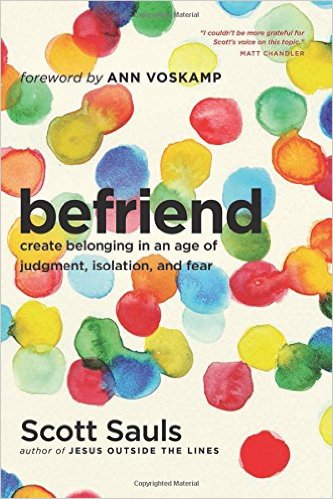
Photo Credit: Amazon

My Monday blogs are often reserved for workplace matters – either the culture of our workplace or our very careers. Sauls talks early in the book about how we view success in life. He recalls David Brooks‘s take on our achievement culture.

“We live by two sets of virtues: the résumé virtues – things we bring to the marketplace – and the eulogy virtues – things we want said about us at our funerals. Brooks concludes, ‘In [our] secular achievement culture, we all know the eulogy virtues are more important, but we spend more time on the résumé virtues.'”

What people think of me when I’m gone is less important than truly making a difference in this life. When it comes to our work, I think we all want to add value, not just to the product, but to the people with whom we work and for whom we provide services.

We can get caught in the press of beefing up our résumé and lose sight of the people, real flesh-and-blood people, all around us. Oh, we may not call our focus résumé-building, but when we take a moment to check our motives, it becomes more clear. Ambition, self-promotion, and exclusive control can crush work relationships. We often think it’s someone else but before long it can become us.

I will never forget a colleague who shared about his own pivotal relationship with someone he once considered a difficult boss. They argued over every idea, every decision, every action plan…at least, as this man remembers. His boss was always asking hard questions and pushing him to think more and more outside the box. Yet, in the middle of his heatedly trying to persuade his boss of the rightness of his ideas, the boss would look at his watch and say, “Let’s go get some lunch.” This would infuriate the man re-telling his story.

However, over the years, he began to see something in his boss he didn’t notice at first. This older man genuinely cared for his young protégé. The banter back and forth was to encourage excellence and innovation but never at the expense of valuing the relationship. That’s why lunch together was all part of the exchange. He mattered to his boss.Photo Credit: Free Stock Photos

Later the older man retired and the younger man advanced in his career. Their paths rarely crossed after that. When the older man finally died, his wife called this colleague and asked for him to be a pallbearer at his funeral. The older man had come to consider the younger a friend…and the younger man, as he teared up in remembering, was the better for it.

I’ve written often on complicated work relationships – the us vs. them situations and dealing with contemptuous colleagues among others. We can be tempted NOT to befriend.

Photo Credit: QuotationOf

However, we are the ones who lose the most in not extending a hand of befriending (acting as a friend) to those with whom we work. It changes us, from the inside out, and we live only in the land of résumé-building, rather than eulogy-making.

Sauls writes about expanding our “us”. In the workplace, this can be extraordinarily counter-cultural. To look out for our own status and position is expected. To consider how we might take down silos and create a work community where “the rising tide lifts all boats” (Adam Grant) – something remarkable and memorable.

That is the legacy, years ago, of that coworker/”friend” of mine. She made me more resolved than ever. I want to be a befriender, a boat-raiser, and a person willing to expand the “us”.

Sauls closes this chapter by asking the question, “Where is your greatest opportunity to expand your “us”? It has me thinking. How about you?

“Compelled by the love of Christ, we must not withhold kindness or friendship from any person or people group, and we must not engage in any sort of us-against-them posturing. This in itself is countercultural in modern society. Compelled by the truth of Christ, we must honor and obey the Creator’s design—even when his design is countercultural and, at times, counterintuitive to us. His ways and his thoughts are higher than ours.”

20 Quotes From Scott Sauls’s New Book on Friendship – Matt Smethurst

Monday Morning Moment – 7 Skills of the Top Leaders of Tomorrow – Whatever Your Age or Stage – with Matt Monge

Blog - Tomorrow's Leaders - Mojo companyPhoto Credit: The Mojo Company

[From the Archives]

Leaders of Tomorrow. What age group came to mind? Probably not your own. Maybe that’s one of our dilemmas in life and work. We either think we have already arrived as tomorrow’s leader today (ugh!). Or we stop thinking of how we can develop into that change agent of tomorrow because we’ve fixed our course…or settled into what we know already. It’s served us well so far, right?

Here’s my Monday morning gift to you: an introduction to the person, writing, and wisdom of Matt Monge.  Earlier in his career, he worked in finance (credit unions, in particular), and had fascinating titles like Chief Culture Officer and Vice-President of People and  Development. Currently he is is president of The Mojo Company, a leadership development consulting firm. His Facebook page bio reads: “My mission? Make the world a better place by helping people, leaders, & workplaces be more human. Depression fighter. Keynote speaker. Head of The Mojo Co.”

Blog - Monday Morning - Matt Monge - Leadership is about serving - FacebookPhoto Credit: Matt Monge Facebook Page

I read everything Matt Monge writes. Even his promotional video taught me more about leadership (you’ll want to take notes).

Monge posted a blog a few weeks back and I’ve been thinking through it since… It’s his 7 Skills Tomorrow’s Top Leaders Are Developing Today. I decided to post his bullet points here and how they stirred my thoughts on skill development today. [Don’t miss reading his thinking on this and other leadership topics in links.]

  1. Being Others-Oriented – While other employee development folks have moved away from “servant leadership” language, Matt Monge continues wisely to be a strong supporter of it. I, too, am delighted by leaders who continue to seek out the greatest good for both employees and customers. The bottom line is best served here. As the years go by, or as tribes are built, our temptation is to coast in this area…making the negative assumption that someone else is serving while we’re the idea leaders. As leaders go, so go the organizations.
  2. Persuasion, Logic, & Negotiation – First, Monge sees top leaders as practicing persuasion and negotiation differently “not with power, position, coercion, or even deception; but rather through logic, reason, and with an eye toward the good of the whole.” It’s funny how unaware leaders can be in thinking that manipulation and coercion go unnoticed by employees under their authority. It’s always better to do the work of taking the high road of negotiating and persuading. When we engage in the give-and-take of healthy debate and problem-solving, it’s a win-win for everyone. It does require time, trust, homework, and humility.
  3. Reframing – This is a discipline of looking at a problem or situation from different perspectives. Monge talks about doing this in such a way that we wrestle with our own biases and blind spots. Reframing can make for a decision or problem solved that have wider success or effectiveness.
  4. Knowing How to Think about and Make Decisions – Monge makes the distinction of being decisive vs. being a good decision-maker. I love this because often we experience leaders who get the job because they are decisive. Period. Full-stop. What does it take though to be a good decision-maker? To become an effective leader is to examine how we make decisions – what are my decision-making processes, who are my guides, what are those factors that always weigh in on my decisions? [Monge names those factors as presuppositions and core values. We need to think about what those are.]
  5. The Ability to Work and Build Community with Others – This is such a core value of mine and yet after years in my career, it bears refreshing. I’m reminded, as Monge writes about this, of the Old Boys’ Network. Today, maybe it’s less-gender-defined and called other things, like C-Suite executives, or even tribe. Still, if it’s a few making decisions for the many, it’s not community. Monge’s constant message is that the strength and health of an organization is in the community. Leaders must do the work of leaning in to their colleagues (outside the executive suite) to draw on the wealth of knowledge there and to affirm the value and varied roles of those coworkers.Blog - Matt Monge - human - twitterPhoto Credit: Twitter
  6. Leadership – The leaders of tomorrow are continuing to develop themselves toward that future. We can be always learning, always growing – not necessarily just like other leaders in our lives, but learning what we need to learn to remain relevant/useful. Resting on the laurels of past successes or doing “what we’ve always done” will eventually pull us to the sidelines. I’m in the painful, personal throes of dealing with this right now myself. Shaking it off and moving forward!
  7. Understanding Humanness & Emotional Intelligence – Monge defines emotional intelligence as having “four basic components: self-awareness, self-management, social awareness, and relationship management”. Foundational to emotional intelligence, in Monge’s thinking, is this whole element of humanness. As the workplaces of the future give way to more and more technology, we will be wise in tuning into the growing need for humanizing our organizations and our human employee experience. Being tech-savvy and not people-savvy misses what could be. Leaders of tomorrow, take note.

So that’s it for today. I love Mondays because they bring another opportunity to hit “the refresh” key of our work lives. We are not only motivated for the week ahead – differently than Fridays when the focus is the weekend – but we’re fresh in our view of our work community…and hopeful.

Matt Monge and others like him give me the encouragement I need to cast off from the safe, still shore and re-enter the fast and deep water of today’s work environment, determined to maneuver well there…and maybe even coax other quality people back in from the shallows. Whatever our ages or sensibilities, we can work toward being tomorrow’s leaders of excellence.

5 Friday Faves – Awards Speeches, Castle Theme, Prayer Breakfast, Harmony, and a Comedian

Hello, Friday! You know those kind of days when you work really, really hard, and you come home too tired to eat, much less cook….but it’s a good tired. You sink down in the closest chair…and 10 minutes later, wake up from a nap that felt longer…and…on with finishing the week… Hope your tired is a good tired. Here are five of my favorite finds…just for you!

1) Awards Speeches – We are in that season of awards shows – the Oscar, Golden Globe, Grammy, among others. Those of us who watch these shows do so to catch all the gorgeous or peculiar actors in the audience and stage. The fashions are a draw as well. For me, I love to hear what the award recipients say when they receive their award…their prepared words/speech. What they choose to showcase in their few minutes before their peers and the watching world. On the recent Screen Actors Guild Awards show, my favorite speech of the year was by Taraji P. Henson. She spoke for all the actors of Hidden Figures which won the award of Outstanding Performance By A Cast in a Motion Picture.

Watch her speech in the clip, or read it here. Part of it follows: “This story is of unity,” she concluded. “This story is about what happens when we put our differences aside and we come together as a human race. We win. Love wins every time.”

No political posturing. No pitting of one group against another. Lovely. Hopeful. True.

2) The Castle ThemeNathan Mills of Beyond the Guitar has done it again. He has taken the background music of a favorite videogame and demonstrated the incredible beauty to be found there. Castle Theme from Super Mario World is his latest arrangement for classical guitar. I honestly don’t know how he plays as fast as he does. Check it out here.

3) Prayer Breakfast – These days you never know what to expect in public observances. Protests, boycotts, and marches. A quieter but significant  event is the National Prayer Breakfast observed in February each year since 1953, in Washington, D.C. Keynote speakers in the past have included Mother Teresa, Bono, and Tony Blair. This year retired Rear Admiral Barry Black, the Senate Chaplain, delivered the message.  So powerful! He spoke on Making Your Voice Heard in Heaven.  If you can’t watch all incredible 25 minutes, at least watch from minute 22:16. Wow!

4) Harmony – Don’t you love when music and life flow with harmony? Jay Lyons is a filmmaker whose work I follow. In response to the dissonance of voices in this week’s newstream, he and his family wrote and performed together a song about harmony. Watch it here: Our House – Harmony – Jay Lyons & Family. Photo Credit: Music Early Childhood Presenter

5) A Comedian –  While Facebook friends of mine are deactivating left and right because of all the political wrangling going on right now, I had the biggest chuckle when a video featuring comedian John Crist showed up on my newsfeed. It’s about trying to find a parking place at a mega-church. He is new to me and so funny. Several of his videos are posted on his website. Enjoy.Photo Credit: YouTube

So that’s all I’ve got…jumping into my pajamas to fall asleep in front of the TV…don’t even care what’s on. Before I sign off though, I’d like to give a shout-out to Mike Sheley, owner/operator of the brand-new Chick-Fil-A at Smith Crossroads, Lenoir, North Carolina. This restaurant just opened this week. If you know about Chick-Fil-A, you know it’s all about a great-tasting chicken sandwich…and much more. Mike and team have a huge commitment to the community. Even before their grand opening, the restaurant team sponsored a book drive for local elementary schools and filled food boxes for Feeding Children Everywhere (over 10,000 meals total).Photo Credit: Facebook, Chick-Fil-A

Hope you have a great weekend, and if you’re anywhere near Lenoir, North Carolina, say hi to Mike & Jessica Sheley…and “eat mor chikin'”.


Monday Morning Moment – Them and Us, How Can That Be? Could Them and Us Become a We?

Blog - Work Culture - delta7Photo Credit: Delta 7

From the archives:

Recently, I was in an odd conversation with a friend from work. The more we talked, the more we sounded like a Dr. Seuss book. It went something like this:

“I don’t know how to be us with them. To be with them is to just be them. We must lose us; us no more will be. There’s no us in them; it’s so strange to me. How can they be them, with no us, you see? To give up us is too hard for me. So I can’t see a way to get to we.”

[Seriously, the conversation went like that…but better.]

Battling the us-them assignation is an ongoing workplace discipline. Even in the happiest, coolest companies, there is still an intentionality to keep work life positive for every employee. That inclusiveness is a hallmark for high morale and low walls (read: no silos).

BLog - Us vs Them - Work Culture - Silos - prolearn academy

Photo Credit: Prolearn-Academy

In a work culture where silos still exist, an us/them mentality can grow as each team or department draws in on itself and ignores or suspects the actions/values of others. It’s not a healthy situation for any of us…whether it’s the executive team insulated from others or the [fill in the blank] team hunkered down in its own mode of trying to survive. The first can be as unaware as the subject of the story “The Emperor’s New Clothes“, the second, well, is just miserable, and growing more so by the pay period.

So much has been written on this problem in the workplace – about that culture where us/them thinking and operations color productivity and morale. I have included several links below describing various recommendations and protocols to restore health to such organizations.

Blog - Work Culture 2Photo Credit: My Turnstone

I’ve always been that person who says, “Why can’t we just all get along?” In reality, we don’t have that situation always, but we can grease the tracks in that direction. Here are my own workplace rules regarding moving us and them to we:

  1. Make a practice of assuming the best of your bosses and colleagues. “Refuse to think ill of others” is my goal…and my accuracy in hitting that goal comes with practice and determination…and grace.
  2. Lean in to those with whom you struggle the most – the “thems” in your worklife. Especially the most powerful ones. Study them. Learn their language. Know them as well as you can. NOT for self-serving reasons, but for the benefit of the work itself. Any motive that only serves your personal situation will only make matters worse… ‘Nuff said.
  3. Refuse to get caught up in us/them complaining. Don’t make a big deal about it, but do your best to turn the conversation toward a positive end, change the subject altogether, or bow out if all else fails. Those negative conversations just bring you and your colleagues down and don’t accomplish anything. A short-lived “misery loves company” satisfaction isn’t worth the fall-out of such conversations.
  4. Bring down the silos, one brick at a time, if necessary. Maybe you aren’t experiencing any us/them anguish, but you know it exists. What can you do, individually and as a work team, to move to “we”? We have lots of work models out there for this. In fact, silos in the workplace are “so 80’s” (whatever that means…I hear it a lot, so I’m using it here). Use some of that meeting time, or talks over coffee, to be creative in how you can work better across teams…how you can learn more from each other…how you can defuse territoriality? If the “them” is management, you initiate dialog on setting work culture values that maximizes product excellence and employee engagement.
  5. Put processes in place – through your culture – to keep silos down. I would love to hear what your situation is and how you are making positive steps to grow/keep a healthy culture. Please comment below.

Sure…there are times we need to process a difficult situation at work with a trusted friend. Yes, us/them scenarios are painful…and wrong, honestly…especially in the workplace where we are meant to have shared goals, working toward the same outcomes. Maybe, the us/them relationships in a company are too distracting and we can’t see any solution (back to the Dr. Seuss-like conversation above). In that case, it’s possible we look outside our company for another situation. However, you take with you a piece of the us/them dilemma. You take you along to the next job. Better to develop muscle memory on how to “be we”, whenever possible, right where we are.

[Sidebar: I’ve written a lot about work culture – too many to mention – but you can search work culture under Blog – Deb Mills and learn as I have about what is possible if we stay engaged in our workplace.]

Blog - Work Place Culture - open.bufferPhoto Credit: Buffer

Overcoming Us vs. Them Challenges

Breaking the “Us and Them” Culture

How to Avoid Us vs. Them – Huffington Post

The 10 Buffer Values and How We Act on Them Every Day

The 4 Elements That Make Great Company Culture

How to Save a Broken Work Culture

From Us and Them to We Participative Organizational Culture

Them and us – How to use Trust as a Competitive Advantage

How CEOs Can End an Us Them Mentality

Us vs. Them – a Simple Recipe to Prevent Strong Society from Forming

5 Friday Faves – Skyrim Guitar Cover, Workplace Wisdom, Repair Cafes, Belonging, and Movie Previews

Blog - Friday Faves 006 (2)

Just jumping in today with my favorite finds of the week:

1) Skyrim Guitar CoverNathan Mills of Beyond the Guitar posted a new arrangement on Youtube this week – Skyrim – Dragonborn Main Theme. You video gamers probably know this song.  I’ve no experience with this personally, but this song seems to generate sweet emotions for gaming folks. This young man amazes me with his skills, yes, but especially his heart. It comes out in his music. On another note: He has over 1 million views of his Harry Potter medley on the Facebook group Harry Potter and the Deathly Hallows. Exciting.blog-nathan-mills-guitar-youtubePhoto Credit: YouTube

2) Workplace Wisdom – Finally…on millennials. I know, I know…there is so much written and spoken about millennials. I usually just pass over it…but Simon Sinek’s observations on millennials in the workplace are fascinating and telling. I appreciated that what he sees applies to both millennials and the rest of us. blog-simon-sinek-leadership-and-millennials-why-millennials-matterPhoto Credit: Why Millennials Matter

It is wisdom. Sinek came on my radar this week through a talk he did on IQ with Tom BIlyeu. In his talk, he focused on four components that millennials bring with them into the workplace that affect their professional maturing. These are 1) parenting, 2) technology, 3) impatience, and 4) environment. His take on “failed parenting strategies” may apply to some cultures, but many parents of millennials saw early on the fallacy of communicating how “special” our children are…no matter what they bring to the table. Sinek does communicate a victim mentality here and that’s the weakest of his 4 components. The other three were applicable to the workplace, in general, and to millennials, in particular.

Technology can be a crutch and squelch our creativity more than fuel it. Technology has a negative impact on the depth and breadth of our relationships…we have to pay attention to this. Impatience – for purpose, impact, advancement – is a big issue in the workplace. We need colleagues willing to hang in there through the doldrums. Environment at work is changing at a rapid pace…as much as it appears, on the surface, that it is bending toward the millennial, what is needed is a workplace where millennials can actually grow their skillsets. Sinek speaks to this.

4 Damaging Mentalities Millennials Must Break – Jeremy Chandler (a millennial)

3) Repair Cafes – Wouldn’t you love to have a place within an easy drive where you could take your aging laptop, or blinking lamp, or burned out leafblower for a repair? Is it possible to ever reasonably repair instead of replace? There is a phenomenon around the world where this is happening…not just in rural “third world” settings but in cities. Repair cafes are on the rise. If you want to find one, or start one, go here. This isn’t just about being frugal; this is a craft – this learning how to repair your own broken stuff with the help of a skilled professional – someone’s mom or dad who has learned how to fix things. The closest repair café to us is in Charlottesville, Virginia – do you have one near you?blog-repair-cafe-nytimesPhoto Credit: New York Times

4) Belonging Scott Sauls‘s book Befriend: Create Belonging in in an Age of Judgment, Isolation, and Fear is next on my reading list. Belonging is a core need for all of us, and Sauls takes the reader deeply into the realm of true friendship and solid relationships. Whether between peers, family members, colleagues, or even strangers at first encounter. I long to get past superficial and to know and be genuinely known by at least a few people. My desire is to be open to the possibilities of befriending and being “friended” with true authenticity. This book seems a good place to reboot.blog-befriend-scott-sauls-amazon

Photo Credit: Amazon

I discovered this book from a tweet about Matt Smethurst’s article 20 Quotes from Scott Sauls’s New Book on Friendship. I ordered the book based on those 20 quotes. Here are three:

“Compelled by the love of Christ, we must not withhold kindness or friendship from any person or people group, and we must not engage in any sort of us-against-them posturing. This in itself is countercultural in modern society. Compelled by the truth of Christ, we must honor and obey the Creator’s design—even when his design is countercultural and, at times, counterintuitive to us. His ways and his thoughts are higher than ours.” (75–76)

“This is what you call reversing the flow of the umbilical cord: parents demanding that their children function as their source of life; their emotional nourishment; their identity; their Jesus. This always ends in sorrow and alienation and loss. Just as in marriage, we must not place a burden on our children to provide for us the things that only God can supply.” (87–88)

“The best way to measure your desire to serve is to look at how you respond when someone treats you like a servant.” (98)

5) Movie Previews – Call them teasers and then trailers. Whenever we go to the theater, we have to be in place with a family-sized popcorn before the previews start. That is just how it is. I love these glimpses into coming feature films. Two I’ve seen recently follow: On the darker side – Jackie. On the lighter side – Table 19 . Whether I ever see these movies in the theater, watching the trailers was satisfying and wholly entertaining!

blog-friday-faves-table-19-cdn-colliderPhoto Credit: Collider – Table 19

Have a safe and peaceful weekend. Tacky Lights Tour is on our schedule…let the festivities begin.

Also:

Life On My Knees – Chocolate Raspberry Cream Pie – Angela

blog-aletheia-praise-band-nathan-angelas-blogPhoto Credit: Chocolate Raspberry Cream Pie

YouTube Video – Big Crosby & David Bowie – “The Little Drummer Boy” (Peace On Earth)

Macy’s Christmas Adv 2016 Video – #OldFriends – [Sorry about the Poo-pourri ad at the beginning of the video.]


Monday Morning Moment – Turning Around a Work Culture – From “Not Good Enough” to “Job Well Done”

blog-demanding-bosses-linkedin-dave-kerpenPhoto Credit: LinkedIn – Dave Kerpen

Aha moments can occur in all sorts of settings. My latest happened during our pastor’s sermon this week. Toward the end of a deep and fascinating exposition of Colossians 2, Pastor Cliff reminded us that we are not meant to earn God’s approval. He gives it unconditionally. Then Cliff talked about how we get caught in the trap of “It’s never enough!” when thinking of our efforts or accomplishments. Then “It’s never enough” or “Not good enough” too easily turns into “You’re not good enough.” This is the place where what we do intersects with who we are…

Switch from the Sunday Bible lesson to the Monday workplace application. I’m not talking the unconditional love of God here, but what happens to us in continuous feedback loops. Stay with me…This made me think uncomfortably about the way I once operated in the area of idea generation and innovation.

I am “an editor”…it gives me great satisfaction to take a document or process and make it better. Recently a friend asked me to edit his manuscript. It’s going to be such a great read…can’t wait for it to be published. Still, there will be lots of edits. For me, being an early reader, I just took care of some grammar and flow issues. There will be more qualified editors down the road. It’s enough for me to do quick, elementary edits and wildly praise the author and his riveting storyline, cheering him on to the next steps of publishing.

The tweaking that I used to do regularly in my earlier professional life was more intense in those days…and less forgiving. I wanted it (whatever it was) to be right, and it was my immodest opinion that I could get it to right. Especially when evaluating someone else’s work (ironically, I was less hard on my own work – figuring it was perfect already, right? Sigh…). The tweaking of another era has come round to a newish process called iteration.

One definition of iteration is the “process of learning and development that involves cyclical inquiry, enabling multiple opportunities for people to revisit ideas and critically reflect on their implication”. These feedback loops are meant to be fast-paced with the finish in view.

ScenarioPhoto Credit: SafariBooksOnline

Where iteration (or tweaking) breaks down (if I might be so bold) is when it’s taken well past rapid feedback loops into a realm of fine-tuning that has the team guessing “will it ever be good enough?” Product design and process development are vital to any company, but what we must also consider is the team or personnel involved.

If the feedback loops relate to the launch of a new product or a new business process, excitement and brainstorming are part of the momentum. Continuing to tweak over months instead of weeks before the launch can take a negative toll on the team. No one wants to forfeit excellence, but we don’t want to lose excellent personnel either.

blog-demanding-bosses-lifehackerPhoto Credit: Lifehacker

Trusting the judgment of our best thinkers is worth the risk of possibly releasing a product or service when we may not all be sure it’s “perfect”. That is what beta-testing is all about…the feedback that then comes to us from the consumer or user.

I’m really talking out of my element here (not being a designer or innovator so much as a lifelong learner). My leap from the sermon to the workplace relates to my own past struggle with wanting something with my name on it to be perfect while exhausting my teammates  with “what if we do this?” or “What if we say it this way?”

What a gift for us to take a well-thought-out proposal and, instead of putting it through the “just not good enough” wringer, we read it and pass it back to that colleague and say, “Good job”…empowering them to execute the proposal. How often does that happen these days?

Please share stories [in the Comments] of work situations where you experienced genuine affirmation for a job well-done.

Recently when water started backing up into the kitchen sink, I was afraid that it was something I had done. Too liberal using the disposal, for instance. Dave was out of town and nothing I could do would remedy the situation. Finally, on a Sunday afternoon, in desperation, I called our plumber (Richmonders, if you need a good plumber, email me, and I will give you his contact info). He came and fixed the problem, and best of all, it wasn’t my fault, after all. This young man literally LOVES his job and was kind to take the time, after he was off the clock, to give me the breakdown of what the problem was. What he charged me? Worth every penny…especially the part where it wasn’t something I had done wrong.

Why I bring this up is that being a fairly capable and creative person doesn’t prevent me from faltering at the likelihood that I messed-up.  See the Imposter Syndrome. My mental wiring is such that I get discouraged when my contribution to a situation actually causes more work for someone else, adds expense, or slows down progress. I’ve learned over the years that all that tweaking I may not have taken the product from good to great, and most assuredly caused some amount of frustration to hard-working, quality colleagues. Lesson learned.

There are times and seasons when tweaking is appropriate in developing a product and changing a business process. What we want to take into account is the cost of that tweaking, or iteration, on the people who make things happen in our workplaces. Free them from the “not good enough’s” to enjoy the fruit of “jobs well done”.blog-demanding-bosses-the-musePhoto Credit: The Muse

10 Tips for Dealing With an Overly Demanding Boss – Jacquelyn Smith

How to Get Over the Feeling that You’re Not Good Enough for Your Job – Michele Hoos

10 Things You Can Do to Get Out of Your Boss’s Doghouse – Brian Dodd

Why Incentive Plans Cannot Work – Alfie Kohn – Harvard Business Review

Good Is Not Good Enough: The Culture of Low Expectations and the Leader’s Challenge – Karlene M. Kerfoot

Innovation and Iteration: Friends Not Foes – Scott Anthony – Harvard Business Review

Holding a Team Retrospective – Morale

Workplace Bullying: Protecting Yourself at Work – Slideplayer

Monday Morning Moment – Getting Outside and Taking a Real Breather From Work

blog-taking-a-break-from-work-youtubePhoto Credit: YouTube

Some weekends are meant for lots of play mixed with Fall clean-ups…this was one of those. Then Monday comes around.  You pull your tired body out of bed, try to stretch those shoulders out and loosen up your knees again. In a matter of minutes, you settle that frame in your desk chair, and expect your brain to be on task with new work-week vigor. Right?

Maybe. Whether it’s Monday or any other day, our workspaces (especially if it’s cubicle life) can, over the course of the day, do a number on our creative thinking and problem-solving. Our minds and bodies cry out for stretch breaks…and not just to hit the restroom and pour the next cup of coffee. A change in location – i.e., to the next meeting – isn’t the recipe for clearing our heads either.

Getting outside…now that’s a grand solution.

My husband works on an incredibly beautiful street in our city. He is in meetings inside, of course, much of the day. When not in meetings, he’s at his desk. Eating his apple and bag of nuts, at lunchtime…right there. At his desk.

While this is going on outside…

blog-work-break-in-fall-monument-ave-flickriverPhoto Credit: FlickRiver

I don’t take advantage of being outside myself, so no shaming here. Still, the individual worker and the work itself would certainly profit from a breather…a step away from the desk or conference room table…a few minutes on the outside.blog-work-break-foster-school-of-businessPhoto Credit: University of Washington

“Brain breaks can make a big difference in your ability to be productive, creative, and innovative. The paradox is that doing less often allows you to do more.” – Jeff Stibel

In Courtney Seiter’s article The Science of Taking Breaks at Work: How to Be More Productive by Changing the Way You Think About Downtime, she gives support to the broad benefits of taking breaks. Taking your coffee, outside, for a walk around the block are some of my favorites tips of hers.blog-break-at-work-open-bufferPhoto Credit: Open.Buffer

Walking into an office building and around the folks smoking, I think, “Hey, nice they [have to] go outside…just that alone probably counters some of the impact of smoking on their health.”

Hopefully, you didn’t use up your break reading the blog today…unless you’re reading it while you’re sitting outside in the sun.

I love Philip Terman’s poem Some Days about the replenishing affect of the quietening out-of-doors. Here’s a portion:

Some days you have to turn off the news
and listen to the bird or truck…
You have to close all the books and open
all the windows so that whatever swirls
inside can leave and whatever flutters
against the glass can enter. Some days
you have to unplug the phone and step
out to the porch and…allow the sun to tell you what to do.
Philip Terman, Our Portion: New and Selected Poems

blog-work-break-daily-mailPhoto Credit: Daily Mail

Take that breather…clear your head…and stretch your legs. Either with someone or all alone. It’s worth the trouble…

The Science of Taking Breaks at Work: How to Be More Productive by Changing the Way You Think About Downtime – Courtney Seiter

The Writer’s Almanac with Garrison Keillor

5 Ways to Give your Brain a Break Right Now – Jeff Stibel

3 Easy Ways to Give Your Brain a Break During Your Workday– Jacquelyn Smith

Monday Morning Moment – What You Think of Others Matters – Workplace Wisdom

Blog - What You Think of People Matters - Dave 5

[From the Archives]

At first, you really liked working with this person. Then, bit by bit, he/she began wearing on you. He is always playing with his phone. Her solution to today’s problem is too labor-intensive. His email responses have become terse. She is late for your meeting. You think, maybe I was wrong about him. He is not the person I thought he was. Maybe, she’s the wrong person on the bus.

When a relationship begins to deteriorate at work (or home), you are wise to take steps to turn this around as quickly as possible. You could be in a work situation that has been difficult from the outset. It is still possible for you to make inroads in turning that relationship toward a more healthy or positive one. If not altogether, at least from your side. Consider an adage that has had a long and useful run in our family and work.

Your opinion of someone approximates their opinion of you.Dave Mills

There are exceptions, but I have found this to be wise counsel (from my husband, no less) in both personal and professional relationships. When what was a warm, congenial relationship takes a turn toward the negative, you can actually work, from your side, to restore the relationship. Even to take it to a deeper level. It can get more uncomfortable at first, because you have to start with your own thoughts toward that person. How have they changed?

We send signals to each other – whether we speak or not.

My Mom raised us out of the era of Walt Disney’s Bambi:

“If you can’t say something nice, don’t say nothing at all.”

Good counsel except for the conversations that still go on in our heads and color our attitudes, our tone of voice, our preferences, and our decisions.

Let’s say I have an amicable relationship with a colleague, and then something happens. I may not even be aware of it – a misunderstanding, a misconstrued action, an insensitivity unaware. Then a chill develops, or a clear outright dislike. I have a window of opportunity to clear that up. Otherwise, if I don’t act, then a process can begin where I decide that person is a jerk and has woefully misjudged me…and off we go.

Remember: This can go both ways. You may have had a few off days with a colleague, and find yourself just not thinking so well of him, then stop it! It’s possible you can keep them from picking up that signal and prevent the relationship from getting more toxic as they decide you’re not so great either.

If I refuse to think ill of another person and discipline myself to be respectful, deferrent in my demeanor, and tireless in pursuing understanding, I could restore that relationship. If it doesn’t improve right away, my attitude and actions work for my own benefit and can definitely help build trust with my team members. One day…that relationship may also turn. It’s worth the effort.

Blog - What You Think of People Matters - Dave

Jon Acuff talks about the four ways we invest in our careers – through skills, character, hustle, and relationships. In an interview with LifeReimagined.com, he had this to say about difficult, or neglected, work relationships:

“Even if you have skills, character and hustle, without relationships, it’s the career version of the Emperor’s New Clothes. Why?”

“If you don’t have relationships, you eventually don’t have people in your life who can tell you the truth about the decisions you’re making. You don’t have people who can tell you no or question you honestly. What I’ve learned is that leaders who can’t be questioned end up doing questionable things.”LifeReimagined.com interview with Jon Acuff

He identifies three types of people in our lives (work or otherwise, really): friends, foes, and advocates. Jon writes in Do Over:

“The best thing to give a foe is distance. We should ignore most foes. The problem of course is that we won’t. If your definition of foe is too loose and is essentially “anyone who kind of bothers me ever,” your job is going to be miserable. If you see people as your adversaries, it’s almost impossible to have a good working relationship with them. The first thing is to understand whether these foes are clueless or calculated. A clueless foe is that person whose behavior encourages you to fail. They are not malicious. They are not trying to make you lose, but with the power of their influence you are. “Bad habits are almost always a social disease – if those around us model and encourage them, we’ll almost always fall prey. Turn ‘accomplices’ into ‘friends’ and you can be two-thirds more likely to succeed.”Jon Acuff, Do Over

I think what Jon says is true. Because of my own worldview and value system (and married to Dave all these years), I don’t think we can just acknowledge there are foes out there and distance yourself from them. Sometimes, that is virtually impossible and still be effective at work. Because what can happen, if we don’t act to keep our own thinking clear, is that we take on some of that “foe-dom” ourselves. Maybe you aren’t going to be bosom buddies with this person, but your own work and other relationships can suffer if you develop bad habits around this person. Better to work on the relationship.

Blog - What You Think of People Matters - Dave 6 (2)Blog - What You Think of People Matters - Dave 6

“For no matter what we achieve, if we don’t spend the vast majority of our time with people we love and respect, we cannot possibly have a great life. But if we spend the vast majority of our time with people we love and respect – people we really enjoy being on the bus with and who will never disappoint us – then we will almost certainly have a great life, no matter where the bus goes. The people we interviewed from the good-to-great companies clearly loved what they did, largely because they loved who they did it with. – Jim Collins, Good to Great

Blog - What You Think of People Matters - Dave 3

For as he thinks within himself, so he is. Proverbs 23:7

Finally, brothers, whatever is true, whatever is honorable, whatever is just, whatever is pure, whatever is lovely, whatever is commendable, if there is any excellence, if there is anything worthy of praise, think about these things.Philippians 4:8

Blog - What You Think of People Matters - Dave 2

 Do Over by Jon Acuff

Fourteen Indispensable Leadership Quotes from Jim Collins – Thom Rainer

How to Deal With Difficult Co-workers – Read keeping in mind that some days you might be the one perceived as difficult.

Blog - What You Think of People Matters - Dave 4

Photos: Just a few of the men in Dave’s life who required no special work on his part to love and respect…and there are many more. Grateful.

Friday Faves – Summer Olympics, Global Leadership Summit, Life after Being Locked-In, Walking Her Home, and KevOnStage

  1. Blog - Friday Faves

Happy Friday! School is starting around the country, but not here yet. It’s still sunny summer with long days and beach trips and abundant locally grown fruits and vegetables. Tomato sandwiches and juicy perfect peaches. Mmmmm. Below are my five favorite finds of the week.

1) Summer Olympics – Watching the Olympics has been a joyful experience this week. I’m trying to keep up with the Refugee Team, and this BBC article is a helpful update. As for the Gold medals, several are being won, as you already know, to these two favorites of mine – Simone Biles and Michael Phelps. USA! USA! USA!Blog - Simone Biles - Olympics - the guardianPhoto Credit: The GuardianBlog - Michael Phelps - Olympics - livenewschatPhoto Credit: Live News Chat

2) Global Leadership Summit – This is an incredible leadership conference…the best I’ve ever attended. It’s simulcast from Chicago to sites all over the world. You’ll be hearing much more about the content in the days to come. I’m halfway through it as I post this. Brian Dodd does a live blog on it where you can gather quotes from each speaker, and on Twitter and Facebook, watch for the trending hashtag #gls16. Great content!

Blog - Global Leadership Summit - 2016 - TwitterPhoto Credit: Twitter

3) Life After Being Locked-In – Vegetative states and the locked-in syndrome have always been fascinating to me, as a nurse. An unforgettable moment for me in teaching nursing at Yale University years ago was walking into a patient’s room to meet him. He was in a wheelchair and when I entered he was looking in my direction. I said hello and he just continued to look at me…expression-less. This beautiful young man…seemingly not there at all…in some sort of vegetative state from a brain injury.

When I was a child, I watched a rerun of Alfred Hitchcock Presents episode “Breakdown” from the very first season in 1955. It was a psychological thriller about a man who survived a car accident but was paralyzed, completely unable to move or communicate. It was terrifying.

Martin Pistorius, a South African man living today in the UK, had his own terrifying journey, in real time, through being locked-in. At the age of 12, he developed some sort of illness where he quickly lost his abilities until he went into a full-blown coma. He stayed in this condition until he was 16…when he began waking up. Unfortunately, he looked no different and wasn’t able to communicate.Blog - Ghost Boy Martin Pistorius - youtubePhoto Credit: YouTube

He continued “invisible” for almost another 10 years, until one of his therapists became aware that he was actually responsive. His story is amazing. Once it was discovered that he was actually conscious, he began the incredible journey of treatment and rehabilitation. He went on to learn to communicate with an adaptive device, graduated university, became a web designer, and wrote a book about his experience (Ghost Boy). During his locked-in experience, he found God his only companion and became a follower of Christ. Now, he has also found the love of his life in Joanna whom he married.Blog - Martin Pistorius - locked-in syndrome - nbcnewsPhoto Credit: NBC News

He communicates his own journey so well in this TEDx talk. The kindness and understanding in his demeanor speak volumes as well. Watch his TEDx talk below or at least read the transcript (in link above). I’m so glad to have discovered this young man and know his story.

He closed his talk with these words:

We are told that actions speak louder than words. But I wonder, do they? Our words, however we communicate them, are just as powerful. Whether we speak the words with our own voices, type them with our eyes, or communicate them non-verbally to someone who speaks them for us, words are among our most powerful tools. I have come to you through a terrible darkness, pulled from it by caring souls and by language itself. The act of you listening to me today brings me farther into the light. We are shining here together. If there is one most difficult obstacle to my way of communicating, it is that sometimes I want to shout and other times simply to whisper a word of love or gratitude. It all sounds the same. But if you will, please imagine these next two words as warmly as you can: Thank you.

4) Walking Her HomeMark Schultz wrote this sweet song Walking Her Home after he was inspired by this older couple in his neighborhood. The husband was so tender with his wife and he told Mark that he’d promised her dad he’d walk her straight home after their first date and never leave her. He was still keeping that promise. We have all been touched by stories of an elderly spouse dying and the other dying shortly after. This CNN news report tells an especially sweet such story…Blog - walking Her Home - bellevisionPhoto Credit: Bellevision

…and here’s the song (with video from The Notebook, from the novel by Nicholas Sparks).

5) KevOnStage – Kevin Fredericks is a very funny guy. I just discovered his videos this week. Here’s a hilarious sample:

Here’s to a relaxing weekend. Hope you recover some of your sleep missed by late night Olympics watching…if you’re like me. Be safe and savor this life…and the people we have in it. God keep you.

Monday Morning Moment – 3 Quick Reads on Leadership – to Help You Stay the Course, Not Be a Jerk, While Being Innovative

Blog - Leadership - Wisdom - centresourcePhoto Credit: Centresource

Today…I got nothing.

Late nights watching the Olympic Games (#Rio2016), friends visiting from out of town, and new moms in my life…I got nothing on leadership today…

However…

These three leaders, writers and leadership observers never disappoint – Brian Dodd, Carey Nieuwhof, and Vala Afshar.

Brian Dodd is a prolific thinker and writer on leadership themes – mainly to a Christian audience, but much of what he writes is wisdom for anyone who wants to lead well. Blog - Leadership - Brian DoddPhoto Credit: Brian Dodd on Leadership

His blog on leadership quotes by Bill Purvis, who spoke recently at the GO Conference, includes the following bits for all of us.

  • Clarify your vision.
  • You get a vision by walking around.
  • You make insiders by giving them inside information.
  • Betrayal will kill your vision.
  • Devise a strategy to create a pipeline of leaders. If you want to go a long distance, you have to have a bench.
  • If you try to do it all you will burn out.
  • We can only grow to the level that we have leaders in place to train, retain people, and release people into using their gifts.
  • I’ve never known what it’s like to be jealous. I want people to win.
  • You equip other people.
  • If you don’t train leaders, you’re limited in how far you can go.
  • Our C-Level players become A-Level players wherever they go.
  • We want Ritz-Carlton to one day come to us.

Carey Nieuwhof is my favorite Canadian. He went from law school to the pulpit. His writing and podcasts on leadership are regular feasts for thought. BLog - Leadership Carey NieuwhofPhoto Credit: Carey Nieuwhof

Here’s a recent cautionary blog on 10 Signs You’re Just a Jerk…Not a Leader. I’ll just list his points, but you want to read the whole piece.

  1. You’ve made the organization all about you.
  2. You think that people work for you.
  3. You never say thank you.
  4. You’re demanding.
  5. You keep the perks of leadership to yourself.
  6. You keep yourself front and center.
  7. You take the credit and assign the blame.
  8. You never have your team’s back.
  9. You make all the decisions.
  10. You act like a martyr.

Nieuwhof closes with asking the question, “How do I know jerk leadership so well? Because I have a jerk inside of me I need to suppress every day. My guess is you might too.

Fortunately, Jesus introduces a completely different paradigm for leadership. If you want to be a Christ-like leader, just do the opposite of these ten things. You’ll be well on your way.”

Finally, I’ve been following Vala Afshar on Twitter for a long time.Blog - Vala Afshar - youtubePhoto Credit: YouTube

His blog 20 Entrepreneurship Lessons From World’s top Business Thinkers, CEOs, and VCs is a brilliant collection. Below are just 6 of the 20 lessons.

  • Doing well, and doing good, are not mutually exclusive, but mutually reinforcing. If you are not doing well, you don’t have the money to keep doing good. Is your company doing the work for the right reasons – can it create meaning and money, purpose and profit?Deb Mills-Scofield
  • Customers want meaning, value and purpose for them. If you don’t have your value proposition done, you don’t need to worry about the business model. This means deliver value in the context and constraints of the customer, not what you would like it to be. This means understanding your customer’s customer needs from their perspective. Deb Mills-Scofield
  • Humble confidence is key to success. Humble companies ask for help and they give their employees the freedom to fail and try stuff. Companies that trust their employees will be more innovative. Business leaders must walk the talk and give their employees the freedom to experiment. Good leaders take all of the blame and none of the credit. Good leaders also promote and celebrate cross-collaboration across the lines-of-business. – Deb Mills-Scofield
  • When you don’t ask, the answer is no. Consider asking for help or well-deserved promotions or pay raises. Also ask for forgiveness, not permission. – Deb Mills-Scofield
  • We live in a permission economy. So how does a business lead in the permission economy. Permission is the privilege of talking to people who want to talk to you, and not because it’s important to you. It is about being missed if you don’t show up. Are you doing something worth following? If you’re not, then you’re not leading. – Seth Godin
  • The world is changing. What does it mean to live in a world that is changing? The key element to being a CIO or a CMO is to be a chief learning officer (CLO). To be an artisan – not a craftsman, because a craftsman does the something again and again – is to learn to do it different the next time, to do it better the next time. To be an artisan, you have to be willing to listen and learn. What it means to learn is to fail. – Seth Godin

    Hope your Monday is profitable and that you’re encouraged as a leader today. Not a leader? Oh, no….you are. We all are…in some fashion or another. Wisdom is to learn leadership from those closest to us…and those whom we can follow online and at the occasional conference…like Dodd, Nieuwhof, and Afshar.