Category Archives: Monday Morning Moment

Monday Morning Moment – Community in the Workplace – We Need It

Photo Credit: Pixabay

Working on teams made for some of the highest performance years of my career. I used to think it was a weakness of mine that I didn’t thrive professionally if I wasn’t on a team. Looking back at seasons of life where my work required solitary focus as well as the times when collaborative effort was the expectation, the difference in quality of life and product was astounding.

We need each other. Author C. S. Lewis even observed that we are all “one vast need”. This thinking goes counter to our culture’s bias toward self-sufficiency and independence. In the workplace, our brilliance does not have to be defined as always being the lone ranger or the self-starter. How we work with others, and what we draw out of each other, in terms of value, creativity, and resource could be the difference in both performance and morale.

“When we live our lives in isolation, what we have is unavailable and what we lack is unprocurable,” wrote Basil (an early Church father). When we live our lives independently, other people are poorer because they cannot benefit from our gifts: “what we have is unavailable.” Also, when we isolate ourselves, we are poorer because the benefits of others’ gifts are lost to us, so what we lack, we cannot get. There are good things in others that are “unprocurable” unless we interact with them…You are “one vast need” and must avoid the extremes of saying, “I am not needed,” or, “I don’t need you.” – Art Lindsley

Community – and Why We Need It – Art Lindsley, C. S. Lewis Institute

Early in my career, people invested in my professional development and in me as a person. I had rich opportunities to work alongside both leaders and practitioners who shaped what I had to offer in the workplace. You have read about some of the teams I’ve had the privilege to be a part (here and here)… The work of those teams continues to thrive.Photo Credit: Wikimedia Commons

What we do together far surpasses what we can do individually.

Individualism is a fine idea. It provides incentive, promotes leadership, and encourages development—but not on its own. We are social animals who cannot function effectively without a social system that is larger than ourselves. This is what is meant by “community”—the social glue that binds us together for the greater good. Community means caring about our work, our colleagues, and our place in the world, geographic and otherwise, and in turn being inspired by this caring. Tellingly, some of the companies we admire most—Toyota, Semco (Brazil), Mondragon (a Basque federation of cooperatives), Pixar, and so on—typically have this strong sense of community…Somehow, in our hectic, individualist world, the sense of community has been lost in too many companies and other organizations. – Henry Mintzberg

I agree with these authors and many others on the importance of community in the workplace. Right now my work is done in a very solitary environment. Thankfully, I have friends and colleagues who fill some of the void where I miss team. In times when our workplace lacks community, we shouldn’t wait on outside forces to alter our situation. We must take steps to create community. Brook Manville has written an excellent step-by-step process to embolden us in this effort. Missing community at work is just wrong, especially because we can do something about it.

Can major transformation really begin…almost spontaneously, with small acts by people who are not part of the senior leadership?…In his recent book Community: The Structure of Belonging, Peter Block, an authority on workplace learning and performance, wrote, “Most sustainable improvements in community occur when citizens discover their own power to act…when citizens stop waiting for professionals or elected leadership to do something, and decide they can reclaim what they have delegated to others.” – Henry Mintzberg

Rebuilding Companies as Communities – Henry Mintzberg, Harvard Business Review

Can we have community on every work team? Maybe not. Can we have community at work? Absolutely. Whether it is a core value of a company or not, we can create and cultivate community whatever our role is and wherever we find ourselves in the workplace.

Let’s get after it!Photo Credit: Vimeo, Belbin

Wisdom for the Teaming Masses – Brook Manville, Forbes

Saturday Short – a Space and a Place on the Team – Deb Mills

Belbin Improving Teams 2017 – Vimeo

Monday Morning Moment – Home – The Eastern Shore of Maryland and Delaware

[From the Archives – Vacation Week]

The Chesapeake Bay Bridge is one long, breathtakingly beautiful ride (a bit scary, too, if you’re not so keen about heights or deep water)…and it is the way home for us… The Eastern Shore of Maryland was my husband’s childhood home, and for the past 30 years, it has become another home to me. There’s nowhere else across the USA quite like the Eastern Shore.

After the up and over bridge experience, we find ourselves cradled on both sides of the road by sprawling farms teeming with life.Blog - Eastern Shore FarmI always want to stop and have a closer look, but our need to push on to get “there” keeps me in the car, pressed against the glass, watching the grain fields look a blur, as we pass quickly by. I wonder, looking out at each passing farm, what’s going on in that house; what the farmer is doing right then; what’s ready to be harvested or what crop will be sown next.

The land is flat, and you can see far and away the various crops planted and growing alongside the Bay and the wetlands. There are also more inland stretches, where the acres of grain, corn, and truck crops are watered, during dry times, by irrigation systems that stand as tall sentinels across the fields.WP_20140614_006

The seasons are marked by what is happening in the field. It’s mid-June now, and “Locally Grown” signs pepper the side of the highway. Strawberry season is fast over, and pumpkins will be planted in some of those fields soon. Right now, we can look forward to asparagus, sweet peas, early melons and tomatoes…maybe even the first peaches of the season.

PeachMine were delicious.

The pace of life slows considerably for us, after arriving at Dave’s parents’ home. It seems like all we do, on the Eastern Shore is eat, nap, and catch up on family stories. Yet, it is not so for the farmers in this rural part of the country.

The fields are always turning over from one crop to the next. I can’t tell the difference, but it’s not all wheat growing golden in the fields. Rye, barley, and wheat are all sown at various times on the Eastern Shore. Soybeans, too. Then there’s the corn. It is in its own special category of goodness. Right now, the dark-green leafy stalks are only knee- to waist-high, but in a few more weeks of warm summer sun, you can almost hear it grow. And I have never eaten sweeter corn than that pulled fresh from the fields of the Eastern Shore.

My husband’s family, for generations, has made their home east of the Chesapeake Bay, either in Maryland or Delaware. Our children have deep and enduring memories of vacations there – on the fishing docks of the Chesapeake or the sands of Ocean City, riding inner tubes on the river behind their uncle’s boat, picking out steamed crabs on newspaper on hot summer nights, playing hard in the winter snow or at games on the long dining room table, falling asleep on the living room floor at MomMom’s & PopPop’s, with cousins all around.  And cooking out altogether, the dads tending the grill and the rest of us talking and laughing in the kitchen. If it’s possible to eat our way through the seasons on the Eastern Shore, we have.WP_20140613_012

I am struck at how much life we experience, in a few short days, at home on the Eastern Shore. Family, work, play, stories…life. Farms are never still. There are always different crops to plant and bring in. Animals to feed, and young ones to nurture along. Families are also changing with the seasons. Our parents turn into grandparents and great-grands. Our children grow up and don’t get to make the trip as often to the Eastern Shore as they did as youngsters in the backseat of our car. Between schooling, work, and blending families in marriage, it’s hard to get everything in, and I see the challenge for them.

My hope is that in the crazy pull of daily life, we never forget our way home…us or our children, to my family’s home in Georgia, or to the Eastern Shore…in time for the summer corn.2005 Summer -- ILC & Delaware Family 163

A Panorama View of the Chesapeake Bay Bridge

Harvest Time on the Farm – Eastern Shore, MD – Youtube Video

Farm Fresh on the Eastern Shore

Eastern Shore of Virginia – “If You Throw Seeds on the Ground, They Will Grow”

Monday Morning Moment – Taking the Social Capital Challenge – 5 Steps Forward

Photo Credit: Pixabay

You know that experience of events converging and what was foggy before becomes crystal clear? I just had that kind of week. A series of non-random things happened that caused a chain reaction of a magnitude that launched me out of my  creative doldrums.

Here’s what happened.

Backtracking a bit, I’ve been thinking solidly for several weeks on social capital – what kind of resource that is and what it takes to have it (or restore it).

Social capital is the willingness of people to help each other. It often replaces money which people would use to buy the same help. Most ways of measuring social capital have to do with trust – people who trust that favors and help will be available when they need it will favor and help others more. Social capital is a lot like real capital. – Simple English Wikipedia

I wrote about social capital twice – here and here. After posting that last blog, the following events had huge impact on how I’ve been doing life.

  1. The right book landed in my hands. Literally.

It was Jeff Goins‘ latest book that was just released. His 5th book and already a best-seller, Real Artists Don’t Starve: Timeless Strategies for Thriving in the New Creative Age came in the mail.

I tore into it and was so encouraged and empowered by his stories and counsel for artists, like him. No, not like him in the best-selling author part…but like him in the before “possibility-season” of his life.

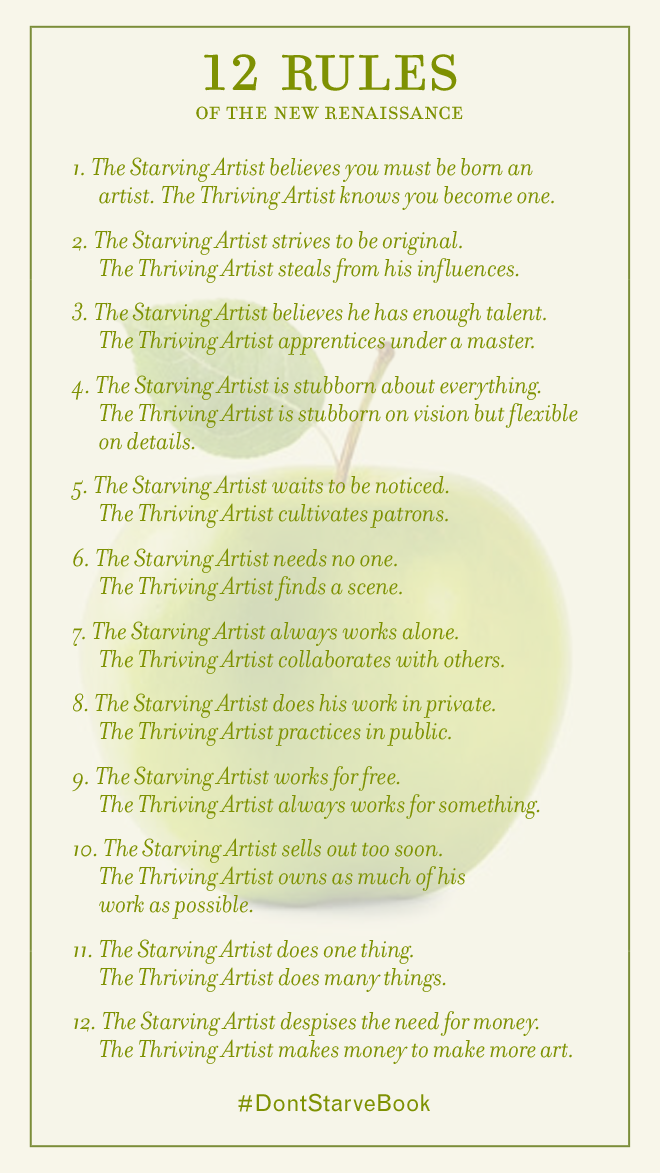
In Real Artists Don’t Starve, Goins gives 12 principles of how to actually be effective and successful as a creator (whether it’s music, writing, painting, or any other creative work). Reading his principles and the stories of artists and crafters through history give not only hope but tools through which we can make a living with our craft.Photo Credit: Jeff Goins

Book Marketing 101: What Works and What Doesn’t (Lessons From My Latest Launch) – Jeff Goins

2) Significant conversations followed. After posting my last blog, a writer acquaintance suggested we get together. Ann Lovell is a seasoned writer and currently employed as a Communications Director. Not only that, she continues busy with her own writing and is editing the manuscript of another incredible author. We talked about writing, and she offered her help. That was huge for me and right out of Jeff Goins’ book. Then another author friend Kevin Prewett with whom I share workspace some weeks also gifted me with good and thought-provoking questions about my writing. So helpful. Finally, through one more conversation, I realized how my own focus had been more on guiding and encouraging younger  writers and artists around me without noticing my own craft had gone untended. That conversation, with our guitarist son Nathan Mills,   was much illuminating. This time I benefited from a younger artist.

Significant conversations all.

3) A “Come to Jesus Moment” happened with my best friend. The one person in my life who has read all the blogs and has celebrated every high and encouraged me through every low is that husband and friend of mine, Dave. I am sometimes guilty of giving counsel too quickly (ok, advice…really. Unasked for advice. Dang it!). It’s much easier to look in others’ lives and suggest a small tweak than to face full on what totally needs rerouting in our own lives. In the last couple of years, taking early retirement and being too much on the outside looking in, I have time to come up with a prescription for anyone else’s problem. [Yes…guilty.] Not that I’m wrong, necessarily, but the situation is not mine. Most probably, Dave, or Nathan, or whomever it might be knows far more about where he/she is on that trajectory toward next steps than I could possibly conjecture. So here’s the “Come to Jesus Moment”. Over the weekend, Dave and I were talking about this season of life. We resonated together about lost social capital…those strong influencer groups with whom we once were a part and now not so much. In that brief conversation, when I would usually cheer on Dave to rally, the proverbial light bulb went off. Not just for him but for me as well. It is still possible to reclaim ground lost. Now was the time to act.

4) I applied for a job. I’d been toying with this for awhile. Until my dad died, I was making so many trips to help care for him, it seemed impossible for me to work anywhere. I would toss around options with family and friends (teaching ESL, hospice, school nursing), but nothing seemed to fit. Then for several months, I would hear of friends being hired into the coolest jobs and struggled to have unreserved joy for them. It was time for me to either continue with contentment in my current state of not working or take aim in one direction or another and do something. One job caught my eye. One job. I did the hours of updating my resume, pulling together samples of my writing, and crafting a cover letter. If I don’t get that job, I’ll apply for another.

5) I took the Social Capital Challenge.  A couple of months ago, I discovered Jordan Harbinger online. He writes and podcasts for a website called The Art of Charm. He invites his readers/listeners to something called a social capital challenge. I signed on…weeks ago for a month-long challenge…and then did nothing.

Photo Credit: Screen Shot – Art of Charm

Until today…

Today I created a written goal and posted it somewhere public.

I joined the Facebook page for The Art of Charm Challenge just now, and here was my first posting.

“Hello, everyone. I signed up for the challenge weeks ago. Even though its email reminders, baby to bigger steps, have been feeding my inbox, I wouldn’t even open them. Until today. Today I am ready. My goal is to have a manuscript with the art work publish-ready by the end of the year. My co-author and I had our first sit-down today, to share story idea and flesh it out some and to do the beginning photographer for the illustrator. Whew! There it is.”

Photo Credit: Pixabay, Jess_the_VA

I’m taking a deep breath…and we’ll see where this all lands. Whatever lies ahead, I’m so grateful for good counsel, courageous and creative friends and family, and clarity. It’s a very good Monday.

Monday Morning Moment – Social Capital – an Invaluable Resource We Can Develop – and a Tool to Help – Deb Mills Writer

Monday Morning Moment – When Connections Are Lost – a Rant, a Resolve, and a Request – Deb Mills Writer

6 Things You Need to recover From Every Day – Benjamin P. Hardy

Social Capital Challenge – The Art of Charm

Jordan Harbinger – The Art of Charm – Twitter

Real Artists Don’t Starve: Timeless Strategies for Thriving in the New Creative Age – Jeff Goins

6 Things You Need to Recover From Every Day – Benjamin P. Hardy

28 Lessons From Great Writers, Artists, and Creators on Mastering Your Craft – Ryan Holiday

The Whuffie Factor – Tara Hunt

Monday Morning Moment – Grit – the Role of Personal Resolve and a Team Alongside

[Adapted from the Archives]

Diligence is a word that defined my many years in learning Arabic while we lived overseas. Keeping at it, even when I wanted to quit, helped immensely. The joy of living life in a second language is worth all the work. Diligence is a great assist to staying on course, but it is not “grit”.

Once on a beach weekend, I saw grit at work in a group of servicemen, in Virginia Beach, doing their morning exercise. [Not the picture above but that image has its own neat story of grit]. Walking on the boardwalk early in the morning, my husband and I encountered this small group of airmen from the nearby Naval Base, doing a group jog. We saw them starting the run and saw them again coming back – 6 miles total. Most of them were young, thin, and fit.

What caught our eye, in particular, were two men in mid-life, carrying a bit of weight, bringing up the rear. Approaching the end of that run, they looked like they were hurting, but they definitely weren’t quitting. I’m sure to stay as fit as the rest of the group was, a certain measure of grit was at play…but these two, in this snapshot of life, showed the grit that brought me to write today.

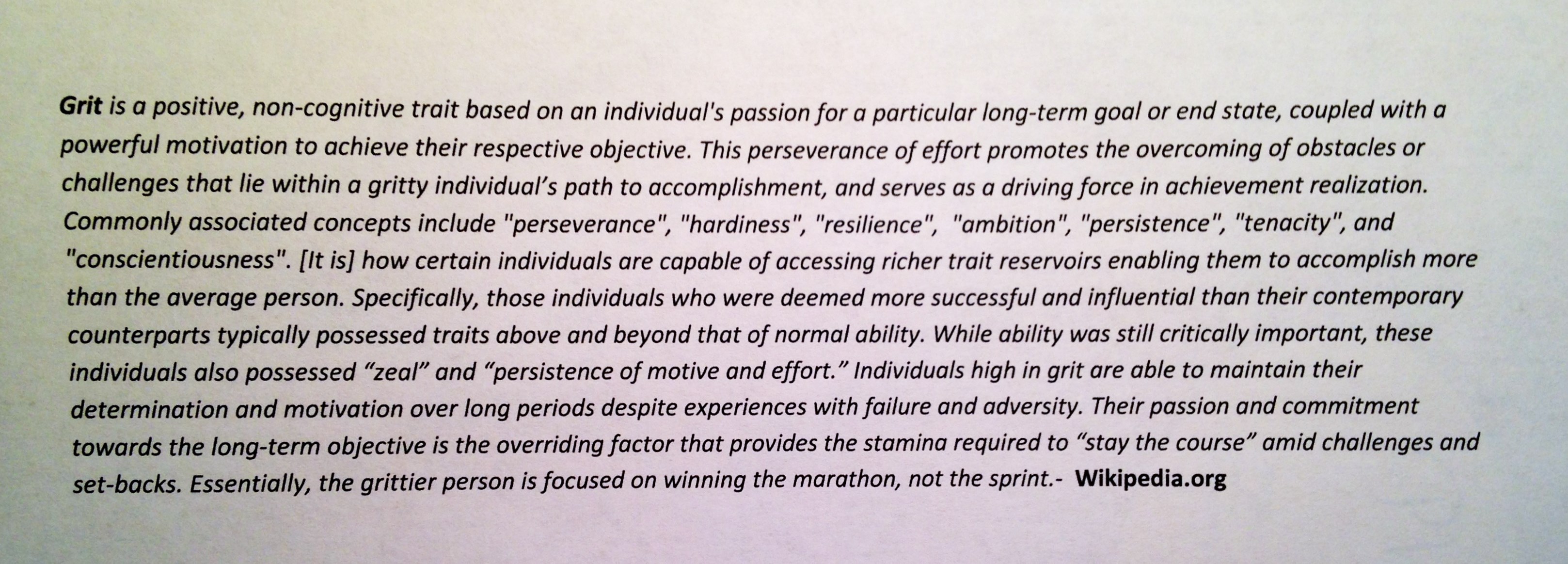
Wikipedia.org defines grit as a character trait  of applying passion and perseverance over time toward a goal, end state or objective. Grit goes beyond ability and can withstand failure, keeping the end goal in sight, and pushing through to it.Blog - Grit - Definition 2

Bill Hybels, at the Global Leadership Summit 2015*, talked about grit as “one of the greatest indicators of success”. Gritty people, he said, are the ones who “play hurt” and rarely ever give up. “They expect progress to be difficult, but believe with their whole being that they can be successful if they don’t quit.” It’s “The Little Engine That Could”. Abraham Lincoln. Nelson Mandela. Gandhi. Martin Luther King. Hybels also encouraged the audience that grit can be developed. From childhood through adulthood.

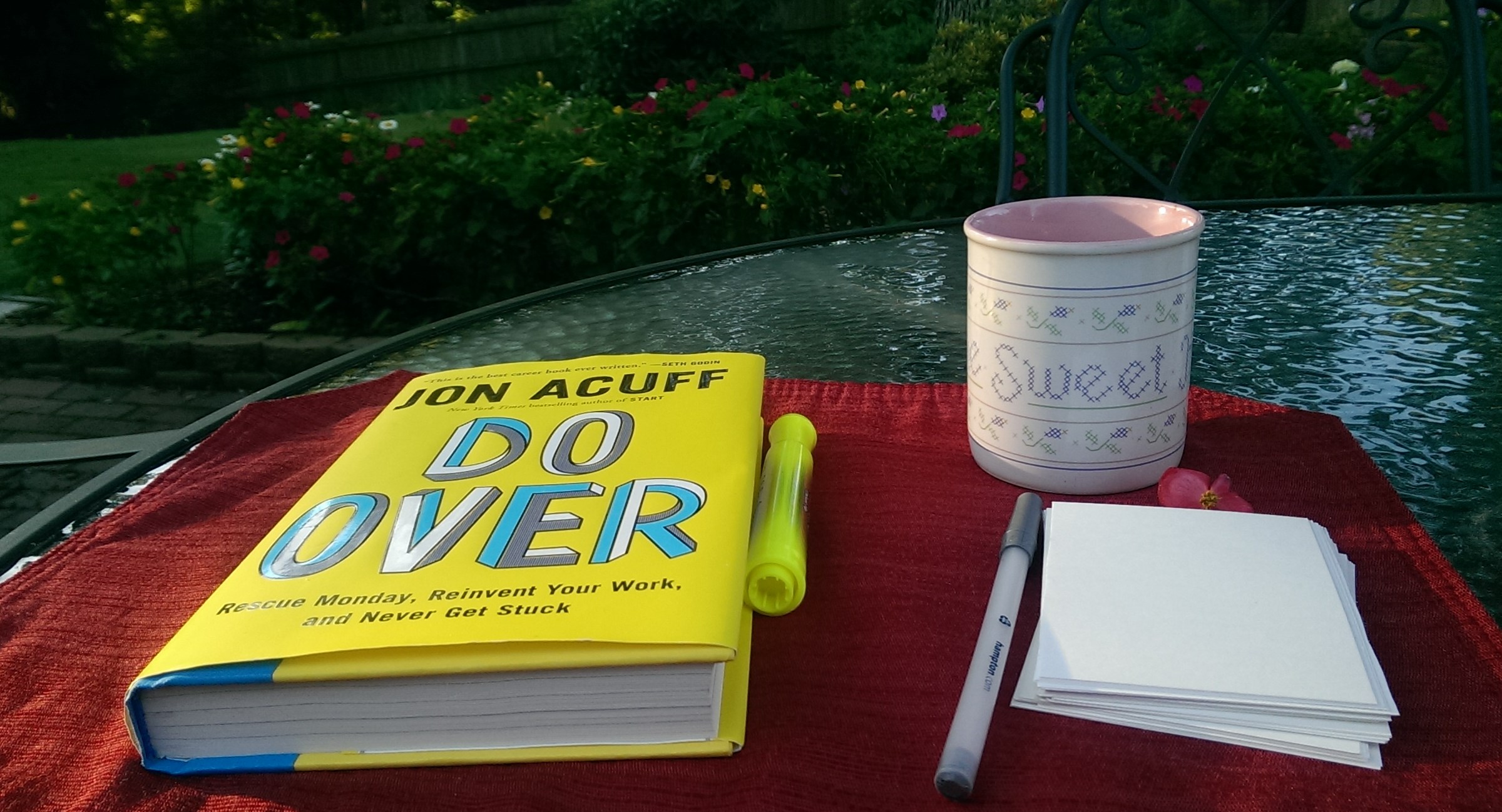
Jon Acuff (author of Do Over) defines grit as “stubbornness in the face of fear“.  In his book, he gives a short list of what’s needed in making gritty decisions (in the “hustle” of work):

  • Time – we think the world “hustle” has to mean fast, but it can also mean focus, intention, pace.
  • Counsel – Lean on your relationships. Some of the worst decisions are made alone. Who are your advocates? Have you given them time to reflect on it or are you rushing right by the wisdom they have to offer? Let them speak into it. A year from now, looking back on the decision, you’ll be glad you made it as a team.
  • Questions – Always ask awesome opportunities, awesome questions. We skimp on due diligence. “What am I not seeing right now?”
  • Kindness – Give yourself permission to make the wrong decision, because…you’re going to. Break the tension of feeling like you’re going to be perfect by giving yourself some kindness from the outset.
  • Honesty – When you look back on a decision, remember that you made that decision with the best information you had at the time.

As we saw those two older heavyset men running just behind their younger airmen colleagues, we saw men with a goal in mind. There was also something more – the cadence to the group’s run that seemed to work to keep them all together. Whether at work or in family relationships, we want to do all we can to help those gritty ones be successful. Their resolve may get them to the goal anyway, but we all benefit when we are able to “stay on course” together.

Have you “grown gritty” over your lifetime? Are there gritty folks in your life who you love to champion? Please share in the Comments below so that we can all learn.

*Session 1: Bill Hybels Opening Session – Global Leadership Summit

Wikipedia Article on Grit

The Truth About Grit

The Grit Test

Jon Acuff on the Role of Hustle in Taking Hold of Career Opportunities – Notes & Quotes – Part 5 of Do Over Series

How to Make Grit Decisions and Built a Grit List by Jon Acuff

Do Over: Rescue Monday, Reinvent Your Work, and Never Get Stuck by Jon Acuff

Does Teaching Kids To Get ‘Gritty’ Help Them Get Ahead?

Monday Morning Moment – When Connections Are Lost – a Rant, a Resolve, and a Request

Photo Credit: Pixabay

Here written is a cautionary tale…one with a happy ending to follow.

Across my professional and personal life, I’ve experienced a great wealth of teams, affinity groups, communities and networks. Real flesh-and-blood people gathered passionately around products or services. People who trusted and enjoyed each other, who used their influence to do good. People who expanded both their influence and ability to do good by holding doors open to others with like vision.

…and I got to be a part of all that. It was an incredible life…and I want it back.

This is not to say that my life is lacking. That’s the rub. Life is amazingly good right where I am…wait for it…but, (such a small word that screams discontent, right?). There is something that has faded, and it can for you as well, if you’re not aware and nurturing it. Don’t let it happen because it’s too valuable.

What I have discovered over the last year is that the wide-reaching, lively connections in my work and personal life have been lost…or, for sure, diminished. This is what I’m determined to correct.

You know that odd experience when you lose a phone conversation (either because of passing through a cell service dead zone or you hit the disconnect button). You or the other person continues talking for a bit not realizing the other person is not listening…has left the conversation (intentionally or not intentionally)…and once re-connected, if you’re able, you have to awkwardly figure out where you left off.

Lost connections are jarring because they interrupt a process of communicating, collaborating or cooperating together on something of value.

Human capital is when you are connected to different individuals who have the capacity and desire to do good together (in creating or innovating – a product or service). Social capital – that of teams, agencies, or other communities working together – is an even larger, richer commodity than individual human capital.

I wrote about social capital previously here.

Social capital is the willingness of people to help each other. It often replaces money which people would use to buy the same help. Most ways of measuring social capital have to do with trust – people who trust that favors and help will be available when they need it will favor and help others more. Social capital is a lot like real capital. The more money a person or a society has, the easier it is to do things and the better off people are. – Simple English Wikipedia

Photo Credit: IResearchNet

Through a variety of circumstances in recent years, I have lost some social capital. Reflecting on this real situation has been very helpful and motivating for me personally.

Jon Acuff, in his book Do Over, talks about the importance of not burning bridges when we leave a job or affiliation. I’m a bridge-builder not burner, but bridges can break down, through neglect or vision change and resource realignment.

At times, the sheer force of too much change can cause connections to be lost. Repeated change can lead to chronic states of transition, and we, in those situations, can find ourselves floundering, not sure really what or whom we call team or community.

There’s the regret and the resolve.

After years of living in many countries and working in various roles, we seem settled here in Virginia, at least for now. Still, in the past few years, we have experienced many changes here in work and community affiliations. Change can be so exhausting. It can either galvanize relationships or cause trust to sag a bit…and tempt us to circle the wagons.

I’m resolved to find my way out of this…even at my “old age” and in my semi-retired status…In other words, I have the opportunity AND the resolve.

Just now I’m reading a somewhat dated but still fascinating book on social capital. Written by Tara Hunt it has a curious title: The Whuffie Factor: Using the Power of Social Networks to Build Your Business.

Photo Credit: Amazon

Hunt took that title from a commodity in Cory Doctorow‘s sci-fi novel Down and Out in the Magic Kingdom. In Doctorow’s futuristic setting, “whuffie” was the currency and it was gained by being “nice, networked, and/or notable”. A little simplistic, but I do appreciate Hunt’s 5 principles of building social capital (this in the work world, but it can be applied in other situations as well):

  1. Stop talking and start listening.
  2. Become part of the community you serve and figure out who it is you are serving. [It isn’t everyone.]
  3. Be notable and create amazing experiences/remarkable products for your customers.
  4. Embrace the chaos. Don’t overplan. Learn to be agile. Recognize everyday magic.
  5. Find your higher purpose. Social capital only gains in value as you give it away. Figure out how you are going to give back to the community and do it…often.         – Tara HuntPhoto Credit: Pixabay

7 Ways to Increase Your Whuffie Factor – Tara Hunt – Fast Company

As I keep reflecting on re-building connections,  social capital is now a goal. It may look very different these days than before, but what’s most important is getting back in the game.

Jordan Harbinger, blogger and podcaster for a website called The Art of Charm, has issued a challenge that intrigues me. This social capital challenge is what I need right now. Photo Credit: Screen Shot – Art of Charm

The challenge itself is designed to take a month, and I’ve been sitting on it a month already. Reading books and articles on the topic and avoiding the first challenge – settling on a written goal of improving my social capital (and sharing it publicly).

Next time I write about social capital, it will be with the challenge ON! Here’s my request: it would be so helpful for me (and others) if you shared your experiences or thoughts in this area (via Comments below or in a private email). Don’t let the phrase social capital put you off. Remember it just means working/networking with groups toward something that benefits others. I’ve known the great value of that and want to figure out how to invest like that again.

Let’s shake up the world…for good…together. Game on!

Monday Morning Moment – Social Capital – An Invaluable Resource We Can Develop – and a Tool to Help – Deb Mills Writer

Deep Connections Like These Will Make You Very Influential – Ron Carucci

Social Capital Challenge – The Art of Charm

Jordan Harbinger – The Art of Charm – Twitter

Monday Morning Moment – Remembering – Memorial Day

Photo Credit: Hanscom Air Force Base

Happy Memorial Day doesn’t really fit this day, does it? Our commemoration of this day in America is a bit complex. I get the parades, and the setting flags on tombstones, and the sepia portraits of our military heroes past displayed on Facebook pages. Grandfathers, fathers, husbands, brothers…and, these days, their female counterparts.

The grilling and road races and t-shirt giveaways at baseball games? I don’t get so much. Yet, like our fellow Americans, we will grill and we will celebrate a day off…and through all that we will remember. We will remember the sacrifices of those who died to preserve our freedom.Photo Credit: Wikipedia, Normandy Landings

I actually began writing this blog 3 years ago to help me remember. The many lessons of life, the travels, all the people we’ve known along the way, and the great provisions of God. It has helped me to write them down.

Memorial Day is a somber remembrance. The soldiers I’ve known personally who fought in wars survived them. Still, I have friends who lost loved ones serving in hard situations. I stand alongside to remember. To remember those of our own who died and to remember those families who also lost their loved ones on the other side of battle. There’s always the other side of war…the family side.

How ever you spend your Memorial Day…whether with a burger or fasting or at work or play, stopping and remembering is the first order of the day. We have much to be grateful for. On this day and every day.Photo Credit: Paul Davis On Crime

[Added from Comment Below: That gravestone graphic leaves out the deadliest war in our history for some reason. Civil War – 620,000 dead. What a strange omission. – John]

If someone you loved died in one of these recent wars or in any service to our nation or community, please comment below with their names and any details you choose to include. I would be pleased to help honor them in this small way.

Independence Day in the USA – Remembering that Freedom Is Not Free – Deb Mills Writer

Stones of Remembrance – Lest I Forget – What Are You Remembering About God Today? – Deb Mills Writer

Worship Wednesday – Stones of Remembrance – Lest I Forget – Part 2 – Deb Mills Writer

Monday Morning Moment – Ignoring in the Workplace and the Powerful Practice of Noticing

Blog - being Ignored at Work - dailymailPhoto Credit: Daily Mail

[Adapted from the Archives]

It just happens over time…the ignoring of people around us. Think about this morning, coming into work. Retrace your steps, and think of the people you passed within speaking range…but you didn’t…speak, that is. In another season of life, I might have slowed down to walk with someone a ways behind me, or even run a bit to catch up with someone ahead. Just to use that time to connect a bit. We race into our work stations, heads down, as if the most common courtesy of greeting and inquiring into another person’s life just takes too much time away from the “important”. We sit down in meetings before they start and get lost in our thoughts, or our laptops, or our phones. We just ignore those around us…

Time itself seems to become more important than people. We circle up with our team, or go one-on-one with our boss or a consultant… when including a colleague, intern, or member of another team could have added greater value to that conversation. Are we more in a work culture today of tight circles when larger collaborative ones might prove more profitable? Do we just ignore those working around us who, by our actions, seem of little consequence to our workday? It’s not intentional maybe…but it becomes habit and then part of our character…communicating that people don’t matter.Blog - People Matter - greatplacetowork

Photo Credit: Great Place to Work

Throughout my professional life, I have tried to be tuned into those around me, whether they currently are in my work group or not. My nature is to notice and my desire is to acknowledge. In various work situations, it’s been from a place of influence rather than from a position of authority. Any task or responsibility entrusted to me had to be accomplished through winning the confidence and cooperation of those around me. No authority to just delegate or task others with work. Gifted colleagues have always been willing to work on projects with me. People recognize when they are truly valued, and they engage more solidly when they are genuinely respected/regarded. We can build capacity for noticing people.

Ignoring those in our workplace over time has consequences. Just like that adage “Hurt people hurt people”, I think “Ignored people ignore people”. It’s a contagious work culture practice which has been widely researched. Productivity, employee engagement, longevity, and work relationships within teams and across the organization can all be negatively affected by just the casual neglect or lack of regard for colleagues.

Sidebar: As I was reading and thinking about this issue, the chorus of a strange little song kept coming into my head. The Broadway musical, “Chicago“, has a woeful character who laments about his smallness in life, as if people look right through him. The song is “Mr. Cellophane”.

O.K….back to workplace culture. What would happen if we determined to be noticers and acknowledgers at work? This is not a soft practice…it’s brilliant really. Taking little time, we can, each one of us, actually humanize and elevate the workplace experience for everyone we encounter through the course of the day. This is not an exercise of rewarding a job well-done but of noting the person behind the job…as valuable. Period. Full-stop.

Listen Closely words on a ripped newspaper headline and other news alerts like take notice, vital info, importance of being a good listener and pay attentionPhoto Credit: Chip Scholz

I’ve known some great champions in this through my professional life, and I aspire to be like them. Real servant leaders. We may not think of ourselves as leaders, but we can all lead out in serving, noticing, and acknowledging those around us. Skip Prichard writes about servant leadership and lists 9 qualities of these “noticers”.

9 Qualities of the Servant Leader

1: Values diverse opinions

2: Cultivates a culture of trust

3: Develops other leaders

4: Helps people with life issues

5: Encourages

6: Sells instead of tells

7: Thinks you, not me

8: Thinks long-term

9: Acts with humility

Consider this challenge as I make it for myself to genuinely and honestly take note of people, moving through our workday. This is not about being only polite, but being “in the moment” with those around us. It may start with a greeting, and then an inquiry, and before we know it, true caring could follow. Translated into workplace language, that is employee engagement where ideas are exchanged toward better solutions for everyone.

I can’t close this topic without a shout-out to any one of you who’s having that experience of being ignored. You know, of course, that it doesn’t change anything of who you are…but it can harden your heart toward colleagues and dull your thinking in your job. I appreciate Jon Acuff’s piece on being ignored, a piece about Heisman Trophy winner and NFL quarterback Marcus Mariota:

“Throw the passes when no one is watching. Write the pages no one sees. Work through the business plans people don’t believe in yet. Hustle long before the spotlight finds you. You don’t need the whole world on your side to create something that changes the world.”

Postscript: I follow Vala Afshar on Twitter. He is the “Chief Digital Evangelist” for Salesforce and author of The Pursuit of Social Business Excellence. He posted the picture below, with the Tweet “This is how people ignored each other before smartphones”.Blog - Ignoring people without cell phones - Vala Afshar - twitter feedPhoto Credit: Twitter

It made me chuckle because we blame technology for so many of our relational woes when focus and attending to each other is an age-old issue. People matter. Our colleagues matter. Take notice.

The Noticer – Sometimes All A Person Needs Is A Little Perspective – Andy Andrews

Power, Authority, and Influence – Samer Ayyash – Slideshare

How to Practice the Art of Acknowledgement – Darcy Eikenberg

1 Surprising Lesson About Dream Chasing from a Heisman Trophy Winner – Jon Acuff

The Powerful Impact of Acknowledging Good Work – Laura Garnett

Being Ignored Is Worse Than being Bullied – Victoria Woollaston

Business Decision-making The Rule of WYSINATI – What You See Is Not All There Is – Chip Scholz

9 Qualities of the Servant Leader – Skip Prichard

The Power of Noticing: What the Best Leaders See – Max Bazerman – Bazerman focuses on taking in information in order to make better decisions rather than the simple act of noticing people (which can also empower decision-making and business process, communicating that people matter).

Monday Morning Moment – That Thing That Doesn’t Need to Be Said – and If It Does

Photo Credit: Wikimedia

Being an extrovert is a bit of a curse, isn’t it? Verbally-processing introverts struggle as well. That need…that compulsion…to get words out of our heads and in the open. We who suffer with this understand the wild nature of words. For those who don’t have this same impulse, you may also suffer under the weight of our words.

This is a public confession and redress of this particular conundrum.

[For those of you, like me, who feel sometimes your head might fairly explode if you don’t voice your thoughts so you can find resonance with a hearer, you are free to read the last two paragraphs first.]

I grew up with good teaching from an introverted mom who knew the power of words…and the importance of using them wisely.

This adapted from a past blog posting of mine:

My Mom raised us up with lessons on our speech from Scripture backed up by the cultural message of an old Walt Disney film, Bambi:

“If you can’t say something nice, don’t say nothing at all.”

Good counsel. Only problem is the continuing conversation in our heads that color our attitudes, our tone of voice, our preferences, and our decisions. These we still must wrestle down and be done with.*

First, this is not a guilting of any sort. For myself or anyone else. We who restrain words understand the risk we take in speaking… especially those things we feel almost an obligation to say. Those words we think will somehow right a tilting world. Those words we feel entitled to. The words that state our case or that of another.

Second, we know, often too late, that words not spoken are rarely misunderstood. Of course, silence can be deafening as well, but we have to put our own meaning into someone else’s silence. With spoken words, it’s clear what a person is thinking. So it needs to be worth speaking. The hearer may have a very different take on the matter. Thus the risk and wariness that must accompany speaking boldly.

Third, does what we think need to be said? Will it make a difference in the positive to what’s going on in our heads? Or will what we say only add to a problem, rather than bringing it closer to resolution?

There’s a pithy and true saying floating around the internet about thinking before you speak. Here is a visual of it.

Photo Credit: Flickr, Jo Quinlan

Along with this, these days, is Think Before You Post. How many times have we deleted a Facebook or Twitter post put up in haste, hoping it came down before being read by those significant in our lives who would be hurt or offended by it? Sigh…Photo Credit: Flickr

Is our opinion so valuable as to cause pain to those who matter to us? Not. At. All.

Photo Credit: Hannah W. Potter

All that being said, finally, what do we do with the words building in our heads about massive concerns, witnessed injustices, shifts in worldview or mission drifts? There are words, as I see it, that have to be expressed almost to understand the whole picture of a thing going on. These words, raw and impassioned, we don’t speak randomly or post publicly (except in the rare occasion of stopping harm). These words if expressed may only yield spiritual reprimands, or hurt silences, or long tirades from disagreeing hearers/readers. The words that must be said, words that you know may have disastrous consequence, might need the hearing only of a trusted friend…at least at first. This sort of friend will hopefully help guide you to sort out that which does not need to be said and what does – to whom, in what manner, and on what occasion.

Oh the wisdom in thinking before we speak. How thankful I am for those trusted friends who refuse to think ill of me when words spill over! Friends, and family, who know my heart is not meant to wound, who help me sort out my words and what to do with them. Friends who know I take no joy or satisfaction in anything bordering on gossip or slander. Friends who listen, and may agree and resonate, but counsel with me – about what must be shared and what is best left unsaid. Friends who pray with me and remind me to pray. In my book, that is never spiritualizing…prayer is as real a thing as all those thoughts that can rob me of sleep…but so much better.Photo Credit: Flickr, J. D. Hancock

Anybody out there have the same struggle? Or a different struggle with words? Any helps you want to share? Shoot us some of your words in Comments below.

*Monday Morning Moment – What You Think of Others Matters – Workplace Wisdom – Deb Mills Writer

Speech, Power and Significance of

Monday Morning Moment – Leading When You’re In Over Your Head – Cultivating a Thick Skin and Tender Heart

Photo Credit: Carey Nieuwhof

First, a leader has to recognize he/she is in over their heads. This often doesn’t happen because it’s incredibly threatening to a person’s ego as well as the ability to execute responsibilities. If a leader can wrestle with the actuality that her/his job is beyond her ability today, then there is great hope both for the leader and those under their authority.

Carey Nieuwhof and Eric Geiger are two leaders I follow on Twitter. They write extensively on leadership and have that platform because they are life-long learners and savvy watchers of life. They have “skin in the game” and have learned how to lead and continue to do so. No finished product here which gives them even more credibility to be heard.

I want to briefly summarize a couple of their articles and then point you to read the rest. If you are the leader in over your head, you will find help here. The same goes for those under the lead of a struggling leader.

Some time ago, I bookmarked Carey Nieuwhof’s piece How To Lead When You’re In Over Your Head. He lists out 5 steps to dealing with that reality and I have posted them below. If they seem simplistic to you, they are simple but not easy.

  1. Stay humble.
  2. Get a great team around you who are smarter than you.
  3. Become an avid learner.
  4. Grow comfortable saying “I don’t know”.
  5. Trust God.

There is no shame in finding yourself in over your head if you face it and push through it. No shame.

We often default to focusing on our strengths, and lead out of them instead of dealing with the weaknesses taking us down…to our detriment and that of the organization. You know that adage, “If it ain’t broke, don’t fix it”? Well, the leader in over her head can flip that on its head by breaking what’s not broken.

Read Nieuwhof’s coaching on his 5 steps. What will help any of us to be successful in dealing with a situation where we’re in over our heads is to do heart and skin checks. I say this after reading Eric Geiger’s article Thick Skin, Tender Hearts, and Four Types of Leaders.

Photo Credit: Eric Geiger

Every one of us in leadership can work through Geiger’s diagnostic and check the tenderness of our hearts and the thickness of our skin.

For those dealing with the ripple effect of the leader reeking unchecked havoc in the workplace – either because she seemingly doesn’t really care or cares more about her own ego, identity, or position than she does her employees or customers. This is a sometime reality in the workplace. Don’t be pulled down or disqualified yourself by this. It could change at any time.

You may think there’s nothing you can do about such a situation and you may be right, to a degree. However, you are completely empowered to check your own heart and skin. Has your heart grown calloused in a difficult work situation? Has your skin grown thin where you take things too personally?

Geiger, as with Nieuwhof, gives great counsel on how to cultivate that tender heart and thick skin. You may not agree with all of what both writers say (they speak from a Christian worldview). However, they have wisdom for anyone who wants to grow professionally and lead well in whatever situation you find yourself.