Tag Archives: leadership

Monday Morning Moment – Stewardship – Stewarding My Part Well in Today’s Workplace

Blog - Stewardship - work.chronPhoto Credit: Work.Chron

All of life is stewardship. Doesn’t it make sense? Our jobs, our relationships, our personalities, and our future have multiple layers. When we think of stewardship, rather than ownership, or entitlement, or giftings, or personal rights, we take on a much broader, healthier view or life. Writing about it previously here, I wanted to focus more, this time, on our workplace.

In 1993, Peter Block wrote a revolutionary book entitled Stewardship: Choosing Service Over Self-Interest. He updated and expanded it twenty years later (in 2013). Block defines stewardship as “the willingness to be accountable for the well-being of the larger organization by operating in service, rather than in control, of those around us. Stated simply, it is accountability without control or compliance”.

Words mean things.  When we use the word “steward”, we loosen our grip on ownership – of our job, title, product, and work relationships. However, we do not loosen our commitment on personal responsibility. This is the gem of stewardship – a gem in the workplace that can be mined by each one of us.

Years ago, in nursing school, we used Virginia Henderson’s definition of nursing which focused more on facilitating the patient’s return to caring for him/herself than on the “giving care” component we often think of with nurses. Nursing as stewardship. When our children came along, we as parents would need to decide whether to home school or put our children into a private or public school.  Another parent gave us wise counsel: Whatever your decision, you are responsible for your children’s education, some of which you may contract out to other teachers or institutions. We, as parents, were stewards of our children’s education.

In the workplace, we have heard the word steward used in the service industry: union shop stewards, ship stewards, stewards on airlines, stewards of estates. However, the stewardship that Block describes can proliferate at all levels, especially if our leaders set this value and mindset. What if an organization determined to have an inclusive model of accountability where all employees operated by serving, rather than controlling, those in their influence (colleagues, customers, vendors)?  What if we chose to apply ourselves to the work before us, with deep personal care and commitment, rather than under a boss’s control or need for our compliance?

Stewardship as a concept and value is both time-tested and trendy. Check out REI‘s commitment to customers in delivering quality outdoor gear…and also to its employees. Stewardship.Blog - Stewardship - slideplayerPhoto Credit: Slideplayer

My first encounter with this word, stewardship, was as a child hearing the parable of a master preparing to leave on a journey. He entrusted the three servants with some measure of his wealth (talents). Their master had given each varying amounts of money, according to each servant’s ability. The master would be away for some period of time and meant for his servants to “steward” the money. Two servants invested his money in such a way that each doubled the amount entrusted them. The third servant, fearing the master (and possibly lacking confidence in his own ability), hid the money entrusted to him. He only had what he’d received in the beginning to give back to the master. The first two servants were rewarded for their faithfulness, care, and initiative, but the last cautious, fearful servant suffered the consequences of his inaction.

There is much to learn about stewardship from this old story. Stewardship is taking personal responsibility and interest in quality of service or product and depth of relationship. Like in the story, it could mean taking risks ourselves or with each other (especially leaders entrusting other team members with decision-making and design). It means empowering others in discussions and details that we might prefer keeping for ourselves (except that we are stewarding toward a larger outcome). It means making investments in others and in the over-all organization. Stewardship is the embodiment of employee engagement…all-in, whatever it takes, for that greater good. Lastly, the story spoke to rewards for those diligently stewarding what was placed in their care, and the consequences of those who refuse to be engaged…which leads to a place nobody really wants to go.quotes of bill gatesPhoto Credit: Quotesgram
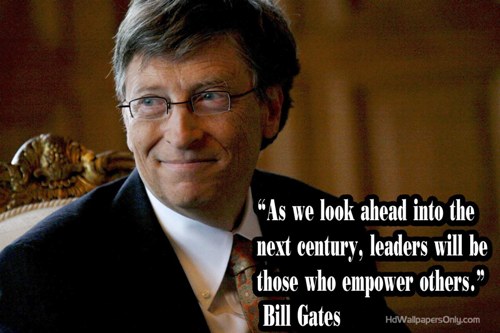
Leaders and managers who are willing to give up control and who genuinely care about their employees and customers become true stewards themselves. They set the standard for stewarding across a company. Whether leaders are on board or not, any of us can still have ownership of a new-old way of thinking and practice. We can steward well what is our responsibility or under our influence. Again, this type of “ownership” is not about owning the job, the product, or the relationship. Stewardship is the owning of our personal responsibility – our piece of what could be excellent, and our piece of what’s not going well, and applying our experience, knowledge, giftings, and heart to benefit all touched by our service. Our stewardship.
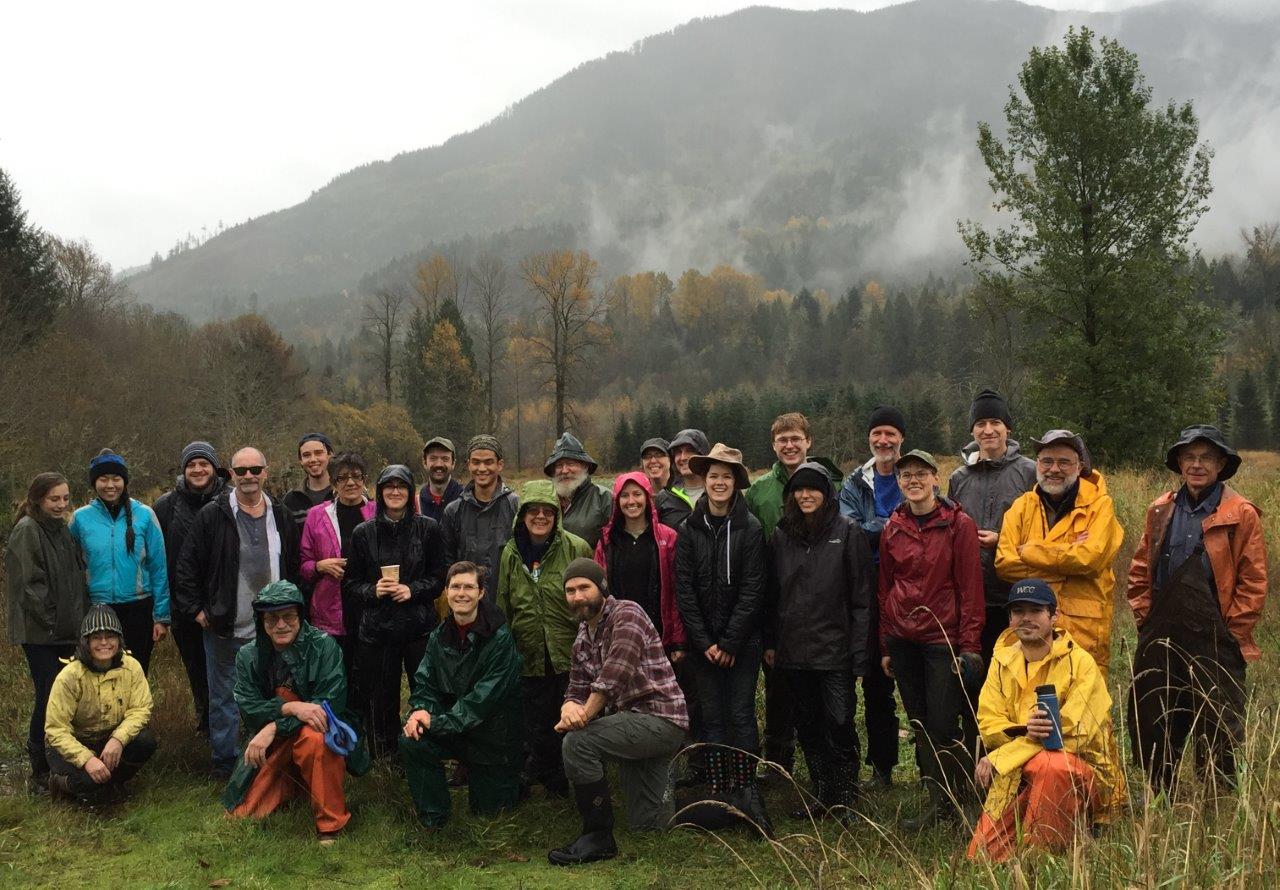
BLog - Stewardship - 2 - whatcomlandtrustPhoto Credit: Whatcomlandtrust

What are your stories? Do you see the impact of your stewardship? Of the stewardship of others? Could you see how this might color the culture at your workplace? Is your company one where top-down, bottom-up, people care about each other and what they’re doing? It shows…if you are, or if you’re not. Stewardship.

Blog - Stewardship - John Wesley - QuotesgramPhoto Credit: Quotesgram

Monday Morning Moment – All of Life Is Stewardship

Stewardship: Choosing Service Over Self-Interest (2nd Ed.) – Peter Block

Five Lessons for Our Lives From the Parable of the Talents – Hugh Whelchel

Monday Morning Success – How Biblical Stewardship Transforms Your Work – Hugh Whelchel

Blog - Stewardship - Winston Churchill quote - ololmke

Photo Credit: OLOLmke

5 Friday Faves – a Mama’s Lament, Primary Physicians, Life in a Refugee Camp, a Deeper Happiness, and Community – and a Bonus

Blog - Friday Faves

Hello, Friday. We’ve had rain for days here, but it’s forecasted to be gone for the weekend. What are you up to? I’ve culled down my many happy finds of this week to these. Please share what enlarged your life this week (in comments)…and Happy Mother’s Day!

1) A Mama’s Lament“Slow Down”“I don’t know of a more uttered or whispered phrase from a mother of any age, about her child of any age, than ‘It’s going by too fast.’ I feel like I spend my life trying to slow time. Trying to celebrate the growth and the milestones of my children, and then secretly day dreaming about building a time machine in my garage, so I can return to rocking my babies at midnight. If you’ve ever looked at your child running across a field, or striding across a graduation stage, or walking down the middle aisle of a church clutching a bouquet, you’ll know why this song is special to me. Please enjoy the video below, remembering the moments we wish we could slow down, and sharing them with those we love most.”Nichole Nordeman
2) Primary Physicians – Without a lot of detail, I’ve been undergoing a series of medical tests (with their various new doctors attached) for a finding that is either nothing…or not. As frustrating as all this can be (with scheduling and preps and the waiting…the waiting!), I am grateful for specialists who continue to sharpen the focus of whatever this is that’s going on. Mostly, I am grateful for my primary physician who knows me and my history best. He occasionally checks in himself, as different reports come to him during this journey. What a blessing to know he’s putting the pieces of this puzzle together as each specialist adds his bit. Thankful.Doctor Talking with PatientPhoto Credit: UPMC

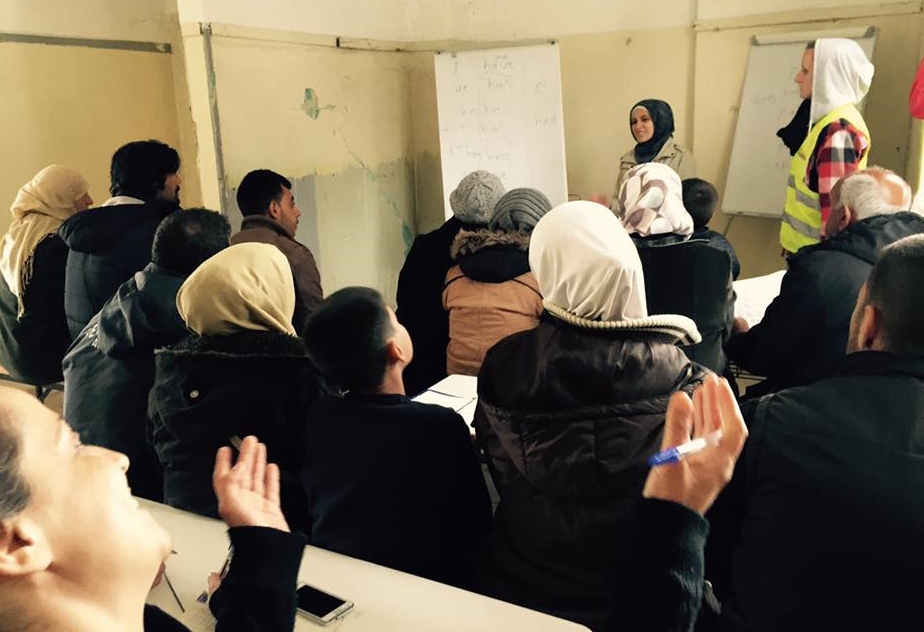
3) Life in a Refugee Camp– Our friend, Beth, is spending a couple of months in Greece, working in a Syrian refugee camp. She has been a great help there, I’m sure, and has given us a window into the lives of these displaced peoples. It’s hard to imagine living in a tent city, and yet, how wonderful that there is shelter for them in this place in-between. Homeless, and yet, for now, they have a place at least…where the kids play, the parents take English classes, and all the rest of their new normal life unfolds – cooking, cleaning, and preparing for an unknown but hopeful future.13001245_10156875941260061_7654249932579596614_n12985495_10156885038265061_4952602545456677851_n13055578_10156925512190061_3805858236358775882_n13082658_10156925508410061_1380861859098516687_n12993627_10156889362110061_8126408917090936937_nPhoto Credit: Facebook

4) A Deeper Happiness – You know, if you read this blog, that I love Kara Tippetts. She is with the Lord now. Still, her life and wisdom continue to impact my own. Her husband, Jason, wrote about a lunchtime together as she was nearing the day of leaving.

“The other day Mickey brought a grilled cheese to Kara for lunch. I didn’t have anything, so I just watched her eat. She offered me half of her sandwich. I said, Don’t you want it?

She replied, I do, but I want to share more.Blog - Mundane faithfulness - Grilled Cheese SandwichPhoto Credit: Woman’s World

First of all, yes, I did take half of a sandwich from my dying wife. Second, it occurred to me how Kara’s simple comment stuck with me: I want to share more.

What if I found more satisfaction in sharing than taking, more in giving than consuming?

Jesus says in Matthew 20:28, Even the Son of Man came not to be served but to serve…

How beautiful that even as she fades, Kara’s selflessness reflects God’s character and ministers to our hearts.

He quotes Tim Keller: “Seek to serve one another rather than to be happy, and you will find a new and deeper happiness.”Blog - Need You Now Kara Tippetts & JasonPhoto Credit: Mundane Faithfulness

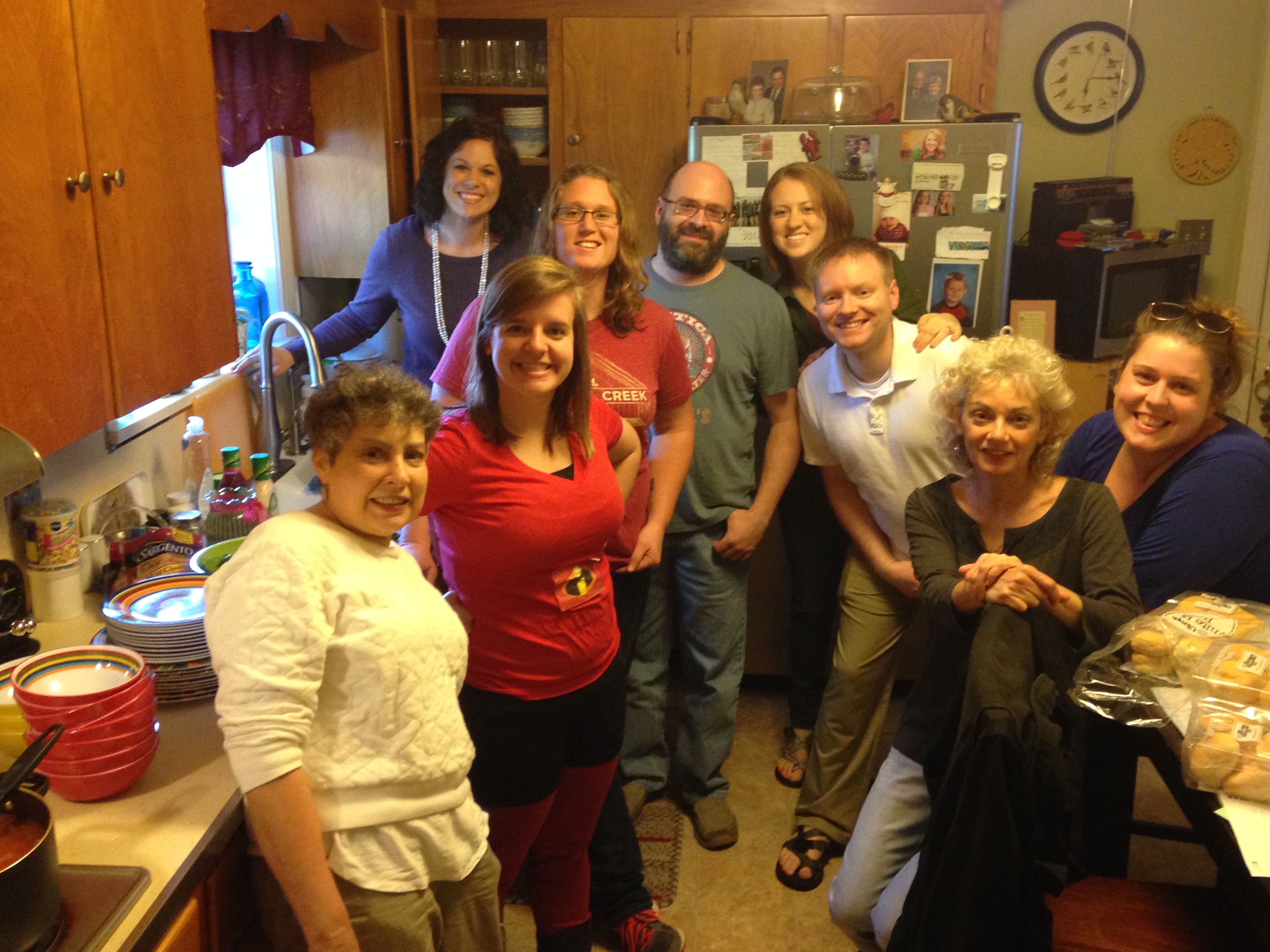
5) Community – Oh community! Sometimes you find it in the workplace or your neighborhood. Sometimes through your church (or other group of like-minded folks). Sometimes community comes through family and friends. We have experienced deep community in many forms over the course of life. I tried to find a definition for community but nothing really seemed adequate. Scott Peck has written about it with the words that resonate (I don’t agree with the whole piece but the defining words ring true) – vulnerable, honest, generous, inclusive, loving, safe. Community is where you know people genuinely care about you, warts and all…where when you’re not present, you’re missed…where help, laughter, understanding, and tears flow freely. Here’s to community – imperfect and human – more together than the individual parts. Hope you have one…otherwise, you are welcome.IMG_5754Blog - Community - English Conversation Class005IMG_4904

Bonus: A New Blog Find on the Workplace – I love to read about workplace culture and who leadership can make a difference. You’ll see that often in my Monday Morning Moment blogs. This week, I discovered an article by Ron Carucci interviewing Mark C. Crowley (wrote about it here). It intrigued me enough to seek out Ron’s website. He is part of the consulting team of Navalent, which focuses on business and leadership transformation. The blog is a huge resource for any of us in the workplace. Great stuff!

Blog - Blog on Business & Leadership - Navalent - Ron CarucciPhoto Credit: Navalent

Monday Morning Moment – What It Takes to Be the Leader You Think You Already Are – Fast Read

Blog - Lead from the heart - businessinsiderPhoto Source: Business Insider

You are going to be so glad you are taking the time to read this. None of us want to think we’re leading well and find out, too late, that we missed the mark.  To be successful as a process manager, or content expert, or vision caster is something to celebrate, for sure. However,  if you don’t genuinely love your people (genuinely. love. your. people), it will mark your leadership and your personnel over time. Mark and mar. Don’t miss that…for your own sake and that of your organization – each employee and all employees.

A friend of mine told me recently that he’s never met the CEO of his company. He is not sure the CEO has ever walked down his department’s hallway. That made me sad, because I know the caliber of work he does and the quality of person he is. He would be such an encouragement to his company’s executive leader. Maybe he was out the day the CEO came down his hall…surely he showed up…once at least. Surely.

My husband speaks several times each year on leading from the heart. I love to hear him speak; it’s a good reminder for me in my own area of influence. Besides my husband, my other go-to person on this subject is Mark C. Crowley, author of Lead from the Heart – Transformational Leadershp for the 21st Century.

In a Forbes piece, Mark was interviewed by Ron Carucci on 4 Radical Leadership Practices that Will Dramatically Increase Engagement. You should read this piece in full. Here are those four practices in brief:

  • Invest deeply. Crowley defines deep investment as this: “You are personally spending ample time ensuring people are learning, growing, and thriving. You have a high bar for performance expectations, and you are personally helping people reach it. Every. Single. Day.” [Not just your administrative team, but every single employee in your organization. Too often leaders, busy as they are, leave this to others who may not have their character or their sense of what could be lost/gained.] Blog - Lead from the heart - slidesharePhoto Credit: Slideshare
  • Connect personally.  Raising boundaries in relationships at work (keeping a professional distance) doesn’t lead to objectivity; more they lead to ignorance. You think you know how people are, but do you really? Have you talked to personnel? Have you sat down at their work station? Ever? “People we lead have big stories, and we are part of that story.” You aren’t interested in a popularity contest, of course…but are you an empowering force in your employees’ lives…or a devaluing force? Check it out.Blog - Lead from the heart - essentialsofbusinessPhoto Credit: Essentials of Business
  • Hire for heart. “You have to hire people who are predisposed to care. If you hire for technical competence, or a track record of hitting numbers, that’s all you’ll get” warns Crowley. Maybe your leadership team is already in place and entrenched. Do your managers really care about your personnel? Are they following your lead in their role? This isn’t about occasional free pizza or management tossing kudos from in front of the room. This is about investing in and building up employees…all of them, each one of them… helping them reach their maximum potential. Challenge yourself in this, and your management teams in this, all the way through the ranks.
  • Love well. Crowley “emphasizes the criticality of leaders having absolute certainty that the people they lead feel like they, and their work, matter deeply, and they are genuinely appreciated.” Not just the executive team feeling this way but a model is set throughout the organization to “love your people”.

If you read this far, you probably already lead in this way or you want to. I think of myself as being pretty savvy in this area, and that could be my biggest weakness in the workplace. Making such an assumption is dangerous. So…thanks for caring about your own leadership. For those reading thus far, and you don’t see yourself as a mover or shaker in your organization…rethink that. The fact that you are so invested that you’re reading leadership articles may mean you’re more engaged than you might think. You lead out in this area yourself, if you must. For that friend of mine who has never met his CEO…make it happen. You nor he will regret it. Light a fire that could potentially encourage a whole organization. For real.

Lead From the Heart – Transformational Leadership for the 21st Century by Mark C. Crowley

Employee Engagement Isn’t Getting Better and gallup Shares the Surprising Reasons Why – Mark C. Crowley

YouTube Video – How to Lead from the Heart – 4 Practices – Michael Hyatt Podcast

The Four Disciplines of the Heart – How to Fight Back When You Feel Discouraged – Michael Hyatt

What Is the Key to Great Leadership Today? – David Grossman

Heart-centered Leadership – Susan Steinbrecher – Slideshare

The Yellow Brick Road of Leadership – Jonathan Stutz – Slideshare

Manage by Mind, Lead by Heart – Usman Ahmad – Slideshare

Monday Morning Moment – How Our Expectations at Work Shape Our Successes

Blog - Expectations - slidesharePhoto Credit: SlideShare

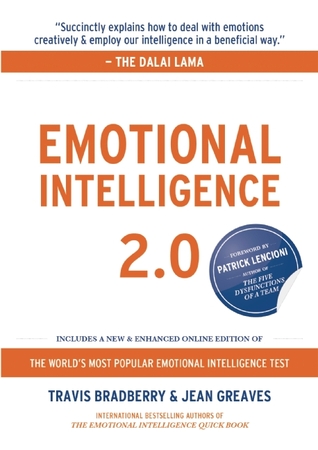
A blog title intrigued me recently – Almost Everyone Who Is Unhappy with Life Is Unhappy for the Same Reasons. It was a re-post of a LinkedIn blog written by Dr. Travis Bradberry (author of Emotional Intelligence 2.0). He writes about the role of expectations (of ourselves and others) and the impact those expectations have on our work life and relationships.

I see this so much in myself and in relationships both at work and in community. On one end of the spectrum, there are the expectations that undermine our successes – we don’t think we have what it takes to realize our dreams or goals. [This can also include our expectations of others, in the same way, especially if our expectations influence those colleagues’ view of reality.] On the other end of the spectrum, we may have expectations that are so unreasonably and unrealistically positive that we don’t do the work of realizing those same dreams or goals. [Again, this works against relationships when we have these expectations of others.]

In his article, Bradberry lists 8 common expectations that impact our work life and work relationships. He lists them and talks about them. Here I have written my own observations related to these expectations.

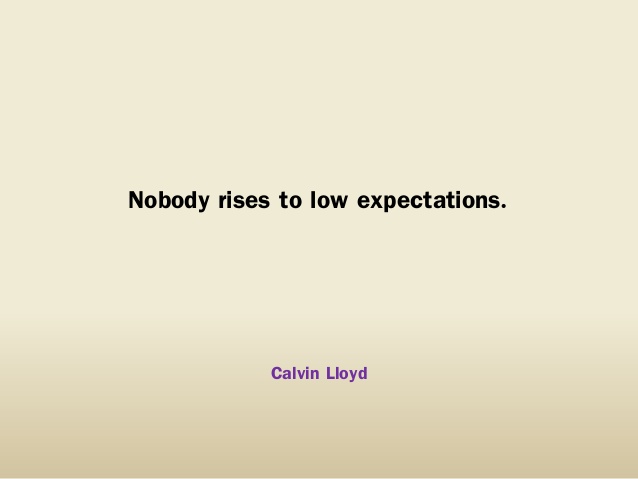
As you read and reflect, Dr. Bradberry is not saying get rid of expectations, nor am I. Expectations when honest, thoughtful, and kind are great motivators toward success. The adage “Keep your expectations low and you will never be disappointed” doesn’t really get us where we want to go.

After you consider the following expectations and thoughts, I would love to hear some of yours (in the comments below).

  1. Life should be fair. I have never understood the lament “That’s not fair!” It really reveals the heart of “That’s not fair for me!” How do we even make life fair? Our children, growing up, were never rewarded when they cried foul on fairness. We tried to raise them to practice kindness and generosity. That usually led to better than fair. In fact, if we flipped fairness on its head, our western work situations and family lifestyles would be quite altered, if what was usual for other parts of the world became our usual. That would be fair, right?
  2.  Opportunities will fall into my lap. There are times that opportunities “fall” into our laps. I call it “a God thing”. Whatever you might call that, it is rare and wonderful. In the day-to-day, we are to go after opportunities. Sometimes our very expectations of entitlement or pessimism keep us from even seeing opportunities right in front of us). Continue working hard, build your skill-set, learn from mentors, help your colleagues, practice thinking well of your boss, and seek out challenging assignments – these are fields where opportunities grow.
  3. Everyone should like me. I have tripped over this expectation. We think our own foibles are so much less annoying than those of others. If I consider myself congenial, you should comply, right? [The fairness problem nudges in here, for sure.] Bradberry summarizes this workplace problem well: “When you assume that people are going to like you, you take shortcuts; you start making requests and demands before you’ve laid the groundwork to really understand what the other person is thinking and feeling.” Rather than expecting others to be won by our personality, expertise, and past experience, we should discipline ourselves to practice winning the trust of a colleague, boss or customer… every time, as if it were the first time. This is a game-changer.
  4. People should agree with me. We honestly don’t want to have to work for people to agree with us. In the workplace, whenever possible, our default is to hang with those who do agree with us. This temptation sets us up for failure because we don’t gain from the critique of those who see things differently. Put your vision or project before those in other departments and see with their eyes what you might have missed with your own. Granted, be wise with whose counsel you seek, but do the work of seeking that counsel. Then share credit as appropriate.
  5. People know what I’m trying to say. Emails and text messages are almost communication. In corporate culture, even meetings don’t always cultivate clear communication. Be as clear and succinct as possible. Don’t lose the message in a jumble of clarifiers, justification, or story-telling. I’m not saying story-telling isn’t valuable; it is. The problem with story-telling is it can be contrived to emotionally engage when it actually takes away from the message. Again Bradberry wrote: “Communication isn’t anything if it isn’t clear, and your communication won’t be clear until you take the time to understand the other person’s perspective.”Blog - Communication at work - cbbainsealcareersPhoto Credit: CB Bain Seal Careers

Having lived overseas, we discovered the importance of learning the local “heart language”. In a work situation, the same holds true. How you communicate is colored by the focus of the one you’re addressing – whether it’s about ROI/ROV, employee engagement, product development….or fill in the blank. You can learn to balance between being true to your own style or values and adapting somewhat to the person in front of you (as a chameleon communicator).

6. I’m going to fail. “If you pursue an endeavor, believe with all your being that you’re going to succeed in that endeavor.” – Bradberry    We all fail sometimes; having that perspective is healthy. The problem is when we are so insecure or self-deprecating, our colleagues, boss, or customers lose confidence in us, based on our own assessment of our abilities. Not something you want to ensure by your own hand. [Read the whole of Bradberry’s article to get at the heart of this.]

7. Things will make me happy. If you’re not happy at work today, there’s not one thing beyond yourself that can change that. Not a different boss, not a better team, not more vacation, not a higher salary. This is a work on the inside that has to change your experience of work on the outside. We all know this. We all know…this.

8. I can change him/her. Okay, if you’re married, you already know the futility of this statement (and your spouse can say the same thing, by the way). When we get our focus on that boss we don’t understand or that colleague who makes us nuts, we aren’t able to focus on our work or the relationships that encourage and empower us. So what if you can’t change that coworker or boss? Can you be successful in your work if he/she doesn’t change? Most probably, the answer is yes…whether it feels like it or not. We lose enormous time and emotional energy on colleagues with whom we struggle. If changing jobs isn’t plausible or desirable, then figure out how to compartmentalize the distractions, and get on with your work. You can be a rock star even with difficult work relationships. I don’t want to issue a bunch of platitudes…but it is disturbing how much is lost from our workday in ruminating over (or talking about) stuff we can’t change…when there is still so much we can accomplish. Don’t sideline yourself with brain clutter – negative thoughts that negatively affect your work and relationships.

Blog - expectations - missworkerbeePhoto Credit: MissWorkerBee

Keep those expectations high (for yourself) and hopeful (for others)! Happy Monday!

Unrealistic Expectations That Do You Harm – LinkedIn article by Travis Bradberry

Emotional Intelligence 2.0 by Travis Bradberry and Jean Greaves

Emotional Intelligence 2.0 Quotes from GoodReads

Manage Expectations So They Don’t Manage You – Alli Worthington

The Key to Being More Attractive – Business Insider Video with Tony Robbins [Quote: “Trade your expectations for appreciation.”]

Set High Expectations Because Nobody Rises to Low Expectations – Barry Canada

The Expectation Effect – (in the classroom) – SlideShare

Blog - Emotional Intelligence - amazon

Photo Credit: Amazon

5 Friday Faves – Training Your Mind to Be a Winner; the Invisible Woman; a Great Speech; Resurrection of Jesus; and Nassim Haramein

Blog - Friday Faves

Some weeks provide very little time to write, let alone reflect on life. I’m in the midst of a bit of that craziness. This is Holy Week moving quickly to Easter Sunday. It’s a week I mean to savor even in the course of a hectic time at work and lots going on in the family and the neighborhood. Taking time to remember what happened each day of that week in the life of Jesus helps me to stop the world briefly…and monumentally.

My Friday Faves this week are sort of all over the place. They stirred learning for me, made me laugh, inspired me, and stilled my heart for a moment at the wonder of life. I trust you will find something here that does the same for you.

1) Training Your Mind to Be a Winner – The whole field of leadership development is often a focus of my reading. It’s fascinating to find helps from disciplines very different from my own.  LaRae Quy is a former FBI undercover and counterintelligence agent. She now takes what she learned professionally and applies it to her speaking, writing, and coaching in mental toughness and leadership. She is the author of Secrets of a Strong Mind and Mental Toughness for Women Leaders. Whet your appetite on the articles 5 Ways to Train Your Mind to Think Like a Winner, 4 Secrets of Mental Toughness, and How to Strengthen Your Mental Toughness Like an FBI Agent.BLog - LaRae Quy

Photo Credit: Twitter

2) The Invisible Woman – No, this is not referring to the 2013 film with the same name (Ralph Fiennes, Felicity Jones). This find is a sketch by Nicole Johnson of Fresh Brewed Life (author of the book of the same name). In just under 6 minutes, she speaks to the heart of women…especially mothers…dispelling the sense that much of what they do goes unseen. As if it were irrelevant or inconsequential. Not so! God sees…. Take the time to watch and listen and be encouraged (Men, you could do with some encouragement as well, I’m thinking).

3) A Great Speech – We slog on through the primary season of this U.S. Presidential Election year. Whatever our political views, a great speech can punctuate all the rhetoric and restore our hope…for sure, in that moment, anyway. When Senator Marco Rubio suspended his campaign, after losing his home state’s primary, he spoke to his supporters. Again, whatever our political views, it was a great speech… With all the mud-slinging, political wrangling, and various candidates pitted against each other, I was glad to hear him continuing to urge us not to give up and to stand for what we believe.

4) Resurrection of Jesus – I came across this short video on my Twitter feed. The question is asked, “Did Jesus rise from the dead?” The video is produced by Impact 360 – a campus/curriculum/community which guides its students toward leadership, cultural understanding, and a Biblical worldview. Check out the video (and others on their website).

5) Nassim Haramein – Nassim Haramein is a physicist, inventor, and surfer. He is an example of how scientists can talk on, sounding brilliant, whether they really know what they’re talking about or not. Haramein has his critics and he has loyal fans. Whether he’s an expert or not, he is incredibly amusing as a presenter. I don’t remember how he came on my radar, but the video below captivated me. Don’t waste your life watching the whole of it, but 30 minutes in, there are some hilarious moments. I actually could believe I understood what he was saying. What do you think? Is he for real, or not?

Bonus: The Cherry Blossom Festival in Washington, D.C., was breath-taking as always this year. Here’s just a sample from my friend Jennifer Wong.Blog - Friday Faves - Cherry Blossoms - by Jennifer WongPhoto Credit: Jennifer Wong

What were your favorite finds of this week? Please comment below. Have a lovely weekend.

He is risen! He is risen indeed!

Addicted to Distraction and the Possibility of Restoring a Longer Attention Span

Blog - Addicted to distraction - diygeniusPhoto Credit: DIY Genius

Recently I was at a training event in a remote area where I had no cell phone service and limited internet. It meant I went through stressful training and at the same time experienced a forced exile from screen time. I don’t even have to tell you which was more challenging.

Growing up in my generation was very different than now – playing outside until dark, talking for hours on the phone with friends, falling asleep to the comforting drone of Mom and Dad talking and laughing in their bedroom down the hall. If you’ve ever seen the 1999 film October Sky, it makes me think of Dave’s growing up also – playing in the woods, biking everywhere, building rockets, hunting and fishing.Blog - Playing Outside - jeffs60sPhoto Credit: Jeffs60s

We are enjoying different advantages now for sure…I wonder how our grandchildren will one day describe their childhood. Having computers and the internet have been amazing assets to our lives. The dilemma is when our screen life becomes more engaging that our real life. When “Facetime” replaces face-to-face time.

Don’t get me wrong, I love the opportunity to see people via phone. For instance, friends of ours who got married recently had a small wedding, BUT they had a friend live-stream the wedding and all the rest of us got to “be there” via Periscope. Saw the kiss and everything. 2016 March 5 - Megan & Brian Wedding Kiss

There is something to be said about all the electronic capabilities we have today. For sure.BLog - Addicted to Distraction - littleredfrenchPhoto Credit: LittleRedFrench

The problem is when objects take command of our lives. These screens (phones, TV, computers) eat up so much of our day. Also, what about when we start exchanging real time relationships with the barest minimum associations via Facebook, Instagram, or Twitter? When a friend decided to go off Facebook, I was bummed… At that time, she lived 6 minutes from me. Not like my friends in Morocco or Egypt where I depend most on Facebook to keep up with them. She lives right here in town. We can have real coffee’s and real talks on the phone. Sigh… I had pretty much relegated keeping up with her to social media. Now we’re back affiliated only in real life where I might need to call her. Imagine.

I’ve written about this before (here) and want to manage my life better in this area. Multi-tasking was always something I thought was a strength, but now, getting older, it hasn’t helped me develop much of an attention span (see Charlie Munger’s thoughts on this here). It makes sense that thinking long and hard on something would have a powerful impact on our success or decision-making. Focus. Concentration. These are the things that have suffered in my life with all the distractions.

Kyle Pearce wrote a small piece on being distracted and introduced me to the work of Nicholas Carr (who wrote The Shallows: What the Internet is Doing to Our Brains and The Glass Cage: How Our Computers Are Changing Us). The 4-minute YouTube video below describes some of what he writes about:

Besides managing the distractedness in thinking, memory, and processing information, I want to nurture a habit of deep conversation. Sherry Turkle (author of Alone Together: Why We Expect More from Technology and Less from Each Other and Reclaiming Conversation: The Power of Talk in a Digital Age) writes about this and gives me hope.

Blog - Distracted - conversations - quotesgramPhoto Credit: QuotesGram

Turkle admits she loves computers because they have helped her make tremendous strides in writing, but they are not people. She writes as if she’s reading my heart. This disconnected connection we experience with one another is so illusory.

“Networked, we are together, but so lessened are our expectations of each other that we can feel utterly alone. And there is the risk that we come to see others as objects to be accessed—and only for the parts we find useful, comforting, or amusing.” – Sherry Turkle
Here’s my hope and vision – to re-learn how to really be connected with people, including myself. To practice solitude. To quit living the excuse of being distractible. To learn how to think and work deeply, and to remember how to have deep, thoughtful conversations again.
I’m not prepared to stop using my phone for information, nor am I able to quit using the internet as a resource for work and life, but it’s entirely possible to restrict connection time.  Also, it’s exciting to think of how I might use that time I waste on the internet to actually be with friends and loved ones…to read more books…to rediscover what is right in front of me in real life…to know what it’s like to have (and enjoy) a quiet mind.

The good news is that the process of withdrawal is simple and the healing is spontaneous; because it is only the continuous high volume consumption of mass media that is keeping us sick. So, at root, the detox programme is merely a matter of Just. Say. No.” – Bruce G. Charlton

What might the next generation be like if our grandchildren are nurtured in this way? How can we help them have such mental muscle and true sociability that they could avoid being addicted to distraction?

It’s something to think about…off-line. Gone to find a real face and give that face my full attention.

Distracted? This is How the Internet is Changing Your Brain by Kyle Pearce

Multitasking – Giving the World an Advantage It Shouldn’t Have – Farnam Street Blog

Are We Addicted to Distraction? by Sophie at LittleRedFrench

The Distraction Addiction: Getting the Information You Need and the Communication You Want, Without Enraging Your Family, Annoying Your Colleagues, and Destroying Your Soul by Alex Soojung-Kim Pang

The Shallows: What the Internet is Doing to Our Brains by Nicholas Carr

The Glass Cage: How Our Computers Are Changing Us by Nicholas Carr

Alone Together: Why We Expect More from Technology and Less from Each Other by Sherry Turkle

Reclaiming Conversation: The Power of Talk in a Digital Age by Sherry Turkle

Deep Work: Rules for Focused Success in a Distracted World by Cal Newport

Amusing Ourselves to Death: Public Discourse in the Age of Show Business by Neil Postman – originally written in 1985, brilliantly prophetic of the future (updated in 2015)

Monday Morning Moment – Creativity in Community – the Skill of the Future

Blog - Creativity - creativeskillsforlifePhoto Credit: Creative Skills for Life

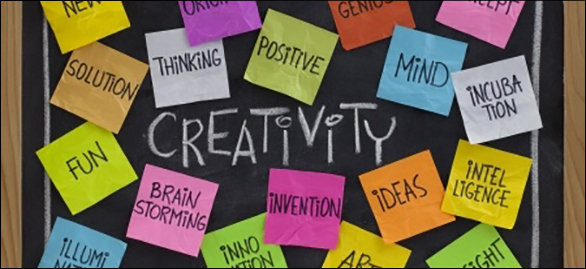
When you hear the word “creatives”, you might immediately think of 20- or 30-somethings. They are classed as young “color-outside-the-lines” right-brain “think-outside-the-box” sorts of folks…who sometimes make the rest of us nuts. You might think of the artists, writers, and musicians out there. However, in truth, creatives include all those people who solves problems, including the ones who set up problems and then solve them. They are the inventors, the entrepreneurs, the designers, the planners who have the capacity to make our lives better…to even make the world better.

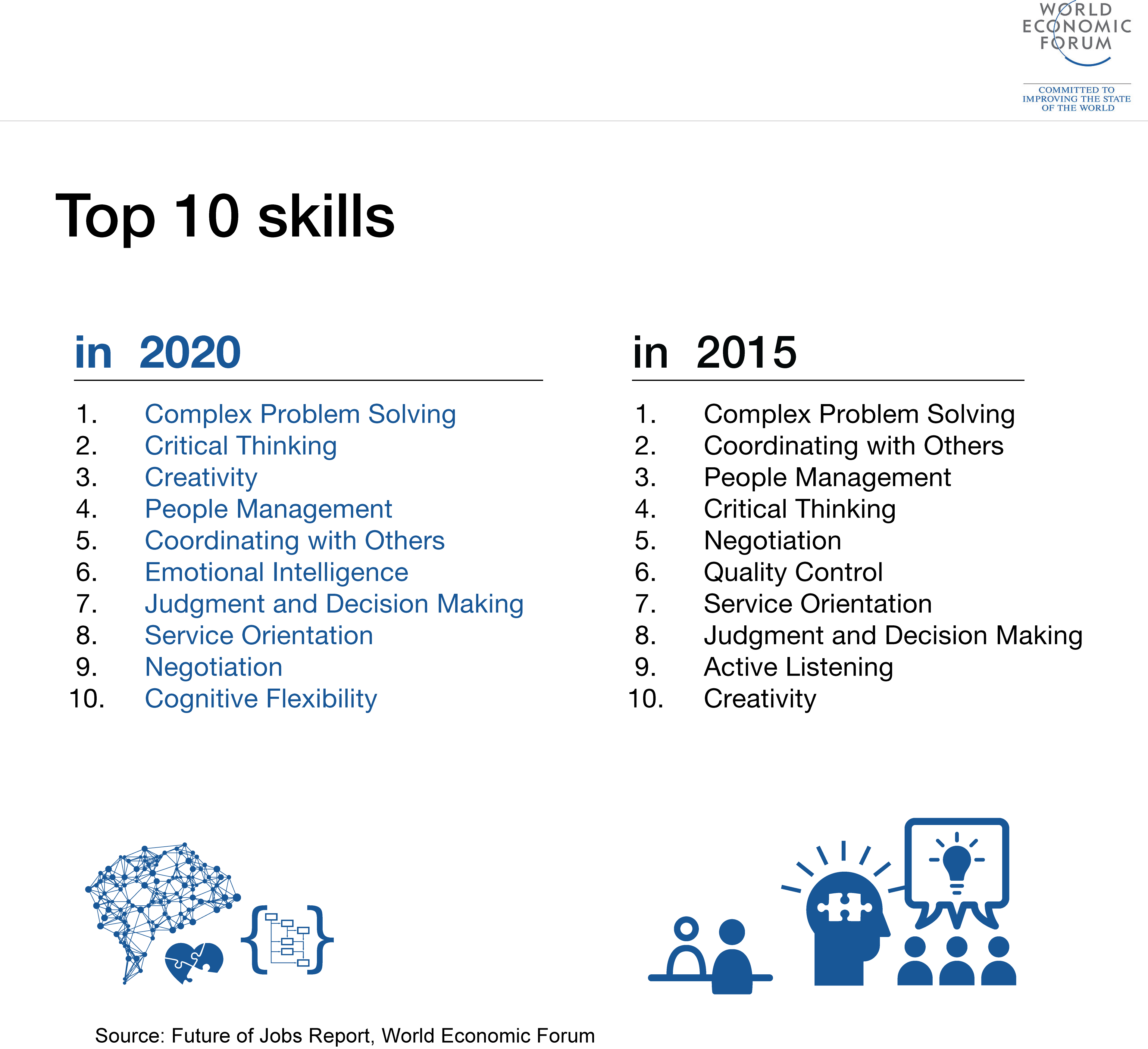
Hanneke Siebelink (of LeadershipWatch) just wrote a piece on the top skills of the future. She pointed to a graphic from the World Economic Forum which showed, over the course of 5 years, how creativity will jump from #10 to #3 in a Top 10 Skills List.Blog - Creativity - weforumPhoto Credit: WEForum.org

What does that sort of creativity entail? Is creativity alone enough?

Richard Florida wrote extensively on this in his book The Rise of the Creative Class. He defines the Creative Class as “people in science and engineering, architecture and design, education, arts, music and entertainment whose economic function is to create new ideas, new technology, and new creative content.”Business Insider

Writer Jeff Goins also defines “creatives”:

A creative is an artist. Not just a painter or musician or writer. She is someone who sees the world a little differently than others.

A creative is an individual. He is unique, someone who doesn’t quite fit into any box. Some think of creatives as iconoclasts; others see them as rebels. Both are quite apt.

A creative is a thought leader. He influences people not necessarily through personality but through his innate gifts and talents.

As fascinating as Florida’s writing is, I disagree with his premise that creatives are their own class of people, because I believe it’s within any of us to develop our capacity for creativity. Those of us who might be suspect of Florida’s promotion of the Creative Class would do well to read the critiques of his thinking (this and also this are excellent).

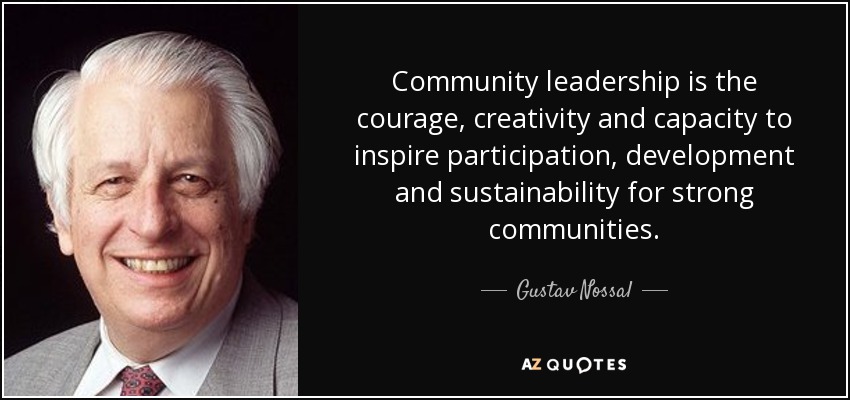
When people in our communities or workplaces class themselves as distinctively creative, they tend to operate in a tribal fashion. These tribes may even be quite diverse, but too often, I believe, they operate to satisfy their own needs and desires rather than that of the larger workplace or community. Thus in the workplace, decision-making is made by the few like-minded thinkers, that tribe of influential creatives. And communities? Where such a population of creative, expansive thinkers could enhance the appeal and value of a neighborhood, too often, , and communities can steer in the direction of gentrification, becoming less inclusive, making housing less accessible even for those who were there before.

Blog - Creativity & Community Leadership - azquotesPhoto Credit: AZQuotes

My bias in how creatives work best is in community – not just a tribe of creatives, but in a community of folks with other giftings,  other strengths,and other history.

However, all that being said, I do love the increasing view that creatives add value to any enterprise. My husband, for many years, was a research chemist who developed new products and was awarded several patents for his company. Even today, outside the chemical industry, he continues to be creative in thinking through new pathways toward solving problems, getting to goal, and developing personnel.

Even Florida in his revised and updated book recommends a compact dealing with creatives. His first (of 6 principles) is: Invest in Developing the Full Human Potential and Creative Capabilities of Every Single Human Being. It’s somewhat grandiose but it’s a worthy goal. Having this principle in play would promote a workforce where employees are encouraged to always be thinking and engaged in both today’s work and what changes must be made for the future.

Along these same lines, I love Howard Gardner’s Five Minds for the Future:Blog - Creativity - slidesharePhoto Credit: Slideshare

As creatives are sought after more and more in our workplaces (om both private and public sectors), I hope we also encourage them to build strengths in other areas of their thinking (or mindfulness). For those colleagues of ours who might not consider themselves creative, we need to communicate across organizations as to their value as well. This would include our creatives to gain from what other bring to the table.

I would like to think that I’m a creative…in ways, maybe, born out of time. Early on in my career, I had the privilege of working as a team with other colleagues in developing and implementing cancer care in a small town in the Southeast. It was thrilling for me to be part of such an innovative and comprehensive system of care where we could actually plan and dream for the future.

Three of us, in particular, worked as creatives in community. I was a content specialist and idea person. Kay was the nurse manager who brought vision and authority to the task. Kathy was a clinician with steely resolve and the determination to take the ideas to completion. We were a force to be reckoned with…just saying.

We all have different giftings and strengths. My influence was helpful but Kay’s authority settled matters. My ideas were large and lofty (sometimes), and Kathy’s keenness for how to make those ideas work were what brought them into reality.

That’s how creatives work in community. I think of top skills for the future that “in community” piece would be essential for creatives who want to make a lasting difference…not just for their own purposes at work but for the benefit of the larger community.

A hugely successful example of this is the work culture and philosophy of Pixar & Disney Animation which I wrote about here.

Daan Roosegaarde in Siebelink’s article talks about creativity in community: There are two ways to turn an idea into reality. You can play bowling, or you can play ping pong. The old way, at least that is what I think, is bowling. You have that ball in your hand and it’s so big, it is so heavy, it shines so beautifully. Then you throw that bowling ball and pray it will hit target.

I no longer believe this is a good way to create and innovate. I believe in playing ping pong: you take a tiny little ball, not expensive, and there you go: poek poek poek poek … and you create something together. And THAT is nice, this is how I create, this is how I learn.”

Bring on these kinds of creatives any day!

Skills of the Future: The Best Expert Advice on Creativity

The Rise of the Creative Class — Revisited (Revised and Expanded) by Richard Florida

The Creative Compact – Richard Florida – Huffington Post

Creativity – the Unique Soft Skill – Slideshare

6 Ways to Make Your Leadership and Workplace Fun Again

Creativity, Inc. – Overcoming the Unseen Forces that Stand in the Way of True Inspiration by Ed Catmull

untitled

Monday Morning Moment – Them and Us, How Can That Be? Could Them and Us Become a We?

Blog - Work Culture - delta7Photo Credit: Delta 7

Recently, I was in an odd conversation with a friend from work. The more we talked, the more we sounded like a Dr. Seuss book. It went something like this:

“I don’t know how to be us with them. To be with them is to just be them. We must lose us; us no more will be. There’s no us in them; it’s so strange to me. How can they be them, with no us, you see? To give up us is too hard for me. So I can’t see a way to get to we.”

[Seriously, the conversation went like that…but better.]

Battling the us-them assignation is an ongoing workplace discipline. Even in the happiest, coolest companies, there is still an intentionality to keep work life positive for every employee. That inclusiveness is a hallmark for high morale and low walls (read: no silos).

BLog - Us vs Them - Work Culture - Silos - prolearn academy

Photo Credit: Prolearn-Academy

In a work culture where silos still exist, an us/them mentality can grow as each team or department draws in on itself and ignores or suspects the actions/values of others. It’s not a healthy situation for any of us…whether it’s the executive team insulated from others or the [fill in the blank] team hunkered down in its own mode of trying to survive. The first can be as unaware as the subject of the story “The Emperor’s New Clothes“, the second, well, is just miserable, and growing more so by the pay period.

So much has been written on this problem in the workplace – about that culture where us/them thinking and operations color productivity and morale. I have included several links below describing various recommendations and protocols to restore health to such organizations.

Blog - Work Culture 2Photo Credit: My Turnstone

I’ve always been that person who says, “Why can’t we just all get along?” In reality, we don’t have that situation always, but we can grease the tracks in that direction. Here are my own workplace rules regarding moving us and them to we:

  1. Make a practice of assuming the best of your bosses and colleagues. “Refuse to think ill of others” is my goal…and my accuracy in hitting that goal comes with practice and determination…and grace.
  2. Lean in to those with whom you struggle the most – the “thems” in your worklife. Especially the most powerful ones. Study them. Learn their language. Know them as well as you can. NOT for self-serving reasons, but for the benefit of the work itself. Any motive that only serves your personal situation will only make matters worse… ‘Nuff said.
  3. Refuse to get caught up in us/them complaining. Don’t make a big deal about it, but do your best to turn the conversation toward a positive end, change the subject altogether, or bow out if all else fails. Those negative conversations just bring you and your colleagues down and don’t accomplish anything. A short-lived “misery loves company” satisfaction isn’t worth the fall-out of such conversations.
  4. Bring down the silos, one brick at a time, if necessary. Maybe you aren’t experiencing any us/them anguish, but you know it exists. What can you do, individually and as a work team, to move to “we”? We have lots of work models out there for this. In fact, silos in the workplace are “so 80’s” (whatever that means…I hear it a lot, so I’m using it here). Use some of that meeting time, or talks over coffee, to be creative in how you can work better across teams…how you can learn more from each other…how you can defuse territoriality? If the “them” is management, you initiate dialog on setting work culture values that maximizes product excellence and employee engagement.
  5. Put processes in place – through your culture – to keep silos down. I would love to hear what your situation is and how you are making positive steps to grow/keep a healthy culture. Please comment below.

Sure…there are times we need to process a difficult situation at work with a trusted friend. Yes, us/them scenarios are painful…and wrong, honestly…especially in the workplace where we are meant to have shared goals, working toward the same outcomes. Maybe, the us/them relationships in a company are too distracting and we can’t see any solution (back to the Dr. Seuss-like conversation above). In that case, it’s possible we look outside our company for another situation. However, you take with you a piece of the us/them dilemma. You take you along to the next job. Better to develop muscle memory on how to “be we”, whenever possible, right where we are.

[Sidebar: I’ve written a lot about work culture – too many to mention – but you can search work culture under Blog – Deb Mills and learn as I have about what is possible if we stay engaged in our workplace.]

Blog - Work Place Culture - open.bufferPhoto Credit: Buffer

Overcoming Us vs. Them Challenges

Breaking the “Us and Them” Culture

How to Avoid Us vs. Them – Huffington Post

The 10 Buffer Values and How We Act on Them Every Day

The 4 Elements That Make Great Company Culture

How to Save a Broken Work Culture

From Us and Them to We Participative Organizational Culture

Them and us – How to use Trust as a Competitive Advantage

How CEOs Can End an Us Them Mentality

Us vs. Them – a Simple Recipe to Prevent Strong Society from Forming

5 Friday Faves – Emotional Intelligence, Hand Massage, a TV Commercial, 40% Rule, Zelda – & a Bonus

Blog - Friday Faves

Friday is here again…and I’m looking back over another week that went by in a blur. Glad to share some of the discoveries of this past week. Would love to hear about your week’s finds (comment below).

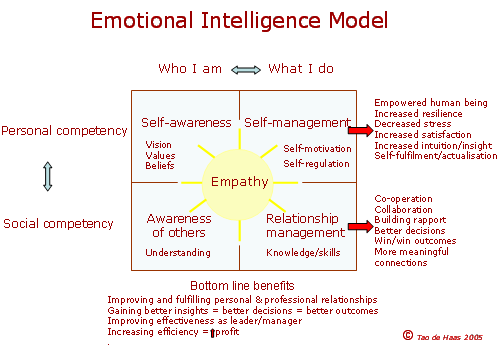
1) Emotional Intelligence – This is a concept that’s been around for awhile now, but I never really read about it until this week.  Matt Monge’s article for The Mojo Company sparked my interest. He described 6 symptoms of leaders with low emotional intelligence. Here’s the definition: “Emotional intelligence (EI) is the ability to monitor one’s own and other people’s emotions, to discriminate between different emotions and label them appropriately, and to use emotional information to guide thinking and behavior.” 

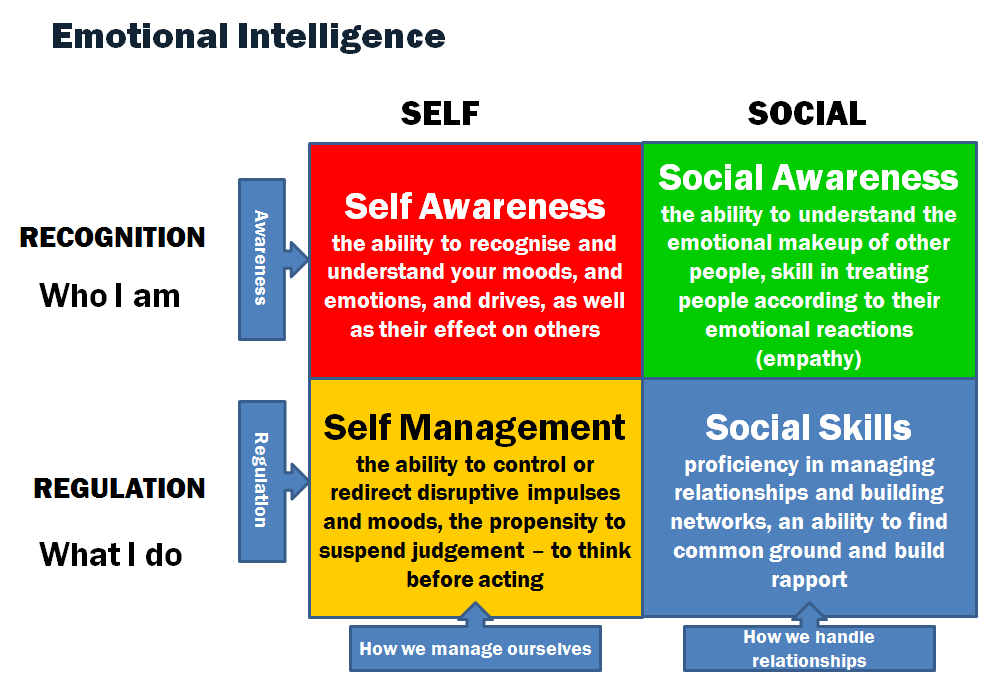
Two of Monge’s points were: 1) Leaders with low emotional intelligence say “I’m sorry you feel that way” more than “I’m sorry,” and 2) Leaders with low emotional intelligence often blame the people they hurt for the situations leading to them being hurt. Daniel Goleman has written several books on this topic including Emotional Intelligence: Why It Can Matter More Than Intelligence and Social Intelligence: The New Science of Human Relationships. The very cool thing about emotional intelligence is that it can be developed. The big dilemma is whether bosses who tend not to be bothered by their impact on personnel would buy into this or not. Incorporating such concepts in personnel accountability metrics might provide some incentive. I’ve added graphics below that helped me further understand emotional intelligence.Blog - Friday Faves - Leadership - Emotional IntelligencePhoto Credit: Self Study History

Blog - Friday Faves - Emotional Intelligence - grid - dollieslagerPhoto Credit: Dollie Slager

Blog - Friday Faves - Emotional Intelligence - low & highPhoto Credit: The King and Queen

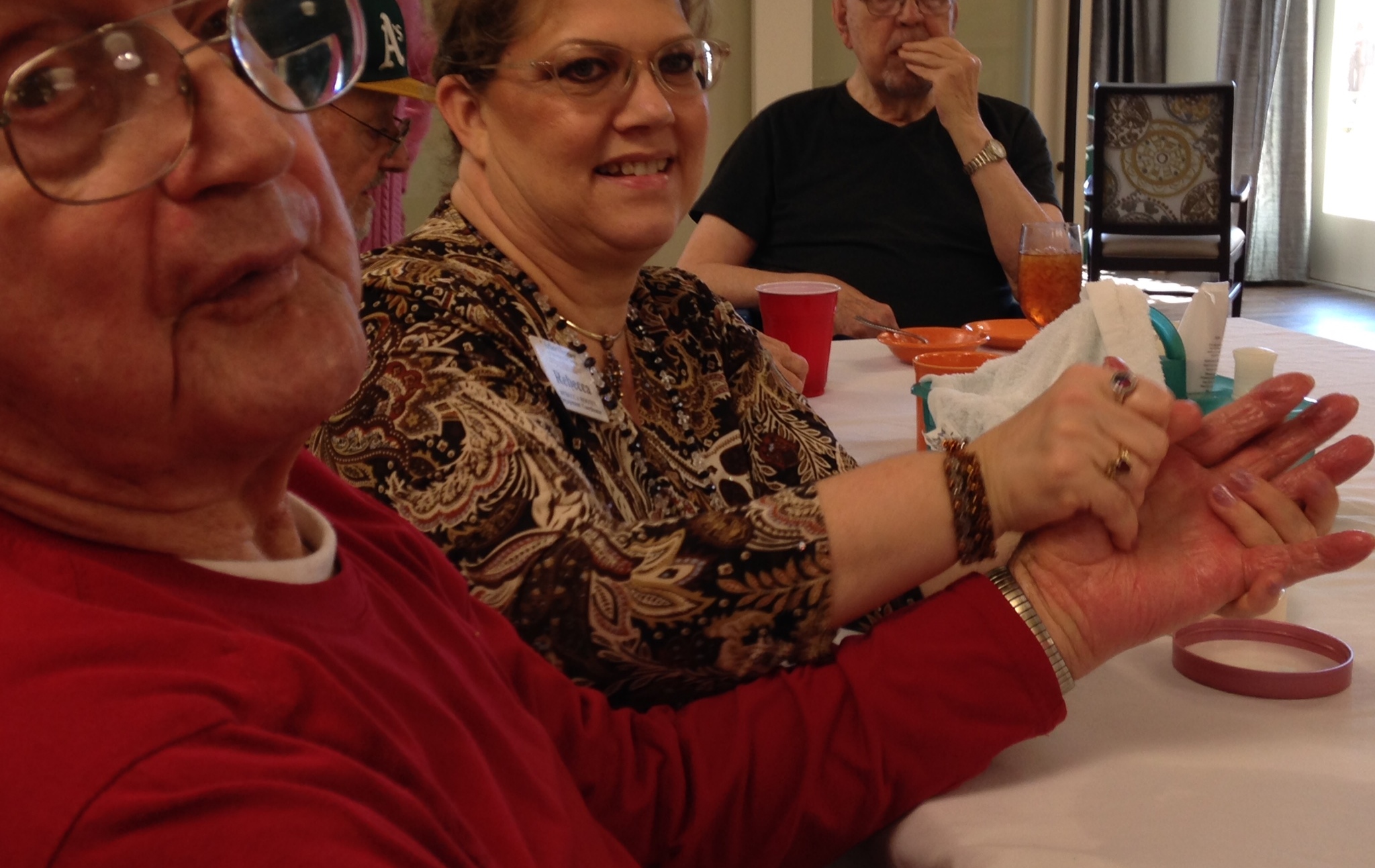
2) Hand Massage – My dad is 93 years old. He has Alzheimer’s. I can’t imagine he has ever had a hand massage in his whole adult life until this past week. The memory care unit which is now home to him has this lovely activities director. One of his first days there, she brought over two warm washcloths and wrapped both his hands. Then she began massaging each one. He just melted into a relaxed, soothed puddle.  One of his repetitive actions is to scratch his hand which he does to distraction. Hand massage is such a thoughtful, therapeutic act. It never dawned on me to do such a thing. Midway down an excellent piece on Alzheimer’s by staff at University of Maryland, massage is recommended as treatment to calm these patients. So glad Dad is where he is with these engaged caregivers.Blog - Dad and hand massage

3) A TV Commercial – We all discover human interest videos through our social media sites. This is my favorite for the week. The #SharetheLoad video produced by Ariel (a washing detergent we used overseas) in India is beautiful. The message is a father’s regret that he modeled for his wife and daughter a very passive role in the home. Even as an older man (the commercial goes), he determined to make that right. Whether it happens or not in such homes today, the message is a powerful one.

4) 40% Rule – So I found this Fortune article on my Twitter feed. Sidd Finch wrote about Jesse Itzler’s encounter with David Goggins, a Navy Seal. during a 100-mile relay race. Goggins was running the entire race without relay partners. Itzler was so intrigued by this ultra-athlete that he actually invited him to live with Itzler’s family for a month. Out of this time together came the book Living with a SEAL: 31 Days Training with the Toughest Man on the Planet. Goggins taught Itzler about the Navy Seals’ 40% Rule.

Itzler explains, “He would say that when your mind is telling you you’re done, you’re really only 40 percent done. And he had a motto: If it doesn’t suck we don’t do it. And that was his way of forcing us to get uncomfortable to figure out what our baseline was and what our comfort level was and just turning it upside-down.”

“The 40% rule, the SEAL explained, is the reason why even though most people hit a wall at mile 16 during a marathon, they’re still able to finish.”

Blog - Friday Faves - 40 percent rule - David GogginsPhoto Credit: Just Go Fitness

“I don’t stop when I’m tired. I stop when I’m done.”David Goggins

Blog - Friday Faves - 40 percent rule - Navy Seals - David GogginsPhoto Credit: AZ Quotes

5) Zelda The Legend of Zelda is celebrating its 30th anniversary this year. I recently wrote briefly about it here. Koji Kondo wrote much of the music for the video game series. Blog - Friday Faves - Video Games - Link of The Legend of ZeldaPhoto Credit: Cogswell.edu

Nathan Mills at Beyond the Guitar has posted two covers so far to showcase how beautiful the music is and how well it’s captured on classical guitar. I wrote about the first cover previously, and here’s his second piece. Happy 30th Anniversary, Legend of Zelda.

HBR’s 10 Must Reads on Emotional Intelligence (with featured article “What Makes a Leader?” by Daniel Goleman)

10 Signs You Have Exceptional Mental Strength by Jessica Stillman

BONUS: If you got this far, you will be so rewarded! Very few people in my life watch American Idol, and this is its final (15th) season. I am not fond of the whole reality show murkiness of it, but the performances of these gifted young people and the judges (Keith Urban, Harry Connick, Jr., and Jennifer Lopez) are captivating as well. I want to post videos of two amazing performances from this week’s elimination show (elimination meaning the week the field of contestants narrows to the Top 10). The first video is that of La’Porsha Renae who may very well become the final American Idol. This one can sing!!!

We were overseas when American Idol’s first season aired. I don’t actually remember how I saw Kelly Clarkson in that competition, but I remember following her. She was the first American Idol winner, and the rest is history. To be honest, Kelly Clarkson was off my music listening grid…until now. The song she wrote and performed, Piece by Piece, deals with the painful subject of a father who deserted her as a young child. The song also celebrates the very different man she married, the faithful father of her daughter. This song may make you cry. Wow!

5 Friday Faves – Syria, Antonin Scalia, People Who Pray, Alzheimer’s, & Family Resources

Blog - Friday Faves

1) Syria – Before & After – In the Spring of 2011, seemingly as part of the “Arab Spring” political uprisings, civil war erupted in Syria. News cycles are not predictable. Sometimes the greatest suffering in the world is overshadowed by a celebrity divorce or the debut of the latest version electronic device. What has happened in Syria over the last 5 years should continue to haunt us and drive us to act on behalf of these war-weary, displaced people. A riveting one-minute video reminds us of the destruction – this, of Homs, Syriadestruction via drone coverage.Blog - Homs - Before & After - globalinfonewsPhoto Credit: Global Info News

2) Antonin Scalia – I was writing this weekend when Dave came in and told me that Antonin Scalia had died. He was an Associate Justice of the Supreme Court of the United States (March 11, 1936 – February 13, 2016). Appointed to the Court in 1986 by President Ronald Reagan, Scalia has been “characterized as the anchor of the court’s conservative majority” (Biography.com). His strong, sometimes biting, opinions are part of our history now through the Supreme Court record. I didn’t always understand their decisions, but he taught me so much about the law and the workings of our government. As strong a conservative as he was, his closest friend on the Court was reportedly Ruth Bader Ginsburg. It reflects how he could separate the people from the opposing views they may have – an example of honoring others – which we could all learn from him.Blog - Antonin Scalia - quotesgiant

Photo Credit: Quotes Giant

Following are a few quotes of Justice Scalia (posted by the Breitbart News Agency)

“More important than your obligation to follow your conscience, or at least prior to it, is your obligation to form your conscience correctly.”

“A Constitution is not meant to facilitate change. It is meant to impede change, to make it difficult to change.”

“I attack ideas. I don’t attack people. And some very good people have some very bad ideas. And if you can’t separate the two, you gotta get another day job.”

“If you’re going to be a good and faithful judge, you have to resign yourself to the fact that you’re not always going to like the conclusions you reach. If you like them all the time, you’re probably doing something wrong.”

Finally, these quotes, posted by Politico from Justice Scalia’s speech for the Knights of Columbus:

God assumed from the beginning that the wise of the world would view Christians as fools … and he has not been disappointed,” Scalia said.

If I have brought any message today, it is this: Have the courage to have your wisdom regarded as stupidity,” he added. “Be fools for Christ. And have the courage to suffer the contempt of the sophisticated world.”

Justice Scalia – you will be missed…at least, by some of us.

3) People Who Pray – What a gift to know people pray for us! That God calls us to pray and moves in response to our prayers is such a beautiful mystery. This week two situations have brought this sharply to mind. For several weeks I have been undergoing an evaluation to determine whether or not an incidental finding was cancer. Yesterday, enough testing was completed to deliver a verdict of good news – for the time being, we just watch it. You can imagine how grateful I am for that, and for all those who prayed and encouraged me over these many weeks. Blog - Prayer - Praying for Friends - Agape Christian Church - ishinelivePhoto Credit: I Shine

The other situation involves a young couple we know and love. The husband, and father of three littles, has been diagnosed for over a year now with a very aggressive cancer. He has courageously undergone multiple modalities of therapy – fighting for his life, for his own sake and for that of his sweet family. To this day, he continues to battle this terrible disease. We are so humbled by the journey of this family and how God is glorified in their courage, their love (for Him, each other, and all those around them), and the joy they display for each day’s gift, each day’s victory (however large or small). What a privilege to pray for these dear ones…and others all around us, in the hard places! In those hard places, we see God work His grace  into those situations that gives us hope for when we will live in the hard.BLog - War Room to publish 2Photo Credit: War Room – YouTube

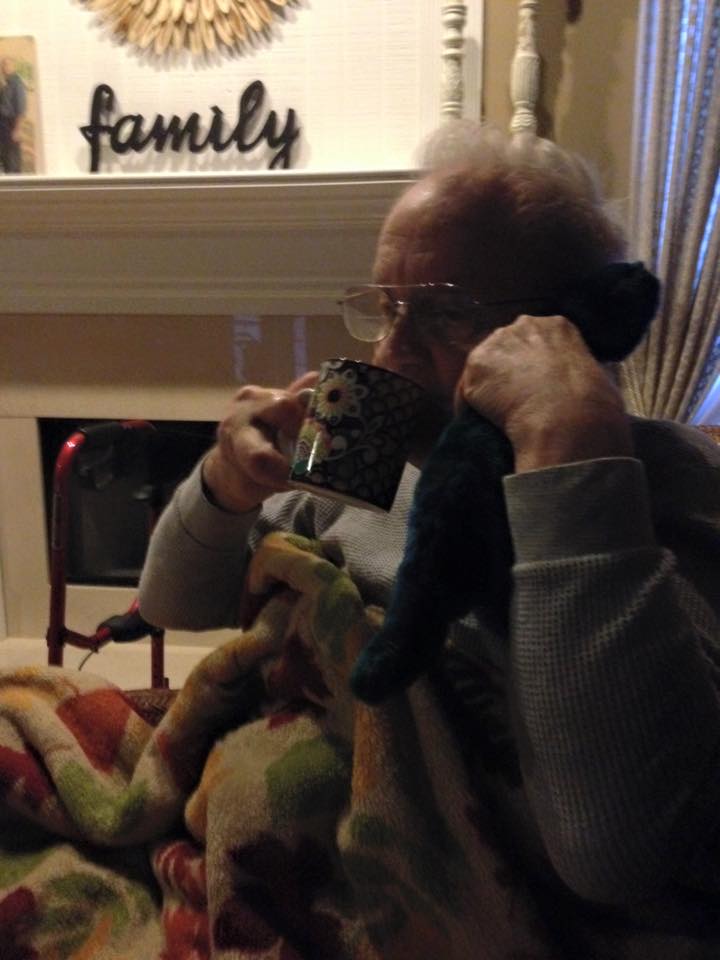
4) Alzheimer’s – My dad has Alzheimer’s. This disease does not define him but, unfortunately, it has placed limits. Still, this week, Alzheimer’s does not win in my father’s life. He had the opportunity recently to move into a new, innovative memory care unit, very near to more family. Concern was expressed that the move might set him back – causing confusion and anxiety in a new and unfamiliar environment. I had the opportunity to be there to help with his transition. He did great. He doesn’t smile as often as he used to, but that smile makes the sun come out for all of us.Blog - Dad - Alzheimers 2 - Feb 2016Blog - Dad - Alzheimers - Feb 2016[Dad, morning of the move, and first morning in his new home]

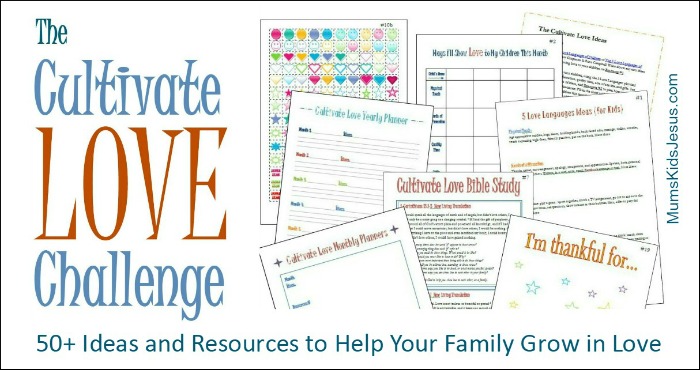
5) Family Resources – This week I discovered this English mum of 4, Joanna May, who lives and writes internationally. Her website Mums.Kids.Jesus offers The Cultivate Love Challenge: 50+ Ideas and Resources to Help Your Family Grow in Love. She is a great encourager of us moms who hope to infuse the love and wisdom of Christ in our lives and for our families and communities. May’s Pinterest page includes these and other resources to help us moms of children of all ages – newborn to adult.

Blog - Mums Kids Jesus - Cultivate Love ChallengePhoto Credit: Mums.Kids.Jesus

Before you launch into your weekend, I would love to hear, in Comments below, what your top experiences or discoveries have been this week. Hope your Friday ends well and your weekend if joyful and refreshing.