Tag Archives: C. S. Lewis

Jesus and Holy Week – Monday, Day 2 – Jesus Curses a Fig Tree and Cleanses the Temple

Photo Credit: Fig Tree by Bob Orchard

[Adapted from the Archives]

On the next day, when they had left Bethany, He became hungry. Seeing at a distance a fig tree in leaf, He went to see if perhaps He would find anything on it; and when He came to it, He found nothing but leaves, for it was not the season for figs. He said to it, “May no one ever eat fruit from you again!”Mark 11:12-14

When Jesus woke on Monday morning, after that glorious Sunday entering Jerusalem…I wonder what he thought. Did he know that, in just four days, he would be crucified? Whew…

Back to Monday:

During that week in Jerusalem, Jesus and his disciples spent the nights with friends in Bethany, two miles outside of the city. Each morning, they would walk into Jerusalem. On that Monday morning, just four days prior to his crucifixion, Jesus became hungry on the walk in. Seeing a leafy fig tree, he looked for fruit. With fig trees, where there are leaves, there should be figs. Since green figs are edible, and it wasn’t yet harvest season, there should still be some fruit on the tree.

When he found no figs, Jesus cursed the tree. This seems out of character for Jesus, until his action is put in the context of his culture and community. Throughout his public ministry, especially as he became more known and revered, the Jewish religious leaders held him in contempt. Jesus’ teaching of our dependence on God’s righteousness and not our own flew in the face of the Pharisaical teaching of the day – that of strict adherence to Jewish law as the only hope of finding favor with God. For Jesus, the leafy barren fig tree must have been a picture of religious Jews of that day, all flash and finery but no fruit of faith.

“Christ’s single miracle of Destruction, the withering of the fig-tree, has proved troublesome to some people, but I think its significance is plain enough. The miracle is an acted parable, a symbol of God’s sentence on all that is ‘fruitless’ and specially, no doubt, on the official Judaism of that age. That is its moral significance.”C. S. Lewis

Jesus was left still physically hungry. He remained spiritually hungry  as well – for this people of the Book to receive the good news that the Messiah had come.

Finally, arriving back in Jerusalem, Jesus was deeply troubled by what he found inside the Temple. The crowds of Passover pilgrims did not disturb him, but temple grounds turned marketplace did. In this sanctified place, meant only for worship, there were money-changers and sellers of animals for sacrifice, right in the Court of the Gentiles – in the only place where non-Jewish God-believers could worship.

Photo Credit:Expulsion of the Moneychangers from the Temple” by Luca Giordano

And Jesus entered the temple and drove out all those who were buying and selling in the temple, and overturned the tables of the money changers and the seats of those who were selling doves. And He said to them, “It is written, ‘MY HOUSE SHALL BE CALLED A HOUSE OF PRAYER’; but you are making it a ROBBERS’ DEN.”Matthew 21:12-13

Often in film depictions of Jesus cleansing the temple, he appears a crazed individual, flailing about, throwing tables and flinging pigeons into the air. I can’t even imagine him that way. We can’t know how it happened except that in Jesus’ anger, he did not sin. He would not sin. I know the Jesus Film is just another director’s film rendering, but in this scene, Jesus showed considerable restraint. Disturbed at the buying and selling that actually kept believing Gentiles from worshiping, he moved to correct the situation. He was unafraid of the temple officials, burning with zeal for his Father to be truly worshiped in that place.

Zeal for Your house has consumed me, And the reproaches of those who reproach You have fallen on me.Psalm 69:9

Later in the week, he himself would be the one for sale –  sold for 30 pieces of silver, betrayed by one of his own disciples, to satisfy the wrath of the religious leaders. That story is for another day.

This Holy Monday, we are drawn again to this Messiah who teaches us that the way we live our lives matters but not more than the way we relate to God. He makes space for us…room for all of us to receive Him. He is holy, and in His righteousness, we stand…on solid ground.

Holy Week – Day 2: Monday Jesus Clears the Temple

YouTube Video with Lyrics of In Christ Alone by Stuart Townend & Keith Getty

Reasoning Why Jesus Cursed the Fig Tree

Monday of Holy Week

The Righteous Anger of Jesus

Cleansing the Court of the Gentiles

Jesus Film Media – website & app to watch videos

Worship Wednesday – In Christ We Can Have Peace – No Matter the Trauma

Photo Credit: Daily Bible Verse

Today is Ash Wednesday, marking the beginning of Lent. This 40-day commemoration is meant for us as Christians to look squarely at our sin before a holy God. We are to reflect on what He did, through the life, death, and resurrection of Christ to redeem us from that sin. Forgiveness is a huge theme of Lent, as we examine our hearts and deal with areas where we need forgiveness from God.

Worship Wednesday – Ash Wednesday – the 40-Day Lenten Road to Easter – Deb Mills

When we look at where we have done wrong, parallel to that is the reckoning with the wrong done to us by others. We ask forgiveness of God, we seek to forgive those who’ve wronged us, and we humble ourselves before those we’ve hurt, asking their forgiveness.

All this forgiveness talk! Asking for it, giving it, receiving it…and yet the key to it all for us is the tiny phrase Jesus spoke (John 16:33) “in Me”.

When we are so disturbed by the trauma we have experienced…or the trauma we have caused, our troubled thoughts stay focused on that wrong. That undoneness…that sense of hopelessness that it will ever be healed…that dark place in our minds we can’t seem to climb out. However…

He gives us a way forward through His very presence with us. Trauma isn’t easily remedied, but it can be got through, so to speak, as we tune our thoughts and turn our eyes onto Jesus.

A podcast I just listened to this week really spoke to my heart of the beauty displayed in the person of Christ. [Creating Beauty in the Bomb Shelters of Our Lives – Being Known Podcast – Season 4, Episode 1]. In the face of trauma, we too often forget His love and His presence with us. In the podcast, Christian psychiatrist Dr. Curt Thompson gives practical helps (writing our story, talking about our trauma with a person we trust, learning how we to take our trauma to God).

The biggest takeaway goes back to the phrase “in Me” – in Christ. We are truly known and loved by Jesus…our life, our being, all of who we are is settled in Him. We can have courage. We can have peace.

I’ve been thinking a lot about my older brother lately. He died at 61. When our parents divorced, he was old enough to have experienced the rupture of that relationship as well as the knowledge our dad (biological father) just didn’t care enough for us…he just didn’t care. I can only imagine how that haunted my brother growing up. What trauma my big brother would experience in life…some self-imposed… I wish I had tuned in better earlier… My peace and comfort about him and what he went through in life rest on the trust that he is now with Christ, in Heaven. The troubles of this life are forever behind him.

Photo Credit: Heartlight

Worship Wednesday – God’s Perfect Peace – Like a River Glorious – by Frances Havergal – Deb Mills

For today…on this Worship Wednesday…this Ash Wednesday, let’s focus on the hope we have, even in trauma…

In Him…in Jesus:

He is the blessed and only Sovereign, the King of kings, and the Lord of lords, who alone is immortal and who lives in unapproachable light, whom no one has seen or can see, to him be honor and eternal power. Amen.1 Timothy 6:15b-16

When we pull away from the noise of this troubled world and the dark thoughts of trauma, and draw near to the true Christ, our minds are renewed. The joy of being known and loved by such a God diminishes those things that hold us in bondage. Take heart, Dear One.

Listen below to the amazing 5 minute description the late Pastor S. M. Lockridge gives of our Lord Jesus…and take courage.

Photo Credit: Heartlight

Lenten Devotional – 40 Day Journey with Dietrich Bonhoeffer

Preparing for Easter – 50 Devotional Readings from C. S. Lewis

2022 Lent Project – Biola University – Center for Christianity, Culture, and the Arts

Sunday Grace – A Valentine’s Day Reflection on the Deep, Deep Love of God – Deb Mills

Monday Morning Moment – Joy – C. S. Lewis

Photo Credit: C. S. Lewis, AZ Quotes

Here’s a bit of this beautiful rabbit trail of exploring “joy” as my word of the year 2022. One turn building on another.

Last week, I read the small and endearing volume C. S. Lewis’ Letters to Children. That led to watching two of the The Chronicles of Narnia films. From there Dave began re-reading the book series, and I searched out the film The Most Reluctant Convert: the Untold Story of C. S. Lewis.

We watched that film (which I highly recommend), at home, during which I wrote pages of notes from the rich and thought-provoking dialog. The film featured a biopic of both a young C. S. Lewis and his older self. Beautifully filmed and intriguing as it unfolded Lewis’ childhood, his academic life as an atheist, and then his wrestling with the idea of God…and then the reality of Him. Lewis was literally “surprised by joy“.

Surprised by Joy: the Shape of My Early Life – C. S. Lewis (his autobiography)

What is joy? It’s way more than happiness. In fact, this feeling of joy can even be experienced in a hard place, in suffering, even despair.

“The difference between shallow happiness and a deep, sustaining joy is sorrow. Happiness lives where sorrow is not. When sorrow arrives, happiness dies. It can’t stand pain. Joy, on the other hand, rises from sorrow and therefore can withstand all grief. Joy, by the grace of God, is the transfiguration of suffering into endurance, and of endurance into character, and of character into hope–and the hope that has become our joy does not (as happiness must for those who depend up on it) disappoint us.Walter Wangerin Jr.

Joy is not something that we can produce nor can we hold onto it. It is a glimpse of Heaven. It points to something larger, something beyond the moment. It is not to be made an idol of (a good word for someone holding it close as her word for the year). It is a glorious gift – it sharpens our experience of beauty and love. It assures and sustains us. It gives pause. It fills all the space we give it.

You know that magical moment when a sunrise reaches its full beauty and then fades fast into day. We want the moment to last longer, but we still have the experience of it, the memory of it, and the hope of it coming again. Joy is a snapshot of the goodness of God…of God Himself, the Joy-giver.

As the sunrise faded this morning, I pulled out a selection of books from our large C. S. Lewis collection to revisit on his take on joy. Do you have a favorite of his books?

Just a little of how Lewis describes joy:

“In a sense the central story of my life is about nothing else…it is that of an unsatisfied desire which is itself more desirable than any other satisfaction. I call it Joy…a technical term and must be sharply distinguished from Happiness and from Pleasure. Joy has one characteristic…in common with them; the fact that anyone who has experienced it will want it again…It might almost equally well be called a particular kind of unhappiness or grief. But then it is a kind we want.

Joy must have the stab, the pang, the inconsolable longing…All Joy reminds [“Look! Look! What do I remind you of?”]. It is never a possession, always a desire for something longer ago or further away or still “about to be”.

Joy is the serious business of Heaven.” – C. S. Lewis, Surprised by Joy

I will share one brief story where, in a moment of terrible loss, I was “surprised by joy”. Many years ago, our Chad, a cherished young nephew of ours died, at 23 y/o, in a car accident. It was horrific for everyone in the family because he was so dear to all of us. There came that moment, with the family gathered, that we were able to see him at the funeral home. I remember vividly saying silently to God that the test of His promise of grace sufficient was before us. To walk into the room and face the reality of Chad’s being with us no more was terrifying. Yet…God showed up. It was awful but in a surreal way. None of us tried to comfort each other; there just weren’t words. Yet, it was like we were all being held up, held together, held close. Leaning in, surrounding that casket…loving that boy. Longing to see him alive again…and assured, truly comforted, we would, one day, see him again.

Maybe no one else had the experience I had…but I believe it was common to all of us…they wouldn’t label it joy, I don’t think, but it was a joy that burst in…at a time of shock and sadness. A joy that helped us keep breathing and hold together rather than push away.

Photo Credit: C. S. Lewis, AZ Quotes

So…I’m on a journey to discover joy in its many forms…and watch for whom it points. A signpost. A marker. Joy.

7 Thoughts on Joy From C. S. Lewis – Dawn Klinge

How Do You Define Joy? – John Piper – Desiring God

The Quotable Lewis – Edited by Wayne Martindale and Jerry Root

Photo Credit: Pinterest

5 Friday Faves – Beyond the Guitar on a Lava Me 3, Christmas Poems, Overcoming Anxiety, and Which Is It? Christmas or XMas?

The countdown is done. Christmas Day looms. For those with an Eastern Christmas, there is still a week to go. We loved celebrating two Christmases when we lived in Egypt. Then there are the 12 days of Christmas still ahead until Epiphany (or Three Kings Day). So we continue to celebrate. Sweet especially for those of us dealing with COVID interruptions or other struggles (loss, holiday work,etc.). Here are my faves this week. Please share some of yours as well …and Happy Christmas!

1) Beyond the Guitar on a Lava Me 3Nathan Mills‘ most recent piece is an original composition entitled “Dreams”. He plays it on this amazing smart guitar – the Lava Me 3 guitar. Check it out below:

2) Christmas Poems – Christmas is the kind of holy day that inspires poetry. This week, I had the opportunity of catching the online program A Christmas Celebration: Theater, Song, & Scripture. Created and produced by the Fellowship of Performing Arts, it was a lovely mix of classic Christmas songs, poems, and monologues. Some surprisingly humorous and some deeply spiritual. Two poems, both by Scottish poet George MacDonald, were powerfully performed.

Photo Credit: Poem Hunter

Photo Credit: Poem Hunter

My absolute favorite Christmas poem is “Little Jesus” written by English poet Francis Thompson. It’s a bit long but such a treasure.

LITTLE JESUS

by Francis Thompson (1859 – 1907)

Little Jesus, wast Thou shy

Once, and just so small as I?

And what did it feel like to be

Out of Heaven, and just like me?

Didst Thou sometimes think of there,

And ask where all the angels were?

I should think that I would cry

For my house all made of sky;

I would look about the air,

And wonder where my angels were;

And at waking ’twould distress me–

Not an angel there to dress me!

Hadst thou ever any toys,

Like us little girls and boys?

And dist Thou play in Heaven with all

The angels that were not too tall,

With stars for marbles? Did the things

Play Can you see me? through their wings?

And did Thy Mother let Thee spoil

Thy robes, with playing on our soil?

How nice to have them always new

In Heaven, because ‘twas quite clean blue!

Thou canst not have forgotten all

That it feels like to be small:

And Thou know’st I cannot pray

To Thee in my father’s way–

When Thou was so little, say,

Couldst Thou talk Thy Father’s way?–

So, as a little child, come down

And hear a child’s tongue like Thy own;

Take me by the hand and walk,

And listen to my baby-talk.

To Thy Father show my prayer

(He will look, Thou art so fair),

And say: “O Father, I Thy Son,

Bring the prayer of a little one.”

And He will smile, that childrens’ tongue

Hast not changed since Thou was young!

3) Overcoming Anxiety – Even as lovely and magical a time as Christmas can be, we can experience anxiety. Over family gatherings, or under-performing on gift buying, or just a creeping loneliness. Whatever our anxiety, the 4-step approach for overcoming anxiety is a healthy practice. Thanks to NICABM.

Infographic: A 4-Step Approach for Overcoming Anxiety – NICABM

4) Healing From Harm – We hope as parents that we do no major harm to our children. Unfortunately, there are relationships between parents and children that can go terribly wrong. Counselor Adam Young tackles this topic (and others) really well in his podcast . I listened to Episode 23 this week where he interviewed a woman named Autumn, on her relationship with an abusive mother. The title of this episode is “How to Engage a Parent Who Has Harmed You”. Her story gives hope. The dialog between her and Young is both instructive and prescriptive. To be able to get actual help from a podcast is a blessing. Especially in a time when counselors are hard to find (not enough of them or over-scheduled in these days of heightened mental health issues thanks to COVID).

One of Young’s free resources is “How to Write a Story”. I’m excited about this assist, because writing the story of my life since my earliest memories is actually on my list for 2022. Not that my parenting was harmful – I had a wonderful mom and step-dad, but my biological father was neglectful and then eventually just disappeared from our lives. I know the wounds of that have had impact, and actively recalling my growing-up years seems a way to take hold of anything that has harmed and can still be having impact on my family. By the way, this is not an exercise in blaming parents. We all have failings in this area. It’s an exercise to reframe memory such that it doesn’t control us.

Words That Harm, Words That Heal: A Short Guide for Parents – Justin Coulson

Any resources you recommend for healing from harm? Please comment below.

5) Which Is It? Christmas or XMas? – The great thinker and writer C. S. Lewis became a Christ-follower at the age of 33 (in 1931). He did not come to this decision lightly having first rejected God altogether, as a public and punishing atheist, and then a theist, and finally a Christian…the most reluctant convert. He never looked back. His writing and teaching since then have greatly influenced generations to follow. Even the most uncertain have been riveted by his works on the beauty and reality of God, and Jesus, the Son and Savior.

Again, in watching A Christmas Celebration: Theater, Song, & Scripture, I heard, for the first time, Lewis’ essay Xmas and Christmas: A Lost Chapter From Herodotus. He writes of the irony of Christmas celebrated in the two ways done in the West – the sacred and secular – and how we as Christians blend the two. It is a rich narrative, short and very much worth the read. He targets the United Kingdom but it could be about the US as well. We rush around buying, buying, buying, and then partying, partying, partying. To the point, we end up in a heap on Christmas Day with the children wondering aloud “Is there anything else?” As they are practically covered over with wrapping paper and presents. Our little grands said themselves, so wise for so small, “It’s Jesus’ birthday, but we get all the presents”.

I don’t mean this as a rant…just wanted to point to the brilliant, short piece by Lewis…and maybe to call for a pause in the rush. I’m almost past caring that I get equally amazing gifts for the grands. It’s ok for the other grandparents to shine. I’m just thankful to have them all in my life.

So…have a happy Christmas, Dear Ones. For those who get caught up in the maddening rush without the transforming experience of Christ in it, watch for the Hound of Heaven …In the flurry of activity to make Xmas happen, you might chance to notice, like C. S. Lewis did finally, that persistent wooing of God to draw us to Himself…out of His deep love for each of His created ones.

‘Rise, clasp My hand, and come!’

Shade of His hand, outstretched caressingly,

‘Ah, fondest, blindest, weakest, I am He Whom thou seekest!” – Francis Thompson (1859–1907)

Bonuses:

Labor to Give (Or Take) No Offense – Jon Bloom

5 Keys to a Great Apology (and Why Leaders Need to Apologize First) – Carey Nieuwhof

Photo Credit: Greg Mathias, Twitter

One of my favorite “Christmas songs”:

The most beautiful and powerful Christmas cantata I’ve ever heard: “Saviour – The Story Of God’s Passion For His People” – written by Greg Nelson and Bob Farrell – the cantata itself begins 9:45 minutes into the video. 

[Product description: Saviour is a pop-classical oratorio created by Bob Farrell and Greg Nelson, in performance around the world since 1994. Recorded live at Gateway Church, this spectacular performance features full orchestra and choir with standout solo performances by Steve Green, Twila Paris, Wayne Watson, Larnelle Harris, and Keron Jackson. – Available on DVD.]

Funny pic captured by our daughter – vultures at Voter Registration – must have gotten wind of the rumored registering dead voters:

Pic below from my dear friend Marc Merlin who captures the most fascinating images at a favorite cemetery – Oakland in Atlanta:Photo Credit: Marc Merlin, Instagram

A favorite Christmas tradition – canstruction for the food bank:

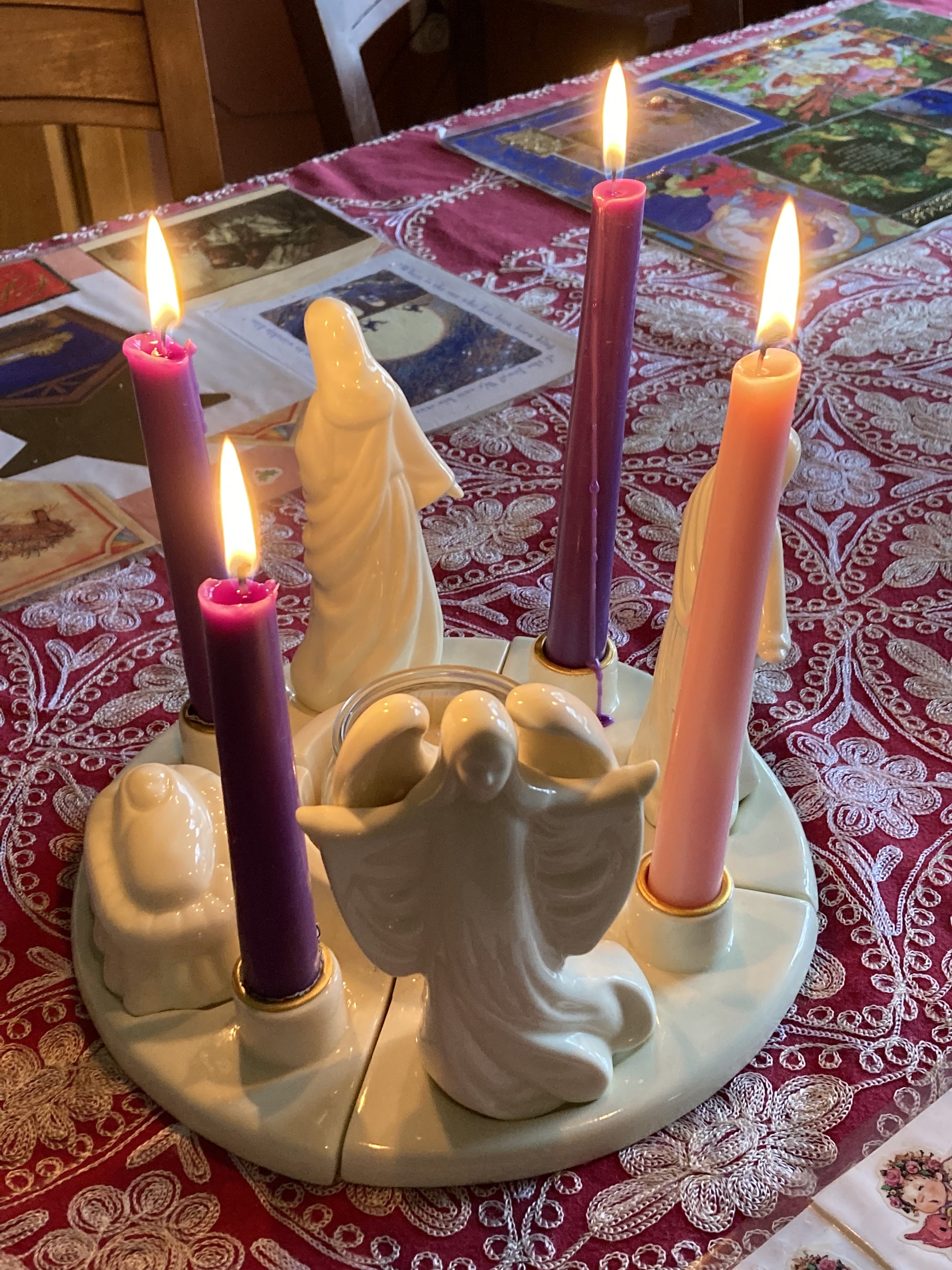
All the candles lit – focused on the coming Christ:

The Christmas cactus – somehow it knows – just days ago, nothing, no buds, nothing – and then…it blooms.

5 Friday Faves – Beyond the Guitar’s “Take On Me”, the Woman Slowly Fading, Mama’s Table, Relationship Hacks, and Voices of Influence

Happy weekend! Here are my five faves of this week – rapid-fire.

1) Beyond the Guitar’s “Take On Me”Nathan Mills does it again.  He takes Norwegian band A-Ha‘s 1985 hit “Take On Me” to a whole new level on classical guitar. So beautiful that lyrics aren’t needed; the nostalgia is already there. This song is featured in the video game The Last of Us Part II. Whether you loved it or hated it in the soundtrack of that game (or not a gamer)…its melody is “all the feels” under the deft fingers of Beyond the Guitar. Enjoy!

2) To The Woman Slowly Fading – I didn’t know the work of Scottish poet Donna Ashworth until my great-niece posted the poem below on her social media. She (my great-niece) is mum to three little ones; in fact, three under the age of three at the time.

She is tired and pulled. Yet in the tired, she is full of joy.

I’m grateful she shared this poem because it told me something about her and it also illuminated something I had been feeling from a very different place. My niece is nearer the beginning of her life’s journey, and I am closer to the ending. Nothing sad here; just what is.

At our latest family dinner, I had that strange thought of fading. A moment of poignancy taking in the lovely scene of adult children and wee ones around the table. Ashworth describes this sense of fading so well. Read for yourself the lines below.

To the woman who has lost her spark.
To the woman whose get up and go, has well and truly gone.
This is for you.
This is to remind you whose daughter you are.
This is to remind you, that you don’t have to be everything to everyone, every day.
You didn’t sign up for that.
Remember when you used to laugh? Sing? Throw caution to the wind?
Remember when you used to forgive yourself more quickly for not always being perfect.
You can get that back again.
You really can.
And that doesn’t have to mean letting people down or walking away.
It just means being kinder to you, feeling brave enough to say no sometimes.
Being brave enough to stop sometimes.
And rest.
It starts the moment you realise that you’re not quite who you used to be. Some of that is good, some of that is not.

There are parts of you that need to be brought back.

And if anyone in your life is not okay with that… they are not your people. Your people will be glad to see that spark starting to light up again.

So, if you have been slowly fading away my friend, this is the time to start saying yes to things that bring you joy and no to things that don’t.

It’s really pretty simple. – Donna Ashworth, To the Women

I do take exception to the one line: “Saying yes to things that bring you joy and no to things that don’t.” Fortunately for my young niece’s children, she is not going to ignore their cries in the middle of the night, or their tears after a fall, or their fears of the unknown. These things do not bring her joy, but they are part of the journey.

Difficult family members, friends in crisis, health issues, mounting drama in the world’s press…we can’t always say no, but we can measure ourselves out in wise and thoughtful ways. There is sacrifice in life, and, with it, joy.

So if we are fading…may it be for good reasons. Squeezing all we can out of life and relationships…even the hard ones. Not leaving anything left on the field when the clock runs out (was that phrase from Vince Lombardi?). No slow fade. Intentional. Deliberate. Owning it.

For believers of Jesus, there is a call reflective of this: On the return of the Messiah one day, we are reminded of the joy of that great day when “He must increase, and I must decrease”. (John 3:30) As on a wedding day, we take in that glorious arrival of the bridegroom for his bride.

Fading may be how we feel, but the reality is we all have various seasons in our life’s journey. Each with its own glory, joy, and exhaustion.

Life…taking it all in.

“You may begin to notice that you’re invisible. Especially if you’re short and gray-haired. But I say to whom? And so what?”Grace Paley on the Art of Growing Older

Donna Ashworth – poetry website

“History Will Remember” – a Pandemic Poem – Donna Ashworth

3) Mama’s Table – Our youngest child, Dan, has been affectionately referred to as a food snob. He loves all kinds of food but can be hyper-critical of what he considers bland food or just the wrong mix of flavors or textures. Fortunately he is a good cook and he has been since middle school. On bake sale days back then, he would take his cupcakes into school and brought empty platters back home. His yeast rolls, from a favorite teacher’s recipe, were amazing. He and a small cadre of high school friends who loved to cook (well, to eat, for sure) even started a cooking club.

They had a great time together, and we enjoyed their feasts with them. Nothing like a kitchen full of friends and all good things – loud laughter, strong opinions, and the yummiest blend of fragrances.

Food has its own culture and anthropology. In fact, Dan has moved on from just cookbooks focused on recipes to thick volumes covering not just the food of Persia, Malaysia, or Russia but the culture that goes along with the food.

The article below reads like some of those texts.

The Economics Behind Grandma’s Tuna Casseroles – Megan McArdle

McArdle tells the story of how decisions were made in homes across America from the 1890s right through present-day. The quote below resonates deeply with the food experience I knew growing up.

“The great blessing of my life is that my mother did not let me become a food snob. She was from a small town in middle America, and she did not view this as any great handicap. Nor did she look down on the culinary tradition she inherited from her mother, a “good plain cook” of the miracle-whip-and-white-bread Midwestern persuasion whose pie crust was infallible. We did not mess around with limp chicken breasts and cans of Campbell’s Soup, but I have eaten plenty of Jell-O salad, and liked it. (On summer days, I still occasionally crave shredded carrots and crushed pineapple embedded in orange jello made with ginger ale. Don’t sneer; it is delightful and refreshing.) Apples, bananas and raisins, dripping with Miracle Whip, were served as a salad in my house, and one of my favorite dishes from my grandmother was ground meat and pasta shells in Ragu. I still bake out of the Betty Crocker 1950 cookbook, and have never found a better guide to the classic American layer cake.”

We got a Betty Crocker cookbook as a wedding present and I still use it. I remember growing up with Campbell soup and Jello salads. Money was always tight so Mom would use pork brains (??) from a can to add to eggs to make them stretch far enough for us four kids. My first pizza was from a Chef Boyardee box. We never ate out at a restaurant, but I remember when a McDonald’s opened up near us (the first one in our area), and Mom took us for burgers and fries as a reward for behaving ourselves at the grocery store. That was a big deal. Church suppers were a big deal as we sampled what our friends enjoyed at their homes. Food was (and is) much more than just nourishment.

How about you? What is your food culture? Or rather the culture you knew as a child. For many of us these days, our food cultures are diverse and delicious…but we still remember the culture of Mama’s table.

4) Relationship Hacks – Just a few finds on how we treat each other, and sometimes ourselves.

Photo Credit: C. S. Lewis, AZ Quotes

“Every day, we have the opportunity to be more thoughtful, respectful, supportive toward people living with ‘invisible’ challenges.”Ian Kremer

Someone Needs Your Encouragement – Marshall Segal

5 Phrases that Make People Discount What You’re Saying – Gwen Moran

Use the Magic 5:1 Ratio to Improve All Your Relationships – Jessica Stillman

5 Indicators of an Evil Heart – Signs of a Narcissistic Partner – Lesli White

Jacqueline Woodson’s Lovely Letter to Children About Kindness, Presence, and How Books Transform Us – Maria Popova

5) Voices of Influence – Amidst all the voices gracing our lives and in the news media, we have some truly stellar influencers. Below are just a few:

73-17 In the Making – Sho Baraka, Jackie Hill Perry, Propaganda

Rapper’s Twitter Thread About Human Behavior During Pandemic Goes Viral: People Will ‘Demand’ Authoritarianism ‘When Sufficiently Frightened’ – Zuby – Charlotte Pence Bond

YouTube Video – Black Self-Making – Glenn Loury & John McWhorter

YouTube Video – Breaking the Silence – 2021 Documentary on psychosis and psychotic disorders. Written, directed, and produced by Dara Sanandaji.

___________________________________________________________________________
Have a safe weekend filled with sweet times with people you love.
Bonuses:
Photo Credit: Twitter, Ian Kremer
Photo taken at the Jefferson Memorial, Three Panel

Worship Wednesday – the Answer for the Sullen and Inconsolable – Great Is Thy Faithfulness

Photo Credit: Heartlight

Surely my soul remembers and is humbled within me. Yet I call this to mind, and there I have hope:  Because of the loving devotion of the LORD we are not consumed, for His mercies never fail. They are new every morning; great is Your faithfulness! “The LORD is my portion,” says my soul, “therefore I will hope in Him.” The LORD is good to those who wait for Him, to the soul who seeks Him. It is good to wait quietly for the salvation of the LORD. Lamentations 3:21-26

We need to teach our little ones how to lament. Otherwise, those children (especially bent toward the cup being less than half full or entirely empty) will develop habits of being sullen or inconsolable. In fact, as our children grow into adulthood, knowing how to lament will be a worship tool for handling all the painful and seemingly unfair losses.

What is Biblical lament? Its definition is, in Hebrew, “to passionately cry out, to wail, to express sorrow, to mourn, to express regret”.

“We live in a fallen world. We experience the consequences of sin and death on individual, cultural, and global levels. God knows we need a way to express and release the pain of these losses or we risk becoming numb to even the joys of life or allowing momentary sorrows to infect our entire being. The tool He’s provided for this release is lamentation.”Lori Stanley Roeleveld

Yesterday I was spending the afternoon with our 5y/o and 3 y/o sibling grandchildren. We had a schedule, and they both understood it. Then the 3 y/o decided to change up the schedule. His strategy was to be miserable and make his sister and Gram miserable as well. He was successful. I don’t do sullen well at all. [My own struggle with responding to inconsolable children needs its own blog. Surely, I can do better.] The afternoon finished out fine enough, but we were all three worse the wear on feeling bad and making each other feel bad. Thankful for another day of learning to love well these precious ones.

Through the evening, I was reminded of my own children’s struggle with hardship and losses and how their dad and I tried to help them navigate them, growing up. Our sweet daughter’s struggle with our many moves, leaving friends behind and forced to start over in new places. Our darling youngest son who was different different (being both American and Korean living in Africa), and sometimes endured hard attention from other children. Our talented older son when his heart broke, not making the soccer team as a middle schooler.

[Sidebar: When this loss accentuated our son’s struggles later on his high school basketball team, we understood there would be dark times. Dave remembered last night about us giving him an after-dinner back yard task of 100 completed free throws. I can’t believe now that he actually went along with us. Hot, mad, and sweaty,  he shot and shot until he got those 100 successful attempts. His confidence grew through the season with his practiced proficiency.]

Our sullenness and inconsolable hearts must have their origins in entitlement. This is something we fought against with our children from toddler-hood. Still it creeps in (to all our lives). Life should be better for us. Life should bring successes. Even for Christians, we are shocked, at times, when we suffer because we think it is not right. Not fair. [We never responded to that expression with our kids growing up. Just moved on. It might have been a teachable moment to sow lament in their hearts.]

Dare to Hope in God – How to Lament Well – Mark Vroegop

Writer, pastor Mark Vroegop (in piece above) gives four elements of lament (from Psalm 13):

  1. Turn to God. – Tell God what’s happening. Talk to Him about everything about it, including how you feel.
  2. Bring your complaint. – Tell Him what’s frustrating you. All of it. He can take the struggle you are having.
  3. Ask boldly for help. – Don’t give into silence and despair. Ask Him for help. “Dare to hope.”
  4. Choose to trust. –  “But I have trusted in your steadfast love; my heart shall rejoice in your salvation. I will sing to the Lord, because he has dealt bountifully with me.” (Psalm 13:5–6). More than the stages of grief, this prayer language moves us to renew our commitment to trust in God as we navigate the brokenness of life.

Lament is definitely something we can choose as we walk with God. Teaching our children to turn their struggle away from themselves and toward God will move them to maturity. Just this week that basketballer son of ours gave counsel to treating perceived failure with perspective and perseverance. A good word for anyone.

C. S. Lewis talked about a joy as having a “stab, an inconsolable longing”. He also describes how we seem never to be fully satisfied here…because we were made for another world.

[Lessons From an Inconsolable Soul – John Piper is an excellent piece on the life and faith of C. S. Lewis. For a short read start at his point 2 “Why Lewis Is So Helpful to Me”.]

For today, let’s turn our longing, our ache, our sorrow into a lament and a praise. Allow gratitude to flatten our fear. Worship with me with the help of this great old hymn that I’ve referenced before (see links below). Remember that our beloved Comforter, and Consoler, is ever and always faithful:

Great is thy faithfulness, O God my Father;
there is no shadow of turning with thee;
thou changest not, thy compassions, they fail not;
as thou hast been thou forever wilt be.

Refrain:
Great is thy faithfulness!
Morning by morning new mercies I see:
all I have needed thy hand hath provided–
Great is thy faithfulness, Lord, unto me!

Summer and winter and springtime and harvest,
sun, moon, and stars in their courses above
join with all nature in manifold witness
to thy great faithfulness, mercy, and love. [Refrain]

Pardon for sin and a peace that endureth,
thine own dear presence to cheer and to guide,
strength for today and bright hope for tomorrow,
blessings all mine, with ten thousand beside! [Refrain]*

“I offer thanks to You, living and eternal King, for You have mercifully restored my soul within me; Your faithfulness is great.”The Traditional Jewish Prayer Upon Awaking

*Lyrics to Great Is Thy Faithfulness – Songwriters: Thomas O. Chisholm and William Runyan

Great Is Thy FaithfulnessStory of John Piper’s extra verses for Thomas O. Chisholm’s classic hymn

Worship Wednesday – When Storms Come, We Still Have a Good, Good Father – Chris Tomlin & Pat Barrett

Worship Wednesday – No Matter What I Will Trust in You – Lauren Daigle

Saturday Short – Give This World Back to God – Reba McEntire – Deb Mills

Worship Wednesday – Gratitude Flattens Fear – Great Is Thy Faithfulness – Deb Mills

Worship Wednesday – No Shadow of Turning – Great Is Thy Faithfulness – Austin Stone Worship – Deb Mills

Worship Wednesday – Habakkuk’s Response to the Incomprehensible Goodness of God

[Adapted from the Archives]

Though the fig tree may not blossom, Nor fruit be on the vines; Though the labor of the olive may fail, And the fields yield no food; Though the flock may be cut off from the fold, And there be no herd in the stalls— Yet I will rejoice in the Lord, I will joy in the God of my salvation.

The Lord God is my strength; He will make my feet like deer’s feet, And He will make me walk on my high hills.Habakkuk 3:17-19

Reading the book of Habakkuk, we are spellbound by the devastating situation where the people of God find themselves.  Habakkuk wrestles with God over this, and finally yields in faith to the God he trusts…no matter what. Whether in hunger or high places.

The thought of being completely without food is pretty frightening. The stories we hear in the news of displaced peoples, who had to flee their homes and villages and figure out how to survive on foot, are heartbreaking. I can’t fathom that situation, yet I know it’s real for far too many right now.

I’m also afraid of heights. When we fly, I always get an aisle seat, and treat the experience as if I’m on a cross-country bus trip. I love to look at mountains, but being up in them, on narrow roads or cliff-edge paths, is not what I would choose for transportation or relaxation.

Reading through the short account of desperate times, as recorded by the prophet Habakkuk, reminds me of the raw nature of life sometimes. What is that situation for you that would be the worst you could imagine? The loss of a person or the lack of a provision?

Is there anything that could so devastate me that I would take my eyes off God?

I pray not…and Habakkuk gives hope. He cried out to God, cried out against God, in the beginning, because of the horrific circumstances of his people, God’s people. Yet,  when we besiege the throne of God with our desperate requests, He hears His children and answers us. Not always in ways that suit us at the time, but He responds, with the wisdom of One who sees how all of life, all of history, fits together.

As we pray, whatever He does in answer to our appeals is up to Him – a perfectly loving, merciful and just God. Yet, there is a glorious spiritual transaction that happens, if we keep our eyes on Him. He restores our joy; He brings peace; He gives strength.

I love the passage in C. S. LewisThe Lion, the Witch, and the Wardrobe where Mr. and Mrs. Beaver are trying to describe Aslan, the lion who symbolizes Jesus in the Narnia stories. Lucy and Susan ask if Aslan is safe. Mr. Beaver responds, “Who said anything about safe? ‘Course he isn’t safe. But he’s good. He’s the King, I tell you.”

God is completely good. That does not mean that He keeps us always in comfortable places. His ways are not our ways (Isaiah 55:8-9). Yet, as we look over the shoulders of Habakkuk, and see the world as he saw it…he still came around to seeing the goodness of God. We can also choose to rejoice in whatever situation we find ourselves. That is the faith that plants our feet surely on any path where God leads.

The Faith to Rejoice – A sermon on Habakkuk 3:17-19 by Coty Pinckney, Community Bible Church, Williamstown, MA

The Choice To Rejoice – A sermon by Richard Bray

Precept Austin Bible Study Helps for the book of Habakkuk

Aslan – Is He Safe? – Andrew Groves

5 Friday Faves – Beyond the Guitar – Beauty to the Ears & Mind, Mental Health Awareness, Antidote for Self-deceit, Showing Up…Or Not, and Unmasking

1) Beyond the Guitar – Beauty to the Ears & Mind – We think of beauty more in what we experience visually, but there is a powerful connection between music and the mind. Beautiful music soothes the soul and lifts our hearts. Moves us. Often it is because of nostalgia attached to the music, but even without that emotional connection, music can bring our minds to a better place.

Your Brain on Music – Pegasus, UCF

Nathan Mills, of Beyond the Guitar, has that way about his craft. Moving our hearts with the beauty of his arrangements and performance. I don’t know any of the pieces in his medley of 4 Underrated (but Beautiful) Video Game Themes, but something happens when I listen. Shoulders drop; breathing slows; wonder sets in. Beauty has its way with our ears and our minds.

Photo Credit: YouTube, Beyond the Guitar

2) Mental Health Awareness –  May is Mental Health Awareness Month. The theme message for 2021 is “You Are Not Alone”. Our need for connection is bigger than ever, having gone through so much COVID isolation. Whether mental health issues are our own personal struggle or we are family, friends, caregivers of those who struggle, helps abound. We just must be aware and utilize them.

Tools 2 Thrive – Mental Health America

Mental Health Awareness Month 2021: What to Know – Karen Veazey

Photo Credit: Twitter, Nicolino Frate

Suicide and death by drug overdose have increased during COVID. They are shocking for us and real losses, either for us or for friends. We can’t keep isolating ourselves from each other. Finding ways to help is imperative.

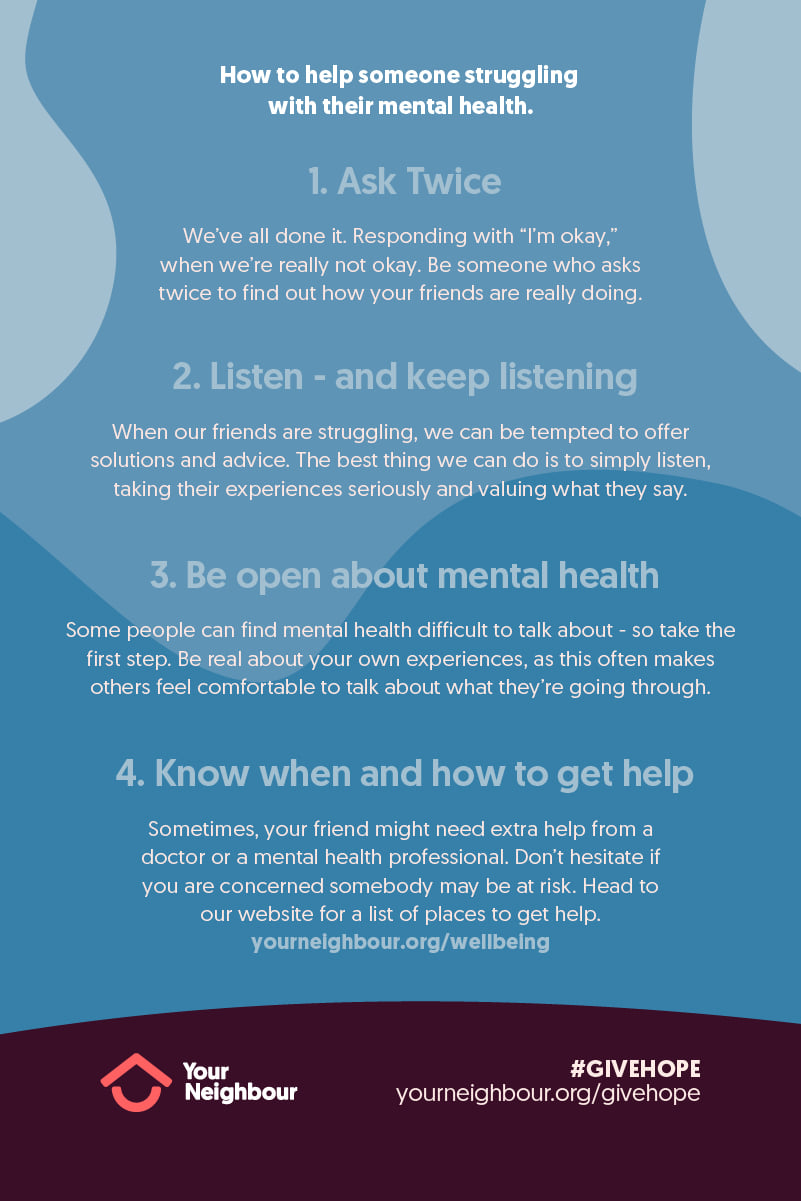
Photo Credit: Facebook, Key Ministry, Your Neighbour #GiveHope

YouTube Video: Unseen: Exposing the Mental Health Crisis Among Special Needs Caregivers | Documentary Trailer

3) Antidote for Self-Deceit –  Self-deceit (or self-deception) is “a process of denying or rationalizing away the relevance, significance, or importance of opposing evidence and logical argument. Self-deception involves convincing oneself of a truth (or lack of truth) so that one does not reveal any self-knowledge of the deception”.

The Most Dangerous Form of Deception: Self-Deception

I’ve allowed myself to be deceived (either with the help of outside influences or from sheer will and desire, wanting something to be so, or not be so). It’s not pretty. One of my strongest memories was sitting in a circle of friends who essentially did an loving intervention with me. I was in a self-destructive (but non-abusive) relationship, and they had the courage to point me to the changes in my life and thinking. I will never forget it. The life I have now is much impacted by their willingness to go to that place with me. Forever grateful.

Regarding deceit, it is way too easy to get into our own heads and assess life with a self-tuned receiver. I wrote about this before (the practice of noticing). A somewhat dated video (with a still fresh message) speaks to this so well.

During the particular season of self-deception (described above), I got to the place that lying in my bed at night, when I would usually pray, it got impossible to pray. That was terrifying. It’s like all the desires and my rationalizations for them had crowded out any space for God. Especially for a holy God. Like I said, terrifying. No matter how loving God is, I couldn’t justify praying when my own desires trumped His for me.

The Antidote to Self Deception – J. D. Walt

As the video illuminates, as we get out of our own heads, and start seeing other people around us, we find the antidote. Caring more for others than ourselves, we can actually clear our heads some. Self-deception causes us to “circle the wagons” and keep others at a distance. As we determine to get close to people again, especially to genuinely listen and serve, our own deceit can be more readily understood/recognized. Of course, our neglected relationship with God will take its own time and action on our part. He is ready, when we are.

Photo Credit: Chip Scholz

4) Showing Up…or Not – Showing up is a good thing. For all of us. Keeping commitments. Being present. Choosing to lean in. Listening.

So much is said about listening and its positive impact. To listen requires proximity.

On the East Coast, this week, we had a gas shortage (or a perceived gas shortage…not sure which is more accurate). Everyone was making decisions about filling their tanks and sorting out needful car trips vs. those that can be jettisoned for another time.

I was a part of a couple of meetings where some folks didn’t show up. Without a phone call, text, or email message. Was it the gas shortage? Or did it display something else? Honestly, I also wondered how often I’ve done this same thing myself.

We are in a culture right now when a RSVP yes can turn to no without a word. I’m showing my age…but does this matter?

Below you’ll find quotes from three different authors on this and what it can mean. The showing up…or not. After you read their observations, I’d love to hear what you have to say in the Comments.

“Standing someone up is a personal attack. You are saying that you have no respect at all for this person’s time, energy or feelings. This person set aside time from his or her day to hang out with YOU.

And maybe he or she didn’t feel like showing up. But no, this person had enough respect for you to feel as though he or she couldn’t bail on you. Then how did you repay the favor? You didn’t show up. With no warning.

And don’t even get me started on the fact that if this person cared about you enough to make and honor plans with you, odds are that he or she would probably be WORRIED about you when you don’t send a message. Because falling off the face of the Earth is a little alarming….You get the picture here.” – Candice Jalili

Why It Is Literally Never, Ever OK to Just Not Show Up For Your Plans – Candice Jalili

“There are commitments you are not going to keep no matter how hard you try, but even if you fail to keep them, you can still honor them. How do you do this?

“The difference between “keeping” and “honoring” is key: keeping a promise is about the letter of the promise, while honoring a promise is about the spirit. It is even possible to keep a promise while not honoring it. People will forgive an honored but un-kept promise, but it takes a real saint to let go of an un-honored promise—kept or not.

So what are the practical aspects of honoring a commitment? They are:

  • respect
  • communication
  • productive effort

It’s uncomfortable to take responsibility (for a failed commitment), but discomfort is a lot easier to shoulder than disrespect or disappointment. Even if you failed to honor a commitment up until now, it is not too late: disrespect and disappointment can be rolled back or even erased in the face of genuine honor.” –  Kenneth Vogt

How to Cope When You Fail to Honor a Commitment – Kenneth Vogt

[The two writers above have very different tones to their pieces. Both worthy of note. I especially appreciated Vogt’s distinction of honoring a commitment (whether you’re able to keep it or not). Honoring the person by communicating your inability to keep the commitment…as well as the honoring that goes on by making the effort to keep the commitment whether  easy or not. We don’t really know what goes on for another who does the work of keeping a commitment or the one who just can’t. What we do know is what it is like for us to keep or not keep a commitment; to honor or dishonor a person in the commitment. So much more understanding and care come out of the smallest communications. Something to think about.]

Below Rachel Macy Stafford posted an image and (in the link) a Facebook story about sitting in a line for gas this week, and an elderly man, just ahead of her, deliberately nodding her way (as he chose not to completely fill his tank, doing what he could to “leave” some for her). No RSVP’ed commitment. No relationship. But a deeply kind gesture to her that she was seen. We all need that…that being seen.

Photo Credit: Rachel Macy Stafford, Facebook, The Hands Free Revolution

It’s…“a deliberate decision to look out for the person behind (you)…It’s not about us. Even though it’s hard not to think only of our own needs, there is someone behind us…and someone behind that person…with their own set of struggles. If you can…will you look out for them? A wave will do, just so they know they are seen…it’s the kind of gesture that takes people farther than a full tank of gas.”Rachel Macy Stafford

5) Unmasking – Get ready for another new culture shock thanks to the Coronavirus: unmasking!!! I am so excited myself.Photo Credit: Pexels, Gustavo Fring

Based on this week’s CDC recommendations, fully vaccinated people don’t have to wear masks or physically distance anymore (except in rare defined situations). This, of course, is still only a recommendation and each state must give direction at a local level. Our governor just announced that we will align with the CDC recommendations.

Now, no one is going to know who is vaccinated and who isn’t. If we have learned anything from COVID-19, it is to be wise in dealing with the viral world. Those not vaccinated will probably forego masks as well. The freedom feels intoxicating, honestly, but possibly fearful to some, even some who are fully vaccinated.

I hope we can leave fear behind us. COVID is still rampant in some parts of the world and that is tragic. As we in the US and other countries get past our own experiences with this virus, hopefully we can be a help to those still battling the disease.

The culture shock part is real. I will have my mask with me, and see what the signs say on the doors of each business, store, school, or community space.

Still….so worth celebrating!!!

___________________________________________________________________________

That’s a wrap. Would love your comments below on your own favorites of the week. Thanks for stopping by. It means a lot to me.

Bonuses:

Photo Credit: C. S. Lewis, Twitter

Angry with God: Living in the Tension of Partial Understanding – Brad Hambrick

YouTube – Podcast – An Honest and Raw Conversation with Francis Chan – Preston Sprinkle

My next read:

Jesus and Holy Week – Monday, Day 2 – Jesus Curses a Fig Tree and Restores the Temple to a House of Prayer

[Adapted from the Archives]

On the next day, when they had left Bethany, He became hungry. Seeing at a distance a fig tree in leaf, He went to see if perhaps He would find anything on it; and when He came to it, He found nothing but leaves, for it was not the season for figs. He said to it, “May no one ever eat fruit from you again!”Mark 11:12-14

When Jesus woke on Monday morning, after that glorious Sunday entering Jerusalem…I wonder what he thought. Did he know that, in just four days, he would be crucified? Whew…

Back to Monday:

During that week in Jerusalem, Jesus and his disciples spent the nights with friends in Bethany, two miles outside of the city. Each morning, they would walk into Jerusalem. On that Monday morning, just four days prior to his crucifixion, Jesus became hungry on the walk in. Seeing a leafy fig tree, he looked for fruit. With fig trees, where there are leaves, there should be figs. Since green figs are edible, and it wasn’t yet harvest season, there should still be some fruit on the tree.

When he found no figs, Jesus cursed the tree. This seems out of character for Jesus, until his action is put in the context of his culture and community. Throughout his public ministry, especially as he became more known and revered, the Jewish religious leaders held him in contempt. Jesus’ teaching of our dependence on God’s righteousness and not our own flew in the face of the Pharisaical teaching of the day – that of strict adherence to Jewish law as the only hope of finding favor with God. For Jesus, the leafy barren fig tree must have been a picture of religious Jews of that day, all flash and finery but no fruit of faith.

“Christ’s single miracle of Destruction, the withering of the fig-tree, has proved troublesome to some people, but I think its significance is plain enough. The miracle is an acted parable, a symbol of God’s sentence on all that is ‘fruitless’ and specially, no doubt, on the official Judaism of that age. That is its moral significance.”C. S. Lewis

Jesus was left still physically hungry. He remained spiritually hungry  as well – for this people of the Book to receive the good news that the Messiah had come.

Finally, arriving back in Jerusalem, Jesus was deeply troubled by what he found inside the Temple. The crowds of Passover pilgrims did not disturb him, but temple grounds turned marketplace did. In this sanctified place, meant only for worship, there were money-changers and sellers of animals for sacrifice, right in the Court of the Gentiles – in the only place where non-Jewish God-believers could worship. Photo Credit: Bible Universe

And Jesus entered the temple and drove out all those who were buying and selling in the temple, and overturned the tables of the money changers and the seats of those who were selling doves. And He said to them, “It is written, ‘MY HOUSE SHALL BE CALLED A HOUSE OF PRAYER’; but you are making it a ROBBERS’ DEN.”Matthew 21:12-13

Often in film depictions of Jesus cleansing the temple, he appears a crazed individual, flailing about, throwing tables and flinging pigeons into the air. I can’t even imagine him that way. We can’t know how it happened except that in Jesus’ anger, he did not sin. He would not sin. I know the Jesus Film is a director’s rendering of the Biblical account, but in this scene, Jesus showed considerable restraint. Disturbed at the buying and selling that actually kept believing Gentiles from worshiping, he moved to correct the situation. He was unafraid of the temple officials, burning with zeal for his Father to be truly worshiped in that place.

Zeal for Your house has consumed me, And the reproaches of those who reproach You have fallen on me.Psalm 69:9

Later in the week, he himself would be the one for sale – sold for 30 pieces of silver, betrayed by one of his own disciples, to satisfy the wrath of the religious leaders. That story is for another day.

This Holy Monday, we are drawn again to this Messiah who teaches us that the way we live our lives matters but not more than the way we relate to God. He makes space for us…room for all of us to receive Him. He is holy, and in His righteousness, we stand…on solid ground.

Photo Credit: KLove, Experience Easter Series

Holy Week – Day 2: Monday Jesus Clears the Temple – Mary Fairchild

Holy Week Devotions – Mission Lakewood

Spotify Playlist – From Palm Sunday to the Resurrection – Beth Wayland

Experience Easter – From Genesis to Revelation – K-Love

YouTube Video with Lyrics of In Christ Alone by Stuart Townend & Keith Getty

Reasoning Why Jesus Cursed the Fig Tree – Sam Shamoun

Monday of Holy Week

How Can We Be Angry and Not Sin? – Jon Bloom

Cleansing the Court of the Gentiles – Fr. Patrick Henry Reardon

Jesus Film Media – website & app to watch videos

Preparing for Easter: Fifty Devotional Readings From C. S. Lewis – C. S. Lewis

Worship Wednesday – the Small Virtue of Humility – the Grand Journey of Self-Forgetfulness

Do nothing from selfish ambition or conceit, but in humility count others more significant than yourselves. Let each of you look not only to his own interests, but also to the interests of others. Have this mind among yourselves, which is yours in Christ Jesus, who, though he was in the form of God, did not count equality with God a thing to be grasped, but emptied himself, by taking the form of a servant, being born in the likeness of men. And being found in human form, he humbled himself by becoming obedient to the point of death, even death on a cross.Philippians 2:3-8

Thus says the LORD: “Let not the wise man boast in his wisdom, let not the mighty man boast in his might, let not the rich man boast in his riches, but let him who boasts boast in this, that he understands and knows me, that I am the LORD who practices steadfast love, justice, and righteousness in the earth. For in these things I delight, declares the LORD.”Jeremiah 9:23-24

I’m still making my way through a re-read of The Screwtape Letters by C. S. Lewis. Long over-due. Although the chapters are super short, each contains such a wealth of wisdom to think through and process.

In The Letters, a senior demon, Screwtape, is advising his nephew on how to draw away a young Englishman from his new-found faith in God, whom the demon calls The Enemy. The nephew is given strategies to muddle up “the patient’s” thinking on God and how one is to live, “loving our neighbors as ourselves”.

Chapter 14 (in just 3 pages) dissects the issues of humility, pride, and self-forgetfulness. We may think ourselves that humility is having and expressing a low regard of self, even self-deprecation. That is not humility. In the fullest sense, humility is a right understanding of God, other people and ourselves, in relation to all. God and others.

True humility is a growing awareness of how all things work together, including the hard things in life, and an appreciation of the good and glory in the world. Celebrating God, and His choosing to continue to display His goodness in all of life…in mine and yours, and throughout the natural world.

When we can pull our eyes off our own successes or, on the flip side, our challenges, perspective comes. Not puffing ourselves up or bringing yourselves down, but just seeing God everywhere. He purposefully and beautifully knit each of us together and His purposes are not thwarted.

Focused on God and others, we can live in a place of self-forgetfulness. Satan wants to destroy such peace by pressing us to ever compare, ever put ourselves down, or ever feel envy and longing regarding others’ good works. Or, if he can to even push us into pride, thinking more highly of ourselves, even though we operate out of the gifts and opportunities God gives us.

Here’s a bit of Screwtape’s instruction to Wormwood in the tempting of the young Christian:

“To anticipate the Enemy’s strategy, we must consider His aims. The Enemy wants to bring the man to a state of mind in which he could design the best cathedral in the world, and know it to be the best, and rejoice in the fact, without being any more (or less) or otherwise glad at having done it than he would be if it had been done by another. The Enemy wants him, in the end, to be so free from any bias in his own favour that he can rejoice in his own talents as frankly and gratefully as in his neighbour’s talents – or in a sunrise, an elephant, or a waterfall.C. S. Lewis, The Screwtape Letters, Chapter 14

Photo Credit: Brainy Quote

Let’s worship the God who frees us from self as we turn our eyes each day, and through the day, onto Him. Why this old song? It speaks to troubled hearts. If humility is not where we live, our hearts become troubled – either in some embattled state of self-loathing or self-obsessing. We can live free of all that.

O soul, are you weary and troubled?
No light in the darkness you see?
There’s a light for a look at the Savior,
And life more abundant and free!

Chorus:
Turn your eyes upon Jesus,
Look full in His wonderful face,
And the things of earth will grow strangely dim,
In the light of His glory and grace.

Through death into life everlasting
He passed, and we follow Him there;
Over us sin no more hath dominion—
For more than conquerors we are!

Chorus

His Word shall not fail you—He promised;
Believe Him, and all will be well:
Then go to a world that is dying,
His perfect salvation to tell!

Chorus*

Why did I call humility “a small virtue”? Because it doesn’t draw attention to itself. It points to God and to others. However, it doesn’t leave us out. We also get to be on this grand journey. We are flesh, so when God gives us the opportunity to do something amazing, we naively may say, “Wow, I did that!” Pride rears its head, even for a moment. We can then either beat ourselves for the pride and make ourselves small in some sort of false humility or…we regain perspective. “Wow, I got to do that! Thank You, God!” If it was someone else who “got to do that”, we rejoice the same. It is the beautiful sphere of self-forgetfulness.

The Freedom of Self-Forgetfulness – Tim Keller

Room for everyone on the podium in a very real way…because God is at the foundation of every podium we will ever encounter. Actually, forget the podium. The ground is level at the foot of the Cross. We’ve all heard this. Humility is where we live it.

“The thing we would remember from meeting a truly gospel-humble person is how much they seemed to be totally interested in us. Because the essence of gospel-humility is not thinking more of myself or thinking less of myself, it is thinking of myself less. Gospel-humility is not needing to think about myself. Not needing to connect things with myself…True gospel-humility means I stop connecting every experience, every conversation, with myself. In fact, I stop thinking about myself. The freedom of self-forgetfulness. The blessed rest that only self-forgetfulness brings.”– Tim Keller, The Freedom of Self-Forgetfulness

Hallelujah!

Photo Credit: 2 Chron 714 Network, Facebook

*Lyrics – Turn Your Eyes Upon Jesus – Songwriter: Helen Howarth Lemmel

Humble and Kind – Restless Pilgrim Blog & Podcast on The Screwtape Letters – Chapter 14

YouTube Video – Blessed Self-Forgetfulness by Tim Keller – Edited Synopsis – 7 Minutes

YouTube Video – Lyric Video – Turn Your Eyes Upon Jesus – Hillsong Worship