
Tag Archives: Monday morning moment

Monday Morning Moment – Last Monday of 2015 – Begin Again

Blog - Mondays with Garfield - Jim DavisPhoto Credit: Garfieldh8sMondays

Here we are on the last Monday of 2015. The last Monday of the year. For some of us, there’s a collective deep sigh! We made it through this year of tough Mondays. Celebrating…quietly.

Over coffee this morning, we talked about the huge build-up to Christmas, and how today, in comparison, is almost a let-down. I don’t feel that way at all. On the Monday after Christmas, I feel satisfied and hopeful. Christmas was wonderful…even with the heart hurt of not having all our children with us and my dad states away in assisted living. Hard things are always strewn across even the best of holidays.

We rejoice in what was good and hope for what can be in the year ahead.

That’s how I also feel about this last Monday of the year. We didn’t deal with a terrifying diagnosis but we have friends who did. We didn’t have to grieve the loss of a family member but we grieve still the great loss of dear friends this year. We went through extraordinary change (in work and community) but thankfully kept those relationships. We did not suffer joblessness and do not take for granted the great blessing of gratifying work.

Work this year was oddly harder than any year I can remember. Some situations in life we expect to be hard – like the adjustments we made living cross-culturally, and like the year my mom died. This year was an unexpected hard.

In a season of chronic financial leanness and a year of organizational change, including planned and necessary downsizing, we still have a job. Months of “just keep doing what you’ve been doing” may now be winding down to make way for new direction and engagement. We breathe deeply the air of new possibilities in the days ahead.

Although there is nothing innately powerful in a last Monday of the year or the coming first Monday of 2016, the idea of a fresh start energizes us with hope and anticipation. This ending and beginning do stir our hearts and minds to begin again…

In 1970, a film was released entitled Scrooge. It was a musical adaptation of Charles Dickens’ A Christmas Carol. The old curmudgeon Scrooge was very well-played by a 30-something Albert Finney. As I look to this Monday and the next, his song “Begin Again” came to mind. If you have never seen it, watch the YouTube clip:

In thinking of finishing out this year at work, and looking to 2016, I hope you also can celebrate whatever victories and mercies you experienced this year. In looking to 2016, I pray you have anticipation of what comes. If you’ve had a hard year, too, then you are even more equipped to take hold of whatever comes.

Scrooge, in his song above, thanked “the world” (1:42) that he was able to begin again. Odd line really. I thank God for another opportunity to begin again – this day and all the days given to us ahead.

“Do not call to mind the former things, Or ponder things of the past. Behold, I will do something new, Now it will spring forth; Will you not be aware of it? I will even make a roadway in the wilderness, rivers in the desert.” – Isaiah 43:18-19

“O taste and see that the LORD is good; How blessed is the man who takes refuge in Him!”Psalm 34:8

Scrooge (1970) with Albert Finney – available on Amazon.com

YouTube Video – Scrooge with Albert Finney (1970)

Monday Morning Quarterback – What a Sunday of Football!

Monday Morning Moment – Stewarding Our Influence Well

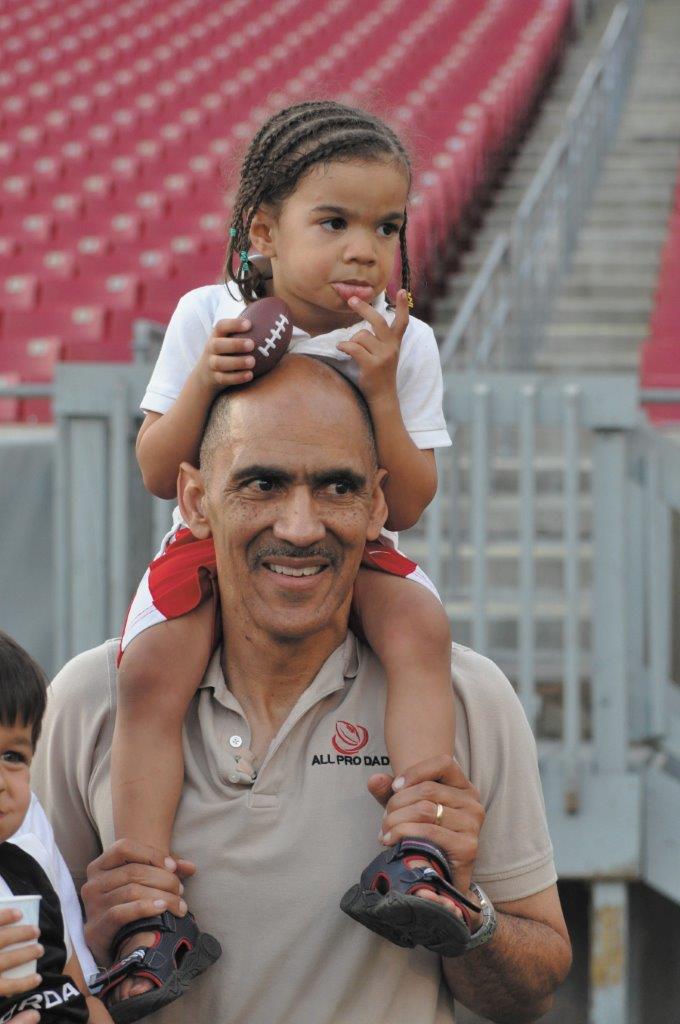
Blog - Influence - Alex & Stephen KendrickBlog - Influence - Tony Dungy Son - BPNews net (3)Photo Credit: BPNews.net

Be imitators of me, just as I also am of Christ. 1 Corinthians 11:1

We are all influencers in one way or another. How we steward our influence is strongly affected by those who have influenced us.

[This Monday morning moment has a spiritual bent, but the principles apply, whatever your belief system. It would be disingenuous for me to write about influence without including the impact of following Christ and Christ-followers in the mix. Thanks for your understanding of this.]

When I was in graduate school, my days were heavily committed to class time, clinical work, research and writing. Meeting with my thesis advisor was a regular “intrusion” into that schedule. For weeks, I would arrive late to our meetings, excusing myself always with some sort of “more important” fill-in-the-blank.  Communicating “more important than our time together”. My advisor was one of the most gracious women I’ve ever known. She was always spot-on ready for our meeting, having read my latest submission, with her notes in hand. If ever I was “fly-by-the-seat-of-my-pants”, it was with her.

Finally, one day, without warning, she nailed my tardiness for what it was…and I will never forget her for that. She taught me so much about professionalism and excellence in practice, but she taught me most in this area of honoring a colleague. I will always be grateful to Rose McGee for that.

Since those early years in my professional life, there have been many influencers in my life. Bosses, supervisors, coworkers. Some influencers had more celebrity status, but because they wrote for people like me, I soaked up their wisdom.Blog - Influence - Priscilla Shirer - BPNews net (2)Photo Credit: BPNews.net

Ben Kirksey recently wrote a short piece entitled Are You Worthy of Workplace Imitation?. It got me thinking of how my own workplace processes have changed because of those mentors, friends, and coaches in my life. 7 points of stewardship came to mind:

  1. Time – We all have the same amount. Honoring others’ time does matter – being interruptible, not shortchanging people, keeping and being present in meetings. It’s a balancing act, but we want to be dependable and resourceful in this area.
  2. Tweaking – only when absolutely necessary. Show you value others’ work. Give up control whenever possible. Whenever possible, trust their ownership of their work.
  3. More questions/Less Advice – We jump to advice (or direction). Learning to ask thoughtful and compelling questions is a discipline worthy of our time and effort. Jesus was masterful at this.
  4. Genuine Affirmation – To be truly known is such an empowering gift. General praise or cheery compliments are nothing compared with informed and specific affirmation. You affirm my thinking and hard work on a problem, and I will apply myself even more.
  5. Building Capacity – Investing in others’ success at work while, at the same time, expecting the most out of yourself, builds capacity all around. This collective commitment to the work and each other delivers. Building capacity is a “both/and” arrangement. We can’t cast vision for it effectively, without digging in ourselves.
  6. Leading by Influence – I have rarely enjoyed a position of authority…it is by influence that I have both learned and led in life. Authority has its own cross to bear in that the responsibility for return on investment sometimes interferes with relationships. Too bad, really. It’s through the relationships that we can see a greater return…as we steward influence.
  7. Perspective – I will never forget a workplace story about a creative director and his lead creative. They rarely agreed. In fact, as the younger man tells the story, their discussions could become very heated over the direction of any given project. Then there would come a moment when his boss would say, something like, “Let’s get some coffee.” or “It’s lunch time, let’s grab a bite to eat.” No matter the seriousness of the conversations, this older man was able to bring relational perspective to bear. Their relationship was more valuable than any project decision. I daresay the work didn’t suffer from this perspective.

I am so grateful for those who have influenced my work. As mentioned before, they include some whom I have never met physically. The Apostles Paul and Peter, and Jesus himself teach us volumes on stewarding influence well.

Shepherd the flock of God among you, exercising oversight not under compulsion, but voluntarily, according to the will of God; and not for sordid gain, but with eagerness; nor yet as lording it over those allotted to your charge, but proving to be examples to the flock.1 Peter 5:2-3

Do nothing from selfish ambition or conceit, but in humility count others more significant than yourselves. Let each of you look not only to his own interests, but also to the interests of others. Have this mind among yourselves, which is yours in Christ Jesus, who, though he was in the form of God, did not count equality with God a thing to be grasped, but emptied himself, by taking the form of a servant, being born in the likeness of men.  And being found in human form, he humbled himself by becoming obedient to the point of death, even death on a cross.Philippians 2:3-8

Finally, brethren, whatever is true, whatever is honorable, whatever is right, whatever is pure, whatever is lovely, whatever is of good repute, if there is any excellence and if anything worthy of praise, dwell on these things. The things you have learned and received and heard and seen in me, practice these things, and the God of peace will be with you.Philippians 4:8-9

Do you have a story of an influencer in your life and how that person changed the way you work? I would love to hear it through the Comments below.Blog - Influence - Jesus

Are You Worthy of Workplace Imitation? by Ben Kirksey

The People Skills of Jesus by William Beausay II

The Management Methods of Jesus by Bob Briner

The Other Side of Organizational Downsizing – What Survivors and Their Managers Can Do Going Forward

Blog - Downsizing strategies - slideshare.netPhoto Credit: Slideshare.net

Recently, a young friend of mine told me about an abrupt change in his company. He went in one morning to the usual – team meeting, work routine, cubicle life. Then in the early afternoon, without any prior notice or indication, the head of the company walked around the building with envelopes. By the end of the day, in this small tech support company, one-third of the employees had packed up and left the building.

Surprise lay-offs are the hardest to bear, but any kind of downsizing, no matter how necessary, is stressful and disorienting. When crisis precipitating a downsizing occurs, organizational leaders are wise to put together a transition team right away.

For those who were laid-off or who took the separation package in a carefully orchestrated downsizing, there is colossal adjustment. Hopefully, they will get the support they need to get that next job or to thrive in retirement.

For those who remain with the company, their adjustment can be great as well. Do an internet search for “surviving downsizing” and you will find hundreds of articles, and even several books on the subject.

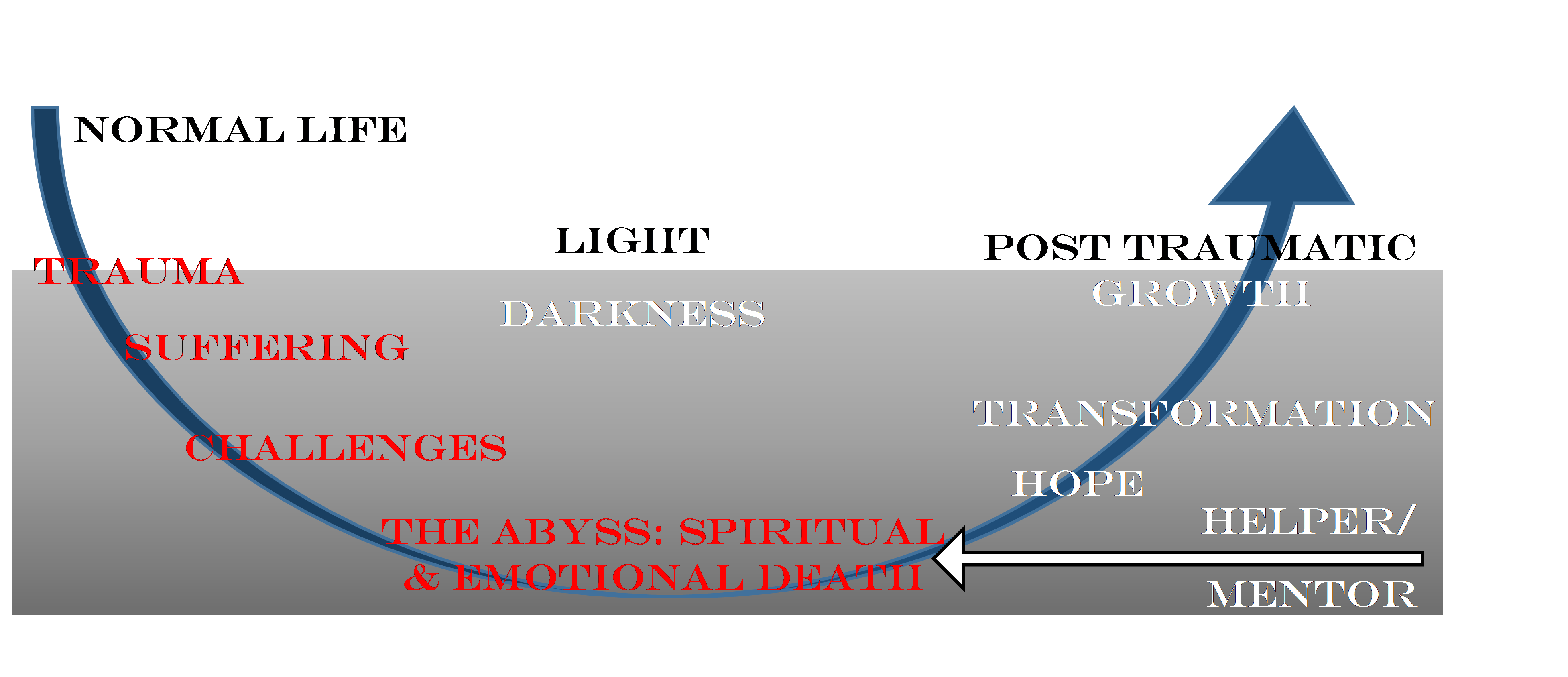
Employees who survive the downsizing (whether because of their age, capabilities, or department) will still go through a period of post-traumatic stress. On that Monday, for instance, after their colleagues leave, they must re-orient to a new normal.

Blog - Downsizing threat or opportunity - slideshare.netPhoto Credit: Slideshare.net

Michael Sanders, author of 7 Critical Mistakes Employees Make in a Downsizing, wrote an empowering Linkedin article on how to take charge of one’s own survivors’ syndrome and move forward. First Sanders defines the elements of “sickness”; elements which include guilt, mistrust, sadness, anxiety, and disagreeability. Then he moves right to ten “power moves” that employees can make for a healthier, more substantive work situation. I list these, but don’t miss, in the article, what he says further on each.

  1. Practice instant alignment re-centering.
  2. Play by the new rules.
  3. Speed up.
  4. Practice intensive task management.
  5. Fall in love with your work, again.
  6. Take on new assignments.
  7. Expand your business affiliations.
  8. Continue your education.
  9. Become your own hero.
  10. Keep in touch with laid-off [or “downsized”] work friends.

Some of Sanders’ action items may seem more than you can handle as you adjust yourself to a work life very different than the previous one. His bottom line is  to refuse to be a victim. Whether your organization is proactive in retaining and retraining you, you can champion your own professional needs and career. It will benefit you and either your current employer or your next one.

Stress specialist Morton C. Orman, M.D. also wrote a prescriptive piece entitled 18 Ways to Survive Your Company’s Reorganization, Takeover, Downsizing, or Other Major Change. Below are 8 of the points I believe are most helpful (again refer to his article for the rest of his wisdom).

  1. Be prepared for [more] change.
  2. Watch out for unrealistic expectations.
  3. Get creative.
  4. Expand your value to the company.
  5. Celebrate your accomplishments.
  6. Seek appropriate compensation or “risk share” arrangements.
  7. Improve lines of communication.
  8. Become more efficient.

Again, these may seem obvious, on one hand, and annoyingly intrusive as well. You’re grieving the beloved colleague who was laid-off or that great boss who retired. In the process of that grief which may be with you for some time, you still have that job to do…with probably more responsibility added. Sadness and anxiety tend to affect our performance negatively. That’s why it’s imperative to set in place processes you may not have needed before but need now to recover and embrace what’s ahead.

Hopefully you have leaders and managers who are already astutely moving the company forward…with you in mind, as well as the  product/services. If not, you can’t risk waiting. Do your reading, evaluate your course of action, build your new work community, and demonstrate to yourself and those around you…you are a survivor! In the best sense of the word.

The Downsizing Jungle: 10 Power Moves by Mike Sanders

The Effects of Downsizing on Survivors: a Meta-analysis – Dissertation of Dr. Gladys West; Virginia Polytechnic Institute and State University, 2000 – an excellent presentation of the issues of organizational commitment, job satisfaction, turnover intention, role conflict, job involvement, supervisor support, procedural and distributive fairness. [scholarly piece but worth wading through.]

Slideshare – Downsizing Best Practices – Survivors are Key – Don’t Neglect Them – Carol Beatty

Survivor Employees: What You Need to Know – description of 6 common profiles of employees dealing with “layoff survivor syndrome”

After Layoffs, Help Survivors Be More Effective – excellent article on what’s at stake for survivors of layoff and how, from a management standpoint, to turn things around.

18 Ways To Survive Your Company’s Reorganization, Takeover, Downsizing, or Other Major Change

Blog - Downsizing - slideshare.netPhoto Credit: Slideshare.net

Monday Morning Moment – Relational Wisdom – the Way It Could Be – at Work & Home

Blog - Monday Morning email

Monday morning emails can be treacherous… This morning when I woke,  my husband told me he’d just heard from a valued colleague that he had secured another job. Dave was expecting this because of previous communications they’ve had with each other. Through an organizational re-structuring, there are many whose jobs are changing. This email was good news because this person will be a tremendous addition to any team – good news and sad news. We will miss this man on our team but we celebrate a great job match.

Then another email came in. It was from the person who will be his new supervisor. It was full of respect and regard – a courtesy email that is not necessarily company culture these days but an email that shows understanding and empathy. When change comes, even good change, there is still that adjustment, that grieving of the good that was. Those two emails speak volume about emotional intelligence or relational wisdom…and that’s something we always need in the workplace…and at home.

The holidays have a particular call for wisdom to soften difficult expectations, disarm family conflicts, and personalize interactions to fit the needs of those nearest to us.

Blog - Monday Morning Moment - MarriagePhoto Credit: rw360.org

One very simple way we can tune into holiday celebrations is to deal with our own stuff. Keeping our minds on the goodness of the holidays helps. It’s easy to find daily Advent readings for the month of December…depending on your favorite author or blogger, they’ve probably written some.

Related to both our work and home relationships, Ken Sande, founder of Relational Wisdom 360, has given us a great gift, and we don’t have to wait another day for it. He has written 33 Ways to Enjoy Highly Relational Holidays. A fast-read blog a day on relational wisdom, starting on November 23 to take you right through to December 25.

I attended Dr. Sande’s Peacemaker course years ago during a challenging work season, and what I learned then continues to be a tremendous help to me today. If your work or family situation is somewhat intimidating, don’t despair. There are those in our lives (Ken Sande is one) who will come alongside and help/mentor us, if we’re willing to take care of our own hearts and minds.Monday Morning Moment - Post traumatic growthPhoto Credit: coldspringcenter.org

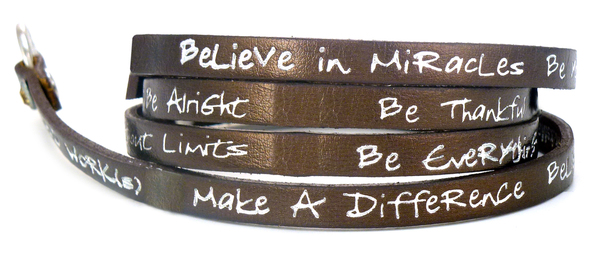
As Thanksgiving approaches and Christmas not far behind, I hope you can look forward to happily memorable times together with family. As far as work goes, just like with the emails above, we can do our part to make our workplace a kind and honoring experience – our part (not someone else’s) in making it the way it could be…the way it should be…Blog - Monday Morning Good Work BraceletPhoto Credit: GoodWorksBracelet.com

What helps you thrive in stressful situations at work? What has made a difference in bringing peace and joy to your holiday celebrations? Please comment and share with those searching for that wisdom.

Surviving Christmas – Advent Devotions for the Hard and Holy Holidays – Anne Marie Miller – free ebook

Advent Devotional Readings Online by Lifeway

Good News of Great Joy by John Piper

Unwrapping the Greatest Gift: a Family Celebration of Christmas by Ann Voskamp 

Monday Morning Moment – Marking Lives Well-Lived, Work Well Done

2015 Nov - Blog - Lilias Trotter - Well Done 004Photo Credit: Lilias Trotter, Parables of the Cross

There are no ordinary days, nor are there ordinary lives. This morning, Monday, November 2, is a day I want to mark as an opportunity to celebrate extraordinary lives. Yet, how is that even possible? People who live for grand causes and for God Himself don’t look for celebrations or accolades. What do we do then when we want to stand in ovation and clap them back out onto the stage for an encore?

Celebrating retiring colleagues is best done by those who know them well – who have watched them through the most difficult times, seen them push through seemingly insurmountable circumstances, resonated with their joy in the simplest triumphs.

How do we mark lives well-lived and work well-done? I don’t have that answer yet…except to express personal gratitude and to live and work in the shadow of these who went before…to steward well their example.

For today, I will enter into that process of puzzling over how properly to celebrate the lives and work of those “finishers” who have done well to fix their eyes on the goal…right through. It doesn’t feel enough, but for today, I join a great cloud of witnesses, so grateful to see how it is to finish well.

Therefore, since we have so great a cloud of witnesses surrounding us, let us also lay aside every encumbrance and the sin which so easily entangles us, and let us run with endurance the race that is set before us, fixing our eyes on Jesus, the author and perfecter of faith, who for the joy set before Him endured the cross, despising the shame, and has sat down at the right hand of the throne of God.” – Hebrews 12:1-2

As I sort this all out, I would be grateful for any stories you have of celebrating work well done and lives well lived. Following  are some quotes of those who finished strong or who, living still, are living well.

There are no ordinary people. You have never talked to a mere mortal. Nations, cultures, arts, civilizations – these are mortal, and their life is to ours as the life of a gnat. But it is immortals whom we joke with, work with, marry, snub and exploit – immortal horrors or everlasting splendors. This does not mean that we are to be perpetually solemn. We must play. But our merriment must be of that kind (and it is, in fact, the merriest kind) which exists between people who have, from the outset, taken each other seriously – no flippancy, no superiority, no presumption.” – C. S. Lewis

“The reward for work well done is the opportunity to do more.” – Jonas Salk*

“When we are at the worst times of our lives, when we are battling with something, or struggles, whatever it may be, when we are at our highest point as well, when things are going really well, we want somebody to comfort us and be there for us and to say, ‘Well done.’ That’s Jesus!” – Russell Wilson*

“Well done is better than well said.” – Benjamin Franklin*
“The pinnacle of the fulfillment I can ever experience for my spirit and soul is to hear from the Lord, when I see Him face to face, ‘Well done my good and faithful servant.'” – Nick Vujicic* Blog - Well Done - Nick Vujicic
The Apostle Paul, in an encounter with Jesus, was completely transformed from a life of murderous, religious zeal to a life of complete surrender to God (something altogether different). He speaks of living life, and finishing well – likened to fighting a good fight or running a race to the finish.
“But I do not account my life of any value nor as precious to myself, if only I may finish my course and the ministry that I received from the Lord Jesus, to testify to the gospel of the grace of God.” – Acts 20:24
“For I am already being poured out as a drink offering, and the time of my departure has come. I have fought the good fight, I have finished the course, I have kept the faith; in the future there is laid up for me the crown of righteousness, which the Lord, the righteous Judge, will award to me on that day; and not only to me, but also to all who have loved His appearing.” – 2 Timothy 4:6-8
2015 Nov - Blog - Lilias Trotter - Well Done 002Photo Credit: Lilias Trotter, Parables of the Cross
For us all…there is still a race to be run.
“My legacy doesn’t matter. It isn’t important that I be remembered. It’s important that when I stand before the Lord, He says, ‘Well done, good and faithful servant’. I want to finish strong.” – James Dobson*
“It is finished.” – Jesus, from the cross (John 19:30)
Blog - Well Done - Parables of the Cross - Lilias Trotter

Building a Healthy Work Culture – in a Season of Change, Uncertainty, and Dips in Morale

Blog - Culture of FunPhoto Credit: Grasshopper.com

What are you celebrating at work these days? Hopefully you didn’t have to think really hard. Just having a job is something to celebrate, for sure. Beyond that, hopefully you have work that gets you up in the morning with a sense of purpose and a gladness of heart for your work community.

What if that’s not the case this morning? Any number of things can cause our workplace to become more stressful than healthful – a disappointing outcome in our research, a conflict over division of labor, a company merger or buy-out, a downsizing. I am awkwardly  list such things because none may touch on your situation. What is your work situation and your current work culture?

Whatever it is, working over a protracted period of time with low morale makes for a difficult work situation. We want to do whatever we can to turn that around. Not just for the sake of the organization and the goals of same, but for the sake of the personnel. The wellbeing of employees is the biggest factor in the long-term productivity of organizations. Yet, how do we wrap our collective leadership minds around such a thing as morale and engagement?

The key is work culture – and fostering a healthy work culture with as much energy and thought as we do our product line or customer service.

I was reading about work culture, especially related to a season of spiraling morale, and came across a pdf introduction of the book How to Build a Thriving Culture at Work by Rosie Ward and Jon Robison.

Not having read beyond the introduction of the book, I can’t give a full recommendation yet. However, the first few pages have already resonated with me about what is at play related to morale, or well-being, and what could be possible to restore it. Here are some quotes from Ward & Robison’s Introduction:

“Despite overwhelming evidence of a powerful link between effective leadership styles, positive work cultures and higher levels of organizational performance, many companies still operate with a top down, authoritarian management style, do not measure or intentionally create their desired culture, and do not effectively develop current and future leaders to maximize employee engagement and wellbeing.”

The authors go on to say that even in work situation where the leadership style is more employee-centered, the idea of work culture may not be well-understood or operationalized.

“Culture is the differentiating factor between high-performing and low-performing companies; however, most companies have not identified, articulated, measured or intentionally created their desired culture.”

The dilemma of employee morale may actually extend to the leadership team itself.

“The majority of executive leadership teams are not operating in a truly cohesive manner, and many leaders themselves are at a point of burnout.”

“Edgar Schein, PhD, leading researcher on corporate culture, describes culture as ‘the hidden force that drives most of our behavior both inside and outside organizations’. It’s like looking at a river. All of the things you see on the surface, from the flow of the water to the shape of the riverbed, are manifestations of an ever-changing, powerful current beneath the surface. In terms of culture, the current that ultimately guides the strength and direction of the organization includes the unconscious, taken-for-granted beliefs, perceptions, thoughts and feelings of employees. The interaction between leaders and culture is profound and critical when considering how to transform or evolve the overall culture and subcultures within an organization.

“Patrick Lencioni writes that, to be successful, an organization must focus on two basic qualities: It must be smart, and it must be healthy. According to Lencioni, a ‘smart organization’ is one that excels in the classic fundamentals of business — i.e., strategy, operations, finance, marketing and technology. A “healthy organization” is one in which there are minimal politics, minimal confusion, high morale, high productivity and low turnover. While being smart is only half of the equation, for most organizations, it occupies almost all of the time, energy and attention of leaders. Yet, according to Lencioni: ‘Once organizational health is properly understood and placed into the right context it will surpass all other disciplines in business as the greatest opportunity for improvement and competitive advantage. Really.‘”

Blog - How to Build a Thriving Culture at Work

Photo Credit: Amazon.com

How to Build a Thriving Culture at Work, Featuring the 7 Points of Transformation by Rosie Ward and Jon Robison

Work culture and employee well-being are not addressed by just another wellness program. Organizational ethos and values must incorporate both philosophy and programming to build morale, trust, and engagement of employees. Especially if the organization has been through a protracted season of change and uncertainty.

The good news is that possibilities abound. Workplace development literature is rich with approaches and frameworks that you will find helpful in attacking your own set of challenges. One such article is Workplace Culture is Everything: 20 Ideas For Building a Thriving Team – Great links to 20 articles on Workplace Culture. [I apologize, since I’m citing this resource, for the “coded” profane word in the title of one article. Good read otherwise].

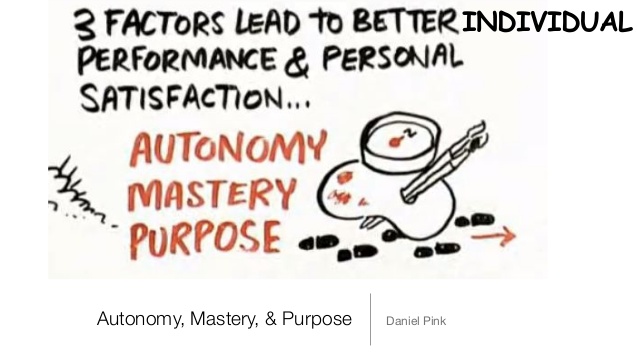
Another book I re-discovered in reading about morale this weekend is Daniel Pink’s Drive. When a company is in the middle of a reorganization or restructuring, employee wellbeing (engagement, performance, satisfaction) can get lost in the sheer workload of the executive leadership team. This is when Human Resources, Membercare, or the Employee Medical Program can offer their own recommendations as to how to rebuild the work culture from the personnel side.

Are you in such a season? What have you done in this area? What has been helpful? I would love to hear about how your organization has dealt with employee morale and engagement during seasons of transition.

Blog - Healthy Culture - Motivation - Slideshare.netPhoto Credit: Slideshare.net

Drive: The Surprising Truth About What Motivates Us by Daniel H. Pink

11 Ways to Create a Thriving Workplace

How to Create and Maintain a Workplace Culture That Will Make Your Company Thrive

Monday Morning Moment – On Silos and Tribalism – Taking “Us” and “Them” to a Better “We”

Blog - Silos & TribalismPhoto Credit: Slideshare.net

“Silos”, as a workplace term, is such a fitting description for what we do to distinguish ourselves from each other. It means compartmentalization based on specialization. Now the term “silos” is less used, replaced by the cooler term “tribes”. Unfortunately, because the workplace woes of old are still in operation, “tribes” have deteriorated into “tribalism” or…[Hello] “silos”.

I began thinking about this again this weekend when a retweet came up in my Twitter feed featuring Gianpiero Petriglieri. So much organizational resource – money and time – is spent on specialization and grooming leaders. It’s a pity when the outcome actually draws down the organization ( to small pockets of “tribal buddies”) instead of honing expertise and relationships across departments, across disciplines.Blog - Silos and Tribalism

What if we could break down silos, and reorient and reenergize tribes? What if workplace tribes incorporated a grand plan that nurtured inclusion – creating “a rising tide that lifts all boats” (Adam Grant)?

Years ago, when I was a young instructor at Yale University, I experienced workplace silos. There were bottlenecks through which I had to maneuver, until I figured out how to win those beyond the bottlenecks. Since then silos have been a part of life for me, as I’m sure they are for us all. Oncology nursing had a different prestige than critical care nursing. Was one better than the other? No.

Working in the Middle East had its own set of challenges different from working in Europe. Does that mean one elicits greater respect or benefits than another? Of course not. Right? Communication between those in the field and those in the home office can also become very much an “us” and “them” transaction.  Even within the home office, one department may seem more the “flavor of the month” than another. What are your silo/tribe challenges?

Brilliant business writers can give us great tools and insight with breaking down silos (see fast reads in the links below). If you are anticipating a major change in your organization (buy-out, down-sizing, shift in focus/product line), it makes for a perfect storm to deal with silos. Of course, if management across the organization leads out with a unifying goal (a “battle-cry”), the possibility for success is heightened. I don’t think, however, that this is the only hope for success.

What if one department, a single silo or tribe, decided to tackle the problem? What would that look like? From my work experience and from learning from great leaders, both celebrity and colleague, here’s a bare-bones minimum how-to-get-started list:

  • What is your common goal as an organization? What is the clear unified rallying cry around which you can collaborate?
  • What are your own silo biases? Do you communicate that you think your department, location, specialization should have some sort of favor? Deal with that. It’s the first barrier that has to come down.
  • If trust has been disrupted or destroyed, who can you partner with to begin to rebuild trust? Name them, and begin the process (if you pray, you might begin praying for their success as a department/division – make it NOT about you).
  • What objectives can you establish as a department to guide you in staying focused on high-value collaboration across-specialties?
  • How will you measure the course of your action toward becoming a non-silo, less tribal department? Set a time. 6 months or across whatever acute crisis you see coming. Be as intentional and broad-reaching as you are able, given your own workload. Remember that silos alter the math in a workplace – 1 + 1 + 1 = 2 when teams aren’t sharing information and working at cross-hairs. We can make the math work better, as we work, against the flow, toward creative collaboration. 

My professional life has had various silo experiences, from teaching in an Ivy League university to working on a highly innovative team (recklessly creating its own brilliant unintentional silo, later with personal regret). Silos and workplace tribes never get us where we want to go collectively. Bring ’em down.

I would love to hear about your work experiences…any struggles, breakthroughs, or victories in this area of breaking down silos and building a culture of “Yes, WE can…together.”

Blog - Organizational CUlture - Lencioni book Silos, Politics & Turf WarsPhoto Credit: Amazon.com

Silos, Politics and Turf Wars – A Leadership Fable about Destroying the Barriers that Turn Colleagues into Competitors

Silos and Tribes – Think Different

http://www.slideshare.net/JDDillon/breaking-down-silos-how-social-learning-changed-everything-for-kaplan-atdtk

17 Strategies for Improving Collaboration – from the Freiberg’s – Do Not Miss This One.

How to Build Trust and Fight Tribalism to Stimulate Innovation

Breaking Bad – Squash Silos & Tribalism – Breakthrough Personal Branding

Leadership Axioms: Powerful Leadership Proverbs by Bill Hybels

Monday Morning Moment – You Have Three Choices – in Work and Life

Blog - Monday Morning - Facebook imagePhoto Credit: Nourish the Dream – Facebook.com

Slaves, in all things obey those who are your masters on earth, not with external service, as those who merely please men, but with sincerity of heart, fearing the Lord. Whatever you do, do your work heartily, as for the Lord rather than for men, knowing that from the Lord you will receive the reward of the inheritance. It is the Lord Christ whom you serve.Colossians 3:22-24

Hopefully, you’re not feeling like a slave this Monday morning. You have choices. Even Paul, in writing to the Colossian church, spoke to those believers, enslaved at that time, as persons with choices.

My Monday mornings these days have been filled with thoughts and prayers for friends working in difficult and unusual circumstances – uncertain futures, struggling to stay on course, grappling with coming change. If you’re not in such a challenge, be glad and learn from those who are. How thankful I am for those in my life who shine as “stars in the universe” (Philippians 2:14-16).

Every single day, we have choices of how we deal with our work and our co-workers…especially in the press of uncertainty and change.

1. We could give up. What a temptation this is. When we are faced with what seems like a waning future (dwindling opportunities, more work with less workers, damaged trust), it is easy actually to give up. We clock in and do what’s necessary. Stay below the radar. Spend breaks researching other jobs. Keep doing what we’ve been doing with no vision for the future. This is an easy default…don’t make it yours. You’re better than that.

2. We could give in. – This is the darker choice. This is when we allow bitterness to take root in our hearts and color our attitudes and work. Giving in is when our performance actually deteriorates because we figure who cares anyway. Giving in is when we say the ugly things we’ve been thinking about our situation. Giving in is when we treat colleagues who were once friends as competitors, as threats to our position rather than supporters. Giving in does no one any favors and actually adds to the burden we already feel in what may be a very complicated situation already. Giving in is never where we want to go.Blog - Look Back, Look forward - Nourish the dreamPhoto Credit: Nourish the Dream Facebook.com

3. We could give it all we’ve got. Here’s where huge faith and great character come in. It’s so easy to say, “Keep doing what you’re doing”, “Stay in the game.”, “Trust God”. Don’t get me wrong; these encouragements are wise and true…it’s when we are struggling with the muck and mire of actually putting feet to faith in a situation that seems wrong. The difficulty at work may not even be wrong; it may be completely necessary…It’s when the force of the impact lands squarely on you that these choices become so real. Still, we have choices. It’s not the workplace that forces these choices on us. They are always ours. Every. Single. Workday.

If I can speak into my friends’ struggle, please stay on the course you’ve been on – such a way that you continue to build/leave a legacy of glory – to God and to the work He’s given us to do. One friend of ours in the thick of a stressful, stressful work situation, told another friend of mine, “Don’t lose heart”.  When you hear that kind of encouragement from someone determined to keep his own focus on what matters it resonates with such verity you want to do nothing less. So, let’s never lose heart and let’s do the work of trusting God in our situations. It’s so much better than the consequences of the other choices. So much better.Blog - Unknown future and a Known God - Monday MorningPhoto Credit: Nourish the Dream Facebook.com

After all, it’s only Monday morning. Who knows what the rest of the week will bring? For my friends who are in complicated work situations, having to drag yourselves out of a ditch each day to do a good job, I want to say how thankful I am to know you. How honored to see the fruit of your work. How joyful that our paths have crossed in the workplace. How much more trusting I am of God myself, because of you.

As our friend said, please “don’t lose heart”.

For all things are for your sakes, so that the grace which is spreading to more and more people may cause the giving of thanks to abound to the glory of God. Therefore we do not lose heartFor momentary, light affliction is producing for us an eternal weight of glory far beyond all comparison.2 Corinthians 4:15-17

Let us not lose heart in doing good, for in due time we will reap if we do not grow weary. So then, while we have opportunity, let us do good to all people, and especially to those who are of the household of the faith. – Galatians 6:9-10

Blog - Encouragement, Empowered, every good workPhoto Credit: Nourish the Dream, Facebook.com

Nourish the Dream – Your Headquarters for Biblical Business Success – Facebook page – David G. Johnson

13 Bible Verses to Overcome Disappointment

World-Class Customer Service – The Key Is Caring – Horst Schulze on a Culture of Service

Blog - Horst SchulzePhoto Credit: Arnezzy.tumblr.com

Just the expression “5-Star Hotels” summons delicious images of ocean views and chic, comfortable rooms and all those tiny touches to insure your return. Though never a guest in such a hotel, I have enjoyed 4-star treatment, and I have been a customer of Chick-fil-A  and Southwest Airlines. All through our days, we are administering and receiving some sort of customer service.

A couple of weeks ago, I had the privilege of learning about customer service from Horst Schulze, a world-renowned leader in the field of luxury hotels. He gained his wisdom and expertise, up through the ranks, and his counsel is applicable to any peopled workplace or organization. Schulze puts caring at the foundation for world class excellence – not just caring about the customer or client (albeit extremely important) but caring for all people (the employees and all who interface with each other in his industry).

Mr. Schulze talks about the service process as three parts: delivering an excellent product (without defect), in a timely manner, with genuine caring. Genuine caring. Not silly over-friendliness, or with casual sloppiness. Genuinely caring for the customer’s personage, time, and purpose for that interaction.

Since his presentation, I have intentionally looked at service very differently. Whether we’re talking about a small business or a large franchise, a school or university, or even such a thing as a church connection team. We can enhance customer satisfaction and loyalty by intentionally and comprehensively setting our culture.

Mr. Schulze is people-oriented – with his employees, vendors, and customers. He manages this in his hiring and training practices and through a vigilant daily (industry-wide) practice of his canon of customer service standards* (definitely worth a read- click on the link below to read the 24 standards). As I listened to him speak, his whole demeanor was that of one who joyfully delights in excellence and bringing it to bear in improving the lives of those around him.

No matter how well we think we’re doing in providing services or responding to the needs of our clients/customers, we would do well to look at the practices of such businesses as the Capella Hotel Group, Chick-fil-A, and Southwest Airlines. You will see this common thread of caring in their philosophies, culture, and standards.

“I dreamed of hotels where every employee comes to work not just to work but to create excellence, where every employee is committed, and where it’s not about creating rules but about every customer being taken care of the way they want to be taken care of.” – Horst Schulze**

“Focus on creating an organization of excellence and have processes where you can transfer excellence. That starts by finding out what is excellent in the eyes of the customer – what the guest really wants from us – based not just on what they said they wanted but what they were really thinking.” – Horst Schulze**

“It’s my responsibility to set standards. I have no right to accept mediocrity or limitation. If you don’t point out flaws, mediocrity will set in. It’s my business to do what is right and not make excuses for mediocrity. I agonize when I make a decision that it is good for all concerned; if it’s not, I don’t do it.” – Horst Schulze**

[Leading by Culture] “Southwest was the first to create a position entitled “Vice President of Customers.” For many years Colleen Barrett held the position. She understood that Customers always come first, and that in order to have a Customer service mindset you cannot separate the importance of the internal Customer (Employees) from the external Customers (passengers). If the internal Customer is happy, it will naturally flow to the external Customer in the form of good service.” – Lessons in Loyalty, Ian BrooksBlog - Southwest Airlines - Customer Service Culture - leapq.orgPhoto Credit: leapQ.org

 “Every life has a story, and often our customers and our employees, need a little grace and a little space when you deal with them because they are either experiencing a problem, just finished having a problem, or are about to have one. The word ‘restaurant’ means place of restoration. We think of Chick-fil-A as an oasis where people can be restored.  We’re all people with a lot of emotional things going on that don’t necessarily show on the surface, so we try to offer amenities and kindness that minister to the heart.” – Dan Cathy, President, Chick-fil-A***

Blog - Customer Service - Chick-fil-APhoto Credit: jyontheroad.blogspot.com

“Forty years ago, exceptional was a glass elevator in the lobby; then it became real paintings and fine marble and so on. Now it’s coming back to doing what the individual guest really wants: personalized and individualized service geared not to the market, but to the individual. True luxury today is about responding to each individual guest.” – Horst Schulze**

*Capella Hotel Group’s Canon service standards conceived by chairman and founder Horst Schulze

**Defining Luxury – LEADERS Interview with Horst Schulze

YouTube Video – Horst Schulze- Presentation on Customer Service

Global Leadership Summit – 6 Take-Aways from Day 2 of #GLS15

Summaries on All Speakers of Global Leadership Summit 2015 by David M. Arnold

Notes from the GLS15 – Creating World Cass Service – Horst Schulze

****A Lesson in Customer Service from Chick-fil-A President Dan Cathy

The Chick-fil-A Difference: Why Customer Lingo Matters

Thank you. My pleasure.

What You Can Learn from Southwest Airlines’ Culture

***Lessons in Loyalty: How Southwest Airlines Does It – An Insider’s Point of View

Southwest Airlines – the Airlines with Heart – and One Heart I Know Well

Monday Morning Moment – A Fresh Start – 5 Verses to Get You Out of Bed & Going

Blog - Monday Morning

Monday morning. It’s one of my favorite times of the week. Crazy, maybe…but I love fresh starts and new beginnings. When I woke this morning, this quirky little song was bouncing around in my head. It’s a Beautiful Morning – that oldie by The Rascals (1968, I know, really old). That got me going, but what keeps me going on a Monday morning (o.k. along with coffee) are the promises of God.

Here are 5 verses that are a quick read to help you get out of bed and get going. Remember, He’s got this.

In the early morning, while it was still dark, Jesus got up, left the house, and went away to a secluded place, and was praying there. – Mark 1:35

Let me hear in the morning of your steadfast love, for in You I trust. Make me know the way I should go, for to You I lift up my soul. – Psalm 143:8

The steadfast love of the Lord never ceases; His mercies never come to an end; they are new every morning; great is Your faithfulness.  – Lamentations 3:22-23Blog - Monday Morning 2

Sing praise to the LORD, you His godly ones, And give thanks to His holy name. For His anger is but for a moment, His favor is for a lifetime; Weeping may last for the night, But a shout of joy comes in the morning.Psalm 30:4-5

Satisfy us in the morning with Your steadfast love, that we may rejoice and be glad all our days. Psalm90:14

Whether you are a morning person or it’s a resounding snooze alarm and no more vacation days that drag you out of bed this morning, remember you have a God who loves you and is with you all the way.Blog - Monday Morning 4

Do Over by Jon Acuff – my current read; will tell you about it when I’m done.

How to Fall in Love with Mondays – Reignite your Love for your Work with these Five Strategies – Fast Company article by Lisa Evans, referencing Do Over by Jon Acuff