
Tag Archives: workplace

Monday Morning Moment – Are You Engaged at Work? It Matters that YOU Show Up

Blog - Engagement - idonethis blogPhoto Credit: IDoneThis.com

In the pre-dawn light of this Monday morning, my husband and I sat briefly together. Over our first cup of coffee, we were talking about employee engagement, of all things. I had just read the most excellent blog (by Corinne Rogero) on being engaged, and it inspired a rare early morning conversation. Be encouraged.

This beautiful young woman, Corinne, tantalizes the reader with a blog seemingly about engagement to be married:

“I want to be engaged, but it’s probably not what you think. I’m as single as a slice of American cheese right now, which is perfect for me and I prefer it that way. But when I say I want to be engaged, I don’t mean I’m looking for a fiancé. I mean I want to be engaged in the sense that I’m mindful of the people and surroundings and culture and the spiritual warfare around me. I want to establish meaningful connections with the person on the other side of my coffee mug or in the booth across from me at dinner or in the passenger seat of my car. I want to lean in and connect with the stories being told. I want to actively console the sorrows being shared. I don’t want to go through conversations absentmindedly anymore.” – Corinne Rogero, I Should Be Engaged

This state of mindfulness and staying in the present are crucial to being engaged…no matter the environment or work circumstance.

Employee engagement is a property of the relationship between an organization and its employees. An “engaged employee” is one who is fully absorbed by and enthusiastic about their work and so takes positive action to further the organization’s reputation and interests.

When we become discouraged or demoralized with work, our tendency is to lose our bearings, almost become disoriented. We move to being defensive (reactionary), rather than offensive (proactive or forward-thinking). We lose focus and the best problem-solvers, highest producers among us can seem to lose their way…shifting focus to lesser goals and more easily achievable ends.

What I loved most about Rogero’s blog on being engaged was the personal intentionality of it. Her chief desires were clear and she was resolved to clear the way for them…in her day-to-day present.

I loved that and am inspired, empowered, and energized by that. I want to communicate and model that in my own workspace.

Tom Muha wrote a great piece entitled Achieving Happiness: Leadership Styles: Multipliers vs. Diminishers. I didn’t see how it related to achieving happiness but it did give an excellent summation of Liz Wiseman’s book Multipliers: How the Best leaders Make Everybody Smarter. Read her book for sure; Muha’s article will whet your appetite to read it.

I refer you to the concept of “multipliers vs. diminishers” because employee engagement is incredibly impacted by what kind of supervisor we have. Some supervisors maximize their team’s work experience (multipliers) while others maximize their own perceived importance to the organization rather than empowering their employees (diminishers).

We may not easily see how we can alter our situation with our boss (other than losing ourselves trying to please him/her, disengaging, or quitting altogether), but I see possibilities. It is possible, we can make a difference with our boss…if we don’t give up. It is also possible to make a difference for peers to help each other stay engaged or to re-engage. I loved Corinne Rogero’s quote below:

You will not find the warrior, the poet, the philosopher or the Christian by staring into his eyes as if he were your mistress: better to fight beside him, read with him, argue with him, pray with him.C. S. Lewis

It is hard sometimes…harder than we could imagine it would be sometimes…but whatever it takes to stay in the battle is better than disengaging ourselves from it.

Disengagement is very isolating. The disengaged just get quieter and focused elsewhere. Or, at its worst, disengagement gathers together a company of the miserable. No judging here…I just grieve the loss of what can be – not just product or service, but the continuing growth, joy, satisfaction of real, valued people at work.

Whatever our work situation or challenge, staying engaged is worth every effort, moment by moment. Hopefully your organization understands and is building in processes for ongoing employee engagement. Speak into that, if given opportunity. Speak into it anyway.

BLog - Employee engagement - management study guide

Photo Credit: ManagementStudyGuide.com

Hear one last word from Corinne Rogero on being engaged in life in the present:

“I want to be locked and loaded with an arsenal of grace and truth and boldness to bring the good news of hope into the lives that intersect mine. I want to be fully aware of God’s presence in every moment and not as much like Jacob who woke from his sleep and said, “Surely the Lord is in this place and I didn’t know it!”Corinne Rogero

No matter our situation at work – a team at odds with itself, a difficult culture, a boss who I don’t understand – no matter our situation, we can determine to be engaged. There is an undeniable emotional component to engagement, but it is larger than emotion. We can do the personal work of being “locked and loaded” – alone or with a few others who share our same vision and stewardship (belief/ethics). Our work lives are too precious to waste in disengagement… It may take some time for our circumstances to change, but our hearts, resolve, and focus can be sharpened in the fire of whatever difficulty faces us at work…if we don’t give up*.

What challenge are you facing at work that steals away your joy, drive, or confidence? What has helped you stay engaged? What are you doing to turn perceived walls, barriers or bottlenecks into doorways? Let us learn from you in comments below, please.

I Should Be Engaged – Corinne Rogero

Multipliers: How the Best Leaders Make Everybody Smarter by Liz Wiseman and Greg Mckeown

Gallup – Five Ways to Improve Employee Engagement

Best Practice Advice on Employee Engagement and Organization Development
*Galatians 6:9

Monday Morning Moment – Mission Drift – 12 Quotes on Being True to Our Mission

  Blog - Mission DriftPhoto Credit: Peter K. Greer, President & CEO of Hope International

[From the Archives]

“You are the salt of the earth; but if the salt loses its flavor, how shall it be seasoned? It is then good for nothing but to be thrown out and trampled underfoot by men. You are the light of the world. A city that is set on a hill cannot be hidden. Let your light so shine before men, that they may see your good works and glorify your Father in heaven.” – Matthew 5:13-14, 16

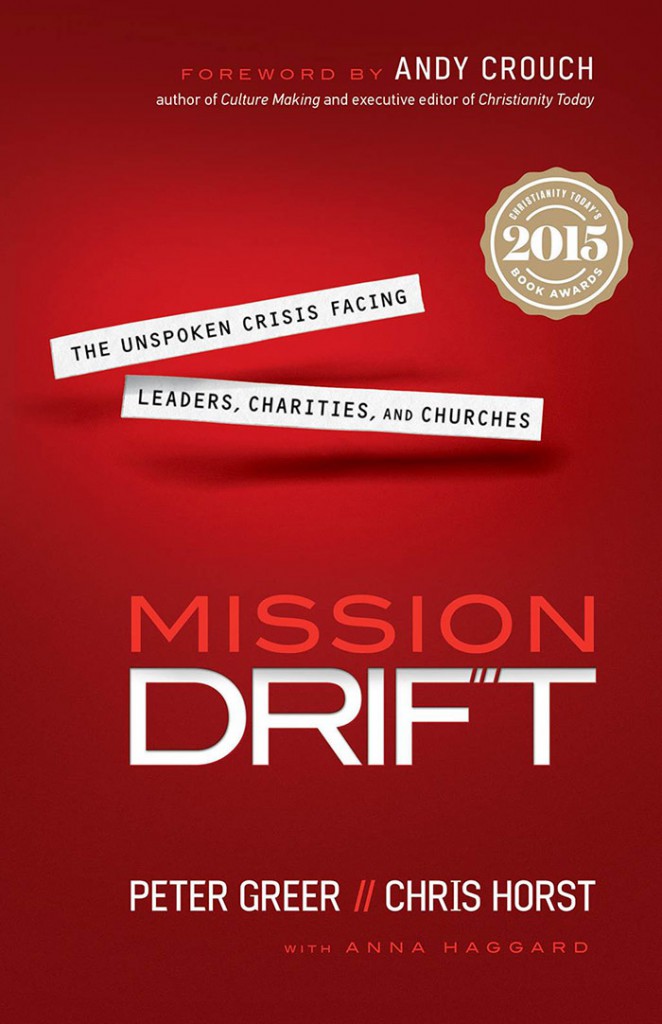
Peter Greer and Chris Horst (with Anna Haggard) wrote an incredible little book entitled Mission Drift. The book’s byline is “The Unspoken Crisis Facing Leaders, Charities, and Churches”. I enthusiastically recommend this book to anyone who has invested their lives in a faith-based organization, or Christ-centered business, or Christian charity. In fact, if you haven’t already read it, and you’re a Christ-follower, please make it a priority.

Mission drift is the slow and insidious shift away from the original mission, purpose, and identity of an organization. Greer and Horst have done extensive research on organizations who have either remained “mission true” or have fallen sadly away from their mission. The stories are fascinating and compelling. They lay a foundation that can help all of us prevent mission drift in our own lives and in our spheres of influence.

12 quotes from the book follow. These are just to whet your appetite. Mission Drift is an easy read and the truths resonate with our desire to be faithful and true stewards.

“Mission Drift…is pervasive and affects faith-based organizations of all varieties – nonprofits, churches, denominations, businesses, foundations, and schools. ..be optimistic…that drift is not inevitable.” (pp. 19, 22)

Mission True organizations know why they exist and protect their core at all costs. They remain faithful to what they believe God has entrusted them to do. They define what is immutable: their values and purposes, their DNA, their heart and soul…To remain Mission True is to adapt and grow, so long as that adaptation and growth does not alter the core identity.” (p. 27)

Mission True organizations know who they are and actively safeguard, reinforce, and celebrate their DNA. Leaders constantly push toward higher levels of clarity about their mission and even more intentionality about protecting it.” (p. 51)

Leaders often first ask what, then move to how, and finally transition to why. ..Great innovators…start with why. The ordering really matters. Everything flows from why. Not only does it motivate others to join you, it also guides what you do – and often more important – what you don’t do.” (pp. 71-72)

The gravitational pull of secularism is felt perhaps most acutely in hiring…Mission True leaders hire carefully, intentionally, and prayerfully. They approach each hiring decision seriously, recognizing that each staff member represents the mission of the organization. ” (pp. 103, 107)

“Mission True organizations recruit and engage Mission True donors.” (p. 115)

You are what you measure…Our highest goal is to remain faithful to our Christ-centered identity and mission. Because of our identity, we must pursue excellence. Metrics can be self-serving. We need to be clear why we pursue them. Seeing God for who He is clarifies our role: We are stewards. Metrics help us to remain accountable for the work that God has placed in our hands.”  (pp. 131, 133, 136)

“Slapping an ichthus (the Christian fish symbol of the early church) on product packaging does not mean it honors God. Christian shoddy is still shoddy. In Mission True organizations, quality must be nonnegotiable.” (p. 139)

“‘Culture eats strategy for breakfast.’  Mission True organizations get this. They focus on the little things. They understand how important practices and norms are to the living and breathing cultures of their organizations. The small decision each and every day may seem inconsequential, perhaps even trivial, but these little things protect against Mission Drift…Beyond policies, Mission True organizations recognize that culture is composed of all the ‘little things’.” (pp. 148-149, 155)

“Clear language reinforces identity and also leads to accountability. Being clear with your plans and identity enables people to keep you on mission. If you regularly talk about who you are, you invite scrutiny and accountability. Publicly proclaiming who you are strengthens your identity and empowers people to point out inconsistencies.” (p. 163)

“Also I say to you, whoever confesses Me before men, him the Son of Man also will confess before the angels of God. But he who denies Me before men will be denied before the angels of God.” – Luke 12:8-9

“For organizations who desire to protect against Mission Drift, one of the most powerful anchors is the local church…Wisdom lies in anchoring ourselves to the church as the church is anchored to Christ. Across time and culture and trends, the church remains.” (pp. 167, 173)

“Courageous Mission True leaders…have stood unwaveringly upon the Truth of the Gospel. In all areas, they have demonstrated intentionality and clarity in retaining Christian distinctiveness. They are committed to Christ, first and foremost.” (pp. 180-181)

********************************************************************

One organization very dear to me keeps its mission before its personnel and donors in regular, consistent, creative and winsome ways. We know what we are about. There is never a doubt what we’re to be about. What safeguards does that beloved faith-based organization of yours have in place to hold back mission drift?

Peter K. Greer Blog

Chris Horst Blog

The Subtle Danger of Mission Drift

Monday Morning Moment – Stewarding Our Influence Well

Blog - Influence - Alex & Stephen KendrickBlog - Influence - Tony Dungy Son - BPNews net (3)Photo Credit: BPNews.net

Be imitators of me, just as I also am of Christ. 1 Corinthians 11:1

We are all influencers in one way or another. How we steward our influence is strongly affected by those who have influenced us.

[This Monday morning moment has a spiritual bent, but the principles apply, whatever your belief system. It would be disingenuous for me to write about influence without including the impact of following Christ and Christ-followers in the mix. Thanks for your understanding of this.]

When I was in graduate school, my days were heavily committed to class time, clinical work, research and writing. Meeting with my thesis advisor was a regular “intrusion” into that schedule. For weeks, I would arrive late to our meetings, excusing myself always with some sort of “more important” fill-in-the-blank.  Communicating “more important than our time together”. My advisor was one of the most gracious women I’ve ever known. She was always spot-on ready for our meeting, having read my latest submission, with her notes in hand. If ever I was “fly-by-the-seat-of-my-pants”, it was with her.

Finally, one day, without warning, she nailed my tardiness for what it was…and I will never forget her for that. She taught me so much about professionalism and excellence in practice, but she taught me most in this area of honoring a colleague. I will always be grateful to Rose McGee for that.

Since those early years in my professional life, there have been many influencers in my life. Bosses, supervisors, coworkers. Some influencers had more celebrity status, but because they wrote for people like me, I soaked up their wisdom.Blog - Influence - Priscilla Shirer - BPNews net (2)Photo Credit: BPNews.net

Ben Kirksey recently wrote a short piece entitled Are You Worthy of Workplace Imitation?. It got me thinking of how my own workplace processes have changed because of those mentors, friends, and coaches in my life. 7 points of stewardship came to mind:

  1. Time – We all have the same amount. Honoring others’ time does matter – being interruptible, not shortchanging people, keeping and being present in meetings. It’s a balancing act, but we want to be dependable and resourceful in this area.
  2. Tweaking – only when absolutely necessary. Show you value others’ work. Give up control whenever possible. Whenever possible, trust their ownership of their work.
  3. More questions/Less Advice – We jump to advice (or direction). Learning to ask thoughtful and compelling questions is a discipline worthy of our time and effort. Jesus was masterful at this.
  4. Genuine Affirmation – To be truly known is such an empowering gift. General praise or cheery compliments are nothing compared with informed and specific affirmation. You affirm my thinking and hard work on a problem, and I will apply myself even more.
  5. Building Capacity – Investing in others’ success at work while, at the same time, expecting the most out of yourself, builds capacity all around. This collective commitment to the work and each other delivers. Building capacity is a “both/and” arrangement. We can’t cast vision for it effectively, without digging in ourselves.
  6. Leading by Influence – I have rarely enjoyed a position of authority…it is by influence that I have both learned and led in life. Authority has its own cross to bear in that the responsibility for return on investment sometimes interferes with relationships. Too bad, really. It’s through the relationships that we can see a greater return…as we steward influence.
  7. Perspective – I will never forget a workplace story about a creative director and his lead creative. They rarely agreed. In fact, as the younger man tells the story, their discussions could become very heated over the direction of any given project. Then there would come a moment when his boss would say, something like, “Let’s get some coffee.” or “It’s lunch time, let’s grab a bite to eat.” No matter the seriousness of the conversations, this older man was able to bring relational perspective to bear. Their relationship was more valuable than any project decision. I daresay the work didn’t suffer from this perspective.

I am so grateful for those who have influenced my work. As mentioned before, they include some whom I have never met physically. The Apostles Paul and Peter, and Jesus himself teach us volumes on stewarding influence well.

Shepherd the flock of God among you, exercising oversight not under compulsion, but voluntarily, according to the will of God; and not for sordid gain, but with eagerness; nor yet as lording it over those allotted to your charge, but proving to be examples to the flock.1 Peter 5:2-3

Do nothing from selfish ambition or conceit, but in humility count others more significant than yourselves. Let each of you look not only to his own interests, but also to the interests of others. Have this mind among yourselves, which is yours in Christ Jesus, who, though he was in the form of God, did not count equality with God a thing to be grasped, but emptied himself, by taking the form of a servant, being born in the likeness of men.  And being found in human form, he humbled himself by becoming obedient to the point of death, even death on a cross.Philippians 2:3-8

Finally, brethren, whatever is true, whatever is honorable, whatever is right, whatever is pure, whatever is lovely, whatever is of good repute, if there is any excellence and if anything worthy of praise, dwell on these things. The things you have learned and received and heard and seen in me, practice these things, and the God of peace will be with you.Philippians 4:8-9

Do you have a story of an influencer in your life and how that person changed the way you work? I would love to hear it through the Comments below.Blog - Influence - Jesus

Are You Worthy of Workplace Imitation? by Ben Kirksey

The People Skills of Jesus by William Beausay II

The Management Methods of Jesus by Bob Briner

5 Friday Faves – Millennials, Christmas Lights, Post-Traumatic Stress Disorder, “a Good Man is Hard to Find”, and a Christmas Album

Blog - Friday Faves

Happy Friday! Hope you’ve had a sweet week in the crazy of December…snatching some quiet moments from all the loud. Here are my favorite finds for this week:

  1. Millennials –  Mat Luschek’s Millennials at Work offers a quick and thoughtful read on our workplace, especially as it is changing or must change. “Millennials will outnumber the Boomers in the workplace this year.” So what are they looking for in a job? The paycheck is still important, for sure, but also import is the work culture. Luschek describes 4 areas that are especially engaging for millennials: 1) Flexibility, 2) Coaches not managers (as a Boomer I favor that as well), 3) Boredom at a minimal), and 4) Collaboration & Leadership. Fascinating read. Bottom line for all of us in the workplace is that what’s good for these millennials is good for us as well…maybe, we just didn’t consider pressing for it.Blog - Millenials - bpnews.netPhoto Credit: BPNews.net

2. Christmas Lights – Previously I wrote about Richmond’s Tacky Light Tour. Christmas lights in our own neighborhood are lovely as well, especially when we know the folks inside. Our neighborhood is an old one tucked into an ancient forest. In the yard light displays around us, there are few nativities. Christmas lights here are more whimsical than worshipful…still they warmly light the cold winter nights, and invite us in to the home of a friend.Blog - Neighborhood Christmas Lights2015 December - Christmas Community Group, Tacky Light Tour 0042015 December - Christmas Community Group, Tacky Light Tour 011Sometimes, neighbors are “best-in-show” Tacky Light Tour participants. All you have to do is walk down the street and enjoy them. Not our neighbors, but friends of ours. So fun!2015 December - Christmas Community Group, Tacky Light Tour 080

3. Post-Traumatic Stress Disorder (PTSD)Mayo Clinic defines PTSD as “a mental health condition that’s triggered by a terrifying event — either experiencing it or witnessing it. Symptoms may include flashbacks, nightmares and severe anxiety, as well as uncontrollable thoughts about the event…if the symptoms get worse or last for months or even years and interfere with your functioning, you may have PTSD. Getting effective treatment after PTSD symptoms develop can be critical to reduce symptoms and improve function.”

We often think of PTSD as a post-war calamity of our military veterans. There are also others among us who suffer from the smoldering aftermath of a tragedy (either a single event or years of abuse). PTSD can be very damaging to the person suffering from it and those who love them.

Dr. Brad Hambrick is the counseling pastor on staff at Summit Church, Durham, N. C. He has produced a video series on PTSD which I found very helpful recently in dealing with the PTSD of a friend.   He also makes available his seminar notebook on the subject, free of charge. You can request a copy from Summit’s counseling office at counseling@summitrdu.com. Whether you are a Christ-follower or not, this video series and notes will help you understand PTSD better and give you steps to deal with it.Blog - Brad Hambrick - PTSD

Photo Credit: BradHambrick.com

4) “A Good Man Is Hard to Find” – Ashlin Horne’s They Say a Good Man Is Hard to Find may not be at all what you’re thinking. No pity party for one here. She handles a sometimes hurtful subject so sensitively. As I read her blog, it felt like sitting with coffee across from a good friend. You women (AND men) will want to read this and pass it on to others. Following is just a bit of it: Men are not God. If there’s one thing I’d like to tattoo on the arms of girls everywhere it’s that truth. They will not heal you. They are not your redemption. I think it’s time to stop loading up the shoulders of the good men in our lives, or the ones we’ve yet to meet, with expectations that only God can fulfill.” Read on, Loves.Blog - Good Men - Ashlin Horne - vine.coPhoto Credit: Vine.co

5) Latest Favorite Christmas Album – David Crowder Band’s Oh For Joy. This album is a rowdy mix of Christmas standards arranged as only Crowder does it. It was released in 2011 before the original David Crowder Band “disbanded”, and it’s a “must-own”.  My favorite track on the album is the last song. Here’s Sarah Fine’s description of it: As amazing as this album as this is, the true standout track is the final song on the record. Another live Passion recording, the band puts their stamp on what has quickly become one of this generations most beloved holiday songs, Trans Siberian Orchestra’s “Carol Of The Bells / Christmas in Sarajevo.” The song starts off with a brief introduction from David, stating that Christmas doesn’t technically end till Epiphany on Jan. 6. Spoken in a way only he could master, the intro leads directly into one of the best versions of this song I’ve heard since the Orchestra recorded it themselves. Dare I say, this version might even be better. If there ever was ever a way to end a Christmas album with a bang, this would be it.” The YouTube video of this song follows.Blog - David Crowder Band Christmas - Oh For JoyPhoto Credit: Amazon.com

What are some of your favorites of late? Would love to hear about them in the Comments. Make it your own kind of special weekend.

Liz Wiseman’s Leadership Book on Multipliers and the Story of a Multiplier in Our Lives

Blog - Multipliers Book

Photo Credit: Amazon.com

For several years, we had the great privilege of living and working in Cairo, Egypt. My husband directed a Middle Eastern Studies program. I helped him oversee the comings and goings of bright, energetic 20-somethings. When the work, heat, or press of city life became too much, we would escape to the Sinai and the Red Sea. Usually the resort town of Ras Sudr was our quick get-away, where we could take a weekend just to clear our heads with blue skies and salty sea air.

This time, we went for a week to Dahab, on the far side of the Sinai. r_seaman@hotmail.com

Photo Credit: Egypttailormade.net

We were finishing our time in this director role and would take a short sabbatical in the US. We would then return to Egypt, this time for a regional consulting job, guiding the expansion of these study centers.

We were tired, and a consulting job was a dream, with the prospect of just giving a hand to other directors – not nearly the intenseness of being responsible for so many young people.

Driving through the desert of the Sinai, with the kids in the backseat, we got a phone call.

Whoever it was on the other end, (Dave hadn’t called him by name), the conversation, from my side, was warm and affectionate at first, and then serious. As they talked, visible goose bumps rose on Dave’s arms. Goose bumps on a hot deserty day in Egypt?! I knew no one had died from his side of the conversation, but something huge was clearly being introduced by the caller.

When the call ended, I got the details. Dave spoke quietly so the kids wouldn’t be distracted by a call that could change the course (and geography) of our lives. The person on the other end of the conversation was his dearest mentor – a man for whom he had the deepest respect, even love. On the phone call, he had asked Dave to consider not taking the job of consultant but to take a job with him where he would have even more leadership responsibility. Supervising many more than a couple of dozen 20-somethings in one city. This job would require him to provide leadership to about 100 people spread over 6 different countries AND we would have to move from our beloved Cairo.

Thus, the goose bumps.

Dave did walk away from the “easier” job of consultant to take on the much larger, scarier job his mentor asked of him. We did eventually break the news to our children that we would be moving away from Cairo to a whole new country of possibilities and friendships. It was a stretching move for us (more so than our original move to Cairo), and it was a job and situation we would never have aspired to…were it not for this mentor…this multiplier of leaders.

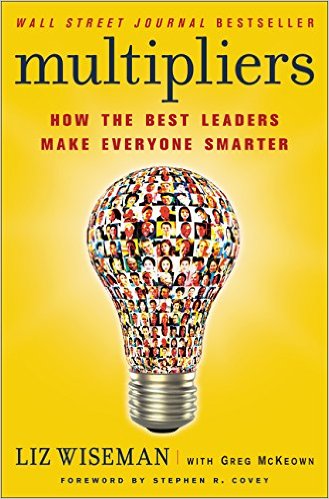
Liz Wiseman has written the most incredible book on leadership – Multipliers – How the Best Leaders Make Everyone Smarter . Her book describes this mentor of my husband as if she knew him personally. Wiseman is the president of The Wiseman Group, a leadership research and development firm, headquartered in Silicon Valley, California.
Blog - Liz Wiseman

Photo Credit: LiveIntentionally.org

I first heard her speak at the Global Leadership Summit this year. Her presentation centered on her more recent book Rookie Smarts. This engaging young woman clearly has had multipliers in her own life and has obviously learned from some diminishers as well.

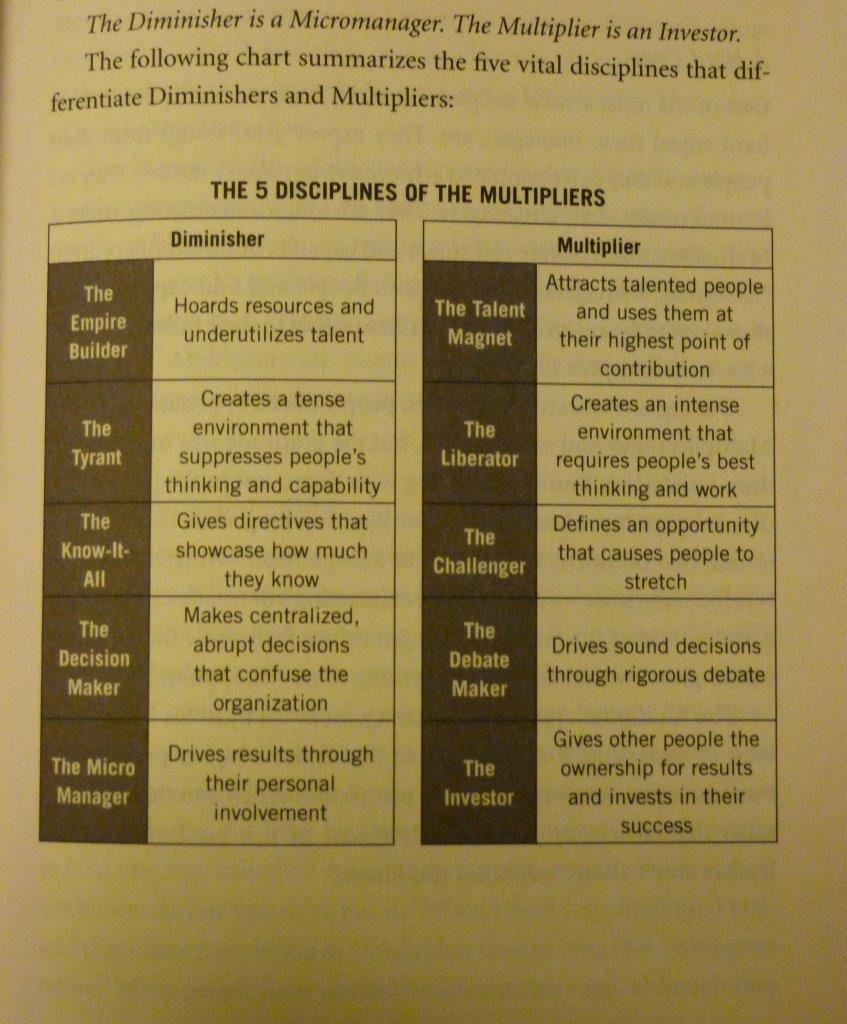
On the inside cover of Wiseman’s book Multipliers, she defines the terms “Diminishers” and “Multipliers”:

“The first type drain intelligence, energy, and capability from the ones around them and always need to be the smartest ones in the room. These are idea killers, the energy sappers, the diminishers of talent and commitment. On the other side of the spectrum are leaders who use their intelligence to amplify the smarts and capabilities of the people around them…These are the leaders who inspire employees to stretch themselves to deliver results that surpass expectations.” – Liz Wiseman

Have you ever been in a job where you felt your wisdom, understanding, experience were being drained right out of you? As if you were getting stupider and stupider? That can happen…or at least the sense of it happening is so strong it might as well be real. Some of this we must own ourselves, and some of it is owned by our leaders.

[Sidebar – It’s not like Diminishers are evil people. Possibly, their focus is so tuned to the endgame that people and processes get lost in the pursuit. I believe whenever they have an “aha!” moment, maybe through the multipliers in their own lives, they could change their habits and disciplines.]

This mentor of Dave’s was/is a Multiplier. For much of Dave’s professional life, this man has “popped in” and pressed my husband to reach farther than he might have in his career.

I want to be this sort of leader myself – this one who inspires confidence in others, who sees the possibilities, who risks by giving over control to another, who stirs thinking and enlarges the lives of those in his/her circle of influence…a circle that’s widely inclusive.

Being a leader is a humbling, stretching experience and, for the sake of those under your watch in the workplace, you want to offer the best leadership you can. We can all fall into habits over time that diminish others. Forging disciplines that keep us from doing so is wisdom. Note them from Liz Wiseman’s book:

Blog - Liz Wiseman's Multipliers

Wiseman also talks about leaders as change agents – do we reserve the right to make the final decision every time or do we wrestle through decisions with those most affected by them? The latter can definitely be more messy but is also more effective and honoring.Blog - Multipliers by Liz Wiseman -2 (2)

“Multipliers invoke each person’s unique intelligence and create an atmosphere of genius—innovation, productive effort, and collective intelligence…He’ll outstretch all your capabilities to make it happen. He is highly demanding, but you feel great. You know you are signing up for something that will challenge you on a daily basis for many years to come. You will challenge yourself and all your capabilities…Exhilarating, exhausting, challenging, gratifying. He’s a big source of energy. He is a source of power and a tail-wind for what we do.”  – Liz Wiseman

Thank you, Liz Wiseman. You are a wise woman (I’m sure you get this all the time…couldn’t resist). Thank you, to that unnamed mentor multiplier in my husband’s life…and to all those multipliers in my life’s journey.

Read Wiseman’s book. I’d love to hear your stories of multipliers in your life…and any diminishers that you learned from but (hopefully) were not diminished in the season you were together…maybe you became a multiplier in that person’s life. Journey strong, Friends.

Multipliers – How the Best Leaders Make Everyone Smarter by Liz Wiseman with Greg McKeown

YouTube Video – Leaders as Multipliers with Liz Wiseman

YouTube Video – Liz Wiseman – The Multiplier Effect 0

Multipliers Quotes from GoodReads

2013 Global Leadership Summit Session 3a: Liz Wiseman

Brian Dodd – 4 Leadership Lessons From Mt. rainier and the Inc. 500 Fastest Growing Business List – another example of a Multiplier

The Other Side of Organizational Downsizing – What Survivors and Their Managers Can Do Going Forward

Blog - Downsizing strategies - slideshare.netPhoto Credit: Slideshare.net

Recently, a young friend of mine told me about an abrupt change in his company. He went in one morning to the usual – team meeting, work routine, cubicle life. Then in the early afternoon, without any prior notice or indication, the head of the company walked around the building with envelopes. By the end of the day, in this small tech support company, one-third of the employees had packed up and left the building.

Surprise lay-offs are the hardest to bear, but any kind of downsizing, no matter how necessary, is stressful and disorienting. When crisis precipitating a downsizing occurs, organizational leaders are wise to put together a transition team right away.

For those who were laid-off or who took the separation package in a carefully orchestrated downsizing, there is colossal adjustment. Hopefully, they will get the support they need to get that next job or to thrive in retirement.

For those who remain with the company, their adjustment can be great as well. Do an internet search for “surviving downsizing” and you will find hundreds of articles, and even several books on the subject.

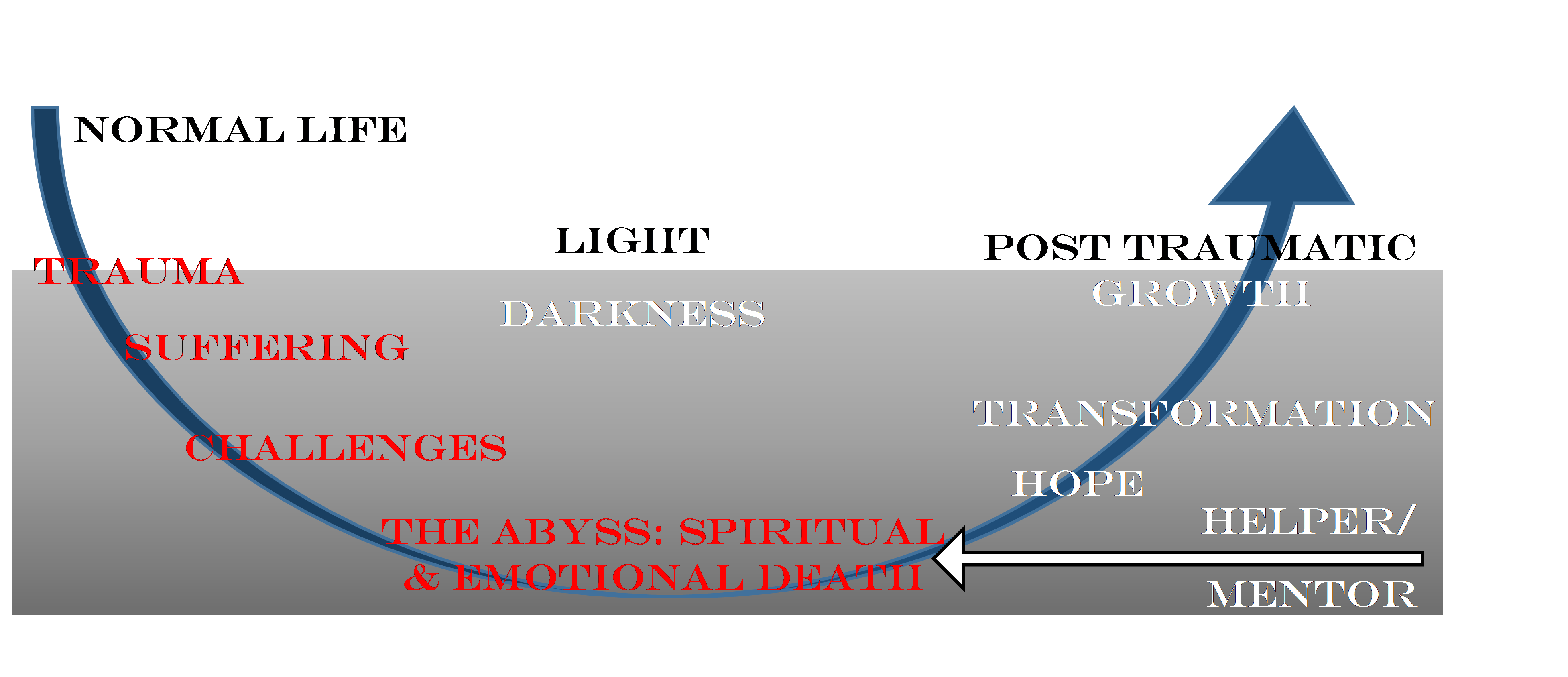
Employees who survive the downsizing (whether because of their age, capabilities, or department) will still go through a period of post-traumatic stress. On that Monday, for instance, after their colleagues leave, they must re-orient to a new normal.
Blog - Downsizing threat or opportunity - slideshare.netPhoto Credit: Slideshare.net

Michael Sanders, author of 7 Critical Mistakes Employees Make in a Downsizing, wrote an empowering Linkedin article on how to take charge of one’s own survivors’ syndrome and move forward. First Sanders defines the elements of “sickness”; elements which include guilt, mistrust, sadness, anxiety, and disagreeability. Then he moves right to ten “power moves” that employees can make for a healthier, more substantive work situation. I list these, but don’t miss, in the article, what he says further on each.

  1. Practice instant alignment re-centering.
  2. Play by the new rules.
  3. Speed up.
  4. Practice intensive task management.
  5. Fall in love with your work, again.
  6. Take on new assignments.
  7. Expand your business affiliations.
  8. Continue your education.
  9. Become your own hero.
  10. Keep in touch with laid-off [or “downsized”] work friends.

Some of Sanders’ action items may seem more than you can handle as you adjust yourself to a work life very different than the previous one. His bottom line is  to refuse to be a victim. Whether your organization is proactive in retaining and retraining you, you can champion your own professional needs and career. It will benefit you and either your current employer or your next one.

Stress specialist Morton C. Orman, M.D. also wrote a prescriptive piece entitled 18 Ways to Survive Your Company’s Reorganization, Takeover, Downsizing, or Other Major Change. Below are 8 of the points I believe are most helpful (again refer to his article for the rest of his wisdom).

  1. Be prepared for [more] change.
  2. Watch out for unrealistic expectations.
  3. Get creative.
  4. Expand your value to the company.
  5. Celebrate your accomplishments.
  6. Seek appropriate compensation or “risk share” arrangements.
  7. Improve lines of communication.
  8. Become more efficient.

Again, these may seem obvious, on one hand, and annoyingly intrusive as well. You’re grieving the beloved colleague who was laid-off or that great boss who retired. In the process of that grief which may be with you for some time, you still have that job to do…with probably more responsibility added. Sadness and anxiety tend to affect our performance negatively. That’s why it’s imperative to set in place processes you may not have needed before but need now to recover and embrace what’s ahead.

Hopefully you have leaders and managers who are already astutely moving the company forward…with you in mind, as well as the  product/services. If not, you can’t risk waiting. Do your reading, evaluate your course of action, build your new work community, and demonstrate to yourself and those around you…you are a survivor! In the best sense of the word.

The Downsizing Jungle: 10 Power Moves by Mike Sanders

The Effects of Downsizing on Survivors: a Meta-analysis – Dissertation of Dr. Gladys West; Virginia Polytechnic Institute and State University, 2000 – an excellent presentation of the issues of organizational commitment, job satisfaction, turnover intention, role conflict, job involvement, supervisor support, procedural and distributive fairness. [scholarly piece but worth wading through.]

Slideshare – Downsizing Best Practices – Survivors are Key – Don’t Neglect Them – Carol Beatty

Survivor Employees: What You Need to Know – description of 6 common profiles of employees dealing with “layoff survivor syndrome”

After Layoffs, Help Survivors Be More Effective – excellent article on what’s at stake for survivors of layoff and how, from a management standpoint, to turn things around.

18 Ways To Survive Your Company’s Reorganization, Takeover, Downsizing, or Other Major Change

Blog - Downsizing - slideshare.netPhoto Credit: Slideshare.net

Monday Morning Moment – Honoring Retirees – Workplace Culture & 5 Languages of Appreciation

Blog - Retirement - Gratitude at Work - Thank YouPhoto Credit: Harvard Business Review

It’s Monday morning. Who’s retiring from your team this week? Who retired last week? Who do you see around you at work today? Do they know they matter to you? To your organization? How has their value been reflected back to them? What can you do today to show your appreciation, especially to that one who is retiring? Sorry for all the questions. They’re bouncing in my head. Let’s talk about it.

[This might be a little awkward if you’re the one retiring, especially with reluctance…or if you’re not retiring but question your own relevance or value at work lately. You may not be able to fix much of what your experience has been, but you can set your own “finishing well”…whether it’s official in a few days, or in several years.]

From the sidelines, I am watching a very strange phenomenon this week. On Friday, hundreds of employees in one local company will retire. It relates to a measured downsizing necessary to keep the company operational financially. The downsizing is a much kinder and more valuing option than layoffs. Still, there are huge ramifications for those leaving as well as for those who remain, in the months/years ahead…without them.

How does an organization go about honoring hundreds of retirees? Well…apart from the numbers, it’s in the same way you would honor one. Bill Peel offers a really helpful array of articles on appreciation in his Make Mondays Meaningful, quoting from C.S. Lewis and the Harvard Business Review. This is a good place to start.

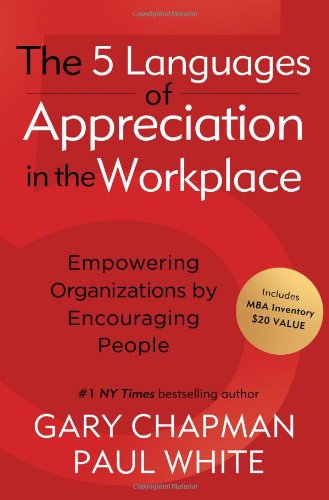
As I was thinking of the challenge for a company’s leadership and the human resources department to honor so many retirees, a little book came to mind. It’s The 5 Love Languages by Gary Chapman. Then I discovered he and Paul White wrote a follow-up book entitled The 5 Languages of Appreciation in the Workplace.

Blog - 5 Love Languages of Appreciation in the Workplace

Photo Credit: Amazon.com

Chapman and White describe five languages of appreciation (see in next paragraph). How we receive meaningful appreciation varies from person-to-person. Therefore we must attempt to personalize our expressions of gratitude to be effective. In a situation where a large number of folks are retiring, or in plan to build a workplace culture of appreciation, a comprehensive “shot-gun” approach may be warranted. If your aim is authentic honoring of your personnel, the extra work and creativity will be well-applied.

Maria Elena Duron, in her US News piece on workplace appreciation describes Chapman’s & White’s 5 Languages:

  1. Words of affirmation. Reassuring words (“thank you for your input,” or “great job on the presentation”) that serve to motivate and show gratitude to team members.
  2. Quality time. Going out of your way to spend a little more time with team members, discussing the topics that are relevant and important to them.
  3. Acts of service. Your words of gratitude could land on the deaf ears of team members who would rather receive help finishing a project or assignment. Going out of your way to lend a hand means more to such people than mere praise.
  4. Tangible gifts. Lots of people appreciate tangible gifts. The important thing here is to make sure the tangible gift is something the person values in their life outside of work, like a jersey of their favorite college football team or a coffee mug with their favorite cartoon character on it.
  5. Appropriate physical touch. Some members respond well to appropriate physical touch, like high-fives, handshakes, fist bumps and pats on the back. You’ll see this in sports, but it also translates well to the work environment.

Delbert Terry (speaking on The 5 Languages of Appreciation in the Workplace) gives this charge to both supervisors and colleagues:

“In order to appreciate, you MUST initiate.”

  1. For appreciation to be effective, it must be individualized and delivered personally.
  2. Appreciation needs to be viewed as valuable to the recipient.
  3. Employees are more likely to “burn out” when they do not feel appreciated or emotionally supported by their supervisors.
  4. When leaders actively pursue communicating appreciation to their team members, the whole culture improves.

Dr. Terry acknowledges: “There are challenges that get in the way of effectively expressing gratitude to our colleagues. Some are internal issues attitudes, thoughts, and beliefs. Other challenges are external and relate to corporate structures and procedures. These challenges need to be faced realistically, but they can be overcome.”

Challenge #1: Busyness

 Challenge #2: Communicating appreciation is not important for you organization

 Challenge #3: Feeling overwhelmed with existing responsibilities

 Challenge #4: Logistical issues that interfere with the process of sharing appreciation for others. Varying schedules, working on different projects…often make it difficult to express appreciation to certain coworkers.

 Challenge #5: Personal discomfort with appreciation *

*The 5 Languages of Appreciation in the Workplace – presented by Delbert Terry (pdf)

In honoring retirees and setting a workplace culture of appreciation, it is never too early and [hopefully] never too late.

As I think of the mammoth task of trying to honor hundreds of retirees in one fell swoop, I am both overwhelmed by and grateful for those who undertake such a task. How do you orchestrate such a celebration of so much human history and accomplishment? You do your best with gracious words, team parties, a speech from a charismatic leader, a slideshow of faces we love, and maybe shrimp and petits fours. I wouldn’t miss it, for sure.

The one thing I hope happens and it’s the hardest thing to make happen is that we capture the story of these lives. History, experience, a personal witness are so valuable and should be preserved somehow. Storycorps is an organization that gives us opportunities to record stories of people’s lives who have made a difference in ours. What a great way to honor those who have gone before us, so that we and future generations can continue learning from them.

Finally, we know something of the importance of authentic appreciation because of the character of God Himself. “Well done, good and faithful servant” are words any of us as Christ-followers hope to hear one day…from God, who knows us best. We reflect that deeply personal “divine compliment” when we truly honor one another.Blog - RetirementPhoto Credit: carp.ca

The 5 Languages of Appreciation in the Workplace: Empowering Organizations by Encouraging People by Gary Chapman & Paul White

Applying Appreciation Language in the Workplace – Maria Elena Duron, U.S. News & World Report

Why Appreciation Matters So Much by Tony Schwartz, Harvard Business Review

How to Give a Meaningful “Thank You” – the Power Thank You by Mark Goulston, Harvard Business Review

StoryCorps.org – “We Believe Every Story Counts”

Appreciation at Work

The 5 Love Languages: The Secret to Love that Lasts by Gary Chapman

Charles, Dave, KevinThese friends are not retiring…transitions and send-offs are also opportunities to say (and show) “You matter.” #SaveOurHistory

Monday Morning Moment – Relational Wisdom – the Way It Could Be – at Work & Home

Blog - Monday Morning email

Monday morning emails can be treacherous… This morning when I woke,  my husband told me he’d just heard from a valued colleague that he had secured another job. Dave was expecting this because of previous communications they’ve had with each other. Through an organizational re-structuring, there are many whose jobs are changing. This email was good news because this person will be a tremendous addition to any team – good news and sad news. We will miss this man on our team but we celebrate a great job match.

Then another email came in. It was from the person who will be his new supervisor. It was full of respect and regard – a courtesy email that is not necessarily company culture these days but an email that shows understanding and empathy. When change comes, even good change, there is still that adjustment, that grieving of the good that was. Those two emails speak volume about emotional intelligence or relational wisdom…and that’s something we always need in the workplace…and at home.

The holidays have a particular call for wisdom to soften difficult expectations, disarm family conflicts, and personalize interactions to fit the needs of those nearest to us.

Blog - Monday Morning Moment - MarriagePhoto Credit: rw360.org

One very simple way we can tune into holiday celebrations is to deal with our own stuff. Keeping our minds on the goodness of the holidays helps. It’s easy to find daily Advent readings for the month of December…depending on your favorite author or blogger, they’ve probably written some.

Related to both our work and home relationships, Ken Sande, founder of Relational Wisdom 360, has given us a great gift, and we don’t have to wait another day for it. He has written 33 Ways to Enjoy Highly Relational Holidays. A fast-read blog a day on relational wisdom, starting on November 23 to take you right through to December 25.

I attended Dr. Sande’s Peacemaker course years ago during a challenging work season, and what I learned then continues to be a tremendous help to me today. If your work or family situation is somewhat intimidating, don’t despair. There are those in our lives (Ken Sande is one) who will come alongside and help/mentor us, if we’re willing to take care of our own hearts and minds.Monday Morning Moment - Post traumatic growthPhoto Credit: coldspringcenter.org

As Thanksgiving approaches and Christmas not far behind, I hope you can look forward to happily memorable times together with family. As far as work goes, just like with the emails above, we can do our part to make our workplace a kind and honoring experience – our part (not someone else’s) in making it the way it could be…the way it should be…Blog - Monday Morning Good Work BraceletPhoto Credit: GoodWorksBracelet.com

What helps you thrive in stressful situations at work? What has made a difference in bringing peace and joy to your holiday celebrations? Please comment and share with those searching for that wisdom.

Surviving Christmas – Advent Devotions for the Hard and Holy Holidays – Anne Marie Miller – free ebook

Advent Devotional Readings Online by Lifeway

Good News of Great Joy by John Piper

Unwrapping the Greatest Gift: a Family Celebration of Christmas by Ann Voskamp 

5 Friday Faves – Fall Trees, Handling Change, Naming Our Grief, Cool Job, and an Icebreaker Question

2015 October - Blog, Fall, Trees, Sadie 065

  1. Fall Trees – Is it a sugar maple or a yellow poplar? I don’t know, but isn’t it beautiful in the Fall leaf-turning? In the first year of our marriage, Dave and I lived in New Haven, Ct. where I was teaching and he was finishing his Ph.D. In the Fall, the sidewalks of our street were carpeted with these new-fallen soft yellow leaves. It was a magical time…just weeks after our wedding. I will always remember walking those yellow paths in the brief days before the snow came. The leaves dried and became crinkly. When the wind blew, or we crunched and kicked the leaves along, they blew up into the air. As if in a dance of joy. Sorry, there’s a deep romance in my heart that stirs at the sight of these trees in their Fall glory. Love!Fall yellow leaves by Shay WhitePhoto Credit: Shay White Photography

Blog - Fall Leaves Covering SidewalkPhoto Credit: Ann Williams, pinterest.com

2) Handling Change – Change is part of our lives every day, yet we struggle with it. Coming to grips and making peace with change helps us to move ahead to whatever is next. When Brian Dodd talks about handling change, he is speaking to pastors and church leaders. However, there is wisdom for any of us going through change in his article on the strange struggle of Jacob – wrestling with God (Genesis 32:22-32).

  • Change affects those you love.
  • Change costs you some change.
  • Change can be lonely.
  • Change takes time.
  • Change requires struggle.
  • Change does not leave you the same.
  • Change requires grit.
  • Changes requires humbleness.
  • Change is necessary for you to get better.
  • Change allows you to see God.

“Change is a true constant to be leveraged.  Not a temporary burden to avoid.” – Brian Dodd

Another related study on Genesis 32:22-32 I found helpful is Broken But Blessed.2015 October - Blog, Fall, Trees, Sadie 048

3) Naming our Grief – Grief always has a name and naming our grief helps us to heal. Having lived overseas for many years, we understand “Hellos-Goodbyes-Hellos” – both the sorrows and the joys of them. As the years go by, we experience job changes, relocations of friends and family, and deaths of loved ones. In a few days, it will be the 13th anniversary of my Mom’s Homegoing, and every day I still think of her. That grief definitely has a name. Sometimes grief feels more vague, like a sadness with a cloudy source. When I found this piece Because Grief Has a Name by Abby Alleman, it touched my heart. She says it well:

“Naming grief is our heart acknowledging its significance and place in our lives. In this way, grief is a friend, like Sadness from the movie Inside Out. It teaches us the shape of our own unique story and guides us to tastes of the ‘fullness of joy’ found in God’s presence. Acknowledging and entering grief also guards our hearts from the calcifying effects of the denial of pain, hurt or loss. Instead of resentment, bitterness or hatred, we get healing, strength and hope. We also become those who grieve well with others. This is a true gift.” – Abby Alleman

2015 October - Blog, Fall, Trees, Sadie 0592015 October - Blog, Fall, Trees, Sadie 064

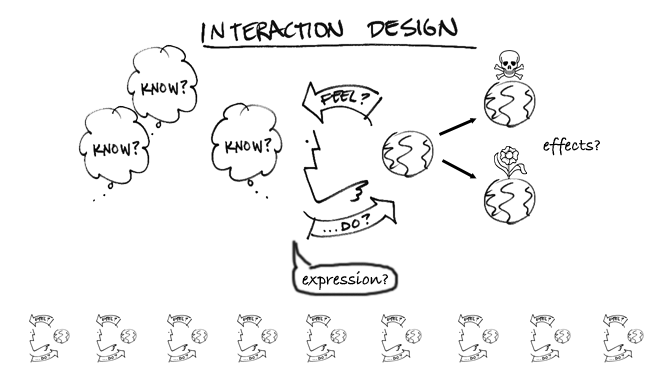
4) Cool Job – Interaction Designer – Complete Beginner’s Guide to Interaction Design – I am not going to say much about this because my ignorance will became obvious quickly. My first hearing of this job was around the supper table this week during our community group (Movement Church). Brian is an interaction designer. As he talked about his work, I was captivated. He works to make internet resources available to a set of consumers all over the world, and does it in such a way that is so user-friendly that even I could maneuver painlessly on that website. When you enter a website that gives you exactly what you need without bottlenecks, extra steps, or language that puts you off, then an interaction designer is probably at work unnoticed in the background of that site. Thanks, Brian, for what you do. Wow!Deb's BlogPhoto Credit: Interaction-Design.org

5) Icebreaker Question – I love icebreakers. They are a fun way to get to know a little bit more about the people around the room or in the meeting. This week, I was in a situation where the following question was used to get us started:

When was the last time you did something for the first time? What was it?”

I had to think a minute, but then it came: Soothing my wee granddaughter as if it was all up to me to settle her, even though her mommy was in the next room. [The next time will be much easier.]

What was your most recent “doing something for the first time”? What’s a favorite icebreaker question can you recommend?

Blog - Icebreaker questions - howdoyouplay.netPhoto Credit: Howdoyouplay.net

2015 October - Blog, Fall, Trees, Sadie 069

Monday Morning Moment – On Silos and Tribalism – Taking “Us” and “Them” to a Better “We”

Blog - Silos & TribalismPhoto Credit: Slideshare.net

“Silos”, as a workplace term, is such a fitting description for what we do to distinguish ourselves from each other. It means compartmentalization based on specialization. Now the term “silos” is less used, replaced by the cooler term “tribes”. Unfortunately, because the workplace woes of old are still in operation, “tribes” have deteriorated into “tribalism” or…[Hello] “silos”.

I began thinking about this again this weekend when a retweet came up in my Twitter feed featuring Gianpiero Petriglieri. So much organizational resource – money and time – is spent on specialization and grooming leaders. It’s a pity when the outcome actually draws down the organization ( to small pockets of “tribal buddies”) instead of honing expertise and relationships across departments, across disciplines.Blog - Silos and Tribalism

What if we could break down silos, and reorient and reenergize tribes? What if workplace tribes incorporated a grand plan that nurtured inclusion – creating “a rising tide that lifts all boats” (Adam Grant)?

Years ago, when I was a young instructor at Yale University, I experienced workplace silos. There were bottlenecks through which I had to maneuver, until I figured out how to win those beyond the bottlenecks. Since then silos have been a part of life for me, as I’m sure they are for us all. Oncology nursing had a different prestige than critical care nursing. Was one better than the other? No.

Working in the Middle East had its own set of challenges different from working in Europe. Does that mean one elicits greater respect or benefits than another? Of course not. Right? Communication between those in the field and those in the home office can also become very much an “us” and “them” transaction.  Even within the home office, one department may seem more the “flavor of the month” than another. What are your silo/tribe challenges?

Brilliant business writers can give us great tools and insight with breaking down silos (see fast reads in the links below). If you are anticipating a major change in your organization (buy-out, down-sizing, shift in focus/product line), it makes for a perfect storm to deal with silos. Of course, if management across the organization leads out with a unifying goal (a “battle-cry”), the possibility for success is heightened. I don’t think, however, that this is the only hope for success.

What if one department, a single silo or tribe, decided to tackle the problem? What would that look like? From my work experience and from learning from great leaders, both celebrity and colleague, here’s a bare-bones minimum how-to-get-started list:

  • What is your common goal as an organization? What is the clear unified rallying cry around which you can collaborate?
  • What are your own silo biases? Do you communicate that you think your department, location, specialization should have some sort of favor? Deal with that. It’s the first barrier that has to come down.
  • If trust has been disrupted or destroyed, who can you partner with to begin to rebuild trust? Name them, and begin the process (if you pray, you might begin praying for their success as a department/division – make it NOT about you).
  • What objectives can you establish as a department to guide you in staying focused on high-value collaboration across-specialties?
  • How will you measure the course of your action toward becoming a non-silo, less tribal department? Set a time. 6 months or across whatever acute crisis you see coming. Be as intentional and broad-reaching as you are able, given your own workload. Remember that silos alter the math in a workplace – 1 + 1 + 1 = 2 when teams aren’t sharing information and working at cross-hairs. We can make the math work better, as we work, against the flow, toward creative collaboration. 

My professional life has had various silo experiences, from teaching in an Ivy League university to working on a highly innovative team (recklessly creating its own brilliant unintentional silo, later with personal regret). Silos and workplace tribes never get us where we want to go collectively. Bring ’em down.

I would love to hear about your work experiences…any struggles, breakthroughs, or victories in this area of breaking down silos and building a culture of “Yes, WE can…together.”

Blog - Organizational CUlture - Lencioni book Silos, Politics & Turf WarsPhoto Credit: Amazon.com

Silos, Politics and Turf Wars – A Leadership Fable about Destroying the Barriers that Turn Colleagues into Competitors

Silos and Tribes – Think Different

http://www.slideshare.net/JDDillon/breaking-down-silos-how-social-learning-changed-everything-for-kaplan-atdtk

17 Strategies for Improving Collaboration – from the Freiberg’s – Do Not Miss This One.

How to Build Trust and Fight Tribalism to Stimulate Innovation

Breaking Bad – Squash Silos & Tribalism – Breakthrough Personal Branding

Leadership Axioms: Powerful Leadership Proverbs by Bill Hybels