Category Archives: Communication

Monday Morning Moment – Friends, Family, and Fellows at Work in the Digital Age

Photo Credit: The Art of Social Media” (CC BY 2.0) by  mkhmarketing 

My mom was an excellent communicator. She wrote emails like they were letters. Long and newsy, full of the details of her day, and her specific encouragements on the trials of life. Of course, this came out of her only daughter and family taking off to live overseas. With three of Mom’s grandchildren! I will never forget how she bought her first and only computer to be able to communicate regularly with us. She died before the advent of smart phones and social media. Believe me: she would have figured those out as well – to communicate with those she loved.

Dave works in a setting which requires much of his communication to be electronic. He talks about how it has been world-changing in terms of being able to have real-time communication with colleagues. Even time zones away. Email, conference calls, and a myriad of smart phone applications make work practices easier. Especially that of inclusion and having the right people at the decision-making table.

The challenge is when electronic communication is almost but not quite communication. A quick texting conversation or series of emails do not substitute for a face-to-face meeting where nuance and clarification are more easily secured.

I have a friend and one-time colleague who calls me regularly on her way to or from work. Those conversations are so rich. We haven’t lived in the same city for 25 years, but I know her…her take on things, her challenges, and the wealth of her wisdom for my own stuff. We text occasionally, but she has excellent command of the phone-conversation-catch-up-with-friends skill.

The article linked below came to my attention this week. It got me thinking on this topic more. We want to be good at friendship, “family-ing”, working well with our colleagues, right? At least we don’t want to do harm with relationships as we focus on others at the moment. This article is so packed with good stuff, I’m leaving it right here for you to read yourself:

How to Be a Better Friend in the Digital Age by Amy Maclin and Molly Simms

In thinking about our relationships and communication in the digital age, here are my notes to self:

1) Stay in the present. – When in the company of friends or family, or in a work meeting, put electronic devices away if at all possible. In your purse or pocket or another room. Cell phones always with us (at meeting or dinner tables) smack of self-importance, really. I struggle here, so preaching to self. Remember the days when we wrote the things we wanted to remember on pads of paper or a napkin? Maybe you’re not distractible but once I pull out my phone to make a note or take a picture of the food, say, it becomes an uninvited guest at the table…drawing my attention away.Photo Credit: Pexels

You may not have this problem of distractability. We can always make an electronic record later of what we wrote down. We cannot reconstruct conversation we missed while fiddling with our phones. Nor can we recoup that sense of full attention for those in front of us, lost while we were on our phones or tablets.

2) Be proactive in communication. – This may be a challenge for most of us. I am grateful for updates from bosses who want their employees in the loop. Also, how wonderful to get birthday and anniversary cards in the mail (?!)…from proactive loved ones.

Letting friends and family know news, plans, and other details (of special interest between you) sooner than later sends a message. They matter to you, and their time matters as well. If these same people don’t hear from you, in time, they will come after you…better to be proactive, loving in this way.

3) Be quick and appropriate in responding. – [Outside of situation #1] Take the call when possible instead of letting it go to voicemail. Text back even a quick response, with a more complete communication to follow. [Because of their disruptive nature, some texts seem now to be treated as emails to be answered later and in a clump. I get that. Unless the texts become emails that also go unanswered. Just saying.]

Consider the best way to respond. A text may require an email response to be effective. An email may require a phone call in followup. If positive communication is the goal, we go after the medium that best suits.

4) Our social media presence communicates different things to different people. We all know this intuitively. Something to think about if we’re using it for work or to maintain contact with friends/family. Social media, in general, is not a personal vehicle for communication. Definitely broadcasting. Unless you engineer it to be personal. I get how some have elected to go more private, more narrowcasting (see link below). We must remember with this medium: we think because we’ve communicated to some, we have communicated to all. A caution if we care.

Networking: Broadcast or Narrowcast?Genna Rodriguez

5) Avoid the fallout of negative or neglectful communication. – It always seems to have a greater impact than we intended. Or, should I say, a worse outcome. The “unfollow” or “blocking” or social media rant can be not only hurtful but relationship-altering. Not answering phone calls, texts, or emails will eventually stop those from happening…at a cost. Whenever a crucial or hard conversation needs to happen, a face-to-face meetup is best. Even if, because of geographic distance, it has to be via an electronic device (Facetime, etc).

We Have to Talk: A Step-by-Step Checklist for Difficult Conversations – Judy Ringer

Also related to social media:  we often fall to being more consumers rather than creators. Our communication gets more passive, even lazy (it happens to me, for sure)…if we don’t take steps to practice being proactive in communication.

Having electronic communication – even at its impersonal worst – is better than no communication…but maybe not forever.

___________________________________________________________________________

Did I miss something? Please comment below.

In closing, I just want to give a salute to those in our lives who get all this. My friend who calls, a boss who doesn’t forget to followup, a family member who regularly checks in, that one who uses texts in a fun and familiar ways to touch base, and the people in our lives who practice kind and intelligent reason on social media posts.

I have a younger brother who has a non-stop work day. Long hours, leaving for work before I even wake up, and therefore getting to bed much earlier in the evening than most. We haven’t always been super close, but in these years of getting older and losing loved ones, we are now the next two oldest in our family. We are also much closer friends now than before…part of that is his initiation of calling on his long drive home from work. With hands-free technology to keep driving safe, it has become a sweet occasion between us.

Lastly, social media itself has been more a blessing to me than a curse. I have learned much from folks I follow on Twitter and Facebook. Through Facebook of all things, some once-close college friends and I were able to reconnect. What a gift!

So with all its challenges, the digital age has brought us more good than bad. If we are willing, we can hopefully keep it that way.

P.S. Communication at any level is colored by culture. My husband and I had the privilege of chauffeuring some Egyptian friends to their wedding reception. Our car was decked out in fresh flowers and streamers. Driving through the crazy Cairo night, Dave’s job was to get our friends safely to their destination, but that wasn’t all. Leading a small and festive parade, we were to let it be known to all those on the streets and in apartments above the streets, that a bride and groom were coming through. Traditionally, the driver periodically is to toot his horn in a rhythmic manner signaling those around us of an oncoming wedding party. DA-DA-dadada, DA-DA-dadada. That was the signal. Photo Credit: The Cairo Scene

Everyone knew it and what it meant. Dave was an excellent Cairo driver, BUT he was timid in doing this small duty of horn-blowing. He would only do the first “phrase” of the announcement and not the obligatory second one. It was so not right. After a couple of times of my failed cajoling, he did it one more time with just the first horn toot phrase. A huge packed Cairo city bus passed by us, and its driver finished the phrase! I LOVED IT! We all did. Dave got the idea finally and we joyfully trumpeted to all those around us from that point on with just the right and understood alert!

Ah, true communication!

5 Friday Faves – Gladiator on Guitar, Documentaries, Our Faces, Toni Morrison, and Families Sorting Out Trauma Together

It’s been a week! Babies and birthdays, neighborhood gatherings and sweet homecomings, diner dates and conversations in a late summer garden, walking with friends and working in solitude…life shared. Here we go with this week’s 5 favorite finds.

1) Gladiator on Guitar – I remember the only time I watched the film Gladiator. It was in a theater in Cairo with an Egyptian girlfriend. We both covered our eyes for more of the film than we watched. There is a scene where the military general turned slave turned gladiator (Russell Crowe) came into the arena. He bowed to the warriors selected to kill him, and then he killed them all. Bloody and horrific. Then he called out to the ruler and commoner audience, “Are you not entertained?!” Underneath his imploring, you can faintly hear the orchestral theme – composer Hans Zimmer‘s gripping theme “Now We Are Free” . Arranged and performed by Nathan Mills, at Beyond the Guitar, this song is so exquisite on classical guitar. Watch it here.

2) Documentaries – Film gives us the opportunity to engage with a story. Documentaries offer us a look into a real world we might never engage without a bit of a push or pull. 16 Bars is one of those films. It is the story of what happens when hip-hop artist Todd “Speech” Thomas spends 10 days in the Richmond, Virginia jail, giving voice to the inmates.

Photo Credit: Richmond

This effort was part of a recovery program to help those in jail not to become re-incarcerated after release. Thomas taught some of the men how to write and perform music (a 16 bar rap). What came out of that was both painful and hopeful. Beautiful. I am working on seeing the full film, but here is the trailer.

16 Bars – REAL LIFE

Do you have a favorite documentary? Three of mine are below along with one I’m looking forward to, still in production.

Nefarious: Merchant of Souls – documentary on the global sex trade

The Long Goodbye – Kara Tippetts Documentary – Jay Lyons

Bono & Eugene Peterson – The Psalms – Fourth Line Films

The Funeral Home [Now entitled The Passing On] – Teaser – Fourth Line Films – The Passing On Movie website

3) Our Faces – What do people around us see in our faces? What do we see in others? In T. S. Eliot‘s poem The Love Song of J. Alfred Prufrock, there is a line about preparing our faces for the faces we meet. As in the phrase “putting on a face/mask”.

T. S. Eliot – The Love Song of J. Alfred Prufrock – Brandon Colas

We want to be real with each other, right? To be the real persons we are all the time, not to mask our faces differently depending on whom we have in front of us.

Is it the performance rather than the person with which we interact? We can default to vilifying the person when it’s really the performance that offends…or the opposite: placing people on pedestals…and we don’t really know them.

I don’t want to wear a mask; nor do I want to profile a person based on a mask. It is a discipline to keep from doing both.

I was so touched by a video I saw this week…wondering if it was truly authentic – it seemed to be – and the masks were off.

Two huge TV personalities Stephen Colbert and Anderson Cooper  talk together in a 20-minute interview on loss, faith, and humanity (shorter section of same interview). I don’t usually watch them, but a man I respect posted this on his Twitter feed and I was mesmerized by it…the honesty, the tenderness, and the understanding of shared experience.

Are They Seeing the Face of God in You? – Lisa Brenninkmeyer

4) Toni Morrison – On August 5, author Toni Morrison died at 88 years old. I thought she was younger.

Confession: I’ve never read any of her books. Now, I am reading what others write about her and know I need to at least hear something of her heart…and her wisdom.

The Wit and Wisdom of Toni Morrison

What have you read by this author of many books?

Here’s what Toni Morrison taught Brené Brown about parenting:

When a child walks into a room. She asked, “Does your face light up? When my children used to walk in the room when they were little, I looked at them to see if they had buckled their trousers or if their hair was combed or if their socks were up. You think your affection and your deep love is on display because you’re caring for them. It’s not. When they see you, they see the critical face. What’s wrong now?”

“Let your face speak what’s in your heart. When they walk in the room my face says I’m glad to see them. It’s just as small as that, you see?”Brené Brown

5) Families Sorting Out Trauma Together – We don’t watch R-rated movies at our house…so when I chose Rachel Getting Married, I knew it was risky. [FYI: This film has foul language and tortured emotional conversations throughout.] The story centers on a family wedding. One sister is marrying and another sister came home from a drug rehab program for the weekend’s events. The sweet moments feel guarded as fights break out regularly over the sister’s addiction and its impact on the family…and there’s the grief revolving around a younger brother who died in a car accident caused by his older sister high on drugs… Over and over, each in her/his own way, the wedding party (sisters, groom-to-be, parents, friends) deals with the undercurrent of anger and grief.Photo Credit: Roger Ebert

Why do I mention this film? It resonated with my own experience of family at times. We children, even into adulthood, could have doozies of disagreements. We rarely came to blows, but thankfully we didn’t have alcohol or drugs as part of our growing up. Like in this film, that would have caused a worse, more volatile situation.

The film was fictitious, I imagine, but the hurt in my heart, watching it, came from recognizing familiar signs of a family in trauma.

That old adage “Hurt people hurt people” comes to mind. In real life, we are wise to look past what offends our sensibilities, and reach out to those hurting in front of us. To listen, encourage, pray, understand. This film family sorted out their trauma together… without benefit of faith in God…but with a love for each other, broken but stronger together.

7 Ways to Help a Loved One Who Has Experienced Trauma by Elizabeth Clayton Lee

[By the way, our family as we have gotten older don’t have those fights anymore. Thankfully. So thankful to God, and parents who loved us through their own hard, and siblings who refused to give up on each other.]

___________________________________________________________________________

That’s it for this week. Would love for you to share any of your favorites of the week in the Comments below. Blessings always.

Bonuses:

Photo Credit: Facebook, Sarasota County Sheriff’s Office

Goodbye Nursing Homes! The New Trend is Co-Housing with Friends – and Richmond CoHousing

Photo Credit: Victory Today, Facebook

I Want to Age Like Sea Glass – Bernadette Noll

Photo Credit: Bernadette Noll, Huffington Post

Photo Credit: Facebook, Vicky Appleton Eaton

Butterfly Breakfast Buffet

Monday Morning Moment – Leaders We Want to Imitate – 10 “I” Adjective Descriptors (All)Iterated

Photo Credit: Boom Positive

From the time we were small children, we learn by imitating. We master both our mindsets and our capacities and competencies by learning from others…by imitating those we see doing well or doing good. We imitate until it becomes our own, and then amazingly sometimes others imitate us as well.

That is both sobering and challenging for us as leaders. It also gives pause in our choice of whom we imitate. We may sometime have to go out of our way to find excellent leaders to learn from. It does not take away necessity of following the direction of our bosses. We become like those we spend time with. The warning here is if we struggle with appreciating our leaders we may still default to become like them.

So we keep people in our lives worthy of imitating.

[I wanted to write about a much heavier topic this morning as our country is reeling from two mass shootings this weekend leaving at least 30 dead. So utterly devastating. I hope to write on this another day but today the words fail. Please, if you pray, pray for our country and especially for those grieving the loss of their loved ones.]

What characterizes a person we would profit by imitating? In a 12-minute teaching, author theologian John Piper emphasizes the importance of both the passion and the practice of the one we would seek to imitate. Both “the feeling and the living” for the sake of others rather than one’s own ambition.

Photo Credit: Desiring God; John Piper

I’ve said before that I love the grammar device of alliteration, and in writing today, it was easy to pull 10 distinctives together all beginning with “i” to describe a leader to imitate:

1) Inclusive – This leader would open the circle of leadership to include content experts, team leaders/coaches, and a sampling of those most affected by decisions being made. She/he is not threatened by a wider circle of influence.

2) Intelligent – I do not know how intelligent I am but have benefited from the thinking of others. Intelligence includes good judgment and sound reasoning.

3) Interested – You have probably experienced the difference when one is feigning interest vs. one who is genuinely interested in the person(s) right in front of him. She/he genuinely cares what others think and how they are affected by the direction of the organization.

4) Impassioned – It is easy to get behind someone who loves what they are doing and care about the outcomes (and their impact on people). When the cause is right or just, we can understand how the impassioned one is unflagging in his commitment. Adding the “i’s” above to “impassioned” moves folks forward in positive ways.

5) Involved – By involved, I don’t mean a micro-manager nor the opposite of an armchair quarterback . Involved is taking responsibility for the part that belongs to the leader and doing what he/she can to help the others on the team to do their part. With leaders like this, we don’t have to search for them. They’re close by.

6) Inspiring/Inspired –We are fueled to imitate someone when we see that what he/she is about matters. Even when the task is hard and the goal is beyond our view, this type person will encourage us to keep persevering.

7) Innovative/Imaginative – I’m an idea person who would be throwing ideas out and throwing ideas out until everyone left the room. Thankfully, I’ve had the opportunity through the years to work with people who know how to take good ideas and turn them into great products/services. I’ve learned through the years by imitating these teammates – of going through the steps of taking an idea through to the innovation. So grateful for leaders who allowed me…welcomed me…to stay in the conversation.

8) Indefatigable – It’s easy to get tired and give up. People worthy of imitating are those who keep at it…who don’t stop until “it’s” done.

9) Intrepid – Along with indefatigable is intrepid – that characteristic of one who is not afraid of what could happen or what could be stirred up in the doing. She/he takes risks, values the adventure we are on, doesn’t mind the messy.

10) Irreproachable – Finally, character. Consistent, dependable character. We know we are safe to imitate this person because he/she is not going to surprise us with moral failure or self-serving or indifference or favoritism. Again, I’m so thankful for men and women who have given me space at their tables through the years…who continue to be the same sorts of people now as they were decades ago. Just more of whom I want to be like as I get older.

So there’s my list. It’s sort of like a “perfect leader person”, right? Or maybe you are thinking other characteristics more appropriate to the person you would hope to imitate. Please comment below – they don’t have to start with an “i”.

Philippians 3:17 – the Kind of Person You Should Imitate – John Piper

5 Friday Faves – Best Of’s – Building a Great Organizational Culture, Naming Our Grief, Habits of Mentally Strong People, Book of Opposites, and the Story of God for Postmoderns

[Not much time this week for discovering or writing – here are some of my favorite faves, going  back a ways.]

1) Building a Great Organizational Culture – a Podcast – 5 Leadership Questions about Building a Great Organizational Culture – This is a great conversation between Barnabas Piper, Todd Adkins, and Eric Geiger on organizational culture. They define culture as “shared values beneath the surface that drive behavior”. Aspirational values (what takes place on the wall) are distinguished from actual values (what takes place in the hall). What is your workplace culture? “We don’t treat people like that here”. Like what? What culture do you have or hope to build?Blog - Organizational Culture - slideshare.netPhoto Credit: Slideshare.net

Also see Organizational Culture and Climate – SlideShare.

2) Naming our Grief – Grief always has a name and naming our grief helps us to heal. Having lived overseas for many years, we understand “Hellos-Goodbyes-Hellos” – both the sorrows and the joys of them. As the years go by, we experience job changes, relocations of friends and family, and deaths of loved ones. This November will be the 17th anniversary of my Mom’s Homegoing, and every day I still think of her. That grief definitely has a name. Sometimes grief feels more vague, like a sadness with a cloudy source.

When I found this piece Because Grief Has a Name by Abby Alleman, it touched my heart. She says it well:

“Naming grief is our heart acknowledging its significance and place in our lives. In this way, grief is a friend, like Sadness from the movie Inside Out. Photo Credit: Aepadillablog

It teaches us the shape of our own unique story and guides us to tastes of the ‘fullness of joy’ found in God’s presence. Acknowledging and entering grief also guards our hearts from the calcifying effects of the denial of pain, hurt or loss. Instead of resentment, bitterness or hatred, we get healing, strength and hope. We also become those who grieve well with others. This is a true gift.” – Abby Alleman

3) Critical Habits of Mentally Strong People Travis Bradberry published a super helpful article on mental toughness. He lists 15 critical habits of mentally strong people. Take a minute to go to this article for some quick, clear counsel on building up your mental muscle. – not just for work, also for anything where mental toughness (not hardness) would help.Blog - Friday Faves - Habits of Mentally Strong People - slideshare.netPhoto Credit: Slideshare.net

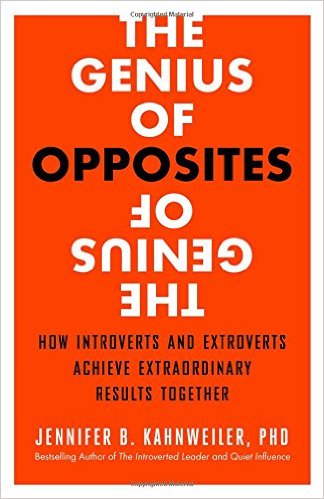
4) Book of Opposites Jennifer Kahnweiler has written a fascinating book on Introversion-Extroversion. The Genius of Opposites: How Introverts and Extroverts Achieve Extraordinary Results Together. My  husband is a  introvert  and I am an extrovert. We have been married 35 years and have worked together many of those years. We have learned a lot of Kahnweiler’s wisdom on our own…and after quite a few years of struggle. This book is very helpful and empowering for any partnership between introverts and extroverts.

Blog - Friday Faves - Genius of Opposites

Photo Credit: Amazon.com

Skip Pritchard wrote a great review here.Genius-card-front-1Photo Credit: SkipPritchard.com

5) The Story of God for Postmoderns – How would you answer the question, “What is the Bible all about?” If you were to prepare an answer of this question for a Post-modern, you might be disappointed. A true post-modern is probably not going to ask you that question. However, what if our friends could get hold of the idea that the Bible is not just a grand story that Christians have concocted? The Bible, in truth, is a winsomely unified story God actually tells about Himself from the first page to the last. Dr. David Teague, in the article, The Biblical Metanarrative, lays out the clearest explanation I’ve ever read of the Story of God – of how the Bible is God’s own revelation of Himself to His people. Don’t miss this gem.Blog - Friday faves - Peanuts & Postmoderns

Photo Credit: Peanuts, ParkingSpace23.com

Bonus: Phenomenal Classical Guitarist – This guy. Nathan Mills – related to us? Nathan at guitarPhoto Credit: Duy Nguyen

Yes. I get to be Mom to this amazing young man… Because we are related and it’s not always comfortable for him how effusive I am about his music…I restrain myself. Unsuccessfully. Right now, he’s fairly new to that larger world of music, but he’s playing, teaching, arranging, and composing. One day, you will know him if you don’t already… Mark it down.

A video from his early days with Nathan Mills Guitar:

…and his latest arrangement (June 2019) on his Beyond the Guitar YouTube channel:


Monday Morning Moment – the Perils of Social Media – That Post Might Not Have Been Meant For You

Photo Credit: Needpix, Geralt, Pixabay

Some years ago, I got tapped for the communications strategist role for a work team that was near and dear to my heart. It was a joy for me to wave the banner for our work – to raise awareness, inform and educate via the various social media outlets. Part of the job was following the social media accounts of folks also engaged in similar work, learning from and engaging with them.

It was where my love-hate relationship with social media began. Sifting through hundreds of posts and scrolling through silly to discover the substantive – time-consuming for sure. Mind-numbing at times. It’s why friends and colleagues curtail their Twitter and Facebook habits. For me, it’s been more gain than loss in learning from those I follow.

In particular, from those I follow that I wouldn’t know otherwise.

Social media allows us a window into the lives of people we are only barely acquainted with.

Also, we have this odd access to people who are celebrities in their fields of expertise – be they actors, scientists, politicians, educators, artists, or thought leaders of some sort or other.

We must be wary of making social media more personal than it actually is. Social media by definition presumes that it is actually social – between amicable and obliging people. Community is also presumed. Communication, too.

We must be cautious about entering into dialog, even with just a like button…because, in fact, that tweet or Facebook status could have been meant for a rather different audience.

That post frankly might not have been meant for you.

On the flip side, the social silence that follows one of your own posts might also not have been personal either. It is what it is.

Recently, I began following author John Pavlovitz on Twitter. He popped up as author of an article and, intrigued, I shared it:Photo Credit: ChurchPlant

Then it turns out he is an wildly active tweeter, and my Twitter page has grown full of his take on both our country’s political and religious failings. I try not to engage, but today, it felt personal so I did…my mistake.

Photo Credit: Twitter, John Pavlovitz

If you’re Southern Baptist, or a white, middle class, heterosexual (definitely male) evangelical…this tweet might have been “meant” for you. I realized later in the day, it wasn’t meant for me. I replied, and got smacked down by another follower of Mr. Pavlovitz. Probably deserved since I actually thought I could enter the conversation…but it wasn’t about me.

You see…it wasn’t actually an open conversation.

That’s an important distinction in successfully maneuvering social media. Not all conversations are open to everyone. I would love to be in some of the dialogs going on in various cyber-locations. The problem is although it feels like we’re invited, it isn’t the case.

I’m slowly learning that.

However, remaining silent is not the answer either. Conversations are needed with places at the table for as diverse a community of people as possible.

It happens occasionally on social media and I’m thankful for what I learn in the gracious company of people who don’t necessarily agree with me, or I with them…but who consider a differing view and who practice reasoned dialog with others.

[Update: I did decide to “unfollow” the gentleman above. Increasing my understanding of how others think can come from others.]

What are your thoughts on this?

A quote by actor Denzel Washington bears repeating here (posted in last week’s Friday Faves). Washington won the American Film Institute’s Lifetime Achievement award last week. His acceptance speech was the stuff of community and caring and healing…across the lines that too often divide us:

[In his acceptance speech,] he shared a brief 30-year-old video of his father-in-law talking to the camera and preaching a message of love. “God intends for us to love all mankind and by being in a loving mood, caring for one another, that’s our purpose for life,” his father-in-law said in the clip. “We should care for one another and we should help one another.”

Washington closed by reflecting on and reinforcing this message, saying, “In this Twitter, tweet, mean, mean world that we’ve created for our children, the least we can do is consider what we’ve done and think about the young people, the future, and individually, collectively, we can try and do the best we can. I blame no one; I look in the mirror. On the other side of it, what an opportunity we have because tomorrow’s the first day of the rest of our lives, so what an opportunity we have to practice what he preached.”Maureen Lee Lenker, Entertainment Weekly

Photo Credit: Max Pixel

In closing, I thought about extending an apology to Mr. Pavlovitz… but again realized (still learning) he wasn’t writing to me. I was not meant to come to the table set for those who would respond in affirmative to his tweet or in embattled reaction to it.

Mr. Pavlovitz, you help me grow in my understanding about how others experience politics and the church. I want to understand. It helps to realize your posts aren’t meant for me therefore I will not take them personally in the future. [Of course, you won’t be reading this…but just throwing it out there]. Blessings.

Monday Morning Moment – Rewiring Your Brain Toward Thinking in the Positive

Photo Credit: Hubspot, Carly Stec

OK…so today started really great. Then it got a bit murky…then downright dark. I was all set to turn today’s blog into the ultimate rant! Fortunately, something else happened along the way.Photo Credit: AZ Quotes

Looking up meanings to words like “disingenuous” and thinking of the ways that people communicate that shut others down. Aarrgghh!

25 Phrases That Kill Workplace Relationships – John Rampton

Which of These Incredibly Annoying Pet Peeves is the Worst? – Analise Dubner

Then…I snapped out of it. Negative thinking is such an unhelpful, unhealthy activity. It is not how I want to be, nor was I ever…routinely negative, that is… until recent years. Getting older seems to bend us toward negativity. My mama sure didn’t raise me to be that way.Photo Credit: Disney Film Bambi, CineLessons, Pinterest

Somewhere in the middle of beefing up my rants on condescension  and exclusivity and those most affected by decision-making not having a place at that table (see the downward spiral?)…I took a deep breath and turned around. Dave will sometimes tell me “pull up” when he could see me mentally plunge downward…and so I did…pull up.

You may have read what I wrote previously about identifying negativity and correcting course. It seems to be a bit of a recurrent subject of late. Those pieces are here:

Monday Morning Moment – Grumpy Begets Grumpy – Understanding It, Not Reacting, and Turning It Around – Deb Mills

Monday Morning Moment – Negativity – Its Cost and Cure – Deb Mills

Today, I came across a super-simple prescription for rewiring our thinking toward positivity. The team at Daily Health Post focused on complaining as a culprit that can actually cause our brains to default to anxiety and depression. From experience, I know this is true. Check out the article below:

How Complaining Physically Rewires Your Brain to Be Anxious and Depressed

Photo Credit: Daily Health Post

The prescription for rewiring our thinking is straightforward and easy, with practice. In fact, these four reminders could easily sit on a card at our work station to help us stay on the road and out of the ditch:

  • Be grateful. – Keep a journal and write down things/persons for which you’re grateful – morning and evening. Turn your thoughts toward gratitude when you’re tempted to go negative/complaining.
  • Catch yourself. – Shake off the negativity before your friends/coworkers intervene…or pull away. Learn to catch yourself and change course.
  • Change your mood. – If your emotions start to spiral, shift your environment. Take a walk. Listen to music. Step away from your work station. Grab a few minutes with a friend.
  • Practice wise effort. – Wise effort is the practice of letting go of anything that doesn’t serve you. If your worry won’t improve your situation or teach you a lesson, simply let it go and move on.This is much easier said then done, of course, but if you write it out, ask friends for advice, and take some time to think it through constructively, it really can be done.” – Daily Health Post

All this is common sense. Still, in an age of outrage, we must practice thinking positively until it becomes a discipline…a healthy habit.

So…as fascinating as you would have found my rant, I’m sure…better to let it go…and the stress along with it. For now. There are things, destructive hurtful actions (or communications) that might need our intervention along the way. However, we only hurt ourselves and those closest to us when we just go all negative, faithless, and brooding. Thanking God, this is not how this day will end.

The Art of Being a Great Coworker: 13 Ways to Improve Your Work Relationships – Carly Stec

Photo Credit: Frank Sonnenberg Online

5 Friday Faves – Other Mothers, Avengers Endgame on Guitar, Slowing Down Time, the Why of Public Outcry, and the Overcomer Movie

It’s the weekend again! Mother’s Day here in the US. Hope you all have cause to celebrate or to remember a wonderful mother…your own or someone else’s. Here are my favorite finds of the week:

1) Other Mothers – Shout-out to those other mothers. You’ve heard the expression guys at times use: “Brothers from another mother”. I’d like to focus a moment on those other mothers. Our mom was that “other mother” for some. She was a treasure – loving, sacrificing, praying for us, grieving our pain with us, and taking joy in us…and those many others God dropped into her life and she simply loved.

Mother’s Day – On Mothering and Grandmothering – a Life of Love, Launching, and Lifting to God – Deb Mills

Mother’s Day – Not the #BestMomEver Nor the Worst – Didn’t Mother Alone, and Then They Were Grown – Deb Mills

The Season of Small Ones – Mothering, God, and Gandalf – Deb Mills

The other mothers I want to celebrate today are the mothers-in-law in our lives. My mom is gone…but my mom-in-law, Julia, is still with us and I am so grateful. She, from a distance away, partnered with my mom in teaching me about loving well my husband and children…

With two children married, I am blessed with two co-moms-in-law. This was an unexpected joy – to be able to know and call as friends these two women. They are faithful in loving my children (and our grands) and I hope they see me as that. We count on each other…and celebrate every milestone. Prayer warriors together for our kiddos.

How about you? Are there other mothers in your lives who inspire or spur you on (whether they have kids themselves or not)? Share in the Comments if you choose.

Preparing Your Heart For Mother’s Day – Jan Harrison

Sweet Video Shows a Normal Day From both Mom’s and Kid’s Perspectives – Caroline Bologna

2) Avengers Endgame on Guitar – You knew, if you know us, that this would happen. The huge film Avengers Endgame has come and most everybody who’s a Marvel fan has already seen it. Nathan Mills has again arranged and performed a powerful piece, covering the theme from this film. These big film themes are usually performed by full orchestras. Nathan’s arrangement to a single guitar is phenomenal. Watch it here.

3) Slowing Down Time – Psychology professor Steve Taylor has written a thought-provoking piece on slowing down time: Time Goes By Faster As You Get Older But There’s a Way to Slow It Down.Photo Credit: Slowing Down Time, Very Smart Girls

Quoting Dr. Taylor: “In my book Making Time, I suggest a number of basic “laws” of psychological time, as experienced by most people. One of these is that time seems to speed up as we get older. Another is that time seems to slow down when we’re exposed to new environments and experiences.

These two laws are caused by the same underlying factor: the relationship between our experience of time and the amount of information (including perceptions, sensations, and thoughts) our minds process. The more information our minds take in, the slower time seems to pass.

He makes two suggestions for us who experience time as fairly flying and want to slow it down some at least experientially:

  1. Upping our mental processing with travel, new challenges, getting to know new people, developing new skills (including hobbies). New information requires the brain to process it which seems to stretch out time for us. [Sidebar: I would like to pose that even if it’s the same people, same job, same places – we can go deeper or approach differently and shake up the familiar.]
  2. Perhaps most effectively, we can slow down time by making a conscious effort to be more “mindful” of our experiences. Mindfulness means giving our whole attention to an experience—to what we are seeing, feeling, tasting, smelling, or hearing—rather than to our thoughts.” Dr. Taylor talks further about what it means to be “in the moment”.

This was fascinating and so doable in terms of slowing down and squeezing all the good out of our lives…and helping others do the same.

4)  The Why of Public Outcry – Two words: Social media. It is way more edgy than it used to be a few years back. More hateful. More in your face. Leadership coach Carey Nieuwhof, formerly a lawyer and currently a pastor, has written about it, challenging us about why we are more angry, and how we use social media as our vehicle for voicing anger and stirring it up in others.

Why Do We Hate Each Other So Much? (5 Reasons Anger Is the New Epidemic)

Photo Credit: Flickr

We may not see ourselves as anger-driven, and some of us aren’t so much. For the issues we are passionate about, we have other avenues to make our voices known. However, using social media is a little too easy and a lot more telling of the anger…even hatred that stirs inside.

Nieuwhof’s 5 reasons of the epidemic of anger in our culture today:

  1. You’re naturally more aggressive online than you are in person.
  2. Hate generates more clicks than love.
  3. Any attention can feel better than no attention.
  4. You know enough to make your world feel dark.
  5. Anger can get you heard, even when you have nothing to say.

Read his article. Lots of great commentary and helps on anger/hatred. Nieuwhof closes with this:

“Here are four questions to ask next time you post, write, blog, podcast, or shoot that email or text.

What’s my real motive? Am I trying to help, hurt, or just get noticed?

Are people better off, or worse off, for having read what I posted? 

Am I calling out the worst in people, or attempting to bring out the best?

If the person I’m writing to was in the room looking me in the eye, would I say the same thing in the same way? 

What do you do with the junk you feel—the loneliness, the anger, the outrage? Here’s the best thing I know how to do: Process privately. Help publicly.” – Carey Nieuwhof

5) Overcomer Movie – I LOVE the Kendrick Brothers. They are filmmakers. All their films have a Christian foundation, with themes large enough to resonate with anyone out there who wants their lives to count for something. With each film, they have matured their craft such that their films today can compete with any mainstream film. Their film Overcomer is coming out August 2019. Can’t wait.

Happy Weekend and Happy Mother’s Day, Y’all. Blessings.

Bonuses:

Photo Credit: Facebook, Joshua Harbin

Richard Sibbes (1577–1635); Pinterest

45+ comics about double standards in our society and you’re probably guilty of them

https://soundcloud.com/matt-garnier/episode-35-karen-swallow-prior-5719?fbclid=IwAR0q89NkOyD-v2Pp_SQ7cGhqSTmv-EtJ8EUlWjafqbbch0uKzsePlHzMbIM

Feds Release 168,000 Illegal Immigrant Family Members Into Communities – Stephen Dinan – a read different from others lately.

Photo Credit: United Health, Twitter

Photo Credit: Debbie Hampton, Twitter

Why Your Brain Loves to Laugh – Debbie Hampton

5 Friday Faves – Beyond the Guitar’s “Jenny of Oldstones”, Doing What You Love, Language-Learning for Life, Temple Grandin, and Supplying a Food Desert

Friday Faves on a Monday. Here goes…finally:

1) Beyond the Guitar’s “Jenny of Oldstones”Nathan Mills of Beyond the Guitar has written an arrangement of this heart-wrenching ballad, “Jenny of Oldstones”.  This song performed by Florence + the Machine for the TV show Game of Thrones. Whether or not it has an emotional appeal for you because you are a fan of the show, you will love “all the feels” in Nathan’s classical guitar interpretation of the song.

2) Doing What You Love Marcel Schwantes, executive coach and a voice for servant leadership, posted, this week, a provocative piece on success. He quoted notables Warren Buffett, Tim Cook, and  Steve Jobs on the one characteristic that sets apart successful people from all others.

“Doing what you love”.

Photo Credit: Flickr

We may all go through seasons where we are working in a job because it is our vehicle for a paycheck, to pay the bills, to support the family. Work we have loved can go through iterations to the point it is no longer that work we are passionate about.

Schwantes himself also supports the core value of love in action. Knowing what you love should be a top priority. If you don’t know what it is you love, then finding out what it is should be your first step. Some people call it passion; others call it purpose. Whichever term you choose, your purpose is exactly what you can’t help but keep doing. Even if there are low monetary rewards, you would probably do it anyway because of your love for it. When you discover what this is for you, it’s the thing that makes you come alive.” Marcel Schwantes

3) Language-Learning for Life – I have a neighbor in her 80s who has recently finished a course to learn Spanish. So proud of her. In university, I minored in Spanish myself. It may very well have kept open some language center in my brain to learn Arabic in my 40s. Seriously, early on in “mastering” this very difficult language, Spanish words and grammar would pop up in my memory even though I hadn’t used Spanish in decades. If you do a Google search of brain benefits of language-learning, you will be amazed.Photo Credit: Pixabay

Writer Trevin Wax recently wrote a piece What We Lose When We Lose Language-Learning. He gives strong support to learning second and third (or more) languages:

“A few years ago, I wrote about the “brainy benefits of being bilingual,” and I included an excerpt from Time magazine that explained a few of the cognitive benefits of knowing another language:

Research is increasingly showing that the brains of people who know two or more languages are different from those who know just one—and those differences are all for the better. Multilingual people, studies show, are better at reasoning, at multitasking, at grasping and reconciling conflicting ideas. They work faster and expend less energy doing so, and as they age, they retain their cognitive faculties longer, delaying the onset of dementia and even full-blown Alzheimer’s disease.

Even a partial grasp of other languages opens doors, not just to a better quality of life for ourselves (now and when we are older), but…the doors open for relationship. We live in a world of languages. I learned both Spanish and Arabic because they were the heart languages of peoples important to me.

Consider a path to a second language, no matter your age. Children can master other languages, too.  Definitely by the age of 10, but some researchers believe children can start learning other languages by the age of three or four. Give them a head-start on communicating in the world they will be encountering as they grow.

4) Temple Grandin – Several years ago (2010), we watched a film about a young girl/woman who had autism. This biopic film was entitled Temple Grandin. Photo Credit: Our Lady of Calvary

Depicted by Claire Danes in the film, Grandin was fascinating in how she not only coped with autism but eventually adapted to it to become successful in her life and career.

This week she is featured at the Richmond Forum. Her discussion of the autism experience was winsome, humorous, and enlightening.Photo Credit: Richmond Forum

Recap – Dr. Temple Grandin Illustrates Life With Autism – Thomas Breeden

Temple Grandin – The Way I See It – Richmond Forum

TED Talk – The World Needs All Kinds of Minds – Temple Grandin

5) Supplying a Food Desert – Food insecurity was a Friday Fave sometime ago. This coming week marks a big change in a Richmond neighborhood (Church Hill) as a supermarket opens in one of our city’s often described food deserts.

Photo Credit: Facebook, The Market at 25th

Richmond’s Market at 25th Shaped By History, Needs of Church Hill Residents – Catherine Komp

The Market at 25th – Facebook page

Below excerpted from my blog on food insecurity:

Food Insecurity – This is the social dilemma of not having adequate access to fresh, healthy food. Photo Credit: Mary Lide Parker

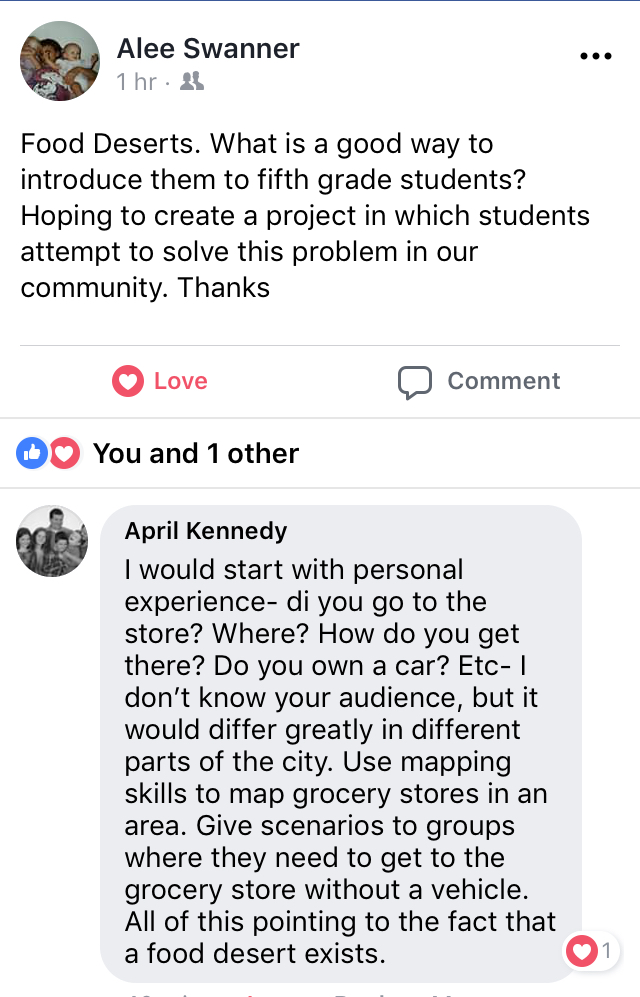
A simple Facebook post by a friend generated a thought-provoking, rich conversation on this topic.

Photo Credit: Alee Swanner, Facebook

I share the links from that conversation below.

The Root of the Problem – an Interview with Lindsey Haynes-Maslow – Mary Lide Parker

The Role of Local Food Availability in Explaining Obesity Risk Among Young School-aged Children – Helen Lee

School and Residential Neighborhood Food Environment and Diet Among California Youth – Ruopeng An & Roland Sturm

Studies Question the Pairing of Food Deserts and Obesity – Gina Kolata

Should the Concept of a Food Desert By Deserted? – Layla Eplett

Always being aware of those who may need food is important. Certain times of the year, around special holidays, we are more likely to give to food banks, church food pantries, and other outreach ministries. This is just a beginning place…but it is a beginning.

Having The Market on 25th opening in Church Hill is huge!

_________________________________________________________________________

That’s the 5. I would love for you to share your own favorite discoveries from your lately life. In the Comments below. Blessings!

Bonuses:

Richmond’s Own Rodney Robinson – 2019 National Teacher of the Year

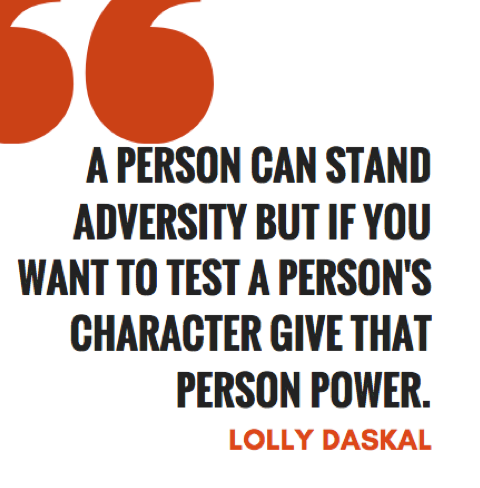
Photo Credit: Lolly Daskal, Twitter

Photo Credit: Carey Nieuwhof, Twitter

4 Keys to Creating a Healthy Culture That Naturally Resists Toxic People – Carey Nieuwhof

Quotes by C. S. Lewis – an intellectual feast for anyone

How to Build a Startup in an Unfamiliar Industry – Rahul Varshneya

This First Class Passenger Saw a U.S. Military Officer Flying Coach and Decided to Thank Her for Her Service by Giving Up His Seat – Rebecca Schlesinger

Monday Morning Moment – Strengthening Decision-making with Collaborative Conversations

Blog - Collaborative ConversationsPhoto Credit: AJCarlisle.files.wordpress.com

[Adapted from the Archives]

Change is normal, and resisting change is normal as well. You may be part of an organization or company where sweeping changes are being implemented, even this week. Or maybe you are not on the inside loop of these decisions, so you are not privy to the change coming. Whether you are part of that process or not, consider how you might have a role in making change work, in your sphere of influence, among your colleagues.

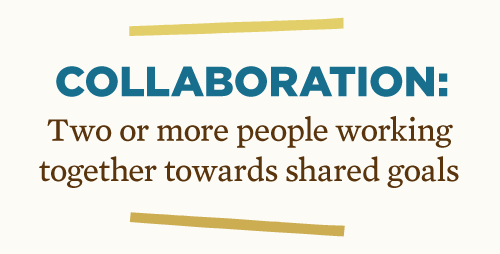
You may already have read and profited from the book Crucial Conversations. Now consider collaborative conversations. Collaboration, simply defined, is “working together towards shared goals”. Collaborative conversations bring a collective intelligence to bear on the problem to be solved, vision to be defined, or direction to be changed.Blog - Collaborative ConversationsPhoto Credit: ThoughtFarmer.com

David Perkins, a Harvard professor, wrote about collaborative conversations in the workplace, using the metaphor of King Arthur’s round table. He described the beneficial nature of bringing several principal players (or stakeholders) to the table and treating each one with an equal or autonomous voice.

Perkins’ book King Arthur’s Round Table: How Collaborative Conversations Create Smart Organizations is a tremendous resource in developing this kind of decision-making work environment. An Executive Book Summary* can help you get started.

“A round table makes it a little easier to pool mental effort. A round table makes a group a little more intelligent…For a group to display intelligence in a sustained way, the members have to value their exchanges and stick together to keep making them. This depends on positive symbolic conduct [side messages sent by our words and behavior]…and collaboration… It’s not ideas, but people with ideas that make things happen.”David Perkins

“One of the simplest ways to immunize a culture against broken trust, corruption, and animosity is to build a common vision.”David Perkins

I personally thrive in such a setting and intuitively understand the value-adding nature of collaborative conversations. In researching this workplace topic, and choosing the links below, I came across a fascinating paper** by Heather Davis, a professor of RMIT University Australia.

Davis presented her paper at the 14th International Conference on Thinking (2009, Malaysia). She discussed how workplace leaders often choose “languages of war” in making and communicating decisions and creating change. Her paper is heady stuff but if you read her thoughts below you will want to read the whole paper. It gives huge support to the role of collaborative conversations.

“In [leadership’s] ‘language of zealous allegiance’, there are expectations of allegiance [in the workplace] that lay a path for uncritical acceptance and passivity. This manifests in an expectation that followers be conscripted wholly to the cause. There is little room for questioning. ‘Conscription means one important thing: there is no questioning of orders, one only executes them; “either you’re with us or you’re against us”.’ “

“Rhetoric plays out in the workplace too and can be tested by how well leaders:

  • hear and acknowledge the ‘other’ point of view,
  • see the ‘other’ as people rather than pawns or simply abstractions,
  • manage the distance, materially and metaphorically, between themselves and the people and sites affected by their decisions.”

“In the corporate world there are many examples of executives living and working in gated communities or otherwise removed by dint of corporate hierarchy or geography from the people and conditions affected by their decisions. Often, these leaders are also surrounded by people who can only agree, leading to little opportunity for double loop learning or deeply reasoned decision making processes. Whether our leaders live in gated communities is their business, but if they think, work and take refuge within a ‘gated’ mindset then we all need to be concerned. These conditions lead to hubris and have been the undoing of many leaders and corporations.”

The role of the organisation is ‘to know its purpose and not be diverted from it’ (Drucker, 1993). This is a timely reminder here – easier said than done in times of flux, complexity and discontinuous change.”

“The main difference between Perkins’ languages of war and peace are that the war metaphor is founded on exclusivity and a preference for limiting discourse to its [leadership’s] own narrowly defined boundaries. Perkins’s peace metaphor is founded on inclusivity and opening up the space for conversations and conflicting views [i.e., collaborative conversations].”

“Oppositional language and the pitting of one deeply held worldview against another will not lead to resolving the underlying problems of the workplace. Rather, space for conversations to surface underlying assumptions is required. Perkins’ language of peace metaphor confirms that that there are always other lenses to view the world through, not just the one that [leadership] prefers.”Heather Davis

Provocative reading from this Australian educator.

Bottom line: Those of us in leadership carry a great burden of responsibility. We at times must make difficult and sometimes painful decisions. Adding voices to that decision-making can generate even more challenging processes to negotiate. However, we will make more sustainable decisions for “better futures” if we bring those most affected (or most experienced or insightful) to the table. Whenever possible. That’s the gain of collaborative conversations – working together toward shared vision and shared ownership.

Stay engaged in your workplace. Don’t entertain indifference. Stay in the conversation. You can make a difference.

*King Arthur’s Round TableHow Collaborative Conversations Create Smart Organizations by David Perkins – an Executive Book Summary

**Troubling Invisible Barriers to Better Futures: Surfacing the “Five Languages of War” in the Workplace – a scholarly paper by Heather Davis, presented at the 14th International Conference on Thinking

Leadership Lessons from King Arthur – a Review of Harvard Professor David Perkins’ book King Arthur’s Round Table

The Five Literacies of Global Leadership – What Authentic Leaders Know and You Need to Find Out – by David Hames – Business Book Summary

The Perils of Indifference – a Speech by Elie Wiesel

How to Lead When Change is the New Normal – Emer Coleman

The Art of Collaboration (Collaborative Behaviors) – by Steve Dale (includes a SlideShare)

Collaboration: What Does It Really Mean? – Carlos Dominguez

What Is a Coaching Conversation? from Opening the Door to Coaching Conversations by Linda Gross Cheliotes and Marceta Fleming Reilly 

Cutting Through the Hype – What “Collaboration” Really Means – ThoughtFarmer.com

5 Choices You’ll Regret Forever – Travis Bradberry

Monday Morning Moment – Ian Bremmer – on Global Politics and Replacing Rage with Hope

Photo Credit: Wikipedia

How do American politics affect our ability and capacity to be a force for good on the world stage?  What elements align to make any of global nations consequential or inconsequential? What natural or geopolitical events will lead to migrations of people to who knows where? What are the top political risks facing our country and our world today?

Political scientist and thought leader Ian Bremmer was just an unknown name on our Richmond Forum subscription for this year’s season. Then we heard him speak. Wow! My ignorance was what was showing.

Ian Bremmer is a brilliant, funny, courageous, optimistic analyst of all things global. He has conversations with world political and economic leaders and their staff, and I’m sure he asks excellent questions. His analysis is intriguing because he clearly knows what he’s talking about and he kindly brought it down to a fifth grader’s understanding.Photo Credit: Richmond Forum

Ian Bremmer Engages with Geopolitics, Honesty, and Humor at The Richmond Forum – Thomas Breeden

The best part of the whole evening was his unflappable honesty. He clearly had his biases regarding world leaders, including our own country’s leaders. Yet, he takes the larger and longer view. I so appreciated that. It’s part of why he’s not “crazy”, as he encouraged us not to be as well when we read and watch the news each day.

Bremmer told the audience his goal for the evening was to make us all “10% less crazy.” What makes us crazy regarding our country’s politics? He summed it up memorably:

A lot of us feel like our system is rigged. A lot of us feel like our representatives are not representing us. A lot of us feel like the American dream no longer applies to us. And they feel like when the political leaders or the CEOs or the bankers or the journalists or the public intellectuals—God forbid—are talking to us, that they’re lying.”Ian Bremmer

If we daily wonder if we’re being lied to by our politicians and not truly represented by our elected officials, then we do become a little crazy…distrusting our government and divided and polarized in our thinking, depending on our particular brand of politics.

Adding to this, Bremmer gives four other factors that fuel the divide:

  • Immigration – So much talk and very little done on either side of the aisle to improve the system – with the hope of making it fair for all who would like a chance to immigrate as well as humane and just for those foregoing lawful entry to the country.
  • Economic Inequality – This continues to increase, and it heightens the political divide between peoples as well. It adds to the “us vs. them” scenario.
  • Wars – When we seem always on the brink of a war (either threatened by a nuclear power or compelled to enter because of an oppressed ally, we struggle again with trusting our leadership, especially as our spouses and children lay their lives on the line for these wars. For what purpose?
  • Social Media – The rage of the average citizen who feels unheard or discounted by his government is stoked through the comments of others on social media. Where are the conversations being had by reasonable people with a stake in the outcome?

Ian Bremmer addressed these stressors and then he calmly proceeded with a survey of global and national threats and trends. I won’t go into them here but you can follow his generous, insightful commentary on all the latest news via his website, broadcasts, books, and Twitter/Facebook feeds. He will educate you and encourage how to engage rather than isolate.

[Forgive me for staying general on this, regarding geo-political risks.]

Bremmer gave two excellent challenges to us. The first is to find a person who we disagree with politically but who we respect (I have a short list of those valuable friends and family members). Then engage in conversation, with the goal to listen, learn, and better understand. Our default is to be enraged but not engage…we just read their social media posts and don’t comment, or worse, do…when we could actually create face-to-face dialogue. Neither of us may change but we have the opportunity to grow closer in coming to viable solutions to the problems we face.

His second challenge was to encourage our young people to study abroad…even in high school, even just for a semester. To put themselves in the minority. To learn from others who have similar problems as well as quite different ones. To learn how to draw down conflict and create understanding. To learn how to problem-solve with less monetary resources. These young people of ours will be the ones who will have to figure out how to flourish in the world we are leaving them.

Ian Bremmer talks reality but with hope and a healthy sense of humor. We would do well to follow his example in this…whether we agree with him on all points or not.

From a secular point of view, he came as close to answering my life-long question “Why can’t we all get along?” Bremmer’s talk also reminded me of Dr. Seuss’ book Oh, the Places You’ll Go. In the midst of a forum on global politics, economic upheaval, war and poverty, he posed the possibility of hope…if we show up and engage with one another.

YouTube Video – Ian Bremmer on the Failure of Globalism – some of the content we enjoyed at the Richmond Forum.

YouTube Video – Ian Bremmer – How the US Should Use Its Superpower Status

Global Warming: Severe Consequences for Africa – Dan Shepard [Ian Bremmer got me to consider global warming more seriously when he talked about how the peoples of equatorial Africa will one day have to leave their countries and immigrate north.]