Category Archives: Attitude

Monday Morning Moment – Moral Suasion – the Pathway of Truly Changing Minds – in Remembrance of MLK Day

Photo Credit: Alpha Coders

Don’t be put off by an unusual phrase. Moral suasion.

Photo Credit: YouTube, What Does That Mean?

We find ourselves in a cultural climate of power dictating more than it should. “Should”…well…who am I to judge, but I’m still saying it. For sustained change to happen, we are meant to wrestle together in the arena of conversations within community. This is where real and lasting influence lies.

We can take hope in that.

The phrase “moral suasion” is new to me. I discovered it in a piece by George Yancey entitled Breaking Up Fights and Race Relations. He defines it as:

“Moral suasion is when we convince people to do what we see as a moral good because they see that moral good as good…Moral suasion is best done working with someone to do the right thing instead of forcing that person to do what we want because of our power. Research has shown that the best way to engage in moral suasion is through relationships. In those relationships, we can build rapport, find areas of agreement, and clearly understand the other person’s perspectives. If we want people to change at the intrinsic level and not simply conform to pressure, then we should use the techniques of moral suasion instead of just overpowering that person.” – George Yancey

Breaking up Fights and Race Relations

[Is there a difference between persuasion and suasion? In the simplest terms, they are considered the same, but I do sense a difference. Persuasion is more an action of influencing another party to come to your reasoning or way of thinking. Suasion, especially moral suasion, is more a consideration that two or more parties have a sense of rightness about an issue/subject but differ in their opinion. Moral suasion works through dialog to seek and hopefully find common ground – a way forward together to do a right thing.]

Yancey’s article appears just ahead of his latest book (March 2022) –  Beyond Racial Division: A Unifying Alternative to Colorblindness and Antiracism. The publisher offers a brief summary of Dr. Yancey’s book: “an alternative approach to racial relations where all parties contribute and are mutually accountable to one another for societal well-being. He provides empirical rationale for how collaborative conversations in a mutual accountability model can reduce racial division. History and societal complexity mean that different participants may have different kinds of responsibility, but all are involved in seeking the common good for all to thrive.”

“There are times when power is necessary. But the temptation to use power to consistently solve our racial problems brings with it power struggles and the need to build up our own ability to force conformity. Different groups have contrasting ideas about what we should do. The temptation is to try to force others to accept the solutions we want to promote. But this power-driven approach is short-sighted and will not produce intrinsic changes. Those changes will not happen until we engage in moral suasion consistently rather than seeking power to force compliance.

That effort would be time-consuming. It is easier to just use power. Easier but not lasting…We must sit down with those with whom we disagree and try to understand their perspectives. We must seek out answers that meet their felt needs and show them respect. I find that few in the racial conversation want to do this. Until we are willing to have those conversations, we will continue to foster greater racial polarization in our society.”

It’s easier to just use power…but not so effectual.

Are you as tired as I am of the power plays in motion around us? …Not just regarding race relations, but in so many other areas of human experiences together. Life together.

Laws are laid out. Mandates put forward. Rules and regulations abound.

I miss conversations on the stuff of life. The stuff that matters most. That’s why I’m often one of the ones who raises their hand, offers a space, takes a corner of the table if given opportunity. Not to just say my piece but to hear yours.

Photo Credit: Brainy Quote

Today is the day in 2022 when we commemorate Martin Luther King, Jr.’s life and legacy. Certainly Dr. King was a man who exercised the great power of influence…not elected to a public office but commanding in his pursuit of a passion he believed possible.

We know him most from his speeches and some from his sermons. I wonder what his conversations were like. My hope is they were of moral suasion. In the last couple of years, we have gone through a huge transformation as a nation…to what end? Some change has come (for better and for worse). More positive, enduring change will come if we choose to reason together…across the lines that seemingly divide us but do not have to forever.

Photo Credit: AZ Quotes

Monday Morning Moment – a New Day – It’s Gonna Be OK – Deb Mills

20 Quotes About Faith From Martin Luther King, Jr. – Jennifer Graham

Monday Morning Moment – “Be Strong and Courageous” – a Good Word for These Days

Photo Credit: Wallup

“Haven’t I commanded you: be strong and courageous? Do not be afraid or discouraged, for the LORD your God is with you wherever you go.” – Joshua 1:9

Is the world today a cause for fear for you? Or timidity? Or maybe, with COVID as a continuing threat, it doesn’t seem like fear but rather sound caution.

Social distancing has become a way of life. We have stepped back from so much of life…

At this time in the Biblical account of the Israelites entering their Promised Land, the great leader Moses had died. God then gave Joshua the responsibility of leading them in the conquest.

Three times the Lord told Joshua to be strong and courageous. Then even the people of God a fourth time urges Joshua in the same way.

Why was Joshua needing enCOURAGEment? He was being charged with a huge and costly undertaking. Transporting all those tribes into a land where they weren’t just aliens but enemies.

In preparation, Joshua counseled with the Lord, and in obedience, he gathered his warriors. 40,000 strong. Seems plenty, right? But wait…

Joshua told the people, “Consecrate (sanctify) yourselves, because the LORD will do wonders among you tomorrow.”Joshua 3:5

God showed Himself mighty on behalf of Joshua and all the people. He held back the rain-swollen Jordan River for them to walk across on dry ground. You can imagine the fear this struck in the hearts kings of the lands on hearing this great miracle.

As Joshua continued to prepare the people to take possession of the land God had already given them, he decided to, one more time, spy out Jericho.

When Joshua was near Jericho, he looked up and saw a man standing in front of him with a drawn sword in his hand. Joshua approached him and asked, “Are you for us or for our enemies?” “Neither,” He replied. “I have now come as Commander of the LORD’s army.” Then Joshua fell face down in reverence and asked Him, “What does my Lord have to say to His servant?” The Commander of the LORD’s army replied, “Take off your sandals, for the place where you are standing is holy.” And Joshua did so. Joshua 5:13-15

Joshua had the great privilege of seeing a Christophany – a manifestation of Christ. This was no angel. This was the Lord Himself. The brief conversation between the two speaks volumes to us.

Joshua was on his way to Jericho because he felt the battle was his to win and he wanted to be as prepared as he possibly could be. On seeing the Lord, sword drawn and discovering who He was, Jericho was reminded whose battle it really was.

Have you heard that expression “I’m not here to take sides, I’m here to take over”? That was part of what God was communicating to Joshua. His call for him to be strong and courageous was to prepare him for his part of the battle, but also to ready him for what God would do.

When we are afraid about what’s going on in the world around us (COVID, the economy, violence in our cities, [fill in the blank]), our temptation is to circle the wagons or close ranks. But…

Photo Credit: Facebook, A. W. Pink

We don’t have a need to be strong or courageous if we stay distanced from one another, hunkered down in as small a world as we can make for ourselves. What if, however, God has something larger for us?

YouTube Video – Tony Evans’ New Year Message for 2022

He won’t leave us without His presence or His provision. Now there will be those who still contract COVID, and those who lose jobs or have financial reversals. There will be those of us in hard situations… but…

A battle belonging to God…for us…is being waged in the unseen by the Commander of the Lord’s Army. I’m reminded of Daniel 10:13, where Daniel had prayed and had to wait for three weeks for the answer. Spiritual warfare is very real, but even that does not have to frighten us, because we know who battles for us.

“You, O LORD, are a shield about me, my glory, and the lifter of my head. I cried aloud to the LORD, and He answered me from His holy hill. Selah. I lay down and slept; I woke again, for the LORD sustained me. I will not be afraid of many thousands of people who have set themselves against me all around…Salvation belongs to the LORD; Your blessing be on Your people! Selah.”Psalm 3:3-6

The LORD is my light and my salvation; whom [or what] shall I fear? the LORD is the strength of my life; of whom [or what] shall I be afraid? – Psalm 27:1,2

May we have the warrior heart of Joshua, dressed and ready for whatever battle is before us, and may we have the heart of one submitted to the mightiest Commander this world will know.

Whatever our circumstances, we can be strong and courageous. He means for us to show up for the battle…but it belongs to Him. Thankfully.

The Commander of the Army of the Lord – Northern Seminary – really neat piece on this topic

Photo Credit: Jesus the Great I Am


5 Friday Faves – New Year’s Resolutions, Habit Planner, Year-End Review, Word for the Year, and the Last Days of 2021

2021 is rapidly winding down. Whew! Here are my Friday Faves to get us ready for the new year…hopefully a joyful one!

1) New Year’s Resolutions – 2021…the end is in sight. What do we do with this new year ahead? Do we revisit those habits we thought about changing up in this tumultuous year? Maybe so. Or maybe we didn’t alter course so much for good reason. Let’s give pause a moment and consider…

Photo Credit: David Lose

Monday Morning Moment  – 2021 Come On! – New Year’s Resolutions

Are We Doing New Year’s Resolutions After a Year as Lousy as 2020? There’s One I think We Need More Than Ever – Heidi Stevens

How to Make Healthy, Attainable New Year’s Resolutions During COVID-19 – Ashley Welch, Healthline

Are You Making a New Year’s Resolution This Year? Readers Weigh In – Sarah Fielding

I take New Year’s resolutions very seriously. They have served me well through the years in shaking up troublesome habits as well as galvanizing better ones. New (or restored) habits that nurture the body, the spirit….and, when possible, family and community.

New Year’s resolutions are not always exercises in futility. They can be excellent pathways to help us get off to a strong start into the next year. Some of my family and friends treat resolutions with disdain…they never work; they never last. Oh, but not always!

They are really very energizing. Whether we meet our goals or not, there is great promise within the resolution for resetting our thinking. A keen sense of self, or self-awareness, aids in our understanding of habits and true habit change.

Without knowing it, I have actually used a practice of habit change that Ken Sande writes about on his blog, Relational Wisdom 360. He first influenced my life years ago with his work on conflict resolution through his Peacemaker Ministries. He is a gentle guide in many of the issues that complicate our lives.

His article on Seven Principles of Habit Change came at a great time. Sande talks quite kindly about how we develop habits and what it takes to change them. His first principle of habit change gives us a look at the cycle of habits – the cue, the routine (or response), and the reward. I actually followed Ken Sande’s principles below (without knowing the wisdom of it).

  1. Every habit has three parts: a cue, a routine, and a reward.
  2. You can change an undesirable habit by keeping the cue and reward but learning a new routine.
  3. The best way to overcome the temptation to revert to old routines is to have a detailed action plan.
  4. Habit change builds momentum if you can change a single “keystone habit” and then continue to build on consecutive “small wins”.
  5. Will power is like a muscle: it can be strengthened and yet needs to be exerted strategically.
  6. Faith is an essential part of changing habits.
  7. Habit change is more likely to occur within a community (even if it’s just two people).Ken Sande

Self-awareness is a huge factor relating to habit change. I can see that more now having come through seasons of looking at my own habits.

“Self-awareness is defined as conscious knowledge of oneself; it’s a stepping stone to reinventing oneself, learning to make wiser decisions, and helps you tune into your thoughts and feelings. So often we place blame on externalities because it’s the easiest excuse, when in fact we should be thinking about our thinking, reflecting, trying on different perspectives, and learning from our mistakes.”Paul Jun

It is possible to affect true habit change if we are willing to take a studied look at ourselves – our awareness and our engagement with making choices/decisions and within relationship. I used to think that self-awareness was morally charged, i.e., it drove us to become more self-centered. That doesn’t have to be the case. When we take time to really examine where our minds go, through the day, we can train our thinking toward what matters most – related to people, resources, and life purpose.

New Year’s Resolutions and Reality Checks – Wally Bock

When we are willing to do that, New Year’s resolutions can become much more transformative than just a few weeks of good intentions. These habit change principles can apply to anger issues, pornography, other addictions, and pretty much any habitual process that negatively affects your work, relationships or general peace of mind.

Consider these questions as you think on resolutions for 2022:

  1. What do I want to keep from the changes I made to cope with the pandemic?
  2. What do I want to reclaim from the pre-pandemic time?
  3. How would I “build back better” if I were in charge of the world or my neighborhood?Katherine Arbuthnott

Four years back, our pastor Cliff at Movement Church challenged us to commit to some resolutions to the Lord…together [podcast of 12/31/2017 here].  I have kept the resolutions made that day in a visible place, to be reminded of the good change in life, and the struggle… I still have them in view…four years out. Still relevant to now. For 2022, on it again…plus prayer for wisdom how to be creative and intentional, given COVID’s continued intrusion. And also added this year: writing my life’s story (capturing the memories and maybe restoring/refining some as I write).

Jonathan Edwards, the great 18th century preacher and theologian, definitely understood the importance of praying through and writing out resolutions that would inform his daily life. Over the course of several months, he composed seventy resolutions for life. You can read them here. The five resolutions I made during church on a New Year’s Eve are weighty enough for me…can’t imagine 70! Edwards just gives an example of a man who, even as deeply devoted as he already was, did not want to miss God in a busy life of ministry. Nor did he want to miss the people God placed in his life.

Resolutions help us to keep the main thing the main thing. Sure, we may struggle to keep our bodies and houses in order. Those are temporary situations. Where we hope most to be successful is in keeping our hearts tuned to what matters most. Going deep with God and others. Even in the face of a continuing pandemic...if we are ruthless and wise, and don’t give in to another year of listlessness and waiting.

We’ve already enough of that…coming up on two years.

I am resolved…

Photo Credit: Reformed Outfitters

Resolved – The Resolutions of Jonathan Edwards

Do You Want to Change Your Habits? – Relational Wisdom – Ken Sande

Habit Change is a Team Project – Ken Sande

Seven Principles of Habit Change – Relational Wisdom – Ken Sande

Make Habits, Not Resolutions – Justin Whitmel Earley

Why Self-Awareness Is the Secret Weapon for Habit Change– Paul Jun

RW Acrostics in Action– Relational Wisdom – Ken Sande

Ten Questions for a New Year – Don Whitney – Desiring God

Need Help With Your New Year’s Resolutions? – David Lose

Understanding True Habit Change and Rocking Your New Year’s Resolutions – Deb Mills Writer

2) Habit Planner –Anyone who knows the writing of Justin Whitmel Earley knows his commitment to a life well-lived. He is determined to live intentionally, not leaving the substance of his life to outside powers or sloppy habits.

Unlike resolutions, we actually become our habits. There are no changed lives outside of changed habits. And if we want to actually change, we need to take a sober look at where our habits are leading us.”Justin Whitmel Earley

Habits are the little things we do over and over without thinking about them. And the tiny and subconscious nature of habits makes them powerful. Why? Because they create our “normal.” Normal life is what stays with you from January through December. Normal life is what shapes your kids, your body, your schedule, and your heart.”Justin Whitmel Earley

His two books – The Common Rule and Habits of the Household – lay out a simple path for examining our current lives and then setting strategy for habit change. So accessible and engaging whatever our preferences for methods are. If spreadsheets help, he has one for you. If you need a more fuzzy-boundaried approach (that would be me), you can glean from his wisdom, and alter course accordingly.

Below are his own examples of the habit planner. I appreciate his heart so much. He helps us all he can (in his books and free resources):

Photo Credit: Justin Whitmel Earley, Screenshots

Habits of the Household – Habit Planner – pdf – Justin Whitmel Earley

Make Habits, Not Resolutions – Justin Whitmel Earley

Unlock the Power of Family Habits in 2022 – Justin Whitmel Earley

3) Year-End Review – Business writer Stephen Jones shares author Tim Ferriss’ practice of doing a quick past year review. Ferriss prefers this over new year’s resolutions, and Jones gives a quick snapshot of his 5 steps.

Below is Tim Ferriss’ guide for a past year review from his own blog (and podcast):

  1. Grab a notepad and create two columns: POSITIVE and NEGATIVE.
  2. Go through your calendar from the last year, looking at every week.
  3. For each week, jot down on the pad any people or activities or commitments that triggered peak positive or negative emotions for that month. Put them in their respective columns.
  4. Once you’ve gone through the past year, look at your notepad list and ask, “What 20% of each column produced the most reliable or powerful peaks?”
  5. Based on the answers, take your “positive” leaders and schedule more of them in the new year. Get them on the calendar now! Book things with friends and prepay for activities/events/commitments that you know work. It’s not real until it’s in the calendar. That’s step one. Step two is to take your “negative” leaders, put “NOT-TO-DO LIST” at the top, and put them somewhere you can see them each morning for the first few weeks of 2022. These are the people and things you *know* make you miserable, so don’t put them on your calendar out of obligation, guilt, FOMO, or other nonsense.

We do a year-end review but not in order to plan out the next year. Mostly to celebrate the year rapidly coming to an end and to reflect on how we might reorder the course of the next year (re the negatives).

A creative friend of ours put his “year-end review” into a cool video:

Photo (Video) Credit: Todd AO, Facebook

4) Word for the Year –A year ago, I read Debbie Macomber‘s book One Perfect Word. She tells fascinating stories of persons’ choosing a word to guide their year. Finishing her book and praying a bit, the word compassion became my focus. 2021 was a good year for that as we dealt with so many divisions over COVID, race, politics, etc. Compassion for all on both sides of each issue.

At first I wasn’t going to do “a word” for 2022, and then a rapid series of “coincidences” drew me to the word: joy. As this year ends, I’ve become negative and even a bit cynical. Still having faith in God but not so much in humans, including myself. Even after a year of compassion!!

It dawned on me that I haven’t been “counting it all joy”. Or remembering that “the joy of the Lord is my strength”. Now my heart is resolved to be set on joy in 2022…no matter what.

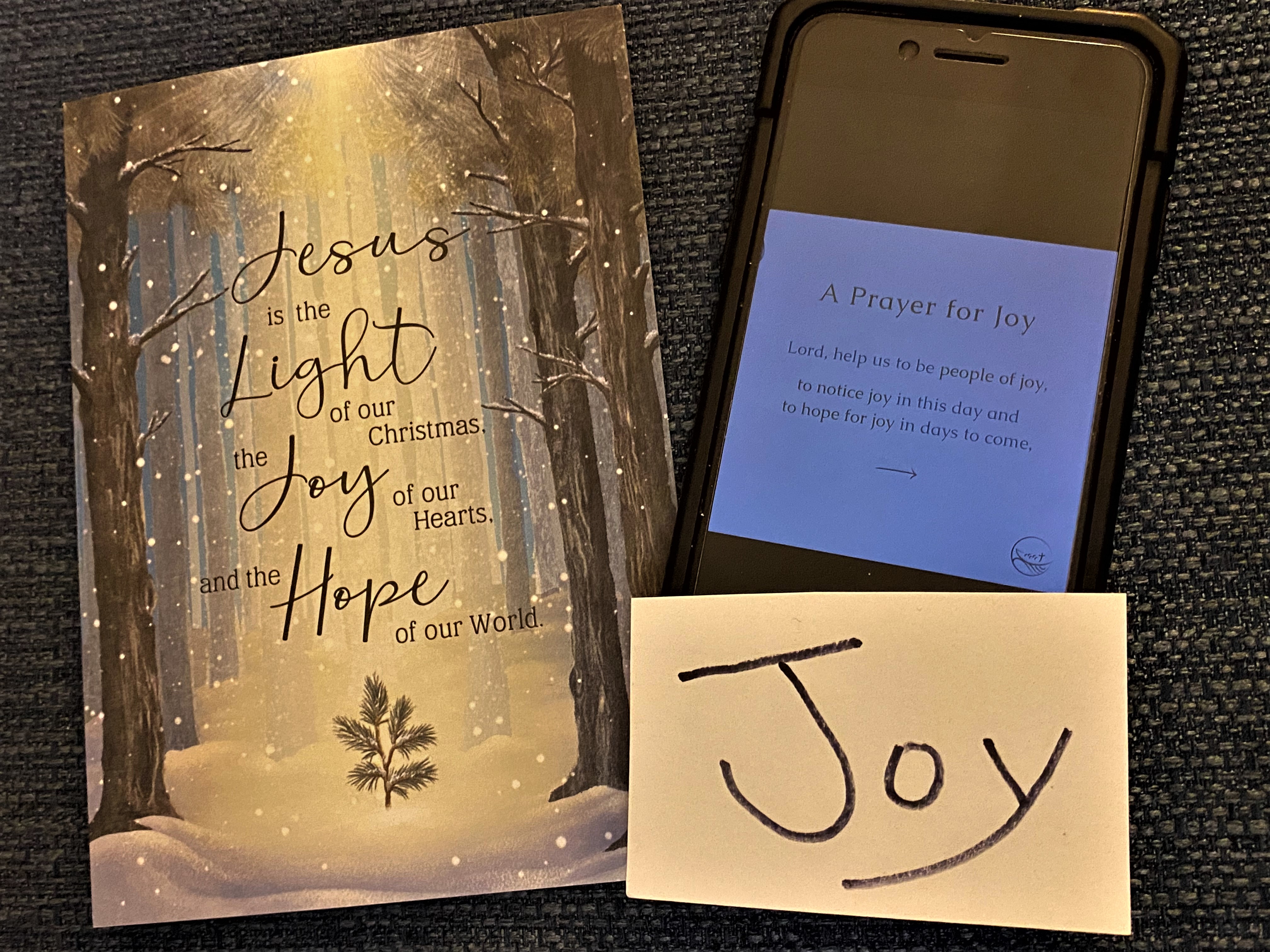
Lord, help us to be people of joy,

to notice joy in this day and to hope for joy in days to come,

to look for light and share it with others this Advent season,

to see beauty in creation and the people we encounter,

to laugh heartily with childlike glee,

to feel true joy in your presence.     Amen.

Photo Credit: Prayer @inthecoracle, Instagram

5) The Last Days of 2021 – As may have been many of your experiences, we had people we know and love dealing with COVID in this last week of 2021. Still managed a sweet end-of-year. Hope yours was as well.


Now on to 2022!! Thanks for stopping by. It means a lot to me.

Bonuses:

Vimeo Video by Rodrigo Souza – Heart – with Nathan Mills, Beyond the Guitar

How to Stop All Procrastination: Dear You Trying to Do that Hard Thing in the New Year – Ann Voskamp (great piece on procrastination and perfectionism – both keeping us from presenting the gifts God’s given us)

Photo Credit: Samantha Reynolds, @Bentlily, Instagram (w/ permission)

52 Week Bible Reading Plan – Michael Coley

What is an Accessory Dwelling Unit (ADU) and Tips for Building One

Photo Credit: Facebook

5 Friday Faves – Beyond the Guitar on a Lava Me 3, Christmas Poems, Overcoming Anxiety, and Which Is It? Christmas or XMas?

The countdown is done. Christmas Day looms. For those with an Eastern Christmas, there is still a week to go. We loved celebrating two Christmases when we lived in Egypt. Then there are the 12 days of Christmas still ahead until Epiphany (or Three Kings Day). So we continue to celebrate. Sweet especially for those of us dealing with COVID interruptions or other struggles (loss, holiday work,etc.). Here are my faves this week. Please share some of yours as well …and Happy Christmas!

1) Beyond the Guitar on a Lava Me 3Nathan Mills‘ most recent piece is an original composition entitled “Dreams”. He plays it on this amazing smart guitar – the Lava Me 3 guitar. Check it out below:

2) Christmas Poems – Christmas is the kind of holy day that inspires poetry. This week, I had the opportunity of catching the online program A Christmas Celebration: Theater, Song, & Scripture. Created and produced by the Fellowship of Performing Arts, it was a lovely mix of classic Christmas songs, poems, and monologues. Some surprisingly humorous and some deeply spiritual. Two poems, both by Scottish poet George MacDonald, were powerfully performed.

Photo Credit: Poem Hunter

Photo Credit: Poem Hunter

My absolute favorite Christmas poem is “Little Jesus” written by English poet Francis Thompson. It’s a bit long but such a treasure.

LITTLE JESUS

by Francis Thompson (1859 – 1907)

Little Jesus, wast Thou shy

Once, and just so small as I?

And what did it feel like to be

Out of Heaven, and just like me?

Didst Thou sometimes think of there,

And ask where all the angels were?

I should think that I would cry

For my house all made of sky;

I would look about the air,

And wonder where my angels were;

And at waking ’twould distress me–

Not an angel there to dress me!

Hadst thou ever any toys,

Like us little girls and boys?

And dist Thou play in Heaven with all

The angels that were not too tall,

With stars for marbles? Did the things

Play Can you see me? through their wings?

And did Thy Mother let Thee spoil

Thy robes, with playing on our soil?

How nice to have them always new

In Heaven, because ‘twas quite clean blue!

Thou canst not have forgotten all

That it feels like to be small:

And Thou know’st I cannot pray

To Thee in my father’s way–

When Thou was so little, say,

Couldst Thou talk Thy Father’s way?–

So, as a little child, come down

And hear a child’s tongue like Thy own;

Take me by the hand and walk,

And listen to my baby-talk.

To Thy Father show my prayer

(He will look, Thou art so fair),

And say: “O Father, I Thy Son,

Bring the prayer of a little one.”

And He will smile, that childrens’ tongue

Hast not changed since Thou was young!

3) Overcoming Anxiety – Even as lovely and magical a time as Christmas can be, we can experience anxiety. Over family gatherings, or under-performing on gift buying, or just a creeping loneliness. Whatever our anxiety, the 4-step approach for overcoming anxiety is a healthy practice. Thanks to NICABM.

Infographic: A 4-Step Approach for Overcoming Anxiety – NICABM

4) Healing From Harm – We hope as parents that we do no major harm to our children. Unfortunately, there are relationships between parents and children that can go terribly wrong. Counselor Adam Young tackles this topic (and others) really well in his podcast . I listened to Episode 23 this week where he interviewed a woman named Autumn, on her relationship with an abusive mother. The title of this episode is “How to Engage a Parent Who Has Harmed You”. Her story gives hope. The dialog between her and Young is both instructive and prescriptive. To be able to get actual help from a podcast is a blessing. Especially in a time when counselors are hard to find (not enough of them or over-scheduled in these days of heightened mental health issues thanks to COVID).

One of Young’s free resources is “How to Write a Story”. I’m excited about this assist, because writing the story of my life since my earliest memories is actually on my list for 2022. Not that my parenting was harmful – I had a wonderful mom and step-dad, but my biological father was neglectful and then eventually just disappeared from our lives. I know the wounds of that have had impact, and actively recalling my growing-up years seems a way to take hold of anything that has harmed and can still be having impact on my family. By the way, this is not an exercise in blaming parents. We all have failings in this area. It’s an exercise to reframe memory such that it doesn’t control us.

Words That Harm, Words That Heal: A Short Guide for Parents – Justin Coulson

Any resources you recommend for healing from harm? Please comment below.

5) Which Is It? Christmas or XMas? – The great thinker and writer C. S. Lewis became a Christ-follower at the age of 33 (in 1931). He did not come to this decision lightly having first rejected God altogether, as a public and punishing atheist, and then a theist, and finally a Christian…the most reluctant convert. He never looked back. His writing and teaching since then have greatly influenced generations to follow. Even the most uncertain have been riveted by his works on the beauty and reality of God, and Jesus, the Son and Savior.

Again, in watching A Christmas Celebration: Theater, Song, & Scripture, I heard, for the first time, Lewis’ essay Xmas and Christmas: A Lost Chapter From Herodotus. He writes of the irony of Christmas celebrated in the two ways done in the West – the sacred and secular – and how we as Christians blend the two. It is a rich narrative, short and very much worth the read. He targets the United Kingdom but it could be about the US as well. We rush around buying, buying, buying, and then partying, partying, partying. To the point, we end up in a heap on Christmas Day with the children wondering aloud “Is there anything else?” As they are practically covered over with wrapping paper and presents. Our little grands said themselves, so wise for so small, “It’s Jesus’ birthday, but we get all the presents”.

I don’t mean this as a rant…just wanted to point to the brilliant, short piece by Lewis…and maybe to call for a pause in the rush. I’m almost past caring that I get equally amazing gifts for the grands. It’s ok for the other grandparents to shine. I’m just thankful to have them all in my life.

So…have a happy Christmas, Dear Ones. For those who get caught up in the maddening rush without the transforming experience of Christ in it, watch for the Hound of Heaven …In the flurry of activity to make Xmas happen, you might chance to notice, like C. S. Lewis did finally, that persistent wooing of God to draw us to Himself…out of His deep love for each of His created ones.

‘Rise, clasp My hand, and come!’

Shade of His hand, outstretched caressingly,

‘Ah, fondest, blindest, weakest, I am He Whom thou seekest!” – Francis Thompson (1859–1907)

Bonuses:

Labor to Give (Or Take) No Offense – Jon Bloom

5 Keys to a Great Apology (and Why Leaders Need to Apologize First) – Carey Nieuwhof

Photo Credit: Greg Mathias, Twitter

One of my favorite “Christmas songs”:

The most beautiful and powerful Christmas cantata I’ve ever heard: “Saviour – The Story Of God’s Passion For His People” – written by Greg Nelson and Bob Farrell – the cantata itself begins 9:45 minutes into the video. 

[Product description: Saviour is a pop-classical oratorio created by Bob Farrell and Greg Nelson, in performance around the world since 1994. Recorded live at Gateway Church, this spectacular performance features full orchestra and choir with standout solo performances by Steve Green, Twila Paris, Wayne Watson, Larnelle Harris, and Keron Jackson. – Available on DVD.]

Funny pic captured by our daughter – vultures at Voter Registration – must have gotten wind of the rumored registering dead voters:

Pic below from my dear friend Marc Merlin who captures the most fascinating images at a favorite cemetery – Oakland in Atlanta:Photo Credit: Marc Merlin, Instagram

A favorite Christmas tradition – canstruction for the food bank:

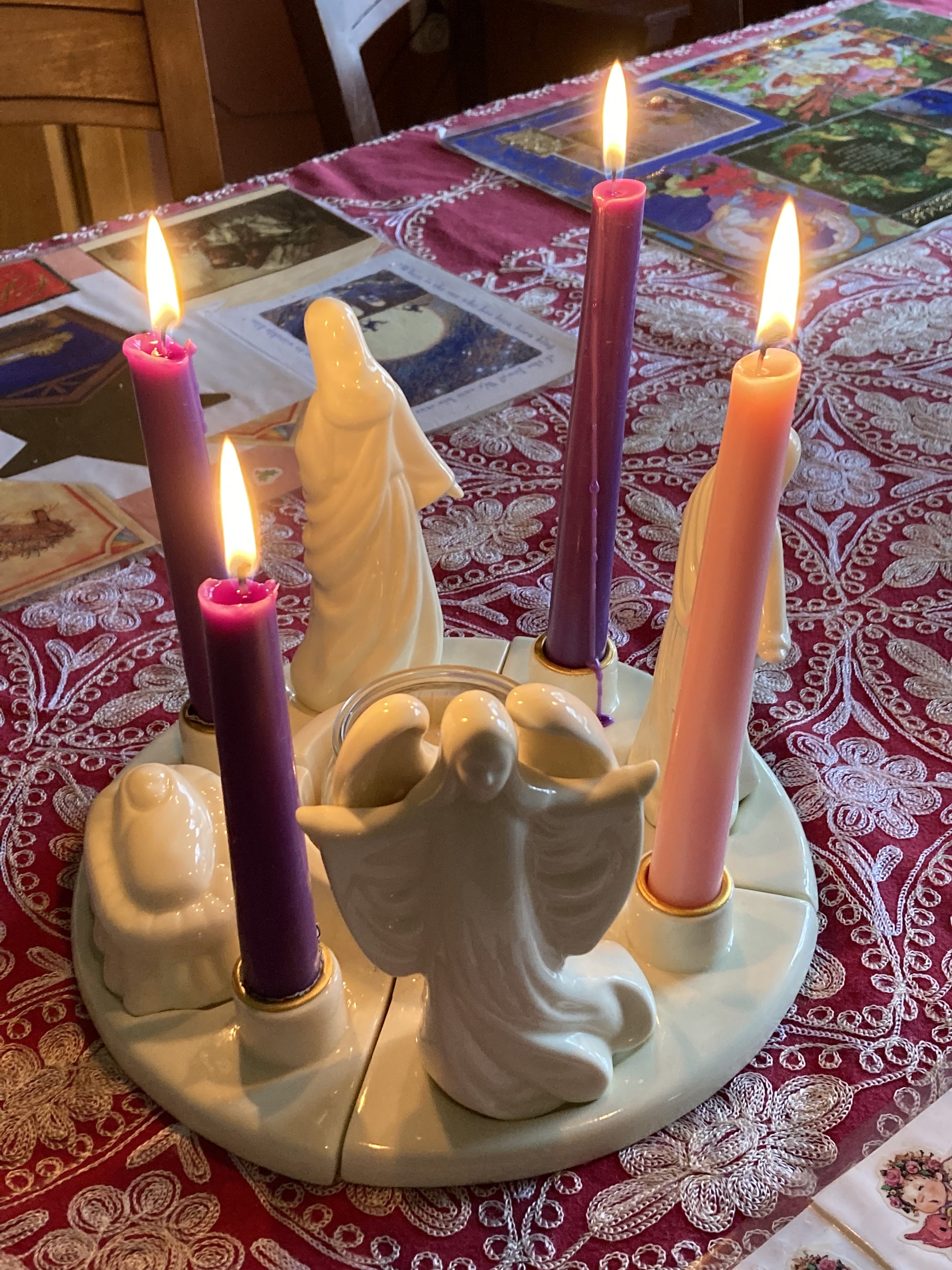
All the candles lit – focused on the coming Christ:

The Christmas cactus – somehow it knows – just days ago, nothing, no buds, nothing – and then…it blooms.

5 Friday Faves – Epic Spanish Romance Guitar Cover, Languishing, From Sad to Mad, Christmas Events, and I.O.U.S Acronym on a Divided Heart

Christmas week is upon us! This past week’s Friday Faves finally:

1) Epic Spanish Romance Cover– Get ready for one of the most beautiful pieces ever written for classical guitar. The composer is unknown. The arranger for this piece is  Nathan Mills, at Beyond the Guitar. Enjoy.

[One of his subscribers on YouTube asked him to do for Niel Gow’s Lament what he did to the Spanish Romance. Here in his college days, Nathan plays that piece. Hope he does put his own touch to it again…all these years later. A funny sidebar to the piece below: Nathan’s sister wanted him to play this for her wedding. He said something to the effect that the whole title of the piece is “Niel Gow’s Lament For the Death of His Second Wife” so Nathan played other pieces instead. Didn’t seem a good fit for a wedding day. ]

2) Languishing– Who even knows what this is?! Well, author and organizational psychologist  Adam Grant does. He defines it as:

“Languishing is a sense of stagnation and emptiness. It feels as if you’re looking at your life through a foggy windshield. And it may be the dominant emotion of 2021.

As scientists and physicians work to treat and cure the physical symptoms of long-haul COVID-19, many people are struggling with the emotional long haul of the pandemic. It hit some of us unprepared as the intense fear and grief of last year faded.

In psychology, we think about mental health on a spectrum from depression to flourishing. Flourishing is the peak of well-being: You have a strong sense of meaning, mastery and mattering to others. Depression is the valley of ill-being: You feel despondent, drained and worthless.
Languishing is the neglected middle child of mental health. It’s the void between depression and flourishing — the absence of well-being. You don’t have symptoms of mental illness, but you’re not the picture of mental health either. You’re not functioning at full capacity. Languishing dulls your motivation, disrupts your ability to focus and triples the odds that you’ll cut back on work. It appears to be more common than major depression, and in some ways it may be a bigger risk factor for mental illness.

So what can we do about it? A concept called flow may be an antidote. Flow is that elusive state of absorption in a meaningful challenge or a momentary bond, where your sense of time, place and self melts away. During the early days of the pandemic, the best predictor of well-being wasn’t optimism or mindfulness. It was flow. People who became more immersed in their projects managed to avoid languishing and maintained their pre-pandemic happiness.” – Adam Grant

There’s a Name for the Blah You’re Feeling: It’s Called Languishing – Adam Grant

I’m very thankful to come across this article by Dr. Grant. He has much more to say both in the above piece and in his TED talk below. We can learn how to move from languishing back to flourishing.

The links below point to a varied and fascinating reach into languishing. Worth your time.

The Neglected Child of Mental Health – Bruce Isdale

The Neglected Child of Mental Health – Caron Leid

The High Cost of Calm – Why Relaxing Is So Much Work

I’m a Short Afternoon Walk and you’re putting way to much pressure on me – Emily Delany

How to Describe Our Pandemic State(s) of Mind – WNYC Podcast

Why You Need to Address Languishing to Retain Your Talent

3) From Sad to Mad – In the midst of a sweet time of year for some of us folks, I have found my capacity for sadness stretched super far. With a background in cancer nursing where loss was always part of life, and with all the hello-goodbyes in our overseas season as a family, and finally having lost very significant people in the last few years…sad is stretched. What has surprised me of late is how fast my “sad” goes to “mad”. I get angry at the losses – deaths to COVID, marriages broken, families estranged from each other, moral failures…and more. Mad is not where I want to be. “Righteous indignation” never stays righteous. It gets mean way too quickly.

Photo Credit: Pexels, Serkan Goktay

From Sad to Mad: How Suppressing Your Sadness Invites Anger – Joshua Nash

The piece above helped me immensely. Therapist Joshua Nash offers helpful steps (go there if this has become an issue for you as well). The main take-away for me is that I shift from sadness at a loss to anger at the injustice of it. What is better for my emotions, body, and relationships is to stay in the sadness. Feel it, examine its impact, mourn the cause. Sadness will subside. Moving into anger (as natural as it is in grieving a loss) mucks up the sadness. Anger is punishing (to yourself and others). As hard as staying in the sadness is, we (and our relationships) will be better for it.

Christmas Bitter and Christmas Sweet – Tim Challies

4) Christmas Events – December is practically glutted with events to celebrate Christmas. In a month when meditating on the mystery of a virgin birth and the long-anticipated coming of a Savior King, quiet is hard to come by. We make room for it…alongside all the fun of this month. Below is a photo array of just some of this past week for us.

  • Christmas Cookie & Ornament Exchange (us women):
  • Old-fashioned Carol Sing (mostly in our own basement):
  • VCU Holiday Gala with our favorite alum and his little son: 
  • Tacky Lights RVA:
  • Ethnic lunch out (#Mezeh) with our youngest:
  • Quiet times in front of the fire (quiet on the schedule AND with cookies & coffee):
  • Christmas with The Chosen:

[If the recording of Christmas With the Chosen: The Global Live Event becomes inaccessible, you can find it on The Chosen app.]

5) I.O.U.S Acronym on a Divided Heart – This morning I was struck afresh how little undivided attention is exercised in my day. Even my introverted husband will spill out all sorts of wise and wonderful words – when I am wholly there. Fixed. Not leaving the room mentally. These moments are more rare than I’d like to confess…all because of the struggle to focus.

Author theologian John Piper tackles this issue with our heart toward God. We struggle with all sorts of noise and clatter pulling us in directions that leave off the wonder of deeply knowing Him.

Photo Credit: John Piper, Quote Fancy

Piper uses an acronym that is hugely helpful in this (setting us in a positive direction for the New Year):

I.O.U.S. – [From John Piper’s Divided Heart article linked below]

“The embattled heart is typical of the Christian life. None of us has a consistently united heart in longing for God.”

  • “The letter I stands for incline. “Incline my heart to your testimonies,” we pray with Psalm 119:36. We ask God to take away resistance. We ask God to incline us toward God and his Word instead of away from God. And so we admit all our inclination toward God is a work of God. The psalmist would not be praying like this if the inclination was ultimately within our own power. If it were, he wouldn’t be asking God to incline his heart. We plead with God to take our hearts in his hands and to incline them, bend them, toward his Word.
  • Then the letter O stands for open. Psalm 119:18 says, “Open my eyes, that I may behold wondrous things out of your law.” We need God to work a miracle on the eyes of our heart so that we can see the truth, beauty, value of who he is right there in his word. If we are left to ourselves while meditating on God’s word, we will see nothing of his spiritual beauty and worth.
  • Then comes the third letter, U. It stands for unite. Psalm 86:11 says, “Unite my heart to fear Your name.” What an amazing prayer: “Unite my heart.” So what’s the problem that this psalmist is praying to solve? The problem is a divided heart.”

Plead Psalm 86:11 in prayer: ‘O God, unite my heart to fear your name.’Is It Normal to Have a Divided Heart? – John Piper

___________________________________________________________________________

Bonuses:

The Last Word – A one-minute video speaks volumes about our country, the media’s impact on us all, and one decision to step away. 62 y/o news commentator Brian Williams stepped away from a 28-year career with NBC/MSNBC. His last show was December 9, and he announced his resignation in this powerful short statement. We can all take something away from this, whatever our politics or nationality. There comes a time…

How to Engage a Parent Who Has Harmed You with Autumn – Podcast 23 – Adam Young Counseling

Photo Credit: Instagram, Adam Young Counseling

Women & Work Book Club – The Common Rule by Justin Whitmel Earley – Check out previous books reviewed and discussed with the authors.

Did Chevrolet Have to Make America Cry With Its New Christmas Ad? – Joe Cunningham

The Great Challenge of Every Marriage

9 Habits that the World’s Healthiest and Longest Lived People Share – Dan Buettner

Photo Credit: Pinterest

Photo Credit: Contemplative Monk, Facebook

Monday Morning Moment – Walled In, Dismissed, Frazzled, and Discouraged…Nevertheless

Photo Credit: Heartlight

What’s your situation? How’s your heart? What is your body holding onto? Remember when you were so full of the possibilities of life, so fresh with anticipation of what was ahead, what you could accomplish?

Then life happens, and it doesn’t always work out like you thought it would. Running turned into slogging. Your passion got sucker-punched. The opportunities and advancements kept coming in, but at some point, bewilderment set in. You just got tired…just plain weary.

Some call this burnout, and it may be. What if it is more than that? What if it is a bloody battlefield where, if not our very lives, our joy is under full attack. What if those God-given strengths, those life-honed skills, and serendipitous accomplishments seem not to be at play. Maybe you’re overthinking, or maybe…just maybe…the way through is surprisingly simple.

We all have an important place to occupy in this world. Every single one of us. Fight for it. Walls may seem high, bottlenecks too narrow, and, at times, adversaries hammering around us. Nevertheless…We can find a way to bring the walls down (or just go around them), squeeze through the bottlenecks, and shake off the idea that we can’t win…just. too. tired.

Circumstances in life and work can drain us. Especially over time. Oddly we can still be effective in life but the emotional, mental, and physical toll adds up. The body remembers…and keeps score.

Jesus gives us a beautiful and intimate picture of the “nevertheless”. The night before he would die on a Roman cross, he appealed to the Father, as his painful and humiliating death loomed ahead of him.

Photo Credit: Biblepic

Nevertheless…here was the Messiah, the Christ, in all the sinless perfection of his life, coming to the very end of himself. Exhausted, emotionally overwrought, yet clear-minded, understanding exactly what would be required from him. Nevertheless…he stayed the course. He was not giving up. He knew what was at stake. He trusted the Father, and he persisted in what he was called to finish.

Photo Credit: Leonard Ravenhill, QuoteFancy

For us, we have choices. We can resign ourselves to a life and work not what we anticipated…or we can clear our heads and remember our own callings. No walls are too high nor adversaries too strong.

Photo Credit: Biblepic

We each bring something to the table. If we withdraw from the table or accept a perceived exclusion, we can miss the fullness of life we were meant to have. Others will miss us as well. Believe that. It’s true.

When fatigue and discouragement set in, and our bodies are drained of response, we need to take hold of the “nevertheless”. It’s reminiscent of the many “but God’s” in Scripture and in life. We may be up against a Red Sea like Moses, or a Goliath like young David, or a corrupting culture like Jesus. We lament “but God”…we are too inadequate. Too small. Too aware of risk. Nevertheless, our “but God’s” can change to what is truth. The meaning of the protest changes into the “but God” miracles when He shows up and does what only He can do…in us. Through us.

Photo Credit: Biblepic

Hoping you lean into the “nevertheless” today.

Podcast – Why Everyone’s Freaking Out (& Why We Don’t Need To) – David Marvin, Guest on Relatable Podcast with Allie Beth Stuckey

15 Proven Ways to Suck the Life Out of Your Staff – Scott Cochrane – applies to any workplace. Take note of the “Strategies To-Avoid List”.

6 Things That Can Suck the Life Out of You! – Dale Hudson (and Part 2 on his story and how he dealt with those things that sucked the life out of him – to get you started, they are: People, Problems, Pressure, Pace, Pain, and Personal Sin)

The Humble Rejoice – Rick Bee

Nevertheless – Robert Ferguson

Photo Credit: Pinterest

5 Friday Faves – Beyond the Guitar Christmas, 4 Advent Habits with Justin Whitmel Earley, Advent Readings, Forgive & Remember, and Christmas Ads 2021

December is here! The days will fill up fast with holiday celebrations. Here are this week’s faves. Hope you enjoy them as much as I did.

1) Beyond the Guitar Christmas – We’ve been listening to Christmas music since October. Both worship carols and secular songs. Even our favorite guitarist has arranged and posted some Christmas songs – a precious few. I post them here for you to enjoy a listen.

Photo Credit: Beyond the Guitar

YouTube Video – 3 Christmas Movie Classics on Guitar – Beyond the Guitar

YouTube Video – A Star Wars Christmas – Classical Guitar Mashup – Beyond the Guitar

YouTube Video – Have Yourself a Merry Little Christmas (w/ Surprise Guest) – Beyond the Guitar [After the special guest enters the frame, he gets our full attention with the sweet music in the background.]

YouTube Video – December Song (Peter Hollens) – Classical Guitar Cover – Beyond the Guitar

YouTube Video – Amazing Grace – Beyond the Guitar [OK…not a Christmas song but one of my personal favorites of Nathan’s]

2) 4 Advent Habits with Justin Whitmel Earley – In less than a month, those of us who challenge ourselves with New Year’s resolutions will have our lists and resolve ready to go. When true habit change happens, it’s worth the work.

Several years ago, I had the opportunity to hear Justin Whitmel Earley speak. He wears many hats – attorney, writer, speaker, husband, dad. He spoke then on the habits of a simple life, introducing his fascinating book The Common Rule. His latest book is Habits of the Household. Both are excellent resources for examining our lives (home and work) with the goal of building habits of flourishing.

I was not surprised when he offered us Advent habits (practices, playlists, and readings). Earley offers all these free as part of his determination to do good with his lift. The books go deeper and are definitely worth the read. For now, check out the links and note below his recommended 4 Advent Habits – Kneeling posture in prayer, lighting candles, tuning to God as the first voice of the day, and pocketing our phones while waiting (restoring the art of waiting).

Photo Credit: Justin Whitmel Earley, The Common Rule, Advent Edition, 4 Advent Habits

Understanding True Habit Change and Rocking Your New Year’s Resolutions – Deb Mills Writer

3) Advent Readings – Advent means “coming”. We celebrate the coming of Christ, as Messiah, a helpless baby born of a virgin mother. God in arms. Miracle and mystery. Advent also commemorates the coming again of Christ in the last days. We look with hope to the day He will come again for His people, as Redeemer King.

The Advent Project – Biola University – Center for Christianity, Culture and the Arts – a daily Advent offering of art, poetry, and devotional from Scripture

This year, our church is working through an Advent study entitled Our Hope Has Come. Gathering in home groups, we celebrate Christ’s coming in our hearts and throughout history.

In our home, we have a shelf of Christmas books (for children and adults) that have been treasures to us through the years. We bring them back out at Christmastime, reading again the beautiful messages of hope we have in Jesus.

Do you have any favorite Advent books or online resources? Please share them in the Comments below. Thanks.

Hope for Hopeless Things: The First Sunday & Candle of Advent – Ann Voskamp [Advent readings start with this one]

4) Forgive and Remember – In less than a month, we leave 2021 behind. Hopefully without regret. I’ve written a lot about forgiveness this year. Partly because of seeing the pain of prolonged unforgiveness in some of my closest relationships. Too much hurt. Too deep the offense. Too unfathomable the possibility of reconciling. The best attempt is “I can forgive, but I can’t forget.”

Photo Credit: Pinterest

What if we don’t try to forget? What if we determine to remember, but remember in a way that moves us to healing…to true forgiveness.

Psychiatrist and writer Curt Thompson has become a favorite resource of mine in recent months. Books, podcast, and articles. This week, I discovered his piece Forgive and Remember. Intrigued by the title, I read it and found hope renewed in the possibility of forgiveness, even in chronic trauma or painful persistent memories.

I find Dr. Thompson very engaging, but if you aren’t used to his references to brain physiology, you may need to do a slow read. Here is his take on the importance of remembering, in company – with a sense of the presence of Christ in the pain, remembering in the skin of “the offender”, and remembering with people who care about you.

“Because I refrain from remembering, I prevent myself from eventually remembering additional parts of the story that I have likely thus far, albeit nonconsciously and unintentionally, ignored. For indeed, it is possible that forgiveness requires me to expand my awareness of additional realities that were in play at the time I was wounded. For instance, if I only pay attention to my hurt feelings, I never attune to my adversary’s own layers of brokenness; never consider their deeper story, the cistern of their own fear of their own deep shame from which emerged their hurtful behavior in the first place; the depth to which they “do not know what they are doing…” Through the hard, repeated work of my imagination, my awareness of the larger truths of the life of the one who has mistreated me begins to gradually diffuse the intensity of the emotional content of my anger and resentment.

“The work of forgiveness requires the remembering of the event in the context of others who assist you to remember the additional alternative realities that we so often forget. Imagining Jesus being with you in the moment during which and after you were mistreated begins to literally change the nature of those neural networks that represent the fury of the hurt you initially felt. Over time the remembering of the hurtful event alongside the memory of Jesus and others who represent him begin to diffuse the intensity of the electrochemical signals of the hurtful memory, and open up opportunities for you to begin to construct a different possible future between you and the one who has hurt you. We then begin to see that remembering the event is really about the process of remembering it differently. Remembering it in a way that is eventually utterly transformed and transformational…reminding us that we are not really ever alone.

This takes time, effort, and plenty of help from those with whom you are practicing together to forgive not seven, but seventy times; to forgive, even as your Father in heaven has forgiven you.

Forgiveness. Who would have thought that there would be so much freedom in remembering? Sounds like something we should never forget.” – Dr. Curt Thompson, Forgive and Remember

YouTube Video – However Long the Path Might Seem: It’s Christmas. Time to Reconcile. – Penny.

5) Christmas Ads 2021 – I love Christmas commercials (or ads). All the twinkle lights and unfolding family gatherings or intimate moments. The compilation of Christmas ads below are all from 2021. Many are from European stores/businesses. Take your pick.Photo Credit: Glossiplanka 360

  Best Christmas Adverts 2021

YouTube Video – This Christmas, Nothing’s Stopping Us – Tesco

YouTube Video – Unexpected Guest – John Lewis & Partners

YouTube Video – An Unlikely Friendship – Prime Video – Christmas Ad 2021

YouTube Video – The StepDad – Disney Christmas Advert 2021/Official Disney UK

YouTube Video – Imaginary Iggy – McDonald’s UK

YouTube Video – Christmas Is What You Make It – Hobby Lobby – Christmas 2021

YouTube Video – A Christmas to Savour – Sainsbury’s – Christmas 2021 Ad

YouTube Video – Coca-Cola – Christmas 2021 – Real Magic

YouTube Video – John Lewis 2021 Christmas Advert Alternative by NimbusBeds.co.uk – Stop Loneliness at Christmas [2020 revisited]

YouTube Video – Boots Christmas Advert 2021 – #BagsofJoy – Boots UK

YouTube Video – Ernste Christmas Ad 2021 – #BelieveInTomorrow

YouTube Video – 10 Emotional and Heartbreaking Christmas Ads EVER! Most Emotional Holiday Ads (19 minutes – Don’t miss these! Most are in languages other than English, but it won’t alter the beauty of the film story in these little ads. If you need a good and  cleansing cry for no reason except the beauty of a little story in an ad, your heart will be filled.)

YouTube Video – Top 10 Most Heartwarming Christmas Commercials Ever Made (Will Make You Cry) – 16 minutes. At least fast forward to the last few. So lovely.

_________________________________________________________________________

That’s it for this week. Please share a fave of your own from this week in the Comments. Thanks for stopping by. It is a joy for me to share in this together with you.

Bonuses:

Photo Credit: Ann Voskamp

[If you want to see The Chosen Christmas – The Messengers but aren’t going back to theaters yet, it will be streaming soon free to all. Available on The Chosen app and we’ll see where else when it is announced.]

YouTube Video – Christmas with The Chosen – The Messengers – Watch This Before the Christmas Special

A Thanksgiving Prayer from the Anglican 1662 Prayer Book – Marlo Huber Salamy Facebook Page

John Harper – the Night the Titanic Sank – Facebook Story

She Was Tired of Her Giving Her Kids Candy So She Wrote Her Mother-in-Law a Letter

Monday Morning Moment – Living Between Adult Kids and Older Parents

God put us in families. All of us.

God put me in the middle of boys with a mom who loved us completely and a father of whom I have little memory. His relationship with us was not one of outright abuse but neglect and eventual abandonment. When I was five, my exhausted mom divorced this never-working man. She  would later explain that action as simply “just one less mouth to feed”. She soon after came back to faith in Christ and brought us with her (unchurched until then). Our dad had long since disappeared from our lives.

Fast forward to the present: married to a man who deeply loves the Lord and loves us well also. We have three adult children and two added by marriage, and now four precious grandchildren.

All our parents (including a beloved step-dad) are gone except for Dave’s exquisite praying mom.

Sandwiched between adult kids and older parents is where we are, and I’m grateful. In fact, I think about our kids and their littles (and some of you) now in this same season, just a different generation. 

The room is delightfully crowded (not without challenge) with multiple generations – each bringing extended families of their own. So many faces and so many voices.

Every family member (and each of us in that family) has great value to God. His desire for us is to bear  the fruit of His love (Galatians 5:22-23) – making it beautifully tangible to others. He is with us in this.

What if our parents made life hard for us either by trauma or, as adults, by intrusion or neglect? Or what if we find ourselves in awkward places in our adult children’s lives? These “what if’s” make us want to pull ourselves out of obedience to God, as we feel justified by our pain to distance ourselves from some in our family. The ripple effect of pulling away is wide-reaching in a family. Wider than we can imagine.

Even when relationships are healthy, the heavy responsibility of parenting young children puts its strain on our precious adult children. We feel the pull – torn between kiddos and our olders or others (sibling families, too). We also model for next generations what family looks like. How we handle the hard is quite probably how they will handle the hard.

We all choose, consciously or not, from among four ways to engage with or disengage from our families.

  1. Embrace. We can trust God with the families He has given us. We can love them well. We forgive and seek forgiveness. We spend time with each other and attune to how God sees them. We who share adult space try to find the balance of loving each other well without our own preferences getting in the way. The older ones will only be with us for a moment. They have stories and history and lives that matter. Our younger ones also grow up and have their own families and life pressures. We extend ourselves in both directions – up and down.
  2. Debase/Disgrace. Sometimes members of our family wrong us or another beloved family member. We “triangle” talking about them with others, without them being present. Their behavior may warrant our disdain. We are tempted to debase them privately or disgrace them publicly. However, God is not finished with them or they wouldn’t still be here. Wisdom is to take our sorrows to God and appeal for Him to help us love these hard-to-love ones. He is able. It helps to remember we may also be the ones not so easy to love. [I forget that sometimes.]
  3. Replace. We are tempted to completely replace hard family members with friends. Adult friendships are such a gift from God. They fill in empty places in our hearts. They can actually help empower us to love and live like Jesus with these family members. Or they can usurp their place in our lives. Friends, help bolster our resolve, as we choose to “stay in the room” with family members. Let’s be that one who is not going anywhere – that picture of Christ for these.
  4. Give Grace. This is similar to “Embrace” but with God-guided boundaries in place. The Word is full of instruction, like Colossians 3:12-14. Living between olders and youngers, I want to be that one who gives grace both ways. Speaking love often and always. Not judging or applying pressure. We can choose to honor one another, which, in turn, honors God. Giving grace includes giving grace to ourselves.

Photo Credit: Facebook, Gods Armour

 Do I get this wrong? All the time. We are works in progress. God’s door of healing is always open to us.

Photo Credit: Samantha Reynolds, Bent Lily (w/ permission)

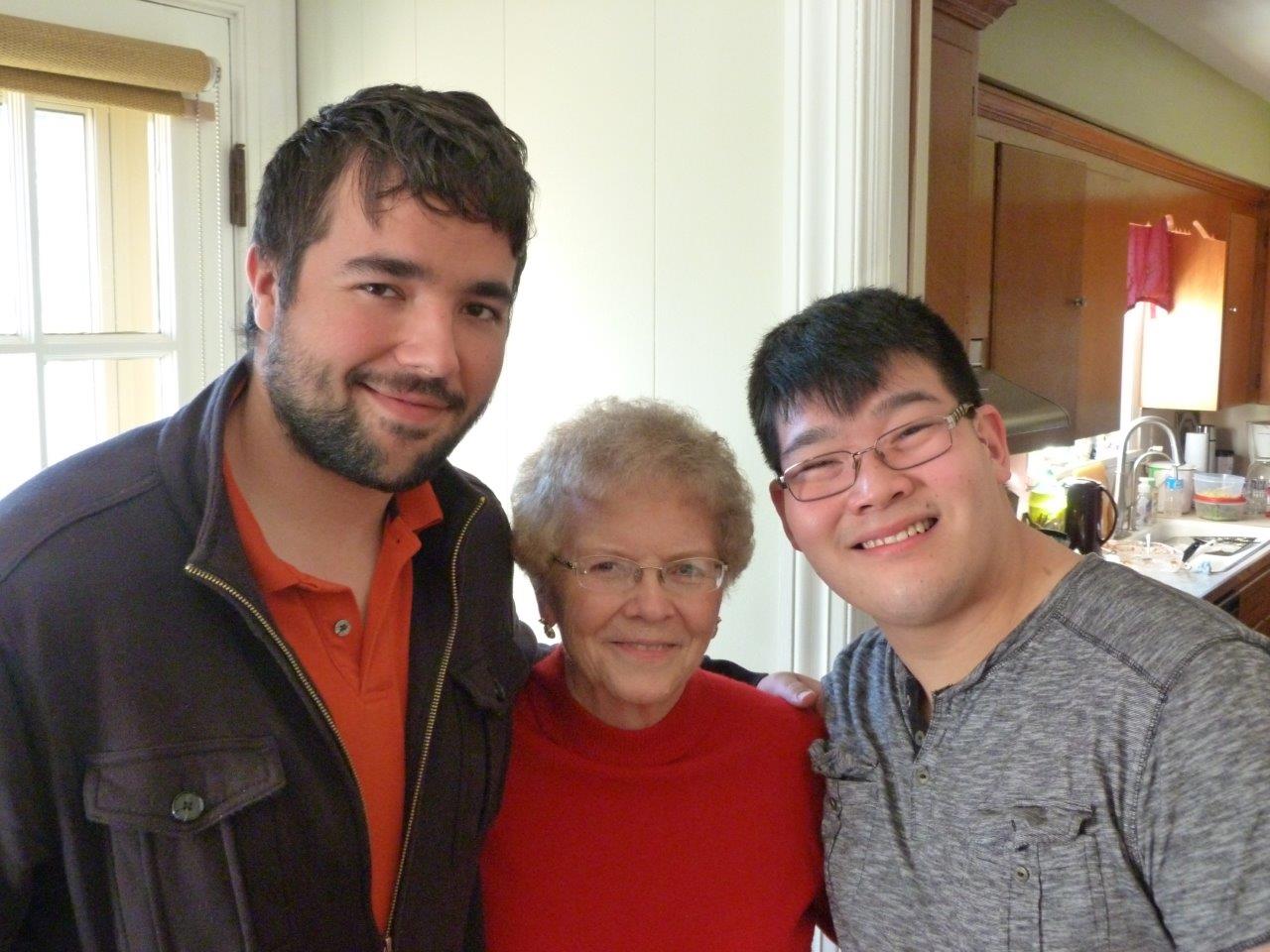
[One last pic – my mom, our youngest son, and me sandwiched between them & behind the camera – wishing I could roll back the years to when she was still here. Embrace & give grace. The years rush by.]

5 Friday Faves – “Fly Me to the Moon” Finger-style, Costly Grudges, Building Focus, “Don’t Leave Crumbs”, and Fall & All

Hi All! Friday Faves on a Monday after a busy Friday-Sunday weekend. Go!

1) “Fly Me to the Moon” Finger-style – After Nathan posted his Squid Game medley, he was asked to do a stand-alone “Fly Me to the Moon”. Here it is! The jazzy, up-beat rendition is so fun!

2) Costly Grudges – Is there someone you struggle to like or be in their company? Would you say it’s a grudge, either originating from you or that person? Grudges rupture relationships. They have a negative impact not just on that relationship, but potentially on others as well. Not to mention, their impact on your own health.

Photo Credit: Pinterest UK

Writer Tanner Garrity has written a list of 100 Ways to Live to Be 100. #66 is “Don’t Hold a Grudge”. Here is his take below:

66. Don’t hold a grudge

Happy people live longer. Improve your happiness by practicing “epistemic humility,” an intellectual virtue predicated on the idea that one can’t ever know something for sure. It’s meant to help us admit our imperfections and forgive others. Sounds too good to be true in the 2020s? All the more reason to give it a try.”

When we start to feel a grudge brewing, or we make the first strike and cause the rift with another person, the situation is greatly helped by some measure of humility. We don’t know everything about what just happened. In the midst of a quarrel, assessments are feverishly being made and the tendency is that they favor one over the other. If we treat a disagreement with humility, with the understanding that we can’t fully know what is going on with the other person in the argument, then we stand a better chance of some sort of resolution.

Worth the effort…including the perk of adding to one’s longevity.

What Is Family Estrangement? A Relationship Expert Describes the Problem and Research Agenda – Kristina Scharp

3) Building Focus – Focus is like muscle; it has to be built through exercise. I struggle with attending issues. To come across some simple tasks to add to life and aid focus is a happy occurrence.

Photo Credit: Pexels

Author Eleanor Morgan presents How to Retrain Your Frazzled Brain and Find Your Focus Again. In her piece, she introduces the scholarly work of scientist Amishi Jha, author of Peak Mind: Find Your Focus, Own Your Attention, Invest 12 Minutes a Day.

“We can learn to focus better, but we need to think about attention differently. It is not something we can just choose to do. We have to train the brain like a muscle. Specifically, with short bursts of daily exercises.”Eleanor Morgan

Morgan posts some of the mental exercises that Dr. Jha prescribes, including the 5 tips below:

  1. Pay attention to your breath, and where on your body you feel it most: direct your focus like a beam of light. Do this for three minutes a day, for a week.
  2. Integrate this technique into everyday life – for example, brushing your teeth. If you’re thinking about your to-do list as you’re scrubbing, bring the light back. Focus on the sensations.
  3. A lot of people report that their mind is “too busy.” Your job is not to stop it – your job is to exist with it, and to place your attention back where you want it.
  4. Ignore “mindfulness myths”: you are not “clearing your mind.” This is an active mental workout.
  5. There is no “blissed-out” state you are aiming to experience; in fact, the whole point is to be more present to the moment. – Eleanor Morgan

How to Retrain Your Frazzled Brain and Find Your Focus Again – Eleanor Morgan

I love the idea of being present in the moment…rather than the angst of the past or the unknown of the future. Sure, we have to plan, but the present is a much-neglected experience, and it’s really the only one we truly have. Right this very minute.

I am focusing in on the now.

These Navy Seal Tricks Will Help You Perform Better Under Pressure – Stephanie Vozza

4) “Don’t Leave Crumbs” – So crumbs aren’t anything we want to leave behind (unless you are the fairy tale pair, Hansel and Gretel. The wildly successful actor and author Matthew McConaughey talked about “crumbs” in a university commencement speech he gave in 2015.

“Don’t leave crumbs,” he says. “What are crumbs? The crumbs I’m talking about are the choices we make that make us have to look over our shoulder in the future….They come in the form of regret, guilt, and remorse – you leave ’em today, they will cause you more stress tomorrow, and they disallow you from creating a customized future in which you do not have to look over your shoulder.”Matthew McConaughey

Matthew McConaughey’s 5 Rules for a Good Future – Niklas Göke

Relationally, this reminds me of an adage “Keep your accounts short”. This means that your name is safe on my lips, and that I will make a practice of refusing to think ill of you. Keeping accounts short. Leaving no uncomfortable crumbs behind us in relationships or work/play practices.

In McConaughey’s speech he also gave 5 pieces of wisdom:

  • Don’t fall into the entitlement trap.
  • Never say anything is “unbelievable”.
  • Seek joy, not happiness.
  • Define success for yourself.
  • Make decisions you’ll be happy about tomorrow.

He gives more rationale and commentary in the larger speech (linked above). He also used these same points in another talk, incorporating his faith as well. The messages of both seem blended in an artful (10 minute) video. Below.

5) Fall & All – It is my favorite season – Fall or autumn. I just want to close with some images of this brief and beautiful repose between Summer and Winter. It goes so fast and I am savoring it every way possible (except for adding anything pumpkin-flavored to coffee. I just can’t).


For me, Fall ushers in Christmas (American Thanksgiving sitting right in between), so I’m completely ok with the mix of all this beauty.

.

That’s the Faves for this week. Thanks so much for stopping by. You encourage me…put your own Faves in the Comments below. Until next time.

Bonuses:

Photo Credit: Facebook, Hallmark Channel

6 Steps to Better Communication – Mental Health Mama

The Good Part About “Waning” Immunity – Katherine J. Wu

Interoception: The Hidden Sense that Shapes Wellbeing – David Robson

How to Identify Your Shadow Emotions and Why You Should – Rachel Fairbank

Monday Morning Moment – Confessional Communities – What Are They? You’ll Wish You Were In One If You Aren’t Already

Photo Credit: Group Therapy Central

[As I was preparing my own take on confessional communities, I came across Aimee Byrd‘s piece on the same, as part of her analysis of Curt Thompson‘s latest book The Soul of Desire. Byrd’s blog is a quick read and very helpful.]

Confessional communities – probably sounds like some sort of monastery life. Or a group with all kinds of touchy-feely exercises framed by unintelligible psycho-babble, right? Oh no! So much more and so much better!

I’ve been awakened to the presence and possibilities of confessional communities since recently reading of the Thompson trilogy below.

What rung intuitively right for me throughout my adult life has actually been tested and found true in something called Interpersonal Neurobiology (IPNB). No time to go deeply into this now, but, in short, our brains are wired for connection, and that is connection inside the brain/mind itself as well as with others (and God).

Confessional communities are used by Dr. Curt Thompson and others as ways to help clients get in touch with shame, trauma, fear, anxiety, etc. in the company of others struggling with some of the same. Shame, for instance, drives us to isolate from God and others. It compounds interest over time, if left to itself in our own minds, and muffles our desires and longings, as it condemns and flattens us.

“We need to create confessional communities where people are confessing the truth about their life – some of which includes confessing sin or doing things that show my brokenness. Some of it is just things that have happened to me, or things that I feel; things that I sense; things that I dream; things that I long for; things that I’m conflicted about. But I’m trying to tell the whole truth about my life – but not so that anybody can just hear it and then move on.…In confession, what I’m really looking for – in your eyes, in your body language, in your voice – is for you to be able to say, “You’re right, Curt; you were wrong to do that. You’re forgiven. I’m not leaving.” I need to know you can bear the weight of what I know to be really wrong [with me], and that you will still stay. If it’s minimized, it will continue to linger with me…Shame always requires outside help for healing. My shame needs you. If it’s a small thing, I might need only one conversation with you. But, if it’s much bigger than a very, very small thing, I’m going to need multiple conversations with multiple people, because shame will come through multiple different doors into my head when I’m left by myself…”Curt Thompson

Photo Credit: Curt Thompson, Twitter

“…in order for me to be liberated from the shame I carry, …I need to hear that my behavior was really as bad as I think, if not worse, while simultaneously sensing that the person I am confessing to is not leaving. Shame has the effect of coaxing us into pretending that sin is not as bad as it seems; for if it really is that bad, and I have to face it, it would be too much and I fear I would be overwhelmed. When someone seeks forgiveness for the wrong they have committed, we who have been wounded must be able to acknowledge the reality of the pain inflicted if forgiveness is to be real, and if the offender’s shame is to be effectively healed.” – Curt Thompson, The Soul of Shame

Confessional communities are spelled out in Thompson’s writing, teaching (found on YouTube), and podcasts (his own and as guest on many others). The common factors include:

  • small group meetings over weeks or months.
  • willingness to tell our stories as truly as we can.
  • intentional leaning in to the stories of other group members such that “being known” is part of the outcome for all.
  • commitment to stay with each other; to “not leave the room”.
  • imagine beauty together – learning to explore and create beauty, to see what is good, true, and beautiful in each other’s personhoods.Photo Credit: Curt Thompson, Twitter

I have a friend who for several months was part of what I would now call a confessional community. She called it “Vegas”. Remember the adage “What happens in Vegas stays in Vegas”? It was a Bible study/house church. A group of people who committed to care for each other with masks off (not the COVID kind, but the masks we don in shame or fear). A group of people who would stay in the hard and love no matter what.

My Mom modeled this for our family. She died way too soon. My prayer is that our (birth) family will model it for each other, and my children will learn from their Dad and me how to love like this…To have the joy of being fully known and deeply loved. No matter what.

Trauma, Healing, and Side Effects with Dr. Curt Thompson – Jamie Ivey’s Podcast, The Happy Hour

Shining Light on Shame – Curt Thompson, Angulus Wilson, Steve Beers, and Morgan C. Feddes

Curt Thompson – 51 Podcast Episodes