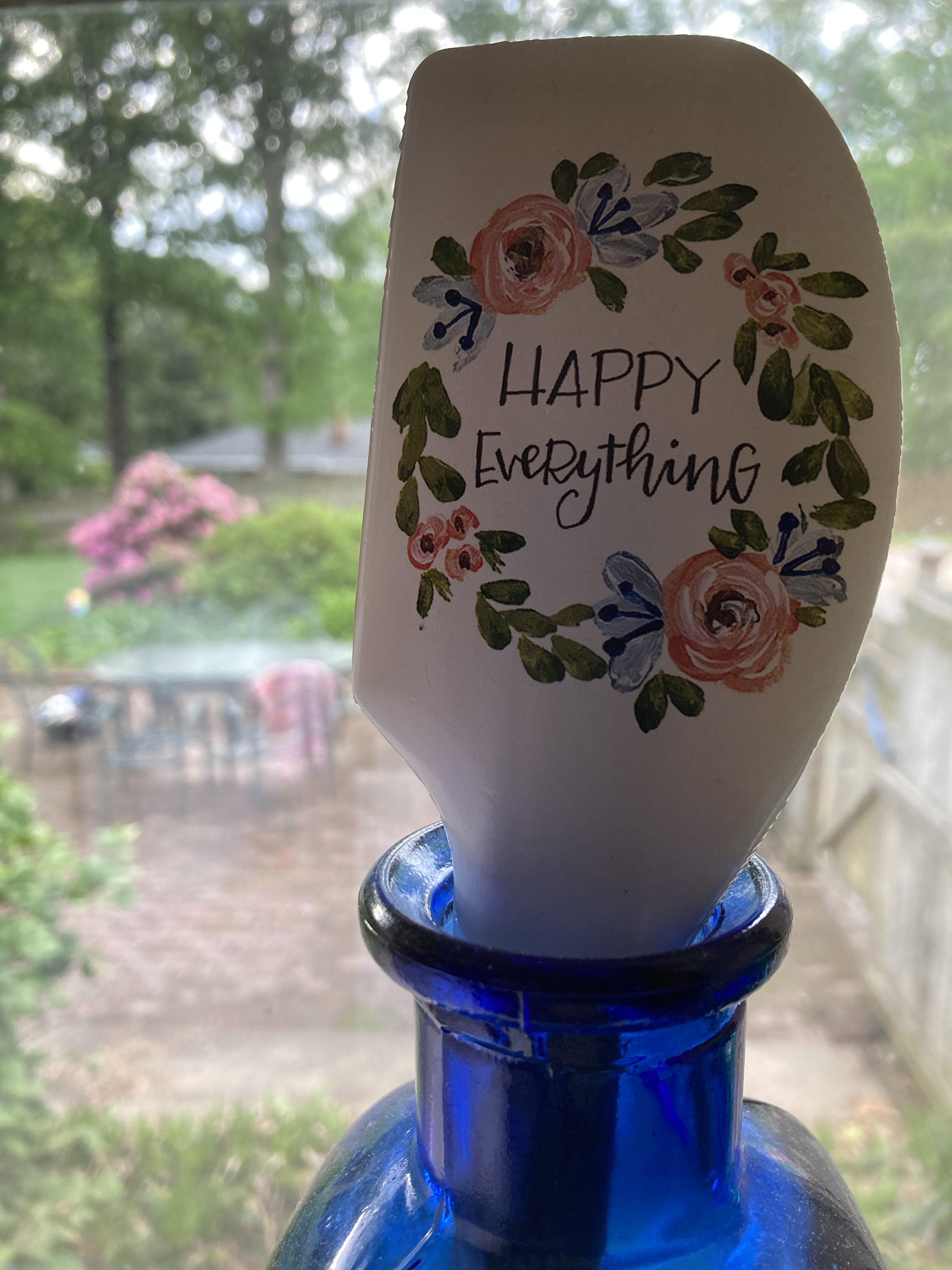
1) A City Tour – Have you ever taken a tour of your city or town? It’s a transformative experience. We toured our city (Richmond, Virginia) this week. No pictures of the James River this time around or any of the actual “tourist sites”…[I did write about our gorgeous Capitol building visit here]. Just neighborhoods this time. What about you? Comment below about your city/town.
2) Best Organizing Tips – OK, full disclosure: I’m not a fan of Marie Kondo (link to my blog on decluttering and relationships). I think what she helps people downsize gets repurchased. So it is a constant cycle. However, I get the stress that clutter can bring to moms of small children. Our children understand that I will downsize until it starts getting painful, and then they can just hire an estate clearing company, for the rest one day.
When I come across an article that shows wisdom in dealing with the strain of stuff, it encourages and empowers. The Pioneer Woman has a list of 76 tips for organizing our households. Some of the tips have affiliate marketing attached which means buying stuff to store your stuff. Still, among the 76 tips, there are great helps for anyone. I love the ideas on beautifying and functionalizing the foyer/entryway of a home. Also, her tips on managing toys and their cleanup were great!
3) Rise and Fall of Mars Hill – I don’t usually recommend sad things unless it causes such a stir in me, it seems necessary to share. The church doesn’t belong to people. The church belongs to God. He established it, and He will care for it. If judgment is required, He will judge. However, some situations may need to be examined, not to judge, but to avoid going there. We are all vulnerable. It can happen to any of us as collections of people. Power and ego can soil anyone. None of us are immune.
Our small but growing church in Richmond, Virginia, loves God, loves His Word, and loves the world. Hopefully we love each other and our neighbors as well. We will want to do our part in keeping our church on track with God’s mission.
Mission drift can occur to any organization. Watch out for it. Put guardrails around what matters.
4) On Being Heard – Just before doing the city tour above, a documentary focused on our city was recommended to me. The local film company responsible for this Emmy-award-winning gem is Belltower Pictures.
“Heard”– PBS Documentary – “HEARD captures the inspiring stories of five people who grew up in ‘the projects’ (Richmond, Va.), surviving and thriving in spite of, and often because of, the challenges they’ve had to overcome. Now they’re giving back to their home communities, trying to make a better life for those who come behind.”
I watched this documentary after the city tour.
It was an amazing opportunity to listen to residents of Richmond’s subsidized housing who talk about what they loved and hated about their neighborhoods and how they were able to take those foundations to launch into positive futures. So glad I listened. You will be, too.
The next day Jesus decided to go to Galilee. He found Philip and said to him, “Follow me.” Now Philip was from Bethsaida, the city of Andrew and Peter. Philip found Nathanael and said to him, “We have found him of whom Moses in the Law and also the prophets wrote, Jesus of Nazareth, the son of Joseph.” Nathanael said to him, “Can anything good come out of Nazareth?” Philip said to him, “Come and see.” Jesus saw Nathanael coming toward him and said of him, “Behold, an Israelite indeed, in whom there is no deceit!” Nathanael said to him, “How do you know me?” Jesus answered him, “Before Philip called you, when you were under the fig tree, I saw you.” Nathanael answered him, “Rabbi, you are the Son of God! You are the King of Israel!” Jesus answered him, “Because I said to you, ‘I saw you under the fig tree,’ do you believe? You will see greater things than these.” And he said to him, “Truly, truly, I say to you, you will see heaven opened, and the angels of God ascending and descending on the Son of Man.” – John 1:43-51
Philip found Jesus. The One. The Messiah. He followed Him…and he sought out his friend Nathanael to tell him the good news. Even as Nathanael mocked the news, Philip persevered.
“Come and see”.
As they approached, Jesus called out identifying Nathanael. It was shocking for Nathanael (also known as Bartholomew) because they had not met before. Jesus called him “an Israelite in whom there is no deceit“. Something about what and how Jesus spoke to him caused Nathanael to wonder aloud how Jesus knew him.
Then Jesus answered, “Before Philip called you, when you were under the fig tree, I saw you.” What?! Of course, we remember this is God, this Jesus. Still, something in His seeing Nathanael under the fig tree meant everything to Nathanael…it meant that He was the One. The Messiah. Nathanael believed.
“Rabbi, you are the Son of God! You are the King of Israel!”
Now, there are a lot of fig trees in Israel. Most probably, Nathanael sat under them from time to time. Something happened specifically under one of those fig trees that made it hugely significant that Jesus recalled it to him…and told him, “I saw you”.
In the TV series, The Chosen, we watch a story about Jesus, His followers, and His public ministry. We are reminded by the director and others that The Chosen is faithful to the truth of Scripture, but it also tells a story. We don’t know from the Word what was going on in Nathanael’s life “under the fig tree”, but that Jesus saw him was crucial.
The writers of the series have Nathanael wrestling with God over a failed hope. Nathanael had wanted to design buildings that would honor God, and he failed. Under the fig tree, he cried out to God in the words of Psalm 102:1-2:
“Hear my prayer, O LORD; let my cry for help come before You. Do not hide Your face from me in my day of distress. Incline Your ear to me; answer me…”
In reality, we do not know from Scripture what happened under the fig tree, but when Jesus told him that He saw him there…Nathanael believed. In the Son of God. The King of Israel.
[The scene below is 11 minutes in length. If you haven’t seen it, it is well worth your time. Beautiful. Remember some is story, BUT the passage in John above is faithfully represented…and the emotion is there. The grand emotion of discovering that we are seen…we are known.]
We have all had those moments under the fig tree. Times we thought we were all alone. Times of anguish or fear. Times of feeling completely undone. To be reminded that Jesus sees us changes everything. It is similar, in a God way, to the pronouncement the Samaritan woman made after encountering Jesus at the well. “He told me everything I ever did!” So different from Nathanael but similar in that she met the Messiah who knew her…and still loved her completely.
All the bitter weary ways
endless striving day by day
you barely have the strength to pray
in the valley low
how hard your fight has been
how deep the pain within
wounds that no one else has seen
hurts too much to show
all the doubt you’re standing in between
And all the weight that brings you to your knees
HE KNOWS, HE KNOWS
EVERY HURT AND EVERY STING
HE HAS WALKED THE SUFFERING
HE KNOWS, HE KNOWS
LET YOUR BURDENS COME UNDONE
LIFT YOUR EYES UP TO THE ONE
WHO KNOWS
HE KNOWS
we may faint and we may sink
feel the pain and near the brink
but the dark begins to shrink
when you find the one who knows
the chains of doubt that held you in between
one by one are starting to break free
every time that you feel forsaken
every time that you feel alone
He is near to the broken hearted
every tear
He knows…*
As you get back to your day, you might want to bookmark the links below. Nathanael is a lesser known apostle, BUT we can learn so much in his conversion story…about Jesus…about the friend Philip who brought Nathanael to Christ…and about Nathanael, this righteous Jew, overcoming his prejudice and coming to Christ.
1) Loki Theme on Classical Guitar – Twice a month a video. Nathan Mills (Beyond the Guitar) drops two classical guitar arrangements every month. Twice a month. It’s a happy time when that happens. Here’s his arrangement of the main theme from Marvel Studio’s Loki. Enjoy.
2) Farm to Table – Summer in this part of the world is a feast of flavors and colors as farm harvests come in. Markets abound and we reap all the good.
3) The Color of Law – Much of my adult life, I’ve lived in cities – Atlanta, New Haven, Cairo, Tunis, Casablanca, and now, Richmond, Virginia. Cities are where our children grew up. Amazing experiences for us all. Now we, who own homes, live in the suburbs. Last week I had the great privilege of hearing educator Sara Kennedy talk about the history of Richmond, Virginia. Particularly the history of the last 150 years or so. In just over an hour, she talked through the many laws, ordinances, and covenants put in place to seemingly protect the growth of the white middle class. Also to stifle or curtail the socioeconomic flourishing of African Americans in our country. In particular home ownership. How in the world? Through federal, state, and local laws. Kennedy explored all of this without shaming or judging those in the room…just talked about the laws, the impact on urban quality of life, and…”the color of law”.
Last year, I watched the 13th documentary about the abolition of slavery. It was hard to watch because, over and over, I had to take a breath, shake my head, and acknowledged to myself, “I didn’t know.”
“The core argument of this book is that African Americans were unconstitutionally denied the means and the right to integration in middle-class neighborhoods, and because this denial was state-sponsored, the nation is obligated to remedy it.”
“If government had declined to build racially separate public housing in cities where segregation hadn’t previously taken root, and instead had scattered integrated developments throughout the community, those cities might have developed in a less racially toxic fashion, with fewer desperate ghettos and more diverse suburbs. If the federal government had not urged suburbs to adopt exclusionary zoning laws, white flight would have been minimized because there would have been fewer racially exclusive suburbs to which frightened homeowners could flee.”
“We have created a caste system in this country, with African Americans kept exploited and geographically separate by racially explicit government policies. Although most of these policies are now off the books, they have never been remedied and their effects endure.”
Read the book. Until you are able to do so, start, as I did, with Goodreads quotes of The Color of Law. Mind-blowing.
I’m learning. Not taking responsibility for the wrong of previous generations, but taking in the why’s that such division (in our city, in particular) still exists. Change is difficult but not impossible.
“Heard”– PBS Documentary – “HEARD captures the inspiring stories of five people who grew up in ‘the projects’ (Richmond, Va.), surviving and thriving in spite of, and often because of, the challenges they’ve had to overcome. Now they’re giving back to their home communities, trying to make a better life for those who come behind.”
“Speak up, speak out, get in the way. Get in good trouble, necessary trouble, and help redeem the soul of America.”
If there was ever a person who turned our world upside down with something that could be termed “good trouble”, it was Jesus of Nazareth. In fact, the recent multi-season TV series The Chosen on the life of Christ has as its theme song “Trouble”.
Surely my soul remembers and is humbled within me. Yet I call this to mind, and there I have hope: Because of the loving devotion of the LORD we are not consumed, for His mercies never fail. They are new every morning; great is Your faithfulness! “The LORD is my portion,” says my soul, “therefore I will hope in Him.” The LORD is good to those who wait for Him, to the soul who seeks Him. It is good to wait quietly for the salvation of the LORD. – Lamentations 3:21-26
We need to teach our little ones how to lament. Otherwise, those children (especially bent toward the cup being less than half full or entirely empty) will develop habits of being sullen or inconsolable. In fact, as our children grow into adulthood, knowing how to lament will be a worship tool for handling all the painful and seemingly unfair losses.
What is Biblical lament? Its definition is, in Hebrew, “to passionately cry out, to wail, to express sorrow, to mourn, to express regret”.
“We live in a fallen world. We experience the consequences of sin and death on individual, cultural, and global levels. God knows we need a way to express and release the pain of these losses or we risk becoming numb to even the joys of life or allowing momentary sorrows to infect our entire being. The tool He’s provided for this release is lamentation.” – Lori Stanley Roeleveld
Yesterday I was spending the afternoon with our 5y/o and 3 y/o sibling grandchildren. We had a schedule, and they both understood it. Then the 3 y/o decided to change up the schedule. His strategy was to be miserable and make his sister and Gram miserable as well. He was successful. I don’t do sullen well at all. [My own struggle with responding to inconsolable children needs its own blog. Surely, I can do better.] The afternoon finished out fine enough, but we were all three worse the wear on feeling bad and making each other feel bad. Thankful for another day of learning to love well these precious ones.
Through the evening, I was reminded of my own children’s struggle with hardship and losses and how their dad and I tried to help them navigate them, growing up. Our sweet daughter’s struggle with our many moves, leaving friends behind and forced to start over in new places. Our darling youngest son who was different different (being both American and Korean living in Africa), and sometimes endured hard attention from other children. Our talented older son when his heart broke, not making the soccer team as a middle schooler.
[Sidebar: When this loss accentuated our son’s struggles later on his high school basketball team, we understood there would be dark times. Dave remembered last night about us giving him an after-dinner back yard task of 100 completed free throws. I can’t believe now that he actually went along with us. Hot, mad, and sweaty, he shot and shot until he got those 100 successful attempts. His confidence grew through the season with his practiced proficiency.]
Our sullenness and inconsolable hearts must have their origins in entitlement. This is something we fought against with our children from toddler-hood. Still it creeps in (to all our lives). Life should be better for us. Life should bring successes. Even for Christians, we are shocked, at times, when we suffer because we think it is not right. Not fair. [We never responded to that expression with our kids growing up. Just moved on. It might have been a teachable moment to sow lament in their hearts.]
Writer, pastor Mark Vroegop (in piece above) gives four elements of lament (from Psalm 13):
Turn to God. – Tell God what’s happening. Talk to Him about everything about it, including how you feel.
Bring your complaint. – Tell Him what’s frustrating you. All of it. He can take the struggle you are having.
Ask boldly for help. – Don’t give into silence and despair. Ask Him for help. “Dare to hope.”
Choose to trust. – “But I have trusted in your steadfast love; my heart shall rejoice in your salvation. I will sing to the Lord, because he has dealt bountifully with me.” (Psalm 13:5–6). More than the stages of grief, this prayer language moves us to renew our commitment to trust in God as we navigate the brokenness of life.
Lament is definitely something we can choose as we walk with God. Teaching our children to turn their struggle away from themselves and toward God will move them to maturity. Just this week that basketballer son of ours gave counsel to treating perceived failure with perspective and perseverance. A good word for anyone.
For today, let’s turn our longing, our ache, our sorrow into a lament and a praise. Allow gratitude to flatten our fear. Worship with me with the help of this great old hymn that I’ve referenced before (see links below). Remember that our beloved Comforter, and Consoler, is ever and always faithful:
Great is thy faithfulness, O God my Father;
there is no shadow of turning with thee;
thou changest not, thy compassions, they fail not;
as thou hast been thou forever wilt be.
Refrain:
Great is thy faithfulness!
Great is thy faithfulness!
Morning by morning new mercies I see:
all I have needed thy hand hath provided–
Great is thy faithfulness, Lord, unto me!
Summer and winter and springtime and harvest,
sun, moon, and stars in their courses above
join with all nature in manifold witness
to thy great faithfulness, mercy, and love. [Refrain]
Pardon for sin and a peace that endureth, thine own dear presence to cheer and to guide, strength for today and bright hope for tomorrow, blessings all mine, with ten thousand beside! [Refrain]*
“I offer thanks to You, living and eternal King, for You have mercifully restored my soul within me; Your faithfulness is great.” – The Traditional Jewish Prayer Upon Awaking
Though the fig tree may not blossom, Nor fruit be on the vines; Though the labor of the olive may fail, And the fields yield no food; Though the flock may be cut off from the fold, And there be no herd in the stalls— Yet I will rejoice in the Lord, I will joy in the God of my salvation.
The Lord God is my strength; He will make my feet like deer’s feet, And He will make me walk on my high hills. – Habakkuk 3:17-19
Reading the book of Habakkuk, we are spellbound by the devastating situation where the people of God find themselves. Habakkuk wrestles with God over this, and finally yields in faith to the God he trusts…no matter what. Whether in hunger or high places.
The thought of being completely without food is pretty frightening. The stories we hear in the news of displaced peoples, who had to flee their homes and villages and figure out how to survive on foot, are heartbreaking. I can’t fathom that situation, yet I know it’s real for far too many right now.
I’m also afraid of heights. When we fly, I always get an aisle seat, and treat the experience as if I’m on a cross-country bus trip. I love to look at mountains, but being up in them, on narrow roads or cliff-edge paths, is not what I would choose for transportation or relaxation.
Reading through the short account of desperate times, as recorded by the prophet Habakkuk, reminds me of the raw nature of life sometimes. What is that situation for you that would be the worst you could imagine? The loss of a person or the lack of a provision?
Is there anything that could so devastate me that I would take my eyes off God?
I pray not…and Habakkuk gives hope. He cried out to God, cried out against God, in the beginning, because of the horrific circumstances of his people, God’s people. Yet, when we besiege the throne of God with our desperate requests, He hears His children and answers us. Not always in ways that suit us at the time, but He responds, with the wisdom of One who sees how all of life, all of history, fits together.
As we pray, whatever He does in answer to our appeals is up to Him – a perfectly loving, merciful and just God. Yet, there is a glorious spiritual transaction that happens, if we keep our eyes on Him. He restores our joy; He brings peace; He gives strength.
I love the passage in C. S. Lewis’ The Lion, the Witch, and the Wardrobewhere Mr. and Mrs. Beaver are trying to describe Aslan, the lion who symbolizes Jesus in the Narnia stories. Lucy and Susan ask if Aslan is safe. Mr. Beaver responds, “Who said anything about safe? ‘Course he isn’t safe. But he’s good. He’s the King, I tell you.”
God is completely good. That does not mean that He keeps us always in comfortable places. His ways are not our ways (Isaiah 55:8-9). Yet, as we look over the shoulders of Habakkuk, and see the world as he saw it…he still came around to seeing the goodness of God. We can also choose to rejoice in whatever situation we find ourselves. That is the faith that plants our feet surely on any path where God leads.
[Here we are two days post Juneteenth and one day post Father’s Day. What’s on my mind? Recovering from a bad fall with back pain slowly dissipating, and its resultant writer’s block. Hard to sit at a computer and write with brain drain from this pain.
However, the pain is improving…and inspiration is returning. In fact, the weekend’s events have spurred so many thoughts and emotions.]
This morning, I slowly rolled out of bed with so many thoughts pinging around my mind…thoughts and accompanying emotions. Then, as happens sometimes, a song, and the question in its title, settled in my brain.
“How Can You Mend a Broken Heart?”
Whether the Bee Gee’s epic original or Al Green’s amazing cover. Here’s a more recent Bee Gee’s performance (2001):
Even when our hearts are not presently under attack, we share space with those we love whose hearts are breaking. A dear friend whose husband wants another future. A friend who spent his Father’s Day without his children (because his ex-wife chose a different future). .Friends who lost their fathers before this Father’s Day…or parents who lost their children (whether to death or to an estranged life). Friends heartbroken over the what-ifs or what-may-never-be’s. Fill in the blank with your own. #BrokenHearts.
[Too heavy for a Monday morning? It does get better.]
Maybe you aren’t so aware of broken hearts. Maybe you haven’t had the experience of sitting on the phone of a friend scream-weeping at the hard reality of her life right now. Maybe you haven’t worked beside a friend whose stone face and deep quiet haven’t touched your awareness of what is going on under the surface of his silence…his pain.
Broken hearts can take us on spirals that lead to self-protective withdrawal, confused anger, terrifying isolation, or hard bitterness.Photo Credit: AZ Quotes
I also found some helps in a somewhat odd place: Kristin Weber‘s Adulting for Jesus. Whatever you currently think about Jesus, this book on adulting is refreshing, funny sometimes, and so real. Midway of the book she talks about developing something she calls godly grit.
“Adulting requires learning how to fall and get back up again, and again, and again.” – Adulting for Jesus, p. 89
Weber presents 10 ways to shift perspective on the struggle (our heartbreak) and develop that grit:
Expect hardship. – “Western comforts have lulled us into the false assumption that life is meant to be easy and the hard moments few. In reality, much of life is hard, and the easy moments are the exceptions.” We can learn to live in such a way that difficult situations/relationships don’t catch us off guard.
Depend on God. – “…when a relationship [ends] abruptly, failure hurts – often deeply. We can be honest about our hurt and struggles while still trusting God.” We don’t ignore the pain of our broken heart, but we recognize that God hasn’t gone anywhere. He sees; He hears; He will work on our behalf.
Ask “What’s Next?” – “Rather than ask ‘Why me?’…ask a different question about life: ‘What’s next?’ Obstacles, especially a long string of them, can make us short-sighted. By asking ‘What’s next?’ we recognize this failure or hardship isn’t the end of our story…Hardships will undoubtably change you, but keeping a long-term perspective will prevent them from destroying you.”
Look at Adversity through Eternal Lenses. – “As a child of God your trials, both big and small, have an expiration date.” When our hearts are broken, we are consumed and exhausted by our loss. We can’t see down the road but so far. “Do the next thing”. Eternity comes but until then we grieve the loss, but we also train ourselves to stay in the moment and hope for a better future…a different future. We have that confidence in God’s care.
Appreciate the Bottom. – “A lot can be learned on the bottom step of the ladder”. Our broken hearts can bring us low…but that is not where we stay. That is not where we belong.
Develop Thick Skin and a Tender Heart. – “Try to be slow in getting offended and quick in extending grace. If someone causes you to have a knee-jerk reaction, that person controls you. That person has all the power…Choosing a calm response and keeping a level head, you remain free to live your life.”
Be Teachable. – “Though we don’t need to let the opinions and critiques of everyone we encounter control our lives, we do need people who can lovingly speak truth into our lives…Our natural instinct is to make excuses or get defensive when someone corrects us, but adopting an attitude of teachability puts us on the track to growth and maturity. We need to take ownership of our actions and be humble enough to receive input about where we can improve.”
Do Something. – “Big changes happen through tiny actions, and tiny actions require doing something.” Every day…step by step. #MakeYourBed.
Laugh. – “Once I learned to laugh at myself and find humor in situations that didn’t tip in my favor, I became less stressed and anxious about every little thing. I didn’t dread life or failure as much…Our hope isn’t ultimately in everything going our way, and humor keeps the weight of our circumstances from crushing us.”
Count Your Blessings. – “Instead of focusing constantly on everything that’s going wrong, take time each day to remember what’s going right. We might find our ‘gratitude attitude’ changes our entire outlook on life.”
Thanks, Kristin. I can tell you’ve known heartbreak and have learned to come out whole on the other side.
Closing out this Monday Morning Moment, for those of us who are sharing space with one or many dealing with broken hearts, we need to remember its pain, and have patience and compassion…be present, listen, and, when we can, speak the truth in love.
P.S. The Scripture verses are strong anchors and the links below are super helpful. None of us are in these broken spaces alone.
The Lord is near to the brokenhearted and saves the crushed in spirit. – Psalm 34:18
My flesh and my heart may fail, but God is the strength of my heart and my portion forever. – Psalm 73:26
He heals the brokenhearted and binds up their wounds. – Psalm 147:3
“I have chosen you and haven’t rejected you. Do not fear, for I am with you; do not be afraid, for I am your God. I will strengthen you, I will help you, I will uphold you with my righteous right hand. – Isaiah 41:9b-10
“Come to me, all who labor and are heavy laden, and I will give you rest. Take my yoke upon you, and learn from me, for I am gentle and lowly in heart, and you will find rest for your souls. For my yoke is easy, and my burden is light.” – Jesus – Matthew 11:28-30
Having an artist in the family can be an extraordinarily sweet experience. One reason being we get to know the artist. Also, we have the opportunity of experiencing the art, with all its expansive nature. I know and love music that would never have come on my radar were it not for Nathan Mills, Beyond the Guitar classical guitarist.
I asked him last week what he was working on, and he said an arrangement of “Hurt”, the Johnny Cash version. Well…I didn’t know that song, but I did know the late great Johnny Cash. He was my mom’s favorite country singer. His music was the soundtrack of my early childhood.
After listening to the Cash version on YouTube, I was so taken by both the lyrics and the soulful melody. The original “Hurt” was written by Trent Reznor and performed by the industrial band Nine Inch Nails in 1994. That version was dark and despairingly sad, drawing our attention to brutal self-harm and drug addiction.
The Johnny Cash cover of “Hurt” came about when record producer Rick Rubin approached him about doing an album that would reintroduce the aging artist to the MTV generation of music fans. “Hurt” was one of many covers on Cash’s 2002 albumAmerican IV: The Man Comes Around. This album was a huge success.
Cash’s version of “Hurt”, like Reznor’s original, was also sad and filled with regret. However, there was a difference. A big difference. In Cash’s rework of the original, he changed some of the lyrics to incorporate his faith. Still, the lyrics spoke of deep pain, the losses of his life and the losses to come. He knew he was in the last years of his life. His cherished wife and fellow artist June Carter Cash is seen briefly on the video of his cover. She would die in 2003 and he would also just months later. Somehow, Cash communicated both love and hope in his “Hurt”. It was excruciatingly beautiful.
Now enters Nathan’s arrangement and performance of this haunting melody. You can hear the emotion…even without the lyrics. Although I usually say “Enjoy”, on this one, just take it on and let it teach you something of life. Its great worth and the incredible gift it is.
What songs have touched your life in ways that continue to grow with time…and with the different reiterations and interpretations? Whatever genre. For me, many are old songs. Both in pop and country as well as old church hymns.
call me old school, buuuut…
while 99% of the songs that I listen to on my phone and sing at the top of my lungs in my F150 are newer worship songs,
the actual songs that I sing from memory that minister to my soul in times of need… are old, old hymns.
Another old favorite is the love song that became ours – Dave & me – years and years ago. “I Only Have Eyes For You”. A reminder of this song hangs on our bedroom wall. It always gives a cause to dance together.
Only let your manner of life be worthy of the gospel of Christ, so that whether I come and see you or am absent, I may hear of you that you are standing firm in one spirit, with one mind striving side by side for the faith of the gospel, and not frightened in anything by your opponents. This is a clear sign to them of their destruction, but of your salvation, and that from God. – the Apostle Paul to the Philippian Church Philippians 1:27-28
God’s Word is powerful and freeing. We are emboldened and sustained by it – for life, for love, for forgiveness, for endurance.
Reading this passage recently, a charge from these words sizzled through me like electricity. Goosebumps and all.
Another translation of Paul’s writing introduced the above Scripture passage with the phrase “Just one thing”. We are living in confusing and shaky times, but God is unchanged. His truth is as riveting and reliable as when first written for us.
For months now, we have been kept apart by the social distancing of COVID-19. A year ago, we were brought together by the terrible loss of George Floyd. Brought together and at the same time torn apart. Protests and a pandemic. Racial unrest and a radical disease.
This time last year, a group of friends and I went through a Bible study together which turned out to be incredibly timely. We couldn’t be together so we met over a video call, working through Jennie Allen‘s Get Out of Your Head. In this book, Allen talks through our struggle with the kinds of thoughts that spiral downward taking us with them. The text she takes her readers through is Paul’s letter to the Philippians. He was in prison and yet wrote this short life-transforming letter to encourage the church experiencing its own hardship.
In confusing and chaotic times, our thoughts can be our worst enemy. We juggle the “what if’s” until they become more than we can manage. We question what’s right, what’s true, what’s our place in all of it…what’s God’s place. We become suspicious of others’ motives, and even sometimes our own. We grow weary of sorting it all out. We can withdraw…making six feet apart way too easy.
Jennie Allen reminds us that we have a choice; we can flip the downward spiral. We can make our aim, in all things,God’s glory and His headship. Keeping our focus on God, we then seek peace, do justice, love even our enemies, and trust God with our lives (whether the threat is COVID and or violence in the streets).
“As theologian and emeritus professor D. A. Carson has observed, People do not drift toward holiness. Apart from grace-driven effort, people do not gravitate toward godliness, prayer, obedience to Scripture, faith, and delight in the Lord. We drift toward compromise and call it tolerance; we drift toward disobedience and call it freedom; we drift toward superstition and call it faith. We cherish the indiscipline of lost self-control and call it relaxation; we slouch toward prayerlessness and delude ourselves into thinking we have escaped legalism; we slide toward godlessness and convince ourselves we have been liberated.” – Jennie Allen
So how do we avoid that drift Dr. Carson talked about above?
In community.Standing firm, side by side, not afraid – in God’s strength and His salvation – Philippians 1:27-28.
However, even if community is shaky, God never is. We remind ourselves and each other that He is our refuge and we never have to be shaken...no matter the situation.
I am at rest in God alone; my salvation comes from Him. He alone is my rock and my salvation, my stronghold; I will never be shaken.
How long will you threaten a man? Will all of you attack as if he were a leaning wall or a tottering fence? They only plan to bring him down from his high position. They take pleasure in lying; they bless with their mouths, but they curse inwardly. Selah
Rest in God alone, my soul, for my hope comes from Him. He alone is my rock and my salvation, my stronghold; I will not be shaken. My salvation and glory depend on God, my strong rock. My refuge is in God. Trust in him at all times, you people; pour out your hearts before Him. God is our refuge.Selah
Common people are only a vapor; important people, an illusion. Together on a scale, they weigh less than a vapor. Place no trust in oppression or false hope in robbery. If wealth increases, don’t set your heart on it.
God has spoken once; I have heard this twice: Strength belongs to God, and faithful love belongs to You, Lord. For You repay each according to his works. – Psalm 62
The past. We are never rid of it, nor would we wish to be. Our roots are there. The foundation of our lives. Our first and formative relationships are there. Both life and death, pain and promise.
Memories are born in the past. Experiences and emotions attached to them that feel exquisitely personal…yet are shared. Others close to us may have our exact same experiences, but have very different feelings and memories attached to them.
Family is complicated and always has been (remember Cain and Abel?). Throughout the history of humankind, family was meant to be a nurturing and stabilizing influence in our lives. It doesn’t always work out that way, but wisdom is to lean in whenever possible and learn both from the brokenness and the beauty available to us.
So how do we deal with the past? Do we ruminate on the wrongs of our past? Do they loom larger than the good? Do we see ourselves in the right in each point of conflict? Or the victim? Is our memory of family colored in ways that make us pull away?
There is a way forward, and I believe it is revisiting the past with the aim of healing…not just for ourselves but for the family as a whole.
[I love alliteration – words with the same beginning letters used in phrases or headings. So it was a personal thrill for me that this came together with alliteration.]
5 R’s of Handling and Healing Our Past
1) Remember – We trust our memories, don’t we? Well, until age shakes that up a bit. Still, our memories can be altered by the power of our emotions and by further experiences that call the past to mind. Then our emotions, deepened by memory, can “resolve” to see things more our way, whatever is happening in the moment. Memories can be reinforced, and not always in helpful ways. We need to take into account that we, family members or friends, can remember something very differently, based on what was going on emotionally for each person at the time. That’s why we must handle memories gently with each other. Love the person her/himself more than what they might remember. Determine not to be put off by memories where we don’t come off in a positive light. Remembering is done best in community. It’s richer and more reliable that way. Of course, this requires tons of trust, transparency, and humility. It may not feel safe in some situations to remember in community. It’s also never helpful to insist our memories are the only ones that are true. Right? Again, it is experience plus emotion. Love covers. Love helps heal when we remember, with care for the other.
2) Reminisce – As we remember, we reminisce. This calls to mind the sweet memories of the past. Even as painful memories rush in, what happy times come to mind? How might these memories weave together? Was it all bad? All good? Reminiscing taps into the positives, and even opens the mind to what the memories of the other might be in the same experience. Are we projecting motive or intent into our experience? As we reminisce, might we look at how an experience was different for the other. Reminiscing done in community is, again, eye-opening. It can be threatening if our side of the memory is on the line, but when we enlarge on what was going on in our past, we gain deeper understanding. A softening of our attitudes can come.
3) Reflect – When we reflect on a particular situation or relationship in the past, we treat it with as much grace as we can muster. We take the past and turn it over and examine it from different angles, considering what we can learn from it. How is it affecting our present – both life experience and relationships? What can we do to glean something positive from a painful past? What is to be gained by holding onto the past? If we choose healing, what is then possible for us and the others involved? What kind of faith would be required? What kind of work? Are we willing?
4) Repent and Reconcile when possible(instead of forever Regret ) – Here’s the big leap! Owning our part and doing something about it. This is huge!
Let’s say, our past includes painful memories from our early childhood. What can a child own from situations out of their control? We can own our attitudes today as adults. For instance, it took me a long time to tender my memories of a neglectful biological father. I only have a few memories of him, none great. One memory stands out. Mom had left him, and we were living in a tiny house, supported by her income alone. One night we were awakened by shouting. I don’t remember a lot, but my estranged father, Mom, and an uncle of ours were in some sort of argument. We four children were huddled together on a bottom bunk. I remember blood and our father’s hand wrapped in a handkerchief. Was there a knife? I don’t remember. We were terrified. After that…he was pretty much absent from our lives. I don’t remember asking Mom what all happened. It just took me a long time to feel anything for that dad. Yet, I know he had to have known pain, isolation, and maybe even some regret at the dregs of his relationship with Mom and us. As an adult, I have chosen some compassion for him. Not much but some.
Why did I share that story? It is how as children, when we have trauma (or what we perceive as trauma when maybe it had little to do with us), we process it differently than we might as adults. Revisiting, with humble hearts, can make a difference in how we think about the past as adults.
When our past pushes into our present, and conflicts are revisited, we are tempted to try the offending party in the court of our emotions (re-try them, actually). We resurrect the past and all its emotions, and bring all that trauma to bear on whatever the present misunderstanding is. We are then not able to just deal with the present. All that past comes down on us, that past that may have been once forgiven, and unloads. Making it virtually impossible to deal with whatever is happening at the moment.
This is where we repent. We refuse to nurse old wounds. We deal with the current conflict as it is, without all the past. The current conflict is enough. We deal with it as adults. We repent of our part. I can tell you, if we don’t, there is collateral damage to those who love us. “Friendly fire” is not friendly, and these struggles, heightened by our past, become the past of those around us. Our children. Our grandchildren.
Repentance may take more the form of forgiveness. We refuse to remember (one place where we refuse to remember) the offense of another. We choose to forgive in the most expansive way we can.
I know we sometimes say we forgive that one who offends us, who offended in the past, and continues to do so. We forgive but commit and feel justified to have nothing to do with them ever again. I get that. I get the pain behind such a decision. It’s heart-breaking. Just to reflect: Who does that punish? As wide a circle as our relationship together makes. We are all punished…that is most probably not meant to be the intent.
Repent and reconcile whenever possible. There will be cheering by everyone who loves us both. I know; I’ve experienced it from both sides. The repenting side and the relieved and thankful other side.
[This is often excruciating and not always satisfying. Even if the outcomes are not what we hope. We benefit from trying…as do the generations that follow. Who knows? The situation – and relationship – can still change in that possible future.]
5) Rejoice – Put your hand on your chest. Can you feel your heart beating? Can you feel the rise and fall of your breath? Be grateful. Rejoice in the present. We didn’t die from our past. We still have a chance to put things right. Maybe imperfectly…but it’s possible.
A wonderful scene of this possibility is found in the 1970 film “Scrooge”. “I’ll Begin Again”.
The past doesn’t have to be forever. You have a present. There may be a future…one not framed by the hurting past but built on a healed past. We have that possibility…in our present. We can do our part… it’s the only thing we have in our control. Is it complicated? Of course, but it will always be worth the effort.
*Special thanks to my writer friend, Angela at Living Well Journal, who talked and prayed through this with me…on a neighborhood walk, in the cool of a Spring morning.
A note I found just this week flipping through an old Bible. Mom would leave love notes around whenever she came to visit, and we did the same after her pattern…and taught our children to do the same.
A friend recently gave me the card above and it set me thinking about how far we get from who we are sometimes. She gets me. She knows my heart, even when it feels a tad dried up.
Since my teens, friends (and not so friendlies) have used the word “Pollyanna” to define my responses and outlook. That person is defined as one who “looks for the good in everyone and everything – and she finds it!” For some odd reason, it wasn’t to be considered a compliment. Even one of my sons has said, “You can’t trust Mom’s take on people” – the reason being I see beauty in everyone, and all sorts of redeeming qualities. Well…I used to anyway.
Now, in recent years, reluctant contrarian is more what I’ve become. [After writing this piece, I came across someone who writes under the title of reluctant contrarian. Funny.] It certainly wasn’t my ambition to become curmudgeonly…but life happens. We see the things that, if tweaked, could make a difference in a person, product, or process…and wonder aloud why not? Then, if we persist in our opinion, we become like a dripping faucet or clanging cymbal. Sigh…
When my friend gave me the card (image above), it set in motion a resolve in me. To rediscover that Pollyanna inside. To look for the good. To extend grace. To brighten the day. To play Pollyanna’s Glad Game…until it becomes a habit again.
This contrarian/curmudgeon thing that happened to me in the last few years probably relates to some process of entropy – how life in this broken world drifts toward disorder or randomness…unless we constantly intervene. This idea breaks down with those who start as contrarians. They don’t move toward being more Pollyanna’ish over time, BUT…it could be they move to being curmudeongly. What do you think?
[Sidebar: I asked my husband – who naturally bends more in the direction of contrarian: “Which would you say you are: Contrarian or Curmudgeon?” He answered quickly: “Are those my only two choices?!” We got a good chuckle out of that…and then decided he was serious more than contrarian, analytical more than curmudgeonly.]
What’s the contrast between these extremes? Night and day.
I do think there is a healthy place in the world for us to co-exist. The Pollyannas and the Contrarians. In fact, The article above – Walter – Analyst Contrarian – Corsairs – speaks to this somewhat in the workplace. I see the wisdom of cooperating “adversarial pairs” in any setting. Here’s a bit of what the article poses:
“There are two sides to most things. Honestly, most things are wickedly multi-dimensional but most humans are only good at comparing two things…two distinct points of view…Forcing alternate perspective is a great technique for combating cognitive bias…It doesn’t prevent it. It simply makes it more apparent…Minimally, take the contrarian side of every issue…Always test the opposite hypothesis…By forcing a counter view, you expose both sides of the argument…Taking the opposite position artificially, occasionally exposes that your initial inclinations were actually dead wrong. Two perspectives create intellectual leverage…use it.” – Walter – Analyst Contrarian – Corsairs
For life in the world beyond business, I have had the great pleasure of being on advisory boards and ministry teams, both having very different sorts of people as members. Some more task-oriented, some more people-oriented. Some more thinkers, some more feelers. This is reminiscent of Roger Martin’s The Opposable Mind – regarding integrative thinking – where you are able to seriously consider different points of view – like how we grab hold (with our hands) and understand assessments not our own.
Beware, if you’re looking at yourself [people who think just like you] all around the board or conference room table. We gain from both the Contrarian and the Pollyanna… and all those in between.
Finally, brothers and sisters, whatever is true, whatever is honorable, whatever is right, whatever is pure, whatever is lovely, whatever is commendable, if there is any excellence and if anything worthy of praise, think about these things. – Philippians 4:8



 Photo Credit: The Pioneer Woman, Tidbits
 Photo Credit: Christianity Today


 Photo Credit: Todd Carey, Facebook


 Photo Credit: Tim Keller, Gospel in Life, Neighborhood Church Facebook page




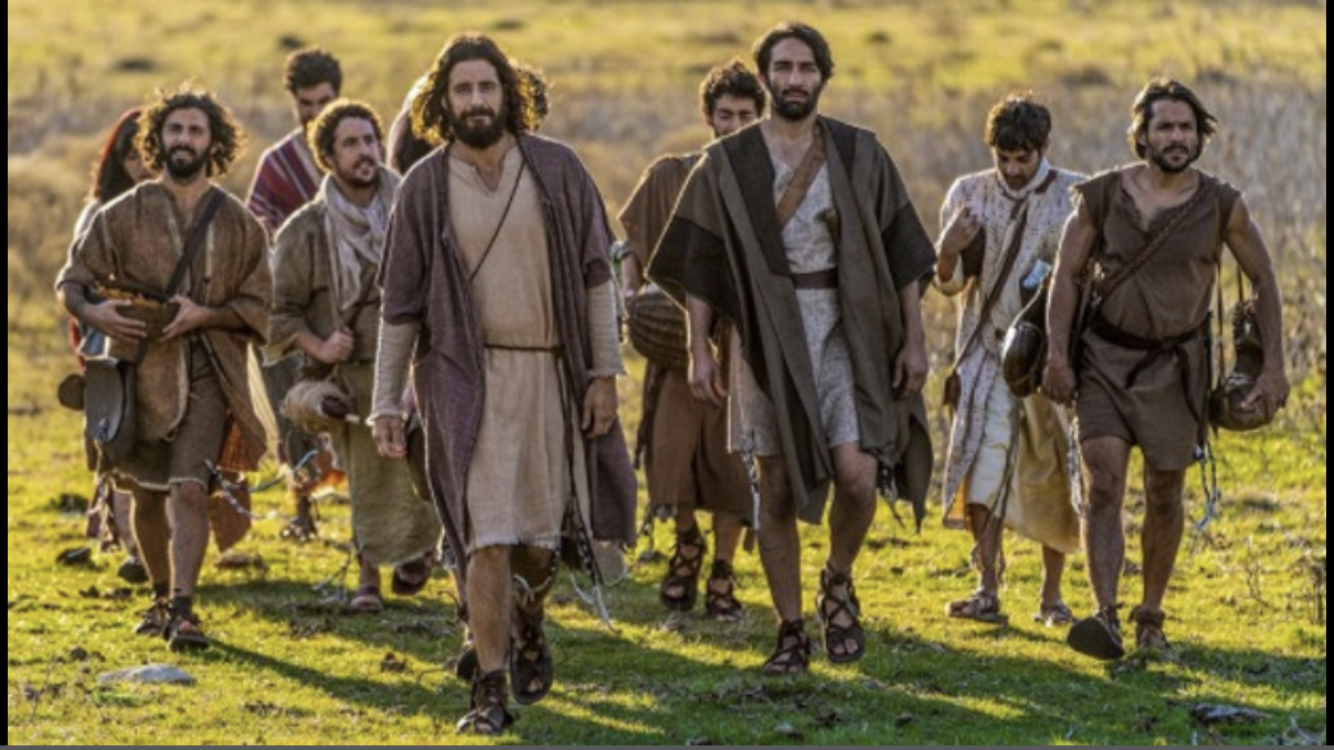


 Photo Credit:
  Photo Credit: