Category Archives: Habits

Monday Morning Moment – the Power of Acknowledgement

Photo Credit: Pinterest

A pastor friend of mine, Dave Lyle, posted about an encounter he recently had with a homeless man. The man did not ask for money. He just wanted Dave’s opinion on something. As Dave came closer, he noticed a large kitchen knife on the bench near the man, so he kept some distance. It turns out the man was once a chef, thus his knife, and had come on hard times. Homeless for the last 10 years. In Dave’s post, he had noted several other people who passed the man without looking his way, treating him as if he wasn’t really there.

“To acknowledge another person costs you nothing” was Dave’s observation.

Pastor Dave’s story reminded me of a man who “begs” on a busy corner in our city. I put the word “begs” in quotes because he doesn’t really ask for anything. He stands there with a cardboard placard with words of encouragement and affirmation on it for those waiting at the traffic light or driving by. His words are the substance of “a rising tide lifts all boats”. I wonder if, given another set of circumstances, he wouldn’t be a department head or even a CEO. He has given me more impetus to always have food in my car to give to people, like him…especially him. He is a great example of how acknowledgement can affect mindset and action.

Author and trainer Judith W. Umlas has written an excellent book on this subject: The Power of Acknowledgment (©2006 IIL Publishing, New York).

The website for her Center for Grateful Leadership extensively covers the topic of acknowledgement (at work and life, in general).

Her 7 Principles of Acknowledgment follow in brief:

  1. The world is full of people who deserve to be acknowledged…start by practicing your acknowledgment skills on people you don’t know very well, or even know at all. [Acknowledging those you most care about will follow easily.]
  2. Acknowledgment builds intimacy and creates powerful interactions. Acknowledge the people around you directly and fully, especially those with whom you are in an intimate relationship. Look for ways to say how much you value them, and then be prepared for miracles!
  3. Acknowledgment neutralizes, defuses, deactivates and reduces the effect of jealousy and envy! Acknowledge those you are jealous of, for the very attributes you envy.
  4. Recognizing good work leads to high energy, great feelings, high-quality performance and terrific results. Not acknowledging good work causes lethargy, resentment, sorrow and withdrawal. Recognize and acknowledge good work, wherever you find it.
  5. Truthful, heartfelt and deserved acknowledgment always makes a difference, sometimes a profound one, in a person’s life and work.
  6. It is likely that acknowledgment can improve the emotional and physical health of both the giver and the receiver.
  7. Practice different ways of getting through to the people you want to acknowledge. Develop an acknowledgment repertoire that will give you the tools to reach out to the people in your life in the different ways that will be the most meaningful to each situation and each person.

Acknowledgement is more than a compliment or positive feedback. It also has much greater impact that “criticism, finding fault, or saying nothing at all” (see links below). Acknowledgement demonstrates, whether talking to someone you know or a stranger, that you see the person. You truly see them and you see something they are doing that has meaning and gives meaning. You acknowledge, whether it is small thing or large, how that person, in that moment, had influence in your life…or that of others.

The Power of Acknowledgement – Part 1 – Alison Whitmire

The Power of Acknowledgement – Part 2 – Alison Whitmire

Acknowledgement communicates a genuine felt experience. To truly acknowledge someone, we must step into their space. We must pause our agenda. We must search for words to express what just happened for us. Finally, we engage bodily with our words (by this I mean our non-verbal communication aligns with what we are saying). We lean in, give eye contact, and tune our facial expression to what we want to express.

Acknowledgement then is best given in person. However…it can be done via other communication mediums. We can be creative, but the main point of all this is to go the extra mile and not let opportunities for acknowledging others pass us by. [The social distancing foisted on us by COVID has kicked to the corner much of the practice of acknowledgement. We are wise to shake off our doldrums and reestablish these practices.]

Is it your practice to regularly (honestly and in a timely fashion) acknowledge those in your lives who have made a difference? These may be close colleagues, near family, or even essential workers we see regularly and the occasional stranger we may meet only once.

Photo Credit: IZ Quotes

To close, I want to give a shout-out to this one guy I know. He is an off-the-chart introvert, but he regularly and without hesitation uses his voice to give acknowledgement to folks in his work (and life). Often, it comes on the heels of praise he is receiving for some innovation or decision made at a point of crisis. He passes that praise on to those who, in his reckoning, made possible the culmination of an excellent work. I have actually counseled with him to take the acknowledgement himself from time to time, but he is unmoved. In a culture where we are elevated because of ownership of ideas and our confidence in ourselves, he and others like him give the most relatable picture of “it takes a village”.

Photo Credit: Twitter

So…are you the glad recipient of acknowledgements in your workplace or home space? How do you practice acknowledgement in these challenging days – when eyes meet less, heads are down, and we have too often insulated ourselves to task, tribe, or timetable? Please comment below.

5 Friday Faves – New Year’s Resolutions, Habit Planner, Year-End Review, Word for the Year, and the Last Days of 2021

2021 is rapidly winding down. Whew! Here are my Friday Faves to get us ready for the new year…hopefully a joyful one!

1) New Year’s Resolutions – 2021…the end is in sight. What do we do with this new year ahead? Do we revisit those habits we thought about changing up in this tumultuous year? Maybe so. Or maybe we didn’t alter course so much for good reason. Let’s give pause a moment and consider…

Photo Credit: David Lose

Monday Morning Moment  – 2021 Come On! – New Year’s Resolutions

Are We Doing New Year’s Resolutions After a Year as Lousy as 2020? There’s One I think We Need More Than Ever – Heidi Stevens

How to Make Healthy, Attainable New Year’s Resolutions During COVID-19 – Ashley Welch, Healthline

Are You Making a New Year’s Resolution This Year? Readers Weigh In – Sarah Fielding

I take New Year’s resolutions very seriously. They have served me well through the years in shaking up troublesome habits as well as galvanizing better ones. New (or restored) habits that nurture the body, the spirit….and, when possible, family and community.

New Year’s resolutions are not always exercises in futility. They can be excellent pathways to help us get off to a strong start into the next year. Some of my family and friends treat resolutions with disdain…they never work; they never last. Oh, but not always!

They are really very energizing. Whether we meet our goals or not, there is great promise within the resolution for resetting our thinking. A keen sense of self, or self-awareness, aids in our understanding of habits and true habit change.

Without knowing it, I have actually used a practice of habit change that Ken Sande writes about on his blog, Relational Wisdom 360. He first influenced my life years ago with his work on conflict resolution through his Peacemaker Ministries. He is a gentle guide in many of the issues that complicate our lives.

His article on Seven Principles of Habit Change came at a great time. Sande talks quite kindly about how we develop habits and what it takes to change them. His first principle of habit change gives us a look at the cycle of habits – the cue, the routine (or response), and the reward. I actually followed Ken Sande’s principles below (without knowing the wisdom of it).

  1. Every habit has three parts: a cue, a routine, and a reward.
  2. You can change an undesirable habit by keeping the cue and reward but learning a new routine.
  3. The best way to overcome the temptation to revert to old routines is to have a detailed action plan.
  4. Habit change builds momentum if you can change a single “keystone habit” and then continue to build on consecutive “small wins”.
  5. Will power is like a muscle: it can be strengthened and yet needs to be exerted strategically.
  6. Faith is an essential part of changing habits.
  7. Habit change is more likely to occur within a community (even if it’s just two people).Ken Sande

Self-awareness is a huge factor relating to habit change. I can see that more now having come through seasons of looking at my own habits.

“Self-awareness is defined as conscious knowledge of oneself; it’s a stepping stone to reinventing oneself, learning to make wiser decisions, and helps you tune into your thoughts and feelings. So often we place blame on externalities because it’s the easiest excuse, when in fact we should be thinking about our thinking, reflecting, trying on different perspectives, and learning from our mistakes.”Paul Jun

It is possible to affect true habit change if we are willing to take a studied look at ourselves – our awareness and our engagement with making choices/decisions and within relationship. I used to think that self-awareness was morally charged, i.e., it drove us to become more self-centered. That doesn’t have to be the case. When we take time to really examine where our minds go, through the day, we can train our thinking toward what matters most – related to people, resources, and life purpose.

New Year’s Resolutions and Reality Checks – Wally Bock

When we are willing to do that, New Year’s resolutions can become much more transformative than just a few weeks of good intentions. These habit change principles can apply to anger issues, pornography, other addictions, and pretty much any habitual process that negatively affects your work, relationships or general peace of mind.

Consider these questions as you think on resolutions for 2022:

  1. What do I want to keep from the changes I made to cope with the pandemic?
  2. What do I want to reclaim from the pre-pandemic time?
  3. How would I “build back better” if I were in charge of the world or my neighborhood?Katherine Arbuthnott

Four years back, our pastor Cliff at Movement Church challenged us to commit to some resolutions to the Lord…together [podcast of 12/31/2017 here].  I have kept the resolutions made that day in a visible place, to be reminded of the good change in life, and the struggle… I still have them in view…four years out. Still relevant to now. For 2022, on it again…plus prayer for wisdom how to be creative and intentional, given COVID’s continued intrusion. And also added this year: writing my life’s story (capturing the memories and maybe restoring/refining some as I write).

Jonathan Edwards, the great 18th century preacher and theologian, definitely understood the importance of praying through and writing out resolutions that would inform his daily life. Over the course of several months, he composed seventy resolutions for life. You can read them here. The five resolutions I made during church on a New Year’s Eve are weighty enough for me…can’t imagine 70! Edwards just gives an example of a man who, even as deeply devoted as he already was, did not want to miss God in a busy life of ministry. Nor did he want to miss the people God placed in his life.

Resolutions help us to keep the main thing the main thing. Sure, we may struggle to keep our bodies and houses in order. Those are temporary situations. Where we hope most to be successful is in keeping our hearts tuned to what matters most. Going deep with God and others. Even in the face of a continuing pandemic...if we are ruthless and wise, and don’t give in to another year of listlessness and waiting.

We’ve already enough of that…coming up on two years.

I am resolved…

Photo Credit: Reformed Outfitters

Resolved – The Resolutions of Jonathan Edwards

Do You Want to Change Your Habits? – Relational Wisdom – Ken Sande

Habit Change is a Team Project – Ken Sande

Seven Principles of Habit Change – Relational Wisdom – Ken Sande

Make Habits, Not Resolutions – Justin Whitmel Earley

Why Self-Awareness Is the Secret Weapon for Habit Change– Paul Jun

RW Acrostics in Action– Relational Wisdom – Ken Sande

Ten Questions for a New Year – Don Whitney – Desiring God

Need Help With Your New Year’s Resolutions? – David Lose

Understanding True Habit Change and Rocking Your New Year’s Resolutions – Deb Mills Writer

2) Habit Planner –Anyone who knows the writing of Justin Whitmel Earley knows his commitment to a life well-lived. He is determined to live intentionally, not leaving the substance of his life to outside powers or sloppy habits.

Unlike resolutions, we actually become our habits. There are no changed lives outside of changed habits. And if we want to actually change, we need to take a sober look at where our habits are leading us.”Justin Whitmel Earley

Habits are the little things we do over and over without thinking about them. And the tiny and subconscious nature of habits makes them powerful. Why? Because they create our “normal.” Normal life is what stays with you from January through December. Normal life is what shapes your kids, your body, your schedule, and your heart.”Justin Whitmel Earley

His two books – The Common Rule and Habits of the Household – lay out a simple path for examining our current lives and then setting strategy for habit change. So accessible and engaging whatever our preferences for methods are. If spreadsheets help, he has one for you. If you need a more fuzzy-boundaried approach (that would be me), you can glean from his wisdom, and alter course accordingly.

Below are his own examples of the habit planner. I appreciate his heart so much. He helps us all he can (in his books and free resources):

Photo Credit: Justin Whitmel Earley, Screenshots

Habits of the Household – Habit Planner – pdf – Justin Whitmel Earley

Make Habits, Not Resolutions – Justin Whitmel Earley

Unlock the Power of Family Habits in 2022 – Justin Whitmel Earley

3) Year-End Review – Business writer Stephen Jones shares author Tim Ferriss’ practice of doing a quick past year review. Ferriss prefers this over new year’s resolutions, and Jones gives a quick snapshot of his 5 steps.

Below is Tim Ferriss’ guide for a past year review from his own blog (and podcast):

  1. Grab a notepad and create two columns: POSITIVE and NEGATIVE.
  2. Go through your calendar from the last year, looking at every week.
  3. For each week, jot down on the pad any people or activities or commitments that triggered peak positive or negative emotions for that month. Put them in their respective columns.
  4. Once you’ve gone through the past year, look at your notepad list and ask, “What 20% of each column produced the most reliable or powerful peaks?”
  5. Based on the answers, take your “positive” leaders and schedule more of them in the new year. Get them on the calendar now! Book things with friends and prepay for activities/events/commitments that you know work. It’s not real until it’s in the calendar. That’s step one. Step two is to take your “negative” leaders, put “NOT-TO-DO LIST” at the top, and put them somewhere you can see them each morning for the first few weeks of 2022. These are the people and things you *know* make you miserable, so don’t put them on your calendar out of obligation, guilt, FOMO, or other nonsense.

We do a year-end review but not in order to plan out the next year. Mostly to celebrate the year rapidly coming to an end and to reflect on how we might reorder the course of the next year (re the negatives).

A creative friend of ours put his “year-end review” into a cool video:

Photo (Video) Credit: Todd AO, Facebook

4) Word for the Year –A year ago, I read Debbie Macomber‘s book One Perfect Word. She tells fascinating stories of persons’ choosing a word to guide their year. Finishing her book and praying a bit, the word compassion became my focus. 2021 was a good year for that as we dealt with so many divisions over COVID, race, politics, etc. Compassion for all on both sides of each issue.

At first I wasn’t going to do “a word” for 2022, and then a rapid series of “coincidences” drew me to the word: joy. As this year ends, I’ve become negative and even a bit cynical. Still having faith in God but not so much in humans, including myself. Even after a year of compassion!!
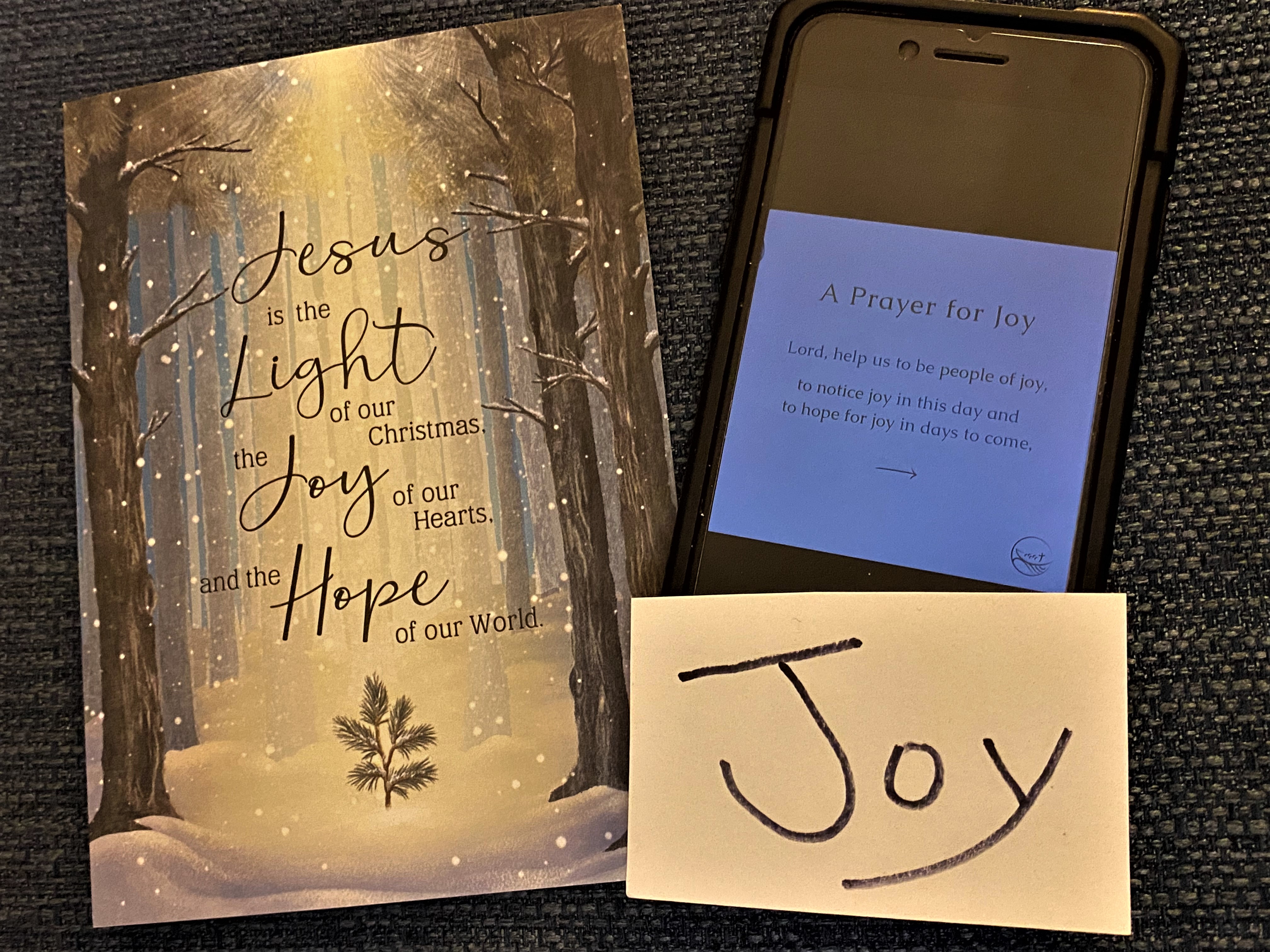
It dawned on me that I haven’t been “counting it all joy”. Or remembering that “the joy of the Lord is my strength”. Now my heart is resolved to be set on joy in 2022…no matter what.

Lord, help us to be people of joy,

to notice joy in this day and to hope for joy in days to come,

to look for light and share it with others this Advent season,

to see beauty in creation and the people we encounter,

to laugh heartily with childlike glee,

to feel true joy in your presence.     Amen.

Photo Credit: Prayer @inthecoracle, Instagram

5) The Last Days of 2021 – As may have been many of your experiences, we had people we know and love dealing with COVID in this last week of 2021. Still managed a sweet end-of-year. Hope yours was as well.


Now on to 2022!! Thanks for stopping by. It means a lot to me.

Bonuses:

Vimeo Video by Rodrigo Souza – Heart – with Nathan Mills, Beyond the Guitar

How to Stop All Procrastination: Dear You Trying to Do that Hard Thing in the New Year – Ann Voskamp (great piece on procrastination and perfectionism – both keeping us from presenting the gifts God’s given us)

Photo Credit: Samantha Reynolds, @Bentlily, Instagram (w/ permission)

52 Week Bible Reading Plan – Michael Coley

What is an Accessory Dwelling Unit (ADU) and Tips for Building One

Photo Credit: Facebook

5 Friday Faves – Epic Spanish Romance Guitar Cover, Languishing, From Sad to Mad, Christmas Events, and I.O.U.S Acronym on a Divided Heart

Christmas week is upon us! This past week’s Friday Faves finally:

1) Epic Spanish Romance Cover– Get ready for one of the most beautiful pieces ever written for classical guitar. The composer is unknown. The arranger for this piece is  Nathan Mills, at Beyond the Guitar. Enjoy.

[One of his subscribers on YouTube asked him to do for Niel Gow’s Lament what he did to the Spanish Romance. Here in his college days, Nathan plays that piece. Hope he does put his own touch to it again…all these years later. A funny sidebar to the piece below: Nathan’s sister wanted him to play this for her wedding. He said something to the effect that the whole title of the piece is “Niel Gow’s Lament For the Death of His Second Wife” so Nathan played other pieces instead. Didn’t seem a good fit for a wedding day. ]

2) Languishing– Who even knows what this is?! Well, author and organizational psychologist  Adam Grant does. He defines it as:

“Languishing is a sense of stagnation and emptiness. It feels as if you’re looking at your life through a foggy windshield. And it may be the dominant emotion of 2021.

As scientists and physicians work to treat and cure the physical symptoms of long-haul COVID-19, many people are struggling with the emotional long haul of the pandemic. It hit some of us unprepared as the intense fear and grief of last year faded.

In psychology, we think about mental health on a spectrum from depression to flourishing. Flourishing is the peak of well-being: You have a strong sense of meaning, mastery and mattering to others. Depression is the valley of ill-being: You feel despondent, drained and worthless.
Languishing is the neglected middle child of mental health. It’s the void between depression and flourishing — the absence of well-being. You don’t have symptoms of mental illness, but you’re not the picture of mental health either. You’re not functioning at full capacity. Languishing dulls your motivation, disrupts your ability to focus and triples the odds that you’ll cut back on work. It appears to be more common than major depression, and in some ways it may be a bigger risk factor for mental illness.

So what can we do about it? A concept called flow may be an antidote. Flow is that elusive state of absorption in a meaningful challenge or a momentary bond, where your sense of time, place and self melts away. During the early days of the pandemic, the best predictor of well-being wasn’t optimism or mindfulness. It was flow. People who became more immersed in their projects managed to avoid languishing and maintained their pre-pandemic happiness.” – Adam Grant

There’s a Name for the Blah You’re Feeling: It’s Called Languishing – Adam Grant

I’m very thankful to come across this article by Dr. Grant. He has much more to say both in the above piece and in his TED talk below. We can learn how to move from languishing back to flourishing.

The links below point to a varied and fascinating reach into languishing. Worth your time.

The Neglected Child of Mental Health – Bruce Isdale

The Neglected Child of Mental Health – Caron Leid

The High Cost of Calm – Why Relaxing Is So Much Work

I’m a Short Afternoon Walk and you’re putting way to much pressure on me – Emily Delany

How to Describe Our Pandemic State(s) of Mind – WNYC Podcast

Why You Need to Address Languishing to Retain Your Talent

3) From Sad to Mad – In the midst of a sweet time of year for some of us folks, I have found my capacity for sadness stretched super far. With a background in cancer nursing where loss was always part of life, and with all the hello-goodbyes in our overseas season as a family, and finally having lost very significant people in the last few years…sad is stretched. What has surprised me of late is how fast my “sad” goes to “mad”. I get angry at the losses – deaths to COVID, marriages broken, families estranged from each other, moral failures…and more. Mad is not where I want to be. “Righteous indignation” never stays righteous. It gets mean way too quickly.

Photo Credit: Pexels, Serkan Goktay

From Sad to Mad: How Suppressing Your Sadness Invites Anger – Joshua Nash

The piece above helped me immensely. Therapist Joshua Nash offers helpful steps (go there if this has become an issue for you as well). The main take-away for me is that I shift from sadness at a loss to anger at the injustice of it. What is better for my emotions, body, and relationships is to stay in the sadness. Feel it, examine its impact, mourn the cause. Sadness will subside. Moving into anger (as natural as it is in grieving a loss) mucks up the sadness. Anger is punishing (to yourself and others). As hard as staying in the sadness is, we (and our relationships) will be better for it.

Christmas Bitter and Christmas Sweet – Tim Challies
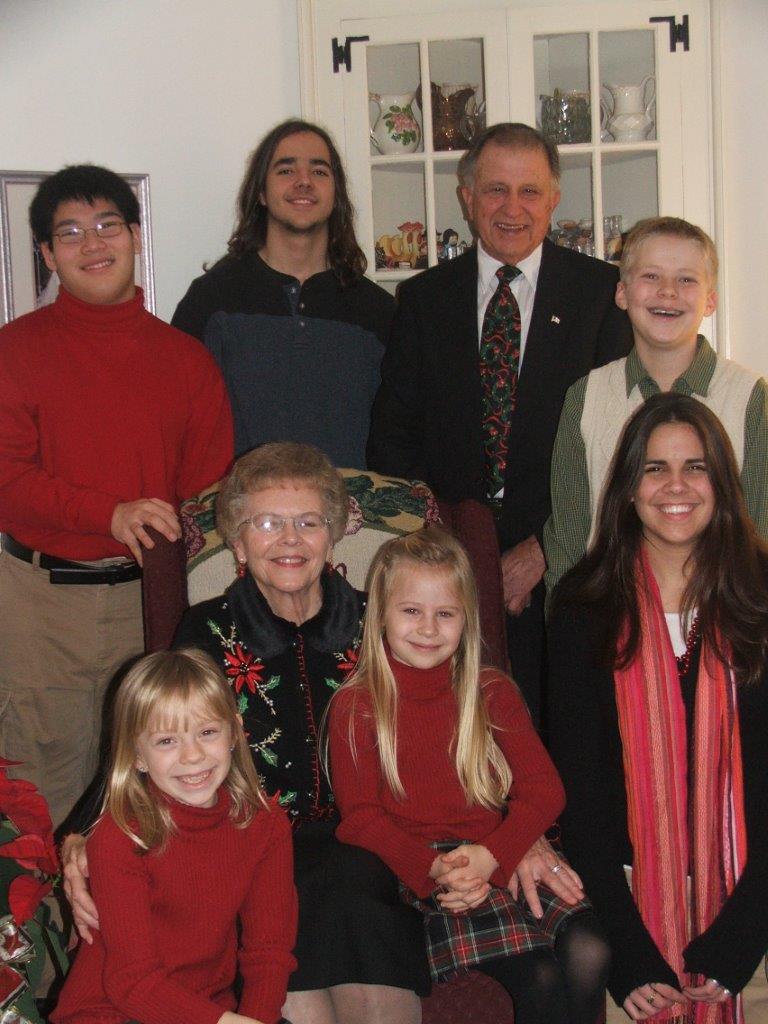
4) Christmas Events – December is practically glutted with events to celebrate Christmas. In a month when meditating on the mystery of a virgin birth and the long-anticipated coming of a Savior King, quiet is hard to come by. We make room for it…alongside all the fun of this month. Below is a photo array of just some of this past week for us.

  • Christmas Cookie & Ornament Exchange (us women):
  • Old-fashioned Carol Sing (mostly in our own basement):
  • VCU Holiday Gala with our favorite alum and his little son: 
  • Tacky Lights RVA:
  • Ethnic lunch out (#Mezeh) with our youngest:
  • Quiet times in front of the fire (quiet on the schedule AND with cookies & coffee):
  • Christmas with The Chosen:

[If the recording of Christmas With the Chosen: The Global Live Event becomes inaccessible, you can find it on The Chosen app.]

5) I.O.U.S Acronym on a Divided Heart – This morning I was struck afresh how little undivided attention is exercised in my day. Even my introverted husband will spill out all sorts of wise and wonderful words – when I am wholly there. Fixed. Not leaving the room mentally. These moments are more rare than I’d like to confess…all because of the struggle to focus.

Author theologian John Piper tackles this issue with our heart toward God. We struggle with all sorts of noise and clatter pulling us in directions that leave off the wonder of deeply knowing Him.

Photo Credit: John Piper, Quote Fancy

Piper uses an acronym that is hugely helpful in this (setting us in a positive direction for the New Year):

I.O.U.S. – [From John Piper’s Divided Heart article linked below]

“The embattled heart is typical of the Christian life. None of us has a consistently united heart in longing for God.”

  • “The letter I stands for incline. “Incline my heart to your testimonies,” we pray with Psalm 119:36. We ask God to take away resistance. We ask God to incline us toward God and his Word instead of away from God. And so we admit all our inclination toward God is a work of God. The psalmist would not be praying like this if the inclination was ultimately within our own power. If it were, he wouldn’t be asking God to incline his heart. We plead with God to take our hearts in his hands and to incline them, bend them, toward his Word.
  • Then the letter O stands for open. Psalm 119:18 says, “Open my eyes, that I may behold wondrous things out of your law.” We need God to work a miracle on the eyes of our heart so that we can see the truth, beauty, value of who he is right there in his word. If we are left to ourselves while meditating on God’s word, we will see nothing of his spiritual beauty and worth.
  • Then comes the third letter, U. It stands for unite. Psalm 86:11 says, “Unite my heart to fear Your name.” What an amazing prayer: “Unite my heart.” So what’s the problem that this psalmist is praying to solve? The problem is a divided heart.”

Plead Psalm 86:11 in prayer: ‘O God, unite my heart to fear your name.’Is It Normal to Have a Divided Heart? – John Piper

___________________________________________________________________________

Bonuses:

The Last Word – A one-minute video speaks volumes about our country, the media’s impact on us all, and one decision to step away. 62 y/o news commentator Brian Williams stepped away from a 28-year career with NBC/MSNBC. His last show was December 9, and he announced his resignation in this powerful short statement. We can all take something away from this, whatever our politics or nationality. There comes a time…

How to Engage a Parent Who Has Harmed You with Autumn – Podcast 23 – Adam Young Counseling

Photo Credit: Instagram, Adam Young Counseling

Women & Work Book Club – The Common Rule by Justin Whitmel Earley – Check out previous books reviewed and discussed with the authors.

Did Chevrolet Have to Make America Cry With Its New Christmas Ad? – Joe Cunningham

The Great Challenge of Every Marriage

9 Habits that the World’s Healthiest and Longest Lived People Share – Dan Buettner

Photo Credit: Pinterest

Photo Credit: Contemplative Monk, Facebook

5 Friday Faves – Beyond the Guitar Christmas, 4 Advent Habits with Justin Whitmel Earley, Advent Readings, Forgive & Remember, and Christmas Ads 2021

December is here! The days will fill up fast with holiday celebrations. Here are this week’s faves. Hope you enjoy them as much as I did.

1) Beyond the Guitar Christmas – We’ve been listening to Christmas music since October. Both worship carols and secular songs. Even our favorite guitarist has arranged and posted some Christmas songs – a precious few. I post them here for you to enjoy a listen.

Photo Credit: Beyond the Guitar

YouTube Video – 3 Christmas Movie Classics on Guitar – Beyond the Guitar

YouTube Video – A Star Wars Christmas – Classical Guitar Mashup – Beyond the Guitar

YouTube Video – Have Yourself a Merry Little Christmas (w/ Surprise Guest) – Beyond the Guitar [After the special guest enters the frame, he gets our full attention with the sweet music in the background.]

YouTube Video – December Song (Peter Hollens) – Classical Guitar Cover – Beyond the Guitar

YouTube Video – Amazing Grace – Beyond the Guitar [OK…not a Christmas song but one of my personal favorites of Nathan’s]

2) 4 Advent Habits with Justin Whitmel Earley – In less than a month, those of us who challenge ourselves with New Year’s resolutions will have our lists and resolve ready to go. When true habit change happens, it’s worth the work.

Several years ago, I had the opportunity to hear Justin Whitmel Earley speak. He wears many hats – attorney, writer, speaker, husband, dad. He spoke then on the habits of a simple life, introducing his fascinating book The Common Rule. His latest book is Habits of the Household. Both are excellent resources for examining our lives (home and work) with the goal of building habits of flourishing.

I was not surprised when he offered us Advent habits (practices, playlists, and readings). Earley offers all these free as part of his determination to do good with his lift. The books go deeper and are definitely worth the read. For now, check out the links and note below his recommended 4 Advent Habits – Kneeling posture in prayer, lighting candles, tuning to God as the first voice of the day, and pocketing our phones while waiting (restoring the art of waiting).

Photo Credit: Justin Whitmel Earley, The Common Rule, Advent Edition, 4 Advent Habits

Understanding True Habit Change and Rocking Your New Year’s Resolutions – Deb Mills Writer

3) Advent Readings – Advent means “coming”. We celebrate the coming of Christ, as Messiah, a helpless baby born of a virgin mother. God in arms. Miracle and mystery. Advent also commemorates the coming again of Christ in the last days. We look with hope to the day He will come again for His people, as Redeemer King.

The Advent Project – Biola University – Center for Christianity, Culture and the Arts – a daily Advent offering of art, poetry, and devotional from Scripture

This year, our church is working through an Advent study entitled Our Hope Has Come. Gathering in home groups, we celebrate Christ’s coming in our hearts and throughout history.

In our home, we have a shelf of Christmas books (for children and adults) that have been treasures to us through the years. We bring them back out at Christmastime, reading again the beautiful messages of hope we have in Jesus.

Do you have any favorite Advent books or online resources? Please share them in the Comments below. Thanks.

Hope for Hopeless Things: The First Sunday & Candle of Advent – Ann Voskamp [Advent readings start with this one]

4) Forgive and Remember – In less than a month, we leave 2021 behind. Hopefully without regret. I’ve written a lot about forgiveness this year. Partly because of seeing the pain of prolonged unforgiveness in some of my closest relationships. Too much hurt. Too deep the offense. Too unfathomable the possibility of reconciling. The best attempt is “I can forgive, but I can’t forget.”

Photo Credit: Pinterest

What if we don’t try to forget? What if we determine to remember, but remember in a way that moves us to healing…to true forgiveness.

Psychiatrist and writer Curt Thompson has become a favorite resource of mine in recent months. Books, podcast, and articles. This week, I discovered his piece Forgive and Remember. Intrigued by the title, I read it and found hope renewed in the possibility of forgiveness, even in chronic trauma or painful persistent memories.

I find Dr. Thompson very engaging, but if you aren’t used to his references to brain physiology, you may need to do a slow read. Here is his take on the importance of remembering, in company – with a sense of the presence of Christ in the pain, remembering in the skin of “the offender”, and remembering with people who care about you.

“Because I refrain from remembering, I prevent myself from eventually remembering additional parts of the story that I have likely thus far, albeit nonconsciously and unintentionally, ignored. For indeed, it is possible that forgiveness requires me to expand my awareness of additional realities that were in play at the time I was wounded. For instance, if I only pay attention to my hurt feelings, I never attune to my adversary’s own layers of brokenness; never consider their deeper story, the cistern of their own fear of their own deep shame from which emerged their hurtful behavior in the first place; the depth to which they “do not know what they are doing…” Through the hard, repeated work of my imagination, my awareness of the larger truths of the life of the one who has mistreated me begins to gradually diffuse the intensity of the emotional content of my anger and resentment.

“The work of forgiveness requires the remembering of the event in the context of others who assist you to remember the additional alternative realities that we so often forget. Imagining Jesus being with you in the moment during which and after you were mistreated begins to literally change the nature of those neural networks that represent the fury of the hurt you initially felt. Over time the remembering of the hurtful event alongside the memory of Jesus and others who represent him begin to diffuse the intensity of the electrochemical signals of the hurtful memory, and open up opportunities for you to begin to construct a different possible future between you and the one who has hurt you. We then begin to see that remembering the event is really about the process of remembering it differently. Remembering it in a way that is eventually utterly transformed and transformational…reminding us that we are not really ever alone.

This takes time, effort, and plenty of help from those with whom you are practicing together to forgive not seven, but seventy times; to forgive, even as your Father in heaven has forgiven you.

Forgiveness. Who would have thought that there would be so much freedom in remembering? Sounds like something we should never forget.” – Dr. Curt Thompson, Forgive and Remember

YouTube Video – However Long the Path Might Seem: It’s Christmas. Time to Reconcile. – Penny.

5) Christmas Ads 2021 – I love Christmas commercials (or ads). All the twinkle lights and unfolding family gatherings or intimate moments. The compilation of Christmas ads below are all from 2021. Many are from European stores/businesses. Take your pick.Photo Credit: Glossiplanka 360

  Best Christmas Adverts 2021

YouTube Video – This Christmas, Nothing’s Stopping Us – Tesco

YouTube Video – Unexpected Guest – John Lewis & Partners

YouTube Video – An Unlikely Friendship – Prime Video – Christmas Ad 2021

YouTube Video – The StepDad – Disney Christmas Advert 2021/Official Disney UK

YouTube Video – Imaginary Iggy – McDonald’s UK

YouTube Video – Christmas Is What You Make It – Hobby Lobby – Christmas 2021

YouTube Video – A Christmas to Savour – Sainsbury’s – Christmas 2021 Ad

YouTube Video – Coca-Cola – Christmas 2021 – Real Magic

YouTube Video – John Lewis 2021 Christmas Advert Alternative by NimbusBeds.co.uk – Stop Loneliness at Christmas [2020 revisited]

YouTube Video – Boots Christmas Advert 2021 – #BagsofJoy – Boots UK

YouTube Video – Ernste Christmas Ad 2021 – #BelieveInTomorrow

YouTube Video – 10 Emotional and Heartbreaking Christmas Ads EVER! Most Emotional Holiday Ads (19 minutes – Don’t miss these! Most are in languages other than English, but it won’t alter the beauty of the film story in these little ads. If you need a good and  cleansing cry for no reason except the beauty of a little story in an ad, your heart will be filled.)

YouTube Video – Top 10 Most Heartwarming Christmas Commercials Ever Made (Will Make You Cry) – 16 minutes. At least fast forward to the last few. So lovely.

_________________________________________________________________________

That’s it for this week. Please share a fave of your own from this week in the Comments. Thanks for stopping by. It is a joy for me to share in this together with you.

Bonuses:

Photo Credit: Ann Voskamp

[If you want to see The Chosen Christmas – The Messengers but aren’t going back to theaters yet, it will be streaming soon free to all. Available on The Chosen app and we’ll see where else when it is announced.]

YouTube Video – Christmas with The Chosen – The Messengers – Watch This Before the Christmas Special

A Thanksgiving Prayer from the Anglican 1662 Prayer Book – Marlo Huber Salamy Facebook Page

John Harper – the Night the Titanic Sank – Facebook Story

She Was Tired of Her Giving Her Kids Candy So She Wrote Her Mother-in-Law a Letter

Monday Morning Moment – As Adults We Still Need to Feel Safe, Seen, Soothed, and Secure

Photo Credit: Nicole Michalou, Pexels

[Adapted from previous posts on parenting here and here.]

American Thanksgiving brings families and friends together for a big day of food, football, and (hopefully) fun. Social media this week will be crammed (at least in the US) with images of smiling people leaning in to pack the frame. What we don’t see is those sadly missing from the frivolity. Maybe it’s too far to travel. Or work claims too large a chunk of the day. Or another family’s turn this year. Or possibly, unfortunately, Thanksgiving is too complicated a day to spend all together.

By its very name, Thanksgiving is about being grateful for what we have – the food, good health, the other bounties of life, but most especially, our relationships. How thankful we are to be in the land of the living with those we love.

How do we communicate our love? How do we experience love from each other? Is it complete joy behind those smiles or is it also courage. Showing up even when it’s hard sometimes.

I’ve been learning more about this whole brain and relationship thing from two brilliant psychiatrists Dr. Dan Siegel and Dr. Curt Thompson.

Dr. Thompson has written a trilogy of powerful, ground-breaking books – Anatomy of the Soul, The Soul of Shame, and The Soul of Desire.  He describes these books as exploring “how neuroscience relates to the ways we experience relationships, deep emotions like shame and joy and especially our own stories — and how we can process our longings and desire for spiritual connection with God and each other to live more fully integrated, connected lives.”

Such good books!

Thompson refers often to Dr. Siegel’s “4 S’s of Attachment-Based Parenting“. Those S’s relate to what we communicate to our children even as infants but throughout life. We want them to know they are “safe and seen” and to experience being “soothed and secure”. This is especially poignant when we introduce the word “No” into the great adventure of their lives. No…and discipline as they get bigger.

Now…fast forward to adulthood. OK…maybe your childhood (or parenting) had some tough spots or (for parents) regret. We can’t go back…we can’t fix what got broken. We can still learn to love well today. Siegel’s 4 S’s, referenced in his book The Power of Showing Up, primarily relate to parenting. However, he and Thompson both talk about these 4 experiences being needed throughout our lives. Take a look at the briefest explanations of them below:

Photo Credit: Dr. Dan Siegel & Dr. Tina Payne Bryson

As adults, we want the same things – to be safe (no “bracing for impact” in relationships), to be seen (truly known by those most significant in our lives), to be soothed (our emotions understood and acknowledged, without judgment, even when they are big and out of proportion), and secure (that no matter what, we are loved. Our persons are NOT leaving the room).

Whatever we may have experienced as children, we can alter our present. Whatever we did as young and overwhelmed parents, we can move, with love and insight, to a better situation with our kids. The past is just that…the past. We can be truly with each other, in the here and now…if we are brave and willing to be humble.

Something to think about during Thanksgiving week. Let’s don’t miss those people across the table or room from us. The ones we are missing…because for whatever reason, they are not there…let’s figure out how to show up in their lives, in meaningful, redeeming, and healing ways.

Have a blessed Thanksgiving Day with those you love…whether it’s your holiday or not. Thanks for showing up here.

The 4 S’s of Attachment-Based Parenting – Daniel J. Siegel – Podcast

The Power of Showing Up – Daniel J. Siegel, MD & Tina Payne Bryson, PhD

Mindful Parenting: 4 S’s of Secure Attachment – Esther Goldstein

The Neurobiology of Attachment to Nurturing and Abusive Caregivers – Regina M. Sullivan, PhD

Monday Morning Moment – Living Between Adult Kids and Older Parents

God put us in families. All of us.

God put me in the middle of boys with a mom who loved us completely and a father of whom I have little memory. His relationship with us was not one of outright abuse but neglect and eventual abandonment. When I was five, my exhausted mom divorced this never-working man. She  would later explain that action as simply “just one less mouth to feed”. She soon after came back to faith in Christ and brought us with her (unchurched until then). Our dad had long since disappeared from our lives.

Fast forward to the present: married to a man who deeply loves the Lord and loves us well also. We have three adult children and two added by marriage, and now four precious grandchildren.

All our parents (including a beloved step-dad) are gone except for Dave’s exquisite praying mom.

Sandwiched between adult kids and older parents is where we are, and I’m grateful. In fact, I think about our kids and their littles (and some of you) now in this same season, just a different generation. 

The room is delightfully crowded (not without challenge) with multiple generations – each bringing extended families of their own. So many faces and so many voices.

Every family member (and each of us in that family) has great value to God. His desire for us is to bear  the fruit of His love (Galatians 5:22-23) – making it beautifully tangible to others. He is with us in this.

What if our parents made life hard for us either by trauma or, as adults, by intrusion or neglect? Or what if we find ourselves in awkward places in our adult children’s lives? These “what if’s” make us want to pull ourselves out of obedience to God, as we feel justified by our pain to distance ourselves from some in our family. The ripple effect of pulling away is wide-reaching in a family. Wider than we can imagine.

Even when relationships are healthy, the heavy responsibility of parenting young children puts its strain on our precious adult children. We feel the pull – torn between kiddos and our olders or others (sibling families, too). We also model for next generations what family looks like. How we handle the hard is quite probably how they will handle the hard.

We all choose, consciously or not, from among four ways to engage with or disengage from our families.

  1. Embrace. We can trust God with the families He has given us. We can love them well. We forgive and seek forgiveness. We spend time with each other and attune to how God sees them. We who share adult space try to find the balance of loving each other well without our own preferences getting in the way. The older ones will only be with us for a moment. They have stories and history and lives that matter. Our younger ones also grow up and have their own families and life pressures. We extend ourselves in both directions – up and down.
  2. Debase/Disgrace. Sometimes members of our family wrong us or another beloved family member. We “triangle” talking about them with others, without them being present. Their behavior may warrant our disdain. We are tempted to debase them privately or disgrace them publicly. However, God is not finished with them or they wouldn’t still be here. Wisdom is to take our sorrows to God and appeal for Him to help us love these hard-to-love ones. He is able. It helps to remember we may also be the ones not so easy to love. [I forget that sometimes.]
  3. Replace. We are tempted to completely replace hard family members with friends. Adult friendships are such a gift from God. They fill in empty places in our hearts. They can actually help empower us to love and live like Jesus with these family members. Or they can usurp their place in our lives. Friends, help bolster our resolve, as we choose to “stay in the room” with family members. Let’s be that one who is not going anywhere – that picture of Christ for these.
  4. Give Grace. This is similar to “Embrace” but with God-guided boundaries in place. The Word is full of instruction, like Colossians 3:12-14. Living between olders and youngers, I want to be that one who gives grace both ways. Speaking love often and always. Not judging or applying pressure. We can choose to honor one another, which, in turn, honors God. Giving grace includes giving grace to ourselves.

Photo Credit: Facebook, Gods Armour

 Do I get this wrong? All the time. We are works in progress. God’s door of healing is always open to us.

Photo Credit: Samantha Reynolds, Bent Lily (w/ permission)

[One last pic – my mom, our youngest son, and me sandwiched between them & behind the camera – wishing I could roll back the years to when she was still here. Embrace & give grace. The years rush by.]

5 Friday Faves – “Fly Me to the Moon” Finger-style, Costly Grudges, Building Focus, “Don’t Leave Crumbs”, and Fall & All

Hi All! Friday Faves on a Monday after a busy Friday-Sunday weekend. Go!

1) “Fly Me to the Moon” Finger-style – After Nathan posted his Squid Game medley, he was asked to do a stand-alone “Fly Me to the Moon”. Here it is! The jazzy, up-beat rendition is so fun!

2) Costly Grudges – Is there someone you struggle to like or be in their company? Would you say it’s a grudge, either originating from you or that person? Grudges rupture relationships. They have a negative impact not just on that relationship, but potentially on others as well. Not to mention, their impact on your own health.

Photo Credit: Pinterest UK

Writer Tanner Garrity has written a list of 100 Ways to Live to Be 100. #66 is “Don’t Hold a Grudge”. Here is his take below:

66. Don’t hold a grudge

Happy people live longer. Improve your happiness by practicing “epistemic humility,” an intellectual virtue predicated on the idea that one can’t ever know something for sure. It’s meant to help us admit our imperfections and forgive others. Sounds too good to be true in the 2020s? All the more reason to give it a try.”

When we start to feel a grudge brewing, or we make the first strike and cause the rift with another person, the situation is greatly helped by some measure of humility. We don’t know everything about what just happened. In the midst of a quarrel, assessments are feverishly being made and the tendency is that they favor one over the other. If we treat a disagreement with humility, with the understanding that we can’t fully know what is going on with the other person in the argument, then we stand a better chance of some sort of resolution.

Worth the effort…including the perk of adding to one’s longevity.

What Is Family Estrangement? A Relationship Expert Describes the Problem and Research Agenda – Kristina Scharp

3) Building Focus – Focus is like muscle; it has to be built through exercise. I struggle with attending issues. To come across some simple tasks to add to life and aid focus is a happy occurrence.

Photo Credit: Pexels

Author Eleanor Morgan presents How to Retrain Your Frazzled Brain and Find Your Focus Again. In her piece, she introduces the scholarly work of scientist Amishi Jha, author of Peak Mind: Find Your Focus, Own Your Attention, Invest 12 Minutes a Day.

“We can learn to focus better, but we need to think about attention differently. It is not something we can just choose to do. We have to train the brain like a muscle. Specifically, with short bursts of daily exercises.”Eleanor Morgan

Morgan posts some of the mental exercises that Dr. Jha prescribes, including the 5 tips below:

  1. Pay attention to your breath, and where on your body you feel it most: direct your focus like a beam of light. Do this for three minutes a day, for a week.
  2. Integrate this technique into everyday life – for example, brushing your teeth. If you’re thinking about your to-do list as you’re scrubbing, bring the light back. Focus on the sensations.
  3. A lot of people report that their mind is “too busy.” Your job is not to stop it – your job is to exist with it, and to place your attention back where you want it.
  4. Ignore “mindfulness myths”: you are not “clearing your mind.” This is an active mental workout.
  5. There is no “blissed-out” state you are aiming to experience; in fact, the whole point is to be more present to the moment. – Eleanor Morgan

How to Retrain Your Frazzled Brain and Find Your Focus Again – Eleanor Morgan

I love the idea of being present in the moment…rather than the angst of the past or the unknown of the future. Sure, we have to plan, but the present is a much-neglected experience, and it’s really the only one we truly have. Right this very minute.

I am focusing in on the now.

These Navy Seal Tricks Will Help You Perform Better Under Pressure – Stephanie Vozza

4) “Don’t Leave Crumbs” – So crumbs aren’t anything we want to leave behind (unless you are the fairy tale pair, Hansel and Gretel. The wildly successful actor and author Matthew McConaughey talked about “crumbs” in a university commencement speech he gave in 2015.

“Don’t leave crumbs,” he says. “What are crumbs? The crumbs I’m talking about are the choices we make that make us have to look over our shoulder in the future….They come in the form of regret, guilt, and remorse – you leave ’em today, they will cause you more stress tomorrow, and they disallow you from creating a customized future in which you do not have to look over your shoulder.”Matthew McConaughey

Matthew McConaughey’s 5 Rules for a Good Future – Niklas Göke

Relationally, this reminds me of an adage “Keep your accounts short”. This means that your name is safe on my lips, and that I will make a practice of refusing to think ill of you. Keeping accounts short. Leaving no uncomfortable crumbs behind us in relationships or work/play practices.

In McConaughey’s speech he also gave 5 pieces of wisdom:

  • Don’t fall into the entitlement trap.
  • Never say anything is “unbelievable”.
  • Seek joy, not happiness.
  • Define success for yourself.
  • Make decisions you’ll be happy about tomorrow.

He gives more rationale and commentary in the larger speech (linked above). He also used these same points in another talk, incorporating his faith as well. The messages of both seem blended in an artful (10 minute) video. Below.

5) Fall & All – It is my favorite season – Fall or autumn. I just want to close with some images of this brief and beautiful repose between Summer and Winter. It goes so fast and I am savoring it every way possible (except for adding anything pumpkin-flavored to coffee. I just can’t).


For me, Fall ushers in Christmas (American Thanksgiving sitting right in between), so I’m completely ok with the mix of all this beauty.

.

That’s the Faves for this week. Thanks so much for stopping by. You encourage me…put your own Faves in the Comments below. Until next time.

Bonuses:

Photo Credit: Facebook, Hallmark Channel

6 Steps to Better Communication – Mental Health Mama

The Good Part About “Waning” Immunity – Katherine J. Wu

Interoception: The Hidden Sense that Shapes Wellbeing – David Robson

How to Identify Your Shadow Emotions and Why You Should – Rachel Fairbank

Monday Morning Moment – Gently Confronting the Conflict Generated by Reductionism (You Want to Know this Word)

Photo Credit: Quote Master

Today, I want to talk about reductionism – how we reduce a whole person into one part – one facet that we take great pleasure in mocking or deriding. Thinking highly of ourselves in the process. Don’t miss this! Here we go.

Pierce Taylor Hibbs is a writer, teacher, and gentle theologian. I came across a piece he wrote this past week, and it has brought such clarity to a murky subject. The piece is “Reductionism: the Disease that Breeds Conflict”.

Don’t let that big word reductionism put you off. Hibbs will define it, but first, let me give you a scenario or two where we have seen this in action (and when we might have added to the fire of such a situation). We’re at a party of peers. We feel comfortable to just say what we think about any number of people, policies, or processes. No filters. What kinds of things pop up in those conversations? Mind you…they all are met with heads nodding (or shaking), laughter, and attitude. Mocking derision even.

Who are we in this conversation? The chief propagator of said comment. The amused and agreeing audience. The one uncomfortably close in character or worldview of the one being mocked. The one not necessarily close to the subject of putdown, but not comfortable with the putdown…or the people enjoying it.

Now…the definition of reductionism before we weigh in on our conversation topics. Hang in there. it’s so worth it. Pierce Taylor Hibbs on reductionism:

“Reductionism is the stepchild of our desire for mastery (complete control), which emerged from the ancient evil of autonomy Autonomy is the idea that you’re completely and utterly independent…You want full control. The thing is, you can’t have that. . . you know, because you’re not God. You’re limited by nature. That’s how you and I were made. But we’re so stubborn that we don’t accept limitation. We refuse to think we can’t master our own lives. So, within what John Frame calls the fantasy world of autonomy, we chase after mastery, and when we can’t get it (again, we never will get it), then we pretend to have it with . . . reductionism…If we can’t master our lives, then we can simplify them and make it seem as if we’re in full control. We can reduce the complexity of our own lives, the people in them, and the problems that surround us. We can take, in other words, an issue or person with a thousand dimensions and pretend that there’s only one dimension. That’s reductionism. Put differently by my friend and teacher, [Vern Poythress], reductionism happens when people “reduce the world to one dimension of the whole. . . . But reductionism is poverty-stricken, not only in its threadbare endpoint consisting of only one dimension, but also in its explanatory power.””

Reductionism, in short, is when people make something a lot simpler than it is. They do this for the sake of convenience, or egoism, or to build their own self-righteousness. There’s no shortage of motives, but I can’t think of any that are wholesome. And note what Poythress ended with: it lacks explanatory power. Read: it doesn’t actually explain much...In our frustration we reduce people, problems, and situations to manageable bits (ignoring swaths of information) in order to convince ourselves of our own mastery. You can start to predict why this is so destructive.”

Reductionism hurts people because it flattens them. It takes a human life (or a situation, political topic, etc.) and crushes it down to a single dimension, ignoring all of the others. That not only fails to align with reality (reality is always more complicated than we could ever dream); it insults people by making judgments based on that single dimension.”

OK…here we go on the topics “reduced”:

Vaxxers/non-vaxxers. Maskers/non-maskers. Cool/Not Cool. Liberals/Conservatives. Republicans/Democratics. Pro-lifers/Pro-Choice/Abortion. Boomers/Ageists. Patriot/Isolationist. Racists. Privileged. Stupid. Misogynist. Hurtful. Offensive. Homophobe. Sexist. Small-minded. Evangelicals. Enneagram or other reductionist labeling.

We can reduce a person into a box of one word or phrase. What is up with that? Nothing good. It’s handy for a laugh at a party or a sympathetic ear who “gets” people “like that”.

It is not reality. It may be entertaining, but it furthers the accepted divide between people. It degrades not only the subject of the derision but the audience, as well as the person speaking. Hibbs suggests a solution for those who want one:

“Reductionism is killing us because it’s killing our conversations. It’s killing open, receptive dialogue. It’s polarizing the nation, even the world. For our part, we have to start identifying and assaulting reductionism whenever it crops up in our conversations…But what are we supposed to do instead?…We need God and other people to understand not just the world, but even ourselves truly. We need two things: humility and a withholding of assumptions.” – Pierce Taylor Hibbs

He goes on in his piece, giving specifics of how humility and withholding assumptions work together to soften the elements of conflict, even to the possible healing of rifts. Hibbs is a Christian theologian and speaks eloquently of the life of Jesus in his people in the call to a ceasing of conflict. Not just avoiding conflict, but confronting reductionism. Whatever your faith, his counsel is sound in acknowledging the sting of our current biting and devouring social culture. And resisting the temptation of engaging in it…but not be just keeping silent and existing the conversation. Definitely worth our consideration.

Photo Credit; Janet Mock, Audi Quotes

Why Do We Have to Make Others Wrong to Be Right? – Lolly Daskal

Personality Tests: Why Are We Obsessed with Labeling Ourselves? – Sara Abdelbarry

[The above video is fascinating. Wow!]

Bullying: Scoffers, Mockers, Ridicule, and Scorn in the Bible and Today – Kelly Ann Christensen

Worship Wednesday – I Need Thee Every Hour – Fernando Ortega

Photo Credit: Heartlight, Phil Ware

Then God said, “Let Us make man in Our image, after Our likeness, to rule over the fish of the sea and the birds of the air, over the livestock, and over all the earth itself and every creature that crawls upon it.” So God created man in His own image; in the image of God He created him; male and female He created them. God blessed them and said to them, “Be fruitful and multiply, and fill the earth and subdue it…”Genesis 1:26-28

Jesus explained, “My food is to do the will of Him who sent Me and to finish His work.”  – John 4:34

Jesus said, “Father, forgive them, because they do not know what they are doing.”Luke 23:34

We are needy people…by design.

Years ago, husband Dave and I led a Singles Sunday School class. These young people were top of the heap – well-educated, gifted, socially astute, emotionally intelligent, independent, and committed Christians. Yet, no matter the Scripture being studied that day, Dave always managed to insert two concepts:

  • We are all worms.
  • Obedience is always where we want to land.

I was like (on the first point) “Dude! What about we are fearfully and wonderfully made“?! [Psalm 139:14] [Years down the road, “dude” and “worm” would remind me of this exclamation as “worm” in Arabic is “dooda”. Sorry for the rabbit trail.]

As for the second point – the “O” word…no right or reasonable objection there. Period. Full stop.

Being Needy Is Not a Fault – It Is a Design – Christine Chappell

Yesterday I came across an Instagram story with Jackie Hill Perry talking about our inadequacy and deep need for God. If you know Instagram stories, they seem to last a minute. I wanted to hear it again, but couldn’t. So I’ve been thinking about it and praying since about it. We all have head knowledge about our dependence on God, our need for Him…it just doesn’t always settle into our hearts.

We (ok…is it just me?) go through too much of life with Paul’s affirmation that we have everything we need for “life and godliness” without remembering the context – dependence on His power and through knowing Him, in His glory and because of His goodness. [See verse below.]

His divine power has given us everything required for life and godliness through the knowledge of him who called us by his own glory and goodness.  2 Peter 1:3

Wow! That right there.

Our days are busy and fraught with care (different depending on each of our situations, but its there…and draws our focus). God does  expect us to show up for work, for our families, for the church, for our communities…That is necessary…but not sufficient.

“Necessary but not sufficient”

“What we do is necessary but not sufficient. We are fearfully and wonderfully made and have substantial creative capacity and we can do a lot of neat things. God expects us to use our abilities, giftings, and capacities, and to work at it as hard as we can. However, all those things fall flat apart from our dependence on God – if He doesn’t breathe His life into our efforts and make them accomplish His purposes. Our work is necessary but not sufficient. He is sufficient.” – Dave Mills

We go to God each day for those things outside our power (cancer, COVID, conflict), but we forge ahead on what we think we can accomplish on our own (including growing our own character and that of our children). What then do we miss, in treating prayer and time in His Word as a sprinkling on our day? A seasoning rather than the meat. [See again John 4:34 above.] We miss God.

We miss God in working out our budgets, in counseling with a friend in crisis, in trips to the grocery store or playground, in studying for an exam. We miss His infusion of His own character, His own wisdom, His own wonder. We wear ourselves out walking in the flesh with just a touch of Him, even though we are indwelt by the very Spirit of God.

Whose image do we take into the public square? His or our own frail self? Preaching to the choir of one here (unless you are singing along with me).

Jesus taught us by His example that He revered the Word of God, and lived in obedience to It, and basked in the Father’s presence, and understood how being human can distract from the greatest reality in our lives – a holy yet approachable God. Even from the Cross, in His greatest need, He prayed for those who participated in the unspeakable. They didn’t know, He said (Luke 23:34).

We know.

“My grace is sufficient for you, for power is made perfect in weakness.” So I will boast all the more gladly of my weaknesses [of my imperfections], so that the power of Christ may dwell in me. For when I am weak, then I am strong.” – 2 Corinthians 12:9-10 

“You see, our power as Christians is not in our strength, our own performance, or our own striving towards perfection. Our power comes when we can admit our vulnerability, our weakness, our neediness, and our dependence on the Lord. It was when Paul accepted his weaknesses and his imperfections that he discovered how strong he was in God.  

It’s when we are at our wits end that we discover that His ways are higher than our ways. It’s when we can’t do something that we discover He can. It’s when we realize the power is not in us that we find our strength in Him. Our imperfection is the pathway to the grace of God. It’s in that connection that we find His grace is indeed sufficient, even in spite of our weaknesses. –  Delman Coates

God chose what is foolish in the world to shame the wise; God chose what is weak in the world to shame the strong; God chose what is low and despised in the world, even things that are not, to bring to nothing things that are, so that no human being might boast in the presence of God.  –     1 Corinthians 1:27–29

If you feel your neediness on a regular basis, know that you are in good company. All of us are needy, all of the time—we’re just too busy being “independent” to realize it.  We easily forget that neediness is inherent. Take a high-level view of the concept by starting with our neediness in the sight of God. Think back to the garden of Eden and all that Adam required from the Lord to live. Everything Adam had, he was given. Everything he possessed—even his very body and breath—came from God (Genesis 2:7). This truth hasn’t changed since the fall.

Think about it: what do you have at this moment that God did not give to you? …There’s no kidding ourselves: we are utterly dependent upon Someone else for all the things, all the time.

Man’s reliance upon God is a healthy relational construct, not an annoying character flaw. Our neediness is forged out of God’s good design (Genesis 1:31) and is meant to foster fellowship, faithfulness, and fruitfulness. In that sense, dependence upon God and interdependence upon each other is a blessed design meant for our good and God’s glory.Christine M. Chappell

Photo Credit: Heartlight

Be encouraged as I am (after hearing Jackie Hill Perry’s brief story). How different our lives are when we see God as He truly is and see ourselves in proper relationship to Him and each other (my definition of humility, actually). Our lives are small really, no matter how cool, independent or self-sufficient we think we are. How much more beautiful to receive that smallness as a gift in our lives as we walk in the fullness as His increase (in our decrease) (John 3:29-30).

Praying without ceasing (1 Thessalonians 5:16-18) is cause for rejoicing and gratefulness. I want more of this…more of Him. AND our children and grandchildren need to know they don’t have to grow up so grand and gifted…they can grow up knowing Him in all His power and glory and goodness!

Worship with me to this wonderful old hymn by Annie Hawks. OR if your heart would prefer a newer version then sing with Matt Maher’s Lord, I Need You.

I need Thee every hour, most gracious Lord;
No tender voice like Thine can peace afford.

Refrain:
I need Thee, oh, I need Thee;
Every hour I need Thee;
Oh, bless me now, my Savior,
I come to Thee.

I need Thee every hour, stay Thou nearby;
Temptations lose their pow’r when Thou art nigh.

I need Thee every hour, in joy or pain;
Come quickly and abide, or life is vain.

Oh, bless me now, my Savior,
I come to Thee.

[If you prefer the newer pink and blue background, live version of Lord, I Need You, with lyrics, here it is.]

Worship Wednesday – Deep Disappointment – Lord, I Need You – with Matt Maher & Audrey Assad – Deb Mills

YouTube Video – I Need Thee Every Hour – Anthem Lights

Needy People, Mighty God – Steven J. Cole

I Need You Every Hour – Tom Norville

Photo Credit: Heartlight

Monday Morning Moment – Indistractable…What?!

Photo Credit: Pixabay

Being distractable is one of my character flaws…I guess. For awhile, I had decided it was a super-power. In that, I could jump from activity to activity or person to person, and still somehow be fully present…at least for the moment. Sigh… Interruptions or a busy schedule were not problems for me. In fact, they made for a fun and energizing day. Or so I thought.

There was a time in my life, before marriage, that my closest friends even did an intervention on me. Seriously. Maybe it was because I over-scheduled life like a crazy person (meaning that I actually believed people wouldn’t be put off by my having three different activities, with three different groups of people, in one evening).

So now I’m older and wiser. Chuckle, chuckle. I have the time but not the energy for over-packing my schedule. Nor do I have the mental capacity for deep focus in the face of all the “pings, dings, and rings” of life.

Enter tech-savvy, habits guy Nir Eyal. I caught a 25-minute podcast with him speaking on how to become indistractable. It was illuminating.

In Eyal’s book Indistractable: How to Control Your Attention and Choose Your Life, he removes technology as the distractor in our lives and points to the emotional states that actually drive us. Those uncomfortable emotions (boredom, loneliness, uncertainty) that we hope to silence by simply exiting whatever we’re doing at the moment and take up a different, potentially mind-numbing activity. Like scrolling through social media.

Distractability may make us feel better for the moment, but it doesn’t help us become the persons we want to be. It is a soother but not a life-sorter. It is a behavior, and what needs changing is less the behavior than what’s behind it – identifying the triggers that move us to be distractable and applying new habits to help us stay focused. . We want to be people others can trust to do what we say we will do…to have genuine integrity. How we grow in this area is the point of his book.

Being indistractable means striving to do what you say you will do. Indistractable people are as honest with themselves as they are with others. If you care about your work, your family, and your physical and mental well-being, you must learn how to become indistractable.” – Nir Eyal

Photo Credit: Pixabay

“LOOK FOR THE DISCOMFORT THAT PRECEDES THE DISTRACTION, FOCUSING IN ON THE INTERNAL TRIGGER”.Nir Eyal
Eyal talks about time management as being pain management. When we understand the discomfort which triggers us to try to escape, we can then build in a tripwire to short-circuit the distraction.
Photo Credit: Pixabay
“Ten-minute rule.” If I find myself wanting to check my phone as a pacification device when I can’t think of anything better to do, I tell myself it’s fine to give in, but not right now. I have to wait just ten minutes.” – Nir Eyal
Two of the many tools Eyal encourages are 1) effort pacts and 2) identity pacts. With the effort pact, he uses an app (the Forest app, for one) to help him keep commitments to himself. He also prescribes having coworkers, friends, or family members come alongside and help you press into a project or task until you’re finished. Accountability helps.
“Effort pacts make us less likely to abandon the task at hand. Whether we make them with friends and colleagues, or via tools like Forest, SelfControl, Focusmate, or kSafe, effort pacts are a simple yet highly effective way to keep us from getting distracted.”Nir Eyal

Eyal’s identity pact is an intentional reflecting on the person you want to be, and then using that identity as its own motivator. For me to say, “I’m a writer” requires a certain measure of discipline, with habits in place to help me actually write. If we begin using the language of identity, an accountability is applied that helps us be the person we say we’re becoming. “I am not as distractable as I once was”. “I am not side-lined by negative emotions anymore.” “My values include majoring on family, so I focus on my work at work, in order to be all there at home”.

“Only by setting aside specific time in our schedules for traction (the actions that draw us toward what we want in life) can we turn our backs on distraction. Without planning ahead, it’s impossible to tell the difference between traction and distraction.” – Nir Eyal

Lastly, I’ll mention Eyal’s use of time-boxing over a to-do list. He doesn’t deny that a to-do list is helpful, but it has its own fails built in. We default to finishing what’s easy or urgent, and, in fact, rarely are as productive as we might think we should be with a to-do list. Also, there is always this guilting about what we didn’t complete.

He actually fills a time-box calendar with what he wants to accomplish in a day. He includes things we might not consider in a to-do list like prayer, fitness, reflection, time with family, etc.

Photo Credit: Pixabay

When we have a time allotment (not just how much time something should take but when we will work on it), we are more apt to focus on just that. Eyal does encourage multi-tasking, but only if it is done using “different sensory channels”. By this, he means bundling activities that can actually be done together without diminishing either. An example is watching TV (or listening to a podcast) while on a treadmill. We have a neighbor who reads while walking. That has always impressed me, but it can be done.

Fitness coach David Rosales does a great service (to those of us who haven’t yet tackled all of Eyal’s prescriptions) by giving his own takeaways from Indistractable (including a few I mentioned above):

  1. Don’t rely on willpower – put systems in place to help you succeed.
  2. Timeboxing – rather than a to-do list, block out time on your calendar for specific tasks.
  3. Do Not Disturb as Default –put in place practices that keep you from being distracted by your phone.
  4. Batch everything – batch actions (and distractions) to avoid having your flow disrupted. [From email to Instagram]
  5. Ulysses pact – set up an app or timer or work out an arrangement with someone to help you be accountable.
  6. Take a growth mindset – bit by bit, you are learning how not to be foiled by distractions. It is a process.
  7. Identify pacts – start identifying yourself in ways that communicate you are not distractable. Make the decision of what kind of person you are determined to be, and decision fatigue is removed. You learn to just say “no”.

What do you think about all this? Maybe you are a person of focus. Please, if you are, comment below on how you make that happen.

Nir Eyal Website

Nir Eyal: Mastering Indistraction

Nir Eyal on Taking Control of Technology to Become “Indistractable”    [25-minute video]

Working Parents? Here’s How to Raise Indistractable Kids with Nir Eyal – Nir Eyal and Vanessa Van Edwards – excellent resource

Read James Williams’ excellent review and critique of Nir Eyal’s book Indistractable.

How to Do Timeboxing Right – David Sherwin

How Timeboxing Works and Why It Will Make You More Productive – Marc Zao-Sanders

The Tail End – Wait But Why – Tim Urban

Quotes from Nir Eyal’s Indistractable

PDF Summary – Indistractable – Nir Eyal