Category Archives: Disciplines

5 Friday Faves – New Year’s Resolutions, Habit Planner, Year-End Review, Word for the Year, and the Last Days of 2021

2021 is rapidly winding down. Whew! Here are my Friday Faves to get us ready for the new year…hopefully a joyful one!

1) New Year’s Resolutions – 2021…the end is in sight. What do we do with this new year ahead? Do we revisit those habits we thought about changing up in this tumultuous year? Maybe so. Or maybe we didn’t alter course so much for good reason. Let’s give pause a moment and consider…

Photo Credit: David Lose

Monday Morning Moment  – 2021 Come On! – New Year’s Resolutions

Are We Doing New Year’s Resolutions After a Year as Lousy as 2020? There’s One I think We Need More Than Ever – Heidi Stevens

How to Make Healthy, Attainable New Year’s Resolutions During COVID-19 – Ashley Welch, Healthline

Are You Making a New Year’s Resolution This Year? Readers Weigh In – Sarah Fielding

I take New Year’s resolutions very seriously. They have served me well through the years in shaking up troublesome habits as well as galvanizing better ones. New (or restored) habits that nurture the body, the spirit….and, when possible, family and community.

New Year’s resolutions are not always exercises in futility. They can be excellent pathways to help us get off to a strong start into the next year. Some of my family and friends treat resolutions with disdain…they never work; they never last. Oh, but not always!

They are really very energizing. Whether we meet our goals or not, there is great promise within the resolution for resetting our thinking. A keen sense of self, or self-awareness, aids in our understanding of habits and true habit change.

Without knowing it, I have actually used a practice of habit change that Ken Sande writes about on his blog, Relational Wisdom 360. He first influenced my life years ago with his work on conflict resolution through his Peacemaker Ministries. He is a gentle guide in many of the issues that complicate our lives.

His article on Seven Principles of Habit Change came at a great time. Sande talks quite kindly about how we develop habits and what it takes to change them. His first principle of habit change gives us a look at the cycle of habits – the cue, the routine (or response), and the reward. I actually followed Ken Sande’s principles below (without knowing the wisdom of it).

  1. Every habit has three parts: a cue, a routine, and a reward.
  2. You can change an undesirable habit by keeping the cue and reward but learning a new routine.
  3. The best way to overcome the temptation to revert to old routines is to have a detailed action plan.
  4. Habit change builds momentum if you can change a single “keystone habit” and then continue to build on consecutive “small wins”.
  5. Will power is like a muscle: it can be strengthened and yet needs to be exerted strategically.
  6. Faith is an essential part of changing habits.
  7. Habit change is more likely to occur within a community (even if it’s just two people).Ken Sande

Self-awareness is a huge factor relating to habit change. I can see that more now having come through seasons of looking at my own habits.

“Self-awareness is defined as conscious knowledge of oneself; it’s a stepping stone to reinventing oneself, learning to make wiser decisions, and helps you tune into your thoughts and feelings. So often we place blame on externalities because it’s the easiest excuse, when in fact we should be thinking about our thinking, reflecting, trying on different perspectives, and learning from our mistakes.”Paul Jun

It is possible to affect true habit change if we are willing to take a studied look at ourselves – our awareness and our engagement with making choices/decisions and within relationship. I used to think that self-awareness was morally charged, i.e., it drove us to become more self-centered. That doesn’t have to be the case. When we take time to really examine where our minds go, through the day, we can train our thinking toward what matters most – related to people, resources, and life purpose.

New Year’s Resolutions and Reality Checks – Wally Bock

When we are willing to do that, New Year’s resolutions can become much more transformative than just a few weeks of good intentions. These habit change principles can apply to anger issues, pornography, other addictions, and pretty much any habitual process that negatively affects your work, relationships or general peace of mind.

Consider these questions as you think on resolutions for 2022:

  1. What do I want to keep from the changes I made to cope with the pandemic?
  2. What do I want to reclaim from the pre-pandemic time?
  3. How would I “build back better” if I were in charge of the world or my neighborhood?Katherine Arbuthnott

Four years back, our pastor Cliff at Movement Church challenged us to commit to some resolutions to the Lord…together [podcast of 12/31/2017 here].  I have kept the resolutions made that day in a visible place, to be reminded of the good change in life, and the struggle… I still have them in view…four years out. Still relevant to now. For 2022, on it again…plus prayer for wisdom how to be creative and intentional, given COVID’s continued intrusion. And also added this year: writing my life’s story (capturing the memories and maybe restoring/refining some as I write).

Jonathan Edwards, the great 18th century preacher and theologian, definitely understood the importance of praying through and writing out resolutions that would inform his daily life. Over the course of several months, he composed seventy resolutions for life. You can read them here. The five resolutions I made during church on a New Year’s Eve are weighty enough for me…can’t imagine 70! Edwards just gives an example of a man who, even as deeply devoted as he already was, did not want to miss God in a busy life of ministry. Nor did he want to miss the people God placed in his life.

Resolutions help us to keep the main thing the main thing. Sure, we may struggle to keep our bodies and houses in order. Those are temporary situations. Where we hope most to be successful is in keeping our hearts tuned to what matters most. Going deep with God and others. Even in the face of a continuing pandemic...if we are ruthless and wise, and don’t give in to another year of listlessness and waiting.

We’ve already enough of that…coming up on two years.

I am resolved…

Photo Credit: Reformed Outfitters

Resolved – The Resolutions of Jonathan Edwards

Do You Want to Change Your Habits? – Relational Wisdom – Ken Sande

Habit Change is a Team Project – Ken Sande

Seven Principles of Habit Change – Relational Wisdom – Ken Sande

Make Habits, Not Resolutions – Justin Whitmel Earley

Why Self-Awareness Is the Secret Weapon for Habit Change– Paul Jun

RW Acrostics in Action– Relational Wisdom – Ken Sande

Ten Questions for a New Year – Don Whitney – Desiring God

Need Help With Your New Year’s Resolutions? – David Lose

Understanding True Habit Change and Rocking Your New Year’s Resolutions – Deb Mills Writer

2) Habit Planner –Anyone who knows the writing of Justin Whitmel Earley knows his commitment to a life well-lived. He is determined to live intentionally, not leaving the substance of his life to outside powers or sloppy habits.

Unlike resolutions, we actually become our habits. There are no changed lives outside of changed habits. And if we want to actually change, we need to take a sober look at where our habits are leading us.”Justin Whitmel Earley

Habits are the little things we do over and over without thinking about them. And the tiny and subconscious nature of habits makes them powerful. Why? Because they create our “normal.” Normal life is what stays with you from January through December. Normal life is what shapes your kids, your body, your schedule, and your heart.”Justin Whitmel Earley

His two books – The Common Rule and Habits of the Household – lay out a simple path for examining our current lives and then setting strategy for habit change. So accessible and engaging whatever our preferences for methods are. If spreadsheets help, he has one for you. If you need a more fuzzy-boundaried approach (that would be me), you can glean from his wisdom, and alter course accordingly.

Below are his own examples of the habit planner. I appreciate his heart so much. He helps us all he can (in his books and free resources):

Photo Credit: Justin Whitmel Earley, Screenshots

Habits of the Household – Habit Planner – pdf – Justin Whitmel Earley

Make Habits, Not Resolutions – Justin Whitmel Earley

Unlock the Power of Family Habits in 2022 – Justin Whitmel Earley

3) Year-End Review – Business writer Stephen Jones shares author Tim Ferriss’ practice of doing a quick past year review. Ferriss prefers this over new year’s resolutions, and Jones gives a quick snapshot of his 5 steps.

Below is Tim Ferriss’ guide for a past year review from his own blog (and podcast):

  1. Grab a notepad and create two columns: POSITIVE and NEGATIVE.
  2. Go through your calendar from the last year, looking at every week.
  3. For each week, jot down on the pad any people or activities or commitments that triggered peak positive or negative emotions for that month. Put them in their respective columns.
  4. Once you’ve gone through the past year, look at your notepad list and ask, “What 20% of each column produced the most reliable or powerful peaks?”
  5. Based on the answers, take your “positive” leaders and schedule more of them in the new year. Get them on the calendar now! Book things with friends and prepay for activities/events/commitments that you know work. It’s not real until it’s in the calendar. That’s step one. Step two is to take your “negative” leaders, put “NOT-TO-DO LIST” at the top, and put them somewhere you can see them each morning for the first few weeks of 2022. These are the people and things you *know* make you miserable, so don’t put them on your calendar out of obligation, guilt, FOMO, or other nonsense.

We do a year-end review but not in order to plan out the next year. Mostly to celebrate the year rapidly coming to an end and to reflect on how we might reorder the course of the next year (re the negatives).

A creative friend of ours put his “year-end review” into a cool video:

Photo (Video) Credit: Todd AO, Facebook

4) Word for the Year –A year ago, I read Debbie Macomber‘s book One Perfect Word. She tells fascinating stories of persons’ choosing a word to guide their year. Finishing her book and praying a bit, the word compassion became my focus. 2021 was a good year for that as we dealt with so many divisions over COVID, race, politics, etc. Compassion for all on both sides of each issue.

At first I wasn’t going to do “a word” for 2022, and then a rapid series of “coincidences” drew me to the word: joy. As this year ends, I’ve become negative and even a bit cynical. Still having faith in God but not so much in humans, including myself. Even after a year of compassion!!
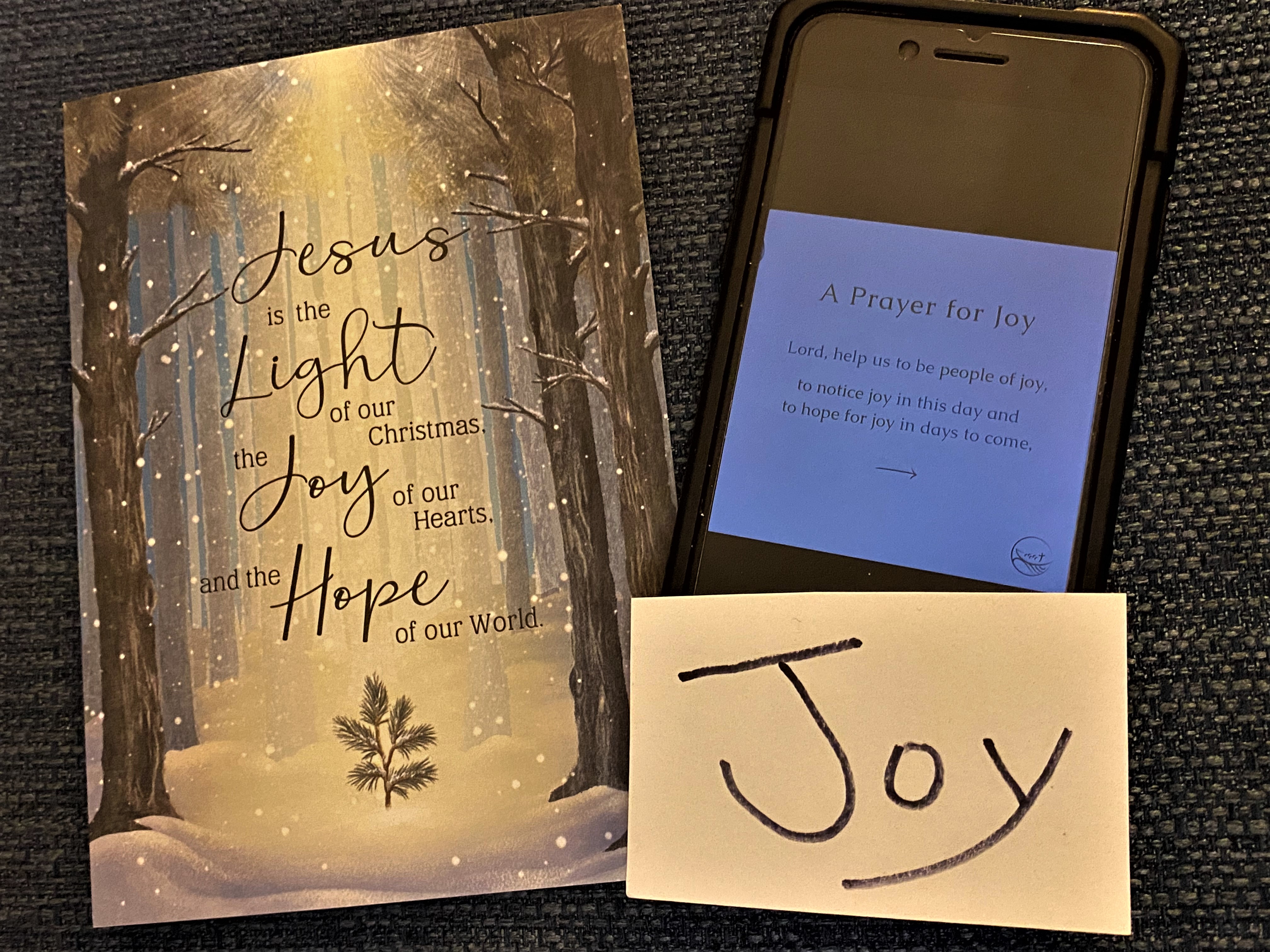
It dawned on me that I haven’t been “counting it all joy”. Or remembering that “the joy of the Lord is my strength”. Now my heart is resolved to be set on joy in 2022…no matter what.

Lord, help us to be people of joy,

to notice joy in this day and to hope for joy in days to come,

to look for light and share it with others this Advent season,

to see beauty in creation and the people we encounter,

to laugh heartily with childlike glee,

to feel true joy in your presence.     Amen.

Photo Credit: Prayer @inthecoracle, Instagram

5) The Last Days of 2021 – As may have been many of your experiences, we had people we know and love dealing with COVID in this last week of 2021. Still managed a sweet end-of-year. Hope yours was as well.


Now on to 2022!! Thanks for stopping by. It means a lot to me.

Bonuses:

Vimeo Video by Rodrigo Souza – Heart – with Nathan Mills, Beyond the Guitar

How to Stop All Procrastination: Dear You Trying to Do that Hard Thing in the New Year – Ann Voskamp (great piece on procrastination and perfectionism – both keeping us from presenting the gifts God’s given us)

Photo Credit: Samantha Reynolds, @Bentlily, Instagram (w/ permission)

52 Week Bible Reading Plan – Michael Coley

What is an Accessory Dwelling Unit (ADU) and Tips for Building One

Photo Credit: Facebook

5 Friday Faves – Beyond the Guitar on a Lava Me 3, Christmas Poems, Overcoming Anxiety, and Which Is It? Christmas or XMas?

The countdown is done. Christmas Day looms. For those with an Eastern Christmas, there is still a week to go. We loved celebrating two Christmases when we lived in Egypt. Then there are the 12 days of Christmas still ahead until Epiphany (or Three Kings Day). So we continue to celebrate. Sweet especially for those of us dealing with COVID interruptions or other struggles (loss, holiday work,etc.). Here are my faves this week. Please share some of yours as well …and Happy Christmas!

1) Beyond the Guitar on a Lava Me 3Nathan Mills‘ most recent piece is an original composition entitled “Dreams”. He plays it on this amazing smart guitar – the Lava Me 3 guitar. Check it out below:

2) Christmas Poems – Christmas is the kind of holy day that inspires poetry. This week, I had the opportunity of catching the online program A Christmas Celebration: Theater, Song, & Scripture. Created and produced by the Fellowship of Performing Arts, it was a lovely mix of classic Christmas songs, poems, and monologues. Some surprisingly humorous and some deeply spiritual. Two poems, both by Scottish poet George MacDonald, were powerfully performed.

Photo Credit: Poem Hunter

Photo Credit: Poem Hunter

My absolute favorite Christmas poem is “Little Jesus” written by English poet Francis Thompson. It’s a bit long but such a treasure.

LITTLE JESUS

by Francis Thompson (1859 – 1907)

Little Jesus, wast Thou shy

Once, and just so small as I?

And what did it feel like to be

Out of Heaven, and just like me?

Didst Thou sometimes think of there,

And ask where all the angels were?

I should think that I would cry

For my house all made of sky;

I would look about the air,

And wonder where my angels were;

And at waking ’twould distress me–

Not an angel there to dress me!

Hadst thou ever any toys,

Like us little girls and boys?

And dist Thou play in Heaven with all

The angels that were not too tall,

With stars for marbles? Did the things

Play Can you see me? through their wings?

And did Thy Mother let Thee spoil

Thy robes, with playing on our soil?

How nice to have them always new

In Heaven, because ‘twas quite clean blue!

Thou canst not have forgotten all

That it feels like to be small:

And Thou know’st I cannot pray

To Thee in my father’s way–

When Thou was so little, say,

Couldst Thou talk Thy Father’s way?–

So, as a little child, come down

And hear a child’s tongue like Thy own;

Take me by the hand and walk,

And listen to my baby-talk.

To Thy Father show my prayer

(He will look, Thou art so fair),

And say: “O Father, I Thy Son,

Bring the prayer of a little one.”

And He will smile, that childrens’ tongue

Hast not changed since Thou was young!

3) Overcoming Anxiety – Even as lovely and magical a time as Christmas can be, we can experience anxiety. Over family gatherings, or under-performing on gift buying, or just a creeping loneliness. Whatever our anxiety, the 4-step approach for overcoming anxiety is a healthy practice. Thanks to NICABM.

Infographic: A 4-Step Approach for Overcoming Anxiety – NICABM

4) Healing From Harm – We hope as parents that we do no major harm to our children. Unfortunately, there are relationships between parents and children that can go terribly wrong. Counselor Adam Young tackles this topic (and others) really well in his podcast . I listened to Episode 23 this week where he interviewed a woman named Autumn, on her relationship with an abusive mother. The title of this episode is “How to Engage a Parent Who Has Harmed You”. Her story gives hope. The dialog between her and Young is both instructive and prescriptive. To be able to get actual help from a podcast is a blessing. Especially in a time when counselors are hard to find (not enough of them or over-scheduled in these days of heightened mental health issues thanks to COVID).

One of Young’s free resources is “How to Write a Story”. I’m excited about this assist, because writing the story of my life since my earliest memories is actually on my list for 2022. Not that my parenting was harmful – I had a wonderful mom and step-dad, but my biological father was neglectful and then eventually just disappeared from our lives. I know the wounds of that have had impact, and actively recalling my growing-up years seems a way to take hold of anything that has harmed and can still be having impact on my family. By the way, this is not an exercise in blaming parents. We all have failings in this area. It’s an exercise to reframe memory such that it doesn’t control us.

Words That Harm, Words That Heal: A Short Guide for Parents – Justin Coulson

Any resources you recommend for healing from harm? Please comment below.

5) Which Is It? Christmas or XMas? – The great thinker and writer C. S. Lewis became a Christ-follower at the age of 33 (in 1931). He did not come to this decision lightly having first rejected God altogether, as a public and punishing atheist, and then a theist, and finally a Christian…the most reluctant convert. He never looked back. His writing and teaching since then have greatly influenced generations to follow. Even the most uncertain have been riveted by his works on the beauty and reality of God, and Jesus, the Son and Savior.

Again, in watching A Christmas Celebration: Theater, Song, & Scripture, I heard, for the first time, Lewis’ essay Xmas and Christmas: A Lost Chapter From Herodotus. He writes of the irony of Christmas celebrated in the two ways done in the West – the sacred and secular – and how we as Christians blend the two. It is a rich narrative, short and very much worth the read. He targets the United Kingdom but it could be about the US as well. We rush around buying, buying, buying, and then partying, partying, partying. To the point, we end up in a heap on Christmas Day with the children wondering aloud “Is there anything else?” As they are practically covered over with wrapping paper and presents. Our little grands said themselves, so wise for so small, “It’s Jesus’ birthday, but we get all the presents”.

I don’t mean this as a rant…just wanted to point to the brilliant, short piece by Lewis…and maybe to call for a pause in the rush. I’m almost past caring that I get equally amazing gifts for the grands. It’s ok for the other grandparents to shine. I’m just thankful to have them all in my life.

So…have a happy Christmas, Dear Ones. For those who get caught up in the maddening rush without the transforming experience of Christ in it, watch for the Hound of Heaven …In the flurry of activity to make Xmas happen, you might chance to notice, like C. S. Lewis did finally, that persistent wooing of God to draw us to Himself…out of His deep love for each of His created ones.

‘Rise, clasp My hand, and come!’

Shade of His hand, outstretched caressingly,

‘Ah, fondest, blindest, weakest, I am He Whom thou seekest!” – Francis Thompson (1859–1907)

Bonuses:

Labor to Give (Or Take) No Offense – Jon Bloom

5 Keys to a Great Apology (and Why Leaders Need to Apologize First) – Carey Nieuwhof

Photo Credit: Greg Mathias, Twitter

One of my favorite “Christmas songs”:

The most beautiful and powerful Christmas cantata I’ve ever heard: “Saviour – The Story Of God’s Passion For His People” – written by Greg Nelson and Bob Farrell – the cantata itself begins 9:45 minutes into the video. 

[Product description: Saviour is a pop-classical oratorio created by Bob Farrell and Greg Nelson, in performance around the world since 1994. Recorded live at Gateway Church, this spectacular performance features full orchestra and choir with standout solo performances by Steve Green, Twila Paris, Wayne Watson, Larnelle Harris, and Keron Jackson. – Available on DVD.]

Funny pic captured by our daughter – vultures at Voter Registration – must have gotten wind of the rumored registering dead voters:

Pic below from my dear friend Marc Merlin who captures the most fascinating images at a favorite cemetery – Oakland in Atlanta:Photo Credit: Marc Merlin, Instagram

A favorite Christmas tradition – canstruction for the food bank:

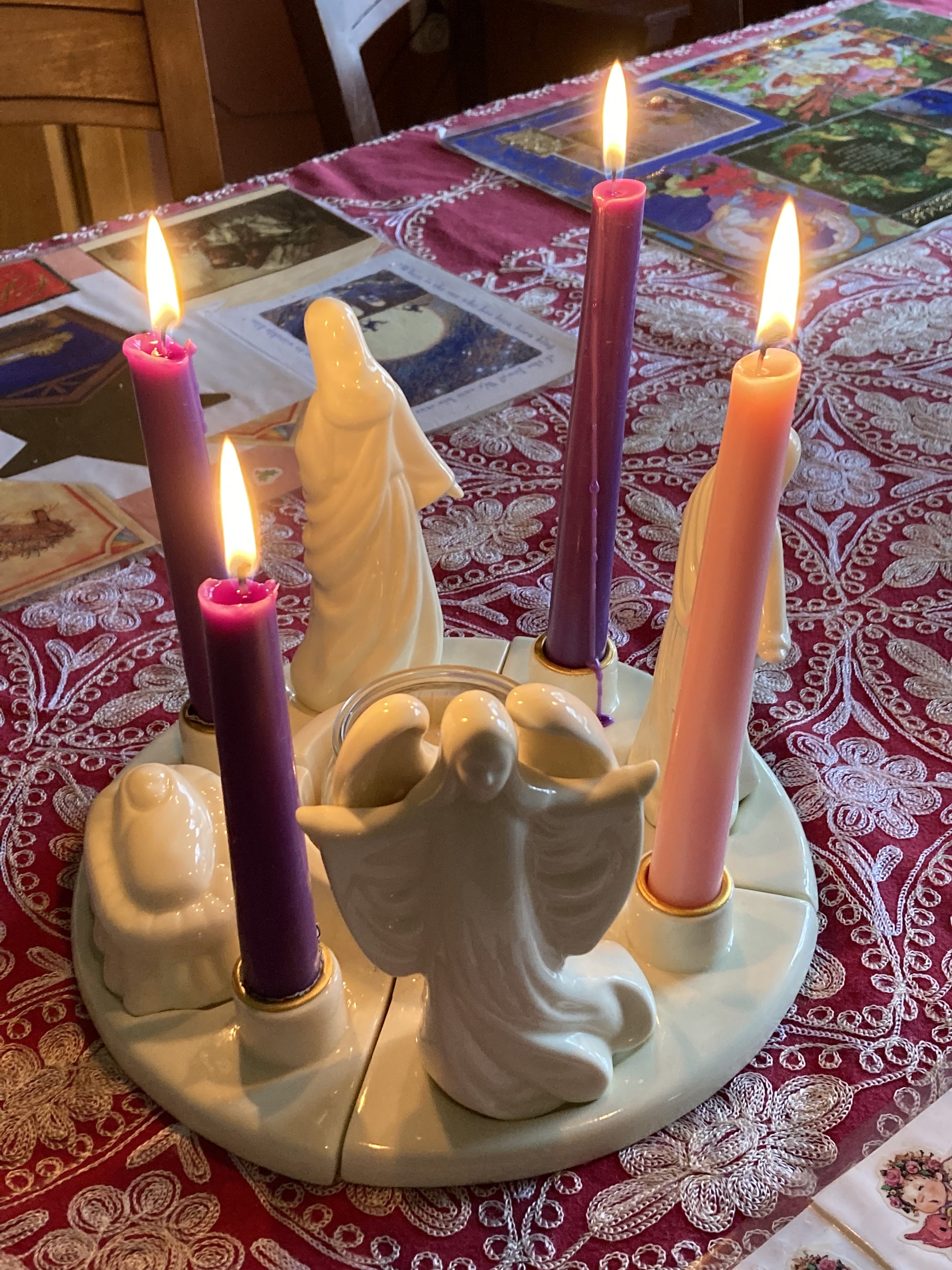
All the candles lit – focused on the coming Christ:

The Christmas cactus – somehow it knows – just days ago, nothing, no buds, nothing – and then…it blooms.

5 Friday Faves – “Fly Me to the Moon” Finger-style, Costly Grudges, Building Focus, “Don’t Leave Crumbs”, and Fall & All

Hi All! Friday Faves on a Monday after a busy Friday-Sunday weekend. Go!

1) “Fly Me to the Moon” Finger-style – After Nathan posted his Squid Game medley, he was asked to do a stand-alone “Fly Me to the Moon”. Here it is! The jazzy, up-beat rendition is so fun!

2) Costly Grudges – Is there someone you struggle to like or be in their company? Would you say it’s a grudge, either originating from you or that person? Grudges rupture relationships. They have a negative impact not just on that relationship, but potentially on others as well. Not to mention, their impact on your own health.

Photo Credit: Pinterest UK

Writer Tanner Garrity has written a list of 100 Ways to Live to Be 100. #66 is “Don’t Hold a Grudge”. Here is his take below:

66. Don’t hold a grudge

Happy people live longer. Improve your happiness by practicing “epistemic humility,” an intellectual virtue predicated on the idea that one can’t ever know something for sure. It’s meant to help us admit our imperfections and forgive others. Sounds too good to be true in the 2020s? All the more reason to give it a try.”

When we start to feel a grudge brewing, or we make the first strike and cause the rift with another person, the situation is greatly helped by some measure of humility. We don’t know everything about what just happened. In the midst of a quarrel, assessments are feverishly being made and the tendency is that they favor one over the other. If we treat a disagreement with humility, with the understanding that we can’t fully know what is going on with the other person in the argument, then we stand a better chance of some sort of resolution.

Worth the effort…including the perk of adding to one’s longevity.

What Is Family Estrangement? A Relationship Expert Describes the Problem and Research Agenda – Kristina Scharp

3) Building Focus – Focus is like muscle; it has to be built through exercise. I struggle with attending issues. To come across some simple tasks to add to life and aid focus is a happy occurrence.

Photo Credit: Pexels

Author Eleanor Morgan presents How to Retrain Your Frazzled Brain and Find Your Focus Again. In her piece, she introduces the scholarly work of scientist Amishi Jha, author of Peak Mind: Find Your Focus, Own Your Attention, Invest 12 Minutes a Day.

“We can learn to focus better, but we need to think about attention differently. It is not something we can just choose to do. We have to train the brain like a muscle. Specifically, with short bursts of daily exercises.”Eleanor Morgan

Morgan posts some of the mental exercises that Dr. Jha prescribes, including the 5 tips below:

  1. Pay attention to your breath, and where on your body you feel it most: direct your focus like a beam of light. Do this for three minutes a day, for a week.
  2. Integrate this technique into everyday life – for example, brushing your teeth. If you’re thinking about your to-do list as you’re scrubbing, bring the light back. Focus on the sensations.
  3. A lot of people report that their mind is “too busy.” Your job is not to stop it – your job is to exist with it, and to place your attention back where you want it.
  4. Ignore “mindfulness myths”: you are not “clearing your mind.” This is an active mental workout.
  5. There is no “blissed-out” state you are aiming to experience; in fact, the whole point is to be more present to the moment. – Eleanor Morgan

How to Retrain Your Frazzled Brain and Find Your Focus Again – Eleanor Morgan

I love the idea of being present in the moment…rather than the angst of the past or the unknown of the future. Sure, we have to plan, but the present is a much-neglected experience, and it’s really the only one we truly have. Right this very minute.

I am focusing in on the now.

These Navy Seal Tricks Will Help You Perform Better Under Pressure – Stephanie Vozza

4) “Don’t Leave Crumbs” – So crumbs aren’t anything we want to leave behind (unless you are the fairy tale pair, Hansel and Gretel. The wildly successful actor and author Matthew McConaughey talked about “crumbs” in a university commencement speech he gave in 2015.

“Don’t leave crumbs,” he says. “What are crumbs? The crumbs I’m talking about are the choices we make that make us have to look over our shoulder in the future….They come in the form of regret, guilt, and remorse – you leave ’em today, they will cause you more stress tomorrow, and they disallow you from creating a customized future in which you do not have to look over your shoulder.”Matthew McConaughey

Matthew McConaughey’s 5 Rules for a Good Future – Niklas Göke

Relationally, this reminds me of an adage “Keep your accounts short”. This means that your name is safe on my lips, and that I will make a practice of refusing to think ill of you. Keeping accounts short. Leaving no uncomfortable crumbs behind us in relationships or work/play practices.

In McConaughey’s speech he also gave 5 pieces of wisdom:

  • Don’t fall into the entitlement trap.
  • Never say anything is “unbelievable”.
  • Seek joy, not happiness.
  • Define success for yourself.
  • Make decisions you’ll be happy about tomorrow.

He gives more rationale and commentary in the larger speech (linked above). He also used these same points in another talk, incorporating his faith as well. The messages of both seem blended in an artful (10 minute) video. Below.

5) Fall & All – It is my favorite season – Fall or autumn. I just want to close with some images of this brief and beautiful repose between Summer and Winter. It goes so fast and I am savoring it every way possible (except for adding anything pumpkin-flavored to coffee. I just can’t).


For me, Fall ushers in Christmas (American Thanksgiving sitting right in between), so I’m completely ok with the mix of all this beauty.

.

That’s the Faves for this week. Thanks so much for stopping by. You encourage me…put your own Faves in the Comments below. Until next time.

Bonuses:

Photo Credit: Facebook, Hallmark Channel

6 Steps to Better Communication – Mental Health Mama

The Good Part About “Waning” Immunity – Katherine J. Wu

Interoception: The Hidden Sense that Shapes Wellbeing – David Robson

How to Identify Your Shadow Emotions and Why You Should – Rachel Fairbank

Worship Wednesday – Look What You’ve Done In Me – Tasha Layton

Photo Credit: YouTube

“Whoever conceals their sins does not prosper, but the one who confesses and renounces them finds mercy. Blessed is the man who is always reverent, but he who hardens his heart falls into trouble.” – Proverbs 28:13-14

See to it that no one falls short of the grace of God, and that no root of bitterness springs up to cause trouble and defile many.Hebrews 12:15

“Bear with each other and forgive one another if any of you has a grievance against someone. Forgive as the Lord forgave you.” – Colossians 3:13

“And I pray that you, being rooted and established in love, may have power, together with all the Lord’s holy people, to grasp how wide and long and high and deep is the love of Christ, and to know this love that surpasses knowledge—that you may be filled to the measure of all the fullness of God.” – Ephesians 3:17-19

We have immeasurable gifts in our life!

Jesus Christ, Savior and Lord, and His life, love, and example in all things. The Holy Spirit, Comforter and Guide, indwelling us. The faithful Word of God. The Church standing eternal as God has promised. The call to prayer and the ear of a just and loving Heavenly Father.

How is it then that we struggle so with voices that say “Not so”. Conviction of sin is one thing, but shaming is not a voice we hear from our Father. We shame ourselves, the world tries to do the same, and Satan, the Father of Lies, is a master in accusing us. When we listen to these voices, we deal with our shame by justifying ourselves, or burying our true redeemed selves in regret, or hardening our hearts in bitterness, or daring not to believe we can forgive or be forgiven…again. No more, Dear One!

If we tune our ears to the Lord, we catch His tone, His truth, His love.Photo Credit: Heartlight

Tasha Layton speaks to this in her song “Look What You’ve Done”. Her first verses speak the accusation and shame. Then, it is as if she shakes her head and comes back to her senses. She remembers God. She stands in His presence. She hears Him speak over her. She reflects on all He has done in her life…and she worships.

For the Scripture says, “Everyone who believes in him will not be put to shame.”  Romans 10:11

Worship with me…as we all have been saved from sin and shame. No longer ruling over us…or our relationships…anymore… because of what He has done…and who He is…and who we are in Him.

Look what you’ve done
How could you fall so far
You should be ashamed of yourself
So I was ashamed of myself

The lies I believed
They got some roots that run deep
I let em take a hold of my life
I let em take control of my life

Standing in Your presence, Lord
I can feel You diggin’ all the roots up
I feel Ya healin’ all my wounds up
All I can say is hallelujah

Look what You’ve done
Look what You’ve done in me
You spoke Your truth into the lies I let my heart believe
Look at me now
Look how You made me new
The enemy did everything that he could do
Oh, but look what You’ve done

Suddenly all the shame is gone
I thought I was too broken, now I see
You were breaking new ground inside of me

Standing in Your presence, Lord
I can feel You diggin’ all my roots up
I feel Ya healin’ all my wounds up
All I can say is hallelujah

Look what You’ve done
Look what You’ve done in me
You spoke Your truth into the lies I let my heart believe
Look at me now
Look how You made me new
The enemy did everything that he could do
Oh, but look what You’ve done

On the cross, in a grave
With a stone, rolled away
All my debt, it was paid
Look what You’ve done

In my heart, in my mind
In my soul, in my life
With my hands lifted high
I’m singing

Look what You’ve done
Look what You’ve done in me
You spoke Your truth into the lies I let my heart believe
Look at me now
Look how You made me new
The enemy did everything that he could do
Oh, but look what you’ve done

On the cross, in a grave
With a stone, rolled away
All my debt, it was paid
Look what You’ve done

In my heart, in my mind
In my soul, in my life
With my hands lifted high
I’m singing
Look what You’ve done*

Photo Credit: Heartlight

*Lyrics to Look What You’ve Done – Songwriters: Tasha Layton, Matthew West, AJ Pruis, and Keith Everette Smith

Story Behind the Song “Look What You’ve Done” – Kevin Davis

Tasha Layton’s “Look What You’ve Done” – Truth of Scripture Hidden in Today’s Popular Christian Music

5 Friday Faves – Life Without Forgiveness, the Power of Words, the CALM Superpower, COVID Close to Home, and the 20th Anniversary of 9/11

Here we go!

1) Life Without Forgiveness – An article on  life without forgiveness by Dave Burchett got me thinking even more about forgiveness. I’m in a study on Forgiving What You Can’t Forget by Lysa Terkeurst. Writing about it, too.

Life without forgiveness sounds truly awful. We imprison ourselves to the past and drag it into our present day and future with treasured grudges. Grudges we feel we can’t afford to lay down. They become part of our identity and how people relate to us – either protecting, justifying, or, at times, “returning evil for evil”.

Photo Credit: Quote Fancy, William Arthur Ward

We have the power to release ourselves and all these entrapped with us…through forgiveness. We need God to help us, for sure. We however must make the decision to forgive. Pretending to do so while hatred gains strength in our hearts is a delusion. God help us.

Here’s a bit of what Dave Burchett says in his article (read the whole here):

“There is no way I have found to release grudges without the healing power of forgiveness. Author Will Davis wrote this powerful insight.

‘Once you decide to forgive, you initiate the healing process. Forgiveness gives your soul permission to move on to the higher and healthier ground of emotional recovery. Forgiveness is to your soul what antibiotics are to infection. It is the curative agent that will help to fully restore your soul. It doesn’t immediately remove the pain of offense but it does start you on the road to recovery.’

I really like that perspective. The decision to forgive initiates but does not complete our healing. You will, in time, heal. I am asking you to pray that you can begin the healing process of forgiveness knowing that only time and God’s mercy can fully heal. That will start you down that road to forgiveness and empowerment to let go of the grudges that are weighing you down. You won’t get there today or tomorrow. But you will never get there without taking the first step of faith.” – Dave Burchett

Photo Credit: Spark People

Burchett refers to the song “Without Forgiveness” by Jerry Salley. Here’s a sweet cover by Jason Davidson:

2) The Power of Words – Words mean things. In fact, they are more powerful than we can imagine. Author, speaker Jackie Hill Perry has referred to a poem which says “Words make worlds”. Now I haven’t been able to find that poem, BUT I have read Genesis 1-3 with the account of God speaking the world into existence.

Photo Credit: Lidia Yuknavitch, @Seek5, Pinterest

Perry spoke on the power of words at a women’s conference. She used the text of the Apostle James’ epistle. James 3. This passage focuses on the influence of the tongue. She elaborated on three points:

  • The tongue is accountable. [We are responsible for our use of words. When we have torn down instead of building up, we will experience consequences. It does not go unheeded.]
  • The tongue is powerful. [We must control our tongues…what we say. Self-control has a wide reach, especially starting with “restraining our speech”. Words can hurt, but they can also heal.]
  • The tongue is inconsistent. [We say one thing to one person and turn around and say another thing to someone else. We may bless God and then curse a neighbor, made in the image of God. Perry talks about the huge disconnect when we speak with reverence of God but with contempt or disdain toward another human being. Words can be a “restless evil”. Pay attention. Are others’ names and personhoods safe on our lips?]

Listen to this fascinating and charged talk by Jackie Hill Perry.

Words Create Worlds – The Language We Use Shapes the Culture We Lead – Eric Geiger

3) The CALM Superpower – Author, leadership trainer Carey Nieuwhof recently interviewed psychologist Jennifer Kolari on his podcast. She spoke on dealing with irrational people, and, in fact, any situation of conflict. I learned so much.

[I’ve written about the brain, decision-making, and dealing with crisis many times. Such fascinating issues!]

Dr. Kolari introduced her CALM technique of dealing with conflict (including helping children in conflict with you or others). In brief, “the CALM method is a way of deep listening using language, compassion and empathy literally as medicine. It will soothe and calm AND bring both participants in the conversation into brain-heart coherence.”

Here’s a brief outline of the framework:
C – CONNECT – connect before correcting; deeply listen; give the sense that you are “for them”.
A – AFFECT – match the affect of the person in front of you; don’t say how the other person SHOULD feel; show understanding.
L – LISTEN – deeply; take that affect above into what you’re hearing; wonder at it; choose your responses based on what is being said to you, including the emotion. Respond not react.
M – MIRROR – allow what’s going on with the person to “hit you right in the heart”. Be in the moment with them/him/her. We do this with babies intuitively. Communicate with your face and body even more than with words.

Listen to the podcast. Check out the resources below. We too often go to correction, with other adults and definitely with children, when they need connection first…and maybe only.

Connect With Your Kids Using the CALM Technique

YouTube Video – Jennifer Kolari – The CALM Technique and Child Brain Development – really fascinating and informative

YouTube Video – The CALM Technique for Babies and Toddlers

4) COVID Close to Home – I’m not saying much here, but COVID has hit very close to home this week. I have friends and family with COVID. Check your thoughts if you’re going straight to “oh…not vaccinated”. Not so in every situation. People who did everything “right” – vaccination, mitigation, all the preventions – can still get COVID. The graphic below is updated often and is super helpful.

Photo Credit: Wesleyan College

The most important points in this conversation are these:

  • COVID is real and we will have to deal with it for some time (not at a pandemic level forever but definitely as endemic).
  • Everyone has to make personal decisions on how to prevent and treat it. To not make a decision is to make a dangerous decision. I’m not saying what to do (enough people are telling us what to do), BUT I am saying to think through our risks and that of those around us, and make informed decisions.
  • Be prepared. You don’t want to start searching out what to do to lessen the impact of COVID when you are already sick.
  • Test early. Even if it might be something else. Testing early helps you and all those who may come in contact with you (if it turns out you test positive.

The pieces below are actually not in support of one methodology or another. In fact, they expose the hard decision-making needed in determining how to act with the threat of COVID. We can depend on (or react against) mandates from government, or we can make the best possible decision we can, given the information we receive.

By the way, my friends and family members are all on the mend… except for one. On a ventilator, with family called in. We are praying still. This is why we can’t be cavalier with our decisions.

Let’s Stop Pretending About the COVID-19 Vaccines – Buzz Hollander, MD

Impact of Masking – Twitter thread – Buzz Hollander MD

FDA Vaccine Regulators Argue Against COVID-19 Vaccine Boosters in New International Review – Andrew Joseph

5) 20th Anniversary of 9/11 – Part of why Friday Faves is coming out on Monday is because I’ve spent an enormous amount of time this week watching, reading, and listening to stories about 9/11. It’s the 20th anniversary of the bombings.

In the twenty years that have passed since 2001, our country has changed so much. We are divided in really unhealthy ways. On that day…for awhile, we came together. We may have had very conflicted views on what happened after (Iraqi War, immigration issues, and the long engagement in Afghanistan). Whatever our opinions are on these, the stories of that day are so worthy of our time and attention.

Photo Credit: Beth Wayland

One of the most beautiful pieces I read this past week was by writer Jennifer Senior for the Atlantic. It was really long, but she did justice to the loss and grief of just this one family. 27 y/o Bobby McIlvaine died that day at the bottom of the World Trade Center. Son, brother, friend, fiancé. His was just one of thousands of stories that day…it matters and it also reflects the many other stories that we don’t know.

The two videos below speak to the day after September 11, 2001 and to the day 20 years later. Take the time…

“Before you know kindness as the deepest thing inside,
you must know sorrow as the other deepest thing.
You must wake up with sorrow.
You must speak to it till your voice
catches the thread of all sorrows
and you see the size of the cloth.
Then it is only kindness that makes sense anymore,
only kindness that ties your shoes
and sends you out into the day to gaze at bread,
only kindness that raises its head
from the crowd of the world to say
It is I you have been looking for,
and then goes with you everywhere
like a shadow or a friend.” – Naomi Shihab Nye

___________________________________________________________________________

Bonuses:

Community – “Every arrow needs a bow: William Wilberforce” — the power of community. If Wilberforce was the arrow that pierced the heart of the slave trade, the Clapham Fellowship was the bow that propelled him. As Pollock writes, “Wilberforce proves that one man can change his times, but he cannot do it alone.” The Clapham fellowship lived by Wesley’s maxim: “In essentials, unity; in non-essentials, liberty; in all things, charity.” And this was no mere slogan: tensions developed in their relationship that would have splintered most associations, even Christian associations, had they not been so radically centered on Christ.” — “Every Arrow Needs a Bow,” by John Hart, CHRISTIANITY TODAY, July 1998 [This was a quote in my folder of quotes; I can’t find the source online today, but it rings even more true now.]

Photo Credit: Vala Afshar, Twitter

This Is What Happens to Your Brain When You Declutter Your Home – Kelsey Clark

“If we major in criticism, we become polemicists, rather than agents of redemption. Often polemicists excuse their loveless rough edges by the demands of truth. But they lose more than they realize. In fact, when love and the growth of positive truth are lost, truth is also lost. Biblical truth loses its scope, balance, depth, applicability, savor, and growing edge [in this disordered priority]. … Words that are not constructive, timely, and grace-giving are rotten and non-nutritive, whatever their formal likeness to Christian content (Eph 4:29). To lose charity, tenderheartedness, sympathy, and generosity is always to simultaneously pervert the redemptive nature of biblical revelation. Narrowed “truth” may bristle enough to defend one city wall, but it is not good enough to conquer the world.” – David Powlison’s “Cure of Souls” (2007)
Recipe for a Quick and Easy Cherry Cobbler – my husband’s favorite
Photo Credit: Lena Vo, Facebook


8 Ways to Build a Strong Foundation for Your Kids – Frank Sonnenberg

Worship Wednesday – I Need Thee Every Hour – Fernando Ortega

Photo Credit: Heartlight, Phil Ware

Then God said, “Let Us make man in Our image, after Our likeness, to rule over the fish of the sea and the birds of the air, over the livestock, and over all the earth itself and every creature that crawls upon it.” So God created man in His own image; in the image of God He created him; male and female He created them. God blessed them and said to them, “Be fruitful and multiply, and fill the earth and subdue it…”Genesis 1:26-28

Jesus explained, “My food is to do the will of Him who sent Me and to finish His work.”  – John 4:34

Jesus said, “Father, forgive them, because they do not know what they are doing.”Luke 23:34

We are needy people…by design.

Years ago, husband Dave and I led a Singles Sunday School class. These young people were top of the heap – well-educated, gifted, socially astute, emotionally intelligent, independent, and committed Christians. Yet, no matter the Scripture being studied that day, Dave always managed to insert two concepts:

  • We are all worms.
  • Obedience is always where we want to land.

I was like (on the first point) “Dude! What about we are fearfully and wonderfully made“?! [Psalm 139:14] [Years down the road, “dude” and “worm” would remind me of this exclamation as “worm” in Arabic is “dooda”. Sorry for the rabbit trail.]

As for the second point – the “O” word…no right or reasonable objection there. Period. Full stop.

Being Needy Is Not a Fault – It Is a Design – Christine Chappell

Yesterday I came across an Instagram story with Jackie Hill Perry talking about our inadequacy and deep need for God. If you know Instagram stories, they seem to last a minute. I wanted to hear it again, but couldn’t. So I’ve been thinking about it and praying since about it. We all have head knowledge about our dependence on God, our need for Him…it just doesn’t always settle into our hearts.

We (ok…is it just me?) go through too much of life with Paul’s affirmation that we have everything we need for “life and godliness” without remembering the context – dependence on His power and through knowing Him, in His glory and because of His goodness. [See verse below.]

His divine power has given us everything required for life and godliness through the knowledge of him who called us by his own glory and goodness.  2 Peter 1:3

Wow! That right there.

Our days are busy and fraught with care (different depending on each of our situations, but its there…and draws our focus). God does  expect us to show up for work, for our families, for the church, for our communities…That is necessary…but not sufficient.

“Necessary but not sufficient”

“What we do is necessary but not sufficient. We are fearfully and wonderfully made and have substantial creative capacity and we can do a lot of neat things. God expects us to use our abilities, giftings, and capacities, and to work at it as hard as we can. However, all those things fall flat apart from our dependence on God – if He doesn’t breathe His life into our efforts and make them accomplish His purposes. Our work is necessary but not sufficient. He is sufficient.” – Dave Mills

We go to God each day for those things outside our power (cancer, COVID, conflict), but we forge ahead on what we think we can accomplish on our own (including growing our own character and that of our children). What then do we miss, in treating prayer and time in His Word as a sprinkling on our day? A seasoning rather than the meat. [See again John 4:34 above.] We miss God.

We miss God in working out our budgets, in counseling with a friend in crisis, in trips to the grocery store or playground, in studying for an exam. We miss His infusion of His own character, His own wisdom, His own wonder. We wear ourselves out walking in the flesh with just a touch of Him, even though we are indwelt by the very Spirit of God.

Whose image do we take into the public square? His or our own frail self? Preaching to the choir of one here (unless you are singing along with me).

Jesus taught us by His example that He revered the Word of God, and lived in obedience to It, and basked in the Father’s presence, and understood how being human can distract from the greatest reality in our lives – a holy yet approachable God. Even from the Cross, in His greatest need, He prayed for those who participated in the unspeakable. They didn’t know, He said (Luke 23:34).

We know.

“My grace is sufficient for you, for power is made perfect in weakness.” So I will boast all the more gladly of my weaknesses [of my imperfections], so that the power of Christ may dwell in me. For when I am weak, then I am strong.” – 2 Corinthians 12:9-10 

“You see, our power as Christians is not in our strength, our own performance, or our own striving towards perfection. Our power comes when we can admit our vulnerability, our weakness, our neediness, and our dependence on the Lord. It was when Paul accepted his weaknesses and his imperfections that he discovered how strong he was in God.  

It’s when we are at our wits end that we discover that His ways are higher than our ways. It’s when we can’t do something that we discover He can. It’s when we realize the power is not in us that we find our strength in Him. Our imperfection is the pathway to the grace of God. It’s in that connection that we find His grace is indeed sufficient, even in spite of our weaknesses. –  Delman Coates

God chose what is foolish in the world to shame the wise; God chose what is weak in the world to shame the strong; God chose what is low and despised in the world, even things that are not, to bring to nothing things that are, so that no human being might boast in the presence of God.  –     1 Corinthians 1:27–29

If you feel your neediness on a regular basis, know that you are in good company. All of us are needy, all of the time—we’re just too busy being “independent” to realize it.  We easily forget that neediness is inherent. Take a high-level view of the concept by starting with our neediness in the sight of God. Think back to the garden of Eden and all that Adam required from the Lord to live. Everything Adam had, he was given. Everything he possessed—even his very body and breath—came from God (Genesis 2:7). This truth hasn’t changed since the fall.

Think about it: what do you have at this moment that God did not give to you? …There’s no kidding ourselves: we are utterly dependent upon Someone else for all the things, all the time.

Man’s reliance upon God is a healthy relational construct, not an annoying character flaw. Our neediness is forged out of God’s good design (Genesis 1:31) and is meant to foster fellowship, faithfulness, and fruitfulness. In that sense, dependence upon God and interdependence upon each other is a blessed design meant for our good and God’s glory.Christine M. Chappell

Photo Credit: Heartlight

Be encouraged as I am (after hearing Jackie Hill Perry’s brief story). How different our lives are when we see God as He truly is and see ourselves in proper relationship to Him and each other (my definition of humility, actually). Our lives are small really, no matter how cool, independent or self-sufficient we think we are. How much more beautiful to receive that smallness as a gift in our lives as we walk in the fullness as His increase (in our decrease) (John 3:29-30).

Praying without ceasing (1 Thessalonians 5:16-18) is cause for rejoicing and gratefulness. I want more of this…more of Him. AND our children and grandchildren need to know they don’t have to grow up so grand and gifted…they can grow up knowing Him in all His power and glory and goodness!

Worship with me to this wonderful old hymn by Annie Hawks. OR if your heart would prefer a newer version then sing with Matt Maher’s Lord, I Need You.

I need Thee every hour, most gracious Lord;
No tender voice like Thine can peace afford.

Refrain:
I need Thee, oh, I need Thee;
Every hour I need Thee;
Oh, bless me now, my Savior,
I come to Thee.

I need Thee every hour, stay Thou nearby;
Temptations lose their pow’r when Thou art nigh.

I need Thee every hour, in joy or pain;
Come quickly and abide, or life is vain.

Oh, bless me now, my Savior,
I come to Thee.

[If you prefer the newer pink and blue background, live version of Lord, I Need You, with lyrics, here it is.]

Worship Wednesday – Deep Disappointment – Lord, I Need You – with Matt Maher & Audrey Assad – Deb Mills

YouTube Video – I Need Thee Every Hour – Anthem Lights

Needy People, Mighty God – Steven J. Cole

I Need You Every Hour – Tom Norville

Photo Credit: Heartlight

Monday Morning Moment – Indistractable…What?!

Photo Credit: Pixabay

Being distractable is one of my character flaws…I guess. For awhile, I had decided it was a super-power. In that, I could jump from activity to activity or person to person, and still somehow be fully present…at least for the moment. Sigh… Interruptions or a busy schedule were not problems for me. In fact, they made for a fun and energizing day. Or so I thought.

There was a time in my life, before marriage, that my closest friends even did an intervention on me. Seriously. Maybe it was because I over-scheduled life like a crazy person (meaning that I actually believed people wouldn’t be put off by my having three different activities, with three different groups of people, in one evening).

So now I’m older and wiser. Chuckle, chuckle. I have the time but not the energy for over-packing my schedule. Nor do I have the mental capacity for deep focus in the face of all the “pings, dings, and rings” of life.

Enter tech-savvy, habits guy Nir Eyal. I caught a 25-minute podcast with him speaking on how to become indistractable. It was illuminating.

In Eyal’s book Indistractable: How to Control Your Attention and Choose Your Life, he removes technology as the distractor in our lives and points to the emotional states that actually drive us. Those uncomfortable emotions (boredom, loneliness, uncertainty) that we hope to silence by simply exiting whatever we’re doing at the moment and take up a different, potentially mind-numbing activity. Like scrolling through social media.

Distractability may make us feel better for the moment, but it doesn’t help us become the persons we want to be. It is a soother but not a life-sorter. It is a behavior, and what needs changing is less the behavior than what’s behind it – identifying the triggers that move us to be distractable and applying new habits to help us stay focused. . We want to be people others can trust to do what we say we will do…to have genuine integrity. How we grow in this area is the point of his book.

Being indistractable means striving to do what you say you will do. Indistractable people are as honest with themselves as they are with others. If you care about your work, your family, and your physical and mental well-being, you must learn how to become indistractable.” – Nir Eyal

Photo Credit: Pixabay

“LOOK FOR THE DISCOMFORT THAT PRECEDES THE DISTRACTION, FOCUSING IN ON THE INTERNAL TRIGGER”.Nir Eyal
Eyal talks about time management as being pain management. When we understand the discomfort which triggers us to try to escape, we can then build in a tripwire to short-circuit the distraction.
Photo Credit: Pixabay
“Ten-minute rule.” If I find myself wanting to check my phone as a pacification device when I can’t think of anything better to do, I tell myself it’s fine to give in, but not right now. I have to wait just ten minutes.” – Nir Eyal
Two of the many tools Eyal encourages are 1) effort pacts and 2) identity pacts. With the effort pact, he uses an app (the Forest app, for one) to help him keep commitments to himself. He also prescribes having coworkers, friends, or family members come alongside and help you press into a project or task until you’re finished. Accountability helps.
“Effort pacts make us less likely to abandon the task at hand. Whether we make them with friends and colleagues, or via tools like Forest, SelfControl, Focusmate, or kSafe, effort pacts are a simple yet highly effective way to keep us from getting distracted.”Nir Eyal

Eyal’s identity pact is an intentional reflecting on the person you want to be, and then using that identity as its own motivator. For me to say, “I’m a writer” requires a certain measure of discipline, with habits in place to help me actually write. If we begin using the language of identity, an accountability is applied that helps us be the person we say we’re becoming. “I am not as distractable as I once was”. “I am not side-lined by negative emotions anymore.” “My values include majoring on family, so I focus on my work at work, in order to be all there at home”.

“Only by setting aside specific time in our schedules for traction (the actions that draw us toward what we want in life) can we turn our backs on distraction. Without planning ahead, it’s impossible to tell the difference between traction and distraction.” – Nir Eyal

Lastly, I’ll mention Eyal’s use of time-boxing over a to-do list. He doesn’t deny that a to-do list is helpful, but it has its own fails built in. We default to finishing what’s easy or urgent, and, in fact, rarely are as productive as we might think we should be with a to-do list. Also, there is always this guilting about what we didn’t complete.

He actually fills a time-box calendar with what he wants to accomplish in a day. He includes things we might not consider in a to-do list like prayer, fitness, reflection, time with family, etc.

Photo Credit: Pixabay

When we have a time allotment (not just how much time something should take but when we will work on it), we are more apt to focus on just that. Eyal does encourage multi-tasking, but only if it is done using “different sensory channels”. By this, he means bundling activities that can actually be done together without diminishing either. An example is watching TV (or listening to a podcast) while on a treadmill. We have a neighbor who reads while walking. That has always impressed me, but it can be done.

Fitness coach David Rosales does a great service (to those of us who haven’t yet tackled all of Eyal’s prescriptions) by giving his own takeaways from Indistractable (including a few I mentioned above):

  1. Don’t rely on willpower – put systems in place to help you succeed.
  2. Timeboxing – rather than a to-do list, block out time on your calendar for specific tasks.
  3. Do Not Disturb as Default –put in place practices that keep you from being distracted by your phone.
  4. Batch everything – batch actions (and distractions) to avoid having your flow disrupted. [From email to Instagram]
  5. Ulysses pact – set up an app or timer or work out an arrangement with someone to help you be accountable.
  6. Take a growth mindset – bit by bit, you are learning how not to be foiled by distractions. It is a process.
  7. Identify pacts – start identifying yourself in ways that communicate you are not distractable. Make the decision of what kind of person you are determined to be, and decision fatigue is removed. You learn to just say “no”.

What do you think about all this? Maybe you are a person of focus. Please, if you are, comment below on how you make that happen.

Nir Eyal Website

Nir Eyal: Mastering Indistraction

Nir Eyal on Taking Control of Technology to Become “Indistractable”    [25-minute video]

Working Parents? Here’s How to Raise Indistractable Kids with Nir Eyal – Nir Eyal and Vanessa Van Edwards – excellent resource

Read James Williams’ excellent review and critique of Nir Eyal’s book Indistractable.

How to Do Timeboxing Right – David Sherwin

How Timeboxing Works and Why It Will Make You More Productive – Marc Zao-Sanders

The Tail End – Wait But Why – Tim Urban

Quotes from Nir Eyal’s Indistractable

PDF Summary – Indistractable – Nir Eyal

Worship Wednesday – Until Unity – with Francis Chan

“I pray for them…for those you have given me, because they are yours…Holy Father, protect them by your name that you have given me, so that they may be one as we are one…May they all be one, as you, Father, are in me and I am in you. May they also be in us, so that the world may believe you sent me. I have given them the glory you have given me, so that they may be one as we are one. I am in them and you are in me, so that they may be made completely one, that the world may know you have sent me and have loved them as you have loved me.”– from John 17, Jesus’ high priestly prayer

“…Walk worthy of the calling you have received, with all humility and gentleness, with patience, bearing with one another in love, making every effort to keep the unity of the Spirit through the bond of peace. There is one body and one Spirit—just as you were called to one hope at your calling— one Lord, one faith, one baptism, one God and Father of all, who is above all and through all and in all.” – Paul, Ephesians 4:1-6

“Now I urge you, brothers and sisters, in the name of our Lord Jesus Christ, that all of you agree in what you say, that there be no divisions among you, and that you be united with the same understanding and the same conviction.” – Paul, 1 Corinthians 1:10

“…bearing with one another and forgiving one another if anyone has a grievance against another. Just as the Lord has forgiven you, so you are also to forgive. Above all, put on love, which is the perfect bond of unity.” – Paul, Colossians 3:13-14

OK…what else needs to be said, right?

We are so easily offended. So put off by others. Our preferences screaming to be acknowledged. Our spiritual sensibilities riding tenuously on our sleeves, easily jostled by the words or attitudes of another.

If anything, we are united in this frailty of ours. The unspoken (maybe) desire to be right. To be more accurate in our take on things…especially spiritual things and how church “should be done”.

Oh my!

I am stepping on my own feet here.

That’s why I bought the book Until Unity by Francis Chan. We had just finished a church-wide, months-long study of another Chan book, Multiply. It was deep and exhausting in a mind-clearing way.

I wasn’t really looking to jump into another study by this intense brother of ours…but this book scratches a worsening itch in my heart. Our desperate need, as followers of Christ, for unity.

Because of our politics (in this nation…and maybe in yours as well), we are terribly divided. Even as Christians. Between politics and preferences, we circles our wagons in way too many denominations in the Christian faith. Then there are those influencers, mega-church pastors and women writers, with huge fan bases (did I just say that?). What offends them is taken to the airways and further divides us into camps…camps of which Jesus did not call us.

Just this week, Francis Chan’s online study of the book Until Unity launched. It is so good. Free and easily accessible. I have the book, too, but the video study also stands alone for those unable to get the book.

Online Bible Study – Until Unity – Francis Chan

Chan introduces the study by calling us to hold onto truth, holiness, AND unity. Too often, we think we have to sacrifice one for another. Wrong! However, to hold onto all three requires our desire for God to work…only God has the power and plan to glorify Himself, in his church and each of his followers, through our walking together in unity, in truth, and in holiness.

“For my thoughts are not your thoughts, and your ways are not my ways.” This is the LORD’s declaration. “For as heaven is higher than the earth, so My ways are higher than your ways and My thoughts than your thoughts.”Isaiah 55:8-9

Chan recalled to the viewers the passage in Exodus 14 where the Israelites were in a hard place – pursued by the Egyptian army and facing the Red Sea. They had no plan. No way out. Then Moses called to them…and to us in this matter:

“Don’t be afraid. Stand firm and see the Lord’s salvation He will provide for you today; for the Egyptians you see today, you will never see again. The Lord will fight for you; you must be quiet.”Exodus 14:13-14
We must replace our opinions with prayers. Being silent sometimes communicates that just maybe only God has the right answer on something. In being quiet, I’m not saying to be passive or yield to what is not true or right…BUT to wait on God. Pursuing both truth AND unity.

[Chan used the white board to show how high God’s knowledge is and the gap between his knowledge and ours. Whomever we are – whether it is Francis Chan or someone with greater or lesser knowledge or understanding on a spiritual subject…None of us…not of us…are anywhere close to God in this way. We must bow to Him in this. Choosing unity. Praying for Truth to win out. Looking to Him for His thoughts and His ways.]Photo Credit: Screenshots from the Introduction to the online Bible study Until Unity

When we judge our brothers and sisters, we put ourselves higher. When we preach, teach, or disciple in ways that divide, we come against even what our Lord Jesus prayed for us. Be one. As he and the Father are one. That is our high calling. We have to prayerfully figure it out.

Worship with me – the God of truth, holiness, AND unity. He is always faithful, and, praise His name, His ways are higher than ours.

Come thou fount of every blessing
Tune my heart to sing thy grace
Streams of mercy never ceasing
Call for songs of loudest praise
Teach me some melodious sonnet
Sung by flaming tongues above
Praise the mount I’m fixed upon it
Mount of thy redeeming love

Here I raise my Ebenezer
Hither by thy help I’m come
And I hope by thy good pleasure
Safely to arrive at home
Jesus sought me when a stranger
Wondering from the fold of God
He, to rescue me from danger
Interposed His precious blood

O to grace how how great a debtor daily I’m constrained to be!
Let thy goodness like a fetter, bind my wandering heart to thee
Prone to wander Lord I feel it, prone to leave the God I love
Here’s my heart, O take and seal it, seal it for thy courts above*

*Lyrics to Come Thou Fount

Hymn Story of Come Thou Fount [Lyrics written by Robert Robinson]

Worship Wednesday – On Unity and Love – Hymn Medley – Maverick City – Deb Mills

Jesus’ Prayer for Unity – Pastor Mike – really excellent sermon

5 Friday Faves – The War of Art, Food Waste, Decluttering With Pareto’s 80/20 Rule, Lewis Ginter Botanical Garden, and a Local Restaurant Find

Here we go! Friday Faves on a Monday

1) The War of Art – A friend spoke recently about a book he reads and reads again. It is Steven Pressfield‘s The War of Art: Break Through the Blocks and Win Your Inner Creative Battles. When he first said the name I mistook it for the great war (and work) strategy book The Art of War by Sun Tzu. Two very different books.

Anyway, back to this recommended book. If you consider yourself a creative or you have one in your family or friend group, then you know something of the battles. Our nearest and dearest creative is classical guitarist Nathan Mills, of Beyond the Guitar fame (you know him if you read this each week).

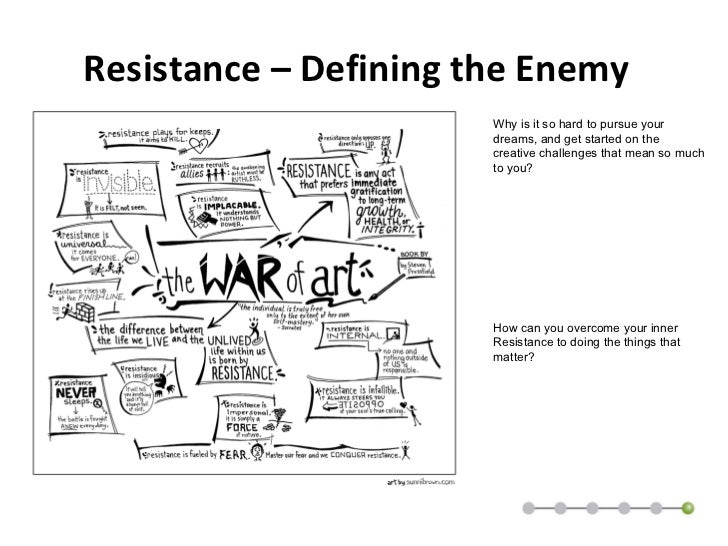
Creatives have an incredible drive to do their craft, but they also have to work against resistance. The pressure of time, the struggle with self-doubt, the tension of balancing other parts of life.Resistance – Defining the Enemy Why is it so hard to pursue your dreams, and get started on the creative challenges that m...Photo Credit: Slideshare

As a writer, Steven Pressfield gets the warring that goes on inside creatives’ minds. He writes eloquently and insightfully about it:

  • “If you find yourself asking yourself (and your friends), “Am I really a writer? Am I really an artist?” chances are you are. The counterfeit innovator is wildly self-confident. The real one is scared to death.”
  • “We fear discovering that we are more than we think we are. More than our parents/children/teachers think we are. We fear that we actually possess the talent that our still, small voice tells us. That we actually have the guts, the perseverance, the capacity. We fear that we truly can steer our ship, plant our flag, reach our Promised Land. We fear this because, if it’s true, then we become estranged from all we know. We pass through a membrane. We become monsters and monstrous.”
  • “Resistance is experienced as fear; the degree of fear equates to the strength of Resistance. Therefore the more fear we feel about a specific enterprise, the more certain we can be that that enterprise is important to us and to the growth of our soul. That’s why we feel so much Resistance. If it meant nothing to us, there’d be no Resistance.”
  • “Fear doesn’t go away. The warrior and the artist live by the same code of necessity, which dictates that the battle must be fought anew every day.”
  • “Are you a born writer? Were you put on earth to be a painter, a scientist, an apostle of peace? In the end the question can only be answered by action. Do it or don’t do it. It may help to think of it this way. If you were meant to cure cancer or write a symphony or crack cold fusion and you don’t do it, you not only hurt yourself, even destroy yourself,. You hurt your children. You hurt me. You hurt the planet. You shame the angels who watch over you and you spite the Almighty, who created you and only you with your unique gifts, for the sole purpose of nudging the human race one millimeter farther along its path back to God. Creative work is not a selfish act or a bid for attention on the part of the actor. It’s a gift to the world and every being in it. Don’t cheat us of your contribution. Give us what you’ve got.”
  • “Someone once asked Somerset Maugham if he wrote on a schedule or only when struck by inspiration. “I write only when inspiration strikes,” he replied. “Fortunately it strikes every morning at nine o’clock sharp.”

Two video clips follow. One is a clip of the “miracle of fish” from the TV series The Chosen. The clip below it tells the story of how the scene was actually and finally created…the beauty of art and technology working together, for sure.

YouTube Video – The Miracle of the Miracle of the Fish – The Chosen [demonstrates the process of creating the impossible in film]

A Letter to My Art – Karen Burnette Garner

2) Food Waste – Recently I was reminded of a time years ago when Dave and I bought a box of Krispy Kreme doughnuts to share, just the two of us. Later, we decided, halfway through the box, that we didn’t need to finish it. “We don’t need to eat all these doughnuts.” [Like what were we thinking buying a dozen?!] Well, I threw the box into the garbage. We would both discover hours later that each of us, unbeknownst to the other, retrieved doughnuts from that box in the garbage. #TooGoodForGarbagePhoto Credit: Krispy Kreme, Facebook

[We were also reminded of a family legend of a certain adult child of ours retrieving an untouched chocolate eclair from his inlaws’ garbage. #RaisedRight]

Anyway, what I’m getting to is the matter of food waste in our country. When we lived in North Africa, we learned you just didn’t throw food away…you just didn’t. You either ate leftovers, reconfigured it for another meal, froze it to use later, or gave it away (either to neighbors, friends, or the less fortunate in your life – known or stranger. Also vegetable/fruit waste could be composted. What couldn’t be salvaged (like food scraps or plate leavings) were put in a separate bag from the garbage and set out for people to use to feed animals.

I loved that system/worldview.

What do you do with “food waste”? How can we shop and cook in ways that keep waste down as well?

Thankful for food champions who expose our waste and challenge us to do better – both in our homes and the public and private sector.

20 minute video below is so revealing of food waste in Canada and the US. Also follows food waste activist Rob Greenfield.

Rob Greenfield Activist, Humanaitarian, Adventurer [Dumpster Diver]

Food Loss and Waste Champions 2030

3) Decluttering with Pareto’s 80/20 Rule – So I just discovered Dawn of The Minimal Mom. Her video post this week was “Achieve Minimalism Faster with the 80/20 Rule”. Except for the mattress commercial at the start of her video, the content was really inspiring.

I struggle with clutter. Putting things where they belong. “Resetting the room”, as James Clear puts it. Letting go of stuff. Getting better but it is a challenge. Now…here’s our guest room…where my sweet Mom-in-law sleeps when she comes to visit.

However, it is only half ready for her next visit. In her absence, it quickly becomes a storage room. Stuff without a home is stowed there.

I’ve written about decluttering, and I’m getting there…slowly. After listening to her video, the guest room is closer to being ready for MomMom. Everything is not completely in its place or out of the house but it’s closer.

Dawn describes Pareto’s Rule in her coaching about decluttering. What that means is focusing on the imbalances in our lives and being intentional to clear some of them out. For example, let’s say we use just 20% of our stuff 80% of the time. What should we do with the rest of the stuff that requires us to manage it even if we rarely use it? [For me, Christmas decorations get a pass.] Or let’s say that 80% of our goals in life could be accomplished with 20% effort. What if that 20% effort included decluttering? Would the gains far exceed the losses?

Stuff management takes time and energy from the larger life goals we have. If we apply Pareto’s Rule to clutter, a small amount of concentrated effort can free us up to be able to focus on what matters more to us.

Photo Credit: Screenshot, YouTube

So how about you? What did you get from the 80/20 rule related to de-cluttering? Also, let’s be clear on this. Decluttering is definitely not a global issue…it is a problem in the wealthy West. Something to think about on the next trip to Target. 😉

The 80/20 Rule and How It Can Change Your Life – Kevin Kruse

76 Best Organizing Tips for the Tidiest Home Ever – The Pioneer Woman

4) Lewis Ginter Botanical Garden – Such a beautiful season. The grands thought so as well. Enjoy!

5) A Local Restaurant Find – This week we went on a cultural culinary excursion. Dave, some friends, and I went looking for a new restaurant. Local. Ethnic food. And it was amazing!

Chef Charles delivered up some of the best Caribbean food I’ve ever tasted. He was born in Guyana but his parents were from St. Lucia. He grew up in St. Thomas. In the US, he spent 35 years in the insurance industry as an underwriter. Then he moved into the restaurant business and has owned and operated Charles’ Kitchen for the past 6 years. He works his own culinary magic with family recipes, using locally grown vegetables and herbs (some of which he grows himself). The service was also just right.

Chef Charles and Dave

The food was excellent (as I’ve said before), but meeting Chef Charles and hearing some of his story topped off our meal. Then he did one better: served us caramel cake warm from the oven.

That’s it for this week. How about your faves of the week? Anything you want to share (in Comments below)? Thanks for stopping by.

___________________________________________________________________________

Bonuses:

Winning Your Inner Battles – Levi Lusko – Video Series

The Difference Between Tantrums and Meltdowns – Amanda Morin

Are You Good? – Angela

https://www.henricocitizen.com/articles/father-son-duo-create-dog-park-in-lakeside/

Photo Credit: Anne Peterson, He Whispers, Facebook

Mutai and Fernandez – a Story of Good Will at the 2021 Olympics

Beat Stress Like a Navy Seal with this Ridiculously Easy Exercise – Melody Wilding

After 3 Years Lauren Daigle Ousts Herself From the #1 Billboard Spot

Photo Credit: Instagram, Hub for Helpers

Photo Credit: The Duluth Model, Power and Control Wheel

YouTube Videos – Kingdom Race Theology, Part 1 and Kingdom Race Theology Part 2 – Sermons by Dr. Tony Evans

5 Friday Faves – Beyond the Guitar – Beauty to the Ears & Mind, Mental Health Awareness, Antidote for Self-deceit, Showing Up…Or Not, and Unmasking

1) Beyond the Guitar – Beauty to the Ears & Mind – We think of beauty more in what we experience visually, but there is a powerful connection between music and the mind. Beautiful music soothes the soul and lifts our hearts. Moves us. Often it is because of nostalgia attached to the music, but even without that emotional connection, music can bring our minds to a better place.

Your Brain on Music – Pegasus, UCF

Nathan Mills, of Beyond the Guitar, has that way about his craft. Moving our hearts with the beauty of his arrangements and performance. I don’t know any of the pieces in his medley of 4 Underrated (but Beautiful) Video Game Themes, but something happens when I listen. Shoulders drop; breathing slows; wonder sets in. Beauty has its way with our ears and our minds.

Photo Credit: YouTube, Beyond the Guitar

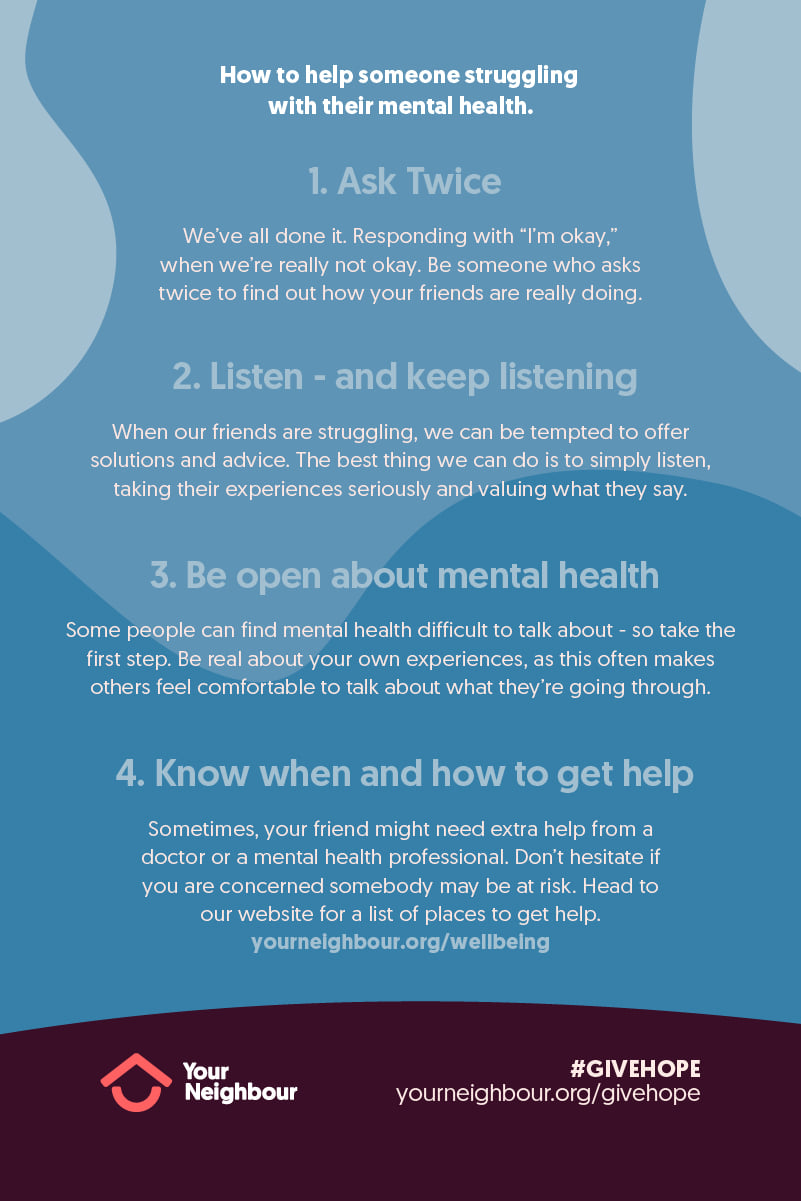
2) Mental Health Awareness –  May is Mental Health Awareness Month. The theme message for 2021 is “You Are Not Alone”. Our need for connection is bigger than ever, having gone through so much COVID isolation. Whether mental health issues are our own personal struggle or we are family, friends, caregivers of those who struggle, helps abound. We just must be aware and utilize them.

Tools 2 Thrive – Mental Health America

Mental Health Awareness Month 2021: What to Know – Karen Veazey

Photo Credit: Twitter, Nicolino Frate

Suicide and death by drug overdose have increased during COVID. They are shocking for us and real losses, either for us or for friends. We can’t keep isolating ourselves from each other. Finding ways to help is imperative.

Photo Credit: Facebook, Key Ministry, Your Neighbour #GiveHope

YouTube Video: Unseen: Exposing the Mental Health Crisis Among Special Needs Caregivers | Documentary Trailer

3) Antidote for Self-Deceit –  Self-deceit (or self-deception) is “a process of denying or rationalizing away the relevance, significance, or importance of opposing evidence and logical argument. Self-deception involves convincing oneself of a truth (or lack of truth) so that one does not reveal any self-knowledge of the deception”.

The Most Dangerous Form of Deception: Self-Deception

I’ve allowed myself to be deceived (either with the help of outside influences or from sheer will and desire, wanting something to be so, or not be so). It’s not pretty. One of my strongest memories was sitting in a circle of friends who essentially did an loving intervention with me. I was in a self-destructive (but non-abusive) relationship, and they had the courage to point me to the changes in my life and thinking. I will never forget it. The life I have now is much impacted by their willingness to go to that place with me. Forever grateful.

Regarding deceit, it is way too easy to get into our own heads and assess life with a self-tuned receiver. I wrote about this before (the practice of noticing). A somewhat dated video (with a still fresh message) speaks to this so well.

During the particular season of self-deception (described above), I got to the place that lying in my bed at night, when I would usually pray, it got impossible to pray. That was terrifying. It’s like all the desires and my rationalizations for them had crowded out any space for God. Especially for a holy God. Like I said, terrifying. No matter how loving God is, I couldn’t justify praying when my own desires trumped His for me.

The Antidote to Self Deception – J. D. Walt

As the video illuminates, as we get out of our own heads, and start seeing other people around us, we find the antidote. Caring more for others than ourselves, we can actually clear our heads some. Self-deception causes us to “circle the wagons” and keep others at a distance. As we determine to get close to people again, especially to genuinely listen and serve, our own deceit can be more readily understood/recognized. Of course, our neglected relationship with God will take its own time and action on our part. He is ready, when we are.

Photo Credit: Chip Scholz

4) Showing Up…or Not – Showing up is a good thing. For all of us. Keeping commitments. Being present. Choosing to lean in. Listening.

So much is said about listening and its positive impact. To listen requires proximity.

On the East Coast, this week, we had a gas shortage (or a perceived gas shortage…not sure which is more accurate). Everyone was making decisions about filling their tanks and sorting out needful car trips vs. those that can be jettisoned for another time.

I was a part of a couple of meetings where some folks didn’t show up. Without a phone call, text, or email message. Was it the gas shortage? Or did it display something else? Honestly, I also wondered how often I’ve done this same thing myself.

We are in a culture right now when a RSVP yes can turn to no without a word. I’m showing my age…but does this matter?

Below you’ll find quotes from three different authors on this and what it can mean. The showing up…or not. After you read their observations, I’d love to hear what you have to say in the Comments.

“Standing someone up is a personal attack. You are saying that you have no respect at all for this person’s time, energy or feelings. This person set aside time from his or her day to hang out with YOU.

And maybe he or she didn’t feel like showing up. But no, this person had enough respect for you to feel as though he or she couldn’t bail on you. Then how did you repay the favor? You didn’t show up. With no warning.

And don’t even get me started on the fact that if this person cared about you enough to make and honor plans with you, odds are that he or she would probably be WORRIED about you when you don’t send a message. Because falling off the face of the Earth is a little alarming….You get the picture here.” – Candice Jalili

Why It Is Literally Never, Ever OK to Just Not Show Up For Your Plans – Candice Jalili

“There are commitments you are not going to keep no matter how hard you try, but even if you fail to keep them, you can still honor them. How do you do this?

“The difference between “keeping” and “honoring” is key: keeping a promise is about the letter of the promise, while honoring a promise is about the spirit. It is even possible to keep a promise while not honoring it. People will forgive an honored but un-kept promise, but it takes a real saint to let go of an un-honored promise—kept or not.

So what are the practical aspects of honoring a commitment? They are:

  • respect
  • communication
  • productive effort

It’s uncomfortable to take responsibility (for a failed commitment), but discomfort is a lot easier to shoulder than disrespect or disappointment. Even if you failed to honor a commitment up until now, it is not too late: disrespect and disappointment can be rolled back or even erased in the face of genuine honor.” –  Kenneth Vogt

How to Cope When You Fail to Honor a Commitment – Kenneth Vogt

[The two writers above have very different tones to their pieces. Both worthy of note. I especially appreciated Vogt’s distinction of honoring a commitment (whether you’re able to keep it or not). Honoring the person by communicating your inability to keep the commitment…as well as the honoring that goes on by making the effort to keep the commitment whether  easy or not. We don’t really know what goes on for another who does the work of keeping a commitment or the one who just can’t. What we do know is what it is like for us to keep or not keep a commitment; to honor or dishonor a person in the commitment. So much more understanding and care come out of the smallest communications. Something to think about.]

Below Rachel Macy Stafford posted an image and (in the link) a Facebook story about sitting in a line for gas this week, and an elderly man, just ahead of her, deliberately nodding her way (as he chose not to completely fill his tank, doing what he could to “leave” some for her). No RSVP’ed commitment. No relationship. But a deeply kind gesture to her that she was seen. We all need that…that being seen.

Photo Credit: Rachel Macy Stafford, Facebook, The Hands Free Revolution

It’s…“a deliberate decision to look out for the person behind (you)…It’s not about us. Even though it’s hard not to think only of our own needs, there is someone behind us…and someone behind that person…with their own set of struggles. If you can…will you look out for them? A wave will do, just so they know they are seen…it’s the kind of gesture that takes people farther than a full tank of gas.”Rachel Macy Stafford

5) Unmasking – Get ready for another new culture shock thanks to the Coronavirus: unmasking!!! I am so excited myself.Photo Credit: Pexels, Gustavo Fring

Based on this week’s CDC recommendations, fully vaccinated people don’t have to wear masks or physically distance anymore (except in rare defined situations). This, of course, is still only a recommendation and each state must give direction at a local level. Our governor just announced that we will align with the CDC recommendations.

Now, no one is going to know who is vaccinated and who isn’t. If we have learned anything from COVID-19, it is to be wise in dealing with the viral world. Those not vaccinated will probably forego masks as well. The freedom feels intoxicating, honestly, but possibly fearful to some, even some who are fully vaccinated.

I hope we can leave fear behind us. COVID is still rampant in some parts of the world and that is tragic. As we in the US and other countries get past our own experiences with this virus, hopefully we can be a help to those still battling the disease.

The culture shock part is real. I will have my mask with me, and see what the signs say on the doors of each business, store, school, or community space.

Still….so worth celebrating!!!

___________________________________________________________________________

That’s a wrap. Would love your comments below on your own favorites of the week. Thanks for stopping by. It means a lot to me.

Bonuses:

Photo Credit: C. S. Lewis, Twitter

Angry with God: Living in the Tension of Partial Understanding – Brad Hambrick

YouTube – Podcast – An Honest and Raw Conversation with Francis Chan – Preston Sprinkle

My next read: