Have you made any errors in judgment lately? Did your judgment lead you to attitudes or actions that you would later regret? I have, maybe not as of yet this morning, but definitely yesterday. Some folks are more accomplished at shrugging them off and moving on. I over-think them, and sometimes beat myself up for them. Not always correcting course, as in taking responsibility, apologizing, and making amends.
Ugh!
Fortunately, I have folks in my life who allow me to process these mistakes and determine the best way forward. Both inside my own head and in relationship with others. Community (i.e. caring accountability) is a wonderful thing.
The graphic above is taken from an article written by Debbie Hampton, this brilliant woman who is also a suicide survivor – talk about a person who took a dark turn in her decision-making and managed to come out the other side in a much better place.
She talks about taking the mistakes we make and dealing with them with forgiveness, kindness, and compassion. We don’t have to be bound by our regret of decisions made. We can reframe our memories and can hopefully extend grace, both to ourselves and others. As we shake off the negative and explore what we can learn, a mental shift and positive action plan are possible. Turning our regrets into lessons.
One discipline in decision-making is to assess how it is we are prone to find ourselves, again and again, in situations that cause hurt to ourselves and others.
Psychologist Carrie Steckl writes about three errors that can affect our decision-making:
Representativeness bias – our tendency to judge a situation based on our predominate experiences and beliefs about the situation.
Availability bias – our tendency to make decisions based on what is most familiar to us, whether it is the best choice for us or not.
Confirmatory bias – our tendency to make an early judgment and listen only to information that validates that judgment.
This was really helpful for me, because I can default to negative thinking, rather than taking charge and turning a situation around. This comes out of habit, and I want to change that habit.
For the moment, still reeling from how my afternoon was derailed yesterday with mistaken decision-making, I want to focus on the importance of moving regrets into life lessons. Habit formation is key, undergirded by three elements: consistency, intensity, and community. Entrepreneur and motivational speaker Sahil Bloom gives a simple yet profound way to approach habit formation:
This is where I am today. How about you? Any regrets? Let’s determine to turn the corner on these by making some simple, thoughtful changes in our mental maps and resultant actions.
And let the peace of Christ rule in your hearts, to which indeed you were called in one body. And be thankful. Let the word of Christ dwell in you richly, teaching and admonishing one another in all wisdom, singing psalms and hymns and spiritual songs, with thankfulness in your hearts to God. And whatever you do, in word or deed, do everything in the name of the Lord Jesus, giving thanks to God the Father through him. Wives, submit to your husbands, as is fitting in the Lord. Husbands, love your wives, and do not be harsh with them. – Colossians 3:15-20
On August 4, we will be 40 years married! Whew! Thanks be to God!
The flight of years shows in our bodies and minds, but for us, it is most apparent in the launch of adult children into their own lives, work, and marriages. Then…it comes back to just the two of us…and I am grateful for his company.
Our marriage has always been of a quiet steady sort . My husband and I married best friends. We were polar opposites in most ways, except our faith and being raised in Southern families, with Godly, praying mamas. He was “read and follow directions” marrying “fly by the seat of her pants.” It was definitely a match made in Heaven because we would need the God of Heaven to keep us on course as we figured marriage out…both without and, later, with children.
In fact, those of you who know us well know the struggles we have had figuring out parenting (both young children and then adult children). Also the challenges of having very different ideas and giftings on doing life. I’ve written so much about this in my journals over the years, wrestling with God and my own heart in these areas. Should our kids read those journals one day, I trust them to handle the pages of angst about our marriage with gentleness and understanding. Hopefully they have always seen us pull together more than pull apart.
I’ve often quoted Elisabeth Elliot on love and marriage. Two thoughts come to mind. She speaks of love as being “a laid-down life.” She also talks of marriage as being good for Christians to mature in their walk with God, because [in marriage] “there’s so much scope for sinning.” My husband has taught me a lot in both of these areas, and I, him – hopefully more on the lines of laying down our lives for each other, rather than the scope for sinning part…sigh.
Whatever these nearing forty years have produced with us together, the best of it has been 3 great young people (and the 2 beautiful extra children who’ve joined our family through them, so far)…and GRANDCHILDREN! Alongside those treasures is the unalterable way the Lord has knit us together, my husband and me, with each other and with Him.
I have some idea what is ahead, given our ages and the world around us (we’ve already been through a cancer diagnosis, big job changes, losses of dear parents, and sickness in our children and grandchildren). The hard is softened by what is promised (and proven) through God’s Word. Whatever is ahead, I am so grateful for what I’ve learned through this man who married me 40 years ago.
He has given me the face of a man who does not give up, of one who never leaves the room, of one who fights for what is right, of one who is tender toward the weak, of one who loves no matter what. I have been both the recipient of this and the one by his side as he extends himself to others.
Now, we are two again…as in the beginning of our relationship. Yet we are at a very different place. God has shown Himself to be ever-present in all these years of our lives. For many years I didn’t think marriage was to be mine…then Dave came into my life quite providentially. God gave me exactly what I needed in this husband of mine – a man as true as steel in his walk with God and with his family. We count on him; he counts on God. Whatever happens out there in front of us…I have peace, on this 40th anniversary, that God will be there for each of us, to show us how to live…as He has in all these years thus far.
Put on the full armor of God, so that you can take your stand against the devil’s schemes. For our struggle is not against flesh and blood, but against the rulers, against the authorities, against the powers of this dark world and against the spiritual forces of evil in the heavenly realms. Therefore put on the full armor of God, so that when the day of evil comes, you may be able to stand your ground, and after you have done everything, to stand. Stand firm then, with the belt of truth buckled around your waist, with the breastplate of righteousness in place, and with your feet fitted with the readiness that comes from the gospel of peace. In addition to all this, take up the shield of faith, with which you can extinguish all the flaming arrows of the evil one...praying at all times. – Ephesians 6:11-16, 18
He who dwells in the secret place of the Most High shall abide under the shadow of the Almighty. I will say of the Lord, “He is my refuge and my fortress; My God, in Him I will trust.” …His truth shall be your shield and buckler…Because you have made the Lord, who is my refuge, even the Most High, your dwelling place, no evil shall befall you…for He shall give His angels charge over you, to keep you in all your ways. “Because he has set his love upon Me, therefore I will deliver him; I will set him on high, because he has known My name. He shall call upon Me, and I will answer him; I will be with him in trouble; I will deliver him and honor him.” – Psalm 91:1-2, 4b, 9-11, 14-15
From the Creation story to present day, we are confronted by lies. Through the world’s influence, in our own fallen flesh, and from Satan and his emissaries. Maybe we don’t think much about it, because lies just become part of our worldview if we aren’t on guard. Weighing truth against what seems true or what might be true. Just yesterday, my son told me about his 8 y/o’s troubling thought that he didn’t really love God. What I know of the Holy Spirit, that thought did not come from Him. Satan is the father of lies and the accuser of believers. My son was able to comfort our grandson with the truth, both about God and how this precious child’s thoughts can wrongly condemn him. The talk about our enemy, the Devil, will come later.
Much is written about spiritual warfare, and too often, it is as if it’s us, rather me, against Satan. God is our victor. The battle is truly His, and Satan is no match for the Creator. The Scripture is full of encouragements for us to be strong and courageous, to stand against our enemies, and to trust the Lord. The battle does not depend on our winning, it is God’s to win. However, God calls us to plant our feet on the truth of who He is, who we are, and what He intends for our lives (John Mark Comer, Live No Lies).
In recent days, I’ve been digging into John Mark Comer‘s and Henri Nouwen‘s writings. “Beloved” is a small volume calling us to recognize our identity in Christ and to draw near to Him in prayer, away from what we think is the busyness of a significant life. Comer’s book’s Live No Lies is a substantial and serious read on recognizing and resisting the same temptations Jesus endured in the wilderness, at the beginning of His public ministry. Both authors refer to this experience as common to all of us.
“Jesus had three temptations in the desert [Matthew 4:1-11]: to be relevant – turning stones into bread; to be popular – jumping from the tower and have angels catch Him; to have power to possess all the land. Jesus refused all that because He didn’t have to prove to anybody that He was loveable. He was already the beloved. That’s precisely what the Spirit revealed to Him after He was baptised in the Jordan. The voice came and said, ‘You are My beloved son, on You My favour rests’. That’s who you are; you are the beloved, so you don’t have to be busy proving it. You don’t have to run around. Immediately, that same Spirit who revealed to Him that He was the beloved sent Him into the desert to be tested….Solitude is listening to the voice who calls you the beloved. It is being alone with the One who says, ‘You are My beloved, I want to be with you’...Solitude is the place where we go in order to hear the truth about ourselves. – Henri Nouwen, “Beloved”
“The devil’s goal is to first isolate us, then implant in our minds deceitful ideas that play to our disordered desires, which we feel comfortable with because they are normalized by the status quo of our society. Specifically, he lies about who God is, who we are, and what the good life is, with an aim to undermine our trust in God’s love and wisdom. His intent is to get us to seize autonomy from God and redefine good and evil for ourselves, thereby leading to the ruin of our souls and society.” – John Mark Comer, Live No Lies: Recognize and Resist the Three Enemies That Sabotage Your Peace
We are probably all familiar with Jesus’ 40 days in the wilderness and Satan’s tempting Him. The Evil One has not changed his ways of beguiling since the beginning, when he similarly tempted Eve to distrust God. Ours is to follow and practice the way Jesus dealt with lies and with the accuser. With quiet prayer (in solitude), with seeking the truth (Scripture), with fasting. And in community. Satan attacks most when we are isolated from God and one another.
With the Spirit of God ruling in our hearts and lives, we need never fear. The battle is real, but God is present with us. We stand in His strength. Although our enemies are real and the world seems hostile to us, we have a greater Overcomer.
Singer/songwriter David Crowder tells this story in his rocking anthem Unstoppable. It puts in perspective that our God is invincible, and because we are in Him, we have the confidence and privilege of tasting His victory. Hallelujah!
Devil’s playing fiddle Demons coming like a missile To my left, to my right But I ain’t be dancing with ’em I got angels watching over me Fighting all my enemies Wear ’em out, knock ’em down ‘Bout to taste that victory
Hey, hey They can try to slow me Thinking that they own me They be thinking crazy Hey Welcome to the showdown They about to find out
When I got You, I am unstoppable When I got You, nothing’s impossible No way I lose, I am unbeatable, powerful Stronger than invincible I feel bulletproof when I got You When I got You
See these arrows in my quiver Winner, winner, chicken dinner If I’m bitten by the serpent He’ll be sucking out the venom I got someone watching over me Fighting all my enemies See that smile on my face ‘Bout to taste that victory
Hey, hey They can try to slow me Thinking that they own me They be thinking crazy Hey Welcome to the showdown They about to find out A-a-amen
When I got You, I am unstoppable When I got You, nothing’s impossible No way I lose, I am unbeatable, powerful Stronger than invincible I feel bulletproof when I got You When I got You
When I got You When I got You
That’s my dad, I’m His son He’s gonna make that Devil run That’s my dad, that’s my dad That’s my dad, I’m His son Watch him make that Devil run That’s my dad, that’s my dad
That’s my dad, and I’m His son He’s gonna make that Devil run That’s my dad, that’s my dad That’s my dad, I’m His son He’s gonna make that Devil run That’s my dad, yeah, that’s my dad
When I got You, I am unstoppable When I got You When I got You, nothing’s impossible When I got You No way I lose, I am unbeatable, powerful No way I lose Stronger than invincible I feel bulletproof when I got You When I got You
10 years writing this blog. I started 10 years ago this very month. The reason, in particular, was because I felt my memory clouding some, and there were memories and counsel I wanted to make sure were left for my children. As writing does, the blog cut its course through many topics – God, life, marriage, parenting, beauty, friendship, work, meaning, purpose, and reflections of all sorts. Now 10 years out, my memory is still hanging in there, and for that I’m thankful. Also for the having of words to share with those I love.
Our friend Clyde Meador started a blog himself 3 years ago this month. He may have had similar hopes – to leave something for his children and for the sake of a greater work.
Leadership was a topic that I studied for years (posting in my Monday Morning Moment). I learned so much from great leaders in my life, as well as some leaders who could have used some mentoring by our friend Clyde. That may not have been kind, but good leaders matter – in our lives and in the futures of organizations.
In the first year of Clyde’s blog, he wrote a series of posts entitled 6 Sacrifices of Leadership. The topics were:
Loss of Constant Firsthand Involvement
Too Much Negative Knowledge
Constant Criticism
Leaving
Sacrifice, Isolation, Ostracism
Impact on Family Ties Due to Travel and Workload
Take the time to study those posts to learn from Clyde. In a recent tribute to him, a friend and colleague, Charles Clark wrote a brief summary of Clyde’s six sacrifices, their dangers and rewards. You find them in the image below:
In April 2024, Clyde Meador, this wise, humble, and insightful leader friend of ours, died, at 70 years of age. Complications of a long battle with cancer. He leaves a big hole, for his family, but also for the many people who have known him and loved him through the years. However, he would say something along the lines of God doesn’t leave holes.
We all have stories with Clyde in them – his lessons on life and leading. His legacy is that he never wavered in his faith walk, his love for his family, or his determination to do excellence in the work God had given him. He and Elaine have been a picture of constancy in our lives. Leading and loving.
In July of 2023, life and cancer treatment got in the way of Clyde continuing his blog. What turned out to be his last blog is so appropriate and beautiful. “To Those Who Come After Us”. Here are the last paragraphs.
“I will sing of the steadfast love of the Lord, forever; with my mouth I will make known your faithfulness to all generations.” (Psalm 89:1, ESV) “We will not hide them from their children, but tell to the coming generation the glorious deeds of the Lord, and His might, and the wonders that He has done.” (Psalm 78:4, ESV) This commitment of faithful followers of the Lord must be our commitment, also.
“So even to old age and gray hairs, O God, do not forsake me, until I proclaim your might to another generation, your power to all those to come.” (Psalm 71:18, ESV) I am grateful that I have reached old age and gray hair, and pray that I will faithfully do all I can to communicate the truth of the Gospel to those who come after me.
Of all those things which we teach our children and those who come after them, nothing is more important, more urgent than the truth of the Gospel. I have a less-than-perfect record of success in this endeavor, yet I seek to faithfully persist in sharing the Truth. I challenge each of us to a major focus on sharing all we know about our Lord and Savior with the next generations! – Clyde Meador, To Those Who Come After Us
[Dave & Clyde, a few weeks before Clyde went to be with the Lord. So grateful. What a humble and wise mentor he was to so many.]
What just happened? When you read the title “What If You’re Wrong”, was there a reaction in mind or body? If I had written “What If I’m Wrong”, it would have been far less provocative, right? Clearly, it’s possible for me to be wrong on many things. Not just possible but actual. I am most probably wrong on a number of things, either out of ignorance, preference, a lack of understanding, or neglect of the truth.
Is there a way we can talk about the stuff that matters to us with people who care about very different sorts of things? People who strongly disagree. People who are sure they are right, when we are also sure that we are…and they are wrong.
Below you’ll find an old video of a Richard Dawkins lecture at a Virginia university. He took questions from the floor, and one very brave, if not naive, student asked him “What if you’re wrong?” His answer, or non-answer but more repartee, was clearly one he had fashioned for just that question. Have a listen.
The lecture must have had to do with the existence of God, and Dr. Dawkins, though once a “Christian” is now an atheist. His response to the student was condescending, dismissive, and unkind. Oddly, his reasoning fell along the same lines as a 16y/o Muslim student in my World Religions class in Morocco. My student surmised that people followed the religion of their parents. Yet, here, Dr. Dawkins disproved what he said himself by leaving the Christian faith for atheism. In the video, maybe he considered disrespectful the student asking the question, therefore, he responded with mirrored disrespect. Who knows?
This is what I’m wanting to know. Can people engage each other with curiosity, care, and consideration (hope you don’t mind alliteration)…when they are at opposite ends of a worldview or belief system?
The key is those 3 c-words above. If I truly want to understand the position of another person, hopefully that can be communicated in such a way that engenders an openness. If that person knows I truly care about him/her, maybe they would be willing to trust me with such a conversation. If they knew my desire is to take into consideration how they came to their conclusions, maybe they would risk digging down into their reasoning. No judgment. On either side.
That would be amazing.
Writer, creator Adam Dachis posted a helpful piece for Lifehacker.
Common Denominator – Find It. What might the continuing point of contention between you? Find that “button” that always gets pushed and choose together to find a way for it not to be the confounding issue.
Considering What’s Right – Convictions & Outcomes When you analyze your positions (convictions), it is possible to consider which would lead to a better outcome. This is a growth point toward understanding if not change.
Changing Someone Else’s Behavior – Shouldn’t Be the Goal. – Trying to change the other person’s opinion or worldview can’t be the goal. They are in control there, but you can change something about your own behavior toward them or the situation. This approach is not about people-pleasing but about defusing and deescalating. The goal has to be relationship, or why bother?
Consult the Facts. We tend to focus on and be influenced by information that aligns with how we think, not even considering that the information might be wrong. If one of us considers the other wrong, the temptation is to attack (if I am the one feeling right or feeling wrong, the default is to become defensive and tempted to attack). Listen to the other side. Be tuned into what you are feeling as well. Stay in the conversation. Treat yourself and the other person with compassion. The goal is understanding.
Gustavo Razzetti, a work culture design consultant, writes about the difference between the soldier mindset and the scout mindset in dealing with conflicting worldviews:
“The soldier mindset is rooted in the need to defend ourselves. The pressure to be right elevates our adrenaline—we experience a fight-or-flight response.
A more curious mindset is that of the scout—this role is about understanding, not defending our beliefs. The scout goes out, maps the terrain, and identifies the real challenge—he wants to know what’s really there.
The mindset you choose affects your judgment, analysis, and decision-making.
The soldier mindset is rooted in emotions like aggression and tribalism. The scout mindset is rooted in curiosity—it’s about the pleasure of learning new things, being intrigued when new facts contradict our beliefs, and not feeling weak about changing our mind.
I lived for many years in countries where the majority religion was not my own. Local friends would at some point or other ask me the “right or wrong” sort of question… “Why wouldn’t I consider their religion?” I treated that question with the care I had for those friends. In fact, I have a document on my computer where I considered all their tenets of faith and what kept me from becoming a follower of their religion. What was right for them was wrong for me.
However, the most beautiful experience of those “What if you’re wrong” scenarios was what happened with my dearest local friends. Without knowing the concept at the time, we determined to make each other feel “seen, soothed, safe, and secure”. Although my own faith (especially my belief in Jesus as Savior and Lord) would not be altered, these friends mattered deeply to me. We reconciled our differences in faith through the depth of our friendship. If one had to be considered right and the other wrong, we would still love each other. Period. Full-stop.
Small acts of kindness aren’t really so small. They add up and can alter your day. Take stopping into Wawa – “the ultimate convenience store for food, drink, fuel, and more”. [If you don’t have Wawa in your town, it’s wherever you stop for gas and coffee.] Now, Wawa seems to be a working person’s stop-on-the-go place. Fueling the car and grabbing a quick beverage (plus food maybe). Customers are on the move. They have places to go.
What happens there, in seconds, is noteworthy. When folks go to and from the store, they almost without exception, hold the door for the next customer. Literally, I sometimes just stand and watch, while filling my gas tank. [It would have been creepy for me to video this activity although I was tempted. It’s a constant where the one opening the door waits for the oncoming person exiting or entering.
So considerate. So courteous. Now, I’m sure there are folks who run in to grab coffee and are lost in their thoughts. They enter and exit without thinking. Not noticing the person in front or behind them. This happens…just doesn’t seem to happen here.
I love that about Wawa. Working people who have jobs to do but take the seconds to hold the door. A small act of kindness. Do we do that intuitively? Or did we learn it from someone – at home, in the classroom? It’s definitely a work culture phenomenon as well. Check out the #1 element of work culture that matters in the SloanReview article:
We lived overseas for many years and were amazed at the courtesy extended toward us and others. If I was at tea with local ladies and children entered from school, without prompting, they would go around the circle of women and greet each one of us. No matter how old they were. That was just one example of the almost ceremonial expression of hospitality wherever we found ourselves. Now, every culture has its imperfect treatment of people, but I was struck but the impact of courtesy and consideration expressed even from small children, even from teens.
A verse in the Bible comes to mind related to this: “Do nothing from selfishness or empty conceit, but with humility consider one another as more important than yourselves.” (Philippians 2:3) In that moment, considering another more important than myself. A great exercise in life.
What does it take to teach, model, and reward/reenforce such qualities as consideration and courtesy such that they continue throughout life? I’d love to hear your take on this, in the Comments.
It was a sweet visit to Wawa for me. Consistent with every other visit. My favorite coffee (Hazelnut with vanilla creamer) even came free today and it’s not even Free Coffee Tuesday.
So…think about slowing down a bit and consider others just ahead of or behind you, and hold the door. If you read this far, you probably already make a habit of showing that level of care. Thank you.
[Postscript: Below you’ll find another quote on being a friend or creating community. It goes beyond the scope of this Monday Morning Moment but is apropos to how we treat people, even in the moment, even strangers.]
What’s the last thing (or person) that caused you to complain? You felt totally justified, right? When we think of the negative aspects of complaining, others come to mind as being “those people”. The complainers, the contrarians, the grumpy people, or the ones you just can never please.
For much of my early life, people who knew me well would describe me as a Pollyanna, someone who looks for the silver lining, the good in people, “the cup half full [or fuller], the possibilities. “If you can’t say something nice, don’t say nothing at all.” The Pollyanna turns into an accidental contrarian.
Maybe life itself changes us – dealing with hard situations, losses, failures, etc. We harden a little. We analyze, scrutinize, and make ourselves the tweakers of people and things (always looking for those little improvements that, we think, need to be made).
Once we begin to complain, we find others willing to join in. Commiserating is born. It’s not a happy community. Complaining becomes a habit and even a lifestyle, if we’re not careful.
On Sunday, we listened to Cliff Jordan‘s sermon entitled “Complaining in the Wilderness”, pondering the strangeness of a delivered and protected people’s complaints against God.
Cliff talked about how complaining actually rewires the brain – how we see others, ourselves, our circumstances, and even God. I’m not going to address the science of this, but do an online search and you’ll see how this happens and the negative outcomes of chronic complaining.
The source of complaining, Cliff noted, relates to our memory. Do we focus on the irritants to the detriment of remembering the good in our jobs, the people we work with, the many graces of life, and the kindness of God? Complaining has a stubbornness to it. It wants satisfaction and has very little patience for others. As we practice more positive thinking, we are poised, not to minimize the situation but to maximize the potential outcome…including safeguarding our relationships.
Andrew Kirby, a successful Youtuber and entrepreneur, actually posted a super helpful video on how complaining rewires the brain.
Kirby also acknowledged that not all complaining IS negative. When we complain about something, it’s an indicator of a change that might need to be made.
The key is to not stay in the complaining mode but to act in a way that brings positive change. Too much complaining can drive a person to make unwise changes, based on advice given to them by sympathetic hearers of their complaints. Better to be judicious in what change needs to be made and take wise steps toward that change.
The prescription for rewiring our brain away from complaining is straightforward and easy, with practice. In fact, these four reminders could easily sit on a card at our work station to help us stay on the road and out of the ditch:
Be grateful. – Keep a journal and write down things/persons for which you’re grateful – morning and evening. Turn your thoughts toward gratitude when you’re tempted to go negative/complaining.
Catch yourself. – Shake off the temptation to complain before your friends/coworkers intervene…or pull away. Learn to catch yourself and change course.
Change your mood. – If your emotions start to spiral downward, shift your environment. Take a walk. Listen to music. Step away from your work station. Grab a few minutes with a friend.
Practice wise effort. – “Wise effort is the practice of letting go of anything that doesn’t serve you. If your worry [complaint] won’t improve your situation or teach you a lesson, simply let it go and move on.This is much easier said then done, of course, but if you write it out, ask friends for advice, and take some time to think it through constructively, it really can be done.” – Daily Health Post
All this is common sense. Still, in an age of outrage, we must practice thinking positively (refraining from chronic complaining) until it becomes a discipline…a healthy habit.
“What you practice, you get very good at.”
As that relates to complaining, do we really want to get good at that? No. In fact, practice doesn’t always make us good at something. We can practice unhelpful, unhealthy habits and they can become ingrained….even permanent…unless we intentionally do the work to reverse them.
When we know something needs to change, make the complaint count by refusing to think ill of others involved and taking your concern to the right people. Make yourself part of the solution. Whenever possible, remember all the good you can. It will keep you humble and grateful.
Photo Credit: L) Chadwick Boseman – Gage Skidmore, Flickr, R) Chad Stephens (pic taken by Deb Mills)
[This piece is adapted from the Archives on the 30th anniversary of my nephew Chad Stephens’ death. He was 23 when he died instantly in a car accident. After so many years, I’m not sure who all have the sweet memories of Chad that his family has. As to legacy…only God knows. I was reminded today in remembering Chad of another’s legacy – the actor/influencer Chadwick Boseman. His legacy is large and public. For both of them, Chad and Chadwick, dying sooner and harder than any of us imagined would have happened…who knows the extent of their legacy – either Chad, a young man with most of his promise still ahead of him, or the profoundly gifted Chadwick Boseman, dying in his 40s. Below you’ll find excerpts from a blog I wrote when Chadwick died, as I also remember Chad today.]
Shock waves covered our country and the world at the news of actor and Black Panther superhero ‘s death. He was/is a bigger-than-life figure in our culture. As we all know now, he had late-stage colon cancer since 2016 (four years prior to his death). That the public didn’t know he was ill isn’t a surprise, given Boseman’s private nature and also the incredible production of 10 of his films from 2016 until now (one of them Ma Rainey’s Black Bottom released after his death). Fighting his battle with cancer at the same time, what grace, focus, and courage he displayed through all the making of those films!
Boseman was very committed to raising the opportunity and quality of life for fellow black people. He used his work to reflect the dignity of humankind. He showed his own respect for others not only in the Marvel blockbuster Black Panther but in all his films. Several of which were biopics – two of my favorites being Marshall (on the life of Justice Thurgood Marshall) and “42” (on the life of baseball player Jackie Robinson). Both movies are timeless in their handling of justice for blacks in America.
After seeing the incredible film Black Panther some time ago, I was reminded of the relatively small part Boseman also played in Draft Day. Two very different films, but both where he played one who took his platform to champion others. This seemed to be true of Boseman’s public and private life.
After a weekend of trying to get hold of the life and character of this man from Anderson, South Carolina…this man who became a Christ follower as a boy and served in his church’s choir and youth group…I couldn’t get to sleep.
What Boseman accomplished in his relatively short life as a public figure will last as long as we watch the movies…and longer still.
What can a regular non-celebrity do in our world gone mad? What really can this older white woman in the suburbs of a small city? What can you do?
Last night, in the dark trying not to wake my husband, I grabbed my phone and wrote the following list. It came quickly. Hopefully it is understandable.
Listen hard with ears, mind and heart open.
Seek to understand.
Ask the question: “What are we hearing?”
Ask the question: “What are we not hearing?”
Ask the next layer of question without judging: “What sounds true? What sounds like deception motivated by something else? How can we know?
What is the source of what we are hearing? [Sidebar: Where we get our news is often where we get our attitudes. If we take in news at all, we need a mix of views or we won’t critically be able to sift for what is true…or hopefully true.]
Then…
Speak up on behalf of one another.
Stand up against evil and for the truth.
Act up? NO. Act in love.
Mobilize our resources, relationships, and influence to actually make a true, lasting difference for those most vulnerable in our country.
Who has the courage to say “Enough” to what is hurting more than healing, to what is destroying more than building up, to what is not really for change for those who most need the change?
Boseman once said: “The only difference between a hero and the villain is that the villain chooses to use that power in a way that is selfish and hurts other people.”
Boseman’s life reflected his faith in Jesus.
Therapist Kalee Vandergrift-Blackwell wrote a beautiful piece (below) on “a brown, immigrant, refugee, colonized Jesus”.
Jesus died at the hands of the political and religious leaders of the day, but…He did not die a victim. He gave his life in all its beauty, courage, and truth – for our sakes…and He gave his life, even for the political and religious leaders of the day.
When He called out the wrong motives of religious leaders and turned over the tables of opportunists, everything He did, He did in love. He calls us, His followers, to do the same.
Jesus calls us to love our neighbors…and even to love our enemies. We aren’t allowed to just take sides…we are to full-bore, wide open love people – to recognize, respect, and validate in all we do the worth, dignity, and God-breathed humanity of all.
This is our legacy…this is what I want to have the courage and the depth of love to leave when my life is over.
Not complacency. Not comfort. Not smugness. Not arrogance. Not blaming another party or one president over another (if there’s blame it extends much farther…). Not violence. Not isolation.
So…that is the burn I got this weekend after taking in and grieving over the loss of Chadwick Boseman.
One last quote from Boseman that is especially poignant and inspiring right now is this: “When I stand before God at the end of my life, I would hope that I would not have a single bit of talent left, and could say, ‘I used everything You gave me.”
In remembering Chad, also, I’m reminded of his legacy…not as publicized as a great actor who died too early…but of a young man who had also given his life to Christ. A young man with great heart and strong convictions. A young man who thought of others. A young man who lavished love and joy on all of us, just entering the room and then staying in the room. A young man who could flip the tension of a family dispute…just being present, by showing up over and over, even in the uncomfortable and imperfect.
Whatever our influence or audience – the world as with Chadwick Boseman, or a much smaller sphere as our Chad – we all leave a legacy. We learn from those who’ve gone before us. Because of what Jesus did for us, and knowing that both Chad and Chadwick received Jesus for themselves, we will see them again.
That makes today a little less hard and a whole lot more hopeful.
Soon a violent windstorm came up, and the waves were breaking over the boat, so that it was being swamped. But Jesus was in the stern, sleeping on the cushion. So they woke Him and said, “Teacher, don’t You care that we are perishing?” Then Jesus got up and rebuked the wind and the sea. “Silence!” He commanded. “Be still!” And the wind died down, and it was perfectly calm. – Mark 4:37-39
We are all ships in a storm, with Jesus onboard. He is our safe harbor. Not a place but a person. Safe in Him.
I follow this young man Ian Simkins. He does these succinct devotionals that are incredibly powerful. The one below inspired me to write on this topic today.
“Apart from the Holy Spirit, the Christian life isn’t difficult. It’s impossible…
We are sailboats. God is the wind. Even tattered sails do pretty well in a windstorm.
“The wind blows where it wishes, and you hear its sound, but you do not know where it comes from or where it goes. So it is with everyone who is born of the Spirit.” – John 3:8
“A ship in harbor is safe, but that is not what ships are built for.” – John A. Shedd
“One cannot discover new lands unless they have the courage to lose sight of the shore.” – Andrew Gide
A pastor at The Bridge Church in Nashville, Tennessee, Ian tells the story of an Indian couple whose home he visited while on a summer in India. They were poor, but in wisdom, very rich. The wife said to him, “We pray for you Christians in America. We can’t imagine trying to be with someone like Jesus in a place as distracting as America.”
A Kenyan pastor, after a violent attack, on a university campus a few years ago, left 150 people dead, responded:
“This attack has strengthened our conviction and resolve that the safest and securest place to be is at the center of God’s will. As it has been said, “Peace is not the absence of trouble but the assurance that God is with us no matter what.”
We have this temptation to strive for safety. For ourselves and our families. What does it even look like to be “safe”? To build a perimeter between us and anything that might present a threat. What are we teaching our children and grandchildren? That we have to protect ourselves? From what?
With Christ within, no matter what happens, no matter the hardship or worry, we have a profound safe harbor in Him.
Just yesterday, I discovered that Tyler Staton, a young brother and spiritual father of mine, is in treatment for recurrent cancer. He is lead pastor for Bridgetown Church in Portland, Oregon and the author of the transformative book Praying Like Monks, Living Like Fools.
In a video recently, Tyler gave a health update on how he is with treatment and in his walk with God through this cancer recurrence. He commented on how God is a master story-teller and is writing our stories. He calls us to “say yes to the story He’s writing” and step into/walk in that story. Tyler reported on how he was praying both Psalm 23 and Psalm 21. Psalm 23 reminds Tyler of “green pasture” and “still water” days and also days “in the shadow of death” – they are all part of our lives. Tyler expressed his desire “for God’s presence more than His power”. He also is praying Psalm 21 (“maybe hedging (his) bets with God”) which is a cry for God to lengthen his days – to grow old with his wife Kirsten and to see his children’s children.
From the time I first read Tyler’s book and returned to it many times since, I’m not at all surprised at how he has faced this cancer.
Does Tyler feel safe? I’m not even sure that is even the point for him. He wants to receive whatever God has for him, and if cancer is a part of that, then he receives it. Will he battle it? Absolutely. However you do not hear him recoil from God or question the His goodness in this. It is just part of the story of Tyler’s life.
Rather than safety as we might count it and go after it in this crazy world…let’s reconsider and deepen our understanding of how safe we are in Christ Jesus’ keeping.
[Verse 1] Under Your grace, Your mercy amazes me Under Your wings, Your shadow covers me Your promise of love, where my heart is safely undone
[Verse 2] Speak to me, Lord, Your servant is listening Over the noise, I hear You whispering My hope has come and my heart is safely undone
[Chorus] I found my fortress, in You And my soul is anchored, with You My resting place, is in Your name Forever safe
[Verse 2] Speak to me, Lord, Your servant is listening Over the noise, I hear You whispering My hope has come and my heart is safely undone, oh-oh
[Chorus] I found my fortress, in You And my soul is anchored, with You My resting place, is in Your name I found my fortress, in You And my soul is anchored, with You My resting place, is in Your name
[Bridge] You are never far away Always reaching out to save My weakness covered by Your strength And I am found forever safe You are never far away Always reaching out to save My weakness covered by Your strength And I am found forever safe
[Chorus] I found my fortress, in You And my soul is anchored, with You My resting place, is in Your name Forever safe I found my fortress, in You And my soul is anchored, with You My resting place, is in Your name I found my fortress, in You And my soul is anchored, with You My resting place, is in Your name Forever safe*
[The video below is a scene from The Chosen. It is based on the account of Jesus walking on rough waters and Peter coming out of the boat to Him. As long as Peter kept his eyes on Jesus, he was safe. This passage, like the one in Mark above, speaks to our safety in the midst of a storm as long as He holds us. Lots more to this story…but the scene beautifully demonstrates it.]
Photo Credit: Julian of Norwich, Cedarfield Pinnacle Living Readings and Reflections for Lent 2019
[Before jumping into this, let’s take a moment to give space for those who tried for a long, long time…and then felt there was no recourse but to give up. I have given up, too, in some situations, with some relationships…either because I lost hope, or heart, or strength, or opportunity, or time. We all have such stories. Today, let’s pause and consider the large and life-affirming possibility of just NOT giving up.]
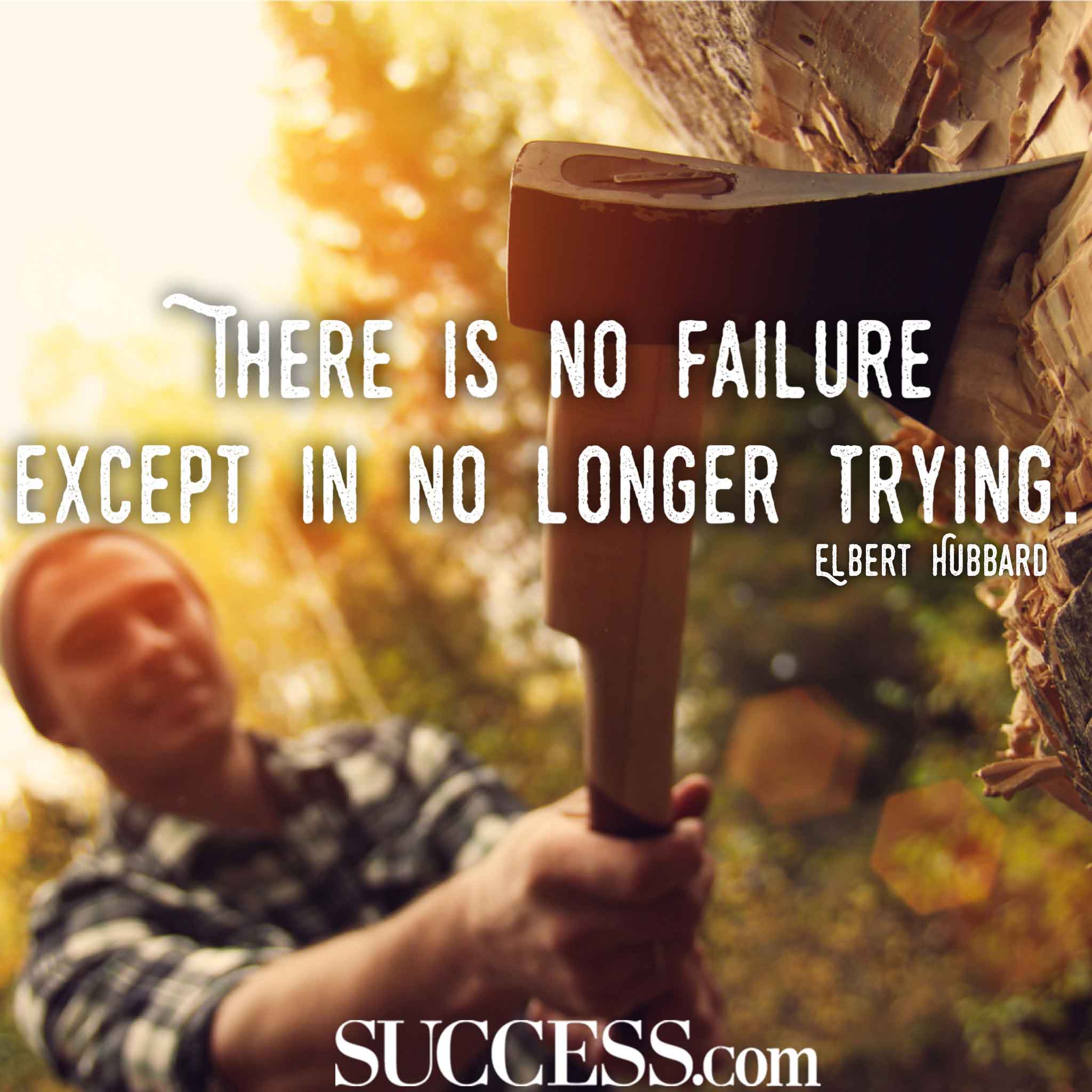
Have you said any of these things recently? “I quit!” “I’m tired of trying.” “I give up.” “It’s not fair.” “It’s not worth it.” “Why do I have to do everything?” “It won’t last.” “There’s no use.” “I’m just not good at it.” “What difference does it make?”
Words matter. They can move us toward positive outcomes or negative ones. The negative affirmations above, spoken or just thought, sound true. Some may even be factual. They move us to action. The problem is when we are moved to act in ways that make things worse instead of better.
Whether it is your job, a lifestyle change, or relationship…we choose whether to be proactive or reactive. Whether we give up or keep at it. Bit by bit. Day by day.
All of life is a journey. We move toward one another or away. Our temptation is to self-protect…or protect someone we love thinking it requires pulling away from someone else. We can give up without even realizing it. Just in the disappointment…the distancing. We pull away from possible solutions. They are just too hard. Or are they?
When we get to the point of giving up, it’s not just giving up on that person, but giving up on ourselves in relationship to that person. Maybe even giving up on God to help us repair the rupture, thus opening one between us and Him.
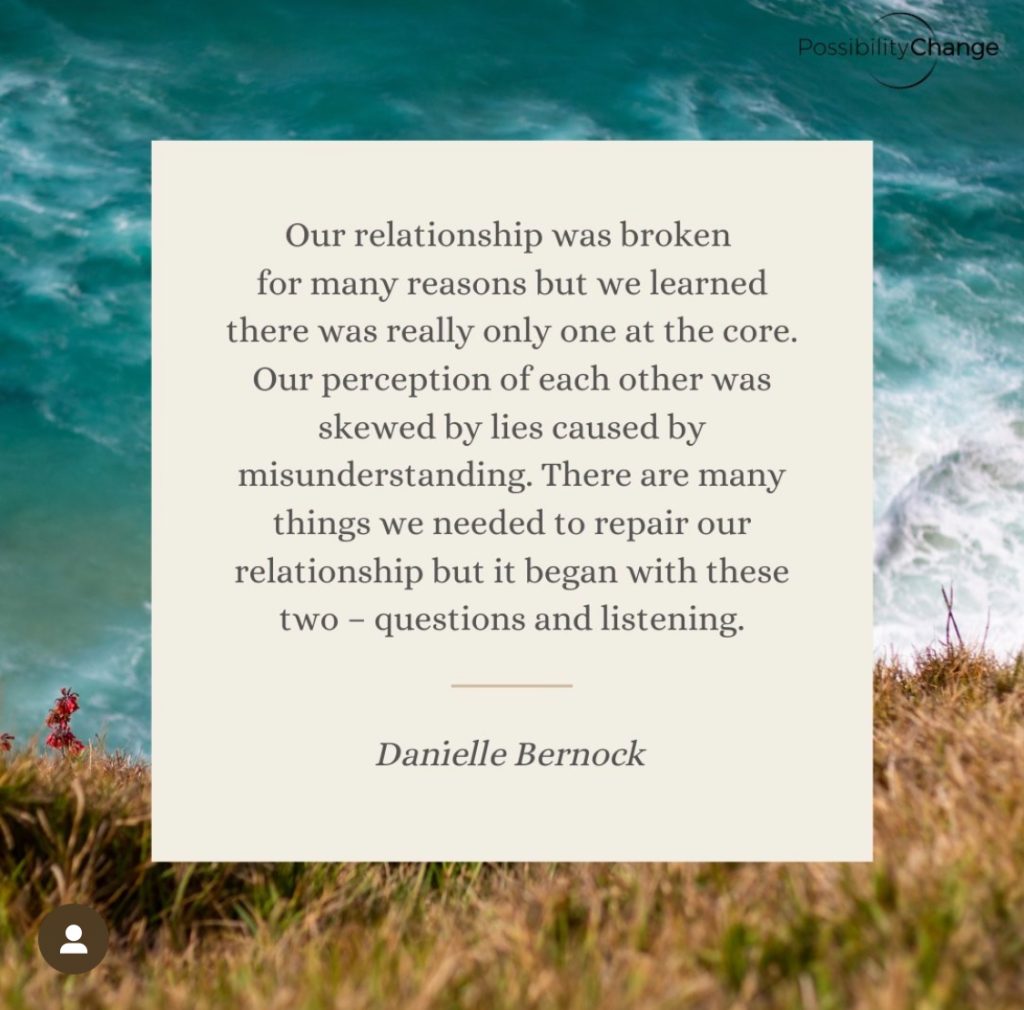
You may think I am philosophizing or making this too simple. Believe me, I totally get how complicated “not giving up” can be. And painful. And even isolating. However, giving up is more isolating…and potentially more painful. We can bury the pain, cover it over, but it’s still there.
Now, we may not be able to restore the relationship…or heal a family wounded by rupture…but when we quit on them, the door to repair, from our side, closes.
The day will come, I am hoping and believing, with God’s help, that we will see good come through this hard place. For me, I am NOT giving up.
Stories of feeling the need or desire to quit abound. It may be your story as well. There is no blame here. No shaming whatsoever. It’s what we do with our stories that matters.
Attorney, writer, coach Marelisa Fabrega offers 8 strategies for not quitting. Her commentary is thought-provoking so don’t miss reading the article. I’m listing her strategies and adding my own quick thoughts.
Adopt an “I Won’t Quit” Mindset. Make that decision ahead of the situation. When Dave and I began talking about marriage together, we both stated pretty emphatically that, for us, divorce would be off the table. I grew up in a blended family and divorce impacted all my brothers’ adult lives. With Dave, it was extended family who experienced the pain of divorce, and his family felt that pain. Marriage has had its hard seasons for Dave and me, but we fought through together. [Not everyone gets that opportunity as the other spouse can ditch the marriage without your input. I get how painful that is.] Whether in marriage, friendships, work, or physical/mental health, an “I won’t quit” mindset gives you fortification in hard situations.
Watch Someone Else Persevere.It is a beautiful and poignant thing to watch when loved ones refuse to quit. I’m not saying to be a doormat or to continue to take terrible abuse. What I’m talking about is when people keep pressing forward in tough work or relationships when everything in their being and all those around are screaming, “Quit!” Two women come to mind here. One friend went though a struggle early in her marriage when her husband had an affair. All our friends (but me) advised her to divorce him and make him suffer for what he did to her. I asked her, “Do you still love him? Because if you do, and you could imagine being willing to take him back…wait.” She did love him and she decided to wait. He came back, wholeheartedly repentant. They went on to have a beautiful marriage, children, and now grandchildren. Another friend is in the furnace of a difficult relationship right now. I am watching her persevere. She has strong faith in God and a few deep friendships who are cheering her on. I believe she/they will make it.
Call Someone. This is huge! I’m thinking have more than one person you can trust to be with you (and for you) in this arena when quitting feels like all you want to do. If you’ve already decided up-front that you want to not give up, these friends and family can stand with you when the battle has exhausted you. They are for you. Hopefully they are also for your spouse and family member. It’s better to have folks who are fighting for you AND for your relationship. Not out of some scruple or moralistic platform, but because it’s your life and your battle. It’s what you want. [That may change at some point down the road, and if it does, these same people who love you will still be there.]
Go Back to Your “Why”. It’s extremely important to have a why for not giving up. A list of why’s, even better. I have loved ones very close to me who, if treated badly or served poorly, will determine not to trust an individual or business anymore. They just won’t go back. This is a much smaller situation than a deteriorating relationship. However, I’ve never understood the why and, after reading Fabrega’s piece, I plan to ask. These same people do not quit on family relationships, for which I’m grateful. So…we need to go back to our “why’s” of staying in relationship, or in a job for that matter.
Find a Different “How”. If a difficult boss is blocking the way for you to succeed at a job you once loved, figure out a respectful work-around. If the approach you have always used for managing conflict in your marriage isn’t working, think of a different way. If you continue to struggle with managing a healthy lifestyle or avoiding cycles of anxiety/depression, seek help (counseling, coaching/mentoring, medical advice, support groups). Find another way forward. Outlast the person or problem.
Succeed at Something Else. If you have been immersed in a painful situation, determining not to quit, you may just need a respite. A brief reprieve. A focus elsewhere for a few hours or days will be refreshing. Not seeing success in an area important to us colors how we feel about our self globally. Even when success isn’t visible to us, it may be coming, so we don’t give up. For that second wind, we might be refreshed by setting our sights on areas where we are seeing success (work, health, hobbies). Preferably, we do both – staying in the battle and interspersing life-giving activities.
Use Failure as a Stepping Stone. No retaliation. No victim mentality. You have already made the decision of what kind of character you want in life. Keep growing. Don’t let failure define you. It actually may not even be your failure at all. So, as much as you can yourself, live the life and be the person you want to be. It is a journey after all.
Keep Chipping Away. Like Fabrega has already said so well…keep going. Keep doing what you know is right. This is part of your story. Whatever happened in the relationship or work situation, you are making a future for yourself, and maybe for your children or family. Again, who you are is much more than what you’ve come through. – How to Not Give Up – 8 Strategies For Not Quitting – Marelisa Fabrega
9. Look for Beauty. It is there. Just outside. Or just there within reach. Just in all the reasons you are you.
I’ve read all of psychiatrist Curt Thompson‘s books and he has inspired me to look for the beauty in front of us even in situations where we feel like giving up. He inspired Bill Haley to write an essay on beauty. Here is an excerpt:
“Etty Hillesum, a young Jewish woman from Holland, wrote one of the most truly amazing things I’ve ever read. The context of her words makes all the difference. She wrote them while imprisoned at Westerbork transit camp waiting to be taken to Auschwitz, where she died in 1943 at age 29. Her diaries and letters were compiled intoAn Interrupted Life.
A very hard day. But I keep finding myself in prayer. And that is something I shall always be able to do, even in the smallest space: pray. And I know for certain that there will be a continuity between the life I have led and the life about to begin…
I often walk with a spring in my step along the barbed wire and then time and again it soars straight from my heart — I can’t help it, that’s just the way it is, like some elementary force — the feeling that life is glorious and magnificent, and that one day we shall be building a whole new world. Against every new outrage and every fresh horror we shall put up one more piece of love and goodness, drawing strength from within ourselves. We may suffer, but we must not succumb…
What kind of people do we choose to be? With all my heart, I want to be one who is not giving up. My family (immediate and extended) knows I am for them. Also, hopefully other folks as well – friends and neighbors. I’m not going anywhere. This is not just a commitment. This is an issue of character that goes way beyond any circle I’m a part of. It’s the kind of person I want to be. It’s not a small thing. I get it. Probably a God-sized endeavor. God is for all of us. He does not give up. He is not going anywhere. He is in the room…and He is staying.
You may say…well, you haven’t reached your breaking point, and you are right, of course. We can’t know what it will take for us to get to the place that we want to quit. Sometimes, we have no other option but to let go, because the other person is, or appears to be, already gone. My hope and resolve is to hold out as long as possible. Who knows what difference that could make? I’m holding onto that.