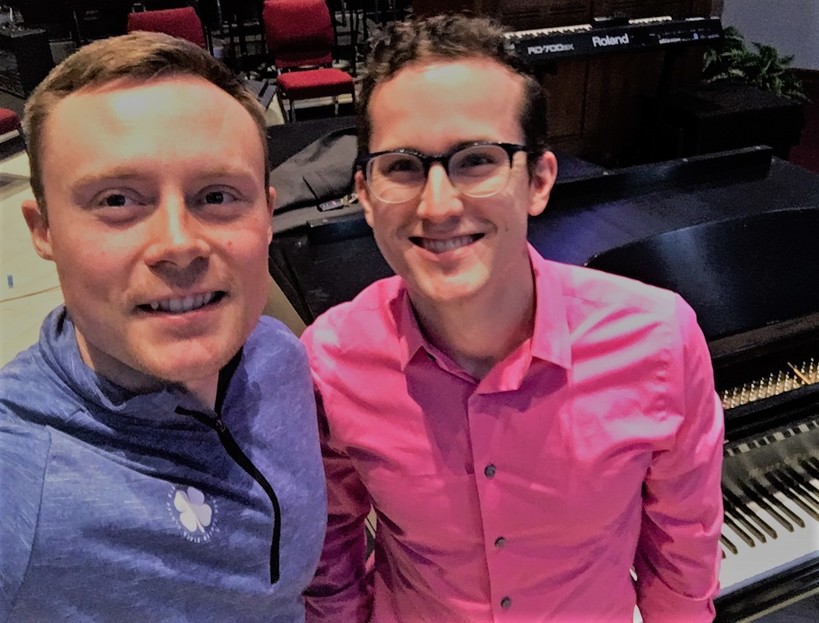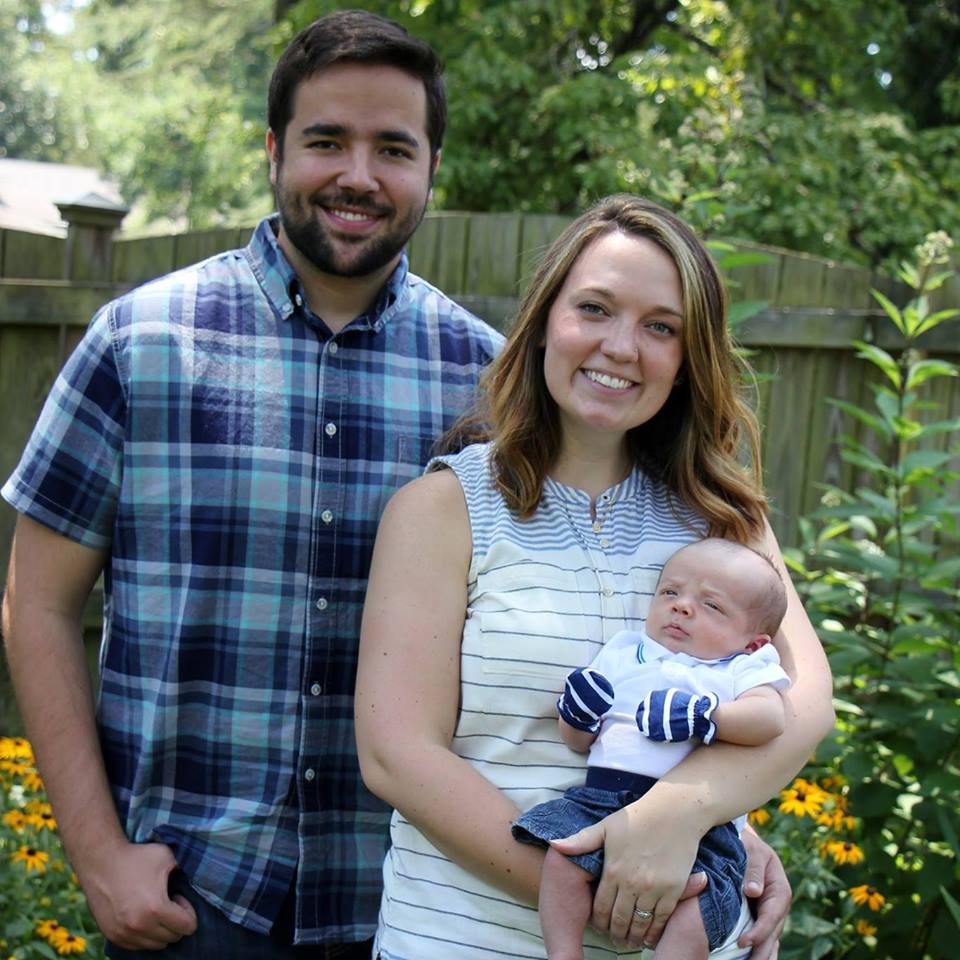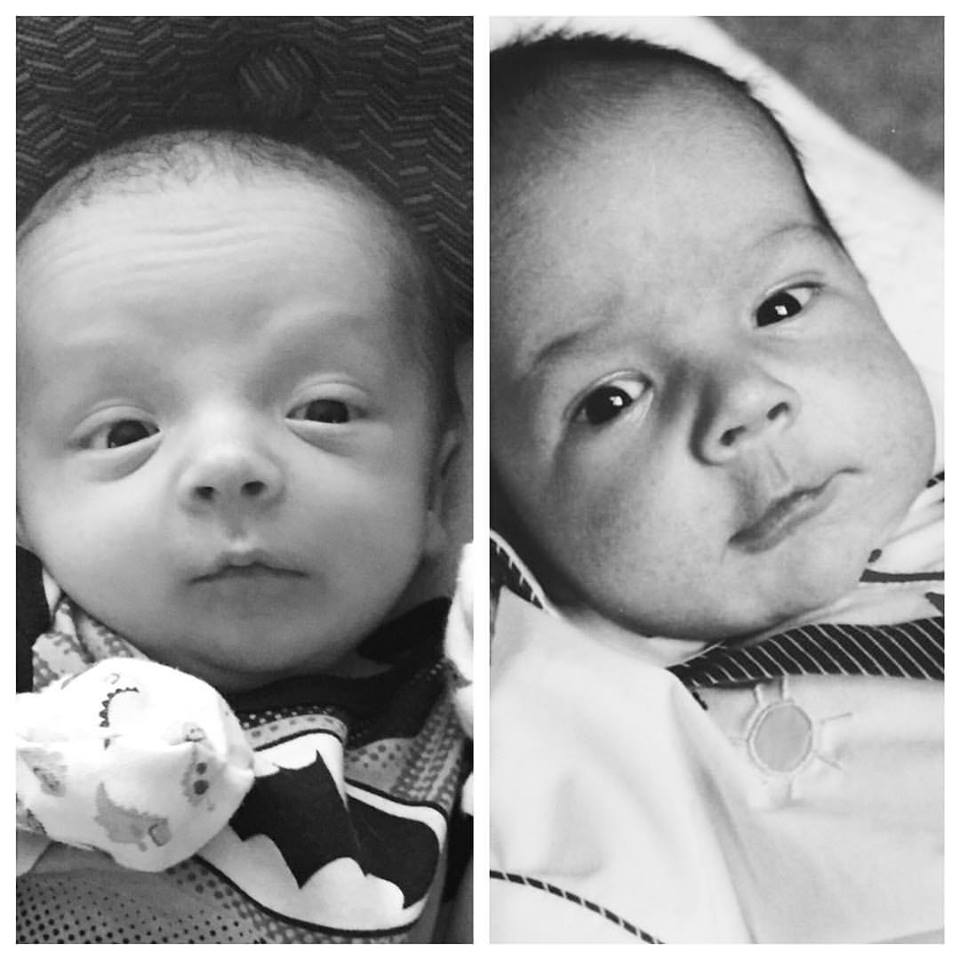
Photo Credit: Benjamin P. Hardy (l), John Burke (r)
On the weekend, I was catching up with a bunch of friends who gather occasionally to keep relationships up-to-date. The question around the table was “So what’s new and exciting?” That usually elicits baby news, job changes, latest relationship, and emotional or situational struggles. I was completely engaged in what they were all saying…and then it was my turn.
I had nothing.
After stammering over what I could add, I pretty much just confessed to the mundane nature of my life. Vanilla was the only flavor that came to mind.
On the drive home, clarity prevailed and the largeness of the past year’s events filled my mind’s eye like watching an action film on the big screen. More “new and exciting” than I imagined could happen in a year – a grandson’s birth, a cancer diagnosis, my father’s illness and death were just some of the scenes of the last several months.
Then, right there, in the dark car, I was filled with gratitude that a merciful God filled all of that with His presence. Sometimes I forget to say out loud how incredibly good God is to be in our lives…and to never leave us alone in the hard.
Today’s “new and exciting” is that I am cancer-free right now, that darling baby is the star of his own music video, and acute grief in losing our dad is shifting to savoring memories of all our years together.
There’s more though…
Later in the weekend, I read this enlightening piece written by Benjamin P. Hardy. He interviewed composer and pianist John Burke about how he pushes himself to create.
Burke listed out four strategies that he regularly uses to “elevate” his work.
1. Always Work on Something You’ve Never Done Before
2. Map It All Out From the Beginning
3. Apply More Layers of External Pressure Immediately
4. Put “Creation Time” On Your Daily Schedule
Read Hardy’s piece for the particulars of Burke’s creative habits.
Burke’s approach to work, in general, and creating music, in specific resonated with me for two big reasons. The first, is that I had seen his system for creating in the habits of our composer/guitarist son, Nathan Mills (Beyond the Guitar). The second reason is that I see what the “new and exciting” had done to my own creative habits.
I had settled into a sameness, a smallness, that had become a prolonged recovery time for me. Healing was imperative, but there comes a time when we gather ourselves up and get back into life. The Hebrew King David’s example came sharply to mind – after praying and fasting for his terribly ill son – 2 Samuel 12:18-20 – at the news the child died, David rose up, washed and dressed, worshiped God, and ate.
The “new and exciting” for this Monday is to take John Burke’s strategies to heart. When a person gets her life back after a cancer diagnosis, and recovery is behind her, the best medicine is to get on with life…with a renewed passion and intentionality.
Thank you, Mr. Burke, and Mr. Hardy.
My husband has described this “elevating our work” with the phrase “Shifting to the next gear”. That’s what I want for this next chapter of my work life. I’ve been driving the service roads, and now it’s time to get back out on the highway. To adjust my life to a greater difficulty and higher speed.
Elevating our work requires adjusting our thinking in that direction as well. [See links below.]
There’s a precious little girl in my life who calls me “Ga” (because she can’t yet say “Gram”). Not even 20 months old, she has learned well how to use her tiny index finger to point for us to take her wherever in the house or yard she wants to go. She demonstrates her mastery of body parts by pointing that finger to her eye, nose, mouth, etc. when we call out the word. Just recently, she holds up that singular wee finger when identifying the number “win”.
My heart melts.
Unfortunately, I am a culprit contributing to the delinquency of a minor…no, no. Not that…but I have contributed to her developing that index finger further in playing with my smart phone. She knows how to scroll through pictures and she knows how to tap the “play” icon to start up videos.
Is that so horrible? What’s the harm?
[Here’s the disclaimer. There is no judgment here whatsoever for the sleep-deprived moms out there who hand their preschooler their smart phone or tablet while nursing or dressing the baby…or trying to get dinner prepared…or (fill in the blank). I remember the years of small ones myself, so many years ago. In fact, the TV as babysitter was my go-to device to get stuff done or maintain my own supposed sanity. Not just for the little ones but for myself, just to watch something for my own relaxation. Of course, they were watching with me…so I had to consider the possible impact of that then, as I’m writing about screens now.]Photo Credit: Pexels
My confession comes from a place of discovery. The problem is not that this toddler likes looking at pictures of her family on my phone. That has to be a morally neutral (even positive) thing. Also not a problem is her fondness for her Uncle Nae’s music videos. She has her favorites and daily asks to see those (Dayman and Have Yourself a Merry Little Christmas)…among others…several others.
The problem is when she doesn’t get her way. When Mommy intervenes or when Gram comes to her senses about the amount of screen time she’s facilitating. Then this funny, sweet, curious little girl flings her head back, attempts a body-slam, and emits a piercing angry cry against those who would keep her from her screen(s).
Morally neutral or even positive goes out the window at that point. Given her reaction, when does something soothing and enriching like family photos and videos cross a line…out there in a few kiddie years…to a screen or internet addiction?
I don’t think I’m over-reaching here. There is balance absolutely, but if we don’t even consider the risk, we won’t take steps to keep screen use healthy for our children/grandchildren. I’m dealing with this in my own head right now…and in my habits.
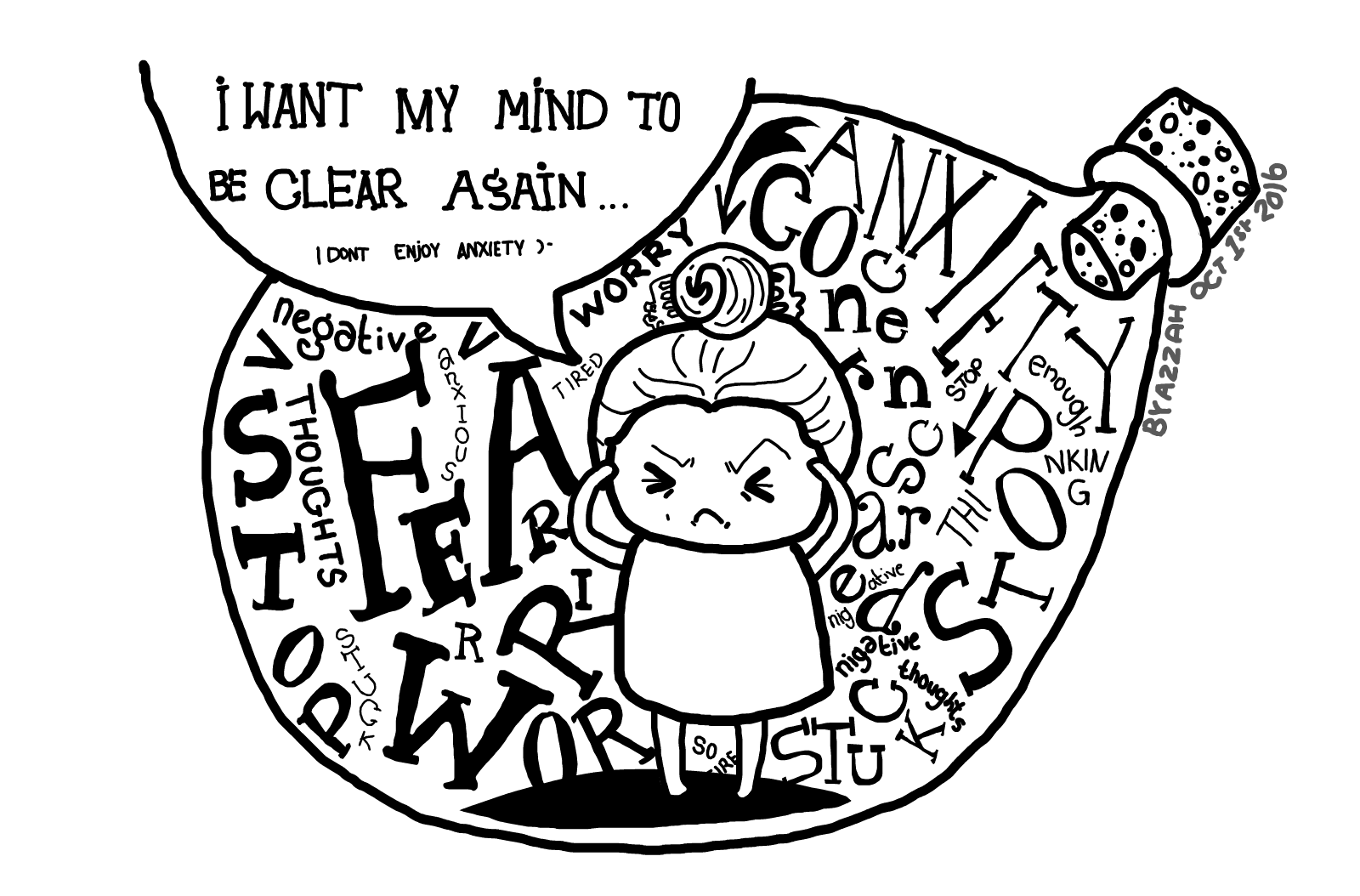
This is not a new awareness. Articles have been popping up for years on the negative emotional, physical and social impact of over-use of tech devices. As we’ve passed our devices on to our children, the warnings apply to them as well. Worse for them is the fact that their brains are still in development, as are their interpersonal bondings, awareness, and skills.Photo Credit: Flickr
Many parents intuitively understand that ubiquitous glowing screens are having a negative effect on kids. We see the aggressive temper tantrums when the devices are taken away and the wandering attention spans when children are not perpetually stimulated by their hyper-arousing devices. Worse, we see children who become bored, apathetic, uninteresting and uninterested when not plugged in.
But it’s even worse than we think.
We now know that those iPads, smartphones and Xboxes are a form of digital drug. Recent brain imaging research is showing that they affect the brain’s frontal cortex — which controls executive functioning, including impulse control — in exactly the same way that cocaine does. Technology is so hyper-arousing that it raises dopamine levels — the feel-good neurotransmitter most involved in the addiction dynamic — as much as sex. – Dr. Nicholas Kardaras
I was reminded of when our boys were middle schoolers. A friend of theirs came over to spend the night. They played video games for hours. When we finally told the boys to take a break, the friend actually became more and more anxious, even to the point of not being able to get his breath. We had to take him home.
Now all toddlers are not going to end up heroin…I mean, tech junkies. Again, there is a balance in how we determine what’s a healthy use of electronic devices and where limits need to be set.
It’s just something to think about. My confession here relates to the personal struggle I have with internet dependence. I was a late adopter of smart phones (my first being in 2013). At the time, my job was a communications strategist for a new work team. Managing a blog, Twitter and Facebook pages, and other office communications kept me online most of the time. Online and distracted by it. Still a struggle for me to have balance in this area.
I don’t want to have that sort of influence on this darling granddaughter, our tinier grandson, or others who will come after.
Before smartphones and Wi-Fi, I was a people-watcher and a people-engager. I read books more. Had people over all the time. Now, don’t get me wrong…those things still happen…but screens are a huge distraction for me. I would love to be one of the nurturers for our grandchildren of a different sort of life… Screen time is going to happen every day, sure…but not to the point where they don’t prefer talking face-to-face with people nor be a part of great adventures or discover the world (in real life).Photo Credit: Flickr
How are you handling your own electronic version of life? Please share in the Comments section. You will find helpful links below – articles and books. All the articles are practical and empowering. [I have not yet read the books; they are recommended by the authors of some of the articles below.]
As for our little one’s love of her uncle’s videos? She will still be watching them, just not over and over and over. Fortunately she can also enjoy the music (without benefit of the screens) because we are Patreon patrons of her uncle with his MP3s as perks). Those music files were a great help recently to this tiny girl enduring a long roadtrip. Listening to her favorites, she finally fell asleep.
Happy Friday! Here is my gift to you today – so many glorious finds I’ve tried to compress into 5 Friday Faves.
1) Common Purpose – Every year, Glassdoor, a website that assists employers and potential employees to find each other, posts a Top 50 of Best Places to Work.
In his LinkedIn article, Barry Sanders talks about one of the characteristics of what makes a “best place to work”. This characteristic is “common purpose”. He writes:
Common purpose is essential to driving organization-wide adaptability, which is key to succeeding in today’s fast-paced business world. A shared set of values and goals across the organization allows leaders and individual contributors to achieve widespread alignment, manage uncertainty, and guide decisions in times of turmoil and change.
Without establishing common purpose, companies risk a lack of motivation, lower levels of commitment, less loyalty, and decreased alignment amongst their employees—not to mention negative Glassdoor reviews.
He also quotes from his CEO General Stanley McChrystal’s bestseller Team of Teamswhich gives this summary of the importance of common purpose:
“Team members tackling complex environments must all grasp the team’s situation and overarching purpose…Individual SEALs have to monitor the entirety of their operation just as soccer players have to keep track of the entire field, not just their own patch of grass. They must be collectively responsible for the team’s success and understand everything that responsibility entails.”
When you can see the entire field, not just your patch of grass, your organization becomes more effective—and a better place to work. – Barry Sanders
I sure hope senior leaders get this message. Just communicating the purpose is not enough. That “patch of grass” must be given to that soccer player. He must own it and own his part of the entire field. Leaders who genuinely believe in and nurture common purpose cultivate a “best place to work” for their personnel.
2) Safeguarding Your Marriage – Infidelity or unfaithfulness in our marriage relationships is not just about sexual betrayal. Infidelity can happen when we allow our hearts to become more bonded to someone or something else more than to our own spouses. Dave Willis defines infidelity as “broken trust or broken loyalty”. He has posted a tremendously helpful article entitled The 9 Forms of Infidelity in Marriage (Hint: 8 of Them Don’t Involve Sex). Willis is a pastor,counselor and founder of Stronger Marriages. Single or married, you will benefit from his article because too often we “fall” into infidelity by letting ourselves be deceived in thinking it’s nothing. Safeguard your relationships!
3) Being Different – Matt Damico has written an excellent piece for Christ-followers. It is The World Needs You to Be Different. If you are reading this and you aren’t keen on the teachings of Jesus, you may already think that Christians are a quirky lot of people. What Damico says in this article is to call us to the rhythms, the routines, the practices of the church that work a peculiarity in us that’s a good thing.
Piano scales make a pianist. Hours behind the wheel make a driver. Weightlifting reps make muscles, and lots of miles make a runner. Routine and repetition aid us in so many ways, yet a lot of us seem allergic to similar habits in our weekly church worship gatherings.
But just as these individual habits do something to us, so it is with our congregational habits: they’re making us into something. God willing, they’re making us the right kind of peculiar.
We’ll bear fruit in this life when our roots are firmly planted in the coming new earth. As C.S. Lewis said, history shows that “the Christians who did most for the present world were just those who thought most of the next.” One of the main ways this happens is through the rhythms and repetitions worked into our weekly gatherings.
So, as your church gathers for worship this weekend, appreciate anew what’s happening, how the strange rituals — the “rhythms of grace,” as Mike Cosper calls them — are making you more faithful and more fruitful. – Matt Damico
[Cliff Jordan, teaching elder at Movement Church, in Richmond, Va. preaches on this very thing for several weeks in a series entitled Grace On Display. Seriously transformative stuff!]
4) Hard Seasons – I’m not going to wax on here about hard seasons – we all know what ours are. I just always want to keep Syrian refugees on my radar so here’s a photo piece that dramatically displays their reality…in a way that has stayed in my mind all week.
Then I also wanted to share a piece by Aaron Brown. I know his family. He grew up in Chad where his father was a physician. His reflects on a very difficult time and its oddly positive impact on his life…renewing his hope after the very difficult year of 2016.
5) Small Beginnings – In the Bible, the prophet Zechariah encouraged the people, “Do not despise small beginnings.” They had the huge task of rebuilding the Temple, and Scripture tells us, this great work began in the mundane but extraordinary act of Zerubbabel picking up the plumb line. Any beginning may seem small and inadequate for the grand vision that stretches in front of us. However, we never know when the small explodes into wonder.
Chip and Joanna Gaines (HGTV stars of Fixer Upper) have an incredible story of small beginnings which grew into a huge, phenomenally successful business. They started out flipping houses as a young couple and often had just the cash in their pockets. Now they have their own TV show, a real estate business, home goods store, and “The Silos” – a refurbished commercial venue in Waco, Texas.
Another example of small beginnings is pastor and author Tim Keller. Just this past week, Keller announced he was stepping down from the senior pastor position of New York City’s Redeemer Presbyterian Church. He pastored there for almost 30 years and it now is a multi-site 5000-member church. [This is a planned succession and he will be teaching in a seminary.] A friend of mine here in Richmond “knew him when”. Years ago, before his NYC church role he was her pastor, in a small church near here – West Hopewell Presbyterian Church. Small beginnings…
Whether you are examining a small beginning as a Christian or from a different worldview, there is excellent counsel to be had…both in Scripture and in articles (such as those linked below).
Just yesterday I was trying to encourage a young man about what he viewed as a small beginning in his career. Not sure I made sense at all. Then today, my husband emailed me this great article – about the exact same subject.
Don’t you love when you read someone else’s brilliant words that essentially describe the counsel you just gave someone?! Benjamin P. Hardy is way more studied and eloquent than I, so please don’t miss his piece titled The 2 Mental Shifts Every Highly Successful Person Makes. He talks about:
the power of choice (“you stop playing the victim to external circumstances and take responsibility for your life – the private victory“) and
the power of context (“In everything you do, there should be collaborative and synergistic elements. Of course, there is work which is your work. However, that work should be embedded within a group of others and toward something much bigger. – the public victory”)
Hardy’s full article is excellent (even includes components of the assist we get from brain plasticity which I wrote about earlier).
You know that shocking experience when you are driving to a known destination and then get lost in your thoughts? At some point, you snap back to attention and wonder, “How did I get here, I wasn’t even thinking about it?!” That is neuroplasticity or brain plasticity. It is an amazing capability we all have and can be nurtured and utilized throughout our lives. Yes, “old dogs CAN learn new tricks“.
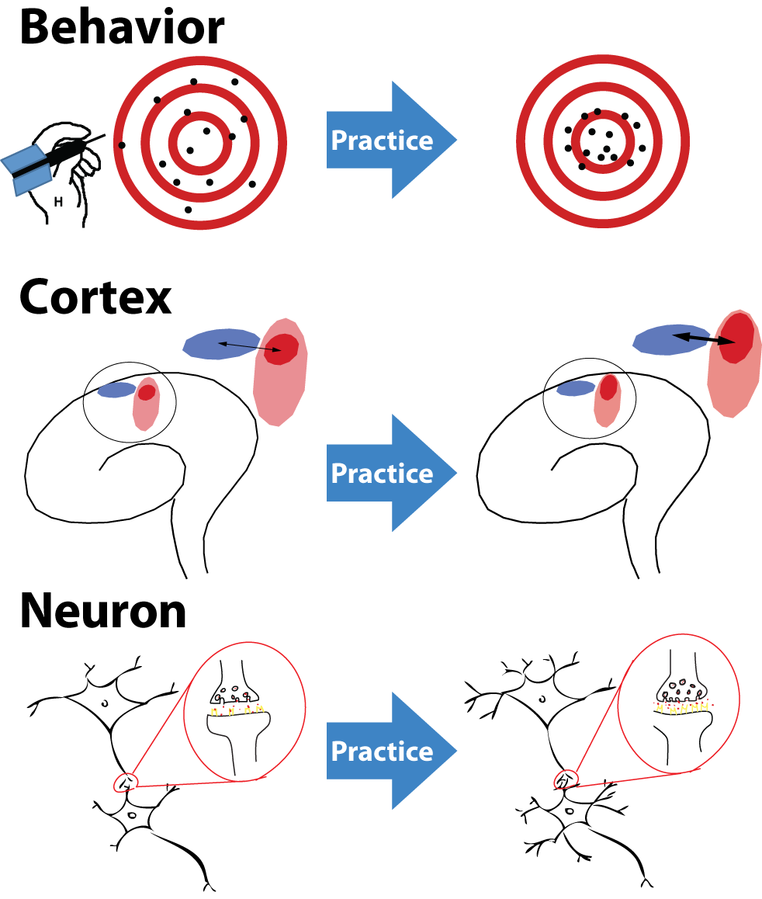
Neuroplasticity refers to the brain’s ability to restructure itself after training or practice. An example of how neuroplasticity works: when you view the brains of people who frequently practice playing the violin under fMRI (functional MRI) they appear to have developed a larger area of their brain devoted to mapping their fingers. Photo Credit: Wikipedia
This change is directly related to the quantity and the quality of the practice they’re performing – their brains are adapting in very real and tangible ways unbeknownst to them... The more practice you accumulate, the more ingrained or grooved the pathways become. Of course the inverse happens as well: if those pathways aren’t utilized, the space will be used by other pathways needing room to grow. Use it or lose it! …Your brain can change based on repeated experience…People of any age have the ability to learn new things and form new habits. – Mike Torres, Refocuser
Watching Nathan play intricate, complicated runs on his classical guitar boggles my mind. How can he think that fast? It’s lots of practice that causes the brain to connect to the hands, and those difficult pieces get “under his fingers” almost without thinking.
Years ago a friend gave us this book Never Too Late by John Holt. In his “musical life story”, Holt describes how he learned to play the cello in his 40s. We were encouraged by this during a time we moved to Egypt and learned Arabic in mid-life…when language-learning is supposed to be especially difficult.
I love neuroplasticity but it gives me hope, in getting older, of keeping skills and developing new ones, even as an aging person…unless I give in to dumbed-down practices excusing myself for the same reasons of “getting too old”.
When my older brother suffered a stroke, it was neuroplasticity and the repeated efforts of his medical and therapy team that got him back on his feet. He finally “repeatedly practiced” his way back to independence. The personality changes seemed more ingrained, however, they changed, too, as he exchanged his anger and bitterness for a hopefulness and longing for healthy, loving relationships. As he refused to give into anger and chose soft responses, his personality seriously changed over time…with conscious that eventually turned unconscious practice.
How does all this apply to us in the workplace and life, in general? We are confronted at times with a situation that confounds us – a new uncomfortable skillset, an unpredictable relationship, or an unfamiliar decision-making process. Neuroplasticity helps us to not just give up on mastering either a new work process or a complicated interpersonal situation.
Debbie Hampton has written an excellent summary piece on this that will help kick-start any new habit formation necessary for us to continue to do excellently in our work. She was influenced by Dr. Michael Merzenich’s work published in his book Soft-Wired: How the New Science of Brain Plasticity Can Change Your Life. I have listed below Merzenich’s 10 elements of how we can rewire our brain. You will find Hampton’s summary on each very instructive. [I comment briefly on each but don’t miss what she says in her article.]
10 Core Principles for Remodeling Your Brain
1. Change is mostly limited to those situations in which the brain is in the mood for it. We have to want to learn and change. If we give up, stay resigned to the status quo, or remain fed-up, change will not happen. Want change!
2. The harder you try, the more you’re motivated, the more alert you are, and the better (or worse) the potential outcome, the bigger the brain change. Focus and persistence or key to mastery.
3. What actually changes in the brain are the strengths of the connections of neurons that are engaged together, moment by moment, in time. Practice strengthens pathways for behavior. Whether it’s learning a new computer system or developing a different way of communicating with a boss…practice hard-wires.
4. Learning-driven changes in connections increase cell-to cell cooperation, which is crucial for increasing reliability. I see this in musicians who live-stream and can read listener chats, respond to them, and continue playing all at the same time. Crazy.
5. The brain also strengthens its connections between teams of neurons representing separate moments of successive things that reliably occur in serial time. This is definitely the mechanism that gets us to our destination when we stop thinking about where we’re going.
6. Initial changes are temporary. Habit formation takes time, and somehow the brain interprets whether the change is vital. Amazing.
7. The brain is changed by internal mental rehearsal in the same ways and involving precisely the same processes that control changes achieved through interactions with the external world. At the simplest level, this is the mechanism of how we “talk ourselves through” a situation. Or when an athlete goes through his routine in his mind before he’s back out on the track or in the pool.
8. Memory guides and controls most learning. Our brain actually helps us to remember what we did well and discards what we didn’t.
9. Every movement of learning provides a moment of opportunity for the brain to stabilize — and reduce the disruptive power of — potentially interfering backgrounds or “noise.” The more we practice, either a physical skill or a way of thinking through a problem, we actually get better at it because somehow the brain reduces the background noise (which can include insecurity, fear of failure or self-doubt).
10. Brain plasticity is a two-way street; it is just as easy to generate negative changes as it is positive ones. Dr. Merzenich warns us, as we get older that we “use it or lose it” by our own decisions to stop learning and mastering new skills and behaviors.
How are you using neuroplasticity to help you continue to grow in your work and personal life? Trevor Blake encourages us to set the tone of the day positively and don’t defect from that. Using self-defeating language can blur our focus and mental capacity for mastery. Read more of his excellent counsel here.
As we age, or give in to “what is” at the moment (tracks greased by depression sometimes, or perceived lack of ability or opportunity), we may not realize the great positive effects of neuroplasticity. However, the good news is that we can keep learning and changing and mastering what work and life and relationships bring our way. It’s never too late.
Leaders of Tomorrow. What age group came to mind? Probably not your own. Maybe that’s one of our dilemmas in life and work. We either think we have already arrived as tomorrow’s leader today (ugh!). Or we stop thinking of how we can develop into that change agent of tomorrow because we’ve fixed our course…or settled into what we know already. It’s served us well so far, right?
Here’s my Monday morning gift to you: an introduction to the person, writing, and wisdom of Matt Monge. Earlier in his career, he worked in finance (credit unions, in particular), and had fascinating titles like Chief Culture Officer and Vice-President of People and Development. Currently he is is president of The Mojo Company, a leadership development consulting firm. His Facebook page bio reads: “My mission? Make the world a better place by helping people, leaders, & workplaces be more human. Depression fighter. Keynote speaker. Head of The Mojo Co.”
I read everything Matt Monge writes. Even his promotional video taught me more about leadership (you’ll want to take notes).
Monge posted a blog a few weeks back and I’ve been thinking through it since… It’s his 7 Skills Tomorrow’s Top Leaders Are Developing Today. I decided to post his bullet points here and how they stirred my thoughts on skill development today. [Don’t miss reading his thinking on this and other leadership topics in links.]
Being Others-Oriented – While other employee development folks have moved away from “servant leadership” language, Matt Monge continues wisely to be a strong supporter of it. I, too, am delighted by leaders who continue to seek out the greatest good for both employees and customers. The bottom line is best served here. As the years go by, or as tribes are built, our temptation is to coast in this area…making the negative assumption that someone else is serving while we’re the idea leaders. As leaders go, so go the organizations.
Persuasion, Logic, & Negotiation – First, Monge sees top leaders as practicing persuasion and negotiation differently “not with power, position, coercion, or even deception; but rather through logic, reason, and with an eye toward the good of the whole.” It’s funny how unaware leaders can be in thinking that manipulation and coercion go unnoticed by employees under their authority. It’s always better to do the work of taking the high road of negotiating and persuading. When we engage in the give-and-take of healthy debate and problem-solving, it’s a win-win for everyone. It does require time, trust, homework, and humility.
Reframing – This is a discipline of looking at a problem or situation from different perspectives. Monge talks about doing this in such a way that we wrestle with our own biases and blind spots. Reframing can make for a decision or problem solved that have wider success or effectiveness.
Knowing How to Think about and Make Decisions – Monge makes the distinction of being decisive vs. being a good decision-maker. I love this because often we experience leaders who get the job because they are decisive. Period. Full-stop. What does it take though to be a good decision-maker? To become an effective leader is to examine how we make decisions – what are my decision-making processes, who are my guides, what are those factors that always weigh in on my decisions? [Monge names those factors as presuppositions and core values. We need to think about what those are.]
The Ability to Work and Build Community with Others – This is such a core value of mine and yet after years in my career, it bears refreshing. I’m reminded, as Monge writes about this, of the Old Boys’ Network. Today, maybe it’s less-gender-defined and called other things, like C-Suite executives, or even tribe. Still, if it’s a few making decisions for the many, it’s not community. Monge’s constant message is that the strength and health of an organization is in the community. Leaders must do the work of leaning in to their colleagues (outside the executive suite) to draw on the wealth of knowledge there and to affirm the value and varied roles of those coworkers.Photo Credit: Twitter
Leadership – The leaders of tomorrow are continuing to develop themselves toward that future. We can be always learning, always growing – not necessarily just like other leaders in our lives, but learning what we need to learn to remain relevant/useful. Resting on the laurels of past successes or doing “what we’ve always done” will eventually pull us to the sidelines. I’m in the painful, personal throes of dealing with this right now myself. Shaking it off and moving forward!
Understanding Humanness & Emotional Intelligence – Monge defines emotional intelligence as having “four basic components: self-awareness, self-management, social awareness, and relationship management”. Foundational to emotional intelligence, in Monge’s thinking, is this whole element of humanness. As the workplaces of the future give way to more and more technology, we will be wise in tuning into the growing need for humanizing our organizations and our human employee experience. Being tech-savvy and not people-savvy misses what could be. Leaders of tomorrow, take note.
So that’s it for today. I love Mondays because they bring another opportunity to hit “the refresh” key of our work lives. We are not only motivated for the week ahead – differently than Fridays when the focus is the weekend – but we’re fresh in our view of our work community…and hopeful.
Matt Monge and others like him give me the encouragement I need to cast off from the safe, still shore and re-enter the fast and deep water of today’s work environment, determined to maneuver well there…and maybe even coax other quality people back in from the shallows. Whatever our ages or sensibilities, we can work toward being tomorrow’s leaders of excellence.
Friday again. Whew…this week flew…for me, anyway. I have some great finds for you…as usual, if I might be so bold. Friday Faves celebrate the hard work and achievements of others that encourage me and I hope encourage you. So here goes:
1) Snow Days – For some of you snow comes in months not just days. For us, it’s a few glorious days of this…and I love it!
I have no need for heavy snow recreation…just the quiet, the beauty, the slowing down of life, and the camaraderie of those snowed-in or out with you (family, neighbors, colleagues). More books, more coffee, more hours in pj’s, and more meditation on the Creator who orchestrated such beauty for our pleasure.
2) Organizing Your Life – Leadership coach Paul Sohn has posted the most fascinating infographic on organizing your life – not just your home space, but your work and social media spaces. Really helpful!!
3) Riveting Short Film – It is so easy to allow our attention to drift away from important issues. The news stream is so full and fast-moving. About a year ago, National Geographic showcased a short film by Lior Sperandeo entitled People of Nowhere. It puts the film-watcher on the seashore as boat after boat of Syrian refugees arrive, some barely alive…leaving everything and desperately risking all they have left – each other and life itself. Compelling and transforming…and still happening.Photo Credit: Vimeo

4) Dayman Cover – One of the longest running TV sitcoms in the US is It’s Always Sunny in Philadelphia. Out of this edgy sometimes dark comedy came a song that is known and loved by the show’s fandom – that song being Dayman. Here is the clip from the show and below is the cover arranged for classical guitar by Nathan at Beyond the Guitar. [The Green Man is a frequent character on the show.]
The social media buzz over this video was fun to watch as well.
5) The Possibility of Unity – Political conversations post-election in the US continue to simmer and sometimes boil over. There is no hope for unity unless we do the work to forging a path. Therein lies the possibility. Two thought-provoking posts came out this week of the topic – one from a business leadership writer, Jarrod Shappell, and the other from a Christian thinker and author, Philip Yancey.
“In The Anatomy of Peace, a fantastic book about attempted reconciliation between leaders of Israel and Palestine, the authors say, ‘In the way we regard our children, our spouses, neighbors, colleagues, and strangers, we choose to see others either as people like ourselves or as objects. They either count like we do or they don’t. In the former case we regard them as we regard ourselves, we say our hearts are at peace toward them. In the latter case, since we systematically view them as inferior, we say our hearts are at war.’ If we continue to believe that we are on the superior side of the argument, we will only objectivity, vilify, and perpetuate conflict.
Finding healthy unity that embraces difference is no easy hunt. We prefer to retreat into our tribal groups among people who think and act like us. We say we value different points of view but rarely seek them out. We feign listening but are really just forming our next rebuttal. All of that is unity’s most insidious counterfeit – uniformity. We are seduced by the enjoyment of confusing sameness with unity.
We fear that adapting our viewpoints is compromising our values (spoiler alert: it’s not). But true unity is hard, gritty, messy work. It takes guts to let go of the need to be right. It takes the deepest of principles to understand your “enemy’s” views rather than vilify them. And only the greatest of organizations, communities, and leaders will take the leap of faith away from their staunchly held ideals in the belief, hope, and determination that there is room for both theirs, and others, ideals.” – Jarrod Shappell, Navalent
Then, from Philip Yancey:
“Francis Schaeffer added, ‘Love—and the unity it attests to—is the mark Christ gave Christians to wear before the world. Only with this mark may the world know that Christians are indeed Christians and that Jesus was sent by the Father.…It is possible to be a Christian without showing the mark, but if we expect non-Christians to know that we are Christians, we must show the mark.’ I see that as the biggest challenge facing committed Christians in the new year.
As the dust settles from the storm of 2016, I pray that those of us who follow Jesus remember that mark above all. The apostle Paul used these words to describe the characteristics of a true Christian: humility, charity, joy, peace, gentleness, forbearance, patience, goodness, self-control—words in short supply last election year. Republicans will busy themselves with the difficult task of governing a factious nation in a perilous world. Democrats will huddle to devise a new playbook. May Christians of all persuasions remember that our ultimate allegiance and our ultimate hope belong to neither party. As resident aliens in a divided nation, may we too form pioneer settlements to show the world the Jesus way.” – Philip Yancey, Election Reflections: Bridging the Gap
Bonus:Kris Kristofferson – Story behind his song Why Me, Lord? and the latest on this man’s amazing life:
“Come to Me, all of you who are weary and burdened, and I will give you rest.” – Jesus – Matthew 11:28
Ever have one of those days when it feels like you’ve just got nothing? Nothing to bring to the discussion…or the relationship?
There’s this amazing group of young women in my life who gather weekly to fellowship and to open God’s Word together. We sit in a loosely shaped circle to give space for lots of children to meander through. From babies crawling around to toddlers and up weaving through us from one side of the room to the other.
These young women enrich my life more than I can say. Those years of small ones were tough years for me…challenging and fraught with the fears of not parenting well enough.
Being in this group allows me to remember the grace of God in my life in those years as I see His grace reflected in them. In fact, even on the hardest, most tiring days, I see Jesus in these women.
Today, when we gathered, I had nothing. Tired from so much travel. Way too much catching up to do for this distractible me. Lists written and rewritten. The desire just to sleep….winning.
Then an hour with sisters…and the experience of “got nothing” was profoundly changed into rest for my soul and a rallying for what was on the schedule today. Hugging babies, funny stories, resonating with each others’ situation, and praying for each other…energized and normalized.
What is that “normal” for a believer? Normal includes those days that are going to take all we’ve got and then some…and there’s grace. Normal is also remembering God early, seeking Him often, and trusting Him always.
Today, because of friends and sisters, I faced the reality that my early morning quiet times with the Lord have frayed with travel, and fatigue, and (I’m calling it) poor choices. Not beating myself up over it…but grateful to come to the end of myself…and still find God there.
On Sunday, at Movement Church, we sang a new adaptation of an old hymn by Elizabeth Akers. In worship, in that moment of singing an unfamiliar hymn, God began opening my heart to a renewed longing for Him. Nothing else can satisfy…or give us the deep rest we so desperately need. Just Jesus.
Today, in a circle of women who love each other in a way that reminds us of how God loves us, I was held…as if God Himself was doing the holding. Be held, Dear Ones.
…Speaking the truth in love, we will in all things grow up into Christ Himself, who is the head. From Him the whole body is fitted and held together by every supporting ligament. And as each individual part does its work, the body grows and builds itself up in love. – Ephesians 4:16
Weary burdened wanderer there is rest for thee
At the feet of Jesus in His love so free
Listen to His message, words of life, forever blessed
Oh, thou heavy laden, “Come to Me, come and rest.”
There is freedom, taste and see
Hear the call, “Come to Me.”
Run into His arms of grace
Your burden carried, He will take
Bring Him all thy burdens, all thy guilt and sin,
Mercy’s door is open, rise up and enter in.
Jesus there is waiting, patiently for thee
Hear Him gently calling, “Come, oh come, come to Me.”*
There are two more verses in the original hymn. One of those follows:
Linger then no longer, Come just now to Him; Ere the shadows gather, And thy light grows dim. Thou hast long been waiting For some better time, But today He’s calling, Come and claim Him thine.**
On days, when it seems we’ve got nothing…the truth is in Christ, we have all we need. Our part is to come to Him…and rest in Him. His strength is displayed perfectly in our weakness (2 Corinthians 12:9). For those other days, when we feel pretty good about what we bring to the table and maybe we don’t have to be so brave…we can rejoice in the same way as on the “got nothing” days. The same good God equips us, and strengthens us, and cheers us on. Truth! Hallelujah!Photo Credit: Pinterest
Happy birthday, Son. Over the years, you have single-handedly taken me to my knees more often than you realize – praying to be the parent God would have me be for you; praying for you to come to faith at an early age; appealing to God for all the moves (overseas and stateside) to not be too hard for you; asking for comfort when situations were sometimes hard anyway, and thanking Him for all He did for you – the friendships, the opportunities, and His relationship with you from forever.
So many memories.
“Let’s go kill buffalo!” Following your sister around for play ideas. Grandparent visits. Family vacations at the Chesapeake Bay. Move to Africa. Carpool buddies. Gameboy. Drawing cartoons.Computer games. Getaways to the Red Sea. Dreamcast. Becoming a Christ-follower. Baptism back home in Tennessee.
Roadtrips to the Sahara Desert. Soccer. Cousins. Airports. Basketball.
Grumpy when hungry – feed the boy. High School Rock Band. Great friendships. Game Nights. Sleep-Overs. PlayStation. Laughter. Working out. Classical Guitar.
VCU. Honors College. Aletheia Praise Band. Guitar Professor Patykula. Sharing a house with your brother, sister, and then Duy.
Met and married beautiful Bekkah.
Grad school at East Carolina. Then back to Virginia, teaching guitar, playing beautiful music, and making a home…grown.
With being grown, comes adult friendships, some nurtured since childhood, some within the family, others without. With being grown, comes new work challenges, fulfilling life aspirations, and deepening your faith in God. With being grown, comes new family designations – becoming uncle to your nieces (first niece on our side of the family).
Then that crazy day this summer that you wildly trended on social media through a posting of one of your krue.tv live streams.
Best of all…the day Titus was born…and you became a dad.Photo Credit: Helen Phillips, Bekkah MillsTakes after his daddy – Titus (l) & Nathan (r)
Nathan, you are settled for now in the U.S. after so many stamps in your passport. Settled in our hearts forever. You make us laugh, and you make us think. Your grown-up heart is so worth the childhood/teen year battles. And your music…what a gift to us. [Videos linked at end of today’s blog]. Whether you’re on electric, acoustic, or classical guitar. Your music goes right to the heart. Thank you for honing the gift God gave you. – that heart of yours first, and that music flowing out of it.Photo Credit: Duy Nguyen
As you settle into your mid- to late-twenties, I leave you with God’s word to Joshua, Oswald Sanders’ word to leaders, a poem often quoted by our friend Tom Elliff, and a prayer credited to General Douglas MacArthur.
“Have I not commanded you? Be strong and courageous. Do not be terrified; do not be discouraged, for the Lord your God will be with you wherever you go.” – Joshua 1:9
“When a person is really marked out for leadership, God will see that that person receives the necessary disciplines for effective service.” – J. Oswald Sanders, Spiritual Leadership
When God wants to drill a man,
And thrill a man,
And skill a man.
When God wants to mold a man
To play the noblest part;
When He yearns with all His heart
To create so great and bold a man
That all the world shall praise –
Watch His method, watch His ways!
How He ruthlessly perfects
Whom He royally elects;
How He hammers him and hurts him,
And with mighty blows converts him
Into trial shapes of clay which only God understands
While his tortured heart is crying and he lifts beseeching hands!
How He bends, but never breaks,
When his good He undertakes. . . .
How He uses whom He chooses
And with every purpose fuses him,
By every art induces him
To try his splendor out –
God knows what He’s about. – Anon. – often quoted by Tom Elliff
Leaders of Tomorrow. What age group came to mind? Probably not your own. Maybe that’s one of our dilemmas in life and work. We either think we have already arrived as tomorrow’s leader today (ugh!). Or we stop thinking of how we can develop into that change agent of tomorrow because we’ve fixed our course…or settled into what we know already. It’s served us well so far, right?
Here’s my Monday morning gift to you: an introduction to the person, writing, and wisdom of Matt Monge. Earlier in his career, he worked in finance (credit unions, in particular), and had fascinating titles like Chief Culture Officer and Vice-President of People and Development. Currently he is is president of The Mojo Company, a leadership development consulting firm. His Facebook page bio reads: “My mission? Make the world a better place by helping people, leaders, & workplaces be more human. Depression fighter. Keynote speaker. Head of The Mojo Co.”
I read everything Matt Monge writes. Even his promotional video taught me more about leadership (you’ll want to take notes).
Monge posted a blog a few weeks back and I’ve been thinking through it since… It’s his 7 Skills Tomorrow’s Top Leaders Are Developing Today. I decided to post his bullet points here and how they stirred my thoughts on skill development today. [Don’t miss reading his thinking on this and other leadership topics in links.]
Being Others-Oriented – While other employee development folks have moved away from “servant leadership” language, Matt Monge continues wisely to be a strong supporter of it. I, too, am delighted by leaders who continue to seek out the greatest good for both employees and customers. The bottom line is best served here. As the years go by, or as tribes are built, our temptation is to coast in this area…making the negative assumption that someone else is serving while we’re the idea leaders. As leaders go, so go the organizations.
Persuasion, Logic, & Negotiation – First, Monge sees top leaders as practicing persuasion and negotiation differently “not with power, position, coercion, or even deception; but rather through logic, reason, and with an eye toward the good of the whole.” It’s funny how unaware leaders can be in thinking that manipulation and coercion go unnoticed by employees under their authority. It’s always better to do the work of taking the high road of negotiating and persuading. When we engage in the give-and-take of healthy debate and problem-solving, it’s a win-win for everyone. It does require time, trust, homework, and humility.
Reframing – This is a discipline of looking at a problem or situation from different perspectives. Monge talks about doing this in such a way that we wrestle with our own biases and blind spots. Reframing can make for a decision or problem solved that have wider success or effectiveness.
Knowing How to Think about and Make Decisions – Monge makes the distinction of being decisive vs. being a good decision-maker. I love this because often we experience leaders who get the job because they are decisive. Period. Full-stop. What does it take though to be a good decision-maker? To become an effective leader is to examine how we make decisions – what are my decision-making processes, who are my guides, what are those factors that always weigh in on my decisions? [Monge names those factors as presuppositions and core values. We need to think about what those are.]
The Ability to Work and Build Community with Others – This is such a core value of mine and yet after years in my career, it bears refreshing. I’m reminded, as Monge writes about this, of the Old Boys’ Network. Today, maybe it’s less-gender-defined and called other things, like C-Suite executives, or even tribe. Still, if it’s a few making decisions for the many, it’s not community. Monge’s constant message is that the strength and health of an organization is in the community. Leaders must do the work of leaning in to their colleagues (outside the executive suite) to draw on the wealth of knowledge there and to affirm the value and varied roles of those coworkers.Photo Credit: Twitter
6. Leadership – The leaders of tomorrow are continuing to develop themselves toward that future. We can be always learning, always growing – not necessarily just like other leaders in our lives, but learning what we need to learn to remain relevant/useful. Resting on the laurels of past successes or doing “what we’ve always done” will eventually pull us to the sidelines. I’m in the painful, personal throes of dealing with this right now myself. Shaking it off and moving forward!
Understanding Humanness & Emotional Intelligence – Monge defines emotional intelligence as having “four basic components: self-awareness, self-management, social awareness, and relationship management”. Foundational to emotional intelligence, in Monge’s thinking, is this whole element of humanness. As the workplaces of the future give way to more and more technology, we will be wise in tuning into the growing need for humanizing our organizations and our human employee experience. Being tech-savvy and not people-savvy misses what could be. Leaders of tomorrow, take note.
So that’s it for today. I love Mondays because it’s an opportunity to hit “the refresh” key of our work lives. We are not only motivated (like we might be on Fridays) but we’re fresh in our view of our work community…and hopeful.
Matt Monge, and others like him, gives me the encouragement I need to cast off from the safe, still shore and re-enter the fast and deep water of today’s work environment, determined to manuver well there…and maybe even coax other quality people back in from the shallows. Whatever our ages or sensibilities, we can work toward being tomorrow’s leaders of excellence.
It just happens over time…the ignoring of people around us. Think about this morning, coming into work. Retrace your steps, and think of the people you passed within speaking range…but you didn’t…speak, that is. In another season of life, I might have slowed down to walk with someone a ways behind me, or even run a bit to catch up with someone ahead. Just to use that time to connect a bit. We race into our work stations, heads down, as if the most common courtesy of greeting and inquiring into another person’s life just take too much time away from the “important”. We sit down in meetings before they start and get lost in our thoughts, or our laptops, or our phones. We just ignore those around us…
Time itself seems to become more important than people. We circle up with our team, or go one-on-one with our boss or a consultant… when including a colleague, intern, or member of another team could have added greater value to that conversation. Are we more in a work culture today of tight circles when larger collaborative ones might prove more profitable? Do we just ignore those working around us who, by our actions, seem of little consequence to our workday? It’s not intentional maybe…but it becomes habit and then part of our character…communicating that people don’t matter.
Throughout my professional life, I have tried to be tuned into those around me, whether they currently are in my work group or not. My nature is to notice and my desire is to acknowledge. In various work situations, it’s been from a place of influence rather than from a position of authority. Any task or responsibility entrusted to me had to be accomplished through winning the confidence and cooperation of those around me. No authority to just delegate or task others with work. , gifted colleagues have always been willing to work on projects with me. People recognize when they are truly valued, and they engage more solidly when they are genuinely respected/regarded. We can build capacity for noticing people.
Ignoring those in our workplace over time has consequences. Just like that adage “Hurt people hurt people”, I think “Ignored people ignore people”. It’s a contagious work culture practice which has been widely researched. Productivity, employee engagement, longevity, and work relationships within teams and across the organization can all be negatively affected by just the casual neglect or lack of regard for colleagues.
Sidebar: As I was reading and thinking about this issue, the chorus of a strange little song kept coming into my head. The Broadway musical, “Chicago“, has a woeful character who laments about his smallness in life, as if people look right through him. The song is “Mr. Cellophane”.
O.K….back to workplace culture. What would happen if we determined to be noticers and acknowledgers at work? This is not a soft practice…it’s brilliant really. Taking little time, we can, each one of us, actually humanize and elevate the workplace experience for everyone we encounter through the course of the day. This is not an exercise of rewarding a job well-done but of noting the person behind the job…as valuable. Period. Full-stop.
I’ve known some great champions in this through my professional life, and I aspire to be like them. Real servant leaders. We may not think of ourselves as leaders, but we can all lead out in serving, noticing, and acknowledging those around us. Skip Prichard writes about servant leadership and lists 9 qualities of these “noticers”.
9 Qualities of the Servant Leader
1: Values diverse opinions
2: Cultivates a culture of trust
3: Develops other leaders
4: Helps people with life issues
5: Encourages
6: Sells instead of tells
7: Thinks you, not me
8: Thinks long-term
9: Acts with humility
Consider this challenge as I make it for myself to genuinely and honestly take note of people, moving through our workday. This is not about being only polite, but being “in the moment” with those around us. It may start with a greeting, and then an inquiry, and before we know it, it’s possible true caring could follow. Translated into workplace language, that is employee engagement where ideas are exchanged toward better solutions for everyone.
I can’t close this topic without a shout-out to any one of you who’s having that experience of being ignored. You know, of course, that it doesn’t change anything of who you are…but it can harden your heart toward colleagues and dull your thinking in your job. I appreciate Jon Acuff’s piece on being ignored, a piece about Heisman Trophy winner and NFL quarterback Marcus Mariota:
“Throw the passes when no one is watching. Write the pages no one sees. Work through the business plans people don’t believe in yet. Hustle long before the spotlight finds you. You don’t need the whole world on your side to create something that changes the world.”
Postscript: I follow Vala Afshar on Twitter. He is the “Chief Digital Evangelist” for Salesforce and author of The Pursuit of Social Business Excellence. He posted the picture below, with the Tweet “This is how people ignored each other before smartphones”.Photo Credit: Twitter
It made me chuckle because we blame technology for so many of our relational woes when focus and attending to each other is an age-old issue. People matter. Our colleagues matter. Take notice.
The Power of Noticing: What the Best Leaders See – Max Bazerman – Bazerman focuses on taking in information in order to make better decisions rather than the simple act of noticing people (which can also empower decision-making and business process, communicating that people matter).