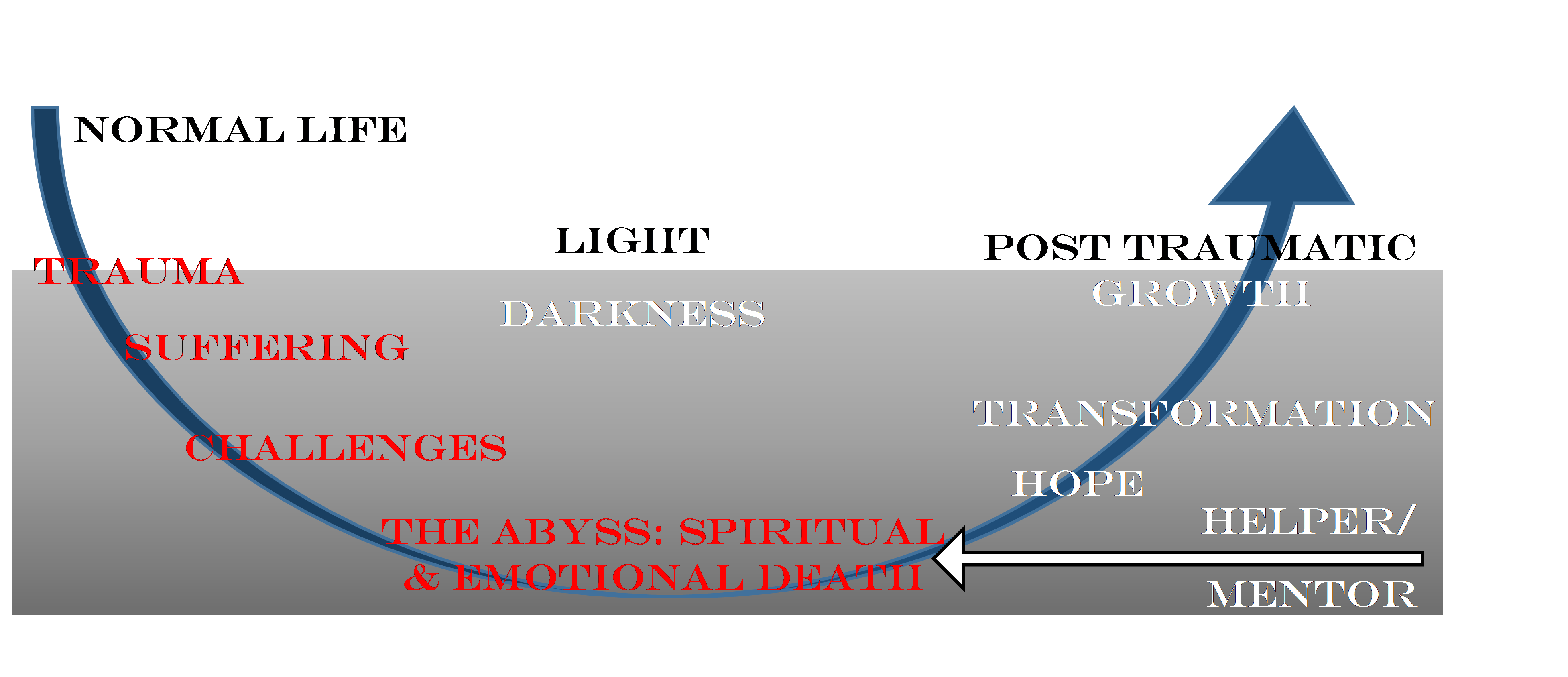
“They did the best they could.” This statement usually follows a description of one’s hard childhood, lack of closeness to one or both parents, or attachment or addiction issues in adulthood. For some, this may be an attempt to pull back from blaming our parents. When we become curious about our childhood, we also find ourselves curious about our parents’ childhood…and their parents. Blaming really gets us nowhere. What we have available to us these days in terms of mental and relational health is so much more than our parents had available to them.
My parents may have done the best they could. For sure, they did what they knew to do. I think of my mom sometimes. What a difference it would have made in her own life to have access to the helps we have today! And she was a good mom. She, my absent biological father, and my beloved step-dad all made mistakes in parenting. I sure did, as well. In many ways, I wish I could go back and change some things. My kids and I have talked about this. In their graciousness, they have released me from the less-than-best parenting I did. Still, it requires me to forgive myself.
[Sidebar: one of my children reminded me that generations of parents have had the Bible as a guidebook and it is full of wisdom. When I talk about present-day helps, I mean experts in the fields of science and medicine who have added to our application of Biblical truth. Curt Thompson, MD is one of those experts.]
Where am I going with this? Last week, I attended my first Connections conference. It is sponsored by the Center for Being Known (CBK), and Curt Thompson is the founder of CBK. Curt also chairs the podcast Being Known with Pepper Sweeney and Amy Cella. That podcast has been like a masterclass for me. So good! Curt is also an accomplished writer, and I’ve read all his books! He is easy to read and has literally changed my life…changed my thinking on so many things – how the brain was created, how we can rewire it after trauma, how we can reframe memory, how we can deal with shame in healthy ways, how we can flourish in community. So many things!
Below you will find some quotes from his books. During the conference, a powerpoint was running between sessions with these and many more quotes displayed. So rich…and delightful to be reminded of these truths. Whatever your background and wherever you are in life, his books will change your life as they have mine.
I will revisit the content from this Connections conference (“Imagination to Incarnation”) on another day. For now, I just wanted to whet your appetite for the possibility of healing, even in the face of childhood trauma, family estrangement, anxiety, depression, isolation and shame.
Whatever your situation, there is help. We can’t go back, but we can go forward. We can reframe memories. We can repair breaches in relationships. We can tell our stories to people who care about us. We can name our struggle. We can begin again.
These are not just lofty ideas. I sat in a room with 450 or so others who are doing the work of healing. Of being better, even doing better. It was a beautiful, hopeful experience.
Postscript: The speakers from this Connections conference and the promo for Connections 2025.
And Jesus said, “There was a man who had two sons; and the younger of them said to his father, ‘Father, give me the share of property that falls to me.’ And he divided his living between them. Not many days later, the younger son gathered all he had and took his journey into a far country, and there he squandered his property in loose living. And when he had spent everything, a great famine arose in that country, and he began to be in want. So he went and joined himself to one of the citizens of that country, who sent him into his fields to feed swine. And he would gladly have fed on the pods that the swine ate; and no one gave him anything. But when he came to himself he said, ‘How many of my father’s hired servants have bread enough and to spare, but I perish here with hunger! I will arise and go to my father, and I will say to him, “Father, I have sinned against heaven and before you;I am no longer worthy to be called your son; treat me as one of your hired servants.”’ And he arose and came to his father. But while he was yet at a distance, his father saw him and had compassion, and ran and embraced him and kissed him. And the son said to him, ‘Father, I have sinned against heaven and before you; I am no longer worthy to be called your son.’But the father said to his servants, ‘Bring quickly the best robe, and put it on him; and put a ring on his hand, and shoes on his feet; and bring the fatted calf and kill it, and let us eat and make merry; for this my son was dead, and is alive again; he was lost, and is found.’ And they began to make merry.
“Now his elder son was in the field; and as he came and drew near to the house, he heard music and dancing. And he called one of the servants and asked what this meant. And he said to him, ‘Your brother has come, and your father has killed the fatted calf, because he has received him safe and sound.’ But he was angry and refused to go in. His father came out and entreated him, but he answered his father, ‘Lo, these many years I have served you, and I never disobeyed your command; yet you never gave me a kid, that I might make merry with my friends. But when this son of yours came, who has devoured your living with harlots, you killed for him the fatted calf!’ And he said to him, ‘Son, you are always with me, and all that is mine is yours. It was fitting to make merry and be glad, for this your brother was dead, and is alive; he was lost, and is found.’” – Luke 15:11-32
The following is a treasure by writer and researcher Trevin Wax, used with permission. We met only once, but I’ve been learning from him for several years. You are in for a treat – a life-giving infusion of truth, wisdom, and grace.
“Every now and then, a song brings me to tears.
Sometimes it’s an older song that stirs the heart in a new way. I’ve never been able to sing the last verse of Isaac Watts’s hymn, “There Is a Fountain,” because I’m too moved by that image of my “poor lisping, stammering tongue” lying “silent in the grave” before rising again to sing a “nobler, sweeter song” of Christ and his “power to save.”
Songs about the cross and resurrection strike that chord, such as the vision at the end of “O Praise the Name (Anástasis)” of resurrection hope when our gaze will be fixated on the Savior. Andrew Peterson’s “Well Done, Good and Faithful” builds on a Watts hymn and imagines the Father affirming the Son’s sacrificial work; I blubber every Easter season when I hear it. Other songs do the trick too, even simple ones like Steven Curtis Chapman’s “My Redeemer is Faithful and True” or Fernando Ortega’s “Give Me Jesus.”
But for all the times when glorious gospel truth has me fumbling for a Kleenex, there many times when I sing about amazing grace with dry eyes and a lukewarm heart. This has me wondering, What dries up the heart and keeps us from feeling and experiencing the marvelous, matchless grace of God? What keeps the tear ducts blocked?
For starters, there’s the posture of the older brother in the parable of the prodigal son: the self-righteous, self-sufficient one who remains “close” to the father, at least in terms of proximity, while his heart is far from home. The consummate rule-follower believes deep down that the only possible reason God would love us is because we’ve done something to deserve salvation.
This assumption can manifest itself in many ways, even among those who talk about grace all the time. The self-justifying tendencies of the human heart can lead us to stand on a pedestal of Christian teaching about grace and then look down on others who’ve not arrived at our level of doctrinal understanding or theological precision.
But we cannot weep before the majestic grace of God if we’re still searching for scraps of self-sufficiency. Tears of gratitude will never fall from eyes looking down on others, only from eyes looking up to God’s grace.
But there’s a second posture that keeps us from marveling at the grace of God: the desire to validate ourselves by doing away with sin.
The New Testament’s insistence on our need for redemption humbles us. But redefining sin removes the need for humility, leaving us affirmed in our natural state.
For many today, the problem isn’t the disease of sin, but those who’d diagnose the disease. So, instead of a father running to us with a heart overflowing with forgiveness and healing mercy, we want a father who runs to affirm us and tell us all is well, that what we’ve done either wasn’t that bad or wasn’t bad at all. We want a God to provide a spiritual presence, a transcendent dimension for the life we’ve chosen to live. God becomes the approver of our own self-validation.
This second posture is also rooted in self-righteousness, but it masks itself in false mercy. For some, sin is not that big a deal because God is merciful and it’s his job to forgive. For others, our focus on brokenness and suffering outstrips any notion of sin as transgression or treason against God. God’s mercy and help are there to make us whole, but this “wholeness” must ultimately be defined by every individual.
The first and greatest commandment is “Be true to yourself.” The second is like it: “Affirm whatever self your neighbor decides to be true to.” In this way, we rid ourselves of vice, not through forgiveness, but through redefining vices as virtues, as part of our authentic selves.
And so, the father runs to the repentant son, not to shower him with undeserved grace, but to follow him to the pigsty, where he insists the son’s rebellion was a bold and courageous act of independence, and the diet of pig food is really a feast for the self-actualized.
This posture strips us of the power to weep at grace. Sin is waved, not washed, away. To deny or minimize your sinfulness is to sever the root of gratitude for undeserved favor. Make favor deserved, a reward that showcases your innate worth and value and goodness, and you’ve gutted grace of everything that makes it amazing.
In both cases, whether it’s the elder brother who won’t lower himself to join the feast, or the younger brother who won’t come to his senses because he wants to be “free” to choose the pigsty, self-righteousness blocks tears of gratitude.
Only Jesus gives us grace that meets us in our darkest hour, grace that plumbs the depths of our cavernous hearts, grace that transforms the heart of stone into a heart of flesh.
Undeserved favor strips us of self-righteousness and shows up our paltry attempts at self-validation. Submit to that humble stripping away of all our pride, and then we can bask in the grace that makes us sing louder, shout for joy, and weep with gratitude. That’s the grace we see in the running feet of the father.” – Trevin Wax, Facebook, May 5, 2024
[If you have time, and want to sing praise to God for His great grace, click on any of the song links – old or new.]
“Because of the Lord’s great love we are not consumed, for His compassions never fail. They are new every morning; great is Your faithfulness.” – Lamentations 3:22-23
“Let me hear in the morning of Your steadfast love, for in You I trust. Make me know the way I should go, for to You I lift up my soul.” – Psalm 143:8
“He will cover you with his pinions, and under his wings you will find refuge; his faithfulness is a shield and buckler.” – Psalm 91:4
Holy Week of 2024 is finished. How glorious the annual recounting of what happened in those days for our sakes. Jesus faithfully lived each of those momentous days – holy living, sacrificially loving, dying with Eternity in view.
So here we are on Monday – ordinary start to another week. Or is it ordinary? No. For some, it is a crawling out of bed with every bit of will we can muster, facing a hard, an unknown, a breath-taking challenge.
The phrase “Strength for today and bright hope for tomorrow” comes from a treasured hymn “Great Is Thy Faithfulness” written by Thomas Chisholm. I was reminded of this in a Caring Bridge journal entry from a dear friend whose 6 y/o is in the throes of chemotherapy. She wrote this:
“Our God provides us with strength for today, and because He lives and has Risen…as we [celebrated] on Easter, we can also have and expect “bright hope for tomorrow.” May we be faithful and believe this! May we fear not and focus more on living life for eternity and not just the circumstances that occupy our present!” – [Niccole, not linking journal entry for the family’s privacy]
So this is for you, Dear Ones. That precious one confronting a shocking cancer diagnosis, and a young mom with a newborn and her own mom struggling with diminishing health leaning on this young mom, and a husband and father dealing with a fractured family, and…you can fill in the blank (God knows).
If you could use a deeper reminder of this old hymn and the Scripture-drenched truths of its message, here are the lyrics and a video you can sing them with. For this day, meditate on God’s faithfulness, not just for the nations and generations, but for you, Dear One.
“Great is Thy faithfulness,” O God my Father, There is no shadow of turning with Thee; Thou changest not, Thy compassions, they fail not As Thou hast been Thou forever wilt be.
“Great is Thy faithfulness!” “Great is Thy faithfulness!” Morning by morning new mercies I see; All I have needed Thy hand hath provided— “Great is Thy faithfulness,” Lord, unto me!
Summer and winter, and springtime and harvest, Sun, moon and stars in their courses above, Join with all nature in manifold witness To Thy great faithfulness, mercy and love.
Pardon for sin and a peace that endureth, Thine own dear presence to cheer and to guide; Strength for today and bright hope for tomorrow, Blessings all mine, with ten thousand beside!
Lyrics written by Thomas Obediah Chisholm – shared from Hymnal.net
“Strength for today and bright hope for tomorrow” is ours…in Him.
Centering Prayer calls us away from all our distractions, our plans, our worries, our over-thinking, our busyness…and calls us into a time of rest and focus on God whose presence we are never without.
Last week, I was checking out of our local free clinic with my Afghan grandmother friend. It’s always a stretching experience with trying to understand (even with an interpreter) what her health complaints are. Finally, we were finished with the doctor. As I stepped up to the counter to receive the forms for her bloodwork, specialist referral, and next appointment, I saw the sign (in the image above).
God is always with us. Period. Full-stop. That verse is one that brings to rest everything whirring around in our minds, remembering that God’s got this. Being present with a ever-present God transforms everything.
Another passage that reminds us to be still and stop fighting battles He means to fight Himself…for us…is Psalm 46. Below is the entire psalm. It is so worthy your stopping and reading along (or hear it read for you).
46 God is our refuge and strength, A very present help in trouble. 2 Therefore we will not fear, Even though the earth be removed, And though the mountains be carried into the midst of the sea; 3 Though its waters roar and be troubled, Though the mountains shake with its swelling. Selah
4 There is a river whose streams shall make glad the city of God, The holy place of the tabernacle of the Most High. 5 God is in the midst of her, she shall not be moved; God shall help her, just at the break of dawn. 6 The nations raged, the kingdoms were moved; He uttered His voice, the earth melted.
7The Lord of hosts is with us; The God of Jacob is our refuge. Selah
8 Come, behold the works of the Lord, Who has made desolations in the earth. 9 He makes wars cease to the end of the earth; He breaks the bow and cuts the spear in two; He burns the chariot in the fire.
10 Be still, and know that I am God; I will be exalted among the nations, I will be exalted in the earth!
11 The Lord of hosts is with us; The God of Jacob is our refuge. Selah
Psalm 46 is a glorious and victorious psalm to encourage and embolden a people beleaguered by hardship (we don’t have details but given the context it was war, or some sort of calamity or terror). The psalmist was reminding the people that God is with them (with us) and will pierce through the noise of battle, with His powerful and persevering presence. He is here today just as much as He was with His people in the psalmist’s day.
Our part, like theirs, is to turn our ears, and our hearts, our bodies to Him.
Psalm 46 begins, not with a lament or cry for help, but an anthem of praise. “God is our refuge and strength, a very present help in trouble. Therefore we will not fear”. Then he goes on to talk about super fearful things…yet from a place of awe and certainty. Even as the psalmist speaks with great confidence about God’s presence and provision in times of catastrophe, the Lord Himself enters the psalm with the command “Be still!”
Not just “Be quiet” but “Be still”. Stop!
Stop. Come away (from the battle). Quieten yourself. Cease striving.
God calls both His people and our enemies to essentially “put down your weapons!”
Especially to His own people, He urges them (and us today) to ‘snap out of it,’ ‘wake up,’ ‘stop fearing’—acknowledge who God is—be in awe! For us to take His “Be still” and treat it as “be quiet” is not incorrect, it’s just not enough to describe what God is truly saying.
God is about His business in fighting for us and those we love. Fighting also those who would see to do us harm. We don’t know how it will go in the moments ahead of us (whether this battle will “seem” lost or won to us) but we do know His promises that hold us fast, even in battle, for now and forever.
It’s for us to “be where our feet are”. To quieten our hearts and slow our steps. To put down the phone. To find His beauty to focus our eyes on. To “breathe the life around me” and “listen as my heart beats. Right. On. Time.”
Centering prayer prompts us to lay down our burden and determine to stop worrying. Not just as a mindfulness exercise but with the God who loves us in full view. To see the anxiety for what it is – a tool used against us to take our peace away. To recognize that the depression we experience can be lightened if we open ourselves to Him and to His people praying with and for us. To remember that all the things that distract us dull our senses to the most real relationship we have in this life and the next.
“Centering Prayer,” written by Brian Eichelberger, Nicholas Chambers and Kate Bluett — and featuring Andrew Peterson and Leslie Jordan — invites the listener to a sense of groundedness with its calm melody. The lyrics give language to a clinically recommended practice of grounding that invites practitioners to reconnect with themselves in the present. The song, with lyrics asking for God’s help to “be where my feet are,” is itself a tool for calming anxieties and opening a more accessible prayer experience. – Kathy Powell
Every word of God proves true; he is a shield to those who take refuge in him. – Proverbs 30:5
God is not a man, that He should lie, or a son of man, that He should change His mind. Does He speak and not act? Does He promise and not fulfill? – Numbers 23:19
“My word that proceeds from My mouth will not return to Me empty, but it will accomplish what I please, and it will prosper where I send it.” – Isaiah 55:11
Being confident of this very thing, that He who has begun a good work in you will complete it until the day of Jesus Christ. – Philippians 1:6
How amazing is it that absolutely nothing can separate us from the love of God!!! [Romans 8:31-39] Or that there is NO condemnation for those of us in Christ Jesus! [Romans 8:1] And we don’t have to be afraid. [2 Timothy 1:7] Nor is it for us to do good works to be approved of God. [Ephesians 2:8-10]
The promises of God and the truths of God abound in His Word. It is our choice to take Him at His word.
This can be a battle for us when we find ourselves in the throes of life in a broken world. As I write, folks come to mind – brothers and sisters in Christ facing overwhelming circumstances. The family of a 5-year-old who is in aggressive treatment for a brain tumor. The wife and children who lost their husband/father to a sudden death a year ago, marking this difficult anniversary. A family broken by a deep rift now coming up on four years with no resolution. Way too many friends in floundering marriages.
When we look at these situations, we are tempted to doubt that God sees us, that He loves us, or that His word is trustworthy. He doesn’t promise healing this side of Heaven. He doesn’t promise His children won’t suffer (in fact, just the opposite). He doesn’t promise justice (again, this side of Heaven) when we are wronged.
However….and a big however…He does promise He will always be with us. He does promise that not only does He love us but He is Love itself. He does promise grace, comfort, strength, and mercy.
When I pray for and sit with friends and family in tough situations, one Scripture passage often comes to mind. Jesus had experienced rejection from many who followed Him to serve their own interests. He turned to His disciples and this conversation followed:
Jesus asked the Twelve, “Do you want to leave too?”
Simon Peter replied, “Lord, to whom would we go? You have the words of eternal life. We believe and know that You are the Holy One of God.” – John 6:67-68
This is where I hope to always plant myself. In hard times and easy. In burden and blessing. The world cries out against God when it sees suffering. As believers, we may sometimes cry out as well, especially when we see those we love suffer or those who are lost or languishing under the weight of a circumstance not of their own making.
Peter has given us testimony of the way forward. Jesus, only Jesus, has the words of eternal life. Life itself. He will get us through whatever we are currently facing. He alone gives us power for this life and provision of the next. In Him. In Him. Step by step. Enough light for each step forward as we keep our eyes on Him.
Your word is a lamp unto my feet Your way is the only way for me
It’s a narrow road that leads to life But I want to be on it It’s a narrow road but the mercy’s wide ‘Cause You’re good on Your promise
Come on
I’ll take You at Your word If You said it I’ll believe it I’ve seen how good it works If You start it You’ll complete it I’ll take You at Your word
Come on
You spoke and the chaos fell in line Well, I know ’cause I’ve seen it in my life
It’s a narrow road that leads to life But I want to be on it It’s a narrow road and the tide is high ‘Cause You parted the water
I’ll take You at Your word If You said it I’ll believe it I’ve seen how good it works If You start it You’ll complete it I’ll take You at Your word
I’ll take You at Your word If You said it I’ll believe it I’ve seen how good it works If You start it You’ll complete it I’ll take You at Your word
You’re good on Your promise Yeah, I know You’re good on Your promise
You said Your love would never give up You said Your grace is always enough You said Your heart would never forget or forsake me
Thank you, Lord
You said I’m saved, You call me Yours You said my future’s full of Your hope You’ve never failed so I know that You’ll never fail me
I say sing it again
You said Your love would never give up You said Your grace is always enough You said Your heart would never forget or forsake me
Hallelujah
You said I’m saved, You call me Yours You said my future’s full of Your hope You’ve never failed so I know that You’ll never fail me
I’ll take You at Your word If You said it I’ll believe it I’ve seen how good it works If You start it You’ll complete it I’ll take You at Your word
I’ll take You at Your word If You said it I’ll believe it I’ve seen how good it works If You start it You’ll complete it I’ll take You at Your word
‘Cause You’re good on Your promise Oh, You’re good on Your promise
I’ll take You at Your word
Let’s go
Hallelujah*
“The great enemy of the Christian is the sin of unbelief—the sin of refusing to accept what God says and the sin of refusing to do what God says. The great friend of the Christian is the joy of belief and the joy of obedience. Where is God asking you to simply take him at his word?” – Tim Challies
But God, being rich in mercy, because of the great love with which he loved us, even when we were dead in our trespasses, made us alive together with Christ—by grace you have been saved— and raised us up with him and seated us with him in the heavenly places in Christ Jesus, so that in the coming ages he might show the immeasurable riches of his grace in kindness toward us in Christ Jesus. For by grace you have been saved through faith. And this is not your own doing; it is the gift of God, not a result of works, so that no one may boast. For we are his workmanship, created in Christ Jesus for good works, which God prepared beforehand, that we should walk in them. – Ephesians 2:4-10
“But God chose the foolish things of the world to shame the wise; God chose the weak things of the world to shame the strong. God chose the lowly things of this world and the despised things—and the things that are not—to nullify the things that are, so that no one may boast before him.” – 1 Corinthians 1:27-29
“Let us fix our eyes on Jesus, the author and perfecter of our faith, who for the joy set before him endured the cross, scorning its shame, and sat down at the right hand of the throne of God. Consider him who endured such opposition from sinful men, so that you will not grow weary and lose heart.” – Hebrews 12:2-3
We hear the word broken almost daily – in descriptions of our world, a government, a system. Also on a more personal note: a marriage, a family, a friend. Maybe we’ve even used the word to describe some part of our own selves. Broken doesn’t have to be forever. My parents grew up in the Great Depression’s years of deep poverty. You didn’t throw anything away. Broken could always be fixed. In fact, even when not restored, sometimes broken things could still be used…well enough.
I heard this song, for the first time, today. Broken Things by Matthew West. It got me thinking about my own brokenness. Some things are obvious – weaknesses, timidities, and flaws of all sorts. Other things in my life I’ve probably done a good job of concealing, or deceiving myself that I have.
It doesn’t really matter in the end. What matters is what we do with our brokenness. Those things in our lives we consider broken are not a problem for God. He is a master re-shaper of broken. He turns those parts of us into some beautiful and good and even glorifying to Himself.
“We all have brokenness in our lives. Whether it’s a broken dream, a broken relationship, or just a broken piece of ourselves that we carry around. But God uses broken things. That’s what this song is about. It’s a reminder that God doesn’t look for perfection, He looks for a heart that’s willing to be used.”
Reflecting on brokenness takes me back to the account of Job’s life and losses. God allowed His faithful servant Job to experience such awful pain and sorrow that few (if any) of us will ever know. So devastated was Job, he was left only with a grief-weary wife and a few friends who taunted more than comforted him. Yet, Job did not turn from God. He cried out to God in his deep confusion, angry at times, grieving, complaining, trying to sort out the reasoning that brought him to the darkness of his life. God did not remove Himself from Job, nor did Job remove himself from God. In fact, God rebuked Job’s friends and told them to seek Job’s prayers for themselves to prevent God’s judgment on them. He also blessed and restored Job. [Job 42]
Some of our brokenness we can understand – consequences of our sin or that of others on us. Brokenness can also seemingly be without reason or justice. Job landed well in God alone. God was always his resting place, his sanctuary. Job knew the answers lay with a loving Father. He did not allow pride, pain, or shame keep him from the Lord. May we follow his example.
May we surrender the broken things of our lives into the hands of a God who won’t shame us for them but will restore us to be used of Him mightily here and to be kept for His kingdom forever.
Worship with me in the healing truth of Matthew’s West’s Broken Things:
If grace was a kingdom, I stopped at the gate Thinking I don’t deserve to pass through after all the mistakes that I’ve made Oh, but I heard a whisper as Heaven bent down Said, “Child, don’t you know that the first will be last and the last get a crown”
[Chrous] Now I’m just a beggar in the presence of a King I wish I could bring so much more But if it’s true You use broken things Then here I am Lord, I’m all Yours
[Verse 2] The pages of history they tell me it’s true That it’s never the perfect; it’s always the ones with the scars that You use Oh, it’s the rebels and the prodigals; it’s the humble and the weak All the misfit heroes You chose, tell me there’s hope for sinners like me
[Chrous] Now I’m just a beggar in the presence of a King I wish I could bring so much more But if it’s true You use broken things Then here I am Lord, I’m all Yours I’m all Yours
[Outro] Grace is a kingdom with gates open wide There’s a seat at the table just waiting for you So, come on inside*
So much sorrow and grief in the world…if you clicked on this blog at all, with such a sober title, then you are facing what is true for you, and for all of us.
Take a moment more and let’s sit together over this. Or if you have 2-3 friends or family members you deeply trust, gather them for a talk that will begin the healing of both a current grief or a distant sorrow. Losses, whatever they are, endure in our minds and bodies. If we leave them unshared, we still attend to them, either by the work of keeping them buried or by numbing them with the aid of our idols or addictions.
“When I stopped trying to block my sadness and let it move me instead, it led me to a bridge with people on the other side.” … I learned that sadness does not sink a person; it is the energy a person spends trying to avoid sadness that does that.” – Barbara Brown Taylor
When you think about a sorrow, grief, or loss in your own life (current or past), what comes to mind? Something always comes. We are all experiencing a global sorrow in the war brewing in the Middle East. Here in my town, a young widow and an older one are daily finding their way forward through grief. For you, maybe it is a past loss of great import…or even one you think is only important to you. If it’s important to you, it matters to those who care about you. We self-edit and compare our sorrows, but they stay strong and real in our own life experience.
What can we do to heal the ache of these sadnesses? To refuse to isolate ourselves and our losses from community? To experience hope again?
Just today I came across the incredibly helpful series of podcasts on sorrow and grief by the therapist Adam Young.
Adam Young describes the four conditions needed to allow us to work with sorrow and grief:
We own that our sorrows and griefs matter and should be taken seriously.
We need to gradually move from a posture of contempt toward our sorrow and grief to a posture of compassion and kindness and welcome.
We need to find a few people who can be the village for us… allowing us to risk sharing our sorrow and grief with other people.
We need to move our bodies in a way that allows for the integration and release of our sorrow and grief.– Adam Young
We can be very hard on ourselves regarding our sorrow and grief, because somehow we think we should get over it or not care so much or ___________________________ (fill in the blank). Even when we push our grief into the deep interior of our minds, or we try to forget through our “drugs” of choice, it is present. Closer to the surface than we imagine.
In the above podcasts, Adam Young quotes psychotherapist Francis Weller extensively, which is a huge help for those of us who have yet to read Weller’s book The Wild Edge of Sorrow. Weller emphasizes the impact of grief over time, on our minds and bodies and relationships. He encourages community as the place, or people with whom, to release our sorrow.
I’ve been reading The Deepest Place by Dr. Curt Thompson (the fourth book he has written and the fourth book of his I have devoured!). Thompson talks about the common nature of suffering in all our lives. Once we embrace that fact, then we can be more open and honest with “villages” of people who are there for us…and we for them. This has been so healing for me as I’ve opened up about my own sadness regarding the rupture of my extended family and the pain we have all suffered from it.
A group of us just today were hearing an update from a friend who has endured through a chronic illness for which her doctors have found no solution…yet. She is tired and struggling. Reading Thompson’s chapter on perseverance reminded me of her ordeal. Her faith in God and her determination to keep open and close to her community have given us all hope that the future will be brighter for her…and we will be there with her for it.
That new landscape that C. S. Lewis talks about (in first image above)? It’s one we have the privilege of seeing together when we show up for one another…especially in sorrow and grief.
Now Thomas, one of the twelve, was not with them when Jesus came [after He had risen from the dead]. So the other disciples told him, “We have seen the Lord.” But he said to them,“Unless I see in his hands the mark of the nails, and place my finger into the mark of the nails, and place my hand into his side, I will never believe.”
Eight days later, his disciples were inside again, and Thomas was with them. Although the doors were locked, Jesus came and stood among them and said, “Peace be with you.” Then he said to Thomas, “Put your finger here, and see my hands; and put out your hand, and place it in my side. Do not disbelieve, but believe.”Thomas answered him, “My Lord and my God!” Jesus said to him, “Have you believed because you have seen me? Blessed are those who have not seen and yet have believed.” – John 20:24-29
When Jesus appeared to his disciples after his horrific death on a Roman cross, he was alive again. Not a ghost but in a glorified body. Jesus resurrected. Never to die again. As he confirmed his identify to Thomas, the struggling to believe disciple, he, knowing all things, offered the proof asked for.
Wound marks. From the nails hammered into his hands and the spear thrust in his side on the day he died for us. God the Father must have known these marks would form into necessary scars…for at least one to believe. The scars of a savior…the Savior.
“Blessed are those who have not seen and yet have believed.”
That’s us.
Yet we benefit from that brother Thomas who, in his grief, still needed a sign that Jesus was alive again.
We all bear scars of some sort or another. Scars of abuse or loss. Disappointment or betrayal. Scars from hating and being hated. Unforgiveness or caring too little. Even scars of victory, as were the scars of Jesus. Wounds we received, even standing, as the Lord fought our battles for us…and won. Jesus has such scars of victory.
A friend of mine died this week. Becky Cole. We have known each other for over 35 years. We met in church in East Tennessee. I was pregnant with my first born, married to a good and Godly man, financially stable…in a really good place. She was pregnant with her first and would be only child. A son. She was a single mom who took herself out of an abusive home and away from a man who she feared would abuse her child as well. She had a heart full of love for that little boy now grown up into a gentle and accomplished man who made her proud.
She also loved Jesus which was clearly the biggest steadying force in her turbulent life.
We moved away from Tennessee in 1994 – almost 30 years ago, but we never lost touch. The phone would ring, and we would start up right where we left off. Did we always agree on things? Absolutely not. Still, I admired her tenacity so much. If something needed to be made right, she would not give up on it. She was a fighter. An activist. An advocate.
Did she have scars? Absolutely! She just wasn’t afraid of a fight.
If there was ever a Mama Bear, it was Becky. Much of her mid-life she was what some might label a welfare mom, but as happens with stereotypes, she was so much larger than one who sought aid from the state. So much more.
She fought for her son to have the best life she could give him. Plagued with health problems, she wasn’t always able to work. That did not stop her from being deeply concerned and involved with her larger community, not just for her sake but for those around her. She tried to make life better; tried to help people with power and authority to do better. I know I was better knowing her…being her friend.
As she grew older, her health issues worsened, as happens in life. Her son became successful with work and married the love of his life. Becky kept fighting to make the world a better place…for her son…and she kept fighting to live…until this week when the fighting came to an end.
I was actually shocked when her son told me she had died. She had been at Duke University under evaluation for one more surgery that would have hopefully given her more time and more quality of life… but she just wasn’t a good candidate, they said. She was too far spent.
We talked before she traveled to Duke. She was hopeful. I committed to pray. We wouldn’t talk again. She texted me that the surgery wasn’t going to happen and she would be placed on hospice care. That was hard to hear about someone as full of life as Becky, although I knew she had been so sick. I called and texted through the last days of her life…she has never not picked up or answered a text…until now.
For Becky, the fighting was over. She would go Home. Once that was settled, I wonder what it must have been like for her to “lay down her weapons” for the last time. Thank You, Jesus.
All the week while she was at Duke, the Casting Crowns song “Scars in Heaven” seems to have been on auto-repeat on my Christian radio station. Listening to the beautiful truth of this song, I thought of Becky…and prayed.
“I know the road you walked was anything but easy You picked up your share of scars along the way Oh, but now you’re standing in the sun, you’ve fought your fight and your race is run The pain is all a million miles away.”
If I had only known the last time would be the last time I would’ve put off all the things I had to do I would’ve stayed a little longer, held on a little tighter Now what I’d give for one more day with you ‘Cause there’s a wound here in my heart where something’s missing And they tell me that it’s gonna heal with time But I know you’re in a place where all your wounds have been erased And knowing yours are healed is healing mine
The only scars in Heaven, they won’t belong to me and you There’ll be no such thing as broken, and all the old will be made new And the thought that makes me smile now, even as the tears fall down Is that the only scars in Heaven are on the hands that hold you now
I know the road you walked was anything but easy You picked up your share of scars along the way Oh, but now you’re standing in the sun, you’ve fought your fight and your race is run The pain is all a million miles away
The only scars in Heaven, they won’t belong to me and you There’ll be no such thing as broken, and all the old will be made new And the thought that makes me smile now, even as the tears fall down Is that the only scars in Heaven, yeah, are on the hands that hold you now
Hallelujah, hallelujah Hallelujah, for the hands that hold you now
There’s not a day goes by that I don’t see you You live on in all the better parts of me Until I’m standing with you in the sun, I’ll fight this fight and this race I’ll run Until I finally see what you can see, oh-oh
The only scars in Heaven, they won’t belong to me and you There’ll be no such thing as broken, and all the old will be made new And the thought that makes me smile now, even as the tears fall down Is that the only scars in Heaven are on the hands that hold you now.
Friday Faves – coming in hot! Days later. Life races on, doesn’t it?!
1) Beyond the Guitar – Magic on a Cheap Guitar – Sweet original composition by classical guitarist Nathan Mills at Beyond the Guitar. Showcasing two very different guitars…or rather what the difference – pretty much, it’s the guitarist, not the guitar. [Not to say the beautiful David J. Pace guitar isn’t his go-to instrument for all his guitar work/performances…but to emphasize it is the one playing it, whatever the guitar is, that makes the music.]Photo Credit: Beyond the Guitar
2) The Most Repeated Command in the Bible – Even more than “Love the Lord your God” or “Love your neighbor as yourself. The most repeated command is “Do not be afraid”.
Something to think about because we are surrounded to fearsome situations…yet, we are not to fear. How do we keep from it?
By practicing remembering. Remembering the provision of God in times past. Remembering the goodness of God in all we have in life right now – people who love us, work and other resources, health and/or helps toward restoring health, time, meaning, forgiveness, and beauty surrounding us.
The tricky thing about fear is that we can’t necessarily stop it from happening. It comes over us. However, we can keep it from overwhelming us…determining to live in the freedom and light of what is true, instead of what could happen. God is there for that as well.
When fear messes with our relationships or makes us timid to enter new ones, we can take courage in the command “Do not be afraid”. This week in our church, in The Art of Neighboring, we studied about fear in neighboring relationships. 1 Peter 3:14 (quoting from Isaiah 8:12) Do we allow fear of rejection or fear of our differences keep us from leaning into each other? What if we leave fear out of the equation in caring for one another? That’s the better path.
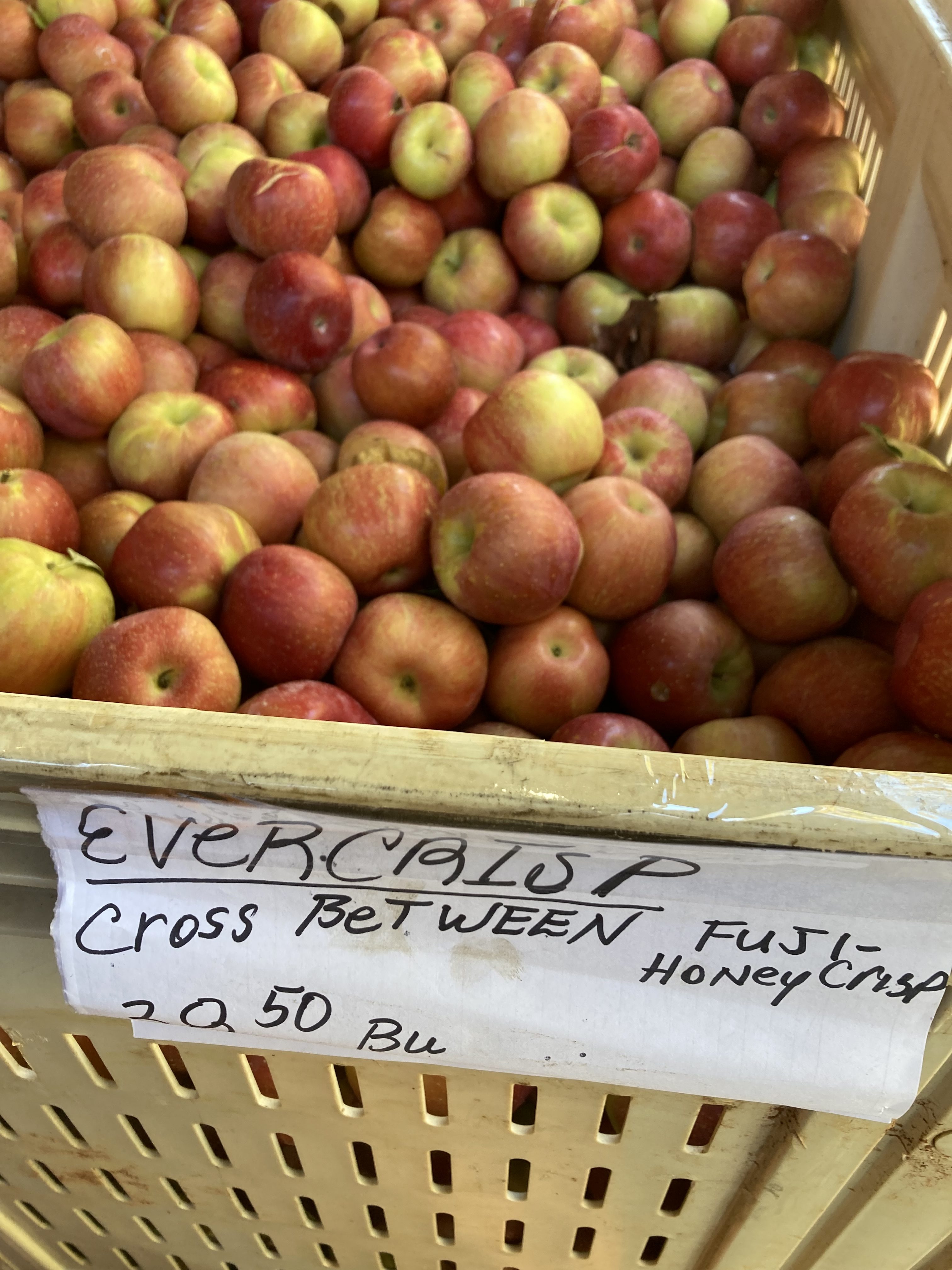
3) The Evercrisp Apple – One of the best parts of this time of year is the Fall apple harvest. Honeycrisp, Pink Lady, and Cosmic Crisp apples have been our favorite in recent years…until this Fall, when we discovered the Evercrisp apple. Wow!
We discovered this apple on a recent trip across Virginia toward the Appalachian Mountains. The Apple Shed delivers on several types of apples and introduced us to this one.
Once back in Richmond, we were thrilled to find it sold locally from the Saunders Brothers Orchards. Woohoo!!
A small delight in life but, for this season, a huge one. What’s your favorite apple?
4) (Dis)Comfort Zone – Is the phrase “comfort zone” a first world experience? I don’t think so. It is a universal idea – a place where we feel safe and soothed. A bad thing? Not necessarily except for how it insulates us from the rest of life. What if developing our capacity for discomfort helps us to live more fully, more in community?
Jason Seib, a health and selfcare coach, has actually built his whole platform on embracing a (dis)comfort zone. He teaches how we can maneuver around our uncomfortable moments in healthy ways.
If you go to his website, his home page currently seems all about his workshop (which I haven’t taken although it is reasonable cost-wise). However, hang in there. He also extends solid content to non-subscribers through his podcasts and social media pages. I think that speaks to his integrity as someone who actually cares about people wherever we are in our comfort zones.
The main message for us in his coaching is that we reach for food, alcohol, or other addictive substances or activities when faced with discomfort. Our temptation is to do whatever we can to restore comfort. Jason Seib points to developing skills in sharpening our awareness of discomfort when it happens and respond in ways that don’t harm us.
Jason Seib reminds me of counselor Brad Hambrick whose webinar on “Growing in Negative Emotion Tolerance” was extremely helpful for me. Seib and Hambrick both talk about the importance of us recognizing that negative emotions are not necessarily bad [they are actually informative] but how we respond to them matters.
5) Old Friends – This week has been one of celebrating old friends – visits both here and states away with people who have stayed the course with me through years and years.
I don’t know about you, but loneliness is a real time experience for me. So many moves and changes for us. A different season – children grown with their own lives, me now in retirement sorta kinda, and most of my closest friends living far from where we now live.
It gives pause to reflect on friendship and revisiting the kind of friend I am and hope to be. A key to having old friends in our every day life is continuing to reach out and nurture those relationships. I’m working on it…and trying to show up for these friends who have shown up for me. They, and others like them, point the way.
Old friends, even while not on the daily or even the regular, have the rare quality of history. Memory. Understanding. Loving anyway, through seasons of neglect, distraction, and loss. Old friends remain.
So grateful for forever friends – people who know us well and love us anyway. Singer, songwriter Michael W. Smith‘s song says it all:
“Come deeper. The waves won’t knock you down back here!”
Deeper in the Word
Deeper in Prayer
Deeper in Worship
Deeper in love with Jesus
Yes, the waves will still come, regular and strong.
But in the deep…
We will have peace,
We will be comforted,
We will have healing,
We will have restoration,
We will have joy,
Because we will be moving with The One who controls the winds and waves.
My childhood memories have gaps. A year ago, I began exploring the possibilities that there were memories being kept hidden in my brain. Reading and working through the three books of Christian psychiatrist Curt Thompson moved me to consider the power of shame in keeping my memories silent. Dr. Thompson encourages his clients (and book readers) to write down our life stories, in long-hand. Journaling the decades. Especially working on recalling our childhood. Bringing those memories into the light.
My preschool years are still mostly devoid of memories. My mom had told me later that our rarely employed biological father neglected us such that she had to employ a babysitter daily while she worked. Even though he was home. Whether neglect is abusive or not, I have no recallable memories of my father from those years. Mom divorced him by the time I was 6.
In doing the exercise of writing out my life, one childhood memory that I was able to re-remember started out happy. It was a neighborhood “garden party”. I was maybe 7 or 8. These so-called garden parties were a gathering of family and friends to process the harvest of large vegetable gardens – for canning and freezing. Those who came enjoyed lively conversations, engaging stories, and finally a large meal together. The adults were caught up in the moment, and the children wandered in and out…and farther away.
I’m not sure who all ended up with me in a large barn some distance away from the home of our hosts. In that barn, an older boy (trigger, sorry) talked me into letting him touch me in inappropriate ways.
I had put that memory far back in my mind.
In remembering it, I also recalled telling my mom that evening and her taking action by going to talk to the parents of that boy. That’s where it ended, I believe.
Later in my childhood, I would discover my older brother’s (I suppose) hidden stash of pornographic magazines. [We didn’t have internet pornography in those days, and this sort of perusing seemed an expected coming-of-age pastime.] Page after page of naked or scantily clothed women in sexually provocative poses. Even as a pre-teen, it drew me in, even though it felt dirty and shameful. I don’t think I understood the power of taking such images into my brain. It is what pornography does and why it is so toxic.
[Could this sort of pornography be a launch-pad for girls who, seeing those images, become sexually aroused, then thinking they might be same-sex attracted? Especially if it happened today in our current culture…I wonder.]
Being exposed to pornography as a child isn’t abuse, of course, but it forces an unhealthy peering into an adult world. I wish I hadn’t stumbled on it and hope parents take seriously the availability of porn on the internet. OK…done with that topic.
At the age of 13, my parents invited a young co-worker of my step-dad’s for a cookout. He must have been 18 or 19. He stayed long into the evening. I have no idea what my parents were thinking at the time (and they were excellent parents), but they went to bed and he was still there. This seemed to set up a green light for him, and he became very aggressive physically. My 13-year-old sensibility was at first enthralled at his interest in me and then frightened, too timid to cry out or get away. If my older brother hadn’t returned early from a date, and sent him on his way, I’m not really sure where that would have ended. So thankful for my brother that night.
Where does abuse begin? Did it start with the neglect of a father? Even with an incredibly loving and supportive mom, she couldn’t be everywhere all the time. Was I vulnerable to the attention of boys (and men) growing up because of a father who started out uncaring and became increasingly absent (don’t remember seeing him ever again after my early childhood years). Even with the love of a dear step-father, did I struggle with needing approval, wanting to feel special, absorbing the very adult messaging of pornography geared toward adult men?
[I’ll stop my story here for now.]
My extended family has known the searing pain of abuse. The abuse of power, the deceitfulness of sin (protecting the perpetrator), the isolation that comes with shame, and the complicit nature of silence.
In fact, with the statics (of sexual abuse alone), in the US, we’re talking as many as 1 in 4 girls are sexually abused by the age of 10 and 1 in 6 boys.
How do we respond to abuse? How do we even consider such atrocities? Put aside sexual abuse for a moment. It comes in many different ways.
Dr. Henry Cloud, in his book Changes That Heal, talks about the role of crossing personal boundaries in abuse…when people step over a line, a boundary, wounding another person.
“The essence of boundaries and limits is knowing what we own and what we do not own…when we do not own ourselves as separate people from the ones we are bonded to, we develop unclear boundaries, and we allow people to cross those boundaries when we should be saying no”. – Dr. Henry Cloud, Changes That Heal
One thing we could all assess within ourselves is our own understanding of personal boundaries – where we stop and another person starts. Abuse can happen with overreach (in parenting, marriage, friendships, and the workplace) or a lack of understanding or ownership of our own personhood.
This boundary breach leading to abuse can happen with strangers, but, more often than not, it happens with people we know – parents and children, spouses, other family members, trusted teachers or clergy.
Abuse can be subtle…still with the impact of intimidation or silencing. Even something we are all familiar – the silent treatment – is its own form of abuse.
I’m not going to cover what we need to do comprehensively in handling abuse. Resources abound in this area. However, my work on memories coming back to light (and processing them as an adult, not as a child) helped me understand some attitudes and behavior that affect my sense of self and relationships today.
So in brief, I would say:
Do a journey of self-discovery (with a counselor or trusted friend) – examining and reframing painful childhood (or early adulthood) memories.
If abuse is still a part of your current life – get what distance you can from it, as you develop coping skills to protect yourself but also the generations coming after you. Building forever boundaries between you and that person/those persons can be its own abuse. It is a stop-gap measure and still holds the abused in bondage to the abuser.
Don’t be silent. Talk to someone. Tell your story.
For those who suspect abuse in another, don’t be complicit in the abuse, by your silence. Prayerfully, carefully, come alongside the abused. If you have a relationship with the abuser, reason with that person, if you can.
Isolation is a product of shame for the abused and the abuser. It also works to keep the abused more vulnerable. Shame, isolation, and secrecy. Don’t ignore isolation (even in these post-pandemic days when it may be harder to detect). Be vigilant in surveilling those in your circles – your family, neighborhood, workplace, and friend group.
Finally, be aware of “vicarious trauma” – for those helping, caring, mentoring persons – experiencing a secondary trauma because of your leaning in and coming close to the trauma of another. You may need help from another as well, choosing not to leave the room but needing support yourself.