Category Archives: Workplace Culture

Monday Morning Moment – That Thing That Doesn’t Need to Be Said – and If It Does

Photo Credit: Wikimedia

Being an extrovert is a bit of a curse, isn’t it? Verbally-processing introverts struggle as well. That need…that compulsion…to get words out of our heads and in the open. We who suffer with this understand the wild nature of words. For those who don’t have this same impulse, you may also suffer under the weight of our words.

This is a public confession and redress of this particular conundrum.

[For those of you, like me, who feel sometimes your head might fairly explode if you don’t voice your thoughts so you can find resonance with a hearer, you are free to read the last two paragraphs first.]

I grew up with good teaching from an introverted mom who knew the power of words…and the importance of using them wisely.

This adapted from a past blog posting of mine:

My Mom raised us up with lessons on our speech from Scripture backed up by the cultural message of an old Walt Disney film, Bambi:

“If you can’t say something nice, don’t say nothing at all.”

Good counsel. Only problem is the continuing conversation in our heads that color our attitudes, our tone of voice, our preferences, and our decisions. These we still must wrestle down and be done with.*

First, this is not a guilting of any sort. For myself or anyone else. We who restrain words understand the risk we take in speaking… especially those things we feel almost an obligation to say. Those words we think will somehow right a tilting world. Those words we feel entitled to. The words that state our case or that of another.

Second, we know, often too late, that words not spoken are rarely misunderstood. Of course, silence can be deafening as well, but we have to put our own meaning into someone else’s silence. With spoken words, it’s clear what a person is thinking. So it needs to be worth speaking. The hearer may have a very different take on the matter. Thus the risk and wariness that must accompany speaking boldly.

Third, does what we think need to be said? Will it make a difference in the positive to what’s going on in our heads? Or will what we say only add to a problem, rather than bringing it closer to resolution?

There’s a pithy and true saying floating around the internet about thinking before you speak. Here is a visual of it.

Photo Credit: Flickr, Jo Quinlan

Along with this, these days, is Think Before You Post. How many times have we deleted a Facebook or Twitter post put up in haste, hoping it came down before being read by those significant in our lives who would be hurt or offended by it? Sigh…Photo Credit: Flickr

Is our opinion so valuable as to cause pain to those who matter to us? Not. At. All.

Photo Credit: Hannah W. Potter

All that being said, finally, what do we do with the words building in our heads about massive concerns, witnessed injustices, shifts in worldview or mission drifts? There are words, as I see it, that have to be expressed almost to understand the whole picture of a thing going on. These words, raw and impassioned, we don’t speak randomly or post publicly (except in the rare occasion of stopping harm). These words if expressed may only yield spiritual reprimands, or hurt silences, or long tirades from disagreeing hearers/readers. The words that must be said, words that you know may have disastrous consequence, might need the hearing only of a trusted friend…at least at first. This sort of friend will hopefully help guide you to sort out that which does not need to be said and what does – to whom, in what manner, and on what occasion.

Oh the wisdom in thinking before we speak. How thankful I am for those trusted friends who refuse to think ill of me when words spill over! Friends, and family, who know my heart is not meant to wound, who help me sort out my words and what to do with them. Friends who know I take no joy or satisfaction in anything bordering on gossip or slander. Friends who listen, and may agree and resonate, but counsel with me – about what must be shared and what is best left unsaid. Friends who pray with me and remind me to pray. In my book, that is never spiritualizing…prayer is as real a thing as all those thoughts that can rob me of sleep…but so much better.Photo Credit: Flickr, J. D. Hancock

Anybody out there have the same struggle? Or a different struggle with words? Any helps you want to share? Shoot us some of your words in Comments below.

*Monday Morning Moment – What You Think of Others Matters – Workplace Wisdom – Deb Mills Writer

Speech, Power and Significance of

Worship Wednesday – I Am – Crowder Music

Photo Credit: Woodland Baptist Church

Then Moses said to God, “If I come to the people of Israel and say to them, ‘The God of your fathers has sent me to you,’ and they ask me, ‘What is his name?’ what shall I say to them?” God said to Moses, “I am who I am.” And he said, “Say this to the people of Israel: ‘I am has sent me to you.’ ” God also said to Moses, “Say this to the people of Israel: ‘The Lord, the God of your fathers, the God of Abraham, the God of Isaac, and the God of Jacob, has sent me to you.’ This is my name forever, and thus I am to be remembered throughout all generations.”Exodus 3:13-15

[Jesus speaking] “Your father Abraham rejoiced that he would see my day. He saw it and was glad.”  So the Jews said to him, “You are not yet fifty years old, and have you seen Abraham?”  Jesus said to them, “Truly, truly, I say to you, before Abraham was, I am.” – John 8:56-58

In Pastor Rick Ezell‘s sermon on What’s In a Name? – Exodus 3, he describes the name of God – Yahweh – The LORD. In the Scripture, when the phrase “I am” is used in an identifying way regarding God, it identifies his presence with us. He is the LORD, and He is ever with His children. When Jesus responded to the religious leaders of his day with the curious sentence, “Before Abraham was, I am”, he was intentionally communicating who he was and his larger identity – The LORD. One with God and ever and always present with his children.

David Crowder and Ed Cash wrote the song “I Am” for the Neon Steeple album. The lyrics of this song speak to me in two ways. When I sing “I am, holding on to you”, it communicates both:

  1. “I AM”, God identifying Himself, is holding on to me, and
  2. I am holding on to Him, the “I AM”.

Photo Credit: New Release Today

Crowder and Cash really touch a cord in this song because don’t we all have days that we feel adrift and wonder where God is in our situation? He is right there. Whether we can hold on or not, He is holding on. He never lets go. He never leaves our side. Hallelujah!Photo Credit: Pinterest

Worship with me.

There’s no space that His love can’t reach
There’s no place where we can’t find peace
There’s no end to Amazing Grace
Take me in with your arms spread wide
Take me in like an orphan child
Never let go, never leave my side.

I am,
Holding on to You.
I am,
Holding on to You.
In the middle of the storm,
I am Holding on,
I am

I am,
Holding on to You.
I am,
Holding on to you.
In the middle of the storm,
I am holding on,
I am

Love like this, Oh my God to find!
I am overwhelmed what a joy divine!
Love like this sets our hearts on fire!

I am,
Holding on to You.
I am,
Holding on to You.
In the middle of the storm,
I am Holding on,
I am

I am,
Holding on to You.
I am,
Holding on to you.
In the middle of the storm,
I am holding on,
I am

This is my Resurrection Song
This is my Hallelujah Come
This is why to You I run
This is my Resurrection Song
This is my Hallelujah Come
This is why to You I run
There’s no space that His love can’t reach
There’s no place that we can’t find peace
There’s no end to Amazing Grace

I am,
Holding on to You.
I am,
Holding on to You.
In the middle of the storm,
I am Holding on,
I am

I am,
Holding on to You.
I am,
Holding on to you.
In the middle of the storm,
I am holding on,
I am

Lyrics to I Am – Songwriters: David Crowder, Ed Cash

YouTube Video – I Am Official Song Video – Featuring Son of God Film

Story Behind the Song I Am – Video Interview with David Crowder

I AM Who I AM – John Piper – Transcript and Audio FIle

The I Am‘s of Christ

Worship Wednesday – You Are Faithful – From David Crowder’s Neon Steeple Album – Deb Mills Writer

Monday Morning Moment – Social Capital – an Invaluable Resource We Can Develop – and a Tool to Help

Photo Credit: Screen Shot – Art of Charm

I had an Aha moment recently when I discovered something had shifted in this season of my life. Social capital. To be honest, I didn’t even know what that was until a couple of weeks ago. Now, I can’t stop thinking about it and how to develop it…not for what it would benefit me personally but for what matters to me out there.

Social capital is the willingness of people to help each other. It often replaces money which people would use to buy the same help. Most ways of measuring social capital have to do with trust – people who trust that favors and help will be available when they need it will favor and help others more. Social capital is a lot like real capital. The more money a person or a society has, the easier it is to do things and the better off people are.Simple English Wikipedia

Photo Credit: IResearchNet

There is a significant difference between social capital and human capital. The Difference Between article below gives an excellent contrast. Simply put, human capital is the skillset I bring to a team or organization. Social capital involves networks or groups of people resourcing one another to achieve something they all want.

http://www.differencebetween.com/difference-between-human-capital-and-vs-social-capital/

I could be a part of a team that has enormous human capital – brilliant, gifted, visionary people – but our potential for making remarkable change would be hampered if we ignored the social capital we could bring to bear. This is the silo effect in organizations. It’s also the inner circle handicap in other parts of our lives – where we focus on our own benefit and not that of a larger society. I referred to Jeremy Writebol’s article on this here.

My experience throughout life with social capital (before even knowing what it was) has been rich and fruitful. Just a couple of examples follow:

  • Years ago when I worked in a cancer center in East Tennessee, we wanted a vehicle for patient and family support that would endure throughout the experience with cancer (either to cure or death). There were several on our team who brought immense human capital to the table. Fortunately we also brought the resources of many networks alongside – the patients and families themselves, a nearby university, the cancer center’s foundation, the local American Cancer Society, churches and other private benefactors, and volunteer groups. It was an amazing collaborative experience and that support program continues to this day.
  • When we were living in North Africa, and our children were in high school, I was struck by the number of musically gifted young people with no avenue to share their art. In fact, at their school as wonderful as it was, there was no parent group, no booster club of any sort, to drive projects that would benefit neither the school nor the community. This small observation grew into a much larger idea and then, with surprisingly wide-reaching social capital of parents, staff, and the students themselves, a group called Better Together was formed. Out of this group was birthed an annual visual and performing arts festival which continues today. Also out of this group, our group was able to use our social capital (our various social networks) to benefit some of the local charities as well as the overall offerings of the school itself.

Social capital can be a solid foundation for developing a service or product or opportunity that benefits many. However, it can be squandered or diminished if not nurtured over time. Social capital depends on trusting relationships.

Photo Credit: NBS

Because of several factors in my own life – relocating geographically, job changes, and a series of other personal hurdles – I have let some of my social capital go cold. This happened in a season when I’m probably most aware of the enormous potential for deep, broad-reaching networking opportunities.

I just haven’t focused there lately…

Until now.

Recently I discovered Jordan Harbinger online. He writes and podcasts for a website called The Art of Charm. To be honest, the title did not draw me in, but the content did. He invites his readers/listeners to something called a social capital challenge. I signed on.

It’s not a fluffy challenge, I can assure you. In fact, it is supposed to be finished in a month, and I’m still stuck on Week 1. However, be assured, I WILL PREVAIL.

The first challenge is settling on a written goal of improving my social capital (and sharing it publicly). Here my personal struggle is deciding which of the many areas of benefiting others I’d like to land. If you are part of my now smaller social networks, you’ll hear more about this in the coming days. I’m going to need your social capital at play…and I’m confident we can accomplish more and Better Together.

What are your experiences with social capital? Your stories? Your thoughts on developing social capital? I would love to hear, in the Comments section below.

Social Capital Challenge – The Art of Charm

Jordan Harbinger – The Art of Charm – Twitter

Social Capital – IResearchNet

Measuring Social Capital – A Systematic Review – Prepared by Moses Acquaah, Kwasi Amoako-Gyampah and Nceku Q. Nyathi 

The Whuffie Factor – Tara Hunt

Photo Credit: Amazon

Monday Morning Moment – Servant Leadership – Trending Forward

Photo Credit: Tri Pham, FLickr

The servant-leader is servant first.

It begins with the natural feeling that one wants to serve. Then
conscious choice brings one to aspire to lead. The best test is: do those served grow as persons; do they, while being served, become healthier, wiser, freer, more autonomous, more likely themselves to become servants?Robert K. Greenleaf
“…more likely themselves to become leaders” – Isn’t that how you thought Greenleaf would end that sentence? I read it that way. We don’t naturally think of aspiring to serve – “moving up the ranks” to better position ourselves to serve.
Why write about servant leadership?
So much has been and continues to be written about servant leadership. The terms change and trend a bit differently over time. Of late, relational leadership has gained in popularity. This type of leadership is defined as “as a relational process of people together attempting to accomplish change or make a difference to benefit the common good.”
I love that concept and style of leading, but servant leadership goes even farther. Relational leaders can focus on their particular team or tribe, in a mentoring, collaborative role…for the good of those leaders and the organization and client base. Servant leaders aspire to a wide reach. Not just leader to leader, but to permeate the whole of the organization with an ethic that everyone, at every level, matters. This is a huge aspiration but the gains are huge as well.

Marcel Schwantes, founder of Leadership from the Core, has written a piece on the 10 Leadership Habits Found in the World’s Best Leaders. These ten habits are derived by Larry Spears from the Robert Greenleaf‘s pioneer work in servant leadership. Read the article for Schwantes full commentary, but the 10 habits follow:

  • Listening
  • Empathy
  • Healing
  • Awareness
  • Persuasion
  • Conceptualization
  • Foresight
  • Stewardship
  • Commitment to the Growth of People
  • Building Community

Another list of qualities to consider is posted by business leader Skip Prichard‘s 9 Qualities of the Servant Leader. Both Prichard’s list below and Schwantes’ list above are excellent markers for your own leadership:

  • Values diverse opinions
  • Cultivates a culture of trust
  • Develops other leaders
  • Helps people with life issues
  • Encourages
  • Sells instead of tells
  • Thinks you, not me
  • Thinks long-term
  • Acts with humility

Finish the whole of his article here (and don’t miss the comments – fascinating).

Photo Credit: Virginia Guard Public Affairs, Flickr

Marcel Schwantes has also written 10 Compelling Reasons Servant Leadership May Be the Best, Says Science. In this piece Schwantes tackles the misconceptions about servant leadership as well as the many reasons why it’s the best form of leadership. I personally love this article because the evidence of the kind of company that prospers under servant leadership is undeniable. We know these organizations by their service – like Chick-Fil-A, Southwest Airlines, Home Depot, Ritz Carlton, FedEx, UPS, U.S. Marine Corps, and many others. Very persuasive.

Finally, I’d like to share General Stanley McChrystal‘s view of leading “like gardeners”. My husband is a gardener. Even after a long, tiring day at his regular job, he puts in the time necessary to tend the plants he’s growing. Bent over, on his knees sometimes, doing the work of nurturing them to reach their maximum fruitfulness.

“Regular visits by good gardeners are not pro forma gestures of concern—they leave the crop stronger. So it is with leaders.”

Employees and customers know the experience (or lack thereof) of the leader who truly attends to their needs. No drive-by visits here. No sprinkling of some corporate fairy-dust just by the sheer presence of the leader in the room, or the building, or on podcast/commercial.

McChrystal warns against the leader who becomes too important to personally serve his personnel or customers.

“I would tell my staff about the “dinosaur’s tail”: As a leader grows more senior, his bulk and tail become huge, but like the brontosaurus, his brain remains modestly small. When plans are changed and the huge beast turns, its tail often thoughtlessly knocks over people and things. That the destruction was unintentional doesn’t make it any better.”

Always in thinking of leadership, we are tempted to look to our own leaders…to measure them by the scale of excellence (seen above). The servant leader is servant first. Don’t get muddled up by checking off what your leader is not. Serve that leader, as you serve other personnel and customers. Serve. Serve by leading. Lead by serving.
“Servant-leadership is more than a concept, it is a fact. Any great leader, by which I also mean an ethical leader of any group, will see herself or himself as a servant of that group and will act accordingly.”
[Please don’t miss the links below…especially those not mentioned in this blog. Also please share examples (in Comments section below) of servant leadership you have experienced…or your own personal journey in becoming a servant leader.]
Journey strong. Serve long.

YouTube Video – Servant Leadership – Leadership From the Core – Marcel Schwantes

10 Compelling Reasons Servant Leadership May Be the Best, Says Science – Marcel Schwantes

9 Qualities of the Servant Leader – Skip Prichard

The Understanding and Practice of Servant-Leadership – Larry C. Spears

General Stanley McChrystal: We Should All Lead Like Gardeners

Glassdoor’s 2017 Best Places to Work Rankings: The Importance of Common Purpose – Barry Sanders

Monday Morning Moment – True Humility in Leadership – So Not Cliché – Deb Mills

Monday Morning Moment – 7 Skills of the Top Leaders of Tomorrow – Whatever Your Age or Stage – With Matt Monge – Deb Mills

Larry C. Spears and Robert K. Greenleaf

The World’s 10 Top CEOs (They Lead in a Totally Unique Way) – Marcel Schwantes

World-Class Customer Service – The Key Is Caring – Horst Schulze on a Culture of Service – Deb Mills

Monday Morning Moment – 3 Quick Reads on Leadership – to Help You Stay the Course, Not Be a Jerk, While Being Innovative – Deb Mills

Happily Ever After – What Makes Relationships Work – Poster – Frank Sonnenberg

5 Friday Faves – The Office, Accents, Resilience, Community, and Long Goodbyes

We’re rolling into the weekend with gorgeous Spring weather to draw us outside. The fact that the grass must be cut before the neighbors organize an intervention also motivates. Beauty surrounds us here as April moves to May and the flowers bust out.

For your Friday refreshment, here are my five favorite finds for this week:

1) The Office – What a funny TV show! The Office (not to be confused with the British version) ran from 2005-2013 and still has a huge cult following. It is a parody of the American workplace. This mockumentary gives us an opportunity off-the-job to chuckle at the quizzical nature of some of our workplaces and relationships within them. Nathan Mills has done a brilliant guitar arrangement of both the show’s theme as well as musical interludes in several of the episodes.

Watch, enjoy, and remember this show that has humor and an innocence very different from many of today’s TV sitcoms.

YouTube Video – The Office Meets Classical Guitar – Beyond the Guitar

2) Accents – I love languages. Over the course of life, I’ve tackled Spanish, Arabic, and a bit of French. Living in North Africa for many years allowed me to be immersed in languages different from my own mother tongue. Language learning is such a useful discipline for all of us and I’m thrilled when I see parents helping their children become multi-lingual. The younger we are when learning languages the better able we are to naturalize our accents in those languages – substantiated here and here.  Don’t let the fear of a Southern (or other) drawl keep you from learning and speaking in a newly acquired language. Dialect coach Sammi Grant gives some interesting advice in her YouTube video How to Do 12 Different Accents .

3) Resilience – I just started following Jordan Harbinger recently, and here’s his take on resilience – Becoming Resilient – the Art and Science of Grit. Resilience has been intriguing to me for many years, and I wrote some months ago (here) on another author Jon Acuff’s counsel on grit.

Photo Credit: Crystal Coleman, Flickr

Read Harbinger’s piece on resilience.

When I talk about resilience, I’m talking about the ability to stay engaged with a person, project, or circumstance — to stay in the game — through its inevitable ups and downs…we’re talking about our ability to handle life, in all its unpredictable and maddening difficulty, without falling off, going crazy, or hurting ourselves in the process.

Harbinger goes on to talk (podcast and blog) about the journey of becoming resilient, or gritty. We all have life occurrences that input into whether we grow resilience or take on a victim’s worldview. We can’t change the situations maybe but we can change how we respond to them. Having strong, nurturing relationships and choosing to learn as much as we can from adverse experiences are two processes of becoming resilient.

I want to be resilient in the hard places and help those I love to be the same. Hard things happen, but we don’t have to be devastated by them. Learn from these guys, and others, about the resilient life.

4) Community – There are no words really that express well enough the great value of community. Deep caring friendships reflecting love of a nature only God can infuse. We experience in this small group of folks in our local church. Community is also a part of our work, neighborhood, and family. I hope you know true community as well. Tell us about in Comments below.

5) Long Goodbyes – Saying and experiencing long goodbyes – It’s part of what we walked with Dad and what we learned about God, each other, and our own hearts in the process. Saying goodbye (for awhile) to a dear friend. The final closing of an office. They can both wear you out and leave you totally satisfied…you did all you could do to honor that passing.
Bonuses


Monday Morning Moment – When You Love Your Job – and Your Power to Make It So

Photo Credit: Maxpixel

I had trouble getting my enthusiasm up for work today. This is highly unusual, because I LOVE Mondays. Even went to bed early last night; only to have bad dreams and restless sleep.

OK…so it happens sometimes. Shake it off and embrace the day, right?

I want to write about what happens when we love our job. Remember when that was? …if it isn’t that way for you today, don’t let this season bring you down, and your work down.

A friend shared with me recently that he has come to figure his worklife into decades. He makes strategic decisions based on where he is today in his job and what he hopes to be doing in the next decade. We all know the years go by quickly…so he got me thinking.

If I don’t love my job today, I really either need to do something to correct course, or, before jumping ship, think where I hope to be over the next several years.

This morning I came across a funny and invigorating video on Facebook. It is When You Really Love Your Job. Watch below.

This little video showed a number of employees doing their jobs well and with speed and finesse. It had a poignant touch for me because I have personally watched servers in North Africa make crepes, cut up fruit, and pour tea like the workers in the video. I miss that.

If you search online for loving what you do, you find lots of helps on how that works and how to make it happen (again).

Jeff Haden posted a helpful piece entitled 15 Revealing Signs You Genuinely Love What You Do. It’s a quick read and it will either encourage you that you really DO love your job, or, if not, maybe there are some simple steps you can make to change it up. Some of the signs are : You enjoy attending meetings. You think about what to say, not how. You help without thinking. Definitely something to consider…as are the other signs.

Photo Credit: The Muse

If you love your job, that is worth celebrating and worth protecting as the job or company changes. If you don’t love your job so much, then you have to ask yourself the question, is it time to look elsewhere or do you have capacity to do what it takes to restore joy to your job, as it is?

Photo Credit: Flickr

Benjamin P. Hardy writes about this in One Behavior Separates the Successful From the Average. What is that behavior? Initiative! We determine for ourselves how we shake out our day. Sure, there are going to be obstacles and difficult people and various struggles over the years. It’s always worth it for our own sake, to take back control of how we love our jobs. Exercising initiative, as Hardy suggests, is the way out…either out of the joyless season you’re in and stay in your job, or out of the job. Just don’t take the joylessness with you.

Here’s to loving our jobs!

Do You Love Your Job? – Deborah Repplier

Discover the Work You Were Born to Do – James Gonyea

17 Inspiring Quotes About Loving Your Job – Michael D. Pollock

This Is Your Life. Do What You Love – The Holstee Manifesto Lifecycle Video

Photo Credit: Vimeo


5 Friday Faves – Music Lessons, Final Fantasy, Grandchildren, Leadership Guy Jon Mertz, and a Smorgasbord on Success

Beautiful day outside…hope the same is the case for you.

Here are my Friday faves this week:

1) Music Lessons – I was the worst student at music lessons. My mom was so determined that I would learn to play the piano. Seriously, I don’t even remember having a piano in our home…we must have, right? Dear old Mrs. Bowles taught me my first lessons. She and her husband owned a tiny general store in our neighborhood. She was ancient…and kind. I loved her but not enough to practice. Some weeks, my only time on the piano was our lesson. Do you think she could tell?

This week, I discovered an enthralling post on music lessons written by Tom Barnes, senior writer for Mic. The title is Music Lessons Were the Best Thing Your Parents Ever Did for You, According to Science.Photo Credit: MaxPixel

In the article he lists 13 scientific benefits of the many more derived from music lessons. Below, I’m posting his list, but don’t miss his brief and fascinating commentary on each one. Here’s his article.

Taking Music Lessons:

  1. It improved your reading and verbal skills.
  2. It improved your mathematical and spatial-temporal reasoning.
  3. It helped your grades.
  4. It raised your IQ.
  5. It helped you learn languages more quickly.
  6. It made you a better listener, which will help a lot when you’re older.
  7. It will slow the effects of aging.
  8. It strengthened your motor cortex.
  9. It improved your working memory.
  10. It improved your long-term memory for visual stimuli.
  11. It made you better at managing anxiety.
  12. It enhanced your self-confidence and self-esteem.
  13. It made you more creative.

All three of our children had piano lessons early in their schooling. They all did music through high school then took different paths afterwards. After her high school girl band and college chorale experience, our oldest plays piano just for her own pleasure now. Our middle, Nathan Mills, moved from piano to classical guitar and is now doing music professionally and giving lessons himself. Our youngest loves opera and is teaching himself the harp. Music lessons are definitely worth their investment…even beyond the music itself.

2) Final Fantasy – No, this isn’t some bucket list or deathbed wish. This is a video game. In fact, it’s a very popular one and has been around since 1987. This past week marked its 15th update. During our boys’ growing up years, I wasn’t enamored of video games, but I also never really sat down and got to know what they were about (my mistake). Final Fantasy is a good-vs.-evil battle game. Its musical themes are beyond beautiful. Our son, Nathan, has arranged many of the themes for classical guitar. Most recently, he has posted the Valse di Fantastica. As I’ve listened to this piece over and over, it makes me wonder at the times I kicked him off gaming to do something else more valuable with his time. Yet, the music stayed in his head and heart. I’m glad he’s kept the music…and here it is for you.

3) Grandchildren – These littles are so worth the wait. I say if you don’t have your own grands, then find some to love. Never enough love for children – tiny ones or those nearly grown. Photo Credit: Pixabay, Pixabay

Reuters posted a news story by Madeline Kennedy that touts the health benefit for seniors of occasionally caring for their grandchildren. Without going into the statistics, this German study reported that those who care for their grandchildren, on an occasional basis, actually live longer.

This and other studies (see article) point to time caring for grandchildren as benefiting cognitive function, as well as physical and mental health of the grandparent. These benefits could be enjoyed by caregivers not related to the children as well. Also a distinction was made that the study related to occasional care-giving (rather than full-time care) and depended on what was considered stressful or non-stressful by the grandparent.

I say, “let the little children come”.

4) Leadership Guy Jon Mertz – One of the many reasons I love Twitter is how much I learn from those I follow…including learning from those the ones I follow follow. Matt Monge, of The Mojo Company, tweeted this week about Jon Mertz‘s article on Four Essential Leadership Ladders. Mertz is the author of Activate Leadership: Aspen Truths to Empower Millennial Leaders. He is an intelligent empowering writer on leadership (as is Matt Monge).

Photo Credit: MaxPixal

In Mertz’s article on leadership ladders, he’s not talking about building or climbing ladders for our own success but for the success of others. What a lovely and timely concept! He prescribes four different leadership ladders – family, personal, organizational, and community. Read his piece here.

Within his article on leadership ladders, he references his 3 articles below. I read them all, and you will want to as well.

Discontentment – a Great Leadership Challenge – Jon Mertz (don’t miss the comments at the end of the article.)

Leadership Fails and Who Cares? – Jon Mertz

Always, Always Entangle Purpose With Life Work – Jon Mertz

5) Smorgasbord on Success – OK, we all define success in many ways. Couldn’t think of another exact word – being effective, making a living, realizing a dream, leading well. I’ve been reading a lot lately about leadership and about business start-ups. This week has made for a bounty of discovery on these topics (including Jon Mertz above). I’m just going to post the links and you can choose what tickles your itch this week.

My biggest take-away is that if we’re willing to learn, apply what we learn, and push out of our comfort zone, we can make extraordinary advances in our work and workplace. I really believe that, no matter what our age or level. Here are some writers who say the same:

7 Habits of Highly Effective FreelancersEric Rosenberg

How to Boost Your (and Others’) Emotional IntelligenceTomas Chamorro-Premuzic  and Michael Sanger

Mark Cuban, Kobe Bryant, and 15 Other People Whose Incredible Work Ethic Paid Off Jacquelyn Smith

Why the Best Idea Doesn’t Always WinScott Berkun

20 Habits for Success I Learned Working for Two Billionaires Paul C. Brunson

Enjoying reading, thinking, talking about it with those who love you…and being outside. Please always share your thoughts with me in the Comments.

Bonuses:

YouTube Video – Andy Andrews – 50 Famous Parental Sayings

Actual True Meanings – Classic Fairy Tales – Tongue-in-cheek – by Francesco Marciuliano

Monday Morning Moment – Empathy – Key to Creativity and Innovation – What?!

Photo Credit: Andy Orin, Lifehacker

Empathy is no soft skill. In fact, it can be a rare commodity in today’s workplace where we are competing for jobs, customers, time with the boss…pushing for that edge which makes us stand out over the guy down the hall.

We have seen empathy in corporate culture. Amazon immediately comes to mind, as does Apple. These companies have studied the wants and needs of their customers and they have put that research into play in their service and products. Customer loyalty is a huge outcome of feeling understood and valued.

Empathy and sympathy are two very different human experiences and expressions. To sum up the differences between the most commonly used meanings of these two terms: sympathy is feeling compassion, sorrow, or pity for the hardships that another person encounters, while empathy is putting yourself in the shoes of another. [read more at Dictionary.com]

Our neighborhood is in the middle of a huge engineering project being done by our local electric company. The wires are being put underground thereby keeping our service from being interrupted by windstorms. Various technicians and contractors have come to each of our front doors to let us know, courteously and apologetically, what disruptions must happen to eventually provide this service. The sub-contractors, moving throughout the neighborhood, have worked quickly and quietly, keeping disturbance at a minimum. Their work will all be completed soon with 1) only what disruption was absolutely necessary and 2) with a high expression of empathy for their presence on our streets and in our yards.

Disruption devoid of empathy is no business process anyone wants in their workplace…no matter what the outcome or benefit. Unfortunately, when it happens (and it does), we put up with it for what comes out of it, and because we have no other choice… If we are not careful our own empathy for one another suffers. Mark that.

Photo Credit: Lifehacker

For years, the word and process of empathy had become so common, it became almost without meaning. Something just ordinary. Nothing special. Now, it’s rising in favor again…probably, seriously, because of how competitive businesses have become. Too often, we err in business with putting innovation and technology as goals and standards without considering the customer or colleague. Decision-making proceeding ahead of information-gathering and analyzing impact on those most affected is not the way up.

Marla Gottschalk says it well in her piece Disrupting Organizations With Empathy, Forward thinking organizations hold great empathy for their potential customers. They design products that not only appeal to our emotions and senses, but address the problems we wrestle with in our daily lives. In each product, process or service — there is a little of us represented.

As long as we have empathy, I believe we’ll have innovation.

The same truth applies to the developing frameworks that support our employees. With empathy, we can achieve significant advances not only the way we work, but how we ultimately feel about our work lives. Whether we are considering leadership (See how empathy affects perceived leadership here), feedback, career development or work spaces — empathy matters.

Viewing work life from another’s perspective, can reap powerful results. We need to follow behind our employees and support their journey...Measuring our workplace problems is simply not enough to encourage healthy workplaces.” – Marla Gottschalk

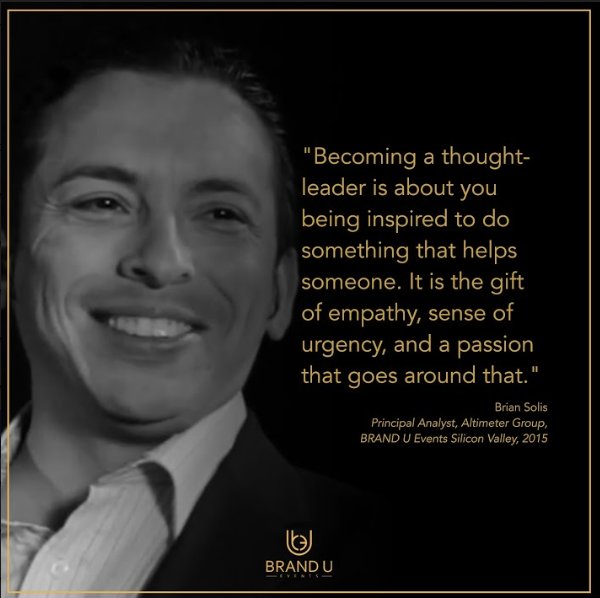
Photo Credit: Brian Solis

I watched an episode of Chase Jarvis Live where Jarvis interviews Brian Solis – author of What’s the Future of Business: Changing the Way Businesses Create Experiences and X: The Experience When Business Meets Design. Brian Solis is one incredibly smart individual, and what captivated me the most in that 45-minute interview? What he said about empathy: “What do you want somebody to feel after they’re done with you in every moment of truth?…Who am I really trying to reach? What’s a day in the life of their world? What could I do to have an impact in their world?…What does a relationship really mean? When you see the world outside [from their side], then you see the role you’re going to play…Empathy unlocks a whole new level of perspective…It’s not good enough to be good enough…or the best. You have to now understand the impact you want to have and the role you want to play in someone’s life and then who that person is and design for that. It’s so inspiring.” – Brian Solis

Marcel Schwantes lists empathy is one of the 10 leadership habits found in the world’s best leaders. Empathy is a discipline. It is hard skill that every leader and every person equipping themselves to lead must see and seek as valuable to leading well. Otherwise, the lack of empathy will eventually have a pervasive effect on the workplace and the service and product. Don’t let this happen to you or your team.

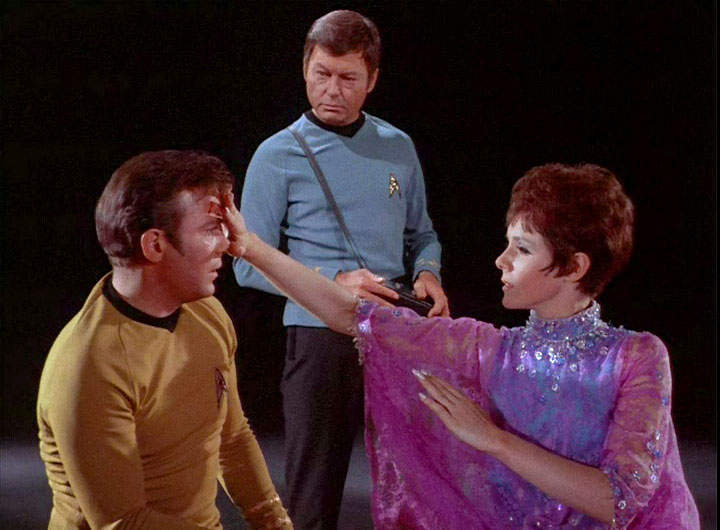
Finally, I want to close on a much-loved classic TV show episode. It is Star Trek, The Original Series. This episode is titled The Empath.Blog - EmpathyPhoto Credit: tos.trekcore.com

In the YouTube video of one of the episode’s scenes, Captain Kirk, Dr. McCoy and Spock are in captivity. The humanoid woman Gem is with them. She is unable to speak but has extraordinary empathic powers. She can feel the pain of another and take it into herself, thereby healing the other person, at a cost to herself. She is also learning from these three what genuine care and self-sacrifice are.

YouTube Video – “Empath” Episode – Star Trek – The Original Series

The Empath Episode – Plot summary, quotes, & other Trekkie details via Memory Alpha

Not the sort of topic we often toss around in our conference rooms or strategy meetings. Still…if we want to offer the best and be the best in our organizations, the lessons are clear…as are the warnings.

Empathy is Actually a Choice – Daryl Cameron, Michael Inzlicht, and William A. Cunningham

Why Genuine Empathy is Good For Business – Jeff Booth

The Importance of Empathy in Everyday Life – Video – Andy Orin

The Key to Creativity and Innovation is Empathy – Brian Solis [Video from CreativeLive – Chase Jarvis Live]

YouTube Video – Brené Brown on Empathy

These 10 Leadership Habits Have Been Found in the World’s Best Leaders – Marcel Schwantes

The Invention of Empathy: Rilke, Rodin, and the Art of “Inseeing” – Maria Popova

5 Friday Faves – Zelda on Guitar, Community, Tim Tebow, Podcasts, and Creatives

Happy Friday! It’s been one of those weeks that has made Friday a “Whew, got through it!” kind of day. An anticipated freeze tonight draws me outside and to take in all the early forsythia, red bud and tulip magnolia blossoms in their current glory. Such a beautiful time of the year…this mild winter/early spring combination.

For your enjoyment – should you end up inside and snuggled in front of a fire – my favorite finds of the week:

1) CommunityGrace abounds in genuine community. Don’t we all hope to have a work team that cares about us, neighbors that watch out for each other, and family that looks past our foibles and loves us anyway? True community happens when our focus is on the other…the friend, the neighbor, the coworker. In our strength, we come alongside the weaker ones and take turn-about in our weak times to lean on those who are strong. I can’t describe community very well but I know what it’s like to be in real-life deep community. Someone who has described it well is Cliff Jordan, teaching pastor of Movement Church, Richmond, Virginia. His message from Romans 15:1-6 inspired and affirmed the reality of community if we are willing to go after it and extend ourselves toward others in this way. Listen here to the message: Grace On Display – Community.Photo Credit: MoveRichmond

2) Zelda on Guitar – For both you videogame and classical guitar music aficionados, you’re in for a real treat. Nintendo has launched a new gaming system (Nintendo Switch) and a new version of The Legend of Zelda (Breath of the Wild). In celebration of this launch for all you gamers who grew up with Zelda, classical guitarist Nathan Mills of Beyond the Guitar has arranged a Zelda medley.

Not much of a videogame fan, but I am a classical guitar enthusiast. The soundtracks of these games are rendered beautifully on guitar. Watch here or click on video below.

3) Tim Tebow – In the U.S., most every adult out there knows the name and something of the career and character of Heisman trophy winner Tim Tebow. I’m a big fan. In particular, I’m a fan of the winsomeness and determination of the man, more than his athletic prowess. Tebow first came on my radar watching the film, Everything in Between, about how he trained and persevered, culminating in becoming a first round draft pick for NFL football. Then I watched his career in the NFL, and then his detour into baseball, sportscasting and commentary. Tim Tebow is one of the hardest working, determined, disciplined, and persevering athletes out there today.

Photo Credit: Tim Tebow

More than his success in athletics, his determination to make a difference in life stands out the most. He shows up in all kinds of situations, serving and showing love to those who might think they are forgotten. Many celebrities and other wealthy benefactors have foundations, as does Tim. Why he does what he does, he shares below.

“I want to be someone that was known for bringing faith, hope and love to those needing a brighter day in their darkest hour of need.”

Tebow strives for excellence in all he does, and he brings that to bear on the lives of those who may not have the same opportunities as he does. So for people who question his athletic career, walk awhile in these shoes.

Shaken: Discovering Your True Identity in the Midst of Life’s Storms – Tim Tebow

4) Podcasting – Like in every other professional field, there is actually a conference for podcasters. I came late to the entertainment/educational medium of podcasting. Now, however, there are some who have won my heart and car-time. Below is a short list of my favorites:

  • The Popcast – Knox McCoy and Julie Golden post a weekly conversation all about pop culture. I just discovered them this week and find them funny, engaging, and even thought-provoking. Sometimes I agree with him, sometimes with her.Photo Credit: The Popcast
  • 5 Leadership Questions or 5LQ – Todd Adkins and Barnabas Piper are co-hosts of 5LQ. Their focus is on Christian leaders but it’s not just about church; their guests include business and other professional leaders. The same five questions guide their discussion:
    • Who are you learning from?
    • What is the main point of emphasis for your leadership team (or self) right now?
    • What obstacles are you currently facing in leadership, either in your organization or personally?
    • What does leadership in your home look like?
    • What would you tell your 20-year-old self about preparing to lead?

    I’m personally kind of a leadership junkie and can tell you I always learn from these guys and their guests.

  • The Podcast – Carey Nieuwhof This writer, conference leader, and pastor does a weekly podcast on leadership as well. Nieuwhof tackles some of the hard issues of leadership. Whether you lead in a Christian or other organization, you will learn and enjoy his meaty and sometimes funny content and stories.

25 Best Podcast Episodes Ever – David Haglund & Rebecca Onion

The 50 Best Podcasts of 2016 – Laura Jane Standley & Eric McQuade

5) Creatives – Using the word “creative” as a noun doesn’t come naturally for me, because I believe in the innate creative abilities of all of us. However, some “creatives” stand out. Writer and podcaster Jeff Goins defines them best in this way:

“A creative is an artist. Not just a painter or musician or writer. She is someone who sees the world a little differently than others.

A creative is an individual. He is unique, someone who doesn’t quite fit into any box.

A creative is a thought leader. He influences people not necessarily through personality but through his innate gifts and talents.

And what, exactly, does a creative do?

A creative creates art…She sings to sing, for the pure joy of making music. And she paints to paint. (And so on…)

A creative colors outside the lines. On purpose. In so doing, she shows the world a whole new picture they never would have otherwise seen.

A creative breaks the rules. And as a result, he sets a new standard to follow.

Why we need creatives

The truth is that we need more creatives in positions of influence — to color the world with beauty and life.Jeff Goins

Nathan Mills, of Beyond the Guitar, is a creative…one of my favorites, clearly.

Writer and woodworker Kevin Prewett is both a friend and creative. In fact, I didn’t know how creative he was until this week when I saw some of his woodworking.

Pipe and Sage – Woodwork – Kevin Prewett – Wood and Words

Another favorite creative of mine is Andrew Morgan. His documentary series Untold America is a timely, much-needed look at today’s America…with the potential to bridge a gap between us as a diverse and sometimes polarized people.

Untold America Series

These are my favorite finds of the week. Please share yours in the Comment section below. Have a safe, refreshing weekend…and stay warm.

Monday Morning Moment – Are You Ready For Your Workday? – Lessons From Cintas

Photo Credit: Food & Beverage Magazine

Next time you head to the restroom, take a look around. Unless it has just been stormed by a tour group that needed more than the usual service, you can get a sense of readiness. Not the readiness of the restroom, but of the person or agency servicing it…and you as a customer. I wrote about this level of customer service once before  here. Why I wrote about clean restrooms then is why it begins my topic today. Clean restrooms demonstrate a sense of pride and caring. We want restrooms to be ready for the workday. How about our own readiness?

Readiness is defined as being fully prepared and willing to execute.
It is not just about being prepared for one’s workday. It’s also a ready-set-go willingness to be on our toes, stepping up, taking the ball, and scanning both the horizon and the lines drawn on our playing field.

When a Cintas truck rolls into the parking lot, I can almost smell the clean linens and uniforms inside. Their branding includes this mantra: Ready for the Workday: A confident image, clean facility and safe workplace start here. Here’s their commercial that I just saw this weekend, It got me thinking about the broad reach of readiness in the workplace.

My husband walks out of the house ahead of me every morning with his computer bag and a thermos of coffee. He has his schedule on his phone and he keeps a journal. He has thought about the day. He is prepared…the willingness to execute then comes into play as he goes out our door and enters his company’s door…and all the rest of the doors of his day. Both are disciplines – the preparedness of readiness and the willingness to execute.

Readiness keeps momentum going and momentum has huge impact on business and workplace excellence.

After watching the Cintas commercial, I went to their website. What a feast for anyone wanting to learn about leadership and a healthy workplace culture. Check out their Code of Conduct and Business Ethics page. Nothing on their agenda about Business Casual – and everything about dressing and performing aims at positive impact, and helping their customers do the same.

The website’s drop-down menu displays a variety of helps and services. Honestly, it’s hard to believe this company is for-profit based on the generous sharing of information for helping others (their customers and competitors) be “ready for the workday”.

I want to close with some of the quotes from the Cintas website – both from their own founder and from writers who speak for and to their own leadership. Enjoy.

Corporate culture is the single most important distinguishing factor between greatness and mediocrity. It is a major reason Cintas is different from our competitors and other companies. It is our ultimate competitive advantage.” Richard T. Farmer, Cintas Founder & Chairman Emeritus

A key to our success has been a culture that encourages meaningful, respectful relationships between the company and our employee-partners and the commitment to always do what’s right. This spirit of teamwork, camaraderie and trust has become our most important competitive advantage and is a cornerstone of the Cintas culture.” – Richard T. Farmer, Cintas Founder & Chairman Emeritus

“Those who rise to senior leadership levels in almost any organization have one critical attribute in common — they’ve embraced soft leadership skills. This includes having the ability to build relationships with the people you work with. There’s never been a leader in this world without people who wanted to follow them — and the first step to getting people to want to support you is to get them to like you. Take the time to get to know the people you work with, and learn what’s important to them.”Karlyn Borysenko

Be transparent. Insincerity and evasion chip away at trust, so whenever you can, be transparent about what’s happening with the business. Of course, there will be confidential data you can’t disclose. Carolyn O’Hara of the Harvard Business Review notes, ‘regularly distributing other information—like financial results, performance metrics, and notes from board meetings—shows that you trust your employees, which in turns helps them have greater faith in you.’”Lee Polevoi

Don’t micromanage or give step-by-step instructions. Instead, provide guardrails while giving [employees] the freedom to find smart and creative solutions.Chuck Leddy

Photo Credit: LinedIn – Cintas

Hope you enter your workplace ready for the day today! The best part of Monday is its own possibility of a new beginning. Of course, that sort of “Monday” can come any day of the week.

On ready!

6 Essential Leadership Skills That Will Advance Your Career – Karlyn Borysenko

Building Trust in the Workplace – What Business Leaders Can Do – Lee Polevoi

Agile Process Management: An Approach For Business Success – Chuck Leddy

16 Things You Should Do at the Start of Every Workday – Jacquelyn Smith, Forbes

6 Tips For Building Momentum  During Change – Sallie Sherman

Why Preparation Is Better Than Planning – Craig Jarrow

Being Ready For Your Workday Feels Great! – Advance Preparation Is the Key to a Successful Day – Craig Jarrow

What Does Casual Dress Really Mean Today? – 6 Wardrobe Tips For Career Success – Lynn Taylor