Category Archives: Life Skills

5 Friday Faves – Writing, Bumper Stickers & Lawn Signs, Old Men Grooving, Friends Who Wound, and a Clean House

Blog - Friday Faves 006 (2)

Friday again. Nice. This week has been an easy one – lighter work load, early morning walks with neighbors, visits with old friends, and marveling at sweet grand-babies. Life on the side of simple. There was one significant dip in our week when my dad had a bad night, but he has improved remarkably since then. Each day is different. Rejoicing in the good days.

Here are my favorite finds from this week. Please share any of yours in Comments below.

1) Writing – Always an outlet for me. I’ve written journals from childhood (called them diaries in those days). blog-writing-lithubPhoto Credit: LitHub

All my life, people who were privy to some of my writing, have told me, “You should write a book!” I don’t have the discipline, message,…or passion, maybe, to write a book…yet. One day. I started this blog for my children, during a time I was frightened that my memory was fading. So far, it seems to be the forgetfulness of my aging (not diseased) brain. Still, blog writing continues to be a joy…almost a mission. When life keeps me from writing, as in the last couple of weeks, I miss it…and then it’s hard to get back into the habit.  Rebecca Solnit posted recently suggesting 10 Tips on How to Be a Writer. Her article is beautiful writing in itself. Here are two of her most encouraging observations:

“It’s not only time that gets the kid onward to more sophistication and skill, it’s effort and practice. Write bad stuff because the road to good writing is made out of words and not all of them are well-arranged words.” – Rebecca Solnit

“It starts with passion even before it starts with words. You want to read people who are wise, deep, wild, kind, committed, insightful, attentive; you want to be those people.” – Rebecca Solnit

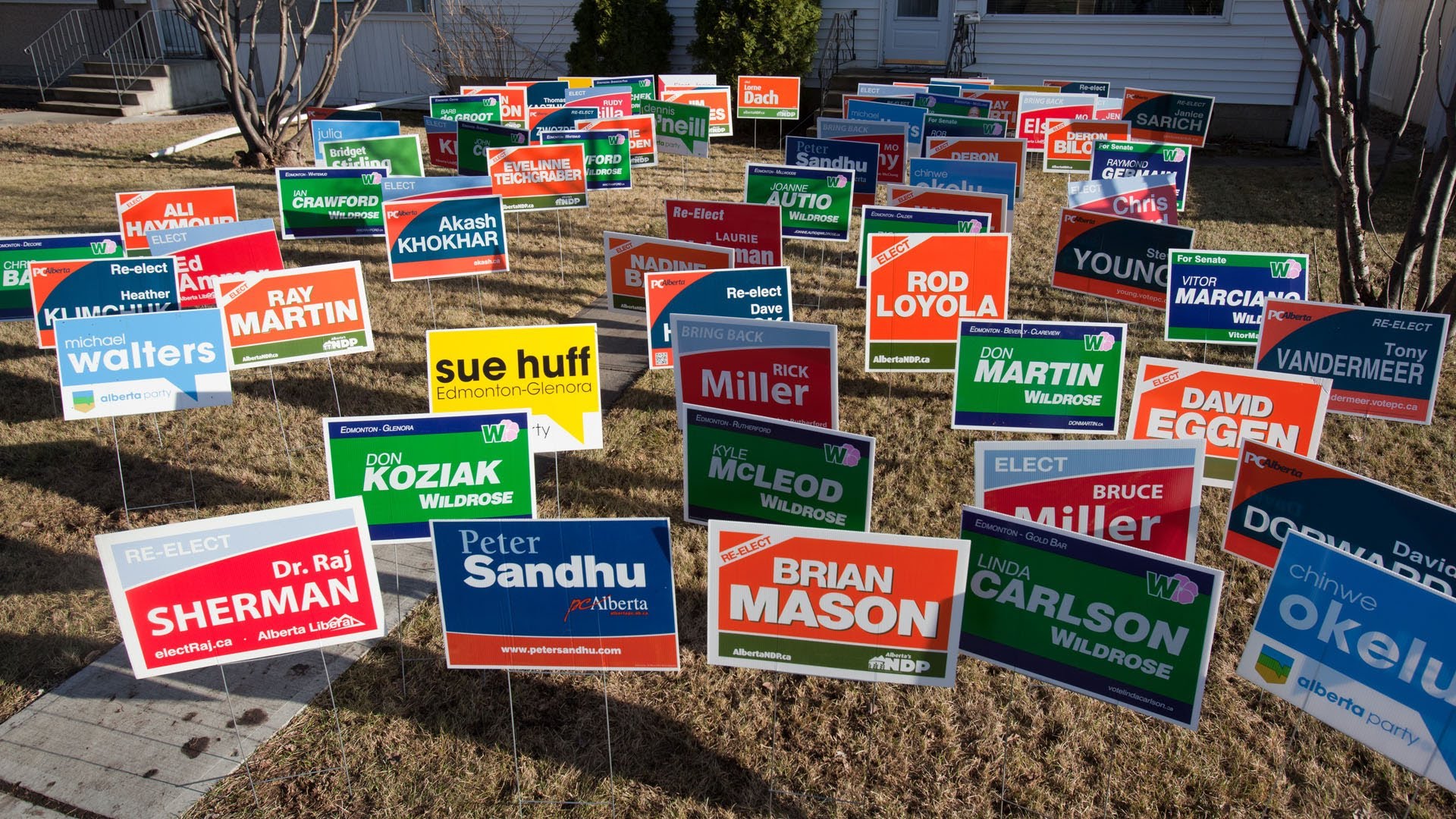
2) Bumper Stickers & Lawn Signs – It’s a big year here in the US. In just a few days, we will, together, vote to elect the next Commander and Chief of our country. Usually by this time, lawns and cars are covered with signs and stickers that declare our preferences (or decry the prospect of “the other guy” becoming President). blog-lawn-signs-and-bumper-stickersPhoto Credit: YouTube

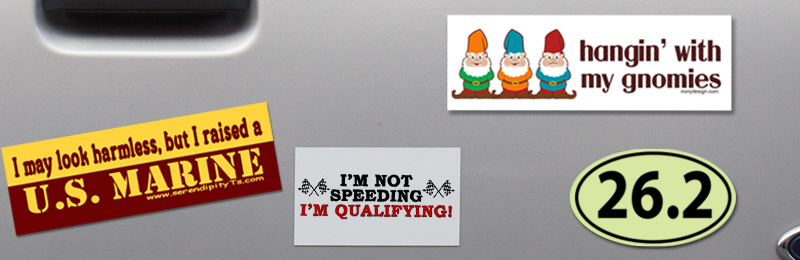
Bumper stickers abound broadcasting our various allegiances, in general. [Dave and I are not a bumper sticker people, but various ones make for fascinating distractions while stopped at traffic lights. Quite telling of the mixed bag of cultural values we have.]blog-bumper-stickers-cafepressPhoto Credit: Cafepress

Oddly this year, where we live, political loyalties are less obvious. Only occasional bumper stickers. Even fewer lawn signs. Not that they are relevant to election outcomes. Still, they were interesting predictors of where neighbors, co-workers, and random strangers stood politically on issues and candidates.

I wonder why there are so few this year. Are we less sure or even despairing at our options? Is it fear of displaying our colors? What do you think (without going all political in the comments)?

A postscript to this is the possibility that we now live in an age where “putting it all out there” on our vehicles, or in our yards, is not wisdom. Again, thoughts?

blog-bumper-stickers-pjmediaPhoto Credit: PJMedia

3) Old Men Grooving – On a lighter note, I discovered this British dance group, of 40-60-somethings, who performed on Britain’s Got Talent . They call themselves Old Men Grooving, and you will get a sweet chuckle watching them dance together. Very impressive really. Reminds me of when I took a tap class, for the first time, as an adult. Never too late to dance! Find Old Men Grooving on YouTube.

4) Friends Who Wound – OK, this isn’t for everyone. Greg Morse recently wrote a piece for Desiring God on finding a friend to wound you. What seems counter-intuitive is actually something I welcome…and it’s not because I’m a glutton for punishment.

blog-friendsPhoto Credit: SomeEcards

We see on social media, and say ourselves sometimes, that it’s right to just get rid of negative people, walk away from punishers or diminishers, and hang with people who only affirm us. This article talks about friends who love us enough to say the hard thing. I appreciate people who love me and take the risk to point out the huge potholes in my path or who reach into my life and help hoist me out of a ditch of my own poor choices. Here’s a quote from Morse’s article (he’s speaking to Christ-followers):

“The world cares nothing for our eternal good. Ungodly friends cheer us on toward destruction. They bequeath the kiss of flattery — the Dementor’s kiss. They coddle our egos, telling us what we want to hear, not what we need to hear. Even the most genuine and moral among them sets sail away from God. Thus we need a crew of Christian companions — a body — to keep us from shipwreck. Finishing the race is not an individual endeavor, and eternity is at stake.

Praise God then for the faithful wounds of true friends who protect us from ultimate injury. They tell us plainly, “You’re flirting with destruction!” …Friends who ask us hard questions, who crush the whispering lizard on our shoulder, who are for our eternal soul above our momentary feelings — these are true friends.”   – Greg Morse

There is a delicate balance here…and relationship matters. We’ve too often been put off balance by words unfitly spoken. What is your experience of friends who wound in a good way? For me, the best experiences I’ve had with this have turned into crossroads in life…isolated incidents where a friend helped me step back from a habit, a person, a life choice that could have destroyed me…and step toward a better way. Very thankful for the courage and love of such friends.

blog-best-friends-woundsPhoto Credit: Dgreetings

5) A Clean House – Who doesn’t like a clean house? When our first child was born, my mom-in-law and her sister came to help me for a week. They were wonderful! One day, while I was sitting all pampered with Baby Girl in my lap, Aunt Nancy asked me what I used to clean the baseboards. Baseboards? First of all, I wasn’t sure what baseboards were, and secondly, I was positive I didn’t clean them. Years later we lived in North Africa and had house helpers all through our time there- those years of my school-aged children. A time when the kids thought that she was their helper rather than mine?!

What a blessing to have the so-daily dust of the Sahara Desert washed away by someone…else! Now back in the US, I am faced with the dust of Richmond, Virginia…Alas. There are endless numbers of articles out there on how to clean house, and I’ve read several. Reading does not necessarily lead to cleaning unfortunately.blog-messy-mom-clean-housePhoto Credit: Quadcity

The article by Valerie Fraser Luesse entitled Do You Clean Like Mama? is my most recent helpful, funny, and non-judgmental read on this subject. It gives me hope again that if I keep at it, one day the house might be clean…for a glorious moment or two, at least.

Those are my faves…although I could also go on and on about the goodness of God, babies, and the sweet arrival of Fall…but those we’ll leave to another day. Have a restful and restorative weekend out there.

Monday Morning Moment – Ultra-Productive People & What They Do Differently – 2 Infographics

blog-productivity-silicon-valley-reportPhoto Credit: Silicon Valley Report

We all have exactly the same amount of time. At least in a day. Some of us have less time than others in our lives, probably, which makes using that valuable time wisely all the more important. However, that’s the false perception of time. The idea that, because we’re young, we have all the time in the world…so chill. Enjoy. Right? Just because we’re young, how we use our time will set habits that build a foundation for our life and work. Young or old, learning how to be consummately productive is a very good plan. When we do the work of learning to be “ultra productive” part of what we gain out of that is…more time. Definitely worth the work.

I’ve written on productivity other times (in particular, about “Chris Bailey’s life of productivity”). Using time and brain power wisely is important to me because I am well aware of how easy it is to squander both. When I discovered the two infographics below, they affirmed some of the changes I’ve already made in my life and other habits worthy of establishing.

Kevin Kruse in a Forbes article gives us results of his survey of 200 ultra-productive people. He asked each their secret of productivity.  The infographic below lists out the 15 ideas gleaned from his study.blog-productive-people-do-things-differently-15-time-secretsPhoto Credit: Online Learning Tips

Anything surprise you? I was surprised at getting rid of to-do lists by scheduling everything. The “say no to everything” idea can be agonizing to execute and also infuriating when you’re on the receiving end.  Every idea in the list of 15 is doable and easy to develop as a habit. Worth a try, right?

Another infographic (from Dylan Roach and Jacquelyn Smith in Business Insider) highlights the morning habits of successful people. This also resonated with what I have discovered in the lives of influential and productive friends and colleagues. blog-productive-people-do-things-differently-16-things-at-start-of-each-day-update-or-diePhoto Credit: Business Insider

I appreciate the ideas of this infographic…especially the ones on helping others and being grateful. Soft habits maybe? Not really. When the ideas above get hard-wired in us through habit formation and intentionality, our productivity ramps up and our definition of success may widen to a more shared experience in our life and work.

On the 27th Birthday of Our Son and New Dad – A Charge, a Quote, a Poem and a Prayer

IMG (4)

Happy birthday, Son. Over the years, you have single-handedly taken me to my knees more often than you realize – praying to be the parent God would have me be for you; praying for you to come to faith at an early age; appealing to God for all the moves (overseas and stateside) to not be too hard for you; asking for comfort when situations were sometimes hard anyway, and thanking Him for all He did for you – the friendships, the opportunities, and His relationship with you from forever.

So many memories. IMG_0034 (2)

“Let’s go kill buffalo!” Following your sister around for play ideas. Grandparent visits. Family vacations at the Chesapeake Bay. Move to Africa. Carpool buddies. Gameboy. Drawing cartoons.IMG_8751Computer games. Getaways to the Red Sea. Dreamcast. Becoming a Christ-follower. Baptism back home in Tennessee. IMG_8749

Roadtrips to the Sahara Desert. Soccer. Cousins. Airports. Basketball.

2006 February -- Rabat BBall Tourney turtles bike 2972007 - June -- Nathan scoresGrumpy when hungry – feed the boy. High School Rock Band. Great friendships. Game Nights. Sleep-Overs. PlayStation. Laughter. Working out. Classical Guitar. 2006 -- Dec -- Nathan, Jeremiah, Jared

VCU. Honors College. Aletheia Praise Band. Guitar Professor Patykula. Sharing a house with your brother, sister, and then Duy.Blog - Parenting 4

Met and married beautiful Bekkah. Nathan & Bekkah collection

Grad school at East Carolina. Then back to Virginia, teaching guitar, playing beautiful music, and making a home…grown. Nathan & Bekkah - New House

With being grown, comes adult friendships, some nurtured since childhood, some within the family, others without. With being grown, comes new work challenges, fulfilling life aspirations, and deepening your faith in God. With being grown, comes new family designations – becoming uncle to your nieces (first niece on our side of the family).

Then that crazy day this summer that you wildly trended on social media through a posting of one of your krue.tv live streams.

Best of all…the day Titus was born…and you became a dad.Nathan, Bekkah, & Titus July 2016IMG_8050Photo Credit: Helen Phillips, Bekkah MillsNathan & Titus lookalikesTakes after his daddy – Titus (l) & Nathan (r)

Nathan, you are settled for now in the U.S. after so many stamps in your passport. Settled in our hearts forever. You make us laugh, and you make us think. Your grown-up heart is so worth the childhood/teen year battles. And your music…what a gift to us. [Videos linked at end of today’s blog]. Whether you’re on electric, acoustic, or classical guitar. Your music goes right to the heart. Thank you for honing the gift God gave you. – that heart of yours first, and that music flowing out of it.Nathan and guitar on stepsPhoto Credit: Duy Nguyen

As you settle into your mid- to late-twenties, I leave you with God’s word to Joshua, Oswald Sanders’ word to leaders, a poem often quoted by our friend Tom Elliff, and a prayer credited to General Douglas MacArthur.

Happy birthday, Son. I’ll love you forever.

“Have I not commanded you? Be strong and courageous. Do not be terrified; do not be discouraged, for the Lord your God will be with you wherever you go.” – Joshua 1:9

“When a person is really marked out for leadership, God will see that that person receives the necessary disciplines for effective service.” – J. Oswald Sanders, Spiritual Leadership

When God wants to drill a man,
And thrill a man,
And skill a man.
When God wants to mold a man
To play the noblest part;
When He yearns with all His heart
To create so great and bold a man
That all the world shall praise –
Watch His method, watch His ways!
How He ruthlessly perfects
Whom He royally elects;
How He hammers him and hurts him,
And with mighty blows converts him
Into trial shapes of clay which only God understands
While his tortured heart is crying and he lifts beseeching hands!
How He bends, but never breaks,
When his good He undertakes. . . .
How He uses whom He chooses
And with every purpose fuses him,
By every art induces him
To try his splendor out –
God knows what He’s about.
– Anon. – often quoted by Tom Elliff

Build me a son - Douglas MacArthurPhoto Credit: Pinterest

IMG_8616

Star Wars Video: Ian Edwards – Cameraman http://www.ian.camera/
Danny Caporaletti – Asst Cameraman http://dannycaporaletti.com
Ruthie Edwards – Animation http://ruthieswebsite.com

Nathan Mills at Beyond the Guitar

Nathan Mills Live Streaming at krue.tv

J. Oswald Sanders’ Spiritual Leadership

Part of Joni Eareckson Tada’s Testimony – Poem Drill a Man

Book Favorite I’ll Love You Forever by Robert Munsch – Before Helicopter Parenting Became a Cultural Issue

Adapted from a previous blog.

Saturday Short – A Space and a Place on the Team

Blog - Space and a place - gtrinityPhoto Credit: Gtrinity

Work space is always a premium in companies. Whether you work in a cubicle or a full-fledged office with a door, a space of some sort that belongs to you (shared or not) is vital. Yesterday, I had the opportunity to pour over a department’s new office space design. It was a fascinating experience.

Some of the team members work remotely, and I noticed there wasn’t a space designated for those who are not regularly in the office. Showing this to the person on point for working out the space assignments yielded an “Aha!” moment. She was kind to listen to a relative outsider, initially explaining how that probably happened because they are rarely in the office. Could it be that they are rarely there because there is no space for them? Something to think about if you want to rub shoulders and share ideas with team members that could prove very valuable…if space is made for them.

Along with space comes the idea of a place on the team. Do you know your place on your work team? What you bring to the table? What unique role you play in the mission of your organization? C-suite leaders and department heads, of course, define some of that through a title, vision, and job description. They made a place for you on the team organizationally. Your role is to carve that place out…to add value to the work of the team through your own applied competencies, but also to add value to the team members by your care for them – by being “the rising tide that lifts all boats”Adam Grant.

Blog - team a place for you - the brand bankPhoto Credit: The Brand Bank

How exhilarating it is when our bosses communicate to us and the larger team how relevant we are to them and the work! However, that can’t be our motivation. We must set in our own minds, that if we’re employed, we have that grand opportunity to make a difference. Whether obvious to leadership or not, we can apply our best selves to the vision, to the outcome, and to the people we work with and for. Business leader John Maxwell spoke recently at the Global Leadership Summit on this very topic.

Maxwell’s book Intentional Living: Choosing a Life that Matters focuses on this idea of “adding value” to others. At first, I thought that an odd idea because people have value. Period. Then, the more I listened to him and the more I read about healthy teams, there is wisdom in this. We can get absorbed in the task and the goals, and miss the people within the tasks. It is part of the whole “space and place” component of team. Give a listen to Maxwell in this brief but packed 3:40 minute video on “adding value to people”.

In the course of busy work and personal lives, we are not even thinking sometimes of the need for “space and place”. On this Saturday, during gardening, and errands, and family outings, spend a quiet minute maybe on the people you call team and what space and place you’ve made for them to thrive and grow. It will always come back, like Adam Grant says, to benefit you as well.

Monday Morning Moment – Matt Monge on the 7 Skills of Tomorrow’s Top Leaders – Whether You’re 26, 56, or 72

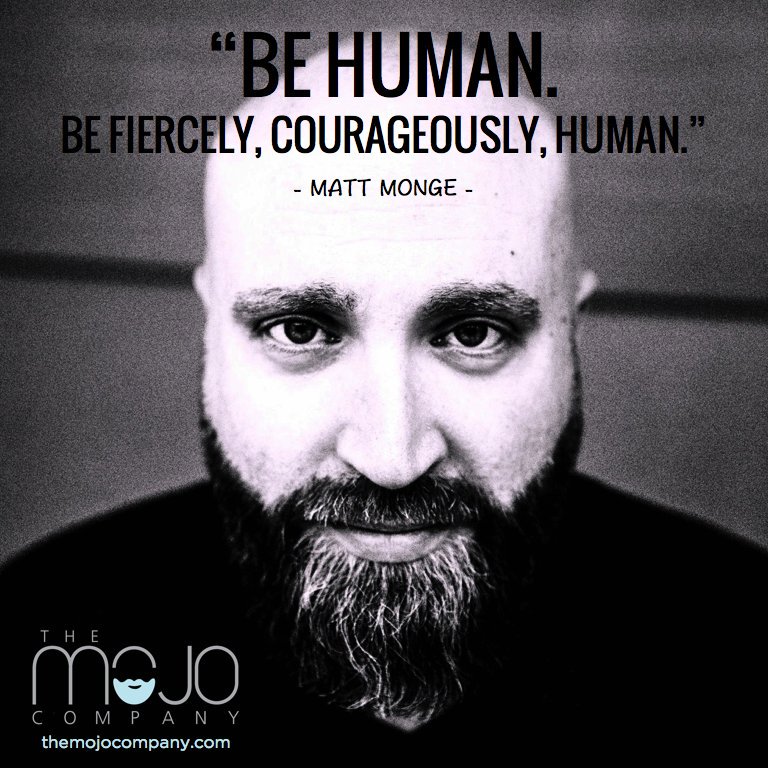
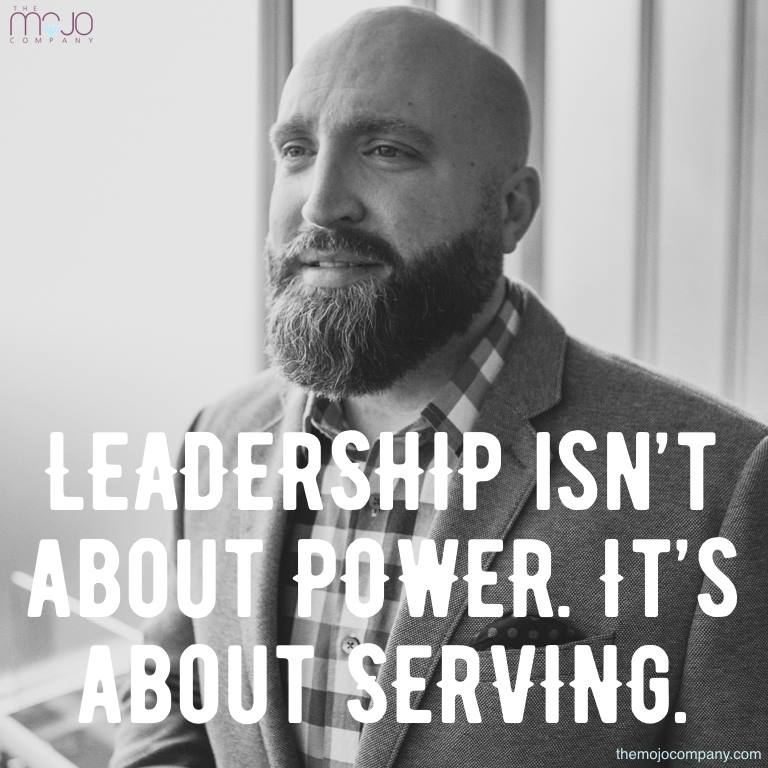
Blog - Tomorrow's Leaders - Mojo companyPhoto Credit: The Mojo Company

Leaders of Tomorrow. What age group came to mind? Probably not your own. Maybe that’s one of our dilemmas in life and work. We either think we have already arrived as tomorrow’s leader today (ugh!). Or we stop thinking of how we can develop into that change agent of tomorrow because we’ve fixed our course…or settled into what we know already. It’s served us well so far, right?

Here’s my Monday morning gift to you: an introduction to the person, writing, and wisdom of Matt Monge.  Earlier in his career, he worked in finance (credit unions, in particular), and had fascinating titles like Chief Culture Officer and Vice-President of People and  Development. Currently he is is president of The Mojo Company, a leadership development consulting firm. His Facebook page bio reads: “My mission? Make the world a better place by helping people, leaders, & workplaces be more human. Depression fighter. Keynote speaker. Head of The Mojo Co.”

BLog - Matt Monge - TomorrowTodayGlobalBlog - Matt Monge - TwitterPhoto Credit: Cues, Twitter

I read everything Matt Monge writes. Even his promotional video taught me more about leadership (you’ll want to take notes).

Monge posted a blog a few weeks back and I’ve been thinking through it since… It’s his 7 Skills Tomorrow’s Top Leaders Are Developing Today. I decided to post his bullet points here and how they stirred my thoughts on skill development today. [Don’t miss reading his thinking on this and other leadership topics in links.]

  1. Being Others-Oriented – While other employee development folks have moved away from “servant leadership” language, Matt Monge continues wisely to be a strong supporter of it. I, too, am delighted by leaders who continue to seek out the greatest good for both employees and customers. The bottom line is best served here. As the years go by, or as tribes are built, our temptation is to coast in this area…making the negative assumption that someone else is serving while we’re the idea leaders. As leaders go, so go the organizations.
  2. Persuasion, Logic, & Negotiation – First, Monge sees top leaders as practicing persuasion and negotiation differently “not with power, position, coercion, or even deception; but rather through logic, reason, and with an eye toward the good of the whole.” It’s funny how unaware leaders can be in thinking that manipulation and coercion go unnoticed by employees under their authority. It’s always better to do the work of taking the high road of negotiating and persuading. When we engage in the give-and-take of healthy debate and problem-solving, it’s a win-win for everyone. It does require time, trust, homework, and humility.
  3. Reframing – This is a discipline of looking at a problem or situation from different perspectives. Monge talks about doing this in such a way that we wrestle with our own biases and blind spots. Reframing can make for a decision or problem solved that have wider success or effectiveness.
  4. Knowing How to Think about and Make Decisions – Monge makes the distinction of being decisive vs. being a good decision-maker. I love this because often we experience leaders who get the job because they are decisive. Period. Full-stop. What does it take though to be a good decision-maker? To become an effective leader is to examine how we make decisions – what are my decision-making processes, who are my guides, what are those factors that always weigh in on my decisions? [Monge names those factors as presuppositions and core values. We need to think about what those are.]
  5. The Ability to Work and Build Community with Others – This is such a core value of mine and yet after years in my career, it bears refreshing. I’m reminded, as Monge writes about this, of the Old Boys’ Network. Today, maybe it’s less-gender-defined and called other things, like C-Suite executives, or even tribe. Still, if it’s a few making decisions for the many, it’s not community. Monge’s constant message is that the strength and health of an organization is in the community. Leaders must do the work of leaning in to their colleagues (outside the executive suite) to draw on the wealth of knowledge there and to affirm the value and varied roles of those coworkers.Blog - Matt Monge - human - twitterPhoto Credit: Twitter
  6. 6. Leadership – The leaders of tomorrow are continuing to develop themselves toward that future. We can be always learning, always growing – not necessarily just like other leaders in our lives, but learning what we need to learn to remain relevant/useful. Resting on the laurels of past successes or doing “what we’ve always done” will eventually pull us to the sidelines. I’m in the painful, personal throes of dealing with this right now myself. Shaking it off and moving forward!

  7. Understanding Humanness & Emotional Intelligence – Monge defines emotional intelligence as having “four basic components: self-awareness, self-management, social awareness, and relationship management”. Foundational to emotional intelligence, in Monge’s thinking, is this whole element of humanness. As the workplaces of the future give way to more and more technology, we will be wise in tuning into the growing need for humanizing our organizations and our human employee experience. Being tech-savvy and not people-savvy misses what could be. Leaders of tomorrow, take note.

So that’s it for today. I love Mondays because it’s an opportunity to hit “the refresh” key of our work lives. We are not only motivated (like we might be on Fridays) but we’re fresh in our view of our work community…and hopeful.
Matt Monge, and others like him, gives me the encouragement I need to cast off from the safe, still shore and re-enter the fast and deep water of today’s work environment, determined to manuver well there…and maybe even coax other quality people back in from the shallows. Whatever our ages or sensibilities, we can work toward being tomorrow’s leaders of excellence.

5 Friday Faves – Words, Trauma Healing, Street Smart Kids, Thunderstorms, #GrowingUpInABlackChurch

Blog - Friday Faves

Happy Friday! Another whirlwind week. Ours is to savor the moments and those sweet finds of each day of  life. Below are a few of my favorites from this week. Would love to hear about yours [in Comments].

1) Words – You know when you mean to send that card or make that phone call? Or when you could speak to that downcast stranger or give a shout-out to someone worthy of celebrating…and you didn’t? This is a salute to all you folks out there who use your words for life – to encourage, celebrate, comfort, guide, and lovingly speak the truth. We are bombarded with words. Literally, blasted with words. Some sound so true, we are swayed by them…to find out later, they were not true…and the course of our lives, maybe even our country, was set in a direction we wouldn’t have chosen, if we understood what the words really meant.BLog - WordsPhoto Credit: Pinterest

I’ve been blessed by good friends and colleagues who use words in a life-giving manner. They inspire me to do the same.2016 Phone Pics 2449

2) Trauma Healing – The Trauma Healing Institute is a training and service arm of The American Bible Society. The goal here is to respond at a heart-level to the trauma in people’s lives. When you think of the numbers of people who have endured extreme trauma (1 out of 7 persons globally), it is a good thing to reach out to them with shelter and  supplies but also with listening ears and honoring comfort. This intervention is Bible-based so may not be the go-to training for everyone, but I’m hoping to take it in the Fall. Check here for stories and more info.
Blog - Trauma Healing - THIPhoto Credit: Trauma Healing Institute

3) Street Smart Kids – Earlier this week, I wrote about situational awareness. One of the resources I posted was the blog by Chonce Maddox on 50 Things You Can Do to Make Your Kids Street Smart I wrote this week about situational awareness here. Maddox talks about her reasoning for writing: “As a parent, my worst fear is that I won’t be able to protect my child when he needs it. My second worst fear is that he won’t be able to protect himself and make wise decisions depending on what situation he’s in.” Her list of 50 things are age-specific and are brilliant and easy-to-apply. Whether you have a newborn or a soon-to-be-launched teen, take the time to equip your children in this way.
Schoolchildren embracing happy. Multi cultural racial classroom.

Photo Credit: A Fine Parent

4) Thunderstorms and Heat Lightning  – I love rain and especially thunderstorms. It’s been really hot here in Richmond, Va., the last couple of weeks. Occasionally the lightning has only been heat-related. We had both heat lightning yesterday as well as an amazing thunderstorm last night. My pic below is of the late afternoon sky. The rains that came later were drenching and cooling. No electricity outages – just a glorious and wet light and sound show.Blog - ThunderstormBlog - Heat LightningPhoto Credit: Wunderground

5) #GrowingUpInABlackChurch – Growing up outside Atlanta , in the suburbs, was a pretty homogeneous experience for me, culture-wise. When I finished grad school, my first job was in an innercity hospital in downtown Atlanta. This was my first time experiencing the richness and otherness of predominately African American worship or “church”. In those days, working on an oncology unit, I went to a lot of funerals. Both in those times and regular Sunday services, I discovered a very different way of doing church and community. Sunday morning church is still too often a too-segregated experience, but I’m glad for the opportunities to be in a more racially and culturally diverse worship. What got me thinking about this was the trending hashtag this month which was fun to watch…although, not having the experience of #GrowingUpInABlackChurch, I celebrate it. ALso trending this week: #blackwomendidthat.

Blog - GrowingUpInABlackChurch - hbcuBlog - GrowingUpInABlackChurch - imgurPhoto Credit: HBCU, HBCU

Have a safe and sweet weekend out there. Use the Comments below to post your own favorites from this week. Thanks!

Situational Awareness – It Could Save Your Life…or Someone Else’s

BLog - Situational awareness - preppersillustratedPhoto Credit: Preppers Illustrated

We moved from East Tennessee when our children were still small. Taking a job abroad, we were excited at all the possibilities of living in a different culture. Still we wanted to be wise in living as expats – in a country where neither we nor our children understood the subtle signs of threat, unrest or possibly even danger. We wanted our children to be prepared for the unexpected but not afraid. Living quietly and confidently aware of our surroundings can have a strong positive influence on engaging a new culture, and even our home culture.

IMG (3)IMG (19)

Situational awareness is a discipline of being tuned into your surroundings in such a way that you can be alert to a threat or crisis before it actually happens. It is not complicated but does take practice and discipline. Brett and Kate McKay blog extensively  on this and define it as:

“a skill that can and should be developed for reasons outside of personal defense and safety. Situational awareness is really just another word for mindfulness, and developing mine has made me more cognizant of what’s going on around me and more present in my daily activities, which in turn has helped me make better decisions in all aspects of my life.”

It’s not to instill fear (especially in teaching our children) but rather it can actually create calm and confidence. Where we want to be, in assessing our surroundings, is in a “yellow zone”, and we want that for our children as well – alert and calm, as a normal life pattern.Blog - Situational Awareness - Cooper's Color Code - domestic preparednessPhoto Credit: Domestic Preparedness

The links below are extremely helpful in terms of learning situational awareness and applying it to child safety, personal protection, and, in general, responding to a threatening situation.Blog - Situational Awareness - slidesharePhoto Credit: Slideshare

In The Tao of Boyd – How to Master the OODA Loop, another blog by the McKay’s, they talk about military strategist John Boyd’s OODA Loop – Observe, Orient, Decide, Act. This can be used in dealing with uncertainty in any situation – whether a personal threat or a business transaction. I just wanted to mention it here as a rapid process we go through in situational awareness when we train ourselves to respond proactively, rather than in a panic.

Blog - Situational Awareness - Observe, Orient, Decide, Act - gsbPhoto Credit: Stanford Business

In the first McKay blog on situational awareness, they encourage parents to teach it to children as a game. You don’t even have to raise the issues of safety or security. It just becomes a game of being “in the moment”, observing your surroundings (while taking a trip across town, or eating in a restaurant, or playing in a park). When you alert your kids that the game is on, they know that, as part of that experience, to be especially observant. Then you ask questions later: “Can you describe the people sitting next to us in the restaurant?” or “How would you describe the adults closest to us in the park?” or “What do you remember about the people around us in the subway?” “What did we do to safely cross that huge street?” It doesn’t have to be a scary thing for children to learn to be more observant…instead of being zoned out or into their electronics or playing with your phone.

The same is true, of course, for us adults. The discipline part of situational awareness is practicing it often enough that it becomes a part of your every day life. In the old days, before smart phones, I was a people watcher…just taking in the people around me (in a “fascinated by them”, not “stalking” sort of way as we think today).

Too often, people tend to guard their own privacy, by looking down or not making eye contact some other way. We don’t survey where we are and who surrounds us, like we might should. Not because there is evil everywhere…that would be weird to think like that…but as a discipline…for our sake and for those around us.

There may be a time we can actually avoid or possibly defuse a situation, if we are focused. After the 9/11 bombings, and until situational awareness became “a thing” in my life, I would tend to kind of stay in a bubble around strangers…like on a subway or bus, or walking on a crowded street. One of the practices in situational awareness is to train your peripheral vision. It’s amazing what you can note if you learn to widen your view. [Use the image below to give it a try.]Blog - Situational Awareness bubble - modernsurvivalblogPhoto Credit: Modern Survival Blog

Today, I just wanted to introduce situational awareness. In a world that seems to be more and more violent, with stranger-on-stranger attacks, we may be vulnerable without even knowing it. Rather than being victims, there are steps we can take to become more aware and savvy. This can work toward our own safety and that of our family, but it can also be a means to help others more vulnerable than we are.

[Sidebar: Please don’t hear me say we need to be super-vigilant, like there is a bad guy coming through every door. Situational awareness is a discipline that we can use in many positive ways – both socially and in the workplace. It’s a skill in our toolbox.]

I am reminded of times, both overseas and here in the States, when a local friend or stranger stepped in and moved us to a safer place, or intervened when I didn’t know what to do in a new situation. Soon, I want to write again about this and will post some of our stories. Nothing really dramatic, thankfully, but definitely remarkable for us in negotiating new cities and situations. It would be wonderful if you shared some of your stories where you were situationally aware…or where it might have been helpful. Please comment below.

Check out the links. Very practical. Be safe out there…and help make it safer for those around you.

How to Develop the Situational Awareness of Jason Bourne – Brett & Kate McKay – Excellent overview and practical helps – Must Read

The Tao of Boyd – How to Master the OODA Loop – Brett & Kate McKay – Indepth article on OODA – Observe, Orient, Decide, Act

10 Ways to Improve Your Situational Awareness – Sergeant Survival

50 Things You Can Do To Make Your Kids Street Smart – Chonce Maddox

Situational Awareness: Staying Safe When Life Gets Dangerous – The Survival Mom

5 Drills for Situational Awareness – Ken Jorgustin

A Practical Guide to Situational Awareness – Scott Stewart

10 Basic Safety Tips for Women – Mom With a Prep

I Do This Every Single Day But After This Warning I’ll Definitely Be Thinking Twice – Video

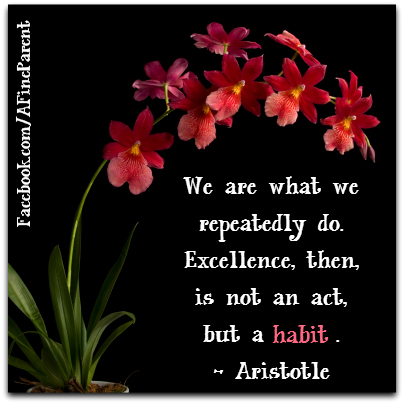
red orchid isolated on black background

Monday Morning Moment – Forming 5 Simple Habits that Lead to Success/Effectiveness

Blog - Habits - CGInternationalincPhoto Credit: CGInternational

Habits. Daily routine. These are things we wrestle with. Fortunately the more we wrestle and stay on them, the more successful we are, and (hurrah!), the more our lives are positively affected. Ben Slater has posted a very doable routine in his piece 5 Simple Daily Habits That Lead to Ultimate Success. They are:

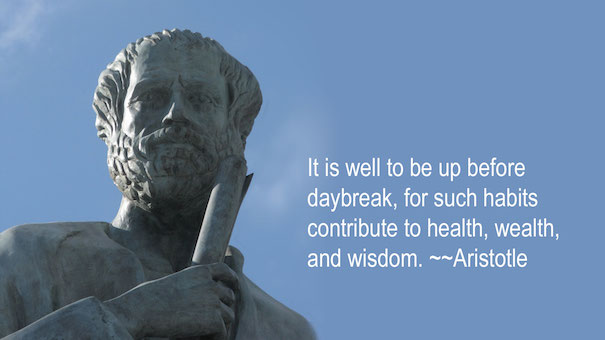
  1. Wake up early. Slater is not talking waking up early enough to just get to work on time. He’s talking 5ish. To wake up that early requires going to bed early…not just napping on the couch (guilty), but habitually, getting to bed early to get up early. This is determined by how much sleep you need…whether you’re a morning person or night person, that amount of time is pretty much set. “Sleeping in” – that weekend luxury – can derive negative gains. Is it worth it? Just asking the question he raises.Blog - Wake Up Early - Monday Morning - thefemalenetworkPhoto Credit: The Female Network
  2. Exercise regularly. OK, so nothing new, right? This is not about staying in shape, physique-wise. That could be a benefit of exercise, but the goal is to sweat! We know the great benefits to regular exercise, many of which are mental. Feeling happier is one. It’s making exercise a habit that’s key here – for all its physical, mental, emotional, and even vocational benefits.Blog - Exercise - breatheryPhoto Credit: Beamery
  3. Focus, don’t multitask. I have actually prided myself for years on the ability to multitask. No more. It’s possible it wreaked havoc on my memory and probably on the quality of my work and relationships. Slater talks about the importance of a daily routine of planning, execution, review and starting a plan for the next day. “Work out the 3-5 things that you need to accomplish over the course of the day and focus on them first.” Focus is key. I’m learning.Blog - Focus vs. Multitasking - massolutionsPhoto Credit: Massolutions
  4. Learn from mistakes.  When our day doesn’t go quite how we hoped, we too often default to blaming (too many meetings, interruptions, demanding bosses, time-wasters and trust-busters). We make mistakes in our decision-making and assessments; what’s important is that we deal with them humbly and proactively. Refuse to blame others. Learn from the mistake and move on. Sidebar: If it’s someone else’s mistake or poor judgment or questionable character, then learn from their mistakes as well. Don’t get muddled up, fuming about another, when your own life is at stake. You have it in you to control that.Blog - Learn from your mistakes - ultrapreneursayingsPhoto Credit: UltrapreneurSayings
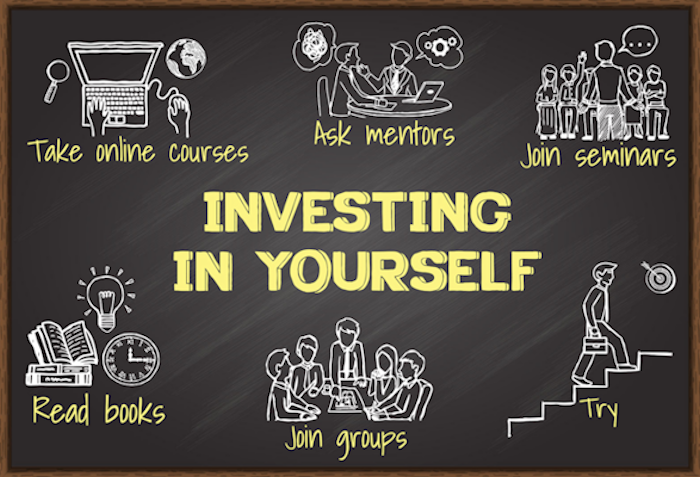
  5. Make personal investments. What habits have you put in place to continue to grow and develop? Habits, not just hopes or goals set somewhere in the distant future. Slater observes: “The world’s most successful people are always prepared to invest time and resources in their own personal development. If you stripped someone like Bill Gates of his assets and dumped him on the street I’d be willing to bet he’d be ok – he’s constantly invested in himself and built up huge reserves of human capital, major companies would be falling over themselves to offer him a job.”  This is where weekly goals come in, and maybe a mentor…someone you trust who will help you stay accountable to your goals. Don’t miss this valuable habit…I definitely need more discipline in this area.Blog - Investing in yourself - salestrainingsolutionsPhoto Credit: SalesTrainingSolutions

I’ve written a lot in Monday Morning Moments about habit formation (see links below). There are so many great resources online about this important professional life skill. Slater’s article on these 5 simple daily habits reminded me again of how possible it is to know success/effectiveness if we do the work of putting these habits into our daily routine. I’m on it…once again. [Like with New Year’s Resolutions, we may not be successful over the long-haul with every one, but we move closer to goal every time we push in that direction.]

What are habits you have seen make a difference in your personal and professional day-to-day life? What habits would you like to make part of your daily routine? Please share in Comments.

15 Critical Habits of Mentally Strong People – Travis Bradberry

Habits of Successful People Who Always Reach Their Goals – SlideShare

Creating a Lasting Early Morning Routine – The Two Most Overlooked Aspects – Joel Gascoigne

Defend Your Research: The Early Bird really Does Get the Worm – Christoph Randler

Focus on Multi-Finishing Instead of MultiTasking – Dave Mastovich

Monday Morning Moment – Notes on Chris Bailey’s Life of Productivity – DebMillsWriter

Monday Morning Moment – Make Your Bed Every Morning and Be Ready to Change the World – DebMillsWriter

Monday Morning Moment – Screen Time – Give It a Rest – DebMillsWriter

Monday Morning Moment – Understanding True Habit Change and Rocking Your New Year’s Resolutions – DebMillsWriter

Monday Morning Moment – Our Work Ethic Pushes Us On When Our Passion Wanes – How’s Your Work Ethic?

Blog - Work Ethic & Passion - twitterPhoto Credit: Twitter

Can our work ethic sustain us when our passion wanes?

Eric Chester has been studying and writing about today’s emerging workforce since the 1980’s, when Generation Y was in its infancy. Millennials have been examined and critiqued so much, but Chester has done his homework in how to help them be successful in the workplace. He also challenges employers to equip these young adults with what they may not have upon entering the workforce – that being a strong work ethic.

In his article in The MHEDA Journal, Chester defines work ethic as simply “knowing what to do and doing it“. Through his research, Chester created a list of seven indisputable, non-negotiable core values that he strongly believes every employer should demand: positivity (positive attitude), reliability, professionalism, initiative, honesty, respect, and gratitude (cheerful service).

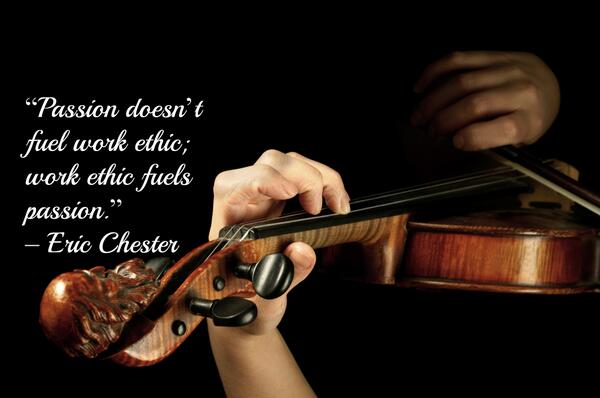
This is not just so for millennials but for all of us in the workforce. What do we need to be successful or effective across a career? Is it passion or work ethic? Passion (strong or powerful emotion, deep desire, intense conviction) is a big buzzword right now in hiring, but what we really need is work ethic. As Chester states, in his book Reviving Work Ethic, “passion doesn’t fuel work ethic; work ethic fuels passion.”

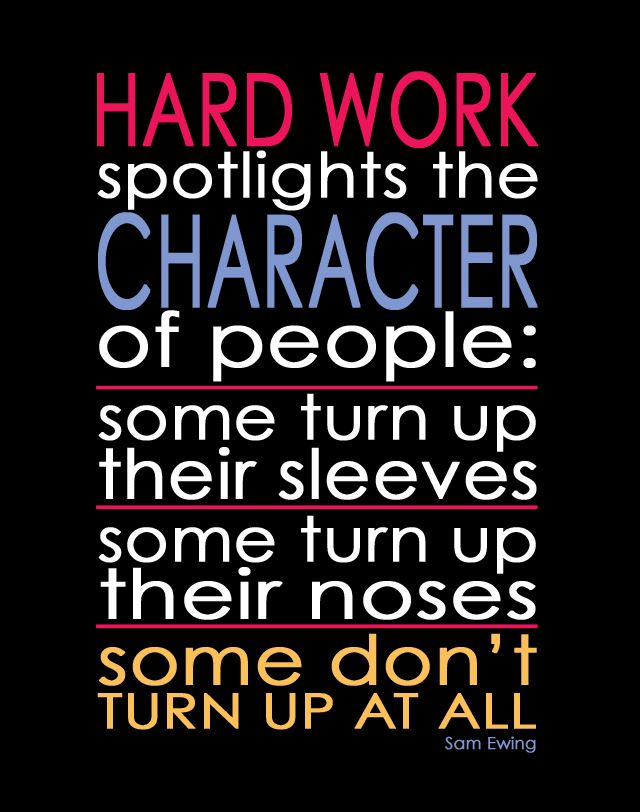
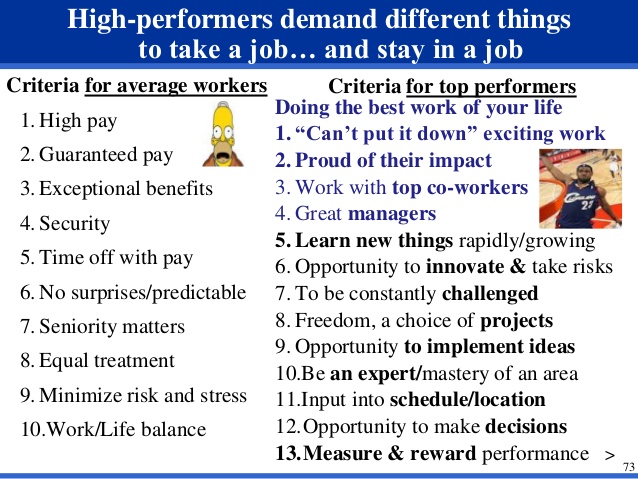
A strong work ethic will carry us through seasons in our career when we’re “just not feeling it”.  I appreciate the distinction Chester makes about how our work ethic actually fuels our passion and not the other way around. We may not all have passion in measures that enhance our success, but we can apply ourselves with diligence and intentionality such that we can push through to the finish, whatever it is. When passion wanes, this is a great encouragement to me.

Blog - Work Ethic 1 - pinterestBlog - Work Ethic 2Photo Credit: Pinterest, Pinterest

Arlene Hirsch quotes Mark Cuban’s thinking on passion and work ethic:

“’Follow Your Passion’ is easily the worst advice you could ever give or get.

1.  When you work hard at something you become good at it.

2.   When you become good at doing something, you will enjoy it more.

3.   When you enjoy doing something, there is a very good chance you will become passionate or more passionate about it.

4.   When you are good at something, passionate and work even harder to excel and be the best at it, good things happen.

Don’t follow your passion, follow your effort. It will lead you to your passions and to success, however you define it.”

Chester uses the analogy of building a fire in a fireplace. You have to set the logs in place before you start the fire. Passion will heat up a conversation or spark a vision, but it won’t get the job done, whatever it is. This is where our work ethic when applied will get us to goal, to mastery, to the finish. That in turn gives rise to passion as we see what is possible when we put forth the best effort that is each of ours to bring.

Blog - Work Ethic and Passion - slidesharePhoto Credit: SlideShare

Whether you are newly employed in the workforce or a seasoned veteran, it’s wise to consider the bottom line of what we ought to bring to our jobs. This will vary across organizations and companies, especially as our workforce itself changes in the years to come. Chester’s summation is noteworthy for all of us:

“Employers are searching for positive, enthusiastic people who show up for work on time, who are dressed and prepared properly, who go out of their way to add value and do more than what’s required of them, who are honest, who will play by the rules, and who will give cheerful, friendly service regardless of the situation.”

How’s your work ethic?…

Whatever our passion might be today, our work ethic can be rock solid…something we count on in each other at work in the every day.

Reviving Work Ethic: A Leader’s Guide to Ending Entitlement and Restoring Pride in the Emerging Workforce by Eric Chester

On Fire at Work: How Great Companies Ignite Passion in Their People Without Burning Them Out by Eric Chester

Employers Must Pick Up the Slack, Instill Work Ethic in the Emerging Workforce – article by Eric Chester

Follow Your Energy, Not Your Passion – article by Arlene Hirsch

What’s Wrong with Work Ethic in America? – article by Patricia Fripp

SlideShare – Metric Driven Talent Management – 21st Century Talent Management Conference – Tanzania

YouTube Video – Book Trailer for Reviving Work Ethic by Eric Chester

YouTube Video – Book Trailer for On Fire at Work by Eric Chester

Work Ethic Quotes – Pinterest

Blog - Work Ethic over Passion - starecatPhoto Credit: Starecat

Angry Men – Dealing with Fits of Anger and the Painful Fallout

Blog - Anger - beliefnetPhoto Credit: BeliefNet

Be angry, yet do not sin. Do not let the sun set upon your anger, and do not give the devil a foothold.Ephesians 4:26-27

I’d like to start a conversation about angry men. Not that women don’t get angry; sure we do. For today, though I’d like to think out loud about the frightening, threatening nature of anger in men. As an emotion, anger isn’t necessarily bad. It is a normal response to plenty of situations. We all have good reasons to be angry at times. When we turn up our anger either on ourselves or others then it becomes destructive and sometimes dangerous.

[Disclaimer: I am not an authority on this topic,  but have found the articles by the men who have written and counseled on this topic very helpful – they are linked below.]

Living with someone who strikes out at me in anger is not a daily experience, and for that I’m very thankful. However, there are strong memories of unchecked anger in my past that still sting when they come to mind.

  • I was maybe 5 years old when, one night in our home, all four of us children were sitting, huddled together on a bottom bunk, while my mom, dad and an uncle were having some sort of altercation. Mom and Dad were divorced by then, and he and my uncle were in some sort of row. I remember my dad’s face bleeding and a bloody handkerchief…and lots of frightening yelling…until he finally left our house.
  • My step-dad, who is the only dad I’ve ever really known, has always been so kind to me. He, on the other hand, was sometimes a tough dad with the boys. He struggled with fits of anger, and they were the recipients of it. As the years went by, he managed to get control of his anger for the most part. Still there are memories I wish I didn’t have, and I’m sure my brothers wish they could forget.
  • My oldest brother, who saw much more than I did of our birth father’s selfishness and our step-dad’s temper, also struggled with anger issues through his life. He had an uncanny ability to bait us, as family, into escalating arguments that left us all shaking with emotion. I learned the most about dealing with anger through trying to stay in relationship with him. Two friends, who also loved him, gave me the insight I needed to NOT take the bait and to draw down the negative emotion of our conversations. One friend told me, “Hurt people hurt people.” That one observation helped me the most with my brother. His whole life was full of hurt, some he brought on himself, some he didn’t. Before he died, a few years back, he had begun the process of healing in a lot of those areas. I am so thankful that he finally saw that friendship with family was possible. We became close friends before the end. My only regret for him was that he didn’t have time for all his relationships mended before he died. Learn from this.

[There are some other situations very close to me that are still too fresh and painful to put up here….where people I love have been terribly hurt by angry, vindictive men who were supposed to protect and care for them.]

Blog - Anger - patheosPhoto Credit: Patheos

I started thinking about this dilemma of “blowing up” anger especially in men after reading Chuck Lawless’ article 10 Steps to Deal with Anger. He offers really good counsel especially to Christian men with anger problems, but anyone would benefit from reading this article. Chuck grew up with a father who lashed out at his family in anger (he wrote about it here). Like my step-dad, his dad would later change, with God’s help…which can give hope to all of us.

Too often we downplay anger. Because it is a normal emotion, we tend to just accept it unless there is violence inflicted.  When fits of anger are typical of how we respond to frustration, disappointment, loss, or not getting our way, we need help.

Now the works of the flesh are evident: sexual immorality, impurity, sensuality, idolatry, sorcery, enmity, strife, jealousy, fits of anger, rivalries, dissensions, divisions, envy, drunkenness, orgies, and things like these… But the fruit of the Spirit is love, joy, peace, patience, kindness, goodness, faithfulness, gentleness, self-control; against such things there is no law...If we live by the Spirit, let us also keep in step with the Spirit.  Let us not become conceited, provoking one another, envying one another.Galatians 5:19-26

Kurt Smith posted a gripping piece on his Guy Stuff Counseling blog. Married to an Angry Man – A Wife’s View of Her Husband’s Anger was taken from Kim Barnes’ article With This Rage, I Thee Wed. Her story is real and heart-wrenching. Then the comments and Kurt Smith’s responses to them are also incredibly helpful in understanding what women encounter in their anger-singed relationships.

Dear men with anger issues in our lives, please get the help you need…for your sake and that of those who love you. Often, we hear people walking away from negative relationships, but, except for when violence is present, I would support people staying together and fighting through to healing if at all possible. Still, help from counselors, pastors, or other professionals may be required for a breakthrough.

Tom Elliff wrote a small book entitled The Broken Curse, about lashing out with words and the life-long impact of such words…unless healing takes place. “Hurt people hurt people” and their weapons are sometimes words of contempt, resentment, and intimidation. Men who explode with anger have histories often of being victims of that very same kind of treatment by one who was supposed to have loved and protected them. Both the angry men and the women, children, and other men in their lives all need to examine these life patterns and work together to relate differently to each other.

Helps abound online and through various agencies…when we’re willing to face the hateful, hurtful reality of unleashed anger.

 Let all bitterness and wrath and anger and clamor and slander be put away from you, along with all malice. Be kind to one another, tenderhearted, forgiving one another, as God in Christ forgave you. – Ephesians 4:31-32

Kill Anger Before It Kills You or Your Marriage – John Piper – don’t miss this one.

Married to an Angry Man – A Wife’s View of Her Husband’s Anger – posted by Kurt Smith, Counseling Men Blog – Don’t miss the comments – story after story of women and the angry men they have loved – very helpful.

Counseling Men Blog – Guy Stuff Counseling

Brad Hambrick on Anger

Top 7 Bible Verses on Anger – Jack Wellman

7 Ways to Help Men Resolve Anger Issues – Jed Diamond

Battered Person Syndrome – Wikipedia

The Angry Heart – Biblical Counseling CoalitionBlog - Anger - Angry man - Biblical Counseling CoalitionPhoto Credit: Biblical Counseling Coalition