
Category Archives: Lessons Learned

Worship Wednesday – I Am Not Alone – Kari Jobe

Blog - I am Not Alone - Kari Jobe FacebookPhoto Credit: Kari Jobe, Facebook

But now, thus says the LORD, your Creator, O Jacob, And He who formed you, O Israel, “Do not fear, for I have redeemed you; I have called you by name; you are Mine! “When you pass through the waters, I will be with you; And through the rivers, they will not overflow you. When you walk through the fire, you will not be scorched, Nor will the flame burn you. “For I am the LORD your God.” – Isaiah 43:1-3

The hardest battles are the private ones. We could be surrounded by coworkers, family members, friends, yet we can’t really bring to words the terror in our hearts…the questions…the sense of loss. We are not usually overcome by such things; it’s not who we are. Yet, there are days when it seems, seems, that we are alone. Everyone else is rocking with the latest turn in life…but me. I am alone in this.

First…if you could speak, you would find others with questions and wonderings. You are not alone. Especially in the deepest places. Then, remember again: we have great and many promises that God is with us through all of where He takes us. Most importantly, He sometimes orchestrates these places of weakness for us to remember His strength. It is for us to trust Him. His desire is for us to see and manifest His glory meant for our good and for those around us. This sometimes comes through those dark, desperate times of seeming aloneness. We. Are. Not. Alone.

Yesterday, I heard a seminary professor, Chuck Lawless, teach on spiritual warfare. He reminded us, through passage after passage from God’s Word, that our battles belong to God. He will fight for us. We are not alone.

“We turn to Job when our own life hits the wall. Job 1:20 – Job worshipped. I hope if I lost everything, I would still worship God. In all this, Job did not sin or charge God with wrong. Spiritual warfare – It’s not escaping from the battle; it’s worshipping God in the battle.  Job is in a battle he can’t win. He trusts the Lord anyway. And we must as well.

It is in our weakness that we find victory. When the noose is around our neck. When we can come to a place where we’re content with the worst…then Satan can’t affect us. We lean on God in our weakness – we lean on God. We can say, “I’m o.k. with this.” We don’t like spiritual warfare because we want to hang on to our stuff – our dreams, our idea of ourselves, our position – whatever it is. Hang on to God. Alone.”

When our job is on the line or we are facing an uphill battle in our work, when we face a devastating diagnosis or diminishing health in our elder years, when our marriage is in trouble or there seems no hope for marriage for us…whatever our situation. We are not alone.

As I sat listening to Dr. Lawless, I looked around the room and watched various colleagues walk by outside the door, and my heart filled with love for them, even more than before. We may not speak of these hard places we wrestle with in our own lives…but we know they are there for each other, because they are there for us.

We take each other to God in prayer…preemptively. Proactively not just reactively. The more we do this, the more quickly we will remember that the battle belongs to the Lord. [2 Chronicles 20:14-18] Satan would have us divided against each other, feeling on the outside of whatever is the inside, stuck in thinking we are missing whatever is the better part. Not true! God fights for all of us. Remember the Truth; cling to Him. Pray confident that we are not alone. Ever.

Blog - I Am Not Alone - cloudfront.netPhoto Credit: Cloudfront.net

“The dark of night will not overtake me
I am pressing into You” – Kari Jobe

Worship with me:

When I walk through deep waters
I know that You will be with me
When I’m standing in the fire
I will not be overcome
Through the valley of the shadow
I will not fear

I am not alone
I am not alone
You will go before me
You will never leave me

In the midst of deep sorrow
I see Your light is breaking through
The dark of night will not overtake me
I am pressing into You
Lord, You fight my every battle
And I will not fear

You amaze me
Redeem me
You call me as Your own

You’re my strength
You’re my defender
You’re my refuge in the storm
Through these trials
You’ve always been faithful
You bring healing to my soul.

Written by Kari Jobe, Marty Sampson, Mia Fieldes, Ben Davis, Grant Pittman, Dustin Sauder, and Austin Davis

Lyrics to I Am Not Alone – KLove

YouTube Video – I Am Not Alone – Kari Jobe – Worship Video with Lyrics

Kari Jobe Explains Story Behind ‘I Am Not Alone’; ‘God Fights for You…You Need Only to be Still’

YouTube Video – Kari Jobe – I Am Not Alone (Live)

YouTube Video – Kari Jobe – I Am Not Alone (Lyric Video/Live)  – walk through a forest

13 Truths About Spiritual Warfare for Leaders [or any of us] – Chuck Lawless

Chuck Lawless on Spiritual Warfare – Website

God is Always with Us

Parenting – the Way We Did It and the Way the French Do It – Bringing Up Bébé

Blog - Parenting 1

Years before marriage and parenting, I had a life-altering experience of children that stayed with me all this time. A college friend, Marc, invited me out with his brother’s family. We went out to dinner at a nice (i.e. adult) restaurant. Since the children were small – preschool and elementary-aged – I wasn’t at all sure how the evening would go. They were captivating. Not because it was all about them. On the contrary. They enjoyed the conversation around the table as much as I did. Their ability to engage with the adults, to ask questions and listen, to offer their own amusing stories to the mix of talk was well beyond what I thought possible at their age. They gave me hope.

Parenting did not come naturally to me. I had a wonderful mom. There was no one like her. She had to work as we grew up and then had to take care of all that home management stuff on the weekends. With what time she had left, she mothered us very well. I just never knew how she did it. It was a complete mystery to me.

Our children came (2 biologically and our last by way of adoption) during the strong restart of home schooling in the US (late 80s and early 90s). With home schooling came a much more interventional parenting style. We were enthralled with the idea of keeping our children home with us to do and learn about life together. Through all their schooling years, with many of them living overseas, there were only a few when we actually home schooled, but I loved it…loved that time of discovery, and wonder, and endured the occasional exasperation at our struggle to master one subject or another.

Our parenting during those early years had a home schooling imprint on it. We even followed the 21 Rules of This House originated by a leading home school parent Gregg Harris.

The 21 Rules Of This House
by Gregg Harris

1. We obey God.
2. We love, honor and pray for one another.
3. We tell the truth.
4. We consider one another’s interests ahead of our own.
5. We speak quietly and respectfully with one another.
6. We do not hurt one another with unkind words or deeds.
7. When someone needs correction, we correct him in love.
8. When someone is sorry, we forgive him.
9. When someone is sad, we comfort him.
10. When someone is happy, we rejoice with him.
11. When we have something nice to share, we share it.
12. When we have work to do, we do it without complaining.
13. We take good care of everything that God has given us.
14. We do not create unnecessary work for others.
15. When we open something, we close it.
16. When we take something out, we put it away.
17. When we turn something on, we turn it off.
18. When we make a mess, we clean it up.
19. When we do not know what to do, we ask.
20. When we go out, we act just as if we were in this house.
21. When we disobey or forget any of the 21 Rules of This House, we accept the discipline and instruction of the Lord.

This set of rules helped me parent. One thing I really appreciated was that the rules were not just for the children but for all our family. No double-standard. These rules didn’t mean we were defined by “Do’s & Don’t’s”. They just helped me not to be all over the place. I also had great parenting mentors and practical, loving friends (see Balcony People) who encouraged me through the challenges of growing up kids. I didn’t need help with the joys.

Blog - ParentingBlog - Parenting in EgyptMy friend, Marc, & our first-born.     Our three at play in Cairo, Egypt.

Our kids and their mom and dad grew up together. We learned how to parent with them, and they learned how to grow into each age.Blog - Parenting 2

 As the saying goes, they grew too fast. As much as I love them as adults, I miss those years together more than I can say.Blog - Parenting 3

Now our first-born daughter has her own first-born. She isn’t using The 21 Rules of This House although she values its impact on her own life. She has been reading Pamela Druckerman’s Bringing Up Bébé – a book on French parenting by an American who spent her new parent years in Paris. Her book chronicles those years as she observed French families, babies and parents. Her experience of these children reflected mine long ago with Marc’s nieces and nephews.

Through the years and in our travels, we’ve experienced different cultures of parenting, and what I’ve read in Bringing Up Bébé is definitely counsel to be considered. The author and mom ends her humorous story with 100 Keys to French Parenting. My favorite 15 are below:

15 of the 100 Keys to French Parenting

#10 – Give Your Baby a House Tour – orient your newborn to where they will call home.

#11 – Observe Your Baby – Get to really know your baby. Watch her.

#12 – Tell Your Baby the Truth – Help him know that he can always believe what you tell him. It builds trust and confidence even in wee ones.

#20 – Do “The Pause” – The French don’t let their newborns “cry it out”, but they do pause before rescuing baby from nighttime crying. The goal is to help the baby learn how to settle back down herself.

#32 – Everyone Eats the Same Thing – There is no such thing as “kid” foods on the every-day French table. They learn to eat and appreciate “adult” food.

#35 – You Choose the Foods, She Chooses the Quantities – No food battles. Children take a bite of what is put on the plate. They don’t have to finish it.

#41 – Dinner Shouldn’t Involve Hand-to-Hand Combat – When they’re done, they’re done. Release them from the table when they’re finished eating.

#46 – Teach the Four magic Words – Please. Thank You. Hello. Goodbye. – Learning from an early age to be courteous and empathetic to others.

#50 – Back Off at the Playground – Children are given freedom to play without adults hovering. Safety assured, but exploration encouraged.

#53 – Give Kids Lots of Chances to Practice Waiting – Teaching delayed gratification.

#60 – View Coping with Frustration as a Crucial Life Skill

#63 – Give Kids Meaningful Chores – This folds right into the teaching of my favorite book on adolescence (Escaping The Endless Adolescence).

#89 – Make Evenings Adult Time – As parents carve out time for their own relationships, they teach children to value the importance as well.

#91 – Say “No” with Conviction – When parents say “No”, they need to mean it.

#92 – Say “Yes” as Often as You Can – Saving the “No’s” for when they matter most.

I would love to hear about your parenting years with your kiddos. What helped you? Anything you would do differently? Would love to dialogue on this topic…just for fun. We as parents should lavish grace on each other; parenting is a big job…

And then they were grown…

Blog - Parenting 4

Bringing Up Bébé: One American Mother Discovers the Wisdom of French Parenting (now with Bébé Day by Day: 100 Keys to French Parenting)

Pamela Druckerman, author of Bringing Up Bébé

Home Schooling Goes Mainstream

Bringing Up Bebe? No Thanks. I’d Rather Raise a Billionaire

Uncommon Courtesy – Blog – Recommended Reading

Organizational Culture – 5 Questions – Notes on a Podcast with Barnabas Piper, Todd Adkins, and Eric Geiger

Blog - 5 Leadership Questions - Organizational CultureMy latest favorite podcast (one of my 5 Friday Faves last week) was this conversation between Barnabas Piper (co-host), Eric Geiger, and Todd Adkins (co-host). On Lifeway’s 5 Leadership Questions, they tackled the topic of creating a healthy organizational culture.

Image processed by CodeCarvings Piczard ### FREE Community Edition ### on 2015-05-18 23:11:32Z | http://piczard.com | http://codecarvings.comBlog - eric Geiger - 5 Leadership QuestionsBlog - Todd Adkins - 5 Leadership Questions

In the podcast, they ask and answer 5 questions about organizational culture. I took notes. Listen to the if you can, but if you don’t, read on. These guys have captured something we all need to consider in thinking about our workplaces and have our values speak to how healthy we are…or are not.

1) What is an organizational culture? – Culture is defined as those values or beliefs that undergird who we are and what we’re about in our organization. Culture is “everything beneath the surface that drives behavior”. Whether we are in tune to our work culture or not, we share values as a group and those values drive our behavior. There are two types of values within a culture – aspirational and actual. Aspirational values – what’s on the wall. Actual values – what takes place in the hall. Values are so embedded in culture that we take them for granted. They include philosophies and strategies and can be both good and bad for the health of our organization. What is the personality of your organization?  Psychologist Alfred Adler wrote, in 1920s, that to be healthy, three things need to be in alignment: 1) how you perceive yourself, 2) how others perceive you, and 3) how you want to be perceived. Apply that to your organization: does who you say you are match with who you actually are? This will give you a diagnosis of how healthy your organization is…if you’re willing to take a hard, honest look. How did you get the culture you have?Piper, Adkins, and Geiger then talked about how the leader of an organization will shape culture. Leaders shape culture and after three years, it will be the culture they have shaped.  If leaders don’t intentionally shape the culture, it will evolve on its own [somewhat in reaction to that leader – my take on that].

2) What are the consequences if you don’t build and shape a culture (if you let it passively happen)? “If you don’t actively cultivate the culture, whoever has the loudest voice or the clearest vision wins.” There is formal and informal authority as well as formal and informal influence with impact on an organization’s culture.  The informal influence/authority of a long-time trusted employee is important and should be respected. Culture, healthy or unhealthy, can “trump” a new leader’s ideas or strategy. “A healthy culture won’t tolerate an unwise move or won’t tolerate someone being treated inappropriately. A healthy staff culture will call people out – “We don’t talk to people that way here/we don’t treat people that way here. That’s sacred for us here.” Wise leaders will give the culture its voice as new, healthier culture is built.

3) What is the starting point for a leader to create culture? 1) Assess the culture of your organization. “It’s a mistake to say everything is broken, ruined, messed-up in this culture and we need to rebuild a whole new culture. You’re wrong. There are things that are affirmable in that culture.” [Eric Geiger on not loathing the culture you lead]  2) Find what is affirmable in your culture and affirm them. 3) Then deal with what is not present that needs to be. “For every 2 actual values, you can have one aspirational value.” If you are a new leader of an organization, resist the temptation to shake it down entirely and rebuild the culture reflecting your values. “Actual values are the foundation upon which you build culture. Affirm over and over. Then work to implement [that other value that’s only present in aspiration form].”

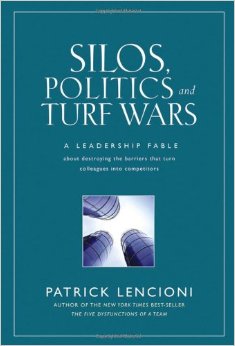
Blog - Organizational CUlture - Lencioni book Silos, Politics & Turf Wars

Everybody needs to read Lencioni’s Politics, Silos, Turf Wars. “What is Bucket 1? – core DNA – values we do not change. Don’t even ask. Bucket 2? – Maybe. Wasn’t our Core DNA but goes against what we want. Bucket 3? – Do whatever you want.” The core values of a culture are those that are bedrock for your organization to continue. “Ask what of your culture is not going to change. When those things come up, address them immediately. What is counter-culture? Kill them. [Examine] what we pay attention to; how we react to crisis; the role models that we raise up; the stories we tell; the heroes we create.” Plato once said: “What is celebrated is cultivated.”  You are able to influence culture by telling new stories. What does your culture celebrate? What do you see that kills culture?

4) What are culture-killers in an organization that need to be abolished? What are signs of culture that needs to be celebrated? What are the culture killers not to be tolerated?A culture-killer would be the continued allowance of violative behavior of those values. If among a staff team the cultural value is we treat each other with respect; we’re a family; we do ministry together – and you have a lone ranger who gets promoted?…that’s a culture-killer.” Anything that violates the organization’s culture is a no-go. Disrespect. Passive-Aggressive behavior. Lying. You can’t tolerate such things. Then what in culture should be celebrated? As team members exhibit organizational values in their work and demeanor, you hold them up for everyone to celebrate. “Point out and celebrate when your culture’s values are fleshed out. Give a story; mention the value; celebrate a specific value of the organization lived out; from each campus/department. Remind each other that all these things are going on in different places/departments and the impact we’re having together.”

5) What does it look like to hire and fire strategically to create the kind of culture an organization needs. People create culture.  1) Hire on the values. Look for displayed commitment to the values before the person is on the team. You ask questions. Look for history. You see if they have to sacrifice something to be on your team. Do they have to become someone they’re not to be a part of the team? 2) Removing people – a strong culture is going to make it very uncomfortable for someone to stay who doesn’t have the same values. They will self-select out of a culture not like them. They’re saying, “This isn’t really me.” The organization says, “Here’s who we are.” “If they’re not going to help the culture stay healthy, you don’t want them on that team. You want them to be a fish out of water if this isn’t the culture for them. It’s about fit not worth. There is a culture for them somewhere that matches their values.”

I love these guys – Barnabas Piper, Todd Adkins, and Eric Geiger. This podcast was very timely in my own cultural experience. I am watching an organization dear to me go through a painful downsizing – through a voluntary retirement incentive to start. This organization (both aspirationally and actually) values longevity, experience, perseverance, and history. You can imagine the struggle within of how to come to grips with this direction – necessary but heart-wrenching for them as an organization. Organizational culture is important to understand. It is how we help our culture through a crisis to get back to a healthy place. Culture cannot be disregarded.

Don’t Loathe the Culture You Lead by Eric Geiger

How Not to Loathe the Culture You Are Leading – Eric Geiger

Silos, Politics and Turf Wars: A Leadership Fable About Destroying the Barriers That Turn Colleagues Into Competitors by Patrick Lencioni

Silos, Politics and Turf Wars – PDF – Executive Book Summaries

SlideShare – Organization Culture and Climate

Organizational Structure and Culture – Principles of Management – New Charter University

Mission Drift: The Unspoken Crisis Facing Leaders, Charities, and Churches by Peter Greer and Chris Horst

Photo Credits: 5 Leadership Questions Header. Barnabas Piper, Eric Geiger, and Todd Adkins


Worship Wednesday – No Fear – Same Power – Jeremy Camp

Blog - Landing the plane - It is WellFor God gave us a spirit not of fear but of power and love and self-control. Therefore do not be ashamed of the testimony about our Lord, nor of me his prisoner, but share in suffering for the gospel by the power of God, who saved us and called us to a holy calling, not because of our works but because of his own purpose and grace, which he gave us in Christ Jesus before the ages began.2 Timothy 1:7-9

Whether you fly often or rarely fly, two times during the flight we’re drawn like a magnet to pray: in the process of taking off and then landing the plane. I don’t mind flying because it’s the fastest way to get where we want to go. During the quiet and familiar sameness of a flight, God calls me to pray about lots of things. About whom we left behind and those at our destination. Still, the liftoff and landing, after all the years I’ve flown, are still a bit fear-provoking. In them, my thoughts are riveted on Him, and by the end of the prayer, especially in landing the plane, I am reminded: God is in control.

What feels out of control for you this morning? What storm are you facing? What unknown strikes fear in your heart of faith? Whether you are the one making difficult decisions today, or whether you are the one waiting for an answer – God is steadfast, unchanging, ever present. In the storm. In the unknown. In that landing of the plane.

He loves us. His power is ours. To go through whatever we face and whatever He plans to do in our hearts and lives. Through the storm. In the landing of the plane. In whatever awaits us.  As much as fear may grip our hearts, there is no need for fear.

Thus says the LORD who made the earth, the LORD who formed it to establish it, the LORD is His name, “Call to Me and I will answer you, and I will tell you great and mighty things, which you do not know.”Jeremiah 33:3Christ on the Storm On the Sea of Galilee Rembrandt van Rijn, 1632

Jeremy Camp and Jason Ingram gave us an anthem that reminds us that God’s purposes are not thwarted. He will make a way through the storm.

“The same power that rose Jesus from the grave; the same power that commands the dead to wake lives in us. The same power that moves mountains when He speaks; the same power that can calm a raging sea lives in us. He lives in us. We have hope that His promises are true.”

God is in every lift-off and landing of the plane, because He is in each of us…in power, love, and sound thinking. No fear. (1 Timothy 1:7)

Worship with me in gratefulness to the God whose power is the same as it ever was. Hallelujah!
I can see
Waters raging at my feet
I can feel
The breath of those surrounding me
I can hear
The sound of nations rising up
We will not be overtaken
We will not be overcome
I can walk
Down this dark and painful road
I can face
Every fear of the unknown
I can hear
All God’s children singing out
We will not be overtaken
We will not be overcome
The same power that rose Jesus from the grave
The same power that commands the dead to wake
Lives in us, lives in us
The same power that moves mountains when He speaks
The same power that can calm a raging sea
Lives in us, lives in us
He lives in us, lives in us
We have hope
That His promises are true
In His strength
There is nothing we can’t do
Yes, we know
There are greater things in store
We will not be overtaken
We will not be overcome
Greater is He that is living in me
He’s conquered our enemy
No power of darkness
No weapon prevails
We stand here in victory

If the Spirit of Him who raised Jesus from the dead dwells in you, He who raised Christ Jesus from the dead will also give life to your mortal bodies through His Spirit who dwells in you.Romans 8:11

2015 July - Blog, Garden, Flowers, Massanutten, Jeannie Elliff 430

YouTube Lyric Video – Same Power by Jeremy Camp & Jason Ingram

Lyrics to Same Power – JeremyCamp.com

Story Behind the Song Same Power – Romans 8:11 inspires Jeremy Camp’s new song “Same Power”

Worship Wednesday – Through It All – It Is Well With My Soul

Worship Wednesday – It is Well with My Soul – with Kristene DiMarco & Bethel

Photo Credit: God-Art-Rembrandts-Storm-in-the-Sea-of-Galilee.jpg

Workplace Wisdom – Dave’s Observation on Work (and other) Relationships – What You Think of Others Matters

Blog - What You Think of People Matters - Dave 5

At first, you really liked working with this person. Then, bit by bit, he/she began wearing on you. He is always playing with his phone. Her solution to today’s problem is too labor-intensive. His email responses have become terse. She is late for your meeting. You think, maybe I was wrong about him. He is not the person I thought he was. Maybe, she’s the wrong person on the bus.

When a relationship begins to deteriorate at work (or home), you are wise to take steps to turn this around as quickly as possible. You could be in a work situation that has been difficult from the outset. It is still possible for you to make inroads in turning that relationship toward a more healthy or positive one. If not altogether, at least from your side. Consider an adage that has had a long and useful run in our family and work.

Your opinion of someone approximates their opinion of you.Dave Mills

There are exceptions, but I have found this to be wise counsel (from my husband, no less) in both personal and professional relationships. When what was a warm, congenial relationship takes a turn toward the negative, you can actually work, from your side, to restore the relationship. Even to take it to a deeper level. It can get more uncomfortable at first, because you have to start with your own thoughts toward that person. How have they changed?

We send signals to each other – whether we speak or not.

My Mom raised us out of the era of Walt Disney’s Bambi:

“If you can’t say something nice, don’t say nothing at all.”

Good counsel except for the conversations that still go on in our heads and color our attitudes, our tone of voice, our preferences, and our decisions.

Let’s say I have an amicable relationship with a colleague, and then something happens. I may not even be aware of it – a misunderstanding, a misconstrued action, an insensitivity unaware. Then a chill develops, or a clear outright dislike. I have a window of opportunity to clear that up. Otherwise, if I don’t act, then a process can begin where I decide that person is a jerk and has woefully misjudged me…and off we go.

Remember: This can go both ways. You may have had a few off days with a colleague, and find yourself just not thinking so well of him, then stop it! It’s possible you can keep them from picking up that signal and prevent the relationship from getting more toxic as they decide you’re not so great either.

If I refuse to think ill of another person and discipline myself to be respectful, deferent in my demeanor, and tireless in pursuing understanding, I could restore that relationship. If it doesn’t improve right away, my attitude and actions work for my own benefit and can definitely help build trust with my team members. One day…that relationship may also turn. It’s worth the effort.

Blog - What You Think of People Matters - Dave

Jon Acuff talks about the four ways we invest in our careers – through skills, character, hustle, and relationships. In an interview with LifeReimagined.com, he had this to say about difficult, or neglected, work relationships:

“Even if you have skills, character and hustle, without relationships, it’s the career version of the Emperor’s New Clothes. Why?”

“If you don’t have relationships, you eventually don’t have people in your life who can tell you the truth about the decisions you’re making. You don’t have people who can tell you no or question you honestly. What I’ve learned is that leaders who can’t be questioned end up doing questionable things.”LifeReimagined.com interview with Jon Acuff

He identifies three types of people in our lives (work or otherwise, really): friends, foes, and advocates. Jon writes in Do Over:

“The best thing to give a foe is distance. We should ignore most foes. The problem of course is that we won’t. If your definition of foe is too loose and is essentially “anyone who kind of bothers me ever,” your job is going to be miserable. If you see people as your adversaries, it’s almost impossible to have a good working relationship with them. The first thing is to understand whether these foes are clueless or calculated. A clueless foe is that person whose behavior encourages you to fail. They are not malicious. They are not trying to make you lose, but with the power of their influence you are. “Bad habits are almost always a social disease – if those around us model and encourage them, we’ll almost always fall prey. Turn ‘accomplices’ into ‘friends’ and you can be two-thirds more likely to succeed.”Jon Acuff, Do Over

I think what Jon says is true. Because of my own worldview and value system (and married to Dave all these years), I don’t think we can just acknowledge there are foes out there and distance yourself from them. Sometimes, that is virtually impossible and still be effective at work. Because what can happen, if we don’t act to keep our own thinking clear, is that we take on some of that “foe-dom” ourselves. Maybe you aren’t going to be bosom buddies with this person, but your own work and other relationships can suffer if you develop bad habits around this person. Better to work on the relationship.

Blog - What You Think of People Matters - Dave 6 (2)Blog - What You Think of People Matters - Dave 6

“For no matter what we achieve, if we don’t spend the vast majority of our time with people we love and respect, we cannot possibly have a great life. But if we spend the vast majority of our time with people we love and respect – people we really enjoy being on the bus with and who will never disappoint us – then we will almost certainly have a great life, no matter where the bus goes. The people we interviewed from the good-to-great companies clearly loved what they did, largely because they loved who they did it with. – Jim Collins, Good to Great

Blog - What You Think of People Matters - Dave 3

For as he thinks within himself, so he is. Proverbs 23:7

Finally, brothers, whatever is true, whatever is honorable, whatever is just, whatever is pure, whatever is lovely, whatever is commendable, if there is any excellence, if there is anything worthy of praise, think about these things.Philippians 4:8

Blog - What You Think of People Matters - Dave 2

 Do Over by Jon Acuff

Fourteen Indispensable Leadership Quotes from Jim Collins – Thom Rainer

How to Deal With Difficult Co-workers – Read keeping in mind that some days you might be the one perceived as difficult.

Blog - What You Think of People Matters - Dave 4

Photos: Just a few of the men in Dave’s life who required no special work on his part to love and respect…and there are many more. Grateful.

The Planned Parenthood Protest – 5 Questions & a Guarded Observance

Planned parenthood Protest beginningYou formed my inward parts; You wove me in my mother’s womb. I will give thanks to You, for I am fearfully and wonderfully made; Wonderful are Your works, And my soul knows it very well.Psalm 139:13-14

A friend invited me to join her in a protest this morning. A protest against Planned Parenthood. It’s been many years since I’ve participated in such a public outcry. I wasn’t sure how I felt about the protest…thinking “what will it accomplish?” We are so polarized as a culture along such lines. Then I read John Piper’s appeal out of which this nationwide event seemed to have originated.

My Facebook status yesterday revealed my struggle, after reading the article above:

I’ve been invited to a protest Saturday – it is a moral dilemma for me. What will protesting do if I’ve done little else? Protesting is a step …because something has to give here…something has to change. It’s bigger than the group being protested…it’s as big as our culture and our willingness to turn away from human suffering…at all extremes of life. God, help us. We have to wake up. We have to pray…and be willing to reach out to those around us in dire straits…starting with the tiniest ones, and forward. If you don’t read anything else of the article linked, read the last paragraph – my stomach so knotted up, I thought I was going to vomit.

Part of the turmoil in my head and heart was wrestling with how to love like God loves. God loves these babies. God loves those who conceived them. God loves the personnel and supporters of Planned Parenthood. What do we do with all that?

I guardedly decided to go to the protest…tuned to that love of God…

Planned Parenthood in our town is open for business 7 days a week. Arriving shortly after this Planned Parenthood center opened and before the crowd fully gathered, I was more an observer. Right away, I was glad I went. There were so many already there, well-organized, passionate yet peaceful, gentle souls. Just being with them, I could see what some of my next steps will be.

One sign particularly caught my attention. “I regret my abortion.”Planned Parenthood Protest - I Regret My AbortionThis took me back many years to a dear single friend who got pregnant at a very inconvenient and difficult time. She saw no other recourse but to abort, with the committed urging of her boyfriend at the time.  Then they broke up. That was 30 years ago, and she never, to her knowledge, conceived again. She grieved her decision just weeks after…and she’s mourned it ever since.

Planned Parenthood Protest - Looking Out for the Little Guy

Some at this protest today wore these blue t-shirts with the byline “watching out for the little guys”. Given the videos being published in the last several days exposing Planned Parenthood’s sale of fetal organs, we must consider really what is happening here. I can’t watch those videos, but a friend, mother of twins, told me when she watched the most recent one featuring a later-term fetus, she said her babies weren’t much bigger at birth. It really hit home for her!

We must re-think what’s happening in abortion. We must also consider and care for the mothers of these little ones. Also, it caused me to wonder again, “where are the fathers?” It’s like the incident during Jesus’ ministry, when the religious leaders were preparing to stone a woman “caught in the act, in the very act” of adultery. Jesus essentially rescued her from these men…her partner didn’t need rescuing…he wasn’t there. I believe there are supportive fathers going through these painful situations with their wives or partners…but too many women have to make these decisions without the support that could turn the tide for them.

My questions come at this juncture:

  1. What more can I do? – besides protest or support a particular political candidate? Neither of these seem to make much of a difference lately. I’m beginning to ask questions and am determined to be more accountable in this…for what could be my part in this.
  2. What more can the church do? Or others collectively whose eyes are opening to atrocities beyond our imagining. Even if it’s not universal, if it’s happening anywhere, it could happen everywhere. What are options we can genuinely support? Adoption. Fostering children. Supporting the moms. Public awareness. Educating young people to make wise choices.
  3. Is there a better way to serve? What education is best? What financial aid is most empowering/beneficial? What care is needed? Could our schools and community health centers serve the needs of these most vulnerable without the help of Planned Parenthood? We can’t just condemn what is out there, if we are not willing to be a part of something better. I’m going to be asking more questions along these lines…and will let you know what I find out.
  4. Is the clinical need for fetal tissue in the treatment of some diseases circumventing finding a better solution to these illnesses? It’s like with pornography, is the demand feeding the supply? We must raise questions about and fund research for the use of adult stem cells or other remedies in the treatment of these debilitating diseases. We are just assuming fetal tissue is the answer.
  5. Who are those crying out against the racial side of abortion? I want to join them. Statistically, most abortions in the US are performed on black women. Why isn’t there an outcry over that? If this population is the most vulnerable, let’s work together to determine a more substantive way to help them, other than just getting rid of all those precious babies.

Planned Parenthood Protest - signsPlanned Parenthood Protest

Abortion is not going away. We will never, I don’t believe, return to the days before Roe v. Wade. We do have to find a better way…we have to.

Abortion and Race

If Planned Parenthood Loses Government Funding, Here’s a Map of Health Clinics That Could Take Its Place

Planned Parenthood: Invitation, Explanation, Indignation – John Piper

Ben Carson vs. Planned Parenthood’s Margaret Sanger: Her own words circa 1939

Stem Cell FAQs – What are Stem Cells?

Hundreds protest at Planned Parenthood on Hamilton Avenue in Richmond

Pregnancy Resource Center of Metro Richmond

Amazing Raise – Fund-raising Campaign for Pregnancy Resource Center of Metro Richmond

Crisis Pregnancy Center – Bethany Christian Services

Safe Harbor Domestic Violence Shelter

Planned Parenthood Protest - Pray

The Lessons of an Innercity Hospital – God Loves Us All the Same

Blog - Grady Hospital - by unclepockets - Flickr Grady. wikimedia.orgPhoto Credit: UnclePockets, Flikr: Grady, Wikimedia.org

For seven years, I worked in Atlanta’s Grady Memorial Hospital. At that time, it was THE hospital (rather than the “main hospital” of the Grady Health System) with 18 floors and 1100 beds. Grady is a “safety net” hospital, extending care to the urban poor. It’s also a Level 1 trauma center. Situated in downtown Atlanta, perched alongside major interstate highways (I-85/75 and I-20), Grady echoes with sirens sounding constantly, signaling the arrival of victims of strokes, gunshot wounds or high-speed auto accidents.

Way above the crazy chaos of the trauma center, my job took me into the relative quiet of the 10th floor oncology service. 10B was my unit, serving cancer patients in treatment or in the days of dying when treatment failed. I was the oncology clinical nurse specialist, responsible for training and assistive to nurse, patient, and family support. Many days, it was the extra set of hands that was needed the most.

What happened in that space of seven years, early in my career, taught me deep lessons about life and caring.

I came to Grady after finishing graduate school at Emory University…too young and inexperienced really for the job and the confidence given me. Mary Woody, the director of nursing at that time, gave me wise counsel. “Whatever is done for the patient, be it housekeeping or medical treatment, learn as much as you can about its delivery, and do whatever you can to serve at all those levels.”

I listened and did my best to follow her counsel.

Almost all my colleagues and our patients were African-American and urban. I was not, having grown up in a small town outside the city, in a school system only integrated while I was in high school. In the quiet moments on the unit (few but treasured), I would listen to stories unlike anything I’d ever experienced. Especially from the older ones. Stories of years living in segregation (Grady was actually built as a segregated hospital with wings opposite each other for the care of blacks and whites). Stories of years after, living in forced integration.

One day I want to write some of those stories. Having grown up in a home where my mom taught us to love without distinctions for differences, I had actually missed seeing what it must have been like for those who lived every day marked somehow by the color of their skin.

Again, I was very young during those years at Grady and drank in the stories…marveling at the courage and resilience of both my older colleagues and our patients and families. Taken aback at times, to be honest, by the clear declarations of my “shared responsibility”, being white, of past atrocities they had experienced. If I could have asked forgiveness for all of that, I would have. Instead, “I’m sorry” seemed so inadequate.

Debbie & Grady nurse buddy

There were many lessons for me in those years. Here’s the story I wanted to share today:

It was the end of my work day…as I walked off the unit, thoughts of beloved patients who might not make it to tomorrow clouded my mind. At the bank of elevators, I punched the down button. Finally, the doors of one opened, and it was packed. Often, because of how full and slow Grady’s elevators were, people would go up to come down.

Maybe in deference to my being in nurse’s uniform, or just out of the kindness of strangers, there was a push backward and a space was made for me. I gratefully filled that space. Then the other elevator occupants relaxed and squeezed me in their embrace as the door closed.

At the end of the day, everybody just wanted to get home. That tight fit continued all those floors down to ground. Me and my white uniform – all that whiteness enveloped by so many tired, black family members. Tired like me or more so. The smell of sweat and potato chips, and the heat of so many bodies, caused me to withdraw back into my own small thoughts.

As if in audible voice, God broke through that noise in my head with: “I love you all the same.” All of us, in that elevator – the poor and the privileged. We are important to Him. It is so easy to fall into our own swollen self-importance – whether it relates to position or education or any other state of being we take comfort in…or through which we isolate ourselves.

God’s heart toward us and ours toward each other – that is transforming. That can be world-changing.

Until that moment, I had felt no compassion for those surrounding me in that small space. We were squashed together never to probably see each other again once we reached street level. Yet, in that moment, at the beckoning of God to take notice, I remembered that we all matter to Him. Whatever was going on in each of our lives – bone-weariness or deep sorrow or great anticipation at good news – we mattered to Him.

God calls us to enter into the generous love He has for us and for our neighbor.

If my companions in that elevator knew my thoughts that moment, they might have pulled back a bit from me. I just wanted to turn around and take in all those faces – to bask in the radiance of His love for each one. At that moment, I wanted to rejoice with those rejoicing and weep with those who would weep beyond that elevator. I was low and brought up by their small kindness and I wanted to somehow do the same.

Was there a glow in that tiny room of strangers? There was for me.

Of course, I didn’t strike up friendships with those who nudged out after me on the ground floor at the last opening of that elevator door. We all walked out into the Georgia late afternoon sun, all together, and then peeled off to different destinations. I went on to my car in the employee parking lot – another privilege of mine, among so many.

That day, my heart opened wider to where I might fit in the Kingdom of God, and what His purposes were for us – to love Him and to love others as He sees them and loves them. The patients, families, and colleagues I loved already…and the strangers along the way.

Seeing the people, He [Jesus] felt compassion for them, because they were distressed and dispirited like sheep without a shepherd. Then He said to His disciples, “The harvest is plentiful, but the workers are few. “Therefore beseech the Lord of the harvest to send out workers into His harvest.”Matthew 9:36-38

YouTube Video – Grady Memorial Audio Slideshow

Love is the Final Fight – an Ode to John M. Perkins

Baptist Global Response

Love Your Neighbor as Yourself – Part 1 – John Piper

Love Your Neighbor as Yourself – Part 2 – John Piper

Worship Wednesday – Til I Met You – Laura Story

Debbie - self-portrait

“I will restore to you the years of the locusts…” – Joel 2:25

If ever a song spoke to my deepest heart hurts, it’s this one. Laura Story’s Til I Met You. In my younger years, even after coming to faith in God as a child, I strayed far from Him. If you were a casual friend, you might not have noticed. I was in church, and fairly religious. That was the problem…I spent years tuning my affections toward the cheap shininess of the world, and missed a joy-filled intimacy with God…all at that same time.

He wasn’t the One who moved. I had walked away…deceiving myself that I was still following Him, serving Him, devoted to Him.

Then, like the Prodigal Son, I woke up to the darkness in my own heart and remembered where I belonged. By God’s grace, I crawled out of the pit dug with my own poor choices. Laura Story’s song Til I Met You could be my testament of a life restored – not by my own resolve or a force of nature but – a genuine encounter with God Himself.

I first met God as a nine-year-old. Unchurched until two years before, I was not schooled in the person of God. Even as a child, I became an eager student of Him. The Truth of God’s Word was so freeing for my little heavy heart. Even then, I knew the weight of sin – the wanting to be good and kind and helpful and the chronic tripping over myself in failure.

When I heard it was possible to be forgiven of that sin and to experience the power of God in my life, enabling me to become more and more like Jesus, I was completely captivated and drawn to Him.

Three different occasions I lost touch with God and my place as His child. Brief but significant periods in my mid-teens, mid-20s, and mid-30s. Sin and self-justification had wormed their way into my heart. For a season, even in the midst of being involved with church, I went my own way. The joy and peace that were mine in following Christ drained out of me as if I were a cracked vessel.

Then, like in Laura Story’s song, the darkness of my sin and deception was illuminated by the Spirit of God, and I saw what mattered. What really mattered. My relationship with the Lord.

It’s been many years now, and the Prodigal is home for good. I understand so well Peter’s response to Jesus, when Jesus asked His disciples if they would leave Him:

So Jesus said to the twelve, “You do not want to go away also, do you?” Simon Peter answered Him, “Lord, to whom shall we go? You have words of eternal life. “We have believed and have come to know that You are the Holy One of God.”John 6:67-69

When we have an encounter with God, and receive Him in saving faith, He begins a transformation in us that trumps anything the world holds out there for us. He adopts us into His family; we are His. What happened before…the terrible choices, the regret, the brokenness – are carried away by His perfect love for His children.

Worship with me. If you are still struggling in some dark pit of your own choosing, He will set you free from that. I know. He did it for me.

I’ve known pain and deep regret
I’ve known the weight of my mistakes like the back of my hand
I’ve known deception and all its games
I’ve known the way it feels to drown in my own shame

But I never knew love
I never knew truth
I never peace, the sweet release that brought me through
I never knew freedom, what grace could do
The broken chains, the hope that saves, a life made new
Till I met You.

I’ve known rejections
I’ve bought the lie that I could never overcome the hurt inside
With arms of mercy You reach for me
Tore the veil away and gave me eyes to see
You’re all I need

And I never knew love
I never knew truth
I never peace, the sweet release that brought me through
I never knew freedom, what grace could do
The broken chains, the hope that saves, a life made new
Till I met You (I’m accepting I was hopeless)
Till I met You (I was stumbling in the darkness)

I never knew love
I never knew truth
I never peace, the sweet release; You’re the one Who brought me through.
And I never knew freedom, what grace could do
The broken chains, the hope that saves, a life made new
Till I met You (till I met You)
Till I met You

Do You Know Jesus? – The Gospel in Four Minutes

Why I Hate Religion, But Love Jesus – Spoken Word – Jefferson Bethke

Lyrics to Til I Met You

YoUTube Video – Official Lyric Video – Til I Met You – Laura Story

Story Behind the Song – Til I Met You

Laura Story Music

World-Class Customer Service – The Key Is Caring – Horst Schulze on a Culture of Service

Blog - Horst SchulzePhoto Credit: Arnezzy.tumblr.com

Just the expression “5-Star Hotels” summons delicious images of ocean views and chic, comfortable rooms and all those tiny touches to insure your return. Though never a guest in such a hotel, I have enjoyed 4-star treatment, and I have been a customer of Chick-fil-A  and Southwest Airlines. All through our days, we are administering and receiving some sort of customer service.

A couple of weeks ago, I had the privilege of learning about customer service from Horst Schulze, a world-renowned leader in the field of luxury hotels. He gained his wisdom and expertise, up through the ranks, and his counsel is applicable to any peopled workplace or organization. Schulze puts caring at the foundation for world class excellence – not just caring about the customer or client (albeit extremely important) but caring for all people (the employees and all who interface with each other in his industry).

Mr. Schulze talks about the service process as three parts: delivering an excellent product (without defect), in a timely manner, with genuine caring. Genuine caring. Not silly over-friendliness, or with casual sloppiness. Genuinely caring for the customer’s personage, time, and purpose for that interaction.

Since his presentation, I have intentionally looked at service very differently. Whether we’re talking about a small business or a large franchise, a school or university, or even such a thing as a church connection team. We can enhance customer satisfaction and loyalty by intentionally and comprehensively setting our culture.

Mr. Schulze is people-oriented – with his employees, vendors, and customers. He manages this in his hiring and training practices and through a vigilant daily (industry-wide) practice of his canon of customer service standards* (definitely worth a read- click on the link below to read the 24 standards). As I listened to him speak, his whole demeanor was that of one who joyfully delights in excellence and bringing it to bear in improving the lives of those around him.

No matter how well we think we’re doing in providing services or responding to the needs of our clients/customers, we would do well to look at the practices of such businesses as the Capella Hotel Group, Chick-fil-A, and Southwest Airlines. You will see this common thread of caring in their philosophies, culture, and standards.

“I dreamed of hotels where every employee comes to work not just to work but to create excellence, where every employee is committed, and where it’s not about creating rules but about every customer being taken care of the way they want to be taken care of.” – Horst Schulze**

“Focus on creating an organization of excellence and have processes where you can transfer excellence. That starts by finding out what is excellent in the eyes of the customer – what the guest really wants from us – based not just on what they said they wanted but what they were really thinking.” – Horst Schulze**

“It’s my responsibility to set standards. I have no right to accept mediocrity or limitation. If you don’t point out flaws, mediocrity will set in. It’s my business to do what is right and not make excuses for mediocrity. I agonize when I make a decision that it is good for all concerned; if it’s not, I don’t do it.” – Horst Schulze**

[Leading by Culture] “Southwest was the first to create a position entitled “Vice President of Customers.” For many years Colleen Barrett held the position. She understood that Customers always come first, and that in order to have a Customer service mindset you cannot separate the importance of the internal Customer (Employees) from the external Customers (passengers). If the internal Customer is happy, it will naturally flow to the external Customer in the form of good service.” – Lessons in Loyalty, Ian BrooksBlog - Southwest Airlines - Customer Service Culture - leapq.orgPhoto Credit: leapQ.org

 “Every life has a story, and often our customers and our employees, need a little grace and a little space when you deal with them because they are either experiencing a problem, just finished having a problem, or are about to have one. The word ‘restaurant’ means place of restoration. We think of Chick-fil-A as an oasis where people can be restored.  We’re all people with a lot of emotional things going on that don’t necessarily show on the surface, so we try to offer amenities and kindness that minister to the heart.” – Dan Cathy, President, Chick-fil-A***

Blog - Customer Service - Chick-fil-APhoto Credit: jyontheroad.blogspot.com

“Forty years ago, exceptional was a glass elevator in the lobby; then it became real paintings and fine marble and so on. Now it’s coming back to doing what the individual guest really wants: personalized and individualized service geared not to the market, but to the individual. True luxury today is about responding to each individual guest.” – Horst Schulze**

*Capella Hotel Group’s Canon service standards conceived by chairman and founder Horst Schulze

**Defining Luxury – LEADERS Interview with Horst Schulze

YouTube Video – Horst Schulze- Presentation on Customer Service

Global Leadership Summit – 6 Take-Aways from Day 2 of #GLS15

Summaries on All Speakers of Global Leadership Summit 2015 by David M. Arnold

Notes from the GLS15 – Creating World Cass Service – Horst Schulze

****A Lesson in Customer Service from Chick-fil-A President Dan Cathy

The Chick-fil-A Difference: Why Customer Lingo Matters

Thank you. My pleasure.

What You Can Learn from Southwest Airlines’ Culture

***Lessons in Loyalty: How Southwest Airlines Does It – An Insider’s Point of View

Southwest Airlines – the Airlines with Heart – and One Heart I Know Well

What’s Your Wall? – Lessons on Leadership & the Marketplace Through Nehemiah

Blog - Nehemiah - thestorehousesweden.filesPhoto Credit: thestorehousesweden.files.wordpress.com

When I heard these words, I sat down and wept and mourned for days; and I was fasting and praying before the God of heaven. I said, “I beseech You, O LORD God of heaven, the great and awesome God, who preserves the covenant and lovingkindness for those who love Him and keep His commandments, let Your ear now be attentive and Your eyes open to hear the prayer of Your servant which I am praying before You now, day and night, on behalf of the sons of Israel Your servants, confessing the sins of the sons of Israel which we have sinned against You; I and my father’s house have sinned.”Nehemiah 1:4-6

Nehemiah was a Jewish exile and a highly placed official of the Persian king Artaxerxes (445 B.C.). Word came to him through a brother that the exiles who had returned to Jerusalem were in a bad way. The walls of the city were destroyed, the gates were burned, and the people were disheartened and vulnerable to attack. That news was so devastating to Nehemiah he felt deeply compelled to action. So what did he do? He prayed…for months.

Out of that season of prayer, Nehemiah acted in a remarkable way – not as a single agent for change, but a man moved by the heart of God Himself. Read Nehemiah again. I did this morning, with the workplace in mind, and came away with what follows:

1) News (whether it’s sweeping changes at work, downsizing, cultural or technological shifts) does not defeat us or define us. God is always at work. We are in the midst of the working out and recording of history (“His Story”). Just as Nehemiah recorded a first-person account of the rebuilding of the wall (and a people), what will we record as we work through our current situation?

2) Walls are providential. What we see as barriers or obstacles to how we see work should be done may be the very vehicles through which God will show Himself most powerful…through those in the workplace, maybe most affected by the obstacles and most available to Him to show Himself through us.

3) Who is the enemy? Make sure it’s not you. Nehemiah, released from his duties to the king, led the people in rebuilding the walls around Jerusalem. During that work, there were the enemies of the project, the naysayers, and those who would see it done a very different way. We always think that sort of coworker is someone else. A check of your own heart to make sure it’s not you is wisdom.

4) Where is God in your situation? Who is God in your situation? You can be sure that God is in your situation because He loves you, He loves your work (even when it’s hard to imagine), and He is at work forging a future. Never lose sight of that. In fact, like Nehemiah, be fueled by that hope. God is completely able to do His will in any situation. There are no barriers, no enemies, or even no frailties on your part that alter the beautiful course of almighty God. Keep your eyes fixed on Him.

5) What is our station in the sovereignty of God? The biggest question of all: What will you do given your place in the out-working of the will of God in your situation? Nehemiah prayed…and prayed a lot…and kept praying. He acted bravely, wisely, and definitively. He humbly, as needed, and he acted boldly, as the situation demanded.

Nehemiah was a cupbearer to a Persian king, and he was a leader and builder of a broken wall…and a broken people. You can be, too.

So the wall was completed on the twenty-fifth of the month Elul, in fifty-two days. When all our enemies heard of it, and all the nations surrounding us saw it, they lost their confidence; for they recognized that this work had been accomplished with the help of our God.               – Nehemiah 6:15-16

Nehemiah: A Leader and His Wall – Bible Study at workmatters.org

Broken Down Gates of Our Cities

Four Leadership Lessons from Nehemiah

Nehemiah: An Awesome Leader 1: A Leader Who Prayed and Prayed and Prayed

Nehemiah: An Awesome Leader 2: Building More Than a Wall

BLog - Nehemiah - walls of Jerusalem - bpnews.netPhoto Credit: bpnews.net