Let us not grow weary in well-doing, for in due time we will reap a harvest if we do not give up. – Galatians 6:9
He gives power to the weak and strength to the powerless. Even youths will become weak and tired, and young men will fall in exhaustion. But those who trust in the LORD will find new strength. They will soar high on wings like eagles. They will run and not grow weary. They will walk and not faint. – Isaiah 40:29-31
Thanks be to God, who gives us the victory through our Lord Jesus Christ! Therefore, my beloved brothers, be steadfast and immovable. Always excel in the work of the Lord, because you know that your labor in the Lord is not in vain. – 1 Corinthians 15:57-58
You know where you are right now. I can’t begin to stand in your shoes or carry the burden that’s yours right now. We rejoice together in the glorious days of victory. The long haul and the momentary defeat both draw us into ourselves…searching for what can get us over the next hill.
Two things. Christ and community.
I just heard this song for the first time this week. “You’re Not Done”. It was written by the band Leeland inspired by a friend gravely ill with COVID. Struggling to breathe. After this friend recovered, these lyrics poured out, as coming from the Lord, remind us of God’s sovereignty in all matters. “If you still have breath in your lungs, you’re not done.”
God is with us always…whatever is pressing in on us. Of the many graces He gives us for the battles in our lives, community is one of our greatest strengths. Leaning on Him, and leaning on each other.
If you are battle-weary, the song title “You’re Not Done” may not encourage your heart at first, but dig into the lyrics. They are meant to speak love, truth, encouragement, and mercy into our hard place. Don’t lose hope. The Lord’s in the battle with us. He knows what it is costing you. In the fighting and in the waiting, He will not leave your side. The victory is His and ours.
I know you’re tired, I know you’re weak And all of that fighting’s got you down on your knees You’re desperate for change, desperate to know There’s a light, still a light
[Chorus] Child, lift up your eyes For your help draws nigh Child, lift up your eyes It’ll be alright Every tear you’ve cried Let the sunlight dry Every tear you’ve cried It’ll be alright
[Post-Chorus] If you still have breath in your lungs If you still have breath in your lungs, you’re not done
[Verse 2] I’ll be your strength and I’ll be your song I’ll be the solid Rock you can stand on, oh I’m with you always, you’re never alone ‘Cause I’m right by your side
[Chorus] Child, lift up your eyes For your help draws nigh Child, lift up your eyes It’ll be alright Every tear you’ve cried Let the sunlight dry Every tear you’ve cried It’ll be alright
[Post-Chorus] If you still have breath in your lungs If you still have breath in your lungs, you’re not done No, you’re not finished, hey If you still have breath in your lungs If you still have breath in your lungs (Hey) If you still have breath in your lungs (God’s just getting started, yes, He is) If you still have breath in your lungs If you still have breath in your lungs If you still have breath in your lungs (What the enemy meant for evil) If you still have breath in your lungs If you still have breath in your lungs (Oh, God is turning it around for His glory and your good) If you still have breath in your lungs
[Chorus] Child, lift up your eyes For your help draws nigh Child, lift up your eyes (Ooh, oh) It’ll be alright Every tear you’ve cried Let the sunlight dry Every tear you’ve cried
If you still have breath in your lungs If you still have breath in your lungs (God isn’t finished) If you still have breath in your lungs (Keep on keeping on) If you still have breath in your lungs (He’s making a way) If you still have breath in your lungs ([?]) If you still have breath in your lungs (Oh), you’re not done You’re not done (No, no) If you still have breath in your lungs (My child) If you still have breath in your lungs (Look up where your help draws nigh) If you still have breath in your lungs (He’s not done) And if you still have breath in your lungs (Oh, yeah) If you still have breath in your lungs (God) If you still have breath in your lungs (He’s just getting started) If you still have breath in your lungs (Don’t give up) If you still have breath in your lungs (Keep on breathing) If you still have breath in your lungs (Yeah) If you still have breath in your lungs (He’s your hope) If you still have breath in your lungs (He’s your joy) If you still have breath in your lungs (Yes, He is, yes, He is) If you still have breath in your lungs If you still have breath in your lungs If you still have breath in your lungs (Hey, keep holding on) If you still have breath in your lungs
[Outro] He’s making streams in the desert place He’s making a way in the wilderness, yes, I know (If you still) If you still have breath in your lungs If you still have breath in your lungs, you’re not done*
Mary stood outside the tomb, crying…she turned around and saw Jesus standing there, but she did not know it was Jesus. “Woman,” Jesus said to her, “why are you crying? Who is it that you’re seeking?”
Supposing he was the gardener, she replied, “Sir, if you’ve carried him away, tell me where you’ve put him, and I will take him away.”
Jesus said to her, “Mary.”
Turning around, she said to him in Aramaic, “Rabboni!”—which means “Teacher.” – John 20:11-18
Exhausted from grief and bleary-eyed from crying, she was expecting to have a bad day. When she found the tomb empty, and not remembering what Jesus had said before (about his own resurrection that would come)…she grew even more inconsolable.
At first, still consumed by her “bad day”, she hadn’t recognized him. This One who had restored her mind and redeemed her life. This One who knew her perfectly and loved her completely. She thought him a gardener.
He spoke to her but she turned away, in grief, thoughts clouded, blinding her awareness.
Until…He called her by name.
Then, she knew! She came back to her senses. The expectation of a bad day vanished as she refocused on the living Lord rather than the dead one.
We all struggle when a day looms full of dark possibilities, dread, or even deepening disappointment. Some of us have a bent toward being pessimistic,contrarian, or a diminisher. These bring a realism that has its own usefulness at times (well, not the diminisher…no, not ever useful in any positive way), but we don’t have to set up camp there.
If a day is beginning with a downward spiral (even if it’s only in our minds), we can (as my husband sometimes reminds me) “pull up”. Our perspective, our focus, is totally within our control. The same friend above also told a story about recently taking back her Saturday, so to speak. A bad storm had passed through and left trees leaning and branches littering her woodland yard. As she sat on her deck, looking at all the devastation, she was troubled at what it would take to restore order. It wasn’t going to happen that morning and no amount of thinking about it was going to make it better. So what did she do? She turned her chair…such that a different, more lovely view was in front of her.
[Thanks, Kathy, for that good word.]
Sometimes, we have to turn our chair…or as Mary Magdalene did, turn back around to the one speaking to her. What we think should be but may not be could just be in our perspective…how we’re looking at things. It also could be remembering that we are never truly alone in the prospect of a bad day. Look for helpers…it’s good advice.
That bad day we were anticipating may just turn out to be a bad few minutes in an otherwise good day. We can make it happen…by tuning into a familiar voice or turning our chair…for a clearing the head moment.
This is the morning of exhausted grief. Jesus, the Messiah, God’s Sent One; His Only Son lay dead in a tomb. Dead. How is this possible?
The disciples, his family, those followers whose lives were transformed must have been numb with the stark reality that he was not with them…not on that Saturday. What would they do without him? What would happen to them? What? What? What?
There is only one scriptural reference to this day and it related to the threat of Jesus’ power and influence, even in death:
The next day, that is, after the day of Preparation, the chief priests and the Pharisees gathered before Pilate and said, “Sir, we remember how that impostor said, while he was still alive, ‘After three days I will rise.’ Therefore order the tomb to be made secure until the third day, lest his disciples go and steal him away and tell the people, ‘He has risen from the dead,’ and the last fraud will be worse than the first.” Pilate said to them, “You have a guard of soldiers. Go, make it as secure as you can.” So they went and made the tomb secure by sealing the stone and setting a guard. – Matthew 27:62-66
Because for the Jews, days begin and end at sundown, most probably this visit with Pilate occurred Friday night. At his command, guards were placed. The tomb was sealed. Jesus would be no more trouble….
He is dead: this man from Nazareth, the Messiah of Israel, the Lord of the world.
With His dying breaths, He spoke words of forgiveness, finality, and faith.
But now the breathing has ceased, and the lungs that exhaled forgiveness are deflated. My Jesus – dead.* – Trevin Wax
[Inserting here a talk done on Good Friday by a friend of ours – on the cross – fitting for today – then after her talk, I will close on Black Saturday.]
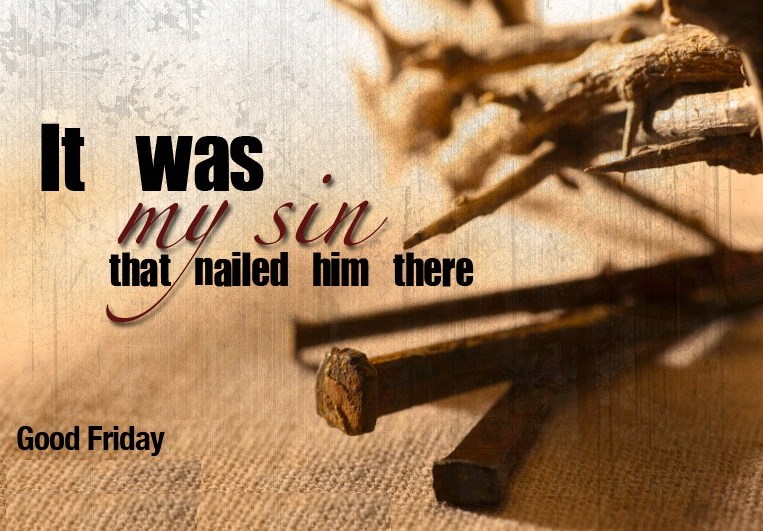
“What does the cross change?
“Everything” is perhaps our knee jerk reaction. The cross changes everything. But that can’t be right when we worship an unchanging God. God did not change at the cross. He was perfectly just before the cross and remains perfectly just today and will be perfectly just forever. He was perfectly loving before the cross, he remains perfectly loving, and he will be perfectly loving forever. He was sovereign, is sovereign, and will be sovereign forever. God did not change at the cross.
I think to see what changed we have to go back much earlier than Jesus’ lifetime. We have to go back to Eden. God created a perfect garden with a man and a woman and plants and animals. It was an oasis, idyllic, peaceful. And by peaceful I don’t mean free from worry or stress. I mean the hearts of Adam and Eve were at peace with God. It’s hard to imagine that. Hard to imagine no shame, fear, uncertainty. Hard to imagine walking and talking with God, completely vulnerable, knowing you were free from any sort of culpability. Adam and Eve were at peace with God, each other, and themselves.
Then they went to war with God. And each of us makes that same decision, to go to war with God, to sin against him and against our nature as image-bearers. We do not choose peace or freedom, we choose war and shame, darkness and loneliness. When I say war I mean we declare that there must be bloodshed. There must be death. Sin is a declaration that we will not live as God intended. God intended perfect peace. He intended that we all walk with Him, unashamed, in the light. We sin and we disrupt that plan. We may not desire the outcome of that sin, which is death, but the outcome is unavoidable.
So Adam and Eve sinned and that perfect peace was shattered and the cross became inevitable. As we read through the Old Testament, the cross feels like it’s in every story. We see God using men and women to foreshadow what is to come, the perfect prophet, priest, judge, shepherd, and king. We read the Old Testament and we see all the plans God set in motion to reach the cross. What we see also is imperfection. Imperfect prophets, judges, shepherds, and kings. Imperfect sacrifices leading to imperfect relationships. God is with His people but they cannot be at peace with him like they were in the Garden.
So, does the cross take us backward, to Eden? No. There’s no going back to Eden. That’s not the plan.
The cross is the culmination of the battle that started in Eden. We declared war in the garden and Jesus Christ declared victory at the cross. Oh death, where is your sting? We can ask that because the battle is over. Jesus Christ conquered death and we who believe have the promise of eternal life, starting today.
It’s strange though. It doesn’t feel over. I don’t feel at peace. Not with God, or others, or myself. It feels like the battle is very much ongoing and it often feels like I’m losing. So, what has the cross really changed?
I’m reminded of my favorite passage in the Bible, which is where Jesus is walking on water and Peter calls out to Him and Jesus says come. It’s an amazing story in so many ways but I’m always struck by the fact that Peter sinks and, it seems, is going to drown. Even with Jesus standing right there, standing on water exhibiting power over nature, declaring he is God, Peter is sinking under the waves. Jesus saves him, of course. But I imagine Peter, while grateful, was a bit unnerved by the sinking part. I’m reminded of this story because the reality of this Earth is that, while God is sovereign and He has won the battle over death, we do not live in Eden. We do not live in the new heaven and new Earth. We are waiting for Jesus Christ to return and while we wait, we will struggle. We’ll perhaps almost drown as we try to walk with God. But because of the cross, we will walk as freely as Adam and Eve walked with God. Death no longer has a hold on us.
So, we have victory over death because of the cross, which is our hope for the future. But what do we cling to in this daily battle? What else does the cross give us today?
I’d like to talk about just one thing.
When God looked at His Son, He was pleased. It’s such an amazing thought. That God looked from heaven at a man and was pleased. Picture it. Jesus is a man on Earth and God looks at him and addresses him and says He is pleased with him. That’s what the cross changes for us. When God looks at you who believe, He does not see your sin, He sees Christ’s holiness. He sees you, an individual He created in your mother’s womb whom He has loved from the beginning of time. But instead of your sin, He sees Christ’s holinesses. And He says, this is my daughter, in whom I am well pleased. This is my son, in whom I am well pleased. Imagine it. The sight of you pleases God. The cross means that we no longer have a broken and distorted relationship with God because we, unlike any person living before the cross, are holy in God’s eyes. No matter how putrid our sin is, no matter how many times we have declared war with God, for those who believe and repent, we can walk in the light, free from the burden of our sin. Like Adam and Eve, we walk with God in peace. Like Jesus, God looks at us and is pleased. I pray you can feel that today. Feel that God knows you, knows your name and your face and sees you and is as pleased to see you as He is to see His own Son. Not because you’re obedient or you are bursting with the fruit of the spirit. To believe that your good deeds can make up for putting Jesus Christ on the cross with your sin is folly. Our sin led to the death of God’s one and only begotten Son. We cannot make up for that with our good behavior. To try and do so is to deny Christ’s sacrifice.
The cross takes that burden away and replaces it with freedom. We are free to walk in peace with God and to know and feel that God is pleased with us because of the cross.
So what does the cross change? Us.” – Amanda, Good Friday reading, Sideris Church
We have the great knowledge of the risen Christ, but his followers, on that Saturday, only had dim recollection of his words of promise. Shrouded in grief, they found themselves quite “in between” – in between the death of their Savior and the life of his glorious promises.
Another dear friend of ours, Beth, shared this message by John Ortberg from a conference where he spoke on Black Saturday, well, “Saturdays” in general. He describes so well this day in between.
“Saturday – the day between the crucifixion and the resurrection. What do you think the disciples were doing on Saturday? Here they have seen their friend and their Master killed the day before but also have this vague promise, which probably seemed ludicrous at the time that he would rise again. Most of life is Saturday…It`s waiting in faith and hanging onto the promise that God is going to come through for us in spite of how bad things look. Most of life is Saturday. — I don`t know where you are this Holy Week. Maybe you`re in a Palm Sunday kind of mood wanting God to get on board with an agenda and maybe he will, but if he doesn’t, know that his plans are always good…Maundy Thursday means that God loves us no matter how dirty our uniform gets from the game of life. Maybe you`re in a Saturday kind of place – between a hard time and a promise you only half believe. Know this for sure that God`s Easter irony is still at work, and he can use even the worst tragedies for good, and he always has at least one more move left. No matter how bleak and dark Saturday gets, Sunday`s coming, and it`s coming sooner than you think. “ – John Ortberg
Saturday is the “in between day”. Did those who loved Jesus most remember this? Was their grief so consuming, so deafening to His promises, so numbing there was no room for hope? We have the great experience of knowing, for sure, that Sunday is coming!
Today is the waiting day.
We wait like schoolchildren for the final bell.
We wait with tapping foot, huffing breath, rolling eyes.
We wait like a mother for the gushing of birth water.
We wait like branches holding pink petaled secrets.
We wait with tears of frustration or eyes filled with anger.
We wait with tears of joy or eyes wide with wonder.
In the waiting rooms of life, our hope is mixed, our longings more so. But still, we wait. Forgive us for our impatience, Lord. We believe, help our unbelief.
We carry the sorrow of loss even as we hold on to hope of gain. We watch and we wait for your resurrection life. Even though we may not see the evidence, we wait with hope.
When a father dies he leaves a legacy. Yesterday, the three sons of our friend Mike Pineda, stood on the platform, at his funeral, and spoke beautifully about their hero of a dad.
[Their tributes for their dad can be found here. Worth your time.]
Mike Pineda had faithfully walked alongside his sons all their lives. Teaching, mentoring, and modeling. One of the lessons their dad had taught them (by word and action) was to reject passivity.
That stuck with me. What is it to resist, in fact, reject passivity? Where does the temptation to be passive come from?
We can go all the way back to the first man who lived – Adam. When the Evil One tempted him and Eve to question the goodness of God, and even though Eve seemed to take lead in sinning against God (Genesis 3:6), Adam was physically present, right there with her. [This isn’t to cast greater judgment on Adam, or Eve, for that matter. It is a declarative statement of what can result from passivity.]
Men have been living in Adam’s shadow ever since. Rather than being strong dads, men often just stand there. Rather than being loving husbands, men often just stand there. Why is it that so many men are so decisive, focused, and effective in areas of life that don’t really matter, but tentative, uninspiring, and passive in some of the areas that matter most? It’s as if passivity is in our DNA. And that if we don’t actively fight it, we’ll default to being passive.
Where does passivity reign in your life? Is it at home? Or with your finances? Or in your career? Or with your wife or girlfriend? Where are you doing nothing when you should be doing something? Where are you being silent when you should be speaking up? Authentic men reject passivity. They refuse to live in the shadow of Adam and instead choose to fight for what truly matters most. They find their strength in the grace of Jesus and follow His example of rejecting passivity—ultimately by coming to earth to rescue us. – Authentic Manhood
Now, please don’t get me wrong here. I’m not trying to bash men for being passive. No way! Maybe like Eve, we as women, hold some measure of complicity in this whole issue of passivity. Do we make it difficult for the men in our lives to act decisively? Do we act in ways that prove to be passive-aggressive and pose for men a lose-lose outcome…that either way, they will pay for “manning up”?
Even as I write, it’s a little uncomfortable having grown up in the era of women’s liberation, ERA, and feminism. Hard battles have been fought for and by women to fare well in the workplace. In the home as well. Yet, is it possible that one of the fruits of this movement has been men just stepping aside and letting us have our way? Even when that’s not the case, what could it have been with both men and women working better together?
Of course, we know this whole issue of passivity didn’t start a few decades ago (go back to Adam and Eve). So what do we do about it?
I’m going to talk to my sons right now…all the way to the end of this piece [You’re welcome to read along].
“It’s so easy…too easy…to let others make the decisions. When others make the decision, you may think you don’t have to accept the consequences of those decisions. You can, in many cases, let those others live with the outcomes. You can elect to go along with the decisions, or (if not required) you can step back, and let the chips fall where they may. Now if it’s work, and you’re held to a standard requiring you to go along with the decision once made, you have little recourse. You didn’t speak into it, therefore you must to some extent abide by the decision. How much better if you had entered into the decision-making yourself?
What about the larger community? Your circles of potential influence outside your work. Are you willing to sit silently…to offer nothing of your giftings, your intellect, your experience to those conversations?
What about your family? Your wife, your children? Are you willing to let others speak into their lives and you take a quieter, more disengaged space? You will find the years will go by…and the voice in their ears and hearts…is not yours. Is that really what you want?
Passivity is like a weak link in a chain…compromising the strength of that chain. In relationships, passivity is something we can correct, if we’re willing to take the perceived risk to do so.
What we expect shapes how we respond. If we expect peace, we will resent having to fight. If we expect rest, we will resent having to endure. If we expect leisure, we will resent having to work hard.
This is why it’s so important for us to prepare our minds for action.
We lose perspective and forget that in this age war, not peace, is the norm; vigilant self-control, not indulgent rest, is the norm; difficult cultivation, not easy picking, is the norm.
Our emotions typically tell us what our mind-sets are; our responses reveal our expectations. So, when weariness, disappointment, disillusionment, and resentment set in, we need to examine what’s fueling those feelings.
Our emotions springing from misplaced expectations of peace, rest, and leisure ask to be coddled. – Jon Bloom
Passivity is sometimes born out of exhaustion from battling for too long a season. Or a lack of hope when looking at the opposition. As Bloom states in his article: as we choose to stay in the battle, with a mindset to act, we resist passivity and the false sense of safety it projects.
In thinking back to our friend Mike’s funeral, his sons talked about both his rejection of passivity and his pursuit of a quiet life. He aspired “to live quietly, and to mind [his] own affairs, and to work with [his] hands (1 Thess. 4:11). This is not passive living. It takes focus, prioritizing, and hard work…out of which is the great harvest of those in your sphere of influence learning the tools of fruitful and faithful lives. By your example.
So my loves, I’ll let you get back to your lives. I see you resisting passivity. Keep nurturing that habit of life.
Stand with or stand against, but don’t allow yourselves to stand aside.“
YouTube Video – Purging Passivity– an interesting video on a martial arts training approach with children (Christian perspective – fascinating – whether you agree or not)
What does the mommy say to the little one, screaming, angry tears, head flung back, and arms swinging?
“Use your words.”
Great counsel for all ages.
Words are not always easy to come by. In fact, they can become all jumbled in response to the large emotions that demand an answer. This is the right brain/left brain challenge. Our emotions come just ahead of our determination of what they mean…and our “putting into words” that meaning.
As adults, we have also used silence in place of words, either intentionally to punish or unintentionally because we just did not know what to say.
Using our words is a healthy habit in relationships because it forces us to think through our emotions and process how they apply to any action we take in dealing with them. For example, someone significant to me says I hurt them or didn’t value their effort. I can respond in so many ways. Yet, what if I decided to “take the criticism” as a gift (this is graduate level relationship stuff) and use it to enhance my understanding of that significant other? What if I determined then to hear their pain or disappointment as true? It was definitely true for them.
Is it possible for me to humble myself and first respond to their hurt? Maybe seeking more clarification as to just what happened? Even if it means I sort out my part in that breach between us, confess my part, and offer an apology. Possibly even some sort of restitution. Would that open a path forward? It may very well be that we didn’t intend to hurt but a sincere acknowledgement of their pain (even an apology) is exactly what is needed for the moment.
Whew! A lot to process. If you’re still with me…
Use your words. What matters more than being right? Being in relationship…in community.
““Saint Augustine once counseled that the top three virtues of Christianity are ‘Humility, humility, and humility.’ One suspects he said this because when humility is intact, all other fruit of the Spirit fall into place. What Gavin Ortlund has given us in this wonderful book is not only a description of humility but also a pathway that makes the reader desire more of it, for the smaller we become in our own eyes, the bigger Christ becomes to us. I can’t recommend this book highly enough.” – Scott Sauls
Below are 10 practices that Dr. Ortlund presents as means to both grow and express humility in our relationships. In his book, you’ll find commentary on how to work these out in our lives – helping us to use our words well]:
These 10 practices are far from a trite handling of relationship woes. This is the foundation of using our words well.
Words can injure or heal. We all know this. If we want some sort of vindication or revenge, maybe using our words needs schooling. Silence isn’t the answer…it can last far too long. Too long.
If we truly want to restore a relationship or mend a fence with another, taking steps toward that person with true humility and a sincere desire to understand is where we start.
Coming to terms with our own story helps us use our words for healing. Perspective can lessen the sting from painful encounters. When we do the work of sorting out our own emotions related to conflict, then we can hear the other without triggering our own emotions from the past.
In Tyler Staton‘s book, Praying Like Monks, Living Like Fools, he talks about the role of confession in relationship building and rebuilding. Taking responsibility for our part in the conflict, saying it out loud, and asking forgiveness. When we keep silent or we don’t use our words in positive ways, we hide ourselves from the very exposure and vulnerability that confession frees us from. Again, this requires enormous humility…or, at the very least, a willingness to humble ourselves.
Confession is “to excavate down into the layers of your own life, uncovering not just what’s obvious on the surface but the layers of personal history underneath that continue to inform your present.” – Tyler Staton, Praying Like Monks, Living Like Fools
None of this is for the frail of heart…we can keep hiding behind pride, entitlement, hurt, and offense. Our various screens (social media, computers, phones, TVs) have taken our voice. We have, too often, become spectators of relationships, rather than deep in the beauty of being known by and truly knowing the people across the room from us.
Put your phone down, and use your words. Or…pick up that phone, and make the call…begin the process of reconnecting…which could lead to healing.
Have you ever found yourself in a season of waiting that seemed as if it would never end? Maybe you’re there right now.
The more pivotal thing about waiting is what we do with it…can we stay on top of the entitlement and all its turbulent emotions when they are unsatisfied? That is a goal worthy of pursuing. Treating the waiting not as a waste but as a way to wisdom.
Just this morning, I was waiting with a friend for a promised outcome. She is an old grandmother, resettled here from another country, with few resources.
She had the hope this morning of receiving some much-needed dental work ( in process for several months now). Today was to be the day for her to receive the last treatment – the fitting of a partial denture which would allow her to enjoy eating again.
It did not happen.
For whatever reasons it was delayed and more appointments would be made. Apologies and explanations were made, and the grandmother pulled herself up out of the dental chair one more time. We weren’t entitled to a different outcome. She is receiving free care through a local university and foundation. So why did this make me so angry and sad at the same time?
I was sad for this sweet grandmother who has already been through so much this year. Sad for myself, as her driver, for another series of appointments ahead of us. Even a little sad for the dental student breaking the news to us. And close-to-tears angry that either we misunderstood or someone somewhere dropped the (proverbial) ball.
As I collected myself and came back to my senses, I was reminded (in the conversation going on in my head) that this was a small thing. What if I was waiting on a big thing?! What would my response be to that?!
In years past, cancer nursing was my profession. Talking to a friend about this whole waiting thing, she recalled what so many cancer patients go through in waiting – for biopsy results, for treatment decisions, for blood counts to come back, for reevaluations of their cancer, for…for…for. We wait. To conceive that much-longed-for baby. To meet that person we will spend our lives with. To hear the outcome of elections or military coups. To determine if we prepared well enough for landfall of hurricanes.
Big things and small things all require waiting in life. We either wait in wasteful, blaming, soul-diminishing ways or we wait in wisdom.
Maybe it’s in the wait that we find what matters more.
In the minutes that tick by, we re-order our thoughts toward life and hope and possibility. Photo Credit: Heartlight
By the time my grandmother friend and I left the dental clinic this morning, we were better. No blaming. No feeling mad or bad. We accepted that today wasn’t the day we would say our goodbyes to this long waiting. It was just another day situated in between more to come. I didn’t resign myself to the disappointment, but rather determined it would not rob me of the joy of the day. We would be back, and, one day, she would get what we originally came for, months prior.
Don’t get me wrong about waiting. I have, at times, pushed back against it. Not just for myself but because it was a disservice to someone else. There does seem to be a pecking order in waiting…the poor and marginalized are required to wait the most, it seems.
When waiting generates a disturbance in our hearts that takes us nowhere good, then we must check it, and check our reaction to it. In that space, we can choose to change direction and keep our heads and hearts at peace. We can choose a way to wisdom, rather than an explosive, diminishing waste of the waiting.Photo Credit: Elisabeth Elliot, AZ Quotes
Waiting can be exasperating…and any engineering to decrease it is a beautiful thing…so there’s that for which to be thankful. Also, what is the object of our waiting. If we look to people to always deliver (in a timely fashion), they (we) will disappoint. If we can take our eyes of people and on to God, waiting becomes a very different experience.
Two of my favorite verses from the Old Testament speak of this:
I waited patiently for the Lord;he inclined to me and heard my cry. He drew me up from the pit of destruction,out of the miry bog, and set my feet upon a rock,making my steps secure. – Psalm 40:1-2
Those who wait on the LORD Shall renew their strength; They shall mount up with wings like eagles, They shall run and not be weary, They shall walk and not faint. – Isaiah 40:31
Even Jesus on his last day of life on earth waited…until all of the prophecies were fulfilled. While hanging in pain on the cross, He waited until just the moment all were fulfilled, and then he gave his last breath. Wow!
May we learn to wait as the Messiah did with loving perseverance and hope of a greater future.
“While we are waiting for these things to happen, make every effort to be found living peaceful lives, pure and blameless in His sight. Consider the patience of the Lord as salvation.” – 2 Peter 3:14-15
He will tend his flock like a shepherd; he will gather the lambs in his arms; he will carry them in his bosom, and gently lead those that are with young. – Isaiah 40:11
“Do not fear, for I have redeemed you; I have called you by your name; you are Mine! When you pass through the waters, I will be with you; and when you go through the rivers, they will not overwhelm you. When you walk through the fire, you will not be scorched; the flames will not set you ablaze. For I am the LORD your God, the Holy One of Israel, your Savior. – Isaiah 43:1-3
“Even to your old age, I will be the same, and I will bear you up when you turn gray. I have made you, and I will carry you; I will sustain you and deliver you.” – Isaiah 46:4
We are carried. From before we were born until we are delivered, after death, into our forever home…we are carried.
Singer/songwriters Ellie Holcomb and Benjamin Glover wrote a song entitled “I Will Carry You”. Originally meant to describe the deep love of a parent for their child, the writers found it actually described something much greater. God had inspired lyrics demonstrating His own love for His children.
“When I wrote this song with Ben Glover, we wanted to write a song for our daughters, but as it turns out, it ended up being a song that we desperately needed to hear for our own hearts,” the mother of three shares. “My hope for every listener who hears this song — no matter what they’re carrying in their lives or in their hearts right now — is that they would be reminded that they are carried by the God who made them and loves them.” – Ellie Holcomb
Last night a friend of mine shared this song with me…she shared it from her own deep dependence on her Savior. A Savior who is carrying her through a divorce, a hard extended family situation, and a long recovery from childhood trauma. At the end of our conversation about the struggle she is facing right now, she introduced to me this song I’d not heard before. God is good to His children. Suffering does not separate us from His care…we see even more clearly how He carries us through it…who He is and how He sees us…most beloved and treasured.Photo Credit: Katie Faris, Elisabeth Elliot
I know you’re tired, I see it in your eyes
All that anxiety that rules your mind
I’ll be your shield when you don’t feel
Like you’ve got strength enough to fight
I’ll stand by your side
I will carry you
Through your darkest night
When you’re terrified
I will carry you
When the waters rise
When your hope runs dry
I will carry you
You are not the sum of your mistakes
You don’t have to hide the parts of you that ache
I choose you as you are a million times
‘Cause I am not ashamed of you
I won’t walk away from you
I will carry you
Through your darkest night
When you’re terrified
I will carry you
When the waters rise
When your hope runs dry
I will carry you
Up and over the mountains
Valley deep as the oceans
When you can’t keep going
I will shoulder your burdens
Up and over the mountains
Valley deep as the oceans
When you can’t keep going
I will shoulder your burdens
I will carry you
Through your darkest night
When you’re terrified
I will carry you
When the waters rise
When your hope runs dry
I will carry you
(I will carry you, carry you)
(Through the darkest night) You
(When you’re terrified)
(I will shoulder your burdens)
(I will carry you, carry you)
(When the waters rise) You
I will carry you*
“…no matter what you are experiencing, sweet or bitter, good or evil, no matter how long it has lasted, he has not left you alone (John 14:18). He is with you (Psalm 23:4), he is working all things together for good (Romans 8:28), and he will be with you to the end (Matthew 28:20).” – Jon Bloom
He is carrying you. Drop your shoulders. Relax your body. Rest your mind. Refresh your spirit. In the care of a wholly trustworthy, fiercely loving Shepherd and Savior.
[P.S. That friend of mine above…the one with so much going on…in the midst of all of it, there is a radiance about her…an unmistakable hope…in her heart, she KNOWS she is being carried. So thankful for that. Thank You, God!]
Friday Faves – coming in hot! Days later. Life races on, doesn’t it?!
1) Beyond the Guitar – Magic on a Cheap Guitar – Sweet original composition by classical guitarist Nathan Mills at Beyond the Guitar. Showcasing two very different guitars…or rather what the difference – pretty much, it’s the guitarist, not the guitar. [Not to say the beautiful David J. Pace guitar isn’t his go-to instrument for all his guitar work/performances…but to emphasize it is the one playing it, whatever the guitar is, that makes the music.]Photo Credit: Beyond the Guitar
2) The Most Repeated Command in the Bible – Even more than “Love the Lord your God” or “Love your neighbor as yourself. The most repeated command is “Do not be afraid”.
Something to think about because we are surrounded to fearsome situations…yet, we are not to fear. How do we keep from it?
By practicing remembering. Remembering the provision of God in times past. Remembering the goodness of God in all we have in life right now – people who love us, work and other resources, health and/or helps toward restoring health, time, meaning, forgiveness, and beauty surrounding us.
The tricky thing about fear is that we can’t necessarily stop it from happening. It comes over us. However, we can keep it from overwhelming us…determining to live in the freedom and light of what is true, instead of what could happen. God is there for that as well.
When fear messes with our relationships or makes us timid to enter new ones, we can take courage in the command “Do not be afraid”. This week in our church, in The Art of Neighboring, we studied about fear in neighboring relationships. 1 Peter 3:14 (quoting from Isaiah 8:12) Do we allow fear of rejection or fear of our differences keep us from leaning into each other? What if we leave fear out of the equation in caring for one another? That’s the better path.
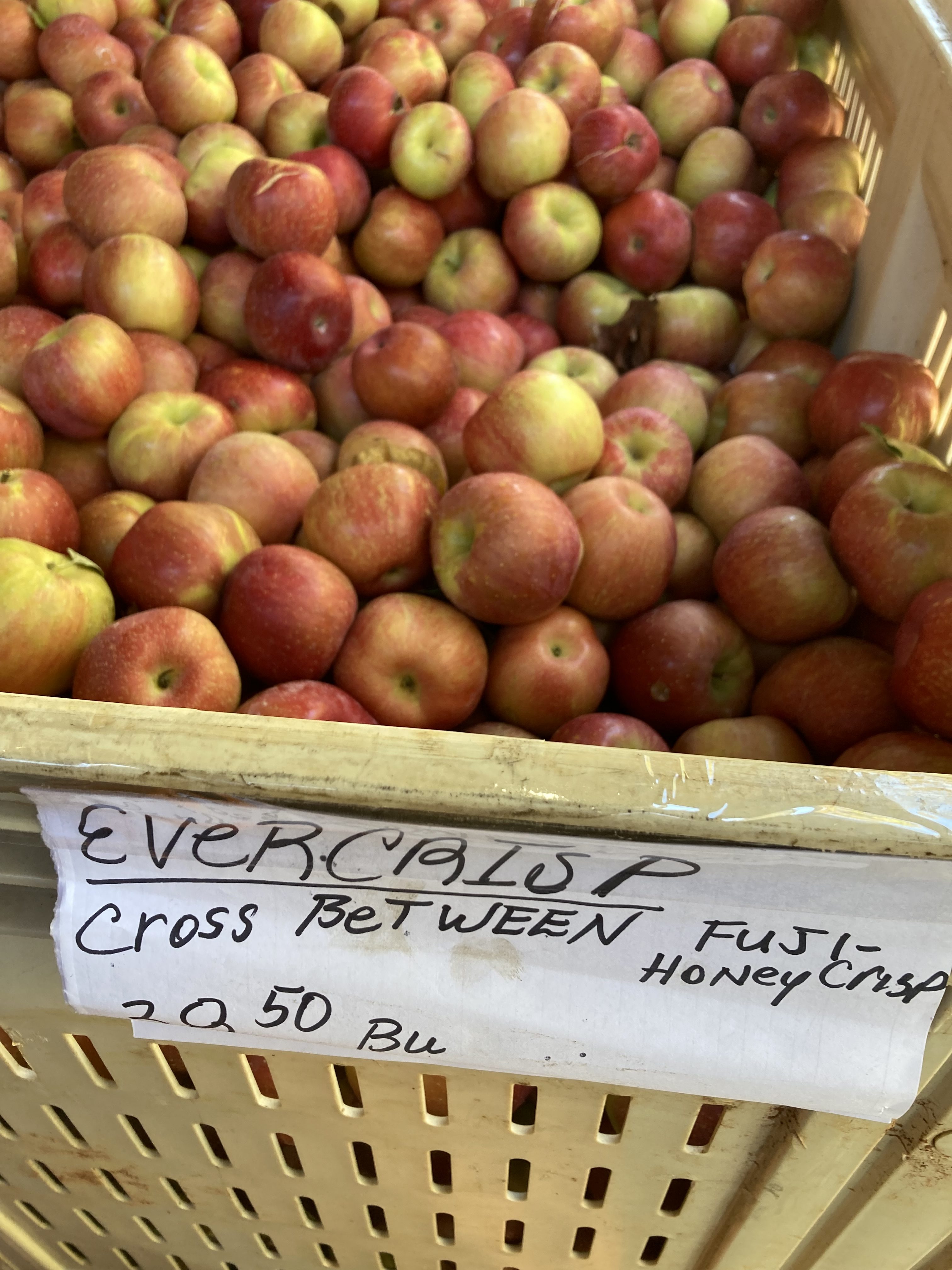
3) The Evercrisp Apple – One of the best parts of this time of year is the Fall apple harvest. Honeycrisp, Pink Lady, and Cosmic Crisp apples have been our favorite in recent years…until this Fall, when we discovered the Evercrisp apple. Wow!
We discovered this apple on a recent trip across Virginia toward the Appalachian Mountains. The Apple Shed delivers on several types of apples and introduced us to this one.
Once back in Richmond, we were thrilled to find it sold locally from the Saunders Brothers Orchards. Woohoo!!
A small delight in life but, for this season, a huge one. What’s your favorite apple?
4) (Dis)Comfort Zone – Is the phrase “comfort zone” a first world experience? I don’t think so. It is a universal idea – a place where we feel safe and soothed. A bad thing? Not necessarily except for how it insulates us from the rest of life. What if developing our capacity for discomfort helps us to live more fully, more in community?
Jason Seib, a health and selfcare coach, has actually built his whole platform on embracing a (dis)comfort zone. He teaches how we can maneuver around our uncomfortable moments in healthy ways.
If you go to his website, his home page currently seems all about his workshop (which I haven’t taken although it is reasonable cost-wise). However, hang in there. He also extends solid content to non-subscribers through his podcasts and social media pages. I think that speaks to his integrity as someone who actually cares about people wherever we are in our comfort zones.
The main message for us in his coaching is that we reach for food, alcohol, or other addictive substances or activities when faced with discomfort. Our temptation is to do whatever we can to restore comfort. Jason Seib points to developing skills in sharpening our awareness of discomfort when it happens and respond in ways that don’t harm us.
Jason Seib reminds me of counselor Brad Hambrick whose webinar on “Growing in Negative Emotion Tolerance” was extremely helpful for me. Seib and Hambrick both talk about the importance of us recognizing that negative emotions are not necessarily bad [they are actually informative] but how we respond to them matters.
5) Old Friends – This week has been one of celebrating old friends – visits both here and states away with people who have stayed the course with me through years and years.
I don’t know about you, but loneliness is a real time experience for me. So many moves and changes for us. A different season – children grown with their own lives, me now in retirement sorta kinda, and most of my closest friends living far from where we now live.
It gives pause to reflect on friendship and revisiting the kind of friend I am and hope to be. A key to having old friends in our every day life is continuing to reach out and nurture those relationships. I’m working on it…and trying to show up for these friends who have shown up for me. They, and others like them, point the way.
Old friends, even while not on the daily or even the regular, have the rare quality of history. Memory. Understanding. Loving anyway, through seasons of neglect, distraction, and loss. Old friends remain.
So grateful for forever friends – people who know us well and love us anyway. Singer, songwriter Michael W. Smith‘s song says it all:
“Come deeper. The waves won’t knock you down back here!”
Deeper in the Word
Deeper in Prayer
Deeper in Worship
Deeper in love with Jesus
Yes, the waves will still come, regular and strong.
But in the deep…
We will have peace,
We will be comforted,
We will have healing,
We will have restoration,
We will have joy,
Because we will be moving with The One who controls the winds and waves.
Just last night I was confronted again with one of the tolls of the COVID epidemic. That toll being a physical isolation that has grown into a lingering social isolation. A friend texted me about her sense of feeling disconnected, even unseen, in the midst of her church community, of all places. She is reaching out but has not yet found her people. I tried to encourage her to keep reaching out and she would eventually find those friends, that connection for which she is longing. This isolation, this loneliness, is something I, too, was fighting against and occasionally successful.
She told me this had to be my next blog (title) and so it is…although I don’t have answers…but will share what I’m learning from my own journey and from wise others.
“Here’s what we do: We spend hours alone in our crowded, noisy, screen-lit worlds, we invest only sporadic time with acquaintances, and then we expect close friends to somehow appear in our busy lives.” – Jennie Allen, author of Find Your People: Building Deep Community in a Lonely World
Being retired from my usual work has afforded me much discretionary time…time which can be lavished on others or on disciplines like study, prayer, and writing. Too often…this time on my hands has taken me to places too quiet…where I get lost in my thoughts. That is an excellent description of this loneliness that comes from isolation.
We think too much maybe. Get lost in those thoughts and become slow to respond. Instead of going after friends, we wonder where those friends are…is it us? Is it them? We look for reasons for the unsought solitude we find ourselves in yet we can’t seem to fight off the sluggishness of too-long isolation. We text instead of call. We do electronic meetings instead of face-to-face ones. We cling to smaller rhythms instead of restoring larger lives.
OK…is that just my issue? I don’t think so. The phrase “new normal”, no longer in vogue, is a misnomer. It deludes us into a posture of waiting…rather than seizing on what’s right in front of us. Whatever is the present normal…that is what we have. This present normal.
This present that we have is fleeting, temporary…but the people around us are not. Yet, relationships require some level of intentionality. A wise counselor once told us, during a season of multiple moves for work, to “put down your roots as deeply as you can – wherever you are”. COVID mediation has pushed us toward shallow relationships. We don’t want to miss people in the dullness of this odd season.
My beautiful friend above is already on the way to an answer to her loneliness because she is recognizing the “what’s not right” about her current situation and she’s not holding on to the status quo. That is forward motion right there. I am hopeful for her and for myself.
“Friendships change.” Following you will find Kampakis’ 10 thoughts (abbreviated from her blog) on the struggle – written for middle school girls but applicable to any of us. Especially as we face loneliness and isolation and want to either jump-start or strengthen our friendships:
1. It’s normal for friendships to evolve and change.
2. Everything will be okay. – Be patient, pray for good friends, and pray to be a good friend.
3. Rather than focus on finding the right friends, concentrate on being the right friend. – When you treat people well, you’ll attract friends who treat you well too. By holding yourself to high standards, becoming the friend you wish to find, and choosing to be an encourager rather than a critic, you set yourself up for positive and long-lasting relationships.
4. Even when you find your “people”, always leave room at the table to invite someone new in. – Kampakis lamented: “One regret I have from high school and college is not reaching out more beyond my circle and letting God open the door to unexpected blessings.”
5. Love your friends well, but keep a loose grip. Give them space to explore new friendships and explore new friendships yourself.
6.Remember that everyone is learning and gradually maturing. Just because you don’t click with someone now doesn’t mean you won’t click later.
7. The biggest friendship killers are jealousy, comparison, insecurity, and fear – fear of rejection, fear of being left out, and fear of being alone. Acting on these emotions can turn you into someone you’re not. – By being aware of your negative emotions yet learning the self-control to not act on them.
8. Form your own opinions about people, and don’t believe everything you hear. – Treat everyone like a friend until they give you a good reason not to, and when possible, give people the benefit of the doubt.
9. Know the difference between committed friends and casual friends. – Committed friends are the kind you carry through life. They have your back and will stand in your corner even if they’re your last friends standing. Casual friends are the kind you have for a season of life, maybe a few seasons.
10. Be kind, and keep in mind that kindness is more important than popularity.
Those 10 points were written for middle schoolers. It was a great reminder to me of the sweet simplicity of pursuing friendship. Both in rekindling neglected relationships and sparking new ones.
The world won’t all of a sudden become warm and welcoming…but I am ready to stretch again. It feels almost like a hungry bear coming out of a long hibernation. It’s possible to shake off the sleep of shallow relationships. To be more present with people – not just on my terms but open to enter into their space…both heart and head.
Life does not stand still for us. I have friends and family that are dear to me and yet we rarely see each other. Do we think that is going to happen somewhere down the road? Magically? There’s a place for urgency in dealing with the habitual loneliness we have come to know in recent months. My friend above is taking steps as am I. Cautiously, awkwardly…but occasionally successfully.
How about you? What’s your story? [Comment below.]
[Sidebar: If you’ve read this whole piece and wondered what’s the issue because you have great friendships – current and satisfying – maybe see Kampakis’ #4 again. “Leave room at the table for someone new.” Don’t circle the wagons. If you are basking in the experience of an inner circle, turn around – someone who may need you, or you them, may be just outside. Invite her in.. New friendships can be costly but the benefits are worth the expense and the risk. *]
My childhood memories have gaps. A year ago, I began exploring the possibilities that there were memories being kept hidden in my brain. Reading and working through the three books of Christian psychiatrist Curt Thompson moved me to consider the power of shame in keeping my memories silent. Dr. Thompson encourages his clients (and book readers) to write down our life stories, in long-hand. Journaling the decades. Especially working on recalling our childhood. Bringing those memories into the light.
My preschool years are still mostly devoid of memories. My mom had told me later that our rarely employed biological father neglected us such that she had to employ a babysitter daily while she worked. Even though he was home. Whether neglect is abusive or not, I have no recallable memories of my father from those years. Mom divorced him by the time I was 6.
In doing the exercise of writing out my life, one childhood memory that I was able to re-remember started out happy. It was a neighborhood “garden party”. I was maybe 7 or 8. These so-called garden parties were a gathering of family and friends to process the harvest of large vegetable gardens – for canning and freezing. Those who came enjoyed lively conversations, engaging stories, and finally a large meal together. The adults were caught up in the moment, and the children wandered in and out…and farther away.
I’m not sure who all ended up with me in a large barn some distance away from the home of our hosts. In that barn, an older boy (trigger, sorry) talked me into letting him touch me in inappropriate ways.
I had put that memory far back in my mind.
In remembering it, I also recalled telling my mom that evening and her taking action by going to talk to the parents of that boy. That’s where it ended, I believe.
Later in my childhood, I would discover my older brother’s (I suppose) hidden stash of pornographic magazines. [We didn’t have internet pornography in those days, and this sort of perusing seemed an expected coming-of-age pastime.] Page after page of naked or scantily clothed women in sexually provocative poses. Even as a pre-teen, it drew me in, even though it felt dirty and shameful. I don’t think I understood the power of taking such images into my brain. It is what pornography does and why it is so toxic.
[Could this sort of pornography be a launch-pad for girls who, seeing those images, become sexually aroused, then thinking they might be same-sex attracted? Especially if it happened today in our current culture…I wonder.]
Being exposed to pornography as a child isn’t abuse, of course, but it forces an unhealthy peering into an adult world. I wish I hadn’t stumbled on it and hope parents take seriously the availability of porn on the internet. OK…done with that topic.
At the age of 13, my parents invited a young co-worker of my step-dad’s for a cookout. He must have been 18 or 19. He stayed long into the evening. I have no idea what my parents were thinking at the time (and they were excellent parents), but they went to bed and he was still there. This seemed to set up a green light for him, and he became very aggressive physically. My 13-year-old sensibility was at first enthralled at his interest in me and then frightened, too timid to cry out or get away. If my older brother hadn’t returned early from a date, and sent him on his way, I’m not really sure where that would have ended. So thankful for my brother that night.
Where does abuse begin? Did it start with the neglect of a father? Even with an incredibly loving and supportive mom, she couldn’t be everywhere all the time. Was I vulnerable to the attention of boys (and men) growing up because of a father who started out uncaring and became increasingly absent (don’t remember seeing him ever again after my early childhood years). Even with the love of a dear step-father, did I struggle with needing approval, wanting to feel special, absorbing the very adult messaging of pornography geared toward adult men?
[I’ll stop my story here for now.]
My extended family has known the searing pain of abuse. The abuse of power, the deceitfulness of sin (protecting the perpetrator), the isolation that comes with shame, and the complicit nature of silence.
In fact, with the statics (of sexual abuse alone), in the US, we’re talking as many as 1 in 4 girls are sexually abused by the age of 10 and 1 in 6 boys.
How do we respond to abuse? How do we even consider such atrocities? Put aside sexual abuse for a moment. It comes in many different ways.
Dr. Henry Cloud, in his book Changes That Heal, talks about the role of crossing personal boundaries in abuse…when people step over a line, a boundary, wounding another person.
“The essence of boundaries and limits is knowing what we own and what we do not own…when we do not own ourselves as separate people from the ones we are bonded to, we develop unclear boundaries, and we allow people to cross those boundaries when we should be saying no”. – Dr. Henry Cloud, Changes That Heal
One thing we could all assess within ourselves is our own understanding of personal boundaries – where we stop and another person starts. Abuse can happen with overreach (in parenting, marriage, friendships, and the workplace) or a lack of understanding or ownership of our own personhood.
This boundary breach leading to abuse can happen with strangers, but, more often than not, it happens with people we know – parents and children, spouses, other family members, trusted teachers or clergy.
Abuse can be subtle…still with the impact of intimidation or silencing. Even something we are all familiar – the silent treatment – is its own form of abuse.
I’m not going to cover what we need to do comprehensively in handling abuse. Resources abound in this area. However, my work on memories coming back to light (and processing them as an adult, not as a child) helped me understand some attitudes and behavior that affect my sense of self and relationships today.
So in brief, I would say:
Do a journey of self-discovery (with a counselor or trusted friend) – examining and reframing painful childhood (or early adulthood) memories.
If abuse is still a part of your current life – get what distance you can from it, as you develop coping skills to protect yourself but also the generations coming after you. Building forever boundaries between you and that person/those persons can be its own abuse. It is a stop-gap measure and still holds the abused in bondage to the abuser.
Don’t be silent. Talk to someone. Tell your story.
For those who suspect abuse in another, don’t be complicit in the abuse, by your silence. Prayerfully, carefully, come alongside the abused. If you have a relationship with the abuser, reason with that person, if you can.
Isolation is a product of shame for the abused and the abuser. It also works to keep the abused more vulnerable. Shame, isolation, and secrecy. Don’t ignore isolation (even in these post-pandemic days when it may be harder to detect). Be vigilant in surveilling those in your circles – your family, neighborhood, workplace, and friend group.
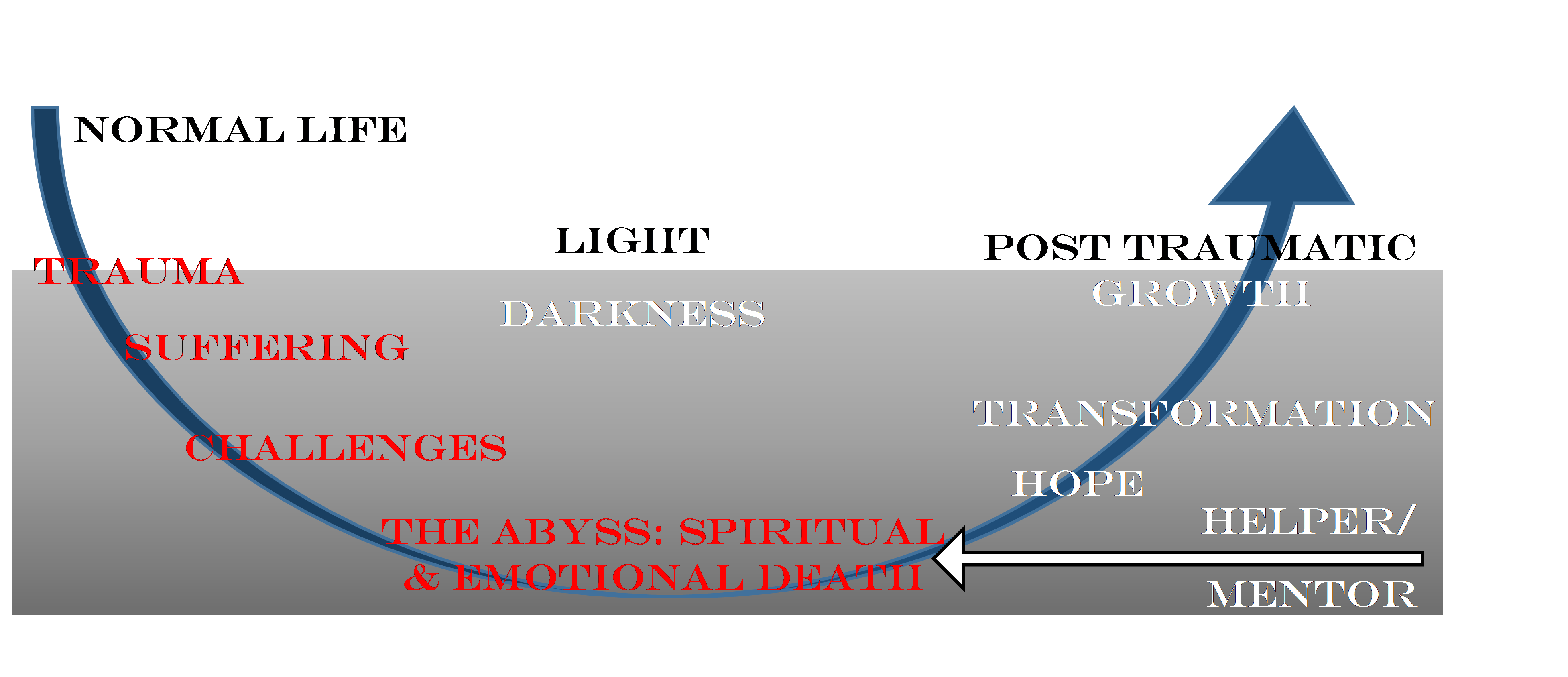
Finally, be aware of “vicarious trauma” – for those helping, caring, mentoring persons – experiencing a secondary trauma because of your leaning in and coming close to the trauma of another. You may need help from another as well, choosing not to leave the room but needing support yourself.



 Photo Credit: