Category Archives: Attending or Focus

Monday Morning Moment – Hall-of-Famers and What Makes Them So

[One of the W-3 Huddles – staff retreat for Holston Valley Hospital’s W-3 cancer nurses]

What is it that distinguishes an individual or group and sets them apart from all the rest?

I’ve had the privilege of working with such folks from time to time through my life. In the late 80s-early 90s, it was a group of nurses in Kingsport, Tennessee. We had moved there as young marrieds after Dave finished his Ph.D. for him to start work as a research chemist at Tennessee Eastman Chemical Company. I left my job as professor in the nursing program at Yale University to find my way into a tight medical community. People were kind, but it would take awhile for me to prove that I had something to offer.

The nurses on 3rd Floor Wilcox Hall of Holston Valley Hospital, in those days, were a rare collection of capable and caring women. We all know the adage about working smarter, not harder. They worked both smart and hard. I was honored just to help in whatever way I could as they shouldered heavy patient loads with stressed families to care for as well.

They were funny, scrappy, no-nonsense, determined, and loving. It’s been almost 30 years since our days together, but I will never forget them (and others of whom I don’t have pictures).

L to R: Nurses – Nan Ritchie, Kay Mitchell, Debbie Seymore Shields, Chris Blue

Just this weekend, I was on a long, refreshing phone conversation with Kay Mitchell. She, Kathy Visneski, and I worked closely together during those W-3 days. Kay was nurse manager, Kathy a nurse educator, and I was clinical nurse specialist. We dreamed, planned, and executed programming, support, and training for some of the best nurses we would ever know.

Kathy and I led a support group for cancer survivors and their families. Part of its success was the trust these folks had in the care they received during the times when the cancer was new and raw, and for some, when it would finally take them. The W-3 nurses would be wholly there for them in every season.

[in conversation during Take Time…to Help to Heal cancer support group]
[an activity from the Take Time…to Help to Heal support group]

Love Your Neighbor – Cancer Support – How It’s Done Well – Deb Mills

In our phone call, Kay told me a story. A few months back she had a knee replacement surgery. Years of nursing, like with many professions, are hard on our knees. As she was “ambulated” – being walked in the hall shortly after surgery, she was in the company of nursing friends who’d come to see her. Friends from the era we shared. Like Kay, they had gotten older (it is odd how we get older but still, with each other, feel the full vigor of life shared in the workplace). It must have been a sight, this nurse “patient” and her friends filling the hall, walking slowly together, in conversation and encouragement. A physical therapist observing them captured the scene with the word, “Hall-of-Famers”. These women who were known and, as it should be, revered.

Kathy Visneski & Dr. Chip Helms, Radiation Oncologist
L to R: Nurses Chris Blue, Ruth Couch, Kathy Visneski, Volunteer Sherry Weaver
Amy Thacker, Chemo Nurse
Sherri Rogers, Nurse Manager

So how do people become “hall-of-famers”? What made these women…and other men and women like them…notable? Remembered with tremendous fondness and honor.

Here’s what I think. It was their servant leadership. Whether staff nurses or nurse managers, they led with excellence and a serving heart.

The phrase “servant leadership” is not new, but it is more than just a prescriptive or descriptive style of leading. Such a leader, as described by Collins and Collins, is “‘compelled by an unshakeable desire to serve’. Leaders who lack that core belief are not servant leaders but rather using servant leadership practices among the many in their toolkits. Notice we are not describing a servant but a servant leader. Servants generally don’t have a choice, but a servant leader, through humility, chooses to put others first…Leaders who do this well focus on where they can bring the most value to others…When we see someone step up in a difficult situation despite the probability of failure and commit themselves wholly because it is the right thing to do, we are more likely to join with them for the long journey. The unconditional nature of serving may be the most defining quality”..of these women.

“I saw this picture today that captured so well the amazing nurse Chris Blue. I was so blessed to have had the best role models as nurses! Chris Blue, Nan Ritchie, Joan Bishop, Jane Faries, Evelyn Parker, Kathy Visneski, Deb Mills, Amy Thacker, Ruth Couch, and Cynthia Wright to name a few. This picture captures the care we provided on good ole W3! Beyond blessed. So glad my roots are strong that started with this group. Brought back some amazing memories!”Teresa Bailey, 2020
Teresa Bailey

Hall-of-famers. Steadfast. Hard-working. Resilient. Intelligent. Caring. Full of life and love.

Who are the hall-of-famers in your life? Maybe you share your workload with some of these wonders. Please comment, if you’d like, about your experience with hall-of-famers. Maybe you are one…or on your way to becoming one. Thank you.

[A note I sent to our nurses and other cancer nurses in the region in 1994, the year we left East Tennessee]
Kathy, me, and Kay…some years later.

Worship Wednesday – Seasons – Benjamin William Hastings

[Some of our raised beds, winterized, resting and waiting their replanting]

“As long as the earth endures, seedtime and harvest, cold and heat, summer and winter, day and night will never cease.”Genesis 8:22

To everything there is a season, and a time for every purpose under heaven: a time to be born and a time to die, a time to plant and a time to uproot. Ecclesiastes 3:1-2

[I’ve written about seasons many times. If you have time…catch them again here.]

It’s winter here. Although our garden is quiet now, the promise of Spring is still visible.

[Japanese Maple seeds]
[Daffodils coming up]

[My beloved irises pushing through. Mom’s favorite flowers, thus they are mine as well.]

Most all my life, I’ve had the pleasure of living in four-seasons places. Except for Egypt when all the seasons we knew were hot and then a little less hot. Still the beauty surrounded us there…different yet still a witness to our Creator God.

Seasons aren’t just studies in the growth cycles of plants, trees, and produce. They also mark periods in our lives. Some more fruitful than others. Some more filled with wonder and joy. Others remembered with some measure of regret and disappointment.

God is not surprised or taken aback by any of our seasons. He was there for all of it, and He loved us through every season.

A few weeks back, I heard the northern Irish singer/songwriter Benjamin William Hastings for the first time. He was one of the songwriters on “So Will I”. His song “Seasons” is a beautiful description of what it is like to be patient in our seasons, both with ourselves and with our God.

“You’re the God of seasons, I’m just in the winter
If all I know of harvest is that it’s worth my patience
Then if You’re not done workin’, God, I’m not done waiting.”

Whatever your present season, keep tilling the soil of your life (and that of your children), keep counting on God’s promises, keep trusting Him for the harvest. “Like a seed, believe that my (your) season will come.”

Worship with me.

Like the frost on a rose
Winter comes for us all
Oh, how nature acquaints us
With the nature of patience
So like a seed in the snow
I’ve been buried to grow
For Your promise is loyal
From seed to sequoia
I know

[Chorus]
Though the winter is long, even richer
Is the harvest it brings
And though my waiting prolongs, even greater
Is Your promise for me, like a seed
I believe that my season will come

So like the low winter sun
So it is with Your love
As I gaze, I am blinded
In the light of Your brightnеss
So like a fire to the snow
I’m rеnewed in Your warmth
Oh, melt the ice of this wild soul
Till the barren is beautiful

And I know

[Chorus]
Though the winter is long, even richer
Is the harvest it brings
And though my waiting prolongs, even greater
Is Your promise for me, like a seed
I believe that my season will come

[Bridge]
I can see the promise, I can see the future
You’re the God of seasons, I’m just in the winter
If all I know of harvest is that it’s worth my patience
Then if You’re not done workin’, God, I’m not done waiting

Well, You can see my promise even in the winter
‘Cause You’re the God of greatness, even in a manger
For all I know of seasons is that You take Your time
You could have saved us in a second, instead, You sent a child

[Chorus]
Though the winter is long, even richer
Is the harvest it brings
And though my waiting prolongs, even greater
Is Your promise for me, like a seed
I believe that my season will come
For one day, I’ll see my tree
‘Cause I believe there’s a season to come

[Outro]
Like a seed You were sown
For the sake of us all
And from Bethlehem’s soil
Grew Calvary’s sequoia, ooh-ooh-ooh
*

[Our tall maple tree and the waning winter moon]

*Lyrics to Seasons – Songwriters: Benjamin William Hastings, Ben Tan, & Chris Davenport

Worship Wednesday – Abandoned (in the Best Possible Way) – Benjamin William Hastings – Deb Mills

YouTube Video – Brandon Lake – MORE (Music Video) ft. Benjamin William Hastings, Leeland

Your Work Matters to God: Staying On Course Through Life’s Seasons – Deb Mills

Monday Morning Moment – Word for the New Year – Strong (Nested in “Filled” – There’s a Story)

Photo Credit: Heartlight

In 2020 (the year of COVID), I read Debbie Macomber‘s book One Perfect Word. She tells fascinating stories of persons’ choosing a word to guide their year. Finishing her book and praying a bit, the word compassion became my focus. 2021 was a good year for that as we dealt with so many divisions over COVID, race, politics, etc. Compassion for all on both sides of each issue.

At first I wasn’t going to do “a word” for 2022, and then a rapid series of “coincidences” drew me to the word: joy. As that year ended, I had become negative and even a bit cynical. Still having faith in God but not so much in humans, including myself. Even after a year of compassion!!

Then 2023 followed, and I chose the word “wonder”. It was inspired by my study of Dr. Curt Thompson’s books. He encourages a pursuit of mental health and healing including staying “in the path of oncoming beauty”. This focus on wonder – in searching out beauty in the context of community and a loving God – brought me through a year tougher than I imagined it would be.

Monday Morning Moment – Word for the Year 2023 – Wonder – Deb Mills

Now we stand at the start of 2024.

The last several days of December 2023, I have pondered what word would be a fixed point for this coming year. New Year’s resolutions and habit formation are both great helps for my slightly scattered brain.

5 Friday Faves – New Year’s Resolutions, Habit Planner, Year-End Review, Word for the Year, and the Last Days of 2021 – Deb Mills

Here’s how it all came together, look toward 2024. In recent days, I’ve been lamenting behing older (i.e. Weaker, more frail). Having lost 2 inches in stature (just in the years of pounding on my vertebra) also made me feel small. I’ve decided to push back against the weakness and seemingly diminished nature of getting older. After all, what does that even mean?! I’m not that old. Right?

Then the passage in Joshua 14 came to my attention. First the back-story: During the years after God freed the Israelites from slavery in Egypt, they wandered in the wilderness awaiting his timing on entering the Promised Land. In obedience to God, Moses had sent 12 spies to scope out the land. It was amazing, filled with much good but also peoples of formidable strength. Only Caleb and Joshua returned with good reports that, with God’s help, they could take the land as their own. The other spies terrified the people and they pushed back against God’s call to enter and conquer. [This historical account is found in Numbers 13 and 14.]

Because of their disobedience, those in rebellion would not receive their homeland. They would die in the wilderness. For forty years, Caleb and Joshua would patiently endure the punishment not their own, as they waited for God’s command to enter the land, along with all the Israelite children now grown.

40 years later, when Caleb was 85, he gives a beautiful and faith-filled declaration:

 “I am still as strong today as I was on the day Moses sent me; as my strength was then, so my strength is now, for war and for going out and coming in. Now then, give me this hill country about which the Lord spoke on that day, for you heard on that day that Anakim (giants) were there, with great fortified cities; perhaps the Lord will be with me, and I will drive them out just as the Lord has spoken.” [Joshua 14:11-12.]

Talking to Dave (that husband of mine), he commented that Caleb had that strength for which I am longing because he had “a different spirit in him” (Numbers 14:24). Whereas the 10 spies and the Israelites influenced by them were driven by a spirit of fear, Caleb was filled by the Spirit of God. In his determination to obey and follow wholeheartedly, his faith emboldened him. He demonstrated strength physically, mentally, and spiritually.

He would not be defined by age, aptitude, or ability…but by the great and gracious God he sought to serve.

That’s what I long for in this coming year. To be strong. In all ways possible. Including strong in my love for God and others. This can only be mine if nested in being filled with the very Spirit of God.

Let’s see what’s ahead that will require me to be strong. Is that a tad unnerving? Absolutely! Yet, again, I am reminded of the goodness of God. “For when I am weak (and it will happen), then His strength is manifested perfectly and completely!” (2 Corinthians 12:10)

How is God’s strength made perfect in weakness (2 Corinthians 12:9)? – Got Questions [Read this brief glorious article about how God moves in our weakness – like helping us choose a word for the year, in my case right now.]

Photo Credit: The World of Calvin & Hobbs, Facebook
Photo Credit: Heartlight

Monday Morning Moment – Healing from Sorrow and Grief – with Adam Young, Francis Weller, Curt Thompson, & Jesus

Photo Credit: C. S. Lewis, Allume

So much sorrow and grief in the world…if you clicked on this blog at all, with such a sober title, then you are facing what is true for you, and for all of us.

Take a moment more and let’s sit together over this. Or if you have 2-3 friends or family members you deeply trust, gather them for a talk that will begin the healing of both a current grief or a distant sorrow. Losses, whatever they are, endure in our minds and bodies. If we leave them unshared, we still attend to them, either by the work of keeping them buried or by numbing them with the aid of our idols or addictions.

“When I stopped trying to block my sadness and let it move me instead, it led me to a bridge with people on the other side.” … I learned that sadness does not sink a person; it is the energy a person spends trying to avoid sadness that does that.”Barbara Brown Taylor

When you think about a sorrow, grief, or loss in your own life (current or past), what comes to mind? Something always comes. We are all experiencing a global sorrow in the war brewing in the Middle East. Here in my town, a young widow and an older one are daily finding their way forward through grief. For you, maybe it is a past loss of great import…or even one you think is only important to you. If it’s important to you, it matters to those who care about you. We self-edit and compare our sorrows, but they stay strong and real in our own life experience.
What can we do to heal the ache of these sadnesses? To refuse to isolate ourselves and our losses from community? To experience hope again?

Just today I came across the incredibly helpful series of podcasts on sorrow and grief by the therapist Adam Young.

How to Heal from Sorrow and Grief – Part 1 of 5 – Adam Young Counseling – Podcasts 132-124, 137, & 138

Adam Young describes the four conditions needed to allow us to work with sorrow and grief:

  1. We own that our sorrows and griefs matter and should be taken seriously.
  2. We need to gradually move from a posture of contempt toward our sorrow and grief to a posture of compassion and kindness and welcome.
  3. We need to find a few people who can be the village for us… allowing us to risk sharing our sorrow and grief with other people.
  4. We need to move our bodies in a way that allows for the integration and release of our sorrow and grief. Adam Young

We can be very hard on ourselves regarding our sorrow and grief, because somehow we think we should get over it or not care so much or ___________________________ (fill in the blank). Even when we push our grief into the deep interior of our minds, or we try to forget through our “drugs” of choice, it is present. Closer to the surface than we imagine.

Photo Credit: Francis Weller, Pilates Embodied, Pinterest

In the above podcasts, Adam Young quotes psychotherapist Francis Weller extensively, which is a huge help for those of us who have yet to read Weller’s book The Wild Edge of Sorrow. Weller emphasizes the impact of grief over time, on our minds and bodies and relationships. He encourages community as the place, or people with whom, to release our sorrow.

Francis Weller Quotes from his book The Wild Edge of Sorrow: Rituals of Renewal and the Sacred Work of Grief

I’ve been reading The Deepest Place by Dr. Curt Thompson (the fourth book he has written and the fourth book of his I have devoured!). Thompson talks about the common nature of suffering in all our lives. Once we embrace that fact, then we can be more open and honest with “villages” of people who are there for us…and we for them. This has been so healing for me as I’ve opened up about my own sadness regarding the rupture of my extended family and the pain we have all suffered from it.

A group of us just today were hearing an update from a friend who has endured through a chronic illness for which her doctors have found no solution…yet. She is tired and struggling. Reading Thompson’s chapter on perseverance reminded me of her ordeal. Her faith in God and her determination to keep open and close to her community have given us all hope that the future will be brighter for her…and we will be there with her for it.

Healing from Trauma: the Power of “Being With” – Parts 1 & 2 (Podcasts episodes 141-142) – With Curt Thompson MD and Adam Young

That new landscape that C. S. Lewis talks about (in first image above)? It’s one we have the privilege of seeing together when we show up for one another…especially in sorrow and grief.

Photo Credit: Heartlight

Being Known Podcast – Season 7 – Confessional Communities – Curt Thompson MD

Worship Wednesday – First Things First – with Consumed by Fire

Photo Credit: Heartlight

Then the man and his wife [Adam and Eve] heard the voice of the LORD God walking in the garden in the breeze of the day, and they hid themselves from the presence of the LORD God among the trees of the garden. But the Lord called out to the man, “Where are you?Genesis 3:8-9

One day in a place where Jesus had just finished praying, one of His disciples requested, “Lord, teach us to pray, just as John taught his disciples.” So Jesus told them, “When you pray, say: ‘Father, hallowed be Your name. Your kingdom come… – Luke 11:1-2

For we do not have a high priest who is unable to sympathize with our weaknesses, but we have one who was tempted in every way that we are, yet was without sin. Let us then approach the throne of grace with confidence [boldness], so that we may receive mercy and find grace to help us in our time of need. Hebrews 4:15-16

What is it that keeps us from praying?

Is it shame or fear? Yet God calls for us to show ourselves to Him. He looks on us with deep compassion.

Is it not our practice? The disciples witnessed both Jesus’ pattern of prayer and His power to live a life pleasing to the Father. They didn’t ask what was His secret. They seemed to know it was his dependence on the Father through prayer.

Is it our sin that makes us too shy to talk to God? He is not surprised at our struggle. He knows our weaknesses and loves us still. We have a sinless mediator in Jesus and because of Him we have access to the Father.

Prayer can be hard for me for all the above reasons. Add to those the weight of so much need in the world, and I find myself too quickly distracted by the world’s chatter. Oh to stay in the quiet of His peace!

So I pray a bit then switch to over-thinking and worry, or drop out altogether to some other cheap substitute to prayer. Nevertheless, because of His long-suffering with His children, He draws us back to Himself, and I return often to that throne of grace. As a child running to my dad…the best dad we could ever hope to have. Father God.

Have you read Tyler Staton‘s Praying Like Monks, Living Like Fools yet? It has been my guidebook (alongside the Bible) in recent months toward a deeper walk with the Lord.

Tyler Staton introduces his readers to writer teacher John Mark Comer. Comer is the founder of Practicing the Way. This is a website with the focus of offering a pathway to becoming like Jesus in community. All of the teaching and resources are free, and I’ve been grateful to God for how He is speaking to me in this space. My hope is to be part of a prayer community in our local church. Pray with me for this. Are you part of such a community?

Photo Credit: YouTube, John Mark Comer

Comer’s series on prayer is also available on YouTube. All four messages are linked below.

YouTube Video: Prayer – Talking to God – John Mark Comer

YouTube Video: Prayer – Talking with God – John Mark Comer

Photo Credit: YouTube, John Mark Comer

YouTube Video: Prayer – Listening to God – John Mark Comer

YouTube Video: Prayer – Being with God – John Mark Comer

Photo Credit: YouTube, John Mark Comer

As often happens, while thinking about the whole practice of prayer in my life, I heard the song below on the car radio. It preached!

Worship with me to the deeply intimate song “First Things First” by the band of brothers Consumed by Fire.

All the things that I have held dear
The vanities that whispered in my ear
What would I do if they all disappeared
Riches and fame and all that they could buy
I’ve come to find they never satisfy
What would I gain if my soul’s the price

I don’t wanna love what the world loves
I don’t wanna chase what the world does
I only want you
I only want you

First things first
I seek Your will
Not my own
Surrender all my wants to you
Keep the first thing first
To live Your truth
Walk Your ways
Set my eyes
Lord, I fix my face on you
All my desires reversed
To keep the first thing first

I give it all
My life an offering
My heart is yours
So have Your way in me
Your kingdom’s all I wanna seek

I don’t wanna love what the world loves
No, I don’t wanna chase what the world does
I only want you
I only want you

First things first
I seek Your will
Not my own
Surrender all my wants to you
Keep the first thing first
To live Your truth
Walk Your ways
Set my eyes
Lord, I fix my face on you
All my desires reversed
To keep the first thing first
All my desires reversed
To keep the first thing first, oh

First things first
I seek Your will
Not my own
Surrender all my wants to you
Keep the first thing first
To live Your truth
Walk Your ways
Set my eyes
Lord, I fix my face on you
All my desires reversed
To keep the first thing first, oh
To keep the first thing first

All my desires reversed
To keep the first thing first*

Rejoice at all times. Pray without ceasing. Give thanks in every circumstance, for this is God’s will for you in Christ Jesus. – 1 Thessalonians 5:16-18

*Lyrics to First Things First – Songwriters: Jake Hess, Jordan David Ward, Caleb Paul Ward, Grant Timothy Bias

YouTube Video – Consumed by Fire – “First Things First” – (Acoustic + Story Behind)

Photo Credit: YouTube, J. C. Ryle, John Mark Comer

Let’s keep worshiping, y’all!

Monday Morning Moment – My Take on “Braving the Wilderness” with Brené Brown

Some books you happen upon by chance. Author and researcher Brené Brown‘s Braving the Wilderness: the Quest for True Belonging and the Courage to Stand Alone was just such a book. I pulled it off a used book shelf at my favorite thrift shop recently and have read it twice over the last couple of weeks. Having heard her speak many years ago, and, since then, quoting her often on this blog, she has been a definite influence in my thinking. Then our culture took us all on a mad roller coaster ride, and her voice became one I stopped attending.

Until this book, published in 2017, and just now read.

Brené Brown has much studied wisdom on who we are in relationship to others. I’d like to share some of my takeaways from this little treasure of a book. [Sidebar: Not in lockstep with all her conclusions, but some are so rich and needful, I want to offer them to those of you who might not read them yourselves.]

1) Belonging is the innate human desire to be part of something larger than us. Brown talks about the crucial work of valuing who you are and what you bring to any community, family, or workplace.

“Even in the context of suffering—poverty, violence, human rights violations—not belonging in our families is still one of the most dangerous hurts. That’s because it has the power to break our heart, our spirit, and our sense of self-worth. It broke all three for me. And when those things break, there are only three outcomes, something I’ve borne witness to in my life and in my work: 1. You live in constant pain and seek relief by numbing it and/or inflicting it on others; 2. You deny your pain, and your denial ensures that you pass it on to those around you and down to your children; or 3. You find the courage to own the pain and develop a level of empathy and compassion for yourself and others that allows you to spot hurt in the world in a unique way. I certainly tried the first two. Only through sheer grace did I make my way to the third.”Brené Brown, Braving the Wilderness: the Quest for True Belonging and the Courage to Stand Alone, p. 14

2) There are at least four elements of true belonging.

a. People are hard to hate close up. Move in.

b. Speak truth to bullsh*t. Be civil.

c. Hold hands. With strangers.

d. Strong back. Soft front. Wild heart.

These are chapter headings in Brown’s book Braving the Wilderness. Each could stand alone as inspiring to us in embracing how we are meant to live life. To truly belong. In community that is honoring to those around us, ourselves, and our Creator.

In a capsule, each element (or practice) speaks to the choices we make in leaning in to those both like us and not at all like us. In fact, we can see how we are doing in “braving the wilderness” – dealing with the strange and isolating sides of life – as we examine our daily habits. Am I willing to be in proximity with those different from me, those who think, speak, or act in opposition to me? With those who clearly communicate that I don’t belong. We collude with such opinions if we pull ourselves away, believing we don’t belong. We silence ourselves. We don’t show up. [I’m choosing not to hate as a daily practice and not to be counted out. Full stop.]

We can be civil. If we find ourselves in conversations filled with belittling, loathing, sarcasm, one-up-manship, then it is a sign we have bought into someone’s bullsh*t. Maybe even our own unchecked attitudes or opinions. Do we need boundaries sometimes? Sure…but if we can practice civility (even love) toward someone acting in ways that exclude or diminish us, maybe we can find a place of belonging to meet. To live with that person instead of forever without them.

The courage to take hold of strangers’ hands can open a whole new world of belonging and meaning to us. Concerts, sporting events, volunteering to aid people in need. People who link arms over something larger than themselves. Our children need us to belong and bring them along. I’m not sure if it was 9/11 or COVID or what has moved us to gather in small, tight circles. We miss out on a larger life in this way. A life full of purpose.

Brown uses the acronym “braving” in how to maneuver through whatever wilderness we find ourselves. You can see it in the image below.

Photo Credit: Brene Brown, Lanre Dahunsi

3) Strong Back. Soft Front. Wild Heart. I want to return to this element.

Brown closed her book “Braving the Wilderness” with challenge and encouragement. We can have strong backs as opposed to rigid backs. A strong back is one that is capable of carrying burdens, ours and others, without becoming rigid with unmet expectations or misunderstanding. We strengthen our backs with showing up and growing capacity for caring. The soft front comes not from looking for the negative of rejection, exclusion, or insecurity. It comes from honoring what we each bring and what we each need. A soft front encourages, empowers, and elevates. We refuse to diminish our own place at the table, nor do we push others away, because they are not like us. Something to think about. And that wild heart Brown talks about? It’s that heart we can have when we don’t believe lies or attitudes that make us feel small or overlooked or outside the circle.

“The mark of a wild heart is living out the paradox of love in our lives. It’s the ability to be tough and tender, excited and scared, brave and afraid—all in the same moment. It’s showing up in our vulnerability and our courage, being both fierce and kind.”Brené Brown, Braving the Wilderness: the Quest for True Belonging and the Courage to Stand Alone, p. 155

The heart becomes wild, free if you will, because we believe what is truest and most beautiful about ourselves, about others, and especially about God. The world is still a wilderness, but we don’t have to be afraid.

So…those are my takeaways from this special little book, and its author’s wild heart!

Photo Credit: Anatomy Worksheets

Braving the Wilderness Companion Worksheet

Worship Wednesday – A Lament on War – Brooklyn Tabernacle Choir

Photo Credit: Public Domain Pictures

Many say of me, “God will not deliver him.” Selah But you, LORD, are a shield around me, my glory, and the One who lifts up my head.Psalm 3:2-3

Blessed be the LORD, for He has heard my cry for mercy. The LORD is my strength and my shield; my heart trusts in Him, and I am helped. Therefore my heart rejoices, and I give thanks to Him with my song.Psalm 28:6-7

Casting all your care upon Him, for He cares for you. Be sober, be vigilant; because your adversary the devil walks about like a roaring lion, seeking whom he may devour. Resist him, steadfast in the faith, knowing that the same sufferings are experienced by your brotherhood in the world.1 Peter 5:7-9

Last night, in the car leaving his taekwondo lesson, our 7 y/o grandson wanted to talk about the most recent conflict between Israel and Palestine. I was shocked that he knew about it given such an adult situation. Maybe he heard his parents talk. Maybe they were praying as a family for the conflict…now war.

He had amazingly mature thoughts and questions about it. You can imagine that it led to a discussion that went all the way back to Adam and Eve and all the way forward to Heaven and Hell. He wondered if America would ever have war and what that would look like. We talked about both the sadness of the situation for Israel and Palestine, and we talked about what our response as Christ-followers must be.

I grew up in the 60s and 70s. During the Vietnam War era. I also grew up with a mom who taught us not to hate. It was never acceptable. If we loved Jesus then we did not have the privilege or luxury or burden (however you see it) of hating another individual or group of people. It went against everything we understood of Jesus, including His very own teaching to love even our enemies (Matthew 5:44).

During the Vietnam war, the culture was mixed (as it is today) with opinions on what was right and what was wrong. In high school, I wrote letters of encouragement to soldiers (brothers, friends, and sometimes strangers who became penpals). Writing to boys only a few years older than me…gone to war.

In college, I, like so many others, participated in protests of a too-long and too-costly war. Protests and prayer vigils.

The music and film of that day reflected our struggle. Some of the songs that have stayed with me for all these years have been “Teach Your Children Well”, “Children Will Listen”, and “You’ve Got to Be Carefully Taught”. Do you know them?

You’ve got to be taught
To hate and fear,
You’ve got to be taught
From year to year,
It’s got to be drummed
In your dear little ear
You’ve got to be carefully taught.

You’ve got to be taught before it’s too late,
Before you are six or seven or eight,
To hate all the people your relatives hate,
You’ve got to be carefully taught.

YouTube Video – Mandy Patinkin Sings You’ve Got to be Carefully taught; Children Will Listen Medley

In these days, we cry out to God for the sake of Israel and Palestine…and the rest of the world, not knowing what will happen in the days, weeks, months, and years ahead.

It feels very weighty.

A lament to God…many laments…are appropriate.

Photo Credit: YouTube

In the book study When You Pray, author/speaker Jennifer Rothschild gives 5 elements of lament:

  1. Address God. (Focus your prayer on the One who hears and answers.)
  2. Pour out your heart. (Bring Him your complaints and concerns.)
  3. Request help. (Ask God for what you need.)
  4. Express trust. (Affirm your faith in His character and His Word.)
  5. Praise Him. (Worship Him because He is worthy.)

“Confessing trust in God is the hinge that turns our grieving into grace, tears into trust, and worries into worship.” Jennifer Rothschild

If you’re like me, you’ve lost confidence in much of what we see in the news. Or at least, we sift through several accounts of events to determine what might be true.

This I know: something catastrophic is happening in the Middle East right now which will most probably have a wide ripple effect into coming generations. There is much to lament here. God’s face is the only one to which we can look with complete trust and confidence.

So here we are…

Worship with me to the Brooklyn Tabernacle Choir‘s rendition of the lament in Psalm 3.

Many are they increased that troubled me
Many are they that rise up against me
Many there be which say of my soul
There is no help for him in God

But Thou, oh Lord are a shield for me
My glory and the lifter of my head
Thou, oh Lord are a shield for me
My glory and the lifter of my head

[Repeat]

I cried unto the Lord with my voice
And he heard me out of His holy hill
I laid me down and slept and awaked
For the Lord sustained, for he sustained me

Thou, oh Lord are a shield for me
My glory and the lifter of my head
Thou, oh Lord are shield for me
My glory and the lifter of my head

[Repeat Twice]
For Thou oh Lord are a shield for me
My glory and the lifter of my head
Of my head
My head*

*Lyrics to Thou O Lord as sung by the Brooklyn Tabernacle Choir

Monday Morning Moment – Generational Trauma and an Early Morning Exercise Toward Flourishing

Photo Credit: Medical News Today

Early riser here. In fact, I rarely need an alarm.

In other seasons of life, the morning came with joy. For some time now, I have struggled with negative thoughts…not so much anxiety or depression as much as a certain sense of feeling undone.

Since reading Tyler Staton’s Praying Like Monks, Living Like Fools, my morning routine has changed some. No more mindless scrolling through various social media on my phone. It is no longer within reach. Once up, I make my bed. That lifelong routine continues. However, while still in bed, just barely awake, I now do two things to clear my head and set my heart for the day.

1) I recite the Lord’s Prayer (Matthew 6:9-13). This is actually the prayer that Jesus taught his disciples when they asked him to teach them how to pray. Whether you have a relationship with Jesus or not, if you believe in God, this prayer is one you can embrace. A friend, younger than me, said to a small group of women recently in a study on prayer, “We should memorize the Lord’s Prayer”. It struck me as odd because, in my generation, we learned the Lord’s Prayer in school. Led by our teacher, we recited it as a whole class every day along with the Pledge of Allegiance. Whatever our religion or lack thereof. Until 1962, when the U.S. Supreme Court ruled school prayer (led by teachers) unconstitutional.

This prayer helps me to turn my thoughts to God and the creeping uneasiness changes more to hopefulness.

Photo Credit: Lutheran Homeschool

2) I recite Psalm 23. This psalm, often referred to by its first line “The Lord is my Shepherd”, was written by David, a shepherd himself before he became king. In meditating on this psalm, I’m reminded of God’s care of his sheep. No matter what happens, he keeps his eye on us. He provides for us, anticipating our every need, and welcomes us Home to be with Him at the end of our lives.

Photo Credit: ChristArt

These two passages are easy to memorize and even easier to make part of a morning routine They have done wonders for my waking to a new day.

So what does this have to do with generational trauma? I’ve written often about this previously (and strongly recommend reading these pieces if you haven’t already).

Monday Morning Moment – Generational Sin and Trauma – Don’t Trip Over What’s Behind You – Deb Mills

Monday Morning Moment – Sins of the Fathers – Neglect and Abandonment – It Stops Here. – Deb Mills

Monday Morning Moment – Abuse – Where Does It Begin and How Do We Respond? – Deb Mills

Photo Credit: Jennifer Nurick

We have all experienced some sort of trauma through our families, across generations. Some (including in my own family) would rather not “go there”, and I understand. However, it is in recognizing our trauma and taking steps toward healing that helps us to avoid continuing the trauma in our children and grandchildren.

As adults, we want the same things our children need – to be safe (no “bracing for impact” in relationships), to be seen (truly known by those most significant in our lives), to be soothed (our emotions understood and acknowledged, without judgment, even when they are big and out of proportion), and secure (that no matter what, we are loved. Our persons are NOT leaving the room).

Whatever we may have experienced as children, we can alter our present. Whatever we did as young and overwhelmed parents, we can move, with love and insight, to a better situation with our kids. The past is just that…the past. We can be truly with each other, in the here and now…if we are brave and willing to be humble.” – Deb Mills

The major component of trauma in my own life was abandonment. I don’t know about my grandparents’ childhood, but from my grandparents’ adulthood through the present, my family has felt the sting of abandonment. It is generational and can not only affect us but our children as well. Abandonment is a very real source of trauma and can actually find its way back up the family tree, if we don’t do the work of rooting it out. [The longer stories are in my blogs above.]

What better way to start each day praying to and meditating on a Father who will NEVER abandon his children!

[Below you will find further resources on generational trauma and a helpful graphic on the power of showing up.]

Photo Credit: Dr. Dan Siegel & Dr. Tina Payne Bryson

Breaking the Chains of Generational Trauma: We Don’t Have to Pass Down Everything We Inherit – Elizabeth Dixon

Monday Morning Moment – Righting Ourselves After Betrayal – Deb Mills

How does trauma spill from one generation to the next? – Rachel Zimmerman

Generational Trauma: Breaking the Cycle of Adverse Childhood Experiences

Jakob’s Family: The Psychology of Generational Trauma

Monday Morning Moment – 5 P’s of Productivity – You’ll Be Surprised

Photo Credit: Chris Bailey – YouTube

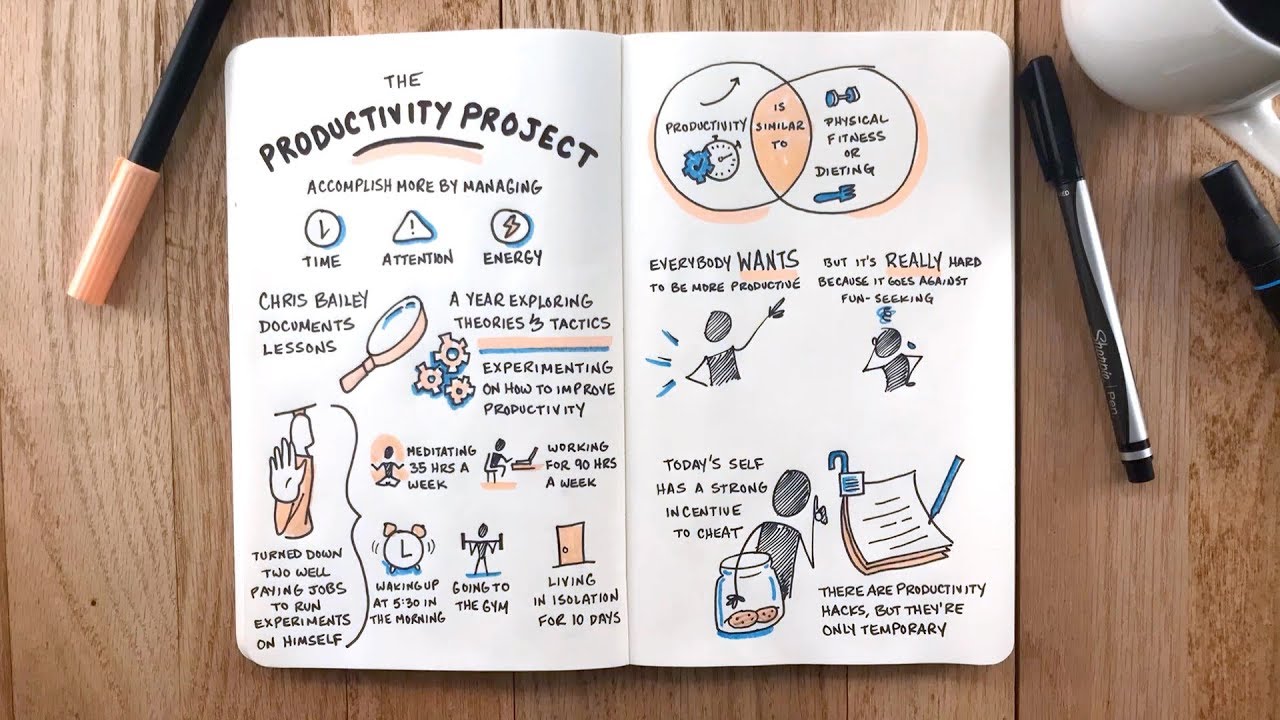
Productivity – it seems so elusive. Maybe not for you. You’ve figured it out. If success in productivity flows out of thinking about it, I’ve thought about it more than you can imagine…so many blogs on it.

Some years ago, Chris Bailey, a young productivity guru, came on my radar. He wrote this super practical guide 100 Time, Energy, and Attention Hacks to Be More Productive. It is organized in such a way that the reader can choose what parts of their day/life they want to change. He continues to write and podcast. You can find various videos with his coaching highlighted.

He helped me get jump-started, but I’m far from that focused productivity that could seriously change up my life. Still, I chip away at it. Why? To what end? The P’s below inspire me to keep at it. How about you?

1) Possibilities – Earlier today, I was walking with a friend of mine who is diving into the natural arts – gardening, canning, grinding wheat for bread, etc. I admire her and yet am overwhelmed by the effort she puts into her craft. Then she retorted, “Well, I’m not pouring into Afghan refugees.” Thanks for that. We may all have different goals, but the possibilities abound when we recapture the time, attention, and energy we need to meet and even surpass those goals. What would you love to accomplish…if only?

Monday Morning Moment – Notes on Chris Bailey’s Life of Productivity – Deb Mills

CNLP 558: John Lee Dumas on How to Work Less and Make More Money, The #1 Way to Make an Impact Online Today, And How He Grew Entrepreneur On Fire to 140 Million Downloads – Carey Nieuwhof Podcast

2) Practices – A favorite old proverb of ours goes like this: “Where no oxen are, the crib is clean: but much increase is by the strength of the ox.” (Proverbs 14:4). Canadian writer Tim Challies presents this proverb as a parable on productivity. That “much increase” can be enhanced by having the right tools (oxen, for instance). However, given the right tools, productivity can still be very messy. Hard to perfectly control, thus, cycling back, needing the best tools for the job. Sometimes those tools are people in our lives and workplace, and sometimes they are lists, schedules, apps, or right equipment.

It’s not working harder, and not even just working smarter, whatever that means. It’s the beautiful grind of habit formation. It’s the development of spiritual disciplines that become life-long practices. We are never too young to begin establishing such.

I make my bed every morning.

It’s a small thing but it lifts my heart. This is done and it’s beautiful.

Lately I have also begun going to bed with my phone out of reach. That means, on waking, it is still out of reach. My thoughts then are my own…not someone else’s I begin taking in, and 30 minutes later find myself still scrolling. Sheesh!

There are other practices I’m incorporating into my daily life…but for this moment, I leave you with the experts.

Photo Credit: Tim Challies, How to Get Things Done

Putting On the Brakes: A Review of John Mark Comer’s The Ruthless Elimination of Hurry – Dawn Berkelaar

Series: How to Get Things Done – Tim Challies

Monday Morning Moment – Flipping COVID Lethargy into a Larger Life Productivity – Tim Challies – Deb Mills

Photo Credit: James Clear

3) Product – As you begin habit formation, such that you are able to redeem more time, more attention, and more energy, product then begins to be impacted. What is your product? Your goal? Are you beginning to see the weight loss, your writing becoming more thoughtful, your shelves filling with wholesome canned food, your personnel engaged, your work goals realized, your college degree on the horizon?

Photo Credit: Andrea Lane, Redbooth

4) Purpose – What is the purpose for your going after your goals? If the habits you are forming are in conflict with other goals in your life, then you may need to reexamine your purpose. The “why” of your efforts. Are top performance and lifetime achievement the same or is there enough difference that you need to reevaluate? Something to consider on a regular basis. What is your purpose for all this? [See the Carey Nieuwhof podcast with Jon Acuff below – gold!]

Episode 596: Jon Acuff on The Difference Between High Performers and High Achievers, How to Make a Goal and Guarantee a Goal, and the Problem of False Humility In the Church – Carey Nieuwhof Podcast

5) People – Chris Bailey did an experiment earlier this year. He made the observation that smartphones are actually robbing us of productivity among other things (mental health, sleep, intimacy, focus…I could go on).

He decided to “come off” his smartphone (iPhone to be specific) for one month. After switching to a flip-phone, it took Chris a week to adjust to the under-stimulation of his device. Then something happened that forced him to ditch the experiment altogether before the month was over.

[5 Lessons that Chris Bailey Learned from Ditching His Smartphone for a Month – condensed version of Chris Bailey’s blog on the topic]

A cherished family member got cancer and was doing treatment updates via group iMessaging. Chris became aware that he was missing some of the messages and, in fact, his wife had begun answering for both of them. He family and friends simply began messaging solely with her, leaving him out of the circle altogether.

Being connected with people, in the way they were all accustomed, was disrupted. Face-to-face was consummately better, but he would take phone connection over no connection.

“…while modern communication methods are shallow, at the end of the day, the smartphone is how I am able to communicate with those I love in the modern world. And I love them. So I will continue to go where they are, to these lamely shallow apps that are no richer than a shadow, especially when compared to the vivid, textured reality of deep, joyous time with another human being, in real life. Maybe over coffee, maybe over drinks, maybe at a beach somewhere. Honestly, wherever—I don’t really care. As long as it’s in person.

At this point, we’re stuck with smartphones, especially considering how intertwined they are with how we communicate. Technology will continue to advance as smartphone innovation continues to plateau, and eventually, something else will take the smartphone’s place.

I look forward to this day, and hope that whatever replaces the phone doesn’t come with its own tradeoffs for our mental health and overall well-being.

The key, though, while the smartphone is with us, is to find ways to limit its downsides while making how we communicate richer.Chris Bailey

The moral of this story: don’t leave your people in the dust in the pursuit of wild wonderful goals.

In becoming more productive, do we pour that gained time, attention, and energy back into the work, skillset, hobby, or recreation? Or do we pour it into people?

As I look again at habit formation and goal-setting with these 5 P’s in view, what my hope for center stage of life is “Love God…love people.

“You shall love the Lord your God with all your heart and with all your soul and with all your strength and with all your mind, and your neighbor as yourself.” – Jesus, Luke 10:27

This is what inspires me to do the work of becoming more productive.

Monday Morning Moment – Focus – This Won’t Take Long – Deb Mills

50 Productivity Tips to Help You Finally Get Ahead – Infographic

Photo Credit: Productive and Free

5 Friday Faves – Beyond the Guitar & Oppenheimer, Solitude, “Til You’re Home”, Two Phenomenal Reads, and International Food Festivals

Friday Faves – Go!

1) Beyond the Guitar & Oppenheimer – When Nathan Mills of Beyond the Guitar takes a brilliant orchestral work and arranges it for a single guitar, magic happens all over again. He accomplished this most recently in his arrangement of Ludwig Göransson‘s Can You Hear the Music? from the film Oppenheimer.

Heartbreakingly beautiful!

Sidebar: One exchange between Robert Oppenheimer and Niels Bohr has stood out and intrigued the audience. It was an encounter between two of the most brilliant minds the world has ever known. But one of the most puzzling aspects of their meeting is Bohr’s cryptic comment to Oppenheimer. What exactly did Bohr mean by:

“Algebra is more than just reading. You have to hear the music.”

“Can you hear the music?”

Niels Bohr’s words, in essence, capture the very spirit of scientific inquiry. His comparison of algebra to music wasn’t merely a poetic expression but a profound insight into the nature of mathematics and, by extension, the nature of scientific discovery. Bohr was trying to convey that, much like how music is not just about reading notes but about feeling and understanding the melody, algebra, too, is not just about reading equations but about comprehending the underlying patterns and principles.Pooja Mishra

2) Solitude – [Adapted from an earlier blog of mine] – During my angsty teenage years, I would sometimes slip away from my house full of brothers and sit by the lake nearby. It was there that I wrestled with the “what if’s” of life, along with the “what was’s”. Alone, but not truly. Within my thoughts, quietened in those moments, was also the presence of God. In that solitude, anxieties would get reigned in and perspective returned. The walk home was always so much better than the walk down.

Photo Credit: Succedict

Writer, philosopher Zat Rana caught my eye with his article The Most Important Skill Nobody Taught You. Turns out his view of that most important untaught skill is solitude. That ability to just enjoy being alone. Sitting or walking alone. Lost in your own thoughts. Except for a self-portrait for a photography class, you won’t see many signs in my life that solitude comes easy.

Life is peopled. As an extrovert and helper by nature, I have long thrived in the company of others. However, getting older, alone time has become more my experience than in previous years. Is that its own springboard to flourishing?

“All of humanity’s problems stem from man’s inability to sit quietly in a room alone.” Blaise Pascal

The Most Important Skill Nobody Taught YouZat Rana

According to Pascal, we fear the silence of existence, we dread boredom and instead choose aimless distraction, and we can’t help but run from the problems of our emotions into the false comforts of the mind.

The issue at the root, essentially, is that we never learn the art of solitude. – Zat Rana

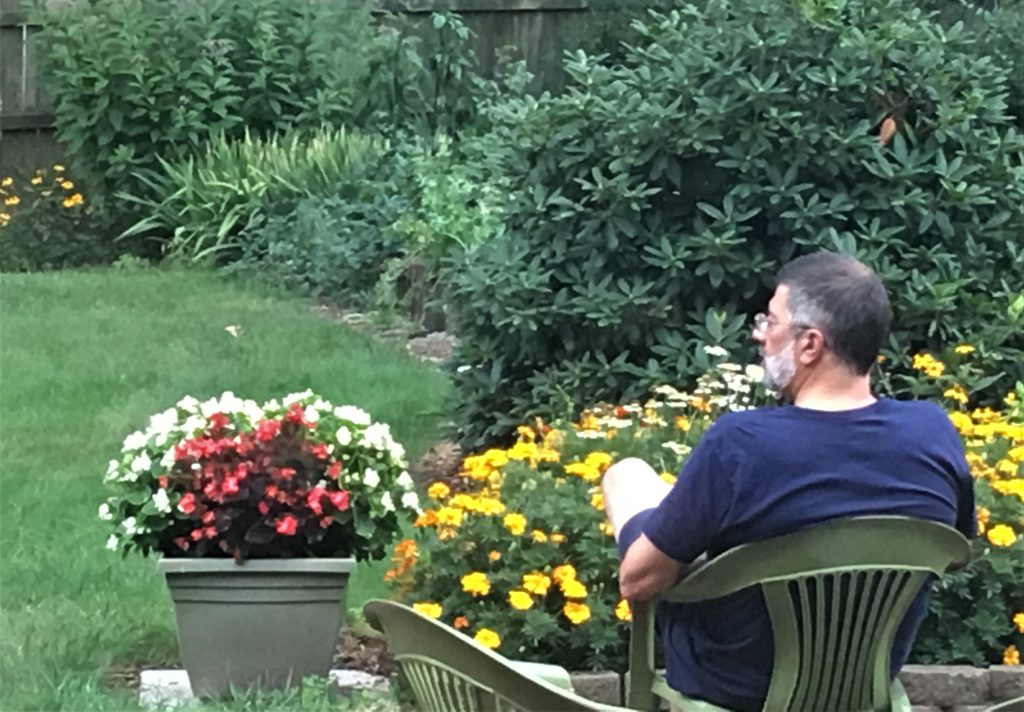
My husband, the consummate introvert thinker, often sits by himself at dawn and dusk to recharge. For him, solitude is something that has come naturally. He has been a model for me in practicing solitude.

Rana also talks about how technology has connected us in a myriad of ways but the connectedness is more virtual than real. – We now live in a world where we’re connected to everything except ourselves.”

“Our aversion to solitude is really an aversion to boredom…we dread the nothingness of nothing. We can’t imagine just being rather than doing. And therefore, we look for entertainment, we seek company, and if those fail, we chase even higher highs. We ignore the fact that never facing this nothingness is the same as never facing ourselves. And never facing ourselves is why we feel lonely and anxious in spite of being so intimately connected to everything else around us.”Zat Rana

Everything I Have Learned in 500 Words – Zat Rana

8 Ways to Embrace Solitude – Virginia Thomas – practical helps in embracing solitude

The Joy of Solitude: Loneliness as a Subjective State of Mind – Neel Burton – excellent resource on solitude as a prevention against loneliness

5 Must-See Monasteries in Virginia, USA

3) “Til You’re Home” – If you’ve ever lost someone dear to you, the song “Til You’re Home” will resonate to your core. Actress, producer, singer/songwriter Rita Wilson brings this song to the screen in the beautiful film “A Man Called Otto”. Wilson wrote the lyrics with David Hodges and performed it with singer Sebastián Yatra.

In the articles below, Wilson is interviewed about the inspiration for this song. My main takeaway was how she was comforted by a friend, after her father’s death. He told her, “The conversation continues.” I so experience that. After the death of my mom, in particular, but also many others, including my older brother with whom I had a prickly relationship but one that sweetened before he died and continues to do so…in ways this song communicates.

I watched the film above while on a flight. Crying doesn’t come easy for me, and the tears flowed.

Watch the movie and enjoy the song and think about the richness of our relationships both in the present and in the between times (from past to forever).

Rita Wilson Talks Singing and Writing Original Song for Tom Hanks’ ‘A Man Called Otto’: Listen (EXCLUSIVE) – Clayton Davis

Rita Wilson Found Her Voice (Literally) Through Songwriting – Hilton Dresden

Worship Wednesday – Go Rest High on That Mountain – Vince Gill – Deb Mills

4) Two Phenomenal Reads – Phenomenal? Well, I’m counting on it. These are my next two reads. Just got them both and honestly may have to read them together. The authors are two of my absolute favorites: Karen Swallow Prior and Curt Thompson MD.

To get started – while I was waiting for launch day on both of these books, I’ve been listening to podcasts and reading reviews. Until your books come, you can also have a read or listen below.

“I hope readers are better able to participate in the necessary, ongoing process of distinguishing the principles of the Christian faith that are eternal and unchanging from the cultural stories, metaphors, and images that embody these principles in varying degrees of fidelity. Don’t misunderstand me: this entanglement with cultural narratives and ideas isn’t unique to evangelicals, nor is being creatures of culture necessarily a bad thing. In fact, living within the cultures of this world is God’s plan. It is part of being human. I think, however, that because evangelicalism from its beginnings in the western world has been so tied to political power, it has been easier for us to overlook the entanglement that is inherent to being part of any human culture. Yet, our task is no different from Christians within any Christian movement, sect, time, place, or culture.”Karen Swallow Prior, an interview with Andrea L. Turpin

Repairing the Evangelical House Means Renewing the Evangelical Imagination – Carolyn Weber

Holy Unhappiness Podcast with Amanda Held Opelt – Sanctification with Karen Swallow Prior

Norsworthy Podcast – Curt Thompson: The Deepest Place

5) International Food FestivalsEthnic foods are a favorite in our family…maybe every family. I’m talking from Afghan boulani (flatbread) to Southern biscuits and gravy.

It’s a joy to be invited to the home of friends who bring their gracious hospitality and yummy food to our part of the world. Just recently, I had the pleasure of sitting down to lunch with an Afghan family.

I’ve learned so much from our Afghan friends who came here in the Fall of 2021. Not the least of which has been how to set a bountiful table without great resources.

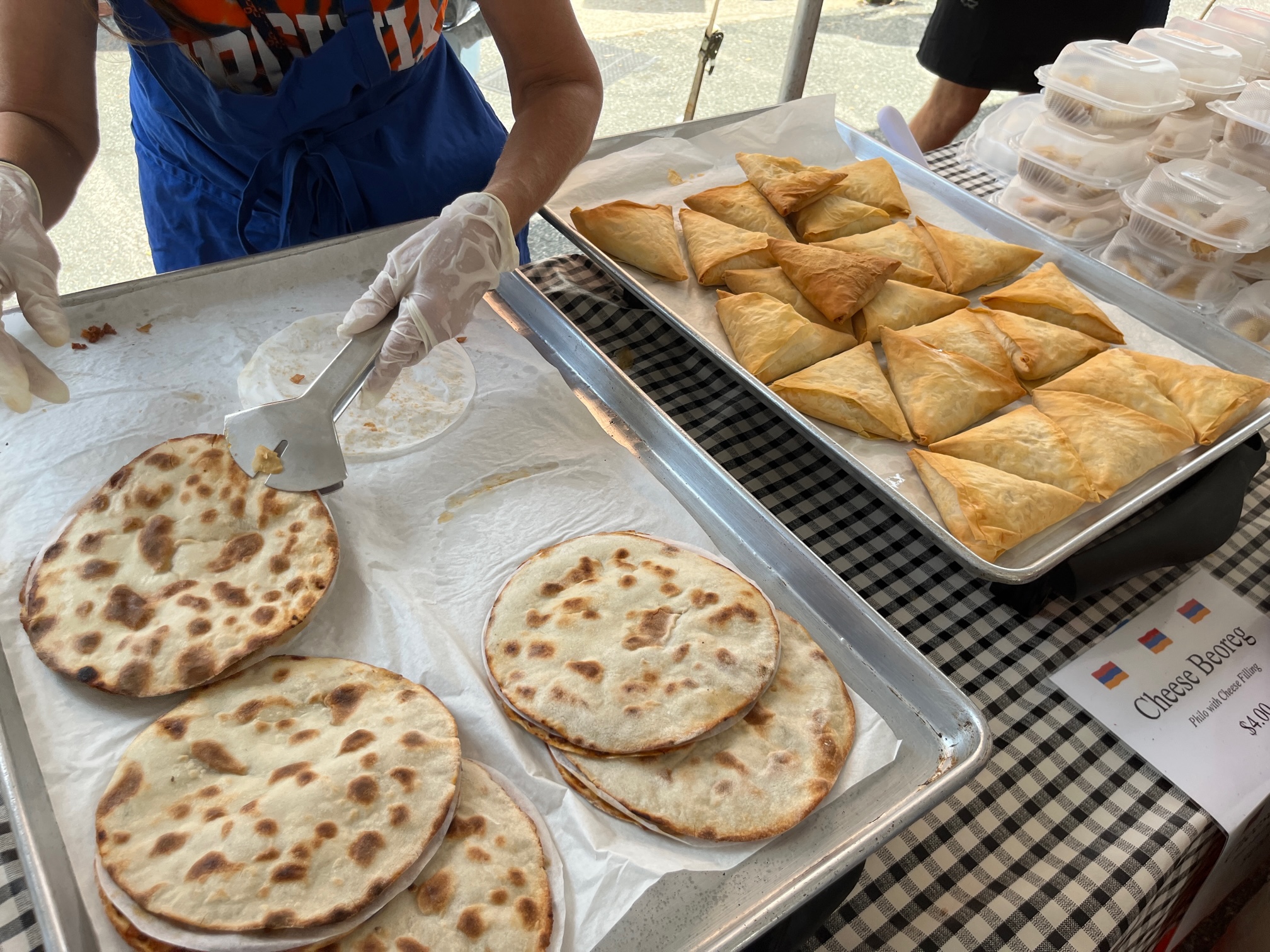
Our town has a host of ethnic restaurants with a few exceptions. Armenian and Egyptian are two types of food for which I’ve not found a restaurant locally. Once a year, we have the treat of international food festivals featuring these cuisines. So good!!

Next weekend, it’s the Fourth Annual Egyptian Festival. How about you? Any foodies out there? Comment below what some of your international favorites are and if you cook them at home or have the joy of a local restaurant or festival.

______________________________________________________________________________________________________________

That’s the latest 5 Faves. Hope you have a restful weekend and energetic start to the coming week!

Bonuses:

My Son, Superhero in Training – Rachel Friedman

Secularization Begins at Home – Lyman Stone