We all have our favorite artists, creators, personalities. This guy is at the top of my list. Forget that I’m his mom. If you’re like me, you go after details about a person’s life who you respect or who intrigues you – with his or her talent, worldview, or way of life. We search out and devour details of celebrity lives. I’m not saying that’s a healthy thing, especially if taken too far. It can, however, just be for fun. Like yesterday, I was at a baby girl shower for a friend who’s a great fan of Taylor Swift’s. She received the usual great essentials for the baby coming in a few weeks, and she also received some sweet surprises. Like 3 copies of the Taylor Swift Little Golden Book – one for home, one for the car, and one to keep for when Baby Girl becomes a fan.
I used to feature Nathan’s latest arrangements/originals on my Friday Faves blogs. As much as I loved writing those, these days they are rare, with life pouring into other things. That’s one of the reasons I decided to take this Monday for a reflection on this favorite artist of mine. Not to give you those personal details (deep sigh of relief from Nathan, I’m sure)…but to point to where you can find more of the person behind the guitar.
Just this weekend, a vlog, featuring Beyond the Guitar, was posted by guitarist Josh Garofolo. He is an excellent musician himself, self-taught, and you can give a listen to him on his YouTube channel. What he brings uniquely for folks like us fascinated by favorite artists is a podcast where he does walk-arounds with guitarists, in their towns and studios. He did a couple of those with Nathan, here and here. Josh asks great questions and, given they are both musicians, his own passion for music and life makes an easy stage for Nathan to share deeply about the things that matter to him. Guitar, business, family, teaching, mindset, and way more.
I watched both conversations with Josh and Nathan…like a total fan. Because I am. Even as close as we are, it’s a pleasure to be “in the room” with an artist talking about how he got where he is, and what he’s learned along the way. Not just about the craft but about life. This artist happens to be one of our kids, but he has his own large life to balance. One sweet gift he gave us recently (especially his dad) was to arrange and perform one of our favorite songs which we knew would be just amazing with him playing. Here it is:
I know you get me on discovering something about the heart of an artist – if you really love Taylor Swift, for instance, you want to know her heart. Or maybe, like sports fans, the numbers are enough. I still don’t understand how my husband, and other guys like him, can pull forward the most obscure (or seemingly obscure) stats on athletes and teams. My friends from the baby shower yesterday can happily talk on and on about Taylor Swift because she is, after all, a rock star. I get it!
For me, it’s Nathan Mills… Now if you want to hear about our other two great kids, I can help you out with that as well. For more on Beyond the Guitar: “subscribe, like, and comment”. Not here but on his channels.
Ah…contempt. It is defined as a strong negative emotion that joins disgust and disrespect. We have all experienced contempt, either for someone else, or a group of someones…or the contempt of another towards us.
Contempt is a harsh response…a cold killer of hearts and relationships.
It became more real than ever when I experienced it myself recently. Not toward me personally maybe but because of an association/affiliation I have that is viewed by some as contemptible. When we express contempt, it is usually in conversation with those who agree with us. Rarely do we have the person(s) toward which we feel contempt in front of us. We don’t engage them as much as we complain about them. We hold some in contempt because of their beliefs or actions, and our temptation is to have nothing to do with them. We may view this as a strength, but (as I’ve heard said), “an unguarded strength is a double weakness.”
“Knowing our weakness, dividing leaders on both the left and right seek power and fame by setting American against American, brother against brother, compatriot against compatriot. These leaders assert that we must choose sides, then argue that the other side is wicked—not worthy of any consideration—rather than challenging them to listen to others with kindness and respect. They foster a culture of contempt.” – Arthur C. Brooks, Love Your Enemies: How Decent People Can Save Our Country From the Culture of Contempt
Contempt is something I’d like to annihilate in my own thinking, and thankfully there are helps. Below you will find two thought leaders who have worked to expose contempt for what it truly is and does to us, and who have given us counsel on how to recognize it and rid ourselves of it. Author and academician Arthur Brooks and clinical psychologist John Gottman.
How do we confront contempt?
Arthur Brooks’5 Rules to Counter Contempt
1. Refuse to be used by the powerful. – “The accurate image of a powerful manipulator is someone on your side of the debate: a media figure who always affirms your views, a politician who always says what you think, or a professor who never challenges your biases. They declare the other side is terrible, irredeemable, unintelligent or anything else that expresses contempt — and they say you should think these things as well.” Brooks encourages us to tune out that person “on our side” who seeks to manipulate us, whatever the reason. Then (this is the harder part), we are to call out contemptuous behavior among those with whom we agree (our friends and maybe family). Contempt tears us down, and we don’t want that for ourselves or those we love.
2. Escape your bubble. – “The culture of contempt is sustained by polarization and separation. It is easy to express contempt for those with whom we disagree when we view them as “them” or never see them at all. Contempt is much harder to express when we see one another as fellow human beings, as “us.”” We do well to make opportunities to share space and conversation with people not like us. Seek to understand and look for ways we are alike.
3. Treat others with love and respect, even when it’s difficult. – “Never treat others with contempt, even if you believe they deserve it. First, your contempt makes persuasion impossible, because no one has ever been insulted into agreement. Second, you may be wrong to assume that certain people are beyond reason. There are many examples of people forming unlikely bonds precisely because they didn’t treat each other with contempt.” Sometimes we are the ones toward which contempt is aimed. If we have offended, then we can apologize. Raising an issue higher than the value of the person doesn’t take us anywhere positive.
4. Be part of a healthy competition of ideas. – “I believe disagreement is good because competition is good. As in politics and economics, competition — bounded by rule of law and morality — brings excellence. In the world of ideas, competition is called “disagreement.” Disagreement helps us innovate, improve, correct and find the truth. Of course, disagreement — like free markets and free elections — requires proper behavior to function.” The goal is not to disagree less but to disagree better, notes Brooks.
5. Disconnect from unproductive debates. – “Get rid of curated social media feeds. Unfollow public figures who foment contempt. Want to get really radical? Stop talking and thinking about politics for a little while. Do a politics cleanse. For two weeks — maybe during your next vacation — resolve not to read, watch or listen to anything about politics. Don’t discuss politics with anyone. This will be hard to do but not impossible.” This exercise will reveal how much of your life and mental energy is wasted, allowing you to refocus on people you truly love and work/play that matter more than those things you probably won’t be able to change. – Arthur Brooks, Sick of the Culture of Contempt? Here are 5 Ways You Can Subvert It
Another exceptional thinker and clinician is Dr. John Gottman, psychologist and professor. His focus is primarily on marriages and individual mental health within relationships. The Four Horsemen is a metaphor pointing toward end-times. Dr. Gottman uses the same metaphor in describing four elements of communication, any one of which can predict the demise of a marriage (or any other relationship). These elements are criticism, contempt, defensiveness, and stonewalling. Each has an antidote.
Contempt is much more mean-spirited than criticism. It communicates a measure of cold superiority over the one being criticized. Gottman isn’t talking about a political stand or a point of contention over culture or morality. He is concentrating on the relationship between two people, usually being a married couple.
“Contempt, simply put, says, “I’m better than you. And you are lesser than me.” [It] is fueled by long-simmering negative thoughts about one’s partner, and it arises in the form of an attack on someone’s sense of self. Inevitably, contempt leads to more conflict—particularly dangerous and destructive forms of conflict—rather than to reconciliation. It’s virtually impossible to resolve a problem when your partner is getting the message that you’re disgusted with them and that you’re condescending and acting as their superior.”
Gottman prescribes two antidotes for contempt in the marriage relationship – one short-term and the other more long-term:
First, the person feeling contempt toward the other would do well to name the emotions that rise to the top during a conflict. Express these emotions to your spouse without blaming, and appeal for help with a solution. “I am sad that we don’t have friends over. Could we talk about a way forward on this?” Or “I get worried when the bills pile up. Can we talk about what we can do to stay within budget?”
Second, Gottman suggests establishing (or re-building) a home culture of fondness and admiration for each other. This is a discipline that may take some strong determination, but it is doable. In fact, I have go-to Bible verses (Revelation 2:4-5) that help me immensely during those dry times in my own marriage. It speaks about what to do when we have lost our first love (for God and each other). Essentially, the instruction is to remember how it was in the beginning, repent/return, and repeat the actions/emotions/intentions that came naturally when the relationship was new. We don’t have to feel the fondness or admiration at first, but as we practice them, they can be restored. Among many tools, Dr. Gottman uses the instrument below to kick-start the process as the spouse chooses three descriptors and then gives examples of those to the other person.
Contempt is deceptive. It feels so good to think we are right, and yet in the practice of contempt, we become more isolated and less engaged in real community. Only preferring people who think like we do. At some point, our competencies will be impacted because our problem-solving shrinks down to just judging others and determining they aren’t worth our time. We miss learning from them, and we miss the possibility of genuinely understanding them, even loving them.
Having faced contempt myself in the last week, It has brought me to a “come to Jesus” moment. I don’t want to hold contempt for anyone, no matter how different they are, no matter what wrongs they have done. I want to figure out how to stay engaged with people…such that “if [I] can’t move mountains, [maybe I can] move a stone”.*
What can we learn about leadership from a priest? A priest who spent his potentially most influential years as pastor of L’Arche – a community for mentally handicapped persons? What? Plenty!
Henri J. M. Nouwen was a renowned scholar, writer, professor, and a Dutch Catholic priest. He taught for many years at such prestigious universities as Notre Dame, Yale, and Harvard. His writings were prolific and his personality was winsome.
Whether you are Christian or not, you will profit from the tiny book (81 pages) he wrote on leadership – “In the Name of Jesus: Reflections on Christian Leadership”. I read this book yesterday afternoon and was spellbound by his wisdom. Having read many texts on leadership over the years, both secular and Christian, I was captivated by Nouwen’s take on leadership…and his willingness to confront the pitfalls that can occur along the way. In a clear and succinct way, he exposed the temptations we have in leading others and the way we can extinguish them through applying certain disciplines or habits.
Nouwen points out three temptations leaders are apt to succumb to, and then he offers three disciplines to counter (and gain freedom from) them. Christian readers, you will appreciate his direction. He refers to Scripture for his teaching – two passages in particular: 1) Jesus’ questioning a repentant Peter after he had denied the Lord three times (John 21:15-19), and 2) the temptations of Jesus in the wilderness (Luke 4:1-13). I will list the temptations below and examples from my own life where they crept in:
To Be Relevant – In recent years this has actually been a longing of mine, before the Lord. After retiring from a full and satisfying ministry life, with all our children grown and on their own, my days got very quiet. I didn’t know what to do with them. The calls to join this team or lead that work just didn’t come in. Somehow I had made relevance an idol. Thankfully God was working away at that temptation in my life. He is still at work, because I still struggle…but not like before. Earlier today, I was sitting in the waiting room while an Afghan grandmother in my care was having dental work done. It’s been my least favorite activity on the refugee resettlement team of our church. The appointments are three hours long (for the dental students’ learning), and even with books, phone, and hallways to do steps, I bristled at times at the servitude of this activity. After reading Nouwen’s book, he pointed the way to resist. Contemplative prayer is the answer. Recognizing that I don’t need to be going here or there because it is I who am needed in those situations. To use the time of seeming irrelevance to participate in a grander work than I could have ever imagined. To simply be, humbled and grateful, with God, and to have a quiet many would love to know. To remember that the work, whatever it is, came from Him to begin with. I don’t own work, or ministry, or service of any kind. It is an opportunity to show up for a greater good, in a quieter state, where I am surrendered, making myself available, to love others more than myself – “in the name of Jesus”.
“I’m telling you all this because I am deeply convinced that the Christian leader of the future is called to be completely irrelevant and to stand in this world with nothing to offer but his or her own vulnerable self. That is the way Jesus came to reveal God’s love…God loves us not because of what we do or accomplish, but because God has created and redeemed us in love and has chosen us to proclaim that love as the true source of all human life.” – Henri Nouwen
2. To Be Popular (Spectacular even) – What a temptation this is. It is stealthy. We sometimes aren’t even aware that we experience it. Until we are. Sigh… Leadership lends itself to singular popularity (even in situations where people love to hate you…it’s still a superlative position of a sort). When we rise through the ranks, through experience mixed with education, it can be a very individualistic journey. “Lonely at the top”. However, there is a head trip attached where we become prone to thinking that we are the ones to call, or to consult, or to give opinion, or have the last decision. This temptation to want to be “the one” is fortunately tempered by doing work/life/church in community. By taking someone along. By sharing decision-making. By including those most affected in the conversation. Making room around the table. Nouwen, in regards to this temptation, calls the reader to Confession and Forgiveness. When is the last time you heard a leader confess a weakness or struggle? When did she or he ask forgiveness for a decision that turned out poorly or for a moral failure exposed? Being willing to remove the cape of the hero, and step off the pedestal, takes a humility that allows for, mutual confession and forgiveness within the larger community.
3. To Be Powerful – What a temptation!! To believe that we could actually have power over other people’s lives. To be in a position of making sweeping decisions with little restraint. To be surrounded by those who (dealing with their own temptations) would go along with the decisions out of their own need for popularity and power. It’s messed-up. In fact, what we think is our leading is really being led (by our own preferences, or the pressures of that vaunted position). What’s the solution? Now, each of these temptations so far has had a spiritual response – prayer, confession and forgiveness. What is the way forward when power has taken the driver’s seat? Theological Reflection. Nouwen is NOT talking about the answers that may be debated in the seminary classroom. It goes far deeper…to actually look for the truth in the background…and seeking to act on what is true…not for the sake of relevance or popularity or to hold onto power.
“Christian leaders have the arduous task of responding to personal struggles, family conflicts, national calamities, and international tensions with an articulate faith in God’s real presence. They have to say ‘no’ to every form of fatalism, defeatism, accidentalism or incidentalism which make people believe that statistics are telling us the truth. They have to say ‘no’ to every form of despair in which human life is seen as a pure matter of good or bad luck. They have to say ‘no’ to sentimental attempts to make people develop a spirit of resignation or stoic indifference in the face of the unavoidability of pain, suffering, and death…Theological reflection is reflecting on the painful and joyful realities of every day with the mind of Jesus and thereby raising human consciousness to the knowledge of God’s gentle guidance.” – Henri Nouwen
Henri Nouwen left the lofty academic environment to join in community with those who would not incline to be impressed with his credentials. Yet, in the setting of L’Arche, Nouwen dug deep into how to lead in gentler and more loving ways, with the example of the life of Jesus, and the nearness of God and community.
The beauty of his life laid down has given me pause to look differently at leadership and the possibility of being led…by a God who loves us first, in servant mode, in community with others…in the name of Jesus.
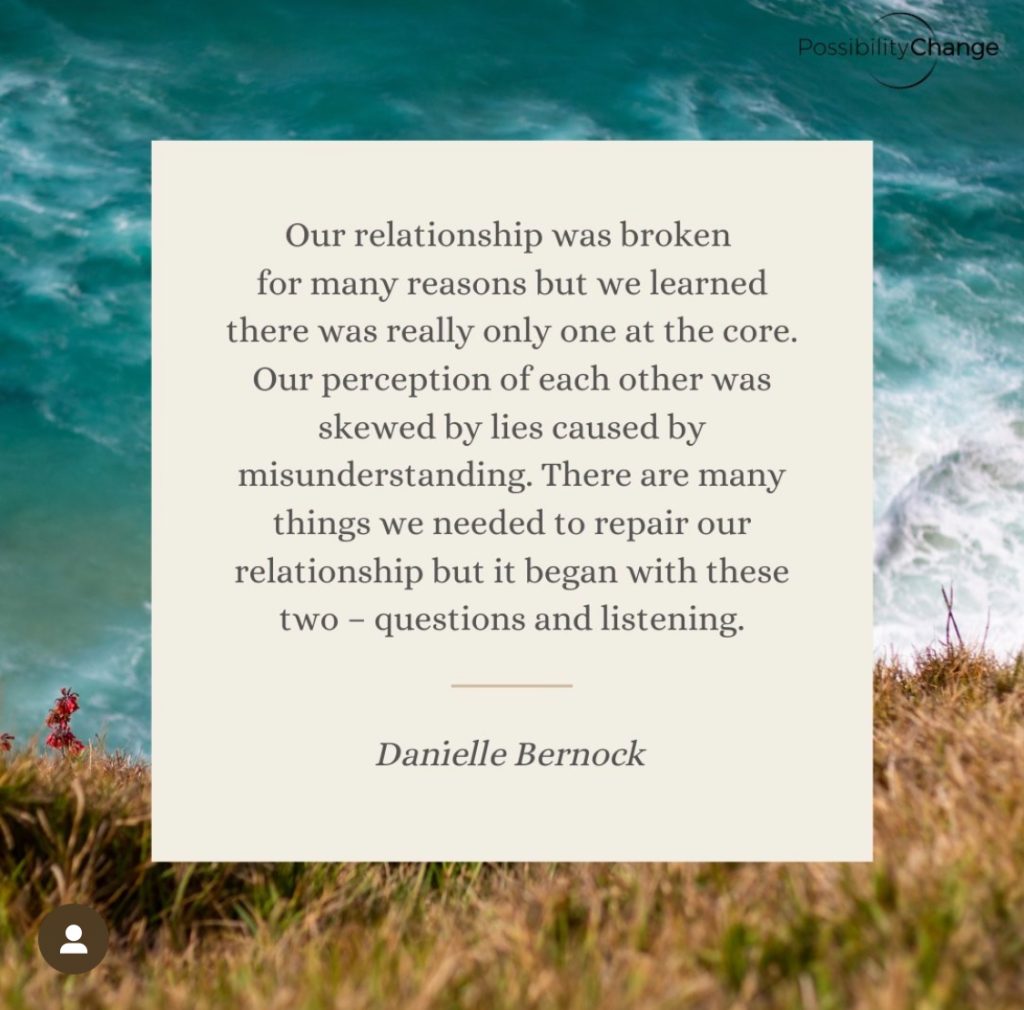
This has been days in the writing. When I saw the quote below just scrolling through Instagram, it stopped me in my tracks. Withholding (as defined here) goes way past “not knowing what to say” or “placing boundaries” or any measure of shyness or introversion. Withholding is actually an act of aggression…a display of power. One in which any of us can find ourselves if we don’t practicing checking our hearts or intentions regarding certain people or situations.
My Mom was the most significant influence in my life growing up. Now, I didn’t have the vocabulary for a lot of what she taught me, in word and deed, until recent years. Much of what she modeled came through her love of Scripture. She wasn’t a practicing Christian in my early childhood, but still she had made some decisions as a young person (while churched or otherwise influenced) that she practiced throughout her life. She became more mature and even more compassionate in these rules of life as she patterned her life more and more like Jesus.
I said all this to say that she was the opposite of a withholding sort of person. Even as an introvert.
Maybe growing up in a home with an alcoholic father and a timid mother influenced her willingness to show up for people – her brothers, her friends, her children, and strangers she met day-to-day. She did not withhold herself from others – all sorts of others – and it made for a beautiful life. This from a woman who worked full-time, raised four kids, and dealt with a cancer that would take her life too soon. Well, it didn’t take her life. Her life was finished at 75 to the glory of God. Even in her last hours and experiencing pain and increasing weakness, she was encouraging all of us around her. She even woke up from a coma that had silenced her to say “I love you” in response to one of her little grandchildren’s goodbyes to her.
This woman. Now you can understand why this issue of withholding feels so wrong to me. I understand people needing boundaries in toxic relationships, however, the practice of withholding can take boundaries up several notches. This probably isn’t a winsome topic because we don’t think what we’re doing is mean-spirited…it’s just because we are busy, or shy, or can’t do one more thing, or (fill in the reason).
Withholding can have different faces depending on what our intent or inclination is. It can be withholding of:
We have all experienced withholding – either as the one holding out on others or the one experiencing that neglect (whether intended personally or just in the wake of not being chosen for any of the above).
What do we do with this issue? If you’re reading this, you are already on the path to solutions. Those who don’t read this sort of piece don’t see this as a problem. Certainly, none of us are necessarily entitled to whatever is sensed as being withheld. However, if we don’t want to be on the giving end of withholding, we can note it and practice the opposite – a humility, intentionality, watchfulness, and graciousness can move us toward an openness and willingness to be there, even when others are not.
Parenting is a long season where withholding can become a habit – when we as parents get exasperated with our children’s choices and when we are shaken in our sense of who we are and how we’re doing. An example is well-communicated below by Youth Dynamics of Montana. If we have struggled with parenting or have been harmed by our own parents’ withholding, our temptation is to extend that same experience back, over time, either with our kids or our parents.
For me, it’s a daily battle to be like my Mom, but one I want to come out winning, or at least fighting. To be that person who works to catch the eye of people, to engage and encourage, to be courteous and deferent, to include, to give where there is opportunity, to serve when I know I can, to share information that would help, to let people in and to show up for others. All of this models good for our children and is a blessing to those around us. Choosing not to withhold myself, my people, and my resources by tightly circling the wagons.
There’s a great call to action by the Prophet Isaiah on what can happen (if I could interject) when we don’t withhold. When we show up, God shows up in exponentially greater ways. Is that your experience?
Strengthen the weak hands, and make firm the feeble knees. Say to those who have an anxious heart, “Be strong; fear not! Behold, your God will come with vengeance, with the recompense of God. He will come and save you.”
Then the eyes of the blind shall be opened, and the ears of the deaf unstopped; then shall the lame man leap like a deer, and the tongue of the mute sing for joy. For waters break forth in the wilderness, and streams in the desert… – Isaiah 35:3-6
10 years writing this blog. I started 10 years ago this very month. The reason, in particular, was because I felt my memory clouding some, and there were memories and counsel I wanted to make sure were left for my children. As writing does, the blog cut its course through many topics – God, life, marriage, parenting, beauty, friendship, work, meaning, purpose, and reflections of all sorts. Now 10 years out, my memory is still hanging in there, and for that I’m thankful. Also for the having of words to share with those I love.
Our friend Clyde Meador started a blog himself 3 years ago this month. He may have had similar hopes – to leave something for his children and for the sake of a greater work.
Leadership was a topic that I studied for years (posting in my Monday Morning Moment). I learned so much from great leaders in my life, as well as some leaders who could have used some mentoring by our friend Clyde. That may not have been kind, but good leaders matter – in our lives and in the futures of organizations.
In the first year of Clyde’s blog, he wrote a series of posts entitled 6 Sacrifices of Leadership. The topics were:
Loss of Constant Firsthand Involvement
Too Much Negative Knowledge
Constant Criticism
Leaving
Sacrifice, Isolation, Ostracism
Impact on Family Ties Due to Travel and Workload
Take the time to study those posts to learn from Clyde. In a recent tribute to him, a friend and colleague, Charles Clark wrote a brief summary of Clyde’s six sacrifices, their dangers and rewards. You find them in the image below:
In April 2024, Clyde Meador, this wise, humble, and insightful leader friend of ours, died, at 70 years of age. Complications of a long battle with cancer. He leaves a big hole, for his family, but also for the many people who have known him and loved him through the years. However, he would say something along the lines of God doesn’t leave holes.
We all have stories with Clyde in them – his lessons on life and leading. His legacy is that he never wavered in his faith walk, his love for his family, or his determination to do excellence in the work God had given him. He and Elaine have been a picture of constancy in our lives. Leading and loving.
In July of 2023, life and cancer treatment got in the way of Clyde continuing his blog. What turned out to be his last blog is so appropriate and beautiful. “To Those Who Come After Us”. Here are the last paragraphs.
“I will sing of the steadfast love of the Lord, forever; with my mouth I will make known your faithfulness to all generations.” (Psalm 89:1, ESV) “We will not hide them from their children, but tell to the coming generation the glorious deeds of the Lord, and His might, and the wonders that He has done.” (Psalm 78:4, ESV) This commitment of faithful followers of the Lord must be our commitment, also.
“So even to old age and gray hairs, O God, do not forsake me, until I proclaim your might to another generation, your power to all those to come.” (Psalm 71:18, ESV) I am grateful that I have reached old age and gray hair, and pray that I will faithfully do all I can to communicate the truth of the Gospel to those who come after me.
Of all those things which we teach our children and those who come after them, nothing is more important, more urgent than the truth of the Gospel. I have a less-than-perfect record of success in this endeavor, yet I seek to faithfully persist in sharing the Truth. I challenge each of us to a major focus on sharing all we know about our Lord and Savior with the next generations! – Clyde Meador, To Those Who Come After Us
[Dave & Clyde, a few weeks before Clyde went to be with the Lord. So grateful. What a humble and wise mentor he was to so many.]
What just happened? When you read the title “What If You’re Wrong”, was there a reaction in mind or body? If I had written “What If I’m Wrong”, it would have been far less provocative, right? Clearly, it’s possible for me to be wrong on many things. Not just possible but actual. I am most probably wrong on a number of things, either out of ignorance, preference, a lack of understanding, or neglect of the truth.
Is there a way we can talk about the stuff that matters to us with people who care about very different sorts of things? People who strongly disagree. People who are sure they are right, when we are also sure that we are…and they are wrong.
Below you’ll find an old video of a Richard Dawkins lecture at a Virginia university. He took questions from the floor, and one very brave, if not naive, student asked him “What if you’re wrong?” His answer, or non-answer but more repartee, was clearly one he had fashioned for just that question. Have a listen.
The lecture must have had to do with the existence of God, and Dr. Dawkins, though once a “Christian” is now an atheist. His response to the student was condescending, dismissive, and unkind. Oddly, his reasoning fell along the same lines as a 16y/o Muslim student in my World Religions class in Morocco. My student surmised that people followed the religion of their parents. Yet, here, Dr. Dawkins disproved what he said himself by leaving the Christian faith for atheism. In the video, maybe he considered disrespectful the student asking the question, therefore, he responded with mirrored disrespect. Who knows?
This is what I’m wanting to know. Can people engage each other with curiosity, care, and consideration (hope you don’t mind alliteration)…when they are at opposite ends of a worldview or belief system?
The key is those 3 c-words above. If I truly want to understand the position of another person, hopefully that can be communicated in such a way that engenders an openness. If that person knows I truly care about him/her, maybe they would be willing to trust me with such a conversation. If they knew my desire is to take into consideration how they came to their conclusions, maybe they would risk digging down into their reasoning. No judgment. On either side.
That would be amazing.
Writer, creator Adam Dachis posted a helpful piece for Lifehacker.
Common Denominator – Find It. What might the continuing point of contention between you? Find that “button” that always gets pushed and choose together to find a way for it not to be the confounding issue.
Considering What’s Right – Convictions & Outcomes When you analyze your positions (convictions), it is possible to consider which would lead to a better outcome. This is a growth point toward understanding if not change.
Changing Someone Else’s Behavior – Shouldn’t Be the Goal. – Trying to change the other person’s opinion or worldview can’t be the goal. They are in control there, but you can change something about your own behavior toward them or the situation. This approach is not about people-pleasing but about defusing and deescalating. The goal has to be relationship, or why bother?
Consult the Facts. We tend to focus on and be influenced by information that aligns with how we think, not even considering that the information might be wrong. If one of us considers the other wrong, the temptation is to attack (if I am the one feeling right or feeling wrong, the default is to become defensive and tempted to attack). Listen to the other side. Be tuned into what you are feeling as well. Stay in the conversation. Treat yourself and the other person with compassion. The goal is understanding.
Gustavo Razzetti, a work culture design consultant, writes about the difference between the soldier mindset and the scout mindset in dealing with conflicting worldviews:
“The soldier mindset is rooted in the need to defend ourselves. The pressure to be right elevates our adrenaline—we experience a fight-or-flight response.
A more curious mindset is that of the scout—this role is about understanding, not defending our beliefs. The scout goes out, maps the terrain, and identifies the real challenge—he wants to know what’s really there.
The mindset you choose affects your judgment, analysis, and decision-making.
The soldier mindset is rooted in emotions like aggression and tribalism. The scout mindset is rooted in curiosity—it’s about the pleasure of learning new things, being intrigued when new facts contradict our beliefs, and not feeling weak about changing our mind.
I lived for many years in countries where the majority religion was not my own. Local friends would at some point or other ask me the “right or wrong” sort of question… “Why wouldn’t I consider their religion?” I treated that question with the care I had for those friends. In fact, I have a document on my computer where I considered all their tenets of faith and what kept me from becoming a follower of their religion. What was right for them was wrong for me.
However, the most beautiful experience of those “What if you’re wrong” scenarios was what happened with my dearest local friends. Without knowing the concept at the time, we determined to make each other feel “seen, soothed, safe, and secure”. Although my own faith (especially my belief in Jesus as Savior and Lord) would not be altered, these friends mattered deeply to me. We reconciled our differences in faith through the depth of our friendship. If one had to be considered right and the other wrong, we would still love each other. Period. Full-stop.
“Because of the Lord’s great love we are not consumed, for His compassions never fail. They are new every morning; great is Your faithfulness.” – Lamentations 3:22-23
“Let me hear in the morning of Your steadfast love, for in You I trust. Make me know the way I should go, for to You I lift up my soul.” – Psalm 143:8
“He will cover you with his pinions, and under his wings you will find refuge; his faithfulness is a shield and buckler.” – Psalm 91:4
Holy Week of 2024 is finished. How glorious the annual recounting of what happened in those days for our sakes. Jesus faithfully lived each of those momentous days – holy living, sacrificially loving, dying with Eternity in view.
So here we are on Monday – ordinary start to another week. Or is it ordinary? No. For some, it is a crawling out of bed with every bit of will we can muster, facing a hard, an unknown, a breath-taking challenge.
The phrase “Strength for today and bright hope for tomorrow” comes from a treasured hymn “Great Is Thy Faithfulness” written by Thomas Chisholm. I was reminded of this in a Caring Bridge journal entry from a dear friend whose 6 y/o is in the throes of chemotherapy. She wrote this:
“Our God provides us with strength for today, and because He lives and has Risen…as we [celebrated] on Easter, we can also have and expect “bright hope for tomorrow.” May we be faithful and believe this! May we fear not and focus more on living life for eternity and not just the circumstances that occupy our present!” – [Niccole, not linking journal entry for the family’s privacy]
So this is for you, Dear Ones. That precious one confronting a shocking cancer diagnosis, and a young mom with a newborn and her own mom struggling with diminishing health leaning on this young mom, and a husband and father dealing with a fractured family, and…you can fill in the blank (God knows).
If you could use a deeper reminder of this old hymn and the Scripture-drenched truths of its message, here are the lyrics and a video you can sing them with. For this day, meditate on God’s faithfulness, not just for the nations and generations, but for you, Dear One.
“Great is Thy faithfulness,” O God my Father, There is no shadow of turning with Thee; Thou changest not, Thy compassions, they fail not As Thou hast been Thou forever wilt be.
“Great is Thy faithfulness!” “Great is Thy faithfulness!” Morning by morning new mercies I see; All I have needed Thy hand hath provided— “Great is Thy faithfulness,” Lord, unto me!
Summer and winter, and springtime and harvest, Sun, moon and stars in their courses above, Join with all nature in manifold witness To Thy great faithfulness, mercy and love.
Pardon for sin and a peace that endureth, Thine own dear presence to cheer and to guide; Strength for today and bright hope for tomorrow, Blessings all mine, with ten thousand beside!
Lyrics written by Thomas Obediah Chisholm – shared from Hymnal.net
“Strength for today and bright hope for tomorrow” is ours…in Him.
Small acts of kindness aren’t really so small. They add up and can alter your day. Take stopping into Wawa – “the ultimate convenience store for food, drink, fuel, and more”. [If you don’t have Wawa in your town, it’s wherever you stop for gas and coffee.] Now, Wawa seems to be a working person’s stop-on-the-go place. Fueling the car and grabbing a quick beverage (plus food maybe). Customers are on the move. They have places to go.
What happens there, in seconds, is noteworthy. When folks go to and from the store, they almost without exception, hold the door for the next customer. Literally, I sometimes just stand and watch, while filling my gas tank. [It would have been creepy for me to video this activity although I was tempted. It’s a constant where the one opening the door waits for the oncoming person exiting or entering.
So considerate. So courteous. Now, I’m sure there are folks who run in to grab coffee and are lost in their thoughts. They enter and exit without thinking. Not noticing the person in front or behind them. This happens…just doesn’t seem to happen here.
I love that about Wawa. Working people who have jobs to do but take the seconds to hold the door. A small act of kindness. Do we do that intuitively? Or did we learn it from someone – at home, in the classroom? It’s definitely a work culture phenomenon as well. Check out the #1 element of work culture that matters in the SloanReview article:
We lived overseas for many years and were amazed at the courtesy extended toward us and others. If I was at tea with local ladies and children entered from school, without prompting, they would go around the circle of women and greet each one of us. No matter how old they were. That was just one example of the almost ceremonial expression of hospitality wherever we found ourselves. Now, every culture has its imperfect treatment of people, but I was struck but the impact of courtesy and consideration expressed even from small children, even from teens.
A verse in the Bible comes to mind related to this: “Do nothing from selfishness or empty conceit, but with humility consider one another as more important than yourselves.” (Philippians 2:3) In that moment, considering another more important than myself. A great exercise in life.
What does it take to teach, model, and reward/reenforce such qualities as consideration and courtesy such that they continue throughout life? I’d love to hear your take on this, in the Comments.
It was a sweet visit to Wawa for me. Consistent with every other visit. My favorite coffee (Hazelnut with vanilla creamer) even came free today and it’s not even Free Coffee Tuesday.
So…think about slowing down a bit and consider others just ahead of or behind you, and hold the door. If you read this far, you probably already make a habit of showing that level of care. Thank you.
[Postscript: Below you’ll find another quote on being a friend or creating community. It goes beyond the scope of this Monday Morning Moment but is apropos to how we treat people, even in the moment, even strangers.]
What’s the last thing (or person) that caused you to complain? You felt totally justified, right? When we think of the negative aspects of complaining, others come to mind as being “those people”. The complainers, the contrarians, the grumpy people, or the ones you just can never please.
For much of my early life, people who knew me well would describe me as a Pollyanna, someone who looks for the silver lining, the good in people, “the cup half full [or fuller], the possibilities. “If you can’t say something nice, don’t say nothing at all.” The Pollyanna turns into an accidental contrarian.
Maybe life itself changes us – dealing with hard situations, losses, failures, etc. We harden a little. We analyze, scrutinize, and make ourselves the tweakers of people and things (always looking for those little improvements that, we think, need to be made).
Once we begin to complain, we find others willing to join in. Commiserating is born. It’s not a happy community. Complaining becomes a habit and even a lifestyle, if we’re not careful.
On Sunday, we listened to Cliff Jordan‘s sermon entitled “Complaining in the Wilderness”, pondering the strangeness of a delivered and protected people’s complaints against God.
Cliff talked about how complaining actually rewires the brain – how we see others, ourselves, our circumstances, and even God. I’m not going to address the science of this, but do an online search and you’ll see how this happens and the negative outcomes of chronic complaining.
The source of complaining, Cliff noted, relates to our memory. Do we focus on the irritants to the detriment of remembering the good in our jobs, the people we work with, the many graces of life, and the kindness of God? Complaining has a stubbornness to it. It wants satisfaction and has very little patience for others. As we practice more positive thinking, we are poised, not to minimize the situation but to maximize the potential outcome…including safeguarding our relationships.
Andrew Kirby, a successful Youtuber and entrepreneur, actually posted a super helpful video on how complaining rewires the brain.
Kirby also acknowledged that not all complaining IS negative. When we complain about something, it’s an indicator of a change that might need to be made.
The key is to not stay in the complaining mode but to act in a way that brings positive change. Too much complaining can drive a person to make unwise changes, based on advice given to them by sympathetic hearers of their complaints. Better to be judicious in what change needs to be made and take wise steps toward that change.
The prescription for rewiring our brain away from complaining is straightforward and easy, with practice. In fact, these four reminders could easily sit on a card at our work station to help us stay on the road and out of the ditch:
Be grateful. – Keep a journal and write down things/persons for which you’re grateful – morning and evening. Turn your thoughts toward gratitude when you’re tempted to go negative/complaining.
Catch yourself. – Shake off the temptation to complain before your friends/coworkers intervene…or pull away. Learn to catch yourself and change course.
Change your mood. – If your emotions start to spiral downward, shift your environment. Take a walk. Listen to music. Step away from your work station. Grab a few minutes with a friend.
Practice wise effort. – “Wise effort is the practice of letting go of anything that doesn’t serve you. If your worry [complaint] won’t improve your situation or teach you a lesson, simply let it go and move on.This is much easier said then done, of course, but if you write it out, ask friends for advice, and take some time to think it through constructively, it really can be done.” – Daily Health Post
All this is common sense. Still, in an age of outrage, we must practice thinking positively (refraining from chronic complaining) until it becomes a discipline…a healthy habit.
“What you practice, you get very good at.”
As that relates to complaining, do we really want to get good at that? No. In fact, practice doesn’t always make us good at something. We can practice unhelpful, unhealthy habits and they can become ingrained….even permanent…unless we intentionally do the work to reverse them.
When we know something needs to change, make the complaint count by refusing to think ill of others involved and taking your concern to the right people. Make yourself part of the solution. Whenever possible, remember all the good you can. It will keep you humble and grateful.
[Before jumping into this, let’s take a moment to give space for those who tried for a long, long time…and then felt there was no recourse but to give up. I have given up, too, in some situations, with some relationships…either because I lost hope, or heart, or strength, or opportunity, or time. We all have such stories. Today, let’s pause and consider the large and life-affirming possibility of just NOT giving up.]
Have you said any of these things recently? “I quit!” “I’m tired of trying.” “I give up.” “It’s not fair.” “It’s not worth it.” “Why do I have to do everything?” “It won’t last.” “There’s no use.” “I’m just not good at it.” “What difference does it make?”
Words matter. They can move us toward positive outcomes or negative ones. The negative affirmations above, spoken or just thought, sound true. Some may even be factual. They move us to action. The problem is when we are moved to act in ways that make things worse instead of better.
Whether it is your job, a lifestyle change, or relationship…we choose whether to be proactive or reactive. Whether we give up or keep at it. Bit by bit. Day by day.
All of life is a journey. We move toward one another or away. Our temptation is to self-protect…or protect someone we love thinking it requires pulling away from someone else. We can give up without even realizing it. Just in the disappointment…the distancing. We pull away from possible solutions. They are just too hard. Or are they?
When we get to the point of giving up, it’s not just giving up on that person, but giving up on ourselves in relationship to that person. Maybe even giving up on God to help us repair the rupture, thus opening one between us and Him.
You may think I am philosophizing or making this too simple. Believe me, I totally get how complicated “not giving up” can be. And painful. And even isolating. However, giving up is more isolating…and potentially more painful. We can bury the pain, cover it over, but it’s still there.
Now, we may not be able to restore the relationship…or heal a family wounded by rupture…but when we quit on them, the door to repair, from our side, closes.
The day will come, I am hoping and believing, with God’s help, that we will see good come through this hard place. For me, I am NOT giving up.
Stories of feeling the need or desire to quit abound. It may be your story as well. There is no blame here. No shaming whatsoever. It’s what we do with our stories that matters.
Attorney, writer, coach Marelisa Fabrega offers 8 strategies for not quitting. Her commentary is thought-provoking so don’t miss reading the article. I’m listing her strategies and adding my own quick thoughts.
Adopt an “I Won’t Quit” Mindset. Make that decision ahead of the situation. When Dave and I began talking about marriage together, we both stated pretty emphatically that, for us, divorce would be off the table. I grew up in a blended family and divorce impacted all my brothers’ adult lives. With Dave, it was extended family who experienced the pain of divorce, and his family felt that pain. Marriage has had its hard seasons for Dave and me, but we fought through together. [Not everyone gets that opportunity as the other spouse can ditch the marriage without your input. I get how painful that is.] Whether in marriage, friendships, work, or physical/mental health, an “I won’t quit” mindset gives you fortification in hard situations.
Watch Someone Else Persevere.It is a beautiful and poignant thing to watch when loved ones refuse to quit. I’m not saying to be a doormat or to continue to take terrible abuse. What I’m talking about is when people keep pressing forward in tough work or relationships when everything in their being and all those around are screaming, “Quit!” Two women come to mind here. One friend went though a struggle early in her marriage when her husband had an affair. All our friends (but me) advised her to divorce him and make him suffer for what he did to her. I asked her, “Do you still love him? Because if you do, and you could imagine being willing to take him back…wait.” She did love him and she decided to wait. He came back, wholeheartedly repentant. They went on to have a beautiful marriage, children, and now grandchildren. Another friend is in the furnace of a difficult relationship right now. I am watching her persevere. She has strong faith in God and a few deep friendships who are cheering her on. I believe she/they will make it.
Call Someone. This is huge! I’m thinking have more than one person you can trust to be with you (and for you) in this arena when quitting feels like all you want to do. If you’ve already decided up-front that you want to not give up, these friends and family can stand with you when the battle has exhausted you. They are for you. Hopefully they are also for your spouse and family member. It’s better to have folks who are fighting for you AND for your relationship. Not out of some scruple or moralistic platform, but because it’s your life and your battle. It’s what you want. [That may change at some point down the road, and if it does, these same people who love you will still be there.]
Go Back to Your “Why”. It’s extremely important to have a why for not giving up. A list of why’s, even better. I have loved ones very close to me who, if treated badly or served poorly, will determine not to trust an individual or business anymore. They just won’t go back. This is a much smaller situation than a deteriorating relationship. However, I’ve never understood the why and, after reading Fabrega’s piece, I plan to ask. These same people do not quit on family relationships, for which I’m grateful. So…we need to go back to our “why’s” of staying in relationship, or in a job for that matter.
Find a Different “How”. If a difficult boss is blocking the way for you to succeed at a job you once loved, figure out a respectful work-around. If the approach you have always used for managing conflict in your marriage isn’t working, think of a different way. If you continue to struggle with managing a healthy lifestyle or avoiding cycles of anxiety/depression, seek help (counseling, coaching/mentoring, medical advice, support groups). Find another way forward. Outlast the person or problem.
Succeed at Something Else. If you have been immersed in a painful situation, determining not to quit, you may just need a respite. A brief reprieve. A focus elsewhere for a few hours or days will be refreshing. Not seeing success in an area important to us colors how we feel about our self globally. Even when success isn’t visible to us, it may be coming, so we don’t give up. For that second wind, we might be refreshed by setting our sights on areas where we are seeing success (work, health, hobbies). Preferably, we do both – staying in the battle and interspersing life-giving activities.
Use Failure as a Stepping Stone. No retaliation. No victim mentality. You have already made the decision of what kind of character you want in life. Keep growing. Don’t let failure define you. It actually may not even be your failure at all. So, as much as you can yourself, live the life and be the person you want to be. It is a journey after all.
Keep Chipping Away. Like Fabrega has already said so well…keep going. Keep doing what you know is right. This is part of your story. Whatever happened in the relationship or work situation, you are making a future for yourself, and maybe for your children or family. Again, who you are is much more than what you’ve come through. – How to Not Give Up – 8 Strategies For Not Quitting – Marelisa Fabrega
9. Look for Beauty. It is there. Just outside. Or just there within reach. Just in all the reasons you are you.
I’ve read all of psychiatrist Curt Thompson‘s books and he has inspired me to look for the beauty in front of us even in situations where we feel like giving up. He inspired Bill Haley to write an essay on beauty. Here is an excerpt:
“Etty Hillesum, a young Jewish woman from Holland, wrote one of the most truly amazing things I’ve ever read. The context of her words makes all the difference. She wrote them while imprisoned at Westerbork transit camp waiting to be taken to Auschwitz, where she died in 1943 at age 29. Her diaries and letters were compiled intoAn Interrupted Life.
A very hard day. But I keep finding myself in prayer. And that is something I shall always be able to do, even in the smallest space: pray. And I know for certain that there will be a continuity between the life I have led and the life about to begin…
I often walk with a spring in my step along the barbed wire and then time and again it soars straight from my heart — I can’t help it, that’s just the way it is, like some elementary force — the feeling that life is glorious and magnificent, and that one day we shall be building a whole new world. Against every new outrage and every fresh horror we shall put up one more piece of love and goodness, drawing strength from within ourselves. We may suffer, but we must not succumb…
What kind of people do we choose to be? With all my heart, I want to be one who is not giving up. My family (immediate and extended) knows I am for them. Also, hopefully other folks as well – friends and neighbors. I’m not going anywhere. This is not just a commitment. This is an issue of character that goes way beyond any circle I’m a part of. It’s the kind of person I want to be. It’s not a small thing. I get it. Probably a God-sized endeavor. God is for all of us. He does not give up. He is not going anywhere. He is in the room…and He is staying.
You may say…well, you haven’t reached your breaking point, and you are right, of course. We can’t know what it will take for us to get to the place that we want to quit. Sometimes, we have no other option but to let go, because the other person is, or appears to be, already gone. My hope and resolve is to hold out as long as possible. Who knows what difference that could make? I’m holding onto that.