I urge you, first of all, to pray for all people. Ask God to help them; intercede on their behalf, and give thanks for them. – 1 Timothy 2:1
When we lived overseas, one of my greatest joys was to pray, on the streets doing errands. In Cairo, Tunis, Sfax, and Casablanca. Just walking in and out of stores. Praying for people as they came across my path. Strangers with lives of which I had no knowledge. Except for those things we all hold in common. Work, health, family, and some understanding of God. I felt such a connection with these people who I might never really know…or maybe I would…one day.
Praying.
What a privilege also to pray for those near to us…family, friends, neighbors, colleagues. Near…and far. Those in power and those far removed. Those who deeply need prayer in the moment as well as those who discount their need…but it is still there.
My Mom was a great pray-er, and we, her children, are still buoyed on the wings of those prayers. Now, my praying mentor is my treasured mom-in-law. She is praying, early morning and through the day, for many somebodies…us included. [She won’t love the image below that I captured without her knowledge. For me, it is a beautiful, albeit early-morning-grainy image for me of one before the throne of God.] So thankful for her and for the God who draws her to Himself.
If you wonder sometimes if anyone is praying for you…take that wondering to God and with it your own prayer for someone else. Keep in mind that in our loneliest, most isolated times, Someone is always praying for us…His name is Jesus.
Who is there to condemn us? For Christ Jesus, who died, and more than that was raised to life, is at the right hand of God—and He is interceding for us. – Romans 8:34
Worship with me (lyrics and music in the link. This cover done beautifully by Ricky Skaggs).
Somebody’s prayin, I can feel it
Somebody’s prayin’ for me
Mighty hands are guiding me
To protect what I can’t see
Lord I believe, Lord I believe
That somebody’s prayin’, for me
Angels are watchin’, I can feel it
Angels are watchin’ over me
There’s many miles ahead ’til I get home
Still I’m safely kept before Your throne
‘Cause Lord I believe, Lord I believe
Your angels are watchin’ over me
Well, I’ve walked through barren wilderness
When my pillow was a stone
And I’ve been through the darkest caverns
Where no light had ever shown
Still I went on ’cause there was someone
Who was down on their knees
And Lord. I thank You for those people
Prayin’ all this time for me
Somebody’s prayin’, I can feel it
Somebody’s prayin’ for me
Mighty hands are guiding me
To protect me from what I can’t see
Lord I believe, Lord I believe
Somebody’s prayin’ for me*
What’s your situation? How’s your heart? What is your body holding onto? Remember when you were so full of the possibilities of life, so fresh with anticipation of what was ahead, what you could accomplish?
Then life happens, and it doesn’t always work out like you thought it would. Running turned into slogging. Your passion got sucker-punched. The opportunities and advancements kept coming in, but at some point, bewilderment set in. You just got tired…just plain weary.
Some call this burnout, and it may be. What if it is more than that? What if it is a bloody battlefield where, if not our very lives, our joy is under full attack. What if those God-given strengths, those life-honed skills, and serendipitous accomplishments seem not to be at play. Maybe you’re overthinking, or maybe…just maybe…the way through is surprisingly simple.
We all have an important place to occupy in this world. Every single one of us. Fight for it. Walls may seem high, bottlenecks too narrow, and, at times, adversaries hammering around us. Nevertheless…We can find a way to bring the walls down (or just go around them), squeeze through the bottlenecks, and shake off the idea that we can’t win…just. too. tired.
Circumstances in life and work can drain us. Especially over time. Oddly we can still be effective in life but the emotional, mental, and physical toll adds up. The body remembers…and keeps score.
Jesus gives us a beautiful and intimate picture of the “nevertheless”. The night before he would die on a Roman cross, he appealed to the Father, as his painful and humiliating death loomed ahead of him.
Nevertheless…here was the Messiah, the Christ, in all the sinless perfection of his life, coming to the very end of himself. Exhausted, emotionally overwrought, yet clear-minded, understanding exactly what would be required from him. Nevertheless…he stayed the course. He was not giving up. He knew what was at stake. He trusted the Father, and he persisted in what he was called to finish.
For us, we have choices. We can resign ourselves to a life and work not what we anticipated…or we can clear our heads and remember our own callings. No walls are too high nor adversaries too strong.
We each bring something to the table. If we withdraw from the table or accept a perceived exclusion, we can miss the fullness of life we were meant to have. Others will miss us as well. Believe that. It’s true.
When fatigue and discouragement set in, and our bodies are drained of response, we need to take hold of the “nevertheless”. It’s reminiscent of the many “but God’s” in Scripture and in life. We may be up against a Red Sea like Moses, or a Goliath like young David, or a corrupting culture like Jesus. We lament “but God”…we are too inadequate. Too small. Too aware of risk. Nevertheless, our “but God’s” can change to what is truth. The meaning of the protest changes into the “but God” miracles when He shows up and does what only He can do…in us. Through us.
Here we go: this week’s Friday Faves. Thanks for reading.
1) Work Songs – On a walk in the neighborhood this week, I pulled open the door of the little free library near us and discovered a tiny book. Its title and cover art were intriguing. It was Matt Johnson‘s Work Songs. I tucked it in my pocket and finished my walk, thinking about some of the work songs of my day: The Eagles’ Get Over It or Bachman & Turner’s Takin’ Care of Business or Sam Cooke’s Chain Gang or Dolly Parton’s 9 to 5 or Rose Royce’s Car Wash. However, it is not a volume about work songs, per se, but more about the lack of them in our current culture. Johnson has written a book of true stories of notables through decades. People who may have been considered ordinary to begin with but who persevered in the work of their day. He (and they through these short essays) teach us lessons on the impact possible when both individuals and connected groups stay at it and refuse to be dissuaded from their task or their vision.
“For as long as we’ve had language as a species, we’ve actually had music for the work we do,” he says. “We’ve actually, for a long time, had music that actually created meaning — not just unify the sort of actions in the job of the people, but it actually gave them a bigger context for the work they were doing. And what’s interesting is, if you look at the evolution of that, modern work absolutely has no song.” – Matt Johnson
2) People Who Inquire – Psychiatrist Curt Thompson preached a sermon in the Spring of this year on the topic “Generational Trauma, Shame & Redemption”. While on errands, I was listening and actually had to pull the car over to capture one quote in particular.
“One of the most important developmental experiences for us, not only as children but that continues for us as adults, is to have others inquire of us and teach us to be people who do the same…Who is inquiring of you?” – Curt Thompson, MD – Generational Trauma, Shame & Redemption
We are told as parents of adult children not to give unsolicited advice. Same actually with friends and coworkers. I get how wary our grown children might be to seek advice because then there is the perceived expectation they must follow it. What happens when young people (and older ones) inquire of others about life and what their experiences have been? Instead of going straight for the advice offering, our inquiring and listening can be a springboard can encourage and embolden toward wise decision-making. It is a joy to see people inquire of others – wanting to know them in deeper ways as well as wanting to know how more deeply to follow God in life.
In his sermon, Thompson used a passage out of the book of the Prophet Jeremiah.
Thus says the Lord , “Stand by the ways and see and ask for the ancient paths, Where the good way is, and walk in it; And you will find rest for your souls. But they said, ‘We will not walk in it.'”– Jeremiah 6:16
In the text, Jeremiah is challenging the people of Israel to take four actions as they proceed in life, especially in situations when they aren’t sure of the direction or struggle with making a sound decision. He says to:
Stand – when we come to a fork in any road (relationally or situationally), we should stop. We don’t have to have a knee-jerk response. We are not bound to take a direction we always have in the past. We stop…we stand…and
Look (or examine) – we take a breath. We count the cost. We consider.
Ask (or inquire) – Inquiring in this passage is done as a people not just an individual. We inquire of each other. We inquire of the Lord. We seek counsel. We explore the thinking of the others. We consider.
Walk in the good way. – Then, and only then, do we continue on. We do so with confidence and hopefully with peace and a pure heart…that we have considered God’s definition of what way is good, and we have considered those on the paths with us…not making assumptions but inquiring what is their thinking on the paths before them.
Jeremiah tells the people, if they will “stand…look…ask/inquire …and then walk (in the good path…God’s path, not our own self-serving or impulsive path) – we will have “rest for (y)our souls“.
The sad part of this verse is the last phrase: “But they said, ‘We will not walk in it’.” What makes us break with each other and/or with God? What makes us determined to go our own way, no matter where it leads?
In our culture today, the inclination is toward self-sufficiency and self-determination. We don’t know each other as we might if we would but lean in and inquire of (get to know, truly know) each other. We might do this on a small scale with those very closest to us, but on a larger “people of God” scale, we are what? Disinterested?
4) A Rightful Memorial – A dear friend of ours died recently and his family arranged a fitting celebration of life. This 91-years-young man was a delight to his family and friends. He took so much joy in the people in his life and the work he relished in his long career. With faltering health and mounting years, his family knew time was precious and did all they could to be very present in his life. I wish I could provide an image of his crinkly, smiling eyes. All I can say is that he took joy in life. His family and friends took joy in his.
Funerals these days aren’t always treated as the opportunity to salute these passing figures entering into eternity. It’s a pity. Our friend (who I don’t identify by name to protect privacy) would himself have been pleased and humbled by this one. Military honors (including an honor guard, presenting the flag, and the shooting of three volleys) were an appropriate part of his funeral, given his military service, followed by his long years as a deep sea tugboat captain. The reading of Scripture and singing of hymns and remembrances from friends were all a part. The pastor spoke of his life and our friend’s relationship to Christ. We prayed and wiped tears away and counted ourselves blessed to know this friend, gone too soon at 91. See you again, dear Brother.
5) A Christmas Tree – For many, an early start on Christmas is just wrong. Sorry, not sorry. We start listening to Christmas music in October. Starting to decorate by mid-November is not to laud this holiday above all others. Simply, it is hard to pack in all the joy and remembering that come with Christmas in just the confines of one month. Our main Christmas tree is still stored. It will be covered with white lights and ornaments celebrating the birth of Jesus. [It actually stays up right through February 14 – Valentine’s Day – changing out the nativities to hearts and snowy winter ornaments.]
The Christmas tree we do have up (see images below) is one of a vintage feel. Colored lights (LED but reminiscent of my childhood). Ornaments depicting eras gone-by, storybook characters, and symbols of the past that continue to lift our hearts.
My parents’ names on quilted ornaments
Is your tree up? There’s still plenty of time… The lights have been a sweet respite from the darkness coming so early these days.
AND…for those who would appreciate a nod to our American Thanksgiving – the Hot Turkey Bowl at Wawa’s is amazing!
Nokia to Release New Version of Its 6310 ‘Brick Phone’ – Andrew Court – This is so exciting if you are really wanting to get less screen intrusion in your life and just use your phone as a phone. It does have a camera but less than what we’ve become used to. Watching for its arrival in the US after its introduction to the UK market.
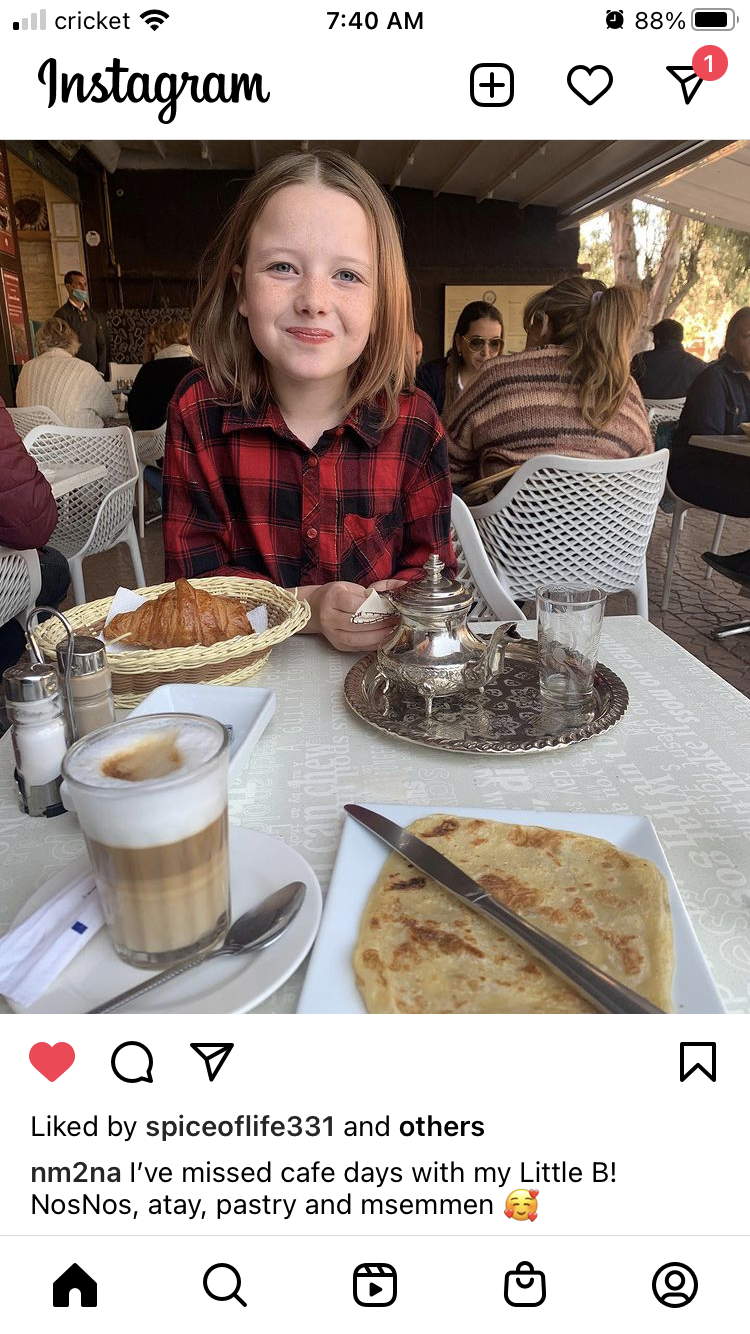
[With permission, the Instagram post below made me smile all over. That sweet girl and the amazing breakfast displayed. I miss Moroccan cafe breakfasts!!!]
God put me in the middle of boys with a mom who loved us completely and a father of whom I have little memory. His relationship with us was not one of outright abuse but neglect and eventual abandonment. When I was five, my exhausted mom divorced this never-working man. She would later explain that action as simply “just one less mouth to feed”. She soon after came back to faith in Christ and brought us with her (unchurched until then). Our dad had long since disappeared from our lives.
Fast forward to the present: married to a man who deeply loves the Lord and loves us well also. We have three adult children and two added by marriage, and now four precious grandchildren.
All our parents (including a beloved step-dad) are gone except for Dave’s exquisite praying mom.
Sandwiched between adult kids and older parents is where we are, and I’m grateful. In fact, I think about our kids and their littles (and some of you) now in this same season, just a different generation.
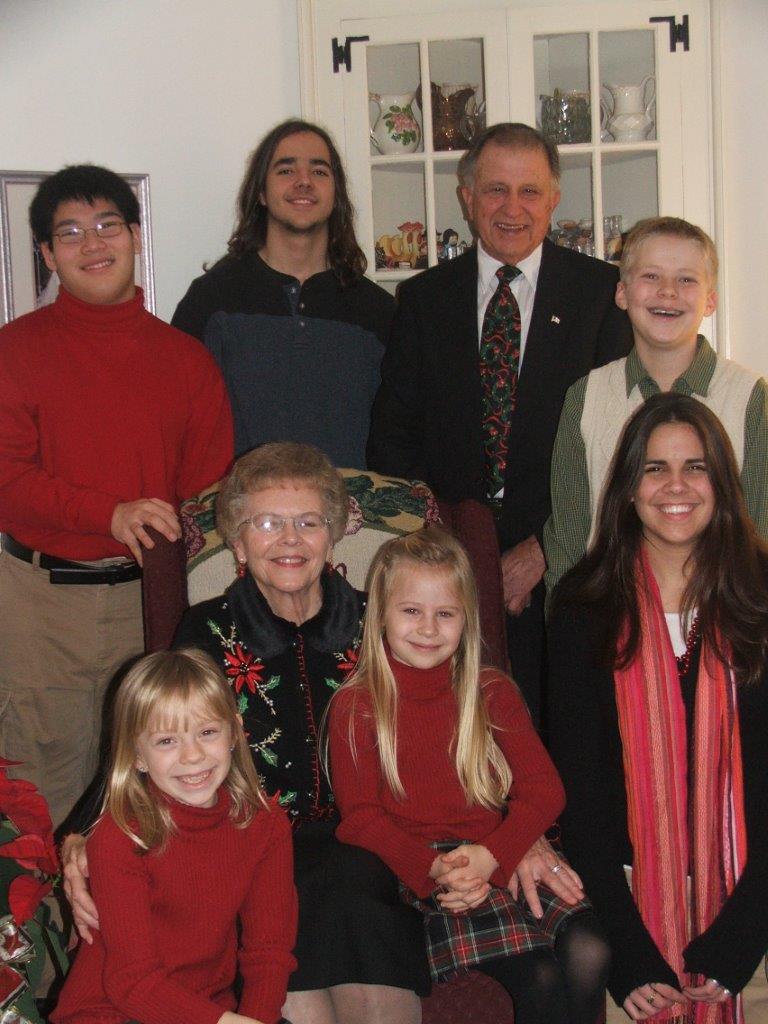
The room is delightfully crowded (not without challenge) with multiple generations – each bringing extended families of their own. So many faces and so many voices.
Every family member (and each of us in that family) has great value to God. His desire for us is to bear the fruit of His love (Galatians 5:22-23) – making it beautifully tangible to others. He is with us in this.
What if our parents made life hard for us either by trauma or, as adults, by intrusion or neglect? Or what if we find ourselves in awkward places in our adult children’s lives? These “what if’s” make us want to pull ourselves out of obedience to God, as we feel justified by our pain to distance ourselves from some in our family. The ripple effect of pulling away is wide-reaching in a family. Wider than we can imagine.
Even when relationships are healthy, the heavy responsibility of parenting young children puts its strain on our precious adult children. We feel the pull – torn between kiddos and our olders or others (sibling families, too). We also model for next generations what family looks like. How we handle the hard is quite probably how they will handle the hard.
We all choose, consciously or not, from among four ways to engage with or disengage from our families.
Embrace. We can trust God with the families He has given us. We can love them well. We forgive and seek forgiveness. We spend time with each other and attune to how God sees them. We who share adult space try to find the balance of loving each other well without our own preferences getting in the way. The older ones will only be with us for a moment. They have stories and history and lives that matter. Our younger ones also grow up and have their own families and life pressures. We extend ourselves in both directions – up and down.
Debase/Disgrace. Sometimes members of our family wrong us or another beloved family member. We “triangle” talking about them with others, without them being present. Their behavior may warrant our disdain. We are tempted to debase them privately or disgrace them publicly. However, God is not finished with them or they wouldn’t still be here. Wisdom is to take our sorrows to God and appeal for Him to help us love these hard-to-love ones. He is able. It helps to remember we may also be the ones not so easy to love. [I forget that sometimes.]
Replace. We are tempted to completely replace hard family members with friends. Adult friendships are such a gift from God. They fill in empty places in our hearts. They can actually help empower us to love and live like Jesus with these family members. Or they can usurp their place in our lives. Friends, help bolster our resolve, as we choose to “stay in the room” with family members. Let’s be that one who is not going anywhere – that picture of Christ for these.
Give Grace. This is similar to “Embrace” but with God-guided boundaries in place. The Word is full of instruction, like Colossians 3:12-14. Living between olders and youngers, I want to be that one who gives grace both ways. Speaking love often and always. Not judging or applying pressure. We can choose to honor one another, which, in turn, honors God. Giving grace includes giving grace to ourselves.
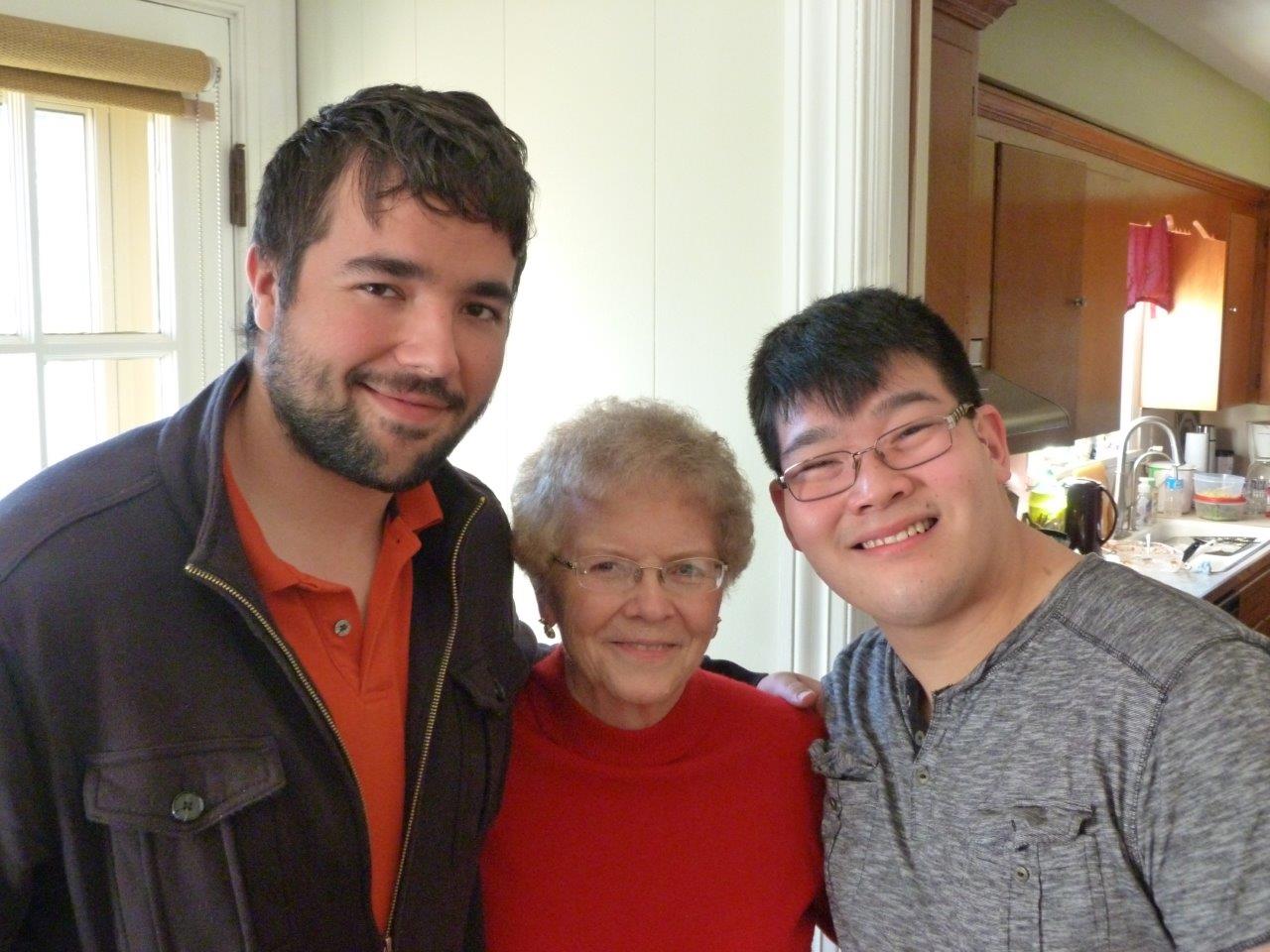
[One last pic – my mom, our youngest son, and me sandwiched between them & behind the camera – wishing I could roll back the years to when she was still here. Embrace & give grace. The years rush by.]
Hi All! Friday Faves on a Monday after a busy Friday-Sunday weekend. Go!
1) “Fly Me to the Moon” Finger-style – After Nathan posted his Squid Game medley, he was asked to do a stand-alone “Fly Me to the Moon”. Here it is! The jazzy, up-beat rendition is so fun!
2) Costly Grudges – Is there someone you struggle to like or be in their company? Would you say it’s a grudge, either originating from you or that person? Grudges rupture relationships. They have a negative impact not just on that relationship, but potentially on others as well. Not to mention, their impact on your own health.
“Happy people live longer. Improve your happiness by practicing “epistemic humility,” an intellectual virtue predicated on the idea that one can’t ever know something for sure. It’s meant to help us admit our imperfections and forgive others. Sounds too good to be true in the 2020s? All the more reason to give it a try.”
When we start to feel a grudge brewing, or we make the first strike and cause the rift with another person, the situation is greatly helped by some measure of humility. We don’t know everything about what just happened. In the midst of a quarrel, assessments are feverishly being made and the tendency is that they favor one over the other. If we treat a disagreement with humility, with the understanding that we can’t fully know what is going on with the other person in the argument, then we stand a better chance of some sort of resolution.
Worth the effort…including the perk of adding to one’s longevity.
3) Building Focus – Focus is like muscle; it has to be built through exercise. I struggle with attending issues. To come across some simple tasks to add to life and aid focus is a happy occurrence.
“We can learn to focus better, but we need to think about attention differently. It is not something we can just choose to do. We have to train the brain like a muscle. Specifically, with short bursts of daily exercises.” – Eleanor Morgan
Morgan posts some of the mental exercises that Dr. Jha prescribes, including the 5 tips below:
Pay attention to your breath, and where on your body you feel it most: direct your focus like a beam of light. Do this for three minutes a day, for a week.
Integrate this technique into everyday life – for example, brushing your teeth. If you’re thinking about your to-do list as you’re scrubbing, bring the light back. Focus on the sensations.
A lot of people report that their mind is “too busy.” Your job is not to stop it – your job is to exist with it, and to place your attention back where you want it.
Ignore “mindfulness myths”: you are not “clearing your mind.” This is an active mental workout.
There is no “blissed-out” state you are aiming to experience; in fact, the whole point is to be more present to the moment. – Eleanor Morgan
I love the idea of being present in the moment…rather than the angst of the past or the unknown of the future. Sure, we have to plan, but the present is a much-neglected experience, and it’s really the only one we truly have. Right this very minute.
4) “Don’t Leave Crumbs” – So crumbs aren’t anything we want to leave behind (unless you are the fairy tale pair, Hansel and Gretel. The wildly successful actor and author Matthew McConaughey talked about “crumbs” in a university commencement speech he gave in 2015.
“Don’t leave crumbs,” he says. “What are crumbs? The crumbs I’m talking about are the choices we make that make us have to look over our shoulder in the future….They come in the form of regret, guilt, and remorse – you leave ’em today, they will cause you more stress tomorrow, and they disallow you from creating a customized future in which you do not have to look over your shoulder.” – Matthew McConaughey
Relationally, this reminds me of an adage “Keep your accounts short”. This means that your name is safe on my lips, and that I will make a practice of refusing to think ill of you. Keeping accounts short. Leaving no uncomfortable crumbs behind us in relationships or work/play practices.
In McConaughey’s speech he also gave 5 pieces of wisdom:
Don’t fall into the entitlement trap.
Never say anything is “unbelievable”.
Seek joy, not happiness.
Define success for yourself.
Make decisions you’ll be happy about tomorrow.
He gives more rationale and commentary in the larger speech (linked above). He also used these same points in another talk, incorporating his faith as well. The messages of both seem blended in an artful (10 minute) video. Below.
5) Fall & All – It is my favorite season – Fall or autumn. I just want to close with some images of this brief and beautiful repose between Summer and Winter. It goes so fast and I am savoring it every way possible (except for adding anything pumpkin-flavored to coffee. I just can’t).
For me, Fall ushers in Christmas (American Thanksgiving sitting right in between), so I’m completely ok with the mix of all this beauty.
.
That’s the Faves for this week. Thanks so much for stopping by. You encourage me…put your own Faves in the Comments below. Until next time.
Let us draw near with a true heart in full assurance of faith…Let us hold fast the confession of our hope without wavering, for He who promised is faithful. – Hebrews 10:22a, 23
This Sunday, our worship team (at Movement Church) led us in singing one of our family’s favorite hymns: Blessed Assurance by Fanny Crosby. The lyrics are powerful and the chorus, “This is my story; this is my song”, illuminates our shared experience of Christ.
Crosby (1820-1915) was an American songwriter. In fact, she’s considered American’s “hymn queen“. She wrote the lyrics to more than 8000 hymns. Many in church today do not sing the hymns of old, but even my millennial era children know all the words to Crosby’s Blessed Assurance.
Blind all her life, Crosby’s physical eyes were dark but her spiritual vision was crystal clear. She commented often how if she’d been sighted she might have missed the depth of awareness of God and His nearness to her. [Autobiography of Fanny Crosby]
She was one who knew God – who saw Him with eyes that couldn’t see anything else. And at some point, early in her life, she became one who only had eyes for Him…and that intimacy is reflected in her hymns. God Himself is marvelously magnified in her hymns.
Our story is framed by the great creative work of God and His redemptive work of a sinful people. In the first passages in Genesis, we are introduced to our Creator God and to our original parents, Adam and Eve. They were without sin, naked and unashamed.
The length of time during which Adam and Eve lived in sinless fellowship with God and each other is not recorded in Scripture. The hymn “Blessed Assurance” could have been their song.
When tempted to sin by the Evil One (Genesis 3), the beauty of their lives was shattered. Satan, with great cunning, persuaded Eve that maybe God was holding something back from her. Maybe He wasn’t wholly good. Maybe He didn’t trust her, and then maybe (she surmised), she shouldn’t trust him.
Adam was right beside her, but seemingly did nothing.
In Genesis 3, it is recorded that they disobeyed the one thing God told them not to do. One thing. When they took of the forbidden fruit, their eyes were open (and not in a way that they could well handle). Then their nakedness became a point of shame.
They knew they had disobeyed God, and when He came near to them, they hid from Him. This would have been a good time to confess their wrong-doing to a God who had given them nothing but beauty. Yet they did not. Adam accused Eve as the cause, and Eve accused the Evil One.
I wonder how it might have gone if they had borne the responsibility of their sin before God. Would the consequences have been different.
When they ate the fruit in disobedience to God, they experienced the beginning of death as He said they would. Oh, they were still alive, but a dreadful scenario began to play out. Separation from God and a breach between Adam and Eve as well. Brokenness reigned.
God knows us. He comes to find us. We can trust Him to deal with our sin as He has told us He would. He has given us a way back to Him. We have blessed assurance of all that in Jesus. Praise His name.
Blessed assurance, Jesus is mine!
O what a foretaste of glory divine!
Heir of salvation, purchase of God,
Born of His Spirit, washed in His blood.
Refrain:
This is my story, this is my song,
Praising my Savior all the day long;
This is my story, this is my song,
Praising my Savior all the day long.
Perfect submission, perfect delight,
Visions of rapture now burst on my sight;
Angels descending, bring from above
Echoes of mercy, whispers of love.
Perfect submission, all is at rest,
I in my Savior am happy and blest;
Watching and waiting, looking above,
Filled with His goodness, lost in His love.*
Everyone talks about how the weeks fly by, and I can tell you it does not slow down…at least it hasn’t for me. The wise live like there’s no tomorrow. That’s not to say we don’t plan for the tomorrows of life but we should never presume upon them.
My Mom (pic above) had cancer for three years. A very treatable cancer. She should have been cured of it…but she wasn’t, at least on this side of Heaven she wasn’t. I miss her every single day and she’s been gone almost 20 years.
I wish we would have had more time. More time with her and our kiddos with her as well. They gained so much from her…and would have gained so much more. From her and also from my Dad who’s now in Heaven as well.
In the extended family on my mom’s side, I am now the oldest. So weird. Especially living states away from siblings and their families. In reality we find our relationships shrink down to a couple of visits a year…and in those visits just a few hours of face-to-face time.
I long for more and attempt to open that window a bit. Phone calls and an occasional card. Social media contact. They have busy lives (we all do, for sure)…and we live far apart. And so it goes.
These young ones receive well my small communications and treat me as a cherished member of their family. It means the world…because my world without my folks, my older brother, and others in that generation past…is emptier. Yours?
We have a heritage. Our parents instilled values – deep, enduring, life-transforming values. We shook up and sifted those values in our own young adult lives, and held on (and passed on) those most treasured. As children grow up, marry, and have adult friendships, values are influenced and reshaped. It is the way of generations folding one into another. Some values we may ourselves have mislaid and have been reinvigorated thanks to our children, spouses, and young friends.
All that to say…
Our parents’ impact in our lives continues. Their own love and struggles translated into their parenting and into the hard wiring of our own brains. Love and struggle. We pass it on. Fortunately, as we see in our children’s lives, some of the best of their grandparents remains in them (and us hopefully).
A much-loved 91y/o father and grandfather in our extended family died this weekend. Unexpectedly. As we grieve, we are comforted in the knowledge that he knew the Lord and was prepared for the inevitable last day of his life. We are also comforted that he knew well how much he was loved and honored, not just by his children, but by his grandchildren as well.
This is huge.
We have a moment with these old ones. These grandparents of ours. Spend it well. Draw strength and wisdom from them in these final years of their lives and ours with them. Communicate love for them. Allow yourselves the treasure of drawn-out visits with them. There is time. There won’t always be time, but there is time today.
In our little family, our kids only have one grandparent remaining. MomMom. She prays for them every single day and through the day. She is not a polite, check-the-box pray-er for them. She fearlessly storms the throne-room of the King of the universe. She wrestles against the evil in this world on their behalf and she dreams big for these grandchildren of hers. What a blessing she is! So thankful she is still in the crowded rooms of our lives.
Saving space for you, MomMom. Thank you for reflecting the beauty of generations…the beauty of God Himself. Thank you for being so real and so human. We see Jesus in you. So grateful for you and these moments with you…
[As I was preparing my own take on confessional communities, I came across Aimee Byrd‘s piece on the same, as part of her analysis of Curt Thompson‘s latest book The Soul of Desire. Byrd’s blog is a quick read and very helpful.]
Confessional communities – probably sounds like some sort of monastery life. Or a group with all kinds of touchy-feely exercises framed by unintelligible psycho-babble, right? Oh no! So much more and so much better!
I’ve been awakened to the presence and possibilities of confessional communities since recently reading of the Thompson trilogy below.
What rung intuitively right for me throughout my adult life has actually been tested and found true in something called Interpersonal Neurobiology (IPNB). No time to go deeply into this now, but, in short, our brains are wired for connection, and that is connection inside the brain/mind itself as well as with others (and God).
Confessional communities are used by Dr. Curt Thompson and others as ways to help clients get in touch with shame, trauma, fear, anxiety, etc. in the company of others struggling with some of the same. Shame, for instance, drives us to isolate from God and others. It compounds interest over time, if left to itself in our own minds, and muffles our desires and longings, as it condemns and flattens us.
“We need to create confessional communities where people are confessing the truth about their life – some of which includes confessing sin or doing things that show my brokenness. Some of it is just things that have happened to me, or things that I feel; things that I sense; things that I dream; things that I long for; things that I’m conflicted about. But I’m trying to tell the whole truth about my life – but not so that anybody can just hear it and then move on.…In confession, what I’m really looking for – in your eyes, in your body language, in your voice – is for you to be able to say, “You’re right, Curt; you were wrong to do that. You’re forgiven. I’m not leaving.” I need to know you can bear the weight of what I know to be really wrong [with me], and that you will still stay. If it’s minimized, it will continue to linger with me…Shame always requires outside help for healing. My shame needs you. If it’s a small thing, I might need only one conversation with you. But, if it’s much bigger than a very, very small thing, I’m going to need multiple conversations with multiple people, because shame will come through multiple different doors into my head when I’m left by myself…” – Curt Thompson
“…in order for me to be liberated from the shame I carry, …I need to hear that my behavior was really as bad as I think, if not worse, while simultaneously sensing that the person I am confessing to is not leaving. Shame has the effect of coaxing us into pretending that sin is not as bad as it seems; for if it really is that bad, and I have to face it, it would be too much and I fear I would be overwhelmed. When someone seeks forgiveness for the wrong they have committed, we who have been wounded must be able to acknowledge the reality of the pain inflicted if forgiveness is to be real, and if the offender’s shame is to be effectively healed.” – Curt Thompson, The Soul of Shame
Confessional communities are spelled out in Thompson’s writing, teaching (found on YouTube), and podcasts (his own and as guest on many others). The common factors include:
small group meetings over weeks or months.
willingness to tell our stories as truly as we can.
intentional leaning in to the stories of other group members such that “being known” is part of the outcome for all.
commitment to stay with each other; to “not leave the room”.
imagine beauty together – learning to explore and create beauty, to see what is good, true, and beautiful in each other’s personhoods.Photo Credit: Curt Thompson, Twitter
I have a friend who for several months was part of what I would now call a confessional community. She called it “Vegas”. Remember the adage “What happens in Vegas stays in Vegas”? It was a Bible study/house church. A group of people who committed to care for each other with masks off (not the COVID kind, but the masks we don in shame or fear). A group of people who would stay in the hard and love no matter what.
My Mom modeled this for our family. She died way too soon. My prayer is that our (birth) family will model it for each other, and my children will learn from their Dad and me how to love like this…To have the joy of being fully known and deeply loved. No matter what.
1) Shame Revisited – [Posted here previously] Author Andy Crouch has written an essay on how our culture has changed. For most of our history as a country, we have been a guilt-based culture. By that, I mean we measured ourselves and others as being “right or wrong” in our thinking, choosing to do right or wrong.
This is how we raised our children. We determined not to measure our children up against (compared with) other people, but to raise them up with a standard of right living and making right choices (for us, it was based on the Bible…on the teachings and life of Jesus). “Right” was not legalistic or moralistic; “right” was loving, kind, serving, non-judgmental.
Only in recent years has our culture been moving toward more of a shame-based view on life. Here the difference is how our character and behavior reflects on a larger community (“how others see us”). This is somewhat different from the traditional shame-honor culture. In that culture, honoring your family, country, religion was all-important. If your behavior did not comply with those values, you were shamed, even ostracized.Photo Credit: The Rise of Shame in America, Honor Shame
Today’s American culture has definitely moved away from a guilt orientation. We hear it all the time in statements like “Well, that may be OK for you.” “You have the right to believe that way.” “Don’t try to put that guilt on me.” However, our culture is not moving toward the traditional shame society, but more a shame-fame culture. Fame over honor. Social media has driven this in recent years. We want to be “seen” a certain way. In fact, a young colleague of ours once said, “It’s my job to make you look good.” I was shocked at that. One, “looking good” was not even on my radar. Either I was “good” (competent, responsible, dependable, etc) or I wasn’t. It demonstrated the culture shift and generational disconnect.
Shaming continues to happen in our culture. Children can be shamed for not behaving in ways that make their parents “look good”. Public shaming of people who don’t agree with each other can be as brutal as real ostracism. And so it goes.
I miss the guilt culture. Where, whatever your religion or political ideology, you could tell the good guys from the bad guys. Or maybe we were naive, but I hope not. Today, it seems all about how we portray ourselves…how we are received by those that matter to us.
Sigh…any thoughts? Please.
[Don’t forget to return and read Andy’s essay and David Brooks’ review of Crouch’s essay and this whole social phenomenon.]
2) Classical Guitar & Squid Game – So whether you’re a fan of Korean cinema or creepy TV shows (insert Netflix’s popular Squid Game), you’re going to love the latest arrangement by Nathan Mills at Beyond the Guitar. It’s a medley of Squid Game themes, including the classic melody “Fly Me to the Moon”. So gorgeous.
3) Classical Music in Cartoons – Recently I was reading (again in Curt Thompson book – this time the recently published The Soul of Desire. He encouraged an intentional pursuit of beauty (a right brain renewing). He mentioned Dvorak’s 9th Symphony. I’m not a big fan of classical music, although every single time I attend a symphony performance, it slays me. So…I searched out thia particular piece on YouTube and clicked on this performance of the second movement of the symphony. Profoundly beautiful. Then…oddly familiar.
The first time I ever heard this symphony was on Saturday morning cartoons. In those days (late ’50s, early ’60s), cartoons had classical music as their soundtracks! In fact, this practice goes all the way back to the cartoons of the 1930s. Ingenious.
I’m learning later in life how the beauty of music, tucked in the background, can actually enrich what the eye sees on the many screens of our childhood and now that of our children’s children.
4) Rain Brain/Left Brain I’ve written on the brain several times (as a learning layperson).
Again, thanks to Curt Thompson‘s recently published book The Soul of Desire, I’ve been learning about these two very different but inter-connected hemispheres in our brain. Thompson talks about how God made our brain for connection, but with trauma and shame, the two hemispheres become less integrated. Neural pathways are hijacked. [Talking very simply here because that’s about the level of my understanding.]
He delineates the two in many ways, but one that really spoke to me was how the right brain (the seat of our emotions and the space where we create and appreciate beauty) is very much focused on “here and with”. Being in the moment and preferably with others we care about. The left brain (our center for reasoning, analysis, and logic) favors more a “separate from” state. Standing back, evaluating, referring to the past and imagining the future.
Trauma and shame steal the easy flow of having fear and anxiety that is checked by rational reasoning. We can become stuck. Isolated from the healthy thinking we were made to have…and from each other. Thompson gives some excellent helps in his book on how to strengthen pathways between each side of the brain. Much of this is in community. Also upping our intentional appreciation of what is beautiful around us. Left brain activity is rewarded in our culture, to the detriment of right brain activity. We need both…and the beauty and community that comes with such integration.
5) Beach Food– A long weekend in Virginia Beach this past week was lovely. Much-needed. Rain and a gusty wind kept us from as much walking as we would have liked, but it did not deter us from eating from favorite restaurants. Every year, we change that list up a bit. 19th Street Italian Bistro has been our #1 go-to restaurant every year and it is not budging from that position of honor.
That’s it for this week. Hope you’re able to get some time with those you love in the days ahead. Never take time together for granted. Life is such a gift. Thanks for stopping by. It means a lot.
Late again. That kind of week. Here’s the rapid but not to miss runthrough.
1) Beyond the Guitar – If you love Star Wars, you will love Nathan‘s interpretation of John Williams‘ Across the Stars. Actually…whether you love Star Wars or not, this is achingly beautiful.
Then there is his piece later this week, posting his arrangement of the theme of Genshin Impact video game. This was actually sponsored by the game creators. I am sure they are pleased. Another really gorgeous treatment.
2) Senses and Memories – One of the appealing features of Nathan’s music is the nostalgia attached to much of it. It takes us back. To a scene from a movie, a TV show we shared with family, a video game of one’s childhood. Sound is powerfully attached to memory. We have all had those experiences or have read/watched the positive impact of beloved music on critically ill patients, or those suffering with brain injury or Alzheimer’s. Memory is stirred.
Where we live right now, we can hear the sound of planes, trains, and interstate traffic. The sound is just in the background but it is oftentimes powerful. Looking up at a commercial jet going over takes me back to being new in Cairo, Egypt, walking toward a taxi stand. I wondered at the destination of the flight and in my stress as a newbie to to language and culture, that sound (and sight) comforted me somehow.
The sound of a train takes me all the way back to Sfax, Tunisia, when we lived by a train track. The train whistles marked time for us through the day.Photo Credit: Pixabay
Farther still, the sound of a train took me back to childhood, as we waited for it to pass, and looking between the cars to my friend Evelyn’s house. Her family was only there briefly, but I loved her. She was from a different era. Wore hand-me-down dresses to middle school every day. Old everything. Poor. Stretched by poverty, but she was elegant and full of dignity. Their large, spooky old house peeked between the passing train cars, and I wondered at their lives inside that house. They were gone too soon…but the memory of her remains…with the sound of trains.
We know when Fall is here, because all of a sudden, it is all things pumpkin spice. Flavored coffee, pies, and decor – all pumpkiny.Photo Credit: Pexels – Valeriia Miller
Comment below what are some of your favorite sensory memories.
3) Parenting Well – Our grandchildren (six years old and younger) have big emotions. Then they act on those big emotions. Whining, crying, hitting, screaming. This is not who these precious children are, but they are trying to communicate what is going on deep inside. How we respond to them – as parents and other significant (to them) adults – is huge!
Emotions relate to desire. This topic hit me hard when I saw the poem below on a friend’s Facebook page.
Our responses to our children (in normal developmental situations as well as in distressed situations) communicate far more than we think. We have recurring opportunities to connect with our children in ways that help them grow into emotionally healthy and relationally mature adults.
Lately I’ve been learning more about this whole parenting thing from two brilliant psychiatrists Dr. Dan Siegel and Dr. Curt Thompson.
Dr. Thompson has written a trilogy of powerful, ground-breaking books – Anatomy of the Soul, The Soul of Shame, and The Soul of Desire. He describes these books as exploring “how neuroscience relates to the ways we experience relationships, deep emotions like shame and joy and especially our own stories — and how we can process our longings and desire for spiritual connection with God and each other to live more fully integrated, connected lives.”
[I highly recommend the above books, and not just for parents.]
Thompson refers often to Dr. Siegel’s “4 S’s of Attachment-Based Parenting“. Those S’s relate to what we communicate to our children even as infants but throughout life. We want them to know they are “safe and seen” and to experience being “soothed and secure”. This is especially poignant when we introduce the word “No” into the great adventure of their lives. No…and discipline as they get bigger.
I’ll be writing about this more in the days ahead. For now, check out the “refrigerator sheet” below with Siegel’s 4 S’s, referencing his book The Power of Showing Up.
4) Fishing Perks – My sweet husband is a fisherman. He is a “catch-and-release” guy, fishing the rivers and lakes of Virginia. This joy started for him as a boy fishing with his dad. Then it grew during our years in Tennessee. Finally now, after years of living in North African cities, just on the edge of the Sahara. There are so many perks to this avocation. Some of which really came to mind on a recent adventure. [I realize this is a “duh” for many, but for me, it was a great revelation.]
The Buildup – The day of fishing is preceded by all the planning and preparation. Weather checks, getting the equipment ready, fueling the boat, provisioning for the day. It makes for a happy evening of anticipation…and to bed early.
The Thrill of the Hunt – or Thrill of the Catch – You hope not to get skunked, but the marking and revisiting sites where fish were caught once before, the thrill of the pull on the line, and finally the fish pulled into the boat. Fun stuff!
Solitude – the single chair on this old dock says it all. The quiet of being on the water in the woods. So refreshing. So invigorating.
Beauty – Everywhere you look. Water, trees, wildlife. Sun and cloud playing on the water. Changing colors as the hours pass.
Company [I’m glad Dave has fishing buddies who share the experience with him. I fish rarely but always gain from the time with him, in nature.]
5) Attention Alcohol – Author attorneyJustin Whitmel Earley pointed to an article by journalist Derek Thompson‘s article on social media and its use like that of alcohol.
Earley gives these reasons below for considering limiting or taking sabbath fasts from social media:
THREE REASONS SOCIAL MEDIA IS LIKE ALCOHOL:
It is Addictive. This means you are not as in control as you think you are. Remember, there are 1,000 people on the other side of this screen paid inordinate amounts of money to get you to keep scrolling.
It Changes Your Mental Health. This means it is not neutral. Your interactions with yourself, your family, and your friends are changed because of what you do with social media. You must recognize that to use it appropriately.
Someone Needs to Teach You How to Use It. This is one of the hardest things about our cultural moment. Because this technology is so new, none of us had parents to teach us how to use it, set boundaries, and practice moderation. But that doesn’t mean we can’t start to learn now, teach our kids, and help our friends.
That’s the 5 for this week. How about you? Please enrich my life and that of other readers with your favorite finds. Comment below. Thanks always for stopping by.
Bonuses:
Quote of the Week: “Beauty is…that which draws our attention with wonder and welcome and that ultimately leads us to worship – not worship of the object itself but worship of God in gratitude, humility, and joy.” – Curt Thompson, The Soul of Desire

 Photo Credit: Heartlight
 Photo Credit: Heartlight
 Photo Credit: Heartlight