Category Archives: Work Culture

Monday Morning Moment – Principles of Execution – and Teams That Get It Done

Photo Credit: USAFA

Two workplace scenarios. The first is when either the manager or the team is super excited about a goal, and action items are determined and given to just the right team member and calendared for quick turnaround. Photo Credit: JSC

The second scenario is when either the manager or the team is super excited about a goal, then one or the other digs in their heels. The meeting ends with no clear shared responsibilities, no movement forward, no hope of change.Photo Credit: GangplankHQ, Flickr

Sigh…all the most excellent strategic planning can take place inside a conference room…and without execution. Essentially, nothing happened there.

I’ve had both kinds of team experiences and want to focus on the former one above. Talk about high employee morale when a group of colleagues operate as a finely tuned machine and the yield is high-quality productivity.

FranklinCovey is a leadership consulting firm. I discovered this firm through the book The 4 Disciplines of Execution authored by leaders in the firm.

The 4 Disciplines of Execution: Achieving Your Wildly Important Goals is written by Sean Covey, Chris McChesney, and Jim Huling.

When you go to the website, you actually are able to immediately grow in your understanding of how to influence execution in your company. The video below is an incredible teaching tool – 17 minutes of powerful content on execution:

In brief, their 4 disciplines of execution are:

  1. Focus on the wildly important goals (WIGs). The day-to-day operations always stand against those game-changer goals. Determine to be unyielding on the highest-priority goals (1-3 maximum).
  2. Act on the Lead Measure. [New terminology for me.] The lag measure is the goal itself. The lead measure is what you can influence to accomplish the lag measure. Lead measures are the leverage used to get to the lag measure (goal). Lead measures are “predictive and influenceable“.
  3. Create a compelling scoreboard. I appreciate the wisdom of this (Chris McChesney describes it so well in video above). The scoreboard is not for the manager. It’s all about the players at this juncture, and it should feel like a game. [Actually an element of fun and energy incorporated. What a concept!] The scoreboard would be simple, highly visible and the players (employees) should be able to tell right away from the scoreboard whether they are winning or losing toward meeting the goal.
  4. Create a cadence of accountability. Everybody is going to love this! 20-minute meetings are calendared every week, at the same time. All the people in the room have “skin in the game”.  This meeting is sharply focused on 3 things (related to the lead measures only): each person reports on the week before; reviews/updates the scoreboard; makes commitments for coming week. That’s it! How streamlined and forward-moving, is that?!

[ 4 points taken from the video above: 4 Disciplines of Execution]

Many years ago, I was on a work team that was given the responsibility and liberty to determine what else was needed in the formation of a comprehensive cancer center. We had many places already in place – excellent medical and nursing care, an engaged community, and a charitable foundation to provide extra resources for taking us to a state-of-the-art cancer center.

3 nurses – Kay, Kathy, and I – had the question to answer of “Why Else?” What else did we need? We worked together on the planning and execution of comprehensive support services and education. Each of us brought our own giftings – I had vision and ideas, Kay was an influential nurse manager, and Kathy was detail-oriented and had a gift for taking a project to completion. Some of the services that came out of those problem-solving sessions are still embedded deeply into the DNA of that cancer center today.

Ray Dalio, founder of Bridgewater Associates, presented some of his business principles in a TED Talk entitled “How to Build a Company Where the Best Ideas Win”.

Start at 6:17 minutes in (if you don’t want story and context), and you will hear his wisdom about the importance of radical truthfulness and radical transparency.

“One of the greatest tragedies of mankind: People arrogantly, naively holding opinions in their minds that are wrong…and acting on them, and not putting them out there to stress-test them, and that’s a tragedy.” Ray Dalio

“Collective decision-making is so much better than individual decision-making if it’s done well.” – Ray Dalio

Kathy, Kay, and I had that sort of team relationship – radical truthfulness and radical transparency.

Whether you are part of a team, or an independent entrepreneur, there are excellent principles here.

Finally, in Gerald Leonard‘s piece on Steve Jobs‘ principles of execution, Leonard listed 9 nuggets of wisdom:

1) Do what you love for a living.

2) Build partnerships that will turn into lifelong friendships.

3) Attend college to get an education not just a degree.

4) Join your local industry associations.

5) Experiencing other cultures will open your eyes to new worlds.

6) Find others who have complementary strengths and recruit them.

7) Don’t be afraid to recruit others that are stronger than you.

8) Practice CANI – Continuous and Never-Ending Improvement.

9) When one door closes, another will open if you look for it.

Principles of Execution 014: Insights from Steve Jobs on Visionary Leadership – Gerald Leonard

If you want to take an honest and critical look at your team or company’s success in operation, you have great helps here – in the FranklinCovey’s counsel, in Ray Dalio’s discoveries and in the philosophies of business leaders like Steve Jobs. I’d also like to add anything on teaming by Patrick Lencioni.

I would love to hear how you get to execution…because until you do, it’s just meetings upon meetings.

Please add in Comments below any other resources that have proved helpful to you in getting to effective execution with the added impact of high morale in getting to goal.

Get Better: 15 Proven Practices to Build Effective Relationships at Work – Todd Davis, FranklinCovey

The 4 Disciplines of Execution: Achieving Your Wildly Important Goals – Chris McChesney, Sean Covey, and Jim Huling

YouTube Video – The 4 Disciplines of Execution in a Nutshell

Patrick Lencioni – 3 Indispensible Virtues that Make Teams Successful – Dan Schwabel

Having a Team Scoreboard – The Table Group

Building a Healthy Work Culture – in a Season of Change, Uncertainty, and Dips in Morale – Deb Mills Writer

Monday Morning Moment – Social Capital – an Invaluable Resource We Can Develop – and a Tool to Help – Deb Mills Writer

Monday Morning Moment – Taking the Social Capital Challenge – 5 Steps Forward – Deb Mills Writer

Monday Morning Moment – True Humility in Leadership – So Not Cliché – Deb Mills Writer

The Five Characteristics of a Highly Functional Team – Dennis Hopper

YouTube Video – 4 Disciplines of Execution – Gwinnett Medical Center – This was personally very satisfying and encouraging for me. My dad was a patient at this medical center during the time when there were banners flying everywhere about it being one of the top medical centers in the country. At the same time, we family members stayed with him around the clock, because nurses did not come when we called, nor were other services offered with any communication that my dad or we mattered to staff. To see that they also came to recognize this was a problem and took effective steps to correct it was exciting.

5 Friday Faves – Community Helpers, Leadership Scoreboard, Better Together Cultures, Networks, and Bread

September 1st and it feels like Fall. This time of year always stirs the possibility of new beginnings. It’s my favorite time of the year.

Here are this week’s faves:

1) Community Helpers: We are currently in the long aftermath of flooding in the US and other parts of the world. Photo Credit: JSC Features, NASA

What a wonder to see neighbors helping neighbors…even among the poorest of the poor.  Rachel Stern describes the impact of this beautiful phenomenon below:

Natalie Simpson, chair of the Department of Operations Management and Strategy in the School of Management, says there really is no good evacuation plan when it comes to major disasters in densely populated areas. Simpson, who studies on-the-ground first-response and disaster preparedness, says the reality is that when a disaster gets beyond a certain size, there will never be enough professional help. It will take everybody…

“We’ve already gotten remarkably stronger at channeling people’s individual efforts to support the larger response,” Simpson says. “This is very evident right now as we watch fleets of boats continue to save people in Houston.

“When it comes to disaster preparedness, we are experiencing a dawning of awareness. Everyone must solve large problems together. The key is motivating and empowering everybody to feel confident enough to start solving what little part of this big, messy thing they can on their own.”

Neighbor Helping Neighbor Is Best Practice in Large Disasters – Rachel Stern

YouTube Video – Fred Rogers – Look For the Helpers

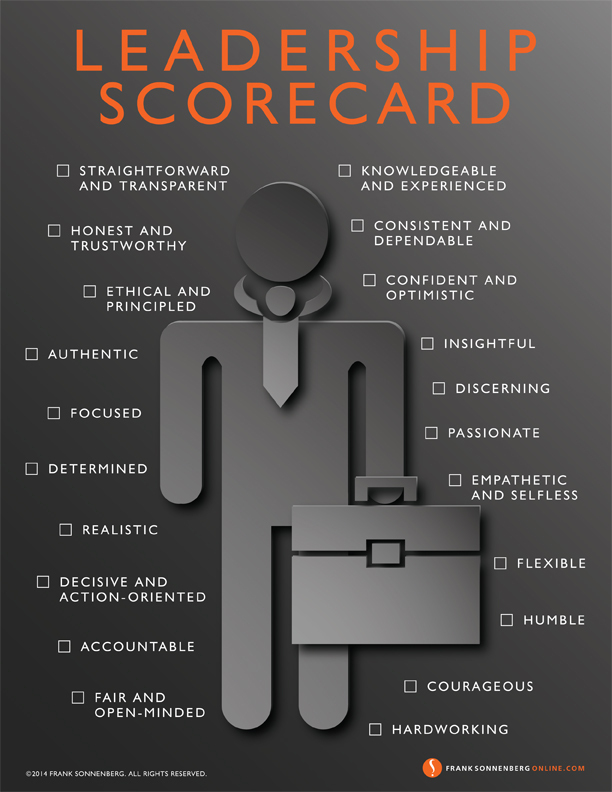
2) Leadership Scorecard – If we’re honest, we can be pretty analytical and judgmental when it comes to our leaders’ character and performance. I’m no fan of scorecards, but Frank Sonnenberg has developed one that we would be wise to use. Not just on our leaders – absolutely not – but on ourselves as well.Photo Credit:  Frank Sonnenberg

The only leader I know who could ace this scorecard would be Jesus. However, it shows areas we might have blind spots in and in Sonnenberg’s article he goes into detail about the various components of being an effective emotionally intelligent leader. Worth a look, for sure. Any of these areas you struggle in? Please also share (in the Comments below) any examples of leaders you have experienced who demonstrate this sort of excellence.

Leadership Scorecard – Frank Sonnenberg – Linkedin

3) Better Together Cultures – When we lived in North Africa, I had the privilege of working with a great group of parents who founded a parent-teacher organization for our children’s school. It was a relatively new concept there. Well, in a positive sense. We determined to keep it from being an arena for airing complaints but rather a movement for good in our school. For families, staff, and the community around us. We named our organization Better Together.I think I learned at an early age, and beginning with my mom, that so much more can be accomplished in an environment of inclusion where people genuinely care for and trust each other. Serving goes deeper and celebrating comes naturally. Nurturing a culture of better together at work or in any organization is worth the effort and the risk.

[Search inside DebMillswriter for “Better Together” and you’ll see my fascination and concern/hopefulness in the topic.]

4) Networks – A lot of my faves this week seem wrapped around groups of people. Organizational psychologist, and all-round interesting guy, Adam Grant has posted an encouraging piece on networks – To Build a Great Network You Don’t Have to Be a Great Networker.

Photo Credit: Adam Grant

Here is Grant’s wisdom on the subject:

“…many people view networking as the path to accomplishment, forgetting that accomplishments make it easier to network.

When you create something exciting, you don’t have to rely on charisma or name-drop mutual acquaintances to get your foot in the door. The door opens to you. Sponsors, mentors, investors, and collaborators gravitate toward people who demonstrate potential, and a portfolio is a stronger signal than a promise.

It’s possible to develop a network by becoming the kind of person who never eats alone, who wins friends and influences people. But introverts rejoice: there’s another way. You can become the kind of person who invests time in doing excellent work and sharing your knowledge with others.Adam Grant

He has much more to say on networks along with fascinating stories. Read more here.

5) Bread – Can we just take a minute to sing the praises of bread? There may be some countries in the world where bread isn’t a staple, but I’m glad to have lived places where it is. In fact, everywhere I have ever been, it is a staple. From Southern biscuits (best eaten with gravy) and cornbread, Mexican corn tortillas, Egyptian baladi pocket bread, Ethiopian sour-dough injera, British seeded breads, French croissants and baguettes,  Tunisian flatbread, and Moroccan khboz and msemen…and I could go on. Don’t you just love the pull and chew in bread.

Ironically, bread isn’t a part of my diet currently…BUT it’s a part of every food memory I have associated with happy times with family and friends, here and overseas. So…a new grocery store with a European bakery opened here recently. Lidl‘s bread loveliness is with us. When bread comes back into my diet, it will come from there…or my daughter’s bread machine.

Those are my Friday Faves. How about yours? It’s raining out there in our “neck of the woods”. Be safe and be kind to each other…we never know what is really going on in each other’s lives.

Bonuses:

The Impact of Hurricane Harvey Compared to Your State – Twenty-Two Words

The Largest Religious Groups in Every County Across the U.S. – DidYouKnowFacts?

Monday Morning Moment – Eating Together – at Work, at Home, Across Racial Divides

Photo Credit: President’s Choice, YouTube Video

Eating dinner together was just normal when I grew up. Maybe we all couldn’t be there, with differing work schedules, school sports, and the like. Whoever was home, though, got a call to the dinner table. Our family was a rowdy bunch and our conversation could erupt into loud disagreements on any number of things. Still, we were together. We were family. It kept us bonded in many ways.

Eating together…crowding adults and their families around a long table…is still a delightful, much-anticipated tradition…at least for this mama. That delight of eating together spreads also to friends and to the workplace.

This weekend, I caught a YouTube video that really touched my heart. Especially given the events of this weekend in our state where a racist political rally turned deadly. Not that this little video produced by a major food company in Canada could help bring meaning to this violent weekend…but there’s a message.

YouTube Video – #EatTogether – President’s Choice

In a time when we have the capability of being more connected with each other than ever, we can remain disconnected. Not seeing, not hearing, unaware of those around us or how we might engage with each other.

Eating Together as Co-Workers

In the busiest of days, there is nothing more delightful than breaking from work to eat with colleagues…says the extroverted, “loves people” person. Early in my career, working in a huge inner city hospital in Atlanta, Georgia, it was an effort to get off the patient floor down to the cafeteria. My co-workers used to tease me that once we got our trays and settled at a table, I would always sigh…like, out loud. It was just a relief to stop working for a few minutes…with good food to eat and surrounded with people I both liked and respected.Debbie & Grady nurse buddy

Susannah Snider lists three reasons why we should be eating lunch with our co-workers:

  1. It boosts production.
  2. It’s a networking tool.
  3. It makes you happier.

3 Reasons to Eat Lunch with Your Co-workers – Susannah Snider

This was just one of many articles (both scholarly and popular press) related to the benefit of folks who work together eating together.

Eating Together as Family

People are so very busy these days that eating “on the run” is more the usual than not. Or everyone, exhausted, just eating in their various spaces around the house – in front of the TV or other screen. There is something almost magical in the habit of eating around a table. It is the same reason why couples with children need date nights – just getting across a table from each other does wonders for the conversations neglected in the wear and tear of parenting.

Cody Delistraty posts on the broad positive ramifications of families who eat together and what happens when they don’t. Eating together as a family can actually decrease addictive tendencies, enhance academic performance, and build closeness and community – with the family but also beyond the family.

The Importance of Eating Together – Cody Delistraty

Eating Together as a Family Has Multiple Benefits – Timi Gustafson

Eating Together Across Racial Divides

“Have you ever had a person of another race in your home for dinner?” Two US senators, Tim Scott and James Lankford, have been asking this question to constituents for some time now. They were not surprised at how segregated the American dinner table was.

Out of this, they developed something they call Solution Sundays…where they encourage people to invite persons of another race to their homes to share a meal.Photo Credit: CNN

“For me, it’s hard to hate what you know,” Scott said. “And it’s just so simple. It’s hard to hate what you know.”

I want to be successful at this. Sure, I have friends, neighbors, and colleagues who are of a different race, but somehow I’m intimidated to mess with their Sundays. Why is that?!

Even Martin Luther King, Jr. talked about “11:00 on Sunday morning is one of the most segregated hours if not the most segregated hour in Christian America”. Maybe we could shake up Sunday dinner.

For some of you, this is “so yesterday”. For co-workers and family, we all are going all kinds of different directions. Slowing it down to have a meal together may take work and habit change…so worth it! As for crossing racial divides – maybe that is no issue for you. For example, we have family of “different races” so it’s part of our DNA. Still when something like this past weekend’s violence happens here, I think of where we can start to mend. Protest…sure. Pray…absolutely…and maybe also just lean in, across the table, over some food we both enjoy…and eat together.

Healing Race Relations Over Dinner – CNN –

The Lessons of an Inner City Hospital – God Loves Us All the Same – DebMillsWriter

President’s Choice – #EatTogether Campaign – #150Canada

PC Gets the Country to #EatTogether

TEDx Talk – The Importance of Eating Together – Karen Hickson-Smith

Monday Morning Moment – Are You Listening? Or Are You Silencing Voices?

Photo Credit: Flickr

Let’s start on the grandest scale possible. Even the God of the universe invites us to speak to Him…and He listens and actually hears us.

Something to aim for with each other…on the smallest scale of our lives.

We love when little babies recognize our voices as attached to people they have grown to know and love in their short lives. Then they discover their own voices, and we celebrate that milestone. That magical power of making their observations and requests understood must be life-changing for them…and for us.

At some point, years down the road, we begin to tune out a little…and we model it for them, farther down the road.

This “tuning out” is why courses in active listening abound in universities, and not just in the communications department.

In our adult lives, of work and community, we are wise to take a measured look, from time to time, at how we listen and whether we silence the voices around us by our behavior.

Leadership coach Kate Nasser posted a bold article on the workplace scenario of silencing employees.

She doesn’t hold back on leaders’ responsibility in this, but I view this as applicable to any part of our community, whether it be marriage, family, friendship, or religious/political affiliation. A brief summary of Nasser’s 15-point checklist follows:

  1.  Look unapproachable.
  2.  Have a thin skin and make it about you.
  3.  Do not ask for input.
  4.  Bully and berate others or their ideas.
  5.  Speak only to those who make you comfortable.
  6.  Ignore ones who raise issues.
  7. Create a hierarchy of those you speak with and those you don’t.
  8.  Claim you want innovation but demand proof during the creative phase.
  9.  Take credit for others’ ideas.
  10.   Accuse and blame in public.
  11.   Nit-pick on details when ideas are first offered.
  12.   Change the subject without acknowledging what was said.
  13.   Pit one person against another.
  14.   Override every decision others make.
  15.   Lead chaotically with constant exaggerations and untruths.

Insidious Leadership: Are You Silencing Employees? – Kate Nasser

Whew! That was rough, huh? None of us are probably characterized by all those points. However, did any of them smart a little? We don’t want to be that kind of person…probably none of us…that kind of person who, by our behavior and attitude, silence another person’s voice. We all lose when that happens.

Dealing with our realities helps us to listen actively. Our realities may include over-work, weighty responsibility, and seemingly inadequate freedom or resources to make change. Don’t we want to be active listeners…to gain from those around us and empower them to be successful? We can become effective listeners again.

YouTube Video – The Power of Listening – William Ury – TEDxSanDiego

We may think we are good listeners. We make eye contact. We “give face” to those around us. However…hear this. Do others’ ideas make us tired? Do we have a strong grip on “the way it is” and have no intention on giving way…no matter how well we think we’re listening. Author and mediator William Ury (see TED Talk above) speaks of true communication through “a listening revolution”. First we listen to ourselves to discover our own desires, dreads, and dreams. Then we learn how to listen with understanding and with the determination of acting on what we hear. Actually, listening, with the goal of understanding, is the first action we take.

“Give them our full attention and listen to the human being behind the words, because one of the biggest gifts we can give anyone is the gift of being heard.”William Ury

Photo Credit: Flickr

I’ve had more experiences than usual with doctors over this past year. As we all know, they have the reputation for not being “good listeners”, for not “giving voice”. I can tell you the ones I hope not to see again or the ones who are visibly backing out the door before my questions have been answered. There are still others who “give face” – eye contact and a seemingly engaged look (from years of practice maybe) – who have clearly still moved on to the next patient, even while still standing by my bed.

Then…there is the one or two – those beloved physicians – who actually sit by us, in the exam or hospital room. They treat us as if we’re the only patient they have that day. We talk together, and I know that we are partners in keeping me healthy. Right? Partners – not the greater and the lesser actors in a scene, but partners.

Kudos to you out there – physicians, bosses, colleagues, spouses, parents, children – who don’t just have the look of listening or communicate some sort of nuanced “I hear you”. Kudos to you who really listen and engage with the other.

We are not all just a set of ideas or opinions. Real people bring a voice to the table. When we communicate that we are too busy or too important or too settled already on a decision to consider one more voice, we speak volumes about our own character…and eventually the product or service we have to offer.

[I’m preaching to myself here…reminded of the God of the universe who takes the time and action to assure us that we will be heard… when we speak to Him. Sometimes, I cry out to this small world of mine, demanding to be heard…when there is a place, a Person, who always welcomes me. Please forgive my waxing a bit philosophical or theological. For me, it’s a good place to start in 1) sorting out what exactly I want to voice, and 2) practicing listening to another with the same honor/respect I wish for myself.]

We are not just the ones who silence voices or the ones who feel we are not being heard. We can be both, and usually are.

Listening, determined to understand, brings us closer to both leading well and following better. Something to think about on this Monday morning.

Don’t miss the links below. Really excellent reads on how we silence one another’s voices and how to we turn it around.

Insidious Leadership: Are You Silencing Employees? – Kate Nasser

Can Your Employees Really Speak Freely? – James R. Detert & Ethan R. Burris – Harvard Business Review

6 Reasons Employees Must Speak Up to Thrive at Work – Glenn Llopis

7 Tips for Wooing Your Employees Into Loving Their Jobs, Again – Matt Straz

Monday Morning Moment – Ignoring in the Workplace and the Powerful Practice of Noticing – DebMillsWriter

5 Friday Faves – Beyond the Guitar’s Latest, Designed ‘We’, Tour de France, Franklin Engraving, and Mission BBQ

Another Friday has gloriously arrived. Before we head off our computer and into the weekend’s activities (great idea to do life unplugged for a couple of days if you can…me, not so much), here are my favorite finds for this week.

1) Beyond the Guitar’s Latest – Another TV season of the series Game of Thrones debuts this weekend. We’re not HBO subscribers but also wouldn’t watch it because of the graphic violence and explicit sex. Still, the music apparently is epic. Nathan Mills, at Beyond the Guitar, does justice, on his one classical guitar, to Photo Credit: YouTube, BeyondtheGuitar

this gorgeous orchestral theme song. Watch Beyond the Guitar’s arrangement here or below:

Game of Thrones – What Parents Need to Know – Common Sense Media

Beyond the Guitar – Patreon

2) Designed ‘We’ – One of my husband’s core values is “We is better than me.” I had not seen the news report about the Air Canada flight that almost landed on a crowded taxiway this past week. When Dave told me about it, he talked about how in air traffic control, there is actually a “designed ‘We'”.Photo Credit: Wikimedia Commons

With the Air Canada flight, the controller instructed the pilot to land on one runway, but he descended to the taxiway right beside where he was instructed to land. I would have thought the controller would have seen the pilot was coming in wrong, but, before it was too late “an unidentified voice”  (on the audio released) interjected. He saw the error and the pilot was able to correct before plowing through four other planes lined up on the taxiway. Whew!

The skill of pilot and copilot and their working in team relieves all of us who travel often by air. Also crucial is the role of the air traffic controller and team is crucial for our safety in the air and on airport take-offs and landings.  The film Sully demonstrated this real life situation masterfully…the critical importance of team, or many eyes on a situation, and fast thinking and execution.

Designed redundancy (the American use of that word) is worked into the air control team structure. News reports allude to the possibility the controller was working alone (we will know more after the investigation). Still this sort of team makeup is vital in situations where there can be no tolerance for error. We rarely ever hear of a crash based on air traffic control error because of such a built-in team fail-safe.

Something to think about, not just in safety situations, but in any workplace where the outcomes really matter. To establish a “designed ‘we’ and never just a me”.

CNN articleAir Canada Plane Nearly Lands on a Crowded Taxiway at San Francisco Airport (by

SFO Near-Miss – Matthias Gafni

Teamwork in Air Traffic Control – SKYbrary

3) Tour de France – You are either a fan or not so much. Even with the years of doping scandals, this race remains an annual summer favorite in our home. In fact, the only reason we have cable TV is the easy access to NFL Football and this bike race. The Tour de France is an amazing spectacle of beauty, skill, endurance, and fan support.Photo Credit: NBCSN, Screen Shot

This year’s race, a week in and a week to go, has been full of drama and incredible finishes. Amazing bikers abound every year While the current favorite is Christopher Froome,  several this year have a chance to wear the Yellow Jersey and win it all. Yesterday’s Stage 12 is an example of how this year’s Tour is going. Here are highlights:

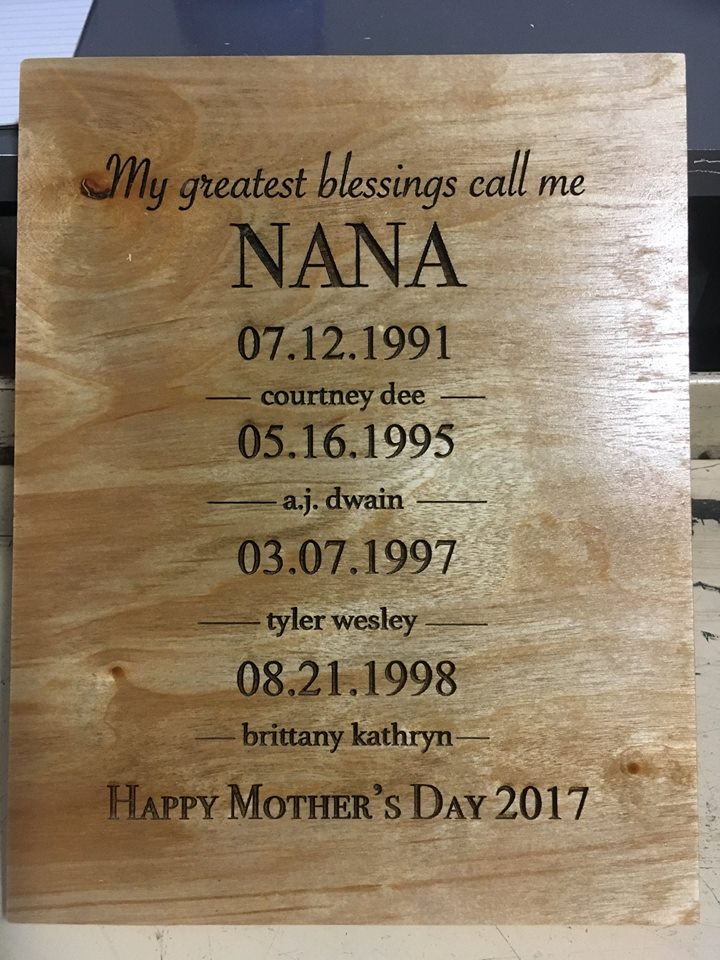
4) Franklin Engraving – Just a shout-out to a artist in Virginia. Katie Franklin is an engraver and has now incorporated as a small business. Franklin Engraving. She pours her energy, intelligence, and creativity into beautiful and personal works of art made to order. Check out her Facebook page to order. Her webpage will be up shortly.

Photo Credit: Franklin Engraving

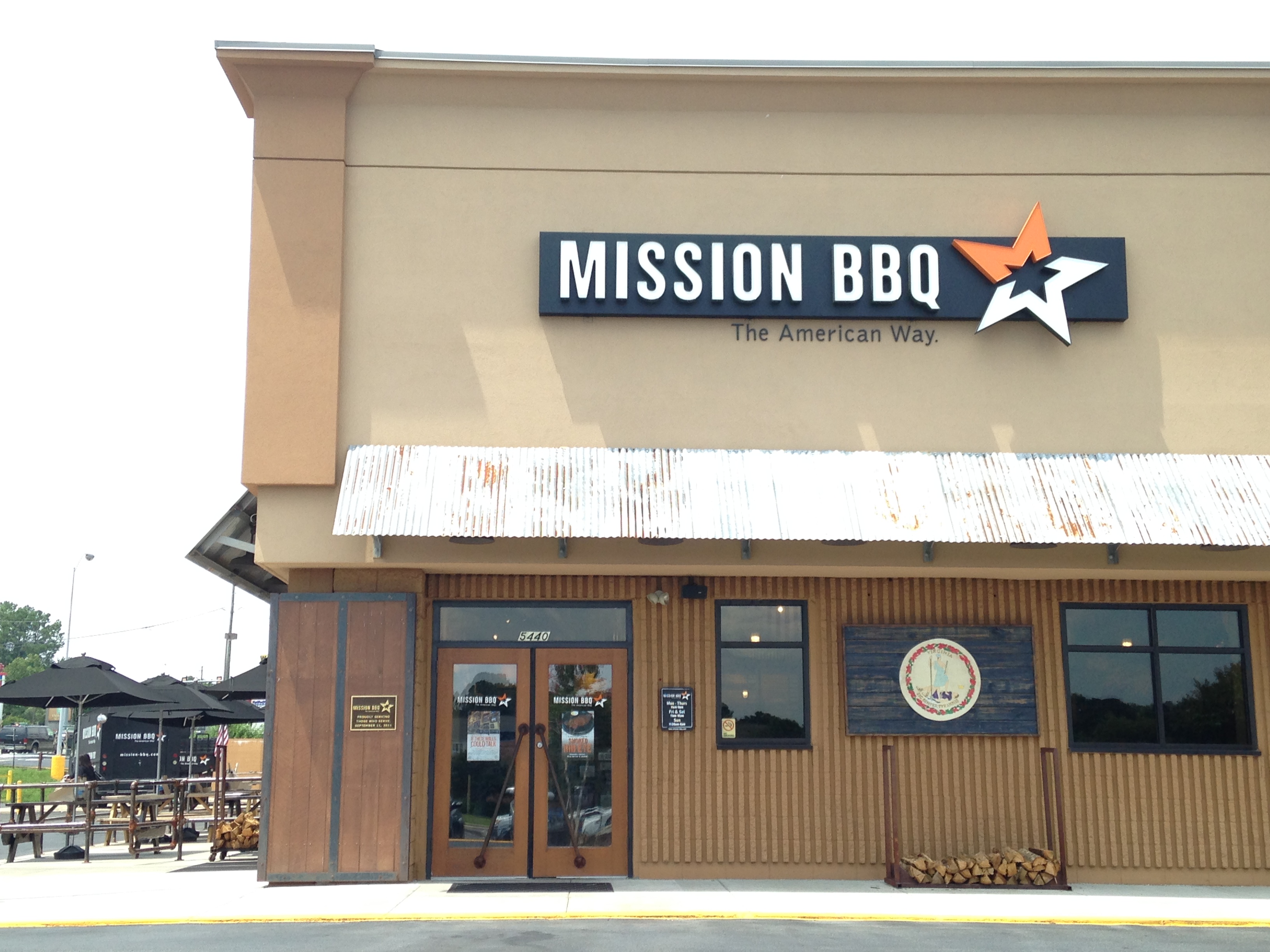
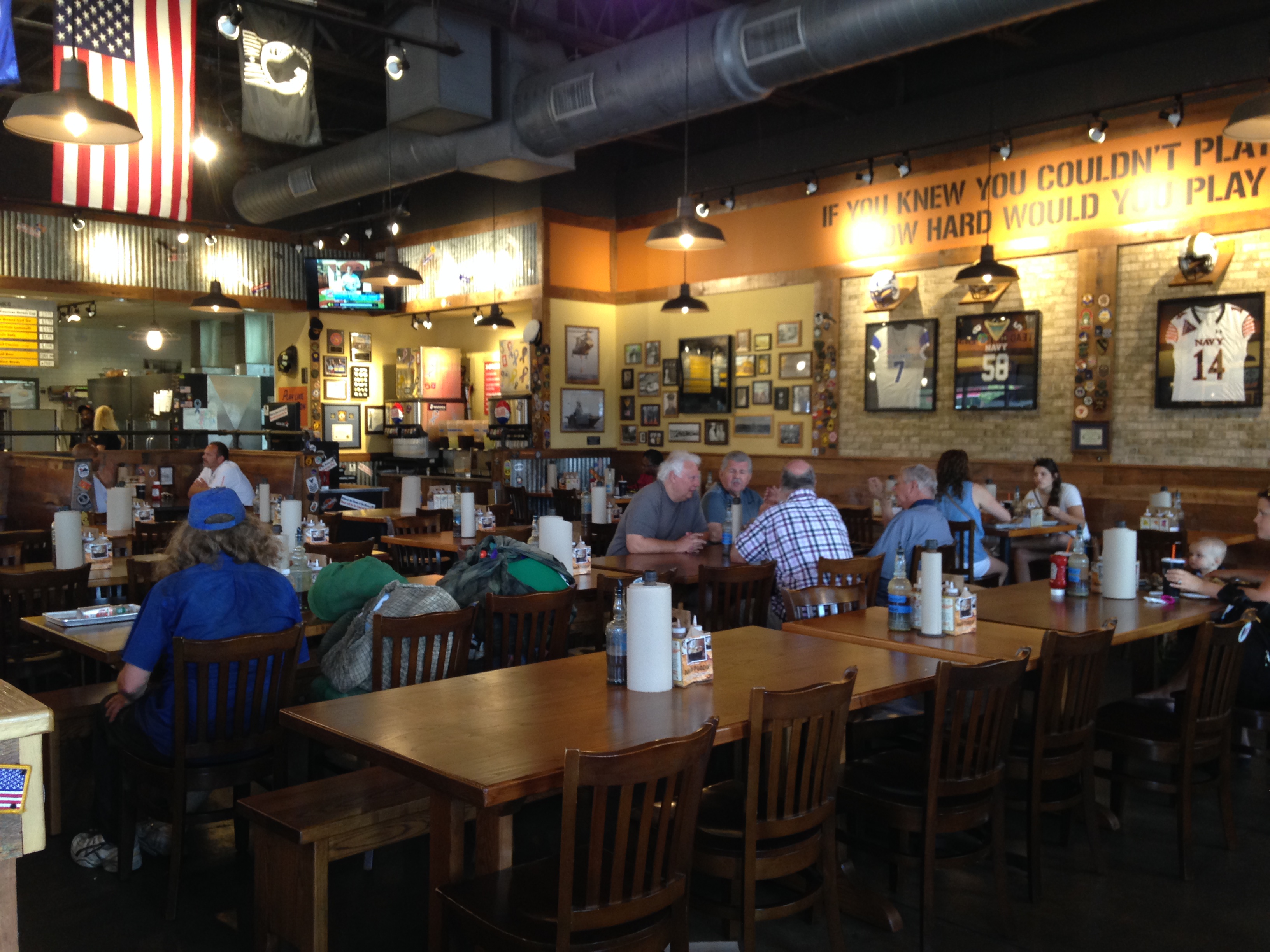
5) Mission BBQ – Rewarding customers with great products, ambiance, and service can turn all of us from occasional consumers to regulars. A further step is to get us back is to extend hospitality through special offers like Birthday Clubs. I love Mission BBQ‘s strategy on this. Sign up online for a birthday club and get a free sandwich on your birthday. Not bombarding my inbox with emails…just an occasional invitation to remind us of special days (veterans and first responders are also fed free on holidays). This restaurant is all about America in honoring ways. Do you have one in your city? Or a restaurant like Mission BBQ?

That’s my Five. How about you? Any favorites from your week you would share in Comments below. I had so many great finds, the bonuses follow. You might find some useful or inspiring. Have a great and safe weekend.

Bonuses

National Park Senior Citizen’s Lifetime Pass – Buy or Renew Now Before the Price Goes Way Up.

Photo Credit: NPS

Spinach Stuffed Chicken Breasts

Photo Credit: Basil and Bubbly

The Most Post-Christian Cities in America: 2017

Monday Morning Moment – Community in the Workplace – We Need It

Photo Credit: Pixabay

Working on teams made for some of the highest performance years of my career. I used to think it was a weakness of mine that I didn’t thrive professionally if I wasn’t on a team. Looking back at seasons of life where my work required solitary focus as well as the times when collaborative effort was the expectation, the difference in quality of life and product was astounding.

We need each other. Author C. S. Lewis even observed that we are all “one vast need”. This thinking goes counter to our culture’s bias toward self-sufficiency and independence. In the workplace, our brilliance does not have to be defined as always being the lone ranger or the self-starter. How we work with others, and what we draw out of each other, in terms of value, creativity, and resource could be the difference in both performance and morale.

“When we live our lives in isolation, what we have is unavailable and what we lack is unprocurable,” wrote Basil (an early Church father). When we live our lives independently, other people are poorer because they cannot benefit from our gifts: “what we have is unavailable.” Also, when we isolate ourselves, we are poorer because the benefits of others’ gifts are lost to us, so what we lack, we cannot get. There are good things in others that are “unprocurable” unless we interact with them…You are “one vast need” and must avoid the extremes of saying, “I am not needed,” or, “I don’t need you.”Art Lindsley

Community – and Why We Need It – Art Lindsley, C. S. Lewis Institute

Early in my career, people invested in my professional development and in me as a person. I had rich opportunities to work alongside both leaders and practitioners who shaped what I had to offer in the workplace. You have read about some of the teams I’ve had the privilege to be a part (here and here)… The work of those teams continues to thrive.Photo Credit: Wikimedia Commons

What we do together far surpasses what we can do individually.

Individualism is a fine idea. It provides incentive, promotes leadership, and encourages development—but not on its own. We are social animals who cannot function effectively without a social system that is larger than ourselves. This is what is meant by “community”—the social glue that binds us together for the greater good. Community means caring about our work, our colleagues, and our place in the world, geographic and otherwise, and in turn being inspired by this caring. Tellingly, some of the companies we admire most—Toyota, Semco (Brazil), Mondragon (a Basque federation of cooperatives), Pixar, and so on—typically have this strong sense of community…Somehow, in our hectic, individualist world, the sense of community has been lost in too many companies and other organizations. – Henry Mintzberg

I agree with these authors and many others on the importance of community in the workplace. Right now my work is done in a very solitary environment. Thankfully, I have friends and colleagues who fill some of the void where I miss team. In times when our workplace lacks community, we shouldn’t wait on outside forces to alter our situation. We must take steps to create community. Brook Manville has written an excellent step-by-step process to embolden us in this effort. Missing community at work is just wrong, especially because we can do something about it.

Can major transformation really begin…almost spontaneously, with small acts by people who are not part of the senior leadership?…In his recent book Community: The Structure of Belonging, Peter Block, an authority on workplace learning and performance, wrote, “Most sustainable improvements in community occur when citizens discover their own power to act…when citizens stop waiting for professionals or elected leadership to do something, and decide they can reclaim what they have delegated to others.”Henry Mintzberg

Rebuilding Companies as Communities – Henry Mintzberg, Harvard Business Review

Can we have community on every work team? Maybe not. Can we have community at work? Absolutely. Whether it is a core value of a company or not, we can create and cultivate community whatever our role is and wherever we find ourselves in the workplace.

Let’s get after it!Photo Credit: Vimeo, Belbin

Wisdom for the Teaming Masses – Brook Manville, Forbes

Saturday Short – a Space and a Place on the Team – Deb Mills

Belbin Improving Teams 2017 – Vimeo

Monday Morning Moment – Ignoring in the Workplace and the Powerful Practice of Noticing

Blog - being Ignored at Work - dailymailPhoto Credit: Daily Mail

[Adapted from the Archives]

It just happens over time…the ignoring of people around us. Think about this morning, coming into work. Retrace your steps, and think of the people you passed within speaking range…but you didn’t…speak, that is. In another season of life, I might have slowed down to walk with someone a ways behind me, or even run a bit to catch up with someone ahead. Just to use that time to connect a bit. We race into our work stations, heads down, as if the most common courtesy of greeting and inquiring into another person’s life just takes too much time away from the “important”. We sit down in meetings before they start and get lost in our thoughts, or our laptops, or our phones. We just ignore those around us…

Time itself seems to become more important than people. We circle up with our team, or go one-on-one with our boss or a consultant… when including a colleague, intern, or member of another team could have added greater value to that conversation. Are we more in a work culture today of tight circles when larger collaborative ones might prove more profitable? Do we just ignore those working around us who, by our actions, seem of little consequence to our workday? It’s not intentional maybe…but it becomes habit and then part of our character…communicating that people don’t matter.Blog - People Matter - greatplacetowork

Photo Credit: Great Place to Work

Throughout my professional life, I have tried to be tuned into those around me, whether they currently are in my work group or not. My nature is to notice and my desire is to acknowledge. In various work situations, it’s been from a place of influence rather than from a position of authority. Any task or responsibility entrusted to me had to be accomplished through winning the confidence and cooperation of those around me. No authority to just delegate or task others with work. Gifted colleagues have always been willing to work on projects with me. People recognize when they are truly valued, and they engage more solidly when they are genuinely respected/regarded. We can build capacity for noticing people.

Ignoring those in our workplace over time has consequences. Just like that adage “Hurt people hurt people”, I think “Ignored people ignore people”. It’s a contagious work culture practice which has been widely researched. Productivity, employee engagement, longevity, and work relationships within teams and across the organization can all be negatively affected by just the casual neglect or lack of regard for colleagues.

Sidebar: As I was reading and thinking about this issue, the chorus of a strange little song kept coming into my head. The Broadway musical, “Chicago“, has a woeful character who laments about his smallness in life, as if people look right through him. The song is “Mr. Cellophane”.

O.K….back to workplace culture. What would happen if we determined to be noticers and acknowledgers at work? This is not a soft practice…it’s brilliant really. Taking little time, we can, each one of us, actually humanize and elevate the workplace experience for everyone we encounter through the course of the day. This is not an exercise of rewarding a job well-done but of noting the person behind the job…as valuable. Period. Full-stop.

Listen Closely words on a ripped newspaper headline and other news alerts like take notice, vital info, importance of being a good listener and pay attentionPhoto Credit: Chip Scholz

I’ve known some great champions in this through my professional life, and I aspire to be like them. Real servant leaders. We may not think of ourselves as leaders, but we can all lead out in serving, noticing, and acknowledging those around us. Skip Prichard writes about servant leadership and lists 9 qualities of these “noticers”.

9 Qualities of the Servant Leader

1: Values diverse opinions

2: Cultivates a culture of trust

3: Develops other leaders

4: Helps people with life issues

5: Encourages

6: Sells instead of tells

7: Thinks you, not me

8: Thinks long-term

9: Acts with humility

Consider this challenge as I make it for myself to genuinely and honestly take note of people, moving through our workday. This is not about being only polite, but being “in the moment” with those around us. It may start with a greeting, and then an inquiry, and before we know it, true caring could follow. Translated into workplace language, that is employee engagement where ideas are exchanged toward better solutions for everyone.

I can’t close this topic without a shout-out to any one of you who’s having that experience of being ignored. You know, of course, that it doesn’t change anything of who you are…but it can harden your heart toward colleagues and dull your thinking in your job. I appreciate Jon Acuff’s piece on being ignored, a piece about Heisman Trophy winner and NFL quarterback Marcus Mariota:

“Throw the passes when no one is watching. Write the pages no one sees. Work through the business plans people don’t believe in yet. Hustle long before the spotlight finds you. You don’t need the whole world on your side to create something that changes the world.”

Postscript: I follow Vala Afshar on Twitter. He is the “Chief Digital Evangelist” for Salesforce and author of The Pursuit of Social Business Excellence. He posted the picture below, with the Tweet “This is how people ignored each other before smartphones”.Blog - Ignoring people without cell phones - Vala Afshar - twitter feedPhoto Credit: Twitter

It made me chuckle because we blame technology for so many of our relational woes when focus and attending to each other is an age-old issue. People matter. Our colleagues matter. Take notice.

The Noticer – Sometimes All A Person Needs Is A Little Perspective – Andy Andrews

Power, Authority, and Influence – Samer Ayyash – Slideshare

How to Practice the Art of Acknowledgement – Darcy Eikenberg

1 Surprising Lesson About Dream Chasing from a Heisman Trophy Winner – Jon Acuff

The Powerful Impact of Acknowledging Good Work – Laura Garnett

Being Ignored Is Worse Than being Bullied – Victoria Woollaston

Business Decision-making The Rule of WYSINATI – What You See Is Not All There Is – Chip Scholz

9 Qualities of the Servant Leader – Skip Prichard

The Power of Noticing: What the Best Leaders See – Max Bazerman – Bazerman focuses on taking in information in order to make better decisions rather than the simple act of noticing people (which can also empower decision-making and business process, communicating that people matter).

Monday Morning Moment – Empathy – Key to Creativity and Innovation – What?!

Photo Credit: Andy Orin, Lifehacker

Empathy is no soft skill. In fact, it can be a rare commodity in today’s workplace where we are competing for jobs, customers, time with the boss…pushing for that edge which makes us stand out over the guy down the hall.

We have seen empathy in corporate culture. Amazon immediately comes to mind, as does Apple. These companies have studied the wants and needs of their customers and they have put that research into play in their service and products. Customer loyalty is a huge outcome of feeling understood and valued.

Empathy and sympathy are two very different human experiences and expressions. To sum up the differences between the most commonly used meanings of these two terms: sympathy is feeling compassion, sorrow, or pity for the hardships that another person encounters, while empathy is putting yourself in the shoes of another. [read more at Dictionary.com]

Our neighborhood is in the middle of a huge engineering project being done by our local electric company. The wires are being put underground thereby keeping our service from being interrupted by windstorms. Various technicians and contractors have come to each of our front doors to let us know, courteously and apologetically, what disruptions must happen to eventually provide this service. The sub-contractors, moving throughout the neighborhood, have worked quickly and quietly, keeping disturbance at a minimum. Their work will all be completed soon with 1) only what disruption was absolutely necessary and 2) with a high expression of empathy for their presence on our streets and in our yards.

Disruption devoid of empathy is no business process anyone wants in their workplace…no matter what the outcome or benefit. Unfortunately, when it happens (and it does), we put up with it for what comes out of it, and because we have no other choice… If we are not careful our own empathy for one another suffers. Mark that.

Photo Credit: Lifehacker

For years, the word and process of empathy had become so common, it became almost without meaning. Something just ordinary. Nothing special. Now, it’s rising in favor again…probably, seriously, because of how competitive businesses have become. Too often, we err in business with putting innovation and technology as goals and standards without considering the customer or colleague. Decision-making proceeding ahead of information-gathering and analyzing impact on those most affected is not the way up.

Marla Gottschalk says it well in her piece Disrupting Organizations With Empathy, Forward thinking organizations hold great empathy for their potential customers. They design products that not only appeal to our emotions and senses, but address the problems we wrestle with in our daily lives. In each product, process or service — there is a little of us represented.

As long as we have empathy, I believe we’ll have innovation.

The same truth applies to the developing frameworks that support our employees. With empathy, we can achieve significant advances not only the way we work, but how we ultimately feel about our work lives. Whether we are considering leadership (See how empathy affects perceived leadership here), feedback, career development or work spaces — empathy matters.

Viewing work life from another’s perspective, can reap powerful results. We need to follow behind our employees and support their journey...Measuring our workplace problems is simply not enough to encourage healthy workplaces.” – Marla Gottschalk

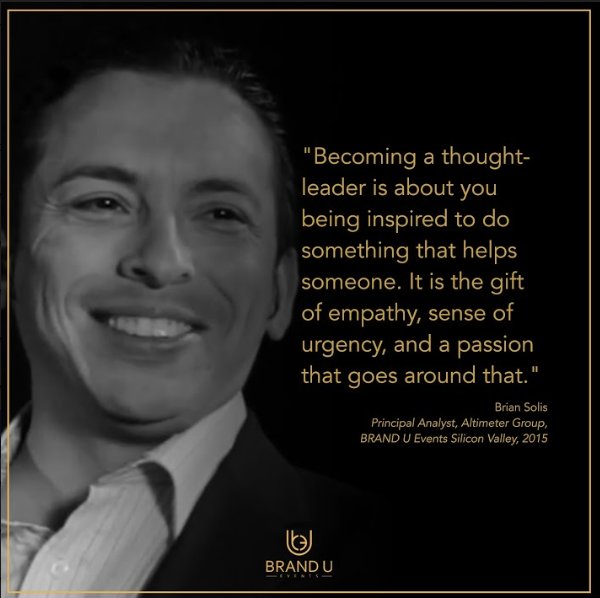
Photo Credit: Brian Solis

I watched an episode of Chase Jarvis Live where Jarvis interviews Brian Solis – author of What’s the Future of Business: Changing the Way Businesses Create Experiences and X: The Experience When Business Meets Design. Brian Solis is one incredibly smart individual, and what captivated me the most in that 45-minute interview? What he said about empathy: “What do you want somebody to feel after they’re done with you in every moment of truth?…Who am I really trying to reach? What’s a day in the life of their world? What could I do to have an impact in their world?…What does a relationship really mean? When you see the world outside [from their side], then you see the role you’re going to play…Empathy unlocks a whole new level of perspective…It’s not good enough to be good enough…or the best. You have to now understand the impact you want to have and the role you want to play in someone’s life and then who that person is and design for that. It’s so inspiring.” – Brian Solis

Marcel Schwantes lists empathy is one of the 10 leadership habits found in the world’s best leaders. Empathy is a discipline. It is hard skill that every leader and every person equipping themselves to lead must see and seek as valuable to leading well. Otherwise, the lack of empathy will eventually have a pervasive effect on the workplace and the service and product. Don’t let this happen to you or your team.

Finally, I want to close on a much-loved classic TV show episode. It is Star Trek, The Original Series. This episode is titled The Empath.Blog - EmpathyPhoto Credit: tos.trekcore.com

In the YouTube video of one of the episode’s scenes, Captain Kirk, Dr. McCoy and Spock are in captivity. The humanoid woman Gem is with them. She is unable to speak but has extraordinary empathic powers. She can feel the pain of another and take it into herself, thereby healing the other person, at a cost to herself. She is also learning from these three what genuine care and self-sacrifice are.

YouTube Video – “Empath” Episode – Star Trek – The Original Series

The Empath Episode – Plot summary, quotes, & other Trekkie details via Memory Alpha

Not the sort of topic we often toss around in our conference rooms or strategy meetings. Still…if we want to offer the best and be the best in our organizations, the lessons are clear…as are the warnings.

Empathy is Actually a Choice – Daryl Cameron, Michael Inzlicht, and William A. Cunningham

Why Genuine Empathy is Good For Business – Jeff Booth

The Importance of Empathy in Everyday Life – Video – Andy Orin

The Key to Creativity and Innovation is Empathy – Brian Solis [Video from CreativeLive – Chase Jarvis Live]

YouTube Video – Brené Brown on Empathy

These 10 Leadership Habits Have Been Found in the World’s Best Leaders – Marcel Schwantes

The Invention of Empathy: Rilke, Rodin, and the Art of “Inseeing” – Maria Popova

5 Friday Faves – Common Purpose, Safeguarding Your Marriage, Being Different, Hard Seasons, and Small Beginnings

Happy Friday! Here is my gift to you today – so many glorious finds I’ve tried to compress into 5 Friday Faves.

1) Common Purpose – Every year, Glassdoor, a website that assists employers and potential employees to find each other, posts a Top 50 of Best Places to Work.

Photo Credit: SAP

Glassdoors’ 2017 Best Places to Work

In his LinkedIn article, Barry Sanders talks about one of the characteristics of what makes a “best place to work”. This characteristic is “common purpose”.  He writes:

Common purpose is essential to driving organization-wide adaptability, which is key to succeeding in today’s fast-paced business world. A shared set of values and goals across the organization allows leaders and individual contributors to achieve widespread alignment, manage uncertainty, and guide decisions in times of turmoil and change.

Without establishing common purpose, companies risk a lack of motivation, lower levels of commitment, less loyalty, and decreased alignment amongst their employees—not to mention negative Glassdoor reviews.

Photo Credit: Wikipedia

He also quotes from his CEO General Stanley McChrystal’s bestseller Team of Teams which gives this summary of the importance of common purpose:

“Team members tackling complex environments must all grasp the team’s situation and overarching purpose…Individual SEALs have to monitor the entirety of their operation just as soccer players have to keep track of the entire field, not just their own patch of grass. They must be collectively responsible for the team’s success and understand everything that responsibility entails.”

When you can see the entire field, not just your patch of grass, your organization becomes more effective—and a better place to work. – Barry Sanders

I sure hope senior leaders get this message. Just communicating the purpose is not enough. That “patch of grass” must be given to that soccer player. He must own it and own his part of the entire field. Leaders who genuinely believe in and nurture common purpose cultivate a “best place to work” for their personnel.

15 Things I Learned From Truett Cathy [Founder of Chick-Fil-A]– Paul Sohn

2) Safeguarding Your Marriage – Infidelity or unfaithfulness in our marriage relationships is not just about sexual betrayal. Infidelity can happen when we allow our hearts to become more bonded to someone or something else more than to our own spouses.
Dave Willis defines infidelity as “broken trust or broken loyalty”. He has posted a tremendously helpful article entitled The 9 Forms of Infidelity in Marriage (Hint: 8 of Them Don’t Involve Sex). Willis is a pastor,counselor and founder of Stronger Marriages. Single or married, you will benefit from his article because too often we “fall” into infidelity by letting ourselves be deceived in thinking it’s nothing. Safeguard your relationships!

3) Being Different – Matt Damico has written an excellent piece for Christ-followers. It is The World Needs You to Be Different. If you are reading this and you aren’t keen on the teachings of Jesus, you may already think that Christians are a quirky lot of people. What Damico says in this article is to call us to the rhythms, the routines, the practices of the church that work a peculiarity in us that’s a good thing.

Piano scales make a pianist. Hours behind the wheel make a driver. Weightlifting reps make muscles, and lots of miles make a runner. Routine and repetition aid us in so many ways, yet a lot of us seem allergic to similar habits in our weekly church worship gatherings.

But just as these individual habits do something to us, so it is with our congregational habits: they’re making us into something. God willing, they’re making us the right kind of peculiar.

We’ll bear fruit in this life when our roots are firmly planted in the coming new earth. As C.S. Lewis said, history shows that “the Christians who did most for the present world were just those who thought most of the next.” One of the main ways this happens is through the rhythms and repetitions worked into our weekly gatherings.

So, as your church gathers for worship this weekend, appreciate anew what’s happening, how the strange rituals — the “rhythms of grace,” as Mike Cosper calls them — are making you more faithful and more fruitful. – Matt Damico

Photo Credit: Wikipedia; Wikipedia

[Cliff Jordan, teaching elder at Movement Church, in Richmond, Va. preaches on this very thing for several weeks in a series entitled Grace On Display. Seriously transformative stuff!]

4) Hard Seasons – I’m not going to wax on here about hard seasons – we all know what ours are. I just always want to keep Syrian refugees on my radar so here’s a photo piece that dramatically displays their reality…in a way that has stayed in my mind all week.

Click the Black Background and Switch on Their Reality – Politiken

Photo Credit: Flickr

Then I also wanted to share a piece by Aaron Brown. I know his family. He grew up in Chad where his father was a physician. His reflects on a very difficult time and its oddly positive impact on his life…renewing his hope after the very difficult year of 2016.

The Do-Over Year – Ruminate Magazine – Aaron Brown

5) Small Beginnings – In the Bible, the prophet Zechariah encouraged the people, “Do not despise small beginnings.” They had the huge task of rebuilding the Temple, and Scripture tells us, this great work began in the mundane but extraordinary act of Zerubbabel picking up the plumb line. Any beginning may seem small and inadequate for the grand vision that stretches in front of us. However, we never know when the small explodes into wonder.

Chip and Joanna Gaines (HGTV stars of Fixer Upper) have an incredible story of small beginnings which grew into a huge, phenomenally successful business. They started out flipping houses as a young couple and often had just the cash in their pockets. Now they have their own TV show, a real estate business, home goods store, and “The Silos” – a refurbished commercial venue in Waco, Texas.

http://people.com/home/hgtv-chip-joanna-gaines-were-broke-before-fixer-upper/

Photo Credit: Flickr; Flickr

Another example of small beginnings is pastor and author Tim Keller. Just this past week, Keller announced he was stepping down from the senior pastor position of New York City’s Redeemer Presbyterian Church. He pastored there for almost 30 years and it now is a multi-site 5000-member church.  [This is a planned succession and he will be teaching in a seminary.] A friend of mine here in Richmond “knew him when”. Years ago, before his NYC church role he was her pastor, in a small church near here – West Hopewell Presbyterian Church. Small beginnings…

My Tribute to Tim Keller – Scott Sauls

Whether you are examining a small beginning as a Christian or from a different worldview, there is excellent counsel to be had…both in Scripture and in articles (such as those linked below).

Just yesterday I was trying to encourage a young man about what he viewed as a small beginning in his career. Not sure I made sense at all. Then today, my husband emailed me this great article – about the exact same subject.

Don’t you love when you read someone else’s brilliant words that essentially describe the counsel you just gave someone?! Benjamin P. Hardy is way more studied and eloquent than I, so please don’t miss his piece titled The 2 Mental Shifts Every Highly Successful Person Makes.  He talks about:

  • the power of choice (“you stop playing the victim to external circumstances and take responsibility for your life – the private victory“) and
  • the power of context (“In everything you do, there should be collaborative and synergistic elements. Of course, there is work which is your work. However, that work should be embedded within a group of others and toward something much bigger. – the public victory”)

Hardy’s full article is excellent (even includes components of the assist we get from brain plasticity which I wrote about earlier).

6 Personal Branding Rules To Being Popular and Profitable – Patrick Allmond

8 Highly Effective Habits That Helped Make Bill Gates the Richest Man on Earth – Minda Zetlin

50 Ways Happier, Healthier, and More Successful People Live On Their Own Terms – Benjamin P. Hardy

So what are we waiting for? Let’s get up and get on with this amazing life we’ve been given…it’s never too late.

Bonuses (for your listening pleasure)

Elha from the NBC TV show Little Big Shots

How Elha Nympha Got on ‘Little Big Shots’

Monday Morning Moment – Are You Ready For Your Workday? – Lessons From Cintas

Photo Credit: Food & Beverage Magazine

Next time you head to the restroom, take a look around. Unless it has just been stormed by a tour group that needed more than the usual service, you can get a sense of readiness. Not the readiness of the restroom, but of the person or agency servicing it…and you as a customer. I wrote about this level of customer service once before  here. Why I wrote about clean restrooms then is why it begins my topic today. Clean restrooms demonstrate a sense of pride and caring. We want restrooms to be ready for the workday. How about our own readiness?

Readiness is defined as being fully prepared and willing to execute.
It is not just about being prepared for one’s workday. It’s also a ready-set-go willingness to be on our toes, stepping up, taking the ball, and scanning both the horizon and the lines drawn on our playing field.

When a Cintas truck rolls into the parking lot, I can almost smell the clean linens and uniforms inside. Their branding includes this mantra: Ready for the Workday: A confident image, clean facility and safe workplace start here. Here’s their commercial that I just saw this weekend, It got me thinking about the broad reach of readiness in the workplace.

My husband walks out of the house ahead of me every morning with his computer bag and a thermos of coffee. He has his schedule on his phone and he keeps a journal. He has thought about the day. He is prepared…the willingness to execute then comes into play as he goes out our door and enters his company’s door…and all the rest of the doors of his day. Both are disciplines – the preparedness of readiness and the willingness to execute.

Readiness keeps momentum going and momentum has huge impact on business and workplace excellence.

After watching the Cintas commercial, I went to their website. What a feast for anyone wanting to learn about leadership and a healthy workplace culture. Check out their Code of Conduct and Business Ethics page. Nothing on their agenda about Business Casual – and everything about dressing and performing aims at positive impact, and helping their customers do the same.

The website’s drop-down menu displays a variety of helps and services. Honestly, it’s hard to believe this company is for-profit based on the generous sharing of information for helping others (their customers and competitors) be “ready for the workday”.

I want to close with some of the quotes from the Cintas website – both from their own founder and from writers who speak for and to their own leadership. Enjoy.

Corporate culture is the single most important distinguishing factor between greatness and mediocrity. It is a major reason Cintas is different from our competitors and other companies. It is our ultimate competitive advantage.” Richard T. Farmer, Cintas Founder & Chairman Emeritus

A key to our success has been a culture that encourages meaningful, respectful relationships between the company and our employee-partners and the commitment to always do what’s right. This spirit of teamwork, camaraderie and trust has become our most important competitive advantage and is a cornerstone of the Cintas culture.” – Richard T. Farmer, Cintas Founder & Chairman Emeritus

“Those who rise to senior leadership levels in almost any organization have one critical attribute in common — they’ve embraced soft leadership skills. This includes having the ability to build relationships with the people you work with. There’s never been a leader in this world without people who wanted to follow them — and the first step to getting people to want to support you is to get them to like you. Take the time to get to know the people you work with, and learn what’s important to them.”Karlyn Borysenko

Be transparent. Insincerity and evasion chip away at trust, so whenever you can, be transparent about what’s happening with the business. Of course, there will be confidential data you can’t disclose. Carolyn O’Hara of the Harvard Business Review notes, ‘regularly distributing other information—like financial results, performance metrics, and notes from board meetings—shows that you trust your employees, which in turns helps them have greater faith in you.’”Lee Polevoi

Don’t micromanage or give step-by-step instructions. Instead, provide guardrails while giving [employees] the freedom to find smart and creative solutions.Chuck Leddy

Photo Credit: LinedIn – Cintas

Hope you enter your workplace ready for the day today! The best part of Monday is its own possibility of a new beginning. Of course, that sort of “Monday” can come any day of the week.

On ready!

6 Essential Leadership Skills That Will Advance Your Career – Karlyn Borysenko

Building Trust in the Workplace – What Business Leaders Can Do – Lee Polevoi

Agile Process Management: An Approach For Business Success – Chuck Leddy

16 Things You Should Do at the Start of Every Workday – Jacquelyn Smith, Forbes

6 Tips For Building Momentum  During Change – Sallie Sherman

Why Preparation Is Better Than Planning – Craig Jarrow

Being Ready For Your Workday Feels Great! – Advance Preparation Is the Key to a Successful Day – Craig Jarrow

What Does Casual Dress Really Mean Today? – 6 Wardrobe Tips For Career Success – Lynn Taylor