Category Archives: Life Skills

Monday Morning Moment – Workplace Wisdom – From the Shallows Back Out Into the Rapids – 5 Resources

Photo Credit: Wikimedia Commons

The river of work is often a fast current – the movers and shakers are in the rushing waters. If you find yourself in the shallows how did that happen? Illness (yours or someone in your family), underemployment, qualifications issue, somehow just not the “flavor of the month”? Any or all of these situations could have prompted a detour out of the faster waters of your work.

Some of us thrive in the shallows. I want to learn how, now that I’m semi-retired. Still, the rapids call me  back…for many reasons.

If you, like me, are in the shallows and you are bewildered rather than refreshed by them, think why that might be.

The rushing waters are where the action is. They’re here and gone, but they carry along whatever is happening in the river.

Occasionally something interesting and important will pop out for you from the current – and you tackle it with excitement – and when you finish it, then it’s gone. Taken back up by the river as if it never visited the shallows, as if you never touched it.

The shallows are a lovely place to visit…especially when you’re exhausted from the rapids. Especially when you need a new vantage point…a new view of your work. The shallows provide that. Being long in the shallows is a strange experience…if you’re used to the rapids.

How does one push back out into the current?

OK…enough metaphor. Here are 5 super useful resources to help us push back into the running river of work…if that’s where we want to be. Choose which fits the most right now, and dig into the article:

1) Achieving Stadium Status – Why not have a colossal goal, right? Leadership consultant Skip Prichard posted a piece recently on How to Achieve Stadium Status. Photo Credit: Wikimedia Commons

He gives a hardy review of John Brubaker‘s book Stadium Status: Taking Your Business to the Big Time. From the book, Prichard covers such topics as how to use affirmations, dealing with critics, rising above the noise, leaving our comfort zones, avoiding comparing, and not repeating others’ mistakes. Until you can read the book, catch Prichard’s article to get started toward the main stage.

Stadium Status: Taking Your Business to the Big Time – John Brubaker

2) Bouncing Forward After a Big Fail – One of my favorite writers on leadership and the workplace is  Adam Grant . He takes a very different view of failure at work in his article When You Get Fired Or Fail Big, This Is How You Bounce Forward. Photo Credit: Pexels

Quoting Grant here:

“Most of the time, when someone fails, it’s not because there’s a bad apple spoiling the barrel. It’s because the barrel is a bad relationship.

In other words: It’s not me. It’s not you. It’s us.

That doesn’t mean shirking responsibility or failing to hold others accountable. It means realizing that in many of our struggles, the biggest problem lies not in individuals but in relationships.

It helps to remember that in most failures, relationships are a major factor. We just have to make sure we don’t pull the wool over our own eyes.” – Adam Grant

Option B: Facing Adversity, Building Resilience, and Finding Joy – Sheryl Sandberg & Adam Grant

3) Addressing Team Alignment – Leadership trainer Jesse Lyn Stoner looked at how team alignment influences team performance. In her piece, Team Alignment is for the Birds, she had this to say:


Team alignment is often “leader dependent. Followers depend on the leader to make decisions on direction and tell them what to do.

Team members [in this scenario]. . .

. . . should not act independently.

. . . have little need to communicate with each other.

. . . are following the leader, with no idea where they are going.

We need teams composed of individuals who are able to make quick decisions on how to respond to what comes their way, who are able to use their good judgment to solve problems, who coordinate their efforts with each other, and who come up with fresh new ideas.

A compelling vision (that includes common purpose and shared values) is a more powerful way of unifying your team than trying to align them through structure, policies and procedures.

When a team is organized around a unifying vision, the vision becomes the glue that holds your team together.” – Jesse Lyn Stoner

6 Benchmarks of High Performance Teams – Jesse Lyn Stoner

4) Excellence in Execution – Strategy thinker Robin Speculand writes on what it takes to effectively implement change. In his blog (guest post on Skip Prichard’s website), Speculand talks about the role of the leader in driving strategy forward. To effectively execute change, leaders must demonstrate their own commitment to the strategy. How visible they are to the rest of the company’s employees attests to how valuable the execution of that change is to them personally. Speculand talks about how to carve out time and energy from a busy schedule in order to be fully available to those most impacted by the strategy change. Photo Credit: All Hands

Intriguing ideas, especially for any of you in the shallows. To be a person who executes well is a valuable employee. Don’t lose sight of that.

A Leader’s Role in Achieving Excellence in Execution – Robin Speculand

Excellence in Execution: How to Implement Your Strategy – Robin Speculand

Robin Speculand Presentations – Slideshares

5) Becoming More Likable – Work is not a popularity contest. However, likable people are just a whole lot more fun to work with than folks who insist on being controlling or contrarian. Marcel Schwantes lays out 6 qualities of folks we would all like on our teams…

  • Be curious and ask interesting questions.
  • Describe other people in the positive.
  • Make an immediate good first impression with your face.
  • Listen. Really listen.
  • Choose every opportunity to experience joy.
  • Don’t pass judgment.Photo Credit: Flickr

6 Qualities of Extremely Likable People, According to Science – Marcel Schwantes

Bonus: a Critical People Skill with Kate Nasser

A Critical People Skills Moment to Handle With Ease – Kate Nasser

When others ask you to change a behavior that rubs them the wrong way, what is your response? They will remember how you reply to this critical people skills moment.

Do you …

  1. Give a list of reasons why you do it?
  2. Ask them to explain why it bothers them?
  3. Suggest that they are being demanding, irrational, unprofessional, or childish for asking?
  4. Take offense and avoid these people whenever possible?
  5. Stop doing it?

Check out Kate Nasser‘s lightning fast read on looking seriously at the 5th response above. We want our preferences…we want things done our way. We want “me” to win, not “we” to win. Something to think about.

Let’s push out into the fast water of our workplace…we’ve had enough time in the shallows.

Worship Wednesday – Why Singing Matters – with an Early Chris Tomlin Song

Photo Credit: BP News

“Let the word of Christ dwell in you richly, teaching and admonishing one another in all wisdom, singing psalms and hymns and spiritual songs, with thankfulness in your hearts to God.” – Colossians 3:16

“And do not get drunk with wine, for that is debauchery, but be filled with the Spirit, addressing one another in psalms and hymns and spiritual songs, singing and making melody to the Lord with your heart…” – Ephesians 5:18-19

Okay…be honest. Do you ever get distracted during the singing portion of a worship service? Maybe you’re looking for a friend who hasn’t arrived yet. Perhaps, your attention has turned to those with their hands up, sweetly swaying to the music. Or, the song is new to you, and you are wondering who else is struggling with the lyrics.

Singing songs out loud in public (even among friends) is awkward for some. I totally get that. Still, it seems the comfort level of many in congregational singing has to do with growing up in a worshipping culture that they embraced early in life. [Now, don’t get me wrong – this is a totally casual observation. It does not include people who came to faith later in life and who can’t contain their joy because of it.] If you agree, or disagree, please respond in the Comments.

Our children had the privilege of participating in worship singing since they were tiny. Even living overseas for so many years.

I went through a season that children’s church choir programming was a benefit of larger more privileged congregations. That season was short, and now I’m over it.

Teaching children and youth to praise God in singing Biblical songs is essential to raising up worshippers. It’s not about performance; it’s about the heart-mind connection between us and God.

Although children’s choir programs may be right up there with elementary school piano recitals, think about the outcomes. Kids who love Jesus and express that love together, and for the encouragement of all the church…and beyond even.

My heritage is lots of choirs and lots of church events with singing. I will never forget the many times God met me at a youth camp bonfire, with someone with a guitar leading us in singing. We must have known those songs. No projected lyrics onto the nightime sky. No songsheets. We knew the songs.Photo Credit: BP News

In 1998, a young singer/songwriter Chris Tomlin released his second album, Authentic. He was just 26 years old. Just the year before, he was asked by Louie Giglio to join Passion Conferences where he continues to minister.

In those days, worship songs often looped or repeated the lyrics, so that’s one way we all learned them so well. Many worship songs also included Scripture verbatim, or the lyrics were essentially Scripture. Both (repeated Bible verse lyrics) were the case with Tomlin’s song Romans 16:19 on his Authentic album.

That song came to mind just yesterday…after all these years.

I remember that verse to this day because of Chris Tomlin and all the times singing it, dancing around with youth at bonfires or in crazy Friday night church rallies. Contemporary worship music has evolved and matured in many ways. Still a lot of the “old” early standards continue to minister to our hearts because they are in our heads.

For all of us, it is wisdom then to teach our children to worship (in other ways but also with singing). Why? Because we remember those songs the same as we remember Bible verses we learn as children. They go down deep in our minds. Also, and most importantly, worship should be as natural as breathing for God’s people. Learning to worship young helps us to seek Him in that way our whole lives…even, and especially, in the times when worshipping is not so easy.

7 Biblical Matters Why Singing Matters – Unlocking the Bible

Worship with me, please…to this great old song by our great brother Chris Tomlin. [I bet my kids still know this song.]

Romans 16:19 says!
Romans 16:19 says!
Be excellent in what is good
Be innocent of evil
Be excellent in what is good
Be innocent of evil
[Chorus:]
And the God of Peace will soon crush Satan
God will crush him underneath your feet!
And the God of Peace will soon crush Satan
God will crush him underneath your feet!
Be excellent in what is good
Be innocent of evil
Be excellent in what is good
Be innocent of evil[chorus 2x]Romans 16:19 says!

Next time you’re in worship with the church gathered, I hope you sing. Please put some of your favorite early worship songs in the Comments for us to enjoy reminiscing about…or to learn anew. Also I would love to know what songs your little ones are singing in your church’s children’s ministry…or what songs you’re teaching them.

[Below you will find a published playlist for this summer’s Fuge Camps. These could be the songs your youth will remember into adulthood.]

Worship Wednesday – All These Babies – Raising Up Worshippers – Lullabies – Deb Mills Writer

Leading Children in God-Centered Worship – Pam Grano

Teaching Our Kids to Be Worshipers – Kevin West

5 Friday Faves – Financially Fit, Beyond the Guitar, Addiction Recovery, Parenting, and One-Anothering

Happy Friday! I hope you’re ending your week on a high note. If not, you might find some help right here. So pick your Friday Fave, and dig in.

1) Financially Fit – One of my absolute favorite blog writers and thought leaders today is Benjamin P. Hardy. Unless I didn’t notice it before, he has been ending his blogs lately with a free Going Big Checklist. The checklist speaks to a person’s desire for financial freedom and heightened productivity. I got it and it’s really good! He also recommends a financial coaching firm by the name of Financially Fit. Hardy is actually one of their clients and has been for over a year. As incentive to do a phone appointment with one of their consultants, I could receive Hardy’s upcoming book The Proximity Effect. Sold!Photo Credit: Financially Fit

Before my appointment, I poured over their website. It was informative, user-friendly, and convincing. My conversation with Chris Patton, a client consultant, was even more compelling.

The focus of this company is to educate, motivate, and provide accountability to their clients toward debt elimination and wealth creation. I’ve never pursued wealth, myself, but after talking to Chris, the idea of creating greater cashflow was intriguing. Just think, to have the money to fulfill big dreams and life aspirations (not just for yourself but to help others) is something to consider.

Anyway, I’m also considering signing on for financial coaching with Financially Fit. The price is incredibly reasonable and there are no entangling strings attached. Check out their website, read some of the stories of people who have eliminated their debt and created wealth, and educate yourself. I’ll check back in with an update on my own financial fitness.

Financially Fit

The 13-Minute Definitive Guide to Living Your Dreams – Benjamin P. Hardy

2) Beyond the GuitarNathan Mills, classical guitarist, continues to create beautiful musical content. Currently he is posting Daily Shorts – arrangements on request – on his Facebook page, Instagram, and Twitter. They are tasty morsels of favorite themes that he arranges for classical guitar. Follow him and you won’t miss these dailies.

This past week, he also posted an arrangement of “The Forgotten City” from RiME. Photo Credit: Nathan Mills, Beyond the Guitar

Inspired by violinist Lindsey Stirling‘s piece on YouTube. Both are gorgeous using different instruments. Here’s Nathan’s version:

3) Addiction Recovery – I’m not talking about street or prescription drug addiction but one that can cause some of the same struggle. Recently, I wrote about a sugar detox. Today I’m a week into dealing with my dependence on sugar. About three years ago, the articles written on sugar intake’s negative impact on the brain (especially memory) were beginning to pile up in my social media streams.Photo Credit: Pixabay

Memory especially is something I’d really like to retain. After watching my dad’s spiral downward with Alzheimer’s, it’s been cause for daily reflection – both on how much he loved sweets, and how much I love them.

One-month Sugar Detox: a Nutritionist Explains How and Why– Lisa Drayer

Too Much Sugar Linked to reduced Memory, Brain Volume – Alice G. Walton

7 Best Foods For Improving Your Memory – Russell Lundstrom

Low Carb Vegetables – The Best and the Worst – Diet Doctor

I’ve successfully gone off sugar in the past, and I’m hoping to do it again…at least detoxing, and then strongly curbing my dependence on sugar. The first days of “no sugar” were not that hard. Then yesterday, I hit a wall of sorts. Depression is a struggle sometimes, and my ready remedy historically is a carb load (some sort of sugary or fatty carb-filled treat to sedate my troubled brain). An emotional cloud settled around me yesterday, and sugar wouldn’t be my go-to to pierce the cloud.

I have found that certain activities can effectively help with bouts of depression. They are:

  • Prayer – I prayed. It did help.
  • Exercise – Walked with the neighbors. Also helped.
  • Serving others – Helped a refugee family with paperwork and shopping. Also helped.

Still, the darkness didn’t lift altogether. Then something amazing happened. I texted the parents of our little grandson a longing sort of message (that not many adult children love receiving). My daughter-in-law wrote back quickly and proposed dropping by after an errand.

Added immediately to my list of depression aids and dealing with sugar withdrawal and addiction recovery – GRANDCHILDREN.

In very close proximity. If you struggle as I do, this is something I highly recommend. Even if you don’t have any in your family, find some! We have two grandchildren who are a complete delight to the heart and a brightening of any burden. OK…enough. Doing better today and still off sugar. Whew….

4) Parenting – Anyone who is a parent and wants to do right by our children have already read much of what’s out there. Victoria Prooday, an occupational therapist, writes a piece that won’t necessarily give you new information. However, The Silent Tragedy Affecting Today’s Children – and What to Do About It does succinctly propose direction for weary parents of over-stimulated, emotionally distant children. Prooday posts provocative statistics which may not be wholly verifiable, but her statement of problems of children today is spot-on. Technology addiction, sedentary lifestyle, and emotional disconnectedness are three areas that parents must address to help children grow into healthy adulthood.

Photo Credit: Flick

[If you check out the article, which is a fast read, don’t finish without reading the comments. Fascinating mix of parents/educators who agree with her and others who offer other helpful views.]

Kids on Drugs…I Mean Screens – Deb Mills Writer

5) Infographic on One-AnotheringJeffrey Kranz

Being a visual learner, I love infographics. Here’s one on caring for “one another”. The teaching of Jesus focused on this as second only to our love for God. We all long for community. No matter our religion, the wisdom of “one-anothering” can transform our relationships. What do you think?Photo Credit: Overview Bible

All the “One Another” Commands in the NT – Infographic – Jeffrey Kranz

Have a restful weekend. Please comment below on your favorite finds this week…either of the ones I’ve posted or ones you’ve discovered yourselves. Appreciate you.

Monday Morning Moment – Community in the Workplace – We Need It

Photo Credit: Pixabay

Working on teams made for some of the highest performance years of my career. I used to think it was a weakness of mine that I didn’t thrive professionally if I wasn’t on a team. Looking back at seasons of life where my work required solitary focus as well as the times when collaborative effort was the expectation, the difference in quality of life and product was astounding.

We need each other. Author C. S. Lewis even observed that we are all “one vast need”. This thinking goes counter to our culture’s bias toward self-sufficiency and independence. In the workplace, our brilliance does not have to be defined as always being the lone ranger or the self-starter. How we work with others, and what we draw out of each other, in terms of value, creativity, and resource could be the difference in both performance and morale.

“When we live our lives in isolation, what we have is unavailable and what we lack is unprocurable,” wrote Basil (an early Church father). When we live our lives independently, other people are poorer because they cannot benefit from our gifts: “what we have is unavailable.” Also, when we isolate ourselves, we are poorer because the benefits of others’ gifts are lost to us, so what we lack, we cannot get. There are good things in others that are “unprocurable” unless we interact with them…You are “one vast need” and must avoid the extremes of saying, “I am not needed,” or, “I don’t need you.”Art Lindsley

Community – and Why We Need It – Art Lindsley, C. S. Lewis Institute

Early in my career, people invested in my professional development and in me as a person. I had rich opportunities to work alongside both leaders and practitioners who shaped what I had to offer in the workplace. You have read about some of the teams I’ve had the privilege to be a part (here and here)… The work of those teams continues to thrive.Photo Credit: Wikimedia Commons

What we do together far surpasses what we can do individually.

Individualism is a fine idea. It provides incentive, promotes leadership, and encourages development—but not on its own. We are social animals who cannot function effectively without a social system that is larger than ourselves. This is what is meant by “community”—the social glue that binds us together for the greater good. Community means caring about our work, our colleagues, and our place in the world, geographic and otherwise, and in turn being inspired by this caring. Tellingly, some of the companies we admire most—Toyota, Semco (Brazil), Mondragon (a Basque federation of cooperatives), Pixar, and so on—typically have this strong sense of community…Somehow, in our hectic, individualist world, the sense of community has been lost in too many companies and other organizations. – Henry Mintzberg

I agree with these authors and many others on the importance of community in the workplace. Right now my work is done in a very solitary environment. Thankfully, I have friends and colleagues who fill some of the void where I miss team. In times when our workplace lacks community, we shouldn’t wait on outside forces to alter our situation. We must take steps to create community. Brook Manville has written an excellent step-by-step process to embolden us in this effort. Missing community at work is just wrong, especially because we can do something about it.

Can major transformation really begin…almost spontaneously, with small acts by people who are not part of the senior leadership?…In his recent book Community: The Structure of Belonging, Peter Block, an authority on workplace learning and performance, wrote, “Most sustainable improvements in community occur when citizens discover their own power to act…when citizens stop waiting for professionals or elected leadership to do something, and decide they can reclaim what they have delegated to others.”Henry Mintzberg

Rebuilding Companies as Communities – Henry Mintzberg, Harvard Business Review

Can we have community on every work team? Maybe not. Can we have community at work? Absolutely. Whether it is a core value of a company or not, we can create and cultivate community whatever our role is and wherever we find ourselves in the workplace.

Let’s get after it!Photo Credit: Vimeo, Belbin

Wisdom for the Teaming Masses – Brook Manville, Forbes

Saturday Short – a Space and a Place on the Team – Deb Mills

Belbin Improving Teams 2017 – Vimeo

5 Friday Faves – Writer Jeff Goins, Refugees, Community, Situational Awareness, and a Memorial

Happy Friday. Summer’s coming on hard here with temps into the 90s for the next week. Hope you get to play hard and rest hard over the weekend. Here are my favorite finds for this week. Enjoy!

1) Writer Jeff Goins – I am so excited about Jeff Goins‘ latest book. This is his 5th book – Real Artists Don’t Starve: Timeless Strategies for Thriving in the New Creative Age. It arrived 2 days ago, and I’m already deep into it.

Pre-ordering this book was an excellent plan, because the Barnes & Noble store near us is having to re-order already just 3 days into the launch. These books are flying off the shelves.

Why? Goins has already proven himself as a fascinating story-teller and wise counselor regarding creative work and turning dreams into reality. This book is a thrilling culmination of all that for those of us who want to put our work out there and make a living at the same time.

In Real Artists Don’t Starve, Goins gives 12 principles of how to actually be effective and successful as a creator (whether it’s music, writing, painting, or any other creative work). Reading his principles and the stories of artists and crafters through history give not only hope but tools through which we can make a living with our craft.

I’m so glad I bought this book early. Reading it is like having a successful and kind mentor guiding me through the next steps of my career. Whatever your passions, you will glean so much from Jeff Goin’s own journey and wisdom.

Real Artists Don’t Starve: Timeless Strategies for Thriving in the New Creative Age – Jeff Goins

28 Lessons From Great Writers, Artists, and Creators on Mastering Your Craft – Ryan Holiday

2) Refugees –  We never want to lose sight of the plight of displaced peoples – of refugees. Photographer Steve Evans and writer Zee Jenkins put together a beautiful and riveting photo essay – Trail of Tears – Refugees in Greece. Take a look and remember this is happening every day.Photo Credit: Steve Evans, Life Force Magazine

3) Community – We need each other. Community is something we experience when we reach out to those around us to help in whatever way we can. Community is also receiving that help when we are the one in need.Photo Credit: Army

How do we teach and model community to our children? How do we raise them to be situationally aware and compassionate to those around them? Please share your experiences (in the Comments below) of what you’re doing to raise up children to be adults who are socially responsible…who genuinely care about those around them.

This little video went viral and you’ll understand why. Beautiful!

4) Situational Awareness – This is a life skill that fascinates me. In fact, I wrote about it in detail here . Situational awareness is a discipline of being tuned into your surroundings in such a way that you can be alert to a threat or crisis before it actually happens. It came to mind this week when I saw this fascinating video below about things we can easily miss if we’re not alert to our surroundings. Watch Evan below.

Hopefully it didn’t just make you uncomfortable. Hopefully it made you think how we might not just be aware of a threat or a crisis, but that we might intervene early enough to change the situation. To get avert the crisis and to get help for that person in trouble.

A friend of mine lost a brother to suicide. His was a terrible impulsive final act and his family will grieve for a long time. What about those who show signs of depression or deep sadness? Maybe we can help there as well. It’s tragic when the family has to fight alone for the life of a loved one. I don’t have answers here, but we all have community agencies who can help us.

5) A Memorial – The news cycle is fast and fickle. We hear news (usually bad news) and then while we’re still coping with the fallout, media moves on. We forget too soon, even when that’s not our desire. Today is my older brother’s 71st birthday. Robert died suddenly 10 years ago. His online memorial is here. Today, I remember him. Also today, I want to remember 17y/o Sarah Harmening.Photo Credit: 11 Alive News

I did not know her at all until a bus accident in Georgia sent many to the hospital, and her life was gone. Still, the little I know of her made me want to pause and remember her with you. Below you will note her journal entry, written on that bus sometime before that accident. As she herself wrote, I believe with her that, in her life and in her passing, “God is going to do incredible things”.

Photo Credit: Facebook – The Alabama Baptist Newspaper

Breaking News: Multiple Huntsville Church Passengers Injured in a Bus Accident Outside of Atlanta

Another terrible incident that was short-lived in the news cycle was the slaughter of 28 Egyptian Coptic Christians last week. Again, in this moment, I want to memorialize them and…remember them.

Gunmen in Egypt Force Coptic Christian Pilgrims Off the Bus and Kill 28 – Declan Walsh and Nour Youssef

Don’t Look Now, But… – this is a hard read about the ambush and killing of these Egyptian Christians. This article found me and I’m glad I read it although it was disturbing. I don’t know if all the details are true, but this is true: 28 lives were taken and bear remembering.

This Friday Faves was not as light-hearted as most are. Still it’s what continues to resonate in my head and heart going into the weekend. Be safe out there, pray for one another, and let’s be kind to those around us…we never know what a difference that can make.

Bonuses

The Ultimate Character Test Any Great Leader Passes – Carey Nieuwhof

Mom: Let’s Stop Drinking the KoolAid – OK…this is a rant on our focus on nutrition for our children – which is a good thing until it becomes an all-consuming thing. Good article wherever you stand on this.

YouTube Video – Real Life Trick Shots – Dude Perfect

Monday Morning Moment – Ignoring in the Workplace and the Powerful Practice of Noticing

Blog - being Ignored at Work - dailymailPhoto Credit: Daily Mail

[Adapted from the Archives]

It just happens over time…the ignoring of people around us. Think about this morning, coming into work. Retrace your steps, and think of the people you passed within speaking range…but you didn’t…speak, that is. In another season of life, I might have slowed down to walk with someone a ways behind me, or even run a bit to catch up with someone ahead. Just to use that time to connect a bit. We race into our work stations, heads down, as if the most common courtesy of greeting and inquiring into another person’s life just takes too much time away from the “important”. We sit down in meetings before they start and get lost in our thoughts, or our laptops, or our phones. We just ignore those around us…

Time itself seems to become more important than people. We circle up with our team, or go one-on-one with our boss or a consultant… when including a colleague, intern, or member of another team could have added greater value to that conversation. Are we more in a work culture today of tight circles when larger collaborative ones might prove more profitable? Do we just ignore those working around us who, by our actions, seem of little consequence to our workday? It’s not intentional maybe…but it becomes habit and then part of our character…communicating that people don’t matter.Blog - People Matter - greatplacetowork

Photo Credit: Great Place to Work

Throughout my professional life, I have tried to be tuned into those around me, whether they currently are in my work group or not. My nature is to notice and my desire is to acknowledge. In various work situations, it’s been from a place of influence rather than from a position of authority. Any task or responsibility entrusted to me had to be accomplished through winning the confidence and cooperation of those around me. No authority to just delegate or task others with work. Gifted colleagues have always been willing to work on projects with me. People recognize when they are truly valued, and they engage more solidly when they are genuinely respected/regarded. We can build capacity for noticing people.

Ignoring those in our workplace over time has consequences. Just like that adage “Hurt people hurt people”, I think “Ignored people ignore people”. It’s a contagious work culture practice which has been widely researched. Productivity, employee engagement, longevity, and work relationships within teams and across the organization can all be negatively affected by just the casual neglect or lack of regard for colleagues.

Sidebar: As I was reading and thinking about this issue, the chorus of a strange little song kept coming into my head. The Broadway musical, “Chicago“, has a woeful character who laments about his smallness in life, as if people look right through him. The song is “Mr. Cellophane”.

O.K….back to workplace culture. What would happen if we determined to be noticers and acknowledgers at work? This is not a soft practice…it’s brilliant really. Taking little time, we can, each one of us, actually humanize and elevate the workplace experience for everyone we encounter through the course of the day. This is not an exercise of rewarding a job well-done but of noting the person behind the job…as valuable. Period. Full-stop.

Listen Closely words on a ripped newspaper headline and other news alerts like take notice, vital info, importance of being a good listener and pay attentionPhoto Credit: Chip Scholz

I’ve known some great champions in this through my professional life, and I aspire to be like them. Real servant leaders. We may not think of ourselves as leaders, but we can all lead out in serving, noticing, and acknowledging those around us. Skip Prichard writes about servant leadership and lists 9 qualities of these “noticers”.

9 Qualities of the Servant Leader

1: Values diverse opinions

2: Cultivates a culture of trust

3: Develops other leaders

4: Helps people with life issues

5: Encourages

6: Sells instead of tells

7: Thinks you, not me

8: Thinks long-term

9: Acts with humility

Consider this challenge as I make it for myself to genuinely and honestly take note of people, moving through our workday. This is not about being only polite, but being “in the moment” with those around us. It may start with a greeting, and then an inquiry, and before we know it, true caring could follow. Translated into workplace language, that is employee engagement where ideas are exchanged toward better solutions for everyone.

I can’t close this topic without a shout-out to any one of you who’s having that experience of being ignored. You know, of course, that it doesn’t change anything of who you are…but it can harden your heart toward colleagues and dull your thinking in your job. I appreciate Jon Acuff’s piece on being ignored, a piece about Heisman Trophy winner and NFL quarterback Marcus Mariota:

“Throw the passes when no one is watching. Write the pages no one sees. Work through the business plans people don’t believe in yet. Hustle long before the spotlight finds you. You don’t need the whole world on your side to create something that changes the world.”

Postscript: I follow Vala Afshar on Twitter. He is the “Chief Digital Evangelist” for Salesforce and author of The Pursuit of Social Business Excellence. He posted the picture below, with the Tweet “This is how people ignored each other before smartphones”.Blog - Ignoring people without cell phones - Vala Afshar - twitter feedPhoto Credit: Twitter

It made me chuckle because we blame technology for so many of our relational woes when focus and attending to each other is an age-old issue. People matter. Our colleagues matter. Take notice.

The Noticer – Sometimes All A Person Needs Is A Little Perspective – Andy Andrews

Power, Authority, and Influence – Samer Ayyash – Slideshare

How to Practice the Art of Acknowledgement – Darcy Eikenberg

1 Surprising Lesson About Dream Chasing from a Heisman Trophy Winner – Jon Acuff

The Powerful Impact of Acknowledging Good Work – Laura Garnett

Being Ignored Is Worse Than being Bullied – Victoria Woollaston

Business Decision-making The Rule of WYSINATI – What You See Is Not All There Is – Chip Scholz

9 Qualities of the Servant Leader – Skip Prichard

The Power of Noticing: What the Best Leaders See – Max Bazerman – Bazerman focuses on taking in information in order to make better decisions rather than the simple act of noticing people (which can also empower decision-making and business process, communicating that people matter).

Monday Morning Moment – Social Capital – an Invaluable Resource We Can Develop – and a Tool to Help

Photo Credit: Screen Shot – Art of Charm

I had an Aha moment recently when I discovered something had shifted in this season of my life. Social capital. To be honest, I didn’t even know what that was until a couple of weeks ago. Now, I can’t stop thinking about it and how to develop it…not for what it would benefit me personally but for what matters to me out there.

Social capital is the willingness of people to help each other. It often replaces money which people would use to buy the same help. Most ways of measuring social capital have to do with trust – people who trust that favors and help will be available when they need it will favor and help others more. Social capital is a lot like real capital. The more money a person or a society has, the easier it is to do things and the better off people are.Simple English Wikipedia

Photo Credit: IResearchNet

There is a significant difference between social capital and human capital. The Difference Between article below gives an excellent contrast. Simply put, human capital is the skillset I bring to a team or organization. Social capital involves networks or groups of people resourcing one another to achieve something they all want.

http://www.differencebetween.com/difference-between-human-capital-and-vs-social-capital/

I could be a part of a team that has enormous human capital – brilliant, gifted, visionary people – but our potential for making remarkable change would be hampered if we ignored the social capital we could bring to bear. This is the silo effect in organizations. It’s also the inner circle handicap in other parts of our lives – where we focus on our own benefit and not that of a larger society. I referred to Jeremy Writebol’s article on this here.

My experience throughout life with social capital (before even knowing what it was) has been rich and fruitful. Just a couple of examples follow:

  • Years ago when I worked in a cancer center in East Tennessee, we wanted a vehicle for patient and family support that would endure throughout the experience with cancer (either to cure or death). There were several on our team who brought immense human capital to the table. Fortunately we also brought the resources of many networks alongside – the patients and families themselves, a nearby university, the cancer center’s foundation, the local American Cancer Society, churches and other private benefactors, and volunteer groups. It was an amazing collaborative experience and that support program continues to this day.
  • When we were living in North Africa, and our children were in high school, I was struck by the number of musically gifted young people with no avenue to share their art. In fact, at their school as wonderful as it was, there was no parent group, no booster club of any sort, to drive projects that would benefit neither the school nor the community. This small observation grew into a much larger idea and then, with surprisingly wide-reaching social capital of parents, staff, and the students themselves, a group called Better Together was formed. Out of this group was birthed an annual visual and performing arts festival which continues today. Also out of this group, our group was able to use our social capital (our various social networks) to benefit some of the local charities as well as the overall offerings of the school itself.

Social capital can be a solid foundation for developing a service or product or opportunity that benefits many. However, it can be squandered or diminished if not nurtured over time. Social capital depends on trusting relationships.

Photo Credit: NBS

Because of several factors in my own life – relocating geographically, job changes, and a series of other personal hurdles – I have let some of my social capital go cold. This happened in a season when I’m probably most aware of the enormous potential for deep, broad-reaching networking opportunities.

I just haven’t focused there lately…

Until now.

Recently I discovered Jordan Harbinger online. He writes and podcasts for a website called The Art of Charm. To be honest, the title did not draw me in, but the content did. He invites his readers/listeners to something called a social capital challenge. I signed on.

It’s not a fluffy challenge, I can assure you. In fact, it is supposed to be finished in a month, and I’m still stuck on Week 1. However, be assured, I WILL PREVAIL.

The first challenge is settling on a written goal of improving my social capital (and sharing it publicly). Here my personal struggle is deciding which of the many areas of benefiting others I’d like to land. If you are part of my now smaller social networks, you’ll hear more about this in the coming days. I’m going to need your social capital at play…and I’m confident we can accomplish more and Better Together.

What are your experiences with social capital? Your stories? Your thoughts on developing social capital? I would love to hear, in the Comments section below.

Social Capital Challenge – The Art of Charm

Jordan Harbinger – The Art of Charm – Twitter

Social Capital – IResearchNet

Measuring Social Capital – A Systematic Review – Prepared by Moses Acquaah, Kwasi Amoako-Gyampah and Nceku Q. Nyathi 

The Whuffie Factor – Tara Hunt

Photo Credit: Amazon

Monday Morning Moment – When You Love Your Job – and Your Power to Make It So

Photo Credit: Maxpixel

I had trouble getting my enthusiasm up for work today. This is highly unusual, because I LOVE Mondays. Even went to bed early last night; only to have bad dreams and restless sleep.

OK…so it happens sometimes. Shake it off and embrace the day, right?

I want to write about what happens when we love our job. Remember when that was? …if it isn’t that way for you today, don’t let this season bring you down, and your work down.

A friend shared with me recently that he has come to figure his worklife into decades. He makes strategic decisions based on where he is today in his job and what he hopes to be doing in the next decade. We all know the years go by quickly…so he got me thinking.

If I don’t love my job today, I really either need to do something to correct course, or, before jumping ship, think where I hope to be over the next several years.

This morning I came across a funny and invigorating video on Facebook. It is When You Really Love Your Job. Watch below.

This little video showed a number of employees doing their jobs well and with speed and finesse. It had a poignant touch for me because I have personally watched servers in North Africa make crepes, cut up fruit, and pour tea like the workers in the video. I miss that.

If you search online for loving what you do, you find lots of helps on how that works and how to make it happen (again).

Jeff Haden posted a helpful piece entitled 15 Revealing Signs You Genuinely Love What You Do. It’s a quick read and it will either encourage you that you really DO love your job, or, if not, maybe there are some simple steps you can make to change it up. Some of the signs are : You enjoy attending meetings. You think about what to say, not how. You help without thinking. Definitely something to consider…as are the other signs.

Photo Credit: The Muse

If you love your job, that is worth celebrating and worth protecting as the job or company changes. If you don’t love your job so much, then you have to ask yourself the question, is it time to look elsewhere or do you have capacity to do what it takes to restore joy to your job, as it is?

Photo Credit: Flickr

Benjamin P. Hardy writes about this in One Behavior Separates the Successful From the Average. What is that behavior? Initiative! We determine for ourselves how we shake out our day. Sure, there are going to be obstacles and difficult people and various struggles over the years. It’s always worth it for our own sake, to take back control of how we love our jobs. Exercising initiative, as Hardy suggests, is the way out…either out of the joyless season you’re in and stay in your job, or out of the job. Just don’t take the joylessness with you.

Here’s to loving our jobs!

Do You Love Your Job? – Deborah Repplier

Discover the Work You Were Born to Do – James Gonyea

17 Inspiring Quotes About Loving Your Job – Michael D. Pollock

This Is Your Life. Do What You Love – The Holstee Manifesto Lifecycle Video

Photo Credit: Vimeo


Monday Morning Moment – Empathy – Key to Creativity and Innovation – What?!

Photo Credit: Andy Orin, Lifehacker

Empathy is no soft skill. In fact, it can be a rare commodity in today’s workplace where we are competing for jobs, customers, time with the boss…pushing for that edge which makes us stand out over the guy down the hall.

We have seen empathy in corporate culture. Amazon immediately comes to mind, as does Apple. These companies have studied the wants and needs of their customers and they have put that research into play in their service and products. Customer loyalty is a huge outcome of feeling understood and valued.

Empathy and sympathy are two very different human experiences and expressions. To sum up the differences between the most commonly used meanings of these two terms: sympathy is feeling compassion, sorrow, or pity for the hardships that another person encounters, while empathy is putting yourself in the shoes of another. [read more at Dictionary.com]

Our neighborhood is in the middle of a huge engineering project being done by our local electric company. The wires are being put underground thereby keeping our service from being interrupted by windstorms. Various technicians and contractors have come to each of our front doors to let us know, courteously and apologetically, what disruptions must happen to eventually provide this service. The sub-contractors, moving throughout the neighborhood, have worked quickly and quietly, keeping disturbance at a minimum. Their work will all be completed soon with 1) only what disruption was absolutely necessary and 2) with a high expression of empathy for their presence on our streets and in our yards.

Disruption devoid of empathy is no business process anyone wants in their workplace…no matter what the outcome or benefit. Unfortunately, when it happens (and it does), we put up with it for what comes out of it, and because we have no other choice… If we are not careful our own empathy for one another suffers. Mark that.

Photo Credit: Lifehacker

For years, the word and process of empathy had become so common, it became almost without meaning. Something just ordinary. Nothing special. Now, it’s rising in favor again…probably, seriously, because of how competitive businesses have become. Too often, we err in business with putting innovation and technology as goals and standards without considering the customer or colleague. Decision-making proceeding ahead of information-gathering and analyzing impact on those most affected is not the way up.

Marla Gottschalk says it well in her piece Disrupting Organizations With Empathy, Forward thinking organizations hold great empathy for their potential customers. They design products that not only appeal to our emotions and senses, but address the problems we wrestle with in our daily lives. In each product, process or service — there is a little of us represented.

As long as we have empathy, I believe we’ll have innovation.

The same truth applies to the developing frameworks that support our employees. With empathy, we can achieve significant advances not only the way we work, but how we ultimately feel about our work lives. Whether we are considering leadership (See how empathy affects perceived leadership here), feedback, career development or work spaces — empathy matters.

Viewing work life from another’s perspective, can reap powerful results. We need to follow behind our employees and support their journey...Measuring our workplace problems is simply not enough to encourage healthy workplaces.” – Marla Gottschalk

Photo Credit: Brian Solis

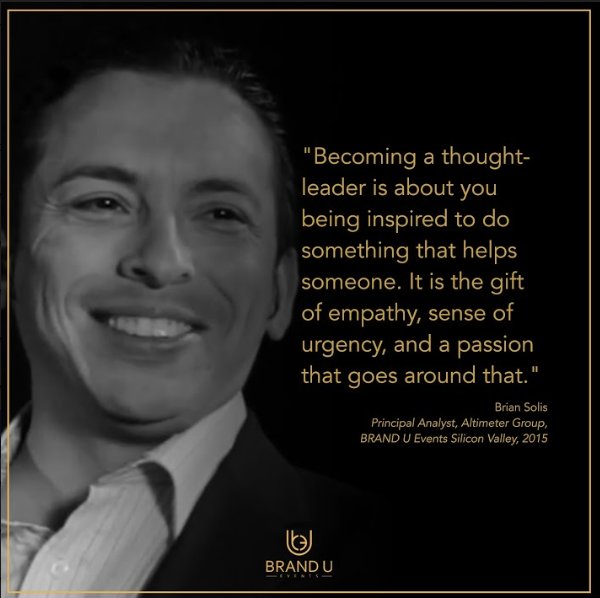
I watched an episode of Chase Jarvis Live where Jarvis interviews Brian Solis – author of What’s the Future of Business: Changing the Way Businesses Create Experiences and X: The Experience When Business Meets Design. Brian Solis is one incredibly smart individual, and what captivated me the most in that 45-minute interview? What he said about empathy: “What do you want somebody to feel after they’re done with you in every moment of truth?…Who am I really trying to reach? What’s a day in the life of their world? What could I do to have an impact in their world?…What does a relationship really mean? When you see the world outside [from their side], then you see the role you’re going to play…Empathy unlocks a whole new level of perspective…It’s not good enough to be good enough…or the best. You have to now understand the impact you want to have and the role you want to play in someone’s life and then who that person is and design for that. It’s so inspiring.” – Brian Solis

Marcel Schwantes lists empathy is one of the 10 leadership habits found in the world’s best leaders. Empathy is a discipline. It is hard skill that every leader and every person equipping themselves to lead must see and seek as valuable to leading well. Otherwise, the lack of empathy will eventually have a pervasive effect on the workplace and the service and product. Don’t let this happen to you or your team.

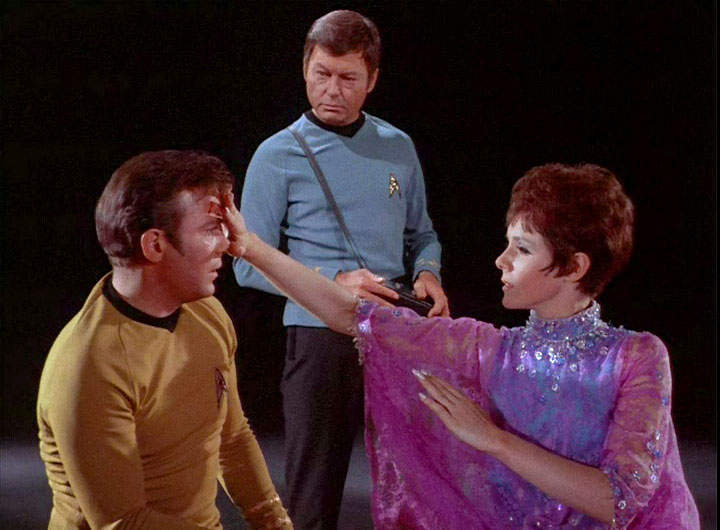
Finally, I want to close on a much-loved classic TV show episode. It is Star Trek, The Original Series. This episode is titled The Empath.Blog - EmpathyPhoto Credit: tos.trekcore.com

In the YouTube video of one of the episode’s scenes, Captain Kirk, Dr. McCoy and Spock are in captivity. The humanoid woman Gem is with them. She is unable to speak but has extraordinary empathic powers. She can feel the pain of another and take it into herself, thereby healing the other person, at a cost to herself. She is also learning from these three what genuine care and self-sacrifice are.

YouTube Video – “Empath” Episode – Star Trek – The Original Series

The Empath Episode – Plot summary, quotes, & other Trekkie details via Memory Alpha

Not the sort of topic we often toss around in our conference rooms or strategy meetings. Still…if we want to offer the best and be the best in our organizations, the lessons are clear…as are the warnings.

Empathy is Actually a Choice – Daryl Cameron, Michael Inzlicht, and William A. Cunningham

Why Genuine Empathy is Good For Business – Jeff Booth

The Importance of Empathy in Everyday Life – Video – Andy Orin

The Key to Creativity and Innovation is Empathy – Brian Solis [Video from CreativeLive – Chase Jarvis Live]

YouTube Video – Brené Brown on Empathy

These 10 Leadership Habits Have Been Found in the World’s Best Leaders – Marcel Schwantes

The Invention of Empathy: Rilke, Rodin, and the Art of “Inseeing” – Maria Popova

5 Friday Faves – St. Patrick’s Day, Beauty and the Beast Guitar Arrangement, Tenacity, Manliness, and Embracing the Life You Have

Happy Friday! Hope this week was kind to you. Here are my 5 most favorite finds of the week for you.

1) St. Patrick’s DayLá Fhéile Pádraig Sona Duit! Happy St. Patrick’s Day! Wearing green. Corned beef and cabbage…and my family background is Scottish. Still love celebrating this day a bit. Photo Credit: Flickr

Also planning to watch the David Kidd documentary Patrick. A friend who heard David Kidd speak recently shared the following with me via email this morning – notes from his talk on the real Patrick (legends removed):

  • He was born in 396 AD and died in 471 AD.
  • Patrick was a man brought up on a Romano British Christian home somewhere in southwest Britain (his father was a deacon and grandfather a priest).
  • He was kidnapped at 16 (he said he didn’t really know God at that time), trafficked, and taken to the West Coast of Ireland where he worked as a shepherd and learned Irish.
  • As a slave, Patrick came to see the hand of God in his troubles. God broke through his defenses, and Patrick faced his unbelief and pride. Later he described how he turned to God whom he realized had been watching over him all the time. He became aware of God’s protection, and he discovered that God loved him as a father loves his son.
  • Before this, he had ‘sinned’ – something that ‘lasted an hour’ and he believed that God punished him.
  • God spoke to him in a dream about a ship to take him home. At 22, he managed to escape slavery.
  • At home, he had another dream of the people in Ireland calling him back.
  • He was obedient to the Spirit and went back to West Ireland (the ends of the earth at that time).
  • He was beaten, harassed by thieves and robbers, admonished by his British superiors, but his work grew and he remained humble.
  • He protested against injustice, esteemed women highly, and identified himself as Irish.
  • His legacy was a vibrant Christianity which lasted hundreds of years while Britain and Europe fell into the Dark Ages.

What we can do to honor Patrick’s memory?

  • The Past: Remember a humble man who had been mistreated, heard from God, obeyed, loved his enemies, lived his life for Jesus, and made a significant difference – not just in Ireland, but much of Europe.
  • The Present: Use Patrick’s life to help people focus on what really matters.
  • The Future: Be as faithful as Patrick and live for Jesus and His Kingdom – making a difference in this world with fruit that lasts.

2) Beauty and the Beast Guitar Arrangement – Yesterday the live action Disney film Beauty and the Beast debuted in the US. Articles abound about the production – its beauty and grand scenes. Other articles raise the question of whether it is as family-friendly as the Disney animated classic by the same name. Everyone will have to decide for themselves about whether to watch this film and how often. One very easy decision would be watching the just-released classical guitar arrangement by Nathan Mills (Beyond the Guitar).

It is beautiful, even with less-grand scenes, and its own Belle and wee beast. It is definitely family-friendly and the music is lovely. Enjoy!

3) TenacityFirst Round posted the fascinating story – Lessons in Tenacity – of how entrepreneur Dennis Crowley, co-founder of Foursquare, built his business. He saw tenacity at work in the growing and thriving of his location technology company.

Tenacity is that characteristic in a person or group that keeps her/them moving forward – persistence, resolve, determination.Photo Credit: Pixabay

Read the article for examples Crowley gives, and here’s his illuminating summary:

Tenacity has many manifestations for founders and their startups. At the beginning, it’s often deeply tied to identity. Giving up one’s idea feels like giving up on oneself. After hitting early milestones, tenacity is confidence. But it’s best tempered with humility, so as to avoid flying too high on early wins. As a company scales, tenacity is focus. There will be accompanying growing pains as customers sign up, headcount grows and the market responds. Anchor and orient yourself by asking: what is this supposed to be when it grows up? When the going gets tough, tenacity is grit. Don’t look externally to others to build what you need — you’ll be waiting longer than you want. Do it yourself. Lastly, tenacity is culture and a private truth. Tenacity at scale will both involve and elude people. What guides the team isn’t always accurately reflected in the public’s perception. An informed, committed team around you is the best way to drown out the noise and to march toward achieving your biggest goals.

“These different facets of tenacity are important insofar as invoking them keeps your legs moving and charging forward. Growing a company is an impossibly hard endeavor — many wouldn’t start if they knew just how difficult it is,” Crowley says. “But the early stories of most successful companies are often those in which no one thought it could be done. In fact, if you asked them, those founders probably didn’t know if they could do it either. But if you can get there — if you stick to what you set out to do — it can put you in an amazingly powerful and defensible position.

4) Manliness – We should affirm, empower, and let loose women to fulfill their callings, giftings, and places in the world. Not being sexist, the same is true for men, of course. That’s why I appreciate the website/podcast the Art of ManlinessThe Art of Manliness aims to encourage our readers to be better husbands, fathers, brothers, citizens — a new generation of great men (the About page).

I don’t go with everything on this website but some of the content is fascinating and extremely helpful. I hope never to have to jump from a speeding car but knowing it’s possible to walk away from such a situation made me interested in reading about it.

Photo Credit: Art of Manliness

This information isn’t just for men, but some of the entries are male-specific. We women write volumes about how to be “better women”. I’m glad there are men (and women) are writing for men in this way.

10 Tests, Exercises, and games to Heighten Your Senses and Situational Awareness – Brett & Kate McKay – Art of Manliness

5) Embracing the Life You Have – We have all experienced losses. We grieve…and grieve again. As time goes by, the grief changes, but that doesn’t mean it has to change us. At least not in an unhealthy way. John Piper speaks about this so eloquently and tenderly:

I have in mind two kinds of losses: those who had something precious and lost it, and those who hoped for something precious and never had it. It works both ways. Sixty years go by, and forty years on you think, “I’ve come to terms with that,” and then one morning it breaks over you, and you weep about a 40-year old loss, or a 40-year “never have,” and my counsel is, yes, go ahead, embrace that moment. Weep.

But then, say to your weeping after a season, “No. You will not define me, sorrow, because my God has said, ‘No good thing does he withhold from those who walk uprightly’ (Psalm 84:11). Therefore, even though it was good in one sense, and I miss it in one sense, I trust my God, and he has not withheld anything that is good for me.” Yes, let there be weeping in those seasons — feel the losses. Then wash your face, trust God, and embrace the life he’s given you. – John Piper

As one who struggles with waves of grief out of nowhere…thank you, Dr. Piper.

Principal Financial Group has been running a series of commercials with the theme Life Doesn’t Always Go According to Plan. Three of their commercials follow. Sweet messaging…

Be gentle with yourself and each other. Serve somebody, and be safe out there. [Oh, and please share in Comments your favorites of the week. Thanks!]

Bonuses

Who are the Refugees? Which are their Host Countries? Take a Guess.

Granny Pod – Ingenious and honoring idea.

Mom Truths