Category Archives: Life Skills

Organizational Culture – 5 Questions – Notes on a Podcast with Barnabas Piper, Todd Adkins, and Eric Geiger

Blog - 5 Leadership Questions - Organizational CultureMy latest favorite podcast (one of my 5 Friday Faves last week) was this conversation between Barnabas Piper (co-host), Eric Geiger, and Todd Adkins (co-host). On Lifeway’s 5 Leadership Questions, they tackled the topic of creating a healthy organizational culture.

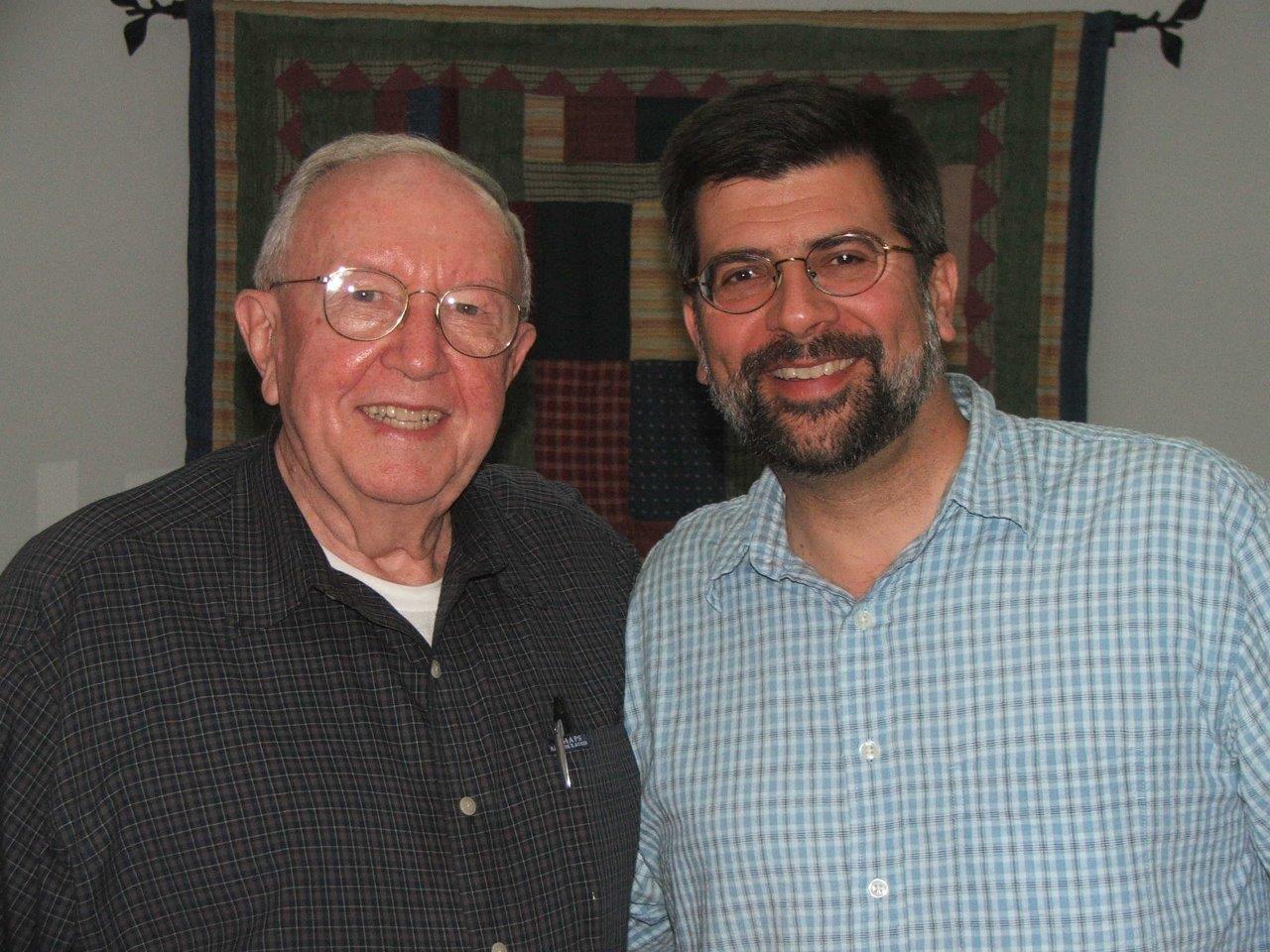
Image processed by CodeCarvings Piczard ### FREE Community Edition ### on 2015-05-18 23:11:32Z | http://piczard.com | http://codecarvings.comBlog - eric Geiger - 5 Leadership QuestionsBlog - Todd Adkins - 5 Leadership Questions

In the podcast, they ask and answer 5 questions about organizational culture. I took notes. Listen to the if you can, but if you don’t, read on. These guys have captured something we all need to consider in thinking about our workplaces and have our values speak to how healthy we are…or are not.

1) What is an organizational culture? – Culture is defined as those values or beliefs that undergird who we are and what we’re about in our organization. Culture is “everything beneath the surface that drives behavior”. Whether we are in tune to our work culture or not, we share values as a group and those values drive our behavior. There are two types of values within a culture – aspirational and actual. Aspirational values – what’s on the wall. Actual values – what takes place in the hall. Values are so embedded in culture that we take them for granted. They include philosophies and strategies and can be both good and bad for the health of our organization. What is the personality of your organization?  Psychologist Alfred Adler wrote, in 1920s, that to be healthy, three things need to be in alignment: 1) how you perceive yourself, 2) how others perceive you, and 3) how you want to be perceived. Apply that to your organization: does who you say you are match with who you actually are? This will give you a diagnosis of how healthy your organization is…if you’re willing to take a hard, honest look. How did you get the culture you have?Piper, Adkins, and Geiger then talked about how the leader of an organization will shape culture. Leaders shape culture and after three years, it will be the culture they have shaped.  If leaders don’t intentionally shape the culture, it will evolve on its own [somewhat in reaction to that leader – my take on that].

2) What are the consequences if you don’t build and shape a culture (if you let it passively happen)? “If you don’t actively cultivate the culture, whoever has the loudest voice or the clearest vision wins.” There is formal and informal authority as well as formal and informal influence with impact on an organization’s culture.  The informal influence/authority of a long-time trusted employee is important and should be respected. Culture, healthy or unhealthy, can “trump” a new leader’s ideas or strategy. “A healthy culture won’t tolerate an unwise move or won’t tolerate someone being treated inappropriately. A healthy staff culture will call people out – “We don’t talk to people that way here/we don’t treat people that way here. That’s sacred for us here.” Wise leaders will give the culture its voice as new, healthier culture is built.

3) What is the starting point for a leader to create culture? 1) Assess the culture of your organization. “It’s a mistake to say everything is broken, ruined, messed-up in this culture and we need to rebuild a whole new culture. You’re wrong. There are things that are affirmable in that culture.” [Eric Geiger on not loathing the culture you lead]  2) Find what is affirmable in your culture and affirm them. 3) Then deal with what is not present that needs to be. “For every 2 actual values, you can have one aspirational value.” If you are a new leader of an organization, resist the temptation to shake it down entirely and rebuild the culture reflecting your values. “Actual values are the foundation upon which you build culture. Affirm over and over. Then work to implement [that other value that’s only present in aspiration form].”

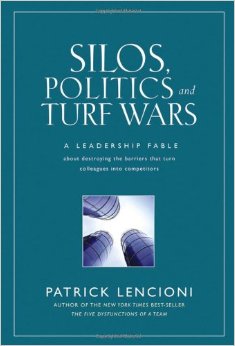
Blog - Organizational CUlture - Lencioni book Silos, Politics & Turf Wars

Everybody needs to read Lencioni’s Politics, Silos, Turf Wars. “What is Bucket 1? – core DNA – values we do not change. Don’t even ask. Bucket 2? – Maybe. Wasn’t our Core DNA but goes against what we want. Bucket 3? – Do whatever you want.” The core values of a culture are those that are bedrock for your organization to continue. “Ask what of your culture is not going to change. When those things come up, address them immediately. What is counter-culture? Kill them. [Examine] what we pay attention to; how we react to crisis; the role models that we raise up; the stories we tell; the heroes we create.” Plato once said: “What is celebrated is cultivated.”  You are able to influence culture by telling new stories. What does your culture celebrate? What do you see that kills culture?

4) What are culture-killers in an organization that need to be abolished? What are signs of culture that needs to be celebrated? What are the culture killers not to be tolerated?A culture-killer would be the continued allowance of violative behavior of those values. If among a staff team the cultural value is we treat each other with respect; we’re a family; we do ministry together – and you have a lone ranger who gets promoted?…that’s a culture-killer.” Anything that violates the organization’s culture is a no-go. Disrespect. Passive-Aggressive behavior. Lying. You can’t tolerate such things. Then what in culture should be celebrated? As team members exhibit organizational values in their work and demeanor, you hold them up for everyone to celebrate. “Point out and celebrate when your culture’s values are fleshed out. Give a story; mention the value; celebrate a specific value of the organization lived out; from each campus/department. Remind each other that all these things are going on in different places/departments and the impact we’re having together.”

5) What does it look like to hire and fire strategically to create the kind of culture an organization needs. People create culture.  1) Hire on the values. Look for displayed commitment to the values before the person is on the team. You ask questions. Look for history. You see if they have to sacrifice something to be on your team. Do they have to become someone they’re not to be a part of the team? 2) Removing people – a strong culture is going to make it very uncomfortable for someone to stay who doesn’t have the same values. They will self-select out of a culture not like them. They’re saying, “This isn’t really me.” The organization says, “Here’s who we are.” “If they’re not going to help the culture stay healthy, you don’t want them on that team. You want them to be a fish out of water if this isn’t the culture for them. It’s about fit not worth. There is a culture for them somewhere that matches their values.”

I love these guys – Barnabas Piper, Todd Adkins, and Eric Geiger. This podcast was very timely in my own cultural experience. I am watching an organization dear to me go through a painful downsizing – through a voluntary retirement incentive to start. This organization (both aspirationally and actually) values longevity, experience, perseverance, and history. You can imagine the struggle within of how to come to grips with this direction – necessary but heart-wrenching for them as an organization. Organizational culture is important to understand. It is how we help our culture through a crisis to get back to a healthy place. Culture cannot be disregarded.

Don’t Loathe the Culture You Lead by Eric Geiger

How Not to Loathe the Culture You Are Leading – Eric Geiger

Silos, Politics and Turf Wars: A Leadership Fable About Destroying the Barriers That Turn Colleagues Into Competitors by Patrick Lencioni

Silos, Politics and Turf Wars – PDF – Executive Book Summaries

SlideShare – Organization Culture and Climate

Organizational Structure and Culture – Principles of Management – New Charter University

Mission Drift: The Unspoken Crisis Facing Leaders, Charities, and Churches by Peter Greer and Chris Horst

Photo Credits: 5 Leadership Questions Header. Barnabas Piper, Eric Geiger, and Todd Adkins


Workplace Wisdom – Dave’s Observation on Work (and other) Relationships – What You Think of Others Matters

Blog - What You Think of People Matters - Dave 5

At first, you really liked working with this person. Then, bit by bit, he/she began wearing on you. He is always playing with his phone. Her solution to today’s problem is too labor-intensive. His email responses have become terse. She is late for your meeting. You think, maybe I was wrong about him. He is not the person I thought he was. Maybe, she’s the wrong person on the bus.

When a relationship begins to deteriorate at work (or home), you are wise to take steps to turn this around as quickly as possible. You could be in a work situation that has been difficult from the outset. It is still possible for you to make inroads in turning that relationship toward a more healthy or positive one. If not altogether, at least from your side. Consider an adage that has had a long and useful run in our family and work.

Your opinion of someone approximates their opinion of you.Dave Mills

There are exceptions, but I have found this to be wise counsel (from my husband, no less) in both personal and professional relationships. When what was a warm, congenial relationship takes a turn toward the negative, you can actually work, from your side, to restore the relationship. Even to take it to a deeper level. It can get more uncomfortable at first, because you have to start with your own thoughts toward that person. How have they changed?

We send signals to each other – whether we speak or not.

My Mom raised us out of the era of Walt Disney’s Bambi:

“If you can’t say something nice, don’t say nothing at all.”

Good counsel except for the conversations that still go on in our heads and color our attitudes, our tone of voice, our preferences, and our decisions.

Let’s say I have an amicable relationship with a colleague, and then something happens. I may not even be aware of it – a misunderstanding, a misconstrued action, an insensitivity unaware. Then a chill develops, or a clear outright dislike. I have a window of opportunity to clear that up. Otherwise, if I don’t act, then a process can begin where I decide that person is a jerk and has woefully misjudged me…and off we go.

Remember: This can go both ways. You may have had a few off days with a colleague, and find yourself just not thinking so well of him, then stop it! It’s possible you can keep them from picking up that signal and prevent the relationship from getting more toxic as they decide you’re not so great either.

If I refuse to think ill of another person and discipline myself to be respectful, deferent in my demeanor, and tireless in pursuing understanding, I could restore that relationship. If it doesn’t improve right away, my attitude and actions work for my own benefit and can definitely help build trust with my team members. One day…that relationship may also turn. It’s worth the effort.

Blog - What You Think of People Matters - Dave

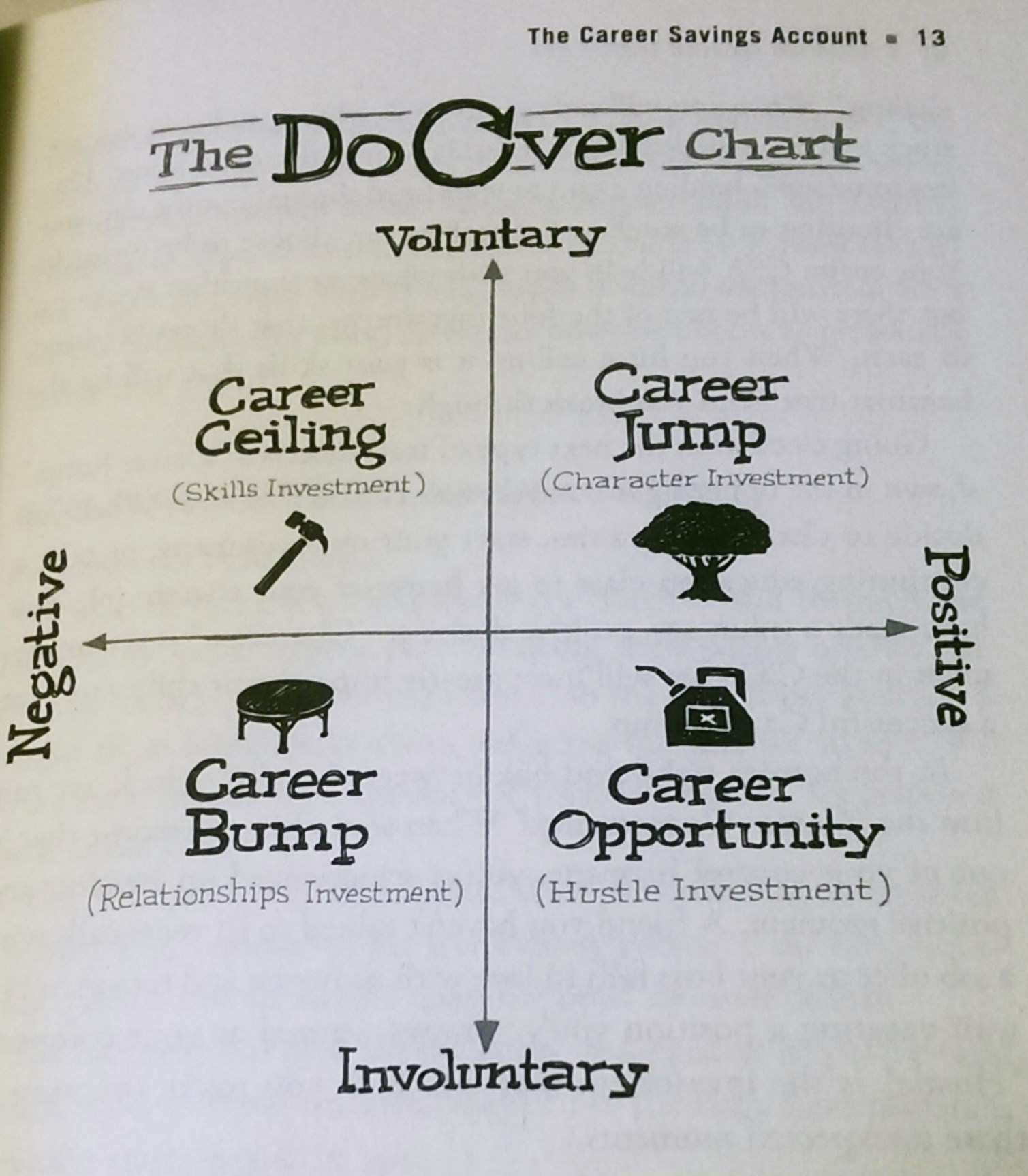
Jon Acuff talks about the four ways we invest in our careers – through skills, character, hustle, and relationships. In an interview with LifeReimagined.com, he had this to say about difficult, or neglected, work relationships:

“Even if you have skills, character and hustle, without relationships, it’s the career version of the Emperor’s New Clothes. Why?”

“If you don’t have relationships, you eventually don’t have people in your life who can tell you the truth about the decisions you’re making. You don’t have people who can tell you no or question you honestly. What I’ve learned is that leaders who can’t be questioned end up doing questionable things.”LifeReimagined.com interview with Jon Acuff

He identifies three types of people in our lives (work or otherwise, really): friends, foes, and advocates. Jon writes in Do Over:

“The best thing to give a foe is distance. We should ignore most foes. The problem of course is that we won’t. If your definition of foe is too loose and is essentially “anyone who kind of bothers me ever,” your job is going to be miserable. If you see people as your adversaries, it’s almost impossible to have a good working relationship with them. The first thing is to understand whether these foes are clueless or calculated. A clueless foe is that person whose behavior encourages you to fail. They are not malicious. They are not trying to make you lose, but with the power of their influence you are. “Bad habits are almost always a social disease – if those around us model and encourage them, we’ll almost always fall prey. Turn ‘accomplices’ into ‘friends’ and you can be two-thirds more likely to succeed.”Jon Acuff, Do Over

I think what Jon says is true. Because of my own worldview and value system (and married to Dave all these years), I don’t think we can just acknowledge there are foes out there and distance yourself from them. Sometimes, that is virtually impossible and still be effective at work. Because what can happen, if we don’t act to keep our own thinking clear, is that we take on some of that “foe-dom” ourselves. Maybe you aren’t going to be bosom buddies with this person, but your own work and other relationships can suffer if you develop bad habits around this person. Better to work on the relationship.

Blog - What You Think of People Matters - Dave 6 (2)Blog - What You Think of People Matters - Dave 6

“For no matter what we achieve, if we don’t spend the vast majority of our time with people we love and respect, we cannot possibly have a great life. But if we spend the vast majority of our time with people we love and respect – people we really enjoy being on the bus with and who will never disappoint us – then we will almost certainly have a great life, no matter where the bus goes. The people we interviewed from the good-to-great companies clearly loved what they did, largely because they loved who they did it with. – Jim Collins, Good to Great

Blog - What You Think of People Matters - Dave 3

For as he thinks within himself, so he is. Proverbs 23:7

Finally, brothers, whatever is true, whatever is honorable, whatever is just, whatever is pure, whatever is lovely, whatever is commendable, if there is any excellence, if there is anything worthy of praise, think about these things.Philippians 4:8

Blog - What You Think of People Matters - Dave 2

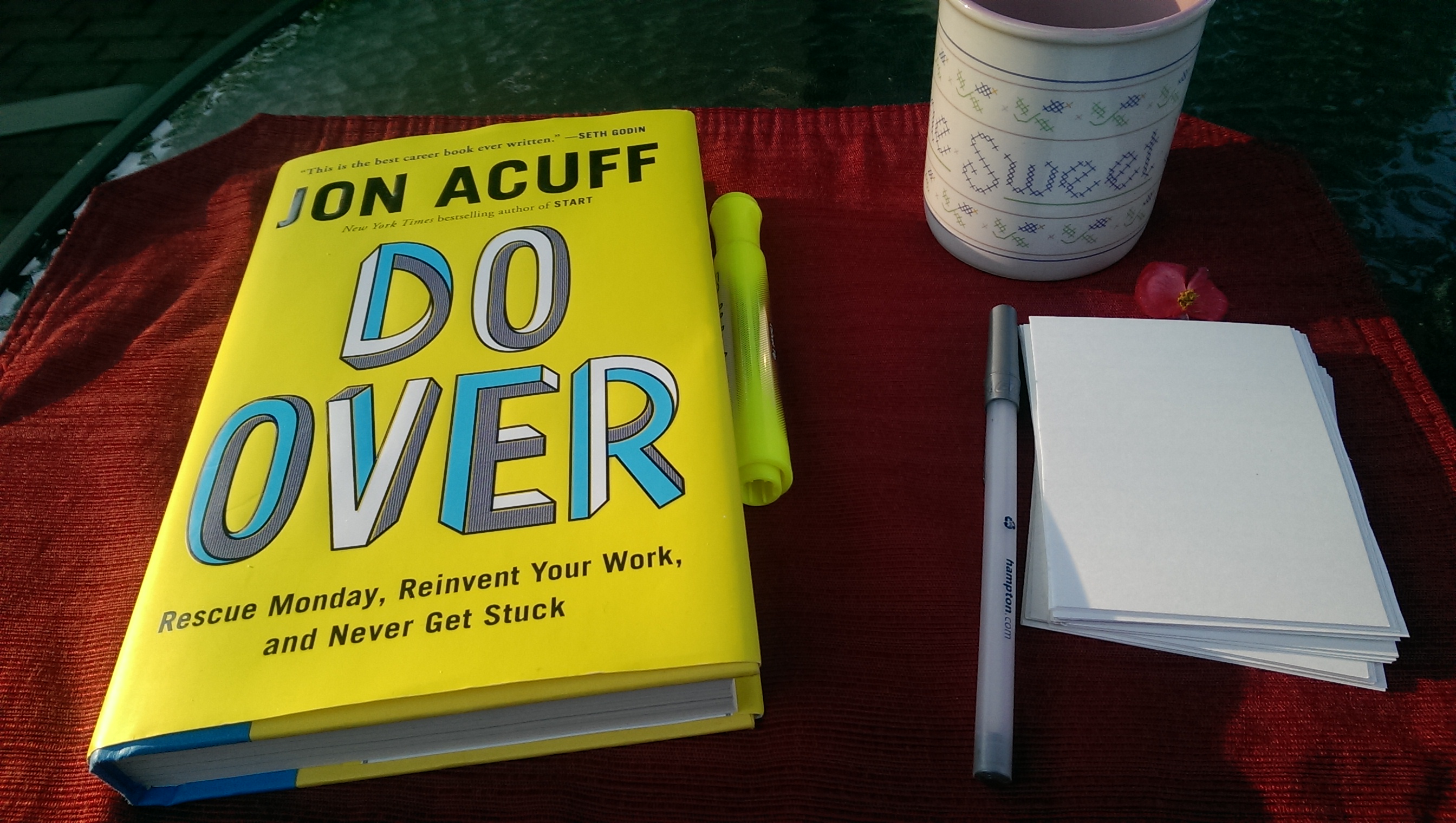
 Do Over by Jon Acuff

Fourteen Indispensable Leadership Quotes from Jim Collins – Thom Rainer

How to Deal With Difficult Co-workers – Read keeping in mind that some days you might be the one perceived as difficult.

Blog - What You Think of People Matters - Dave 4

Photos: Just a few of the men in Dave’s life who required no special work on his part to love and respect…and there are many more. Grateful.

Global Leadership Summit – 6 Take-Aways from Day 2 of #GLS15

Blog - Global Leadership Summit - thecrossingchurchnj.orgPhoto Credit: thecrossingchurchnj.org

Below are my take-aways from Day 2 of the Global Leadership Summit. Register now for 2016. Life-transforming.

Horst Schulze (Chairman/CEO, Capella Hotel Group; Founding President & Former COO, The Ritz-Carlton Group):

Mr. Schulze gave the Summit audience a primer on how to create and lead in world class service.  Foundational to his philosophy is that people matter – ” we are to care about people (our employees and our customers) and we work with excellence”.

He has a canon and  24 Standards of service* that all the Capella Hotel Group employees are expected to execute.  Not just as part of the function of their job, but because they matter – the people and the service.

In terms of service, we want 3 things:

  • No defect – You want the product to be defect-free (subconscious expectation).
  • Timeliness – You want timeliness. [In old days, check-in was 4 minutes to be good; today it’s 20 seconds.]
  • Caring – You want the people who give you the product to be nice to you (that’s why we call it service).

“The #1 driver of service and therefore customer loyalty is being nice.”

Service starts at the first contact.

Welcome

Comply with caring [give the customer what he wants]

Farewell

You can move a customer very quickly from satisfaction to loyalty.Blog - Global Leadership Summit -2 - Horst Schulze - liberty.eduPhoto Credit: liberty.edu

Sheila Heen (Founder, Triad Consulting Group; Faculty, Harvard Law School; Co-Author with Douglas Stone of Thanks for the Feedback: The Science & Art of Receiving Feedback Well):

Ms. Heen talked about feedback and the skill of receiving feedback well. A Harvard Law School professor, she also speaks/consults internationally on negotiation and conflict resolution. With this background, she gave the Summit audience helps on how important feedback is and not to miss it, even in the tension of a difficult or unfair situation.Blog - Global Leadership Summit - Sheila Heen

Photo Credit: triadconsultinggroup.com

“Feedback is my relationship with the world and the world’s relationship with me. Part of the problem with feedback is that it sits at the junction of two core human needs. On the one hand, we do want to learn to grow. On the other hand, we need to feel accepted, respected and loved the way we are now.”

“3 Different Kinds of Feedback with Very Different Purposes (we need all three kinds to learn and grow).

Evaluation – rates or ranks you against a set of criteria or against your peers. Defining the relationship. Cholesterol. Performance review.

Coaching – Anything that helps you get better or learn. Mentoring. Advice. Suggestions. Correction.

Appreciation – says ‘I see you.’ ‘I get you.’ ‘You matter around here.’”

“The [feedback] model for us is Jesus Christ. He accepts us just the way we are right now, in all our brokenness, and at the same time, he challenges us to learn and grow.”

Brian Houston (Founder & Global Senior Pastor, Hillsong Church; Author of Live, Love, Lead: Your Best Is Yet to Come):

Pastor Houston was my biggest surprise of the day. As a mega-church pastor with campuses not just all across Australia but all across the world, I thought he would be a polished, fine-tuned speaking machine. [Forgive me that, Brother Brian.] There was a gentleness and humility in him birthed out of hard times, struggle, and loss…filled in by God’s matchless grace. He shared some of his life story through a Q & A with Bill Hybels. It was a beautiful tribute to the love and power of God reflected in a life fully surrendered to Him. We will be buying his book Live, Love, Lead.

“I love what I do. I love the Lord and I love the church. I love people ultimately. That motivation has never left me. Even on the darkest days. In the biggest challenges. If you keep showing up, even when you get knocked down, God will be with you. Longevity is the greatest thing you can have for the glory of the Lord.

Sam Adeyemi (Founder & Senior Pastor, Daystar Christian Centre in Nigeria):

Pastor Adeyemi talked about growing up in a culture of leaders and followers where a hierarchical (or power) distance was common. Then He spoke of Jesus’ leadership and how God means for us to lead, including closing the gap between people.

“You will not find the definition of success for your ministry or organization until you help the people [God] sent to you to succeed. The object of leadership for many leaders is their own success, but the object of Christ’s leadership was the success of His followers.”

“Following you, [as a leader], should hold the promise of life change for those who follow you.”

“God calls us to create new power structures where power is used appropriately. Jesus gave his disciples authority and power. He gave power away.”BLog - Global Leadership Summit - Sam AdeyemiPhoto Credit: preachit.com.ng

Liz Wiseman (President, The Wiseman Group; Author of Rookie Smarts: Why Learning Beats Knowing in the New Game of Work):

Liz talked about the upside of being a rookie in the workplace.

“As Rookies – We operate in simple, small, gritty and powerful ways.

With experience comes knowledge, responsibility. Once we have knowledge, we tend to make assumptions, and we can make bad assumptions. Our minds sometimes fill in what is not actually there.”

“Leaders who master the art of pivot – as leader and learner (regaining your rookie smarts). Experiment – Throw away your notes. Ask the Questions (shift from knowing and operate from a place of inquiry). Operate from a mode of curiosity. Admit what you don’t know. Let someone else lead. Disqualify yourself (put yourself at the bottom of a new learning curve). Lead your team into the unknown. Set the stretch. As you grow as a leader, don’t forget to be a learner.”

Craig Groeschel (Founder & Senior Pastor, LifeChurch.tv):

Late on a Friday afternoon, full of words from all these other great leaders, Craig Groeschel powerfully and graciously took the stage. He encouraged us on how to build capacity. [This is actually a recent favorite topic of mine with the Lord and those I love.] Taking his text from Ephesians 3:20-21, Pastor Groeschel spoke from experience of how God will work in lives available to Him in ways we can’t even imagine. With that introduction, he dug into some exquisitely practical counsel on how to increase our leadership capacity.

5 Different C’s to Expand Your Leadership Capacity – Choose one to work on.

  1. Build your confidence.
  2. Expand your connections.
  3. Improve your competence.
  4. Strengthen your character.
  5. Increase your commitment.

Groeschel gave plenty of examples from his own life of what these might look like, and honestly, his teaching was so clear, we knew right away which one’s we would be working on, in the days ahead.

The Global Leadership Summit was also punctuated with videos of “Grander Vision” stories – people from all over the world who took seriously what they’d learned at previous Summits and went out and changed their worlds. We also enjoyed stirring worship moments, including a song set that Bill Hybels introduced as music soothing to our leader souls. Sometimes when nothing else seems to help, Hybels said, music can remind us of the nearness of God. Blog - Global Leadership Summit - SongSetListPhoto Credit: Twitter.com/wcagls

All this….and Michael Jr.

Thank you, Bill Hybels, and the Willow Creek Association, and all those leaders – who help make the many host sites possible and who demonstrate how possibilities can become realities when we lead well.

Blog - Global Leadership Summit - Carl & Bill HybelsPhoto Credit: twitter.com/michaeljrcomedy

*Capella Hotel Group’s Canon & 24 Service Standards – established by the founder and chairman Horst Schulze

Slideshare – How to Give and Receive Feedback – The Triad Consulting Group – Sheila Heen & Douglas Stone (authors of Thanks for the Feedback)

Global Leadership Summit – Register for 2016

Grander Vision Stories & Videos – Follow the GLS – Willow Creek Association

Twitter Account for Willow Creek Association – for #GLS15 comments and quotes and links to videos, articles, resources

Global Leadership Summit – 7 Take-Aways from Day One of #GLS15

Blog - Global Leadership Summit - thecrossingchurchnj.orgPhoto Credit: thecrossingchurchnj.org

Today I participated in the Global Leadership Summit at a satellite site near Richmond, Virginia. It was my first time, but I hope not to miss another. It is best described on the website- “a world-class experience designed to help you get better and embrace your grander vision—the reason God called you to lead. Broadcast LIVE in HD from Willow’s campus near Chicago to over 375 Premier Host Sites in North America and later around the world, you are invited to join an expected 260,000 leaders in 2015.”

7 great leaders spoke today, and 6 others will speak tomorrow. The experience was so meaningful and beneficial to me where I am currently in life, but I would recommend it to anyone whatever your situations.

Following are the briefest of 7 take-aways that are still buzzing around in my head. So much to process. Here’s a start.

Bill Hybels (founder/senior pastor of Willow Creek Community Church; chairman of the Willow Creek Association which launched the Global Leadership Summit in 1995):

“Leadership is [simply] moving people from here to there.”

“Armed with enough humility we can learn from anyone.” 

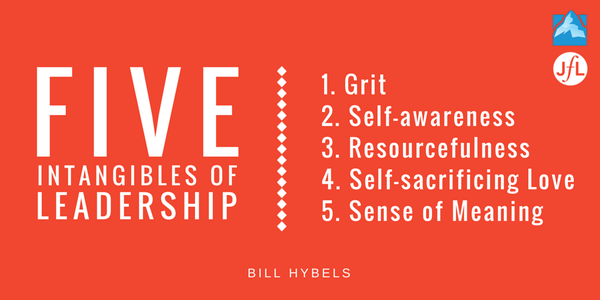
Hybels reflected on Richard Davis’ book The Intangibles of Leadership – and developed his own list of 5 intangibles for leaders:Blog - Global Leadership Summit - 5 Intangibles of LeadershipPhoto Credit: jobsforlife.org

He challenged us to discover the “white-hot why” of our lives – the why of what we do – what really matters for us. For Hybels, it’s “transforming lives”. He is a living example of being faithful to that “why”.

Jim Collins (best-selling author of Good to Great):

Jim Collins talked about what he learned as the recent Chair (2012-2013) for the Study of Leadership at the United States Military Academy at West Point. He reported that: creating a culture out of which great leaders are developed must include

  1. Serving a cause we can be passionate about and for which we would be willing to suffer;
  2. Growing through difficulty; and
  3. Succeeding by helping those around us.

“We succeed at our very best only when we help others succeed. We respond to our own difficulties by reaching out and saying ‘Let me help you.’ To communicate to others: ‘You are never alone.'”

“The greatest leaders find a way to make a contribution, a distinctive impact, on people, on real-live flesh and blood people.”

Ed Catmull (Co-Founder of Pixar Animation Studios; President of Walt Disney Animation Studios; Author of Creativity, Inc.):

Catmull wanted to be an animator from the time he was a child but couldn’t see a path to follow that dream. He ended up studying physics in college.Blog - GLobal Leadership Summit - Ed Catmull by brainpickings.orgPhoto Credit: brainpickings.org

“Science and art are not incongruous. Art isn’t about drawing; it’s about learning to see. Which business or professions do you not want to have enhanced ability to see?”

He talked further about 3 processes in film-making, all relating to accountability:

  1. Teams working together (using a Brain Trust – a group of colleagues all acting as peers, with vested interest, giving feedback;
  2. When failures happen in production – embracing [failure] but at the same time dealing with it with both total candor and kindness; and
  3. Operating within constraints (a budget) – actually pushes creativity higher and delivers better outcomes.

“Stories influence the world. We want to use story-telling for good.”

Adam Grant (Professor, Wharton School of Business; Author of Give and Take: A Revolutionary Approach to Success)

Grant talked about the three kinds of persons you find in the workplace…well, anywhere really:  1) Givers, 2) Takers, and 3) Matchers. After defining each of these and how they interact with each other in the workplace (buy the book), he prescribed ways to build a work culture. A work culture of generosity – the work culture that especially develops the givers, which brings the others along as well.

His three challenges were:

  1. Keep the wrong people off the bus. Get rid of the takers.
  2. Redefine giving. [He talked about the 5-minute favor and the 100 hours of volunteering across a year – these micro-lessons of generosity.]
  3.  Encourage help-seekers. – Developing the givers will nurture a culture of “How can I be the rising tide that lifts all boats?” – a Reciprocity Ring.

Dr. Brené Brown (Research Professor, University of Houston Graduate College of Social Work; Author of Rising Strong):

“Our brain is neuro-biologically hard-wired in the instant of a [hard time; difficult conversation] to make up a story as to what happened. If we can give our brain a story when something hard happens, we are rewarded by our brain (dopamine). Our brain rewards us whether the story is accurate or not. Our worthiness as people lives inside these stories. When we pretend or deny the story, it owns us. When we own the story, we get to write the ending.”

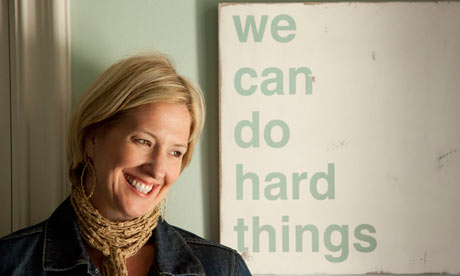
Brene BrownPhoto Credit: TheGuardian.com

Transformational leaders: 1. Do discomfort.  2.They have absolute emotional awareness about their own life, and about the people around them.

“We can’t ignore emotion. We are emotional people who sometimes think. Emotion dictates behavior. If you speak to the way they think or their behaviors, without speaking to their emotions, they will not change. Speak to their emotions. Curiosity and lines of inquiry are the greatest tools of leaders. ‘Help me understand’. “

Sallie Krawcheck (Chair of Ellevate Network; Former President, Bank of America’s Global Wealth & Investment Management):

“The retirement savings crisis is a women’s crisis – we retire with 2/3 the retirement income as men and live 6-8 years longer than men. I love men. I’m married to a man. But you guys are going to die, and we as women will be living with this crisis.”

“My “‘white-hot why’ is advancing women, elevating women. “

“I work every day as though my children are watching me.”

Albert Tate (Founder/Senior Pastor of Fellowship Monrovia, Southern California):

Pastor Tate preached (and I mean preached) on the miracle of Jesus’ feeding of the 5000 (John 6:1-13), using the five loaves of bread and two fish brought to Him from a boy in the crowd.

Tate renounced the leadership lie of “leaving it all on the field”.

“One of the most key things we can do as leaders as to bring what we have, give it to Jesus, and then get out of the way.”

Leaders, you don’t have to go home on empty. You don’t have to leave it all on the field. Christ left it all on the Cross. Bring what you have. Whatever you have, give it back to Him. Then get out of the way, and watch in awe and wonder at what He does.”

These are just 7 take-aways of the 20 pages of notes I took during today’s Summit. Such great teaching – inspiring, empowering, mystifying, really.

Download the Global Leadership Summit app. Read what you can (in these authors’ books and via all the online resources – articles, blogs, video). Take down the dates for the Global Leadership Summit of 2016 and plan to register early.

Being the leader we hope to be is within our reach.

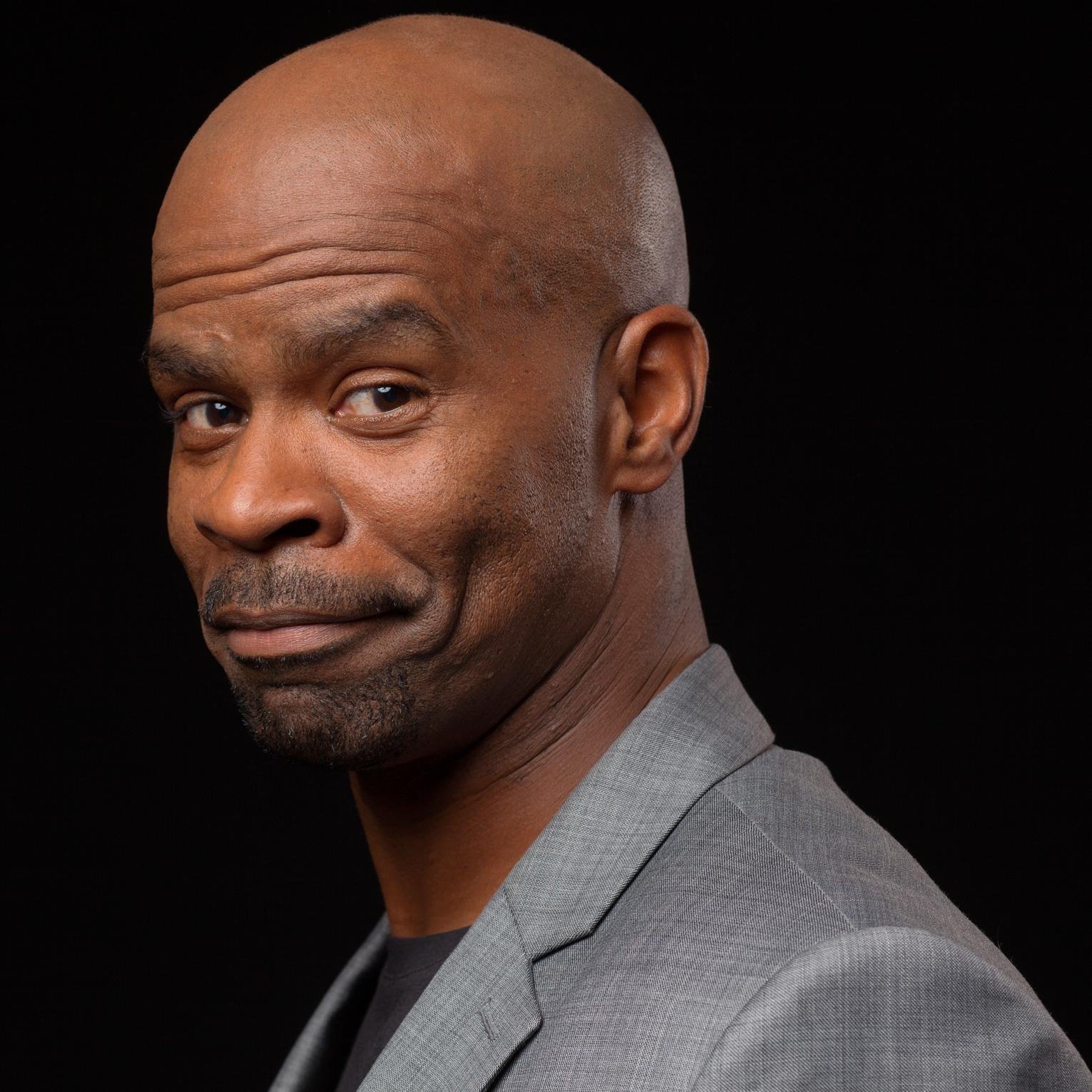
Post-Script: Michael Jr. was on and off stage to make us laugh and to look at life from just a bit of a different angle. Love him!

Blog - Global Leadership Summit - Michael Jr

Photo Credit: MichaelJrComedy

Global Leadership Summit – Willow Creek Association

Global Leadership Summit App

Collaborative Conversations – Quotes to Stir Your Thinking on Leadership and Language in Workplace Decision-making

Blog - Collaborative ConversationsPhoto Credit: AJCarlisle.files.wordpress.com

Change is normal, and resisting change is normal as well. You may be part of an organization or company where sweeping changes are being implemented, even this week. Or maybe you are not on the inside loop of these decisions, so you are not privy to the change coming. Whether you are part of that process or not, consider how you might have a role in making change work, in your sphere of influence, among your colleagues.

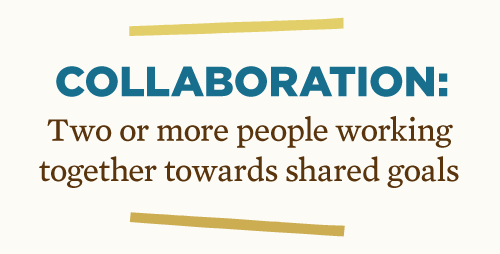
You may already have read and profited from the book Crucial Conversations. Now consider collaborative conversations. Collaboration, simply defined, is “working together towards shared goals”. Collaborative conversations bring a collective intelligence to bear on the problem to be solved, vision to be defined, or direction to be changed.Blog - Collaborative ConversationsPhoto Credit: ThoughtFarmer.com

David Perkins, a Harvard professor, wrote about collaborative conversations in the workplace, using the metaphor of King Arthur’s round table. He described the beneficial nature of bringing several principal players (or stakeholders) to the table and treating each one with an equal or autonomous voice.

“A round table makes it a little easier to pool mental effort. A round table makes a group a little more intelligent…For a group to display intelligence in a sustained way, the members have to value their exchanges and stick together to keep making them. This depends on positive symbolic conduct [side messages sent by our words and behavior]…and collaboration… It’s not ideas, but people with ideas that make things happen.” – David Perkins

“One of the simplest ways to immunize a culture against broken trust, corruption, and animosity is to build a common vision.” – David Perkins

Perkins’ book King Arthur’s Round Table: How Collaborative Conversations Create Smart Organizations is a tremendous resource in developing this kind of decision-making work environment. An Executive Book Summary* can help you get started.

I personally thrive in such a setting and intuitively understand the value-adding nature of collaborative conversations. In researching this workplace topic, and choosing the links below, I came across a fascinating paper** by Heather Davis, a professor of RMIT University Australia.

Davis presented her paper at the 14th International Conference on Thinking (2009, Malaysia). She discussed how workplace leaders often choose “languages of war” in making and communicating decisions and creating change. Her paper is heady stuff but if you read her thoughts below you will want to read the whole paper. It gives huge support to the role of collaborative conversations.

“In [leadership’s] ‘language of zealous allegiance’, there are expectations of allegiance [in the workplace] that lay a path for uncritical acceptance and passivity. This manifests in an expectation that followers be conscripted wholly to the cause. There is little room for questioning. [Davis quotes Hage]: “Conscription means one important thing: there is no questioning of orders, one only executes them; ‘either you’re with us or you’re against us’. “ (Hage, 2004, p. 3).””

“Rhetoric plays out in the workplace too and can be tested by how well leaders:

  • hear and acknowledge the ‘other’ point of view,
  • see the ‘other’ as people rather than pawns or simply abstractions,
  • manage the distance, materially and metaphorically, between themselves and the people and sites affected by their decisions.”

“In the corporate world there are many examples of executives living and working in gated communities or otherwise removed by dint of corporate hierarchy or geography from the people and conditions affected by their decisions. Often, these leaders are also surrounded by people who can only agree, leading to little opportunity for double loop learning or deeply reasoned decision making processes. Whether our leaders live in gated communities is their business, but if they think, work and take refuge within a ‘gated’ mindset then we all need to be concerned. These conditions lead to hubris and have been the undoing of many leaders and corporations.”

“[Leadership’s] language of regrettable necessity translates directly to the “There Is No Alternative”. [This strategy] is used to always move the focus of discussion away from any big picture ‘why’ questions. This is done by shifting the focus to discussions only about the budget pie or, more particularly, the piece of the budget pie that is contestable. People find themselves fighting for a slice of the budget pie and energies focus only on the ‘pie’ and getting the biggest piece of it. This shifts the focus from larger issues such as whether the budget is set correctly, what has been included and what has been excluded. Thinking about alternatives is never an option.”

The role of the organisation is ‘to know its purpose and not be diverted from it’ (Drucker, 1993). This is a timely reminder here – easier said than done in times of flux, complexity and discontinuous change.”

“Language is the visible tip of the cultural iceberg that largely remains hidden.”

“Perkins (2007) used two metaphors in his presentation and so far I have only privileged the five languages of war metaphor in this discussion. The other metaphor used was the “five languages of peace”. The main difference between Perkins’ languages of war and peace are that the war metaphor is founded on exclusivity and a preference for limiting discourse to its [leadership’s] own narrowly defined boundaries. Perkins’s peace metaphor is founded on inclusivity and opening up the space for conversations and conflicting views [i.e., collaborative conversations].”

“Oppositional language and the pitting of one deeply held worldview against another will not lead to resolving the underlying problems of the workplace. Rather, space for conversations to surface underlying assumptions is required. Perkins’ language of peace metaphor confirms that that there are always other lenses to view the world through, not just the one that [leadership] prefers.”

Provocative reading from this Australian educator. Bottom line: Those of us in leadership carry a great burden of responsibility. We at times must make difficult and sometimes painful decisions. Adding voices to that decision-making can generate even more challenging processes to negotiate. Still, we will make more sustainable decisions for “better futures” if we bring those most affected (or most experienced or insightful) to the table. Whenever possible. That’s the gain of collaborative conversations – working together toward shared vision and shared ownership.

Stay engaged in your workplace. You can make a difference.

*King Arthur’s Round TableHow Collaborative Conversations Create Smart Organizations by David Perkins – an Executive Book Summary

Leadership Lessons from King Arthur – a Review of Harvard Professor David Perkins’ book King Arthur’s Round Table

How to Lead When Change is the New Normal

The Art of Collaboration (Collaborative Behaviors) – by Steve Dale (includes a SlideShare)

Collaboration: What Does It Really Mean?

**Troubling Invisible Barriers to Better Futures: Surfacing the “Five Languages of War” in the Workplace – a scholarly paper by Heather Davis, presented at the 14th International Conference on Thinking

The Five Literacies of Global Leadership – What Authentic Leaders Know and You Need to Find Out – by David Hames – Business Book Summary

What Is a Coaching Conversation? from Opening the Door to Coaching Conversations by Linda Gross Cheliotes and Marceta Fleming Reilly 

The Perils of Indifference – a Speech by Elie Wiesel

Cutting Through the Hype – What “Collaboration” Really Means – ThoughtFarmer.com

Making the Workforce Work! The Collaborative Workforce Initiative

Jon Acuff on Character at Work – 9 Quotes & a Challenge – Part 4 of the Do Over Series

Blog - Jon Acuff & wife JennyPhoto Credit: Nancy Ray Photography

Who would have thought reading a business book would become a deeply personal experience? Encouraging. Empowering. Do Over has launched itself in my life. Jon (the writer) and Jenny (the wife) Acuff have become like good friends, in a virtual book-driven way. He’s clearly a funny, risk-taking, keen observer of people in the workplace.  She, on the other hand, seems to both hold his feet to the ground and spur him on to what’s next. I’m pretty certain that Jon’s “do over” has Jenny written all over it. Thank you, Jenny.

When he talks about character (in the section of the book I’m covering today), he compares it to planting fruit trees. Character takes time to grow. Its fruit is worth the work and the wait.

As in previous blogs in this series, Jon will do most of the talking.

9 quotes follow. Also an exercise and a closing challenge. I hope you read the book. It is seriously, or not so much seriously, like grappling with a friend about a deep longing for career. Then receiving the best. advice. ever. Jon’s cool, and all…but his own fight for humility and honesty and his own fears and failures give him a platform. A platform to talk into my life and into the lives of those I love the most – my husband and my adult children. Thank you, Jon.

So here’s a bit of what he says about character and its impact on us in the workplace…especially in considering a Career Jump.Blog - Do Over

“Relationships get you the first gig. Skills get you the second. Character is the reason that people will still want to give you another chance if the first opportunity fails. Character is the mortar between all the other parts [relationships, skills, hustle] of the Career Savings Account. It’s what holds the other things together. “

“Character is also what you need the most when you make a positive, voluntary career transition, or what we’re calling a “Career Jump.” You need it the most then because it will be tested the most when you ‘just go for it’ or ‘chase a dream’.”

“When you make a [career] jump, you will be tempted to cut corners, to quit when the going gets tough and lose your patience when the results you expected don’t immediately happen. It is your character that will push you forward.”

Exercise: This time we don’t use note cards, but a notebook would be handy. Jon asks the question: What’s one character trait, related to your career, that you’d like to grow stronger? That’s where we start. You might still want a friend’s help in this. None of us are perfect, so it shouldn’t be too difficult. Just pick one to start.

As part of this exercise, consider those weeds in the workplace that could choke out that character trait you’re planting and nurturing. Jon lists four especially nasty (and all too common) ones:

  • Narcissism – our focus is all on ourselves. Weighing every decision and process in your workplace as it relates to you.
  • Dishonesty – Covering a mistake, embellishing our performance, gossiping, outright lying.
  • Pessimism – That negative cup-half-empty (or even broken) take on how things are going at work. It’s not just a weed in your own orchard but it can seed clouds over your coworkers’ view of work. Pessimism can rob you of the ability to brainstorm and to dream (“two activities that require the optimism of creativity”).
  • Apathy – you’ve gotten to the place you just don’t care anymore. What was once being passive now becomes deeply defiant. Partnered with pessimism, you convince yourself that you don’t have what it takes to do a Career Jump. A dry and dogged inertia can set in, crippling your ability to orchestrate a Career Jump.

Acuff focuses on 3 character traits in particular to grow in your Career Savings Account: Generosity, Empathy, & Being Present.

Generosity is a game-changer. During a Career Jump give generously as a way to beat back the weed of greed. Greed will end up costing you a lot more than you think. Make your definition of generosity bigger by being generous with your skills and time, not just your money.”

Empathy = Understanding someone else’s needs and acting on them. Generosity and empathy are closely intertwined; they go hand in hand. The stronger you get in one, the stronger you’ll get in the other.”

“The simplest thing you can do to be empathetic [is to] show up.”

“If you really want to reinvent your work and get ahead, there are three things you need to deal with – your phone, your computer and your meetings. Be present.”

[You hear this a lot these days – how distracting are our phones and other electronic devices, and how our shortened attention spans have impaired us related to deep thinking and creative, out-of-the-box dreaming and decision-making. The ones who deal with these will be the outliers – the leaders in the fields of our future. It’s laid out there – now for us to take our lives back.]

“You need character the most when you decide to chase a dream. “

“The moment you decide to make any sort of change in your career, you send other areas of your life into chaos. The bigger the change, the bigger the chaos. Wherever you jump, your character jumps with you.”

Challenge: “Is living with the chaos of a decision easy? Not really, but you do get used to it. I try to create [chaos] sometimes as a way to hide from something else I’m afraid of. I’ve discovered that’s a lightning-fast way to drain a Career Savings Account. When real chaos comes…don’t fight it. If anything, lean into it. ‘Easy’ and ‘adventure’ very rarely travel together.”

These Four Character Flaws Can Kill Your Career – Jon Acuff

Jon Acuff – Character Archives

The Awesome Career Audit – Jon Acuff

Jon Acuff Quotes by Goodreads (different from ones above)

Why I Hate Jon Acuff by Rob Shep

Do Over – Rescue Monday, Reinvent Your Work, and Never Get Stuck – by Jon Acuff – Notes (Part 1)

Courage – Putting Off Cynicism and Giving Up Control

Blog - Courage from bpnews.net photosPhoto Credit: bpnews.net

Be strong and courageous! Do not fear or tremble before them, for the LORD your God is the one who is going with you. He will not fail you or abandon you! – Deuteronomy 31:6

When I am afraid, I will trust in You. In God, whose word I praise, in God I trust; I will not fear. What can man do to me? – Psalm 56:3-4

Couragethe strength of mind to carry on in spite of danger or difficulty; old French meaning: “from the heart

Courage comes with time or necessity. When I was a child, Chicken Little (from the children’s story Henny Penny) could have been my modus operandi in dealing with life. The world seemed a scary place. If there was any way I could control it, I would (people-pleasing, saying what I thought people wanted to hear instead of the truth sometimes, circling up with friends who preferred me). Me, me, I, I. Being afraid centers on self…it keeps truth out and generates a “reality” that keeps walls up. To break out of that, courage was a necessity. With time and growing up, the world become smaller (and God bigger), and courage was born.

In my twenties, I read a little book shared with a me by a brave friend who had herself broken out of her own self-imposed walls. The book was Hannah Hunnard’s Hinds’ Feet on High Places*. The heroine was called Much Afraid. It is an allegory of a Christ-followers who struggled with fear and yet desired to know God in the high mountains of joy. The book tells a story of how she lost her fear over her journey of faith and devotion.

Courage comes with focus, focusing up and out. It won’t come with focusing on self and being in control. It comes with turning our focus on God and others. Simple as that. If we want to control our situation, we can rein in our circumstances and relationships such that we are not threatened. Occasionally someone or something may break through our fortress, but with determination, we can quickly rebuild. Circling tightly around our own selves, and only those people and things that matter most to us. Trumping any reality we choose to ignore or avoid. Or so we think…Blog - Courage 2 from bpnews.net photosPhoto Credit: bpnews.net

Courage takes risks and lets go of control. As I got older, I realized that life is so much more precious than the bits that I try to control. A long time ago, a little saying, “Let go, and let God” settled into the hard drive of my mind. I don’t always surrender myself to fullness of life and depth of relationship that God has for us…but when I do…well, worth the risk. Worth giving up my paltry control. Worth it.

Courage keeps me from cynicism. Paul Coughlin said it best: “Cynicism drains our lives of hope, optimism and creativity—raw material that help build our foundation of courage. Men are especially seduced by cynicism’s ability to look like you are on the playing field of life, committing deeds that are useful and powerful. But in reality the cynic is comfortably anchored on the cushy sidelines of life, lifting no burdens, creating no light & being no salt. This ability to always see the worst in people and situations is often a hiding place for fear, timidity and indifference. It allows us to be invulnerable observers rather than participants at risk and of sacrifice. Worse, the cynic often justifies his lack of redemptive and courageous action. Ultimately, cynicism is the language of self-preservation, which drains us of courage and shrivels our souls.”**

Take courage, Dear Ones. Leave off cynicism. Give up control. See what God will do when you show up, ready (in Him) for whatever comes your way today.

Blog - Courage 4 from bpnews.netPhoto Credit: bpnews.net

What Does the Bible Say About Courage?

Bible Verses About Courage

*Hinds’ Feet on High Places Quotes

** What Drains Us of Courageous Faith?

YouTube Video – Courageous – final scene

Blog - Courage 6 - film CourageousPhoto Credit: CourageoustheMovie


10 Quotes by Jon Acuff on Developing New Skills & Sharpening Old Ones – Part 3 of Do Over Series

Nathan at guitarPhoto Credit: Nathan Mills Guitar

There’s this guitarist I know. His music is a work in progress. Not his music itself, because he hones his craft daily. Still, his career in music is a study in skill development. No industry stands still. The ability to silence a room with the sound you bring out of a guitar does not a living make. Usually.

There are so many other skills called to bear in a successful career in music today. Composing, arranging, teaching, performing, collaborating, marketing, production, diversifying style or instrument. Whew!

Then there’s your day job (by necessity, or for other reasons). Wisdom is to bring the same disciplines and desire, of that skilled musician, to work every day. To be the best asset you can be for your employer or your company. Shirking entitlement and nurturing an attitude of graciousness and gratitude.

Who is this person?!

Jon Acuff talks about becoming such a person in his book Do Over. He tackles the subject of sharpening and developing skills as imperative to any career, and especially to break through a Career Ceiling.

Have you ever gotten stuck in a job? No, I’m not talking about being ungrateful or feeling entitled to a better situation. I’m talking stuck – as in getting to a place in your job where you can’t see being able to ever advance or be more creative or grow professionally?

Acuff invites us readers to take a good look at our skills to see what exactly we uniquely bring to your job. This would include skills we might have discounted or even forgotten we had.

Below are 10 bits of wisdom from Jon’s section on skills:

  • Relationships get you the first gig, skills get you the second.
  • When you hit a Career Ceiling, skills will be the hammer you use to break through.
  • Don’t let fear hide a skill you’ve always had or wanted to pursue. Just because you’re afraid of doing something doesn’t mean you shouldn’t.
  • Small skills have the tendency to add up to big careers.
  • Master the invisible skills – Go to work; add value; own your attitude.
  • When you have a bad attitude it flavors every part of your performance.
  • If you want to get better at something, it always costs time. If you don’t have any, steal some from…Facebook or any number of things that are requesting that resource without paying you anything in return.
  • I’m convinced that fear beats the “You don’t have enough time” drum because it never wants you to invest in your career. This is a lie.
  • Your willingness to discipline one part of your life creates freedom in another.
  • You will need skills most when you find yourself stuck. The ceilings are designed to filter out the lazy and uncommitted. Every skill can be a hammer. Start banging. Career Ceilings were meant to be broken.

Like with looking at our relationships, he calls for us to use note cards and list (one per card) all the skills we can think of – whether currently using them or only in the past; whether work-related or not so much. Once we’ve exhausted our ideas on skills then, he says to look for patterns.* It’s so easy to settle into a rut of doing the same thing every day. Going after new skills and sharpening old ones help us to be good at our jobs and, at the same time, love our work.

Whether you are a musician, a teacher, an I.T. guy or a caregiver, you have skills and you can build on those skills. Determining to be diligent to grow your skills and grateful for the opportunities to learn will take you farther than you know. Right through that career ceiling.

“You know who we should fire, that guy who keeps learning how to do his job even better,” said no one ever. – Jon AcuffBlog - Do Over - Jon Acuff

Photo Credit: Forbes.com

*A Simple Two-Step Exercise for Figuring Out What You’re Really Good At – Jon Acuff, Business Insider Start Your Do Over Today

Start Your Do Over Today! – Jon Acuff

Jon Acuff: Why Most People Don’t Reach Their Full Potential And How You Can

Nathan Mills on Vine

Crosstrain at Habitat for Humanity - Aug 30 2014Learning new skills on-site with Habitat for Humanity