Category Archives: Books

Worship Wednesday – ‘Tis the Season – What’s at Stake When We Indulge In Attacking Each Other

Blog - House Divided - coffeewiththeking.orgPhoto Credit: coffeewiththeKing.org

“A new commandment I give to you, that you love one another, even as I have loved you, that you also love one another. By this all men will know that you are My disciples, if you have love for one another.”Jesus, John 13:34-35

“Why do you look at the speck that is in your brother’s eye, but do not notice the log that is in your own eye? Or how can you say to your brother, ‘Let me take the speck out of your eye,’ and behold, the log is in your own eye? You hypocrite, first take the log out of your own eye, and then you will see clearly to take the speck out of your brother’s eye.”Jesus, Matthew 7:3-5

Do not tear down the work of God for the sake of food. All things indeed are clean, but they are evil for the man who eats and gives offense. It is good not to eat meat or to drink wine, or to do anything by which your brother stumbles. The faith which you have, have as your own conviction before God. Happy is he who does not condemn himself in what he approves.”Paul, Romans 14:20-22

The “happy holidays” are upon us – juxtaposed against a landscape of polarizing political campaigns and various divisive protests and boycotts. In a season of the year (for us in the USA, in particular), we could enjoy warm community and loving unity, even when we differ on some things. Yet, we still divide ourselves up into various camps.

Where are we to land in all of this as Christ-followers?

For sure, it is not in attacking those who are not like us or who may be like us but differ in preference or opinion. Especially, we who call the name of Jesus as Savior – we have no ground to stand on in attacking each other…ever.

So why do we do it? There is this soul satisfaction that comes with feeling right, or smarter, or more cool, or culture-savvy. A soulish satisfaction from which God has actually called us, and toward something extraordinarily better. A unity, a bond of love. A love by which we are known to the rest of the world as followers of Jesus. Here there is even ground for all of us, the weaker brother and the stronger one (that one who becomes weaker when he taunts or shames the other). Jesus calls us to deal with our own flawed perspective (“log”) before we can help dislodge the painful speck from our brother’s eye.

Do we really care about the other, that one God calls us to love as we love ourselves? Do we show that love to the world when we treat those with whom we disagree with the same derision or contempt as the world does? Or worse? Are we keeping company with arrogant haters or are we becoming one? When we publically part company with believers who are offended by what we consider silly matters, what is at stake?

You may ask, “what about those hate-filled people who call themselves Christians and who protest all sorts of things, based on their “Christian” sensibilities?”. Still…Scripture is clear how we are to treat them…Jesus calls us to love even our enemies. (Matthew 5:43-45)

“If a house is divided against itself, that house will not be able to stand.”Jesus, Mark 3:25

There is much to lose and much more to gain in wrestling successfully with this dilemma – exposed in our private conversations and public (un-social) media.

Voices of Wisdom to help us – Keep Unity, Guard Community – Choosing to Love, Refusing to Shame

Blog - House Divided - Scott Sauls

Scott Sauls is the author of Jesus Outside the Lines: A Way Forward for Those Who Are Tired of Taking Sides . He has also written the richest piece on this whole shaming and raging culture that colors us as Christ-followers, if we partake in its rank hatefulness. In fact, I can’t even quote from his article, because I want you to read it…please. It is a quick but full read on identifying the problem, and seeing what is the truth of how we are to live, in the example of a living, flesh-and-blood human-like-us man, Tim Keller. Please…read Scott’s article. Transforming.

Christians are in many ways a band of opposites, who over time grow to love one another through the centering, unifying love of Jesus…sincere believers can disagree on certain matters, sometimes quite strongly, and still maintain great respect and affection for one another…I don’t know where I would be without the influence of others who see certain non-essentials differently than I do..In non-essentials, liberty. And to this we might add an open-minded receptivity. We must allow ourselves to be shaped by our ‘other’ brothers and sisters for Jesus’ sake. We will be the richer for it.” – Scott Sauls

“This great passion for souls [Romans 9:1-3] gave Paul perspective. Lesser things did not trouble him because he was troubled by a great thing – the souls of men. ‘Get love for the souls of men’ – then you will not be whining about a dead dog, or a sick cat, or about the crotchets of a family, and the little disturbances that John and Mary may make by their idle talk. You will be delivered from petty worries (I need not further describe them) if you are concerned about the souls of men…Get your soul full of a great grief, and your little griefs will be driven out. – Charles Spurgeon – Spurgeon Gems, p. 7-8

“I will never get why we defend our chicken sandwiches and our gingerbread lattes but we won’t take a stand for the things that actually matter to God. Are we loving the Lord with all our heart, soul, mind, and strength? Are we loving our neighbor as ourselves? Are we obeying God in our personal lives? Are we defending and providing for the poor, the widow, the orphan, and the immigrant? Are we sharing the hope we have in Christ? That’s pretty much our full job description.” – Angela

Blog - House Divided - Jonathanpearson.net

Photo Credit: JonathanPearson.net

What I Came To Respect Most About Tim Keller (Even More Than His Preaching) by Scott Sauls

We Disagree, Therefore I Need You by Scott Sauls

Jesus Outside the Lines – a Way Forward for Those who are Tired of Taking Sides by Scott Sauls

What Stops Our Fighting? by Tony Reinke

Pixar’s Inside Out – and a Second Thought on Joy & Sadness

Blog - Inside Out - Theology of Sadness - scpr.org

Weeping may tarry for the night, but joy comes with the morning.Psalm 30:5

“Blessed are those who mourn, for they shall be comforted.Matthew 5:4

My husband and I watched Disney/Pixar’s Inside Out this weekend. It was so stressful. We wondered how children managed coping with the anxiousness of the story. Riley, the heroine of the film, is an 11y/o who moved with her parents far away from her hometown. The story tells how she deals with that move with the help of her emotions (5 in particular – Joy, Sadness, Anger, Fear, and Disgust).

Happy, happy, happy little Joy is the moon-faced, darling emotion of Riley’s. The tension in the story is Joy’s attempt at damage control as little Sadness begins coloring some of Riley’s happy memories “blue”. The plot twists and turns as Joy tries to right Riley’s world.  She is pulled into a journey with Sadness alongside and spends most of the film trying to get back to Riley’s “presence of mind”. Meanwhile, Anger, Fear, and Disgust do what they can to help Riley maneuver through her day…without Joy and Sadness’s help. It’s a scary prospect.

I’m thinking children must get caught up in the adventure, the mesmerizing visuals and the familiar faces of these emotions. For me, it was just stressful.

I have a huge respect and admiration for Ed Catmull after hearing him speak at Global Leadership Summit 2015. Catmull heads the work of Disney/Pixar Animation Studios. Dave recently read his book Creativity, Inc. and so enjoyed it that I’m reading it also.

Blog - GLobal Leadership Summit - Ed Catmull by brainpickings.orgPhoto Credit: Brainpickings.org

Watching Inside Out, my mind wandered to the creative teams at Disney/Pixar. What were they thinking?! Then later, I had second thoughts on the film…after watching bits again as our youngest son, visiting over the weekend, watched it on pay-per-view.

He, too, also thought it was stressful, but as I watched his face, watching the film…I saw what we might have missed as older ones watching. Wonder, surprise, vexation, empathy. In the strong face of this young man, I saw the response to the film maybe hoped for by the creators. The audience identifying with the film…and in the end…understanding and a sweet resolution of the seeming conflict between Joy and Sadness.

On that second watching (both the film and watching my son watching), I liked Inside Out much better. It helped me to Google that great “Aha!” moment of Joy’s – when she discovered:

“Sadness…Mom and Dad, the team…they came to help because of sadness.”

No spoilers for those of you who haven’t seen the film, but for me, a couple of articles really resonated (see below). I struggle personally with sadness which shades the joy I also experience.  Then that same joy re-colors the sadness, bringing perspective and healing. Josh Larsen, in an article on the Think Christian website, wrote beautifully about this film’s message (at a deeper level):

It’s a rich subject – one mined with Pixar’s usual combination of wit, intelligence and emotional resonance – and also one that echoes a Christian understanding of the human experience. Christianity, after all, is an expression of joy in response to – not in denial of – deep sadness…we can’t fully understand our place in God’s story unless we’ve experienced sadness of some sort. It isn’t until we recognize the deep sorrow of this world – the Fall, and our perpetuation of its effects – that we can fully appreciate the almost laughable generosity of Christ’s redemptive act. And only then will we know true joy, the fairy-tale ending that is God’s restoration of His creation. – Josh Larsen

Toward the end of the film, there’s a lovely moment between Riley and her parents. She finally comes to terms with her deep sadness in moving away from home. It’s a place all of us have been if we linger with a person grieving…a person who knows we love them.

I was reminded how sadness sometimes  overtakes us and it’s best confronted head-on in all its real…on-another’s-shoulder…Riley, tears spilling down her face, doesn’t hold back as she pours out her grief to her parents. As they cradle her into their arms they, too, confess their own sadness.  Then it happens…that last wet-faced shudder into Daddy’s chest; that deep sigh…all cried out.

That’s what we love about Disney/Pixar…and the God-given emotions of joy and sadness…especially when love is in the mix.

Inside Out and a Theology of Sadness – Josh Larsen, Think Christian

Many critics love Pixar’s ‘Inside Out.’ Not this guy.

Inside Out Quotes

All 15 Pixar Movies, Ranked From Worst to Best

5 Friday Faves – Leadership, Keeping House, Mentors, Wonderful Defects, & a Phenomenal Guitarist

Blog - Friday Faves

Fridays come so fast. So here we are again. My top finds this week (and there were so many great reads and experiences this week, it was hard to narrow down to 5). Hope yours is a lovely day and a stretched-out weekend.

1. On Leadership – Brian Dodd creates great lists. In this week’s blog, he published 24 Steps to Successfully Leading Through CrisisOf his 24 steps, these are my favorite (but do read all of them):

  • To Successfully Lead Through Crisis You Must Provide Stability – Stabilizing the organization gives your people a sense of security.
  • To Successfully Lead Through Crisis You Must Become A Giving Engine – Rather than focusing inward and solely on the issues you are facing, look outward and turn your attention to others.
  • To Successfully Lead Through Crisis You Must Offer Hope – This tells others success is in their future.
  • To Successfully Lead Through Crisis You Must Offer A Plan – Hope is not a strategy.  There must also be a detailed roadmap showing why hope exists.
  • To Successfully Lead Through Crisis You Must Change – The behaviors which got you in the crisis will not get you out of the crisis.

Also not to miss is Paul Sohn’s Top 30 Must Read Posts on Leadership October 2015.

2. Keeping House – I struggle with keeping order in my house, even though now it is only Dave and me. No one else to make the mess but us. Ann Voskamp, farm wife, mother of 6, and best-selling author, wrote about keeping house this week – 6 Ways to Speed Clean to a Clean Enough House. Her photographs of life are so gorgeous that it’s hard to imagine things out of place or not camera-ready. Yet, even Ann had to come up with a system of order which she shares in this blog. My two favorite suggestions from her list of 6 follow:

  • Make your bed every morning. I love this one because it’s so easily done. It gives its own cheer of “Hurrah! You’re off to getting lots more done.” BLog - Keeping HouseMy husband and I have very different “sides of the bed” – he’s a bit neater; I’m a piler. Projects, bits of paper, “things to read later”…sigh…but, the bed is made. Score!
  • 30 Minute Love SHAKs“Do Surprising Home Acts of Kindness — Love SHAKs — 30  minutes of random cleaning [right after dinner], just 30 minutes of every single person who lives here seeing something that needs to be cleaned —- and everybody cleaning as quickly as they can. The point of everybody working together at the same time to surprise everybody? Everybody models the kindness of cleaning for each other, nobody gets to say what they’ve got going is too important to get in on loving each other, real progress is made because everybody is working fast and together, spurring each other on — and we all get to say we are on the same team.” I love this! Might start with 15 minutes with the love of my life. What do you think, Dave?

3. Mentors Jon Acuff rarely has guest bloggers, but this week he shared his spot with Lewis Howes, author of The School of Greatness. Howes writes about his personal experience of connecting with top mentors. Having been a professional football player, he might have been tempted to just ask them out for coffee. No, he did something altogether different. He offered to serve them in any capacity they would find helpful. Don’t miss his wise counsel on this.

“Don’t ask for anything. Just offer to be of meaningful service, in any capacity that will help the mentor in achieving what is important to them. Offer to work for free. Say yes to anything. Hustle hard. Show them you are grateful and willing to learn. Keep your word.” – Lewis Howes

4. Wonderful Defects – This week, I discovered Paul Phillips and his blog He’s Taken Leave. He tells a beautiful story of an old beautifully marred violin and bridges that to our own propensity to comparing ourselves to others.

“As with the old violin, the comparisons with others prove nothing.  Each person who walks through my door is a masterpiece of unique design. Every one, a treasure.  Every single one. Fearfully and wonderfully made (Psalm 139:14). I can almost hear the music again.”

Blog - Old Violin - wqxr.orgPhoto Credit: wqxr.org

5. Phenomenal Guitarist – This guy. Nathan Mills – related? Yes. I get to be Mom to this amazing young man… Because we are related and it’s not always comfortable for him how effusive I am about his music…I restrain myself. Once in awhile, it feels down-right wrong not to share with you something about him. Right now, he’s fairly new to that larger world of music, but he’s playing, teaching, arranging, and composing. One day, you will know him…and be able to enjoy his music beyond YouTube, social media, or local performance. Mark it down.Nathan at guitarPhoto Credit: Duy Nguyen

What are your favorites from this week? Would love to hear about them. Share in comments, please.

Blog - Fall Back YardOur back yard this week – Fall

Monday Morning Moment – Marking Lives Well-Lived, Work Well Done

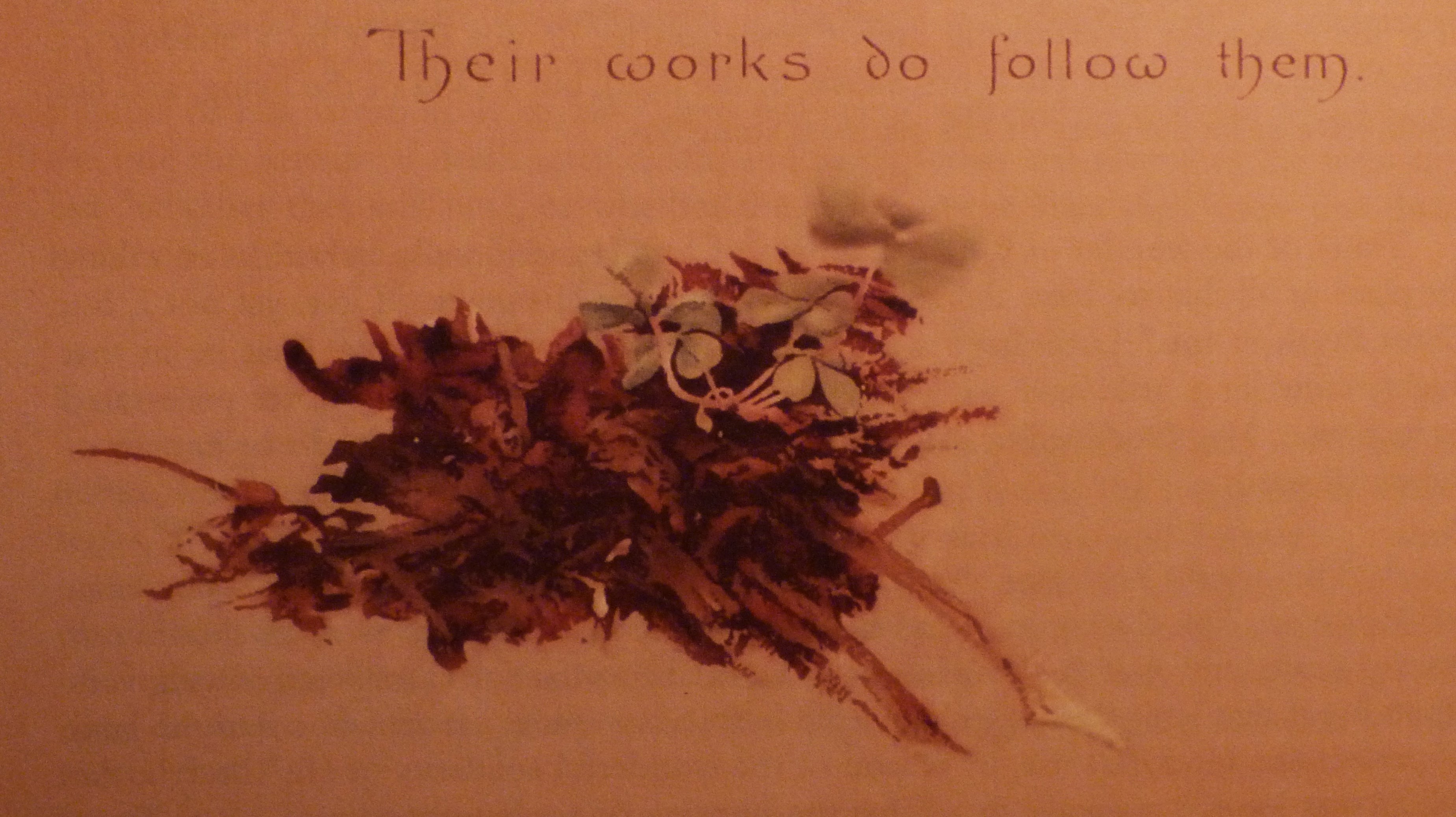
2015 Nov - Blog - Lilias Trotter - Well Done 004Photo Credit: Lilias Trotter, Parables of the Cross

There are no ordinary days, nor are there ordinary lives. This morning, Monday, November 2, is a day I want to mark as an opportunity to celebrate extraordinary lives. Yet, how is that even possible? People who live for grand causes and for God Himself don’t look for celebrations or accolades. What do we do then when we want to stand in ovation and clap them back out onto the stage for an encore?

Celebrating retiring colleagues is best done by those who know them well – who have watched them through the most difficult times, seen them push through seemingly insurmountable circumstances, resonated with their joy in the simplest triumphs.

How do we mark lives well-lived and work well-done? I don’t have that answer yet…except to express personal gratitude and to live and work in the shadow of these who went before…to steward well their example.

For today, I will enter into that process of puzzling over how properly to celebrate the lives and work of those “finishers” who have done well to fix their eyes on the goal…right through. It doesn’t feel enough, but for today, I join a great cloud of witnesses, so grateful to see how it is to finish well.

Therefore, since we have so great a cloud of witnesses surrounding us, let us also lay aside every encumbrance and the sin which so easily entangles us, and let us run with endurance the race that is set before us, fixing our eyes on Jesus, the author and perfecter of faith, who for the joy set before Him endured the cross, despising the shame, and has sat down at the right hand of the throne of God.” – Hebrews 12:1-2

As I sort this all out, I would be grateful for any stories you have of celebrating work well done and lives well lived. Following  are some quotes of those who finished strong or who, living still, are living well.

There are no ordinary people. You have never talked to a mere mortal. Nations, cultures, arts, civilizations – these are mortal, and their life is to ours as the life of a gnat. But it is immortals whom we joke with, work with, marry, snub and exploit – immortal horrors or everlasting splendors. This does not mean that we are to be perpetually solemn. We must play. But our merriment must be of that kind (and it is, in fact, the merriest kind) which exists between people who have, from the outset, taken each other seriously – no flippancy, no superiority, no presumption.” – C. S. Lewis

“The reward for work well done is the opportunity to do more.” – Jonas Salk*

“When we are at the worst times of our lives, when we are battling with something, or struggles, whatever it may be, when we are at our highest point as well, when things are going really well, we want somebody to comfort us and be there for us and to say, ‘Well done.’ That’s Jesus!” – Russell Wilson*

“Well done is better than well said.” – Benjamin Franklin*
“The pinnacle of the fulfillment I can ever experience for my spirit and soul is to hear from the Lord, when I see Him face to face, ‘Well done my good and faithful servant.'” – Nick Vujicic* Blog - Well Done - Nick Vujicic
The Apostle Paul, in an encounter with Jesus, was completely transformed from a life of murderous, religious zeal to a life of complete surrender to God (something altogether different). He speaks of living life, and finishing well – likened to fighting a good fight or running a race to the finish.
“But I do not account my life of any value nor as precious to myself, if only I may finish my course and the ministry that I received from the Lord Jesus, to testify to the gospel of the grace of God.” – Acts 20:24
“For I am already being poured out as a drink offering, and the time of my departure has come. I have fought the good fight, I have finished the course, I have kept the faith; in the future there is laid up for me the crown of righteousness, which the Lord, the righteous Judge, will award to me on that day; and not only to me, but also to all who have loved His appearing.” – 2 Timothy 4:6-8
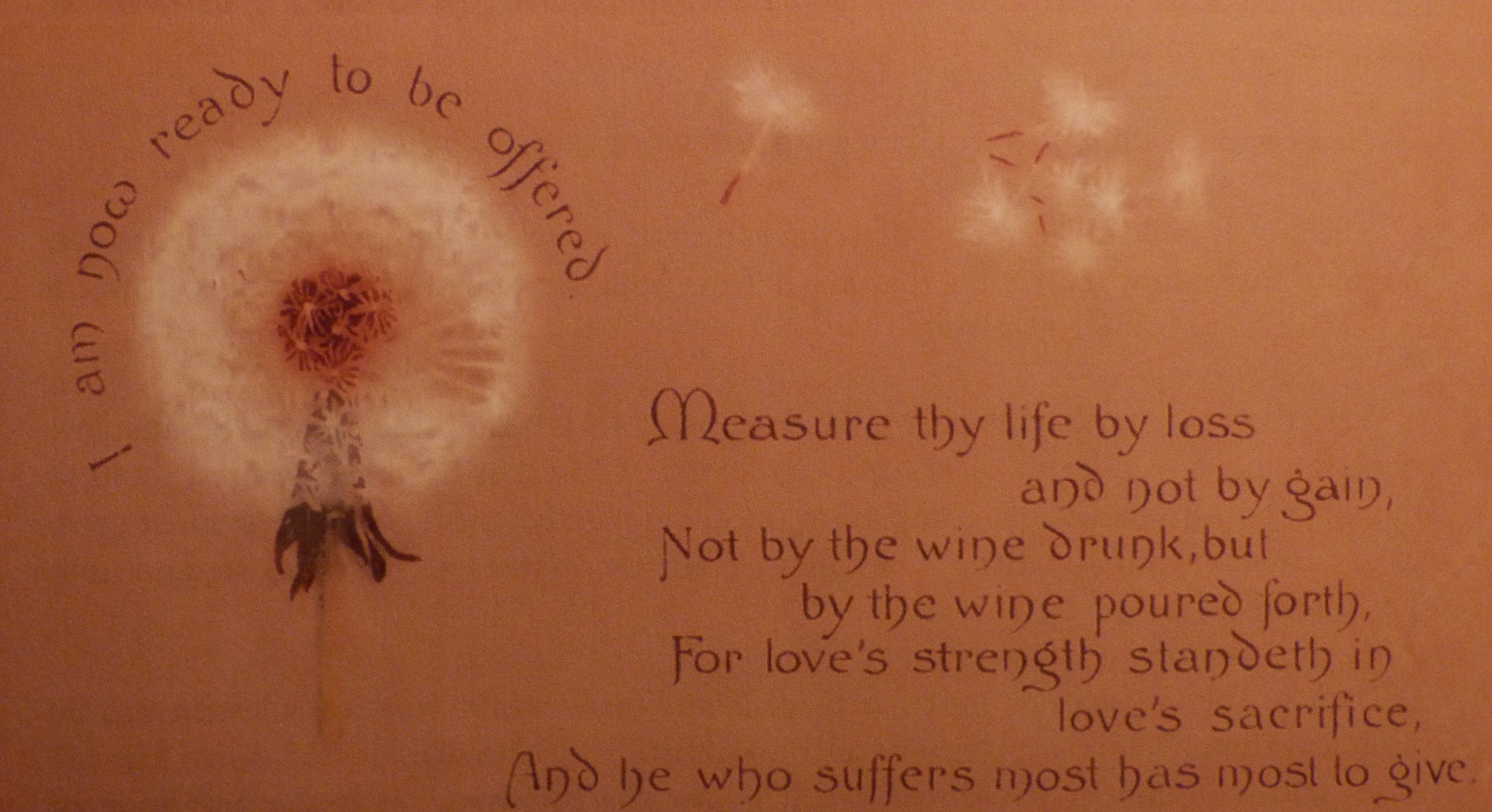
2015 Nov - Blog - Lilias Trotter - Well Done 002Photo Credit: Lilias Trotter, Parables of the Cross
For us all…there is still a race to be run.
“My legacy doesn’t matter. It isn’t important that I be remembered. It’s important that when I stand before the Lord, He says, ‘Well done, good and faithful servant’. I want to finish strong.” – James Dobson*
“It is finished.” – Jesus, from the cross (John 19:30)
Blog - Well Done - Parables of the Cross - Lilias Trotter

Building a Healthy Work Culture – in a Season of Change, Uncertainty, and Dips in Morale

Blog - Culture of FunPhoto Credit: Grasshopper.com

What are you celebrating at work these days? Hopefully you didn’t have to think really hard. Just having a job is something to celebrate, for sure. Beyond that, hopefully you have work that gets you up in the morning with a sense of purpose and a gladness of heart for your work community.

What if that’s not the case this morning? Any number of things can cause our workplace to become more stressful than healthful – a disappointing outcome in our research, a conflict over division of labor, a company merger or buy-out, a downsizing. I am awkwardly  list such things because none may touch on your situation. What is your work situation and your current work culture?

Whatever it is, working over a protracted period of time with low morale makes for a difficult work situation. We want to do whatever we can to turn that around. Not just for the sake of the organization and the goals of same, but for the sake of the personnel. The wellbeing of employees is the biggest factor in the long-term productivity of organizations. Yet, how do we wrap our collective leadership minds around such a thing as morale and engagement?

The key is work culture – and fostering a healthy work culture with as much energy and thought as we do our product line or customer service.

I was reading about work culture, especially related to a season of spiraling morale, and came across a pdf introduction of the book How to Build a Thriving Culture at Work by Rosie Ward and Jon Robison.

Not having read beyond the introduction of the book, I can’t give a full recommendation yet. However, the first few pages have already resonated with me about what is at play related to morale, or well-being, and what could be possible to restore it. Here are some quotes from Ward & Robison’s Introduction:

“Despite overwhelming evidence of a powerful link between effective leadership styles, positive work cultures and higher levels of organizational performance, many companies still operate with a top down, authoritarian management style, do not measure or intentionally create their desired culture, and do not effectively develop current and future leaders to maximize employee engagement and wellbeing.”

The authors go on to say that even in work situation where the leadership style is more employee-centered, the idea of work culture may not be well-understood or operationalized.

“Culture is the differentiating factor between high-performing and low-performing companies; however, most companies have not identified, articulated, measured or intentionally created their desired culture.”

The dilemma of employee morale may actually extend to the leadership team itself.

“The majority of executive leadership teams are not operating in a truly cohesive manner, and many leaders themselves are at a point of burnout.”

“Edgar Schein, PhD, leading researcher on corporate culture, describes culture as ‘the hidden force that drives most of our behavior both inside and outside organizations’. It’s like looking at a river. All of the things you see on the surface, from the flow of the water to the shape of the riverbed, are manifestations of an ever-changing, powerful current beneath the surface. In terms of culture, the current that ultimately guides the strength and direction of the organization includes the unconscious, taken-for-granted beliefs, perceptions, thoughts and feelings of employees. The interaction between leaders and culture is profound and critical when considering how to transform or evolve the overall culture and subcultures within an organization.

“Patrick Lencioni writes that, to be successful, an organization must focus on two basic qualities: It must be smart, and it must be healthy. According to Lencioni, a ‘smart organization’ is one that excels in the classic fundamentals of business — i.e., strategy, operations, finance, marketing and technology. A “healthy organization” is one in which there are minimal politics, minimal confusion, high morale, high productivity and low turnover. While being smart is only half of the equation, for most organizations, it occupies almost all of the time, energy and attention of leaders. Yet, according to Lencioni: ‘Once organizational health is properly understood and placed into the right context it will surpass all other disciplines in business as the greatest opportunity for improvement and competitive advantage. Really.‘”

Blog - How to Build a Thriving Culture at Work

Photo Credit: Amazon.com

How to Build a Thriving Culture at Work, Featuring the 7 Points of Transformation by Rosie Ward and Jon Robison

Work culture and employee well-being are not addressed by just another wellness program. Organizational ethos and values must incorporate both philosophy and programming to build morale, trust, and engagement of employees. Especially if the organization has been through a protracted season of change and uncertainty.

The good news is that possibilities abound. Workplace development literature is rich with approaches and frameworks that you will find helpful in attacking your own set of challenges. One such article is Workplace Culture is Everything: 20 Ideas For Building a Thriving Team – Great links to 20 articles on Workplace Culture. [I apologize, since I’m citing this resource, for the “coded” profane word in the title of one article. Good read otherwise].

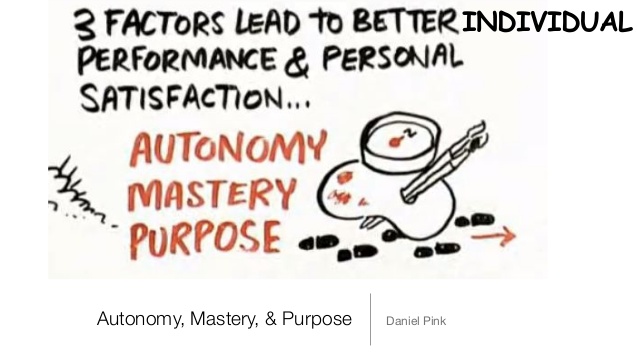
Another book I re-discovered in reading about morale this weekend is Daniel Pink’s Drive. When a company is in the middle of a reorganization or restructuring, employee wellbeing (engagement, performance, satisfaction) can get lost in the sheer workload of the executive leadership team. This is when Human Resources, Membercare, or the Employee Medical Program can offer their own recommendations as to how to rebuild the work culture from the personnel side.

Are you in such a season? What have you done in this area? What has been helpful? I would love to hear about how your organization has dealt with employee morale and engagement during seasons of transition.

Blog - Healthy Culture - Motivation - Slideshare.netPhoto Credit: Slideshare.net

Drive: The Surprising Truth About What Motivates Us by Daniel H. Pink

11 Ways to Create a Thriving Workplace

How to Create and Maintain a Workplace Culture That Will Make Your Company Thrive

5 Friday Faves – Christmas Music, Geese in Flight, Restaurant Salad, a Bookstore, Procrastination in Writing

Blog - Friday Faves

At a conference and am running late so this will be a super quick run-through of five of my favorites of this week. Happy Friday!

  1. Christmas Music – We start listening to Christmas music in October. There are so many songs that take us right to the throne-room of God Himself. This one by the King’s College Choir is so exquisitely beautiful. Morten Lauridsen’s O Magnum Mysterium (“O Great Mystery”). Enjoy –

2) Geese in Flight – In the Fall, seeing Canadian geese (and sometimes even snow geese) flying in formation gives me so much joy. My husband’s family lives on the Eastern Shore of Maryland/Delaware, and the migratory return of geese northward is a common and extraordinary sight.  Greg Richardson wrote a piece this week on spiritual life and geese in flight. He reminded me of a long-favorite short essay – 7 Lessons from Geese.

Blog - Geese - Leadershiponpurpose.orgPhoto Credit: leadershiponpurpose.org

3) Restaurant SaladO’Charley’s – where kids eat free – or at least they did when our kids were little. My absolute favorite salad is their Southern Pecan Chicken Salad (so much crunch and chew with fried chicken, dried cranberries, pecans, and Mandarin oranges. Also just the best Balsamic vinaigrette. Dave prefers O’Charley’s California Grilled Chicken Salad – similar array of textures and sweet and sours, but healthier. Not distracting me from my favorite. [Our friend didn’t even order the salad; the Fish & Chips is also yummy!]Blog - OCharleysBlog - OCharleys - foodspotting.comPhoto Credit: Foodspotting.com

4) Bookstore – I’ve actually never been to this bookstore but the video below captured my book-lover heart. It’s a part of the Westminster Theological Seminary in Glenside, Pennsylvania. I saw the video as part of watching the livestream of the Christian Counseling and Education Foundation conference last week. If you love books and best practices, watch the video. Your heart will sing.

4) Procrastination in Writing – I knew I had this conference this week and could have already written the pieces for this week beforehand – even Friday Faves could have been of a different week’s “faves”. But, no! Procrastination is a struggle for me. So many choices, so many other things easier to be distracted by than focusing on writing. Jerry Bridges, a successful and prolific author, writes sympathetically and encouragingly about procrastination – something he has also struggled with. Such a helpful article. If I hadn’t procrastinated, I would list out some of his helps…but instead I leave you with a graphic from an altogether different article. Sigh…

Photo Credit: Tom Gauld, Gointothestory.blcklst.com

What are some of your faves of this week? Hope your weekend is full of making more.

Creativity, Inc. – Ed Catmull’s Story of Pixar, Working with Creatives, & Steve Jobs

untitledIMG_0223Photo Credit: Amazon.com (l) & Deb Mills (r)

Dave, the husband in my story, has always pointed me in the direction of transformative books and learning experiences. That path converged with this year’s Global Leadership Summit and Ed Catmull’s Creativity, Inc.

Bill Hybels interviewed Ed Catmull about his role in co-founding Pixar Animation Studios and pioneering the field of computer animation. Now President of Pixar Animation and Disney Animation, he has an extraordinary story to tell of leading creatives in innovative film-making. Mr. Catmull’s wisdom and humility can be well-applied in any workplace situation.Blog - GLobal Leadership Summit - Ed Catmull by brainpickings.orgPhoto Credit: brainpickings.org

“Science and art are not incongruous. Art isn’t about drawing; it’s about learning to see. Which business or professions do you not want to have enhanced ability to see?”

During this interview at GLS15, he talked about the business processes he uses in film-making. We can relate this level and quality of  accountability in any organization or company:

  1. Teams working together (using a Brain Trust – a group of colleagues all acting as peers, with vested interest, giving feedback;
  2. When failures happen in production – embracing [failure] but at the same time dealing with it with both total candor and kindness; and
  3. Operating within constraints (a budget) – actually pushes creativity higher and delivers better outcomes.

“Stories influence the world. We want to use story-telling for good.”

Listening to Ed Catmull talk about leading at Pixar and Disney whetted our appetites to read his book Creativity, Inc.

Originally, Mr. Catmull worked in the computer graphics department of Lucasfilm, in the beginning years of computer animation. In his book, he tells about his incredible journey in those early years right through to today. It was a wildly bumpy road at first and the work was almost sidelined had it not been for Steve Jobs buying Pixar from Lucasfilm.

Toward the end of the book, Catmull writes about Steve Jobs. They worked together for over 25 years, and the Jobs he knew was a much more complex and lovely man than who we knew through other media. A tribute full of “candor and kindness” – as much about how Ed Catmull sees people as about the amazing leader that was Steve Jobs.

Whatever your work, you want to read this book. Catmull describes how he modeled openness, confidence in, and care for his employees. There are trust builders and wide gates for innovation woven into Pixar’s business processes. Whatever our sphere of influence is, we can all learn to be more effective leaders as we think through how Catmull leads.

At the end of Creativity, Inc., there are 5 pages of bulleted principles that Mr. Catmull encourages as starting points for critical thinking. Here are just a few:

  • If there are people in your organization who feel they are not free to suggest ideas, you lose. Do not discount ideas from unexpected sources. Inspiration can, and does, come from anywhere.
  • It’s isn’t enough merely to be open to ideas from others. Engaging the collective brainpower of the people you work with is an active, ongoing process. As a manager, you must coax ideas out of your staff and constantly push them to contribute.
  • There is nothing quite as effective, when it comes to shutting down alternative viewpoints, as being convinced you are right.
  • If there is more truth in the hallways than in meetings, you have a problem.
  • Change and uncertainty are part of life. Our job is not to resist them but to build the capability to recover when unexpected events occur. If you don’t always try to uncover what is unseen and understand its nature, you will be ill prepared to lead.

Creativity, Inc. is not just a book for whom we now consider “creatives”. It’s a book for any of us who want to employ and empower people to grow personally and in community and to produce in ways that yield great products/services.

We all have stories that can influence the world for good…if we grow a work culture where those stories matter and can be freely explored.

Creativity, Inc.: Overcoming the Unseen Forces That Stand in the Way of True Inspiration by Ed Catmull and Amy Wallace

Global Leadership Summit – 7 Take-Aways from Day One of #GLS15

YouTube Video – Steve Jobs Remembered by Larry Ellison and Pixar’s Ed Catmull

YouTube Video – Ed Catmull: Keep Your Crises Small

Monday Morning Moment – On Silos and Tribalism – Taking “Us” and “Them” to a Better “We”

Blog - Silos & TribalismPhoto Credit: Slideshare.net

“Silos”, as a workplace term, is such a fitting description for what we do to distinguish ourselves from each other. It means compartmentalization based on specialization. Now the term “silos” is less used, replaced by the cooler term “tribes”. Unfortunately, because the workplace woes of old are still in operation, “tribes” have deteriorated into “tribalism” or…[Hello] “silos”.

I began thinking about this again this weekend when a retweet came up in my Twitter feed featuring Gianpiero Petriglieri. So much organizational resource – money and time – is spent on specialization and grooming leaders. It’s a pity when the outcome actually draws down the organization ( to small pockets of “tribal buddies”) instead of honing expertise and relationships across departments, across disciplines.Blog - Silos and Tribalism

What if we could break down silos, and reorient and reenergize tribes? What if workplace tribes incorporated a grand plan that nurtured inclusion – creating “a rising tide that lifts all boats” (Adam Grant)?

Years ago, when I was a young instructor at Yale University, I experienced workplace silos. There were bottlenecks through which I had to maneuver, until I figured out how to win those beyond the bottlenecks. Since then silos have been a part of life for me, as I’m sure they are for us all. Oncology nursing had a different prestige than critical care nursing. Was one better than the other? No.

Working in the Middle East had its own set of challenges different from working in Europe. Does that mean one elicits greater respect or benefits than another? Of course not. Right? Communication between those in the field and those in the home office can also become very much an “us” and “them” transaction.  Even within the home office, one department may seem more the “flavor of the month” than another. What are your silo/tribe challenges?

Brilliant business writers can give us great tools and insight with breaking down silos (see fast reads in the links below). If you are anticipating a major change in your organization (buy-out, down-sizing, shift in focus/product line), it makes for a perfect storm to deal with silos. Of course, if management across the organization leads out with a unifying goal (a “battle-cry”), the possibility for success is heightened. I don’t think, however, that this is the only hope for success.

What if one department, a single silo or tribe, decided to tackle the problem? What would that look like? From my work experience and from learning from great leaders, both celebrity and colleague, here’s a bare-bones minimum how-to-get-started list:

  • What is your common goal as an organization? What is the clear unified rallying cry around which you can collaborate?
  • What are your own silo biases? Do you communicate that you think your department, location, specialization should have some sort of favor? Deal with that. It’s the first barrier that has to come down.
  • If trust has been disrupted or destroyed, who can you partner with to begin to rebuild trust? Name them, and begin the process (if you pray, you might begin praying for their success as a department/division – make it NOT about you).
  • What objectives can you establish as a department to guide you in staying focused on high-value collaboration across-specialties?
  • How will you measure the course of your action toward becoming a non-silo, less tribal department? Set a time. 6 months or across whatever acute crisis you see coming. Be as intentional and broad-reaching as you are able, given your own workload. Remember that silos alter the math in a workplace – 1 + 1 + 1 = 2 when teams aren’t sharing information and working at cross-hairs. We can make the math work better, as we work, against the flow, toward creative collaboration. 

My professional life has had various silo experiences, from teaching in an Ivy League university to working on a highly innovative team (recklessly creating its own brilliant unintentional silo, later with personal regret). Silos and workplace tribes never get us where we want to go collectively. Bring ’em down.

I would love to hear about your work experiences…any struggles, breakthroughs, or victories in this area of breaking down silos and building a culture of “Yes, WE can…together.”

Blog - Organizational CUlture - Lencioni book Silos, Politics & Turf WarsPhoto Credit: Amazon.com

Silos, Politics and Turf Wars – A Leadership Fable about Destroying the Barriers that Turn Colleagues into Competitors

Silos and Tribes – Think Different

http://www.slideshare.net/JDDillon/breaking-down-silos-how-social-learning-changed-everything-for-kaplan-atdtk

17 Strategies for Improving Collaboration – from the Freiberg’s – Do Not Miss This One.

How to Build Trust and Fight Tribalism to Stimulate Innovation

Breaking Bad – Squash Silos & Tribalism – Breakthrough Personal Branding

Leadership Axioms: Powerful Leadership Proverbs by Bill Hybels

Grit – When You’re Hurtin’ But Not Quittin’ – the Role of Personal Resolve and a Team Alongside

131118-Z-WM549-015Photo Credit: Pacific News Center

Diligence is a word that defined my many years in learning Arabic while we lived overseas. Keeping at it, even when I wanted to quit, helped immensely. The joy of living life in a second language is worth all the work. Diligence is a great assist to staying on course, but it is not “grit”.

I saw grit at work recently in a group of servicemen, in Virginia Beach, doing their morning exercise. [Not the picture above but that image has its own neat story of grit]. We had taken a couple of days away from the city to get our breath, by the ocean. Walking on the boardwalk early in the morning, we encountered this small group of airmen from the nearby Naval Base, doing a group jog. We saw them starting the run and saw them again coming back – 6 miles total. Most of them were young, thin, and fit.

What caught our eye, in particular, were two men in mid-life, carrying a bit of weight, bringing up the rear. Approaching the end of that run, they looked like they were hurting, but they definitely weren’t quitting. I’m sure to stay as fit as the rest of the group was, a certain measure of grit was at play…but these two, in this snapshot of life, showed the grit that brought me to write today.

Wikipedia.org defines grit as a character trait  of applying passion and perseverance over time toward a goal, end state or objective. Grit goes beyond ability and can withstand failure, keeping the end goal in sight, and pushing through to it.Blog - Grit - Definition 2

Bill Hybels, at the Global Leadership Summit 2015*, talked about grit as “one of the greatest indicators of success”. Gritty people, he said, are the ones who “play hurt” and rarely ever give up. “They expect progress to be difficult, but believe with their whole being that they can be successful if they don’t quit.” It’s “The Little Engine That Could”. Abraham Lincoln. Nelson Mandela. Gandhi. Martin Luther King. Hybels also encouraged the audience that grit can be developed. From childhood through adulthood.

Jon Acuff (author of Do Over) defines grit as “stubbornness in the face of fear“.  In his book, he gives a short list of what’s needed in making gritty decisions (in the “hustle” of work):

  • Time – we think the world “hustle” has to mean fast, but it can also mean focus, intention, pace.
  • Counsel – Lean on your relationships. Some of the worst decisions are made alone. Who are your advocates? Have you given them time to reflect on it or are you rushing right by the wisdom they have to offer? Let them speak into it. A year from now, looking back on the decision, you’ll be glad you made it as a team.
  • Questions – Always ask awesome opportunities, awesome questions. We skimp on due diligence. “What am I not seeing right now?”
  • Kindness – Give yourself permission to make the wrong decision, because…you’re going to. Break the tension of feeling like you’re going to be perfect by giving yourself some kindness from the outset.
  • Honesty – When you look back on a decision, remember that you made that decision with the best information you had at the time.

As we saw those two older heavyset men running just behind their younger airmen colleagues, we saw men with a goal in mind. There was also something more – the cadence to the group’s run that seemed to work to keep them all together. Whether at work or in family relationships, we want to do all we can to help those gritty ones be successful. Their resolve may get them to the goal anyway, but we all benefit when we are able to “stay on course” together.

Have you “grown gritty” over your lifetime? Are there gritty folks in your life who you love to champion? Tell us about them below.

*Session 1: Bill Hybels Opening Session – Global Leadership Summit

Wikipedia Article on Grit

The Truth About Grit

The Grit Test

Jon Acuff on the Role of Hustle in Taking Hold of Career Opportunities – Notes & Quotes – Part 5 of Do Over Series

How to Make Grit Decisions and Built a Grit List by Jon Acuff

Do Over: Rescue Monday, Reinvent Your Work, and Never Get Stuck by Jon Acuff

Does Teaching Kids To Get ‘Gritty’ Help Them Get Ahead?

Efficiency, Effectiveness, and Adaptability – The Very Human Side of These Business Processes

Blog - Effectiveness vs. Efficiency

Photo Credit: digital-knowledge.nl.dikn/en

I will never forget when an elder statesman in an organization (both dear to me) was “let go”, so to speak, because of a need for more “bang for the buck”. The expression was so toxic then and still carries a deep pain. It speaks to the tension between efficiency and effectiveness, and the pressing need for adaptability as our world rapidly changes. At the same time, we have to remember, in almost all situations, it’s people in the mix of these business processes.

Efficiency is a good thing. However, it must be secondary to effectiveness. Effectiveness is primary always. How best to assure both is to build an organizational culture of adaptability.

Tom Coyne has defined effectiveness, efficiency, and adaptability brilliantly in a published 2-page pdf*. Here they are:

“Effectiveness measures the extent to which the results you have achieved match your goals.” Strategy leaders set those goals, and the goals determine who does the work, when, where, and how.

“Efficiency measures the amount of scarce resources used to obtain the results achieved.” His use of the term “scarce resources” is thought-provoking. When we focus on efficiency – getting the most benefit from the least resources – we can lose our objective. Resources are precious. Full-stop. Whether they are people, time, or finances. We must consider how we spend resources always, and especially when they are scarce.  However, if we miss the mark on our objective because we misspent our resources or allocated them unwisely, then we paid for efficiency with effectiveness. A poor transaction.

Gen. McChrystal, speaks to this, in his book Team of Teams (more about this book follows). He puts a captivating twist on it in his challenge: “If I told you that you weren’t going home until we win—what would you do differently?” We can’t focus primarily on efficiency when effectiveness is the outcome we desire. Adaptability is really what will get us to where we want to go.

Adaptability measures the change in Effectiveness and Efficiency for a given level of change in the agent or organization’s environment…One of our great failings as human beings is our reluctance to acknowledge the full implications of living in a world of complex adaptive systems. The causes of yesterday’s success are impossible to fully understand, and unlikely to be replicable to the same extent in the futureWe naturally try to succeed again in the future, using the approach that worked in the past, with frequently disappointing and occasionally fatal results.”

Coyne goes on to write about how to work these processes out toward business and employee/team success in a changing world.

Good stuff to know and implement.

Early on in my career, one of the mantras I heard repeatedly was this:

“The three most important things to learn in your work is flexibility…flexibility…flexibility.”

That later changed, in company vernacular, to “fluidity” x 3. The only problem was the temptation to decide for myself what was fluidity/flexibility and what was not. This is where silos and self-interest evolve when we’re not even aware, until we find ourselves not being successful (effective/efficient). In the very work we’ve immersed ourselves in for years…working hard, but not working as smart as we could have. [I know, that hurts – and it will take more than efficiency gurus to bring us out of such a predicament healthy.]

It is possible to turn the ship around…and it takes a whole crew.

Decentralized, empowered teams. Trust. Transparency and collaboration in decision-making. Broad information-sharing. Ownership in real time not just in philosophy. Bringing down silos and working together to nurture an organizational culture where we expect change and thrive in it.

What focus yields a win-win in our workplace? Both from the human side and the business side of performance and organizational culture. What can we do to enhance our business processes – whether we are in management or on the frontlines of our organization?

The following quotes should help to stir thinking. They are out of the book Team of Teams by retired U.S. Army General Stanley McChrystal, currently with The McChrystal Group.

“In complex environments, resilience often spells success, while even the most brilliantly engineered fixed solutions are often insufficient or counterproductive.”  – Gen. Stanley McChrystal, Team of Teams

“In place of maps, whiteboards began to appear in our headquarters. Soon they were everywhere. Standing around them, markers in hand, we thought out loud, diagramming what we knew, what we suspected, and what we did not know. We covered the bright white surfaces with multicolored words and drawings, erased, and then covered again. We did not draw static geographic features; we drew mutable relationships—the connections between things rather than the things themselves.” – Gen. McChrystal, Team of Teams

[Sidebar: I had the great pleasure of writing for such a team over the last 3 years. It was a privilege to see that level of creativity and collaboration, in a team of equals, birthing a workplace initiative in sync with a changing world. Amazing experience.]

“Specifically, we restructured our force from the ground up on principles of extremely transparent information sharing (what we call “shared consciousness”) and decentralized decision-making authority (“empowered execution”).” – Gen. McChrystal, Team of Teams

“In a resilience paradigm, managers accept the reality that they will inevitably confront unpredicted threats; rather than erecting strong, specialized defenses, they create systems that aim to roll with the punches, or even benefit from them. Resilient systems are those that can encounter unforeseen threats and, when necessary, put themselves back together again.”  – Gen. McChrystal, Team of Teams

View your leadership as being less about giving top-down orders and more about cultivating those who follow you, empowering them to make the right decisions. Many leaders are tempted to lead like a chess master, striving to control every move, when they should be leading like gardeners, creating and maintaining a viable ecosystem in which the organization operates.This is especially applicable to private sector leaders; the world is moving too quickly for those at the top to master every detail and make every decision. Empowering, cultivating, and ultimately serving those who follow you will unlock massive potential within your organization, allowing you to solve for problems in real time.” – Gen. McChrystal, Forbes.com

*Effectiveness, Efficiency, and Adaptability – The Three Keys to Performance Measurement

Effectiveness Before Efficiency

Efficiency vs. Effectiveness

The Power of Business Process Improvement: 10 Simple Steps to Increase Effectiveness, Efficiency, and Adaptability by Susan Page

GoodReads Team of Teams Quotes

Stanley McChrystal: What The Army Can Teach You About Leadership

Gen. Stanley McChrystal: Adapt to Win in the 21st Century

Team of Teams: New Rules of Engagement for a Complex World by General Stanley McChrystal

Blog - Efficiency and Adaptability - General McChrystalPhoto Credit: Forbes.com