Category Archives: Work Culture

5 Friday Faves – Reversing Diabetes, Circle of Gratitude, Love Songs, Asking Good Questions, and the Ideal Team Player

1) Reversing Diabetes – Maybe you don’t think about diabetes. I do.
So far I have held it off. Not because I’ve mastered a healthy diet or an active lifestyle. Just teetering probably on the brink. Diabetes is one of those diseases that, if we live long enough, will probably hit one out of three of us. 1 in 3. So when I come across a great article about reversing it (which is rare), I jump on it. Lou Schuler has written a powerful piece for Mens’ Health on How to Reverse Diabetes. He writes in a non-shaming, matter-of-fact way with lots of pragmatic counsel and success stories. Our problem is we don’t think we can reverse it…we figure it is inevitable if we continue with reckless eating and holding our couches down so they don’t get away. I was encouraged by Schuler’s article.

Photo Credit: Pixabay

We can reverse diabetes with three specific interventions – lose the weight (or don’t gain the weight over our lifetime); especially control our belly fat; and exercise (even just walking after we eat can make a big difference). I have loved ones who are diabetic or pre-diabetic. I hope they are encouraged by this….I am. Resolved not to be 1 in 3.

Photo Credit: Flickr

2) Circle of Gratitude -Gratitude is a terrific gift all by itself. What’s really fun is when our expression of gratitude actually triggers gratitude in the person for whom we’re thankful. Justin Kanoya describes this as a circle of gratitude. You have been the recipient of some great service or other good thing (fill in the blank) and you want to thank them well for what they did for you. You don’t just send an effusive text or Facebook message. Nor do you pick up a one-card-fits-all-purposes to send them. You want it to be reflective of what they did themselves. Kanoya carefully picked out some hand-made cards from local artisans. He then wrote specific detailed thanks for each person’s generosity toward him. Lastly, he slipped in gift-cards for spa treatments.Photo Credit: Flickr

Kanoya describes how satisfying that was, but the circle of gratitude closed for him when he received back all manner of thanks for his thanks, from those who received his cards. Sweet. Have you had this experience – when someone’s gratitude felt even more generous than what you did for him/her? That’s a circle of gratitude.

3) Love Songs – Do you have a favorite or meaningful love song? For Dave and me, it was the oldies song playing on the radio when we first kissed. I Only Have Eyes For You. He tells me he actually waited for just the right song because we would remember it always (not like “Hotel California”). That was a long time ago. It was such a moment that, after we married, we even asked a local artist to do a painting for us as a reminder of that sweet song and sweet moment. Photo Credit: Artist – Betty Skaggs

Facebook has become a bit redundant for me lately – not just the political parlay but all the videos. Still there was one this week that touched my heart. It was a homemade video at a church Valentine banquet. A couple was standing at the mic and the husband was singing a karaoke version of Lionel Richie’s Truly to his wife. So funny and deliciously dear.

Do you have a favorite love song and moment? Please share with us in Comments below.

4) Asking Good Questions – There was a season in my professional life when my husband and I directed a study abroad program with young adults right out of college. They would return to the US to attend graduate school but wanted a deeper understanding of the Middle East, through an immersion experience. During those sessions, we would often have visits from their parents. One mom gave me surprising and difficult advice. She said her son (along with these other 20=somethings) prefer coming up with their own answers (solutions to their own problems). The key for us in supervision and mentoring was to ask them the kind of questions that would get them to those answers. I wanted the easy way out; I wanted to just tell them what they needed to know. Saves a lot of pain for all of us, but didn’t help them become better problem-solvers. Ever since, I’ve been trying to figure out how to ask good questions.

Photo Credit: Pixabay

When leadership coach and blogger Paul Sohn interviewed talk radio host and author Ken Coleman, they talked about this very thing. Asking good questions.  about asking questions.  – What’s the greatest question a person can ask/answer? “Why am I here?”

[When you read Sohn’s interview, don’t miss the Comments. Really fascinating.]

One Question: Life-Changing Answers From Today’s Leading Voices – Ken Coleman

5) Ideal Team Player – Pat Lencioni’s book The Ideal Team Player is one of our favorite books lately, and I’ve already written about it here. It’s a fave again this week because I discovered some helps for discovering just how humble, hungry, and people smart we are. On Lencioni’s website, he offers several free resources and tools. Photo Credit: Pexels

One tool was a free self-assessment of these three virtues of an ideal team player.  It was very helpful, especially in pointing out areas where I tend to hold myself back. Check it out. Seriously.

Photo Credit: Table Group

Monday Morning Moment – True Humility in Leadership – So Not Cliché

Those are my five faves for this week. Below you will find a bonus from one of my favorite documentary makers – Andrew Morgan. He’s directing a series of short films on Untold America. This past month, he focused on the many sides of democracy in America. Next, I believe, he is covering immigration stories. Follow him and Untold America on Facebook or Twitter. You don’t want to miss any of these films and the people whose stories they capture.

Have a safe and refreshing weekend, Friends.

Bonus: Untold America’s Documentary Series on Democracy

Untold America – Facebook Page

Monday Morning Moment – Inner Rings – the Mad Pursuit of Position, Power, Prominence, and Plenty

Photo Credit: Chris Russo

[Adapted from a previous blog]

When C. S. Lewis introduced the occurrence of “inner rings” to a classroom of young men in university, he wasn’t talking about high school cliques.Photo Credit: Smosh

[You will want to read Lewis’ short, humorous, and piercing lecture…I read it aloud, attempting my “best” British accent. The British accent, in my opinion, gives what is true even more authority and winsomeness.]

Lewis talked about the universal, life-long allure of wanting to be “on the inside”…whatever that might mean at the time. Inner rings are, for the most part, morally neutral in themselves. What becomes the issue for us is how our thinking is altered and what we are willing to do to gain entry to these exclusive (and often secretive) inner circles.Blog - Inner Rings 2 - BPNews.netPhoto Credit: BPNews

Inner rings are part of every level of life – personal relationships, government, teams, military, clubs, organizations, and workplaces. They aren’t necessarily represented by team rosters or org. charts, as much as they are the more fluid unwritten associations. Like secret societies, they can change quite without explanation – sometimes you are in and then you are not. Inclusion and exclusion are defined by the group itself…and are not accidental.

Let’s face it – we all want to belong…somewhere among the best of the best. Even when we don’t say it out loud, some sort of identity appeals to us and drives our pursuits. Jeremy Writebol wrote a piece where he explores this pursuit of belonging, referencing C. S. Lewis’ Inner Rings. Lewis talked about what we are willing to do to be identified as one inside those rings, or inner circles. There’s the danger – what we’re willing to do.

Writebol presents 4 inner rings of belonging:

1) The Inner Ring of Acceptance [Position]

2) The Inner Ring of Authority [Power]

3) The Inner Ring of Applause [Prominence]

4) The Inner Ring of Abundance [Plenty]

None of us is immune to the influence of one or more of these inner rings or social circles. The deceit of pursuing membership to an inner ring is that it’s never enough. Like taking apart an onion, you find inner rings within inner rings…until there’s nothing left. No place to find belonging…because this passion is never satisfied. It becomes futile. Lewis does offer a two-part antidote:

  • In the workplace, make your work your focus. Whenever we lose our focus, the pull of desire for significance disrupts our engagement in the work. “The quest of the Inner Ring will break your hearts unless you break it. But if you break it, a surprising result will follow. If in your working hours you make the work your end, you will presently find yourself all unawares inside the only circle in your profession that really matters. You will be one of the sound craftsmen, and other sound craftsmen will know it.”
  • Outside of work, pursue friendships with people you like. This seems obvious, but if our desires to belong in a certain group have hijacked us relationally, it might not even be clear anymore who the people are we truly enjoy.  “If in your spare time you consort simply with the people you like, you will again find that you have come unawares to a real inside: that you are indeed snug and safe at the center of something which, seen from without, would look exactly like an Inner Ring. But the difference is that the secrecy is accidental, and its exclusiveness a by-product, and no one was led thither by the lure of the esoteric: for it is only four or five people who like one another meeting to do things that they like. This is friendship…It causes perhaps half of all the happiness in the world, and no Inner Ring can ever have it.”

Take the time to read Writebol’s piece. He defines each circle and asks clarifying questions, in a very kind way, to help the reader deal with the deceit or justification we may have developed, without realizing it.

[Writebol wrote a follow-up piece entitled Why Are We Chasing? which exquisitely unwraps the cost and consequence of our chasing – chasing after what we think we must apprehend, having become blind to what we already have.]

Here’s to work well-done and friendships that last for a lifetime. Here’s to choosing well and inclusion and celebration…and knowing we already belong.

Great Monday morning reads…Go!

The Inner Ring – C. S. Lewis

The Weight of Glory – C. S. Lewis – Collection of Addresses Including The Inner Ring

4 Inner Rings You May Be Pursuing – Jeremy Writebol

Why Are We Chasing? – Jeremy Writebol [Followup piece to above article]

The Inner Ring – Chris Russo’s Blog

C. S. Lewis and the Inner Ring of Cronyism – Elise Daniel – Institute For Faith, Work, and Economics

C.S. Lewis and the Inner Ring – Nicholas T. Batzig

The Inner Ring and the Moral Question of Our Time – Nozomi Hayase

Monday Morning Moment – Belonging and Going Deep and the Blind Presumptions that It’s Actually Happening When It Isn’t

The Fellowship: The Literary Lives of the Inklings: J.R.R. Tolkien, C.S. Lewis, Owen Barfield, Charles Williams – Philip Zaleski & Carol Zaleski

Photo Credit: Paste Magazine; Commonweal

Monday Morning Moment – 22 Influencers and Thought Leaders You Want In Your Life

Photo Credit: Arnold Street

Who are the influencers in your life? Those people who hold your attention, who cause you to think, who give impetus to change. Who are those thought leaders who challenge you – those whose reach exceeds their grasp?Photo Credit: Inc.

It wasn’t so long ago, in the training division of our company, that our director actually reprimanded new employees about their phone use during a session. It wasn’t so long ago…but it seems so. These days, no matter who is speaking at the front of the room, heads are down in the audience, folks pounding out texts or scrolling for their amusement. How do we fight this mental and relational disconnect?Photo Credit: PC World

What has helped me in recent years is finding people both inside and outside of my organization whose thinking inspires me…and learn from them. We have so many helps in print and electronic form. So much encouragement and possibility…in the words, attitudes, and actions of these business and professional leaders.Photo Credit: Hashmeta

In 2012, I became a Twitter user. It was a boon for me intellectually and a huge assist as I began a very new and challenging job. I began by following people I knew and respected in my field and then chose from whom they followed. Social media can keep you from deep thinking and problem-solving UNLESS you use these networks to broaden your understanding of people and processes. Twitter has done that for me.

[Sidebar: Social media has also been a source of professional encouragement for me. When Patrick Lencioni followed me on Twitter after I wrote about his influence in my professional thinking, it was, as you can imagine, huge for me. Such a small thing…but so significant for a novice writer and workplace thinker.]

Below you will find 22 influencers in my life, in alphabetical order, most of whom I discovered via Twitter. [These are just a few, but as I was going through my Twitter follows, these are the ones I wanted to showcase first.] Give them a look-see and a follow if they scratch your particular itch…professionally. You can find them via their websites also, especially if you’re not interested in subscribing to Twitter. It’s been akin to graduate education for me (but much more practical and timely, given where I am career-wise).

Moe Abdou – Founder of 33 Voices – interviews (podcasts and blog) with a wide array of entrepreneurs, innovators, thought leaders.

Sam Adeyemi – Senior Pastor of Daystar Christian Centre, based in Lagos, Nigeria. International speaker and a positive force in casting vision and leadership development for a new Nigeria…and Africa.

Ron Carucci –  Cofounder of Navalent –  best-selling writer, consultant, and speaker on executive leadership, change, and strategy. He is one of the good guys…how do I know? He actually follows ME on Twitter and has even read my blog. Sharp and people-smart. I’ve also learned from one of his teammates: Jarrod Shappell.

Randy Conley –  Works with Ken Blanchard and writes for Leading With Trust. Selected as one of the Top 100 Trust Leaders (2012).

Mark C. Crowley – Authored the book Lead From the Heart and writes at his website on the same topic. Speaker and consultant. Love his thinking.

Brian Dodd – Writes at Brian Dodd on Leadership. Prolific and brilliant maker of bulleted lists. My goal is to make one of his lists one day. Dodd serves pastors but helps all of us with leadership insights from a huge range of sources – athletes and coaches, and a myriad of other cultural icons.

Tom Elliff – Tom is not on Twitter but you will want to hear him speak any chance you can. He also writes at Living In The Word. Author of many books, his latest is The Unwanted Gift focusing on his and his wife’s journey with God through cancer and grief. Tom is a master story-teller, effective encourager, and all-round good guy.

Christopher Gray – Founder of My Scholly. While in high school with no means to go to college, he did the work of applying for every scholarship for which he was a candidate. Tedious, tedious effort that paid off. This deserving young man was awarded 1.3 million dollars in scholarship monies. He was able to both pay for his college education and set up a business to help other young people, as well, find the means to pay for their college education. Amazing story.

Mike Henry Sr. – Founder of Lead Change Group. Writing for global leaders who want to apply Christian principles to their business. Solid practical training/teaching/mentoring no matter your beliefs.

Photo Credit: Inbound Growth

Ryan Holmes  – Founder of Hootsuite – a great help to us in juggling our workplace or personal social media needs. Holmes is also an insightful futurist who writes and consults to prepare us for what’s next in the business world. He has written on Generation C and old-school hacks for building a 2017 work culture. Fascinating stuff.

Gerald Leonard PfMP – Writer, consultant and speaker on business processes and work culture.  Author of Culture Is The Bass. A business thinker, Leonard is also a bass player and uses music as a platform for teaching on culture. Great teaching (written and video) on his website Principles of Execution.

Susan Mazza – Speaker, trainer, leadership coach. Writes at Random Acts of Leadership.

Ron McIntyre – Principle leadership coach at TLGCoach. Consultant and writer. Great helps on website.

David Mills – Google this guy and you will find a professor, writer, atheist, and actor…none of whom are him. He is a quiet man with strong integrity. A PhD. in chemistry and a couple of decades working overseas. He was leading from the heart years before Crowley’s excellent book came out on the same topic. Mills’ workplace and leadership insights inform much of my thinking. He follows me on Twitter and I follow him…not surprisingly since I’ve been following him for more than 30 years…wherever life takes us.

Michael A. Milton – Founder and president of Faith for Living, Inc. He is a theologian, song-writer, and teacher. Author of the book Silent: No More: a Biblical Call for the Church to Speak to State and Culture. His tweets and writing on his website inspire and challenge.

Mark Modesti – Consultant with UPS Customer Solutions. TED Talk – The Argument for Trouble – Disruption in BusinessGreat leadership resource on Twitter.

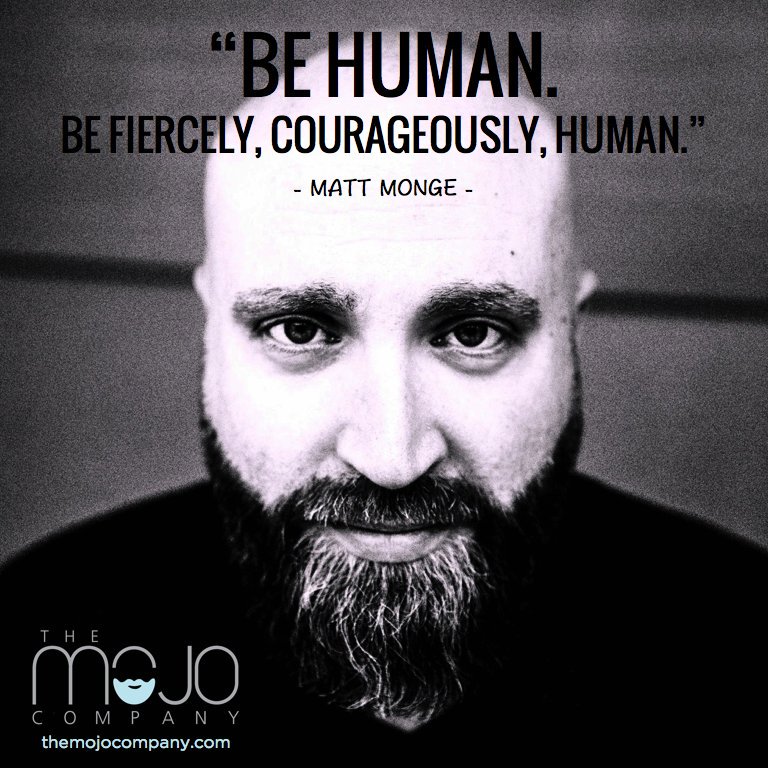
Matt Monge – Founder of The Mojo Company.  He consults and writes on all things business, leadership, and work culture. He has also endured through depression which gives him particular insight into some of the things that make us want to give up. If you work, you want to learn from Matt Monge. Full stop. And HE follows me on Twitter.

Carey Nieuwhof – Pastor, blogger, podcaster. His is one of the few blogs that I welcome to my inbox. He has authored Lasting Impact and Leading Change. He writes to leaders, some of whom are pastors.

Star Parker – President and founder of the Center for Urban Renewal and Education (Urban CURE) – political conservative confronting poverty in our country with real substantive solutions (quoted here). Inspiring and courageous voice.

Srinivas Rao – CEO of The Unmistakable Creative Podcast. I learn so much from this guy and his varied guests – all unmistakably creative.

Paul Sohn – Award-winning blogger, speaker, leadership coach. Author of Quarter-Life Calling. Appreciate his blogs so much.

Liz Wiseman – President of The Wiseman Group. Author of Multipliers. Heard her speak at the Global Leadership Summit and just wanted to follow her around and bring her coffee. Truly smart and encouraging.

That’s it for now…would love to know who some of your influencers and thought leaders are. Please share in Comments for all of us. Thanks.

Global Leadership Summit – Registration Information

Monday Morning Moment – True Humility in Leadership – So Not Cliché

Photo Credit: LinkedIn

There is just so much cliché out there these days. From what’s hip in men’s facial hair, to cool shoes or right purses, to shirts in or out, jeans skinny and cuffed…and the lingo. Oh the lingo!Photo Credit: Contently

Vu Le writes this hilarious article: 21 Irritating Jargon Phrases, and New Clichés You Should Replace Them With. He doesn’t just list out some of those phrases we hear (and say?) at work…ad nauseam. He also suggests alternative language. Just read the piece. Your endorphin level will rise…unless they are your fave phrases…oops!Photo Credit: Disquscdn

I’m weary of having to search for just the right phrase to communicate that what I have to say has merit (see…I shied away from the word “value”). Oh…for a culture where plain speak isn’t judged or suspect or treated as just too uncool.

Where jargon becomes cliché, our definitions can as well. What it takes to be good leaders has had a gargantuan amount written about it…and being a servant or humble leader can also fall into the category of cliché – just another fancy of today’s business culture.

Not so with true humility. Here’s my take on humility in the workplace. There is this seeming humility that masks something else – whether arrogance or insecurity, I couldn’t say. Then there is true humility – this is what makes a leader so easy to follow.

Writer Pat Lencioni has written a book on humility as one of three essential virtues of team players. In his book,  The Ideal Team Player – How to Recognize and Cultivate the three Essential Virtues, he tells a story about humility, hunger, and smarts.

Photo Credit: Amazon

“There are three required virtues that make someone an ideal team player. Those virtues are humble, hunger and smarts. The most important of those virtues is humility. The ultimate foundation of being a team player is a person being willing and able to put the team’s interests above his or her own. Only a truly humble person can do this effectively. The second virtue required is hunger, the desire to work hard, make a difference and get things done. The third and final virtue of an ideal team player is something I call smarts. It has nothing to do with intelligence, however, but is all about social awareness and interpersonal common sense. Ideal team players, in addition to being humble and hungry, demonstrate smarts with their ability to understand their colleagues and work with them effectively.”Patrick Lencioni, Author Q & A, TableGroup
This ideal team player is the kind of person we hope to always have leading our team…and our organizations.
I asked my husband recently what was the mark of a truly humble person. This was his response:
“Humble people pay attention to the people around them, whether they’re big or little.”
As wise as my husband is, he got that idea from Patrick Lencioni after reading his book.
Lencioni had much to say about humility, including:

“So many people there are so concerned about being socially conscious and environmentally aware, but they don’t give a second thought to how they treat the guy washing their car or cutting their grass.” Pat Lencioni

[I write about the power of noticing people here.]

Humility is cliché if it’s just coming at you from the front of the room or the head of the conference table. True humility communicates a right, or proper, understanding of relationship between colleagues, clients, and customers. No lone rangers or rock stars in this equation.  Photo Credit: AZQuotes

Great team players lack excessive ego or concerns about status. They are quick to point out the contributions of others and slow to seek attention for their own. They share credit, emphasize team over self, and define success collectively rather than individually. It is no great surprise, then, that humility is the single greatest and most indispensable attribute of being a team player.Pat Lencioni

True humility in leadership is so not cliché. It can be observed, modeled, and developed. What’s cool today can become cliché tomorrow. True humility?…never.

“Throw the passes when no one is watching. Write the pages no one sees. Work through the business plans people don’t believe in yet. Hustle long before the spotlight finds you. You don’t need the whole world on your side to create something that changes the world.”Marcus Mariota

6 Ways Humility Can Make You a Better Leader – Fast Company – Gwen Moran

Your Picks for the Worst Nonprofit Jargon by Cody Switzer

Infographic: 50 Terrible Work Phrases You Need to Stop Using by Nicole Dieker

Monday Morning Moment – Turning Around a Work Culture – From “Not Good Enough” to “Job Well Done”

blog-demanding-bosses-linkedin-dave-kerpenPhoto Credit: LinkedIn – Dave Kerpen

Aha moments can occur in all sorts of settings. My latest happened during our pastor’s sermon this week. Toward the end of a deep and fascinating exposition of Colossians 2, Pastor Cliff reminded us that we are not meant to earn God’s approval. He gives it unconditionally. Then Cliff talked about how we get caught in the trap of “It’s never enough!” when thinking of our efforts or accomplishments. Then “It’s never enough” or “Not good enough” too easily turns into “You’re not good enough.” This is the place where what we do intersects with who we are…

Switch from the Sunday Bible lesson to the Monday workplace application. I’m not talking the unconditional love of God here, but what happens to us in continuous feedback loops. Stay with me…This made me think uncomfortably about the way I once operated in the area of idea generation and innovation.

I am “an editor”…it gives me great satisfaction to take a document or process and make it better. Recently a friend asked me to edit his manuscript. It’s going to be such a great read…can’t wait for it to be published. Still, there will be lots of edits. For me, being an early reader, I just took care of some grammar and flow issues. There will be more qualified editors down the road. It’s enough for me to do quick, elementary edits and wildly praise the author and his riveting storyline, cheering him on to the next steps of publishing.

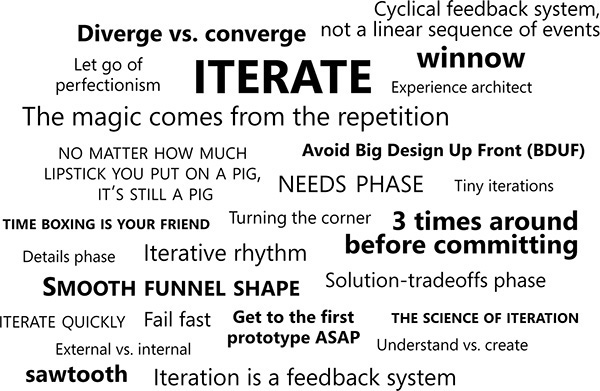
The tweaking that I used to do regularly in my earlier professional life was more intense in those days…and less forgiving. I wanted it (whatever it was) to be right, and it was my immodest opinion that I could get it to right. Especially when evaluating someone else’s work (ironically, I was less hard on my own work – figuring it was perfect already, right? Sigh…). The tweaking of another era has come round to a newish process called iteration.

One definition of iteration is the “process of learning and development that involves cyclical inquiry, enabling multiple opportunities for people to revisit ideas and critically reflect on their implication”. These feedback loops are meant to be fast-paced with the finish in view.

ScenarioPhoto Credit: SafariBooksOnline

Where iteration (or tweaking) breaks down (if I might be so bold) is when it’s taken well past rapid feedback loops into a realm of fine-tuning that has the team guessing “will it ever be good enough?” Product design and process development are vital to any company, but what we must also consider is the team or personnel involved.

If the feedback loops relate to the launch of a new product or a new business process, excitement and brainstorming are part of the momentum. Continuing to tweak over months instead of weeks before the launch can take a negative toll on the team. No one wants to forfeit excellence, but we don’t want to lose excellent personnel either.

blog-demanding-bosses-lifehackerPhoto Credit: Lifehacker

Trusting the judgment of our best thinkers is worth the risk of possibly releasing a product or service when we may not all be sure it’s “perfect”. That is what beta-testing is all about…the feedback that then comes to us from the consumer or user.

I’m really talking out of my element here (not being a designer or innovator so much as a lifelong learner). My leap from the sermon to the workplace relates to my own past struggle with wanting something with my name on it to be perfect while exhausting my teammates  with “what if we do this?” or “What if we say it this way?”

What a gift for us to take a well-thought-out proposal and, instead of putting it through the “just not good enough” wringer, we read it and pass it back to that colleague and say, “Good job”…empowering them to execute the proposal. How often does that happen these days?

Please share stories [in the Comments] of work situations where you experienced genuine affirmation for a job well-done.

Recently when water started backing up into the kitchen sink, I was afraid that it was something I had done. Too liberal using the disposal, for instance. Dave was out of town and nothing I could do would remedy the situation. Finally, on a Sunday afternoon, in desperation, I called our plumber (Richmonders, if you need a good plumber, email me, and I will give you his contact info). He came and fixed the problem, and best of all, it wasn’t my fault, after all. This young man literally LOVES his job and was kind to take the time, after he was off the clock, to give me the breakdown of what the problem was. What he charged me? Worth every penny…especially the part where it wasn’t something I had done wrong.

Why I bring this up is that being a fairly capable and creative person doesn’t prevent me from faltering at the likelihood that I messed-up.  See the Imposter Syndrome. My mental wiring is such that I get discouraged when my contribution to a situation actually causes more work for someone else, adds expense, or slows down progress. I’ve learned over the years that all that tweaking I may not have taken the product from good to great, and most assuredly caused some amount of frustration to hard-working, quality colleagues. Lesson learned.

There are times and seasons when tweaking is appropriate in developing a product and changing a business process. What we want to take into account is the cost of that tweaking, or iteration, on the people who make things happen in our workplaces. Free them from the “not good enough’s” to enjoy the fruit of “jobs well done”.blog-demanding-bosses-the-musePhoto Credit: The Muse

10 Tips for Dealing With an Overly Demanding Boss – Jacquelyn Smith

How to Get Over the Feeling that You’re Not Good Enough for Your Job – Michele Hoos

10 Things You Can Do to Get Out of Your Boss’s Doghouse – Brian Dodd

Why Incentive Plans Cannot Work – Alfie Kohn – Harvard Business Review

Good Is Not Good Enough: The Culture of Low Expectations and the Leader’s Challenge – Karlene M. Kerfoot

Innovation and Iteration: Friends Not Foes – Scott Anthony – Harvard Business Review

Holding a Team Retrospective – Morale

Workplace Bullying: Protecting Yourself at Work – Slideplayer

Monday Morning Moment – People You Love Working With – and Becoming One of Them

blog-likable-guys-at-work-askmenPhoto Credit: AskMen

It’s Monday morning and whatever you’re facing today, these folks help to bring down your stress and lighten your load…just by being in your path. You can name them easily. They are the ones who make you laugh and see a different side to your situation. They are the ones who give you second thoughts when considering a job change. They are the ones who add value to you, not just as a colleague but as a real in-the-skin human being. These are the folks who can turn the course of your day with just a few minutes conversation…or even a wave from across the parking lot. It’s just that simple.blog-likeable-cowoers-muffy-bennettPhoto Credit: Mashable

For you guys in a dark place…and not one person comes to mind…maybe, it’s good to think back…to people in your past who helped set you on a positive course in your career…think of those people. If you are in a hole in your workplace right now, and many of us have been there at some point in our professional lives, could you rally and become one of these people who light up the place?

blog-likeable-coworkers

Photo Credit: Friendship.about

Here’s the challenge for today. I read an article by content strategist Scott Tousley recently which got me thinking about this.  Is it possible to become “a rising tide that lifts all boats”? If you’ve read this far, you probably are already that kind of person. However, if somehow you struggle with keeping fellow employees in your view while dealing with large-scale problem-solving, you might want to consider a personal assessment and do-over. It’s never too late.

Scott Tousley – who has the longest eyelashes and most infectious smile – also gets to live and work in San Diego, California. Besides all that, he writes really insightful articles about the workplace. His article, The 9 Habits of Insanely Likable and Charismatic People, is so good, I’m not going to write my own commentary on this topic, because you HAVE to go read his article. It lists the 9 habits (included below) with real-life anecdotes, brilliant support data, and links to read more. So don’t miss it – lightning-fast read for us visual learners.

Tousley’s 9 habits of insanely likable & charismatic people: 

1. They are empathetic

2. They are humble

3. They are vulnerable

4. They have a sense of humor

5. They are present

6. They are genuinely interested in EVERYONE

7. They avoid social narcissism

8. They are generous and altruistic

9. They reciprocate praise (and take blame)

Being likable and charismatic isn’t about being popular or climbing the career ladder as much as it’s about making a huge chunk of our lives just more enjoyable… We have choices here.

blog-likable-coworkers-the-question-academyblog-likeable-coworkers-amanda-gorePhoto Credit: The Question Academy; LinkedIn

If you had trouble calling to mind people you really like at work, then you’ve probably fallen down but you can get up! Don’t let that snarky, seemingly self-important coworker or boss mess with your head and steal your joy. Refocus to those in your workspace who you can’t help but be encouraged around them. Don’t miss them in that cloud of bother over the less likable ones around you. So what if they don’t seem to care about you or others at work. You be one who cares…and it can make a big difference. Take Scott Tousley’s excellent counsel in noting and affirming those likable ones around you…and set your course to return to being one yourself.

The 9 Habits of Insanely Likable and Charismatic People – Scott Tousley

4 Simple Questions That Will Instantly Make You More Likable at Work – Sara McCord

Being More Likable at Work – Cherie Burbach

10 Traits of Likeable People – Evan West

13 Habits of Exceptionally Likeable People – Travis Bradberry

How to Develop Your Charisma and Become More Likable – WATCH the Olivia Fox Cabane Video – Patrick Allan

How To Be More Likeable at Work – 10 Things To Do Today – G. L. Hoffman

YouTube Video – Amanda Gore – Stress Busters and Mood Management and Turning on the Joy Switch

Monday Morning Moment – Uncommon Courtesy in the Workplace

blog-courtesy-adding-value-john-maxwell-iluvquotesPhoto Credit: iluvquotes

My mom raised me to be courteous…thoughtful towards all…civil in every circumstance…extending grace. Recently, I have become aware that my behavior in the company of others has become less courteous overall. Not in an intentional way, hopefully, but in a careless neglectful way. This is disconcerting because it makes me wonder how long has this been a part of my demeanor and deportment. Not necessarily with those closest to me…but with “the others” in life – the stranger, the coworker, the customer.

blog-common-courtesy-quoteaddictsPhoto Credit: Quote Addicts

Yesterday, not at work, I interrupted the conversation of three people. Not overtly, maybe, but it was a quiet drawing away the attention of one of them. Without even thinking, I was rude.

We don’t really mean to be rude or discourteous probably…but in the neglect of practicing courtesy…we can become “those people”…rude, disingenuous, self-serving people.

What does that look like in the workplace?

John Kyle describes rudeness at work:

“It can range from subtle things like eye-rolling to outrageous things like berating a colleague in a meeting.

Here are some common examples:

  • Gossiping and talking behind someone’s back.
  • Giving colleagues the silent treatment.
  • Interrupting someone when they are speaking.
  • Leaving trash and food containers in public areas like the office kitchen.
  • The work around – excluding colleagues from projects or meetings even though they should, by role and responsibilities, be included.
  • Being late for meetings or in other ways not respecting someone else’s time.
  • Speaking to people in a condescending way.

All of these examples of rudeness are forms of disrespect. A pastor-friend of mine once said that giving someone the silent treatment is the relational equivalent of saying, ‘I don’t respect and care enough about you to talk to you.'”

John Kyle, Chief Operating Officer for The Institute of Faith, Work, and Economics, also delivers some simple advice on how we might overcome rudeness at work. One of his tips is to make a practice of greeting people…just saying hello (using their name if you know it). How simple is that?! Yet, too often, we walk quickly by, head down, lost in our brilliant and important thoughts, or hanging on every word of that one we’re accompanying. Is it so hard to smile and nod our head at those we are passing by? Those who work with us, have the same vision, hope for the same outcomes, wrestling with the same struggles at work or home.

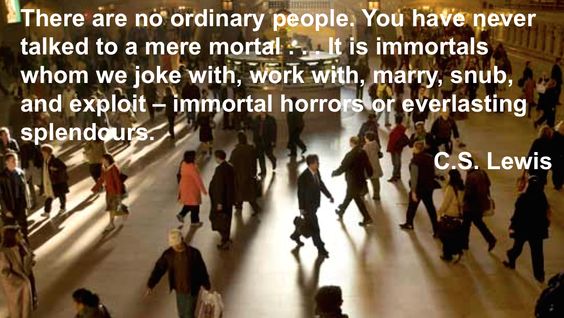
What Kyle reveals in his article on being courteous at work is that we expose our lack of regard for those around us by not taking the time for them…to say or do the small graces for each other that communicates that “there are no ordinary people”.

blog-courtesy-no-ordinary-people-c-s-lewis-pinterestPhoto Credit: Pinterest – WitandWisdomofCSLewis

His counsel echoes a book I recently read by John Maxwell – Intentional Living – Choosing a Life That Matters. Maxwell, like Kyle, talks about adding value to people…communicating that if we are not intentionally adding value to people then we show that we devalue them.

What do you think? It would be such a gift to have your comments on stories where you were treated with uncommon courtesy at work. Do you have examples of how such actions and attitudes are rewarded in your workplace? Do your bosses display this sort of worldview? Please share your stories…even the negative ones that might have given you pause about your own altered attitudes over the years.

As I described in the story earlier, this has certainly given me pause. I want to be a load-lifter at work. An encourager. A respecter of all persons…not just the ones who can help me get ahead with my career. It’s possible that I might have become a bit more curmudgeonly over time…and that’s not really the kind of coworker I want to be. My mom would be glad to see that I’m climbing out of this insufferable ditch – resolved anew to make a habit of uncommon courtesy.

Bringing Courtesy Back to the Workplace – Harvard Business Review – Ron Ashkenas

Why Is Common Courtesy Increasingly Uncommon at Work? Rudeness on the Rise – John Kyle

How do You Practice Common Courtesy at Work?

Workplace Etiquette – 4 Ways to Show Courtesy to Coworkers – Rachel Wagner

Uncommon Courtesy – Blog

Slideshare – Courtesy

How To Become a Curmudgeon – WikiHow – just for a chuckle!

Monday Morning Moment – A Look at Power with Andy Crouch

 Blog - Andy Crouch = Playing God - thegospelcoalition
Just recently I heard a friend quote from the book Playing God – Redeeming the Gift of Power by Andy Crouch. It struck me as odd that he was reading such a book because, although he is a powerful man in his own circle, he doesn’t seem vulnerable to such a phenomenon. Wisdom is to mark such a supposition and guard against it. This friend does that. My husband has also been reading Crouch’s book, so I am persuaded to add it to my list of reads.
Here’s a taste of what you’ll find thanks to Good Reads. It is often where I start with a book given my long list of wanna-reads. Andy Crouch makes a strong case for our need to wrestle with our temptation to “play God” in our relationships, institutions, and culture. See for yourself….
On Power in Creating Good or Evil – in Work and Culture
“It is a source of refreshment, laughter, joy and life—and of more power. Remove power and you cut off life, the possibility of creating something new and better in this rich and recalcitrant world. Life is power. Power is life. And flourishing power leads to flourishing life. Of course, like life itself, power is nothing—worse than nothing—without love. But love without power is less than it was meant to be. Love without the capacity to make something of the world, without the ability to respond to and make room for the beloved’s flourishing, is frustrated love. This is why the love that is the heartbeat of the Christian story—the Father’s love for the Son and, through the Son, for the world—is not simply a sentimental feeling or a distant, ethereal theological truth, but has been signed and sealed by the most audacious act of true power in the history of the world, the resurrection of the Son from the dead. Power at its best is resurrection to full life, to full humanity. Whenever human beings become what they were meant to be, when even death cannot finally hold its prisoners, then we can truly speak of power.”
Power at its worst is the unmaker of humanity—breeding inhumanity in the hearts of those who wield power, denying and denouncing the humanity of the ones who suffer under power…This power ultimately will put everything around it to death rather than share abundant life with another. It is also the power of feigned or forced ignorance, the power of complacency and self-satisfaction with our small fiefdoms of comfort. Power, the truest servant of love, can also be its most implacable enemy.”
“Over and over in the Gospels, Jesus interrupts his agenda for those who have nothing to offer him but need everything from him.”
On Power and Information
“I am also practicing cello to wean myself from power and accomplishment, to place myself back in the posture of a learner, cultivator, and creator. To become a bit like a child. To detoxify from the too-ready recognition and privilege that accompany even the most modest forms of success, to become available again for something surprising and new. Just as children flourish by growing into adults, so adults flourish by cultivating childlikeness, avoiding the spiritual hardening of the arteries that comes with competence and experience.”
On Poverty and Privilege
How many times have I been put at the front of the line without even knowing there was a line? How many times have I walked through a door that opened, invisibly and silently, for me, but slammed shut for others? How many lines have I cut in a life of privilege?”
Poverty is the absence of linkages, the absence of connections with others…”
“Benevolent god playing happens when we use the needs of the poor to make our own move from good to great—to revel in the superior power of our technology and the moral excellence of our willingness to help. Benevolent god playing makes us, not those we are serving, the heroes of the story. It happens whenever technological and financial resources are deployed in such overwhelming force, and with so little real trust building or relationship, that we maintain a safe distance between ourselves and the recipients of our largesse.”
“The poor are poor,” Jayakumar said to me, “because someone else is trying to play God in their lives.”
On Idolatry and Injustice
All idols begin by offering great things for a very small price. All idols then fail, more and more consistently, to deliver on their original promises, while ratcheting up their demands, which initially seemed so reasonable, for worship and sacrifice. In the end they fail completely, even as they make categorical demands. In the memorable phrase of the psychiatrist Jeffrey Satinover, idols ask for more and more, while giving less and less, until eventually they demand everything and give nothing.”
“God hates injustice and idolatry because they are the same thing.”
Crouch’s book just got moved to the top of my reading list. Have a great Monday! Let’s exercise our power wisely today…

Saturday Short – A Space and a Place on the Team

Blog - Space and a place - gtrinityPhoto Credit: Gtrinity

Work space is always a premium in companies. Whether you work in a cubicle or a full-fledged office with a door, a space of some sort that belongs to you (shared or not) is vital. Yesterday, I had the opportunity to pour over a department’s new office space design. It was a fascinating experience.

Some of the team members work remotely, and I noticed there wasn’t a space designated for those who are not regularly in the office. Showing this to the person on point for working out the space assignments yielded an “Aha!” moment. She was kind to listen to a relative outsider, initially explaining how that probably happened because they are rarely in the office. Could it be that they are rarely there because there is no space for them? Something to think about if you want to rub shoulders and share ideas with team members that could prove very valuable…if space is made for them.

Along with space comes the idea of a place on the team. Do you know your place on your work team? What you bring to the table? What unique role you play in the mission of your organization? C-suite leaders and department heads, of course, define some of that through a title, vision, and job description. They made a place for you on the team organizationally. Your role is to carve that place out…to add value to the work of the team through your own applied competencies, but also to add value to the team members by your care for them – by being “the rising tide that lifts all boats”Adam Grant.

Blog - team a place for you - the brand bankPhoto Credit: The Brand Bank

How exhilarating it is when our bosses communicate to us and the larger team how relevant we are to them and the work! However, that can’t be our motivation. We must set in our own minds, that if we’re employed, we have that grand opportunity to make a difference. Whether obvious to leadership or not, we can apply our best selves to the vision, to the outcome, and to the people we work with and for. Business leader John Maxwell spoke recently at the Global Leadership Summit on this very topic.

Maxwell’s book Intentional Living: Choosing a Life that Matters focuses on this idea of “adding value” to others. At first, I thought that an odd idea because people have value. Period. Then, the more I listened to him and the more I read about healthy teams, there is wisdom in this. We can get absorbed in the task and the goals, and miss the people within the tasks. It is part of the whole “space and place” component of team. Give a listen to Maxwell in this brief but packed 3:40 minute video on “adding value to people”.

In the course of busy work and personal lives, we are not even thinking sometimes of the need for “space and place”. On this Saturday, during gardening, and errands, and family outings, spend a quiet minute maybe on the people you call team and what space and place you’ve made for them to thrive and grow. It will always come back, like Adam Grant says, to benefit you as well.

Monday Morning Moment – Matt Monge on the 7 Skills of Tomorrow’s Top Leaders – Whether You’re 26, 56, or 72

Blog - Tomorrow's Leaders - Mojo companyPhoto Credit: The Mojo Company

Leaders of Tomorrow. What age group came to mind? Probably not your own. Maybe that’s one of our dilemmas in life and work. We either think we have already arrived as tomorrow’s leader today (ugh!). Or we stop thinking of how we can develop into that change agent of tomorrow because we’ve fixed our course…or settled into what we know already. It’s served us well so far, right?

Here’s my Monday morning gift to you: an introduction to the person, writing, and wisdom of Matt Monge.  Earlier in his career, he worked in finance (credit unions, in particular), and had fascinating titles like Chief Culture Officer and Vice-President of People and  Development. Currently he is is president of The Mojo Company, a leadership development consulting firm. His Facebook page bio reads: “My mission? Make the world a better place by helping people, leaders, & workplaces be more human. Depression fighter. Keynote speaker. Head of The Mojo Co.”

BLog - Matt Monge - TomorrowTodayGlobalBlog - Matt Monge - TwitterPhoto Credit: Cues, Twitter

I read everything Matt Monge writes. Even his promotional video taught me more about leadership (you’ll want to take notes).

Monge posted a blog a few weeks back and I’ve been thinking through it since… It’s his 7 Skills Tomorrow’s Top Leaders Are Developing Today. I decided to post his bullet points here and how they stirred my thoughts on skill development today. [Don’t miss reading his thinking on this and other leadership topics in links.]

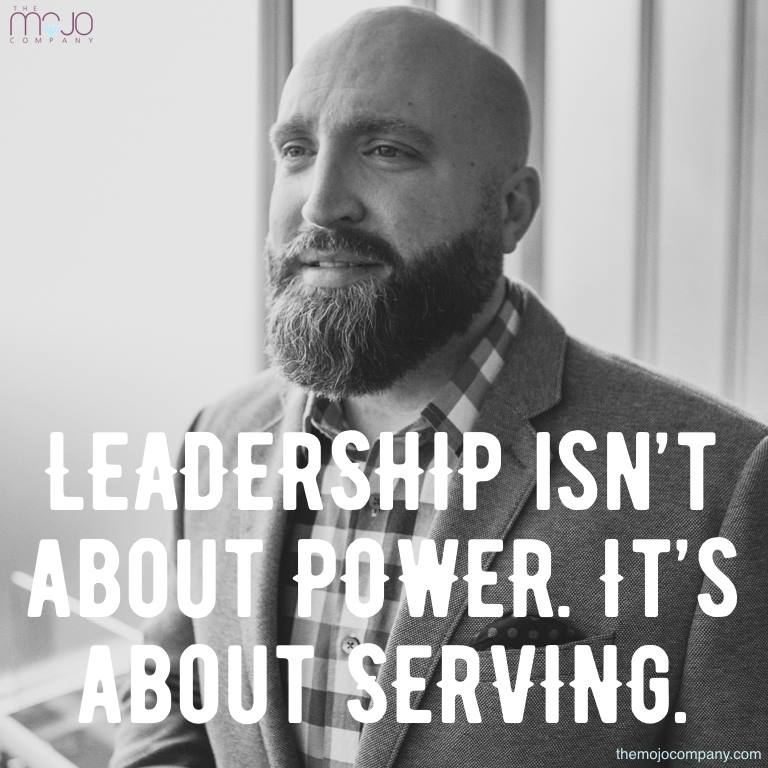
  1. Being Others-Oriented – While other employee development folks have moved away from “servant leadership” language, Matt Monge continues wisely to be a strong supporter of it. I, too, am delighted by leaders who continue to seek out the greatest good for both employees and customers. The bottom line is best served here. As the years go by, or as tribes are built, our temptation is to coast in this area…making the negative assumption that someone else is serving while we’re the idea leaders. As leaders go, so go the organizations.
  2. Persuasion, Logic, & Negotiation – First, Monge sees top leaders as practicing persuasion and negotiation differently “not with power, position, coercion, or even deception; but rather through logic, reason, and with an eye toward the good of the whole.” It’s funny how unaware leaders can be in thinking that manipulation and coercion go unnoticed by employees under their authority. It’s always better to do the work of taking the high road of negotiating and persuading. When we engage in the give-and-take of healthy debate and problem-solving, it’s a win-win for everyone. It does require time, trust, homework, and humility.
  3. Reframing – This is a discipline of looking at a problem or situation from different perspectives. Monge talks about doing this in such a way that we wrestle with our own biases and blind spots. Reframing can make for a decision or problem solved that have wider success or effectiveness.
  4. Knowing How to Think about and Make Decisions – Monge makes the distinction of being decisive vs. being a good decision-maker. I love this because often we experience leaders who get the job because they are decisive. Period. Full-stop. What does it take though to be a good decision-maker? To become an effective leader is to examine how we make decisions – what are my decision-making processes, who are my guides, what are those factors that always weigh in on my decisions? [Monge names those factors as presuppositions and core values. We need to think about what those are.]
  5. The Ability to Work and Build Community with Others – This is such a core value of mine and yet after years in my career, it bears refreshing. I’m reminded, as Monge writes about this, of the Old Boys’ Network. Today, maybe it’s less-gender-defined and called other things, like C-Suite executives, or even tribe. Still, if it’s a few making decisions for the many, it’s not community. Monge’s constant message is that the strength and health of an organization is in the community. Leaders must do the work of leaning in to their colleagues (outside the executive suite) to draw on the wealth of knowledge there and to affirm the value and varied roles of those coworkers.Blog - Matt Monge - human - twitterPhoto Credit: Twitter
  6. 6. Leadership – The leaders of tomorrow are continuing to develop themselves toward that future. We can be always learning, always growing – not necessarily just like other leaders in our lives, but learning what we need to learn to remain relevant/useful. Resting on the laurels of past successes or doing “what we’ve always done” will eventually pull us to the sidelines. I’m in the painful, personal throes of dealing with this right now myself. Shaking it off and moving forward!
  7. Understanding Humanness & Emotional Intelligence – Monge defines emotional intelligence as having “four basic components: self-awareness, self-management, social awareness, and relationship management”. Foundational to emotional intelligence, in Monge’s thinking, is this whole element of humanness. As the workplaces of the future give way to more and more technology, we will be wise in tuning into the growing need for humanizing our organizations and our human employee experience. Being tech-savvy and not people-savvy misses what could be. Leaders of tomorrow, take note.

So that’s it for today. I love Mondays because it’s an opportunity to hit “the refresh” key of our work lives. We are not only motivated (like we might be on Fridays) but we’re fresh in our view of our work community…and hopeful.

Matt Monge, and others like him, gives me the encouragement I need to cast off from the safe, still shore and re-enter the fast and deep water of today’s work environment, determined to manuver well there…and maybe even coax other quality people back in from the shallows. Whatever our ages or sensibilities, we can work toward being tomorrow’s leaders of excellence.