Tag Archives: leadership

Understanding True Habit Change & Rocking Your New Year’s Resolutions

Blog - New Year's Resolutions - davidlose.net - Calvin & HobbsPhoto Credit: DavidLose.net

New Year’s resolutions are very energizing really. Whether we meet our goals or not, there is great promise within the resolution for resetting our thinking. A keen sense of self, or self-awareness, makes a difference in understanding our habits and progressing toward true habit change.

A couple of times in my life, I resolved to go off sugar. With a resolution like that, it means abstaining from chocolate…which is a topic all its own.

Anyway, I was successful for over a year each of those times in excluding sugar from my diet. Never having really lost the weight from my first pregnancy, I decided to remove sugar from my diet for the pregnancy of our second-born. In those days, there was a chapter of Overeaters Anonymous in our town, and that group was a great help in my dealing with pretty much a sugar addiction.

The second time I “gave up” sugar was over 2 years ago, and I stayed the course of that habit change for over 1 1/2 years. Less accountability but even more resolve. Now I sometimes have dessert or sugary snacks but I am still operating with more self-awareness than ever before. Self-awareness, not self-condemnation. A very different experience.

Without knowing it, I was using a practice of habit change that Ken Sande writes about on his blog, Relational Wisdom 360. He first influenced my life years ago with his work on conflict resolution through his Peacemaker Ministries. He is a gentle guide in many of the issues that complicate our lives.

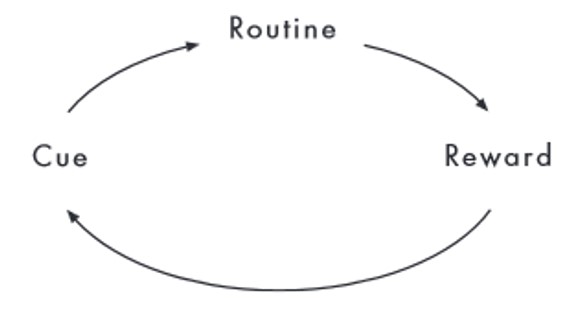
His New Year article on Seven Principles of Habit Change comes at a great time. Sande talks quite kindly about how we develop habits and what it takes to change them. His first principle of habit change gives us a look at the cycle of habits – the cue, the routine (or response), and the reward. Anyone who loves chocolate can understand this easily. For me, in eating sugar (or in overeating, in general), the cue could be a number of things – fatigue, anxiety, loneliness, presence of yummy food. It never takes much to send me to the refrigerator or pantry. The routine: feed the cue, whatever it is…with high-carb oral gratification. The reward: a brief soul satisfaction and temporary relief from whatever was the cue.
Blog - Habit Change - relational wisdom 360Photo Credit: Relational Wisdom 360

In my two seasons of not eating added sugar, I actually followed Ken Sande’s principles below (without knowing the wisdom of it).

  1. Every habit has three parts: a cue, a routine, and a reward.
  2. You can change an undesirable habit by keeping the cue and reward but learning a new routine.
  3. The best way to overcome the temptation to revert to old routines is to have a detailed action plan.
  4. Habit change builds momentum if you can change a single “keystone habit” and then continue to build on consecutive “small wins”.
  5. Will power is like a muscle: it can be strengthened and yet needs to be exerted strategically.
  6. Faith is an essential part of changing habits.
  7. Habit change is more likely to occur within a community (even if it’s just two people).Ken Sande

[If any readers want to talk further about habit change regarding sugar addiction, I would love the exchange, either through the comments or email.]

Self-awareness is a huge factor relating to habit change. I can see that more now having come through seasons of looking at my own habits.

“Self-awareness is defined as conscious knowledge of oneself; it’s a stepping stone to reinventing oneself, learning to make wiser decisions, and helps you tune into your thoughts and feelings. So often we place blame on externalities because it’s the easiest excuse, when in fact we should be thinking about our thinking, reflecting, trying on different perspectives, and learning from our mistakes.”Paul Jun

Matt Monge wrote a great piece on 13 questions we might ask ourselves to better understand why we do what we do. He is applying these questions to leadership and workplace, but they apply as well to habits. Also, in researching for this blog, I came upon this YouTube video of David Wallace Foster giving a commencement speech on awareness. Really thought-provoking as well as entertaining.

It is possible to affect true habit change if we are willing to take a studied look at ourselves – our awareness and our engagement with making choices/decisions and within relationship. I used to think that self-awareness was morally charged, i.e., it drove us to becoming more self-centered. That doesn’t have to be the case. When we take time to really examine where our minds go, through the day, we can train our thinking toward what matters most to us – related to people, resources, and life purpose.

When we are willing to do that, New Year’s resolutions can become much more life-changing than just going off sugar for a few weeks. These same habit change principles can apply to anger issues, pornography, other addictions, and pretty much any habitual process that negatively affects your work, relationships or general peace of mind.

I’d like to close with Ken Sande’s thoughts on taking self-awareness to other-awareness and God-awareness:

“The better we know and follow God (God-aware, God-engaging), the more we will know and discipline ourselves (self-aware, self-engaging), which opens the way for us to better understand, relate to, and serve our neighbors (other-aware, other-engaging).

To close the loop and spur us on developing relational wisdom, the Lord promises that the more we obey his command to love our neighbors, the closer we will draw to God himself (John 14:21-23). Thus, relational wisdom is a circle of interrelated skills that continually fuel one another.”Ken Sande

Blog - Relational Wisdom - Ken SandePhoto Credit: RelationalWisdom360

Do You Want to Change Your Habits? – Relational Wisdom – Ken Sande

Seven Principles of Habit Change – Relational Wisdom – Ken Sande

13 Questions to Increase Your Self-Awareness – The Mojo Company – Matt Monge

Why Self-Awareness Is the Secret Weapon for Habit Change – Paul Jun

This is Water – David Foster Wallace on Awareness

RW Acrostics in Action – Relational Wisdom – Ken Sande

Need Help With Your New Year’s Resolutions? – David Lose

5 Friday Faves – Millennials, Christmas Lights, Post-Traumatic Stress Disorder, “a Good Man is Hard to Find”, and a Christmas Album

Blog - Friday Faves

Happy Friday! Hope you’ve had a sweet week in the crazy of December…snatching some quiet moments from all the loud. Here are my favorite finds for this week:

  1. Millennials –  Mat Luschek’s Millennials at Work offers a quick and thoughtful read on our workplace, especially as it is changing or must change. “Millennials will outnumber the Boomers in the workplace this year.” So what are they looking for in a job? The paycheck is still important, for sure, but also import is the work culture. Luschek describes 4 areas that are especially engaging for millennials: 1) Flexibility, 2) Coaches not managers (as a Boomer I favor that as well), 3) Boredom at a minimal), and 4) Collaboration & Leadership. Fascinating read. Bottom line for all of us in the workplace is that what’s good for these millennials is good for us as well…maybe, we just didn’t consider pressing for it.Blog - Millenials - bpnews.netPhoto Credit: BPNews.net

2. Christmas Lights – Previously I wrote about Richmond’s Tacky Light Tour. Christmas lights in our own neighborhood are lovely as well, especially when we know the folks inside. Our neighborhood is an old one tucked into an ancient forest. In the yard light displays around us, there are few nativities. Christmas lights here are more whimsical than worshipful…still they warmly light the cold winter nights, and invite us in to the home of a friend.Blog - Neighborhood Christmas Lights2015 December - Christmas Community Group, Tacky Light Tour 0042015 December - Christmas Community Group, Tacky Light Tour 011Sometimes, neighbors are “best-in-show” Tacky Light Tour participants. All you have to do is walk down the street and enjoy them. Not our neighbors, but friends of ours. So fun!2015 December - Christmas Community Group, Tacky Light Tour 080

3. Post-Traumatic Stress Disorder (PTSD)Mayo Clinic defines PTSD as “a mental health condition that’s triggered by a terrifying event — either experiencing it or witnessing it. Symptoms may include flashbacks, nightmares and severe anxiety, as well as uncontrollable thoughts about the event…if the symptoms get worse or last for months or even years and interfere with your functioning, you may have PTSD. Getting effective treatment after PTSD symptoms develop can be critical to reduce symptoms and improve function.”

We often think of PTSD as a post-war calamity of our military veterans. There are also others among us who suffer from the smoldering aftermath of a tragedy (either a single event or years of abuse). PTSD can be very damaging to the person suffering from it and those who love them.

Dr. Brad Hambrick is the counseling pastor on staff at Summit Church, Durham, N. C. He has produced a video series on PTSD which I found very helpful recently in dealing with the PTSD of a friend.   He also makes available his seminar notebook on the subject, free of charge. You can request a copy from Summit’s counseling office at counseling@summitrdu.com. Whether you are a Christ-follower or not, this video series and notes will help you understand PTSD better and give you steps to deal with it.Blog - Brad Hambrick - PTSD

Photo Credit: BradHambrick.com

4) “A Good Man Is Hard to Find” – Ashlin Horne’s They Say a Good Man Is Hard to Find may not be at all what you’re thinking. No pity party for one here. She handles a sometimes hurtful subject so sensitively. As I read her blog, it felt like sitting with coffee across from a good friend. You women (AND men) will want to read this and pass it on to others. Following is just a bit of it: Men are not God. If there’s one thing I’d like to tattoo on the arms of girls everywhere it’s that truth. They will not heal you. They are not your redemption. I think it’s time to stop loading up the shoulders of the good men in our lives, or the ones we’ve yet to meet, with expectations that only God can fulfill.” Read on, Loves.Blog - Good Men - Ashlin Horne - vine.coPhoto Credit: Vine.co

5) Latest Favorite Christmas Album – David Crowder Band’s Oh For Joy. This album is a rowdy mix of Christmas standards arranged as only Crowder does it. It was released in 2011 before the original David Crowder Band “disbanded”, and it’s a “must-own”.  My favorite track on the album is the last song. Here’s Sarah Fine’s description of it: As amazing as this album as this is, the true standout track is the final song on the record. Another live Passion recording, the band puts their stamp on what has quickly become one of this generations most beloved holiday songs, Trans Siberian Orchestra’s “Carol Of The Bells / Christmas in Sarajevo.” The song starts off with a brief introduction from David, stating that Christmas doesn’t technically end till Epiphany on Jan. 6. Spoken in a way only he could master, the intro leads directly into one of the best versions of this song I’ve heard since the Orchestra recorded it themselves. Dare I say, this version might even be better. If there ever was ever a way to end a Christmas album with a bang, this would be it.” The YouTube video of this song follows.Blog - David Crowder Band Christmas - Oh For JoyPhoto Credit: Amazon.com

What are some of your favorites of late? Would love to hear about them in the Comments. Make it your own kind of special weekend.

Liz Wiseman’s Leadership Book on Multipliers and the Story of a Multiplier in Our Lives

Blog - Multipliers Book

Photo Credit: Amazon.com

For several years, we had the great privilege of living and working in Cairo, Egypt. My husband directed a Middle Eastern Studies program. I helped him oversee the comings and goings of bright, energetic 20-somethings. When the work, heat, or press of city life became too much, we would escape to the Sinai and the Red Sea. Usually the resort town of Ras Sudr was our quick get-away, where we could take a weekend just to clear our heads with blue skies and salty sea air.

This time, we went for a week to Dahab, on the far side of the Sinai. r_seaman@hotmail.com

Photo Credit: Egypttailormade.net

We were finishing our time in this director role and would take a short sabbatical in the US. We would then return to Egypt, this time for a regional consulting job, guiding the expansion of these study centers.

We were tired, and a consulting job was a dream, with the prospect of just giving a hand to other directors – not nearly the intenseness of being responsible for so many young people.
Driving through the desert of the Sinai, with the kids in the backseat, we got a phone call.

Whoever it was on the other end, (Dave hadn’t called him by name), the conversation, from my side, was warm and affectionate at first, and then serious. As they talked, visible goose bumps rose on Dave’s arms. Goose bumps on a hot deserty day in Egypt?! I knew no one had died from his side of the conversation, but something huge was clearly being introduced by the caller.

When the call ended, I got the details. Dave spoke quietly so the kids wouldn’t be distracted by a call that could change the course (and geography) of our lives. The person on the other end of the conversation was his dearest mentor – a man for whom he had the deepest respect, even love. On the phone call, he had asked Dave to consider not taking the job of consultant but to take a job with him where he would have even more leadership responsibility. Supervising many more than a couple of dozen 20-somethings in one city. This job would require him to provide leadership to about 100 people spread over 6 different countries AND we would have to move from our beloved Cairo.

Thus, the goose bumps.

Dave did walk away from the “easier” job of consultant to take on the much larger, scarier job his mentor asked of him. We did eventually break the news to our children that we would be moving away from Cairo to a whole new country of possibilities and friendships. It was a stretching move for us (more so than our original move to Cairo), and it was a job and situation we would never have aspired to…were it not for this mentor…this multiplier of leaders.

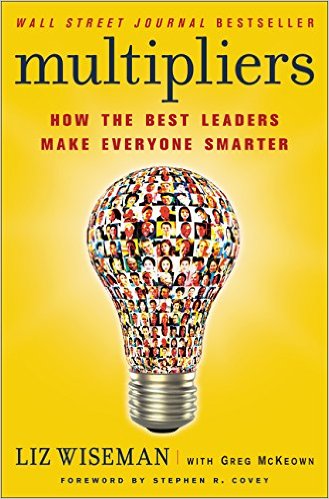
Liz Wiseman has written the most incredible book on leadership – Multipliers – How the Best Leaders Make Everyone Smarter . Her book describes this mentor of my husband as if she knew him personally. Wiseman is the president of The Wiseman Group, a leadership research and development firm, headquartered in Silicon Valley, California.

Blog - Liz Wiseman

Photo Credit: LiveIntentionally.org

I first heard her speak at the Global Leadership Summit this year. Her presentation centered on her more recent book Rookie Smarts. This engaging young woman clearly has had multipliers in her own life and has obviously learned from some diminishers as well.

On the inside cover of Wiseman’s book Multipliers, she defines the terms “Diminishers” and “Multipliers”:

“The first type drain intelligence, energy, and capability from the ones around them and always need to be the smartest ones in the room. These are idea killers, the energy sappers, the diminishers of talent and commitment. On the other side of the spectrum are leaders who use their intelligence to amplify the smarts and capabilities of the people around them…These are the leaders who inspire employees to stretch themselves to deliver results that surpass expectations.” – Liz Wiseman

Have you ever been in a job where you felt your wisdom, understanding, experience were being drained right out of you? As if you were getting stupider and stupider? That can happen…or at least the sense of it happening is so strong it might as well be real. Some of this we must own ourselves, and some of it is owned by our leaders.

[Sidebar – It’s not like Diminishers are evil people. Possibly, their focus is so tuned to the endgame that people and processes get lost in the pursuit. I believe whenever they have an “aha!” moment, maybe through the multipliers in their own lives, they could change their habits and disciplines.]

This mentor of Dave’s was/is a Multiplier. For much of Dave’s professional life, this man has “popped in” and pressed my husband to reach farther than he might have in his career.

I want to be this sort of leader myself – this one who inspires confidence in others, who sees the possibilities, who risks by giving over control to another, who stirs thinking and enlarges the lives of those in his/her circle of influence…a circle that’s widely inclusive.

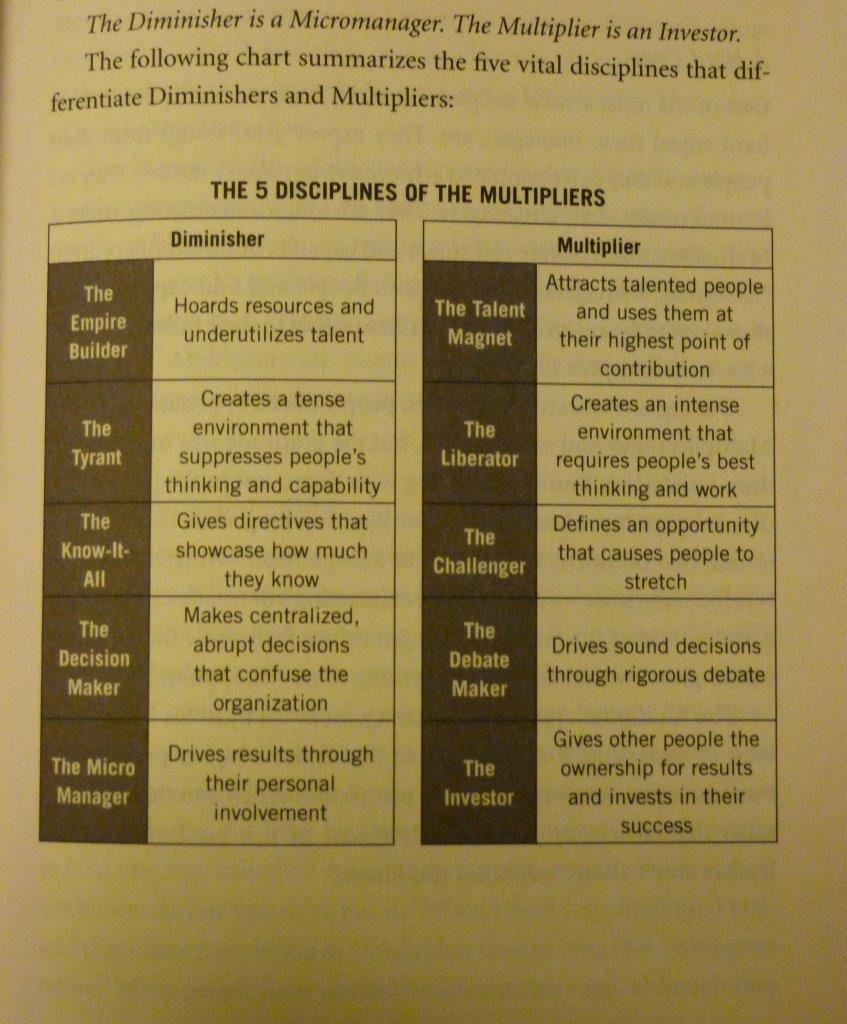
Being a leader is a humbling, stretching experience and, for the sake of those under your watch in the workplace, you want to offer the best leadership you can. We can all fall into habits over time that diminish others. Forging disciplines that keep us from doing so is wisdom. Note them from Liz Wiseman’s book:

Blog - Liz Wiseman's Multipliers

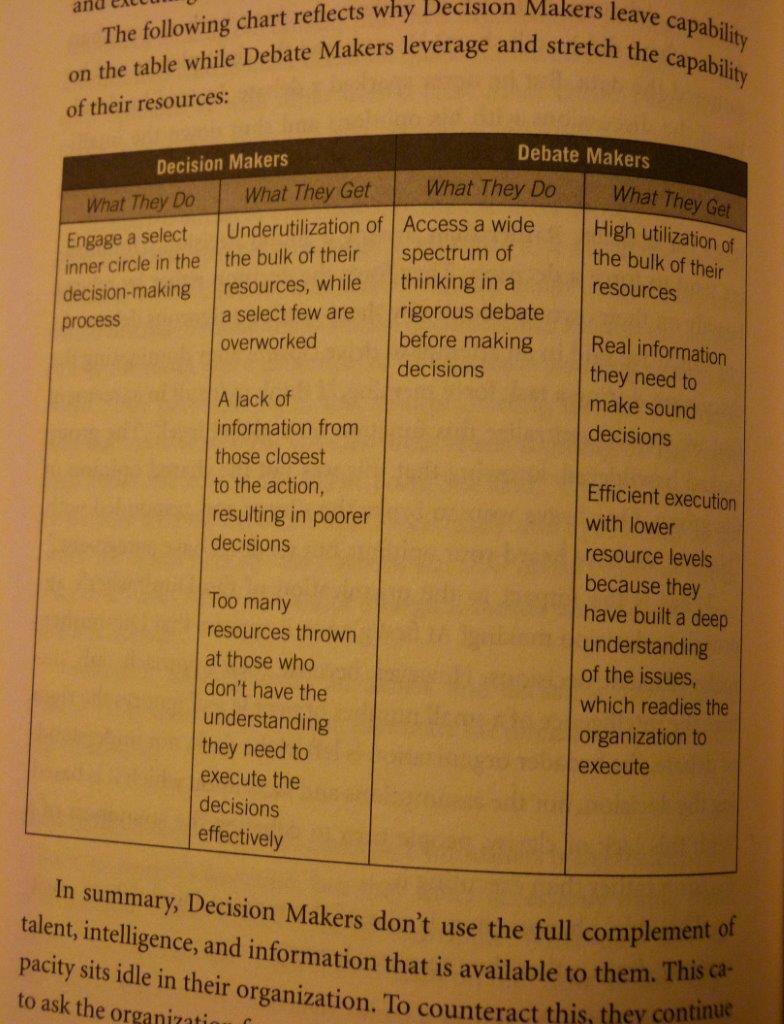
Wiseman also talks about leaders as change agents – do we reserve the right to make the final decision every time or do we wrestle through decisions with those most affected by them? The latter can definitely be more messy but is also more effective and honoring.Blog - Multipliers by Liz Wiseman -2 (2)

“Multipliers invoke each person’s unique intelligence and create an atmosphere of genius—innovation, productive effort, and collective intelligence…He’ll outstretch all your capabilities to make it happen. He is highly demanding, but you feel great. You know you are signing up for something that will challenge you on a daily basis for many years to come. You will challenge yourself and all your capabilities…Exhilarating, exhausting, challenging, gratifying. He’s a big source of energy. He is a source of power and a tail-wind for what we do.”  – Liz Wiseman

Thank you, Liz Wiseman. You are a wise woman (I’m sure you get this all the time…couldn’t resist). Thank you, to that unnamed mentor multiplier in my husband’s life…and to all those multipliers in my life’s journey.

Read Wiseman’s book. I’d love to hear your stories of multipliers in your life…and any diminishers that you learned from but (hopefully) were not diminished in the season you were together…maybe you became a multiplier in that person’s life. Journey strong, Friends.

Multipliers – How the Best Leaders Make Everyone Smarter by Liz Wiseman with Greg McKeown

YouTube Video – Leaders as Multipliers with Liz Wiseman

YouTube Video – Liz Wiseman – The Multiplier Effect 0

Multipliers Quotes from GoodReads

2013 Global Leadership Summit Session 3a: Liz Wiseman

Brian Dodd – 4 Leadership Lessons From Mt. rainier and the Inc. 500 Fastest Growing Business List – another example of a Multiplier

5 Friday Faves – Fall Trees, Handling Change, Naming Our Grief, Cool Job, and an Icebreaker Question

2015 October - Blog, Fall, Trees, Sadie 065

  1. Fall Trees – Is it a sugar maple or a yellow poplar? I don’t know, but isn’t it beautiful in the Fall leaf-turning? In the first year of our marriage, Dave and I lived in New Haven, Ct. where I was teaching and he was finishing his Ph.D. In the Fall, the sidewalks of our street were carpeted with these new-fallen soft yellow leaves. It was a magical time…just weeks after our wedding. I will always remember walking those yellow paths in the brief days before the snow came. The leaves dried and became crinkly. When the wind blew, or we crunched and kicked the leaves along, they blew up into the air. As if in a dance of joy. Sorry, there’s a deep romance in my heart that stirs at the sight of these trees in their Fall glory. Love!Fall yellow leaves by Shay WhitePhoto Credit: Shay White Photography

Blog - Fall Leaves Covering SidewalkPhoto Credit: Ann Williams, pinterest.com

2) Handling Change – Change is part of our lives every day, yet we struggle with it. Coming to grips and making peace with change helps us to move ahead to whatever is next. When Brian Dodd talks about handling change, he is speaking to pastors and church leaders. However, there is wisdom for any of us going through change in his article on the strange struggle of Jacob – wrestling with God (Genesis 32:22-32).

  • Change affects those you love.
  • Change costs you some change.
  • Change can be lonely.
  • Change takes time.
  • Change requires struggle.
  • Change does not leave you the same.
  • Change requires grit.
  • Changes requires humbleness.
  • Change is necessary for you to get better.
  • Change allows you to see God.

“Change is a true constant to be leveraged.  Not a temporary burden to avoid.” – Brian Dodd

Another related study on Genesis 32:22-32 I found helpful is Broken But Blessed.2015 October - Blog, Fall, Trees, Sadie 048

3) Naming our Grief – Grief always has a name and naming our grief helps us to heal. Having lived overseas for many years, we understand “Hellos-Goodbyes-Hellos” – both the sorrows and the joys of them. As the years go by, we experience job changes, relocations of friends and family, and deaths of loved ones. In a few days, it will be the 13th anniversary of my Mom’s Homegoing, and every day I still think of her. That grief definitely has a name. Sometimes grief feels more vague, like a sadness with a cloudy source. When I found this piece Because Grief Has a Name by Abby Alleman, it touched my heart. She says it well:

“Naming grief is our heart acknowledging its significance and place in our lives. In this way, grief is a friend, like Sadness from the movie Inside Out. It teaches us the shape of our own unique story and guides us to tastes of the ‘fullness of joy’ found in God’s presence. Acknowledging and entering grief also guards our hearts from the calcifying effects of the denial of pain, hurt or loss. Instead of resentment, bitterness or hatred, we get healing, strength and hope. We also become those who grieve well with others. This is a true gift.” – Abby Alleman

2015 October - Blog, Fall, Trees, Sadie 0592015 October - Blog, Fall, Trees, Sadie 064

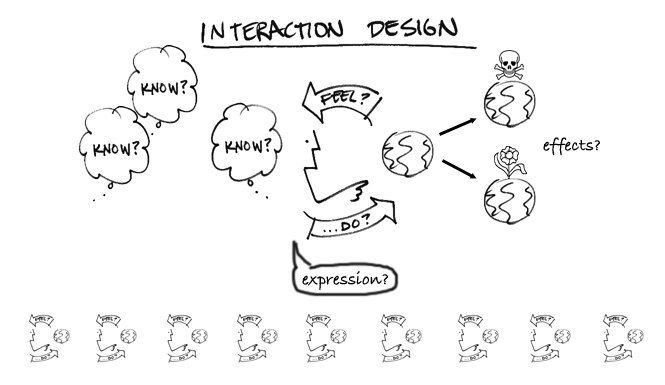
4) Cool Job – Interaction Designer – Complete Beginner’s Guide to Interaction Design – I am not going to say much about this because my ignorance will became obvious quickly. My first hearing of this job was around the supper table this week during our community group (Movement Church). Brian is an interaction designer. As he talked about his work, I was captivated. He works to make internet resources available to a set of consumers all over the world, and does it in such a way that is so user-friendly that even I could maneuver painlessly on that website. When you enter a website that gives you exactly what you need without bottlenecks, extra steps, or language that puts you off, then an interaction designer is probably at work unnoticed in the background of that site. Thanks, Brian, for what you do. Wow!Deb's BlogPhoto Credit: Interaction-Design.org

5) Icebreaker Question – I love icebreakers. They are a fun way to get to know a little bit more about the people around the room or in the meeting. This week, I was in a situation where the following question was used to get us started:

When was the last time you did something for the first time? What was it?”

I had to think a minute, but then it came: Soothing my wee granddaughter as if it was all up to me to settle her, even though her mommy was in the next room. [The next time will be much easier.]

What was your most recent “doing something for the first time”? What’s a favorite icebreaker question can you recommend?

Blog - Icebreaker questions - howdoyouplay.netPhoto Credit: Howdoyouplay.net

2015 October - Blog, Fall, Trees, Sadie 069

Building a Healthy Work Culture – in a Season of Change, Uncertainty, and Dips in Morale

Blog - Culture of FunPhoto Credit: Grasshopper.com

What are you celebrating at work these days? Hopefully you didn’t have to think really hard. Just having a job is something to celebrate, for sure. Beyond that, hopefully you have work that gets you up in the morning with a sense of purpose and a gladness of heart for your work community.

What if that’s not the case this morning? Any number of things can cause our workplace to become more stressful than healthful – a disappointing outcome in our research, a conflict over division of labor, a company merger or buy-out, a downsizing. I am awkwardly  list such things because none may touch on your situation. What is your work situation and your current work culture?

Whatever it is, working over a protracted period of time with low morale makes for a difficult work situation. We want to do whatever we can to turn that around. Not just for the sake of the organization and the goals of same, but for the sake of the personnel. The wellbeing of employees is the biggest factor in the long-term productivity of organizations. Yet, how do we wrap our collective leadership minds around such a thing as morale and engagement?

The key is work culture – and fostering a healthy work culture with as much energy and thought as we do our product line or customer service.

I was reading about work culture, especially related to a season of spiraling morale, and came across a pdf introduction of the book How to Build a Thriving Culture at Work by Rosie Ward and Jon Robison.

Not having read beyond the introduction of the book, I can’t give a full recommendation yet. However, the first few pages have already resonated with me about what is at play related to morale, or well-being, and what could be possible to restore it. Here are some quotes from Ward & Robison’s Introduction:

“Despite overwhelming evidence of a powerful link between effective leadership styles, positive work cultures and higher levels of organizational performance, many companies still operate with a top down, authoritarian management style, do not measure or intentionally create their desired culture, and do not effectively develop current and future leaders to maximize employee engagement and wellbeing.”

The authors go on to say that even in work situation where the leadership style is more employee-centered, the idea of work culture may not be well-understood or operationalized.

“Culture is the differentiating factor between high-performing and low-performing companies; however, most companies have not identified, articulated, measured or intentionally created their desired culture.”

The dilemma of employee morale may actually extend to the leadership team itself.

“The majority of executive leadership teams are not operating in a truly cohesive manner, and many leaders themselves are at a point of burnout.”

“Edgar Schein, PhD, leading researcher on corporate culture, describes culture as ‘the hidden force that drives most of our behavior both inside and outside organizations’. It’s like looking at a river. All of the things you see on the surface, from the flow of the water to the shape of the riverbed, are manifestations of an ever-changing, powerful current beneath the surface. In terms of culture, the current that ultimately guides the strength and direction of the organization includes the unconscious, taken-for-granted beliefs, perceptions, thoughts and feelings of employees. The interaction between leaders and culture is profound and critical when considering how to transform or evolve the overall culture and subcultures within an organization.

“Patrick Lencioni writes that, to be successful, an organization must focus on two basic qualities: It must be smart, and it must be healthy. According to Lencioni, a ‘smart organization’ is one that excels in the classic fundamentals of business — i.e., strategy, operations, finance, marketing and technology. A “healthy organization” is one in which there are minimal politics, minimal confusion, high morale, high productivity and low turnover. While being smart is only half of the equation, for most organizations, it occupies almost all of the time, energy and attention of leaders. Yet, according to Lencioni: ‘Once organizational health is properly understood and placed into the right context it will surpass all other disciplines in business as the greatest opportunity for improvement and competitive advantage. Really.‘”

Blog - How to Build a Thriving Culture at Work

Photo Credit: Amazon.com

How to Build a Thriving Culture at Work, Featuring the 7 Points of Transformation by Rosie Ward and Jon Robison

Work culture and employee well-being are not addressed by just another wellness program. Organizational ethos and values must incorporate both philosophy and programming to build morale, trust, and engagement of employees. Especially if the organization has been through a protracted season of change and uncertainty.

The good news is that possibilities abound. Workplace development literature is rich with approaches and frameworks that you will find helpful in attacking your own set of challenges. One such article is Workplace Culture is Everything: 20 Ideas For Building a Thriving Team – Great links to 20 articles on Workplace Culture. [I apologize, since I’m citing this resource, for the “coded” profane word in the title of one article. Good read otherwise].

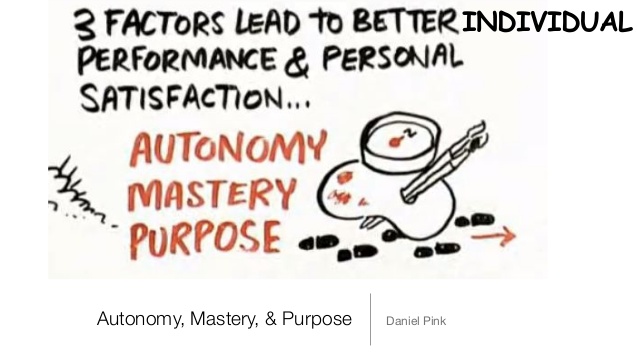
Another book I re-discovered in reading about morale this weekend is Daniel Pink’s Drive. When a company is in the middle of a reorganization or restructuring, employee wellbeing (engagement, performance, satisfaction) can get lost in the sheer workload of the executive leadership team. This is when Human Resources, Membercare, or the Employee Medical Program can offer their own recommendations as to how to rebuild the work culture from the personnel side.

Are you in such a season? What have you done in this area? What has been helpful? I would love to hear about how your organization has dealt with employee morale and engagement during seasons of transition.

Blog - Healthy Culture - Motivation - Slideshare.netPhoto Credit: Slideshare.net

Drive: The Surprising Truth About What Motivates Us by Daniel H. Pink

11 Ways to Create a Thriving Workplace

How to Create and Maintain a Workplace Culture That Will Make Your Company Thrive

Creativity, Inc. – Ed Catmull’s Story of Pixar, Working with Creatives, & Steve Jobs

untitledIMG_0223Photo Credit: Amazon.com (l) & Deb Mills (r)

Dave, the husband in my story, has always pointed me in the direction of transformative books and learning experiences. That path converged with this year’s Global Leadership Summit and Ed Catmull’s Creativity, Inc.

Bill Hybels interviewed Ed Catmull about his role in co-founding Pixar Animation Studios and pioneering the field of computer animation. Now President of Pixar Animation and Disney Animation, he has an extraordinary story to tell of leading creatives in innovative film-making. Mr. Catmull’s wisdom and humility can be well-applied in any workplace situation.Blog - GLobal Leadership Summit - Ed Catmull by brainpickings.orgPhoto Credit: brainpickings.org

“Science and art are not incongruous. Art isn’t about drawing; it’s about learning to see. Which business or professions do you not want to have enhanced ability to see?”

During this interview at GLS15, he talked about the business processes he uses in film-making. We can relate this level and quality of  accountability in any organization or company:

  1. Teams working together (using a Brain Trust – a group of colleagues all acting as peers, with vested interest, giving feedback;
  2. When failures happen in production – embracing [failure] but at the same time dealing with it with both total candor and kindness; and
  3. Operating within constraints (a budget) – actually pushes creativity higher and delivers better outcomes.

“Stories influence the world. We want to use story-telling for good.”

Listening to Ed Catmull talk about leading at Pixar and Disney whetted our appetites to read his book Creativity, Inc.

Originally, Mr. Catmull worked in the computer graphics department of Lucasfilm, in the beginning years of computer animation. In his book, he tells about his incredible journey in those early years right through to today. It was a wildly bumpy road at first and the work was almost sidelined had it not been for Steve Jobs buying Pixar from Lucasfilm.

Toward the end of the book, Catmull writes about Steve Jobs. They worked together for over 25 years, and the Jobs he knew was a much more complex and lovely man than who we knew through other media. A tribute full of “candor and kindness” – as much about how Ed Catmull sees people as about the amazing leader that was Steve Jobs.

Whatever your work, you want to read this book. Catmull describes how he modeled openness, confidence in, and care for his employees. There are trust builders and wide gates for innovation woven into Pixar’s business processes. Whatever our sphere of influence is, we can all learn to be more effective leaders as we think through how Catmull leads.

At the end of Creativity, Inc., there are 5 pages of bulleted principles that Mr. Catmull encourages as starting points for critical thinking. Here are just a few:

  • If there are people in your organization who feel they are not free to suggest ideas, you lose. Do not discount ideas from unexpected sources. Inspiration can, and does, come from anywhere.
  • It’s isn’t enough merely to be open to ideas from others. Engaging the collective brainpower of the people you work with is an active, ongoing process. As a manager, you must coax ideas out of your staff and constantly push them to contribute.
  • There is nothing quite as effective, when it comes to shutting down alternative viewpoints, as being convinced you are right.
  • If there is more truth in the hallways than in meetings, you have a problem.
  • Change and uncertainty are part of life. Our job is not to resist them but to build the capability to recover when unexpected events occur. If you don’t always try to uncover what is unseen and understand its nature, you will be ill prepared to lead.

Creativity, Inc. is not just a book for whom we now consider “creatives”. It’s a book for any of us who want to employ and empower people to grow personally and in community and to produce in ways that yield great products/services.

We all have stories that can influence the world for good…if we grow a work culture where those stories matter and can be freely explored.

Creativity, Inc.: Overcoming the Unseen Forces That Stand in the Way of True Inspiration by Ed Catmull and Amy Wallace

Global Leadership Summit – 7 Take-Aways from Day One of #GLS15

YouTube Video – Steve Jobs Remembered by Larry Ellison and Pixar’s Ed Catmull

YouTube Video – Ed Catmull: Keep Your Crises Small

Monday Morning Moment – On Silos and Tribalism – Taking “Us” and “Them” to a Better “We”

Blog - Silos & TribalismPhoto Credit: Slideshare.net

“Silos”, as a workplace term, is such a fitting description for what we do to distinguish ourselves from each other. It means compartmentalization based on specialization. Now the term “silos” is less used, replaced by the cooler term “tribes”. Unfortunately, because the workplace woes of old are still in operation, “tribes” have deteriorated into “tribalism” or…[Hello] “silos”.

I began thinking about this again this weekend when a retweet came up in my Twitter feed featuring Gianpiero Petriglieri. So much organizational resource – money and time – is spent on specialization and grooming leaders. It’s a pity when the outcome actually draws down the organization ( to small pockets of “tribal buddies”) instead of honing expertise and relationships across departments, across disciplines.Blog - Silos and Tribalism

What if we could break down silos, and reorient and reenergize tribes? What if workplace tribes incorporated a grand plan that nurtured inclusion – creating “a rising tide that lifts all boats” (Adam Grant)?

Years ago, when I was a young instructor at Yale University, I experienced workplace silos. There were bottlenecks through which I had to maneuver, until I figured out how to win those beyond the bottlenecks. Since then silos have been a part of life for me, as I’m sure they are for us all. Oncology nursing had a different prestige than critical care nursing. Was one better than the other? No.

Working in the Middle East had its own set of challenges different from working in Europe. Does that mean one elicits greater respect or benefits than another? Of course not. Right? Communication between those in the field and those in the home office can also become very much an “us” and “them” transaction.  Even within the home office, one department may seem more the “flavor of the month” than another. What are your silo/tribe challenges?

Brilliant business writers can give us great tools and insight with breaking down silos (see fast reads in the links below). If you are anticipating a major change in your organization (buy-out, down-sizing, shift in focus/product line), it makes for a perfect storm to deal with silos. Of course, if management across the organization leads out with a unifying goal (a “battle-cry”), the possibility for success is heightened. I don’t think, however, that this is the only hope for success.

What if one department, a single silo or tribe, decided to tackle the problem? What would that look like? From my work experience and from learning from great leaders, both celebrity and colleague, here’s a bare-bones minimum how-to-get-started list:

  • What is your common goal as an organization? What is the clear unified rallying cry around which you can collaborate?
  • What are your own silo biases? Do you communicate that you think your department, location, specialization should have some sort of favor? Deal with that. It’s the first barrier that has to come down.
  • If trust has been disrupted or destroyed, who can you partner with to begin to rebuild trust? Name them, and begin the process (if you pray, you might begin praying for their success as a department/division – make it NOT about you).
  • What objectives can you establish as a department to guide you in staying focused on high-value collaboration across-specialties?
  • How will you measure the course of your action toward becoming a non-silo, less tribal department? Set a time. 6 months or across whatever acute crisis you see coming. Be as intentional and broad-reaching as you are able, given your own workload. Remember that silos alter the math in a workplace – 1 + 1 + 1 = 2 when teams aren’t sharing information and working at cross-hairs. We can make the math work better, as we work, against the flow, toward creative collaboration. 

My professional life has had various silo experiences, from teaching in an Ivy League university to working on a highly innovative team (recklessly creating its own brilliant unintentional silo, later with personal regret). Silos and workplace tribes never get us where we want to go collectively. Bring ’em down.

I would love to hear about your work experiences…any struggles, breakthroughs, or victories in this area of breaking down silos and building a culture of “Yes, WE can…together.”

Blog - Organizational CUlture - Lencioni book Silos, Politics & Turf WarsPhoto Credit: Amazon.com

Silos, Politics and Turf Wars – A Leadership Fable about Destroying the Barriers that Turn Colleagues into Competitors

Silos and Tribes – Think Different

http://www.slideshare.net/JDDillon/breaking-down-silos-how-social-learning-changed-everything-for-kaplan-atdtk

17 Strategies for Improving Collaboration – from the Freiberg’s – Do Not Miss This One.

How to Build Trust and Fight Tribalism to Stimulate Innovation

Breaking Bad – Squash Silos & Tribalism – Breakthrough Personal Branding

Leadership Axioms: Powerful Leadership Proverbs by Bill Hybels

The Shepherd and His Sheep – We Want for Nothing – The Unity of His Word to Us

Blog - Sheep & Shepherd - bpnews.netPhoto Credit: BPNews.net

Thus says the Lord GOD, “Behold, I Myself will search for My sheep and seek them out. “As a shepherd cares for his herd in the day when he is among his scattered sheep, so I will care for My sheep and will deliver them from all the places to which they were scattered on a cloudy and gloomy day.” – Ezekiel 34:11

What a joyful thing to know that God, as our Shepherd pursues us and will care for us through all our days, even the most gloomy ones. We are in a season of life when we really need to hear from God on a time-sensitive matter. There are moments in these days that we strain to hear and wonder if we will. Then a passage, well, a couple of passages, pierces through that momentary silence. Our faith is renewed and riveted on the Good Shepherd…and we wait on Him.

Yesterday, Dave and I were at a leader training through Movement Church. Pastor Cliff led us through this worship exercise. As a group, we stood and read Psalm 23, together and out loud. We read it 5 or 6 times. About the 4th time, he led us to whisper it. I was so moved by this. It was like being with David, the author of the Psalms. I thought of him, possibly whispering these words, as comfort to himself and to his men. Maybe they were in hiding from the murderous hordes of King Saul. Or maybe they were in the quiet of their camp, sorting out the confusing betrayal of David’s son Absalom. I could hear that shepherd-king David, whispering those words to a God who loved him and would never leave him.

Then we read again in a louder voice, almost a battle cry. Then back to regular volume…and done. Done and transformed.

[You might want to take the time to do this as well. A beautiful experience.]BLog - 23rd Psalm

After we finished this, we reflected on the God who shepherds us – who perfectly knows His sheep, faithfully feeds His sheep, leads us and protects us. Psalm 23 points us to that Good Shepherd.

Then Cliff took us to Ezekiel 34. You know those times when you re-read a familiar passage and it’s as if you are reading it for that very first time? That was my experience. To see the glorious unity between Psalm 23 and Ezekiel 34 reminded me all over again how I love how God draws us to Himself through His Word.

In Ezekiel 34, the people of God were in a difficult place (vv. 1-10). Those shepherding them at the time did not know these “sheep”. They did not feed the sheep, selfishly caring for their own needs over that of the flock. They did not lead – leaving them to scatter. They did not protect them. It was a timely warning and indictment for us in leadership if we lead without caring for the people as God cares.

Then the prophet Ezekiel spoke a word of deliverance from the Lord to His people (vv. 11-22). God Himself, who knows His sheep, would gather them. He would feed them. He would lead and protect them. We are His sheep, and no matter our circumstances, we can rest in His Word that He will not leave us in our difficult situations alone.

Finally, the Lord speaks into the future of His people (vv. 23-31).

“I will appoint over them a single shepherd, My servant David, and he will shepherd them. He will tend them himself and will be their shepherd. I, Yahweh, will be their God, and My servant David will be a prince among them. I, Yahweh, have spoken.” – Ezekiel 24:23-24

King David, who penned Psalm 23, had long since died. There would come One from the lineage of David who would be this Good Shepherd. The Word and Promise of God in human form – this glorious anointed one, Jesus. Thus we are taken from the Psalms through the Prophet Ezekiel to the Gospel of John in the New Testament.

“I am the good shepherd, and I know My own and My own know Me, even as the Father knows Me and I know the Father; and I lay down My life for the sheep. I have other sheep, which are not of this fold; I must bring them also, and they will hear My voice; and they will become one flock with one shepherd. “ John 10:14-16

This Sunday morning is bright with promise of a God who shepherds us. As we wait to hear His direction in our lives, we can stand on His promise that He knows us and our need, He will lead us, He will feed us, and He will protect us. If that doesn’t lead us to worship, I don’t know what would.

The Story Behind the Psalms

Grit – When You’re Hurtin’ But Not Quittin’ – the Role of Personal Resolve and a Team Alongside

131118-Z-WM549-015Photo Credit: Pacific News Center

Diligence is a word that defined my many years in learning Arabic while we lived overseas. Keeping at it, even when I wanted to quit, helped immensely. The joy of living life in a second language is worth all the work. Diligence is a great assist to staying on course, but it is not “grit”.

I saw grit at work recently in a group of servicemen, in Virginia Beach, doing their morning exercise. [Not the picture above but that image has its own neat story of grit]. We had taken a couple of days away from the city to get our breath, by the ocean. Walking on the boardwalk early in the morning, we encountered this small group of airmen from the nearby Naval Base, doing a group jog. We saw them starting the run and saw them again coming back – 6 miles total. Most of them were young, thin, and fit.

What caught our eye, in particular, were two men in mid-life, carrying a bit of weight, bringing up the rear. Approaching the end of that run, they looked like they were hurting, but they definitely weren’t quitting. I’m sure to stay as fit as the rest of the group was, a certain measure of grit was at play…but these two, in this snapshot of life, showed the grit that brought me to write today.

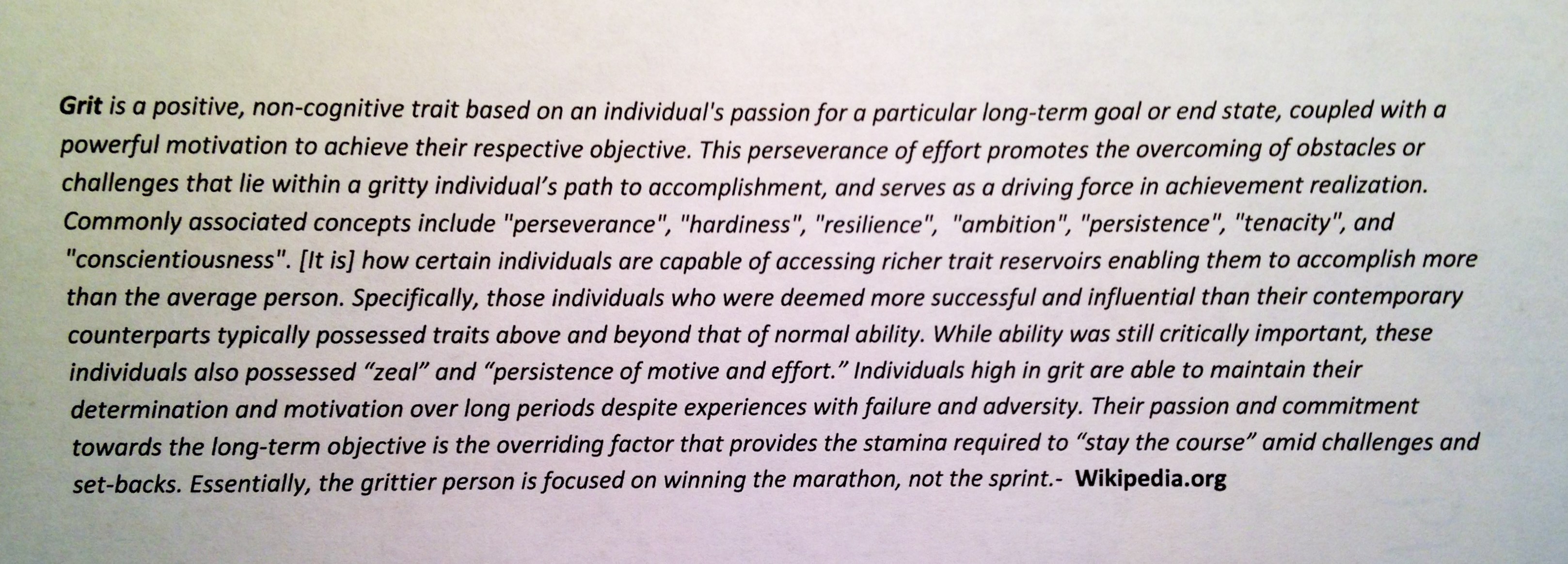
Wikipedia.org defines grit as a character trait  of applying passion and perseverance over time toward a goal, end state or objective. Grit goes beyond ability and can withstand failure, keeping the end goal in sight, and pushing through to it.Blog - Grit - Definition 2

Bill Hybels, at the Global Leadership Summit 2015*, talked about grit as “one of the greatest indicators of success”. Gritty people, he said, are the ones who “play hurt” and rarely ever give up. “They expect progress to be difficult, but believe with their whole being that they can be successful if they don’t quit.” It’s “The Little Engine That Could”. Abraham Lincoln. Nelson Mandela. Gandhi. Martin Luther King. Hybels also encouraged the audience that grit can be developed. From childhood through adulthood.

Jon Acuff (author of Do Over) defines grit as “stubbornness in the face of fear“.  In his book, he gives a short list of what’s needed in making gritty decisions (in the “hustle” of work):

  • Time – we think the world “hustle” has to mean fast, but it can also mean focus, intention, pace.
  • Counsel – Lean on your relationships. Some of the worst decisions are made alone. Who are your advocates? Have you given them time to reflect on it or are you rushing right by the wisdom they have to offer? Let them speak into it. A year from now, looking back on the decision, you’ll be glad you made it as a team.
  • Questions – Always ask awesome opportunities, awesome questions. We skimp on due diligence. “What am I not seeing right now?”
  • Kindness – Give yourself permission to make the wrong decision, because…you’re going to. Break the tension of feeling like you’re going to be perfect by giving yourself some kindness from the outset.
  • Honesty – When you look back on a decision, remember that you made that decision with the best information you had at the time.

As we saw those two older heavyset men running just behind their younger airmen colleagues, we saw men with a goal in mind. There was also something more – the cadence to the group’s run that seemed to work to keep them all together. Whether at work or in family relationships, we want to do all we can to help those gritty ones be successful. Their resolve may get them to the goal anyway, but we all benefit when we are able to “stay on course” together.

Have you “grown gritty” over your lifetime? Are there gritty folks in your life who you love to champion? Tell us about them below.

*Session 1: Bill Hybels Opening Session – Global Leadership Summit

Wikipedia Article on Grit

The Truth About Grit

The Grit Test

Jon Acuff on the Role of Hustle in Taking Hold of Career Opportunities – Notes & Quotes – Part 5 of Do Over Series

How to Make Grit Decisions and Built a Grit List by Jon Acuff

Do Over: Rescue Monday, Reinvent Your Work, and Never Get Stuck by Jon Acuff

Does Teaching Kids To Get ‘Gritty’ Help Them Get Ahead?

5 Friday Faves – Workplace Friendship, a Book on Opposites, All Things Pumpkin, Story-telling, and a Chamber Choir

Blog - Friday Faves

Happy Friday! We’re expecting a rainy weekend here. With Fall weather upon us, the pull to be outdoors is even more heightened. If the rain keeps you in, here are five favorites to enjoy.

  1. Workplace Friendships – Adam Grant writes for New York Times about how friendship culture has changed in the workplace. I have life-long friendships which originated at work. Same passions, same seasons of life. Read his piece here. What is your experience?Blog - Friends at work - Friday FavesPhoto Credit: NYTimes.com

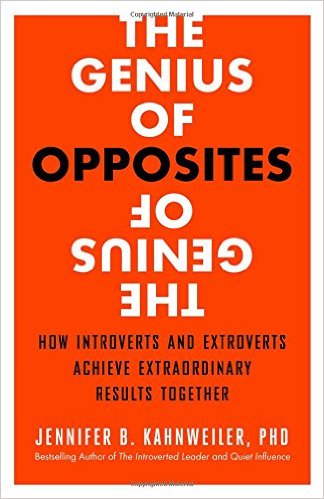
2. Book of Opposites – Jennifer Kahnweiler has written a fascinating book on Introversion-Extroversion. The Genius of Opposites: How Introverts and Extroverts Achieve Extraordinary Results Together. My  husband is a  introvert  and I am an extrovert. We have been married over 30 years and have worked together many of those years. We have learned a lot of Kahnweiler’s wisdom on our own…and after many years of struggle. This book is very helpful and empowering for any partnership between introverts and extroverts.

Blog - Friday Faves - Genius of Opposites

Photo Credit: Amazon.com

Skip Pritchard wrote a great review here.Genius-card-front-1Photo Credit: SkipPritchard.com

3) All Things Pumpkin – O.K. I’m not wild about Pumpkin Spice Latte, but as soon as September comes, I’m in love again with all things pumpkin. My favorites are pumpkin pie and pumpkin bread. When we lived overseas, pumpkin was solely treated as a vegetable. It is amazing in 7-vegetable couscous. What is your favorite pumpkin recipe? Please share in comments.2015 September Flowers & Fall Pumpkin Spice Blog 014Photo Credit: Weather.com

Fall Pumpkins by Carol Davis2015 July Phone Pics - Flowers, Blog, Stella, Shyndigz, Christie 001 (147)Photo Credit: Pumpkins by Carol Davis

4. Story-Telling – Chase Neinken wrote a piece for NewsCred.com on what is critical to story-telling – Conflict, Authenticity, and the Audience. Read 3 Crucial Principles Of Storytelling You Can Learn From Kevin Spacey + House Of Cards, and watch Kevin Spacey talk about story-telling.

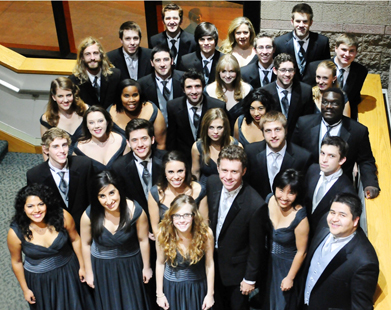
5) A Chamber Choir – Azusa Pacific University Chamber Singers were recently on tour in Italy. On Facebook, I came across a video of them singing “Give Me Jesus” by Larry Fleming at the prison where the Apostle Paul was kept. Wow!Blog - Friday Faves - APU Chamber_Singers

Photo Credit: apu.edu

That video hasn’t made it to YouTube yet, but here they are singing at a concert in Italy.

Do you have a favorite group? Please share. Enjoy your weekend…and your pumpkin of choice.