Category Archives: Leadership

5 Friday Faves – St. Patrick’s Day, Beauty and the Beast Guitar Arrangement, Tenacity, Manliness, and Embracing the Life You Have

Happy Friday! Hope this week was kind to you. Here are my 5 most favorite finds of the week for you.

1) St. Patrick’s DayLá Fhéile Pádraig Sona Duit! Happy St. Patrick’s Day! Wearing green. Corned beef and cabbage…and my family background is Scottish. Still love celebrating this day a bit. Photo Credit: Flickr

Also planning to watch the David Kidd documentary Patrick. A friend who heard David Kidd speak recently shared the following with me via email this morning – notes from his talk on the real Patrick (legends removed):

  • He was born in 396 AD and died in 471 AD.
  • Patrick was a man brought up on a Romano British Christian home somewhere in southwest Britain (his father was a deacon and grandfather a priest).
  • He was kidnapped at 16 (he said he didn’t really know God at that time), trafficked, and taken to the West Coast of Ireland where he worked as a shepherd and learned Irish.
  • As a slave, Patrick came to see the hand of God in his troubles. God broke through his defenses, and Patrick faced his unbelief and pride. Later he described how he turned to God whom he realized had been watching over him all the time. He became aware of God’s protection, and he discovered that God loved him as a father loves his son.
  • Before this, he had ‘sinned’ – something that ‘lasted an hour’ and he believed that God punished him.
  • God spoke to him in a dream about a ship to take him home. At 22, he managed to escape slavery.
  • At home, he had another dream of the people in Ireland calling him back.
  • He was obedient to the Spirit and went back to West Ireland (the ends of the earth at that time).
  • He was beaten, harassed by thieves and robbers, admonished by his British superiors, but his work grew and he remained humble.
  • He protested against injustice, esteemed women highly, and identified himself as Irish.
  • His legacy was a vibrant Christianity which lasted hundreds of years while Britain and Europe fell into the Dark Ages.

What we can do to honor Patrick’s memory?

  • The Past: Remember a humble man who had been mistreated, heard from God, obeyed, loved his enemies, lived his life for Jesus, and made a significant difference – not just in Ireland, but much of Europe.
  • The Present: Use Patrick’s life to help people focus on what really matters.
  • The Future: Be as faithful as Patrick and live for Jesus and His Kingdom – making a difference in this world with fruit that lasts.

2) Beauty and the Beast Guitar Arrangement – Yesterday the live action Disney film Beauty and the Beast debuted in the US. Articles abound about the production – its beauty and grand scenes. Other articles raise the question of whether it is as family-friendly as the Disney animated classic by the same name. Everyone will have to decide for themselves about whether to watch this film and how often. One very easy decision would be watching the just-released classical guitar arrangement by Nathan Mills (Beyond the Guitar).

It is beautiful, even with less-grand scenes, and its own Belle and wee beast. It is definitely family-friendly and the music is lovely. Enjoy!

3) TenacityFirst Round posted the fascinating story – Lessons in Tenacity – of how entrepreneur Dennis Crowley, co-founder of Foursquare, built his business. He saw tenacity at work in the growing and thriving of his location technology company.

Tenacity is that characteristic in a person or group that keeps her/them moving forward – persistence, resolve, determination.Photo Credit: Pixabay

Read the article for examples Crowley gives, and here’s his illuminating summary:

Tenacity has many manifestations for founders and their startups. At the beginning, it’s often deeply tied to identity. Giving up one’s idea feels like giving up on oneself. After hitting early milestones, tenacity is confidence. But it’s best tempered with humility, so as to avoid flying too high on early wins. As a company scales, tenacity is focus. There will be accompanying growing pains as customers sign up, headcount grows and the market responds. Anchor and orient yourself by asking: what is this supposed to be when it grows up? When the going gets tough, tenacity is grit. Don’t look externally to others to build what you need — you’ll be waiting longer than you want. Do it yourself. Lastly, tenacity is culture and a private truth. Tenacity at scale will both involve and elude people. What guides the team isn’t always accurately reflected in the public’s perception. An informed, committed team around you is the best way to drown out the noise and to march toward achieving your biggest goals.

“These different facets of tenacity are important insofar as invoking them keeps your legs moving and charging forward. Growing a company is an impossibly hard endeavor — many wouldn’t start if they knew just how difficult it is,” Crowley says. “But the early stories of most successful companies are often those in which no one thought it could be done. In fact, if you asked them, those founders probably didn’t know if they could do it either. But if you can get there — if you stick to what you set out to do — it can put you in an amazingly powerful and defensible position.

4) Manliness – We should affirm, empower, and let loose women to fulfill their callings, giftings, and places in the world. Not being sexist, the same is true for men, of course. That’s why I appreciate the website/podcast the Art of ManlinessThe Art of Manliness aims to encourage our readers to be better husbands, fathers, brothers, citizens — a new generation of great men (the About page).

I don’t go with everything on this website but some of the content is fascinating and extremely helpful. I hope never to have to jump from a speeding car but knowing it’s possible to walk away from such a situation made me interested in reading about it.

Photo Credit: Art of Manliness

This information isn’t just for men, but some of the entries are male-specific. We women write volumes about how to be “better women”. I’m glad there are men (and women) are writing for men in this way.

10 Tests, Exercises, and games to Heighten Your Senses and Situational Awareness – Brett & Kate McKay – Art of Manliness

5) Embracing the Life You Have – We have all experienced losses. We grieve…and grieve again. As time goes by, the grief changes, but that doesn’t mean it has to change us. At least not in an unhealthy way. John Piper speaks about this so eloquently and tenderly:

I have in mind two kinds of losses: those who had something precious and lost it, and those who hoped for something precious and never had it. It works both ways. Sixty years go by, and forty years on you think, “I’ve come to terms with that,” and then one morning it breaks over you, and you weep about a 40-year old loss, or a 40-year “never have,” and my counsel is, yes, go ahead, embrace that moment. Weep.

But then, say to your weeping after a season, “No. You will not define me, sorrow, because my God has said, ‘No good thing does he withhold from those who walk uprightly’ (Psalm 84:11). Therefore, even though it was good in one sense, and I miss it in one sense, I trust my God, and he has not withheld anything that is good for me.” Yes, let there be weeping in those seasons — feel the losses. Then wash your face, trust God, and embrace the life he’s given you. – John Piper

As one who struggles with waves of grief out of nowhere…thank you, Dr. Piper.

Principal Financial Group has been running a series of commercials with the theme Life Doesn’t Always Go According to Plan. Three of their commercials follow. Sweet messaging…

Be gentle with yourself and each other. Serve somebody, and be safe out there. [Oh, and please share in Comments your favorites of the week. Thanks!]

Bonuses

Who are the Refugees? Which are their Host Countries? Take a Guess.

Granny Pod – Ingenious and honoring idea.

Mom Truths

5 Friday Faves – Common Purpose, Safeguarding Your Marriage, Being Different, Hard Seasons, and Small Beginnings

Happy Friday! Here is my gift to you today – so many glorious finds I’ve tried to compress into 5 Friday Faves.

1) Common Purpose – Every year, Glassdoor, a website that assists employers and potential employees to find each other, posts a Top 50 of Best Places to Work.

Photo Credit: SAP

Glassdoors’ 2017 Best Places to Work

In his LinkedIn article, Barry Sanders talks about one of the characteristics of what makes a “best place to work”. This characteristic is “common purpose”.  He writes:

Common purpose is essential to driving organization-wide adaptability, which is key to succeeding in today’s fast-paced business world. A shared set of values and goals across the organization allows leaders and individual contributors to achieve widespread alignment, manage uncertainty, and guide decisions in times of turmoil and change.

Without establishing common purpose, companies risk a lack of motivation, lower levels of commitment, less loyalty, and decreased alignment amongst their employees—not to mention negative Glassdoor reviews.

Photo Credit: Wikipedia

He also quotes from his CEO General Stanley McChrystal’s bestseller Team of Teams which gives this summary of the importance of common purpose:

“Team members tackling complex environments must all grasp the team’s situation and overarching purpose…Individual SEALs have to monitor the entirety of their operation just as soccer players have to keep track of the entire field, not just their own patch of grass. They must be collectively responsible for the team’s success and understand everything that responsibility entails.”

When you can see the entire field, not just your patch of grass, your organization becomes more effective—and a better place to work. – Barry Sanders

I sure hope senior leaders get this message. Just communicating the purpose is not enough. That “patch of grass” must be given to that soccer player. He must own it and own his part of the entire field. Leaders who genuinely believe in and nurture common purpose cultivate a “best place to work” for their personnel.

15 Things I Learned From Truett Cathy [Founder of Chick-Fil-A]– Paul Sohn

2) Safeguarding Your Marriage – Infidelity or unfaithfulness in our marriage relationships is not just about sexual betrayal. Infidelity can happen when we allow our hearts to become more bonded to someone or something else more than to our own spouses.
Dave Willis defines infidelity as “broken trust or broken loyalty”. He has posted a tremendously helpful article entitled The 9 Forms of Infidelity in Marriage (Hint: 8 of Them Don’t Involve Sex). Willis is a pastor,counselor and founder of Stronger Marriages. Single or married, you will benefit from his article because too often we “fall” into infidelity by letting ourselves be deceived in thinking it’s nothing. Safeguard your relationships!

3) Being Different – Matt Damico has written an excellent piece for Christ-followers. It is The World Needs You to Be Different. If you are reading this and you aren’t keen on the teachings of Jesus, you may already think that Christians are a quirky lot of people. What Damico says in this article is to call us to the rhythms, the routines, the practices of the church that work a peculiarity in us that’s a good thing.

Piano scales make a pianist. Hours behind the wheel make a driver. Weightlifting reps make muscles, and lots of miles make a runner. Routine and repetition aid us in so many ways, yet a lot of us seem allergic to similar habits in our weekly church worship gatherings.

But just as these individual habits do something to us, so it is with our congregational habits: they’re making us into something. God willing, they’re making us the right kind of peculiar.

We’ll bear fruit in this life when our roots are firmly planted in the coming new earth. As C.S. Lewis said, history shows that “the Christians who did most for the present world were just those who thought most of the next.” One of the main ways this happens is through the rhythms and repetitions worked into our weekly gatherings.

So, as your church gathers for worship this weekend, appreciate anew what’s happening, how the strange rituals — the “rhythms of grace,” as Mike Cosper calls them — are making you more faithful and more fruitful. – Matt Damico

Photo Credit: Wikipedia; Wikipedia

[Cliff Jordan, teaching elder at Movement Church, in Richmond, Va. preaches on this very thing for several weeks in a series entitled Grace On Display. Seriously transformative stuff!]

4) Hard Seasons – I’m not going to wax on here about hard seasons – we all know what ours are. I just always want to keep Syrian refugees on my radar so here’s a photo piece that dramatically displays their reality…in a way that has stayed in my mind all week.

Click the Black Background and Switch on Their Reality – Politiken

Photo Credit: Flickr

Then I also wanted to share a piece by Aaron Brown. I know his family. He grew up in Chad where his father was a physician. His reflects on a very difficult time and its oddly positive impact on his life…renewing his hope after the very difficult year of 2016.

The Do-Over Year – Ruminate Magazine – Aaron Brown

5) Small Beginnings – In the Bible, the prophet Zechariah encouraged the people, “Do not despise small beginnings.” They had the huge task of rebuilding the Temple, and Scripture tells us, this great work began in the mundane but extraordinary act of Zerubbabel picking up the plumb line. Any beginning may seem small and inadequate for the grand vision that stretches in front of us. However, we never know when the small explodes into wonder.

Chip and Joanna Gaines (HGTV stars of Fixer Upper) have an incredible story of small beginnings which grew into a huge, phenomenally successful business. They started out flipping houses as a young couple and often had just the cash in their pockets. Now they have their own TV show, a real estate business, home goods store, and “The Silos” – a refurbished commercial venue in Waco, Texas.

http://people.com/home/hgtv-chip-joanna-gaines-were-broke-before-fixer-upper/

Photo Credit: Flickr; Flickr

Another example of small beginnings is pastor and author Tim Keller. Just this past week, Keller announced he was stepping down from the senior pastor position of New York City’s Redeemer Presbyterian Church. He pastored there for almost 30 years and it now is a multi-site 5000-member church.  [This is a planned succession and he will be teaching in a seminary.] A friend of mine here in Richmond “knew him when”. Years ago, before his NYC church role he was her pastor, in a small church near here – West Hopewell Presbyterian Church. Small beginnings…

My Tribute to Tim Keller – Scott Sauls

Whether you are examining a small beginning as a Christian or from a different worldview, there is excellent counsel to be had…both in Scripture and in articles (such as those linked below).

Just yesterday I was trying to encourage a young man about what he viewed as a small beginning in his career. Not sure I made sense at all. Then today, my husband emailed me this great article – about the exact same subject.

Don’t you love when you read someone else’s brilliant words that essentially describe the counsel you just gave someone?! Benjamin P. Hardy is way more studied and eloquent than I, so please don’t miss his piece titled The 2 Mental Shifts Every Highly Successful Person Makes.  He talks about:

  • the power of choice (“you stop playing the victim to external circumstances and take responsibility for your life – the private victory“) and
  • the power of context (“In everything you do, there should be collaborative and synergistic elements. Of course, there is work which is your work. However, that work should be embedded within a group of others and toward something much bigger. – the public victory”)

Hardy’s full article is excellent (even includes components of the assist we get from brain plasticity which I wrote about earlier).

6 Personal Branding Rules To Being Popular and Profitable – Patrick Allmond

8 Highly Effective Habits That Helped Make Bill Gates the Richest Man on Earth – Minda Zetlin

50 Ways Happier, Healthier, and More Successful People Live On Their Own Terms – Benjamin P. Hardy

So what are we waiting for? Let’s get up and get on with this amazing life we’ve been given…it’s never too late.

Bonuses (for your listening pleasure)

Elha from the NBC TV show Little Big Shots

How Elha Nympha Got on ‘Little Big Shots’

Monday Morning Moment – Neuroplasticity – Resetting Your Brain for Success at Work and Life

Photo Credit: Pixabay

You know that shocking experience when you are driving to a known destination and then get lost in your thoughts? At some point, you snap back to attention and wonder, “How did I get here, I wasn’t even thinking about it?!” That is neuroplasticity or brain plasticity. It is an amazing capability we all have and can be nurtured and utilized throughout our lives. Yes, “old dogs CAN learn new tricks“.

What is this phenomenon?

Mike Torres, of Refocuser, gives an excellent definition, as well as an explanation of function, in his piece Neuroplasticity: Your Brain’s Amazing Ability to Form New Habits.

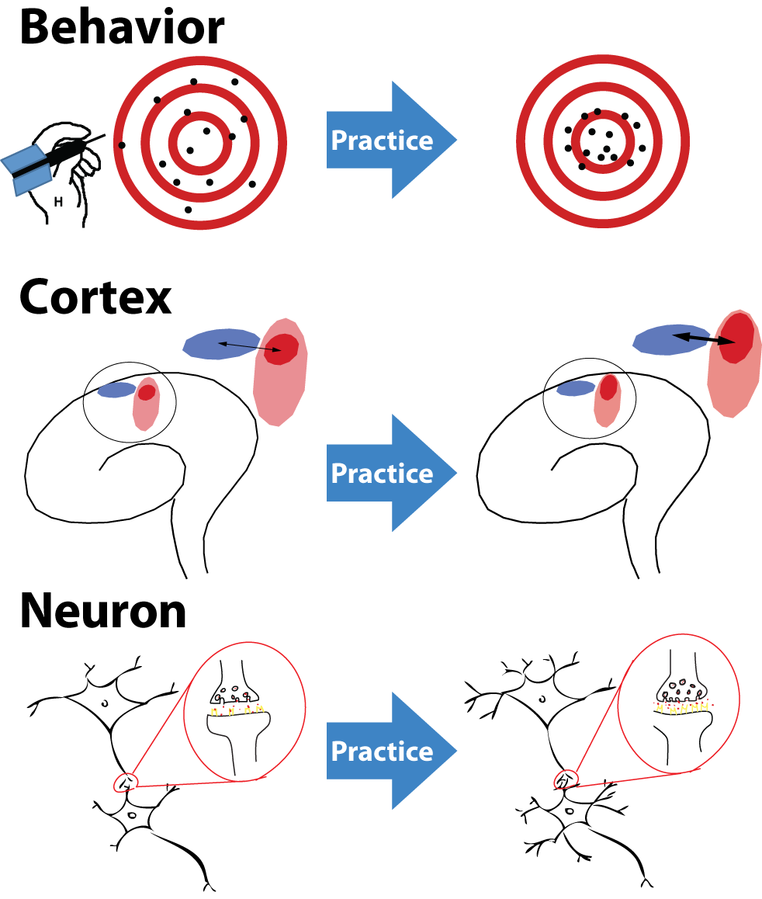
Neuroplasticity refers to the brain’s ability to restructure itself after training or practice. An example of how neuroplasticity works: when you view the brains of people who frequently practice playing the violin under fMRI (functional MRI) they appear to have developed a larger area of their brain devoted to mapping their fingers.  Photo Credit: Wikipedia

This change is directly related to the quantity and the quality of the practice they’re performing – their brains are adapting in very real and tangible ways unbeknownst to them... The more practice you accumulate, the more ingrained or grooved the pathways become.  Of course the inverse happens as well: if those pathways aren’t utilized, the space will be used by other pathways needing room to grow. Use it or lose it! …Your brain can change based on repeated experience…People of any age have the ability to learn new things and form new habits. Mike Torres, Refocuser

Watching Nathan play intricate, complicated runs on his classical guitar boggles my mind. How can he think that fast? It’s lots of practice that causes the brain to connect to the hands, and those difficult pieces get “under his fingers” almost without thinking.

Years ago a friend gave us this book Never Too Late by John Holt. In his “musical life story”, Holt describes how he learned to play the cello in his 40s. We were encouraged by this during a time we moved to Egypt and learned Arabic in mid-life…when language-learning is supposed to be especially difficult.

I love neuroplasticity but it gives me hope, in getting older, of keeping skills and developing new ones, even as an aging person…unless I give in to dumbed-down practices excusing myself for the same reasons of “getting too old”.

When my older brother suffered a stroke, it was neuroplasticity and the repeated efforts of his medical and therapy team that got him back on his feet. He finally “repeatedly practiced” his way back to independence. The personality changes seemed more ingrained, however, they changed, too, as he exchanged his anger and bitterness for a hopefulness and longing for healthy, loving relationships. As he refused to give into anger and chose soft responses, his personality seriously changed over time…with conscious that eventually turned unconscious practice.

How does all this apply to us in the workplace and life, in general? We are confronted at times with a situation that confounds us – a new uncomfortable skillset, an unpredictable relationship, or an unfamiliar decision-making process. Neuroplasticity helps us to not just give up on mastering either a new work process or a complicated interpersonal situation.

Debbie Hampton has written an excellent summary piece on this that will help kick-start any new habit formation necessary for us to continue to do excellently in our work. She was influenced by Dr. Michael Merzenich’s work published in his book Soft-Wired: How the New Science of Brain Plasticity Can Change Your Life. I have listed below Merzenich’s 10 elements of how we can rewire our brain. You will find Hampton’s summary on each very instructive. [I comment briefly on each but don’t miss what she says in her article.]

10 Core Principles for Remodeling Your Brain

1. Change is mostly limited to  those situations in which the brain is in the mood for it. We have to want to learn and change. If we give up, stay resigned to the status quo, or remain fed-up, change will not happen. Want change!

2. The harder you try, the more you’re motivated, the more alert you are, and the better (or worse)  the potential outcome, the bigger the brain change. Focus and persistence or key to mastery.

3. What actually changes in the brain are the strengths of the connections of neurons that are engaged together, moment by moment, in time. Practice strengthens pathways for behavior. Whether it’s learning a new computer system or developing a different way of communicating with a boss…practice hard-wires.

4. Learning-driven changes in connections increase cell-to cell cooperation, which is crucial for increasing reliability. I see this in musicians who live-stream and can read listener chats, respond to them, and continue playing all at the same time. Crazy.

5. The brain also strengthens its connections between teams of neurons representing separate moments of successive things that reliably occur in serial time. This is definitely the mechanism that gets us to our destination when we stop thinking about where we’re going.

6. Initial changes are temporary. Habit formation takes time, and somehow the brain interprets whether the change is vital. Amazing.

7. The brain is changed by internal mental rehearsal in the same ways and involving precisely the same processes that control changes achieved through interactions with the external world. At the simplest level, this is the mechanism of how we “talk ourselves through” a situation. Or when an athlete goes through his routine in his mind before he’s back out on the track or in the pool.

8. Memory guides and controls most learning. Our brain actually helps us to remember what we did well and discards what we didn’t.

9. Every movement of learning provides a moment of opportunity for the brain to stabilize — and reduce the disruptive power of — potentially interfering backgrounds or “noise.” The more we practice, either a physical skill or a way of thinking through a problem, we actually get better at it because somehow the brain reduces the background noise (which can include insecurity, fear of failure or self-doubt).

10. Brain plasticity is a two-way street; it is just as easy to generate negative changes as it is positive ones. Dr. Merzenich warns us, as we get older that we “use it or lose it” by our own decisions to stop learning and mastering new skills and behaviors.

Photo Credit: Commons Wikimedia

How are you using neuroplasticity to help you continue to grow in your work and personal life? Trevor Blake encourages us to set the tone of the day positively and don’t defect from that. Using self-defeating language can blur our focus and mental capacity for mastery. Read more of his excellent counsel here.

As we age, or give in to “what is” at the moment (tracks greased by depression sometimes, or perceived lack of ability or opportunity), we may not realize the great positive effects of neuroplasticity. However, the good news is that we can keep learning and changing and mastering what work and life and relationships bring our way. It’s never too late.

http://www.slideshare.net/smarkbarnes/brain-science-applying-neuroplasticity-principles-to-higher-education-1340661


Neuroplasticity: Your Brain’s Amazing Ability to Form New Habits – Mike Torres

How to Rewire Your Brain for Success – Trevor Blake

Three Simple Steps: A Map to Success in Business and Life – Trevor Blake

Brain HQ Website

How Does Neuroplasticity Work – an Infographic

Never Too Late: My Musical Life Story – John Holt

Deadly: Brain on Multitasking – Bukunmi Adewumi

Toxic Thoughts – Dr. Caroline Leaf

5 Friday Faves – Zelda on Guitar, Community, Tim Tebow, Podcasts, and Creatives

Happy Friday! It’s been one of those weeks that has made Friday a “Whew, got through it!” kind of day. An anticipated freeze tonight draws me outside and to take in all the early forsythia, red bud and tulip magnolia blossoms in their current glory. Such a beautiful time of the year…this mild winter/early spring combination.

For your enjoyment – should you end up inside and snuggled in front of a fire – my favorite finds of the week:

1) CommunityGrace abounds in genuine community. Don’t we all hope to have a work team that cares about us, neighbors that watch out for each other, and family that looks past our foibles and loves us anyway? True community happens when our focus is on the other…the friend, the neighbor, the coworker. In our strength, we come alongside the weaker ones and take turn-about in our weak times to lean on those who are strong. I can’t describe community very well but I know what it’s like to be in real-life deep community. Someone who has described it well is Cliff Jordan, teaching pastor of Movement Church, Richmond, Virginia. His message from Romans 15:1-6 inspired and affirmed the reality of community if we are willing to go after it and extend ourselves toward others in this way. Listen here to the message: Grace On Display – Community.Photo Credit: MoveRichmond

2) Zelda on Guitar – For both you videogame and classical guitar music aficionados, you’re in for a real treat. Nintendo has launched a new gaming system (Nintendo Switch) and a new version of The Legend of Zelda (Breath of the Wild). In celebration of this launch for all you gamers who grew up with Zelda, classical guitarist Nathan Mills of Beyond the Guitar has arranged a Zelda medley.

Not much of a videogame fan, but I am a classical guitar enthusiast. The soundtracks of these games are rendered beautifully on guitar. Watch here or click on video below.

3) Tim Tebow – In the U.S., most every adult out there knows the name and something of the career and character of Heisman trophy winner Tim Tebow. I’m a big fan. In particular, I’m a fan of the winsomeness and determination of the man, more than his athletic prowess. Tebow first came on my radar watching the film, Everything in Between, about how he trained and persevered, culminating in becoming a first round draft pick for NFL football. Then I watched his career in the NFL, and then his detour into baseball, sportscasting and commentary. Tim Tebow is one of the hardest working, determined, disciplined, and persevering athletes out there today.

Photo Credit: Tim Tebow

More than his success in athletics, his determination to make a difference in life stands out the most. He shows up in all kinds of situations, serving and showing love to those who might think they are forgotten. Many celebrities and other wealthy benefactors have foundations, as does Tim. Why he does what he does, he shares below.

“I want to be someone that was known for bringing faith, hope and love to those needing a brighter day in their darkest hour of need.”

Tebow strives for excellence in all he does, and he brings that to bear on the lives of those who may not have the same opportunities as he does. So for people who question his athletic career, walk awhile in these shoes.

Shaken: Discovering Your True Identity in the Midst of Life’s Storms – Tim Tebow

4) Podcasting – Like in every other professional field, there is actually a conference for podcasters. I came late to the entertainment/educational medium of podcasting. Now, however, there are some who have won my heart and car-time. Below is a short list of my favorites:

  • The Popcast – Knox McCoy and Julie Golden post a weekly conversation all about pop culture. I just discovered them this week and find them funny, engaging, and even thought-provoking. Sometimes I agree with him, sometimes with her.Photo Credit: The Popcast
  • 5 Leadership Questions or 5LQ – Todd Adkins and Barnabas Piper are co-hosts of 5LQ. Their focus is on Christian leaders but it’s not just about church; their guests include business and other professional leaders. The same five questions guide their discussion:
    • Who are you learning from?
    • What is the main point of emphasis for your leadership team (or self) right now?
    • What obstacles are you currently facing in leadership, either in your organization or personally?
    • What does leadership in your home look like?
    • What would you tell your 20-year-old self about preparing to lead?

    I’m personally kind of a leadership junkie and can tell you I always learn from these guys and their guests.

  • The Podcast – Carey Nieuwhof This writer, conference leader, and pastor does a weekly podcast on leadership as well. Nieuwhof tackles some of the hard issues of leadership. Whether you lead in a Christian or other organization, you will learn and enjoy his meaty and sometimes funny content and stories.

25 Best Podcast Episodes Ever – David Haglund & Rebecca Onion

The 50 Best Podcasts of 2016 – Laura Jane Standley & Eric McQuade

5) Creatives – Using the word “creative” as a noun doesn’t come naturally for me, because I believe in the innate creative abilities of all of us. However, some “creatives” stand out. Writer and podcaster Jeff Goins defines them best in this way:

“A creative is an artist. Not just a painter or musician or writer. She is someone who sees the world a little differently than others.

A creative is an individual. He is unique, someone who doesn’t quite fit into any box.

A creative is a thought leader. He influences people not necessarily through personality but through his innate gifts and talents.

And what, exactly, does a creative do?

A creative creates art…She sings to sing, for the pure joy of making music. And she paints to paint. (And so on…)

A creative colors outside the lines. On purpose. In so doing, she shows the world a whole new picture they never would have otherwise seen.

A creative breaks the rules. And as a result, he sets a new standard to follow.

Why we need creatives

The truth is that we need more creatives in positions of influence — to color the world with beauty and life.Jeff Goins

Nathan Mills, of Beyond the Guitar, is a creative…one of my favorites, clearly.

Writer and woodworker Kevin Prewett is both a friend and creative. In fact, I didn’t know how creative he was until this week when I saw some of his woodworking.

Pipe and Sage – Woodwork – Kevin Prewett – Wood and Words

Another favorite creative of mine is Andrew Morgan. His documentary series Untold America is a timely, much-needed look at today’s America…with the potential to bridge a gap between us as a diverse and sometimes polarized people.

Untold America Series

These are my favorite finds of the week. Please share yours in the Comment section below. Have a safe, refreshing weekend…and stay warm.

Monday Morning Moment – Are You Ready For Your Workday? – Lessons From Cintas

Photo Credit: Food & Beverage Magazine

Next time you head to the restroom, take a look around. Unless it has just been stormed by a tour group that needed more than the usual service, you can get a sense of readiness. Not the readiness of the restroom, but of the person or agency servicing it…and you as a customer. I wrote about this level of customer service once before  here. Why I wrote about clean restrooms then is why it begins my topic today. Clean restrooms demonstrate a sense of pride and caring. We want restrooms to be ready for the workday. How about our own readiness?

Readiness is defined as being fully prepared and willing to execute.
It is not just about being prepared for one’s workday. It’s also a ready-set-go willingness to be on our toes, stepping up, taking the ball, and scanning both the horizon and the lines drawn on our playing field.

When a Cintas truck rolls into the parking lot, I can almost smell the clean linens and uniforms inside. Their branding includes this mantra: Ready for the Workday: A confident image, clean facility and safe workplace start here. Here’s their commercial that I just saw this weekend, It got me thinking about the broad reach of readiness in the workplace.

My husband walks out of the house ahead of me every morning with his computer bag and a thermos of coffee. He has his schedule on his phone and he keeps a journal. He has thought about the day. He is prepared…the willingness to execute then comes into play as he goes out our door and enters his company’s door…and all the rest of the doors of his day. Both are disciplines – the preparedness of readiness and the willingness to execute.

Readiness keeps momentum going and momentum has huge impact on business and workplace excellence.

After watching the Cintas commercial, I went to their website. What a feast for anyone wanting to learn about leadership and a healthy workplace culture. Check out their Code of Conduct and Business Ethics page. Nothing on their agenda about Business Casual – and everything about dressing and performing aims at positive impact, and helping their customers do the same.

The website’s drop-down menu displays a variety of helps and services. Honestly, it’s hard to believe this company is for-profit based on the generous sharing of information for helping others (their customers and competitors) be “ready for the workday”.

I want to close with some of the quotes from the Cintas website – both from their own founder and from writers who speak for and to their own leadership. Enjoy.

Corporate culture is the single most important distinguishing factor between greatness and mediocrity. It is a major reason Cintas is different from our competitors and other companies. It is our ultimate competitive advantage.” Richard T. Farmer, Cintas Founder & Chairman Emeritus

A key to our success has been a culture that encourages meaningful, respectful relationships between the company and our employee-partners and the commitment to always do what’s right. This spirit of teamwork, camaraderie and trust has become our most important competitive advantage and is a cornerstone of the Cintas culture.” – Richard T. Farmer, Cintas Founder & Chairman Emeritus

“Those who rise to senior leadership levels in almost any organization have one critical attribute in common — they’ve embraced soft leadership skills. This includes having the ability to build relationships with the people you work with. There’s never been a leader in this world without people who wanted to follow them — and the first step to getting people to want to support you is to get them to like you. Take the time to get to know the people you work with, and learn what’s important to them.”Karlyn Borysenko

Be transparent. Insincerity and evasion chip away at trust, so whenever you can, be transparent about what’s happening with the business. Of course, there will be confidential data you can’t disclose. Carolyn O’Hara of the Harvard Business Review notes, ‘regularly distributing other information—like financial results, performance metrics, and notes from board meetings—shows that you trust your employees, which in turns helps them have greater faith in you.’”Lee Polevoi

Don’t micromanage or give step-by-step instructions. Instead, provide guardrails while giving [employees] the freedom to find smart and creative solutions.Chuck Leddy

Photo Credit: LinedIn – Cintas

Hope you enter your workplace ready for the day today! The best part of Monday is its own possibility of a new beginning. Of course, that sort of “Monday” can come any day of the week.

On ready!

6 Essential Leadership Skills That Will Advance Your Career – Karlyn Borysenko

Building Trust in the Workplace – What Business Leaders Can Do – Lee Polevoi

Agile Process Management: An Approach For Business Success – Chuck Leddy

16 Things You Should Do at the Start of Every Workday – Jacquelyn Smith, Forbes

6 Tips For Building Momentum  During Change – Sallie Sherman

Why Preparation Is Better Than Planning – Craig Jarrow

Being Ready For Your Workday Feels Great! – Advance Preparation Is the Key to a Successful Day – Craig Jarrow

What Does Casual Dress Really Mean Today? – 6 Wardrobe Tips For Career Success – Lynn Taylor

5 Friday Faves – Reversing Diabetes, Circle of Gratitude, Love Songs, Asking Good Questions, and the Ideal Team Player

1) Reversing Diabetes – Maybe you don’t think about diabetes. I do.
So far I have held it off. Not because I’ve mastered a healthy diet or an active lifestyle. Just teetering probably on the brink. Diabetes is one of those diseases that, if we live long enough, will probably hit one out of three of us. 1 in 3. So when I come across a great article about reversing it (which is rare), I jump on it. Lou Schuler has written a powerful piece for Mens’ Health on How to Reverse Diabetes. He writes in a non-shaming, matter-of-fact way with lots of pragmatic counsel and success stories. Our problem is we don’t think we can reverse it…we figure it is inevitable if we continue with reckless eating and holding our couches down so they don’t get away. I was encouraged by Schuler’s article.

Photo Credit: Pixabay

We can reverse diabetes with three specific interventions – lose the weight (or don’t gain the weight over our lifetime); especially control our belly fat; and exercise (even just walking after we eat can make a big difference). I have loved ones who are diabetic or pre-diabetic. I hope they are encouraged by this….I am. Resolved not to be 1 in 3.

Photo Credit: Flickr

2) Circle of Gratitude -Gratitude is a terrific gift all by itself. What’s really fun is when our expression of gratitude actually triggers gratitude in the person for whom we’re thankful. Justin Kanoya describes this as a circle of gratitude. You have been the recipient of some great service or other good thing (fill in the blank) and you want to thank them well for what they did for you. You don’t just send an effusive text or Facebook message. Nor do you pick up a one-card-fits-all-purposes to send them. You want it to be reflective of what they did themselves. Kanoya carefully picked out some hand-made cards from local artisans. He then wrote specific detailed thanks for each person’s generosity toward him. Lastly, he slipped in gift-cards for spa treatments.Photo Credit: Flickr

Kanoya describes how satisfying that was, but the circle of gratitude closed for him when he received back all manner of thanks for his thanks, from those who received his cards. Sweet. Have you had this experience – when someone’s gratitude felt even more generous than what you did for him/her? That’s a circle of gratitude.

3) Love Songs – Do you have a favorite or meaningful love song? For Dave and me, it was the oldies song playing on the radio when we first kissed. I Only Have Eyes For You. He tells me he actually waited for just the right song because we would remember it always (not like “Hotel California”). That was a long time ago. It was such a moment that, after we married, we even asked a local artist to do a painting for us as a reminder of that sweet song and sweet moment. Photo Credit: Artist – Betty Skaggs

Facebook has become a bit redundant for me lately – not just the political parlay but all the videos. Still there was one this week that touched my heart. It was a homemade video at a church Valentine banquet. A couple was standing at the mic and the husband was singing a karaoke version of Lionel Richie’s Truly to his wife. So funny and deliciously dear.

Do you have a favorite love song and moment? Please share with us in Comments below.

4) Asking Good Questions – There was a season in my professional life when my husband and I directed a study abroad program with young adults right out of college. They would return to the US to attend graduate school but wanted a deeper understanding of the Middle East, through an immersion experience. During those sessions, we would often have visits from their parents. One mom gave me surprising and difficult advice. She said her son (along with these other 20=somethings) prefer coming up with their own answers (solutions to their own problems). The key for us in supervision and mentoring was to ask them the kind of questions that would get them to those answers. I wanted the easy way out; I wanted to just tell them what they needed to know. Saves a lot of pain for all of us, but didn’t help them become better problem-solvers. Ever since, I’ve been trying to figure out how to ask good questions.

Photo Credit: Pixabay

When leadership coach and blogger Paul Sohn interviewed talk radio host and author Ken Coleman, they talked about this very thing. Asking good questions.  about asking questions.  – What’s the greatest question a person can ask/answer? “Why am I here?”

[When you read Sohn’s interview, don’t miss the Comments. Really fascinating.]

One Question: Life-Changing Answers From Today’s Leading Voices – Ken Coleman

5) Ideal Team Player – Pat Lencioni’s book The Ideal Team Player is one of our favorite books lately, and I’ve already written about it here. It’s a fave again this week because I discovered some helps for discovering just how humble, hungry, and people smart we are. On Lencioni’s website, he offers several free resources and tools. Photo Credit: Pexels

One tool was a free self-assessment of these three virtues of an ideal team player.  It was very helpful, especially in pointing out areas where I tend to hold myself back. Check it out. Seriously.

Photo Credit: Table Group

Monday Morning Moment – True Humility in Leadership – So Not Cliché

Those are my five faves for this week. Below you will find a bonus from one of my favorite documentary makers – Andrew Morgan. He’s directing a series of short films on Untold America. This past month, he focused on the many sides of democracy in America. Next, I believe, he is covering immigration stories. Follow him and Untold America on Facebook or Twitter. You don’t want to miss any of these films and the people whose stories they capture.

Have a safe and refreshing weekend, Friends.

Bonus: Untold America’s Documentary Series on Democracy

Untold America – Facebook Page

Monday Morning Moment – Résumé vs. Eulogy – On Befriending Our Colleagues

Photo Credit: Tangram

Don’t you hate when, out of all the positive exchanges we have at work, there’s that one negative that hangs in our memory? It was a team-building exercise on trust really early in my career. One of the people on my team, with whom I worked at the time, just wouldn’t engage. She finally said, “You are just my co-workers. We are not friends.”

We are not friends.

Slayed.

Throughout my career, I’ve made it a goal to befriend colleagues – those close to me and up and down the ranks. Befriending isn’t becoming best buddies necessarily. By definition, it is “to act as a friend to; to help; to aid”.

When this coworker, in my professionally formative past, expressed openly that we were just a part of her job…I was surprised and schooled. For some, relationships at work are compartmentalized in such a way as to keep them formal and shallow.

There is a measure of safety in keeping work relationships at a distance. I get that. However…

When we spend more waking hours with our colleagues than with even the closest of our loved ones, they bear some significance.

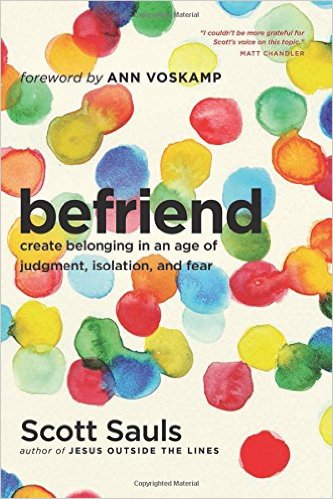
I’ve just begun reading Scott Sauls’ book Befriend: Create Belonging in an Age of Judgment, Isolation, and Fear.   I wrote about it here a few weeks back as the next book on my reading list. The author Scott Sauls is a pastor, but more than that, he is a friend. Not because I know him personally, but because the imprint of Jesus is on his writing and life. He is not preachy or churchy (in the way it was never meant to be). Sauls is wise, loving, and inclusive. Whether you are a person of faith or not, if you want to deepen your friendships and work relationships, sampling the pages of this book will aid you on your way. This book itself, like Sauls, actually befriends you.

Photo Credit: Amazon

My Monday blogs are often reserved for workplace matters – either the culture of our workplace or our very careers. Sauls talks early in the book about how we view success in life. He recalls David Brooks‘s take on our achievement culture.

“We live by two sets of virtues: the résumé virtues – things we bring to the marketplace – and the eulogy virtues – things we want said about us at our funerals. Brooks concludes, ‘In [our] secular achievement culture, we all know the eulogy virtues are more important, but we spend more time on the résumé virtues.'”

What people think of me when I’m gone is less important than truly making a difference in this life. When it comes to our work, I think we all want to add value, not just to the product, but to the people with whom we work and for whom we provide services.

We can get caught in the press of beefing up our résumé and lose sight of the people, real flesh-and-blood people, all around us. Oh, we may not call our focus résumé-building, but when we take a moment to check our motives, it becomes more clear. Ambition, self-promotion, and exclusive control can crush work relationships. We often think it’s someone else but before long it can become us.

I will never forget a colleague who shared about his own pivotal relationship with someone he once considered a difficult boss. They argued over every idea, every decision, every action plan…at least, as this man remembers. His boss was always asking hard questions and pushing him to think more and more outside the box. Yet, in the middle of his heatedly trying to persuade his boss of the rightness of his ideas, the boss would look at his watch and say, “Let’s go get some lunch.” This would infuriate the man re-telling his story.

However, over the years, he began to see something in his boss he didn’t notice at first. This older man genuinely cared for his young protégé. The banter back and forth was to encourage excellence and innovation but never at the expense of valuing the relationship. That’s why lunch together was all part of the exchange. He mattered to his boss.Photo Credit: Free Stock Photos

Later the older man retired and the younger man advanced in his career. Their paths rarely crossed after that. When the older man finally died, his wife called this colleague and asked for him to be a pallbearer at his funeral. The older man had come to consider the younger a friend…and the younger man, as he teared up in remembering, was the better for it.

I’ve written often on complicated work relationships – the us vs. them situations and dealing with contemptuous colleagues among others. We can be tempted NOT to befriend.

Photo Credit: QuotationOf

However, we are the ones who lose the most in not extending a hand of befriending (acting as a friend) to those with whom we work. It changes us, from the inside out, and we live only in the land of résumé-building, rather than eulogy-making.

Sauls writes about expanding our “us”. In the workplace, this can be extraordinarily counter-cultural. To look out for our own status and position is expected. To consider how we might take down silos and create a work community where “the rising tide lifts all boats” (Adam Grant) – something remarkable and memorable.

That is the legacy, years ago, of that coworker/”friend” of mine. She made me more resolved than ever. I want to be a befriender, a boat-raiser, and a person willing to expand the “us”.

Sauls closes this chapter by asking the question, “Where is your greatest opportunity to expand your “us”? It has me thinking. How about you?

“Compelled by the love of Christ, we must not withhold kindness or friendship from any person or people group, and we must not engage in any sort of us-against-them posturing. This in itself is countercultural in modern society. Compelled by the truth of Christ, we must honor and obey the Creator’s design—even when his design is countercultural and, at times, counterintuitive to us. His ways and his thoughts are higher than ours.”

20 Quotes From Scott Sauls’s New Book on Friendship – Matt Smethurst

Monday Morning Moment – Roadmap to Achieving Your Goals in Real Time and Regular Life – 10 Sure Turns

Photo Credit: edX

Life happens. Whatever our hopes, goals or dreams, we go after them in real time and regular life. The challenge is to not lose sight of them in the course of working your day-job, whatever that might be. Jon  Acuff’s book Do Over came out at a very timely place of transition in my life. The recurring theme of his book was to do what it takes to get where you hope to go – not finding yourself at the end of your career realizing you just clocked in and out of “someone else’s job”…for decades. The daily of our lives can snuff out or overshadow where we knew in our hearts we wanted to go…in work, relationships, and vision. Mark that and take positive steps through it.

I’ve read ever so much more about goal-setting than I’ve actually used. In thinking of goals and action plans, I can actually feel an eye twitch coming on…and all I want to do is eat junk food and check Facebook. Alas…goal-setting is a challenge…but a worthy one.

Roadmaps are helpful for me. Not only with finding the destination but also with marking progress, checking for more scenic routes, noting markers which teach us stuff, and pointing to rest stops.

After reading the articles linked below, a roadmap for decision-making has emerged that makes sense to me…and hopefully will be helpful to you. We need goals or we are never fixed on a mark toward which we launch our best efforts. The key, however, is not just in deriving the goal but, setting a course that aligns with our relationships and responsibilities. That way, when setbacks come, they don’t put us off-course. We just deal…and get back on course.

So here we go:

10 Sure Turns Toward Achieving Our Goals

  1. Listen to the Longing – As we get older, our goals change in life. Still at a heart level, we have longings for a life of deep purpose and genuine achievement. Those longings may be as unique as we all are as people. We are never too old or our lives too far-spent to tune into that longing. It’s never too late.
  2. Tell Those Closest to You – Don’t keep to yourself what you would love to pursue. Tell those who care for you so much that they will pour into your vision and your goals. Fear of failure or disappointment won’t diminish your hopes if others share them with you…because they love you and believe in you.
  3. Set Goals and Then Revisit Them With “Why’s?” – This is actually some of the hardest work of moving forward and stymies some of the best of us. Serge Popovic breaks this down in a helpful way by looking at the systems (or commitments) that help us get to goal. The goal is our destination but we daily make decisions and take action toward that goal. These rhythms are part of the discipline of achieving our goals. They also inform our direction as we revisit our goals and ask the necessary “why’s”.Photo Credit: Dreams Procrastinated
  4. Consider the Costs and Work Them into Your Plan – In setting course to meet life goals, there are givens we must consider. Taking care of our family is an obvious one. Managing our time around other responsibilities. Not missing our children as we strive toward that goal that can stretch years ahead. The costs don’t have to alter our course, but we must reckon with them.
  5. Organize Your Life – Why is this important? Organization can have a huge impact on recouping the costs (in #4) and in freeing us up to potentially getting to goal faster. Do be careful what you organize OUT of your life…especially relationships. Make wise decisions here… It’s one thing to get rid of stuff or downsize time-wasters, and another thing to neglect relationships.Photo Credit: Paul Sohn
  6. Choose and Develop Your Team and Expand Your Network –
    Speaking of relationships, this is one of those circles that can pay huge dividends for all involved. Rarely do we make goals that don’t include the investment of others. Think through the people you know and who of those would be a great support to your future. They could be idea-generators, mentors, investors, content experts…and some could be family who mostly cheer you on and pray for you in the battles.
  7. Take Action or Execute Your Plan – What? Taking action is point 7 on a 10-point roadmap?! We have clearly taken action in multiple ways already, but those preparatory functions have set the stage for a strong start to execution. Even through Steps 1-6, we may have already re-framed what the plan looks like. Being proactive before we set the plan in motion greases the tracks for achievement. The action plan will be revisited often…which actually makes it less stressful for me to develop. Melanie Curtin even writes about journaling our goals and action plans, giving us a daily view of progress.
  8. Deal With the Drag of the Past – This is a preemptive strike against those emotions that form barriers to reaching our goals. That dull sense of foreboding, the failures of the past, the gnawing insecurity, the temptation to blame…. None of these keep us from reaching our goals, unless we empower them to do so. Lighten the load by cutting the ropes on the past. One caveat: the “drag of the past” doesn’t include wisdom we’ve gained – Remember that part of the past always.
  9. Allow for Respites and Setbacks – Again, life happens. I have had to sideline some goals in recent months because of health and family issues. They are not gone from my mind or my habits…but they are sidelined for the moment for real life things of more urgent need. However…these kinds of things can become normative if we aren’t careful. You don’t want to lose momentum …keep moving toward your goal if at all possible…even if it’s ever so slowly. At some point, sooner than later, revisit and reset goals…and rest when that’s the greatest need.Photo Credit: Bloom to Fit
  10. Celebrate and Express Thanks All Along the Way – no explanation needed here. This isn’t just for the finish line but for every step along the way. For every barrier that we turned into a door. For every problem we forged into an opportunity. For every God-orchestrated appointment and “per chance” meeting. Celebrate. Show gratitude. Widen the circle – your achievement is enjoyed by many!Photo Credit: Morning Business Chat

Hopefully, you found this helpful. The resources below informed this piece and are all rapid reads if you want to go deeper in a direction. I hope your main-takeaway is that you can achieve and starting today is not too late…starting is the point. You’ve got this!

Achieve Your Goals – Is Your Roadmap the Right Way Up??? – Wendy Tomlinson

Goals vs. Commitments: A Simple System for Long-term SuccessSrdjan “Serge” Popovic​

10 Quotes That Will Radically Reshape Your Idea of Calling – Paul Sohn

50 Goal Quotes that Will Inspire and Motivate You – Marelisa Fabrega

When It’s Good to Be Bad – The Road to Excellence Is Paved With a Few Lapses On the Way – Cody Delistraty

6 Ways You Are Making Life Harder Than It Has to Be – Paul Angone

How to Crush Your Goals in 2017 – Travis Bradberry

Crushing Your Goals…God’s Way – Stephen Altrogge

Want to Improve Your Focus and Lower Stress in 2017 – Take Up This One Simple Habit – Melanie Curtin

YouTube Video – A Tale of Two Brains (“The Nothing Box”) – Mark Gungor

Photo Credit: AllGroanUp

Monday Morning Moment – 7 Skills of the Top Leaders of Tomorrow – Whatever Your Age or Stage – with Matt Monge

Blog - Tomorrow's Leaders - Mojo companyPhoto Credit: The Mojo Company

[From the Archives]

Leaders of Tomorrow. What age group came to mind? Probably not your own. Maybe that’s one of our dilemmas in life and work. We either think we have already arrived as tomorrow’s leader today (ugh!). Or we stop thinking of how we can develop into that change agent of tomorrow because we’ve fixed our course…or settled into what we know already. It’s served us well so far, right?

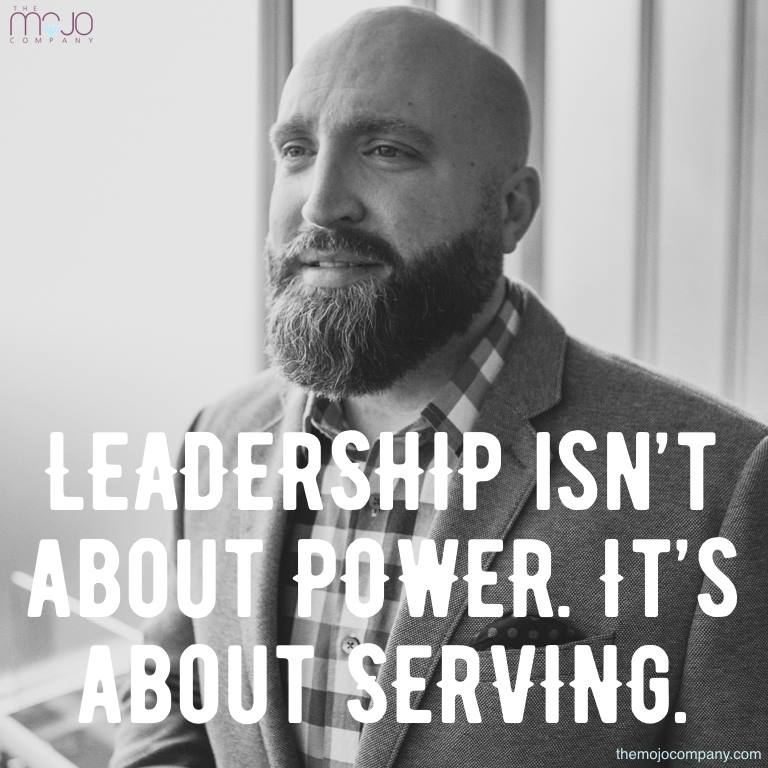
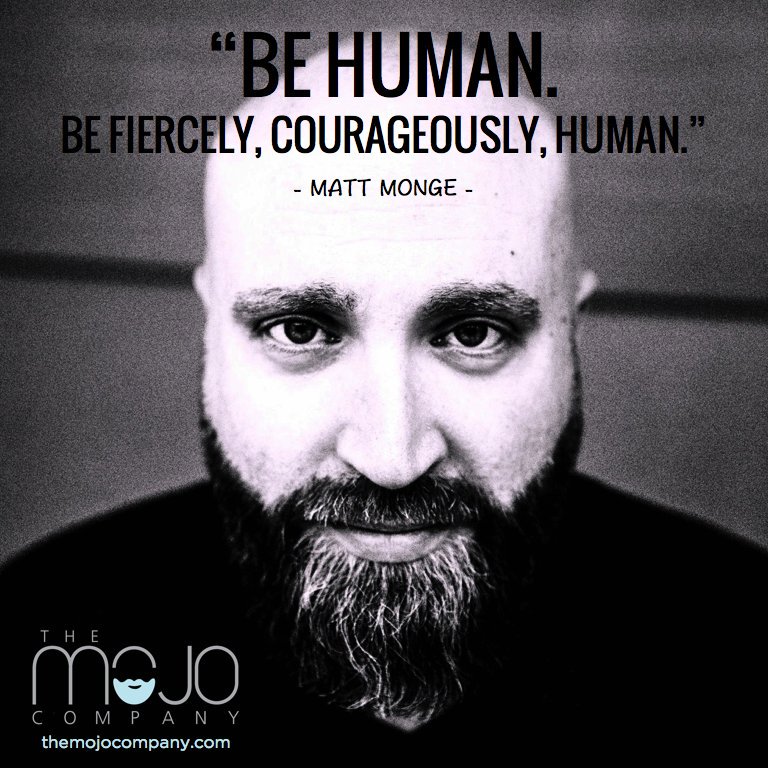
Here’s my Monday morning gift to you: an introduction to the person, writing, and wisdom of Matt Monge.  Earlier in his career, he worked in finance (credit unions, in particular), and had fascinating titles like Chief Culture Officer and Vice-President of People and  Development. Currently he is is president of The Mojo Company, a leadership development consulting firm. His Facebook page bio reads: “My mission? Make the world a better place by helping people, leaders, & workplaces be more human. Depression fighter. Keynote speaker. Head of The Mojo Co.”

Blog - Monday Morning - Matt Monge - Leadership is about serving - FacebookPhoto Credit: Matt Monge Facebook Page

I read everything Matt Monge writes. Even his promotional video taught me more about leadership (you’ll want to take notes).

Monge posted a blog a few weeks back and I’ve been thinking through it since… It’s his 7 Skills Tomorrow’s Top Leaders Are Developing Today. I decided to post his bullet points here and how they stirred my thoughts on skill development today. [Don’t miss reading his thinking on this and other leadership topics in links.]

  1. Being Others-Oriented – While other employee development folks have moved away from “servant leadership” language, Matt Monge continues wisely to be a strong supporter of it. I, too, am delighted by leaders who continue to seek out the greatest good for both employees and customers. The bottom line is best served here. As the years go by, or as tribes are built, our temptation is to coast in this area…making the negative assumption that someone else is serving while we’re the idea leaders. As leaders go, so go the organizations.
  2. Persuasion, Logic, & Negotiation – First, Monge sees top leaders as practicing persuasion and negotiation differently “not with power, position, coercion, or even deception; but rather through logic, reason, and with an eye toward the good of the whole.” It’s funny how unaware leaders can be in thinking that manipulation and coercion go unnoticed by employees under their authority. It’s always better to do the work of taking the high road of negotiating and persuading. When we engage in the give-and-take of healthy debate and problem-solving, it’s a win-win for everyone. It does require time, trust, homework, and humility.
  3. Reframing – This is a discipline of looking at a problem or situation from different perspectives. Monge talks about doing this in such a way that we wrestle with our own biases and blind spots. Reframing can make for a decision or problem solved that have wider success or effectiveness.
  4. Knowing How to Think about and Make Decisions – Monge makes the distinction of being decisive vs. being a good decision-maker. I love this because often we experience leaders who get the job because they are decisive. Period. Full-stop. What does it take though to be a good decision-maker? To become an effective leader is to examine how we make decisions – what are my decision-making processes, who are my guides, what are those factors that always weigh in on my decisions? [Monge names those factors as presuppositions and core values. We need to think about what those are.]
  5. The Ability to Work and Build Community with Others – This is such a core value of mine and yet after years in my career, it bears refreshing. I’m reminded, as Monge writes about this, of the Old Boys’ Network. Today, maybe it’s less-gender-defined and called other things, like C-Suite executives, or even tribe. Still, if it’s a few making decisions for the many, it’s not community. Monge’s constant message is that the strength and health of an organization is in the community. Leaders must do the work of leaning in to their colleagues (outside the executive suite) to draw on the wealth of knowledge there and to affirm the value and varied roles of those coworkers.Blog - Matt Monge - human - twitterPhoto Credit: Twitter
  6. Leadership – The leaders of tomorrow are continuing to develop themselves toward that future. We can be always learning, always growing – not necessarily just like other leaders in our lives, but learning what we need to learn to remain relevant/useful. Resting on the laurels of past successes or doing “what we’ve always done” will eventually pull us to the sidelines. I’m in the painful, personal throes of dealing with this right now myself. Shaking it off and moving forward!
  7. Understanding Humanness & Emotional Intelligence – Monge defines emotional intelligence as having “four basic components: self-awareness, self-management, social awareness, and relationship management”. Foundational to emotional intelligence, in Monge’s thinking, is this whole element of humanness. As the workplaces of the future give way to more and more technology, we will be wise in tuning into the growing need for humanizing our organizations and our human employee experience. Being tech-savvy and not people-savvy misses what could be. Leaders of tomorrow, take note.

So that’s it for today. I love Mondays because they bring another opportunity to hit “the refresh” key of our work lives. We are not only motivated for the week ahead – differently than Fridays when the focus is the weekend – but we’re fresh in our view of our work community…and hopeful.

Matt Monge and others like him give me the encouragement I need to cast off from the safe, still shore and re-enter the fast and deep water of today’s work environment, determined to maneuver well there…and maybe even coax other quality people back in from the shallows. Whatever our ages or sensibilities, we can work toward being tomorrow’s leaders of excellence.

Monday Morning Moment – Syrian Refugees – No One Puts Their Children On a Boat…Unless

What drives people to leave everything behind – everything they have known and owned – and board a sea-bound, over-loaded boat for an unknown future? My sense is it’s running for one’s life…rather than their path to terrorism.

These days in the US, we are adjusting to a new presidential administration and changing policies. Protests and social media wars abound. How to understand and what to really believe are challenging.

What is true?

A wise friend responded to my voiced struggle of what to think about our nation’s changing views on immigrants and refugees:

“The people trying to escape evil we want to welcome. The people who want to export evil we want to identify and shut down.”

Though not prepared myself to address the latter, I would like to highlight the plight of refugees…especially Syrian refugees. A poem I discovered just yesterday is real and riveting…and can put the reader on that sagging boat, holding our children tight, and hoping we will make it to that distant shore. With no idea what will come next.Photo Credit: CNN

Warsan Shire, a young Somali woman who grew up in London, writes deeply personal poetry about life and struggle. Her poem Home is a powerful description of the refugee experience…especially the Syrian, but it could speak to others as well [read the whole poem here].

No one leaves home unless
Home is the mouth of a shark
You only run for the border
When you see the whole city running as well

You only leave home
When home won’t let you stay.

No one leaves home unless home chases you
Fire under feet.

You have to understand,
That no one puts their children in a boat
Unless the water is safer than the land
No one burns their palms
Under trains
Beneath carriages
No one spends days and nights in the stomach of a truck

No one crawls under fences
No one wants to be beaten
Pitied

No one chooses refugee camps.

Go home…

Refugees
Dirty immigrants
Asylum seekers
Sucking our country dry…
Messed up their country and now they want
To mess ours up

How do the words
The dirty looks
Roll off your backs
Maybe because the blow is softer
Than a limb torn off

I want to go home,
But home is the mouth of a shark
Home is the barrel of the gun
And no one would leave home
Unless home chased you to the shore

I don’t know what I’ve become
But I know that anywhere
Is safer than here.          – Warsan Shire

What can we do for refugees? Jesus’ teaching prevents his followers from blaming others, airing our impotent opinions, or sinking into compassion fatigue. Jesus poured his life out for us…all of us…and teaches us to do the same.

“Then the King will say to those on his right, ‘Come, you who are blessed by my Father, inherit the kingdom prepared for you from the foundation of the world. For I was hungry and you gave me food, I was thirsty and you gave me drink, I was a stranger and you welcomed me, I was naked and you clothed me, I was sick and you visited me, I was in prison and you came to me.’ Then the righteous will answer him, saying, ‘Lord, when did we see you hungry and feed you, or thirsty and give you drink? And when did we see you a stranger and welcome you, or naked and clothe you? And when did we see you sick or in prison and visit you?’ And the King will answer them, ‘Truly, I say to you, as you did it to one of the least of these my brothers, you did it to me.’” – Jesus – Matthew 25:34-40

http://debmillswriter.com/wp-content/uploads/2016/06/12993627_10156889362110061_8126408917090936937_n.jpg

To the refugee (probably not reading this, but I want to come out of silence somehow): There are those of us, in this country, who will do what we can to welcome you here and to be neighbor to you when you finally arrive. Forgive us that we haven’t done more. We have been shaken out of our slumber of unbelief at your suffering. Praying for you until you are home again…wherever that will be.

Home by Warsan Shire

YouTube Video – People of Nowhere – Lior Sperandeo

Baptist Global Response

Loving the Alien – PDF – Bible Study from Jubilee Centre, Cambridge, UK

Scripture and Immigration

5 (Biblical) Reasons Christians Must Care for Asylum Seekers – Matt Darvas