Category Archives: Attitude

Monday Morning Moment – Elevating Our Work – with John Burke and Benjamin Hardy

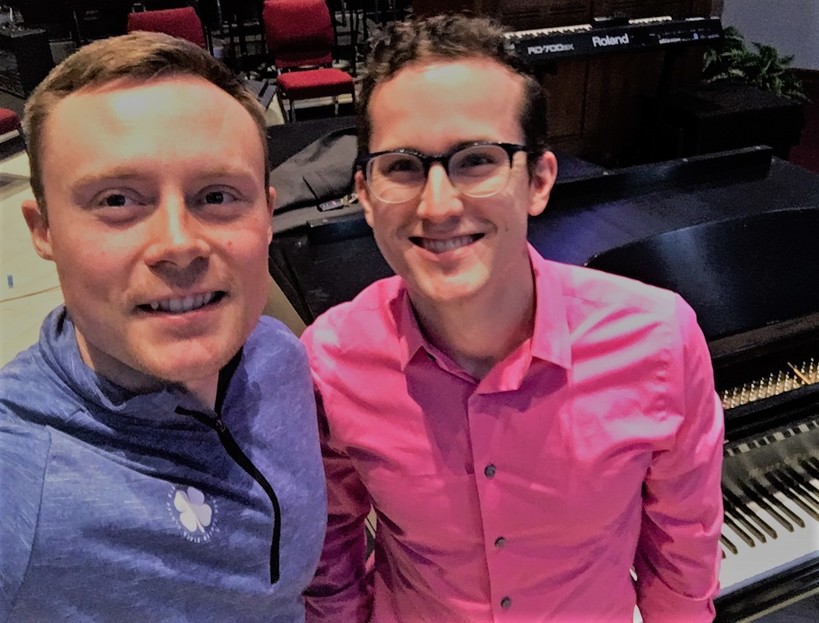
Photo Credit: Benjamin P. Hardy (l), John Burke (r)

On the weekend, I was catching up with a bunch of friends who gather occasionally to keep relationships up-to-date. The question around the table was “So what’s new and exciting?” That usually elicits baby news, job changes, latest relationship, and emotional or situational struggles. I was completely engaged in what they were all saying…and then it was my turn.

I had nothing.

After stammering over what I could add, I pretty much just confessed to the mundane nature of my life. Vanilla was the only flavor that came to mind.

On the drive home, clarity prevailed and the largeness of the past year’s events filled my mind’s eye like watching an action film on the big screen. More “new and exciting” than I imagined could happen in a year – a grandson’s birth, a cancer diagnosis, my father’s illness and death were just some of the scenes of the last several months.

Then, right there, in the dark car, I was filled with gratitude that a merciful God filled all of that with His presence. Sometimes I forget to say out loud how incredibly good God is to be in our lives…and to never leave us alone in the hard.

Today’s “new and exciting” is that I am cancer-free right now, that darling baby is the star of his own music video, and acute grief in losing our dad is shifting to savoring memories of all our years together.

There’s more though…
Later in the weekend, I read this enlightening piece written by Benjamin P. Hardy. He interviewed composer and pianist John Burke about how he pushes himself to create.
Burke listed out four strategies that he regularly uses to “elevate” his work.

1. Always Work on Something You’ve Never Done Before

2. Map It All Out From the Beginning

3. Apply More Layers of External Pressure Immediately

4. Put Creation Time On Your Daily Schedule

Read Hardy’s piece for the particulars of Burke’s creative habits.

Photo Credit: AZ Quotes

Burke’s approach to work, in general, and creating music, in specific resonated with me for two big reasons. The first, is that I had seen his system for creating in the habits of our composer/guitarist son, Nathan Mills (Beyond the Guitar). The second reason is that I see what the “new and exciting” had done to my own creative habits.

I had settled into a sameness, a smallness, that had become a prolonged recovery time for me. Healing was imperative, but there comes a time when we gather ourselves up and get back into life. The Hebrew King David’s example came sharply to mind – after praying and fasting for his terribly ill son – 2 Samuel 12:18-20 – at the news the child died, David rose up, washed and dressed, worshiped God, and ate.

The “new and exciting” for this Monday is to take John Burke’s strategies to heart. When a person gets her life back after a cancer diagnosis, and recovery is behind her, the best medicine is to get on with life…with a renewed passion and intentionality.

Thank you, Mr. Burke, and Mr. Hardy.

My husband has described this “elevating our work” with the phrase “Shifting to the next gear”. That’s what I want for this next chapter of my work life. I’ve been driving the service roads, and now it’s time to get back out on the highway. To adjust my life to a greater difficulty and higher speed.

Elevating our work requires adjusting our thinking in that direction as well. [See links below.]

I’m ready to take the next gear.

How about you?

John Burke: 4 Strategies to Continually Elevate Your Work – Benjamin P. Hardy

Persevere – My Interview with Grammy-Nominated Pianist and Composer, John Burke – Podcast – Katy Galli

John Burke – YouTube Channel

10 Steps to Successful Thought Leadership to Elevate Your Career and Your Organization – Glenn Llopis

A Health Blog – 10 Proven Ways to Help Boost Creative Thinking

Elevate Your Leadership – Marlene Chism

To Expand Your Influence, Elevate Your Capacity to Think – John Maxwell

Critical Thinking Exercises: 9 Facts and How They Elevate Your Mind – Katrina Manning

5 Friday Faves – St. Patrick’s Day, Beauty and the Beast Guitar Arrangement, Tenacity, Manliness, and Embracing the Life You Have

Happy Friday! Hope this week was kind to you. Here are my 5 most favorite finds of the week for you.

1) St. Patrick’s DayLá Fhéile Pádraig Sona Duit! Happy St. Patrick’s Day! Wearing green. Corned beef and cabbage…and my family background is Scottish. Still love celebrating this day a bit. Photo Credit: Flickr

Also planning to watch the David Kidd documentary Patrick. A friend who heard David Kidd speak recently shared the following with me via email this morning – notes from his talk on the real Patrick (legends removed):

  • He was born in 396 AD and died in 471 AD.
  • Patrick was a man brought up on a Romano British Christian home somewhere in southwest Britain (his father was a deacon and grandfather a priest).
  • He was kidnapped at 16 (he said he didn’t really know God at that time), trafficked, and taken to the West Coast of Ireland where he worked as a shepherd and learned Irish.
  • As a slave, Patrick came to see the hand of God in his troubles. God broke through his defenses, and Patrick faced his unbelief and pride. Later he described how he turned to God whom he realized had been watching over him all the time. He became aware of God’s protection, and he discovered that God loved him as a father loves his son.
  • Before this, he had ‘sinned’ – something that ‘lasted an hour’ and he believed that God punished him.
  • God spoke to him in a dream about a ship to take him home. At 22, he managed to escape slavery.
  • At home, he had another dream of the people in Ireland calling him back.
  • He was obedient to the Spirit and went back to West Ireland (the ends of the earth at that time).
  • He was beaten, harassed by thieves and robbers, admonished by his British superiors, but his work grew and he remained humble.
  • He protested against injustice, esteemed women highly, and identified himself as Irish.
  • His legacy was a vibrant Christianity which lasted hundreds of years while Britain and Europe fell into the Dark Ages.

What we can do to honor Patrick’s memory?

  • The Past: Remember a humble man who had been mistreated, heard from God, obeyed, loved his enemies, lived his life for Jesus, and made a significant difference – not just in Ireland, but much of Europe.
  • The Present: Use Patrick’s life to help people focus on what really matters.
  • The Future: Be as faithful as Patrick and live for Jesus and His Kingdom – making a difference in this world with fruit that lasts.

2) Beauty and the Beast Guitar Arrangement – Yesterday the live action Disney film Beauty and the Beast debuted in the US. Articles abound about the production – its beauty and grand scenes. Other articles raise the question of whether it is as family-friendly as the Disney animated classic by the same name. Everyone will have to decide for themselves about whether to watch this film and how often. One very easy decision would be watching the just-released classical guitar arrangement by Nathan Mills (Beyond the Guitar).

It is beautiful, even with less-grand scenes, and its own Belle and wee beast. It is definitely family-friendly and the music is lovely. Enjoy!

3) TenacityFirst Round posted the fascinating story – Lessons in Tenacity – of how entrepreneur Dennis Crowley, co-founder of Foursquare, built his business. He saw tenacity at work in the growing and thriving of his location technology company.

Tenacity is that characteristic in a person or group that keeps her/them moving forward – persistence, resolve, determination.Photo Credit: Pixabay

Read the article for examples Crowley gives, and here’s his illuminating summary:

Tenacity has many manifestations for founders and their startups. At the beginning, it’s often deeply tied to identity. Giving up one’s idea feels like giving up on oneself. After hitting early milestones, tenacity is confidence. But it’s best tempered with humility, so as to avoid flying too high on early wins. As a company scales, tenacity is focus. There will be accompanying growing pains as customers sign up, headcount grows and the market responds. Anchor and orient yourself by asking: what is this supposed to be when it grows up? When the going gets tough, tenacity is grit. Don’t look externally to others to build what you need — you’ll be waiting longer than you want. Do it yourself. Lastly, tenacity is culture and a private truth. Tenacity at scale will both involve and elude people. What guides the team isn’t always accurately reflected in the public’s perception. An informed, committed team around you is the best way to drown out the noise and to march toward achieving your biggest goals.

“These different facets of tenacity are important insofar as invoking them keeps your legs moving and charging forward. Growing a company is an impossibly hard endeavor — many wouldn’t start if they knew just how difficult it is,” Crowley says. “But the early stories of most successful companies are often those in which no one thought it could be done. In fact, if you asked them, those founders probably didn’t know if they could do it either. But if you can get there — if you stick to what you set out to do — it can put you in an amazingly powerful and defensible position.

4) Manliness – We should affirm, empower, and let loose women to fulfill their callings, giftings, and places in the world. Not being sexist, the same is true for men, of course. That’s why I appreciate the website/podcast the Art of ManlinessThe Art of Manliness aims to encourage our readers to be better husbands, fathers, brothers, citizens — a new generation of great men (the About page).

I don’t go with everything on this website but some of the content is fascinating and extremely helpful. I hope never to have to jump from a speeding car but knowing it’s possible to walk away from such a situation made me interested in reading about it.

Photo Credit: Art of Manliness

This information isn’t just for men, but some of the entries are male-specific. We women write volumes about how to be “better women”. I’m glad there are men (and women) are writing for men in this way.

10 Tests, Exercises, and games to Heighten Your Senses and Situational Awareness – Brett & Kate McKay – Art of Manliness

5) Embracing the Life You Have – We have all experienced losses. We grieve…and grieve again. As time goes by, the grief changes, but that doesn’t mean it has to change us. At least not in an unhealthy way. John Piper speaks about this so eloquently and tenderly:

I have in mind two kinds of losses: those who had something precious and lost it, and those who hoped for something precious and never had it. It works both ways. Sixty years go by, and forty years on you think, “I’ve come to terms with that,” and then one morning it breaks over you, and you weep about a 40-year old loss, or a 40-year “never have,” and my counsel is, yes, go ahead, embrace that moment. Weep.

But then, say to your weeping after a season, “No. You will not define me, sorrow, because my God has said, ‘No good thing does he withhold from those who walk uprightly’ (Psalm 84:11). Therefore, even though it was good in one sense, and I miss it in one sense, I trust my God, and he has not withheld anything that is good for me.” Yes, let there be weeping in those seasons — feel the losses. Then wash your face, trust God, and embrace the life he’s given you. – John Piper

As one who struggles with waves of grief out of nowhere…thank you, Dr. Piper.

Principal Financial Group has been running a series of commercials with the theme Life Doesn’t Always Go According to Plan. Three of their commercials follow. Sweet messaging…

Be gentle with yourself and each other. Serve somebody, and be safe out there. [Oh, and please share in Comments your favorites of the week. Thanks!]

Bonuses

Who are the Refugees? Which are their Host Countries? Take a Guess.

Granny Pod – Ingenious and honoring idea.

Mom Truths

Monday Morning Moment – Neuroplasticity – Resetting Your Brain for Success at Work and Life

Photo Credit: Pixabay

You know that shocking experience when you are driving to a known destination and then get lost in your thoughts? At some point, you snap back to attention and wonder, “How did I get here, I wasn’t even thinking about it?!” That is neuroplasticity or brain plasticity. It is an amazing capability we all have and can be nurtured and utilized throughout our lives. Yes, “old dogs CAN learn new tricks“.

What is this phenomenon?

Mike Torres, of Refocuser, gives an excellent definition, as well as an explanation of function, in his piece Neuroplasticity: Your Brain’s Amazing Ability to Form New Habits.

Neuroplasticity refers to the brain’s ability to restructure itself after training or practice. An example of how neuroplasticity works: when you view the brains of people who frequently practice playing the violin under fMRI (functional MRI) they appear to have developed a larger area of their brain devoted to mapping their fingers.  Photo Credit: Wikipedia

This change is directly related to the quantity and the quality of the practice they’re performing – their brains are adapting in very real and tangible ways unbeknownst to them... The more practice you accumulate, the more ingrained or grooved the pathways become.  Of course the inverse happens as well: if those pathways aren’t utilized, the space will be used by other pathways needing room to grow. Use it or lose it! …Your brain can change based on repeated experience…People of any age have the ability to learn new things and form new habits. Mike Torres, Refocuser

Watching Nathan play intricate, complicated runs on his classical guitar boggles my mind. How can he think that fast? It’s lots of practice that causes the brain to connect to the hands, and those difficult pieces get “under his fingers” almost without thinking.

Years ago a friend gave us this book Never Too Late by John Holt. In his “musical life story”, Holt describes how he learned to play the cello in his 40s. We were encouraged by this during a time we moved to Egypt and learned Arabic in mid-life…when language-learning is supposed to be especially difficult.

I love neuroplasticity but it gives me hope, in getting older, of keeping skills and developing new ones, even as an aging person…unless I give in to dumbed-down practices excusing myself for the same reasons of “getting too old”.

When my older brother suffered a stroke, it was neuroplasticity and the repeated efforts of his medical and therapy team that got him back on his feet. He finally “repeatedly practiced” his way back to independence. The personality changes seemed more ingrained, however, they changed, too, as he exchanged his anger and bitterness for a hopefulness and longing for healthy, loving relationships. As he refused to give into anger and chose soft responses, his personality seriously changed over time…with conscious that eventually turned unconscious practice.

How does all this apply to us in the workplace and life, in general? We are confronted at times with a situation that confounds us – a new uncomfortable skillset, an unpredictable relationship, or an unfamiliar decision-making process. Neuroplasticity helps us to not just give up on mastering either a new work process or a complicated interpersonal situation.

Debbie Hampton has written an excellent summary piece on this that will help kick-start any new habit formation necessary for us to continue to do excellently in our work. She was influenced by Dr. Michael Merzenich’s work published in his book Soft-Wired: How the New Science of Brain Plasticity Can Change Your Life. I have listed below Merzenich’s 10 elements of how we can rewire our brain. You will find Hampton’s summary on each very instructive. [I comment briefly on each but don’t miss what she says in her article.]

10 Core Principles for Remodeling Your Brain

1. Change is mostly limited to  those situations in which the brain is in the mood for it. We have to want to learn and change. If we give up, stay resigned to the status quo, or remain fed-up, change will not happen. Want change!

2. The harder you try, the more you’re motivated, the more alert you are, and the better (or worse)  the potential outcome, the bigger the brain change. Focus and persistence or key to mastery.

3. What actually changes in the brain are the strengths of the connections of neurons that are engaged together, moment by moment, in time. Practice strengthens pathways for behavior. Whether it’s learning a new computer system or developing a different way of communicating with a boss…practice hard-wires.

4. Learning-driven changes in connections increase cell-to cell cooperation, which is crucial for increasing reliability. I see this in musicians who live-stream and can read listener chats, respond to them, and continue playing all at the same time. Crazy.

5. The brain also strengthens its connections between teams of neurons representing separate moments of successive things that reliably occur in serial time. This is definitely the mechanism that gets us to our destination when we stop thinking about where we’re going.

6. Initial changes are temporary. Habit formation takes time, and somehow the brain interprets whether the change is vital. Amazing.

7. The brain is changed by internal mental rehearsal in the same ways and involving precisely the same processes that control changes achieved through interactions with the external world. At the simplest level, this is the mechanism of how we “talk ourselves through” a situation. Or when an athlete goes through his routine in his mind before he’s back out on the track or in the pool.

8. Memory guides and controls most learning. Our brain actually helps us to remember what we did well and discards what we didn’t.

9. Every movement of learning provides a moment of opportunity for the brain to stabilize — and reduce the disruptive power of — potentially interfering backgrounds or “noise.” The more we practice, either a physical skill or a way of thinking through a problem, we actually get better at it because somehow the brain reduces the background noise (which can include insecurity, fear of failure or self-doubt).

10. Brain plasticity is a two-way street; it is just as easy to generate negative changes as it is positive ones. Dr. Merzenich warns us, as we get older that we “use it or lose it” by our own decisions to stop learning and mastering new skills and behaviors.
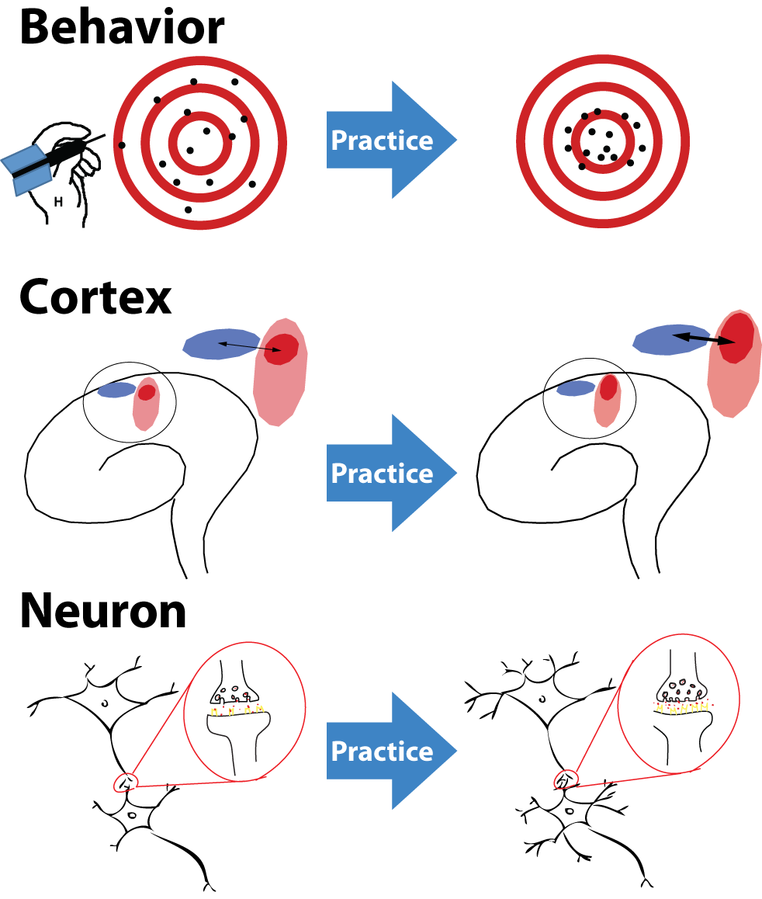
Photo Credit: Commons Wikimedia

How are you using neuroplasticity to help you continue to grow in your work and personal life? Trevor Blake encourages us to set the tone of the day positively and don’t defect from that. Using self-defeating language can blur our focus and mental capacity for mastery. Read more of his excellent counsel here.

As we age, or give in to “what is” at the moment (tracks greased by depression sometimes, or perceived lack of ability or opportunity), we may not realize the great positive effects of neuroplasticity. However, the good news is that we can keep learning and changing and mastering what work and life and relationships bring our way. It’s never too late.

http://www.slideshare.net/smarkbarnes/brain-science-applying-neuroplasticity-principles-to-higher-education-1340661


Neuroplasticity: Your Brain’s Amazing Ability to Form New Habits – Mike Torres

How to Rewire Your Brain for Success – Trevor Blake

Three Simple Steps: A Map to Success in Business and Life – Trevor Blake

Brain HQ Website

How Does Neuroplasticity Work – an Infographic

Never Too Late: My Musical Life Story – John Holt

Deadly: Brain on Multitasking – Bukunmi Adewumi

Toxic Thoughts – Dr. Caroline Leaf

Monday Morning Moment – Are You Ready For Your Workday? – Lessons From Cintas

Photo Credit: Food & Beverage Magazine

Next time you head to the restroom, take a look around. Unless it has just been stormed by a tour group that needed more than the usual service, you can get a sense of readiness. Not the readiness of the restroom, but of the person or agency servicing it…and you as a customer. I wrote about this level of customer service once before  here. Why I wrote about clean restrooms then is why it begins my topic today. Clean restrooms demonstrate a sense of pride and caring. We want restrooms to be ready for the workday. How about our own readiness?

Readiness is defined as being fully prepared and willing to execute.
It is not just about being prepared for one’s workday. It’s also a ready-set-go willingness to be on our toes, stepping up, taking the ball, and scanning both the horizon and the lines drawn on our playing field.

When a Cintas truck rolls into the parking lot, I can almost smell the clean linens and uniforms inside. Their branding includes this mantra: Ready for the Workday: A confident image, clean facility and safe workplace start here. Here’s their commercial that I just saw this weekend, It got me thinking about the broad reach of readiness in the workplace.

My husband walks out of the house ahead of me every morning with his computer bag and a thermos of coffee. He has his schedule on his phone and he keeps a journal. He has thought about the day. He is prepared…the willingness to execute then comes into play as he goes out our door and enters his company’s door…and all the rest of the doors of his day. Both are disciplines – the preparedness of readiness and the willingness to execute.

Readiness keeps momentum going and momentum has huge impact on business and workplace excellence.

After watching the Cintas commercial, I went to their website. What a feast for anyone wanting to learn about leadership and a healthy workplace culture. Check out their Code of Conduct and Business Ethics page. Nothing on their agenda about Business Casual – and everything about dressing and performing aims at positive impact, and helping their customers do the same.

The website’s drop-down menu displays a variety of helps and services. Honestly, it’s hard to believe this company is for-profit based on the generous sharing of information for helping others (their customers and competitors) be “ready for the workday”.

I want to close with some of the quotes from the Cintas website – both from their own founder and from writers who speak for and to their own leadership. Enjoy.

Corporate culture is the single most important distinguishing factor between greatness and mediocrity. It is a major reason Cintas is different from our competitors and other companies. It is our ultimate competitive advantage.” Richard T. Farmer, Cintas Founder & Chairman Emeritus

A key to our success has been a culture that encourages meaningful, respectful relationships between the company and our employee-partners and the commitment to always do what’s right. This spirit of teamwork, camaraderie and trust has become our most important competitive advantage and is a cornerstone of the Cintas culture.” – Richard T. Farmer, Cintas Founder & Chairman Emeritus

“Those who rise to senior leadership levels in almost any organization have one critical attribute in common — they’ve embraced soft leadership skills. This includes having the ability to build relationships with the people you work with. There’s never been a leader in this world without people who wanted to follow them — and the first step to getting people to want to support you is to get them to like you. Take the time to get to know the people you work with, and learn what’s important to them.”Karlyn Borysenko

Be transparent. Insincerity and evasion chip away at trust, so whenever you can, be transparent about what’s happening with the business. Of course, there will be confidential data you can’t disclose. Carolyn O’Hara of the Harvard Business Review notes, ‘regularly distributing other information—like financial results, performance metrics, and notes from board meetings—shows that you trust your employees, which in turns helps them have greater faith in you.’”Lee Polevoi

Don’t micromanage or give step-by-step instructions. Instead, provide guardrails while giving [employees] the freedom to find smart and creative solutions.Chuck Leddy

Photo Credit: LinedIn – Cintas

Hope you enter your workplace ready for the day today! The best part of Monday is its own possibility of a new beginning. Of course, that sort of “Monday” can come any day of the week.

On ready!

6 Essential Leadership Skills That Will Advance Your Career – Karlyn Borysenko

Building Trust in the Workplace – What Business Leaders Can Do – Lee Polevoi

Agile Process Management: An Approach For Business Success – Chuck Leddy

16 Things You Should Do at the Start of Every Workday – Jacquelyn Smith, Forbes

6 Tips For Building Momentum  During Change – Sallie Sherman

Why Preparation Is Better Than Planning – Craig Jarrow

Being Ready For Your Workday Feels Great! – Advance Preparation Is the Key to a Successful Day – Craig Jarrow

What Does Casual Dress Really Mean Today? – 6 Wardrobe Tips For Career Success – Lynn Taylor

Monday Morning Moment – Résumé vs. Eulogy – On Befriending Our Colleagues

Photo Credit: Tangram

Don’t you hate when, out of all the positive exchanges we have at work, there’s that one negative that hangs in our memory? It was a team-building exercise on trust really early in my career. One of the people on my team, with whom I worked at the time, just wouldn’t engage. She finally said, “You are just my co-workers. We are not friends.”

We are not friends.

Slayed.

Throughout my career, I’ve made it a goal to befriend colleagues – those close to me and up and down the ranks. Befriending isn’t becoming best buddies necessarily. By definition, it is “to act as a friend to; to help; to aid”.

When this coworker, in my professionally formative past, expressed openly that we were just a part of her job…I was surprised and schooled. For some, relationships at work are compartmentalized in such a way as to keep them formal and shallow.

There is a measure of safety in keeping work relationships at a distance. I get that. However…

When we spend more waking hours with our colleagues than with even the closest of our loved ones, they bear some significance.

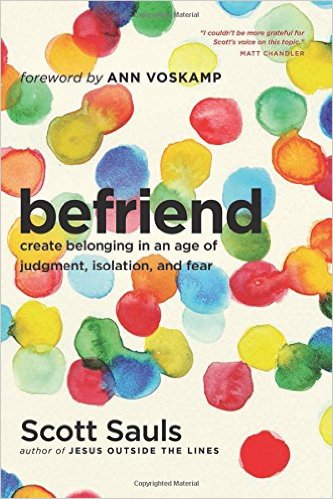
I’ve just begun reading Scott Sauls’ book Befriend: Create Belonging in an Age of Judgment, Isolation, and Fear.   I wrote about it here a few weeks back as the next book on my reading list. The author Scott Sauls is a pastor, but more than that, he is a friend. Not because I know him personally, but because the imprint of Jesus is on his writing and life. He is not preachy or churchy (in the way it was never meant to be). Sauls is wise, loving, and inclusive. Whether you are a person of faith or not, if you want to deepen your friendships and work relationships, sampling the pages of this book will aid you on your way. This book itself, like Sauls, actually befriends you.

Photo Credit: Amazon

My Monday blogs are often reserved for workplace matters – either the culture of our workplace or our very careers. Sauls talks early in the book about how we view success in life. He recalls David Brooks‘s take on our achievement culture.

“We live by two sets of virtues: the résumé virtues – things we bring to the marketplace – and the eulogy virtues – things we want said about us at our funerals. Brooks concludes, ‘In [our] secular achievement culture, we all know the eulogy virtues are more important, but we spend more time on the résumé virtues.'”

What people think of me when I’m gone is less important than truly making a difference in this life. When it comes to our work, I think we all want to add value, not just to the product, but to the people with whom we work and for whom we provide services.

We can get caught in the press of beefing up our résumé and lose sight of the people, real flesh-and-blood people, all around us. Oh, we may not call our focus résumé-building, but when we take a moment to check our motives, it becomes more clear. Ambition, self-promotion, and exclusive control can crush work relationships. We often think it’s someone else but before long it can become us.

I will never forget a colleague who shared about his own pivotal relationship with someone he once considered a difficult boss. They argued over every idea, every decision, every action plan…at least, as this man remembers. His boss was always asking hard questions and pushing him to think more and more outside the box. Yet, in the middle of his heatedly trying to persuade his boss of the rightness of his ideas, the boss would look at his watch and say, “Let’s go get some lunch.” This would infuriate the man re-telling his story.

However, over the years, he began to see something in his boss he didn’t notice at first. This older man genuinely cared for his young protégé. The banter back and forth was to encourage excellence and innovation but never at the expense of valuing the relationship. That’s why lunch together was all part of the exchange. He mattered to his boss.Photo Credit: Free Stock Photos

Later the older man retired and the younger man advanced in his career. Their paths rarely crossed after that. When the older man finally died, his wife called this colleague and asked for him to be a pallbearer at his funeral. The older man had come to consider the younger a friend…and the younger man, as he teared up in remembering, was the better for it.

I’ve written often on complicated work relationships – the us vs. them situations and dealing with contemptuous colleagues among others. We can be tempted NOT to befriend.

Photo Credit: QuotationOf

However, we are the ones who lose the most in not extending a hand of befriending (acting as a friend) to those with whom we work. It changes us, from the inside out, and we live only in the land of résumé-building, rather than eulogy-making.

Sauls writes about expanding our “us”. In the workplace, this can be extraordinarily counter-cultural. To look out for our own status and position is expected. To consider how we might take down silos and create a work community where “the rising tide lifts all boats” (Adam Grant) – something remarkable and memorable.

That is the legacy, years ago, of that coworker/”friend” of mine. She made me more resolved than ever. I want to be a befriender, a boat-raiser, and a person willing to expand the “us”.

Sauls closes this chapter by asking the question, “Where is your greatest opportunity to expand your “us”? It has me thinking. How about you?

“Compelled by the love of Christ, we must not withhold kindness or friendship from any person or people group, and we must not engage in any sort of us-against-them posturing. This in itself is countercultural in modern society. Compelled by the truth of Christ, we must honor and obey the Creator’s design—even when his design is countercultural and, at times, counterintuitive to us. His ways and his thoughts are higher than ours.”

20 Quotes From Scott Sauls’s New Book on Friendship – Matt Smethurst

5 Friday Faves – No-Pressure Valentine’s Day, Travel Hacks, Prayer Habits, First Signs of Spring, and Wordplay Smiles

Friday! You made it. Joy! Here are five of my favorite finds for you…

1) No-Pressure Valentine’s Day – Seriously no pressure! Valentine’s Day is one of those super emotionally-laden days (maybe more for women, but I’m sure it’s not easy for guys either). I’ve always celebrated it, whether a man was involved or not, because of all the lovely stuff attached to it (cards, candy, dinner out, flowers, etc.). Never minded paying for those for myself or others. The best part is just being with people you love…whoever they are.

This week I came across a super-silly video by the Merrell Twins. They are these two YouTube stars and are pretty cute. The video is about Valentine’s Day with boyfriend or without boyfriend. The best part actually is their #TwinTalk at the end of the video…wait for it.

YouTube Video – It’s Valentine’s Day Song – Merrell Twins

I’ve previously written about Valentine’s Day (here and here). In fact, please read those pieces…for a no-pressure day. Seriously.

2) Travel Hacks – We who have the money and means to travel either love it or hate it. I LOVE it. In fact, it’s been too long since my last international trip…so I’ve been drawn to travel stories and articles. Tim Ferriss hosted Ryan Holiday on a blog about his 21 Travel Rules. Having lived in several countries and traveled through many more, I agree with many of his rules. Check them all out. Some you may already know like packing light, eating healthy, and don’t over-schedule your trip. Other bits of advice from Holiday were quite new for me – like not reclining your seat on a plane (THANK YOU!). Also don’t depend on guidebooks – talk to people where you’re going about things to do and see. Another idea: Note places or experiences described in books you’ve read and enjoy them again on your trip. One last favorite hack: don’t talk and talk about your upcoming trip or plan and plan – just go! Read the rest here:

Photo Credit: We Are Travel Girls

http://tim.blog/2013/07/14/how-to-travel-21-contrarian-rules/

How to Travel – Some Contrarian Advice (shorter version of above article)

…and “Can’t Stop the Feeling” goes global!

3) Prayer Habits – Prayer is probably the most impactful thing we can do in life – for ourselves and those we love. Developing a habit of prayer can start today. I’m not talking about some sort of rote activity or just saying words out into the room. Prayer is not delivering a wish list to some benevolent father figure. It is a conversation with the God of the universe who calls us to Himself. He infuses all our lives with his love and purpose. He also actually taught us how to pray (Matthew 6:9-13). Cliff Jordan of Movement Church spoke recently on how God Himself guides us to pray – listen here.

I learned the prayer Jesus taught his disciples when I was a child. It has been a comfort and primer for me ever since. Consider teaching your children to pray the Lord’s Prayer, and then guide them to grow up in a lifestyle of prayer…following your lead.Photo Credit: Faith Hope Love at Home; Courageous the Movie

Nick Aufenkamp writes about Martin Luther’s prayer patterns and offers a simple and sound approach to daily prayer:

  • Seek first God’s rule and reign and righteousness in our lives (Matthew 6:33).
  • Discipline our wandering minds.
  • Build a fence so our prayers can run wild inside (through the structure of the Lord’s Prayer).

Photo Credit: AZ Quotes

Four Ways to Lead Our Children Toward Bravery – Jill Waggoner

4) First Signs of Spring – It’s happening! Spring is showing up again. No matter how many cold and snowy days this winter still produces before it gives in to Spring, we can see it coming!

5) Wordplay Giggles – So I didn’t know the word for it until this week, but some people have a knack for turning the meaning of a sentence to something hilarious. Winston Churchill was gifted at the use of something you’ve probably never heard defined but you’ve enjoyed the humor within it.  A paraprosdokian is a figure of speech in which the latter part of a sentence or phrase is surprising or unexpected in a way that causes the reader or listener to re-frame or re-interpret the first part.

Here are a few of my favorites:

Photo Credit: Frustrated Boomers

  1. Evening news is where they begin with ‘Good evening’ and then proceed to tell you why it isn’t.
  2. Dolphins are so smart that within a few weeks of captivity, they can train people to stand on the very edge of the pool and throw them fish.
  3. A clear conscience is usually the sign of a bad memory.
  4. You do not need a parachute to skydive. You only need a parachute to skydive twice.
  5. Always borrow money from a pessimist. He won’t expect it back.
  6. A diplomat is someone who can tell you to go to hell in such a way that you will look forward to the trip.
  7. I used to be indecisive. Now I’m not sure.
  8. Before you criticize a man, walk a mile in his shoes. That way, you will be a mile away and he won’t have any shoes.
  9. “Time flies like an arrow; fruit flies like a banana.” — Groucho Marx
  10. “She got her good looks from her father; he’s a plastic surgeon.” — Groucho Marx
  11. Kittens play with yarn, they bat it around. What they’re really doing is saying, “I can’t knit, get this away from me!”
  12. I’m supposed to respect my elders, but it’s getting harder and harder for me to find one now.
  13. There’s a fine line between cuddling and holding someone down so they can’t get away. – Monty Pelerin

Paraprosdokian Fun

Steven Wright Quotes – Good Reads

Have a sweet weekend and a Happy Valentine’s Day. You are loved!

Monday Morning Moment – 7 Skills of the Top Leaders of Tomorrow – Whatever Your Age or Stage – with Matt Monge

Blog - Tomorrow's Leaders - Mojo companyPhoto Credit: The Mojo Company

[From the Archives]

Leaders of Tomorrow. What age group came to mind? Probably not your own. Maybe that’s one of our dilemmas in life and work. We either think we have already arrived as tomorrow’s leader today (ugh!). Or we stop thinking of how we can develop into that change agent of tomorrow because we’ve fixed our course…or settled into what we know already. It’s served us well so far, right?

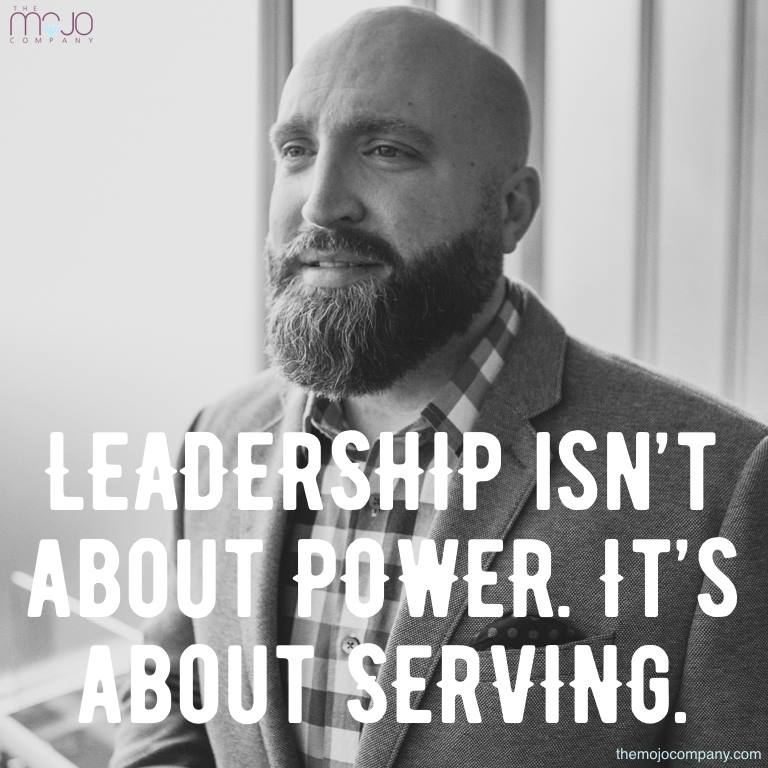
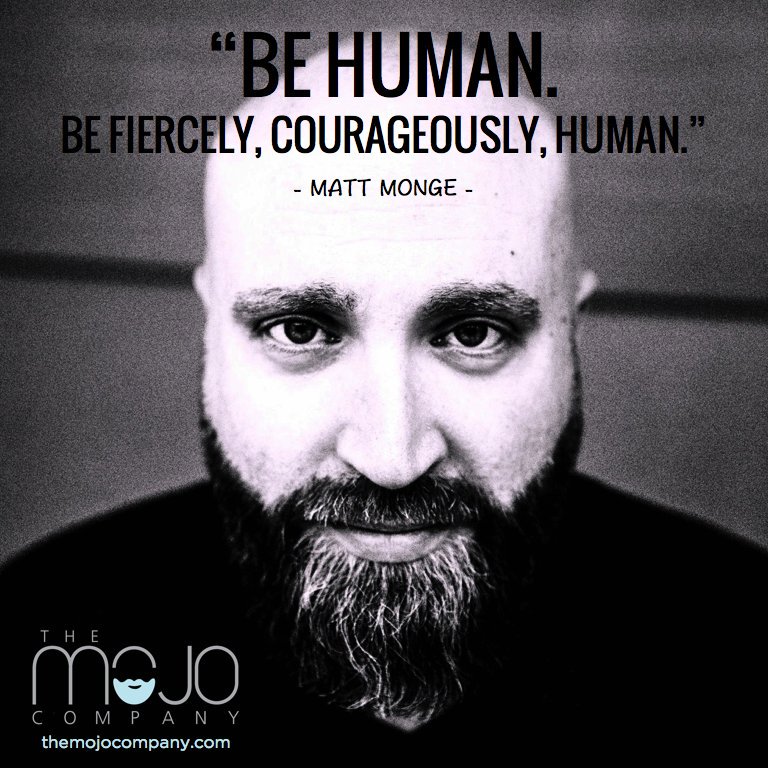
Here’s my Monday morning gift to you: an introduction to the person, writing, and wisdom of Matt Monge.  Earlier in his career, he worked in finance (credit unions, in particular), and had fascinating titles like Chief Culture Officer and Vice-President of People and  Development. Currently he is is president of The Mojo Company, a leadership development consulting firm. His Facebook page bio reads: “My mission? Make the world a better place by helping people, leaders, & workplaces be more human. Depression fighter. Keynote speaker. Head of The Mojo Co.”

Blog - Monday Morning - Matt Monge - Leadership is about serving - FacebookPhoto Credit: Matt Monge Facebook Page

I read everything Matt Monge writes. Even his promotional video taught me more about leadership (you’ll want to take notes).

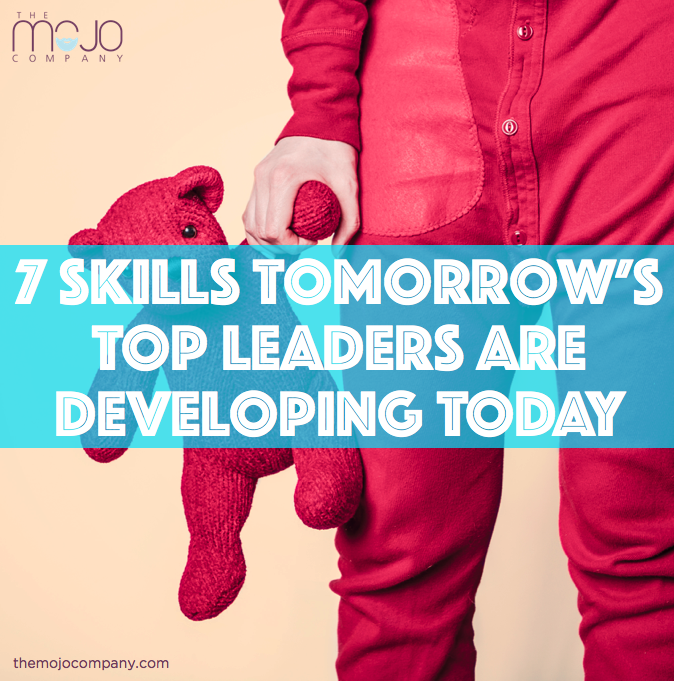
Monge posted a blog a few weeks back and I’ve been thinking through it since… It’s his 7 Skills Tomorrow’s Top Leaders Are Developing Today. I decided to post his bullet points here and how they stirred my thoughts on skill development today. [Don’t miss reading his thinking on this and other leadership topics in links.]

  1. Being Others-Oriented – While other employee development folks have moved away from “servant leadership” language, Matt Monge continues wisely to be a strong supporter of it. I, too, am delighted by leaders who continue to seek out the greatest good for both employees and customers. The bottom line is best served here. As the years go by, or as tribes are built, our temptation is to coast in this area…making the negative assumption that someone else is serving while we’re the idea leaders. As leaders go, so go the organizations.
  2. Persuasion, Logic, & Negotiation – First, Monge sees top leaders as practicing persuasion and negotiation differently “not with power, position, coercion, or even deception; but rather through logic, reason, and with an eye toward the good of the whole.” It’s funny how unaware leaders can be in thinking that manipulation and coercion go unnoticed by employees under their authority. It’s always better to do the work of taking the high road of negotiating and persuading. When we engage in the give-and-take of healthy debate and problem-solving, it’s a win-win for everyone. It does require time, trust, homework, and humility.
  3. Reframing – This is a discipline of looking at a problem or situation from different perspectives. Monge talks about doing this in such a way that we wrestle with our own biases and blind spots. Reframing can make for a decision or problem solved that have wider success or effectiveness.
  4. Knowing How to Think about and Make Decisions – Monge makes the distinction of being decisive vs. being a good decision-maker. I love this because often we experience leaders who get the job because they are decisive. Period. Full-stop. What does it take though to be a good decision-maker? To become an effective leader is to examine how we make decisions – what are my decision-making processes, who are my guides, what are those factors that always weigh in on my decisions? [Monge names those factors as presuppositions and core values. We need to think about what those are.]
  5. The Ability to Work and Build Community with Others – This is such a core value of mine and yet after years in my career, it bears refreshing. I’m reminded, as Monge writes about this, of the Old Boys’ Network. Today, maybe it’s less-gender-defined and called other things, like C-Suite executives, or even tribe. Still, if it’s a few making decisions for the many, it’s not community. Monge’s constant message is that the strength and health of an organization is in the community. Leaders must do the work of leaning in to their colleagues (outside the executive suite) to draw on the wealth of knowledge there and to affirm the value and varied roles of those coworkers.Blog - Matt Monge - human - twitterPhoto Credit: Twitter
  6. Leadership – The leaders of tomorrow are continuing to develop themselves toward that future. We can be always learning, always growing – not necessarily just like other leaders in our lives, but learning what we need to learn to remain relevant/useful. Resting on the laurels of past successes or doing “what we’ve always done” will eventually pull us to the sidelines. I’m in the painful, personal throes of dealing with this right now myself. Shaking it off and moving forward!
  7. Understanding Humanness & Emotional Intelligence – Monge defines emotional intelligence as having “four basic components: self-awareness, self-management, social awareness, and relationship management”. Foundational to emotional intelligence, in Monge’s thinking, is this whole element of humanness. As the workplaces of the future give way to more and more technology, we will be wise in tuning into the growing need for humanizing our organizations and our human employee experience. Being tech-savvy and not people-savvy misses what could be. Leaders of tomorrow, take note.

So that’s it for today. I love Mondays because they bring another opportunity to hit “the refresh” key of our work lives. We are not only motivated for the week ahead – differently than Fridays when the focus is the weekend – but we’re fresh in our view of our work community…and hopeful.

Matt Monge and others like him give me the encouragement I need to cast off from the safe, still shore and re-enter the fast and deep water of today’s work environment, determined to maneuver well there…and maybe even coax other quality people back in from the shallows. Whatever our ages or sensibilities, we can work toward being tomorrow’s leaders of excellence.

5 Friday Faves – Awards Speeches, Castle Theme, Prayer Breakfast, Harmony, and a Comedian

Hello, Friday! You know those kind of days when you work really, really hard, and you come home too tired to eat, much less cook….but it’s a good tired. You sink down in the closest chair…and 10 minutes later, wake up from a nap that felt longer…and…on with finishing the week… Hope your tired is a good tired. Here are five of my favorite finds…just for you!

1) Awards Speeches – We are in that season of awards shows – the Oscar, Golden Globe, Grammy, among others. Those of us who watch these shows do so to catch all the gorgeous or peculiar actors in the audience and stage. The fashions are a draw as well. For me, I love to hear what the award recipients say when they receive their award…their prepared words/speech. What they choose to showcase in their few minutes before their peers and the watching world. On the recent Screen Actors Guild Awards show, my favorite speech of the year was by Taraji P. Henson. She spoke for all the actors of Hidden Figures which won the award of Outstanding Performance By A Cast in a Motion Picture.

Watch her speech in the clip, or read it here. Part of it follows: “This story is of unity,” she concluded. “This story is about what happens when we put our differences aside and we come together as a human race. We win. Love wins every time.”

No political posturing. No pitting of one group against another. Lovely. Hopeful. True.

2) The Castle ThemeNathan Mills of Beyond the Guitar has done it again. He has taken the background music of a favorite videogame and demonstrated the incredible beauty to be found there. Castle Theme from Super Mario World is his latest arrangement for classical guitar. I honestly don’t know how he plays as fast as he does. Check it out here.

3) Prayer Breakfast – These days you never know what to expect in public observances. Protests, boycotts, and marches. A quieter but significant  event is the National Prayer Breakfast observed in February each year since 1953, in Washington, D.C. Keynote speakers in the past have included Mother Teresa, Bono, and Tony Blair. This year retired Rear Admiral Barry Black, the Senate Chaplain, delivered the message.  So powerful! He spoke on Making Your Voice Heard in Heaven.  If you can’t watch all incredible 25 minutes, at least watch from minute 22:16. Wow!

4) Harmony – Don’t you love when music and life flow with harmony? Jay Lyons is a filmmaker whose work I follow. In response to the dissonance of voices in this week’s newstream, he and his family wrote and performed together a song about harmony. Watch it here: Our House – Harmony – Jay Lyons & Family. Photo Credit: Music Early Childhood Presenter

5) A Comedian –  While Facebook friends of mine are deactivating left and right because of all the political wrangling going on right now, I had the biggest chuckle when a video featuring comedian John Crist showed up on my newsfeed. It’s about trying to find a parking place at a mega-church. He is new to me and so funny. Several of his videos are posted on his website. Enjoy.Photo Credit: YouTube

So that’s all I’ve got…jumping into my pajamas to fall asleep in front of the TV…don’t even care what’s on. Before I sign off though, I’d like to give a shout-out to Mike Sheley, owner/operator of the brand-new Chick-Fil-A at Smith Crossroads, Lenoir, North Carolina. This restaurant just opened this week. If you know about Chick-Fil-A, you know it’s all about a great-tasting chicken sandwich…and much more. Mike and team have a huge commitment to the community. Even before their grand opening, the restaurant team sponsored a book drive for local elementary schools and filled food boxes for Feeding Children Everywhere (over 10,000 meals total).Photo Credit: Facebook, Chick-Fil-A

Hope you have a great weekend, and if you’re anywhere near Lenoir, North Carolina, say hi to Mike & Jessica Sheley…and “eat mor chikin'”.


5 Friday Faves – Birthday Freebies, Decluttering, Untold Stories, Global Ancestry, and Rhythms of Life

What a week! Maybe all weeks finish with an exclamation point… This one sure did. In the midst of all the crazy, there are delights to discover and life-enriching finds for all of us.

Here are five of mine:

1) Birthday Freebies – Having just experienced another birthday, I make a practice of celebrating not just the day but as far as I can take it. Sometimes weeks but definitely several days. Birthday freebies grease the tracks. We all have favorite restaurants, right? If you sign up for email updates, many times you’re placed in a VIP club of sorts. You probably already do this, but it’s new for me. It’s especially nice when you’re not deluged with email….otherwise they become less favorite.

Four of my favorite “clubs” are Mission BBQ (free sandwich for your birthday), Silver Diner (an entree AND a dessert free for birthday person), O’Charley’s (free dessert), and Qdoba (buy one entree get one free). In the comments section, pass on your favorites to sweeten our birthday celebrations even more.

2) Decluttering – Okay…I have a small problem with this. However, much that’s written these days feels so punishing, like a character-beat-down. I have no interest in dumping all my clothing in the floor and deciding whether each piece makes me happy or not…and then thanking the discards before they’re shipped off to wherever.  Sometimes, people discard only to buy more of the same stuff. Their choice; not my business.  [See the fascinating Opposing Views’ video below.]

Brie Dyas has written a thought-provoking and kindly piece on 11 Things in Your Home That Are Making You Unhappy. Some of the clutter she covers doesn’t make me the least bit distressed, and she writes in a way that doesn’t judge the reader for her clutter. In fact, I was incentivized after reading her post. Decluttering doesn’t have to communicate devaluing (of the person or the clutter)…nor do we need to express ungratefulness when gifted with what we might consider just clutter.  There is a stewardship principle that applies to managing our possessions. I want to be a good steward of the stuff of our lives and the time necessary to manage it. A more ordered home…life…is also my desire. I do appreciate the loves in my life who guard against conspicuous consumption. I am also frugal. So where do I begin decluttering? The stuff that’s sentimental to me?…still keeping. The piles of papers I’m afraid to file and forget somewhere? Maybe I can happily let those go!  Dyas’ piece has encouraged me to deal with the things I have hung onto…for no good reason. Definitely don’t need the stress of excess. Any thoughts? [Comments]Photo Credit: Prairie Home Therapy

3) Untold StoriesMatthew West is a songwriter and story-teller. His website I Am Untold gives the accounts of abortion survivors (both the babies and the parents) and other like stories. There is so much division in our world over life issues – the pre-born, the men and women who unwittingly conceive or who abort and then regret. Here are stories from a very different side of this issue.

Then there are also people challenged all through the life-cycle (with disabilities or problems of poverty or aging). We hear from those in the business (Planned Parenthood) and those with political motives.

I don’t have my own abortion story, but knowing and loving friends and family who live with heartache – the heartache of a decision they would make differently now also need our care and consideration.Photo Credit: Insider

4) Global Ancestry – The United States is a “melting pot” country – a nation of both native peoples and immigrants from all over the world. It’s one of the many things I love about my homeland. Photo Credit: Ellis Island

Defining words like populism and nationalism have taken on a whole new intensity and seriousness in our current political situation. I’m hopeful still that our country will continue to be founded on the ideas of our founding fathers and shaped by the great men and women of more recent years…Photo Credit: Urbs

Part of the richness of this country is what others have brought with them from other homelands. My own history tracks back to the Bruce’s and Wallace’s of Scotland. Watch this video of how we are connected much more than we could imagine.

It would be much more complicated for us to choose certain peoples that we don’t want as part of our country when we see that we are more part of each other than not.

Exploring the Origins of Language – Video

5) Rhythms of Life – Rhythms are defined as “strong, regular, repeated patterns of sound or movement”. We all have them in our lives. Some rhythms in our lives relate to our habits and routines. Others are strictly recreational which can dampen the rhythms which require us to go deep. I hadn’t give rhythms much thought until Our pastor, Cliff Jordan, talked about them as a discipline of grace.

Photo Credit: NewsongPDX

In this Sunday’s sermon, Cliff talked about the deep rhythms of intaking God’s Word. Too often, we treat spiritual disciplines as a task to be checked off with little impact on us at all. Or even as a sidebar to other pursuits or pleasures that absorb our hours and focus and energy. Oh what we miss in not going deep into the knowledge of God and what He wants to say to us…through His Word. I have known rhythms in life when pouring over and meditating on Scripture was a deep passion for me…to know God and to make Him known…my heart has been stirred afresh this week.

Podcast – The Rhythm of Intaking God’s Word – Cliff Jordan – Movement Church

Explore God

Finally…there is this guy…publishing a most ambitious video next week. Can’t wait. Because of him…I’m now a patron of the arts.

Have a great weekend!

Monday Morning Moment – Inner Rings – the Mad Pursuit of Position, Power, Prominence, and Plenty

Photo Credit: Chris Russo

[Adapted from a previous blog]

When C. S. Lewis introduced the occurrence of “inner rings” to a classroom of young men in university, he wasn’t talking about high school cliques.Photo Credit: Smosh

[You will want to read Lewis’ short, humorous, and piercing lecture…I read it aloud, attempting my “best” British accent. The British accent, in my opinion, gives what is true even more authority and winsomeness.]

Lewis talked about the universal, life-long allure of wanting to be “on the inside”…whatever that might mean at the time. Inner rings are, for the most part, morally neutral in themselves. What becomes the issue for us is how our thinking is altered and what we are willing to do to gain entry to these exclusive (and often secretive) inner circles.Blog - Inner Rings 2 - BPNews.netPhoto Credit: BPNews

Inner rings are part of every level of life – personal relationships, government, teams, military, clubs, organizations, and workplaces. They aren’t necessarily represented by team rosters or org. charts, as much as they are the more fluid unwritten associations. Like secret societies, they can change quite without explanation – sometimes you are in and then you are not. Inclusion and exclusion are defined by the group itself…and are not accidental.

Let’s face it – we all want to belong…somewhere among the best of the best. Even when we don’t say it out loud, some sort of identity appeals to us and drives our pursuits. Jeremy Writebol wrote a piece where he explores this pursuit of belonging, referencing C. S. Lewis’ Inner Rings. Lewis talked about what we are willing to do to be identified as one inside those rings, or inner circles. There’s the danger – what we’re willing to do.

Writebol presents 4 inner rings of belonging:

1) The Inner Ring of Acceptance [Position]

2) The Inner Ring of Authority [Power]

3) The Inner Ring of Applause [Prominence]

4) The Inner Ring of Abundance [Plenty]

None of us is immune to the influence of one or more of these inner rings or social circles. The deceit of pursuing membership to an inner ring is that it’s never enough. Like taking apart an onion, you find inner rings within inner rings…until there’s nothing left. No place to find belonging…because this passion is never satisfied. It becomes futile. Lewis does offer a two-part antidote:

  • In the workplace, make your work your focus. Whenever we lose our focus, the pull of desire for significance disrupts our engagement in the work. “The quest of the Inner Ring will break your hearts unless you break it. But if you break it, a surprising result will follow. If in your working hours you make the work your end, you will presently find yourself all unawares inside the only circle in your profession that really matters. You will be one of the sound craftsmen, and other sound craftsmen will know it.”
  • Outside of work, pursue friendships with people you like. This seems obvious, but if our desires to belong in a certain group have hijacked us relationally, it might not even be clear anymore who the people are we truly enjoy.  “If in your spare time you consort simply with the people you like, you will again find that you have come unawares to a real inside: that you are indeed snug and safe at the center of something which, seen from without, would look exactly like an Inner Ring. But the difference is that the secrecy is accidental, and its exclusiveness a by-product, and no one was led thither by the lure of the esoteric: for it is only four or five people who like one another meeting to do things that they like. This is friendship…It causes perhaps half of all the happiness in the world, and no Inner Ring can ever have it.”

Take the time to read Writebol’s piece. He defines each circle and asks clarifying questions, in a very kind way, to help the reader deal with the deceit or justification we may have developed, without realizing it.

[Writebol wrote a follow-up piece entitled Why Are We Chasing? which exquisitely unwraps the cost and consequence of our chasing – chasing after what we think we must apprehend, having become blind to what we already have.]

Here’s to work well-done and friendships that last for a lifetime. Here’s to choosing well and inclusion and celebration…and knowing we already belong.

Great Monday morning reads…Go!

The Inner Ring – C. S. Lewis

The Weight of Glory – C. S. Lewis – Collection of Addresses Including The Inner Ring

4 Inner Rings You May Be Pursuing – Jeremy Writebol

Why Are We Chasing? – Jeremy Writebol [Followup piece to above article]

The Inner Ring – Chris Russo’s Blog

C. S. Lewis and the Inner Ring of Cronyism – Elise Daniel – Institute For Faith, Work, and Economics

C.S. Lewis and the Inner Ring – Nicholas T. Batzig

The Inner Ring and the Moral Question of Our Time – Nozomi Hayase

Monday Morning Moment – Belonging and Going Deep and the Blind Presumptions that It’s Actually Happening When It Isn’t

The Fellowship: The Literary Lives of the Inklings: J.R.R. Tolkien, C.S. Lewis, Owen Barfield, Charles Williams – Philip Zaleski & Carol Zaleski

Photo Credit: Paste Magazine; Commonweal