Tag Archives: employee engagement

Monday Morning Moment – Turning Around a Work Culture – From “Not Good Enough” to “Job Well Done”

blog-demanding-bosses-linkedin-dave-kerpenPhoto Credit: LinkedIn – Dave Kerpen

Aha moments can occur in all sorts of settings. My latest happened during our pastor’s sermon this week. Toward the end of a deep and fascinating exposition of Colossians 2, Pastor Cliff reminded us that we are not meant to earn God’s approval. He gives it unconditionally. Then Cliff talked about how we get caught in the trap of “It’s never enough!” when thinking of our efforts or accomplishments. Then “It’s never enough” or “Not good enough” too easily turns into “You’re not good enough.” This is the place where what we do intersects with who we are…

Switch from the Sunday Bible lesson to the Monday workplace application. I’m not talking the unconditional love of God here, but what happens to us in continuous feedback loops. Stay with me…This made me think uncomfortably about the way I once operated in the area of idea generation and innovation.

I am “an editor”…it gives me great satisfaction to take a document or process and make it better. Recently a friend asked me to edit his manuscript. It’s going to be such a great read…can’t wait for it to be published. Still, there will be lots of edits. For me, being an early reader, I just took care of some grammar and flow issues. There will be more qualified editors down the road. It’s enough for me to do quick, elementary edits and wildly praise the author and his riveting storyline, cheering him on to the next steps of publishing.

The tweaking that I used to do regularly in my earlier professional life was more intense in those days…and less forgiving. I wanted it (whatever it was) to be right, and it was my immodest opinion that I could get it to right. Especially when evaluating someone else’s work (ironically, I was less hard on my own work – figuring it was perfect already, right? Sigh…). The tweaking of another era has come round to a newish process called iteration.

One definition of iteration is the “process of learning and development that involves cyclical inquiry, enabling multiple opportunities for people to revisit ideas and critically reflect on their implication”. These feedback loops are meant to be fast-paced with the finish in view.
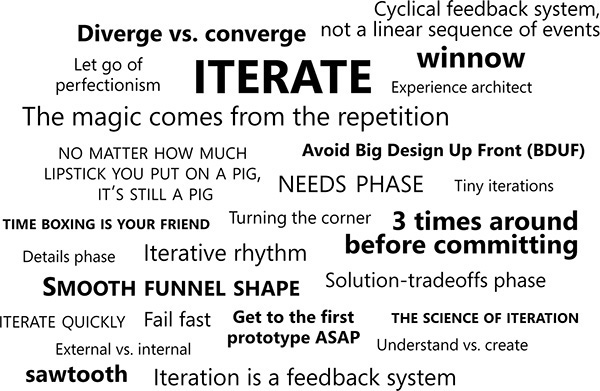
ScenarioPhoto Credit: SafariBooksOnline

Where iteration (or tweaking) breaks down (if I might be so bold) is when it’s taken well past rapid feedback loops into a realm of fine-tuning that has the team guessing “will it ever be good enough?” Product design and process development are vital to any company, but what we must also consider is the team or personnel involved.

If the feedback loops relate to the launch of a new product or a new business process, excitement and brainstorming are part of the momentum. Continuing to tweak over months instead of weeks before the launch can take a negative toll on the team. No one wants to forfeit excellence, but we don’t want to lose excellent personnel either.

blog-demanding-bosses-lifehackerPhoto Credit: Lifehacker

Trusting the judgment of our best thinkers is worth the risk of possibly releasing a product or service when we may not all be sure it’s “perfect”. That is what beta-testing is all about…the feedback that then comes to us from the consumer or user.

I’m really talking out of my element here (not being a designer or innovator so much as a lifelong learner). My leap from the sermon to the workplace relates to my own past struggle with wanting something with my name on it to be perfect while exhausting my teammates  with “what if we do this?” or “What if we say it this way?”

What a gift for us to take a well-thought-out proposal and, instead of putting it through the “just not good enough” wringer, we read it and pass it back to that colleague and say, “Good job”…empowering them to execute the proposal. How often does that happen these days?

Please share stories [in the Comments] of work situations where you experienced genuine affirmation for a job well-done.

Recently when water started backing up into the kitchen sink, I was afraid that it was something I had done. Too liberal using the disposal, for instance. Dave was out of town and nothing I could do would remedy the situation. Finally, on a Sunday afternoon, in desperation, I called our plumber (Richmonders, if you need a good plumber, email me, and I will give you his contact info). He came and fixed the problem, and best of all, it wasn’t my fault, after all. This young man literally LOVES his job and was kind to take the time, after he was off the clock, to give me the breakdown of what the problem was. What he charged me? Worth every penny…especially the part where it wasn’t something I had done wrong.

Why I bring this up is that being a fairly capable and creative person doesn’t prevent me from faltering at the likelihood that I messed-up.  See the Imposter Syndrome. My mental wiring is such that I get discouraged when my contribution to a situation actually causes more work for someone else, adds expense, or slows down progress. I’ve learned over the years that all that tweaking I may not have taken the product from good to great, and most assuredly caused some amount of frustration to hard-working, quality colleagues. Lesson learned.

There are times and seasons when tweaking is appropriate in developing a product and changing a business process. What we want to take into account is the cost of that tweaking, or iteration, on the people who make things happen in our workplaces. Free them from the “not good enough’s” to enjoy the fruit of “jobs well done”.blog-demanding-bosses-the-musePhoto Credit: The Muse

10 Tips for Dealing With an Overly Demanding Boss – Jacquelyn Smith

How to Get Over the Feeling that You’re Not Good Enough for Your Job – Michele Hoos

10 Things You Can Do to Get Out of Your Boss’s Doghouse – Brian Dodd

Why Incentive Plans Cannot Work – Alfie Kohn – Harvard Business Review

Good Is Not Good Enough: The Culture of Low Expectations and the Leader’s Challenge – Karlene M. Kerfoot

Innovation and Iteration: Friends Not Foes – Scott Anthony – Harvard Business Review

Holding a Team Retrospective – Morale

Workplace Bullying: Protecting Yourself at Work – Slideplayer

Monday Morning Moment – Ignoring in the Workplace and the Powerful Practice of Noticing

Blog - being Ignored at Work - dailymailPhoto Credit: Daily Mail

It just happens over time…the ignoring of people around us. Think about this morning, coming into work. Retrace your steps, and think of the people you passed within speaking range…but you didn’t…speak, that is. In another season of life, I might have slowed down to walk with someone a ways behind me, or even run a bit to catch up with someone ahead. Just to use that time to connect a bit. We race into our work stations, heads down, as if the most common courtesy of greeting and inquiring into another person’s life just take too much time away from the “important”. We sit down in meetings before they start and get lost in our thoughts, or our laptops, or our phones. We just ignore those around us…

Time itself seems to become more important than people. We circle up with our team, or go one-on-one with our boss or a consultant… when including a colleague, intern, or member of another team could have added greater value to that conversation. Are we more in a work culture today of tight circles when larger collaborative ones might prove more profitable? Do we just ignore those working around us who, by our actions, seem of little consequence to our workday? It’s not intentional maybe…but it becomes habit and then part of our character…communicating that people don’t matter.

Blog - People Matter - greatplacetowork

Photo Credit: Great Place to Work

Throughout my professional life, I have tried to be tuned into those around me, whether they currently are in my work group or not. My nature is to notice and my desire is to acknowledge. In various work situations, it’s been from a place of influence rather than from a position of authority. Any task or responsibility entrusted to me had to be accomplished through winning the confidence and cooperation of those around me. No authority to just delegate or task others with work. , gifted colleagues have always been willing to work on projects with me. People recognize when they are truly valued, and they engage more solidly when they are genuinely respected/regarded. We can build capacity for noticing people.

Ignoring those in our workplace over time has consequences. Just like that adage “Hurt people hurt people”, I think “Ignored people ignore people”. It’s a contagious work culture practice which has been widely researched. Productivity, employee engagement, longevity, and work relationships within teams and across the organization can all be negatively affected by just the casual neglect or lack of regard for colleagues.

Sidebar: As I was reading and thinking about this issue, the chorus of a strange little song kept coming into my head. The Broadway musical, “Chicago“, has a woeful character who laments about his smallness in life, as if people look right through him. The song is “Mr. Cellophane”.

O.K….back to workplace culture. What would happen if we determined to be noticers and acknowledgers at work? This is not a soft practice…it’s brilliant really. Taking little time, we can, each one of us, actually humanize and elevate the workplace experience for everyone we encounter through the course of the day. This is not an exercise of rewarding a job well-done but of noting the person behind the job…as valuable. Period. Full-stop.

Listen Closely words on a ripped newspaper headline and other news alerts like take notice, vital info, importance of being a good listener and pay attentionPhoto Credit: Chip Scholz

I’ve known some great champions in this through my professional life, and I aspire to be like them. Real servant leaders. We may not think of ourselves as leaders, but we can all lead out in serving, noticing, and acknowledging those around us. Skip Prichard writes about servant leadership and lists 9 qualities of these “noticers”.

9 Qualities of the Servant Leader

1: Values diverse opinions

2: Cultivates a culture of trust

3: Develops other leaders

4: Helps people with life issues

5: Encourages

6: Sells instead of tells

7: Thinks you, not me

8: Thinks long-term

9: Acts with humility

Consider this challenge as I make it for myself to genuinely and honestly take note of people, moving through our workday. This is not about being only polite, but being “in the moment” with those around us. It may start with a greeting, and then an inquiry, and before we know it, it’s possible true caring could follow. Translated into workplace language, that is employee engagement where ideas are exchanged toward better solutions for everyone.

I can’t close this topic without a shout-out to any one of you who’s having that experience of being ignored. You know, of course, that it doesn’t change anything of who you are…but it can harden your heart toward colleagues and dull your thinking in your job. I appreciate Jon Acuff’s piece on being ignored, a piece about Heisman Trophy winner and NFL quarterback Marcus Mariota:

“Throw the passes when no one is watching. Write the pages no one sees. Work through the business plans people don’t believe in yet. Hustle long before the spotlight finds you. You don’t need the whole world on your side to create something that changes the world.”

Postscript: I follow Vala Afshar on Twitter. He is the “Chief Digital Evangelist” for Salesforce and author of The Pursuit of Social Business Excellence. He posted the picture below, with the Tweet “This is how people ignored each other before smartphones”.Blog - Ignoring people without cell phones - Vala Afshar - twitter feedPhoto Credit: Twitter

It made me chuckle because we blame technology for so many of our relational woes when focus and attending to each other is an age-old issue. People matter. Our colleagues matter. Take notice.

The Noticer – Sometimes All A Person Needs Is A Little Perspective – Andy Andrews

Power, Authority, and Influence – Samer Ayyash – Slideshare

How to Practice the Art of Acknowledgement – Darcy Eikenberg

1 Surprising Lesson About Dream Chasing from a Heisman Trophy Winner – Jon Acuff

The Powerful Impact of Acknowledging Good Work – Laura Garnett

Being Ignored Is Worse Than being Bullied – Victoria Woollaston

Business Decision-making The Rule of WYSINATI – What You See Is Not All There Is – Chip Scholz

9 Qualities of the Servant Leader – Skip Prichard

The Power of Noticing: What the Best Leaders See – Max Bazerman – Bazerman focuses on taking in information in order to make better decisions rather than the simple act of noticing people (which can also empower decision-making and business process, communicating that people matter).

Monday Morning Moment – Stewardship – Stewarding My Part Well in Today’s Workplace

Blog - Stewardship - work.chronPhoto Credit: Work.Chron

All of life is stewardship. Doesn’t it make sense? Our jobs, our relationships, our personalities, and our future have multiple layers. When we think of stewardship, rather than ownership, or entitlement, or giftings, or personal rights, we take on a much broader, healthier view or life. Writing about it previously here, I wanted to focus more, this time, on our workplace.

In 1993, Peter Block wrote a revolutionary book entitled Stewardship: Choosing Service Over Self-Interest. He updated and expanded it twenty years later (in 2013). Block defines stewardship as “the willingness to be accountable for the well-being of the larger organization by operating in service, rather than in control, of those around us. Stated simply, it is accountability without control or compliance”.

Words mean things.  When we use the word “steward”, we loosen our grip on ownership – of our job, title, product, and work relationships. However, we do not loosen our commitment on personal responsibility. This is the gem of stewardship – a gem in the workplace that can be mined by each one of us.

Years ago, in nursing school, we used Virginia Henderson’s definition of nursing which focused more on facilitating the patient’s return to caring for him/herself than on the “giving care” component we often think of with nurses. Nursing as stewardship. When our children came along, we as parents would need to decide whether to home school or put our children into a private or public school.  Another parent gave us wise counsel: Whatever your decision, you are responsible for your children’s education, some of which you may contract out to other teachers or institutions. We, as parents, were stewards of our children’s education.

In the workplace, we have heard the word steward used in the service industry: union shop stewards, ship stewards, stewards on airlines, stewards of estates. However, the stewardship that Block describes can proliferate at all levels, especially if our leaders set this value and mindset. What if an organization determined to have an inclusive model of accountability where all employees operated by serving, rather than controlling, those in their influence (colleagues, customers, vendors)?  What if we chose to apply ourselves to the work before us, with deep personal care and commitment, rather than under a boss’s control or need for our compliance?

Stewardship as a concept and value is both time-tested and trendy. Check out REI‘s commitment to customers in delivering quality outdoor gear…and also to its employees. Stewardship.Blog - Stewardship - slideplayerPhoto Credit: Slideplayer

My first encounter with this word, stewardship, was as a child hearing the parable of a master preparing to leave on a journey. He entrusted the three servants with some measure of his wealth (talents). Their master had given each varying amounts of money, according to each servant’s ability. The master would be away for some period of time and meant for his servants to “steward” the money. Two servants invested his money in such a way that each doubled the amount entrusted them. The third servant, fearing the master (and possibly lacking confidence in his own ability), hid the money entrusted to him. He only had what he’d received in the beginning to give back to the master. The first two servants were rewarded for their faithfulness, care, and initiative, but the last cautious, fearful servant suffered the consequences of his inaction.

There is much to learn about stewardship from this old story. Stewardship is taking personal responsibility and interest in quality of service or product and depth of relationship. Like in the story, it could mean taking risks ourselves or with each other (especially leaders entrusting other team members with decision-making and design). It means empowering others in discussions and details that we might prefer keeping for ourselves (except that we are stewarding toward a larger outcome). It means making investments in others and in the over-all organization. Stewardship is the embodiment of employee engagement…all-in, whatever it takes, for that greater good. Lastly, the story spoke to rewards for those diligently stewarding what was placed in their care, and the consequences of those who refuse to be engaged…which leads to a place nobody really wants to go.quotes of bill gatesPhoto Credit: Quotesgram

Leaders and managers who are willing to give up control and who genuinely care about their employees and customers become true stewards themselves. They set the standard for stewarding across a company. Whether leaders are on board or not, any of us can still have ownership of a new-old way of thinking and practice. We can steward well what is our responsibility or under our influence. Again, this type of “ownership” is not about owning the job, the product, or the relationship. Stewardship is the owning of our personal responsibility – our piece of what could be excellent, and our piece of what’s not going well, and applying our experience, knowledge, giftings, and heart to benefit all touched by our service. Our stewardship.

BLog - Stewardship - 2 - whatcomlandtrustPhoto Credit: Whatcomlandtrust

What are your stories? Do you see the impact of your stewardship? Of the stewardship of others? Could you see how this might color the culture at your workplace? Is your company one where top-down, bottom-up, people care about each other and what they’re doing? It shows…if you are, or if you’re not. Stewardship.

Blog - Stewardship - John Wesley - QuotesgramPhoto Credit: Quotesgram

Monday Morning Moment – All of Life Is Stewardship

Stewardship: Choosing Service Over Self-Interest (2nd Ed.) – Peter Block

Five Lessons for Our Lives From the Parable of the Talents – Hugh Whelchel

Monday Morning Success – How Biblical Stewardship Transforms Your Work – Hugh Whelchel

Blog - Stewardship - Winston Churchill quote - ololmke

Photo Credit: OLOLmke

Monday Morning Moment – What It Takes to Be the Leader You Think You Already Are – Fast Read

Blog - Lead from the heart - businessinsiderPhoto Source: Business Insider

You are going to be so glad you are taking the time to read this. None of us want to think we’re leading well and find out, too late, that we missed the mark.  To be successful as a process manager, or content expert, or vision caster is something to celebrate, for sure. However,  if you don’t genuinely love your people (genuinely. love. your. people), it will mark your leadership and your personnel over time. Mark and mar. Don’t miss that…for your own sake and that of your organization – each employee and all employees.

A friend of mine told me recently that he’s never met the CEO of his company. He is not sure the CEO has ever walked down his department’s hallway. That made me sad, because I know the caliber of work he does and the quality of person he is. He would be such an encouragement to his company’s executive leader. Maybe he was out the day the CEO came down his hall…surely he showed up…once at least. Surely.

My husband speaks several times each year on leading from the heart. I love to hear him speak; it’s a good reminder for me in my own area of influence. Besides my husband, my other go-to person on this subject is Mark C. Crowley, author of Lead from the Heart – Transformational Leadershp for the 21st Century.

In a Forbes piece, Mark was interviewed by Ron Carucci on 4 Radical Leadership Practices that Will Dramatically Increase Engagement. You should read this piece in full. Here are those four practices in brief:

  • Invest deeply. Crowley defines deep investment as this: “You are personally spending ample time ensuring people are learning, growing, and thriving. You have a high bar for performance expectations, and you are personally helping people reach it. Every. Single. Day.” [Not just your administrative team, but every single employee in your organization. Too often leaders, busy as they are, leave this to others who may not have their character or their sense of what could be lost/gained.] Blog - Lead from the heart - slidesharePhoto Credit: Slideshare
  • Connect personally.  Raising boundaries in relationships at work (keeping a professional distance) doesn’t lead to objectivity; more they lead to ignorance. You think you know how people are, but do you really? Have you talked to personnel? Have you sat down at their work station? Ever? “People we lead have big stories, and we are part of that story.” You aren’t interested in a popularity contest, of course…but are you an empowering force in your employees’ lives…or a devaluing force? Check it out.Blog - Lead from the heart - essentialsofbusinessPhoto Credit: Essentials of Business
  • Hire for heart. “You have to hire people who are predisposed to care. If you hire for technical competence, or a track record of hitting numbers, that’s all you’ll get” warns Crowley. Maybe your leadership team is already in place and entrenched. Do your managers really care about your personnel? Are they following your lead in their role? This isn’t about occasional free pizza or management tossing kudos from in front of the room. This is about investing in and building up employees…all of them, each one of them… helping them reach their maximum potential. Challenge yourself in this, and your management teams in this, all the way through the ranks.
  • Love well. Crowley “emphasizes the criticality of leaders having absolute certainty that the people they lead feel like they, and their work, matter deeply, and they are genuinely appreciated.” Not just the executive team feeling this way but a model is set throughout the organization to “love your people”.

If you read this far, you probably already lead in this way or you want to. I think of myself as being pretty savvy in this area, and that could be my biggest weakness in the workplace. Making such an assumption is dangerous. So…thanks for caring about your own leadership. For those reading thus far, and you don’t see yourself as a mover or shaker in your organization…rethink that. The fact that you are so invested that you’re reading leadership articles may mean you’re more engaged than you might think. You lead out in this area yourself, if you must. For that friend of mine who has never met his CEO…make it happen. You nor he will regret it. Light a fire that could potentially encourage a whole organization. For real.

Lead From the Heart – Transformational Leadership for the 21st Century by Mark C. Crowley

Employee Engagement Isn’t Getting Better and gallup Shares the Surprising Reasons Why – Mark C. Crowley

YouTube Video – How to Lead from the Heart – 4 Practices – Michael Hyatt Podcast

The Four Disciplines of the Heart – How to Fight Back When You Feel Discouraged – Michael Hyatt

What Is the Key to Great Leadership Today? – David Grossman

Heart-centered Leadership – Susan Steinbrecher – Slideshare

The Yellow Brick Road of Leadership – Jonathan Stutz – Slideshare

Manage by Mind, Lead by Heart – Usman Ahmad – Slideshare

Monday Morning Moment – Belonging and Going Deep and the Blind Presumptions that It’s Actually Happening When It Isn’t

Blog - Belonging 2 - forbesPhoto Credit: Forbes

“The culture you create or the culture you destroy will determine the success of your business.”Mark C. Crowley

As much as we might like, we can’t equate smiling and greeting folks we pass in the hallway with real community. Worse, just making a beeline to the elevator, conference room, or office  with a studied, problem-solving look on your face does not instill confidence or credibility to those colleagues in the wake of your path to organizational excellence.

Sorry.

I’m not sure how well any of us do at creating a community of going deep or giving those around us a sense of belonging. What could help is periodically wrestling with our presumptions about work culture and employee engagement (I write about this often in this blog’s Monday Morning Moment. if you’re interested, just search here). Then make the changes that would grow such a work culture.

Going deep with employees and helping them have a strong sense of belonging are too rarely on the agenda of executive leadership. I don’t understand how that is, really, given all that’s written about it in the leadership press and all we learn from the companies experiencing growth/success. It seems a wee bit short-sighted.

Here’s the heart of it: Employees know whether they are valued and whether their organization is invested in them. Occasional fun days and gift cards to Starbucks offer a bump in the workplace routine, but the outcome will have little impact on overall employee satisfaction, performance, customer service or product excellence.

A culture where executive management, department heads, and team leaders go deep with their employees is possible, once the blinders are removed . What does that mean? It means dealing first with our presumptions and marshalling our efforts away from crazy and toward a culture of transparency and inclusiveness. It may entail perks and benefits, but more than that, such a culture thrives when personnel are proud to belong to such an organization, and their leaders know their people and strive to develop and honor them.Blog - Belonging 3 - flickr Christian BourdeauPhoto Credit: Fast Company

If, as a leader or manager, you have known success in mentoring a few, a small tribe of cohorts, then you can enlarge that to an organization-wide campaign that resets values and encourages and equips employees at all levels.

It’s worth the short-term cost to you for the long-term benefit of the organization and the individuals that make up your work community.

Bottom-line:

Andrea Huspeni writes: “How leaders choose to implement culture is everything. Some may think having the occasional happy hour, yoga session or trivia night will cut it, and while these perks help, culture runs much deeper than that. It needs to ignite inspiration, motivate teams to outperform the competition and allow employers to grow and produce results for the business. A successful high-performance culture has much more to do with the not-so-exciting tactics like transparency, support and communication than with a Ping-Pong tournament.” – Entrepreneur

Blog - Belonging - slidesharePhoto Credit: Slideshare

Please don’t miss the links below. Also, writing this, I thought of how these concepts apply to organizations other than businesses – including churches and other non-profits. What a difference you can make if you leave off judging the health of an organization by assessing how those closest to you are doing…and take on the whole health of your organization. There’s a lot at stake and it’s worth the effort of checking out your presumptions…learned this the hard way.

6 Surprising Insights of Successful Employee Engagement by Mark C. Crowley

Create Pockets of Excellence at Your Workplace by Shawn Murphy

Clarity and belonging – More Ways for Developing Pockets of Excellence by Shawn Murphy

7 Practices of Leaders Who Build Healthy Workplace Cultures by Brian Dodd

By the Numbers – Here’s What It Takes to Be a Top Company Culture (Infographic) by Greg Besner

8 Companies Reveal Their Secret Sauce to a High-Performance Culture (Video) by Andrea Huspeni

5 Ways Leaders Must Build a Family Environment to Achieve Excellence by Glenn Llopis

Can’t-Miss Advice: 8 Business Leaders Share How to Cultivate a Successful High-Performance Company Culture by Kim Lachance Shandrow

15 Powerful Team-Building Quotes – SlideShare

Monday Morning Moment – How Our Expectations at Work Shape Our Successes

Blog - Expectations - slidesharePhoto Credit: SlideShare

A blog title intrigued me recently – Almost Everyone Who Is Unhappy with Life Is Unhappy for the Same Reasons. It was a re-post of a LinkedIn blog written by Dr. Travis Bradberry (author of Emotional Intelligence 2.0). He writes about the role of expectations (of ourselves and others) and the impact those expectations have on our work life and relationships.

I see this so much in myself and in relationships both at work and in community. On one end of the spectrum, there are the expectations that undermine our successes – we don’t think we have what it takes to realize our dreams or goals. [This can also include our expectations of others, in the same way, especially if our expectations influence those colleagues’ view of reality.] On the other end of the spectrum, we may have expectations that are so unreasonably and unrealistically positive that we don’t do the work of realizing those same dreams or goals. [Again, this works against relationships when we have these expectations of others.]

In his article, Bradberry lists 8 common expectations that impact our work life and work relationships. He lists them and talks about them. Here I have written my own observations related to these expectations.

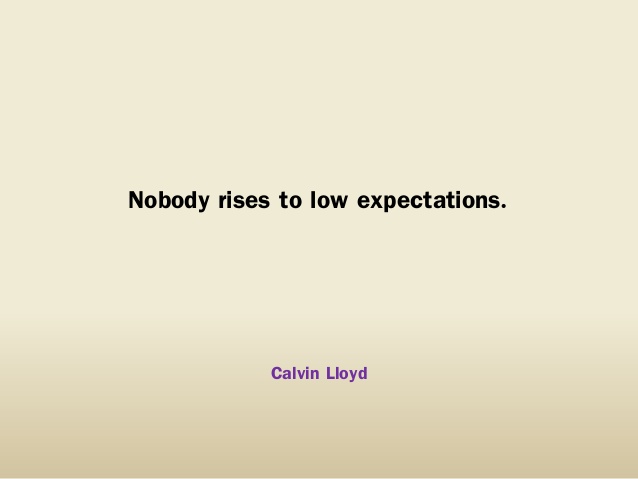
As you read and reflect, Dr. Bradberry is not saying get rid of expectations, nor am I. Expectations when honest, thoughtful, and kind are great motivators toward success. The adage “Keep your expectations low and you will never be disappointed” doesn’t really get us where we want to go.

After you consider the following expectations and thoughts, I would love to hear some of yours (in the comments below).

  1. Life should be fair. I have never understood the lament “That’s not fair!” It really reveals the heart of “That’s not fair for me!” How do we even make life fair? Our children, growing up, were never rewarded when they cried foul on fairness. We tried to raise them to practice kindness and generosity. That usually led to better than fair. In fact, if we flipped fairness on its head, our western work situations and family lifestyles would be quite altered, if what was usual for other parts of the world became our usual. That would be fair, right?
  2.  Opportunities will fall into my lap. There are times that opportunities “fall” into our laps. I call it “a God thing”. Whatever you might call that, it is rare and wonderful. In the day-to-day, we are to go after opportunities. Sometimes our very expectations of entitlement or pessimism keep us from even seeing opportunities right in front of us). Continue working hard, build your skill-set, learn from mentors, help your colleagues, practice thinking well of your boss, and seek out challenging assignments – these are fields where opportunities grow.
  3. Everyone should like me. I have tripped over this expectation. We think our own foibles are so much less annoying than those of others. If I consider myself congenial, you should comply, right? [The fairness problem nudges in here, for sure.] Bradberry summarizes this workplace problem well: “When you assume that people are going to like you, you take shortcuts; you start making requests and demands before you’ve laid the groundwork to really understand what the other person is thinking and feeling.” Rather than expecting others to be won by our personality, expertise, and past experience, we should discipline ourselves to practice winning the trust of a colleague, boss or customer… every time, as if it were the first time. This is a game-changer.
  4. People should agree with me. We honestly don’t want to have to work for people to agree with us. In the workplace, whenever possible, our default is to hang with those who do agree with us. This temptation sets us up for failure because we don’t gain from the critique of those who see things differently. Put your vision or project before those in other departments and see with their eyes what you might have missed with your own. Granted, be wise with whose counsel you seek, but do the work of seeking that counsel. Then share credit as appropriate.
  5. People know what I’m trying to say. Emails and text messages are almost communication. In corporate culture, even meetings don’t always cultivate clear communication. Be as clear and succinct as possible. Don’t lose the message in a jumble of clarifiers, justification, or story-telling. I’m not saying story-telling isn’t valuable; it is. The problem with story-telling is it can be contrived to emotionally engage when it actually takes away from the message. Again Bradberry wrote: “Communication isn’t anything if it isn’t clear, and your communication won’t be clear until you take the time to understand the other person’s perspective.”Blog - Communication at work - cbbainsealcareersPhoto Credit: CB Bain Seal Careers

Having lived overseas, we discovered the importance of learning the local “heart language”. In a work situation, the same holds true. How you communicate is colored by the focus of the one you’re addressing – whether it’s about ROI/ROV, employee engagement, product development….or fill in the blank. You can learn to balance between being true to your own style or values and adapting somewhat to the person in front of you (as a chameleon communicator).

6. I’m going to fail. “If you pursue an endeavor, believe with all your being that you’re going to succeed in that endeavor.” – Bradberry    We all fail sometimes; having that perspective is healthy. The problem is when we are so insecure or self-deprecating, our colleagues, boss, or customers lose confidence in us, based on our own assessment of our abilities. Not something you want to ensure by your own hand. [Read the whole of Bradberry’s article to get at the heart of this.]

7. Things will make me happy. If you’re not happy at work today, there’s not one thing beyond yourself that can change that. Not a different boss, not a better team, not more vacation, not a higher salary. This is a work on the inside that has to change your experience of work on the outside. We all know this. We all know…this.

8. I can change him/her. Okay, if you’re married, you already know the futility of this statement (and your spouse can say the same thing, by the way). When we get our focus on that boss we don’t understand or that colleague who makes us nuts, we aren’t able to focus on our work or the relationships that encourage and empower us. So what if you can’t change that coworker or boss? Can you be successful in your work if he/she doesn’t change? Most probably, the answer is yes…whether it feels like it or not. We lose enormous time and emotional energy on colleagues with whom we struggle. If changing jobs isn’t plausible or desirable, then figure out how to compartmentalize the distractions, and get on with your work. You can be a rock star even with difficult work relationships. I don’t want to issue a bunch of platitudes…but it is disturbing how much is lost from our workday in ruminating over (or talking about) stuff we can’t change…when there is still so much we can accomplish. Don’t sideline yourself with brain clutter – negative thoughts that negatively affect your work and relationships.

Blog - expectations - missworkerbeePhoto Credit: MissWorkerBee

Keep those expectations high (for yourself) and hopeful (for others)! Happy Monday!

Unrealistic Expectations That Do You Harm – LinkedIn article by Travis Bradberry

Emotional Intelligence 2.0 by Travis Bradberry and Jean Greaves

Emotional Intelligence 2.0 Quotes from GoodReads

Manage Expectations So They Don’t Manage You – Alli Worthington

The Key to Being More Attractive – Business Insider Video with Tony Robbins [Quote: “Trade your expectations for appreciation.”]

Set High Expectations Because Nobody Rises to Low Expectations – Barry Canada

The Expectation Effect – (in the classroom) – SlideShare

Blog - Emotional Intelligence - amazon

Photo Credit: Amazon

Monday Morning Moment – Them and Us, How Can That Be? Could Them and Us Become a We?

Blog - Work Culture - delta7Photo Credit: Delta 7

Recently, I was in an odd conversation with a friend from work. The more we talked, the more we sounded like a Dr. Seuss book. It went something like this:

“I don’t know how to be us with them. To be with them is to just be them. We must lose us; us no more will be. There’s no us in them; it’s so strange to me. How can they be them, with no us, you see? To give up us is too hard for me. So I can’t see a way to get to we.”

[Seriously, the conversation went like that…but better.]

Battling the us-them assignation is an ongoing workplace discipline. Even in the happiest, coolest companies, there is still an intentionality to keep work life positive for every employee. That inclusiveness is a hallmark for high morale and low walls (read: no silos).

BLog - Us vs Them - Work Culture - Silos - prolearn academy

Photo Credit: Prolearn-Academy

In a work culture where silos still exist, an us/them mentality can grow as each team or department draws in on itself and ignores or suspects the actions/values of others. It’s not a healthy situation for any of us…whether it’s the executive team insulated from others or the [fill in the blank] team hunkered down in its own mode of trying to survive. The first can be as unaware as the subject of the story “The Emperor’s New Clothes“, the second, well, is just miserable, and growing more so by the pay period.

So much has been written on this problem in the workplace – about that culture where us/them thinking and operations color productivity and morale. I have included several links below describing various recommendations and protocols to restore health to such organizations.

Blog - Work Culture 2Photo Credit: My Turnstone

I’ve always been that person who says, “Why can’t we just all get along?” In reality, we don’t have that situation always, but we can grease the tracks in that direction. Here are my own workplace rules regarding moving us and them to we:

  1. Make a practice of assuming the best of your bosses and colleagues. “Refuse to think ill of others” is my goal…and my accuracy in hitting that goal comes with practice and determination…and grace.
  2. Lean in to those with whom you struggle the most – the “thems” in your worklife. Especially the most powerful ones. Study them. Learn their language. Know them as well as you can. NOT for self-serving reasons, but for the benefit of the work itself. Any motive that only serves your personal situation will only make matters worse… ‘Nuff said.
  3. Refuse to get caught up in us/them complaining. Don’t make a big deal about it, but do your best to turn the conversation toward a positive end, change the subject altogether, or bow out if all else fails. Those negative conversations just bring you and your colleagues down and don’t accomplish anything. A short-lived “misery loves company” satisfaction isn’t worth the fall-out of such conversations.
  4. Bring down the silos, one brick at a time, if necessary. Maybe you aren’t experiencing any us/them anguish, but you know it exists. What can you do, individually and as a work team, to move to “we”? We have lots of work models out there for this. In fact, silos in the workplace are “so 80’s” (whatever that means…I hear it a lot, so I’m using it here). Use some of that meeting time, or talks over coffee, to be creative in how you can work better across teams…how you can learn more from each other…how you can defuse territoriality? If the “them” is management, you initiate dialog on setting work culture values that maximizes product excellence and employee engagement.
  5. Put processes in place – through your culture – to keep silos down. I would love to hear what your situation is and how you are making positive steps to grow/keep a healthy culture. Please comment below.

Sure…there are times we need to process a difficult situation at work with a trusted friend. Yes, us/them scenarios are painful…and wrong, honestly…especially in the workplace where we are meant to have shared goals, working toward the same outcomes. Maybe, the us/them relationships in a company are too distracting and we can’t see any solution (back to the Dr. Seuss-like conversation above). In that case, it’s possible we look outside our company for another situation. However, you take with you a piece of the us/them dilemma. You take you along to the next job. Better to develop muscle memory on how to “be we”, whenever possible, right where we are.

[Sidebar: I’ve written a lot about work culture – too many to mention – but you can search work culture under Blog – Deb Mills and learn as I have about what is possible if we stay engaged in our workplace.]

Blog - Work Place Culture - open.bufferPhoto Credit: Buffer

Overcoming Us vs. Them Challenges

Breaking the “Us and Them” Culture

How to Avoid Us vs. Them – Huffington Post

The 10 Buffer Values and How We Act on Them Every Day

The 4 Elements That Make Great Company Culture

How to Save a Broken Work Culture

From Us and Them to We Participative Organizational Culture

Them and us – How to use Trust as a Competitive Advantage

How CEOs Can End an Us Them Mentality

Us vs. Them – a Simple Recipe to Prevent Strong Society from Forming

Monday Morning Moment – Are You Engaged at Work? It Matters that YOU Show Up

Blog - Engagement - idonethis blogPhoto Credit: IDoneThis.com

In the pre-dawn light of this Monday morning, my husband and I sat briefly together. Over our first cup of coffee, we were talking about employee engagement, of all things. I had just read the most excellent blog (by Corinne Rogero) on being engaged, and it inspired a rare early morning conversation. Be encouraged.

This beautiful young woman, Corinne, tantalizes the reader with a blog seemingly about engagement to be married:

“I want to be engaged, but it’s probably not what you think. I’m as single as a slice of American cheese right now, which is perfect for me and I prefer it that way. But when I say I want to be engaged, I don’t mean I’m looking for a fiancé. I mean I want to be engaged in the sense that I’m mindful of the people and surroundings and culture and the spiritual warfare around me. I want to establish meaningful connections with the person on the other side of my coffee mug or in the booth across from me at dinner or in the passenger seat of my car. I want to lean in and connect with the stories being told. I want to actively console the sorrows being shared. I don’t want to go through conversations absentmindedly anymore.” – Corinne Rogero, I Should Be Engaged

This state of mindfulness and staying in the present are crucial to being engaged…no matter the environment or work circumstance.

Employee engagement is a property of the relationship between an organization and its employees. An “engaged employee” is one who is fully absorbed by and enthusiastic about their work and so takes positive action to further the organization’s reputation and interests.

When we become discouraged or demoralized with work, our tendency is to lose our bearings, almost become disoriented. We move to being defensive (reactionary), rather than offensive (proactive or forward-thinking). We lose focus and the best problem-solvers, highest producers among us can seem to lose their way…shifting focus to lesser goals and more easily achievable ends.

What I loved most about Rogero’s blog on being engaged was the personal intentionality of it. Her chief desires were clear and she was resolved to clear the way for them…in her day-to-day present.

I loved that and am inspired, empowered, and energized by that. I want to communicate and model that in my own workspace.

Tom Muha wrote a great piece entitled Achieving Happiness: Leadership Styles: Multipliers vs. Diminishers. I didn’t see how it related to achieving happiness but it did give an excellent summation of Liz Wiseman’s book Multipliers: How the Best leaders Make Everybody Smarter. Read her book for sure; Muha’s article will whet your appetite to read it.

I refer you to the concept of “multipliers vs. diminishers” because employee engagement is incredibly impacted by what kind of supervisor we have. Some supervisors maximize their team’s work experience (multipliers) while others maximize their own perceived importance to the organization rather than empowering their employees (diminishers).

We may not easily see how we can alter our situation with our boss (other than losing ourselves trying to please him/her, disengaging, or quitting altogether), but I see possibilities. It is possible, we can make a difference with our boss…if we don’t give up. It is also possible to make a difference for peers to help each other stay engaged or to re-engage. I loved Corinne Rogero’s quote below:

You will not find the warrior, the poet, the philosopher or the Christian by staring into his eyes as if he were your mistress: better to fight beside him, read with him, argue with him, pray with him.C. S. Lewis

It is hard sometimes…harder than we could imagine it would be sometimes…but whatever it takes to stay in the battle is better than disengaging ourselves from it.

Disengagement is very isolating. The disengaged just get quieter and focused elsewhere. Or, at its worst, disengagement gathers together a company of the miserable. No judging here…I just grieve the loss of what can be – not just product or service, but the continuing growth, joy, satisfaction of real, valued people at work.

Whatever our work situation or challenge, staying engaged is worth every effort, moment by moment. Hopefully your organization understands and is building in processes for ongoing employee engagement. Speak into that, if given opportunity. Speak into it anyway.

BLog - Employee engagement - management study guide

Photo Credit: ManagementStudyGuide.com

Hear one last word from Corinne Rogero on being engaged in life in the present:

“I want to be locked and loaded with an arsenal of grace and truth and boldness to bring the good news of hope into the lives that intersect mine. I want to be fully aware of God’s presence in every moment and not as much like Jacob who woke from his sleep and said, “Surely the Lord is in this place and I didn’t know it!”Corinne Rogero

No matter our situation at work – a team at odds with itself, a difficult culture, a boss who I don’t understand – no matter our situation, we can determine to be engaged. There is an undeniable emotional component to engagement, but it is larger than emotion. We can do the personal work of being “locked and loaded” – alone or with a few others who share our same vision and stewardship (belief/ethics). Our work lives are too precious to waste in disengagement… It may take some time for our circumstances to change, but our hearts, resolve, and focus can be sharpened in the fire of whatever difficulty faces us at work…if we don’t give up*.

What challenge are you facing at work that steals away your joy, drive, or confidence? What has helped you stay engaged? What are you doing to turn perceived walls, barriers or bottlenecks into doorways? Let us learn from you in comments below, please.

I Should Be Engaged – Corinne Rogero

Multipliers: How the Best Leaders Make Everybody Smarter by Liz Wiseman and Greg Mckeown

Gallup – Five Ways to Improve Employee Engagement

Best Practice Advice on Employee Engagement and Organization Development

*Galatians 6:9