Category Archives: Critical Thinking

5 Friday Faves – a Country Store, Mixing Thanksgiving and Christmas, an Argument for Trouble, Teaching Empathy in the Classroom, Teaching our Children to be Entrepreneurial

Blog - Friday Faves

Happy Friday! Posting from Atlanta, visiting Dad and family.

1) A Country Store – In an era of “buying local”, it’s easy to forgive a huge franchise when it feels like a country store. Cracker Barrel is like coming home. It’s my dad’s favorite restaurant (breakfast all day, and a huge menu full of “home-cooked” favorites). Walking into Cracker Barrel, you enter the country store section ahead of the restaurant. It is a retail paradise, especially if you’re from the South. Or maybe for everyone. It was lovely  seeing it recently through the eyes of a Moroccan-Scottish friend visiting. So much fun, this place, whether you buy anything or not!

IMG_1023IMG_1173

2) Mixing Thanksgiving and Christmas – Beautiful Fall leaves and pumpkins are still with us in Virginia, although the season is waning. Even with our American Thanksgiving still days away, Christmas is also upon us – with decorations, music, and the wooing to the stores for gift-buying. I don’t mind the mix at all. There’s enough to delight in both holidays.

IMG_1146FullSizeRenderIMG_1174

3) An Argument for Trouble – Mark Modesti’s Argument for Trouble – YouTube video (TED Institute) – take the time to watch. Even the Bible tells us we will always have trouble, so wisdom is to learn how to thrive in it…and make it work for us and others.

4) Teaching Empathy in the Classroom – Dr. Marilyn Price-Mitchell’s article on Empathy in Action: How Teachers Prepare Future Citizens. I love when educators are committed to working with parents in helping our children to grow into responsible, thoughtful adults. Growing up happens all too quickly – redeem the time.

5) Teaching Our Children to Be Entrepreneural – Charmian Solter’s 8 Entrepreneurial Skills You Should Teach Your Kids (in an info graphic). Like 4), these are things we might as parents want to consider to help our children face the future that awaits them.

That’s the quick and short of my favorite finds this week – what are yours? Would love to hear about them. Enjoy your weekend!

IMG_1160

Worship Wednesday – ‘Tis the Season – What’s at Stake When We Indulge In Attacking Each Other

Blog - House Divided - coffeewiththeking.orgPhoto Credit: coffeewiththeKing.org

“A new commandment I give to you, that you love one another, even as I have loved you, that you also love one another. By this all men will know that you are My disciples, if you have love for one another.”Jesus, John 13:34-35

“Why do you look at the speck that is in your brother’s eye, but do not notice the log that is in your own eye? Or how can you say to your brother, ‘Let me take the speck out of your eye,’ and behold, the log is in your own eye? You hypocrite, first take the log out of your own eye, and then you will see clearly to take the speck out of your brother’s eye.”Jesus, Matthew 7:3-5

Do not tear down the work of God for the sake of food. All things indeed are clean, but they are evil for the man who eats and gives offense. It is good not to eat meat or to drink wine, or to do anything by which your brother stumbles. The faith which you have, have as your own conviction before God. Happy is he who does not condemn himself in what he approves.”Paul, Romans 14:20-22

The “happy holidays” are upon us – juxtaposed against a landscape of polarizing political campaigns and various divisive protests and boycotts. In a season of the year (for us in the USA, in particular), we could enjoy warm community and loving unity, even when we differ on some things. Yet, we still divide ourselves up into various camps.

Where are we to land in all of this as Christ-followers?

For sure, it is not in attacking those who are not like us or who may be like us but differ in preference or opinion. Especially, we who call the name of Jesus as Savior – we have no ground to stand on in attacking each other…ever.

So why do we do it? There is this soul satisfaction that comes with feeling right, or smarter, or more cool, or culture-savvy. A soulish satisfaction from which God has actually called us, and toward something extraordinarily better. A unity, a bond of love. A love by which we are known to the rest of the world as followers of Jesus. Here there is even ground for all of us, the weaker brother and the stronger one (that one who becomes weaker when he taunts or shames the other). Jesus calls us to deal with our own flawed perspective (“log”) before we can help dislodge the painful speck from our brother’s eye.

Do we really care about the other, that one God calls us to love as we love ourselves? Do we show that love to the world when we treat those with whom we disagree with the same derision or contempt as the world does? Or worse? Are we keeping company with arrogant haters or are we becoming one? When we publically part company with believers who are offended by what we consider silly matters, what is at stake?

You may ask, “what about those hate-filled people who call themselves Christians and who protest all sorts of things, based on their “Christian” sensibilities?”. Still…Scripture is clear how we are to treat them…Jesus calls us to love even our enemies. (Matthew 5:43-45)

“If a house is divided against itself, that house will not be able to stand.”Jesus, Mark 3:25

There is much to lose and much more to gain in wrestling successfully with this dilemma – exposed in our private conversations and public (un-social) media.

Voices of Wisdom to help us – Keep Unity, Guard Community – Choosing to Love, Refusing to Shame

Blog - House Divided - Scott Sauls

Scott Sauls is the author of Jesus Outside the Lines: A Way Forward for Those Who Are Tired of Taking Sides . He has also written the richest piece on this whole shaming and raging culture that colors us as Christ-followers, if we partake in its rank hatefulness. In fact, I can’t even quote from his article, because I want you to read it…please. It is a quick but full read on identifying the problem, and seeing what is the truth of how we are to live, in the example of a living, flesh-and-blood human-like-us man, Tim Keller. Please…read Scott’s article. Transforming.

Christians are in many ways a band of opposites, who over time grow to love one another through the centering, unifying love of Jesus…sincere believers can disagree on certain matters, sometimes quite strongly, and still maintain great respect and affection for one another…I don’t know where I would be without the influence of others who see certain non-essentials differently than I do..In non-essentials, liberty. And to this we might add an open-minded receptivity. We must allow ourselves to be shaped by our ‘other’ brothers and sisters for Jesus’ sake. We will be the richer for it.” – Scott Sauls

“This great passion for souls [Romans 9:1-3] gave Paul perspective. Lesser things did not trouble him because he was troubled by a great thing – the souls of men. ‘Get love for the souls of men’ – then you will not be whining about a dead dog, or a sick cat, or about the crotchets of a family, and the little disturbances that John and Mary may make by their idle talk. You will be delivered from petty worries (I need not further describe them) if you are concerned about the souls of men…Get your soul full of a great grief, and your little griefs will be driven out. – Charles Spurgeon – Spurgeon Gems, p. 7-8

“I will never get why we defend our chicken sandwiches and our gingerbread lattes but we won’t take a stand for the things that actually matter to God. Are we loving the Lord with all our heart, soul, mind, and strength? Are we loving our neighbor as ourselves? Are we obeying God in our personal lives? Are we defending and providing for the poor, the widow, the orphan, and the immigrant? Are we sharing the hope we have in Christ? That’s pretty much our full job description.” – Angela

Blog - House Divided - Jonathanpearson.net

Photo Credit: JonathanPearson.net

What I Came To Respect Most About Tim Keller (Even More Than His Preaching) by Scott Sauls

We Disagree, Therefore I Need You by Scott Sauls

Jesus Outside the Lines – a Way Forward for Those who are Tired of Taking Sides by Scott Sauls

What Stops Our Fighting? by Tony Reinke

5 Friday Faves – Fall Trees, Handling Change, Naming Our Grief, Cool Job, and an Icebreaker Question

2015 October - Blog, Fall, Trees, Sadie 065

  1. Fall Trees – Is it a sugar maple or a yellow poplar? I don’t know, but isn’t it beautiful in the Fall leaf-turning? In the first year of our marriage, Dave and I lived in New Haven, Ct. where I was teaching and he was finishing his Ph.D. In the Fall, the sidewalks of our street were carpeted with these new-fallen soft yellow leaves. It was a magical time…just weeks after our wedding. I will always remember walking those yellow paths in the brief days before the snow came. The leaves dried and became crinkly. When the wind blew, or we crunched and kicked the leaves along, they blew up into the air. As if in a dance of joy. Sorry, there’s a deep romance in my heart that stirs at the sight of these trees in their Fall glory. Love!Fall yellow leaves by Shay WhitePhoto Credit: Shay White Photography

Blog - Fall Leaves Covering SidewalkPhoto Credit: Ann Williams, pinterest.com

2) Handling Change – Change is part of our lives every day, yet we struggle with it. Coming to grips and making peace with change helps us to move ahead to whatever is next. When Brian Dodd talks about handling change, he is speaking to pastors and church leaders. However, there is wisdom for any of us going through change in his article on the strange struggle of Jacob – wrestling with God (Genesis 32:22-32).

  • Change affects those you love.
  • Change costs you some change.
  • Change can be lonely.
  • Change takes time.
  • Change requires struggle.
  • Change does not leave you the same.
  • Change requires grit.
  • Changes requires humbleness.
  • Change is necessary for you to get better.
  • Change allows you to see God.

“Change is a true constant to be leveraged.  Not a temporary burden to avoid.” – Brian Dodd

Another related study on Genesis 32:22-32 I found helpful is Broken But Blessed.2015 October - Blog, Fall, Trees, Sadie 048

3) Naming our Grief – Grief always has a name and naming our grief helps us to heal. Having lived overseas for many years, we understand “Hellos-Goodbyes-Hellos” – both the sorrows and the joys of them. As the years go by, we experience job changes, relocations of friends and family, and deaths of loved ones. In a few days, it will be the 13th anniversary of my Mom’s Homegoing, and every day I still think of her. That grief definitely has a name. Sometimes grief feels more vague, like a sadness with a cloudy source. When I found this piece Because Grief Has a Name by Abby Alleman, it touched my heart. She says it well:

“Naming grief is our heart acknowledging its significance and place in our lives. In this way, grief is a friend, like Sadness from the movie Inside Out. It teaches us the shape of our own unique story and guides us to tastes of the ‘fullness of joy’ found in God’s presence. Acknowledging and entering grief also guards our hearts from the calcifying effects of the denial of pain, hurt or loss. Instead of resentment, bitterness or hatred, we get healing, strength and hope. We also become those who grieve well with others. This is a true gift.” – Abby Alleman

2015 October - Blog, Fall, Trees, Sadie 0592015 October - Blog, Fall, Trees, Sadie 064

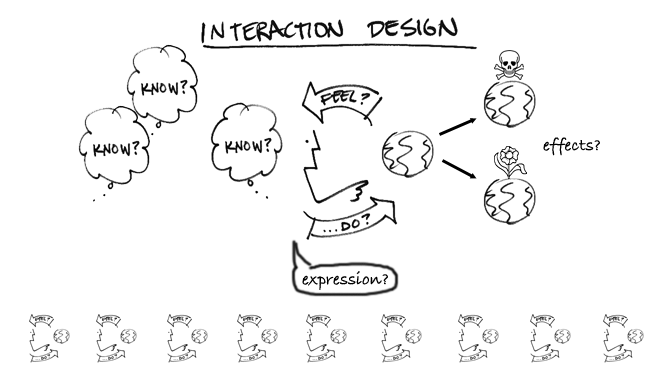
4) Cool Job – Interaction Designer – Complete Beginner’s Guide to Interaction Design – I am not going to say much about this because my ignorance will became obvious quickly. My first hearing of this job was around the supper table this week during our community group (Movement Church). Brian is an interaction designer. As he talked about his work, I was captivated. He works to make internet resources available to a set of consumers all over the world, and does it in such a way that is so user-friendly that even I could maneuver painlessly on that website. When you enter a website that gives you exactly what you need without bottlenecks, extra steps, or language that puts you off, then an interaction designer is probably at work unnoticed in the background of that site. Thanks, Brian, for what you do. Wow!Deb's BlogPhoto Credit: Interaction-Design.org

5) Icebreaker Question – I love icebreakers. They are a fun way to get to know a little bit more about the people around the room or in the meeting. This week, I was in a situation where the following question was used to get us started:

When was the last time you did something for the first time? What was it?”

I had to think a minute, but then it came: Soothing my wee granddaughter as if it was all up to me to settle her, even though her mommy was in the next room. [The next time will be much easier.]

What was your most recent “doing something for the first time”? What’s a favorite icebreaker question can you recommend?

Blog - Icebreaker questions - howdoyouplay.netPhoto Credit: Howdoyouplay.net

2015 October - Blog, Fall, Trees, Sadie 069

Building a Healthy Work Culture – in a Season of Change, Uncertainty, and Dips in Morale

Blog - Culture of FunPhoto Credit: Grasshopper.com

What are you celebrating at work these days? Hopefully you didn’t have to think really hard. Just having a job is something to celebrate, for sure. Beyond that, hopefully you have work that gets you up in the morning with a sense of purpose and a gladness of heart for your work community.

What if that’s not the case this morning? Any number of things can cause our workplace to become more stressful than healthful – a disappointing outcome in our research, a conflict over division of labor, a company merger or buy-out, a downsizing. I am awkwardly  list such things because none may touch on your situation. What is your work situation and your current work culture?

Whatever it is, working over a protracted period of time with low morale makes for a difficult work situation. We want to do whatever we can to turn that around. Not just for the sake of the organization and the goals of same, but for the sake of the personnel. The wellbeing of employees is the biggest factor in the long-term productivity of organizations. Yet, how do we wrap our collective leadership minds around such a thing as morale and engagement?

The key is work culture – and fostering a healthy work culture with as much energy and thought as we do our product line or customer service.

I was reading about work culture, especially related to a season of spiraling morale, and came across a pdf introduction of the book How to Build a Thriving Culture at Work by Rosie Ward and Jon Robison.

Not having read beyond the introduction of the book, I can’t give a full recommendation yet. However, the first few pages have already resonated with me about what is at play related to morale, or well-being, and what could be possible to restore it. Here are some quotes from Ward & Robison’s Introduction:

“Despite overwhelming evidence of a powerful link between effective leadership styles, positive work cultures and higher levels of organizational performance, many companies still operate with a top down, authoritarian management style, do not measure or intentionally create their desired culture, and do not effectively develop current and future leaders to maximize employee engagement and wellbeing.”

The authors go on to say that even in work situation where the leadership style is more employee-centered, the idea of work culture may not be well-understood or operationalized.

“Culture is the differentiating factor between high-performing and low-performing companies; however, most companies have not identified, articulated, measured or intentionally created their desired culture.”

The dilemma of employee morale may actually extend to the leadership team itself.

“The majority of executive leadership teams are not operating in a truly cohesive manner, and many leaders themselves are at a point of burnout.”

“Edgar Schein, PhD, leading researcher on corporate culture, describes culture as ‘the hidden force that drives most of our behavior both inside and outside organizations’. It’s like looking at a river. All of the things you see on the surface, from the flow of the water to the shape of the riverbed, are manifestations of an ever-changing, powerful current beneath the surface. In terms of culture, the current that ultimately guides the strength and direction of the organization includes the unconscious, taken-for-granted beliefs, perceptions, thoughts and feelings of employees. The interaction between leaders and culture is profound and critical when considering how to transform or evolve the overall culture and subcultures within an organization.

“Patrick Lencioni writes that, to be successful, an organization must focus on two basic qualities: It must be smart, and it must be healthy. According to Lencioni, a ‘smart organization’ is one that excels in the classic fundamentals of business — i.e., strategy, operations, finance, marketing and technology. A “healthy organization” is one in which there are minimal politics, minimal confusion, high morale, high productivity and low turnover. While being smart is only half of the equation, for most organizations, it occupies almost all of the time, energy and attention of leaders. Yet, according to Lencioni: ‘Once organizational health is properly understood and placed into the right context it will surpass all other disciplines in business as the greatest opportunity for improvement and competitive advantage. Really.‘”

Blog - How to Build a Thriving Culture at Work

Photo Credit: Amazon.com

How to Build a Thriving Culture at Work, Featuring the 7 Points of Transformation by Rosie Ward and Jon Robison

Work culture and employee well-being are not addressed by just another wellness program. Organizational ethos and values must incorporate both philosophy and programming to build morale, trust, and engagement of employees. Especially if the organization has been through a protracted season of change and uncertainty.

The good news is that possibilities abound. Workplace development literature is rich with approaches and frameworks that you will find helpful in attacking your own set of challenges. One such article is Workplace Culture is Everything: 20 Ideas For Building a Thriving Team – Great links to 20 articles on Workplace Culture. [I apologize, since I’m citing this resource, for the “coded” profane word in the title of one article. Good read otherwise].

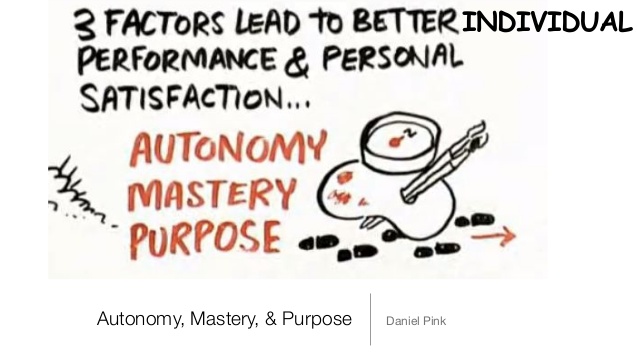
Another book I re-discovered in reading about morale this weekend is Daniel Pink’s Drive. When a company is in the middle of a reorganization or restructuring, employee wellbeing (engagement, performance, satisfaction) can get lost in the sheer workload of the executive leadership team. This is when Human Resources, Membercare, or the Employee Medical Program can offer their own recommendations as to how to rebuild the work culture from the personnel side.

Are you in such a season? What have you done in this area? What has been helpful? I would love to hear about how your organization has dealt with employee morale and engagement during seasons of transition.

Blog - Healthy Culture - Motivation - Slideshare.netPhoto Credit: Slideshare.net

Drive: The Surprising Truth About What Motivates Us by Daniel H. Pink

11 Ways to Create a Thriving Workplace

How to Create and Maintain a Workplace Culture That Will Make Your Company Thrive

Creativity, Inc. – Ed Catmull’s Story of Pixar, Working with Creatives, & Steve Jobs

untitledIMG_0223Photo Credit: Amazon.com (l) & Deb Mills (r)

Dave, the husband in my story, has always pointed me in the direction of transformative books and learning experiences. That path converged with this year’s Global Leadership Summit and Ed Catmull’s Creativity, Inc.

Bill Hybels interviewed Ed Catmull about his role in co-founding Pixar Animation Studios and pioneering the field of computer animation. Now President of Pixar Animation and Disney Animation, he has an extraordinary story to tell of leading creatives in innovative film-making. Mr. Catmull’s wisdom and humility can be well-applied in any workplace situation.Blog - GLobal Leadership Summit - Ed Catmull by brainpickings.orgPhoto Credit: brainpickings.org

“Science and art are not incongruous. Art isn’t about drawing; it’s about learning to see. Which business or professions do you not want to have enhanced ability to see?”

During this interview at GLS15, he talked about the business processes he uses in film-making. We can relate this level and quality of  accountability in any organization or company:

  1. Teams working together (using a Brain Trust – a group of colleagues all acting as peers, with vested interest, giving feedback;
  2. When failures happen in production – embracing [failure] but at the same time dealing with it with both total candor and kindness; and
  3. Operating within constraints (a budget) – actually pushes creativity higher and delivers better outcomes.

“Stories influence the world. We want to use story-telling for good.”

Listening to Ed Catmull talk about leading at Pixar and Disney whetted our appetites to read his book Creativity, Inc.

Originally, Mr. Catmull worked in the computer graphics department of Lucasfilm, in the beginning years of computer animation. In his book, he tells about his incredible journey in those early years right through to today. It was a wildly bumpy road at first and the work was almost sidelined had it not been for Steve Jobs buying Pixar from Lucasfilm.

Toward the end of the book, Catmull writes about Steve Jobs. They worked together for over 25 years, and the Jobs he knew was a much more complex and lovely man than who we knew through other media. A tribute full of “candor and kindness” – as much about how Ed Catmull sees people as about the amazing leader that was Steve Jobs.

Whatever your work, you want to read this book. Catmull describes how he modeled openness, confidence in, and care for his employees. There are trust builders and wide gates for innovation woven into Pixar’s business processes. Whatever our sphere of influence is, we can all learn to be more effective leaders as we think through how Catmull leads.

At the end of Creativity, Inc., there are 5 pages of bulleted principles that Mr. Catmull encourages as starting points for critical thinking. Here are just a few:

  • If there are people in your organization who feel they are not free to suggest ideas, you lose. Do not discount ideas from unexpected sources. Inspiration can, and does, come from anywhere.
  • It’s isn’t enough merely to be open to ideas from others. Engaging the collective brainpower of the people you work with is an active, ongoing process. As a manager, you must coax ideas out of your staff and constantly push them to contribute.
  • There is nothing quite as effective, when it comes to shutting down alternative viewpoints, as being convinced you are right.
  • If there is more truth in the hallways than in meetings, you have a problem.
  • Change and uncertainty are part of life. Our job is not to resist them but to build the capability to recover when unexpected events occur. If you don’t always try to uncover what is unseen and understand its nature, you will be ill prepared to lead.

Creativity, Inc. is not just a book for whom we now consider “creatives”. It’s a book for any of us who want to employ and empower people to grow personally and in community and to produce in ways that yield great products/services.

We all have stories that can influence the world for good…if we grow a work culture where those stories matter and can be freely explored.

Creativity, Inc.: Overcoming the Unseen Forces That Stand in the Way of True Inspiration by Ed Catmull and Amy Wallace

Global Leadership Summit – 7 Take-Aways from Day One of #GLS15

YouTube Video – Steve Jobs Remembered by Larry Ellison and Pixar’s Ed Catmull

YouTube Video – Ed Catmull: Keep Your Crises Small

Monday Morning Moment – On Silos and Tribalism – Taking “Us” and “Them” to a Better “We”

Blog - Silos & TribalismPhoto Credit: Slideshare.net

“Silos”, as a workplace term, is such a fitting description for what we do to distinguish ourselves from each other. It means compartmentalization based on specialization. Now the term “silos” is less used, replaced by the cooler term “tribes”. Unfortunately, because the workplace woes of old are still in operation, “tribes” have deteriorated into “tribalism” or…[Hello] “silos”.

I began thinking about this again this weekend when a retweet came up in my Twitter feed featuring Gianpiero Petriglieri. So much organizational resource – money and time – is spent on specialization and grooming leaders. It’s a pity when the outcome actually draws down the organization ( to small pockets of “tribal buddies”) instead of honing expertise and relationships across departments, across disciplines.Blog - Silos and Tribalism

What if we could break down silos, and reorient and reenergize tribes? What if workplace tribes incorporated a grand plan that nurtured inclusion – creating “a rising tide that lifts all boats” (Adam Grant)?

Years ago, when I was a young instructor at Yale University, I experienced workplace silos. There were bottlenecks through which I had to maneuver, until I figured out how to win those beyond the bottlenecks. Since then silos have been a part of life for me, as I’m sure they are for us all. Oncology nursing had a different prestige than critical care nursing. Was one better than the other? No.

Working in the Middle East had its own set of challenges different from working in Europe. Does that mean one elicits greater respect or benefits than another? Of course not. Right? Communication between those in the field and those in the home office can also become very much an “us” and “them” transaction.  Even within the home office, one department may seem more the “flavor of the month” than another. What are your silo/tribe challenges?

Brilliant business writers can give us great tools and insight with breaking down silos (see fast reads in the links below). If you are anticipating a major change in your organization (buy-out, down-sizing, shift in focus/product line), it makes for a perfect storm to deal with silos. Of course, if management across the organization leads out with a unifying goal (a “battle-cry”), the possibility for success is heightened. I don’t think, however, that this is the only hope for success.

What if one department, a single silo or tribe, decided to tackle the problem? What would that look like? From my work experience and from learning from great leaders, both celebrity and colleague, here’s a bare-bones minimum how-to-get-started list:

  • What is your common goal as an organization? What is the clear unified rallying cry around which you can collaborate?
  • What are your own silo biases? Do you communicate that you think your department, location, specialization should have some sort of favor? Deal with that. It’s the first barrier that has to come down.
  • If trust has been disrupted or destroyed, who can you partner with to begin to rebuild trust? Name them, and begin the process (if you pray, you might begin praying for their success as a department/division – make it NOT about you).
  • What objectives can you establish as a department to guide you in staying focused on high-value collaboration across-specialties?
  • How will you measure the course of your action toward becoming a non-silo, less tribal department? Set a time. 6 months or across whatever acute crisis you see coming. Be as intentional and broad-reaching as you are able, given your own workload. Remember that silos alter the math in a workplace – 1 + 1 + 1 = 2 when teams aren’t sharing information and working at cross-hairs. We can make the math work better, as we work, against the flow, toward creative collaboration. 

My professional life has had various silo experiences, from teaching in an Ivy League university to working on a highly innovative team (recklessly creating its own brilliant unintentional silo, later with personal regret). Silos and workplace tribes never get us where we want to go collectively. Bring ’em down.

I would love to hear about your work experiences…any struggles, breakthroughs, or victories in this area of breaking down silos and building a culture of “Yes, WE can…together.”

Blog - Organizational CUlture - Lencioni book Silos, Politics & Turf WarsPhoto Credit: Amazon.com

Silos, Politics and Turf Wars – A Leadership Fable about Destroying the Barriers that Turn Colleagues into Competitors

Silos and Tribes – Think Different

http://www.slideshare.net/JDDillon/breaking-down-silos-how-social-learning-changed-everything-for-kaplan-atdtk

17 Strategies for Improving Collaboration – from the Freiberg’s – Do Not Miss This One.

How to Build Trust and Fight Tribalism to Stimulate Innovation

Breaking Bad – Squash Silos & Tribalism – Breakthrough Personal Branding

Leadership Axioms: Powerful Leadership Proverbs by Bill Hybels

Efficiency, Effectiveness, and Adaptability – The Very Human Side of These Business Processes

Blog - Effectiveness vs. Efficiency

Photo Credit: digital-knowledge.nl.dikn/en

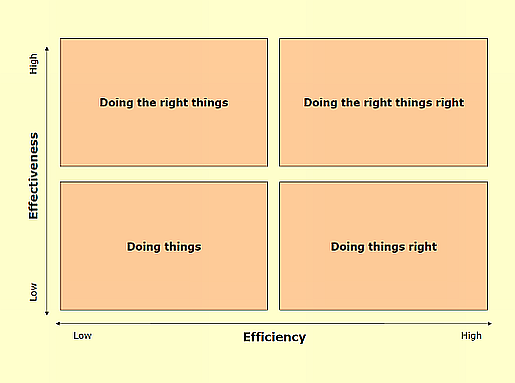
I will never forget when an elder statesman in an organization (both dear to me) was “let go”, so to speak, because of a need for more “bang for the buck”. The expression was so toxic then and still carries a deep pain. It speaks to the tension between efficiency and effectiveness, and the pressing need for adaptability as our world rapidly changes. At the same time, we have to remember, in almost all situations, it’s people in the mix of these business processes.

Efficiency is a good thing. However, it must be secondary to effectiveness. Effectiveness is primary always. How best to assure both is to build an organizational culture of adaptability.

Tom Coyne has defined effectiveness, efficiency, and adaptability brilliantly in a published 2-page pdf*. Here they are:

“Effectiveness measures the extent to which the results you have achieved match your goals.” Strategy leaders set those goals, and the goals determine who does the work, when, where, and how.

“Efficiency measures the amount of scarce resources used to obtain the results achieved.” His use of the term “scarce resources” is thought-provoking. When we focus on efficiency – getting the most benefit from the least resources – we can lose our objective. Resources are precious. Full-stop. Whether they are people, time, or finances. We must consider how we spend resources always, and especially when they are scarce.  However, if we miss the mark on our objective because we misspent our resources or allocated them unwisely, then we paid for efficiency with effectiveness. A poor transaction.

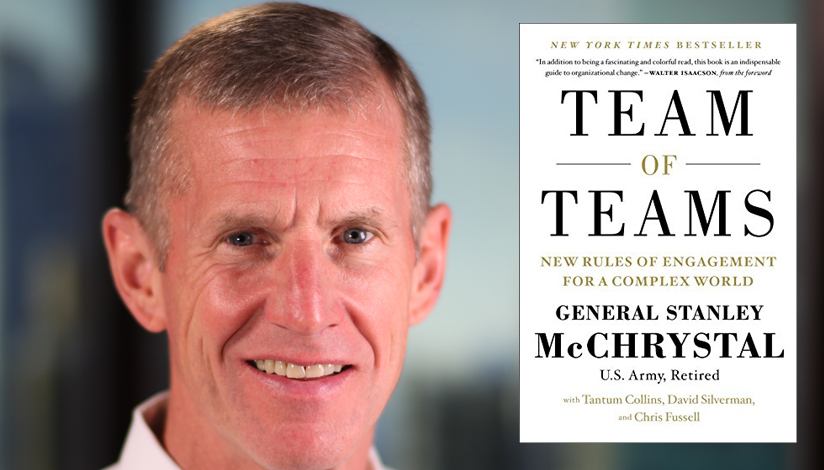
Gen. McChrystal, speaks to this, in his book Team of Teams (more about this book follows). He puts a captivating twist on it in his challenge: “If I told you that you weren’t going home until we win—what would you do differently?” We can’t focus primarily on efficiency when effectiveness is the outcome we desire. Adaptability is really what will get us to where we want to go.

Adaptability measures the change in Effectiveness and Efficiency for a given level of change in the agent or organization’s environment…One of our great failings as human beings is our reluctance to acknowledge the full implications of living in a world of complex adaptive systems. The causes of yesterday’s success are impossible to fully understand, and unlikely to be replicable to the same extent in the futureWe naturally try to succeed again in the future, using the approach that worked in the past, with frequently disappointing and occasionally fatal results.”

Coyne goes on to write about how to work these processes out toward business and employee/team success in a changing world.

Good stuff to know and implement.

Early on in my career, one of the mantras I heard repeatedly was this:

“The three most important things to learn in your work is flexibility…flexibility…flexibility.”

That later changed, in company vernacular, to “fluidity” x 3. The only problem was the temptation to decide for myself what was fluidity/flexibility and what was not. This is where silos and self-interest evolve when we’re not even aware, until we find ourselves not being successful (effective/efficient). In the very work we’ve immersed ourselves in for years…working hard, but not working as smart as we could have. [I know, that hurts – and it will take more than efficiency gurus to bring us out of such a predicament healthy.]

It is possible to turn the ship around…and it takes a whole crew.

Decentralized, empowered teams. Trust. Transparency and collaboration in decision-making. Broad information-sharing. Ownership in real time not just in philosophy. Bringing down silos and working together to nurture an organizational culture where we expect change and thrive in it.

What focus yields a win-win in our workplace? Both from the human side and the business side of performance and organizational culture. What can we do to enhance our business processes – whether we are in management or on the frontlines of our organization?

The following quotes should help to stir thinking. They are out of the book Team of Teams by retired U.S. Army General Stanley McChrystal, currently with The McChrystal Group.

“In complex environments, resilience often spells success, while even the most brilliantly engineered fixed solutions are often insufficient or counterproductive.”  – Gen. Stanley McChrystal, Team of Teams

“In place of maps, whiteboards began to appear in our headquarters. Soon they were everywhere. Standing around them, markers in hand, we thought out loud, diagramming what we knew, what we suspected, and what we did not know. We covered the bright white surfaces with multicolored words and drawings, erased, and then covered again. We did not draw static geographic features; we drew mutable relationships—the connections between things rather than the things themselves.” – Gen. McChrystal, Team of Teams

[Sidebar: I had the great pleasure of writing for such a team over the last 3 years. It was a privilege to see that level of creativity and collaboration, in a team of equals, birthing a workplace initiative in sync with a changing world. Amazing experience.]

“Specifically, we restructured our force from the ground up on principles of extremely transparent information sharing (what we call “shared consciousness”) and decentralized decision-making authority (“empowered execution”).” – Gen. McChrystal, Team of Teams

“In a resilience paradigm, managers accept the reality that they will inevitably confront unpredicted threats; rather than erecting strong, specialized defenses, they create systems that aim to roll with the punches, or even benefit from them. Resilient systems are those that can encounter unforeseen threats and, when necessary, put themselves back together again.”  – Gen. McChrystal, Team of Teams

View your leadership as being less about giving top-down orders and more about cultivating those who follow you, empowering them to make the right decisions. Many leaders are tempted to lead like a chess master, striving to control every move, when they should be leading like gardeners, creating and maintaining a viable ecosystem in which the organization operates.This is especially applicable to private sector leaders; the world is moving too quickly for those at the top to master every detail and make every decision. Empowering, cultivating, and ultimately serving those who follow you will unlock massive potential within your organization, allowing you to solve for problems in real time.” – Gen. McChrystal, Forbes.com

*Effectiveness, Efficiency, and Adaptability – The Three Keys to Performance Measurement

Effectiveness Before Efficiency

Efficiency vs. Effectiveness

The Power of Business Process Improvement: 10 Simple Steps to Increase Effectiveness, Efficiency, and Adaptability by Susan Page

GoodReads Team of Teams Quotes

Stanley McChrystal: What The Army Can Teach You About Leadership

Gen. Stanley McChrystal: Adapt to Win in the 21st Century

Team of Teams: New Rules of Engagement for a Complex World by General Stanley McChrystal

Blog - Efficiency and Adaptability - General McChrystalPhoto Credit: Forbes.com

A Lesson in Humility – Downsizing – A Humbling Work Experience and What God Can Do With It

Blog - Downsizing - slideshare.net (2)Photo Credit: Slideshare.net

A company downsizing can be a humbling experience for everyone – for those losing their jobs and for those in leadership with no other way forward. For all the employees, there will be a mix of reactions. Downsizing can be a humiliating experience…unless we allow it to be simply humbling.

God sees downsizing differently than we may, when going through one. In the Bible, there’s a fascinating account (Judges 6-7) of His gathering an army to fight the Midianites, enemies of Israel. He worked through the leadership of a man named Gideon who, early on, wasn’t at all sure of himself leading such an operation. As Gideon sought direction from God, he was able to rally an army of 32,000 men.

God wanted Gideon to see His own glory in fighting for His people. This army of 1000s was too big. Through a couple of strategic downsizings, Gideon was left with an army of 300 and a God who would lead them in battle for His name’s sake. They would see the Midianites trounced in such a curious way that only God could have brought about their defeat.

In the story above, Gideon must have felt satisfied…even proud…at the size of the army he was preparing to lead. The timidity he originally felt melted away with the men who volunteered to fight for him. He was ready to go up against the Midianites.

God had another plan.

He brought the number of soldiers down to such a low count that Gideon no longer had cause to be proud of the possibilities of victory. He was humbled by God’s actions, and he became all the more able to lead, as He followed every detail of God’s strategy.

Humility is having a right, or true, understanding of who God is, and who we are in relationship to Him and each other.

When we are humbled, either by a downsizing in our jobs, or a hit to our status, position, or reputation, we can take heart, in what God can do in that. When He works to move each of us to a such challenging place, we discover the contents of our own hearts. We discover the pride…or whatever else has lodged itself against Him (fear, entitlement, bitterness). Then we either choose to rail against our situation or decide to trust Him with the outcome.

We have an example of that in the humble obedience of Christ:

Have this mind among yourselves, which is yours in Christ Jesus, who, though he was in the form of God, did not count equality with God a thing to be grasped,  but emptied himself, by taking the form of a servant, being born in the likeness of men. And being found in human form, he humbled himself by becoming obedient to the point of death, even death on a cross. Therefore God has highly exalted him and bestowed on him the name that is above every name. – Philippians 2:5-9

2015 September Blog - Humility

In a company downsizing, or any other hard place, our temptation may tend toward pride and entitlement. As we allow God to humble us through that hard place, then He will raise us up, as He did Gideon, in victory. It’s in trusting Him that we’ll find that victory.

Blog - Humility & Pride - Slideshare.netPhoto Credit: Slideshare.net

Gideon’s Incredible Shrinking Army (Judges 6:33-7:15a)

Gideon Defeats the Midianites – Godsstory.org

The Power of Humility – Slideshare

What It Means to Be Humble and 6 Ways You Can Grow In Humility

How to Fight the Sin of Pride, Especially When You Are Praised – Ten Things I Do – John Piper

Looking for a Job…or the Next Job? – 4 Ideas to Consider

Blog - Do Over #2

When you need a job, or a new job, you are in a tender place. I will treat that place with honor. You have gifts, experience, and workplace wisdom that are needed somewhere…so please don’t despair. Any bitterness that could be taking root in your heart will only get in your way. You have choices, more than you think. You have probably had more advice than you can even follow, so I don’t want to burden you with another load of it. Just 4 ideas.

  1. Read an encouraging and practical book.  For me, that book is Jon Acuff’s Do Over. Acuff gives sound counsel, mixed with fun stories, about how to get on with your life in the marketplace. In fact, I wrote 5 blogs on his book (see links below). I leave out the stories, but his “next steps” are extremely helpful and sometimes surprisingly counter-intuitive. He boosts the reader’s confidence in a genuine way and  doing the exercises in his book can make a huge difference in job hunting. So much affirmation…real affirmation.
  2. Network with lots of people. It’s not just about “who you know”. It’s also about “who knows you”. Sometimes we don’t even recognize our own strengths (OR weaknesses). Trusted friends or even respected acquaintances can give you much-needed food for thought and action. Maybe you don’t even know what to do, job-wise – your future is wide open but looks (to you) very dark. Input from others who care about you or who are caring, in general, can help you focus. You may not have even considered what they may be telling you – either about your own hireability or the job market itself. Listen and learn. P.S. Don’t go to them for a job; go to them for wisdom about getting a job.
  3. Try something completely new. The film The Intern with Robert De Niro and Anne Hathaway speaks to this something new. A 70-year-old takes an internship in a cool successful company. Funny and winsome and could be one of us, right? Then I have also been hearing a lot lately about advanced manufacturing and the need for apprentices in this field. You may have a “white collar” education that could be more finely tuned with some “blue collar” experience. Those terms may be antiquated with the blurring of boundaries in our more technology-rich manufacturing companies. You could be that intern or apprentice.

4. Consider working with a head-hunter or job placement agency. In a conference recently, I heard Michael Thompson, founder and CEO of Turas Group, speak to a group of job-seekers. His approach was warm and positive. In that half-hour session, he gave strong individualized counsel to each person, based on what information they had already sent them. Counsel that helped everyone in the room really, but also individualized to each person’s needs. He also asks really good questions which is incredibly helpful for clarification – when you really don’t know what to do next.

One thing Thompson expressed was the importance of doing lots of interviews. His counsel included: a) prepare and do research to know your interviewers; b) arrive early; c) have your 60 second pitch down; d) – smile a lot, have energy, be excited and maintain eye contact; e) answer directly and concisely; and finally f) if you don’t know the answer to a question, share that, but then offer what you would do (especially if you’ve never done that something needed). Thompson also encouraged the participants to join LinkedIn (a global online professional network).Blog - Friday Faves - Turas Group

Whether you’re just out of college or you find yourself in the throes of a company downsizing, you know something of what you offer any employer. Allow these 4 ideas to fill in some of the holes you can’t see that would make job hunting a less painful and more productive endeavor.

As to dealing with the disappointment of not finding a job right out of school, or the loss of satisfying work you loved, please don’t let that define you. You have choices…maybe very different that you first imagined, but you have them. Make those lists of strengths and people of influence in your life as Jon Acuff advises; talk (well, listen more) to friends and advocates; and stay open to a real positive turn in your career. Finally, I personally would add “Pray” to all this. Prayer will help you to not panic or grow bitter when your emotional energy would better serve your pursuit of that job – the one you can’t imagine right now. Remember who you are and Whose you are.

Any comments on what has helped you or what is sustaining you in your job hunt? Please share below.

Do Over – Rescue Monday, Reinvent Your Work, and Never Get Stuck – by Jon Acuff – Notes (Part 1)

Do Over – Jon Acuff on Work Relationships – Notes (Part 2 of Do Over Series)

10 Quotes by Jon Acuff on Developing New Skills & Sharpening Old Ones – Part 3 of Do Over Series

Jon Acuff on Character at Work – 9 Quotes & a Challenge – Part 4 of the Do Over Series

Jon Acuff on the Role of Hustle in Taking Hold of Career Opportunities – Notes & Quotes – Part 5 of Do Over Series

Turas Group – Michael Thompson, CEO – Michael@turasgroup.com – or connect via LinkedIn

Tips for a Successful Job Search – Tulane University

TGIM – What Can We Do to Make a “Thank God It’s Monday” Work Culture?

Blog - Thank God It's Monday - bridgepointconnections.org

Photo Credit: BridgeportConnections.org

Don’t hate me, but I’ve always loved Mondays. Mondays read a fresh start for me…a clean slate. New possibilities. Sunday nights would sometimes mean a bout of anxiety or a bit of depression in my questioning of being mentally prepared for whatever Monday brought. All that cleared by the time I stepped outside, into my car, and headed for work.

TGIF (“Thank God/Goodness, it’s Friday!”) was never something I understood. It was hard for me to fathom grinding through a work week, longing for Friday. There’s a rhythm in work, requiring a certain number of days at it, and by Friday, I was ready for a break, but “living for the weekend” wasn’t my thinking on work.

This past Friday was an exception. Pressures at work did spill out over the purpose and pleasure of work such that Friday came just in time. So…I do understand TGIF. Still, it’s clear that God created work for us and I usually take joy in it. Hopefully this resonates with some of you…with others, maybe you might consider how TGIF could make room for TGIM as well.

Tim Hoerr, author of Risking It: An Intersection of Faith and Work, wrote an excellent piece on Building a “Thank God It’s Monday”. It’s a quick read and I strongly recommend it for anyone who struggles with taking joy in their work. It is possible to change your culture.

How does Tim Hoerr define a TGIM Culture?

  • TGIM culture: each team member engaging in challenging, meaningful work – each knowing that their individual contribution is a significant, integral part of the larger whole.
  • Second, each person has ample opportunity for growth and advancement. God has wired each of us to grow and desire new, richer experiences. Entrepreneurial environments are greenhouses for human growth.
  • Another feature of TGIM culture is that each team member and his or her efforts and contributions are being recognized by the company’s leadership. It doesn’t have to be terribly formal or fancy – but each of us want to know we matter and our work is making a difference.
  • TGIM culture means that the fruits of success are being shared by each of those making a contribution to that success. Although surveys show that compensation ranks relatively far down the list of what makes one satisfied, it is essential that the rewards be fairly shared amongst the team.

After defining a TGIM work culture, Hoerr gives a historic example, completely relevant to today’s workplace.

“If you examine the ‘work environment’ Jesus created with his ordinary band of followers, you’d have to say it was a template for our organizations today.”  Then Hoerr lists those components:

  • There was a common mission.
  • A series of challenging assignments.
  • Regular dialogue and interaction amongst the team.
  • Teaching and training in order to replicate the mission on a broader scale.
  • And, importantly, Jesus as the leader facilitating the larger purpose amidst his team’s diverse personalities and all-too-human tendencies.

Don’t miss the rest of Tim Hoerr’s piece on TGIM Culture.

Is the TGIM culture cultivated in your workplace? How might you see the components above implemented where you are – whether top-down or bottom-up? You can be part of making your work and workplace one where you look forward to Monday rather than just longing for Friday.

Tim Hoerr Website and original blog – Building a “Thank God It’s Monday” Culture

Building a “Thank God It’s Monday” Culture – featured at Institute for Faith, Work, & Economics Blog

Bridgeport Connections – Connecting Professional and Spiritual Life

All the “One Another” Commands in the NT (Infographic)

12 Ways to Glorify God at Work

Risking It: An Intersection of Faith and Work by Tim Hoerr

Blog - Thank God It's Monday - Risking It by Tim Hoerr

Photo Credit: Amazon.com