Category Archives: Books

5 Friday Faves – Common Purpose, Safeguarding Your Marriage, Being Different, Hard Seasons, and Small Beginnings

Happy Friday! Here is my gift to you today – so many glorious finds I’ve tried to compress into 5 Friday Faves.

1) Common Purpose – Every year, Glassdoor, a website that assists employers and potential employees to find each other, posts a Top 50 of Best Places to Work.

Photo Credit: SAP

Glassdoors’ 2017 Best Places to Work

In his LinkedIn article, Barry Sanders talks about one of the characteristics of what makes a “best place to work”. This characteristic is “common purpose”.  He writes:

Common purpose is essential to driving organization-wide adaptability, which is key to succeeding in today’s fast-paced business world. A shared set of values and goals across the organization allows leaders and individual contributors to achieve widespread alignment, manage uncertainty, and guide decisions in times of turmoil and change.

Without establishing common purpose, companies risk a lack of motivation, lower levels of commitment, less loyalty, and decreased alignment amongst their employees—not to mention negative Glassdoor reviews.

Photo Credit: Wikipedia

He also quotes from his CEO General Stanley McChrystal’s bestseller Team of Teams which gives this summary of the importance of common purpose:

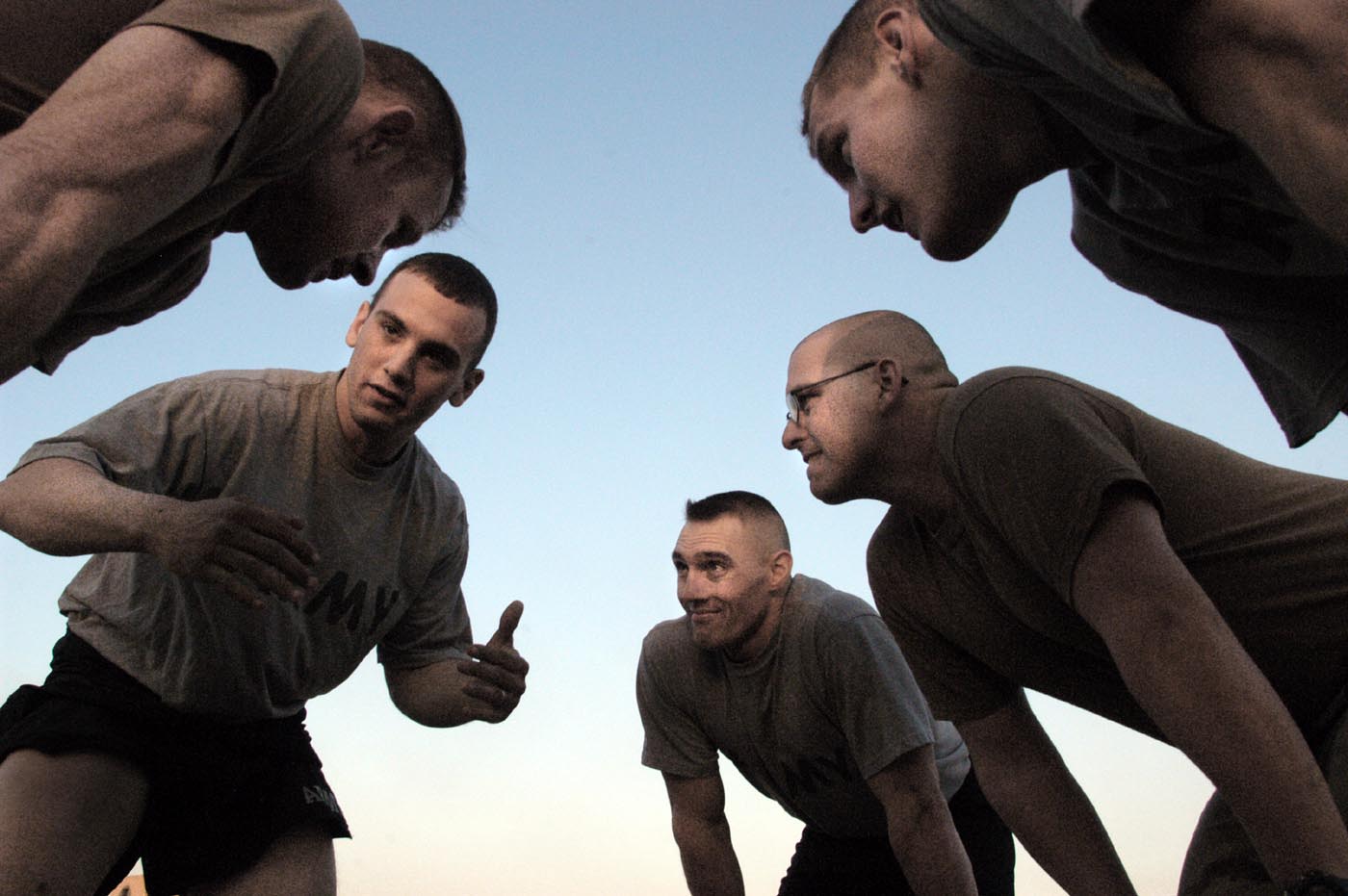
“Team members tackling complex environments must all grasp the team’s situation and overarching purpose…Individual SEALs have to monitor the entirety of their operation just as soccer players have to keep track of the entire field, not just their own patch of grass. They must be collectively responsible for the team’s success and understand everything that responsibility entails.”

When you can see the entire field, not just your patch of grass, your organization becomes more effective—and a better place to work. – Barry Sanders

I sure hope senior leaders get this message. Just communicating the purpose is not enough. That “patch of grass” must be given to that soccer player. He must own it and own his part of the entire field. Leaders who genuinely believe in and nurture common purpose cultivate a “best place to work” for their personnel.

15 Things I Learned From Truett Cathy [Founder of Chick-Fil-A]– Paul Sohn

2) Safeguarding Your Marriage – Infidelity or unfaithfulness in our marriage relationships is not just about sexual betrayal. Infidelity can happen when we allow our hearts to become more bonded to someone or something else more than to our own spouses.
Dave Willis defines infidelity as “broken trust or broken loyalty”. He has posted a tremendously helpful article entitled The 9 Forms of Infidelity in Marriage (Hint: 8 of Them Don’t Involve Sex). Willis is a pastor,counselor and founder of Stronger Marriages. Single or married, you will benefit from his article because too often we “fall” into infidelity by letting ourselves be deceived in thinking it’s nothing. Safeguard your relationships!

3) Being Different – Matt Damico has written an excellent piece for Christ-followers. It is The World Needs You to Be Different. If you are reading this and you aren’t keen on the teachings of Jesus, you may already think that Christians are a quirky lot of people. What Damico says in this article is to call us to the rhythms, the routines, the practices of the church that work a peculiarity in us that’s a good thing.

Piano scales make a pianist. Hours behind the wheel make a driver. Weightlifting reps make muscles, and lots of miles make a runner. Routine and repetition aid us in so many ways, yet a lot of us seem allergic to similar habits in our weekly church worship gatherings.

But just as these individual habits do something to us, so it is with our congregational habits: they’re making us into something. God willing, they’re making us the right kind of peculiar.

We’ll bear fruit in this life when our roots are firmly planted in the coming new earth. As C.S. Lewis said, history shows that “the Christians who did most for the present world were just those who thought most of the next.” One of the main ways this happens is through the rhythms and repetitions worked into our weekly gatherings.

So, as your church gathers for worship this weekend, appreciate anew what’s happening, how the strange rituals — the “rhythms of grace,” as Mike Cosper calls them — are making you more faithful and more fruitful. – Matt Damico

Photo Credit: Wikipedia; Wikipedia

[Cliff Jordan, teaching elder at Movement Church, in Richmond, Va. preaches on this very thing for several weeks in a series entitled Grace On Display. Seriously transformative stuff!]

4) Hard Seasons – I’m not going to wax on here about hard seasons – we all know what ours are. I just always want to keep Syrian refugees on my radar so here’s a photo piece that dramatically displays their reality…in a way that has stayed in my mind all week.

Click the Black Background and Switch on Their Reality – Politiken

Photo Credit: Flickr

Then I also wanted to share a piece by Aaron Brown. I know his family. He grew up in Chad where his father was a physician. His reflects on a very difficult time and its oddly positive impact on his life…renewing his hope after the very difficult year of 2016.

The Do-Over Year – Ruminate Magazine – Aaron Brown

5) Small Beginnings – In the Bible, the prophet Zechariah encouraged the people, “Do not despise small beginnings.” They had the huge task of rebuilding the Temple, and Scripture tells us, this great work began in the mundane but extraordinary act of Zerubbabel picking up the plumb line. Any beginning may seem small and inadequate for the grand vision that stretches in front of us. However, we never know when the small explodes into wonder.

Chip and Joanna Gaines (HGTV stars of Fixer Upper) have an incredible story of small beginnings which grew into a huge, phenomenally successful business. They started out flipping houses as a young couple and often had just the cash in their pockets. Now they have their own TV show, a real estate business, home goods store, and “The Silos” – a refurbished commercial venue in Waco, Texas.

http://people.com/home/hgtv-chip-joanna-gaines-were-broke-before-fixer-upper/

Photo Credit: Flickr; Flickr

Another example of small beginnings is pastor and author Tim Keller. Just this past week, Keller announced he was stepping down from the senior pastor position of New York City’s Redeemer Presbyterian Church. He pastored there for almost 30 years and it now is a multi-site 5000-member church.  [This is a planned succession and he will be teaching in a seminary.] A friend of mine here in Richmond “knew him when”. Years ago, before his NYC church role he was her pastor, in a small church near here – West Hopewell Presbyterian Church. Small beginnings…

My Tribute to Tim Keller – Scott Sauls

Whether you are examining a small beginning as a Christian or from a different worldview, there is excellent counsel to be had…both in Scripture and in articles (such as those linked below).

Just yesterday I was trying to encourage a young man about what he viewed as a small beginning in his career. Not sure I made sense at all. Then today, my husband emailed me this great article – about the exact same subject.

Don’t you love when you read someone else’s brilliant words that essentially describe the counsel you just gave someone?! Benjamin P. Hardy is way more studied and eloquent than I, so please don’t miss his piece titled The 2 Mental Shifts Every Highly Successful Person Makes.  He talks about:

  • the power of choice (“you stop playing the victim to external circumstances and take responsibility for your life – the private victory“) and
  • the power of context (“In everything you do, there should be collaborative and synergistic elements. Of course, there is work which is your work. However, that work should be embedded within a group of others and toward something much bigger. – the public victory”)

Hardy’s full article is excellent (even includes components of the assist we get from brain plasticity which I wrote about earlier).

6 Personal Branding Rules To Being Popular and Profitable – Patrick Allmond

8 Highly Effective Habits That Helped Make Bill Gates the Richest Man on Earth – Minda Zetlin

50 Ways Happier, Healthier, and More Successful People Live On Their Own Terms – Benjamin P. Hardy

So what are we waiting for? Let’s get up and get on with this amazing life we’ve been given…it’s never too late.

Bonuses (for your listening pleasure)

Elha from the NBC TV show Little Big Shots

How Elha Nympha Got on ‘Little Big Shots’

Monday Morning Moment – Neuroplasticity – Resetting Your Brain for Success at Work and Life

Photo Credit: Pixabay

You know that shocking experience when you are driving to a known destination and then get lost in your thoughts? At some point, you snap back to attention and wonder, “How did I get here, I wasn’t even thinking about it?!” That is neuroplasticity or brain plasticity. It is an amazing capability we all have and can be nurtured and utilized throughout our lives. Yes, “old dogs CAN learn new tricks“.

What is this phenomenon?

Mike Torres, of Refocuser, gives an excellent definition, as well as an explanation of function, in his piece Neuroplasticity: Your Brain’s Amazing Ability to Form New Habits.

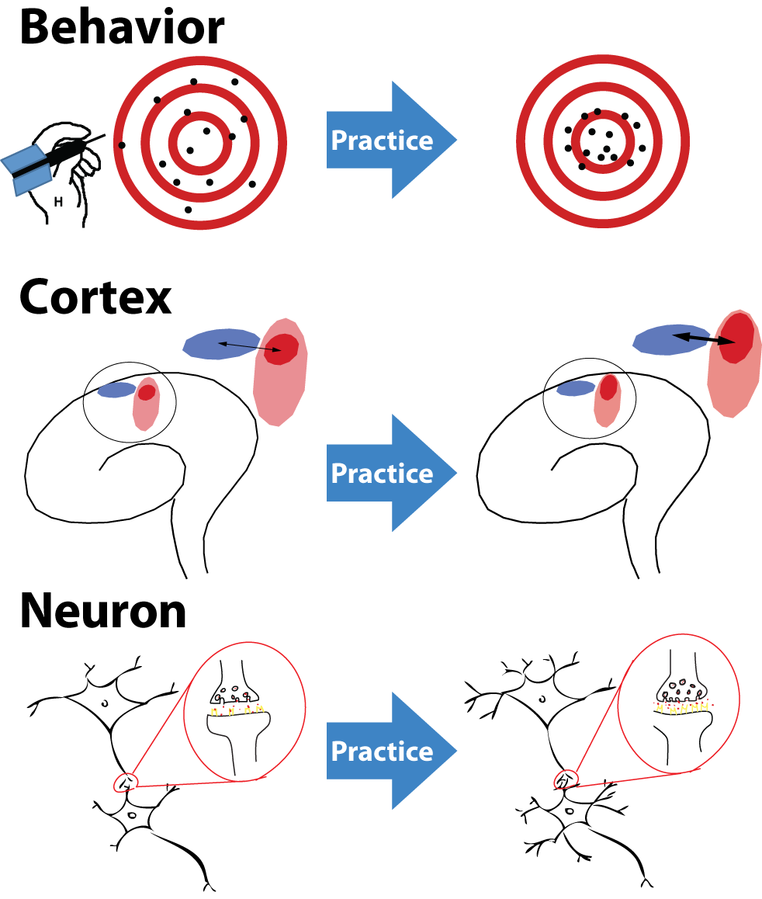
Neuroplasticity refers to the brain’s ability to restructure itself after training or practice. An example of how neuroplasticity works: when you view the brains of people who frequently practice playing the violin under fMRI (functional MRI) they appear to have developed a larger area of their brain devoted to mapping their fingers.  Photo Credit: Wikipedia

This change is directly related to the quantity and the quality of the practice they’re performing – their brains are adapting in very real and tangible ways unbeknownst to them... The more practice you accumulate, the more ingrained or grooved the pathways become.  Of course the inverse happens as well: if those pathways aren’t utilized, the space will be used by other pathways needing room to grow. Use it or lose it! …Your brain can change based on repeated experience…People of any age have the ability to learn new things and form new habits. Mike Torres, Refocuser

Watching Nathan play intricate, complicated runs on his classical guitar boggles my mind. How can he think that fast? It’s lots of practice that causes the brain to connect to the hands, and those difficult pieces get “under his fingers” almost without thinking.

Years ago a friend gave us this book Never Too Late by John Holt. In his “musical life story”, Holt describes how he learned to play the cello in his 40s. We were encouraged by this during a time we moved to Egypt and learned Arabic in mid-life…when language-learning is supposed to be especially difficult.

I love neuroplasticity but it gives me hope, in getting older, of keeping skills and developing new ones, even as an aging person…unless I give in to dumbed-down practices excusing myself for the same reasons of “getting too old”.

When my older brother suffered a stroke, it was neuroplasticity and the repeated efforts of his medical and therapy team that got him back on his feet. He finally “repeatedly practiced” his way back to independence. The personality changes seemed more ingrained, however, they changed, too, as he exchanged his anger and bitterness for a hopefulness and longing for healthy, loving relationships. As he refused to give into anger and chose soft responses, his personality seriously changed over time…with conscious that eventually turned unconscious practice.

How does all this apply to us in the workplace and life, in general? We are confronted at times with a situation that confounds us – a new uncomfortable skillset, an unpredictable relationship, or an unfamiliar decision-making process. Neuroplasticity helps us to not just give up on mastering either a new work process or a complicated interpersonal situation.

Debbie Hampton has written an excellent summary piece on this that will help kick-start any new habit formation necessary for us to continue to do excellently in our work. She was influenced by Dr. Michael Merzenich’s work published in his book Soft-Wired: How the New Science of Brain Plasticity Can Change Your Life. I have listed below Merzenich’s 10 elements of how we can rewire our brain. You will find Hampton’s summary on each very instructive. [I comment briefly on each but don’t miss what she says in her article.]

10 Core Principles for Remodeling Your Brain

1. Change is mostly limited to  those situations in which the brain is in the mood for it. We have to want to learn and change. If we give up, stay resigned to the status quo, or remain fed-up, change will not happen. Want change!

2. The harder you try, the more you’re motivated, the more alert you are, and the better (or worse)  the potential outcome, the bigger the brain change. Focus and persistence or key to mastery.

3. What actually changes in the brain are the strengths of the connections of neurons that are engaged together, moment by moment, in time. Practice strengthens pathways for behavior. Whether it’s learning a new computer system or developing a different way of communicating with a boss…practice hard-wires.

4. Learning-driven changes in connections increase cell-to cell cooperation, which is crucial for increasing reliability. I see this in musicians who live-stream and can read listener chats, respond to them, and continue playing all at the same time. Crazy.

5. The brain also strengthens its connections between teams of neurons representing separate moments of successive things that reliably occur in serial time. This is definitely the mechanism that gets us to our destination when we stop thinking about where we’re going.

6. Initial changes are temporary. Habit formation takes time, and somehow the brain interprets whether the change is vital. Amazing.

7. The brain is changed by internal mental rehearsal in the same ways and involving precisely the same processes that control changes achieved through interactions with the external world. At the simplest level, this is the mechanism of how we “talk ourselves through” a situation. Or when an athlete goes through his routine in his mind before he’s back out on the track or in the pool.

8. Memory guides and controls most learning. Our brain actually helps us to remember what we did well and discards what we didn’t.

9. Every movement of learning provides a moment of opportunity for the brain to stabilize — and reduce the disruptive power of — potentially interfering backgrounds or “noise.” The more we practice, either a physical skill or a way of thinking through a problem, we actually get better at it because somehow the brain reduces the background noise (which can include insecurity, fear of failure or self-doubt).

10. Brain plasticity is a two-way street; it is just as easy to generate negative changes as it is positive ones. Dr. Merzenich warns us, as we get older that we “use it or lose it” by our own decisions to stop learning and mastering new skills and behaviors.

Photo Credit: Commons Wikimedia

How are you using neuroplasticity to help you continue to grow in your work and personal life? Trevor Blake encourages us to set the tone of the day positively and don’t defect from that. Using self-defeating language can blur our focus and mental capacity for mastery. Read more of his excellent counsel here.

As we age, or give in to “what is” at the moment (tracks greased by depression sometimes, or perceived lack of ability or opportunity), we may not realize the great positive effects of neuroplasticity. However, the good news is that we can keep learning and changing and mastering what work and life and relationships bring our way. It’s never too late.

http://www.slideshare.net/smarkbarnes/brain-science-applying-neuroplasticity-principles-to-higher-education-1340661


Neuroplasticity: Your Brain’s Amazing Ability to Form New Habits – Mike Torres

How to Rewire Your Brain for Success – Trevor Blake

Three Simple Steps: A Map to Success in Business and Life – Trevor Blake

Brain HQ Website

How Does Neuroplasticity Work – an Infographic

Never Too Late: My Musical Life Story – John Holt

Deadly: Brain on Multitasking – Bukunmi Adewumi

Toxic Thoughts – Dr. Caroline Leaf

5 Friday Faves – Zelda on Guitar, Community, Tim Tebow, Podcasts, and Creatives

Happy Friday! It’s been one of those weeks that has made Friday a “Whew, got through it!” kind of day. An anticipated freeze tonight draws me outside and to take in all the early forsythia, red bud and tulip magnolia blossoms in their current glory. Such a beautiful time of the year…this mild winter/early spring combination.

For your enjoyment – should you end up inside and snuggled in front of a fire – my favorite finds of the week:

1) CommunityGrace abounds in genuine community. Don’t we all hope to have a work team that cares about us, neighbors that watch out for each other, and family that looks past our foibles and loves us anyway? True community happens when our focus is on the other…the friend, the neighbor, the coworker. In our strength, we come alongside the weaker ones and take turn-about in our weak times to lean on those who are strong. I can’t describe community very well but I know what it’s like to be in real-life deep community. Someone who has described it well is Cliff Jordan, teaching pastor of Movement Church, Richmond, Virginia. His message from Romans 15:1-6 inspired and affirmed the reality of community if we are willing to go after it and extend ourselves toward others in this way. Listen here to the message: Grace On Display – Community.Photo Credit: MoveRichmond

2) Zelda on Guitar – For both you videogame and classical guitar music aficionados, you’re in for a real treat. Nintendo has launched a new gaming system (Nintendo Switch) and a new version of The Legend of Zelda (Breath of the Wild). In celebration of this launch for all you gamers who grew up with Zelda, classical guitarist Nathan Mills of Beyond the Guitar has arranged a Zelda medley.

Not much of a videogame fan, but I am a classical guitar enthusiast. The soundtracks of these games are rendered beautifully on guitar. Watch here or click on video below.

3) Tim Tebow – In the U.S., most every adult out there knows the name and something of the career and character of Heisman trophy winner Tim Tebow. I’m a big fan. In particular, I’m a fan of the winsomeness and determination of the man, more than his athletic prowess. Tebow first came on my radar watching the film, Everything in Between, about how he trained and persevered, culminating in becoming a first round draft pick for NFL football. Then I watched his career in the NFL, and then his detour into baseball, sportscasting and commentary. Tim Tebow is one of the hardest working, determined, disciplined, and persevering athletes out there today.

Photo Credit: Tim Tebow

More than his success in athletics, his determination to make a difference in life stands out the most. He shows up in all kinds of situations, serving and showing love to those who might think they are forgotten. Many celebrities and other wealthy benefactors have foundations, as does Tim. Why he does what he does, he shares below.

“I want to be someone that was known for bringing faith, hope and love to those needing a brighter day in their darkest hour of need.”

Tebow strives for excellence in all he does, and he brings that to bear on the lives of those who may not have the same opportunities as he does. So for people who question his athletic career, walk awhile in these shoes.

Shaken: Discovering Your True Identity in the Midst of Life’s Storms – Tim Tebow

4) Podcasting – Like in every other professional field, there is actually a conference for podcasters. I came late to the entertainment/educational medium of podcasting. Now, however, there are some who have won my heart and car-time. Below is a short list of my favorites:

  • The Popcast – Knox McCoy and Julie Golden post a weekly conversation all about pop culture. I just discovered them this week and find them funny, engaging, and even thought-provoking. Sometimes I agree with him, sometimes with her.Photo Credit: The Popcast
  • 5 Leadership Questions or 5LQ – Todd Adkins and Barnabas Piper are co-hosts of 5LQ. Their focus is on Christian leaders but it’s not just about church; their guests include business and other professional leaders. The same five questions guide their discussion:
    • Who are you learning from?
    • What is the main point of emphasis for your leadership team (or self) right now?
    • What obstacles are you currently facing in leadership, either in your organization or personally?
    • What does leadership in your home look like?
    • What would you tell your 20-year-old self about preparing to lead?

    I’m personally kind of a leadership junkie and can tell you I always learn from these guys and their guests.

  • The Podcast – Carey Nieuwhof This writer, conference leader, and pastor does a weekly podcast on leadership as well. Nieuwhof tackles some of the hard issues of leadership. Whether you lead in a Christian or other organization, you will learn and enjoy his meaty and sometimes funny content and stories.

25 Best Podcast Episodes Ever – David Haglund & Rebecca Onion

The 50 Best Podcasts of 2016 – Laura Jane Standley & Eric McQuade

5) Creatives – Using the word “creative” as a noun doesn’t come naturally for me, because I believe in the innate creative abilities of all of us. However, some “creatives” stand out. Writer and podcaster Jeff Goins defines them best in this way:

“A creative is an artist. Not just a painter or musician or writer. She is someone who sees the world a little differently than others.

A creative is an individual. He is unique, someone who doesn’t quite fit into any box.

A creative is a thought leader. He influences people not necessarily through personality but through his innate gifts and talents.

And what, exactly, does a creative do?

A creative creates art…She sings to sing, for the pure joy of making music. And she paints to paint. (And so on…)

A creative colors outside the lines. On purpose. In so doing, she shows the world a whole new picture they never would have otherwise seen.

A creative breaks the rules. And as a result, he sets a new standard to follow.

Why we need creatives

The truth is that we need more creatives in positions of influence — to color the world with beauty and life.Jeff Goins

Nathan Mills, of Beyond the Guitar, is a creative…one of my favorites, clearly.

Writer and woodworker Kevin Prewett is both a friend and creative. In fact, I didn’t know how creative he was until this week when I saw some of his woodworking.

Pipe and Sage – Woodwork – Kevin Prewett – Wood and Words

Another favorite creative of mine is Andrew Morgan. His documentary series Untold America is a timely, much-needed look at today’s America…with the potential to bridge a gap between us as a diverse and sometimes polarized people.

Untold America Series

These are my favorite finds of the week. Please share yours in the Comment section below. Have a safe, refreshing weekend…and stay warm.

5 Friday Faves – Reversing Diabetes, Circle of Gratitude, Love Songs, Asking Good Questions, and the Ideal Team Player

1) Reversing Diabetes – Maybe you don’t think about diabetes. I do.
So far I have held it off. Not because I’ve mastered a healthy diet or an active lifestyle. Just teetering probably on the brink. Diabetes is one of those diseases that, if we live long enough, will probably hit one out of three of us. 1 in 3. So when I come across a great article about reversing it (which is rare), I jump on it. Lou Schuler has written a powerful piece for Mens’ Health on How to Reverse Diabetes. He writes in a non-shaming, matter-of-fact way with lots of pragmatic counsel and success stories. Our problem is we don’t think we can reverse it…we figure it is inevitable if we continue with reckless eating and holding our couches down so they don’t get away. I was encouraged by Schuler’s article.

Photo Credit: Pixabay

We can reverse diabetes with three specific interventions – lose the weight (or don’t gain the weight over our lifetime); especially control our belly fat; and exercise (even just walking after we eat can make a big difference). I have loved ones who are diabetic or pre-diabetic. I hope they are encouraged by this….I am. Resolved not to be 1 in 3.

Photo Credit: Flickr

2) Circle of Gratitude -Gratitude is a terrific gift all by itself. What’s really fun is when our expression of gratitude actually triggers gratitude in the person for whom we’re thankful. Justin Kanoya describes this as a circle of gratitude. You have been the recipient of some great service or other good thing (fill in the blank) and you want to thank them well for what they did for you. You don’t just send an effusive text or Facebook message. Nor do you pick up a one-card-fits-all-purposes to send them. You want it to be reflective of what they did themselves. Kanoya carefully picked out some hand-made cards from local artisans. He then wrote specific detailed thanks for each person’s generosity toward him. Lastly, he slipped in gift-cards for spa treatments.Photo Credit: Flickr

Kanoya describes how satisfying that was, but the circle of gratitude closed for him when he received back all manner of thanks for his thanks, from those who received his cards. Sweet. Have you had this experience – when someone’s gratitude felt even more generous than what you did for him/her? That’s a circle of gratitude.

3) Love Songs – Do you have a favorite or meaningful love song? For Dave and me, it was the oldies song playing on the radio when we first kissed. I Only Have Eyes For You. He tells me he actually waited for just the right song because we would remember it always (not like “Hotel California”). That was a long time ago. It was such a moment that, after we married, we even asked a local artist to do a painting for us as a reminder of that sweet song and sweet moment. Photo Credit: Artist – Betty Skaggs

Facebook has become a bit redundant for me lately – not just the political parlay but all the videos. Still there was one this week that touched my heart. It was a homemade video at a church Valentine banquet. A couple was standing at the mic and the husband was singing a karaoke version of Lionel Richie’s Truly to his wife. So funny and deliciously dear.

Do you have a favorite love song and moment? Please share with us in Comments below.

4) Asking Good Questions – There was a season in my professional life when my husband and I directed a study abroad program with young adults right out of college. They would return to the US to attend graduate school but wanted a deeper understanding of the Middle East, through an immersion experience. During those sessions, we would often have visits from their parents. One mom gave me surprising and difficult advice. She said her son (along with these other 20=somethings) prefer coming up with their own answers (solutions to their own problems). The key for us in supervision and mentoring was to ask them the kind of questions that would get them to those answers. I wanted the easy way out; I wanted to just tell them what they needed to know. Saves a lot of pain for all of us, but didn’t help them become better problem-solvers. Ever since, I’ve been trying to figure out how to ask good questions.

Photo Credit: Pixabay

When leadership coach and blogger Paul Sohn interviewed talk radio host and author Ken Coleman, they talked about this very thing. Asking good questions.  about asking questions.  – What’s the greatest question a person can ask/answer? “Why am I here?”

[When you read Sohn’s interview, don’t miss the Comments. Really fascinating.]

One Question: Life-Changing Answers From Today’s Leading Voices – Ken Coleman

5) Ideal Team Player – Pat Lencioni’s book The Ideal Team Player is one of our favorite books lately, and I’ve already written about it here. It’s a fave again this week because I discovered some helps for discovering just how humble, hungry, and people smart we are. On Lencioni’s website, he offers several free resources and tools. Photo Credit: Pexels

One tool was a free self-assessment of these three virtues of an ideal team player.  It was very helpful, especially in pointing out areas where I tend to hold myself back. Check it out. Seriously.

Photo Credit: Table Group

Monday Morning Moment – True Humility in Leadership – So Not Cliché

Those are my five faves for this week. Below you will find a bonus from one of my favorite documentary makers – Andrew Morgan. He’s directing a series of short films on Untold America. This past month, he focused on the many sides of democracy in America. Next, I believe, he is covering immigration stories. Follow him and Untold America on Facebook or Twitter. You don’t want to miss any of these films and the people whose stories they capture.

Have a safe and refreshing weekend, Friends.

Bonus: Untold America’s Documentary Series on Democracy

Untold America – Facebook Page

Worship Wednesday – All I Have Is Christ – Sovereign Grace

Photo Credit: YouTube

The LORD appeared to him from far away. “I have loved you with an everlasting love; therefore, I have continued to extend faithful love to you.”Jeremiah 33:3

How do we stand against the mean-spiritedness of this world? How do we pull ourselves out of the cycle of shaming, blaming and blame-shifting? How do we still the voices in our own heads and hearts… voices that tell us we don’t deserve love or honor? Or maybe it’s someone else who we have decided doesn’t deserve our love or honor?

We turn our eyes off of those we think betray us and off our own betraying hearts, and we look to Jesus.

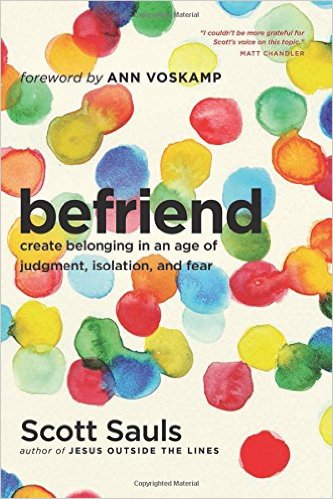
To set the foundation here, I am deep in the book Befriend by Scott Sauls. Its byline is Create Belonging in an Age of Judgment, Isolation, and Fear. Sauls writes about real friendship and spends twenty-one chapters unwrapping the beautiful possibilities of going deep with others. This book came at the perfect juncture in life for me as I shake off a sense of judgment (whether it’s true or not, it feels true) and the isolation that comes with it.

We get crossed-up in life by either the expressed opinions of others or our self-shaming sense of others’ take on our lives, our choices, and our preferences. My default is to go straight to fear…fear of losing place in the lives of those who differ with me. For some reading this, it may seem nonsensical. After reading Sauls’ chapter “Befriend the Shamed and Ashamed”, I am convinced we all deal with shame. It may be covered well by pride, (un)righteous indignation, or self-justification. Still…it is as present with us as in the original garden when Adam blamed Eve (and even God) for his sin, and she blamed the serpent (Genesis 3:12-13).

We want to self-protect. The pain of our own failings, and sin outright, is too much for us so we blame others…we shame others.

God knows us, through and through, and loves us. Full-stop. Not in a pitying way but in the purest, life-giving way of a faithful parent. A Heavenly Father…who came down and came close to show us how much He loved us…through the life, death, and resurrection of Jesus.

We lose sight of that sometimes. Lost in our own self-imposed dark thinking, we forget He loved us first (1 John 4:19). We forget that nothing can separate us from His love (Romans 8:31-39). We can’t earn and don’t deserve His love. His love is ours, always and forever, for the taking. The God of that kind of far-reaching love transforms us…our thoughts, our actions toward others, our understanding of who God is and who we are in Him.

We see more clearly that those who judge and isolate others are just like us. We are reminded of our own capacity to do the same. Hurt people hurt people. As we see what is true through the eyes of a God who loves, we can humble ourselves and love in return. In fact, we can love first, as God loves us, and stay on ready to do so. What glorious peace is in that possibility!

“The ground is level at the foot of the Cross.” (Billy Graham and others).

Jordan Kauflin wrote the song All I Have Is Christ (Sovereign Grace Music), with input from his dad, Bob. We sang this at Movement Church this past Sunday, and God touched my heart, all over again, with the stripped-down truth of His love for us. Gospel Truth. Good news that can change a world – a heart and household at a time. Because of His love for us…there is no more shame. Hallelujah!

Worship with me.

I once was lost in darkest night
Yet thought I knew the way.
The sin that promised joy and life
Had led me to the grave.
I had no hope that You would own
A rebel to Your will.
And if You had not loved me first
I would refuse You still.

But as I ran my hell-bound race
Indifferent to the cost
You looked upon my helpless state
And led me to the cross.
And I beheld God’s love displayed
You suffered in my place
You bore the wrath reserved for me
Now all I know is grace.

Hallelujah! All I have is Christ
Hallelujah! Jesus is my life

Now, Lord, I would be Yours alone
And live so all might see
The strength to follow Your commands
Could never come from me.
Oh Father, use my ransomed life
In any way You choose.
And let my song forever be
My only boast is You.

Hallelujah! All I have is Christ
Hallelujah! Jesus is my life*

Story Behind the Song All I Have Is Christ – Interview with Bob and Jordan Kauflin

*Lyrics to All I Have Is Christ – © 2008 Sovereign Grace Praise (BMI), by Jordan Kauflin

Explore God – Questions About God, Jesus, Christianity, and More

Monday Morning Moment – Résumé vs. Eulogy – On Befriending Our Colleagues

Photo Credit: Tangram

Don’t you hate when, out of all the positive exchanges we have at work, there’s that one negative that hangs in our memory? It was a team-building exercise on trust really early in my career. One of the people on my team, with whom I worked at the time, just wouldn’t engage. She finally said, “You are just my co-workers. We are not friends.”

We are not friends.

Slayed.

Throughout my career, I’ve made it a goal to befriend colleagues – those close to me and up and down the ranks. Befriending isn’t becoming best buddies necessarily. By definition, it is “to act as a friend to; to help; to aid”.

When this coworker, in my professionally formative past, expressed openly that we were just a part of her job…I was surprised and schooled. For some, relationships at work are compartmentalized in such a way as to keep them formal and shallow.

There is a measure of safety in keeping work relationships at a distance. I get that. However…

When we spend more waking hours with our colleagues than with even the closest of our loved ones, they bear some significance.

I’ve just begun reading Scott Sauls’ book Befriend: Create Belonging in an Age of Judgment, Isolation, and Fear.   I wrote about it here a few weeks back as the next book on my reading list. The author Scott Sauls is a pastor, but more than that, he is a friend. Not because I know him personally, but because the imprint of Jesus is on his writing and life. He is not preachy or churchy (in the way it was never meant to be). Sauls is wise, loving, and inclusive. Whether you are a person of faith or not, if you want to deepen your friendships and work relationships, sampling the pages of this book will aid you on your way. This book itself, like Sauls, actually befriends you.

Photo Credit: Amazon

My Monday blogs are often reserved for workplace matters – either the culture of our workplace or our very careers. Sauls talks early in the book about how we view success in life. He recalls David Brooks‘s take on our achievement culture.

“We live by two sets of virtues: the résumé virtues – things we bring to the marketplace – and the eulogy virtues – things we want said about us at our funerals. Brooks concludes, ‘In [our] secular achievement culture, we all know the eulogy virtues are more important, but we spend more time on the résumé virtues.'”

What people think of me when I’m gone is less important than truly making a difference in this life. When it comes to our work, I think we all want to add value, not just to the product, but to the people with whom we work and for whom we provide services.

We can get caught in the press of beefing up our résumé and lose sight of the people, real flesh-and-blood people, all around us. Oh, we may not call our focus résumé-building, but when we take a moment to check our motives, it becomes more clear. Ambition, self-promotion, and exclusive control can crush work relationships. We often think it’s someone else but before long it can become us.

I will never forget a colleague who shared about his own pivotal relationship with someone he once considered a difficult boss. They argued over every idea, every decision, every action plan…at least, as this man remembers. His boss was always asking hard questions and pushing him to think more and more outside the box. Yet, in the middle of his heatedly trying to persuade his boss of the rightness of his ideas, the boss would look at his watch and say, “Let’s go get some lunch.” This would infuriate the man re-telling his story.

However, over the years, he began to see something in his boss he didn’t notice at first. This older man genuinely cared for his young protégé. The banter back and forth was to encourage excellence and innovation but never at the expense of valuing the relationship. That’s why lunch together was all part of the exchange. He mattered to his boss.Photo Credit: Free Stock Photos

Later the older man retired and the younger man advanced in his career. Their paths rarely crossed after that. When the older man finally died, his wife called this colleague and asked for him to be a pallbearer at his funeral. The older man had come to consider the younger a friend…and the younger man, as he teared up in remembering, was the better for it.

I’ve written often on complicated work relationships – the us vs. them situations and dealing with contemptuous colleagues among others. We can be tempted NOT to befriend.

Photo Credit: QuotationOf

However, we are the ones who lose the most in not extending a hand of befriending (acting as a friend) to those with whom we work. It changes us, from the inside out, and we live only in the land of résumé-building, rather than eulogy-making.

Sauls writes about expanding our “us”. In the workplace, this can be extraordinarily counter-cultural. To look out for our own status and position is expected. To consider how we might take down silos and create a work community where “the rising tide lifts all boats” (Adam Grant) – something remarkable and memorable.

That is the legacy, years ago, of that coworker/”friend” of mine. She made me more resolved than ever. I want to be a befriender, a boat-raiser, and a person willing to expand the “us”.

Sauls closes this chapter by asking the question, “Where is your greatest opportunity to expand your “us”? It has me thinking. How about you?

“Compelled by the love of Christ, we must not withhold kindness or friendship from any person or people group, and we must not engage in any sort of us-against-them posturing. This in itself is countercultural in modern society. Compelled by the truth of Christ, we must honor and obey the Creator’s design—even when his design is countercultural and, at times, counterintuitive to us. His ways and his thoughts are higher than ours.”

20 Quotes From Scott Sauls’s New Book on Friendship – Matt Smethurst

Monday Morning Moment – Roadmap to Achieving Your Goals in Real Time and Regular Life – 10 Sure Turns

Photo Credit: edX

Life happens. Whatever our hopes, goals or dreams, we go after them in real time and regular life. The challenge is to not lose sight of them in the course of working your day-job, whatever that might be. Jon  Acuff’s book Do Over came out at a very timely place of transition in my life. The recurring theme of his book was to do what it takes to get where you hope to go – not finding yourself at the end of your career realizing you just clocked in and out of “someone else’s job”…for decades. The daily of our lives can snuff out or overshadow where we knew in our hearts we wanted to go…in work, relationships, and vision. Mark that and take positive steps through it.

I’ve read ever so much more about goal-setting than I’ve actually used. In thinking of goals and action plans, I can actually feel an eye twitch coming on…and all I want to do is eat junk food and check Facebook. Alas…goal-setting is a challenge…but a worthy one.

Roadmaps are helpful for me. Not only with finding the destination but also with marking progress, checking for more scenic routes, noting markers which teach us stuff, and pointing to rest stops.

After reading the articles linked below, a roadmap for decision-making has emerged that makes sense to me…and hopefully will be helpful to you. We need goals or we are never fixed on a mark toward which we launch our best efforts. The key, however, is not just in deriving the goal but, setting a course that aligns with our relationships and responsibilities. That way, when setbacks come, they don’t put us off-course. We just deal…and get back on course.

So here we go:

10 Sure Turns Toward Achieving Our Goals

  1. Listen to the Longing – As we get older, our goals change in life. Still at a heart level, we have longings for a life of deep purpose and genuine achievement. Those longings may be as unique as we all are as people. We are never too old or our lives too far-spent to tune into that longing. It’s never too late.
  2. Tell Those Closest to You – Don’t keep to yourself what you would love to pursue. Tell those who care for you so much that they will pour into your vision and your goals. Fear of failure or disappointment won’t diminish your hopes if others share them with you…because they love you and believe in you.
  3. Set Goals and Then Revisit Them With “Why’s?” – This is actually some of the hardest work of moving forward and stymies some of the best of us. Serge Popovic breaks this down in a helpful way by looking at the systems (or commitments) that help us get to goal. The goal is our destination but we daily make decisions and take action toward that goal. These rhythms are part of the discipline of achieving our goals. They also inform our direction as we revisit our goals and ask the necessary “why’s”.Photo Credit: Dreams Procrastinated
  4. Consider the Costs and Work Them into Your Plan – In setting course to meet life goals, there are givens we must consider. Taking care of our family is an obvious one. Managing our time around other responsibilities. Not missing our children as we strive toward that goal that can stretch years ahead. The costs don’t have to alter our course, but we must reckon with them.
  5. Organize Your Life – Why is this important? Organization can have a huge impact on recouping the costs (in #4) and in freeing us up to potentially getting to goal faster. Do be careful what you organize OUT of your life…especially relationships. Make wise decisions here… It’s one thing to get rid of stuff or downsize time-wasters, and another thing to neglect relationships.Photo Credit: Paul Sohn
  6. Choose and Develop Your Team and Expand Your Network –
    Speaking of relationships, this is one of those circles that can pay huge dividends for all involved. Rarely do we make goals that don’t include the investment of others. Think through the people you know and who of those would be a great support to your future. They could be idea-generators, mentors, investors, content experts…and some could be family who mostly cheer you on and pray for you in the battles.
  7. Take Action or Execute Your Plan – What? Taking action is point 7 on a 10-point roadmap?! We have clearly taken action in multiple ways already, but those preparatory functions have set the stage for a strong start to execution. Even through Steps 1-6, we may have already re-framed what the plan looks like. Being proactive before we set the plan in motion greases the tracks for achievement. The action plan will be revisited often…which actually makes it less stressful for me to develop. Melanie Curtin even writes about journaling our goals and action plans, giving us a daily view of progress.
  8. Deal With the Drag of the Past – This is a preemptive strike against those emotions that form barriers to reaching our goals. That dull sense of foreboding, the failures of the past, the gnawing insecurity, the temptation to blame…. None of these keep us from reaching our goals, unless we empower them to do so. Lighten the load by cutting the ropes on the past. One caveat: the “drag of the past” doesn’t include wisdom we’ve gained – Remember that part of the past always.
  9. Allow for Respites and Setbacks – Again, life happens. I have had to sideline some goals in recent months because of health and family issues. They are not gone from my mind or my habits…but they are sidelined for the moment for real life things of more urgent need. However…these kinds of things can become normative if we aren’t careful. You don’t want to lose momentum …keep moving toward your goal if at all possible…even if it’s ever so slowly. At some point, sooner than later, revisit and reset goals…and rest when that’s the greatest need.Photo Credit: Bloom to Fit
  10. Celebrate and Express Thanks All Along the Way – no explanation needed here. This isn’t just for the finish line but for every step along the way. For every barrier that we turned into a door. For every problem we forged into an opportunity. For every God-orchestrated appointment and “per chance” meeting. Celebrate. Show gratitude. Widen the circle – your achievement is enjoyed by many!Photo Credit: Morning Business Chat

Hopefully, you found this helpful. The resources below informed this piece and are all rapid reads if you want to go deeper in a direction. I hope your main-takeaway is that you can achieve and starting today is not too late…starting is the point. You’ve got this!

Achieve Your Goals – Is Your Roadmap the Right Way Up??? – Wendy Tomlinson

Goals vs. Commitments: A Simple System for Long-term SuccessSrdjan “Serge” Popovic​

10 Quotes That Will Radically Reshape Your Idea of Calling – Paul Sohn

50 Goal Quotes that Will Inspire and Motivate You – Marelisa Fabrega

When It’s Good to Be Bad – The Road to Excellence Is Paved With a Few Lapses On the Way – Cody Delistraty

6 Ways You Are Making Life Harder Than It Has to Be – Paul Angone

How to Crush Your Goals in 2017 – Travis Bradberry

Crushing Your Goals…God’s Way – Stephen Altrogge

Want to Improve Your Focus and Lower Stress in 2017 – Take Up This One Simple Habit – Melanie Curtin

YouTube Video – A Tale of Two Brains (“The Nothing Box”) – Mark Gungor

Photo Credit: AllGroanUp

Monday Morning Moment – Inner Rings – the Mad Pursuit of Position, Power, Prominence, and Plenty

Photo Credit: Chris Russo

[Adapted from a previous blog]

When C. S. Lewis introduced the occurrence of “inner rings” to a classroom of young men in university, he wasn’t talking about high school cliques.Photo Credit: Smosh

[You will want to read Lewis’ short, humorous, and piercing lecture…I read it aloud, attempting my “best” British accent. The British accent, in my opinion, gives what is true even more authority and winsomeness.]

Lewis talked about the universal, life-long allure of wanting to be “on the inside”…whatever that might mean at the time. Inner rings are, for the most part, morally neutral in themselves. What becomes the issue for us is how our thinking is altered and what we are willing to do to gain entry to these exclusive (and often secretive) inner circles.Blog - Inner Rings 2 - BPNews.netPhoto Credit: BPNews

Inner rings are part of every level of life – personal relationships, government, teams, military, clubs, organizations, and workplaces. They aren’t necessarily represented by team rosters or org. charts, as much as they are the more fluid unwritten associations. Like secret societies, they can change quite without explanation – sometimes you are in and then you are not. Inclusion and exclusion are defined by the group itself…and are not accidental.

Let’s face it – we all want to belong…somewhere among the best of the best. Even when we don’t say it out loud, some sort of identity appeals to us and drives our pursuits. Jeremy Writebol wrote a piece where he explores this pursuit of belonging, referencing C. S. Lewis’ Inner Rings. Lewis talked about what we are willing to do to be identified as one inside those rings, or inner circles. There’s the danger – what we’re willing to do.

Writebol presents 4 inner rings of belonging:

1) The Inner Ring of Acceptance [Position]

2) The Inner Ring of Authority [Power]

3) The Inner Ring of Applause [Prominence]

4) The Inner Ring of Abundance [Plenty]

None of us is immune to the influence of one or more of these inner rings or social circles. The deceit of pursuing membership to an inner ring is that it’s never enough. Like taking apart an onion, you find inner rings within inner rings…until there’s nothing left. No place to find belonging…because this passion is never satisfied. It becomes futile. Lewis does offer a two-part antidote:

  • In the workplace, make your work your focus. Whenever we lose our focus, the pull of desire for significance disrupts our engagement in the work. “The quest of the Inner Ring will break your hearts unless you break it. But if you break it, a surprising result will follow. If in your working hours you make the work your end, you will presently find yourself all unawares inside the only circle in your profession that really matters. You will be one of the sound craftsmen, and other sound craftsmen will know it.”
  • Outside of work, pursue friendships with people you like. This seems obvious, but if our desires to belong in a certain group have hijacked us relationally, it might not even be clear anymore who the people are we truly enjoy.  “If in your spare time you consort simply with the people you like, you will again find that you have come unawares to a real inside: that you are indeed snug and safe at the center of something which, seen from without, would look exactly like an Inner Ring. But the difference is that the secrecy is accidental, and its exclusiveness a by-product, and no one was led thither by the lure of the esoteric: for it is only four or five people who like one another meeting to do things that they like. This is friendship…It causes perhaps half of all the happiness in the world, and no Inner Ring can ever have it.”

Take the time to read Writebol’s piece. He defines each circle and asks clarifying questions, in a very kind way, to help the reader deal with the deceit or justification we may have developed, without realizing it.

[Writebol wrote a follow-up piece entitled Why Are We Chasing? which exquisitely unwraps the cost and consequence of our chasing – chasing after what we think we must apprehend, having become blind to what we already have.]

Here’s to work well-done and friendships that last for a lifetime. Here’s to choosing well and inclusion and celebration…and knowing we already belong.

Great Monday morning reads…Go!

The Inner Ring – C. S. Lewis

The Weight of Glory – C. S. Lewis – Collection of Addresses Including The Inner Ring

4 Inner Rings You May Be Pursuing – Jeremy Writebol

Why Are We Chasing? – Jeremy Writebol [Followup piece to above article]

The Inner Ring – Chris Russo’s Blog

C. S. Lewis and the Inner Ring of Cronyism – Elise Daniel – Institute For Faith, Work, and Economics

C.S. Lewis and the Inner Ring – Nicholas T. Batzig

The Inner Ring and the Moral Question of Our Time – Nozomi Hayase

Monday Morning Moment – Belonging and Going Deep and the Blind Presumptions that It’s Actually Happening When It Isn’t

The Fellowship: The Literary Lives of the Inklings: J.R.R. Tolkien, C.S. Lewis, Owen Barfield, Charles Williams – Philip Zaleski & Carol Zaleski

Photo Credit: Paste Magazine; Commonweal

Monday Morning Moment – 22 Influencers and Thought Leaders You Want In Your Life

Photo Credit: Arnold Street

Who are the influencers in your life? Those people who hold your attention, who cause you to think, who give impetus to change. Who are those thought leaders who challenge you – those whose reach exceeds their grasp?Photo Credit: Inc.

It wasn’t so long ago, in the training division of our company, that our director actually reprimanded new employees about their phone use during a session. It wasn’t so long ago…but it seems so. These days, no matter who is speaking at the front of the room, heads are down in the audience, folks pounding out texts or scrolling for their amusement. How do we fight this mental and relational disconnect?Photo Credit: PC World

What has helped me in recent years is finding people both inside and outside of my organization whose thinking inspires me…and learn from them. We have so many helps in print and electronic form. So much encouragement and possibility…in the words, attitudes, and actions of these business and professional leaders.Photo Credit: Hashmeta

In 2012, I became a Twitter user. It was a boon for me intellectually and a huge assist as I began a very new and challenging job. I began by following people I knew and respected in my field and then chose from whom they followed. Social media can keep you from deep thinking and problem-solving UNLESS you use these networks to broaden your understanding of people and processes. Twitter has done that for me.

[Sidebar: Social media has also been a source of professional encouragement for me. When Patrick Lencioni followed me on Twitter after I wrote about his influence in my professional thinking, it was, as you can imagine, huge for me. Such a small thing…but so significant for a novice writer and workplace thinker.]

Below you will find 22 influencers in my life, in alphabetical order, most of whom I discovered via Twitter. [These are just a few, but as I was going through my Twitter follows, these are the ones I wanted to showcase first.] Give them a look-see and a follow if they scratch your particular itch…professionally. You can find them via their websites also, especially if you’re not interested in subscribing to Twitter. It’s been akin to graduate education for me (but much more practical and timely, given where I am career-wise).

Moe Abdou – Founder of 33 Voices – interviews (podcasts and blog) with a wide array of entrepreneurs, innovators, thought leaders.

Sam Adeyemi – Senior Pastor of Daystar Christian Centre, based in Lagos, Nigeria. International speaker and a positive force in casting vision and leadership development for a new Nigeria…and Africa.

Ron Carucci –  Cofounder of Navalent –  best-selling writer, consultant, and speaker on executive leadership, change, and strategy. He is one of the good guys…how do I know? He actually follows ME on Twitter and has even read my blog. Sharp and people-smart. I’ve also learned from one of his teammates: Jarrod Shappell.

Randy Conley –  Works with Ken Blanchard and writes for Leading With Trust. Selected as one of the Top 100 Trust Leaders (2012).

Mark C. Crowley – Authored the book Lead From the Heart and writes at his website on the same topic. Speaker and consultant. Love his thinking.

Brian Dodd – Writes at Brian Dodd on Leadership. Prolific and brilliant maker of bulleted lists. My goal is to make one of his lists one day. Dodd serves pastors but helps all of us with leadership insights from a huge range of sources – athletes and coaches, and a myriad of other cultural icons.

Tom Elliff – Tom is not on Twitter but you will want to hear him speak any chance you can. He also writes at Living In The Word. Author of many books, his latest is The Unwanted Gift focusing on his and his wife’s journey with God through cancer and grief. Tom is a master story-teller, effective encourager, and all-round good guy.

Christopher Gray – Founder of My Scholly. While in high school with no means to go to college, he did the work of applying for every scholarship for which he was a candidate. Tedious, tedious effort that paid off. This deserving young man was awarded 1.3 million dollars in scholarship monies. He was able to both pay for his college education and set up a business to help other young people, as well, find the means to pay for their college education. Amazing story.

Mike Henry Sr. – Founder of Lead Change Group. Writing for global leaders who want to apply Christian principles to their business. Solid practical training/teaching/mentoring no matter your beliefs.

Photo Credit: Inbound Growth

Ryan Holmes  – Founder of Hootsuite – a great help to us in juggling our workplace or personal social media needs. Holmes is also an insightful futurist who writes and consults to prepare us for what’s next in the business world. He has written on Generation C and old-school hacks for building a 2017 work culture. Fascinating stuff.

Gerald Leonard PfMP – Writer, consultant and speaker on business processes and work culture.  Author of Culture Is The Bass. A business thinker, Leonard is also a bass player and uses music as a platform for teaching on culture. Great teaching (written and video) on his website Principles of Execution.

Susan Mazza – Speaker, trainer, leadership coach. Writes at Random Acts of Leadership.

Ron McIntyre – Principle leadership coach at TLGCoach. Consultant and writer. Great helps on website.

David Mills – Google this guy and you will find a professor, writer, atheist, and actor…none of whom are him. He is a quiet man with strong integrity. A PhD. in chemistry and a couple of decades working overseas. He was leading from the heart years before Crowley’s excellent book came out on the same topic. Mills’ workplace and leadership insights inform much of my thinking. He follows me on Twitter and I follow him…not surprisingly since I’ve been following him for more than 30 years…wherever life takes us.

Michael A. Milton – Founder and president of Faith for Living, Inc. He is a theologian, song-writer, and teacher. Author of the book Silent: No More: a Biblical Call for the Church to Speak to State and Culture. His tweets and writing on his website inspire and challenge.

Mark Modesti – Consultant with UPS Customer Solutions. TED Talk – The Argument for Trouble – Disruption in BusinessGreat leadership resource on Twitter.

Matt Monge – Founder of The Mojo Company.  He consults and writes on all things business, leadership, and work culture. He has also endured through depression which gives him particular insight into some of the things that make us want to give up. If you work, you want to learn from Matt Monge. Full stop. And HE follows me on Twitter.

Carey Nieuwhof – Pastor, blogger, podcaster. His is one of the few blogs that I welcome to my inbox. He has authored Lasting Impact and Leading Change. He writes to leaders, some of whom are pastors.

Star Parker – President and founder of the Center for Urban Renewal and Education (Urban CURE) – political conservative confronting poverty in our country with real substantive solutions (quoted here). Inspiring and courageous voice.

Srinivas Rao – CEO of The Unmistakable Creative Podcast. I learn so much from this guy and his varied guests – all unmistakably creative.

Paul Sohn – Award-winning blogger, speaker, leadership coach. Author of Quarter-Life Calling. Appreciate his blogs so much.

Liz Wiseman – President of The Wiseman Group. Author of Multipliers. Heard her speak at the Global Leadership Summit and just wanted to follow her around and bring her coffee. Truly smart and encouraging.

That’s it for now…would love to know who some of your influencers and thought leaders are. Please share in Comments for all of us. Thanks.

Global Leadership Summit – Registration Information

Monday Morning Moment – True Humility in Leadership – So Not Cliché

Photo Credit: LinkedIn

There is just so much cliché out there these days. From what’s hip in men’s facial hair, to cool shoes or right purses, to shirts in or out, jeans skinny and cuffed…and the lingo. Oh the lingo!Photo Credit: Contently

Vu Le writes this hilarious article: 21 Irritating Jargon Phrases, and New Clichés You Should Replace Them With. He doesn’t just list out some of those phrases we hear (and say?) at work…ad nauseam. He also suggests alternative language. Just read the piece. Your endorphin level will rise…unless they are your fave phrases…oops!Photo Credit: Disquscdn

I’m weary of having to search for just the right phrase to communicate that what I have to say has merit (see…I shied away from the word “value”). Oh…for a culture where plain speak isn’t judged or suspect or treated as just too uncool.

Where jargon becomes cliché, our definitions can as well. What it takes to be good leaders has had a gargantuan amount written about it…and being a servant or humble leader can also fall into the category of cliché – just another fancy of today’s business culture.

Not so with true humility. Here’s my take on humility in the workplace. There is this seeming humility that masks something else – whether arrogance or insecurity, I couldn’t say. Then there is true humility – this is what makes a leader so easy to follow.

Writer Pat Lencioni has written a book on humility as one of three essential virtues of team players. In his book,  The Ideal Team Player – How to Recognize and Cultivate the three Essential Virtues, he tells a story about humility, hunger, and smarts.

Photo Credit: Amazon

“There are three required virtues that make someone an ideal team player. Those virtues are humble, hunger and smarts. The most important of those virtues is humility. The ultimate foundation of being a team player is a person being willing and able to put the team’s interests above his or her own. Only a truly humble person can do this effectively. The second virtue required is hunger, the desire to work hard, make a difference and get things done. The third and final virtue of an ideal team player is something I call smarts. It has nothing to do with intelligence, however, but is all about social awareness and interpersonal common sense. Ideal team players, in addition to being humble and hungry, demonstrate smarts with their ability to understand their colleagues and work with them effectively.”Patrick Lencioni, Author Q & A, TableGroup
This ideal team player is the kind of person we hope to always have leading our team…and our organizations.
I asked my husband recently what was the mark of a truly humble person. This was his response:
“Humble people pay attention to the people around them, whether they’re big or little.”
As wise as my husband is, he got that idea from Patrick Lencioni after reading his book.
Lencioni had much to say about humility, including:

“So many people there are so concerned about being socially conscious and environmentally aware, but they don’t give a second thought to how they treat the guy washing their car or cutting their grass.” Pat Lencioni

[I write about the power of noticing people here.]

Humility is cliché if it’s just coming at you from the front of the room or the head of the conference table. True humility communicates a right, or proper, understanding of relationship between colleagues, clients, and customers. No lone rangers or rock stars in this equation.  Photo Credit: AZQuotes

Great team players lack excessive ego or concerns about status. They are quick to point out the contributions of others and slow to seek attention for their own. They share credit, emphasize team over self, and define success collectively rather than individually. It is no great surprise, then, that humility is the single greatest and most indispensable attribute of being a team player.Pat Lencioni

True humility in leadership is so not cliché. It can be observed, modeled, and developed. What’s cool today can become cliché tomorrow. True humility?…never.

“Throw the passes when no one is watching. Write the pages no one sees. Work through the business plans people don’t believe in yet. Hustle long before the spotlight finds you. You don’t need the whole world on your side to create something that changes the world.”Marcus Mariota

6 Ways Humility Can Make You a Better Leader – Fast Company – Gwen Moran

Your Picks for the Worst Nonprofit Jargon by Cody Switzer

Infographic: 50 Terrible Work Phrases You Need to Stop Using by Nicole Dieker