Category Archives: Communication

The Other Side of Organizational Downsizing – What Survivors and Their Managers Can Do Going Forward

Blog - Downsizing strategies - slideshare.netPhoto Credit: Slideshare.net

Recently, a young friend of mine told me about an abrupt change in his company. He went in one morning to the usual – team meeting, work routine, cubicle life. Then in the early afternoon, without any prior notice or indication, the head of the company walked around the building with envelopes. By the end of the day, in this small tech support company, one-third of the employees had packed up and left the building.

Surprise lay-offs are the hardest to bear, but any kind of downsizing, no matter how necessary, is stressful and disorienting. When crisis precipitating a downsizing occurs, organizational leaders are wise to put together a transition team right away.

For those who were laid-off or who took the separation package in a carefully orchestrated downsizing, there is colossal adjustment. Hopefully, they will get the support they need to get that next job or to thrive in retirement.

For those who remain with the company, their adjustment can be great as well. Do an internet search for “surviving downsizing” and you will find hundreds of articles, and even several books on the subject.

Employees who survive the downsizing (whether because of their age, capabilities, or department) will still go through a period of post-traumatic stress. On that Monday, for instance, after their colleagues leave, they must re-orient to a new normal.

Blog - Downsizing threat or opportunity - slideshare.netPhoto Credit: Slideshare.net

Michael Sanders, author of 7 Critical Mistakes Employees Make in a Downsizing, wrote an empowering Linkedin article on how to take charge of one’s own survivors’ syndrome and move forward. First Sanders defines the elements of “sickness”; elements which include guilt, mistrust, sadness, anxiety, and disagreeability. Then he moves right to ten “power moves” that employees can make for a healthier, more substantive work situation. I list these, but don’t miss, in the article, what he says further on each.

  1. Practice instant alignment re-centering.
  2. Play by the new rules.
  3. Speed up.
  4. Practice intensive task management.
  5. Fall in love with your work, again.
  6. Take on new assignments.
  7. Expand your business affiliations.
  8. Continue your education.
  9. Become your own hero.
  10. Keep in touch with laid-off [or “downsized”] work friends.

Some of Sanders’ action items may seem more than you can handle as you adjust yourself to a work life very different than the previous one. His bottom line is  to refuse to be a victim. Whether your organization is proactive in retaining and retraining you, you can champion your own professional needs and career. It will benefit you and either your current employer or your next one.

Stress specialist Morton C. Orman, M.D. also wrote a prescriptive piece entitled 18 Ways to Survive Your Company’s Reorganization, Takeover, Downsizing, or Other Major Change. Below are 8 of the points I believe are most helpful (again refer to his article for the rest of his wisdom).

  1. Be prepared for [more] change.
  2. Watch out for unrealistic expectations.
  3. Get creative.
  4. Expand your value to the company.
  5. Celebrate your accomplishments.
  6. Seek appropriate compensation or “risk share” arrangements.
  7. Improve lines of communication.
  8. Become more efficient.

Again, these may seem obvious, on one hand, and annoyingly intrusive as well. You’re grieving the beloved colleague who was laid-off or that great boss who retired. In the process of that grief which may be with you for some time, you still have that job to do…with probably more responsibility added. Sadness and anxiety tend to affect our performance negatively. That’s why it’s imperative to set in place processes you may not have needed before but need now to recover and embrace what’s ahead.

Hopefully you have leaders and managers who are already astutely moving the company forward…with you in mind, as well as the  product/services. If not, you can’t risk waiting. Do your reading, evaluate your course of action, build your new work community, and demonstrate to yourself and those around you…you are a survivor! In the best sense of the word.

The Downsizing Jungle: 10 Power Moves by Mike Sanders

The Effects of Downsizing on Survivors: a Meta-analysis – Dissertation of Dr. Gladys West; Virginia Polytechnic Institute and State University, 2000 – an excellent presentation of the issues of organizational commitment, job satisfaction, turnover intention, role conflict, job involvement, supervisor support, procedural and distributive fairness. [scholarly piece but worth wading through.]

Slideshare – Downsizing Best Practices – Survivors are Key – Don’t Neglect Them – Carol Beatty

Survivor Employees: What You Need to Know – description of 6 common profiles of employees dealing with “layoff survivor syndrome”

After Layoffs, Help Survivors Be More Effective – excellent article on what’s at stake for survivors of layoff and how, from a management standpoint, to turn things around.

18 Ways To Survive Your Company’s Reorganization, Takeover, Downsizing, or Other Major Change

Blog - Downsizing - slideshare.netPhoto Credit: Slideshare.net

Monday Morning Moment – Honoring Retirees – Workplace Culture & 5 Languages of Appreciation

Blog - Retirement - Gratitude at Work - Thank YouPhoto Credit: Harvard Business Review

It’s Monday morning. Who’s retiring from your team this week? Who retired last week? Who do you see around you at work today? Do they know they matter to you? To your organization? How has their value been reflected back to them? What can you do today to show your appreciation, especially to that one who is retiring? Sorry for all the questions. They’re bouncing in my head. Let’s talk about it.

[This might be a little awkward if you’re the one retiring, especially with reluctance…or if you’re not retiring but question your own relevance or value at work lately. You may not be able to fix much of what your experience has been, but you can set your own “finishing well”…whether it’s official in a few days, or in several years.]

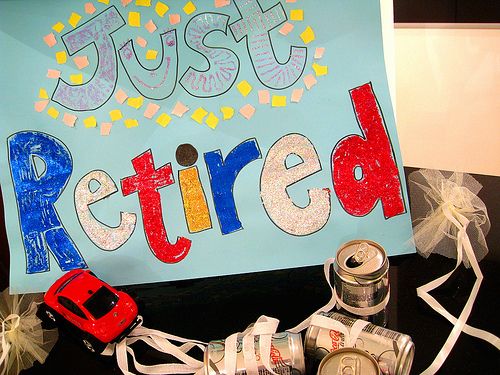
From the sidelines, I am watching a very strange phenomenon this week. On Friday, hundreds of employees in one local company will retire. It relates to a measured downsizing necessary to keep the company operational financially. The downsizing is a much kinder and more valuing option than layoffs. Still, there are huge ramifications for those leaving as well as for those who remain, in the months/years ahead…without them.

How does an organization go about honoring hundreds of retirees? Well…apart from the numbers, it’s in the same way you would honor one. Bill Peel offers a really helpful array of articles on appreciation in his Make Mondays Meaningful, quoting from C.S. Lewis and the Harvard Business Review. This is a good place to start.

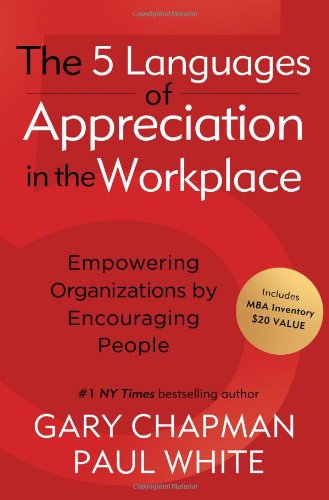
As I was thinking of the challenge for a company’s leadership and the human resources department to honor so many retirees, a little book came to mind. It’s The 5 Love Languages by Gary Chapman. Then I discovered he and Paul White wrote a follow-up book entitled The 5 Languages of Appreciation in the Workplace.

Blog - 5 Love Languages of Appreciation in the Workplace

Photo Credit: Amazon.com

Chapman and White describe five languages of appreciation (see in next paragraph). How we receive meaningful appreciation varies from person-to-person. Therefore we must attempt to personalize our expressions of gratitude to be effective. In a situation where a large number of folks are retiring, or in plan to build a workplace culture of appreciation, a comprehensive “shot-gun” approach may be warranted. If your aim is authentic honoring of your personnel, the extra work and creativity will be well-applied.

Maria Elena Duron, in her US News piece on workplace appreciation describes Chapman’s & White’s 5 Languages:

  1. Words of affirmation. Reassuring words (“thank you for your input,” or “great job on the presentation”) that serve to motivate and show gratitude to team members.
  2. Quality time. Going out of your way to spend a little more time with team members, discussing the topics that are relevant and important to them.
  3. Acts of service. Your words of gratitude could land on the deaf ears of team members who would rather receive help finishing a project or assignment. Going out of your way to lend a hand means more to such people than mere praise.
  4. Tangible gifts. Lots of people appreciate tangible gifts. The important thing here is to make sure the tangible gift is something the person values in their life outside of work, like a jersey of their favorite college football team or a coffee mug with their favorite cartoon character on it.
  5. Appropriate physical touch. Some members respond well to appropriate physical touch, like high-fives, handshakes, fist bumps and pats on the back. You’ll see this in sports, but it also translates well to the work environment.

Delbert Terry (speaking on The 5 Languages of Appreciation in the Workplace) gives this charge to both supervisors and colleagues:

“In order to appreciate, you MUST initiate.”

  1. For appreciation to be effective, it must be individualized and delivered personally.
  2. Appreciation needs to be viewed as valuable to the recipient.
  3. Employees are more likely to “burn out” when they do not feel appreciated or emotionally supported by their supervisors.
  4. When leaders actively pursue communicating appreciation to their team members, the whole culture improves.

Dr. Terry acknowledges: “There are challenges that get in the way of effectively expressing gratitude to our colleagues. Some are internal issues attitudes, thoughts, and beliefs. Other challenges are external and relate to corporate structures and procedures. These challenges need to be faced realistically, but they can be overcome.”

Challenge #1: Busyness

 Challenge #2: Communicating appreciation is not important for you organization

 Challenge #3: Feeling overwhelmed with existing responsibilities

 Challenge #4: Logistical issues that interfere with the process of sharing appreciation for others. Varying schedules, working on different projects…often make it difficult to express appreciation to certain coworkers.

 Challenge #5: Personal discomfort with appreciation *

*The 5 Languages of Appreciation in the Workplace – presented by Delbert Terry (pdf)

In honoring retirees and setting a workplace culture of appreciation, it is never too early and [hopefully] never too late.

As I think of the mammoth task of trying to honor hundreds of retirees in one fell swoop, I am both overwhelmed by and grateful for those who undertake such a task. How do you orchestrate such a celebration of so much human history and accomplishment? You do your best with gracious words, team parties, a speech from a charismatic leader, a slideshow of faces we love, and maybe shrimp and petits fours. I wouldn’t miss it, for sure.

The one thing I hope happens and it’s the hardest thing to make happen is that we capture the story of these lives. History, experience, a personal witness are so valuable and should be preserved somehow. Storycorps is an organization that gives us opportunities to record stories of people’s lives who have made a difference in ours. What a great way to honor those who have gone before us, so that we and future generations can continue learning from them.

Finally, we know something of the importance of authentic appreciation because of the character of God Himself. “Well done, good and faithful servant” are words any of us as Christ-followers hope to hear one day…from God, who knows us best. We reflect that deeply personal “divine compliment” when we truly honor one another.Blog - RetirementPhoto Credit: carp.ca

The 5 Languages of Appreciation in the Workplace: Empowering Organizations by Encouraging People by Gary Chapman & Paul White

Applying Appreciation Language in the Workplace – Maria Elena Duron, U.S. News & World Report

Why Appreciation Matters So Much by Tony Schwartz, Harvard Business Review

How to Give a Meaningful “Thank You” – the Power Thank You by Mark Goulston, Harvard Business Review

StoryCorps.org – “We Believe Every Story Counts”

Appreciation at Work

The 5 Love Languages: The Secret to Love that Lasts by Gary Chapman

Charles, Dave, KevinThese friends are not retiring…transitions and send-offs are also opportunities to say (and show) “You matter.” #SaveOurHistory

5 Friday Faves – New Duo, In Defense of Christmas Cheer, Christmas PlayList, Introverts & Extroverts, and the Tacky Light Tour

Blog - Friday Faves

  1. New Duo – The Tide Rose, Richmond, Virginia.  Whitney Cavin and Keilan Creech have just debuted with a new EP, The Tide Rose. They have been lighting up TV, radio, and the music events calendar in Richmond recently.  You can see/hear them play here on video from their appearance on Virginia This Morning. I don’t really know how to describe their sound – nautical folk is the phrase used. You will have to listen yourself. We have known Keilan for many years. He recorded a solo EP awhile back (Dying for a Change) with our son, Nathan Mills on guitar. Now, his collaboration with Whitney Cavin is very new and lovely. Their voices weave together so soulfully. Hard to describe really – hauntingly beautiful. Take a listen. Maybe you’ll get to say, “I knew them when.” That’s where we are happy to be. Blog - Friday Faves - The Tide RosePhoto Credit: Facebook.com/thetiderose

2) In Defense of Christmas Cheer – I love Trevin Wax. He is a young theologian, a prolific writer, and regular guy. His blog is only one of two I read every day (the other belonging to Angela).  Trevin’s In Defense of Christmas Cheer was an uncharacteristic “Bah, Humbug!” of another writer theologian (Scott McKnight)’s redress of current Christmas culture. McKnight ‘s blog is also a worthy read.Blog - Five Faves - Trevin Wax - Christmas Cheer - thegospelcoalition.orgPhoto Credit: thegospelcoalition.org

Here are quotes from both (do read them in full – they bring beautiful balance to the whole Christian conversation about Christmas):

“Telling the world about Jesus as Messiah and family under threat is is not Starbucks’ job; it is the church’s mission to to be announcing this at Christmas. But it is not the church’s mission to tell the world a Dickens Christmas story. It is the church’s mission to tell the real story about Christmas, about a God who entered into the world in a socially shamed family in order to lift the socially shamed to the highest name ever. I can’t imagine Starbucks telling that story well.” – Scott McKnight

“Joy and singing and big family dinners and giving and receiving and caring for the poor” may not be what the original Christmas was all about, but it’s certainly part of Christianity as an atmosphere, is it not? And no one succeeded at creating “atmosphere” better than Dickens.

Should we not marvel that even in our increasingly secular age people still sing carols packed with biblical truth every year? ‘Joy to the world,’ indeed. Should we not marvel that in a world of broken homes that big family dinners still take place? That reunions still happen, and that people put aside their differences to share a meal? Should we not marvel that, in a dog-eat-dog world of competition run by the evolutionary motto of ‘survival of the fittest,’ our culture devotes time to running ‘to and fro giving and receiving and caring for the poor?’ 

Christianity is not generosity, but generosity is part of Christianity. Who knows? Perhaps when caught up in the moment of cultural gratitude, the secular heart may long for Someone to thank.

The Dickens vision of Christmas does not take away from the truth, but complements it. ‘Tis the season for joy and feasting!” – Trevin Wax

3) Christmas Playlist – We start listening to Christmas music in October, but the playlist doesn’t really happen until now. In my car, I have the following albums: 1) Amy Grant’s A Christmas Album (Tennessee Christmas has been a favorite song since our years in Tennessee – still miss it); 2) Tommy Emmanuel’s All I Want for Christmas (we are a guitar family – Nathan Mills); 3) Mannheim Steamroller’s A Fresh Aire Christmas 1988; 4) Straight No Chaser’s Holiday Spirits (we also love a cappella); 5) Twila Paris’ It’s the Thought; 6) Kenny G’s Miracles – The Holiday Album; 7) Casting Crowns’ Peace on Earth; 8) Positively Christmas 2012; 9) Steven Curtis Chapman’s The Music of Christmas; and 10) Sarah MacLachlan’s Wintersong.

Blog - Friday Faves - Christmas Songlist

Photo Credit: xgiosiax.blogspot.com

I need to add Charlie Brown Christmas to my car play for Christmas.  Two singles I love and hear a plenty on the radio through December (and via YouTube videos) are Mariah Carey’s All I Want for Christmas is You and The Drifters’ White Christmas.

4) Introverts and ExtrovertsJennifer Kahnweiler is a champion for introverts. Author of The Genius of Opposites and The Introverted Leader she is a help to all of us. As an extrovert married to an introvert, and working with many as well, I appreciate her writing so much. We can make such a difference at work and home if we understand each other and make an environment where we can all be effective and comfortable together. Here’s a short piece from her with a very amusing video. Love my introverts!Blog - Friday Faves - Jennifer Kahnweiler - Introvert Extrovert leaderPhoto Credit: RedCapeRevolution.com

Bonus: John Platt’s An Introvert’s Guide to Leadership (fast read!)

5) Tacky Light Tour – Every town and city in the US, from Thanksgiving weekend through the New Year have light displays that brighten our winter nights. None can possibly compare with Richmond, Virginia’s Tacky Light Tour. It’s an annual tradition for us. We plan out an itinerary (impossible to take in all the displays in a sane evening) and often squeeze into several vehicles to caravan around the city. “Ooh’s and aah’s”, “selfies”, and “usies” abound as we document the fun of these evenings. Incredible work and creativity go into these displays and we as spectators are wildly grateful. It’s always a temptation to rent a limousine (but…not yet. I still prefer the low luxury version of the Tacky Light Tour. You will not be disappointed. What’s your favorite local equivalent?Blog - Friday Faves - Tacky Light Christmas TourBlog - Stella, Junko, Christie - Tacky Light Christmas TourBlog - Friday Faves - Stella & Junko - Tacky Light Christmas TourBlog - Friday Faves - Tacky Light Christmas Tour

Happy (Black) Friday, Everybody! Be safe out there.

Monday Morning Moment – Relational Wisdom – the Way It Could Be – at Work & Home

Blog - Monday Morning email

Monday morning emails can be treacherous… This morning when I woke,  my husband told me he’d just heard from a valued colleague that he had secured another job. Dave was expecting this because of previous communications they’ve had with each other. Through an organizational re-structuring, there are many whose jobs are changing. This email was good news because this person will be a tremendous addition to any team – good news and sad news. We will miss this man on our team but we celebrate a great job match.

Then another email came in. It was from the person who will be his new supervisor. It was full of respect and regard – a courtesy email that is not necessarily company culture these days but an email that shows understanding and empathy. When change comes, even good change, there is still that adjustment, that grieving of the good that was. Those two emails speak volume about emotional intelligence or relational wisdom…and that’s something we always need in the workplace…and at home.

The holidays have a particular call for wisdom to soften difficult expectations, disarm family conflicts, and personalize interactions to fit the needs of those nearest to us.

Blog - Monday Morning Moment - MarriagePhoto Credit: rw360.org

One very simple way we can tune into holiday celebrations is to deal with our own stuff. Keeping our minds on the goodness of the holidays helps. It’s easy to find daily Advent readings for the month of December…depending on your favorite author or blogger, they’ve probably written some.

Related to both our work and home relationships, Ken Sande, founder of Relational Wisdom 360, has given us a great gift, and we don’t have to wait another day for it. He has written 33 Ways to Enjoy Highly Relational Holidays. A fast-read blog a day on relational wisdom, starting on November 23 to take you right through to December 25.

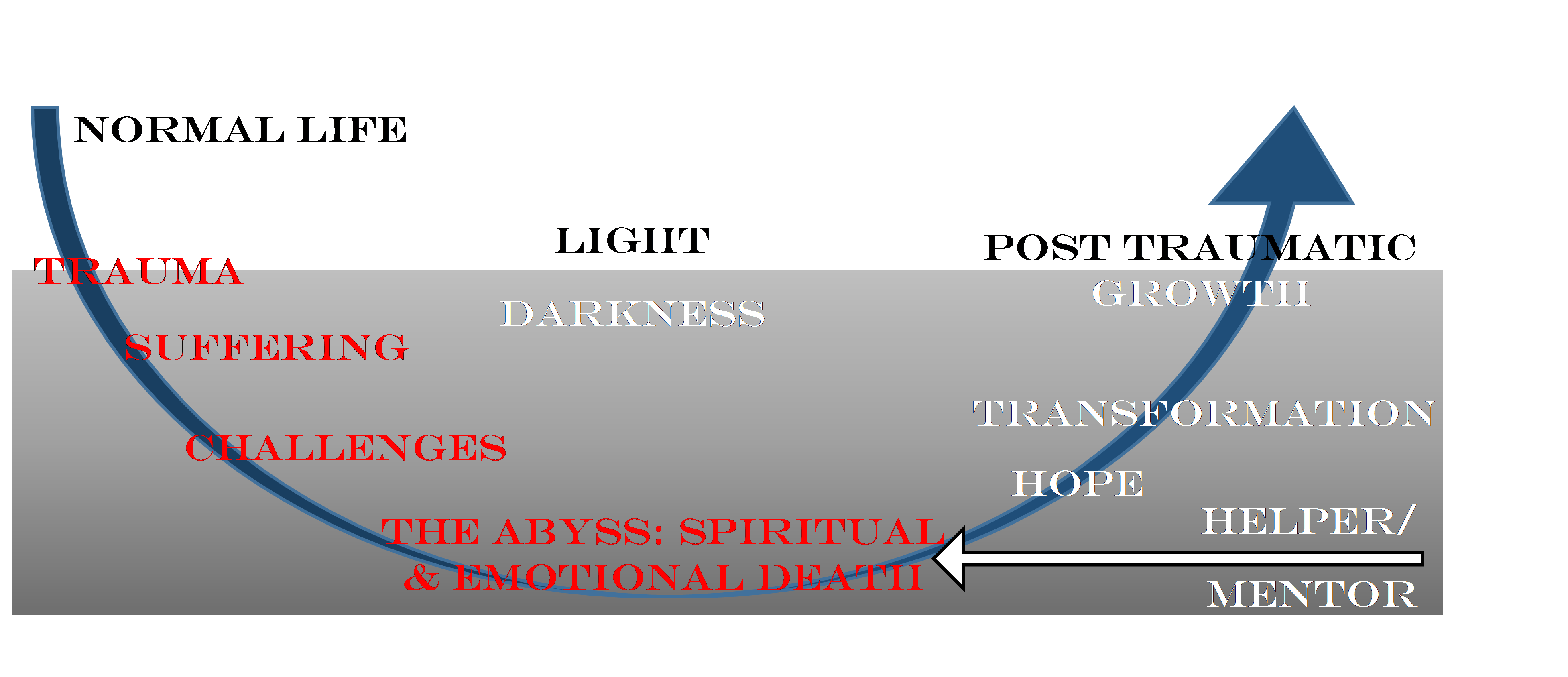
I attended Dr. Sande’s Peacemaker course years ago during a challenging work season, and what I learned then continues to be a tremendous help to me today. If your work or family situation is somewhat intimidating, don’t despair. There are those in our lives (Ken Sande is one) who will come alongside and help/mentor us, if we’re willing to take care of our own hearts and minds.Monday Morning Moment - Post traumatic growthPhoto Credit: coldspringcenter.org

As Thanksgiving approaches and Christmas not far behind, I hope you can look forward to happily memorable times together with family. As far as work goes, just like with the emails above, we can do our part to make our workplace a kind and honoring experience – our part (not someone else’s) in making it the way it could be…the way it should be…Blog - Monday Morning Good Work BraceletPhoto Credit: GoodWorksBracelet.com

What helps you thrive in stressful situations at work? What has made a difference in bringing peace and joy to your holiday celebrations? Please comment and share with those searching for that wisdom.

Surviving Christmas – Advent Devotions for the Hard and Holy Holidays – Anne Marie Miller – free ebook

Advent Devotional Readings Online by Lifeway

Good News of Great Joy by John Piper

Unwrapping the Greatest Gift: a Family Celebration of Christmas by Ann Voskamp 

Worship Wednesday – ‘Tis the Season – What’s at Stake When We Indulge In Attacking Each Other

Blog - House Divided - coffeewiththeking.orgPhoto Credit: coffeewiththeKing.org

“A new commandment I give to you, that you love one another, even as I have loved you, that you also love one another. By this all men will know that you are My disciples, if you have love for one another.”Jesus, John 13:34-35

“Why do you look at the speck that is in your brother’s eye, but do not notice the log that is in your own eye? Or how can you say to your brother, ‘Let me take the speck out of your eye,’ and behold, the log is in your own eye? You hypocrite, first take the log out of your own eye, and then you will see clearly to take the speck out of your brother’s eye.”Jesus, Matthew 7:3-5

Do not tear down the work of God for the sake of food. All things indeed are clean, but they are evil for the man who eats and gives offense. It is good not to eat meat or to drink wine, or to do anything by which your brother stumbles. The faith which you have, have as your own conviction before God. Happy is he who does not condemn himself in what he approves.”Paul, Romans 14:20-22

The “happy holidays” are upon us – juxtaposed against a landscape of polarizing political campaigns and various divisive protests and boycotts. In a season of the year (for us in the USA, in particular), we could enjoy warm community and loving unity, even when we differ on some things. Yet, we still divide ourselves up into various camps.

Where are we to land in all of this as Christ-followers?

For sure, it is not in attacking those who are not like us or who may be like us but differ in preference or opinion. Especially, we who call the name of Jesus as Savior – we have no ground to stand on in attacking each other…ever.

So why do we do it? There is this soul satisfaction that comes with feeling right, or smarter, or more cool, or culture-savvy. A soulish satisfaction from which God has actually called us, and toward something extraordinarily better. A unity, a bond of love. A love by which we are known to the rest of the world as followers of Jesus. Here there is even ground for all of us, the weaker brother and the stronger one (that one who becomes weaker when he taunts or shames the other). Jesus calls us to deal with our own flawed perspective (“log”) before we can help dislodge the painful speck from our brother’s eye.

Do we really care about the other, that one God calls us to love as we love ourselves? Do we show that love to the world when we treat those with whom we disagree with the same derision or contempt as the world does? Or worse? Are we keeping company with arrogant haters or are we becoming one? When we publically part company with believers who are offended by what we consider silly matters, what is at stake?

You may ask, “what about those hate-filled people who call themselves Christians and who protest all sorts of things, based on their “Christian” sensibilities?”. Still…Scripture is clear how we are to treat them…Jesus calls us to love even our enemies. (Matthew 5:43-45)

“If a house is divided against itself, that house will not be able to stand.”Jesus, Mark 3:25

There is much to lose and much more to gain in wrestling successfully with this dilemma – exposed in our private conversations and public (un-social) media.

Voices of Wisdom to help us – Keep Unity, Guard Community – Choosing to Love, Refusing to Shame

Blog - House Divided - Scott Sauls

Scott Sauls is the author of Jesus Outside the Lines: A Way Forward for Those Who Are Tired of Taking Sides . He has also written the richest piece on this whole shaming and raging culture that colors us as Christ-followers, if we partake in its rank hatefulness. In fact, I can’t even quote from his article, because I want you to read it…please. It is a quick but full read on identifying the problem, and seeing what is the truth of how we are to live, in the example of a living, flesh-and-blood human-like-us man, Tim Keller. Please…read Scott’s article. Transforming.

Christians are in many ways a band of opposites, who over time grow to love one another through the centering, unifying love of Jesus…sincere believers can disagree on certain matters, sometimes quite strongly, and still maintain great respect and affection for one another…I don’t know where I would be without the influence of others who see certain non-essentials differently than I do..In non-essentials, liberty. And to this we might add an open-minded receptivity. We must allow ourselves to be shaped by our ‘other’ brothers and sisters for Jesus’ sake. We will be the richer for it.” – Scott Sauls

“This great passion for souls [Romans 9:1-3] gave Paul perspective. Lesser things did not trouble him because he was troubled by a great thing – the souls of men. ‘Get love for the souls of men’ – then you will not be whining about a dead dog, or a sick cat, or about the crotchets of a family, and the little disturbances that John and Mary may make by their idle talk. You will be delivered from petty worries (I need not further describe them) if you are concerned about the souls of men…Get your soul full of a great grief, and your little griefs will be driven out. – Charles Spurgeon – Spurgeon Gems, p. 7-8

“I will never get why we defend our chicken sandwiches and our gingerbread lattes but we won’t take a stand for the things that actually matter to God. Are we loving the Lord with all our heart, soul, mind, and strength? Are we loving our neighbor as ourselves? Are we obeying God in our personal lives? Are we defending and providing for the poor, the widow, the orphan, and the immigrant? Are we sharing the hope we have in Christ? That’s pretty much our full job description.” – Angela

Blog - House Divided - Jonathanpearson.net

Photo Credit: JonathanPearson.net

What I Came To Respect Most About Tim Keller (Even More Than His Preaching) by Scott Sauls

We Disagree, Therefore I Need You by Scott Sauls

Jesus Outside the Lines – a Way Forward for Those who are Tired of Taking Sides by Scott Sauls

What Stops Our Fighting? by Tony Reinke

Pixar’s Inside Out – and a Second Thought on Joy & Sadness

Blog - Inside Out - Theology of Sadness - scpr.org

Weeping may tarry for the night, but joy comes with the morning.Psalm 30:5

“Blessed are those who mourn, for they shall be comforted.Matthew 5:4

My husband and I watched Disney/Pixar’s Inside Out this weekend. It was so stressful. We wondered how children managed coping with the anxiousness of the story. Riley, the heroine of the film, is an 11y/o who moved with her parents far away from her hometown. The story tells how she deals with that move with the help of her emotions (5 in particular – Joy, Sadness, Anger, Fear, and Disgust).

Happy, happy, happy little Joy is the moon-faced, darling emotion of Riley’s. The tension in the story is Joy’s attempt at damage control as little Sadness begins coloring some of Riley’s happy memories “blue”. The plot twists and turns as Joy tries to right Riley’s world.  She is pulled into a journey with Sadness alongside and spends most of the film trying to get back to Riley’s “presence of mind”. Meanwhile, Anger, Fear, and Disgust do what they can to help Riley maneuver through her day…without Joy and Sadness’s help. It’s a scary prospect.

I’m thinking children must get caught up in the adventure, the mesmerizing visuals and the familiar faces of these emotions. For me, it was just stressful.

I have a huge respect and admiration for Ed Catmull after hearing him speak at Global Leadership Summit 2015. Catmull heads the work of Disney/Pixar Animation Studios. Dave recently read his book Creativity, Inc. and so enjoyed it that I’m reading it also.

Blog - GLobal Leadership Summit - Ed Catmull by brainpickings.orgPhoto Credit: Brainpickings.org

Watching Inside Out, my mind wandered to the creative teams at Disney/Pixar. What were they thinking?! Then later, I had second thoughts on the film…after watching bits again as our youngest son, visiting over the weekend, watched it on pay-per-view.

He, too, also thought it was stressful, but as I watched his face, watching the film…I saw what we might have missed as older ones watching. Wonder, surprise, vexation, empathy. In the strong face of this young man, I saw the response to the film maybe hoped for by the creators. The audience identifying with the film…and in the end…understanding and a sweet resolution of the seeming conflict between Joy and Sadness.

On that second watching (both the film and watching my son watching), I liked Inside Out much better. It helped me to Google that great “Aha!” moment of Joy’s – when she discovered:

“Sadness…Mom and Dad, the team…they came to help because of sadness.”

No spoilers for those of you who haven’t seen the film, but for me, a couple of articles really resonated (see below). I struggle personally with sadness which shades the joy I also experience.  Then that same joy re-colors the sadness, bringing perspective and healing. Josh Larsen, in an article on the Think Christian website, wrote beautifully about this film’s message (at a deeper level):

It’s a rich subject – one mined with Pixar’s usual combination of wit, intelligence and emotional resonance – and also one that echoes a Christian understanding of the human experience. Christianity, after all, is an expression of joy in response to – not in denial of – deep sadness…we can’t fully understand our place in God’s story unless we’ve experienced sadness of some sort. It isn’t until we recognize the deep sorrow of this world – the Fall, and our perpetuation of its effects – that we can fully appreciate the almost laughable generosity of Christ’s redemptive act. And only then will we know true joy, the fairy-tale ending that is God’s restoration of His creation. – Josh Larsen

Toward the end of the film, there’s a lovely moment between Riley and her parents. She finally comes to terms with her deep sadness in moving away from home. It’s a place all of us have been if we linger with a person grieving…a person who knows we love them.

I was reminded how sadness sometimes  overtakes us and it’s best confronted head-on in all its real…on-another’s-shoulder…Riley, tears spilling down her face, doesn’t hold back as she pours out her grief to her parents. As they cradle her into their arms they, too, confess their own sadness.  Then it happens…that last wet-faced shudder into Daddy’s chest; that deep sigh…all cried out.

That’s what we love about Disney/Pixar…and the God-given emotions of joy and sadness…especially when love is in the mix.

Inside Out and a Theology of Sadness – Josh Larsen, Think Christian

Many critics love Pixar’s ‘Inside Out.’ Not this guy.

Inside Out Quotes

All 15 Pixar Movies, Ranked From Worst to Best

Building a Healthy Work Culture – in a Season of Change, Uncertainty, and Dips in Morale

Blog - Culture of FunPhoto Credit: Grasshopper.com

What are you celebrating at work these days? Hopefully you didn’t have to think really hard. Just having a job is something to celebrate, for sure. Beyond that, hopefully you have work that gets you up in the morning with a sense of purpose and a gladness of heart for your work community.

What if that’s not the case this morning? Any number of things can cause our workplace to become more stressful than healthful – a disappointing outcome in our research, a conflict over division of labor, a company merger or buy-out, a downsizing. I am awkwardly  list such things because none may touch on your situation. What is your work situation and your current work culture?

Whatever it is, working over a protracted period of time with low morale makes for a difficult work situation. We want to do whatever we can to turn that around. Not just for the sake of the organization and the goals of same, but for the sake of the personnel. The wellbeing of employees is the biggest factor in the long-term productivity of organizations. Yet, how do we wrap our collective leadership minds around such a thing as morale and engagement?

The key is work culture – and fostering a healthy work culture with as much energy and thought as we do our product line or customer service.

I was reading about work culture, especially related to a season of spiraling morale, and came across a pdf introduction of the book How to Build a Thriving Culture at Work by Rosie Ward and Jon Robison.

Not having read beyond the introduction of the book, I can’t give a full recommendation yet. However, the first few pages have already resonated with me about what is at play related to morale, or well-being, and what could be possible to restore it. Here are some quotes from Ward & Robison’s Introduction:

“Despite overwhelming evidence of a powerful link between effective leadership styles, positive work cultures and higher levels of organizational performance, many companies still operate with a top down, authoritarian management style, do not measure or intentionally create their desired culture, and do not effectively develop current and future leaders to maximize employee engagement and wellbeing.”

The authors go on to say that even in work situation where the leadership style is more employee-centered, the idea of work culture may not be well-understood or operationalized.

“Culture is the differentiating factor between high-performing and low-performing companies; however, most companies have not identified, articulated, measured or intentionally created their desired culture.”

The dilemma of employee morale may actually extend to the leadership team itself.

“The majority of executive leadership teams are not operating in a truly cohesive manner, and many leaders themselves are at a point of burnout.”

“Edgar Schein, PhD, leading researcher on corporate culture, describes culture as ‘the hidden force that drives most of our behavior both inside and outside organizations’. It’s like looking at a river. All of the things you see on the surface, from the flow of the water to the shape of the riverbed, are manifestations of an ever-changing, powerful current beneath the surface. In terms of culture, the current that ultimately guides the strength and direction of the organization includes the unconscious, taken-for-granted beliefs, perceptions, thoughts and feelings of employees. The interaction between leaders and culture is profound and critical when considering how to transform or evolve the overall culture and subcultures within an organization.

“Patrick Lencioni writes that, to be successful, an organization must focus on two basic qualities: It must be smart, and it must be healthy. According to Lencioni, a ‘smart organization’ is one that excels in the classic fundamentals of business — i.e., strategy, operations, finance, marketing and technology. A “healthy organization” is one in which there are minimal politics, minimal confusion, high morale, high productivity and low turnover. While being smart is only half of the equation, for most organizations, it occupies almost all of the time, energy and attention of leaders. Yet, according to Lencioni: ‘Once organizational health is properly understood and placed into the right context it will surpass all other disciplines in business as the greatest opportunity for improvement and competitive advantage. Really.‘”

Blog - How to Build a Thriving Culture at Work

Photo Credit: Amazon.com

How to Build a Thriving Culture at Work, Featuring the 7 Points of Transformation by Rosie Ward and Jon Robison

Work culture and employee well-being are not addressed by just another wellness program. Organizational ethos and values must incorporate both philosophy and programming to build morale, trust, and engagement of employees. Especially if the organization has been through a protracted season of change and uncertainty.

The good news is that possibilities abound. Workplace development literature is rich with approaches and frameworks that you will find helpful in attacking your own set of challenges. One such article is Workplace Culture is Everything: 20 Ideas For Building a Thriving Team – Great links to 20 articles on Workplace Culture. [I apologize, since I’m citing this resource, for the “coded” profane word in the title of one article. Good read otherwise].

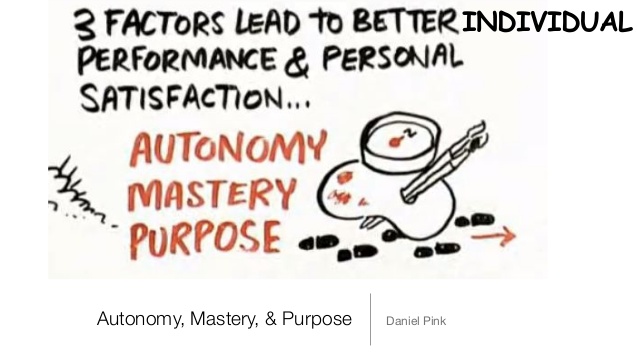
Another book I re-discovered in reading about morale this weekend is Daniel Pink’s Drive. When a company is in the middle of a reorganization or restructuring, employee wellbeing (engagement, performance, satisfaction) can get lost in the sheer workload of the executive leadership team. This is when Human Resources, Membercare, or the Employee Medical Program can offer their own recommendations as to how to rebuild the work culture from the personnel side.

Are you in such a season? What have you done in this area? What has been helpful? I would love to hear about how your organization has dealt with employee morale and engagement during seasons of transition.

Blog - Healthy Culture - Motivation - Slideshare.netPhoto Credit: Slideshare.net

Drive: The Surprising Truth About What Motivates Us by Daniel H. Pink

11 Ways to Create a Thriving Workplace

How to Create and Maintain a Workplace Culture That Will Make Your Company Thrive

Monday Morning Moment – On Silos and Tribalism – Taking “Us” and “Them” to a Better “We”

Blog - Silos & TribalismPhoto Credit: Slideshare.net

“Silos”, as a workplace term, is such a fitting description for what we do to distinguish ourselves from each other. It means compartmentalization based on specialization. Now the term “silos” is less used, replaced by the cooler term “tribes”. Unfortunately, because the workplace woes of old are still in operation, “tribes” have deteriorated into “tribalism” or…[Hello] “silos”.

I began thinking about this again this weekend when a retweet came up in my Twitter feed featuring Gianpiero Petriglieri. So much organizational resource – money and time – is spent on specialization and grooming leaders. It’s a pity when the outcome actually draws down the organization ( to small pockets of “tribal buddies”) instead of honing expertise and relationships across departments, across disciplines.Blog - Silos and Tribalism

What if we could break down silos, and reorient and reenergize tribes? What if workplace tribes incorporated a grand plan that nurtured inclusion – creating “a rising tide that lifts all boats” (Adam Grant)?

Years ago, when I was a young instructor at Yale University, I experienced workplace silos. There were bottlenecks through which I had to maneuver, until I figured out how to win those beyond the bottlenecks. Since then silos have been a part of life for me, as I’m sure they are for us all. Oncology nursing had a different prestige than critical care nursing. Was one better than the other? No.

Working in the Middle East had its own set of challenges different from working in Europe. Does that mean one elicits greater respect or benefits than another? Of course not. Right? Communication between those in the field and those in the home office can also become very much an “us” and “them” transaction.  Even within the home office, one department may seem more the “flavor of the month” than another. What are your silo/tribe challenges?

Brilliant business writers can give us great tools and insight with breaking down silos (see fast reads in the links below). If you are anticipating a major change in your organization (buy-out, down-sizing, shift in focus/product line), it makes for a perfect storm to deal with silos. Of course, if management across the organization leads out with a unifying goal (a “battle-cry”), the possibility for success is heightened. I don’t think, however, that this is the only hope for success.

What if one department, a single silo or tribe, decided to tackle the problem? What would that look like? From my work experience and from learning from great leaders, both celebrity and colleague, here’s a bare-bones minimum how-to-get-started list:

  • What is your common goal as an organization? What is the clear unified rallying cry around which you can collaborate?
  • What are your own silo biases? Do you communicate that you think your department, location, specialization should have some sort of favor? Deal with that. It’s the first barrier that has to come down.
  • If trust has been disrupted or destroyed, who can you partner with to begin to rebuild trust? Name them, and begin the process (if you pray, you might begin praying for their success as a department/division – make it NOT about you).
  • What objectives can you establish as a department to guide you in staying focused on high-value collaboration across-specialties?
  • How will you measure the course of your action toward becoming a non-silo, less tribal department? Set a time. 6 months or across whatever acute crisis you see coming. Be as intentional and broad-reaching as you are able, given your own workload. Remember that silos alter the math in a workplace – 1 + 1 + 1 = 2 when teams aren’t sharing information and working at cross-hairs. We can make the math work better, as we work, against the flow, toward creative collaboration. 

My professional life has had various silo experiences, from teaching in an Ivy League university to working on a highly innovative team (recklessly creating its own brilliant unintentional silo, later with personal regret). Silos and workplace tribes never get us where we want to go collectively. Bring ’em down.

I would love to hear about your work experiences…any struggles, breakthroughs, or victories in this area of breaking down silos and building a culture of “Yes, WE can…together.”

Blog - Organizational CUlture - Lencioni book Silos, Politics & Turf WarsPhoto Credit: Amazon.com

Silos, Politics and Turf Wars – A Leadership Fable about Destroying the Barriers that Turn Colleagues into Competitors

Silos and Tribes – Think Different

http://www.slideshare.net/JDDillon/breaking-down-silos-how-social-learning-changed-everything-for-kaplan-atdtk

17 Strategies for Improving Collaboration – from the Freiberg’s – Do Not Miss This One.

How to Build Trust and Fight Tribalism to Stimulate Innovation

Breaking Bad – Squash Silos & Tribalism – Breakthrough Personal Branding

Leadership Axioms: Powerful Leadership Proverbs by Bill Hybels

Efficiency, Effectiveness, and Adaptability – The Very Human Side of These Business Processes

Blog - Effectiveness vs. Efficiency

Photo Credit: digital-knowledge.nl.dikn/en

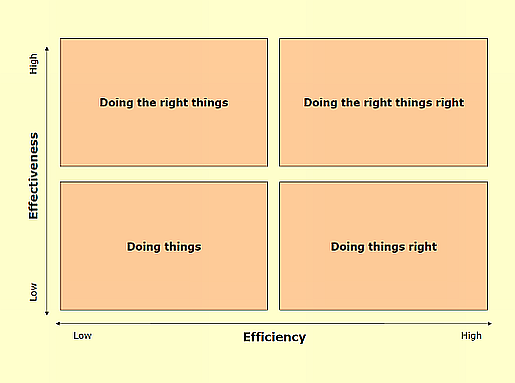
I will never forget when an elder statesman in an organization (both dear to me) was “let go”, so to speak, because of a need for more “bang for the buck”. The expression was so toxic then and still carries a deep pain. It speaks to the tension between efficiency and effectiveness, and the pressing need for adaptability as our world rapidly changes. At the same time, we have to remember, in almost all situations, it’s people in the mix of these business processes.

Efficiency is a good thing. However, it must be secondary to effectiveness. Effectiveness is primary always. How best to assure both is to build an organizational culture of adaptability.

Tom Coyne has defined effectiveness, efficiency, and adaptability brilliantly in a published 2-page pdf*. Here they are:

“Effectiveness measures the extent to which the results you have achieved match your goals.” Strategy leaders set those goals, and the goals determine who does the work, when, where, and how.

“Efficiency measures the amount of scarce resources used to obtain the results achieved.” His use of the term “scarce resources” is thought-provoking. When we focus on efficiency – getting the most benefit from the least resources – we can lose our objective. Resources are precious. Full-stop. Whether they are people, time, or finances. We must consider how we spend resources always, and especially when they are scarce.  However, if we miss the mark on our objective because we misspent our resources or allocated them unwisely, then we paid for efficiency with effectiveness. A poor transaction.

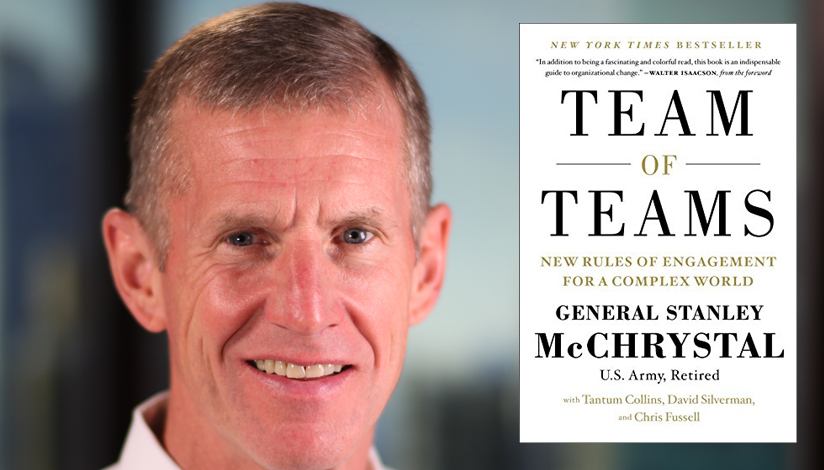
Gen. McChrystal, speaks to this, in his book Team of Teams (more about this book follows). He puts a captivating twist on it in his challenge: “If I told you that you weren’t going home until we win—what would you do differently?” We can’t focus primarily on efficiency when effectiveness is the outcome we desire. Adaptability is really what will get us to where we want to go.

Adaptability measures the change in Effectiveness and Efficiency for a given level of change in the agent or organization’s environment…One of our great failings as human beings is our reluctance to acknowledge the full implications of living in a world of complex adaptive systems. The causes of yesterday’s success are impossible to fully understand, and unlikely to be replicable to the same extent in the futureWe naturally try to succeed again in the future, using the approach that worked in the past, with frequently disappointing and occasionally fatal results.”

Coyne goes on to write about how to work these processes out toward business and employee/team success in a changing world.

Good stuff to know and implement.

Early on in my career, one of the mantras I heard repeatedly was this:

“The three most important things to learn in your work is flexibility…flexibility…flexibility.”

That later changed, in company vernacular, to “fluidity” x 3. The only problem was the temptation to decide for myself what was fluidity/flexibility and what was not. This is where silos and self-interest evolve when we’re not even aware, until we find ourselves not being successful (effective/efficient). In the very work we’ve immersed ourselves in for years…working hard, but not working as smart as we could have. [I know, that hurts – and it will take more than efficiency gurus to bring us out of such a predicament healthy.]

It is possible to turn the ship around…and it takes a whole crew.

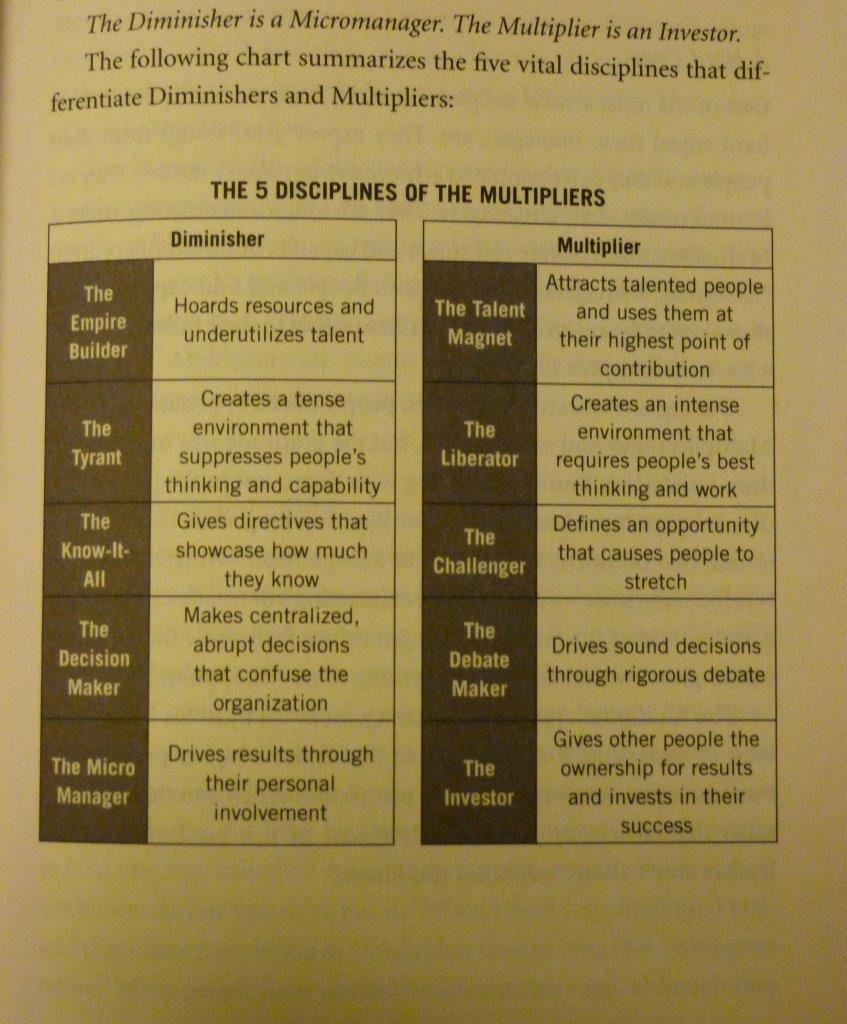
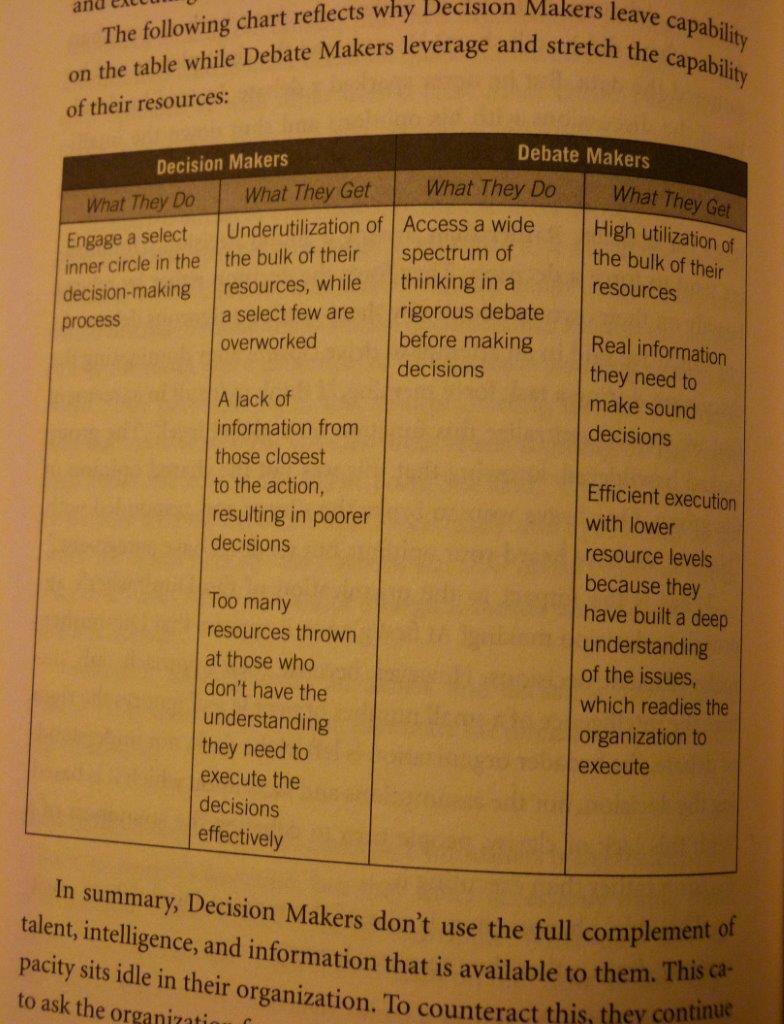
Decentralized, empowered teams. Trust. Transparency and collaboration in decision-making. Broad information-sharing. Ownership in real time not just in philosophy. Bringing down silos and working together to nurture an organizational culture where we expect change and thrive in it.

What focus yields a win-win in our workplace? Both from the human side and the business side of performance and organizational culture. What can we do to enhance our business processes – whether we are in management or on the frontlines of our organization?

The following quotes should help to stir thinking. They are out of the book Team of Teams by retired U.S. Army General Stanley McChrystal, currently with The McChrystal Group.

“In complex environments, resilience often spells success, while even the most brilliantly engineered fixed solutions are often insufficient or counterproductive.”  – Gen. Stanley McChrystal, Team of Teams

“In place of maps, whiteboards began to appear in our headquarters. Soon they were everywhere. Standing around them, markers in hand, we thought out loud, diagramming what we knew, what we suspected, and what we did not know. We covered the bright white surfaces with multicolored words and drawings, erased, and then covered again. We did not draw static geographic features; we drew mutable relationships—the connections between things rather than the things themselves.” – Gen. McChrystal, Team of Teams

[Sidebar: I had the great pleasure of writing for such a team over the last 3 years. It was a privilege to see that level of creativity and collaboration, in a team of equals, birthing a workplace initiative in sync with a changing world. Amazing experience.]

“Specifically, we restructured our force from the ground up on principles of extremely transparent information sharing (what we call “shared consciousness”) and decentralized decision-making authority (“empowered execution”).” – Gen. McChrystal, Team of Teams

“In a resilience paradigm, managers accept the reality that they will inevitably confront unpredicted threats; rather than erecting strong, specialized defenses, they create systems that aim to roll with the punches, or even benefit from them. Resilient systems are those that can encounter unforeseen threats and, when necessary, put themselves back together again.”  – Gen. McChrystal, Team of Teams

View your leadership as being less about giving top-down orders and more about cultivating those who follow you, empowering them to make the right decisions. Many leaders are tempted to lead like a chess master, striving to control every move, when they should be leading like gardeners, creating and maintaining a viable ecosystem in which the organization operates.This is especially applicable to private sector leaders; the world is moving too quickly for those at the top to master every detail and make every decision. Empowering, cultivating, and ultimately serving those who follow you will unlock massive potential within your organization, allowing you to solve for problems in real time.” – Gen. McChrystal, Forbes.com

*Effectiveness, Efficiency, and Adaptability – The Three Keys to Performance Measurement

Effectiveness Before Efficiency

Efficiency vs. Effectiveness

The Power of Business Process Improvement: 10 Simple Steps to Increase Effectiveness, Efficiency, and Adaptability by Susan Page

GoodReads Team of Teams Quotes

Stanley McChrystal: What The Army Can Teach You About Leadership

Gen. Stanley McChrystal: Adapt to Win in the 21st Century

Team of Teams: New Rules of Engagement for a Complex World by General Stanley McChrystal

Blog - Efficiency and Adaptability - General McChrystalPhoto Credit: Forbes.com

Helping First-Time Guests Want to Come Back a Second Time – Church Assimilation and Connection Teams

Blog - Church Connection Team - bpnews.net Photo Credit: bpnews.net

Any one of us in church was once new to that church. Such an awkward place to be. I remember just this year walking into a church gathering for the first time. It seemed everyone else knew each other and there was a general sense of easy familiarity between people. Were we the only ones new? Of  course not!

Being new is not where any of us want to stay. Trying to find a church home or just “going” to church aren’t very deep relational experiences. They are first steps to being part of a church, but you definitely don’t want to stay in that new or transient place long…or the temptation is just to not go back, or not go often…definitely doesn’t reflect what it’s like to really be church.

This is why churches need to be intentional in welcoming and connecting first-time guests. We met Ken Bevel at a conference a couple of years ago, and he introduced that term “assimilation” to us. He is a retired Marine Captain, and actor in Kendrick Brothers’ films (Fireproof, Courageous), and pastor of assimilation at Sherwood Baptist Church. He talked with us a bit about his job of working with a team who is responsible for that first-time guest – from the parking lot to “pew” to “home group” (real connection with others in the church).Blog - Ken Bevel - COnnecting[Ken Bevel (r), Pastor for Assimilation & Events, Sherwood Baptist Church, Albany, Georgia – making the guy on the left feel welcome.]

When we gather as church, extending hospitality to each other is a service we want to extend to all who join us. We’re still new as part of our church community (Movement Church) and don’t really know who’s new or if it’s just that we haven’t met them. Movement Church has a connecting team and we benefitted from it. Our strategy now is to treat those we meet, entering the building or in the hall or grabbing coffee, as if they were first-time guests. Sometimes they are…and sometimes they’ve been a part of the community for much longer than us…it doesn’t really matter. What matters is that we welcome one another…with generous grace and genuine interest.Blog - Connections & Assimilation - bpnews.netPhoto Credit: bpnews.net

Churches gather in all kinds of configurations – large and small, in homes and large buildings or public places. Blog - Connecting and AssimilatingBlog - Connecting & Assimilating - bpnew.netProcessed with VSCOcam with f2 presetPhoto Credit: House church pic is mine; other two bpnews.net

Whatever our church, we want to watch out for those first-time guests just as we honor those long-time faithful ones. What do they need? Who might they enjoy meeting there? How do we pray for them…follow-up with them?

Below are great resources to help the church set strategy to be intentional in our hospitality…to make first-time guests feel at home and want to come back a second time. Better still…to become part of who we are…a community who loves God and all those He places in our spaces.

12 Ways Churches “Welcome” Guests – Chuck Lawless

Six Simple Things a First-Guest Likes – Thom Rainer

Top Ten Ways Churches Drive Away First-Time Guests – Thom Rainer

Ten MORE Ways Churches Drive Away First-Time Guests – Thom Rainer

Creating a Strong Assimilation System – Powerpoint – Stephen Gray

Connecting With One Another – A Step-by-Step Approach to Guest and New Member Assimilation – Thesis – Kevin Ray Milburn

Ten Church Strategies – The Assimilation Strategy

Marine Captain-Turned-Pastor “Courageous” – Ken Bevel – The “Courageous” Interview with Kam Williams

Sherwood Baptist Church