Category Archives: Emotions

Monday Morning Moment – Waiting – a Waste or a Way to Wisdom

Photo Credit: Henri Nouwen, Quote Fancy

Have you ever found yourself in a season of waiting that seemed as if it would never end? Maybe you’re there right now.

The more pivotal thing about waiting is what we do with it…can we stay on top of the entitlement and all its turbulent emotions when they are unsatisfied? That is a goal worthy of pursuing. Treating the waiting not as a waste but as a way to wisdom.

Just this morning, I was waiting with a friend for a promised outcome. She is an old grandmother, resettled here from another country, with few resources.

She had the hope this morning of receiving some much-needed dental work ( in process for several months now). Today was to be the day for her to receive the last treatment – the fitting of a partial denture which would allow her to enjoy eating again.

It did not happen.

For whatever reasons it was delayed and more appointments would be made. Apologies and explanations were made, and the grandmother pulled herself up out of the dental chair one more time. We weren’t entitled to a different outcome. She is receiving free care through a local university and foundation. So why did this make me so angry and sad at the same time?

I was sad for this sweet grandmother who has already been through so much this year. Sad for myself, as her driver, for another series of appointments ahead of us. Even a little sad for the dental student breaking the news to us. And close-to-tears angry that either we misunderstood or someone somewhere dropped the (proverbial) ball.

As I collected myself and came back to my senses, I was reminded (in the conversation going on in my head) that this was a small thing. What if I was waiting on a big thing?! What would my response be to that?!

In years past, cancer nursing was my profession. Talking to a friend about this whole waiting thing, she recalled what so many cancer patients go through in waiting – for biopsy results, for treatment decisions, for blood counts to come back, for reevaluations of their cancer, for…for…for. We wait. To conceive that much-longed-for baby. To meet that person we will spend our lives with. To hear the outcome of elections or military coups. To determine if we prepared well enough for landfall of hurricanes.

Big things and small things all require waiting in life. We either wait in wasteful, blaming, soul-diminishing ways or we wait in wisdom.

Maybe it’s in the wait that we find what matters more.

In the minutes that tick by, we re-order our thoughts toward life and hope and possibility. Photo Credit: Heartlight

By the time my grandmother friend and I left the dental clinic this morning, we were better. No blaming. No feeling mad or bad. We accepted that today wasn’t the day we would say our goodbyes to this long waiting. It was just another day situated in between more to come. I didn’t resign myself to the disappointment, but rather determined it would not rob me of the joy of the day. We would be back, and, one day, she would get what we originally came for, months prior.

Photo Credit: Heartlight

Don’t get me wrong about waiting. I have, at times, pushed back against it. Not just for myself but because it was a disservice to someone else. There does seem to be a pecking order in waiting…the poor and marginalized are required to wait the most, it seems.

When waiting generates a disturbance in our hearts that takes us nowhere good, then we must check it, and check our reaction to it. In that space, we can choose to change direction and keep our heads and hearts at peace. We can choose a way to wisdom, rather than an explosive, diminishing waste of the waiting.Photo Credit: Elisabeth Elliot, AZ Quotes

Waiting can be exasperating…and any engineering to decrease it is a beautiful thing…so there’s that for which to be thankful. Also, what is the object of our waiting. If we look to people to always deliver (in a timely fashion), they (we) will disappoint. If we can take our eyes of people and on to God, waiting becomes a very different experience.

Two of my favorite verses from the Old Testament speak of this:

I waited patiently for the Lord; he inclined to me and heard my cry.
He drew me up from the pit of destruction, out of the miry bog,
and set my feet upon a rock, making my steps secure. – Psalm 40:1-2

Those who wait on the LORD Shall renew their strength; They shall mount up with wings like eagles, They shall run and not be weary, They shall walk and not faint. – Isaiah 40:31

Even Jesus on his last day of life on earth waited…until all of the prophecies were fulfilled. While hanging in pain on the cross, He waited until just the moment all were fulfilled, and then he gave his last breath. Wow!

Photo Credit: Philip Yancey, Heartlight

May we learn to wait as the Messiah did with loving perseverance and hope of a greater future.

“While we are waiting for these things to happen, make every effort to be found living peaceful lives, pure and blameless in His sight. Consider the patience of the Lord as salvation.” – 2 Peter 3:14-15

5 Friday Faves – Beyond the Guitar – Magic on a Cheap Guitar, the Most Repeated Command in the Bible, the Evercrisp Apple, (Dis)Comfort Zone, and Old Friends

Friday Faves – coming in hot! Days later. Life races on, doesn’t it?!

1) Beyond the Guitar – Magic on a Cheap Guitar – Sweet original composition by classical guitarist Nathan Mills at Beyond the Guitar. Showcasing two very different guitars…or rather what the difference – pretty much, it’s the guitarist, not the guitar. [Not to say the beautiful David J. Pace guitar isn’t his go-to instrument for all his guitar work/performances…but to emphasize it is the one playing it, whatever the guitar is, that makes the music.] Photo Credit: Beyond the Guitar

YouTube Video – Beyond the Guitar – #100 Mini Guitar vs. $10,000 Guitar

Beyond the Guitar – Fingerstyle Journey – 90 Days to Beautiful Playing

2) The Most Repeated Command in the Bible –  Even more than “Love the Lord your God” or “Love your neighbor as yourself. The most repeated command is  “Do not be afraid”.

Something to think about because we are surrounded to fearsome situations…yet, we are not to fear. How do we keep from it?

By practicing remembering. Remembering the provision of God in times past. Remembering the goodness of God in all we have in life right now – people who love us, work and other resources, health and/or helps toward restoring health, time, meaning, forgiveness, and beauty surrounding us.

Photo Credit: Heartlight 

We have circumstances that tempt us to fear, but we also have God’s promises to bring us through those circumstances. Fear itself robs us from sound thinking. Photo Credit: Flickr

The tricky thing about fear is that we can’t necessarily stop it from happening. It comes over us. However, we can keep it from overwhelming us…determining to live in the freedom and light of what is true, instead of what could happen. God is there for that as well.

When fear messes with our relationships or makes us timid to enter new ones, we can take courage in the command “Do not be afraid”. This week in our church, in The Art of Neighboring, we studied about fear in neighboring relationships.  1 Peter 3:14 (quoting from Isaiah 8:12) Do we allow fear of rejection or fear of our differences keep us from leaning into each other? What if we leave fear out of the equation in caring for one another? That’s the better path.

“Do not be afraid.”

The Art of Neighboring

Photo Credit: Heartlight

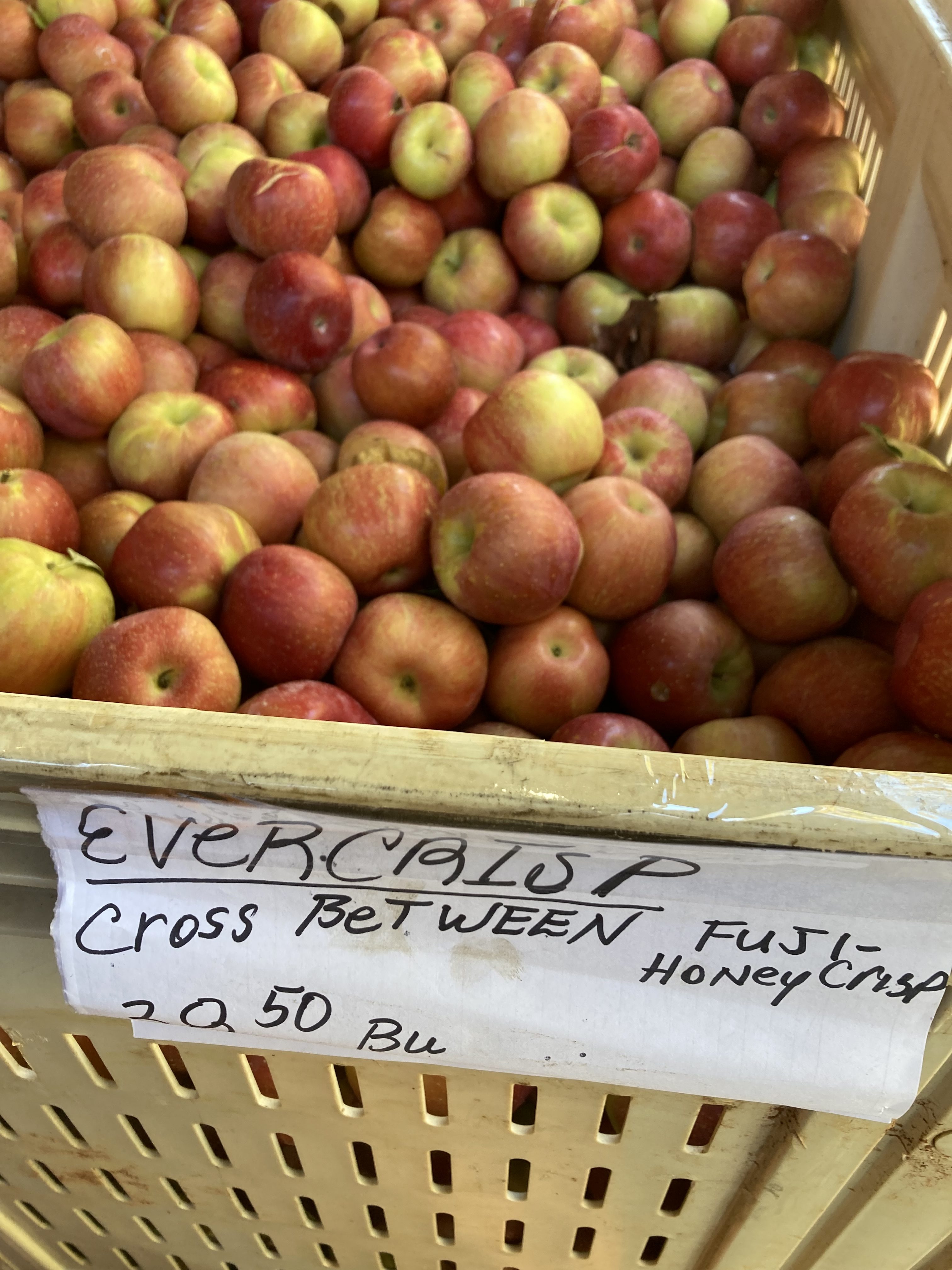
3) The Evercrisp Apple – One of the best parts of this time of year is the Fall apple harvest. Honeycrisp, Pink Lady, and Cosmic Crisp apples have been our favorite in recent years…until this Fall, when we discovered the Evercrisp apple. Wow!

We discovered this apple on a recent trip across Virginia toward the Appalachian Mountains. The Apple Shed delivers on several types of apples and introduced us to this one.

Once back in Richmond, we were thrilled to find it sold locally from the Saunders Brothers Orchards. Woohoo!!

A small delight in life but, for this season, a huge one. What’s your favorite apple?

4) (Dis)Comfort Zone – Is the phrase “comfort zone” a first world experience? I don’t think so. It is a universal idea – a place where we feel safe and soothed. A bad thing? Not necessarily except for how it insulates us from the rest of life. What if developing our capacity for discomfort helps us to live more fully, more in community?

Jason Seib, a health and selfcare coach, has actually built his whole platform on embracing a (dis)comfort zone. He teaches how we can maneuver around our uncomfortable moments in healthy ways.

If you go to his website, his home page currently seems all about his workshop (which I haven’t taken although it is reasonable cost-wise). However, hang in there. He also extends solid content to non-subscribers through his podcasts and social media pages. I think that speaks to his integrity as someone who actually cares about people wherever we are in our comfort zones.

The main message for us in his coaching is that we reach for food, alcohol, or other addictive substances or activities when faced with discomfort. Our temptation is to do whatever we can to restore comfort. Jason Seib points to developing skills in sharpening our awareness of discomfort when it happens and respond in ways that don’t harm us.

Jason Seib Facebook

Jason Seib Podcasts

Jason Seib reminds me of counselor Brad Hambrick whose webinar on “Growing in Negative Emotion Tolerance” was extremely helpful for me. Seib and Hambrick both talk about the importance of us recognizing that negative emotions are not necessarily bad [they are actually informative] but how we respond to them matters.

Photo Credit: SermonLab, Brad Hambrick

Counselor Brad Hambrick

5) Old Friends – This week has been one of celebrating old friends – visits both here and states away with people who have stayed the course with me through years and years.

I don’t know about you, but loneliness is a real time experience for me. So many moves and changes for us. A different season – children grown with their own lives, me now in retirement sorta kinda, and most of my closest friends living far from where we now live.

It gives pause to reflect on friendship and revisiting the kind of friend I am and hope to be. A key to having old friends in our every day life is continuing to reach out and nurture those relationships. I’m working on it…and trying to show up for these friends who have shown up for me. They, and others like them, point the way.

Old friends, even while not on the daily or even the regular, have the rare quality of history. Memory. Understanding. Loving anyway, through seasons of neglect, distraction, and loss. Old friends remain.

So grateful for forever friends – people who know us well and love us anyway. Singer, songwriter Michael W. Smith‘s song says it all:

Bonuses:

I Raised 2 Successful CEOs and a Doctor. Here’s the ‘Unpopular’ Parenting Rule I Always Used on My Kids – Esther Wojcicki

Photo Credit: Facebook

Photo Credit: Mark Allan – Mark’s Musings: God, the Proud Father

The Many Paths to Better Mental Health – a List of Excellent Resources

Shame vs. Guilt Infographic

Photo Credit: nicabm

Photo Credit: TobyMac, Facebook

“Come deeper. The waves won’t knock you down back here!”

Deeper in the Word
Deeper in Prayer
Deeper in Worship
Deeper in love with Jesus

Yes, the waves will still come, regular and strong.
But in the deep…
We will have peace,
We will be comforted,
We will have healing,
We will have restoration,
We will have joy,
Because we will be moving with The One who controls the winds and waves.

Go on, my sweet friends…go deeper.
HE is waiting. – Kristin Crawford Kerley, Facebook

Worship Wednesday – Thanks Giver – Crowder Music

Photo Credit: Facebook, Frances Moon

Always be joyful. Never stop praying. – 1 Thessalonians 5:16-17

In everything give thanks; for this is the will of God in Christ Jesus for you. – 1 Thessalonians 5:18

It’s Fall, Y’all! My favorite season (here in the US). Now…as for holidays: my favorite holiday is Christmas followed by Thanksgiving, as a close second.

Family, family, family. That’s what it’s about for me. Those two holidays bring families together for all that comes with family gathering…the lovely, the crazy, and the memory-savoring and making.

Yet what brings us all together is the reason for those holidays: 1) celebrating the birth of Jesus, our Savior, and 2) thanks giving for all the good in our lives, Him being at the top of the list.

Most of us have an order to these celebrations – first Thanksgiving (US Thanksgiving) in November followed by Christmas in December. I try to keep that order, except for one thing.

Christmas music starts around here in October. Sacred and secular. There is just a wealth of music from so many years past and right up to latest releases this month. If you love the nostalgia of Christmas music and the richness of the lyrics of many of those songs, then you may be one of us (tuning to it much earlier than most).

Speaking of new releases (the topic of this blog today) is David Crowder‘s Milk & Cookies: A Merry Crowder Christmas.

Photo Credit: Nevin Martell, Open Table

This album has something for everyone. Quirky new songs about elves and Mrs. C. (which when you hear the song could also refer to Mrs. Crowder and not Mrs. Claus). Then you’ll hear some beautiful standards as only Crowder and friends can do them. Finally, included in the album, are original songs glorifying Christ and pointing us to all we have in Him. Powerful!

Photo Credit: K-LOVE, Pinterest

The album is unique in its production having an ethereal feel of a vinyl record, including some brief narration sounding like it could have come from a film like It’s a Wonderful Life.

So the track above is the first track on the album, but the one below fits the blending of Thanksgiving and Christmas. It’s early, I get it…but don’t miss this album, and don’t miss the sweet messages of the song “Thanks Giver”.

Worship with me:

It’s getting cold
I’m driving home
On interstate 3-0

It’s getting cold
I’m driving home
On interstate 3-0

It’s getting cold
I’m driving home
On interstate 3-0

It’s getting cold
I’m driving home
On interstate 3-0
Mama’s calling, “Where you at?”
The turkey’s almost done
I hang up the phone, tear in my eye
Moments like these I realize
God You’re so good to me

You make joy out of simple and ordinary things
You fill life up with stories I’d never think to dream
So this holiday
I wanna praise
The One who’s making a saint
Out of this sinner
The One who’s turned me into this thanks giver

Just took the pumpkins off the porch
The wreath is on my door
There’s something sacred ’bout the time
Of year when You were born
The Street’s alive, it’s Christmas again
But moments like these, hope I don’t forget
God You’re so good to me

You make joy out of simple and ordinary things
You fill life up with stories I’d never think to dream
So this holiday
I wanna praise
The One who’s making a saint
Out of this sinner
The One who’s turned me into this thanks giver

Thank You for this life and all the joy that’s in this heart
For when I get to hug my dad and punch my brother in the arm
Thank You for the grace I know I’ll never have to earn
All because You chose to come down here and save this crazy world

You make joy out of simple and ordinary things
You fill life up with stories I’d never think to dream
So this holiday
I wanna praise
The One who’s making a saint
Out of this sinner
The One who’s turned me into this thanks giver

You’re the reason
You’re the reason
Why I’m a thanks giver

Photo Credit: Pinterest, Sonoma

You’re the reason
You’re the reason
Why I’m a thanks giver*

*Lyrics to Thanks Giver

Crowder Announces Holiday Album Milk and Cookies Out Oct. 21 – Abby Young

Crowder Releases ‘Milk & Cookies: A Merry Crowder Christmas’ – Ross Cluver

Worship Wednesday – Big Love, Small Moments – JJ Heller

Photo Credit: Heartlight

“Love the Lord your God with all your heart, with all your soul, with all your strength, and with all your mind,” and “your neighbor as yourself.” – Luke 10:27

“I urge you to walk in a manner worthy of the calling you have received: with all humility and gentleness, with patience, bearing with one another in love, and with diligence to preserve the unity of the Spirit through the bond of peace.” – Ephesians 4:1-3

What beauty we know in the love of Jesus – talk about BIG LOVE!

Even from the cross, He appealed to the Father to forgive those who sought to destroy him saying, “Forgive them. They don’t know what they’re doing!” [Luke 23:34] He calls us to that same kind of love.

Often, big love is rolled out in one small moment after another small moment after another. We’ve all experienced that and hopefully we’re all in lives of executing those small moments for others.

I’d like to showcase two sets of folks who demonstrate such love. I don’t know them personally but they loom large in my social media.

1) Tony and Karen Vick were married in 2015. Two years later, Tony was diagnosed with ALS. I came across their story on Instagram @thekaregiver. Karen is her husband’s primary caregiver and also manages her own small business. Every day she posts videos (on their various platforms) – videos that give a glimpse of small moments in their lives. Whew! So much love. Both from Karen to Tony and vice versa. Even a devastating, terminal disease like ALS can’t keep us from communicating love to others. They both do this so beautifully. Pray for them, too, as you get to know their stories.

Photo Credit: Russell Colburn, Twitter

The Karegiver on Facebook

Photo Credit: The Karegiver, Facebook

Tony and Karen Vick – Faith Over Fear – Video

2) Stan Mitchell – Stan Mitchell is a pastor and the son of this beautiful lady in the picture. His mom, Mrs. Shirley, was a church organist for 40 years but now struggles with dementia. Still, with minimal prompting, she sings the beautiful old Gospel songs many of us grew up with. Such a blessing in these waning years of her memory…and life. [Check out Rev. Mitchell’s Facebook page for some of that sweet singing of hers.]Photo Credit: Stan Mitchell & his mom – Facebook

Rev. Mitchell founded GracePointe Church in Nashville, Tennessee, in 2003. Under his leadership, in 2015, GracePointe moved to be completely inclusive of LGBTQ+ persons in the church family. Then a great upheaval followed within the church body. The church has survived and flourished, in a different direction than the beginning.

I’m not really sure what all Stan Mitchell does professionally but he seems to work with churches around our country in consultation to help them love better those in the LGBTQ+ community. Rev. Mitchell describes himself actually as progressive and liberal, cis-gender and heterosexual. He is also the fortunate son of Mrs. Shirley.

How I first came across Rev. Mitchell I couldn’t tell you. Maybe it was through a mention from seminary professor and thought leader Karen Swallow Prior. Ever how he came to my awareness, in our fractured world, I am learning from him on a big love within small moments. He has the wordsmith skills of a writer and preacher. He is quite clear in what he believes and his goal seems to be prompting us, as Christ-followers, to love those in the LGBTQ+ community …bigger.

[Most all of you who read this blog regularly know I’m fairly conservative in my thinking. I take the Scripture quite literally. In some camps of Christian theology, there does seem to be a disconnect, unfortunately, in the truth and grace conversation. We either lean heavily one way (toward truth/knowledge) or the other (toward grace/mercy). I want to learn how to love well (big) without compromising the truth of God’s Word. That gets revealed by our focus and decisions made in the small moments of every day life. There is the challenge.]

Worship Wednesday – Until Unity – Francis Chan – Deb Mills

Stan Mitchell’s Facebook posts pop up often on my Facebook newsfeed…thanks to that unknown social media giant’s algorithm. I read them to see the videos of his visits with his mom. Hearing her sing those old Gospel songs, even with memory darkened by dementia. I read them for what he says about people with whom he has counseled in and about the LGBTQ+ community. He is probably not someone I’d know, but he is giving me food for thought about how to love big…a particular population of people who don’t feel loved by churches who also love the Scripture.

We have these two commandments that Jesus calls the greatest. Just two.

  • Love God.
  • Love people.
How we learn to love big…to love like Jesus…is in moment-by-moment obedience to Him. We refuse to be stalled out by self-loathing or self-righteousness. We do what is needed…by a husband who can’t do everything for himself, as with Karen and Tony. Or by Pastor Stan who is spending these days treasuring his mom in this most vulnerable time of her life and extending the love of at least his church to the LBGTQ+ community. As with the Vick’s, pray for Rev. Mitchell and his mama.
I have been convicted by both the Vick’s and the Mitchell’s – to seek God’s face and His Word in bringing His large love into the lives of those closest to us…and to those who are not drawn so much to people like us. Whoever is on your heart right now, may they know the love of Jesus…it’s the biggest love available to us…and He is not diminished by an ideology, theology, or worldview.
Christian singer, songwriter JJ Heller gave us the captivating piece below – “Big Love, Small Moments”. She doesn’t call the name of Jesus…but He is there. His big love in all the small moments.

Catch this song (lyrics and music here) with the Lord in mind.

Heartbeats only happen one at a time, one at a time
You can’t rush a moment so don’t even try, don’t even try
There’s a symphony you’re missing
If you only listen you’ll find…

Big magic in the mundane
The big picture in a small frame
Everything is sacred when you take time to notice
Big love happens in the small moments

There’s no use in chasing nickels and dimes, nickels and dimes
Riches all around you, open your eyes, open your eyes
You can’t buy the peace you’re after so don’t even try
‘Cause you’ll find…

Big magic in the mundane
The big picture in a small frame
Everything is sacred when you take time to notice
Big love happens in the small moments

Feel the rain on your skin, feel my hand in your hand
You can’t do it all, so just do what you can
Feel the rain on your skin, feel my hand in your hand
You can’t do it all, so just do what you can

Feel the sun on your face (Feel the sun on your face)
Bare feet on the ground (Feet on the ground)
I know you’ll see beautiful things if you look around, yeah
Just look around
And you’ll find

Big magic in the mundane
The big picture in a small frame
Everything is sacred when you take time to notice the…
Big magic in the mundane
The big picture in a small frame
Everything is sacred when you take time to notice
Big love happens in the small moments
Big love happens in the small moments*

[Closing with some small moments that make our hearts swell with big love. God is so good. His love shapes our world. It is His. We are as well. Hallelujah!]

[We have other grands, who are not on social media or the internet, but are loved big as well. Just adding that to be clear. :)]

*Lyrics to Big Love, Small Moments – Songwriters:  Dave Heller, Cason Cooley, Jennifer Heller

Big Love, Small Moments – a blog post by JJ Heller

Big Love, Small Moments – Katrina Kenison

Monday Morning Moment – Abuse – Where Does It Begin and How Do We Respond?

Photo Credit: South Mountain Works

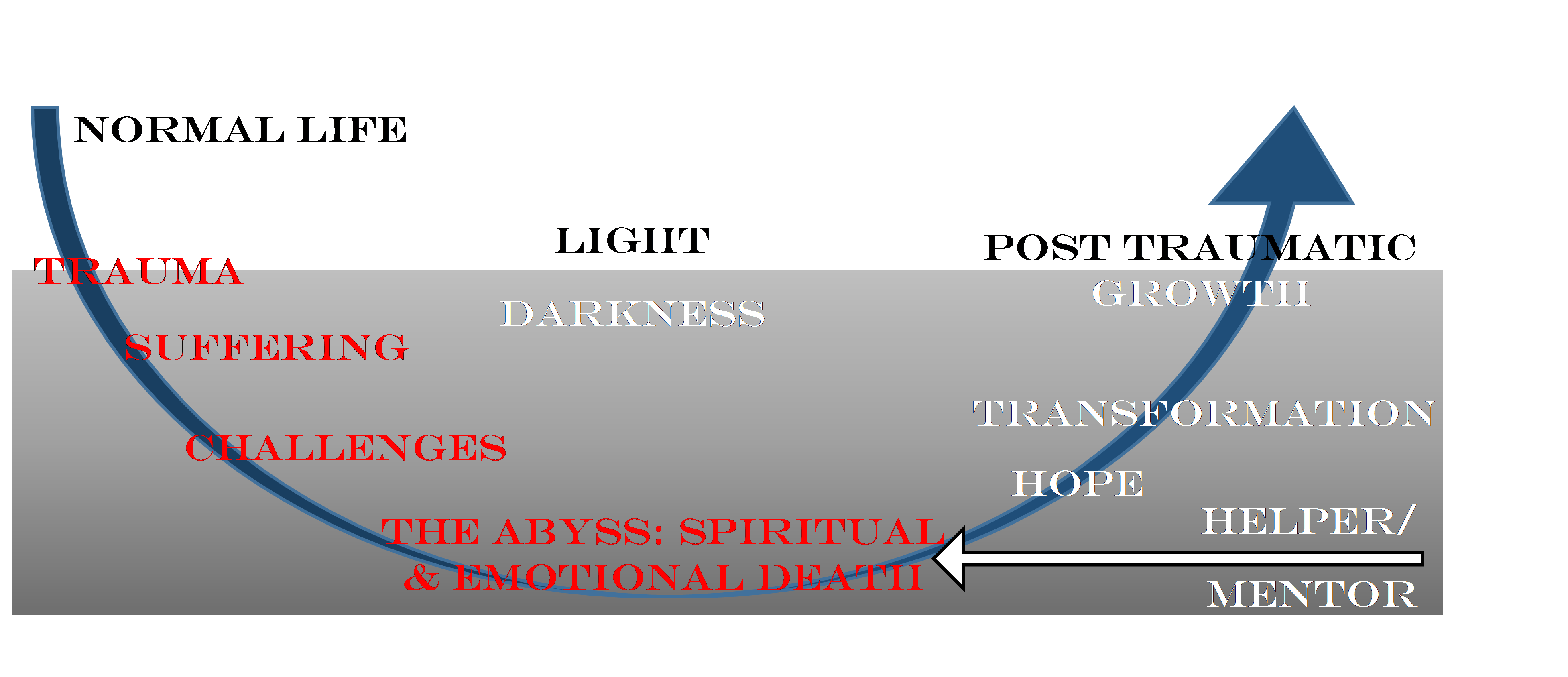
My childhood memories have gaps. A year ago, I began exploring the possibilities that there were memories being kept hidden in my brain. Reading and working through the three books of Christian psychiatrist Curt Thompson moved me to consider the power of shame in keeping my memories silent. Dr. Thompson encourages his clients (and book readers) to write down our life stories, in long-hand. Journaling the decades. Especially working on recalling our childhood. Bringing those memories into the light.

My preschool years are still mostly devoid of memories. My mom had told me later that our rarely employed biological father neglected us such that she had to employ a babysitter daily while she worked. Even though he was home. Whether neglect is abusive or not, I have no recallable memories of my father from those years. Mom divorced him by the time I was 6.

In doing the exercise of writing out my life, one childhood memory that I was able to re-remember started out happy. It was a neighborhood “garden party”. I was maybe 7 or 8. These so-called garden parties were a gathering of family and friends to process the harvest of large vegetable gardens – for canning and freezing. Those who came enjoyed lively conversations, engaging stories, and finally a large meal together. The adults were caught up in the moment, and the children wandered in and out…and farther away.

I’m not sure who all ended up with me in a large barn some distance away from the home of our hosts. In that barn, an older boy (trigger, sorry) talked me into letting him touch me in inappropriate ways.

I had put that memory far back in my mind.

In remembering it, I also recalled telling my mom that evening and her taking action by going to talk to the parents of that boy. That’s where it ended, I believe.

Later in my childhood, I would discover my older brother’s (I suppose) hidden stash of pornographic magazines. [We didn’t have internet pornography in those days, and this sort of perusing seemed an expected coming-of-age pastime.] Page after page of naked or scantily clothed women in sexually provocative poses. Even as a pre-teen, it drew me in, even though it felt dirty and shameful. I don’t think I understood the power of taking such images into my brain. It is what pornography does and why it is so toxic.

[Could this sort of pornography be a launch-pad for girls who, seeing those images, become sexually aroused, then thinking they might be  same-sex attracted? Especially if it happened today in our current culture…I wonder.]

Being exposed to pornography as a child isn’t abuse, of course, but it forces an unhealthy peering into an adult world. I wish I hadn’t stumbled on it and hope parents take seriously the availability of porn on the internet. OK…done with that topic.

At the age of 13, my parents invited a young co-worker of my step-dad’s for a cookout. He must have been 18 or 19. He stayed long into the evening. I have no idea what my parents were thinking at the time (and they were excellent parents), but they went to bed and he was still there. This seemed to set up a green light for him, and he became very aggressive physically. My 13-year-old sensibility was at first enthralled at his interest in me and then frightened, too timid to cry out or get away. If my older brother hadn’t returned early from a date, and sent him on his way, I’m not really sure where that would have ended. So thankful for my brother that night.

Where does abuse begin? Did it start with the neglect of a father? Even with an incredibly loving and supportive mom, she couldn’t be everywhere all the time. Was I vulnerable to the attention of boys (and men) growing up because of a father who started out uncaring and became increasingly absent (don’t remember seeing him ever again after my early childhood years). Even with the love of a dear step-father, did I struggle with needing approval, wanting to feel special, absorbing the very adult messaging of pornography geared toward adult men?

[I’ll stop my story here for now.]

My extended family has known the searing pain of abuse. The abuse of power, the deceitfulness of sin (protecting the perpetrator), the isolation that comes with shame, and the complicit nature of silence.

In fact, with the statics (of sexual abuse alone), in the US, we’re talking as many as 1 in 4 girls are sexually abused by the age of 10 and 1 in 6 boys.

How do we respond to abuse? How do we even consider such atrocities? Put aside sexual abuse for a moment. It comes in many different ways.

Dr. Henry Cloud, in his book Changes That Heal, talks about the role of crossing personal boundaries in abuse…when people step over a line, a boundary, wounding another person.

“The essence of boundaries and limits is knowing what we own and what we do not own…when we do not own ourselves as separate people from the ones we are bonded to, we develop unclear boundaries, and we allow people to cross those boundaries when we should be saying no”. –  Dr. Henry Cloud, Changes That Heal

One thing we could all assess within ourselves is our own understanding of personal boundaries – where we stop and another person starts. Abuse can happen with overreach (in parenting, marriage, friendships, and the workplace) or a lack of understanding or ownership of our own personhood.

This boundary breach leading to abuse can happen with strangers, but, more often than not, it happens with people we know – parents and children, spouses, other family members, trusted teachers or clergy.

Abuse Is Never the Victim’s Fault – video – Dr. Henry Cloud

Abuse can be subtle…still with the impact of intimidation or silencing. Even something we are all familiar – the silent treatment – is its own form of abuse.

Photo Credit: AZ Quotes

I’m not going to cover what we need to do comprehensively in handling abuse. Resources abound in this area. However, my work on memories coming back to light (and processing them as an adult, not as a child) helped me understand some attitudes and behavior that affect my sense of self and relationships today.

So in brief, I would say:

  • Do a journey of self-discovery (with a counselor or trusted friend) – examining and reframing painful childhood (or early adulthood) memories.
  • If abuse is still a part of your current life – get what distance you can from it, as you develop coping skills to protect yourself but also the generations coming after you. Building forever boundaries between you and that person/those persons can be its own abuse. It is a stop-gap measure and still holds the abused in bondage to the abuser.
  • Don’t be silent. Talk to someone. Tell your story.
  • For those who suspect abuse in another, don’t be complicit in the abuse, by your silence. Prayerfully, carefully, come alongside the abused. If you have a relationship with the abuser, reason with that person, if you can.
  • Isolation is a product of shame for the abused and the abuser. It also works to keep the abused more vulnerable. Shame, isolation, and secrecy.  Don’t ignore isolation (even in these post-pandemic days when it may be harder to detect). Be vigilant in surveilling those in your circles – your family, neighborhood, workplace, and friend group.
  • Finally, be aware of “vicarious trauma” – for those helping, caring, mentoring persons – experiencing a secondary trauma because of your leaning in and coming close to the trauma of another. You may need help from another as well, choosing not to leave the room but needing support yourself.

This is just a start.

Again, there are so many resources. Curt Thompson’s books and podcasts. Dr. Diane Langberg‘s website and YouTube channel. Adam Young Counseling podcasts and videos. Counselor Matthias Barker podcasts. Just to name a few.

I’d appreciate your thoughts in Comments below. Please…don’t keep silent. There is help…and healing.

Photo Credit: Connecting Paradigms, Matthew S. Bennett

15 Trauma Therapy Techniques to Implement to Help You Heal From Trauma – Gala Gorman

Understanding Trauma – Loretta Grieve

Monday Morning Moment – Generational Sin and Trauma – Don’t Trip Over What’s Behind You – Deb Mills

Monday Morning Moment – a Parable of Lost Sons and Their Father

Photo Credit: Rembrandt, Wikipedia

Whatever your faith base is or even if you have none to speak of, the parables of Jesus are magnificent stories that call us to deep thinking about life…and the choices we make.

The parable reflected in Rembrandt’s extraordinary painting above is one such story. In brief, you see a father and his older son (both in red robes) and a younger prodigal son, returning home, repentant.

The Return of the Prodigal Son – Rembrandt – Wikipedia [read the short and powerful article – a beautiful synopsis of the work.]

“The Parable of the Lost Son” is found in only one of the Gospels – Luke 15:11-32 (the whole of his story is found in the link, within the larger context of Luke 15 – read that here). Jesus was responding to the questioning and contempt of the religious leaders of his day. Their problem with Jesus was the two opposing facts that he was a religious authority himself and yet he took company with sinners.

In Jesus’ response to them, he spoke of loss and our reaction. We go after what is lost, and we rejoice when it is found.

His story tells how a younger son wants his freedom and asks his father for his inheritance. He wanted something that would not normally come to him until his father’s death, but he demanded it still. The father then divided his estate between his two sons. The one left home to spend his wealth on folly, and the other, the older son, stayed, out of duty or love (we don’t really know).

The younger son’s foolishness quickly leads to a wasted, impoverished life. He longs for the life he once knew in his father’s house. He finally “came to his senses”, remembering his good father and how well even the hired workers in his household lived. He determined to return home and ask his father’s forgiveness – not to be restored as his son but in hopes of becoming one of those workers.

Jesus’ story goes on to show the father’s deep and loving character – seeing the son approaching from a distance, he ran to him. Receiving him back to himself, in joyous celebration.

This was part 1 of Jesus’ parable of the lost sons. Part 2 begins here with the older brother. He had been working out in the fields as always, and, returning at day’s end, he hears the noise of a party. When he asked a servant what was going on, he was told the younger brother had returned home and their father had ordered a celebration. Here, we find the other lost son’s response…

…he became angry and didn’t want to go in. So his father came out and pleaded with him.
But he replied to his father, ‘Look, I have been slaving many years for you, and I have never disobeyed your orders, yet you never gave me a young goat so I could celebrate with my friends.
But when this son of yours came, who has devoured your assets with prostitutes, you slaughtered the fattened calf for him.’
” ‘Son,’ [the father] said to him, ‘you are always with me, and everything I have is yours. But we had to celebrate and rejoice, because this brother of yours was dead and is alive again; he was lost and is found.’ ” – Luke 15:28-32
Again, we capture the beauty of the father’s character. He loved both sons. He was generous with them both, and he invited both into his merciful love.
Jesus shared this story (as well as the story of the lost coin and lost sheep) with religious leaders who questioned his care for sinners. In a way, these religious ones were much like the older son.
Do you identify with one of these sons? One is reckless and searching – allowing his self-indulgent longings to take him far from home. The other is dutiful and obedient. Accepting the responsibilities of life to shape his character…and his subsequent lack of care for both his father and brother.
[My husband preached a sermon on this story years ago and I am often reminded of his reflection on it – how the elder brother must have thought he was pleasing his father because he stayed at the plow. What if that older brother would have come to the father and said, “Hey, Dad, would it be all right if I go and look for my brother?” If he truly knew the heart of his father, he would have left home, at some point, to search for that lost brother and bring him back to their dad.]
The father in this story is reflective of God. He is home. Whether that is your belief or not, we are place-oriented as humans. What (or who) we regard as home has a huge impact on how we do life.
I take heart in both of these brothers…my life has taken me far from home in both these ways. Wanting popularity and the stuff of this world as well as longing to do what is right and the influence that comes with that. Neither extreme brings us the joy we can have in being known and loved for who we are…and loving others the same.
Henri Nouwen‘s book The Return of the Prodigal Son is a short, winsome engaging of these three men in Jesus’ story.

Here are a few of Nouwen’s observations on Jesus’ story:

“Anger, resentment, jealousy, desire for revenge, lust, greed, antagonisms, and rivalries are the obvious signs that I have left home.”
“I am the prodigal son every time I search for unconditional love where it cannot be found.”
“…the question is not “How am I to love God?” but “How am I to let myself be loved by God?” God is looking into the distance for me, trying to find me, and longing to bring me home.”
“There are many elder sons and elder daughters who are lost while still at home.”
“The more I reflect on the elder son in me, the more I realize how deeply rooted this form of lostness really is and how hard it is to return home from there. Returning home from a lustful escapade seems so much easier than returning home from a cold anger that has rooted itself in the deepest corners of my being. ..Isn’t it good to be obedient, dutiful, law-abiding, hardworking, and self-sacrificing? And still it seems that my resentments and complaints are mysteriously tied to such praiseworthy attitudes… It seems that wherever my virtuous self is, there also is the resentful complainer.”
“In all three of the parables which Jesus tells to explain why he eats with sinners, God rejoices and invites others to rejoice with him. “Rejoice with me,” the shepherd says, “I have found my sheep that was lost.” “Rejoice with me,” the woman says, “I have found the drachma I lost.” “Rejoice with me,” the father says, “this son of mine was lost and is found.” All these voices are the voices of God.”
In closing, I would love to hear your thoughts in the Comment section of this blog. What struggle do you have in coming home? Or thinking of yourself as never having left, do you still feel alienated even at home? The best part of this story is that whether we feel more like the older brother or the younger brother, Jesus communicated that we can come home. A loving father is watching for us.
[Below are two sermons that got me thinking again about this great story – one of many Jesus told to those with “ears to hear”.]

YouTube Video – Parable of the Lost Sons – Part 1 – Sermon by Khiry Cooper – Movement Church RVA – September 18, 2022

YouTube Video – Parable of the Lost Sons – Part 2 – Sermon by Cliff Jordan – Movement Church RVA – September 25, 2022

5 Friday Faves – A Lullaby by Beyond the Guitar, the Art of Neighboring, the Beauty of Fall, Ethnic Foods, and Telling Our Stories

Friday Faves. Here we go!

1) A Lullaby by Beyond the Guitar – Nathan Mills has been on hiatus from his public YouTube channel as he worked through the summer creating course content for his other channels. Big news: he’s back!!

Photo Credit: YouTube, Beyond the Guitar

Talking through and then performing his treatment of the Game of Thrones theme (his previous arrangements of this can be found here). He takes Ramin Djawadi‘s epic piece and makes it into an ethereal lullaby. Just plain gorgeous.

2) The Art of Neighboring – Several years ago, my husband and I landed in an incredible neighborhood. With great neighbors. As happens, our neighborhood has changed significantly with elderly neighbors downsizing and moving away and new families coming in. The tight-knit feeling we had toward each other has changed…not lost but changed.

This Fall, our community group at church is studying “The Art of Neighboring”. This aligns closely with my deep dive, over the last several months, into our need for being known.

Being Known Podcast with Curt Thompson MD

Photo Credit: Art of Neighboring

There is neighboring where we might know someone by sight or even name, but little else. Then there is neighboring which leans in, where we know each other in ways that honors, enjoys, and serves.

It’s an art and it adds to our quality of lives and that of each other in immeasurable ways.Photo Credit: Grace Fellowship, The Art of Neighboring

The Art of Neighboring – Website, Book, Resources – Jay Pathak & Dave Runyon

3) The Beauty of Fall – Just a quick salute to the end of summer and beginning of Fall. Cooler weather prompting pulling out our hoodies and cozying up to fire pits. The harvest continues. The flowers, many going to seed, still have a glory that moves artists to paint. And pumpkins!

Photo Credit: Karen Burnette Garner, Facebook

4) Ethnic Foods – Our family has had the rich experience of living in several countries and enjoying the yummy “home cooking” of local friends. Some of that food is also sold by street vendors or in tiny restaurants for such a cheap price you wonder how they can afford to sell it, except for the volume of customers.

We search out those authentic food opportunities here, and various food festivals help fill the bill. Recently, we attended Armenian and Egyptian food festivals. So good! Visiting friends took us on the hunt of discovering new restaurants serving up foods so good they could have been cooked in mama’s homes.

In America, ethnic foods are not cheap. Part of that, I’m sure, is the cost of ingredients and labor. I couldn’t imagine paying the equivalent of $12 for a falafel sandwich when we lived overseas. Here, I’m just glad for the opportunity.

What Is ‘Ethnic’ Food? – Aaron Hutcherson

In the Hutcherson piece linked above, the phrase “ethnic food” may even be offensive in today’s cancel culture. Of me, it’s the best of home cooking served outside the home. America is such a cultural “melting pot” that we may come to the place where international foods become a part of the American food culture. Blended in. Beautifully.

“American food is the mixture of all food brought by our immigrants. Perhaps the recipes have been tweaked a little here, but they originate from past cultures, from identities new and old, and from our ethnic nation. Ethnic food is American food.”

This encouraging American ideal explains why Americans long to assimilate almost every food culture into their diets. It is socially encouraged to be more and more inclusive. The main way people try to find common ground is through food.

Ethnic food can best be described as a classification for types of food favored by cultural groups of people. This is different from authentic, which is a word used to describe food as something genuine or real. American cuisine may be classified as being only ethnic food because of the rich cultural diversity of its population. – DevTome

Still…I think we foodies will still look for the dining experiences that take us back to our mom’s table…or that table of friends in far-away places. Sweet memories.

Here in Virginia, we have an ethnic equivalent of food that’s hard to find anywhere but here and it’s Ukrop’s – a family-owned bakery, deli, and grocery business that’s been around since 1937. Their baked goods are very American. I say this because we have been told, by our international friends, that American sweets are “too sweet” for them. Maybe this is one American food that is uniquely American. I don’t know…but it’s good! No one does buttercream frosting like Ukrop’s. 

4) Telling Our Stories – Storytelling is in our very DNA. We appreciate the stories that draw us in – whether through books or film – or in the telling of our own lives.

Memory tends to embellish. A detail is added or emphasized beyond what really happened.

“Well, all good stories deserve embellishment.” – J. R. R. Tolkien, The Hobbit

The Link Between Memory and Stories – Shawn Callahan

Embellishment entertains but what if our memory of an event or conversation stays the same even as we have grown into a person who has changed.

I think of childhood trauma or an incident that changed the course of our relationship with a person or organization. Sometimes all it takes is one circumstance.

Something may come to mind right now.

Is that a something that you want to affect your story forever?

Many of you may never have seen the 1981 British sports film Chariots of Fire. If you haven’t I highly recommend it. It gives an account of the Olympic Games of 1924. In particular, two runners, who compete against each other, are the focus. Two runners with very different stories.

Harold Abrahams and Eric Liddell.

These two athletes had two very different stories…very different motivations and goals for life. In the film, some of their story may be fictionalized, but there are lessons for us here. Check out the film clips linked below.

“10 lonely seconds [will] justify my whole existence.” – Abrahams

“When I run, I feel His pleasure.” – Eric Liddell

[An extra: In the film, Eric was pushed off the track during an Olympic race, falling to the ground. He got back on his feet and got back on the track. In the crowd, a man was asked if Eric could do (recover the time lost), and he said, “his head’s not back yet”. Eric would put his head back as he felt the pleasure of God on him. And where did the power come from? Another clip.]

YouTube Video – He Who Honors God – Chariots of Fire – don’t miss this scene.

What is your story? Whether you know it or not, you’re telling a story? Is it the one you want to be remembered for? Or is there a healing, a reconciliation, a resolve you want to leave behind as part of your legacy?

Something to consider.

___________________________________________________________________________

That’s it for this week. Hope you have a delightful weekend. Thanks for stopping by.

Bonuses:

8 Rules to Do Everything Better – Brad Stulberg

What To Do When You Feel Like You Don’t Fit in at Work – Lisa Evans

How to Say the Unsayable – 10 Ways to Approach a Sensitive Daunting Conversation – Kathryn Mannix

Photo Credit: Facebook, Marjolein Bastin

Worship Wednesday – Asking Questions – 4 Questions the LORD Asks – Psalm 27 – Motion Worship

Photo Credit: Highland Park LC, Daily Verses

Daily our prayers are full of questions. We “inquire (ask from) the Lord”. The questions in our heads don’t always end up in our prayers, but they are there nonetheless.

Earlier this week, I wrote about the discipline of leading with powerful questions. God has certainly shown the way in this.

Why Does God Ask Questions If He Is Omniscient?

He wants us to wonder about Him, about life, about people…with Him. He also means for us to use His own explorations as a model for our interactions – our deep interactions – with each other.

Christian psychiatrist Curt Thompson writes about four questions the Lord asks (in his book The Soul of Desire). These questions, when we ask them of each other, within context of relationship, can forge a path. A path for that other person to experience being “seen, soothed, safe, and secure” with us.   

1) “Where are you?” – God asked Adam this question (in Genesis 3:9), not because He didn’t know where he was but to give him an opportunity to say for himself what had happened. After Adam and Eve had sinned, they hid from God. In fear and shame. They had succumbed to distorted thinking after being tempted by the Evil One. They doubted the goodness of God and made the eternally consequential decision to choose for themselves what was good.

We also hide. We might not ask of another “Where are you?” exactly, but we might ask, “What’s going on?”, “What’s on your mind?” or “What are you feeling right now?” Rather than react to another’s anger, fear, or other distress, we lean in. Just as God was drawing out Adam, we give space for a person to feel safe to come out of hiding. We give space to ourselves in the same way when we go deep with God around this question.

2) “What do you want?” – In the beginning of Jesus’ public ministry, two of John the Baptist’s disciples began following him. His first question to them was “What do you want?” (John 1:38) We don’t often ask God what He wants with us because the Scripture is clear. Yet, we struggle with what we want. Are our desires in line with the Lord’s? Do we ever edit or stifle our desires because we can’t fathom they are in line with the will of God? What if they are? Or some form of them? This is where we inquire of the Lord. This is also where we can be helpful to each other by giving opportunity to wrap words around those desires. To bring them out in the open in a safe environment with a trusted friend/family member. This, like Question 1, is something we also can explore with and seek affirmation from our Heavenly Father.

3) “Can you drink the cup?” – In Matthew 20:22, Jesus responded to a voiced desire of James and John to sit on each side of him in His kingdom. His question communicated that their desire implied a cost – a cup of suffering. They naively said they could drink the cup. His gentle reply was that they would drink that cup but the decision was not his but the Father’s. What beauty in the freedom of transparency and intimacy Jesus and his disciples had with each other.

“If we want to be this close to Jesus – if we are willing to enter into a confessional community and ask the first two questions – we must be prepared to suffer. Naming where we are and what we want invariably leads to discoveries that bring us great comfort but also demand that we be present to the brokenness of our own lives and that of others.” – Curt Thompson, The Soul of Desire, p. 201

Part of the benefit of exploring the two first questions with a trusted someone is that we come to question 3. No longer is the stuff in our minds and emotions still hidden, but it’s out there. In the real world. This is when we can confront the cost…and this is where we find both healing and flourishing.Photo Credit: Heartlight

This is where we can have hope. Where our fear and shame can be removed. Where our addictions can be faced. Where our delights in the Lord can be fortified…within community.

“Evil does not intend to go quietly into the night. In this way, we will suffer; we will drink the cup that represents our resistance to evil as we swim against its current… In the context of a confessional community, we suffer, we grieve together, and as such our suffering itself is transformed…I learn to hope. I hope not in receiving exactly what I thought I wanted in the way I wanted it, but more.” – Curt Thompson, The Soul of Desire, p. 205

4) “Do you love me?” – After his resurrection, Jesus appeared several times to his disciples before ascending to Heaven. This question he put to Peter. Now Peter was probably still reeling with shame from his denial of Jesus. He felt disqualified. Purposeless. Such that he returned to the trade he did before ever knowing Jesus. Jesus’ question “Do you love me?” clearly had multiple layers. He understood the rupture that happened when Peter acted the way he did. It wasn’t ruptured from Jesus’ side but was, in Peter’s head, from his side. Jesus drew close to Peter to fix that rupture and to remind him of the great work he had called Peter. “Feed my sheep”.

“Jesus takes the essence of our traumas and its attendant shame and creates New Wine. There is beauty to be found everywhere. But never is beauty more poignant than when we see it through our trauma and shame. We see Good Friday through the lens of Easter and everything about its brutality, its pulverization of God in the person of Jesus, is transformed into the beauty of the resurrection. This is what it means to fully answer the question, “Do you love me?” – Curt Thompson, The Soul of Desire, p. 210

Worship, with me, the God who seeks after us and draws us close – the God who will create beauty in and through our lives as we live in the real, with Him within. [Psalm 27 – Motion Worship]

One thing I ask, one thing I seek
To live in Your house, to sit at Your feet
All of my days, delight in Your ways
And dwell in Your temple

So hide me in shelter when troubles may come
My feet set on high ground, my head lifted up
When darkness surrounds, in You I am found
And there’s joy in this temple

[Chorus]
I will sing, I will praise
With all that’s within me
I will seek, seek Your face
Jesus, my one thing
Oh Jesus, my one thing
(Yeah, yeah)

My heart believes, our eyes will see
The goodness of God in the land wе’re living
So we will be strong, and Hе won’t be long
And we’ll wait on You, Lord, yeah

[Chorus]
And I will sing, I will praise
With all that’s within me
I will seek, seek Your face
Jesus, my one thing, yeah
And I will sing, I will praise
With all that’s within me
And I will seek, seek Your face
Oh Jesus, my one thing
And oh Jesus, my one thing, yeah
Oh Jesus, my one thing (Oh, yes, You are, You are)
Oh Jesus, my one thing (Yes, You are, yes, You are)
Oh Jesus, my one thing, yeah

[Bridge]
And there’s joy in this temple, there’s praise in this house
With light and salvation, no fear can be found
When enemies rise up, they tremble and fall
None stand against Jesus, the name above all
There’s joy in this temple, there’s praise in this house
With light and salvation, no fear can be found
When enemies rise up, they tremble and fall
None stand against Jesus, the name above all

[Chorus]
And I will sing, I will praise
With all that’s within me
I will seek, seek Your face
Oh Jesus, my one thing
Oh Jesus, my one thing (You are)
Oh Jesus, our one thing
Yes, You are our one thing (Jesus, my one thing)*

*Lyrics to Psalm 27 (Whom Shall I Fear?) – Motion Worship (Songwriters: Jesse Reeves & Caitlin Reeves)

Inquiring of the Lord – Posturing Ourselves for Success – Selenia Vera, International House of Prayer, Kansas City

Monday Morning Moment – Emotional Intelligence at Work and in Life – We Think We Have It or Can’t Be Bothered – Don’t Miss This!

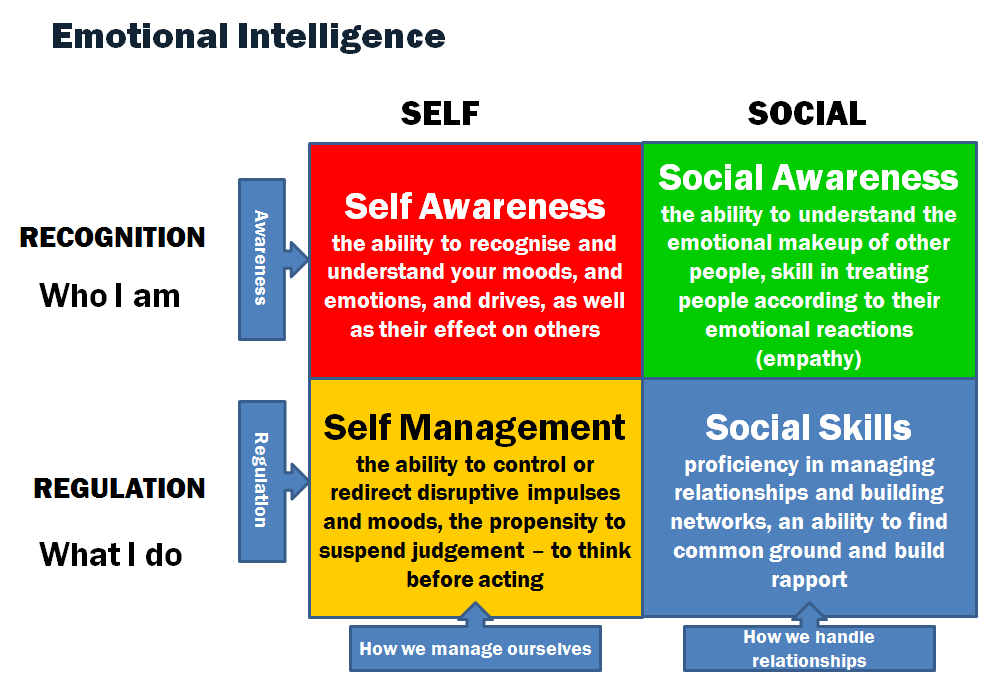
blog-emotional-intelligence-ucreativePhoto Credit: UCreative

[From the Archives – I wrote before on Emotional Intelligence here, here, and here. Below you’ll find the summaries from those pieces.]

You can probably remember an encounter with someone who was so engaging and interesting that you hoped you would meet them again, or work with them some more, or even become their friend.

Below is a story of how I experienced emotional intelligence in a beautiful and transforming way.

Years ago, I worked for a beloved organization. In that work context, I’d had an idea of a particular needed next step. Even though it wasn’t a strength of mine to carry the ball on it, I saw such a need for it to happen that I floated it a couple of times to our leads.

It didn’t go anywhere…timing, not the right people in place…lots of variables.

Then, out of the blue, an announcement came down that we were going to run a pilot on that very idea. The woman leading the pilot was perfect for it. Enthusiastic, funny, bright, humble, and inclusive. Perfect.

I messaged her about how excited I was about the pilot and told her if I could be any help at all, just let me know.

Because of who she was (and maybe the timing…although I think it was just her), the project hummed along. Lots of others jumped in to help. I was so excited. Felt no need to push in but wanted to cheer-lead any way possible.

Then she wrote me this brief message – surprising and lovely – full of emotional intelligence. She said at that time she didn’t need more folks on the project, BUT she commended me and expressed her gratitude for my support. Just a message. A few lines.

It was just what I needed and I didn’t even know I needed it.

“Emotional intelligence (EI) is the ability to monitor one’s own and other people’s emotions, to discriminate between different emotions and label them appropriately, and to use emotional information to guide thinking and behavior.” 

__________________________________________________________________________

The Little-Known Relationship Between Emotional Intelligence and Success – Shane Barker– rapid read with definition and characteristics of emotional intelligence.

__________________________________________________________________________

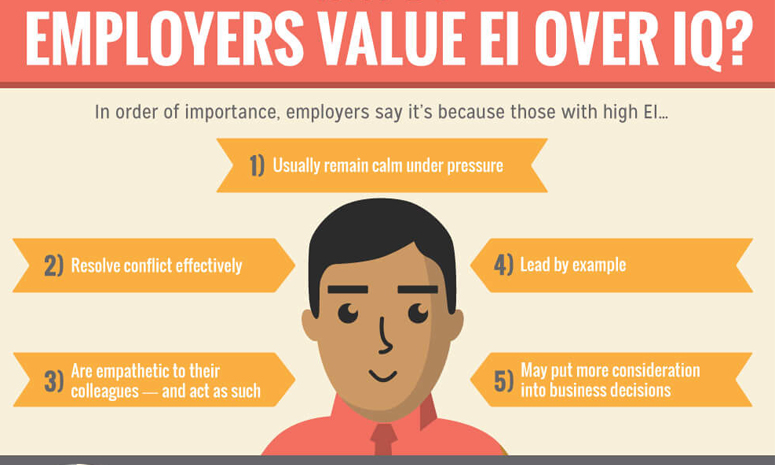
Remember this distinction: there are smart people and then there are emotionally intelligent people. If you don’t have a sense of the difference in these two, Paul Sohn posted an infographic (yay!) that gives an excellent description of emotional intelligence. There are a lot of smart people out there but what a joy when your boss, as smart as he may be, is also a great communicator with and appreciator of people.  [Go back and click on that infographic – very helpful!]

Emotional Intelligence is a concept that’s been around for awhile now.  Matt Monge’s article for The Mojo Company sparked my interest some time ago. He described 6 symptoms of leaders with low emotional intelligence.

Two of Monge’s points were: 1) Leaders with low emotional intelligence say “I’m sorry you feel that way” more than “I’m sorry,” and 2) Leaders with low emotional intelligence often blame the people they hurt for the situations leading to them being hurt.

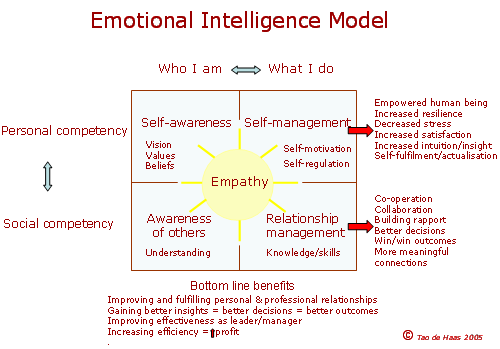
Daniel Goleman has written several books on this topic including Emotional Intelligence: Why It Can Matter More Than Intelligence and Social Intelligence: The New Science of Human Relationships. The very cool thing about emotional intelligence is that it can be developed. The big dilemma is whether bosses or even teammates, not bothered by their impact on others, would buy into this relational skillset. Incorporating such concepts in personnel accountability metrics might provide some incentive. I’ve added graphics below that helped me further understand emotional intelligence.

Blog - Friday Faves - Emotional Intelligence - grid - dollieslagerPhoto Credit: Dollie Slager

Blog - Friday Faves - Emotional Intelligence - low & highPhoto Credit: The King and Queen

___________________________________________________________________________

Even people with strong emotional intelligence can find themselves off-balance when in conflict with someone. Leadership writer Marcel Schwantes gives counsel for this in 7 Brilliant Things Emotionally Intelligent People Do When Their Buttons Are Pushed.Photo Credit: Wikimedia Commons

Schwantes encourages us to respond rather than react in a conflict situation. His seven action points follow (read more of his article for his commentary on each one).

  1. Get perspective.
  2. Take a 6-second pause.
  3. Stay humble.
  4. Try empathy.
  5. Ask the most conflict-diffusing question. [“Are you ok?” What’s going on?”….what else would you think would diffuse the situation?]
  6. Speak from your authentic self.
  7. Be the first to reach out after conflict.

Don’t miss the brief video at the end of Schwantes’ piece on 3 Simple Questions to Improve Your Emotional Intelligence.

Blog - Friday Faves - Leadership - Emotional IntelligencePhoto Credit: Self Study History 

I hope you’re surrounded by emotionally intelligent people. Maybe you’re an “EI” rockstar yourself. For me, that woman above, piloting the project, had my respect from the beginning, but because she responded to me in such an honoring, genuinely considerate way, she also has my complete support and more.

Do you have any emotional intelligence stories? Please comment below. We can always use  stories of great bosses and coworkers to inspire and spur us on.

___________________________________________________________________________

Try These Two Smart Techniques to Help You Master Your Emotions – Lisa Feldman Barrett

How Emotional Intelligence Boosts Your Endurance – Alex Hutchinson

___________________________________________________________________________

Bonus: Resources for Raising Our Children to Be Emotionally Intelligent

Research Shows Reading Improves Kids’ Emotional Intelligence and Increases Empathy – Katie Priske

This Is How to Raise Emotionally Intelligent Kids: 5 Secrets From Research – Eric Barker

Parents Who Raise Emotionally Intelligent Kids Teach This Important Skill, Says Neuroscientist and Parenting Expert – Here’s How – Willian Stixrud & Ned Johnson

Chores Lead to Happy Children. So Why Do So Few Parents Require Them? – Annie Holmquist – OK…this doesn’t really have to do with emotional intelligence but it fits in the mix of raising kids well.

Monday Morning Moment – You’re Stronger Than You Think – Really? – A Truer Truth

Photo Credit: Quotir, Winnie the Pooh

OK…who hasn’t heard this encouragement? “You’re stronger than you think.” I have never cared for it. Why? Because it pushes the weary soul, doing all we can to stay afloat already, to “just keep swimming”.

Not that any of us wants to quit whatever we’re about…but…is there a truer truth?

The “stronger than you think” quote has been attributed to A. A. Milne, author of the Winnie-the-Pooh stories. Written by  and published in the 1920s. This was a time post-World War I and prior to The Great Depression and World War II. The expression of “pull yourself up by your boot straps” and the mentality of self-reliance was fueled in those days, in literature and culture. It continues today.

[Now, you should know Milne did NOT write that expression. A writer at Disney must have. It is a quote from the animated film (1997) “Pooh’s Grand Adventure: the Search for Christopher Robin”. Pooh’s dear friend Christopher Robin is going away to boarding school and is trying to give Pooh, and himself, the courage for them to be apart. That message is there but not in so many words as in the Disney film.]

So…after that bubble burst, let’s return to the oft-quoted “stronger than you think” encouragement we find everywhere. It seems to speak to our culture…across generations.

Self-reliance. Work harder. Work smarter. We can do better. Sigh…

When we are told by a friend or family member, or even a social media stranger, that we’re stronger than we think, we are not being encouraged to lean on community…or God. We are given the message that somewhere inside ourselves, alone, without others, we can tap into more strength than we are feeling at the moment.

Is that really encouragement? I know we mean well…but do we really want to offer up Disney verbiage to a real struggle?

When I’ve gone about as far as I can go, can I slog out more, just with my own “main strength and awkwardness”? Maybe. At what cost and to what gain?

I got a phone call earlier today from a mom needing an understanding ear on a hard struggle involving her young son. She’s a terrific mom. Yet…she’d come to the end of her rope on this one. She sounded on Empty. Did it help that we talked? I think so…and definitely it helped to pray afterwards. She will find the way to help her son. She has a way forward even if she doesn’t see it clearly yet. Through her own resolve and experience. Through deep community. Through an enduring faith in a wise and loving God.

Photo Credit: Heartlight

The Apostle Paul speaks so eloquently and practically on this issue of our weakness and God’s strength. In fact, when we come to the end of ourselves, we find God’s strength perfect in our weakness. It’s both a hard truth and great comfort. We don’t like the experience of coming to the end of ourselves. Nor do we like to see our friends and family moving so close to that reality. For this reason, we encourage those we love to dig deeper.

Photo Credit: Heartlight

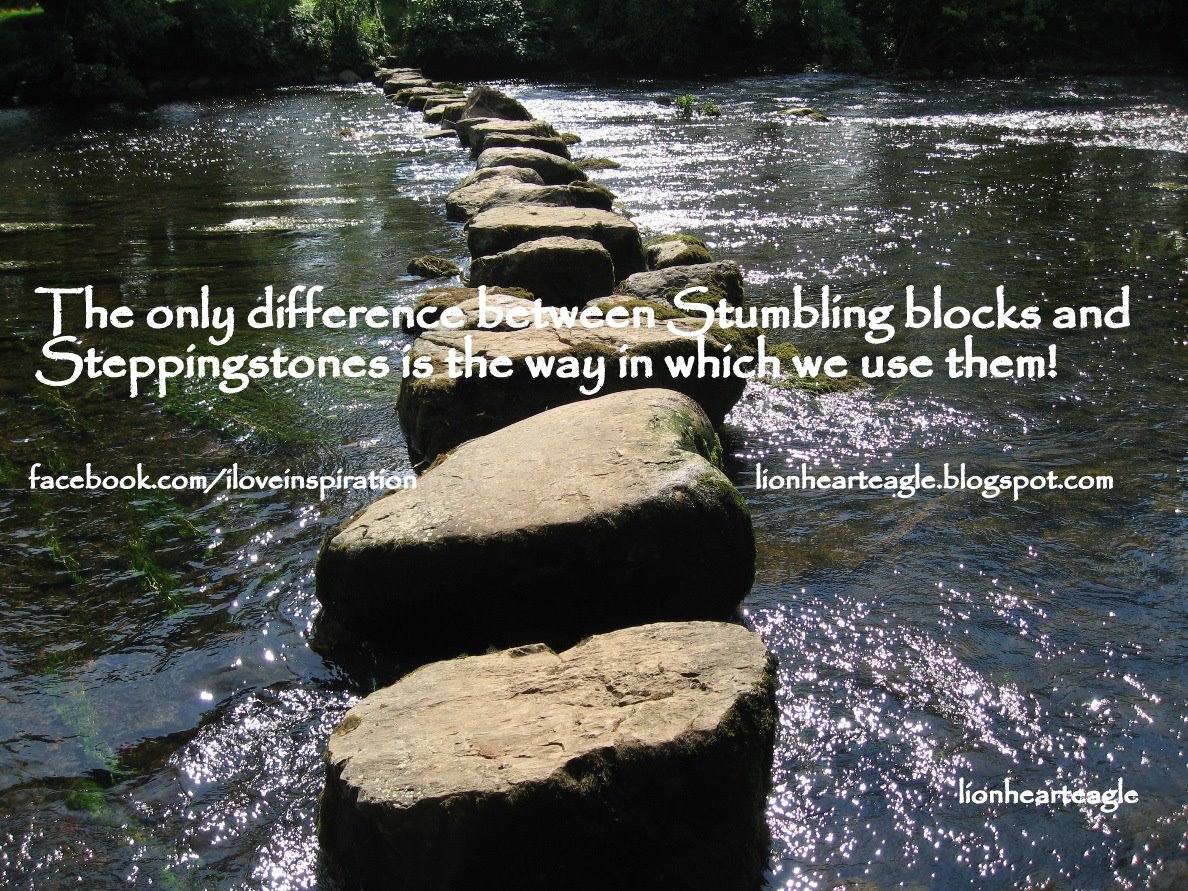
You know I love words…and I squeeze as much good out of them as I can. The Pooh video clip above and its messages of the richness of relationship do have meaning for us. Part of that meaning is how sustaining relationships can be even with we are apart from each other. However, the best part of relationships and how much stronger they make us comes from the moment-by-moment reach of them in the present. When we are there for each other (and pray for each other) we become stepping stones rather than stumbling blocks.

When we seek to encourage with words like “You’re stronger than you think”, your heart will be heard. Lean in with those words…and pray for that one in the struggle.

Why I Believe ‘You Are Stronger Than You Think’ Is Not Always True – Arlene Pellicane

Monday Morning Moment – That Thing Does Doesn’t Need to Be Said – and If It Does – Deb Mills [Remember the quote from the Disney film Bambi? “If you can’t say anything nice, don’t say anything at all.” That is actually part of my family’s lexicon – so Disney does have wisdom sayings in its film library. 🙂

[Mandisa sings about how hard things make us stronger BUT she says that in the face of God being right there with us – holding us through whatever comes. We can rest in Him…and each other.]

11 Reasons Why You’re Stronger Than You Think – Coaching-Online – this is actually a good article on the argument of “you’re stronger than you think”…but, there is a truer truth.

If you can’t get enough of Pooh – this is a sweet film: